WRITTEN BY LONDON SWAMINATHAN
Post No.7719
Date uploaded in London – 20 March 2020
Contact – swami_48@yahoo.com
Pictures are taken from various sources for spreading knowledge; this is a non- commercial blog.
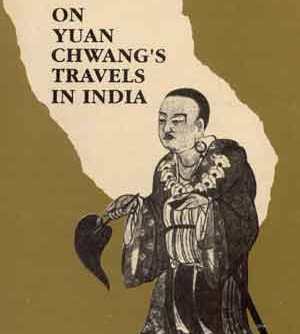
Yuan Chwang, the Chinese traveller who visited India 1400 years ago gives his account of India at the time of Panini, the greatest grammarian the world has ever seen. Goldstucker and Indian Sanskrit scholars date Panini to 8th century BCE. This shows his name and fame was wide spread even when the Chinese traveller visited India 1400 years after Panini.
Salaatura was the birth place of Panini. He was called Saalaaturiya. Ywang Chwang visited this place in the seventh century CE and found that the tradition about Panini was current there.
Salatura was identified by Cunningham with Lahore, now in Pakistan.
A Kharoshti inscription now preserved in the Lahore Museum and dated in the Kushana year 40,(118 CE), mentioned the boat ferry of Sala, which plied from the eastern bank of the Indus River and derived its name from the town of Salaturia situated on the opposite side at some distance from the river
The indian tradition is embodied in Katha Sarisagara. Manju sri Mulakalpa of 8th century CE, said panini was a friend of Nanda at Puspa city. The king had a Buddhist Brahmana minister by name Vararuchi. He was of high soul, kind and good.
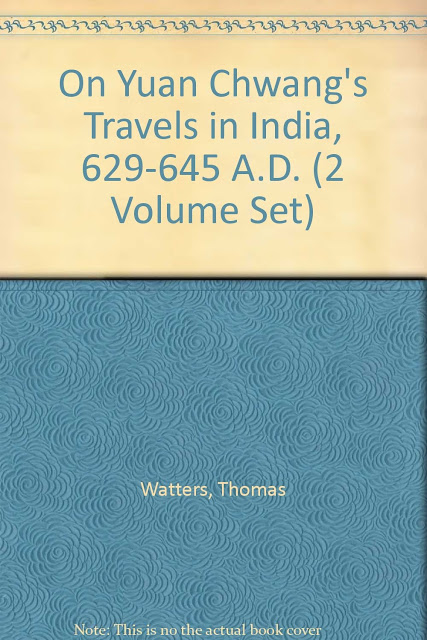
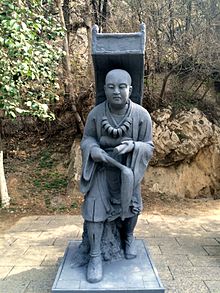
Ywang Chwang speaks of a statue of Rishi Panini being in worship in Lahore.
For hundreds of years Salaatura continued as a centre of Paninian studies,
He writes,
“To the north west of Utokishan cho 20 li or so we came to the town of Polstulo. This is the place where Rishi Panini, who composed the Ching ming lun, was born”.
“The children of this town , who are his disciples revere his eminent qualities, and a erected to his memory still exists.
Ywang Chwang continues in his Siyuki,
Referring to the most ancient times, letters were very numerous; but when in the process of ages, the world was destroyed and remained as a void, the devas of long life desended spiritually to guide the people. Such was the ancient letters and compositions.
From this time and after it, the source of Language spread and passed its bounds.
Brahmadeva and Sakra/Devendra established rules according to the requirements. Rishis belonging to different schools each drew up forms of letters . Men in their successive generations put into use what is delivered to them; but nevertheless, students without ability were unable to make use of these characters. And now men’s lives were reduced to the length a hundred years, during the time of Rishi Panini.
He was from birth extensively informed about things. The times being dull and careless, he wished to reform the vague and false rules of writing and speaking. — to fix the rules and correct improprieties
As he wandered about asking for right ways, he encountered Iswara Deva and recounted to him the plan of his undertaking. Iswara deva said
Wonderful, I will assist you in this.
The Rishi, having received the instruction retired. He then laboured incessantly and put forth all his power of mind . He collected a multitude of words, and made a book on letters which contained a thousand Slokas; each Sloka was of thirty two syllables. It contained everything known from the first till then, without exception, respecting words and letters. He then closed it and then sent to the king, who exceedingly prized it, and issued an edict that throughout the kingdom it should be used and taught to others. He added that whoever should learn it from beginning to end should receive as his reward a thousand pieces of gold.
And so from that time masters have received it and handed it down in the completeness for the good of the world. Hence the Brahmanas of this town are well grounded in their literary work, and are of high renown for their talents, well informed as to things, and of a vigorous understanding memory”.
—-Siyuki, pp 114-115
This shows Paninian system was studied vigorously for 1400 years until the days of his visit.
Yuan Chwang speaks of thousand pieces of gold as the reward received by one who mastered ASHTADHYAYI from beginning to end. Sutra 6-2-65 presupposes a customary payment of this nature.
One of the stock illustrations cited by Patanjali actually makes the grammarian a recipient of ‘harin’ an elephant. Kautilya mentioned in Arthasastra 1000 silver pieces as the reward for learning.
Every year there was a Vidwat Sadas, assembly of scholars, held in Pataliputra by the king where scholars received big prizes.
Those who memorised fully works like ‘Ashtadhyayi’ received the rewards. It meant that it was passed orally from generation to generation until it was put to writing.
Even a Pandya king of Madurai in South India announced 1000 gold coins for a verse according to Tiruvilaiyadal Puranam. Later a Tamil devotional poet called Appar of seventh century CE also confirmed the anecdote in a Thevaram verse.
In short, from the Himalayas to Kanyakumari this type of award existed. The earliest such 1000 gold coin award is in the 2850 year old Brihad Aranyaka Upanishad. When Yajnavalkya was ready to take 1000 gold coins tied to the horns of 1000 cows, one woman scholar by name Miss V. Gargi challenged him Women scholars were also invited to Philosophers Conference 3000 years ago.
Sources
India as known to Panini by V S Agrawala, 1953
Tiruviayadal Puranam of Paranjothi Munivar , 17th or 18th Century CE
Appar Thevaram of Seventh Century CE
Brhdaranyaka Upanishad of 9th Century BCE.
Siyuki of Yuan Chwang of Seventh Century CE
tags – Yuan Chwang, Panini , Chinese traveller, Siyuki
–subham–
 Tamil and Vedas