

BEST CARTOONS ARE AVAILABLE ONLY FROM DECCAN CHRONICLE NEWSPAPER
POSTED BY LONDON SWAMINATHAN ON 12-7-25


.webp)

FOR MORE CARTOONS GO TO DECCAN CHRONICLE NEWSPAER.
–SUBHAM–
TAGS- CARTOONS, UPTO 12-7-2025
BEST CARTOONS ARE AVAILABLE ONLY FROM DECCAN CHRONICLE NEWSPAPER
POSTED BY LONDON SWAMINATHAN ON 12-7-25
FOR MORE CARTOONS GO TO DECCAN CHRONICLE NEWSPAER.
–SUBHAM–
TAGS- CARTOONS, UPTO 12-7-2025
Posted by Tamil and Vedas on July 12, 2025
https://tamilandvedas.com/2025/07/12/cartoons-upto-12-7-2025-from-deccan-chronicle/

Post No. 14,753
Date uploaded in London – 12 July 2025
Contact – swami_48@yahoo.com
Pictures are taken from various sources for spreading knowledge.
this is a non- commercial blog. Thanks for your great pictures.
tamilandvedas.com, swamiindology.blogspot.com
xxxx

Satavahanas of Andhra Pradesh were dominating the maritime trade in the Indian ocean 2200 years before our time. Their coins with ship picture show their interest in ship building and sailing over the roaring eastern seas. Later Kalingas from Odisha , Pallavas from Kanchi and Tamils from Pumpukar (Kaveri Pattinam) went to different parts of Southeast Asia and established Hindu rule for nearly 1500 years.
The oldest Sanskrit inscription with the Pandya name Sri Maran shows Pandya rule in Vietnam (Champa) around second century CE. Later monuments in Angkor Wat in Cambodia and Borobudur in Indonesia stand as witnesses to Hindu influence there.
The domination of Sanskrit is evident from 800 plus Sanskrit inscriptions discovered in those countries. Mulavarman’s Sanskrit inscription and the erection of Yupa (Yaga) pillars deep inside the forests of Borneo show Vedic dharma was followed there in third century CE.
A latest book by BENUDHAR PATRA gives us a list of Sanskrit words in the languages spoken in those countries. We know that Brahmi script of North India gave the script for Tamil and Southeast Asian languages. Ramayana and Mahabharata shown in their sculptures and dance and drama are known to all of us.
***

Here is a short list to show the influence of Sanskrit:
LAOS
Lao words – Sanskrit or Pali words
Kumara – Kumara
Pativaat- Prativaada
Pathet- Pradesh
Prom- Brahma
Pranaam- Pranamm
Rusi – Rsi/ rishi
Shaanti – Saanti
Sri – Sri
Sut- Suutra
Setthi – Sreshti
Youvatnaari- Yuvaanaari
Sabhaa- Sabhaa
Champa- Campa
Nang mekhalaa – Mani Mekhalaa
Nang thoraanii- Devi Dharani
Praya kaak- Naagaraaja
Majority stories in Las are derived from Panchatantra .

****
Balinese words show more Oriya influence with English meaning
Oriyaa – Balinese – English meaning
Aajnaa – Inge – seeking permission
(Aajnaa is Sanskrit; Tamilised form aanaai)
Aruaa – Aruaa- uncooked rice made out of part boiled rice/sun dried paddy
Beeja – Beeja – seminal fluid
(Bheeja is Sanskrit)
Borokuli – Bokul- Jujube fruits
Bou – Boo- mother
Chhuin- Tui- drum stick
Cinaa – Kacan ciina/Kacang china – peanut
Gendaa- Gondan- snail
Guaa- Buaah- betelnut
Langala- Langallo- plough
Munha- muha—face
(Tamils also use the sanskrit word mukam/ muham)
Pandaa- Padandaa- priest of the temple
(From Sanskrit Pandit)
Paapa/Baapaa- – father
(Papal is used even in Vatican; Appaa is in Tamil)
Paaraa- daaraa- pigeon
Peja- Pejo- thick fluid of cooked rice
Ruti- Roti – bread
Sanja – Sanja—evening
(Saayam Kaala is Sanskrit )
****


Hindu Gods in Japan
Indra – Taishakuten/emperor of gods shakra
Ganesh- Sho ten/ holy god
Vaishravana/Kkubera- Bishamon
Varuna – Suiten/ water god
Mahaakaala/Shiva—Daikoku/ god of darkness
Visvakarman – Bishukatsuma
Lakshmi – Kichijo- ten/ Goddess of Beauty
Saraswati- Ben-ten / Goddess of Specch
Hariti/ female demon – Kishimo- jin
Daakinii/ female demon – Daakinii
Naaga- Ryujin/ sea serpent
Kumbira/ crocodile- Kompira
Viinaa – Biwaa
Sumeru mountain – Shumi- dan
(Gods are identified by their appearance or description)
The author gives lot of similarities in food, customs and beliefs too).
***

My comments
If you go to the etymology of each word we can easily find their Sanskrit origin .
Source : MARITIME TRADE AND OVERSEAS ACTIVITIES OF EARLY INDIA , BANUDHAR PATRA.
–subham—
Tags- Sanskrit words, Oriyaa, Bali, Japan, Laos, Hindu Gods, Balinese, Laotian , language
Posted by Tamil and Vedas on July 12, 2025
https://tamilandvedas.com/2025/07/12/sanskrit-words-in-southeast-asian-languages-post-no-14753/

Post No. 14,752
Date uploaded in London – —12 July 2025
Contact – swami_48@yahoo.com
Pictures are taken from various sources for spreading knowledge.
this is a non- commercial blog. Thanks for your great pictures.
tamilandvedas.com, swamiindology.blogspot.com
கல்கிஆன்லைன் 25-5-25 இதழில் வெளியான சிறுகதை
கோஸோ!
ச. நாகராஜன்
எதிரே வந்து நின்ற செல்வத்தைப் பார்த்தார் பத்திரிகைஆசிரியர் பரமசிவம்.
“இந்தாங்க ஸார்! என்று தனது படைப்பு ஒன்றை நீட்டினான் செல்வம்.
\“என்ன செய்வது? வேற வழியில்லாம தான் இந்த ஸ்டெப்பை எடுக்கிறோம். நாளையோட உனக்குக் கடைசி.” என்று கூறிய அவர், அவன் கொடுத்த கட்டுரையை வாங்கிக் கொண்டு, “இது என்ன? உன்னோட நீலகிரி மலை கட்டுரையா?” என்றார்.
“ஆமாம், ஸார் என்ற செல்வம், “ஸார்! இன்னும் ஒரு சான்ஸ் கொடுங்க ஸார்!” என்றான்.
“பார்க்கலாம்! பார்க்கலாம்!” இதை படிச்சுட்டு சொல்றேன்” என்றார் பரமசிவம் வேண்டாவெறுப்பாக.
அவருக்குத் தன்னைப் பிடிக்கவில்லை. ஆகவே தான் முதல் பலிக்கடாவாக ஆள்குறைப்பில் தான் முதலாவது ஆளாக நிற்கிறோம் என்று எண்ணியவாறே மெதுவாக நகர்ந்தான் செல்வம்.
மறுநாள். அட்டெண்டர் வந்து செல்வத்திடம், “ஸார் கூப்பிடறாரு” என்று சொன்ன போது பல கண்களும் பரிதாபத்துடன் செல்வத்தை நோக்கின.
“சரி, தனக்கு ஆர்டர் ரெடி தான்!” என்று நினைத்த செல்வம் காபினுக்குள் சென்று, “வணக்கம், ஸார்” என்றான்.
“உட்கார், உட்கார்” என்று எதிரே இருந்த சேரைக் காண்பித்தார் பரமசிவம்.
இது என்ன ஆச்சரியம்! இத்தனை நாளில் ஒரு நாள் கூட உட்காரச் சொன்னதில்லை. ஒருவேளை கடைசி ஆர்டரைத் தருவதால் தான் இந்த உபசாரமோ!
செல்வம் உட்கார்ந்தான்.
“உன் கோஸோவைப் படித்தேன்” என்று ஆரம்பித்த பரமசிவம், “இதெல்லாம் நீலகிரி காட்டுக்குள் நீ நுழைந்து பார்த்தவையா? ஆதிவாசிகளுடன் பேசி சேகரித்த செய்திகளா?”

“ஆமாம், ஸார். நீலகிரியைத் தவிர தென்னாப்பிரிக்காவில் அடர்ந்த காட்டில் மட்டுமே இந்த கோஸோ மரம் இருக்கிறது. இது மிக வேகமாக வளரும். விசித்திரமான செடி சார் இது. இதை நேசித்தால் நமக்கு நம்பமுடியாத படி நன்மைகள் ஏற்படும். இதை வெறுத்தால் பல தீங்குகள் அடுத்தடுத்து ஏற்படும். அவர்களிடம் கெஞ்சிக் கேட்டு இரண்டு செடிகளை வாங்கி வந்தேன். ஒன்றை உங்கள் வீட்டில் நானே கொண்டு வந்து நட்டு வைத்தேன். இன்னொன்றை எனது வீட்டில் நட்டு வைத்தேன். என் அப்பாவுக்கு இருந்த வியாதி நீங்கி வருகிறது. என் தங்கைக்கு கல்யாணம் நிச்சயம் ஆகி விட்டது. ஸார்” என்றான் செல்வம்.
ஒரு நிமிடம் யோசித்த பரமசிவம், “ இதை நீ நட்டு வைத்த போது இந்தச் செடியைப் பார்த்து கடுமையாக விமர்சித்தேன். இதுவும் ஒரு செடியா என்று! அன்று மாடிப்படியிலிருந்து கீழே விழுந்து என் முழங்காலில் நல்ல அடி. அடுத்த வாரம் என் பெண்ணைப் பார்க்க வந்த மாப்பிள்ளை வீட்டாரின் கார் ஒரு சின்ன ஆக்ஸிடெண்டுக்கு உள்ளாயிற்று. அப்படியே திரும்பிப் போய் விட்டார்கள் என் வீட்டுக்கு வராமலேயே! அடுத்து போன வாரம் ஒரு ஐடி கம்பெனி பையன் பெண் பார்க்க வருவதாக இருந்தது. அவனுக்கு யு.எஸ்ஸில் வேலை கிடைப்பதாக ஆர்டர் வரவே அவன் யோசித்துச் சொல்வதாகச் சொல்லி விட்டான். ஆமாம், இதெல்லாம் நீ கொடுத்த கோஸோவின் வேலையா?” என்றார்.
திடுக்கிட்ட செல்வம், “ஸார்! நீங்கள் அதை வெறுக்கக் கூடாது ஸார். அதை அன்போடு பாருங்கள் போதும். உங்கள் பெண்ணை செடியைத் தொட்டு தடவிக் கொடுக்கச் சொல்லுங்கள் ஸார். அது போதும். நமது இலக்கியங்களில் கூட கன்னிப் பெண்கள் செடியைத் தொட்டு விளையாடினால் அது புத்துக் குலுங்கும். நம்ப முடியாத பலனைத் தரும் என்று வருகிறதே, ஸார்!” என்றான்.
“சரி! நீ போகலாம்” என்றார் பரமசிவம்.
“ஸார்! எனக்கு ஆர்டர் தரப் போவதாகச் சொன்னீர்களே” – இழுத்தான் செல்வம்.
“நோ! நோ! பார்க்கலாம்! நீ தொடர்ந்து வேலை பார்” என்றார் பரமசிவம்.
மகிழ்ச்சியுடன் வெளியே வந்த செல்வத்தை அவனது சகாக்கள் ஆச்சரியத்துடன் பார்த்தனர்.
தொடர்ந்து வேலை பார்க்கச் சொல்லி விட்டதாக அவன் கூறிய போது கன்டெண்ட் ரைட்டர்ஸ் உட்பட எல்லோரும் அவனை வாழ்த்தினார்கள்.
இரண்டு நாட்கள் கழிந்தன.
“ஸார், கூப்பிடறாரு” – அட்டெண்டர் கூறியதை கேட்ட செல்வம்
காபினுக்குள் நுழைந்தான்.
“உட்கார்” என்றார் பரமசிவம்.
“நீ சொன்ன பிறகு யோசித்தேன். சாயங்காலமே கோஸோவுக்கு தண்ணீர் ஊற்றி கற்பூரம் வேறு காட்டினேன். நேற்று யு.எஸ். மாப்பிள்ளை வந்து பெண்ணைப் பார்த்து ரொம்ப பிடிச்சிருக்குன்னு சொல்லிட்டாரு.
என் பெண்ணுக்கும் சம்மதம் தான்! இன்னொரு செய்தி இப்ப வந்தது.
நம்ப பத்திரிகையை டாப் த்ரீ பத்திரிகைக்குள் ஒன்றாக ஏ ஒன் ஜர்னல் நிறுவனம் தேர்ந்தெடுத்திருக்கு. ஆமாம், இதெல்லாம் கோஸோவினால் தான் என்கிறாயா நீ? – பரமசிவம் நிதானமாகப் பேசி வார்த்தைகளை நிறுத்திக் கேட்டார்.
“சந்தேகமே இல்லை ஸார். ரொம்ப மகிழ்ச்சியா இருக்கு, நீங்க சொல்றதைக் கேட்க! இன்னொரு முறை நீலகிரிக்குப் போய் அவங்க கிட்ட நல்லது நடக்க இன்னும் என்ன செய்யணும்? என்ன நடக்கும்னு கேட்க ஆவலா இருக்கு” என்றான் செல்வம்.
“ஒகே! இதோ இந்த கவர்லே ஐந்தாயிரம் ரூபாய் இருக்கு. இது உன்னோட கட்டுரைக்கான ஸ்பெஷல் போனஸ். உடனே நீலகிரிக்கு கிளம்பு. நம்ம கிட்ட பெரிதாக வளர்ந்து இருக்கும் கோஸோவோட போட்டோவையும் எடுத்துக் கொண்டு போக மறக்காதே” என்றார் பரமசிவம்.
ஒரு மாதம் ஆயிற்று. பிரம்மாண்டமாக நடந்த பரமசிவத்தின் பெண்ணின் கல்யாணத்தில் முக்கிய நபராக அங்கும் இங்கும் ஓடி அலைந்தது யார் தெரியுமா?
பத்திரிகையின் பொறுப்பாசிரியர் ஆகி விட்ட செல்வம் தான்!
கோஸோவுக்கு ஸ்பெஷல் வேலி கட்டி தினமும் ஆராதனை செய்வதும் அவன் தான்!
உங்களுக்கும் ஒரு கோஸோ வேண்டுமென்றால் சூரியன் கூட நுழைய முடியாத நீலகிரியின் அடந்த காட்டிற்குள் செல்ல வேண்டாம். செல்வத்திடம் கேட்டாலேயே போதும்!
***
Posted by Tamil and Vedas on July 12, 2025
https://tamilandvedas.com/2025/07/12/%e0%ae%95%e0%af%8b%e0%ae%b8%e0%af%8b-%e0%ae%9a%e0%ae%bf%e0%ae%b1%e0%af%81%e0%ae%95%e0%ae%a4%e0%af%88-post-no-14752/

Gnanamayam Broadcast comes to you EVERY SUNDAY via Zoom, Facebook and You Tube at the same time .
London Time 1 PM (British Summer Time)
Indian Time 5-30 pm (evening)
Sydney, Australia time 11 pm (Night)
*****
PLEASE JOIN US TO LISTEN TO SPECIAL PROGRAMMES via Zoom, Facebook and You Tube at the same time .
***
Prayer by Mrs Jayanthi Sundar Team
***
Vaishnavi Anand and Latha Yogesh from London present World Hindu News in Tamil
***
Alayam Arivom -Talk about Mrs Brhanayaki Sathyanarayanan
Topic- Chennai Villivakkam Temple
****
Talk by Prof Suryanarayanan M.Phil.
Former Principal, Saraswathi Narayanan College, Madurai
Topic- இலக்கிய இயற்கை இன்பச் சுற்றுலா”
****
Book Review: Gomathi Karthikeyan from Chennai
****
SPECIAL PROGRAMME:
Ms Renuka Sundaram Reciting her Tamil Poems.
She has been writing poems in Tamil from her childhood and now crossed 70, still writing poems; she has written poems on over 85 topics. She has translated short stories into English.
Previously worked as senior stenographer
Pitman shorthand translator and tutor
writing contents in web sites for past ten years
taking spoken English classes
***
ஞானமயம் ஒலி/ ஒளி பரப்பு நிகழ்ச்சிநிரல் ஞாயிற்றுக்கிழமை 13-7-2025
நேரில் காணலாம்; கேட்கலாம் via Zoom, Facebook and You Tube at the same time .
***
இறைவணக்கம் –திருமதி ஜெயந்தி சுந்தர் குழு
****
உலக இந்துமத செய்தி மடல்- லண்டன் மாநகரிலிருந்து வைஷ்ணவி ஆனந்தும் லதா யோகேஷும் வழங்கும் செய்தி மடல்.
***
ஆலயம் அறிவோம் திருமதி திருமதி பிரஹந்நாயகி சத்ய நாராயணன்
சொற்பொழிவு தலைப்பு- சென்னை நகர வில்லிவாக்கம் திருத்தலமாகும்.
****
சொற்பொழிவு : பேராசிரியர் எஸ் சூரிய நாராயணன் M.Phil.
Former Principal, Saraswathi Narayanan College, Madurai
தலைப்பு —“இலக்கிய இயற்கை இன்பச் சுற்றுலா”
****
புஸ்தக விமர்சனம் ;
நூலை விமர்சிப்பவர் —சென்னை கோமதி கார்த்திகேயன்
BOOK REVIEW BY GOMATHI KARTHIKEYAN, CHENNAI
****
இன்றைய சிறப்பு நிகழ்ச்சி:
சென்னை ரேணுகா சுந்தரம் இயற்றிய கவிதைகள்
கவிஞர் திருமதி. ரேணுகா சுந்தரம் மிகவும் துடிப்பானவர். சுறுசுறுப்பானவர். எளிமையானவர்.; பழகுவதற்கு இனிமையானவர்.
இவரது பெற்றோர் இவருக்கு வாசிப்பின் அவசியத்தை ஏழு வயதிலிருந்தே வலியுறுத்தி வந்திருக்கின்றனர்.
96 வயதான இவரது தந்தை ஒரு புல்லாங்குழல் கலைஞர். நல்ல தரமான மூங்கில்கள் கொண்டு, புல்லாங்குழல் செய்யும் வித்தையும் அறிந்தவர்.
கவிஞரும் தன் ஏழு வயதிலிருந்தே கவிதைகள் புனைய ஆரம்பித்துள்ளார்.
2012-ஆம் வருடம் கவிக்கோ அப்துல் ரஹ்மான் அவர்களிடமிருந்து விருது பெற்றுள்ளார்.
பல்வேறு முகநூல் குழுக்களில் இணைந்து, கவிதைப் போட்டிகளில் பரிசுகள், சான்றிதழ்கள் பெற்றுள்ளார்.
தமிழில் உள்ள சிறுகதைத் தொகுப்புகளை ஆங்கிலத்திலும் மொழிபெயர்த்துள்ளார். பள்ளிக் குழந்தைகளுக்கும் கல்லூரி மாணவர்களுக்கும் ஆங்கில திறன் வளர்பயிற்சி கொடுக்கின்றார்.
கவிஞரின் ‘எல்லாமே கவித்துவமே’ என்னும் இனிய கவிதைகள் கொண்ட தொகுப்பு முதல் முறையாக மொத்தமாக அச்சில் வெளி வரும் நான்கு கவிதைத் தொகுப்புகளில் ஒன்றாகும்.
இவரது கவிதைகள் எளிமையானவை.எல்லோரும் படித்து இன்புறும் வண்ணம் எளிய நடையில் அமைந்தவை.
எழுபத்துமூன்று வயதான இவர். முகநூலில் தனது பேரன் பேத்திகளின் பதின்ம வயதில் தான் தனது மொத்த கவிதைகளையும் அன்றாடம் பதிவேற்றி வந்துள்ளார். தற்போது எழுபத்து மூன்று வயதாகும் நிலையிலும் பன்முகத்துறைகளில் சிறப்புடன் ஈடுபட்டு வெற்றி கண்டு வருகிறார்.
86 தலைப்புகளின் கீழ் கவிதைகள் புனைந்துள்ளார். அனைத்தும் புரிந்து கொள்ளும் வண்ணம் எளிமையானவை.
தெருவோர சிறுவர்கள் எழுதிய எளிய நாட்குறிப்பு வரிகள், தமிழாய் தமிழுக்காய், வான்மறை கூறும் வாழ்க்கை வழிமுறைகள், எது அழகு? ஆகிய தலைப்பின் கவிதைகள் என்னை மிகவும் கவர்ந்தன.
******
Anchored by London Swaminathan from London and Kalyanji from India.
–Subham—
Posted by Tamil and Vedas on July 11, 2025
https://tamilandvedas.com/2025/07/11/gnanamayam-13-july-2025-broadcast-programme/

Post No. 14,751
Date uploaded in London – 11 July 2025
Contact – swami_48@yahoo.com
Pictures are taken from various sources for spreading knowledge.
this is a non- commercial blog. Thanks for your great pictures.
tamilandvedas.com, swamiindology.blogspot.com
xxxx
பாயசம் என்று சொன்னவுடன் உங்கள் மனதிற்கு வரும் பத்து அம்சங்களைச் (POINTS) சொல்லுங்கள் . கீழே உள்ள அட்டவணையுடன் (IT MUST MATCH OUR SELECTION GIVEN BELOW ) ஒப்பிட்டு உங்களுக்கு நீங்களே மார்க்/ மதிப்பெண் போட்டுக் கொள்ளுங்கள் . ஒவ்வொன்றுக்கும் பத்து மார்க்குகள். அல்லது என்று இருந்தால் ஏதேனும் ஒன்றினைக் கூறினாலும் பத்து மார்க்குகள் உண்டு!
****
SAMPLE ANSWER –Ten Marks
விடைகள்— 1. பாயசம் செய்வதற்கு பால், முந்திரிப்பருப்பு, திராட்சை/சுல்தானா /கிஸ்மிஸ் பலம், சர்க்கரை அல்லது வெல்லம்
— பத்து மார்க்குகள்.
2, 3, 4, 5, 6, 7, 8, 9, 10………………………
****


விடைகள்—
1. பாயசம் செய்வதற்கு பால், முந்திரிப்பருப்பு, திராட்சை/சுல்தானா /கிஸ்மிஸ் பலம், சர்க்கரை அல்லது வெல்லம் — பத்து மார்க்குகள்.
2.மிகவும் பிரபலமானது சேமியா பாயசம் –பத்து மார்க்குகள்
3.ஜவ்வரிசி அல்லது தேங்காய் பாயசம் –பத்து மார்க்குகள்
4. ரவா அல்லது பால் அல்லது பருப்பு பாயசம் –பத்து மார்க்குகள்
5.கேரளா ஸ்பெஷல் /சக்கப்பிரதமன் /பலாப்பழ பாயசம் –பத்து மார்க்குகள்
6.ஏலக்காய் , வாதம் பருப்பு போடலாம் –பத்து மார்க்குகள்
7.தமிழ் நாட்டில் இலையில் முதலில் பரிமாறுவது
பின்னர் ரசம் சாதத்த்துக்குப்பின்னர் பரிமாறுவது –பத்து மார்க்குகள்
8.கடவுளுக்கு நைவேத்யம் அல்லது கல்யாண விருந்து அல்லது பிறந்த நாளில் வைப்பது –பத்து மார்க்குகள்
9.கையினால் நக்கிக் குடிப்பது வழக்கம் ; இப்போதெல்லாம் பிளாஸ்டிக் கப்பில் கொடுக்கிறார்கள் ; தேவைப்பட்டவர்களுக்கு ஸ்பூன் —பத்து மார்க்குகள்.
10. கேரளத்தில் படிப்பாயசம் நேர்த்திக்கடன். –பத்து மார்க்குகள்.
படிப்பாயசம் என்றால் என்ன?
பொதுவாக, படிப்பாயசம் என்பது பால், அரிசி, சர்க்கரை போன்ற பொருட்களைக் கொண்டு செய்யப்படும் ஒரு இனிப்புப் பாயசம் ஆகும். இது முருகனுக்கு படைக்கப்படும் பிரசாதம் என்பதால், இதற்கு படிப்பாயசம் என்று பெயர். ஆய்க்குடி பாலசுப்பிரமணிய சுவாமி கோயிலில் இந்த பாயாசம் முருகனுக்கு படைக்கப்படுகிறது. கேரளத்திலும் தென் தமிழ் நாட்டிலும் பல இடங்களில் படிப்பாயசம் நைவேத்தியம் செய்யப்படுகிறது .
–subham—
Tags- பாயசம், பத்து விஷயங்கள் , 100 மார்க் ,பத்து மார்க்குகள், படிப்பாயசம்
Posted by Tamil and Vedas on July 11, 2025
https://tamilandvedas.com/2025/07/11/%e0%ae%aa%e0%ae%be%e0%ae%af%e0%ae%9a%e0%ae%ae%e0%af%8d-%e0%ae%aa%e0%ae%b1%e0%af%8d%e0%ae%b1%e0%ae%bf-%e0%ae%aa%e0%ae%a4%e0%af%8d%e0%ae%a4%e0%af%81-%e0%ae%b5%e0%ae%bf%e0%ae%b7%e0%ae%af%e0%ae%99/

Post No. 14,750
Date uploaded in London – 11 July 2025
Contact – swami_48@yahoo.com
Pictures are taken from various sources for spreading knowledge.
this is a non- commercial blog. Thanks for your great pictures.
tamilandvedas.com, swamiindology.blogspot.com
xxxx

அலங்கல் மலி வானவரும் தானவரும் அலைகடலைக் கடைய, பூதம்கலங்க, எழு கடுவிடம் உண்டு இருண்ட மணிகண்டத் தோன் கருதும் கோயில் -விலங்கல் அமர் புயல் மறந்து, மீன் சனி புக்கு, ஊன் சலிக்கும் காலாந்தானும் கலங்கல் இலா மனப் பெரு வண்கை உடைய மெய்யர் வாழ் கழுமலமே.
–சம்பந்தர் தேவாரம்
திருஞான சம்பந்தர் பெரிய ஜோதிட நிபுணர் ; ஆதி சங்கரர் போல சகல சாத்திரங்களையும் அறிந்தவர்; பதினாறு வயதில் இறைவனுடன் கலந்துவிட்ட அவர் சொன்ன விஷயங்களை அவருக்கு 300 ஆண்டுகளுக்குப் பின்னர் திருமூலரும் செப்பினார்.
1990- களில் லண்டலிலிருந்து வெளியான மேகம் பத்திரிகையில் கிழமைகளைக் கண்டுபிடித்தது தமிழன் என்று எழுதினேன். அது 2009-ல் நாகப்பா பதிப்பகம் வெளியிட்ட தமிழ் இலக்கியத்தில் அதிசயச் செய்திகள் என்ற என்னுடைய புஸ்தகத்திலும் வெளியானது.
ஏனெனில் உலகம் முழுதும் இன்று பின்பற்றும் ஞாயிறு முதல் சனி வரையான கிழமைகளை அதே வரிசையில் முதல் முதலில் கோளறு திருப்பதிகத்தில் பாடியது சம்பந்தர் மட்டுமே. மேலும் ஆங்கிலத்தில் உள்ள சண்டே டு சாட்டர்டே வரிசையில் கிரகங்களின் பெயரிலுள்ள கிழமைகள் மூன்று மட்டுமே ; ஏனைய கிழமைகள் பிற கலாசார தெய்வங்களைப் பற்றியது .
கோளறு திரு பதிகம்
வேயுறு தோளி பங்கன் விடமுண்ட கண்டன்
மிகநல்ல வீணை தடவி
மாசறு திங்கள் கங்கை முடிமேல ணிந்தென்
உளமேபு குந்த அதனால்
ஞாயிறு திங்கள் செவ்வாய் புதன்வியாழம் வெள்ளி
சனிபாம்பி ரண்டு முடனே
ஆசறு நல்ல நல்ல அவைநல்ல நல்ல
அடியார வர்க்கு மிகவே.
*****
மேலும் அதே கோளறுபதிக்கத்தில் ஆகாத நட்சத்திரங்கள் எவை என்றும் ஒரு பாடலில் பாடுகிறார்.
என்பொடு கொம்பொ டாமை இவைமார்பி லங்க
எருதேறி ஏழை யுடனே
பொன்பொதி மத்த மாலை புனல்சூடி வந்தென்
உளமே புகுந்த அதனால்
ஒன்பதொ டொன்றொ டேழு பதினெட்டொ டாறும்
உடனாய நாள்க ளவைதாம்
அன்பொடு நல்ல நல்ல அவைநல்ல நல்ல
அடியா ரவர்க்கு மிகவே.
ஒன்பதொடு ஒன்றொடு ஏழு பதினெட்டொடு ஆறும் =அசுவினி முதலாக உள்ள நாள்களில் ஆகாதனவாகிய ஒன்பது, பத்து, பதினாறு, பதினெட்டு, ஆறு ஆகிய எண்ணிக்கையில் வருவனவும் பிறவுமான நட்சத்திரங்கள் அன்போடு மிக நல்லனவே செய்யும். அடியவர்கட்கும் மிக நல்லனவே செய்யும்
****
சோடியாக் ZODIAC என்னும் 12 ராசி மண்டலத்தை பாபி லோனியர்கள் கண்டு பிடித்ததாகவும் கிரேக்கர்கள் மூலம் நாம் அதைக் கற்றதாகவும் என்சைக்ளோபீடியாக்கள் என்னும் கலைக்களஞ்சியங்கள் கதை அளந்து இருப்பதைக் காணலாம். அவர்கள் சொல்லும் யவனஜாதகா என்னும் நூலின் ஆதாரமே ஆட்டங்காணும் அஸ்திவாரத்தை உடையது; அந்த நூலின் ஒரிஜினல் இல்லை; அதன் மொழிபெயர்ப்புக்கு மொழிபெயர்ப்பும் முழுவதும் கிடைக்கவுமில்லை ; எல்லாம் அவியல் செய்திகள். ஓட்டுப்போட்ட கந்தைத்துணி!
மேலும் சங்க இலக்கியத்தில் வரும் ராசிகளைப் பற்றிய செய்திகளை முன்னரே கொடுத்துள்ளேன்; ராமர் பிறந்த ஜாதகத்தையும் ஐந்து கிரக உச்சத்தையும் ராசிகளையும் வால்மீகி பாடியுள்ளார்; இவை எல்லாம் அசட்டுப்பிசட்டு அறிவிலிகள் சொல்லும் தப்பான செய்திகளுக்குப் பல நூற்றாண்டுகளுக்கு முன்னர் ஏற்பட்ட காவியங்கள். . இன்னும் சொல்லப்போனால் ராமாயணத்தை இவர்கள் கிண்டலும் கேலியும் செய்கிறார்கள் என்றே சொல்ல வேண்டும்.
சுருக்கமாகச் சொல்லப்போனால் இந்துக்கள்தான் ஜாதகம், நட்சத்திரங்கள், ராசி மணடலம் எல்லா வற்றையும் கண்டு பிடித்தார்கள். ராம நவமி ,ஜென்ம அஷ்டமி , சைவர்களின் குரு பூஜை விழாக்கள், ராமனுக்குப் பங்குனி உத்தரத்தன்று கல்யாணம் , நாம் பிறக்கும்போது எழுதும் ஜாதகம் என்பதை நாம் இன்று வரை பின்பற்றுகிறோம் . உலகில் எந்த ஒரு பண்பாடும் இப்படி பின்பற்றுவதும் இல்லை ; நம்மைப்போல ஜாதகம் எழுதுவதோ பலன் பார்ப்பதோ செய்வதுமில்லை
***
வராஹ மிஹிரர் எழுதிய பிருஹத் சம்ஹிதா கிட்டத்தட்ட அப்பர், சம்பந்தர் காலத்தில் (600 CE) உண்டானது; அதில் அத்தியாயம் அத்தியாயமாக கிரகங்கள் ,பலன்கள, அது 56 தேசங்களில் எந்த தேசத்தைப் பாதிக்கும் என்றெல்லாம் சம்ஸ்க்ருதத்தில் எழுதியுள்ளார் அவர் கூட மகர ராசி- சனிக்கிரக பஞ்சம் வறட்சி பற்றி எழுதவில்லை. சம்பந்தர் காலத்தில் வேறு பல நூல்களும் இருந்திருக்க வேண்டும்.
நாம் குரு கிரகம் நுழையும் ராசியைப் பொருத்து மகாமகம், கும்ப மேளா போன்ற பண்டிகைகளை ஆயிரக் கணக்கான ஆண்டுகளாகக் கொண்டாடிவருகிறோம் குரு என்னும் வியாழன் கிரகம் ஆண்டுக்கு ஒரு முறை வேறு ராசிக்குச் செல்வதால் தமிழ் ஸம்ஸ்ருத நூல்ககள் சொல்லும் 12 ஆண்டு வறட்சி இத்தோடு தொடர்புடையதாக இருக்கலாம்..
*****
அலங்கல் மலி வானவரும் தானவரும் அலைகடலைக் கடைய, பூதம்கலங்க, எழு கடுவிடம் உண்டு இருண்ட மணிகண்டத் தோன் கருதும் கோயில் -விலங்கல் அமர் புயல் மறந்து, மீன் சனி புக்கு, ஊன் சலிக்கும் காலாந்தானும் கலங்கல் இலா மனப் பெரு வண்கை உடைய மெய்யர் வாழ் கழுமலமே.
–சம்பந்தர் தேவாரம்
பொருள்: மலர் மாலைகள் அணிந்த தேவர்களும், அசுரர்களும் அலைகள் பொருந்தியதிருப்பாற்கடலைக் கடைந்தனர். அப்பொழுது பஞ்ச பூதங்களும் கலங்குமாறு எழுந்த கொடிய நஞ்சை சிவபெருமான் வாயில் போட்டுக் கொண்டார். இதனால் கரிய மணி போன்ற கண்டத்தை உடையவரானார். தனது உறைவிடம் என்று மகிழ்வோடு கருதுகின்ற கோயில் உள்ள இடம் திருக்கழுமலம் ஆகும். மகர இராசியில் சனிக்கோள் புகுதலால் மலையின்மேல் தவழும் மேகங்கள் மழை பொழிதலை மறக்க உணவு கிடைக்காமல் மக்கள் பஞ்ச காலத்தில் உடல் இளைப்பர். இப்படி ஒரு நிலைமை வந்தாலும், மனம் கலங்காது பெரிய வள்ளல் தன்மையோடு மக்களைக் காக்கும் உண்மையாளர் வாழ்கின்ற ஊர் இக்கழுமலம் ஆகும்.
மீன்சனி புக்கு – மகர ராசியில் சனி புகுந்து: உளன் சலிக்கும் காலத்தாலும் – உடல் வாடிய காலத்திலும், பஞ்சகாலத்தும் கலங்காத வள்ளல்கள் வாழும் நகர் என்க.
The Devas and Asuraas wearing flower garlands started churning the ocean of milk to get nectar. But the deadly poison that foamed on the top of the ocean created a great terror on all, everywhere in the universe including the goblins of Lord Civan. Being the repository of mercy, grace and love, Lord Civan came forward to save one and all in the universe (the entire humanity in the universe) from death. He, therefore, without swallowing the poison, put it in His mouth and positioned it in His throat permanently; His neck therefore is always in dark blue colour, similar to that of sapphire gem. In certain seasons of the year the planet Saturn enters into the tenth zodiac known as Capricorn and stays there for some period. During this period rain bearing clouds could not gather on mountaintop and shower rain. As there was no rainfall in the city, the country got afflicted with famine for want of food materials. Even in such times of draught and famine, the philanthropic and virtuous people of the city in large numbers came forward and helped the people and saved them from the devastating effect of the famine. Lord Civan is happily entempled in this famed city of Thiru-kazhu-malam.
*****
1575. வேள்படுத்திடுகண்ணினன்மேருவில்லாகவே வாளரக்கர்புரமெரித்தான்மங்கலக்குடி ஆளுமாதிப்பிரானடிகள்ளடைந்தேத்தவே கோளுநாளவைபோயறுங்குற்றமில்லார்களே. வேள் படுத்திடு கண்ணினன், மேரு வில்ஆகவே வாள் அரக்கர் புரம் எரித்தான், மங்கலக்குடி ஆளும் ஆதிப்பிரான், அடிகள்(ள்) அடைந்து ஏத்தவே, கோளும் நாள்அவை போய் அறும்; குற்றம் இல்லார்களே.
.பொருள்: மங்கலக்குடி எம்பெருமானே! நீர் மன்மதனை நெற்றிக்கண்ணால் சாம்பலாக்கினீர் ! கொடிய அரக்கர்களுக்கு உரித்தாய முப்புரங்களையும் சிரித்தே அழித்தீர்! மங்கலக்குடியில் கோயில் கொண்டுள்ளீர்! உமது திருவடிகளை ஏத்தி வணங்கிட எங்களுக்கு கிரகங்களாலும் விண்மீன்களாலும் உண்டாகும் தீமைகள் நிச்சயம் நீங்கப் பெறும். நாங்கள் குற்றம் இல்லாதவர்களாய் விளங்கிடுவோமாக!
It is Civan, the Lord of Vada-mangalak-kudi who burnt cupid with His eyes. He also burnt the three flying fortresses of the wicked demons using mount Meru as His bow. It is He the Lord of Vada-mangalak-kudi, the ancient one. Those devotees who reach and bow at His holy feet will not be affected by the evil effects of planets and stars. These devotees will be blemishless.
*****
My earlier posts related to this topic
Post No.1062.OWLS: Are they Good or Bad Omens? 24-5-14
Post No.1065.ஆந்தைகள் அலறல்: நல்ல சகுனமா? கெட்ட சகுனமா? பகுதி-1(26-5-14)
Post No.1067. ஆந்தைகள் அலறல்: நல்ல சகுனமா? கெட்ட சகுனமா? பகுதி-2(27-5-14)
1058.Ode to Skylark:Shelley,Kalidasa and Vedic poet Grtsamada 22/5
1059.ரிக்வேதத்தில் ஒரு பறவைப் பாட்டு23-5-14
1060.Kapinjala Bird Mystery in Rig Veda 23-5-14
1061. வேதத்தில் கபிஞ்ஜலா பறவை மர்மம்! 24-5-14
1054.Why did Sangam Tamils marry on Rohini star?20/5
1055.ரோகிணி நட்சத்திர மர்மம்: தமிழர்கள் திருமணம் நடத்தியது ஏன்?21-5-14
1003. வெள்ளி கிரகம்—மழை தொடர்பு பற்றி உபநிஷத்! 26th April, 2014.
967.What Hindus know that Scientists don’t know, 9-4-14
Can Birds Predict your Future? (July 22, 2012)
Tamil Astrology :Rope Trick for Predictions (Feb.27, 2013)
What India could teach NASA Scientists? (May 5, 2014)
1021.நாடி ஜோதிட ரகசியங்கள்: நாஸா விஞ்ஞானிகள் கவனிக்க, 5-5-14
Hindus Future Predictions- Part 1 (May 20, 2012)
Etruscan- Hindu/Tamil Link (July 28, 2012)
Do our Dreams have Meaning? (29 December 2011)
புறநானூற்றில் சூரிய கிரஹணம் (2 9 December 2011)
Posted 3rd June 2014 by Swaminathan
(all these were written before 2014; later I have added scores of articles on the subject)
–subham—
Tags- Zodiac, கோளறு பதிகம் , ராசி சக்கரம்,மண்டலம் ,12 ராசிகள், மகர ராசி சனி கிரகம் ,தேவாரத்தில் ஜோதிடம், 12 ஆண்டு வறட்சி
Posted by Tamil and Vedas on July 11, 2025
https://tamilandvedas.com/2025/07/11/%e0%ae%ae%e0%ae%95%e0%ae%b0-%e0%ae%b0%e0%ae%be%e0%ae%9a%e0%ae%bf%e0%ae%95%e0%af%8d%e0%ae%95%e0%af%81%e0%ae%b3%e0%af%8d-%e0%ae%9a%e0%ae%a9%e0%ae%bf-%e0%ae%aa%e0%af%81%e0%ae%95%e0%af%81%e0%ae%a8/

picture – மதுரைக்கோவில் தங்க கோபுரம்
Post No. 14,749
Date uploaded in London – 11 July 2025
Contact – swami_48@yahoo.com
Pictures are taken from various sources for spreading knowledge.
this is a non- commercial blog. Thanks for your great pictures.
tamilandvedas.com, swamiindology.blogspot.com
xxxx
கருமத்தான் ஞானம் உண்டாம் கருமத்தைச் சித்த சுத்தி
தருமத்தால் இகந்த சித்த சுத்தியைத் தருமம் நல்கும்
அருமைத்து ஆம் தருமத்தாலே சாந்தி உண்டகும் ஆண்ட
பெருமைத்து ஆம் சாந்தியாலே பிறப்பது அட்டாங்க யோகம்.
பரஞ்சோதி முனிவர் திருவிளையாடல் புராணத்தில் ( தி.வி. பு.) கையாளும் மேலும் சில சுவையான உவமைகளைக் காண்போம்.
வைகை நதி உவமை
அன்னக்குழியும் வையையுமழைத்த படலத்தில்,
“நீண்ட பிலத்தில் செல்லுகின்ற நிலைமையுடையனாவாவும் ,
நிருமலனாகிய பரமசிவன் சந்திரனையணிந்த திருமுடியின் மேல் ஆடுகின்ற செயலினை யுடையனாவாவும், பிரகாசத்தையுமிழா நின்று அரிய மாணிக்கங்களைத் தன் தலையில் உடையனாவா வும் , நீண்டு வளைந்த தலை யுடையனாவாவும், நிறை நிறைவான குறுகிய பல கால்களினால் ஓடுகின்ற வகையினையுடையனாவா வும் இருத்தலால் வளைந்த பாம்பென்று சொல்லும்படியாகவும் வாரா நிற்கும். இவ்வாறு வரும் நதியானது கல்வித்தேர்ச்சியில்லாதவர் செய்த கவிபோலக்கலங்கி , கல்வி கேள்வியில் வல்லவர்கள் செய்த கவி போல் பல சிறப்பாகிய துறைகள் தோன்றப்பொருந்திச் செல்லுகின்ற வழிகள் தோறும் பொருளாழ்ந்து தெளிந்து தேயத்திலுள்ள யாவரும் விரும்பி அப்பயனைக் கொள்ளும்படி தங்கிற்று .
****
இந்திரன் சிவனைக் கண்ட காட்சி
இந்திரன் பழிதீர்த்த படலத்தில்,
அருவாகி யுருவாகி யருவுருவங்
கடந்துண்மை யறிவா னந்த
உருவாகி யளவிறந்த வுயிராகி
யவ்வுயிர்க்கோ ருணர்வாய்ப் பூவின்
மருவாகிச் சராசரங்க ளகிலமுந்தன்
னிடையுதித்து மடங்க நின்ற
கருவாகி முளைத்தசிவக் கொழுந்தையா
யிரங்கண்ணுங் களிப்பக் கண்டான்.
அருவமாகியும், உருவமாகியும், அருவுருவமாகியும், கடந்து
இவற்றைக் கடந்து, சச்சிதானந்த வடிவாகியும், எண்ணிறந்த
உயிர்களாகியும், அவ்வுயிர்களின் அறிவுக்கோர் அறிவாகியும் (நிற்றலின்), மலரின் மணம்போலாகியும்,
சரமும் அசரமுமாகிய அனைத்தும், தன்னிடத்துத் தோன்றி அடங்க நின்ற மூல காரணமாகியும், தோன்றியருளிய சிவக் கொழுந்தினை,
ஆயிரங்கண்களும் களிக்கும்படி பார்த்தான் .
அரு, உரு எனப் பிரித்தலுமாம். அருவம் – சிவம், சத்தி,
நாதம், விந்து என்பன. உருவம் – மகேசுரன், உருத்திரன், மால்,
அயன் என்பன. அருவுருவம் – சதாசிவம். ஆகி என்பதனை
அருவுருவம் என்பதனோடும் கூட்டுக. இம் மூன்றும் இறைவற்குத்தடத்தவிலக்கணம்,; இவற்றைக் கடந்து நின்றது சொரூப விலக்கணம்;
இவ்வியல்பினை,
“உருமேனி தரித்துக் கொண்ட தென்றலு முருவி றந்த
அருமேனி யதுவுங் கண்டோ மருவுரு வான போது
திருமேனி யுபயம் பெற்றோஞ் செப்பிய மூன்று நந்தம்
கருமேனி கழிக்க வந்த கருணையின் விளைவு காணே”
என்னும் சிவஞானசித்தித் திருவிருத்தத்தா லறிக. ‘– வேங்கடசாமிநாட்டார் உரை
***
மதுரைக்கோவிலில் தங்க விமானம் 8, 16, 32, 64

கிரியெட்டு மெனமழையைக் கிழித்தெட்டும்
புழைக்கைமதிக் கீற்றுக் கோட்டுக்
கரியெட்டுஞ் சினமடங்க னாலெட்டு
மெட்டெட்டுக் கணமுந் தாங்க
விரியெட்டுத் திரைபரப்ப மயனிருமித்
துதவியவவ் விமானஞ் சாத்தி
அரியெட்டுத் திருவுருவப் பரஞ்சுடரை
யருச்சிப்பா னாயி னானே.*
எட்டு மலைகளும் என்னும்படி, முகிலைக் கிழித்து
மேலோங்கும், தொளையினையுடைய துதிக்கை
யினையும், சந்திரனது பிளவுபோன்ற கொம்பினையுமுடைய, எட்டு யானைகளும், கோபத் தினை யுடைய முப்பத்திரண்டு சிங்கங்களும், அறுபத்து நான்கு சிவகணங்களும் தாங்க, விரிந்த
எட்டுத் திக்குகளிலும் பரவி நிற்க, -தேவ தச்சனால் ஆக்கிக் கொடுக்கப்பட்ட, அந்த விமானத்தை இந்திரனானவன் சாத்தி, எட்டுத் திருவுருவங்களையுடைய பரஞ்சோதியை, அருச்சனை செய்வானாயினன்.
மதுரைக்கோவிலில் சந்நிதியில் கல் யானைகளைக் காணலாம். மேலே தங்க விமானம் புகைப்படமும் கிடைக்கிறது ஆனால் சிங்கம் முதலியன இப்போது இருக்கிறதா என்று தெரியவில்லை.
*****

picture–மாணிக்கம் விற்ற படலம்
தேவாரம், திருவாசகம் பாணியில் போற்றி
430. அம் கணா போற்றி வாய்மை ஆரணா போற்றி நாக
கங்கணா போற்றி மூல காரணா போற்றி நெற்றிச்
செங்கணா போற்றி ஆதி சிவ பரஞ் சுடரே போற்றி
எங்கள் நாயகனே போற்றி ஈறு இலா முதலே போற்றி. 87
உரை
431. யாவையும் படைப்பாய் போற்றி யாவையும் துடைப்பாய் போற்றி
யாவையும் ஆனாய் போற்றி யாவையும் அல்லாய் போற்றி
யாவையும் அறிந்தாய் போற்றி யாவையும் மறந்தாய் போற்றி
யாவையும் புணர்ந்தாய் போற்றி யாவையும் பிரிந்தாய் போற்றி. 88
உரை
432. இடர் உறப் பிணித்த வந்தப் பழியினின்று என்னை ஈர்த்து உன்
அடி இணைக்கு அன்பன் ஆக்கும் அருள் கடல் போற்றி சேல்கண்
மடவரல் மணாள போற்றி கடம்பமா வனத்தாய் போற்றி
சுடர் விடு விமான மேய சுந்தர விடங்க போற்றி. 89
உரை
433. பூசையும் பூசைக்கு ஏற்ற பொருள்களும் பூசை செய்யும்
நேசனும் பூசை கொண்டு நியதியின் பேறு நல்கும்
ஈசனும் ஆகிப் பூசை யான் செய்தேன் என்னும் என் போத
வாசனை அதுவும் ஆன மறைமுதல் அடிகள் போற்றி.
****
வேதத்துக்குப் பொருள் அருளிச் செய்த படலத்தில்
வேதங்களின் எண்ணிக்கை : 21+101+9+1000 சாகைகள்
ஆனால் இப்போது இவ்வளவு சாகைகள் கிடைக்கவில்லை
வேதமும் ஒன்றே; வேதப்பொருளும் ஒன்றே .
சுந்தர லிங்கத்தின் ஆத்ம தத்துவம் பிரமன்;
நடுவிலுள்ள விச்சா தத்துவம் விஷ்ணு;
முடிவில் சிவ தத்துவமான உருத்திரன்;
இம்மூன்றினிருந்து அகார உக்கார மகாரமாகிய — ஓம்— பிரணவம் உதித்திடும் .
இப்படிக்கு விந்து நாதத்தோடு உதிக்கா நின்ற விசாலமான பிராணவத்தினின்றும் மூன்று பேதமாகிய பதத்தால் காயத்திரி பிறக்கும்.
கிழக்கில் ரிக் வேதம் – 21 கிளை /சாகைகள்
தெற்கில் யஜுயூர் – 101 கிளை;
மேற்கில் அதர்வணம் – 9 கிளை
வடக்கில் சாமம் – 1000 கிளை
****
இவற்றை விளக்கும் பாடல்கள்
1185. ஓத அரும் அகார உகாரமே மகாரம் உதித்திடும் பிரணவம் விந்து
நாதமோடு உதிக்கும் வியத்த ரகத்தின்அல்ல காயத்திரி மூன்று
பேதம் ஆம் பதத்தால் பிறக்கும் இக்காயத்திரி இருபேதம் ஆம் பேதம்
யாது எனில் சமட்டி வியட்டி என்று இரண்டும் ஏது ஆம் வேட்டவை எல்லாம். 33
*
1186. இன்னவை இரண்டும் இவன் அருள் வலியால் ஈன்ற நான் மறையை அந் நான்கும்
பின்னவன் அருளால் அளவு இல ஆன பிரணவம் ஆதி மந்திரமும்
அன்னவாறு ஆன தாரகத் தகாரம் ஆதி அக்கரங்களும் உதித்த
சொன்ன அக் கரத்தில் சிவாகம நூல் இச் சுரவன் நடுமுகத்தில் உதித்த.
*
1187. கீட்டிசை முகத்து ஒன்று அடுத்த நால் ஐந்தில் கிளைத்தது ஆல் இருக்க அது தென்பால்
ஈட்டிய இரண்டாம் வேத நூறு உருவோடு எழுந்தது வடதிசை முகத்தில்
நீட்டிய சாமம் ஆயிரம் முகத்தான் நிமிர்ந்தது குடதிசை முகத்தில்
நாட்டிய ஒன்பது உருவொடு கிளைத்து நடந்தது நான்கு அதாம் மறையே.
****
மதுரைக்கு எண் 12 என்று பெயர் ஏன் ?
அத்தகு தலமற் றியாதெனி னுலக
மகிலமுந் தன்னுடம் பான
வித்தகன் சென்னிப் பன்னிரு விரன்மேல்
விளங்கிய தலமது சீவன்
முத்தரா யெண்ணில் வானவர் முனிவோர்
முயன்றுமா தவப்பய னடைந்து
சித்தமா சகன்று வதிவதென் றறநூல்
செப்பிய மதுரையந் நகரில்.
அந்தச் சிறந்த பதி யாதெனில். அஃது உலக மனைத்தும் தனது வடிவமாகவுள்ள விராட்புருடனது, முடியின்மேல் பன்னி ரண்டங்குலத்துக்கு மேலாக விளங்கிய தலம் என்றும், அளவிறந்த தேவர்களும் முனிவர்களும் நோற்றுப் பெரிய தவப்பயனை எய்தி, மனக் குற்றங்கள் நீங்கிச் சீவன் முத்தராய் வசிக்கப் பெறுவது என்னும், தரும நூல்கள் எடுத்துக்கூறும் மதுரைப் பதியாம்;

picture-வேதத்துக்குப் பொருள் அருளிச் செய்த படலம்
பன்னிரு விரன்மேல் விளங்கிய தலம் -துவாதசாந் தத்தலம்;
–SUBHAM—
TAGS-வைகை நதி, உவமை , மதுரைக்கோவில் ,தங்க விமானம் ,வேதங்களின் எண்ணிக்கை , தி.வி.பு.உவமைகள், உருவகங்கள்-5
Posted by Tamil and Vedas on July 11, 2025
https://tamilandvedas.com/2025/07/11/%e0%ae%a4%e0%ae%bf-%e0%ae%b5%e0%ae%bf-%e0%ae%aa%e0%af%81-%e0%ae%89%e0%ae%b5%e0%ae%ae%e0%af%88%e0%ae%95%e0%ae%b3%e0%af%8d-%e0%ae%89%e0%ae%b0%e0%af%81%e0%ae%b5%e0%ae%95%e0%ae%99%e0%af%8d%e0%ae%95/

Post No. 14,748
Date uploaded in London – —11 July 2025
Contact – swami_48@yahoo.com
Pictures are taken from various sources for spreading knowledge.
this is a non- commercial blog. Thanks for your great pictures.
tamilandvedas.com, swamiindology.blogspot.com
நட்சத்திர மர்மங்கள்! 2-5-25 கல்கிஆன்லைன் இதழில் வெளியான கட்டுரை!
விஸ்வாமித்ர நட்சத்திர மகிமை!
(LUBDHAKA THE GREAT!)
ச. நாகராஜன்
புராணத்தில் வரும் அனைத்து பாத்திரங்களும் வானில் திகழும் நட்சத்திரங்களே என்பதை புராணத்தையும் வானவியலையும் நன்கு தெரிந்து ஆய்ந்து உணர்ந்த வானவியல் ஆர்வலர்கள் அறிவர்.
இவர்களில் பலரும் நட்சத்திர மர்மங்களை அபூர்வமாகவே புத்தக வாயிலாகத் தெரிவித்திருக்கின்றனர்.
இந்த நட்சத்திர மர்மங்களுள் நாம் முக்கியமாக அறிந்து கொள்ள வேண்டியது ரிஷி விஸ்வாமித்ரர் பற்றித் தான்!
வானில் திகழும் லுப்தகா (LUBDHAKA) நட்சத்திரமே விஸ்வாமித்ரர் ஆவார்.
இதை ஆங்கிலத்தில் சிரியஸ் என்று கூறுவர். சிரியஸ் நட்சத்திரத்தைப் பற்றி ஆராய்ச்சி செய்து வியந்த ராபர்ட் கே. ஜி. டெம்பிள் (Robert K.G. Temple) தி சிரியஸ் மிஸ்ட்ரி (The Sirius Mystery) என்ற அற்புதமான நூலையே எழுதியுள்ளார்.

மேற்கு ஆப்பிரிக்காவைச் சேர்ந்த டோகோ பழங்குடியினர் பல்வேறு பிரபஞ்ச ரகசியங்களை இந்த சிரியஸ் மூலமாகவே அறிந்திருந்தனர் என்பதை அவர் சுவையான விவரங்களுடன் அவர் அந்தப் புத்தகத்தில் எழுதியுள்ளார்.
சிரியஸின் சிவப்பு வண்ணம் செவ்வாய் கிரகத்தின் சிவப்பு வண்ணத்தை மிஞ்சியது என்று செனேகா (கி.மு.67) கூறியுள்ளார்.
சிரியஸின் சிவப்பு வண்ணம் கார் ஸ்கார்பி நட்சத்திரத்தின் (cor scorpi) வண்ணத்தைப் போல அதே சிவப்பு என்று தாலமி (கிபி.150) கூறுகிறார். கார் ஸ்கார்பியை நாம் பாரிஜாத நட்சத்திரம் என்று கூறுகிறோம்.
இந்த வண்ணம் பற்றிய விவரங்கள் சிரியஸ் அல்லது லுப்தகா எனப்படும் விஸ்வாமித்திர நட்சத்திர விவரங்களோடு ஒத்துப் போகின்றன.
லுப்தகா நட்சத்திரம் திஷ்யா (எரிவது அல்லது மிகவும் பிரகாசமானது) என்ற பெயராலும் அழைக்கப்படுகிறது.
ரிக் வேதம் ப்ருஹஸ்பதி, திஷ்யா, ருத்ரா ஆகிய மூவரையும் ருத்ரர்களிலேயே வலிமை மிக்கவர்கள் என்று கூறி அவர்களைத் தொழுகிறது.
லுப்தகா என்ற இந்தப் பெயரிலேயே ஏராளமான வார்த்தை ஜாலங்கள் உள்ளன.
கோஷ்டா நட்சத்திரம் என்றால் நரி என்று பொருள். ஓரியன் எனப்படும் பன்றி நட்சத்திரம் கிழக்கு வானத்தில் இலையுதிர்காலத்திலும் குளிர்காலத்திலும் எழும்போது நரியானது பன்றியைத் துரத்துகிறது என்று ரிக் வேதம் கிண்டலாகக் கூறுகிறது.
லுப்தகா நட்சத்திரம் சூரிய மண்டலத்தை விட 500 மடங்கு கன அளவில் (Volume) பெரியது!
லுப்தகா சூரியனை விட 26 மடங்கு அதிக கனமானதுm(Weight).
இது 6,25,000 மடங்கு சூரியனிலிருந்து பூமிக்கு உள்ள தூரத்தை விட அதிகமானது!
அடேயப்பா! விஸ்வாமித்திரர் எங்கு இருக்கிறார் என்பதை எண்ணி எண்ணி நாம் மலைக்கலாம்!
பூமியை விட சூரியன் 13 லட்சம் மடங்கு பெரியது என்பதை ஒப்பிட்டுப் பார்த்தால் சூரியனை விட 500 மடங்கு அதிகம் பெரியவரான விஸ்வாமித்திரரின் பெருமையையும் வலிமையையும் நாம் நன்கு உணர முடியும்.
அதனுடைய திசைவேகம் எனப்படும் வெலாசிடி மணிக்கு 32 மைல்கள் ஆகும்!
இந்த விஸ்வாமித்திர நட்சத்திரமே தெற்குப் பகுதியில் உள்ள நட்சத்திரங்களை உருவாக்கியது என்று ராமாயணமும் மஹாபாரதமும் கூறுகிறது.

திரிசங்கு நட்சத்திர மண்டலத்தை வானில் நிறுத்தியவர் விஸ்வாமித்திரர் என்ற புராணக் கதையை நாம் நன்கு அறிவோம்.
இந்த நட்சத்திர மண்டலங்களை நாம் சரியாக அறிந்து கொண்டால் திரிசங்கு வானில் பாதியிலேயே ஏன் அப்படியே நிற்கிறார் என்பது உள்ளிட்ட புராணக் கதைகள் நன்கு விளங்கும்.
இதை ராமானுஜாசாரியார் சரியாக விளக்கியதோடு இந்த நட்சத்திர மண்டலம் எங்கு இருக்கிறது என்பதையும் அழகுறக் கூறுகிறார்!
இப்படி ஏராளமான விஷயங்கள் நமது வேதங்கள், ராமாயண, மஹாபாரத இதிஹாசங்கள் மற்றும் வான சாஸ்திர நூல்களில் உள்ளன.
காலத்திற்கேற்றபடி அதை எடுத்துச் சொல்வோர் தான் அதிகமாக இல்லை!
***
Posted by Tamil and Vedas on July 11, 2025
https://tamilandvedas.com/2025/07/11/%e0%ae%b5%e0%ae%bf%e0%ae%b8%e0%af%8d%e0%ae%b5%e0%ae%be%e0%ae%ae%e0%ae%bf%e0%ae%a4%e0%af%8d%e0%ae%b0-%e0%ae%a8%e0%ae%9f%e0%af%8d%e0%ae%9a%e0%ae%a4%e0%af%8d%e0%ae%a4%e0%ae%bf%e0%ae%b0-%e0%ae%ae%e0%ae%95/

Post No. 14,747
Date uploaded in London – 10 July 2025
Contact – swami_48@yahoo.com
Pictures are taken from various sources for spreading knowledge.
this is a non- commercial blog. Thanks for your great pictures.
tamilandvedas.com, swamiindology.blogspot.com
xxxx
Eleven years ago, I wrote an article in my blogs “Tamils’ Strong Belief in Astrology” (see the attached article). in the 1990s, I wrote that “Days of the week were invented by Tamils” in Tamil magazine Megam published in London. Tiru Gnana Sambandar, who lived 1400 years before our time ,recited in a Tamil verse all the seven days Sunday to Monday. The whole world follows it. Appar, his senior contemporary, also said ‘Ezlu Kizamaikal= Seven Days’ in another Tevaram Tamil verse. Tiru Valluvar, author of Tamil Tirukkural, also said about seven days.
Hindus are the only one community linked all the days to planets; in other languages they are not linked to celestial bodies, but to different gods. Except Sunday, Monday and Saturday, other days are NOT based on planets.
Different encyclopaedias have wrongly written that Yavanajataka, a book on Greek astrology, introduced Zodiac system in India. It can’t be correct because we have references to zodiac signs in Valmiki Ramayana and Sangam Tamil literature.
***
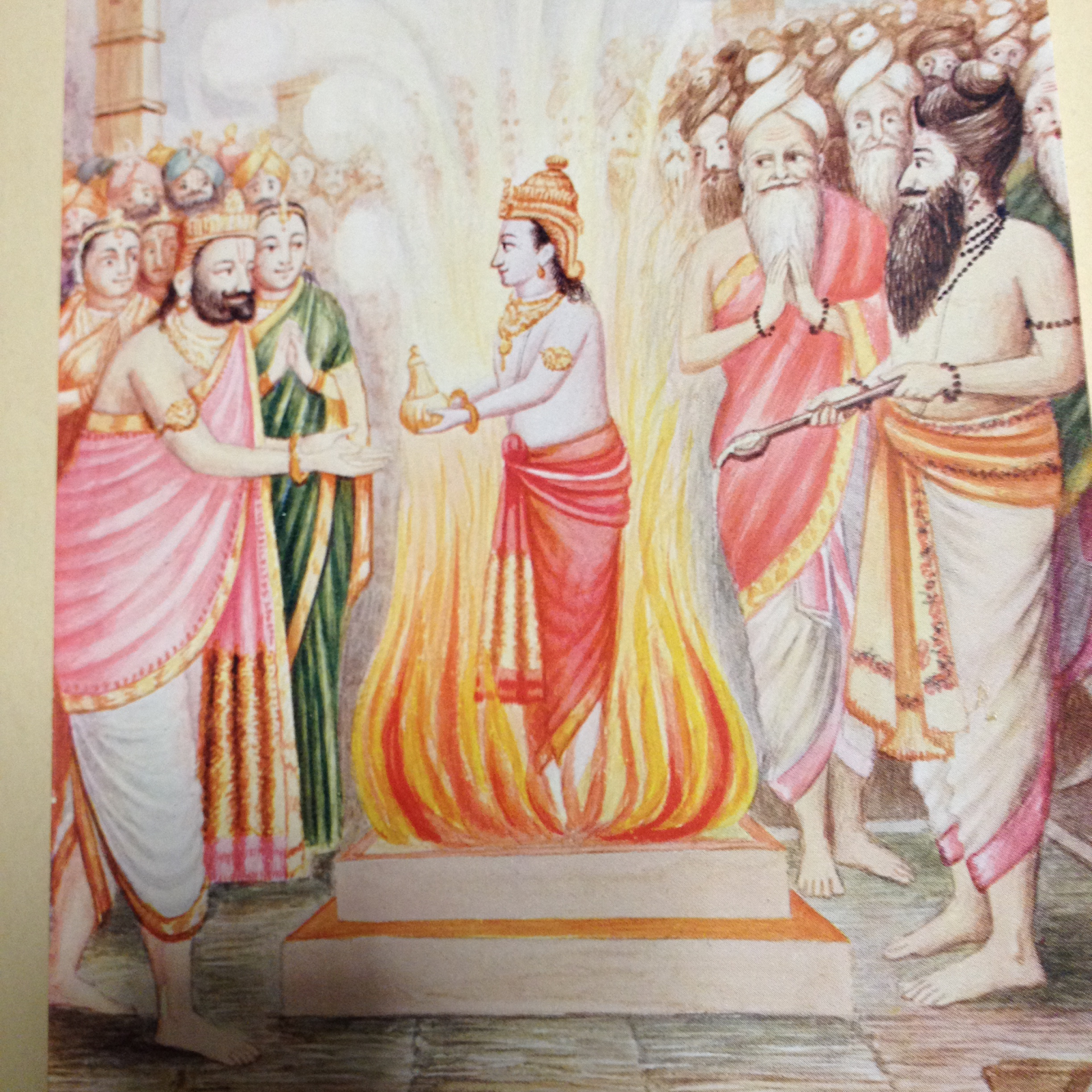
Putra Kameshti Yaajna
(From Wikipedia:- The Yavanajātaka (Sanskrit: yavana ‘Greek’ + jātaka ‘nativity‘ = ‘nativity according to the Greeks’), written by Sphujidhvaja, is an ancient text in Indian astrology.
According to David Pingree, it is a later versification of an earlier translation into Sanskrit of a Greek text, thought to have been written around 120 CE in Alexandria,[1] on horoscopy. Based on Pingree’s interpretation and emendations, the original translation, made in 149–150 CE by “Yavanesvara” (“Lord of the Greeks”) under the rule of the Western Kshatrapa king Rudrakarman I, is lost; only a substantial portion of the versification 120 years later by Sphujidhvaja under Rudrasena II has survive)
In the above description one can see doubts and uncertainty about the Greek source.
***
Zodiac Astrology in Tevaram
In one of the verses Sambandar says that famine occurs when Saturn enters Makara Raasi (Capricorn Zodiac Sign). Before that , around 300 BCE, Valmiki Ramayana describes the birth stars and the zodiac signs. Valmiki Ramayana is older than 300 BCE.
Varahamihira described the good and evil effects of plantes in many chapters. But Saturn entering Makara Raasi and causing famine or drought is not in Varaha Mihira’s Brhat Jataka. So, Sambandar must have known more astrology than Varahamihira.
Other sources associate drought and faminie with the movement of Jupiter (Guru or Brhaspati). Lot of Sanskrit and Tamil books talk about 12 Year Drought. What they mean is every 12 year drought will occur in one part of India. Varahamihira names all the countries affected by the movement of planets in different chapters.
More over, world’s largest festival Kumbhamela and Tamil Nadu’s famous festival Mahamaham at Kumbakonam tank, are associated with Jupiter entering a particular zodiacal sign.
If these are Greek concepts, neither Tamils nor Valmiki would have sung about it. Because people would not understand such Greek things!!
Sambandar is the first one to recite all the Seven Days in the order we follow it today.
***
Here is what Valmiki says about Rama’s birth Chart:
Six seasons after the completion of the (Putra Kameshti Yaga) sacrifice ,in the twelfth month, on the ninth day of the moon of Chaitramas, the star of Punarvasu was in the ascendant and the planets, the Sun, Mars, Saturn, Jupiter, and Venus were exalted, whilst those signs of zodiac , such as the Ram, the Fishes, the Ccales, were in auspicious aspects; the Moon and Jupiter being in conjunction with the period called karka.
–Bala Kanda, Valmiki Ramayana.
***
So, it is better to dump all the encyclopaedias and trust what Sangam Tamil books and Sanskrit books say.
No culture in the world would steal such foreign ideas and say them to laymen who speak Sanskrit or Tamil.
Above all Hindus are the only one community which celebrates God’s birth days (Ram Navami, Krishna Ashtami) and even common man casts his horoscope until this day
****
TEVARAM ABOUT SATURN ENTERING CAPRICORN
The Devas and Asuraas wearing flower garlands started churning the ocean of milk to get nectar. But the deadly poison that foamed on the top of the ocean created a great terror on all, everywhere in the universe including the goblins of Lord Civan. Being the repository of mercy, grace and love, Lord Civan came forward to save one and all in the universe (the entire humanity in the universe) from death. He, therefore, without swallowing the poison, put it in His mouth and positioned it in His throat permanently; His neck therefore is always in dark blue colour, similar to that of sapphire gem. In certain seasons of the year the planet Saturn enters into the tenth zodiac known as Capricorn and stays there for some period. During this period rain bearing clouds could not gather on mountaintop and shower rain. As there was no rainfall in the city, the country got afflicted with famine for want of food materials. Even in such times of draught and famine, the philanthropic and virtuous people of the city in large numbers came forward and helped the people and saved them from the devastating effect of the famine. Lord Civan is happily entempled in this famed city of Thiru-kazhu-malam.
*****

MY OLD ARTICLE
Tamil’s Strong Belief in Astrology
Written by London Swaminathan
Post No. 1082; 3rd June 2014.
Sangam Tamil literature in its 2389 poems sung by 461 poets give us voluminous information about their beliefs in supernatural and paranormal things. All these poets lived in the first three centuries of modern era. They believed in different types of predictions. Though they have some specialised techniques to read the future of any person, most of them are same like North India. This not only debunks the Aryan – Dravidian Racist theory, but also belies the atheist propaganda about an ancient rationalist Tamil society.
Tamil literature has got encyclopaedic information on astrology. For want of space, I give below some of the popular beliefs: this is not an exhaustive list.
The oldest Tamil book Tolkappiam mentions that the Royal umbrella and the Royal sword should be moved in the direction of travel on an auspicious day. Tamil weddings took place on the day of Rohini’s (Star Aldebaran) alignment with the moon (Agam 86 and 136). What Tolkappiar said nearly 2000 years ago is still followed by the Hindus. If they book plane tickets for some auspicious functions such as weddings abroad and the travel date is not auspicious, they simply move their luggage to the next door or a neighbour or do a Puja at an auspicious time .
I have written an article about Rohini star and the Tamil weddings. The references are at the end of this post.
Meteor
Meteors: Kudalur Kizar (Puram 229) described the effect of a meteor he and his colleagues saw in the sky. They predicted that the Chera King Mantharan Ceral Irumporai would die in seven days time and it came true.
Venus
The connection between Venus and Rain are seen in many of the Sangam verses:– Puram 117 by Kapilar, Puram. 35,41,384, 385,386, 388, 390, 398; Maduraikanchi Lines 106-109; Pattinappalai 1and 2. Depending upon the movement or position of the planet they predicted floods and drought. This is a new field for research. Modern scientists or astronomers have not yet found any link between rain and Venus. But Tamil and Sanskrit books are very clear about this link. Future research would prove that the Hindus are the first to discover this link.

Zodiac stamps from Maldives.
Zodiac signs
Lot of people suspected Greek influence in Indian astronomy. For instance the 12 zodiac signs did not exist in Indian astrology before the Greek occupation of North West India, they say. Hindus divided the path of moon in the sky into 27 constellations from the Vedic days. But ‘’Nedunal Vadai’’ (lines 160–161 ) sung by Nakkirar and Pura. 229 by Kudalur Kizar mention Mesha Rasi (Aries).
I doubt about Hindus borrowing these signs from the Greek. If we believe that Nakkirar and other 460 Sangam poets lived in the first three centuries of modern era, the Greek knowledge would not have spread that fast to Tamil Nadu from the North Western corners of India or Tamil’s direct contacts with the Yavanas. It will take hundreds of years to absorb foreign ideas and use them in popular poetry. Sometimes people start using certain terms in certain ages. This doesn’t mean that they learnt it late from other sources. Lord Ganesh is not mentioned by any Sangam poet or Manikkavasagar. Inspite of their knowledge about Lord Siva, the word SIVA was not used by any of the Sangam poets. So I will take all these as trends in literature.
27 Stars
Amazing thing about the Tamil astronomy is that they have lot of pure Tamil names for 27 stars in the sky, even during Sangam period. Star Anuradha is called Mudapanaiyam (stunted Palmyra tree) and Punarvasu a Kadaikulam (Pond). We don’t know why they named the stars so. But we know the same star clusters are seen by different cultures as different shapes. For instance, what we see as Saptarishi Mandalam (seven sages) is seen as Ursa Major (Great Bear) by the Greeks. Other cultures described it as a kite, a chariot etc.
Tamils must have observed the stars from very early times which is known from the way they named the star clusters/ constellations. At the same time they did not hesitate to use the Sanskrit words in Tamilized form as well. Kudalur Kizar in Puram.229 used the words Panguni (falguna), Uusi (Udichyai for North in Sanskrit), Paasi (Prachyai for East) etc.
Like their northern counterparts Tamils also worshipped the Saptarishi/Seven Stars, Arundhati (alcor)and Pole Star. All these are referred to in Sangam poems.

Eclipse
Eclipse: Though ancient Hindus knew very well that the eclipses are caused by the shadows of earth and moon, they told the laymen a story about a snake devouring the sun and the moon. Tamils also reflected this Puranic story in their ancient verses. (Puram 260, Agam 114 & 313. They have calculated the days of eclipse well in advance.
Bird signs
Details are in the verses of Puram. 204, 124, 68,41.
I have given the details in my four posts : 1)Etruscan- Hindu Tamil Link, 2)Kapinjala Bird Mystery in Rig Veda, 3)OWLS: Are they Good or Bad Omens? 4)Can Birds Predict Your Future? See the links at the bottom of this article.
Lizards
The sound made by the lizards served as omens for the Tamils. Kavan mullai putanar says,” the lizard on the Kalli tree makes its characteristic tickling sound and is taken as predicting the events to the wayfarers (Agam 151). Another poet says that the travellers paused a while hearing the tickling sound of the lizard (Agam 387). Even wild animals followed lizard sounds! A boar was just about to enter a millet field, but it went back on hearing the tickling sound of the lizard (Agam 186).
More references:–Agam 9, 151, 289, 387; Narrinai 98, 169,3 33, 9.
Comets
Comets: Like any ancient community Tamils were also afraid of the comets. They used the Sanskrit word ( Dhuma ketu) and Tamil word (Pukai Kodi) for it. Reference: Puram 117. Also in post- Sangam Tamil epic Manimekalai 6-64, 7-74, Silappadikaram 10-102.
Extinct Astrology
Virichi (Mullaippaattu 6-11,Pura 280), Unnam (Pathirrupathu 7th decad), Dark Bird Karik Kuruvi, Kurathi, Veri Atal are special techniques used by the Tamils to find about good and bad that is going to happen. The techniques are almost extinct now.
Virichi is hearing good or auspicious words before embarking on a task. Maravars sought Virichi before entering another country to ‘capture’ the cattle. This was the first step in waging a war. Tolkappiar also mentioned it.
Unnam is a tree. If it is very green it is considered positive and good. If it is wilted it is no good.
Veri Aatal is asking about the impending wedding of a daughter from a fortune teller. Sometimes the girls who had clandestine love affair were laughing at their mothers secretly about the futility of the task.

Stamps from Japan.
Nadi Jothidam
No reference of Nadi Jothidam is available in Sangam Literature: But it is prevalent from the olden days. It is about giving predictions with the help of old palm leaf manuscripts in which already one’s life predictions are written by the sages in verse form. Please read my article What India could teach the NASA scientists? (Link is at the end of this post).
There are many more beliefs about sneezing, twitching of eyes, blossoming of the Venkai trees, dreams etc.
***
My earlier posts related to this topic
Post No.1062.OWLS: Are they Good or Bad Omens? 24-5-14
Post No.1065.ஆந்தைகள் அலறல்: நல்ல சகுனமா? கெட்ட சகுனமா? பகுதி-1(26-5-14)
Post No.1067. ஆந்தைகள் அலறல்: நல்ல சகுனமா? கெட்ட சகுனமா? பகுதி-2(27-5-14)
1058.Ode to Skylark:Shelley,Kalidasa and Vedic poet Grtsamada 22/5
1059.ரிக்வேதத்தில் ஒரு பறவைப் பாட்டு23-5-14
1060.Kapinjala Bird Mystery in Rig Veda 23-5-14
1061. வேதத்தில் கபிஞ்ஜலா பறவை மர்மம்! 24-5-14
1054.Why did Sangam Tamils marry on Rohini star?20/5
1055.ரோகிணி நட்சத்திர மர்மம்: தமிழர்கள் திருமணம் நடத்தியது ஏன்?21-5-14
1003. வெள்ளி கிரகம்—மழை தொடர்பு பற்றி உபநிஷத்! 26th April, 2014.
967.What Hindus know that Scientists don’t know, 9-4-14
Can Birds Predict your Future? (July 22, 2012)
Tamil Astrology :Rope Trick for Predictions (Feb.27, 2013)
What India could teach NASA Scientists? (May 5, 2014)
1021.நாடி ஜோதிட ரகசியங்கள்: நாஸா விஞ்ஞானிகள் கவனிக்க, 5-5-14
Hindus Future Predictions- Part 1 (May 20, 2012)
Etruscan- Hindu/Tamil Link (July 28, 2012)
Do our Dreams have Meaning? (29 December 2011)
புறநானூற்றில் சூரிய கிரஹணம் (2 9 December 2011)
Posted 3rd June 2014 by Swaminathan
(all these were written before 2014; later I have added scores of articles on the subject)
–subham—
Tags- Zodiac, who invented, Hindus, Valmiki, Sangam Tamil books
Posted by Tamil and Vedas on July 10, 2025
https://tamilandvedas.com/2025/07/10/hindus-invented-zodiac-system-not-babylonians-post-14747/

from facebook
RARE BOOKS
POSTED BY LONDON SWAMINATHAN ON 10-7-2025
Lalla – Vakyani or The Wise Sayings of Lalla Ded
The Mystic Poetess of Ancient Kashmir
By George Grierson and Lionel D. Barnett
Published by The Royal Asiatic Society, London – 1920
Download book: https://bit.ly/44gMz6b
“Lalla-Vakyani, or The Wise Sayings of Lal Děd,” a scholarly endeavor by Sir George Grierson and Lionel D. Barnett, published in 1920 by the Royal Asiatic Society, holds a dual significance for both philologists and students of religion. As the “oldest known specimen of the Kashmiri language,” dating back to the fourteenth century A.D., it provides invaluable linguistic insights. However, its primary importance lies in its portrayal of the popular understanding and practice of the Śaiva Yoga religious system in ancient Kashmir.
The book’s preface clarifies that Lalla’s songs are not a systematic theological treatise but rather offer a vivid “picture of the actual working out in practice of a religion previously worked out in theory”. This perspective makes the collection a “unique contribution” to the historical study of one of India’s most significant religious systems. The division of labor between the editors is also outlined, with Dr. Barnett focusing on the Yoga system and its accompanying notes, while Sir George Grierson handled the text, translation, appendixes, and vocabulary.
The “Introduction” offers what little is known about Lalla’s historical background, confirming her existence and her probable contemporaneity with Sayyid ‘Ali Hamadani, a prominent saint who arrived in Kashmir in A.D. 1380 and played a key role in the region’s conversion to Islam. Lalla, a Yoginī and follower of the Kashmir branch of the Śaiva religion, was noted for her spiritual breadth, believing that “all religions were at one in their essential elements”. Despite Hindu admiration sometimes asserting that Hamadani was inspired by her, Kashmiri Muslims, while denying this, still hold her in high regard. Numerous unverified stories about Lalla are circulating, including tales of her cruel treatment by her mother-in-law, her subsequent life as a wandering mendicant, and her ecstatic, sometimes semi-nude, spiritual practices. The editors candidly admit the absence of authentic manuscripts, instead relying on meticulously preserved oral traditions passed down through generations of “ustāds, or teachers” and recorded from professional reciters.
A substantial “Preliminary Note on Yoga” provides a detailed exposition of the Yogic discipline, aiming to “emancipate the individual soul (puruṣa) from its bondage to the material universe (prakṛti)”. This emancipation is achieved through a “mental and bodily discipline culminating in a spiritual transformation,” leading to kaivalya, or salvation. The citta (mental organism) and its “five intellectual functions” (vṛttis)—right judgement, false judgement, imagination, sleep, and memory—along with “five moral functions” or “afflictions” (klēśas)—primal ignorance, egoism, material desire, hate, and clinging to embodied life—are meticulously explained as hindrances to be overcome.
The note further elucidates the “eight members” (aṣṭānga) of Yoga: yama (moral discipline towards others), niyama (moral discipline towards oneself), āsana (sitting postures), prāṇāyāma (breathing regulation), pratyāhāra (sense-withdrawal), dhāvaṇā (negative fixation of citta), dhyāna (meditation), and samādhi (perfect stillness of thought). Successful practice is believed to grant “various miraculous powers (vibhūti)” and “the ‘light of intuition’, prajñāloka”. The highest stage of samādhi is described as nirbīja (“seedless”) or asamprajñāta (“unconscious”), involving the arrest and paralysis of citta activities, culminating in the intuition of the distinction between puruṣa and prakṛti.
The microcosmic theory of the human body is extensively detailed, likening the vertebral column to Mount Meru, with a microcosmic sun at its base and moon at its top. Three vital nāḍis—Suṣumnā, Idā, and Piṅgalā—are central, with Suṣumnā ascending to the Brahma-randhra (the upper extremity of the skull). The moon is described as exuding nectar, part of which flows downwards to meet the microcosmic sun. The cakras, conceived as lotuses attached to the Suṣumnā, include Mūlādhāra (at the base of the spine, housing Kuṇḍalinī), Svādhiṣṭhāna, Maṇipūra, Anāhata (in the heart, containing Prāṇa or breath of life), Viśuddha (in the throat), and Ājñā (between the eyebrows). The ultimate goal is to raise Kuṇḍalinī, the “power of spirit” or “creative force,” through the Suṣumnā to the thousand-petaled lotus, Sahasrāra, located at the base of the palate and representing the “sphere of the Absolute or Transcendental Being, Parama-Śiva”. This absorption merges the cosmic energy into infinite bliss, overcoming “Death (cosmic, conditioned being) and the Kula”.
The appendixes further enrich the volume by offering insights into Lalla’s language, noting archaic forms and phonetical peculiarities, and analyzing her unique stress-accent based metrical system, distinct from traditional Persian or Indian quantitative metres. This comprehensive approach makes “Lalla-Vakyani” an indispensable resource for understanding a pivotal figure in Indian spiritual and linguistic history.
–subham-
TAGS–KASHMIRI POETESS LALLA, DEVOTEE OF SHIVA, Kashmir, mystic poetess, Lalla, book bY Grierson
Posted by Tamil and Vedas on July 10, 2025
https://tamilandvedas.com/2025/07/10/kashmiri-poetess-lalla-devotee-of-shiva/
 Tamil and Vedas
You must be logged in to post a comment.