Written by London Swaminathan
swami_48@yahoo.com
Date: 18 December 2018
GMT Time uploaded in London – 18-31
Post No. 5798
Pictures shown here are taken from various sources including google, Wikipedia, Facebook friends and newspapers. This is a non- commercial blog.
So far we have covered six out of twelve chapters of Manu Smrti. Now let us look at the first 98 slokas/couplets of seventh chapter. Here, Manu deals with the duties of the kings and the laws about punishments.
First, I will give the interesting things in bullet points; there are similarities with ancient Tamil literature.
1.King is considered god; in old Tamil the words for the King and God are same (Ko, Irai = King , God; Kovil = temple or palace)
See the slokas 8 to 10
Compare Tirukkural 691 where king is equated with fire; also in chapters 55 and 56,Valluar describes the qualities and powers of a king in 20 couplets.
In Sangam literature, king’s powers are compared with Sun, moon, Fire, Wind and Yama. See slokas 4 on wards
2. In sloka 7-12 Manu says that one who hates a king will perish. In Tamil there is a proverb that ‘The king kills one on the same day, but God waits and kills bad people. This is also reflected in Tamil Veda Tirukkural.
3.Slokas16-20 emphasizes the importance of punishment. All the Tamil epigraphs praised the kings as followers of Manu Niti (Manu’s Justice)in that respect. Story of Manu Niti Choza is very popular in Tamil literature (see my article on this king)
4.Interesting Similes or references to animals- sloka 20-fish, 21-dog and crow, 33, 34- oil and ghee in water
5.Slokas 41 and 42 give the lisst of good and bad kings. I have given their stories in my old articles; Sumukan’s name is found only in Sumerian (Read my old articles)
6.Slokas 47-52 describe the Ten Vices of kings
7.Sloka 54 recommends 7 or 8 ministers. Krishna Deva Raya, Veera Sivaji and Tamil kings had this 8 advisers/ ministers set up; Tamil epic Silappadikaram talks about Two Councils of Five and Eight (Aimperum Kuzu and Enperaayam in Tamil)
8.Slokas 63 and 64 emphasizes the importance of Ambassadors- I have dealt with this subject already. The world learnt about Ambassadors, Flags, Symbols, Emblems – all from India. We have umpteen examples in Ramayana and Mahabharata
9.Sloka 71 recommends Fort on the Hill. Veera Shivaji and several Rajasthani kings won several battles due to this factor.
10.Sloka 90 onwards describe the rules for just wars. This is the big difference between ancient Hindu and other Non- Hindu states. In those days Hindus fought wars according to rules. They fought from sun rise to sun set in a designated place outside the human habitation areas. But after Greek, Muslim and European invasions everything changed. If they killed the Indian king, Hindus thought that the war was lost.
11. Sloka 96 onwards we see the rules for sharing the war booty. Manu covered almost everything under the sun!
12. Manu has dealt all the topics in 12 chapters in over 2600 couplets; there are nine commentaries available in full. These slokas on Raja Niti (Just Rule) have attracted lot of comments. One must read the all the commentaries to understand the genius of Manu.
13.Punishment of Brahmins (scholars)- Manu says that the king should be lenient towards Brahmins, when it comes to punishment. If we take Brahmins as scholars who lead an unblemished lif,e then one can understand it. Even communist countries treated ‘erring’ intellectuals with some concessions. See my articles on Shakarov of Soviet Union and others.
Here is Chapter Seven:–
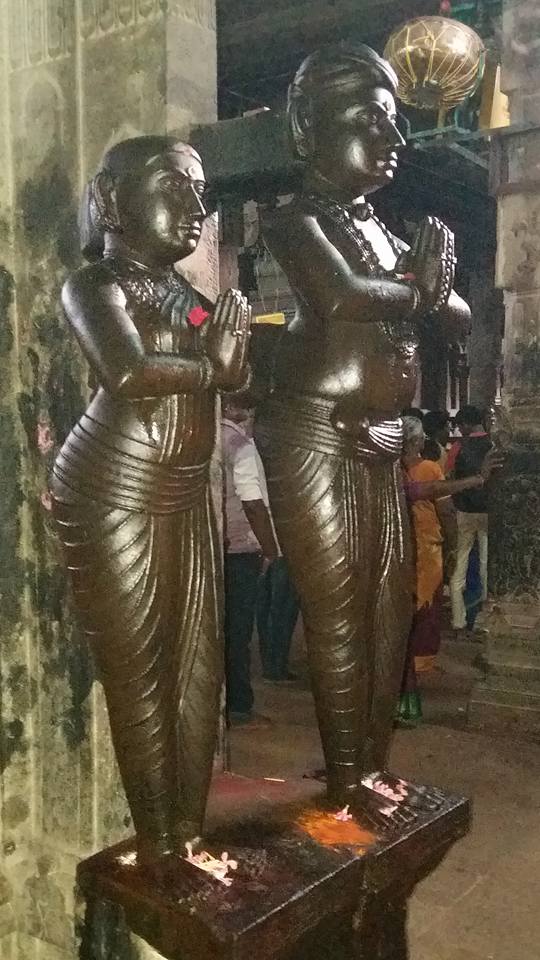
DUTIES OF KINGS
7-1. I will declare the duties of kings, and show how a king should conduct himself, how he was created, and how he can obtain highest success.
2. A Kshatriya, who has received according to the rule the sacrament prescribed by the Veda, must duly protect this whole world.
3. For, when these creatures, being without a king, through fear dispersed in all directions, the Lord created a king for the protection of this whole creation,
EIGHT POWERS OF EIGHT GODS
4. Taking for that purpose eternal particles of Indra, of the Wind, of Yama, of the Sun, of Fire, of Varuna, of the Moon, and of the Lord of wealth Kubera.
5. Because a king has been formed of particles of those lords of the gods, he therefore surpasses all created beings in lustre;
6. And, like the sun, he burns eyes and hearts; nor can anybody on earth even gaze on him.
7. Through his supernatural power he is Fire and Wind, he Sun and Moon, he the Lord of justice (Yama), he Kubera, he Varuna, he great Indra.
KING IS GOD
8. Even an infant king must not be despised, (from an idea) that he is a mere mortal; for he is a great deity in human form.
9. Fire burns one man only, if he carelessly approaches it, the fire of a king’s anger consumes the whole family, together with its cattle and its hoard of property.
10. Having fully considered the purpose, his power, and the place and the time, he assumes by turns many different shapes for the complete attainment of justice.
11. He, in whose favour resides Padma, the goddess of fortune, in whose valour dwells victory, in whose anger abides death, is formed of the lustre of all (gods).
KINGS KILL ENEMIES AT ONCE
7-12. The man, who in his exceeding folly hates him, will doubtlessly perish; for the king quickly makes up his mind to destroy such a man.
13. Let no man, therefore, transgress that law which favourites, nor his orders which inflict pain on those in disfavour.
14. For the king’s sake the Lord formerly created his own son, Punishment, the protector of all creatures, an incarnation of the law, formed of Brahman’s glory.
15. Through fear of him all created beings, both the immovable and the movable, allow themselves to be enjoyed and swerve not from their duties.
PUNIHING THE WRONG DOERS
16. Having fully considered the time and the place of the offence, the strength and the knowledge of the offender, let him justly inflict that punishment on men who act unjustly.
17. Punishment is in reality the king (and) the male, that the manager of affairs, that the ruler, and that is called the surety for the four orders’ obedience to the law.
18. Punishment alone governs all created beings, punishment alone protects them, punishment watches over them while they sleep; the wise declare punishment to be identical wit) the law.
19. If(punishment is properly inflicted after due consideration, it makes all people happy; but inflicted without consideration, it destroys everything.
20. If the king did not, without tiring, inflict punishment on those worthy to be punished, the stronger would roast the weaker, like fish on a spit;
LAWLESS STATE
21. The crow would eat the sacrificial cake and the dog would lick the sacrificial oblations, and ownership would not remain with any one, the lower ones would usurp the place of the higher ones.
22. The whole world is kept in order by punishment, for a guiltless man is hard to find; through fear of punishment the whole world yields the enjoyments (which it owes).
23. The gods, the Danavas, the Gandharvas, the Rakshasas, the bird and snake deities even give the enjoyments due from them only, if they are tormented by (the fear of punishment.
24. All castes (varna) would be corrupted (by intermixture), all barriers would be broken through, and all men would rage (against each other) in consequence of mistakes with respect to punishment.
25. But where Punishment with a black hue and red eyes stalks about, destroying sinners, there the subjects are not disturbed, provided that he who inflicts it discerns well.
26. They declare that king to be a just inflicter of punishment, who is truthful, who acts after due consideration, who is wise, and who knows (the respective value of) virtue, pleasure, and wealth.
27. A king who properly inflicts (punishment), prospers with respect to (those) three (means of happiness); but he who is voluptuous, partial, and deceitful will be destroyed, even through the (unjust) punishment (which he inflicts).
28. Punishment (possesses) a very bright lustre, and is hard to be administered by men with unimproved minds; it strikes down the king who swerves from his duty, together with his relatives.
29. Next it will afflict his castles, his territories, the whole world together with the movable and immovable (creation), likewise the sages and the gods, who (on the failure of offerings) ascend to the sky.
30. (Punishment) cannot be inflicted justly by one who has no assistant, (nor) by a fool, (nor) by a covetous man, (nor) by one whose mind is unimproved, (nor) by one addicted to sensual pleasures.
31. By him who is pure (and) faithful to his promise, who acts according to the Institutes (of the sacred law), who has good assistants and is wise, punishment can be (justly) inflicted.
32. Let him act with justice in his own domain, with rigour chastise his enemies, behave without duplicity towards his friends, and be lenient towards Brahmanas.
33. The fame of a king who behaves thus, even though he subsist by gleaning, is spread in the world, like a drop of oil on water.
34. But the fame of a king who acts in a contrary manner and who does not subdue himself, diminishes in extent among men like a drop of clarified butter in water.
35. The king has been created (to be) the protector of the castes (varna) and orders, who, all according to their rank, discharge their several duties.
36. Whatever must be done by him and by his servants for the protection of his people, that I will fully declare to you in due order.
37. Let the king, after rising early in the morning, worship Brahmanas who are well versed in the threefold sacred science and learned (in polity), and follow their advice.
38. Let him daily worship aged Brahmanas who know the Veda and are pure; for he who always worships aged men, is honoured even by Rakshasas.
39. Let him, though he may already be modest, constantly learn modesty from them; for a king who is modest never perishes.
40. Through a want of modesty many kings have perished, together with their belongings; through modesty even hermits in the forest have gained kingdoms.
IMMODEST KINGS WHO LOST POWER
41. Through a want of humility Vena perished, likewise king Nahusha, Sudas, the son of Pigavana, Sumukha, and Nemi.
42. But by humility Prithu and Manu gained sovereignty, Kubera the position of the Lord of wealth, and the son of Gadhi the rank of a Brahmana.
43. From those versed in the three Vedas let him learn the threefold (sacred science), the primeval science of government, the science of dialectics, and the knowledge of the (supreme) Soul; from the people (the theory of) the (various) trades and professions.
44. Day and night he must strenuously exert himself to conquer his senses; for he alone who has conquered his own senses, can keep his subjects in obedience.
TEN VICES
45. Let him carefully shun the ten vices, springing from love of pleasure, and the eight, proceeding from wrath, which (all) end in misery.
46. For a king who is attached to the vices springing from love of pleasure, loses his wealth and his virtue, but he who is given to those arising from anger, loses even his life.
47. Hunting, gambling, sleeping by day, censoriousness, (excess with) women, drunkenness, (an inordinate love for) dancing, singing, and music, and useless travel are the tenfold set (of vices) springing from love of pleasure.
48. Tale-bearing, violence, treachery, envy, slandering, (unjust) seizure of property, reviling, and assault are the eightfold set (of vices) produced by wrath.
49. That greediness which all wise men declare to be the root even of both these (sets), let him carefully conquer; both sets (of vices) are produced by that.
50. Drinking, dice, women, and hunting, these four (which have been enumerated) in succession, he must know to be the most pernicious in the set that springs from love of pleasure.
51. Doing bodily injury, reviling, and the seizure of property, these three he must know to be the most pernicious in the set produced by wrath.
52. A self-controlled (king) should know that in this set of seven, which prevails everywhere, each earlier-named vice is more abominable (than those named later).
53. (On a comparison) between vice and death, vice is declared to be more pernicious; a vicious man sinks to the nethermost (hell), he who dies, free from vice, ascends to heaven.
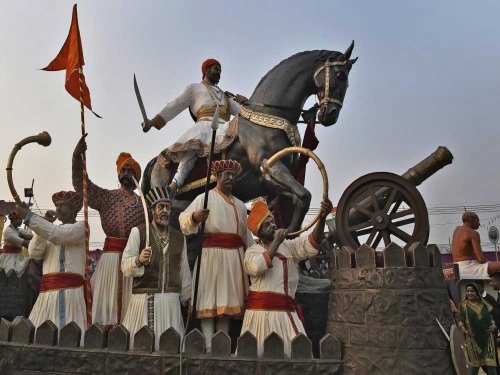
EIGHT MINISTERS
(SIVAJI, KRISHNADEVARAYAR , TAMILS FOLLOWED THIS)
54. Let him appoint seven or eight ministers whose ancestors have been royal servants, who are versed in the sciences, heroes skilled in the use of weapons and descended from (noble) families and who have been tried.
55. Even an undertaking easy (in itself) is sometimes) hard to be accomplished by a single man; how much harder is it for a king, especially if he has no assistant, to govern a kingdom which yields great revenues.
56. Let him daily consider with them the ordinary (business, referring to) peace and war, (the four subjects called) sthana, the revenue, the (manner of) protecting (himself and his kingdom), and the sanctification of his gains (by pious gifts).
57. Having (first) ascertained the opinion of each (minister) separately and (then the views) of all together, let him do what is (most) beneficial for him in his affairs.
58. But with the most distinguished among them all, a learned Brahmana, let the king deliberate on the most important affairs which relate to the six measures of royal policy.
59. Let him, full of confidence, always entrust to that (official) all business; having taken his final resolution with him, let him afterwards begin to act.
60. He must also appoint other officials, (men) of integrity, (who are) wise, firm, well able to collect money, and well tried.
MINISTRIES
61. As many persons as the due performance of his business requires, so many skilful and clever (men), free from sloth, let him appoint.
62. Among them let him employ the brave, the skilful, the high-born, and the honest in (offices for the collection of) revenue, (e.g.) in mines, manufactures, and storehouses, (but) the timid in the interior of his palace.
63. Let him also appoint an ambassador who is versed in all sciences, who understands hints, expressions of the face and gestures, who is honest, skilful, and of (noble) family.

APPOINTMENT OF AMBASSADORS
64.Such an ambassador is commended to a king (who is) loyal, honest, skilful, possessing a good memory, who knows the Proper place and time for action, who is handsome, fearless, and eloquent.
65. The army depends on the official (placed in charge of it), the due control (of the subjects) on the army, the treasury and the (government of) the realm on the king, peace and its opposite (war) on the ambassador.
66. For the ambassador alone makes (kings’) allies and separates allies; the ambassador transacts that business by which (kings) are disunited or not.
67. With respect to the affairs let the (ambassador) explore the expression of the countenance, the gestures and actions of the (foreign king) through the gestures and actions of his confidential (advisers), and (discover) his designs among his servants.
68. Having learnt exactly (from his ambassador) the designs of the foreign king, let (the king) take such measures that he does not bring evil on himself.
69. Let him settle in a country which is open and has a dry climate, where grain is abundant, which is chiefly (inhabited) by Aryans, not subject to epidemic diseases (or similar troubles), and pleasant, where the vassals are obedient and his own (people easily) find their livelihood.
70. Let him build (there) a town, making for his safety a fortress, protected by a desert, or a fortress built of (stone and) earth, or one protected by water or trees, or one (formed by an encampment of armed) men or a hill-fort.
FORT IN THE HILL
71. Let him make every effort to secure a hill-fort, for amongst all those fortresses mentioned a hill-fort is distinguished by many superior qualities.
72. The first three of those various kinds of fortresses are inhabited by wild beasts, animals living in holes and aquatic animals, the last three by monkeys, men, and gods respectively.
73. As enemies do not hurt these (beings, when they are) sheltered by (their) fortresses, even so foes (can) not injure a king who has taken refuge in his fort.
74. One bowman, placed on a rampart, is a match in battle for one hundred (foes), one hundred for ten thousand; hence it is prescribed (in the Sastras that a king will posses) a fortress.
75. Let that (fort) be well supplied with weapons, money, grain and beasts of burden, with Brahmanas, with artisans, with engines, with fodder, and with water.
76. Let him cause to be built for himself, in the centre of it, a spacious palace, (well) protected, habitable in every season, resplendent (with whitewash), supplied with water and trees.
77. Inhabiting that, let him wed a consort of equal caste (varna), who possesses auspicious marks (on her body), and is born in a great family, who is charming and possesses beauty and excellent qualities.
78. Let him appoint a domestic priest (purohita) and choose officiating priests (ritvig); they shall perform his domestic rites and the (sacrifices) for which three fires are required.
79. A king shall offer various (Srauta) sacrifices at which liberal fees (are distributed), and in order to acquire merit, he shall give to Brahmanas enjoyments and wealth.
80. Let him cause the annual revenue in his kingdom to be collected by trusty (officials), let him obey the sacred law in (his transactions with) the people, and behave like a father towards all men.
81. For the various (branches of business) let him appoint intelligent supervisors; they shall inspect all (the acts) of those men who transact his business.
BRAHMINS
82. Let him honour those Brahmanas who have returned from their teacher’s house (after studying the Veda); for that (money which is given) to Brahmanas is declared to be an imperishable treasure for kings.
83. Neither thieves nor foes can take it, nor can it be lost; hence an imperishable store must be deposited by kings with Brahmanas.
84. The offering made through the mouth of a Brahmana, which is neither spilt, nor falls (on the ground), nor ever perishes, is far more excellent than Agnihotras.
85. A gift to one who is not a Brahmana (yields) the ordinary (reward; a gift) to one who calls himself a Brahmana, a double (reward); a gift to a well-read Brahmana, a hundred-thousandfold (reward); (a gift) to one who knows the Veda and the Angas (Vedaparaga, a reward) without end.
86. For according to the particular qualities of the recipient and according to the faith (of the giver) a small or a great reward will be obtained for a gift in the next world.
87. A king who, while he protects his people, is defied by (foes), be they equal in strength, or stronger, or weaker, must not shrink from battle, remembering the duty of Kshatriyas.
88. Not to turn back in battle, to protect the people, to honour the Brahmanas, is the best means for a king to secure happiness.
89. Those kings who, seeking to slay each other in battle, fight with the utmost exertion and do not turn back, go to heaven.
FIGHTING RULES
90. When he fights with his foes in battle, let him not strike with weapons concealed (in wood), nor with (such as are) barbed, poisoned, or the points of which are blazing with fire.
91. Let him not strike one who (in flight) has climbed on an eminence, nor a eunuch, nor one who joins the palms of his hands (in supplication), nor one who (flees) with flying hair, nor one who sits down, nor one who says ‘I am thine;’
92. Nor one who sleeps, nor one who has lost his coat of mail, nor one who is naked, nor one who is disarmed, nor one who looks on without taking part in the fight, nor one who is fighting with another (foe);
93. Nor one whose weapons are broken, nor one afflicted (with sorrow), nor one who has been grievously wounded, nor one who is in fear, nor one who has turned to flight; (but in all these cases let him) remember the duty (of honourable warriors).
94. But the (Kshatriya) who is slain in battle, while he turns back in fear, takes upon himself all the sin of his master, whatever (it may be);
95. And whatever merit (a man) who is slain in flight may have gained for the next (world), all that his master takes.
WAR BOOTY
96. Chariots and horses, elephants, parasols, money, grain, cattle, women, all sorts of (marketable) goods and valueless metals belong to him who takes them (singly) conquering (the possessor).
97. A text of the Veda (declares) that (the soldiers) shall present a choice portion (of the booty) to the king; what has not been taken singly, must be distributed by the king among all the soldiers.
7-98. Thus has been declared the blameless, primeval law for warriors; from this law a Kshatriya must not depart, when he strikes his foes in battle.
Tags:- Manu’s Law on kings, Punishments, Wars, Booty
to be continued……………………………
 Tamil and Vedas