Compiled by London swaminathan
swami_48@yahoo.com
Date:22 JANUARY 2019
GMT Time uploaded in London – 21-40
Post No. 5975
Pictures shown here are taken from various sources including google, Wikipedia,
Facebook friends and newspapers. This is a non- commercial blog.
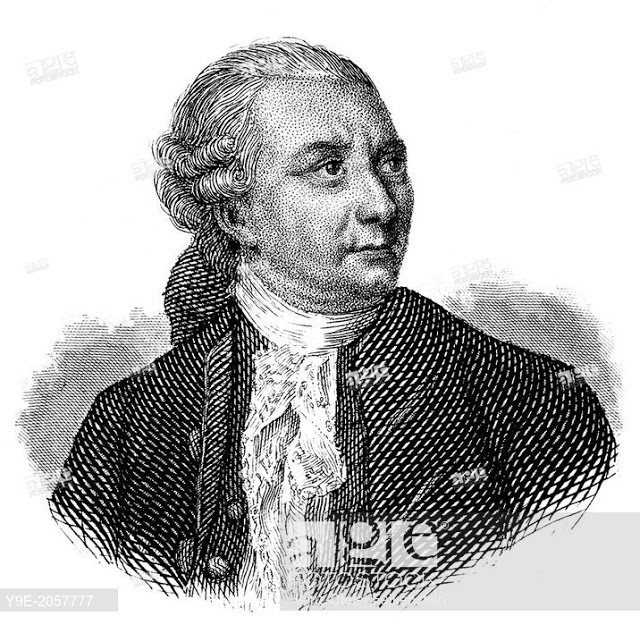
Some of the admirers of the 18th century German poet Klopstock made a journey from Gottingen to Hamburg to ask him to explain a difficult passage in his works. Klopstock received them graciously, read the passage and said,
I cannot recollect what I meant when I wrote it, but I remember it was the finest thing I ever wrote and you cannot do better than devote your lives to the discovery of its meaning.
Xxx
Erskine’s Question
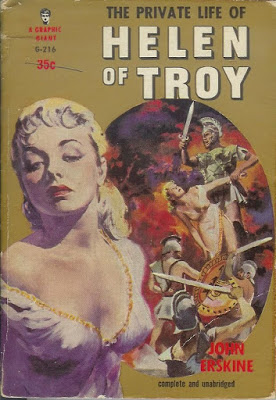
John Erskine one time went to lecture at the University of
Pennsylvania. The President of the university had never met Dr Erskine, and did
not immediately succeed in finding him when he went to meet him on the station
platform. When the two men had at last identified one another, the president of
the university said
I asked one gentleman if he were Dr Erskine, and he said
emphatically, I should say not.
I asked another one and he said, I wish I were. That proves
that at least one of them had read your books.
Yes, said Erskine. But which one?
XXX
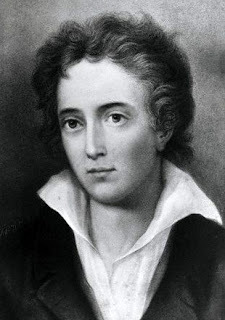
Shelley s. reading habit
Let main pattern of Shelley s life was an alternation of sleeping and reading. He was, in fact, always fatigued from night reading, and had a habit of falling asleep by day, anywhere sudddenly, like a child. At Oxford he read about sixteen out of every twenty four hours, his eyes always in a book when eating or when walking whether in country lanes o, or on the streets …..
It was his habit at this time to read standing where possible.
Trelawney that he left Shelley at ten one morning, standing at the mantel in
his study reading and returning at six, found him in the same position still
reading, looking pale and exhausted.
Xxxx
PERCY BYSSHE SHELLEY PROFILE
SHELLYEY, English Poet, Novelist and Essayist
Born August 4, 1792
Died July 8, 1822
Age at death 29
P B Shelley was one of England’s greatest Romantic poets. He was born into a wealthy noble family. He was educated at Eton college, where his radical views on politics and religion earned him a nick name ‘Mad Shelley’. While still at Eton and aged just 18, he published his first book, a gothic horror novel called Zastrozzi. In 1811 he was expelled from Oxford University for writing an anti-Christian pamphlet.
The same year 19 year old Shelley shocked his family even more by secretly marrying 16 year old Harriet Westbrook. This was the start of Shelly’s adventurous life of elopements and restless travels. Three year later Shelley eloped with Mary Wollstonecraft Godwin, who became Mary Shelley and who wrote the famous novel Frankenstein. Harriet killed herself in 1816, and Shelley married his new love. Mary and Shelley moved around constantly; they travelled around Europe and lived in many different towns in England. Shelley wrote his poetry in short bursts of intense creativity. His poems such as Alastor and Ozymandias, overflow with intense emotion and radical ideas that were not always appreciated by readers of his time.
In 1818 Shelley and Mary left England to live in Italy. He completed some of his greatest poetry there, including his masterpiece Prometheus Unbound. A few years later, on a short sea voyage along the Italian coast, Shelly’s small sail boat was caught in a storm and he was drowned. He was just 29 years old, but he had written poetry hat established him as one of the greatest English poets.
Publications
1810 Zastrozzi
1813 Queen Mab
1816 Alastor
1818 The Revolt of Islam
1818 Ozymandias
1819 The Cenci
1820 Prometheus Unbound
1821 Adonais
Published after he died
1824 The Triumph of Life
Xxxxx Subham xxxx
 Tamil and Vedas
R.Nanjappa (@Nanjundasarma)
/ January 23, 2019The incident about German poet Klopstock is interesting. I have heard the same sort of comment about Robert Browning. Browning’s poetry is noted for ‘obscurity’ and optimism.
About his optimism, we have the supreme line “God is in his heaven and all is right with the world.” [ Pippa Passes]. ( But even this occurs in circumstances which are not wholesome or beyond ambiguity.)
About his supposed obscurity, it used to be said that someone once asked him the meaning of a poem and Browning was supposed to have remarked: when he wrote it, two persons knew the meaning- God and Browning; now only one knew the meaning and that was God!
This of course is an exaggeration. The obscurity in the case of Browning is due to the fact that he employs innumerable allusions from the Classics and old history of many countries which only a very few would know. And his style is different ( and difficult); the meaning is not apparent in the first reading or on the surface- it takes deliberate effort to understand, one has to dig deep . One has to know the main purport or essence of the poem before fixing the meaning of particular lines… Browning said that he did not intend his poems to be a substitute for cigars or a game at dominoes for the idle man. He wrote for the few serious readers, not for the crowd. Even so, his poems are hard to follow, and the ambiguities hard to swallow. There is a deep psychological and subjective element which is difficult to fathom. Victorian critics pounced on him, one saying that he had no music or melody like Swinburne, nor grace or sweetness like Tennyson and that in fifty years nobody would read Browning. But as Harold Bloom has shown, Browning is increasingly recognised now.
We do not know whether the same position prevails in respect of Klopstock!
By the way, the above line of Browning’s optimism has been negated or trivialised in the Indian cinema. Many years ago, there used to be Tamil song with the words:” ஆண்டவன் ஆகாசமதில் தூங்குகின்றாரே ” ie God is indifferent to the sufferings in the world.
Urdu-Hindi poet Sahir Ludhianvi wrote:
आसमाँ पे है खुदा और ज़मीं पे हम
आजकल वो इस तरफ़ देखता है कम
Aasman pe hai khuda aur zamin pe hum
Aajkal wo is taraf dekhta hai kum
God remains in heaven, we are on the earth
These days he does not look much on this side.
And he gives instances to show that all is not well with the world!
The world of poetry is indeed interesting.
Tamil and Vedas
/ January 25, 2019EXCELLENT. THANKS.