COMPILED by London swaminathan
swami_48@yahoo.com
Date: 4 May 2019
British Summer Time uploaded in London – 7-08 am
Post No. 6341
Pictures shown here are taken from various sources including google, Wikipedia, Facebook friends and newspapers. This is a non- commercial blog. ((posted by swamiindology.blogspot.com AND tamilandvedas.com))
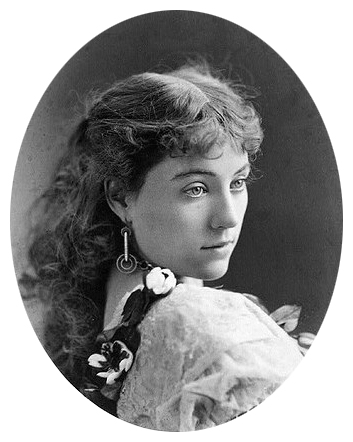
Miss Clara Morris

Miss Clara Morris told the following story of her own experience:
Somewhere in the wide world there is an actor — and a good one – who never eats
celery without thinking of me. It was years ago, when I was playing Camille. In
the first scene, you will remember, the unfortunate Armand takes a rose from
Camille as a token of love. We had almost reached that point, when, as I
glanced down, I saw that the flower was missing from its accustomed place on my
breast.
What could I do? On the flower hung the strength of the scene. However, I
continued my lines in an abstract ed fashion and began a still hunt for that
rose or a substitute. My gaze wandered around the stage. On the dinner table
was some celery. Moving slowly towards it, I grasped the celery and twisted the
tops into a rose form. Then I began the fateful lines,
“Take this flower. The life of a camellia is short. If held and caressed it will
fade in a morning or an evening”.
Hardly able to control his laughter, Armand spoke his lines which ran,
“It is a cold, scentless flower. It is a strange flower. I agreed with him”.
Clara Morris (March 17, 1849 – November 20, 1925) (her birth date is sometimes given as 1846/48) was an American actress.
Xxxx


Conductors Anecdotes
The noted conductor, Eugene Goosens, is fond of a story about a titled English man of no musical education or ability, who desire d to be a conductor. He hired a symphony orchestra and a costly concert hall and, willy nilly, began conducting a rehearsal in preparation for the launching of a great concert. He had no ability whatsoever to control the orchestra and the musicians found themselves struggling to keep time against the erratic and vague gestures of their conductor. The rehearsal got nowhere and, after a couple of hours, everyone was hot , tired and irritable. At this time, in the midst of a slow, stately passage, the kettle drummer , who was rattled, anticipated an attack by some twelve bars and came crashing in. Flying into a fury, the conductor hurled down his baton, glared at the players, and shouted,
“Who did that?”
Xxx
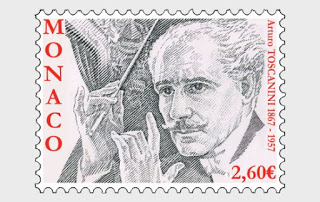
Arturo Toscanini 1

During a rehearsal a second violinist grazed the
string next to the one he had intended to play. The sound of this slip was
almost inaudible. Few people would have noticed it. But Toscanini stopped the
orchestra, pointed his baton at the culprit without hesitation and cried out
sharply,
“One string will be quite enough, if you please”.
Arturo Toscanini (Italian: [arˈtuːro toskaˈniːni]; March 25, 1867 – January 16, 1957) was an Italian conductor. He was one of the most acclaimed musicians of the late 19th and of the 20th century, renowned for his intensity, his perfectionism, his ear for orchestral detail and sonority, and his eidetic memory.[1] He was at various times the music director of La Scala in Milan, the Metropolitan Opera in New York, and the New York Philharmonic. Later in his career he was appointed the first music director of the NBC Symphony Orchestra (1937–54), and this led to his becoming a household name (especially in the United States) through his radio and television broadcasts and many recordings of the operatic and symphonic repertoire.
Xxx

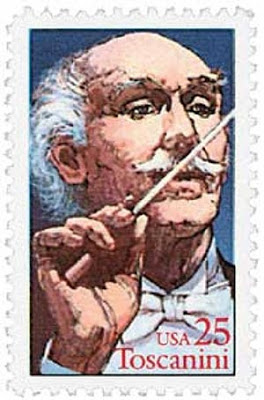
Arturo Toscanini 2
Once when the Philharmonic was rehearsing Cesar Franck’s Symphony under the direction of Toscanini, he interrupted the rehearsal and protested that the clarinetist was playing a wrong note. The clarinetist denied the charge, and repeated the passage from his score before him.
The note is A, Toscanini said, Not A Flat
No, no,said the clarinetist, and came forward
with his score to prove it. Toscanini peered nearsightedly at the page.
This is an error, he said, and, sending for the full conductor s score, which he never used, he opened it and demonstrated the error of which the clarinetist himself was innocent, an error in the part-copyist ‘s work.
Xxx SUBHAM XXX
 Tamil and Vedas