

WRITTEN BY R. NANJAPPA
Post No. 8505
Date uploaded in London – – – 14 August 2020
Contact – swami_48@yahoo.com
Pictures are taken from various sources for spreading knowledge; this is a non- commercial blog. Thanks for your great pictures.
Books Indians Should Read- 15
Chapter 5 – Part 3
R.Nanjappa
Stoicism and Indian tradition
[My reflections]
Students of Indian philosophy and especially of the Gita will be thrilled at this approach. For,
this expresses the essence of the Gita, though without its theological aspects.
The Discipline of Perception is what the Gita calls Sankhya- it is how the Gita
teaching actually begins! This is the right understanding. There is a Permanent
Presence, Immutable Order in the world, beyond the perishable elements! The
wise perceive the difference and act accordingly.
Na sato vidyate bhaavo
Naa bhaavo vidyate sata:
Ubhayorapi drushta: anta:
Anayo tatvadarshibhi: 2.16
The Discipline of Action is what is termed Yoga in the Gita.. Shorn of desire and
hatred, without attachment to fruit, every action becomes Yoga or right action!
We cannot refrain from action in the world, so our effort should be to make every
action right action: Yoga karmasu kausalam!
The Discipline of the Will is what may be called Samatva in the language of the
Gita: maintaining equanimity and balance of mind, unaffected by the vagaries of
mind. (Samatvam Yoga uchyate ) The will has to be trained- by repeated practice
and renunciation: “abyaasena vairagyena cha” ( 6.35)
Thus we see that the Stoic prescriptions become a very practical way to follow and practice
our own Gita in daily life! No wonder we feel so at home while reading these ancient Greek
philosophers.
Arjuna was interested not in philosophy, but in a practical way for his true well being:
Shreyas. The Stoics answered this very need: do not inquire into the nature of the world,
existence, etc. Understand that there are things beyond your control. Concentrate on what
you can control according to your reason. Accept the world order, understand your place in
it and organise your life accordingly. This is a very practical prescription, and not arm chair
philosophy or empty speculation.
Note:
Zeno was a merchant. His ship sank on a voyage and his cargo was lost.He became
acquainted with the philosophy of Socrates, and of Crates of Athens. This changed his life
and he developed his own philosophy- Stoicism.
Epictetus was born a slave and served a master in Rome who was a secretary to Nero. He
studied philosophy under Musonius Rufus with permission of his master. Later he obtained
freedom and taught philosophy in Rome. Emperor Domitian banished all philosophers from
Rome in 93 AD. Epictetus then went to Greece where he lived and taught for the rest
of his life.
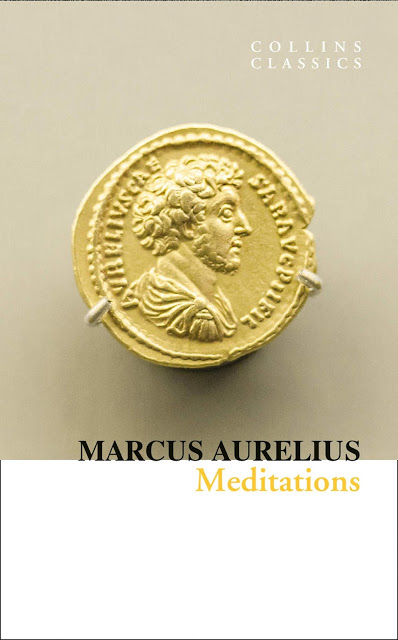
Marcus Aurelius (121-180 AD) was a Roman Emperor (161-180 AD), considered the last
of the 5 great emperors. He had to engage in considerable military activity, yet practised
his philosophy and found time to write down his meditations which constitute an important
source of Stoic ideas.
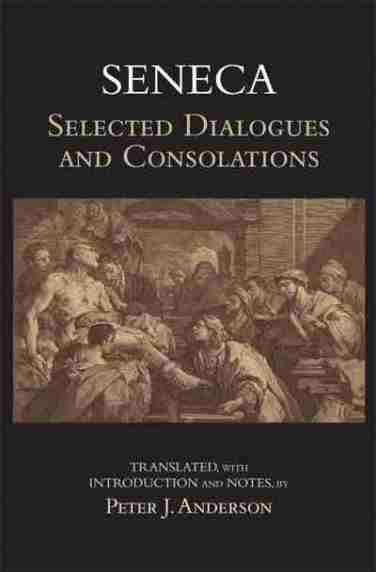
Seneca (4 BC to 65 AD) was an influential figure in Rome and an adviser to emperor Nero.
His life was not above controversy. He fell out of favour, and sought to live a quiet retired life,
away from Rome. But he was suspected of complicity in the attempt to murder Nero.
He was asked to commit suicide.
We may thus see that none of these philosophers was an arm-chair idler. They lived their
philosophy.
Works of Epictetus, Seneca, and Marcus Aurelius are available individually. However, this
is a very delightful book, and practical manual that Ryan Holiday and Stephen Hanselman
have written. They bring together the essential points from the masters in a new translation,
organised under convenient themes. This shows how in able hands philosophy becomes a
pleasure to read!
Words of the Masters
I conclude with three quotations from three famous stories.
The Chief task in life is simply this: to identify and separate matters so that I
can say clearly to myself which are externals not under my control, and which
have to do with choices that I actually control. Where then do I look for good
and evil? Not to uncontrollable externals, but within myself to the choices
that are my own….
Epictetus
The first thing to do – don’t get worked up. For everything happens according
to the nature of all things and in a short time you will be nobody and nowhere,
even as the great emperors Hadrian and Augustus are now.
The next thing to do- consider carefully the task at hand for what it is, while
remembering that your purpose is to be a good human being.
Get straight to doing what nature requires of you, and speak as you see most
just and fitting- with kindness, modesty, and sincerity.
Marcus Aurelius
None is crushed by Fortune, unless they are first deceived by her… Those who
aren’t pompous in good times, don’t have their bubbles burst with change.
Against either circumstance, the stable person keeps their rational soul
invincible, for it is precisely in the good times they prove their strength
against adversity.
Seneca
The Daily Stoic is gem of a book- will prove to be a loyal companion and reliable guide
for years.
“Philosophy does not claim to get a person any external possession. To do so
would be beyond its field. As wood is to the carpenter, bronze to the sculptor,
so our own lives are the proper material in the art of living.” Epictetus.
Note:
In its emphasis on right understanding based on reason and logic, and avoiding emotionalism,
Stoic philosophy parallels the disciplined approach of Acharya Sankara who held that right
knowledge ( Jnana) alone was the remedy for the ills of life. This, together with their idea of
accepting the world order as given, beyond human control, is also the general philosophical
position of our modern Sages Sri Ramakrishna and Sri Ramana Maharshi. But our Sages also
approved of Devotion to personal God which element is missing in the Stoic discourse.
Chapter 5 concluded
 Tamil and Vedas