WRITTEN BY R. NANJAPPA
Post No. 8557
Date uploaded in London – – – 23 August 2020
Contact – swami_48@yahoo.com
Pictures are taken from various sources for spreading knowledge; this is a non- commercial blog. Thanks for your great pictures.
BOOKS INDIANS SHOULD READ – 24
R. Nanjappa
THE COLLECTED WRITINGS OF DHARAMPAL-4.
Chapter 9 – Part 3
LEITNER’S SURVEY OF INDIGENOUS EDUCATION IN THE PUNJAB: 1882
DR. Leitner, one time Principal of Govt.College, Lahore and an acting Director of Public
Instruction, prepared an elaborate survey of education in the Punjab. Not being a Britisher,
he did not try to please anyone. His language is direct, and not complimentary to the British.
He said that at the time of its annexation by the British (April, 1849), there were at least
3,30,000 students in the various schools there, acquainted with reading, writing and some arithmetic, whereas in 1882, there were only 1,90,000. He said that 35-40 years previously, “thousands of them belonged to Arabic and Sanskrit colleges, in which oriental Literature
and systems of oriental Law, Logic, Philosophy and Medicine were taught to the highest
standards.”
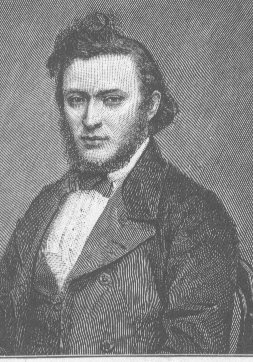
Leitner studied the earlier writing and covered district by district. He then made his own
survey as of 1882. He remarked:
“I am about to relate the history of the contact of a form of European with one of Asiatic
civilisation: how…the true education of the Punjab was crippled, checked, and is
nearly destroyed; how opportunities for its healthy revival and development were
either neglected or perverted; and how, far beyond the blame attaching to
individuals, our system stands convicted or worse than official failure.
Respect for learning has always been the redeeming feature of ‘the East’. To this the
Punjab has formed no exception. Torn by invasion and civil war, it ever preserved and
added to educational endowments…. There was not a mosque, a temple, a dharmasala
that had not a school attached to it, to which the youth flocked chiefly for religious
education…..There were also thousands of secular schools, frequented alike by
Mahomedans, Hindus and Sikhs, in which Persian or Lunde was taught. There were
hundreds of learned men who gratuitously taught their coreligionists, and sometimes
all-comers, for the sake of God. There was not a single villager who did not take a pride in
devoting a portion of his produce to a respected teacher…. Through all schools there
breathed a spirit of devotion to education for its own sake and for its influence on the
character and on religious culture….We have changed all this. The annexation disturbed
the minds of believers in Providence, and all that was respectable kept, as much as
possible, aloof from the invader, – just as the best Englishman would not be the first to
seek the favour of a foreign conqueror.”
This is self-explanatory, and is a strong indictment of British Policy.
ALEXANDER WALKER ON INDIAN EDUCATION, LITERATURE, ETC C.1820
Brigadier General Alexander Walker of Bowland.(1764-1831)
Christchurch Art Gallery
Alexander Walker of Bowland commented on some aspects of the educational and literary
scene in the Malabar. He commented on how they had made progress, how they had their
own system of writing without paper and pen, using only natural material. He said, among
other things:
The literature of Malabar has the same foundation, and consists of the same materials, as
that of all Hindoo nations.
It is natural to suppose that sciences would first prosper where men were not exposed to
excessive labour in order to procure the necessaries of life; plenty and tranquility would leave
them at liberty to cultivate knowledge, to apply their minds to books, and learning.
Education with them is an early and important business in every family. Many of their
women are taught to read and write…The children are instructed without violence and
by a process peculiarly simple.It is the same system which has caused so much
controversy ….in this country. …..The system was borrowed from the Bramans and
brought from India to Europe. It has been made the foundation of National Education in
every enlightened country. Some gratitude is due to a people from whom we have learnt
to diffuse among the lower ranks of society instruction by one of the most unerring and
economical methods which has ever been invented. The pupils are the monitors of each
other…Reading and writing are acquired at the same time, and by the same process.
The Missionaries have now honestly owned that the system upon which these
schools are now taught was borrowed from India.
No people probably appreciate more justly the importance of instruction than the Hindoos;
…they have formed institutions themselves to meet various cases of ignorance and misery.
They are not averse to a spirit of enquiry and discussion. All they wanted was a
government that would not check and discourage this spirit.
Walker wrote this around 1820. Unfortunately, the British colonial powers did
exactly check and discourage the Indian Spirit
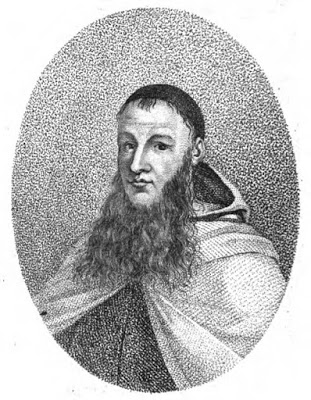
FRA PAOLINO DA BARTOLOMEO
He was born as John Phillip Wesdin in Austria. He was a missionary in the Malabar and
studied its education systems in 1776-1789. He published his account in Rome in 1796.
He writes:
The education of youth in India is much simpler, and not near so expensive as in Europe.
(After describing how the children learn to write on the floor, and how the teacher
supervises them, he says)
This method of teaching writing was introduced into India two hundred years
before the birth of Christ, according to the testimony of Megasthenes, and still
continues to be practised.
He explains how the teacher employs short verses or slokas to teach and how these contain
ethical and moral precepts which guide through life. He explains how religious instruction
is provided. He lists the other sciences which are taught: Poetry,Fencing, Botany and
medicine;Navigation; some martial art; Logic. Astrology, Law;Swadyaya: silence, Mauna.
He then explains how education serves each one in strengthening his profession which
comes by heredity. (Here, he refers to the writings of Diodorus Siculus, Strabo, Arrian and
other Greek writers.) He then says:
Indians do not follow that general and superficial method of education by which children
are treated as if they were all intended for the same condition and for discharging the
same duties……
By this establishment the knowledge of a great many things necessary for the public good
is not only widely diffused, but transmitted to posterity; who are thereby enabled still farther
to improve them, and bring them nearer to perfection. By the time of Alexander the Great,
the Indians had acquired such skill in the mechanical arts that Nearchus, the commander
of his fleet, was much amazed at the dexterity with which they imitated the accoutrements
of the Grecian soldiers.
It, however, cannot be denied, that the arts and sciences in India have greatly
declined since the foreign conquerors expelled the native kings;by which several
provinces have been laid extremely waste, and the castes confounded with each other.
Before this period, the different kingdoms were in a flourishing condition; the laws
were respected, and justice and civil order prevailed; but, unfortunately, at present
everything in many of the provinces must give way to absolute authority and despotic sway.
*** Chapter 9 to be continued
 Tamil and Vedas