
Compiled by London Swaminathan
Date: 13 DECEMBER 2017
Time uploaded in London- 11-12 am
Post No. 4489
Pictures shown here are taken from various sources such as Facebook friends, Books, Google and newspapers; thanks.
Conductors Anecdotes
Amazing Memory of Toscanini!
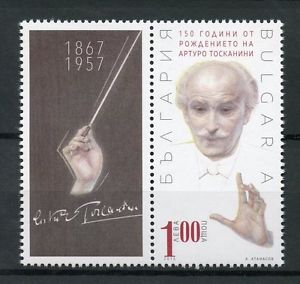
One of the great traditions of contemporary music is the astounding and infallible memory of Arturo Toscanini. One time early in his career, when Toscanini was a cellist, he formed an acquaintance with the violinists Romanini and Enrico Polo, and with Bolzoni ,the composer.
Bolzoni once composed an Adagio which the group performed on a special occasion. More than a year later the two violinists and Toscanini again met but Bolzoni was absent.
What a pity! Someone exclaimed, that Bolzoni has the score. If he had left us a copy we might have had the quartet we liked so much.
Toscanini said, give me a pencil and paper
Whereupon he proceeded to write down all four parts of the Adagio from memory.
ADAGIO:- a piece of music that should be played slowly
Xxx
Never have a Wallenstein in front of you!
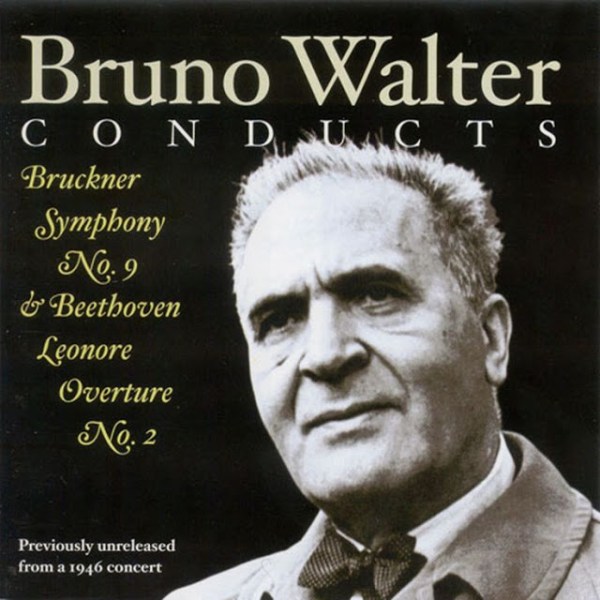
The fine conductor, Bruno Walter, is a man of gentle and sensitive temperament. The first time that he conducted the New York philharmonic the noted cellist Alfred Wallenstein, occupied the first cellist’s chair . Walter was annoyed and embarrassed by the fact that Wallenstein ignored him throughout rehearsal and concerts alike, gazing everywhere in the auditorium, except at the conductor, while playing. Where another man might have flown into rage, Walter merely asked that Wallenstein come to speak privately with him.
Tell me Mr Wallenstein, said Walter mildly, what is your ambition?
I should like some day to be a conductor
Well, said Walter gently, I only hope you never have Wallenstein in front of you.
Xxx
Reverence, Please
The eminent conductor. Malcolm Sargent, was conducting a Royal Choral Society rehearsal of The Messiah. He was displeased with the women’s section s rendering of For unto Us a child is born. Calling for attention, he begged, Just a little more reverence, please, and not so much astonishment.
Xxx
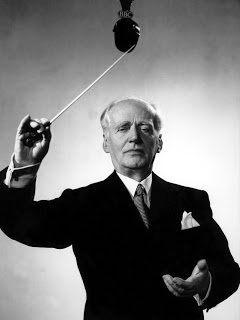
Basil Cameron
When Basil Cameron, the conductor, was starting on his musical career, he looked round for a good name and decided on Von Hindenburg. And a good name it was, up to the beginning of August 1914, when Von Hindenburg quietly disappeared like so many Germans of the period In his case, however, the public was astounded to hear that the brilliant young conductor they had admired was commanding the German army.
Xxx
I don’t like Music, Sir

A certain young violinist came to Leopold Stokowski with a very forceful and impressive letter of introduction from an old and respected friend of the notable conductor.
I am very sorry that there is no opening for you now in the orchestra, Stokowski explained , but it you can stay in Philadelphia for a while, I will be very glad to place you at the first opportunity.
The chance came little more than a week later, when the second violinist was rushed to the hospital for an appendectomy only a few hours before a concert. Stokowski called the young aspirant and said,
We are playing a Beethoven cycle. Can you manage the second violin in the Seventh and Eighth symphonies?
Eagerly the young man assured him he could. In the opening passages of the Seventh symphony that night the conductor listened sharply for the strains of the second violin and noted that the newcomer seemed to be doing well. Glancing at him, he was shocked to see an expression of great agony and anguish on the violinist’s face.
Heavens, he thought, there must be a curse on the second violin. Will he be able to last out the programme!
As the symphony progressed from movement to movement, the second violinist appeared to writhe and grimace in increasing torture. Stokowski s concern began to change to anger and irritation. At the intermission, seeking to control himself, he went to the musicians dressing room and demanded,
Are you sick?
Why, no, said the young man.
Is there anything paining you?
Not at all.
Then, shouted Stokowski angrily, you must not approve of my conducting.
Oh, sir, said the musician, it is a privilege to play under you.
Then why on earth were you making such outlandish faces?
Oh, that, said the young man,
Well, you see, sir, I just don’t like music.
Xxxx SUBHAM xxxx



 Tamil and Vedas
You must be logged in to post a comment.