Written by Santhanam Nagarajan
Article No.1453; Dated 2nd December 2014.
Fate and Freewill – Part III
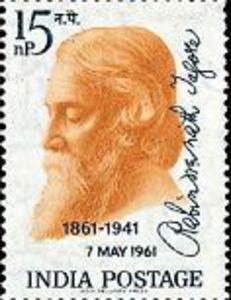
Albert Einstein who was awarded Nobel Prize went to India during his journey to the orient. He met the famous poet Rabindranath Tagore. Tagore was awarded Nobel Prize for his monumental work Gitanjali.
Both are Nobel laureates. One was a ‘literary giant’. The other was a ‘science genius’.
An interesting conversation started regarding chance and casualty.
The discussion was recorded fully. (Please refer My Views by Einstein)
We can go through the discussion carefully.
Tagore: I was discussing with Dr Mendal today the new mathematical discoveries which tell us that in the realm of infinitesimal atoms chance have its play: the drama of existence is not absolutely predestined in character.
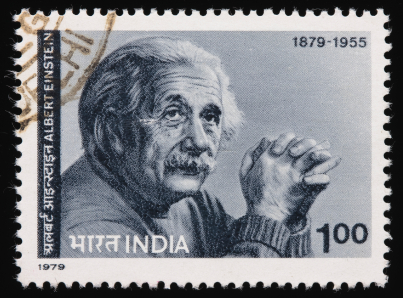
Einstein: The facts that make science tend towards this view do not say good-bye to casualty.
Tagore: May be not; but it appears that the idea of casualty is not in the elements, that some other force builds up with them an organized Universe.
Einstein: One tries to understand in the higher plane how the order is. The order is there, where the big elements combine and guide existence, but in the minute elements this order is not perceptible.
Tagore: Thus duality is in the depths of existence-the contradiction of free impulse and the directive will which works upon it and evolves an orderly scheme of things.
Einstein: Modern Physics would not say they are contradictory. Clouds look one from a
distance, but, if you see them near, they show themselves in disorderly drops of water.
Tagore: I find a parallel in human psychology. Our passions and desires are unruly, but our character subdues these elements into a harmonious whole. Does something similar to this happen in the physical world? Are the elements rebellions, dynamic with individual impulse? And is there a principle in the physical world which dominates them and puts them into an orderly organization?
Einstein: Even the elements are not without statistical order; elements of radium will always maintain their specific order, now and ever onward, just as they have done all along. There is then, a statistical order in the elements.
Tagore: Otherwise the drama of existence would be too desultory. It is the constant harmony of chance under determination which makes it eternally new and living.
Einstein: I believe that whatever we do or live for has its casualty; it is good however that we can not look through it.
Tagore: There is in the human affairs an element of elasticity also – some freedom within a small range, which is for the expression of our personality. It is like the musical system in India, which is not so rigidly fixed as is the western music. Our composers give a certain definite outline, as system of melody and rhythmic arrangement and within a certain limit the player can improvise upon it. He must be one with the law of that particular melody, and then he can give spontaneous expression to his musical feeling within the prescribed regulation. We praise the composer for his genius in creating a foundation along with a superstructure of melodies, but we expect from the player his own skill in the creation of variations of melodic flourish and ornamentation. In creation we follow the central law of existence but if we do not cut ourselves adrift from it, we can have sufficient freedom within the limits of our personality for the fullest self-expression.

The discussion continues.
From this discussion, we could understand there is a predetermined factor everywhere.
But there is also a freedom to play with.
Let us further analyze fate and free will in the next article.
Fate and Free will – Part IV
Santhanam Nagarajan
First of all we must understand what is fate?
According to the Hindu scriptures there are three types of karmas
( which forms our fate).
They are
1) Prarabhda Karma
2) Sanchita Karma
3) Agami
Prarabhda Karma is that which we are presently undergoing and experiencing.
Sanchita Karma means all the past karma.
Agami refers to Karma that will follow in future.
Prarabhda is in between the Sanchita and Agami, and we are experiencing this Prarabhda karma on account of the previous Sanchita Karma meaning the past karmas.
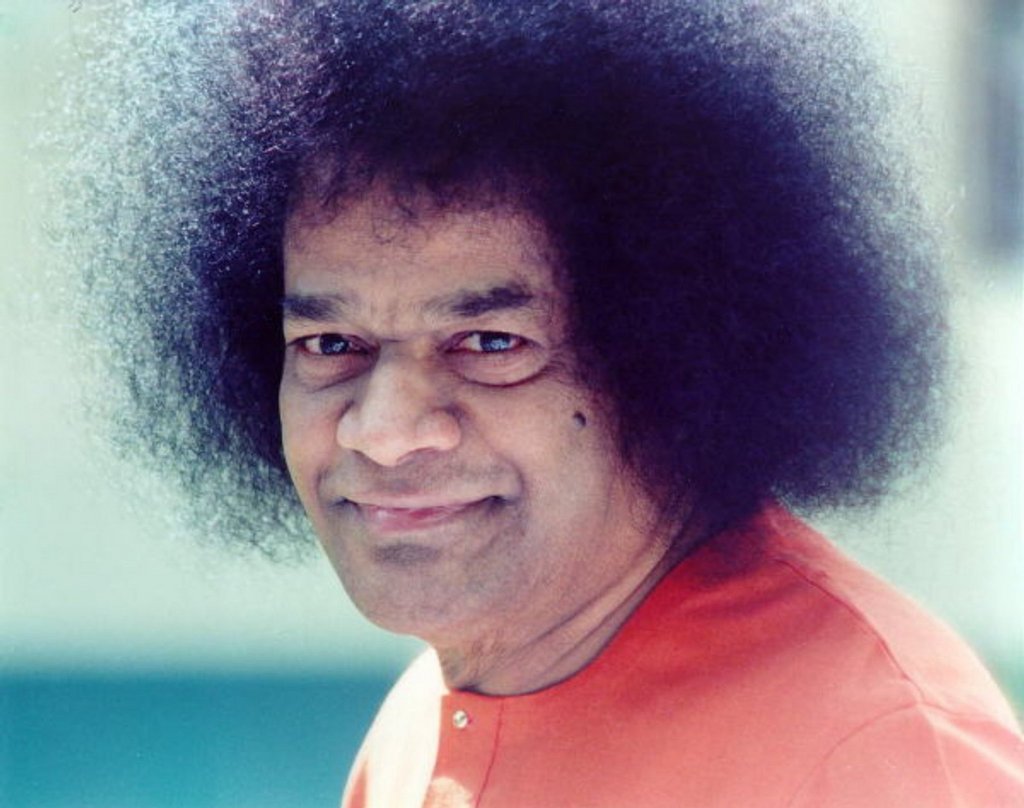
Sri Sathya Sai Baba gives a small example to explain all these three karmas from our daily life. He says:
“We have got a store room in which we stock all our rice. We have already the old stock of rice in the store. So what we have stored in the room is called Sanchita. When we want to cook, we remove some rice from the store room for cooking today called Prarabhda. What we cook now and what we eat today will pass out our body, tomorrow. Sometimes what we eat may come out in the shape of a belch. Therefore we can not escape from Prarabhda, we must experience it in this life. In the store room, there is only one rice. When we bring it we will be able to convert it into many preparations. In this way, we can make the rice into food; we can make it in the form of ‘Puliyodhara’ (meaning rice mixed with tamarind to make a delicious dish). We can cook it in the form of ‘Chakkara pongal’ (meaning rice mixed with sugar to form a tasty dish). It can be made into ‘Daddhojana’ (meaning rice mixed with curd to form a delightful dish). We can make from it ‘idlis’ (rice cakes) and also ‘Dosas’ (one more variety of food) and so on, all of which the base which is always rice. You have to start any preparation with rice only. Even though there is Sanchita, if you try to behave in a Sathwic (meaning in a pious and good) way you will be able to change even Sanchita. You may say that in the rice store, there are big stones. They are the results of our bad actions. They are in the store mixed with the rice. Before we cook, do we not try to remove away the stones from the rice? So it is quite necessary that when we experience Sanchita we can overcome the bad effects to some extent or a great extent and make them clean, just as we make the rice clean.”
But can the Sanchita and Prarabhta karmas can be weaken or overcome by prayer?
“Yes”, says Sri Sathya Sai Baba giving a beautiful example which we can see in our next article.
 Tamil and Vedas
You must be logged in to post a comment.