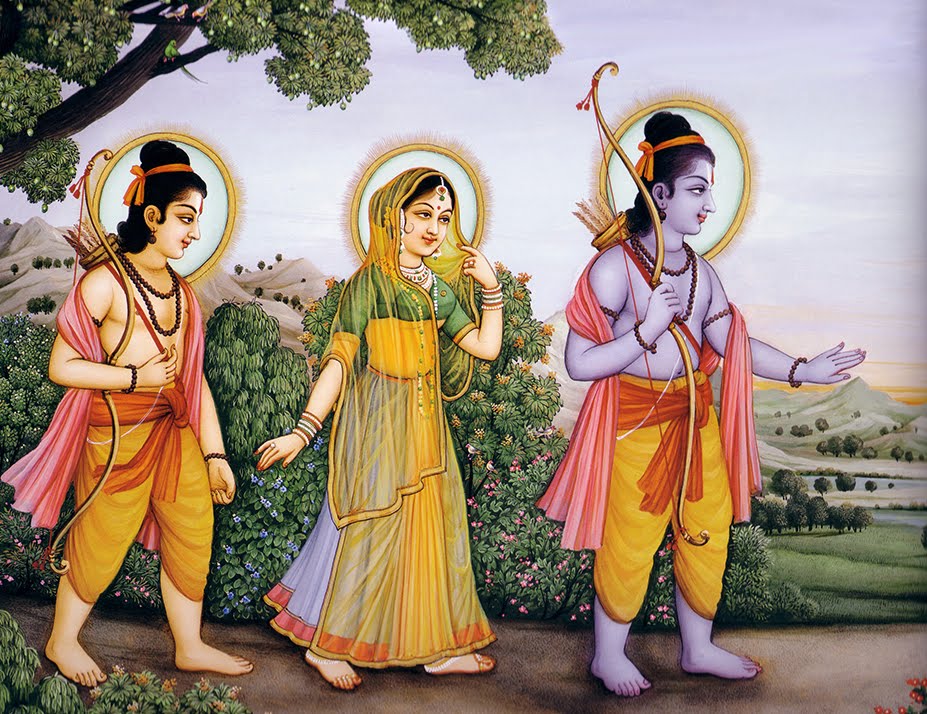
Lakshmana follows Sita Devi and Lord Rama
Research article written by London swaminathan
Article No. 1558; posted on 8th January 2015
Gatha Sapta Sati (GSS) is a book of 700 erotic verses in Prakrit language.It was compiled by Hala, a Satavahana king that ruled around first century CE. Though it is a book of erotic verses, we get a very good picture of social life in the Godavari basin. We gather lot of information about common man’s belief and customs. We see lot of lovers and a few immoral characters as well. In short it is a real life picture of the age. Everyone must read it for its beautiful poetry and real life pen picture of social life.
There is a beautiful verse (GSS 1-35) where a woman uses sign language, in fact eye language, to convey her feelings:
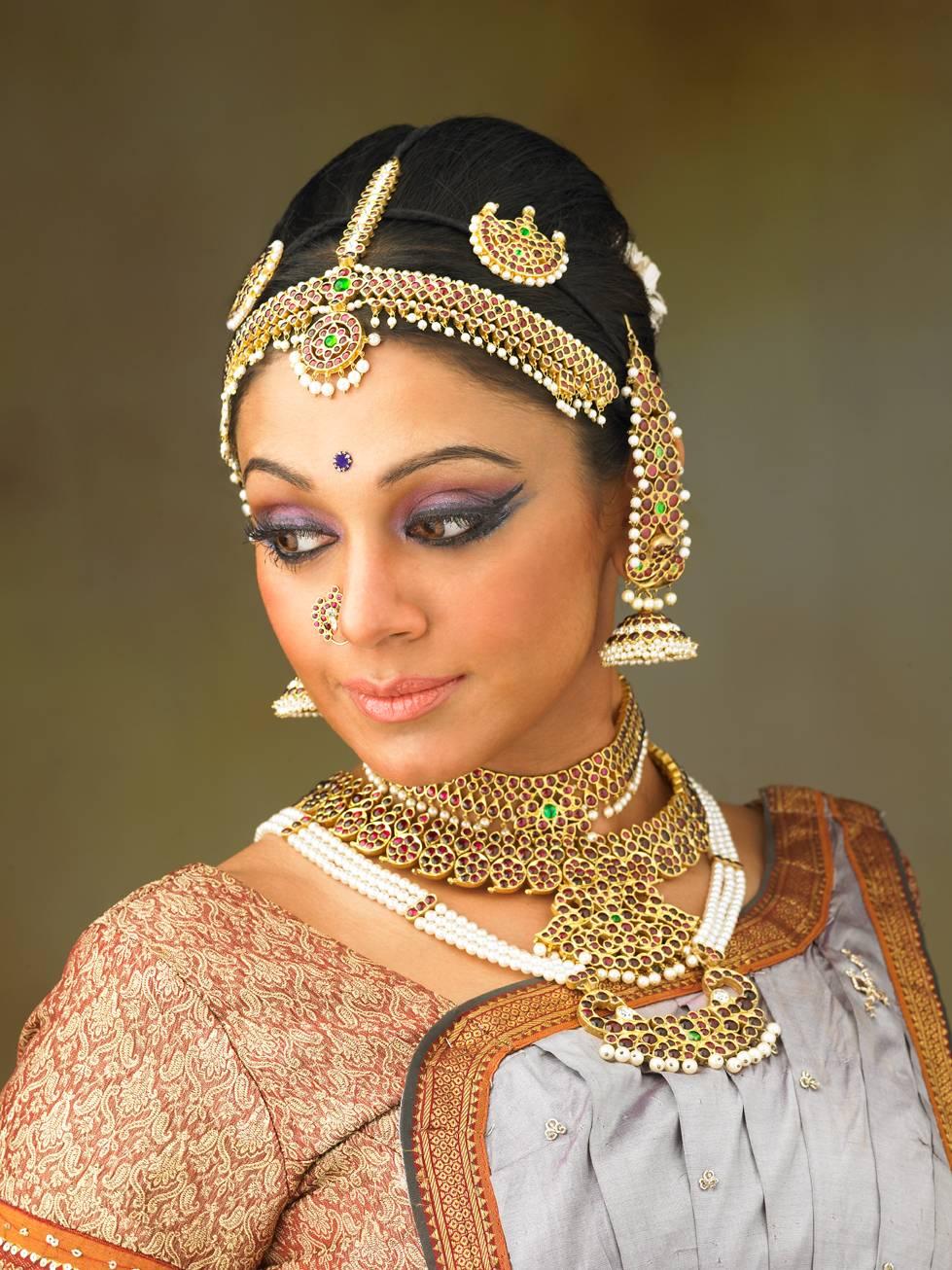
There is a beuatiful woman whose husband is away on business. His brother who is brimming with youthfulness, is all alone in the house. He is eying on the lady of the house, who is his sister in law. But she is not for the game. She is chaste like Sita Devi. Because of respect for his brother in law, she did not want to use rude words. But she is very intelligent. When she is struggling to find a way out of this difficult situation a painting on the wall comes to her rescue!
There is a beautiful Ramayana painting on the wall of the house. It showed Rama, Lakshmana and Sita. Lakshmana was very respectful and he never looked at the face of Sita after her marriage with Rama. In those days, chaste men looked at women’s feet first. If she wore a ring in her toe, that means she is married. If he knows that the woman is married he woud not look at her face unlesss and otheriwise it is essential. For example a medicine man has to look at the hands and face of his patient whether it is a woman or man or a child.
In the painting on the wall Lakshmana was looking at the feet of Sita with humility and tranquility on his face. This lady looks at the picture and looks at her brother in law who is suffereing from amorous thoughts. The minute she took that gentle man through her eyes to the picture of Lakhsmana, he felt ashamed for his behaviour. The intelligent woman behaved normally as if nothing had happened. This is ‘sculpted or painted’ in just two lines of the Gatha Sapta sati verse!
This verse gives us the life of Hindu women 2000 years ago. Houses have paintings on the wall with epic or mythological characters. Ramayana was very popular. We have another scene in Sangam Tamil Literature where a painting of Ahalya, Gauthama and Indra was described. One of the Sangam books — Paripatal verse 19 talks about a couple visiting Tirupparnakundram temple near Madurai. A woman was puzzled at a cat picture with Ahalya and Gauthama. Immediately she asked her husband about the cat in the picture. He explained that it was Indra who was trying to sneak out of the Ashram after molesting Ahalya. Indra was in the guise of a cat. This shows that paintings with mythological characters are found even in the southermost tip of the land. Sangam Tamil literature described wall paintings of Gods in Tamils’ houses.
Women are intelligent and they use sign language and gestures to convey their thoughts. This is highely developed in India. In fact, I would make a bold staement that the Sign Language originated in India. All our Vedic Mantra rituals have Mudras/gestures made by hands and fingers. All our Yogasanas has special names for each posture. All our Bharata Natya Mudras have gestures to convey hundreds of things. Nine sentiments are expressed through face!
We cant see anything like this in any other culture. Only a few Dhyana Mudras, the foreingers have learnt from us (Please read my old post |”Hindu Mudras in Egyptian and Sumerian Statues”, posted on 7 October 2012 and “Hindu Symbolism in France”, posted on 24th August 2014).
Chidambaram Temple in Tamil Nadu has all the 108 Bharata Natya Mudras (hand gestures) displayed on the temple door. Bharata’s Natya Sastra book itself is 2000 years old. Vedic rituals, where Mudras are used, are thousands of years old. So we can claim another first in the field of Sign Language!

contact swami_48”yahoo.com


 Tamil and Vedas
You must be logged in to post a comment.