Compiled by London swaminathan
Date:16 July 2016
Post No. 2977
Time uploaded in London :– 15-00
( Thanks for the Pictures)
DON’T REBLOG IT AT LEAST FOR A WEEK! DON’T USE THE PICTURES; THEY ARE COPYRIGHTED BY SOMEONE.
(for old articles go to tamilandvedas.com OR swamiindology.blogspot.com)
Following piece is an interesting excerpt from a 100-year-old book written by a Muslim scholar: –
Source : Life and Labour of the People of India by Abdullah Yusuf Ali, Barrister at Law, London, 1907
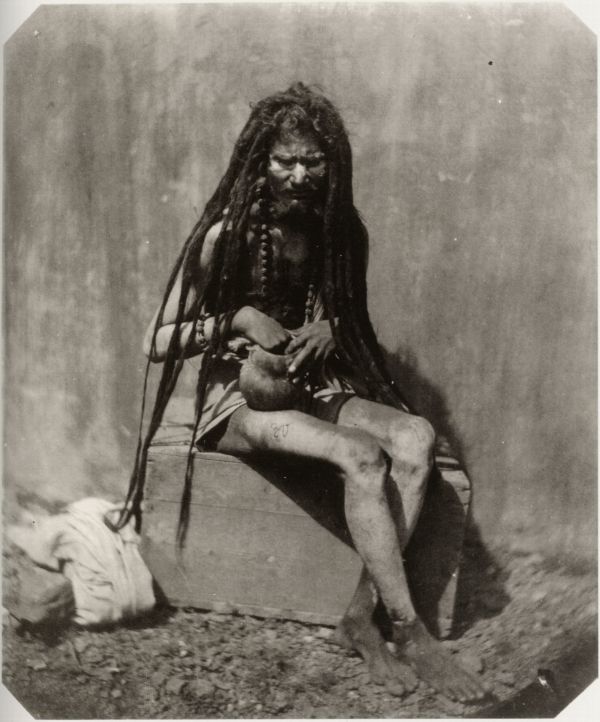
“No account of village life would be complete without a description of the Fakir (ascetic). He lives in a little hut or cave (if there is a cave) away from the village, so as to be free, and far from the madding crowd’s ignoble strife. What he does there nobody knows. He is a mysterious being, who appears only with a loin cloth round his waist, apparently quite indifferent to the praise or blame of the world. He rarely enters into conversation about the ordinary affairs of mankind, and the gift he receives in charity are those which his disciples and admirers beg for the honour of presenting to him, rather than doles extracted by beggar from an unwillingly charity public. The people look upon him with superstitious veneration, not because they know there is anything in his life, but because in person and habit he represents the ascetic ideal which renounces the world and lives an inner life of self-mortification.
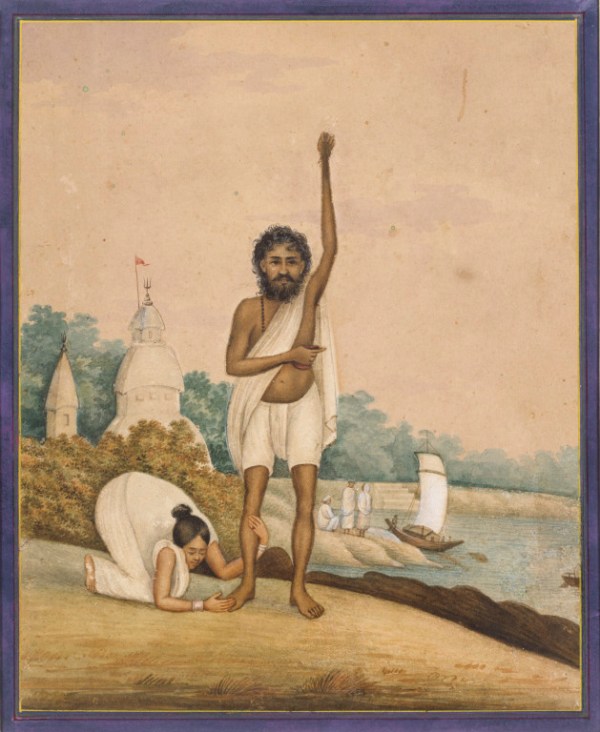
He carries a rosary of beads, and he often goes along the streets shouting “Ram, Ram”, if he is a follower of that particular incarnation of God as worshipped by the Hindus. He has no religious ideals in the sense of striving for the elevation of other men’s lives; but he possessed with the idea which finds a mere illusion in the whole world and in all humanity, and the only reality in the name of Ram. This simple monomania revered by the people in proportion as they cannot translate it into their own lives. Though apparently indifferent to all that passes around him, the Fakir is a great observer of men and manners, and is often able to reconcile disputes and extricate people from difficult situations on account of his apparently isolated position.
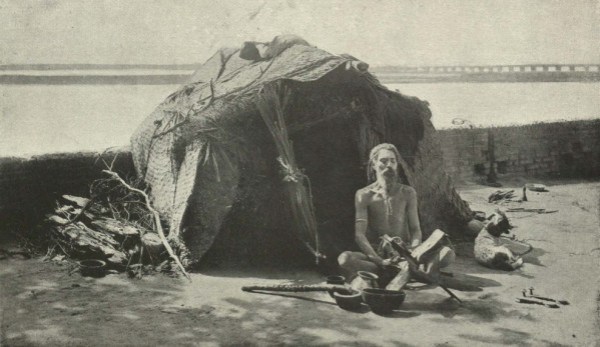
Sometimes he takes a vow of religious silence for seven years and keeps it. Sometimes he undertakes to walk to all the sacred shrines of India, which may incclue a journey for Badrinath, near the glacier valleys of of the Himalays, to the sea washed shores of Western Dwaraka, or the torrid heat of Rameswaram in the extreme South. He would thus cover a distance of thousands of miles on foot, with nothing but his rosary with him, not even the traditional staff of the weary wanderer.
His life is a mystery to to outsiders. His survival in the twentieth century is to superficial observers of Indian life a greater mystery still. The fact that he represents a strain of that morbid love of self-mortification and self-abasement which when healthy and turned into a useful sphere, gives us the greatest saints and heroes of history.
If there is anyone class in India more than another to which the famous lines of Mathew Arnold are particularly appropriate, it is to that rare individual, the true fakir (as distinguished from the false fakirs who figure in jugglery tales and the annals of crime):-
“In the East bowed low before the blast,
In silent deep disdain;
She let the Legions thunder past,
Then plunged in thought again.”
–Subham–
 Tamil and Vedas
You must be logged in to post a comment.