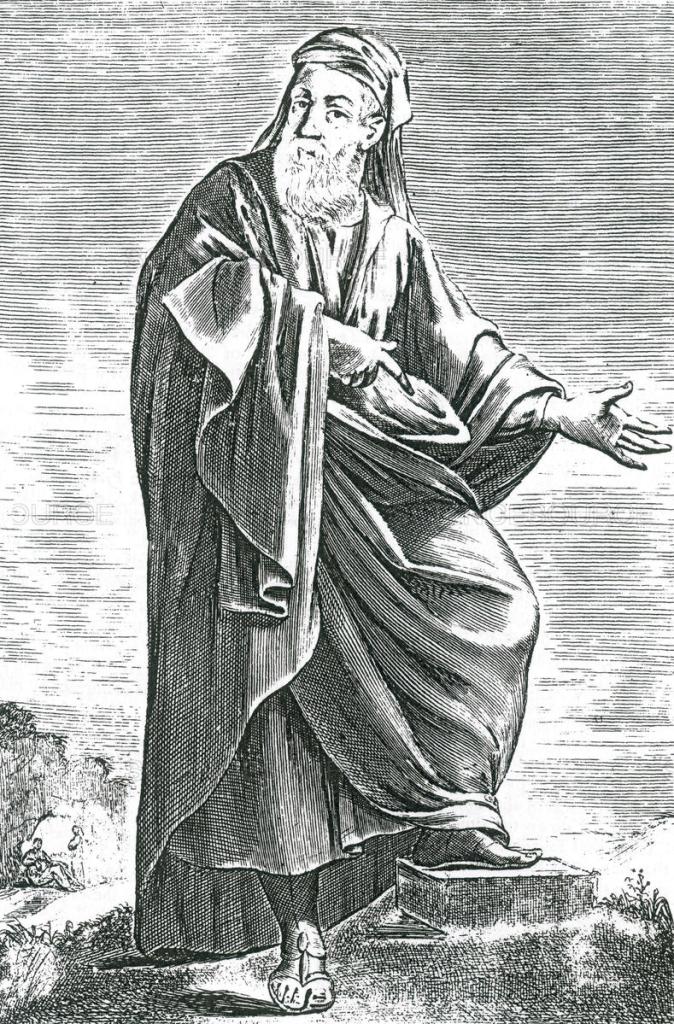
GREEK PHILOSOPHER WHO PROPAGATED HINDU THOUGHTS- EMPEDOCLES (Post No.7388)
Written by London Swaminathan
Date – 27th December 2019
Post No.7388
contact – swami_48@yahoo.com
pictures are taken from various sources; thanks.
EMPEDOCLES was a Greek philosopher who lived before Socrates in Greece. He was born in 493 BCE and died in 433 BCE at the age of 60. There are very interesting stories, poems and dramas about him. He was a philosopher and scientist.
He proposed that the universe is composed of four elements – FIRE, AIR, EARTH AND WATER which through the action of love and discord are eternally constructed, destroyed and constructed anew. He lived in Acragas / Agrigentum in Sicily according to tradition. He committed ‘suicide’ by throwing himself into crater of the volcano Mount Etna.
Hindus believed in Pancha Bhutas (Five elements); for some reason Empedocles left out Akasa (space/ vacumn).
He believed in the Hindu concepts of
1.Vegetarianism
2.Reincarnation
3.Cyclical Creation and Dissolution
4.Written in verses (like Sutras)
He was the last of the Greek writers to write everything in verse.
He was a follower of Pythagoras who was widely believed to have proposed the Hindu theorem, known in the western world as Pythagoras theorem. He also believed in reincarnation.
Both Pythagoras and Empedocles travelled to the East. They might have received all the Upanishadic thoughts from Iran or India. Later writers wrote that Empedocles travelled to the Land of Magis.
Land of Magis is described as Iran or East up to Sindhu region. The word Magi is in Bible and in the English word Magic. First, they translated as three magicians visited Jerusalem when Jesus was born. Then they changed it into ‘Three Wisemen visited Jerusalem’. It is derived from a Sanskrit word ‘Maya’ meaning illusion. Hindu saints may have been called by this name(Mayaaavaadi) because they described the world, its existence etc. as illusory. Magic is also an optical illusion.
Atma Thyaga (Self Sacrifice)
Hindu saints enter Fire or Water when they think that their mission in life is accomplished or finished. We have several instances of spontaneous combustion (please read my old article on it) in Hindu literature. A Hindu saint who went to Mayan civilisation entered fire saying that he would come back. When the Spanish robbers and murderers came to America, Incas believed that the Hindu saint with his team has come back and gave the white man royal welcome to the murderers. They destroyed the whole Aztec, Olmec, Mayan and Inca civilisations.
Here in the case of Empedocles it was not a suicide he committed. Being a great philosopher he asked his followers to take him to the top of the volcano Mount Etna and drop him into the fire. We see such things in the life of great philosopher Kumarila Bhatta and the greatest of the Sangam Tamil Poets Kapila. Both of thee entered fire voluntarily when their missions were accomplished (please see my old articles for the full story; links are given below).
Bharatiyar, the greatest of the modern Tamil poets has described it in a stanza
“And when one puts a finger in a fame
Nandalala (God), one feels
The thrill of your touch
Nandalala “
His thoughts on various topics
Ancients were fascinated by dreams and much thought was devoted to how they could be explained. Empedocles got close to modern ideas by proposing that dreams dealt with day’s residue. (In the ‘Interpretation of dreams’ by Artemidorus of second century CE, we see his finding that slaves’ dreams commonly featured fear of losing a master’s trust or hopes of freedom)
Empedocles’ belief that the cosmos was constructed by four elements was believed by great Aristotle as well. His authority was so great among intellectuals and the church fathers that the theory was simply assumed to be true for nearly 2000 years till the experimental method was invented in the sixteenth century.
Later authors of medicine attributed body parts, four humours, four seasons to four elements.
Pythagoras in the sixth century BCE, argued that from the moment of conception the foetus was body and soul with every innate human capacity intact. Empedocles thought that the foetus became fully human only at birth.
Since Empedocles wrote in verses, people interpret it differently. More over some of his poems are discovered in parts and joined together. There is a debate whether it is correct or incorrect.
Hindu scholars’ views on Empedocles
Dr S Radhakrishnan says
“Sixth century BCE was remarkable for the spiritual unrest and intellectual ferment in many countries. In China we had Lao Tzu and Confucius, in Greece Parmenides and Empedocle,s in Iran Zarathustra, in India Mahavira and the Buddha. In that period many remarkable teachers worked upon their inheritance and developed new points of view.”
P C Ray and P Ray say
“KAPILA , the reputed originator of Samkhya philosophy, developed his ideas about the ultimate particles of matter in the latter part of his theory of cosmogenesis . The atomic theory of Samkhya bears a great resemblance to the Greek theory of elements introduced by Empedocles .”
Samkhya is the oldest of the six Hindu philosophical systems. Kapila lived before the time of Empedocles .
Professor Macdonell in his history of Sanskrit literature remarks on the question of whether Hindus borrowed the ideas from the Greeks,
“According to Greek tradition , Thales, Empedocles, Anaxagoras, Democritus and others undertook journeys to oriental countries in order to study philosophy. Hence there is at least the historical possibility of the Greeks have been influenced by the Indian thought through Persia (Iran).”
Colebrook too sums up his views in the following words,
“I should be disposed to conclude that the Indians were in this instance teachers than learners.”
Prof. H H Wilson in his preface to Samkhyakarika also observes,
“That the Hindus derived any of their philosophical ideas from the Greeks seems very improbable , and if there is any borrowing in this case, the latter were most probably indebted to the former.”
A KALYANARAMAN in his book ARYATARANGINI has given a detailed analysis of this topic. I will give it separately.
Bibliography
H T COLEBROOK- ENGLISH TRANSLATION OF SAMKHYAKARIKA, BOMBAY, 1887
H H WILSON
A A MACDONELL – HISTORY OF SANSKRIT LTERATURE
RADHAKRISHNAN READER, AN ANTHOLOGY, BHARATIYA VIDHYA BHAVAN, BOMBAY, 1969
tamilandvedas.com › 2011/11/15 › the-mysterious-disappearance-of-…
The Mysterious disappearance of Great Hindu Saints | Tamil …
15 Nov 2011 – The Mysterious disappearance of Great Hindu Saints … the category of paranormal and it is called Spontaneous Human Combustion (SHC).
tamilandvedas.com › tag › in-mahavamsa
in Mahavamsa | Tamil and Vedas
17 Sep 2014 – Spontaneous Combustion Miracle in Mahavamsa! shc … The Mysterious Death of Great Hindu Saints (Posted Nov.15, 2011) Strange Facts …
Search Result
tamilandvedas.com › tag › fire-walking
Fire Walking | Tamil and Vedas
Posts about Fire Walking written by Tamil and Vedas.
Empedocles’ atma thyaga (self sacrifice) have been referred to by various authors and poets up to Mathew Arnold and Bertrand Russel. This incident also proved that he was a great Hindu follower.
tamilandvedas.com › 2014/07/12 › five-ascetics-who-entered-fire-ved…
Five Ascetics who Entered Fire: Vedavati, Sabhari …
12 Jul 2014 – Tamil poet Kabila did enter fire after fulfilling his noble mission. Aztec saint Quetzalcoatl (may be a Hindu saint) did sacrifice his life in fire.
LET US ENTER FIRE BEFORE MUSLIMS TOUCH US …
25 Nov 2019 – LET US ENTER FIRE BEFORE MUSLIMS TOUCH US- HEROIC SPEECH BY RANI BHAI(Post No.7261) … The queen and the ladies then entered into a house, where they … quiz on 100 great women-2 | Tamil and Vedas.
Search Results
tamilandvedas.com › tag › sati-by-women
Sati by women | Tamil and Vedas
31 Oct 2012 – Posts about Sati by women written by Tamil and Vedas.
tamilandvedas.com › 2014/06/14 › aryan-sati-in-sangam-tamil-literature
“Aryan SATI” in Sangam Tamil Literature! | Tamil and Vedas
14 Jun 2014 – Practice of Sati is found in ancient Sangam Tamil literature at least in three places. Sati is the custom practised by some Hindu women in the olden times. The wife of the diseased husband will enter the funeral pyre of her husband.
–subham–

 Tamil and Vedas
You must be logged in to post a comment.