Post No.7782
Date uploaded in London – 4 April 2020
Contact – swami_48@yahoo.com
Pictures are taken from various sources for spreading knowledge; this is a non- commercial blog. Thanks for your great pictures.
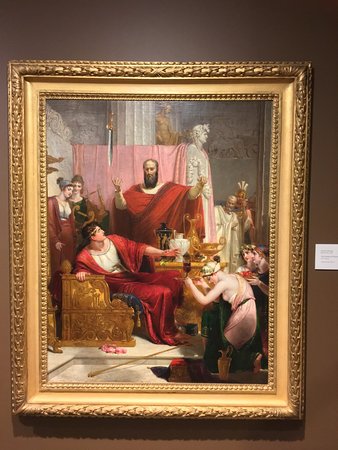
There is a very interesting story in Greek literature. The story is ‘The Sword of Damocles’. No student of English literature could miss it, because it is used by many writers and speakers from Cicero to John F. Kennedy and Nikita Kurushev. Shakespeare, Chaucer and all famous writers used the phrase.

So, what is the story?
Damocles, 4th century BCE, in classical literature, was a courtier of the elder Dionysius , ruler of Syracuse ,Sicily (now part of Italy) . When Damocles praised Dionysius sky high and said that he was very fortunate to be a king. But Dionysius invited him to a feast where he symbolically hung a sword over Damocles’ head by a single horse hair to demonstrate the precariousness of the happiness of the kings .
Later versions of the episode are more interesting. Cicero popularised by saying that rulers are not enjoying.
In fact Dionysius was a tyrant . He had so many enemies around him and he did not allow anyone else other than his daughter to cut his hair. He invited Damocles to rule the country for a day when he hung the sword over the throne. Fearing for his life Damocles ran away. Now we know how difficult to is be a Prime Minister or President where there are unruly opposition parties. US President John F Kennedy and Nikita Kurushev of USSR also used the phrase in the same context. tamilandvedas.com, swamiindology.blogspot.com
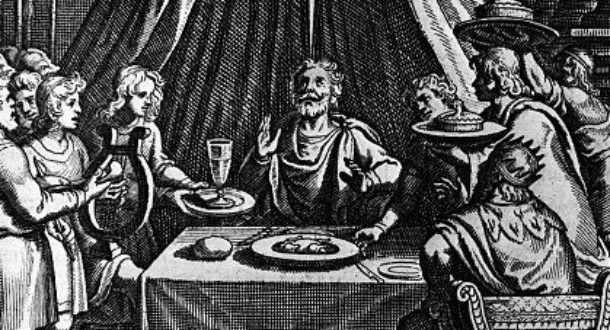
Tamil Sword
Tamils also used the sword but in a different context. They saw a sword over their head in the form of Sun. They told the world “Look at the sun. it is shining over head and you people praise it. But in reality it is a sword that cuts, saws your life every day. That is, every day passed is Minus 1 in your life.
A woman by name Miss Allur Namullai used it for the first time. It is in Kuruntokai, part of 18 books of Sangam Age. That lady saw a sword every early morning . When she had menstruation she cried that its going to deprive her of husband’s hug for three days. Very rare are the verses about menstruation 2000 years ago. Hindu women never talk about it openly. Hindu women never allow any one to touch them during that three day period. They wont even water the plants.

Nan Mullai means good Jasmine flower. The genus Jasminium has hundreds of varieties and Sanskrit is the only ancient language with 100s of names for jasmine and 100s of names for lotus. Many Sangam Age poets who lived 2000 years ago took the prefix Good for their names; in Sanskrit it goes like Su +Mati, Su+ Niti, Su+ Gandhi, Su +Nita etc. In Tamil it is Nan+ Mullai, Nak +Kannai, Nac+ Chellai, Nap+ Pinnai. In short, they followed the Sanskrit prefix GOOD = Su=Na.
Allur Nan Mullai is a translation of Su Kumari. Sukumari is one of the jasminium (Mullai) varieties in the Sanskrit dictionary.
Around 4th or 5th century CE, came the greatest of the ancient Tamil poets Tiruvalluvar and composed 1330 didactic couplets. In 140 couplets under ‘ascetism’ he gave the essence of Hinduism. In fact, he divided the book into three chapters called Dharma, Artha and Kama and placed Moksha under subheading ‘ascetism’.
This ascetism has a chapter called’ Instability’ where he compared a day (sun rise ) to a sword-
“TIME SEEMS ALL SMILES AND LAUGHTER, BUT VERILY IT IS A SAW THAT CEASELESSLY SAWS AWAY THE LIFE OF MAN”.- Kural/couplet 334
Another translation of the same couplet 334 is
“The day which measures time is comparable to a sword which , day by day, cuts short the life of man “– 334

MILTON TOO SAID THIS…………
Dr S M Diaz, Inspector General of Police, Tamil Nadu, India comments on this verse as follows (in his two Volumes titled TIRUKKURAL)
“The day shows itself as an entity, but in reality it is just
The relentless movement of a saw, that cuts through life” – Kural 334.
The day is not just the entity that it appears to be; it is the inexorable movement of a saw that cuts through life. The interpretation is based on Parimelllagar’s. Manakkudavar would interpret the expression ‘naal ondrupol kaatti’ as meaning, showing the day itself as an object of enjoyment. The comparison of time to a sword is found also in the Sangam literature Kurunthokai.
Milton, the doyen among English poets, has given expression to the same thought thus –
“The scythe of time mows down “.
xxx tamilandvedas.com, swamiindology.blogspot.com
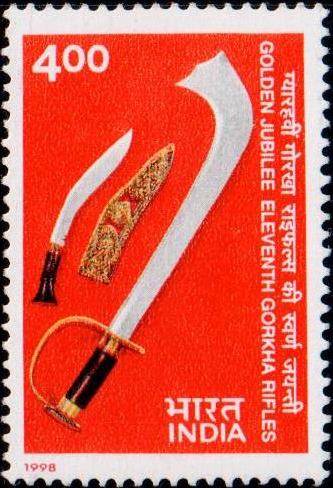
Naladiar is a book with 400 moral verses. In fact, Jains wanted to compete with Hindu poet Tiru Valluvar and composed 400 verses on the same didactic topics. One of the Jain poets says,
“Yama, the God of Death devours away your life daily using the resplendent sun as his measure. Perform therefore virtuous deeds and become compassionate, for otherwise all those that are born will be considered as unborn.” – Naladiar verse 7
Vedic God Yama is Kuutru or Kuutram in Tamil.
Swami Vivekananda also said, “They alone live who live for others, the rest are more dead than alive”
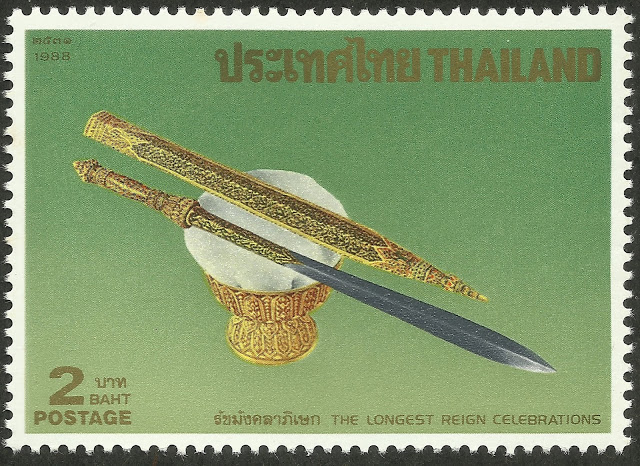
tags — Tamil sword, Greek sword, Damocles, Naan Mullai, Kuruntokai, Sun saw
–subham—
 Tamil and Vedas