Compiled by London swaminathan
Date: 21 September 2016
Time uploaded in London:18-43
Post No.3175
Pictures are taken from various sources; thanks.
From Arthur Miles’ book The Land of the Lingam
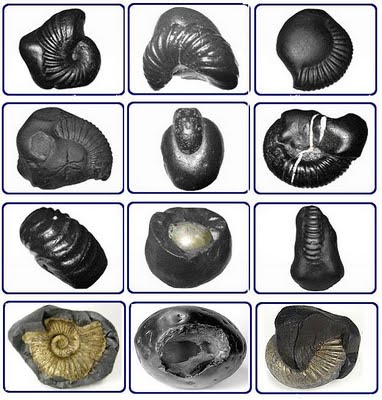
“No legend has so enhanced the value of a precious stone as that handed down from the Skanda Purana. In comparison with the intrinsic value of the genuine Salagrama stone, the Kohinoor and Jubilee diamonds fade into insignificance, although the Salagrama appears to have no value outside Hindu countries.
The Atharva Veda decrees that a Brahmana s house without a Salagrama stone is as impure as a cemetery, and any food cooked therein is as unclean as the excrement of a dog.
To touch water in which this stone has been washed is to get absolution from all sins however grievous, and the possession of such a stone assures perpetual wealth. To drink water which has been sanctified with Saligrama provides happiness in this world and a place in the heaven, the ultimate goal.
To invoke the power of Salagrama, the god Vishnu must be supplicated. With the prayer ‘Narayana’ and the worship which accompanies it.
STORY OF SALAGRAMA
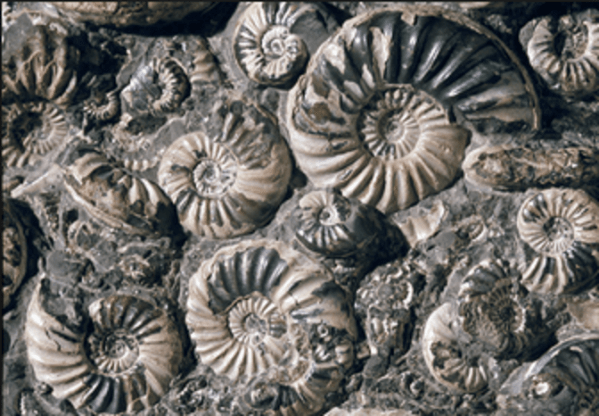
The Salagrama legend centres around a low caste dancing girl, whose head was turned by her own beauty. Failing to find a match to her loveliness, she retired to Himalayas to fast and meditate. During this period she encountered god Vishnu and was so enamoured of his beauty that she demanded the full satisfaction of her passion. On account of her profession, and her low caste, God pretended to remain cold to her voluptuous invitation.
Here the creators of Hindu gods had in mind the symbolisation of their deities’ human weaknesses, of which compromise and justifications are not the least.
In the end, not wishing to pollute his caste, but at the same time determined not to lose all the delight which was offered him, Vishnu took a middle course. He promised that the dancing girl should reincarnate in the form of a river, and he, in the form of a Salagrama stone, wold lie in the river bed as her eternal lover. Thus was founded the Gandaki river, and one of the incarnations of Vishnu in the form of a precious stone. The description of the river and the stone is in the Skanda Purana.
The legend binding the Salagrama stone to Vishnu’s body has proved a source of great wealth to the native state of Nepal through which River Gandaki runs most of its course until it joins the Ganges near Patna. Indeed, so valuable is the stone, that concession for its recovery from the river bed has been farmed out to concessionees by the Maharajah. The consessionees are bound to submit the recovered stones to Maharajah’s s inspection.
FOSSIL AMMONITES
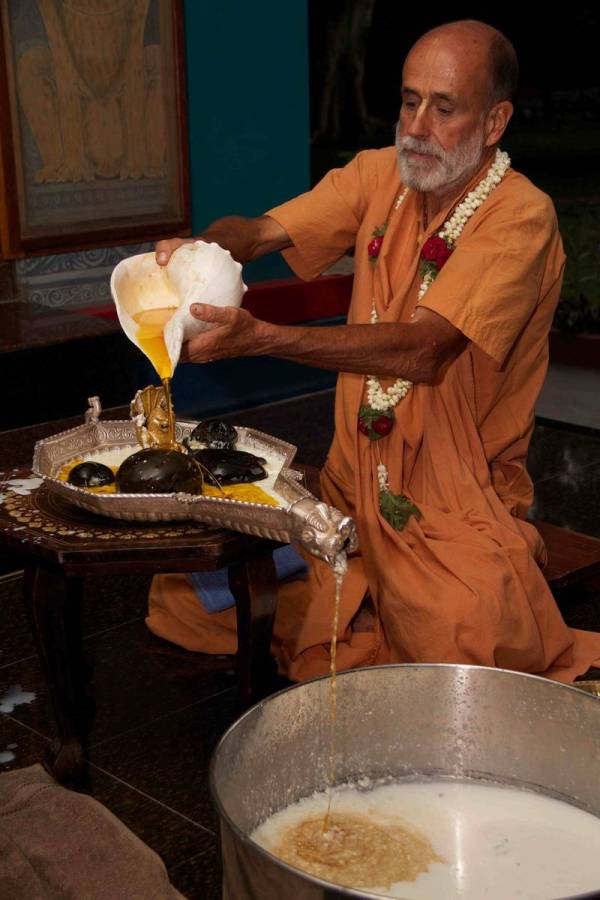
The stone is known to geologist s as fossil Cephalapods (ammonites) it’s worth is not considered by weight; but by certain spiral markings, a hole in a certain position and various spiritual tests. Its value none the less, often exceeds four thousand pounds. The hole was provided by Brahma, who in his incarnation as a water worm, at the request of Vishnu bored the holes known as Vadanas. He traced also the spirals, or chakrams as they are called.
Tradition has it that mysterious power of Salagrama was discovered accidentally by a simple Kshatriya, soldier. This soldier discovered that with the stone in his mouth, or clasped in his hand he was able to accomplish all his desires. His luck was so phenomenal that he became a great King, and was finally borne up to heaven in a cloud by Vishnu; not before, however, he had imparted the secret to one of his courtiers.
HOW TO FIND GOOD SALAGRAMAS
Like all precious stones Salagramas have not escaped the bad luck superstition. Unlucky stones are known as ‘Ugra chakra Salagrama’ or furious stones. Bad luck may follow their possessor especially if prayers offered are not ardent enough to propitiate the deity. The possessors of furious stones are advised to present it to a temple, where the ardent prayers of the priests will keep it from doing its worst.
The stone’s efficacy depends upon how it is acquired, and one that has been acquired dishonesty will bring nothing but evil to its possessor. The Government of Nepal have their own tests. They depend upon no acid which might be falsified, but upon the scales of justice. A stone, on reception, after careful tapping to remove encrustations and expose the spirals, is placed on one pan of the scale, while in the other pan rice is added to an equal weight. If, in twenty-four hours, the rice has increased in weight (it is said sometimes to double itself) the stone is priceless; but if the scale remains even, or if the rice diminishes, it is of little value.

The orthodox Hindus believe that the possession of the salagramas without worship is unlucky; but no Brahmin house is complete without one, and often two or three are said to be necessary.
Thousands of so called salagramas are sold by charlatans, fortune-tellers and others. So skilfully is the fake produced that only after years, or possibly generations, of washing can the deception be discovered. False vadanas are bored in pebbles, and faked chakrams are raced in slate and place on the pebbles”.
–subham–
 Tamil and Vedas
R.Nanjappa (@Nanjundasarma)
/ September 22, 2016Unfortunately, almost everything an average Hindu uses as “holy” is nowadays fake or adulterated. Right from Vibhuti, kumkum, turmeric, sandal paste, honey, milk- you name it, it is adulterated. The small vigrahas / yantras we use for puja are not made properly and hence not only do not yield desired results, but yield adverse ones. The pictures/paintings of our deities are likewise not done properly. No one can ascertain or vouch for the genuineness of the natural objects that are required for Panchayatana puja. Hindus are so gullible.
It is the same story with precious stones which are prescribed as antidote for astrological purposes. It is very difficult to examine them for doshas and the correct strength.
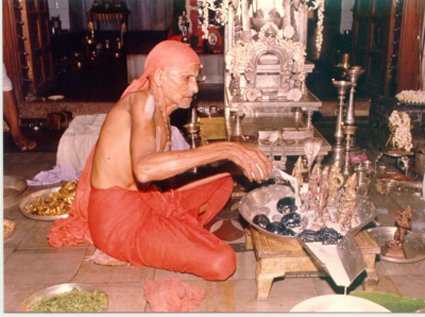
Genuine Salagrama is rare. Very few people have the ability to judge them. And this does not seem to be a skill which can be acquired at will.It comes naturally to some people, like water-divining. Keeping Salagrama at home involves strict discipline and ceremonial purity, with regular puja, with the appropriate mantras and food offering. With the disintegration of joint family, and the absence of orthodox elders at home, it is so difficult to keep genuine Salagrama.
Fakes abound in Rudraksha too. In the olden days, rudraksha was always accepted only if given by a genuinely holy person, known to us.( not from strangers, including unknown sadhus.) Now it is commercially available. But it is rather easy to test it for genuineness. A genuine rudraksha, tied to a cotton string or thread, will circle clockwise if held above coconut or raw plantain . it will circle anti-clockwise if held above garlic, onion, brinjal. This test works for most people- except in the case of some who happen to have different energy pattern. But keeping/wearing rudraksha too involves discipline and purity.
This subject is important, but there are far too many popular (cheap) writings in books and magazines. There are also claims which cannot be verified. In the circumstances, it seems best to invoke God not in any external objects about which we cannot be sure, but in our own hearts which it is within our powers to keep clean! As Saint Tirumular said:
வானுக்குள் ஈசனைத் தேடும் மதியிலீர்
தேனுக்குள் இன்பம் செரிந்திருந்தாற்போல்
ஊனுக்குள் ஈசன் உறைந்திருந்தானே !