Compiled by London swaminathan
Date: 7 August 2018
Time uploaded in London – 10-51 am (British Summer Time)
Post No. 5296
Pictures shown here are taken from various sources such as Facebook friends, Wikipedia, Books, Google and newspapers; thanks. Pictures may be subject to copyright laws.
When Milton’s enemies mocked his blindness, the poet with great heat replied,
“I prefer my blindness to yours, yours is sunk into your deepest senses , blinding your minds, so that you can see nothing that is sound and solid. Mine takes from me only the colour and surface of things, but does not take away from the minds contemplation what is in those things of true and constant. Moreover, how many things are there which I would not see. How many which I can be debarred the sight without repining! How few left which I much desire to see! Vile men! Who mock us! The blind have a protection from the injuries of men, and we are rendered almost sacred.”
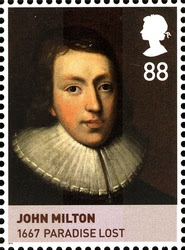
JOHN MILTON
Born on 9 th December 1608
Died on 8th November 1674
Age at death 65
Publications
1629- on the Morning of Christ’s Nativity
1631- L’Alegro
Il Penseroso
1634 Comus
1637 Lycidas
1645 Poems
1667 Paradise Lost
1671 Paradise Regained
1671 Samson Agonistes

John Milton was one of the greatest English poets. He was born in London and educated at Cambridge University. His father was a successful lawyer and composer who was wealthy enough to afford a second house in the country. Milton spent six years in private study thereafter finishing university in 1632. He had given up his original ambition to become a priest and decided to devote his life to God as a poet instead.
Milton began to write poetry while he was at college. He completed one of his major works, Lycidas, perhaps the finest short poem in English at the age of 29. Five years later in 1642 the Civil War divided the country as Oliver Cromwell fought to overthrow the king. At the outbreak of war Milton stopped composing poetry and threw himself into writing political essays supporting Cromwell’s aims. in the same period Milton also became aware that he was slowly going blind.
In 1660 the monarchy was restored, and Milton retired to devote himself poetry. His ambition had always been compose an epic poem to rival the works of ancient writers such as Homer and Virgil. By then completely blind, he began dictating his poem, Paradise Lost , to his wife and daughters. The work published, when he was 55, was immediately recognised as an outstanding achievement. It tells the story of how Satan was thrown out of Heaven and how he came to earth to corrupt Adam and Eve. The themes of war and religious conflict it explores constantly remind the reader of the troubled times Milton lived through.
Source: Who wrote what when?, The Diagram Group, Simon and Schuster, 1999
Xxx
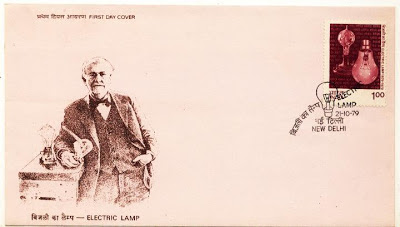
DEAF EDISON!
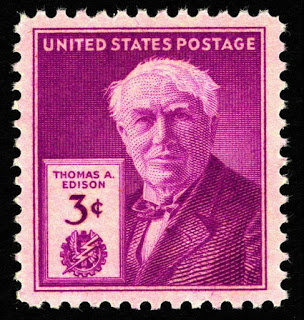
Thomas Alva Edison (February 11, 1847 – October 18, 1931) was an American inventor and business man. He had 1093 US patents in his name.
Thomas Edison was deaf but only a few of his friends were aware that in his case deafness was more psychological than physical. Once a specialist in diseases of the ear called upon Mr. Edison and unfolded a plan of treatment which he was sure would restore his hearing. To the proposition that he submit to the treatment, however, was opposed by Mr Edison. He gave an emphatic negative.
“What I am afraid of, said he, is that you would be successful. Just think what a lot of stuff I would have to listen to that I don’t want to hear! To be a little deaf and be the only one who knows just how deaf you are has its advantages. I prefer to let well enough alone”.
. Xxxx subham xxxx
 Tamil and Vedas