
COMPILED BY LONDON SWAMINATHAN
swami_48@yahoo.com
Date: 22 OCTOBER 2019
British Summer Time uploaded in London – 14-08 am
Post No. 7125
Pictures are taken from various sources; beware of copyright rules; don’t use them without permission; this is a non- commercial, educational blog; posted in swamiindology.blogspot.com and tamilandvedas.com simultaneously. Average hits per day for both the blogs 12,000.
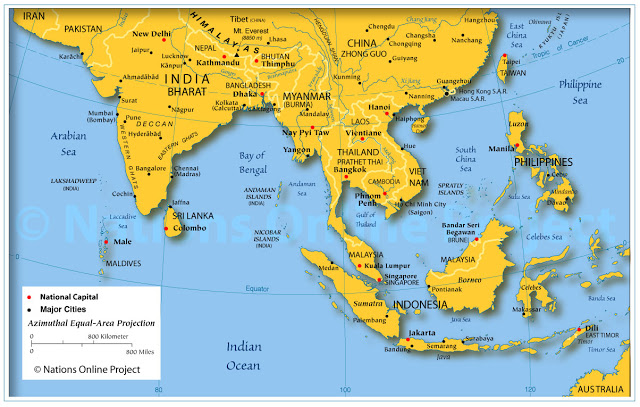
Hindu Rule in South East Asian countries must be made a compulsory subject in India. Students must study it from the high school days, the history, stage by stage because it is a 1500 year long history covering nearly eight countries and their relationship with India and China. The glory of Tamils will also be revealed through this study.
Choza and Pandya kings had powerful naval forces and they were able to defeat kings in Indonesia by sending forces from the mainland. Tamil king Sri Maran began the long history in Vietnam (Champa). He was taken there by saints like Agastya and Kaundinya. The names of these two Brahmin saints are all over South East Asian countries.
After the earliest inscription of Sri Maran (Pandya) in second century CE we come across Pandya and Choza inscriptions only from tenth century. Probably cordial relationship existed between the Kings in mainland and kings in South East Asia (S.E.A.) till that time.
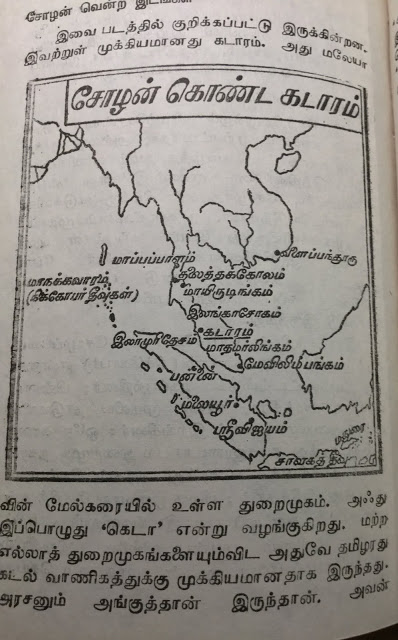
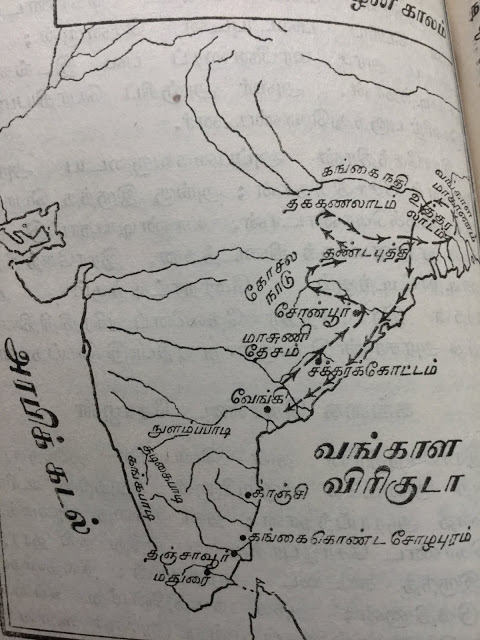
Two inscriptions of Rajendra Choza (in India), dated 1017 and 1022 respectively, refer to his conquest in Kataha or Kadaram (Keddah in Malayan peninsula). Several inscriptions of later period beginning from 1024-5 CE give a detailed account of his oversea conquests, giving a long list of countries conquered by him.
Rajendra Choza sent a big naval expedition and defeated Sangama Vijayottunga Varman, the King of Kadaram. Then follow the 13 countries or places won by him, beginning with Sri Vijaya and ending with Kadram (covering the areas of present day Cambodia, Thailand ,Malaysia and Indonesia).
Source – Thiruvalangadu Plates dated 1017-18
The great oversea victory is a unique event in the annals of Indian history. It proves the existence of a powerful naval forces in ancient India.
Two inscriptions of Vira Rajendra inform us that sometime before 1069-79 CE , he conquered Kadaram on behalf of a king who sought his help. This shows some power struggle there even after Rajendra Choza’s victory.
Half a century after this, Choza Kulottunga (1070-1118) also talk of destroying Kadaram.
Chinese chronicles refer to this place as the kingdom of San-fo-tsi. The king who ruled this kingdom was Sili- Tieh- wa (Sri Deva).
Sri Deva may be Rajendra Choza, according to Dr R C Majumdar, the authority on S E A history.
Pandyan Naval Forces
The Ceylonese chronicles have preserved an interesting account of two invasions of Ceylon by a king of Javaka , called Chandrabhanu , about 1236 and 1256. In an inscription dated 1264 CE, Jatavarman Vira Pandya of South India claims to have killed the Savaka (Java) king, and in another inscription , dated the next year, the king of Kadaram was said to have been defeated by him. It must be Chandrabhanu who was killed.
Arab writers used Zabag for Javaka (te present day Java ,part of Indonesia).
An inscription of Chnadrabhanu has been found at Chaiya near Ligor and it has been dated 1230 CE. The king has been identified with the Javaka king of that name. He is said to have been born in the family of lotus and called Lord of Tambralinga. This seems to indicate the head quarters of Javaka (zabag) were in Malayan peninsula
(My comment:- Tambra= Lotus= Thamarai in Tamil)
The lists of Tamil and Sanskrit inscriptions of Malayan Peninsula are in Wikipedia:-
Sanskrit inscriptions: –
Ligor, Kedah, Kutai Tugu inscriptions
Tamil inscriptions:-
Neusu, Kedah, Barus inscriptions.
Source Book R C Majumdar’s Ancient Indian Colonisation in S E A.
–subham–
 Tamil and Vedas
Nara Subra
/ October 23, 2019Learn what is inscription