Pictures are taken from various sources for spreading knowledge; this is a non- commercial blog. Thanks for your great pictures.
2700 ஆண்டுகளுக்கு முன்னர் பாணினி எழுதிய வாத்தியங்களின் பெயர்கள் சங்க இலக்கியத்திலும் பிற்கால கல்வெட்டுகளிலும் இருக்கும் அதிசயத்தைக் கேளுங்கள்.
பாணினி எழுதியதோ இலக்கண புஸ்தகம். அதிலுள்ள விஷயங்களோ என்சைக்ளோபீடியா அளவுக்கு இருக்கிறது. அதற்கு உரைகாரர்கள் எழுதிய விஷயங்களுக்கு தமிழ் கல்வெட்டுகள் விளக்கம் தருகின்றன. பாணினி எழுதிய இலக்கண நூலின் பெயர் ‘அஷ்டாத்யாயீ’.
முதல் அதிசயம்
பாணினினியின் காலத்துக்கும் சங்க இலக்கியத்துக்கும் இடைப்பட்ட காலத்தில் எழுந்தது புத்த ஜாதகக் (Jataka Tales) கதைகள் ; அந்த 550 கதைகளில் சொல்லாத விஷயமே இல்லை. அவைகளையும் மஹாபாரதத்தையும் வைத்துக்கொண்டு இந்தியாவின் பல்வேறு துறை வளர்ச்சிகளையும் சொல்லிவிடலாம். இதையெல்லாம் விளக்கும் வண்ணம் அமைந்தவை மத்திய பிரதேசத்தில் பார்ஹுத் (Bharhut) என்னும் இடத்தில் உள்ள சிற்ப வேலைப்பாடுகள் ஆகும். இதேபோல சாஞ்சி ஸ்தூபியிலும் சிற்பங்கள் உள .
இதற்குப்பின்னர் சங்க இலக்கியம் உருவானது. இந்தப் பூர்வ பீடிகை எதற்காக சொல்கிறேன் என்றால் பாணினி சொல்வதெல்லாம் ஆயிரம் ஆண்டுகளுக்குத் தொடர்ச்சியாகக் கிடைக்கின்றன.
இன்னிசைக் குழுவை நாம் ஆர்க்கெஸ்ட்ரா (Orchestra) என்று ஆங்கிலத்தில் சொல்லுவோம். இதை பாணினி உரைகாரர்கள் ‘தூர்ய’ (2-4-2)
என்கிறார்கள். அதை பாண்டிய மன்னன் நெடுஞ்செழியனைப் புகழ்ந்து பாடிய மாங்குடி மருதன் மதுரைக்கு காஞ்சியிலும் காண்கிறோம். சங்க இலக்கியத்தில் உள்ள 18 நூல்களில் மிகவும் நீண்ட நூல் இதுதான்.
அந்தி விழவில் தூரியங் கறங்க – வரி 460
சிவன் கோவிலில் மாலைநேரத்தில் எல்லா வாத்தியங்களும் சேர்ந்து முழங்கியதைப் பாடுகிறார் .
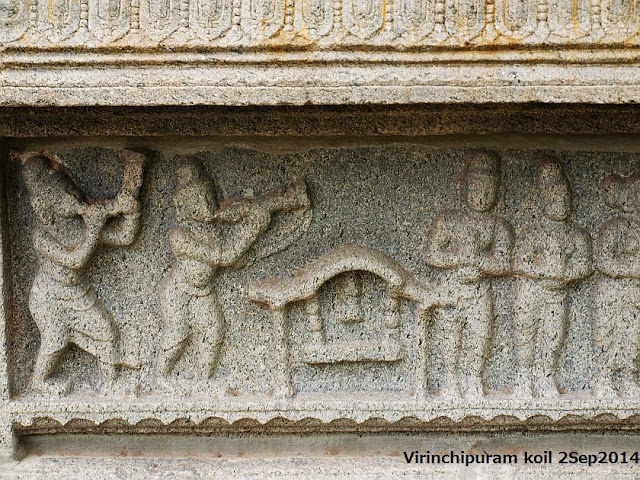
இந்தக் காட்ச்சி பார்ஹுத் சிற்பங்களில் உள்ளது.
இரண்டாவது அதிசயம்
மிருதங்கம், மட்டுகம் , பணவம் ஆகிய வாத்தியங்களை பாணினி குறிப்பிடுகிறார் . இன்று வரை நாம் மிருதங்கம் , மத்தளம் என்பதை பயன்படுத்துகிறோம். மிருதங்கம்- பணவம் இரண்டையும் சேர்த்தும் பேசுகிறார். பணை என்ற முரசு வாத்தியத்தை அகநானுறு — பாடல் 84–முதலிய நூல்கள் நமக்கு காட்டுகின்றன. பண் என்பதே ராகம், பாடல் என்ற பொருளிலும் வருகிறது.
மூன்றாவது அதிசயம்
பாணினி அதிகம் குறிப்பிடும் வாத்தியம் வீணை .3-3-65
ஓரிடத்தில் 3-2-146 பரிவாதக என்ற சொல்லை பிரயோகிக்கிறார் . அனால் விளக்கவில்லை . தமிழில் தேவார காலம் வரை யாழ் , பின்னர் வீணை வருகிறது சிலப்பதிகாரத்தில் இளங்கோ மாட்டும் ஓரிடத்தில் நாரதர் வீணை என்கிறார். பாணினி சொல்லும் பரிவாதகமும் வீணை என்று பாஷ்யக்காரர் பதஞ்சலிமுனிவர் விளக்குகிறார்.
பல்லவ மன்னர்களில் சகல கலாவல்லவன் மஹேந்திர வர்மன்; 1400 ஆண்டுகளுக்கு முன்னர் அப்பர் காலத்தில் ஆடசிபுரிந்தவன் . அவன் சங்கீரணம் என்ற தளத்தைக் கண்டுபிடித்தவன் . அவனுடைய நீண்ட பட்டங்கள் வரிசையில் ஒன்று ‘சங்கீர்ண சாதி’. . குடுமியான் மலையில் இசைக்கல்வெட்டை சமைத்தவன். அவன் பரிவாதினி வீணையில் வல்லவன் ஆக கிமு.7-ம் நூற்றாண்டில் கேட்ட சொல் இங்கே கி.பி 7-ம் நூற்றாண்டில் ஒலித்தது.
நாலாவது அதிசயம்
மகேந்திர பல்லவனை அடுத்து வந்த பல்லவர்களில் இராஜ சிம்மன் ‘வீணா நாரதன்’, ‘வாத்திய வித்யாதரன்’ என்று புகழப்பட்டான் இவன் ஆதோத்ய வீணை வாசிப்பதில் நிபுணன்.சொல்லப்போனால் இவைகளுக்கெல்லாம் முன்னோடியான ராவணன் கொடியிலேயே வீணையைப் பொறித்தான். அதில் சாம கானத்தை இசைத்தான் இசைக்கருவி வாத்யத்தை பாணினி ‘வாதித’ என்றார். அது வாத்ய என்று மருவியது அதுவும் நச்சினார்க்கினியர் போன்றவர்கள் உரையில் ‘வாச்சியம்’ என்று மருவியது இன்றுவரை இச்சொற்கள் பிரயோகத்தில் இருப்பது பாணிணிக்குப் புகழ் சேர்க்கும்.
ந்ருத்ய, கீத , வாதித்ர,நாட்ய ஆகியவற்றை பாணினி குறிப்பிட்டார். இதை கௌடில்யரின் அர்த்தசாஸ்திரம் கீத , வாத்ய, ந்ருத்த , நாட்ய ஆகிய நாலும் இசையின் அங்கம் 2-27 என்கிறது . சொற்களின் ஸ்பெல்லிங் (Spelling) கொஞ்சம கொஞ்சமாக மாறுவது காலத்தைக் கணக்கிட உதவும்.
ஐந்தாவது அதிசயம்
சம்மத
சம்மத, பிரமத என்பதை மகிழ்ச்சி தரும் விழாக்கள் என்கிறார் 3-3-68.
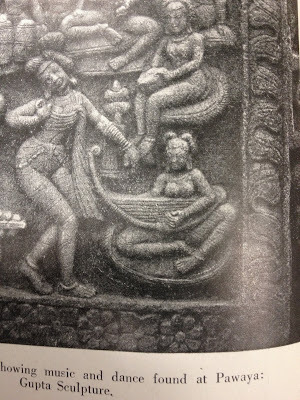
பர்ஹுத் சிற்பங்களில் வாத்யக்காரர்கள் மீது
சாதகம் சம்மதம் துரம் தேவா னாம் –‘ இறைவன் முன்னிலையில் இன்னிசைக் குழு’ என்று எழுதப்பட்டு இருக்கிறது இதில் நான்கு பெண்களின் நாட்டியம், நாலு வித வாத்யம் வாசிப்போர் ஆகியோர் காணப்படுகின்றனர்.
கையினால் தாளம் போடுவதை ஒரு சூத்திரத்தில் எழுதி உள்ளார் ; கட வாத்யம் பற்றியும் பேசுகிறார் தாளம் போன்ற சொல்லை இன்றும் நாம் உபயோகிக்கிறோம்.
வேதத்தில் ‘சமான’ என்ற மாபெரும் விழா பற்றிய விவரங்கள் உள்ளன. அதுவும் சம்மத, பிரமதவுடன் தொடர்புடையதாக இருக்கலாம். அங்கு ஒலிபம்பிக் போட்டி போல விளையாட்டுகளும் ஆடல் பாடல்களும் நடைபெற்றன.
ஆக இவை எல்லாம் ஒரு இலக்கண புஸ்தகம் தரும் சங்கீத விஷயங்கள்!!!
Pictures are taken from various sources for spreading knowledge; this is a non- commercial blog. Thanks for your great pictures.
Cutting the nose , Shaving the hair and cutting the Limbs are common punishments given to offenders in ancient India.
Nose of a sex offender is cut off so that everyone would know he or she is a sex offender. When Surpanakha tried to molest Rama and Lakshmana her nose was cut off.
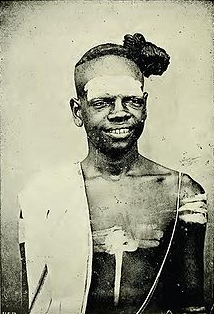
Murderers and rapists were taken on donkeys in procession after shaving off their hair before hanging them . They were wearing red clothes according to Sanskrit dramas. Their faces were marked with red dots and black dots according to Tamil literature.
2000 year old Sangam Tamil literature gives very interesting information about the punishments meted out to the YAVANAS. In Sangam literature we have six references to Yavanas. They meant mostly to Italians/Romans. In one or two places it might have meant Greeks. They were described as Milechas (barbarians ) with harsh and unsweet language. Sanskrit books and Sangam Tamil literature are noticeably clear that they spoke neither Tamil nor Sanskrit but a very harsh language. After the Muslim invasion of India, Yavana or Yona also meant Muslims until very modern times which we see in the greatest Tamil poet Bharatiyar’s songs.
Here is some interesting information about the Romans/Greeks and how the great Chera King Imayavaramban Neduncheralathan punished them:
“According to the Patikam of the second ten of the Patitruppattu, Imaya varampan put the Yavanas to disgrace by pouring ghee on their heads. Tamil epic Silappadikaram also confirms it
“Chera king captured the Yavanas of barbarous speech , poured oil on their heads, tied their hands to their backs and took their priceless jewels and diamonds.
Kamil Zvelebil, Czech Tamil scholar, translates it,
“Having captured the uncivilised Yavanas of harsh speech, poured oil on their heads, tied their hands to their backs and took their precious beautiful vessels and diamonds.”
***
Aitareya Brahmana of Rig Veda, dated around 1000 BCE, says
Visvamitra’s disobedient elder sons are cursed by their father to become the ancestors of the Andhras, Pundras, Sabaras, Pulindas and Mutibas who live in large numbers beyond the borders; most of the Dasyus are descendants of Visvamitra. – AB.7 –18
Mahabharata and Ramayana add more groups such as Yavanas and Pahlavas to this list.
***
YAVANA HAIR CUT
In the well known puranic account – at least in seven puranas – we read,
A coalition of Haihayas and Talajhangas , allied with North Western peoples- the Sakas, Yavanas, Paaradas, Kaambojas and Pahlavas – conquered Sagara’s father Baahu, but were subsequently slain by the young king Sagara and condemned to various punishments that affected their appearance.
Yavanas were condemned to be either without moustaches or to have their heads completely shaved .
Mahabharata also gives a similar account 3-256- 9 to 11
***
NO MUSTACHE
INDUS VALLEY KING
As punishment for robbing Draupai , the head of Jayadratha , the Sindhu king was shaved by Bhima with a crescent arrow until only five tufts of hair were left. Jayadratha was further ordered to tell everybody that he was a slave of the Pandavas.
King Jayadratha of sindu/ Indus Valley had Yavana wives according to Mahabharata .
INDUS VALLEY HAIR CUT
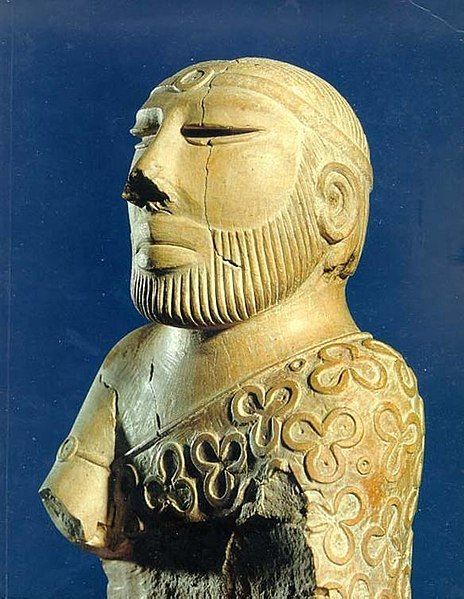
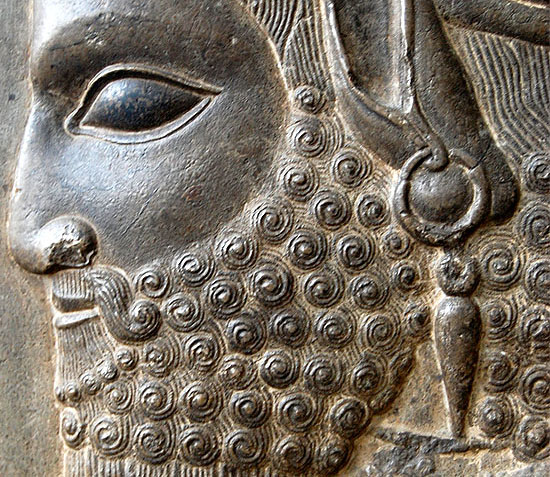
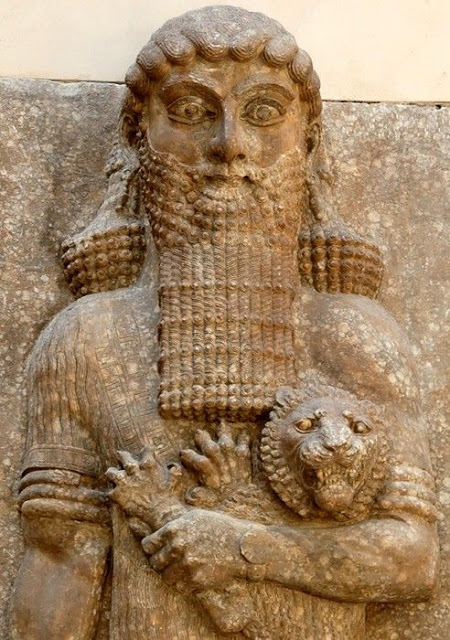
The priest king figure in Indus valley also strange hair cut. We may compare these hair styles with the picture
Kalidasa also talks about hair cut in Raghu Vamsa kavya
He describes the rosy skinned, wine drinking Persian women first, and then in Raghu Vamsa 4-63 he used the same words as in Mahabharata . The arrows Raghu used were bhallam -crescent shaped. The commentators add that the Persians shaved their head completely leaving only the beards which looked like honey combs
Raghu then proceeded by a land route to conquer the pArasIka kings just as a self-controlled yogi possessing divine knowledge proceeds to conquer his own enemies, called his own senses. [4-60]
These pArasIka kings are taken as inhabitants of ancient Persian countries. The commentator sumativijaya calls them – sindhu taTa vAsinAH mlecCha rAjAnaH.
–o)0(o–
यवनीमुखपद्मानां सेहे मधुमदं न सः| बालातपमिवाब्जानामकालजलदोदयः ॥ ४-६१
yavaniimukhapadmaanaa.n sehe madhumada.n na saH | baalaatapamivaabjaanaamakaalajaladodayaH || 4-61
As to how an untimely cloud removes morning sunlight from the faces of just blooming lotuses, raghu has also removed the blooming flush of wine from the lotus-like faces of yavana women when he encountered their men. [4-61]
The yavani-s spoken of by kAlidAsa seem to be of Persian and other races on the north-west of India. Viewing them to be Greek or Ionians is only too far-fetched. – KMJ
Then a tumultuous battle ensued between raghu and the westerners who possess cavalry as their war paraphernalia in a canopy of massive dust wherein the opposing warriors could recognise each other just by the nature of the twanging of their bows. [4-62]
भल्लापवर्जितैस्तेषां शिरोभिः श्मश्रुलैर्महीम्| तस्तार सरघाव्याप्तैः स क्षौद्रपटलैरिव॥ ४-६३
bhallaapavarjitaisteShaa.n shirobhiH shmashrulairmahiim | tastaara saraghaavyaaptaiH sa kShaudrapaTalairiva || 4-63
Raghu covered the ground with the bearded heads of westerners that are cut off with crescent-like arrows, as if they are the sheaves of honeycombs swarming with bees. [4-63]
—–FROM SANSKRITDOCUMENTS.ORG
–o)0(o—
OTHER REFERENCES
Hariamsa on Hair cuts
“Considering his own promise and the words of his preceptor Sagara violated their religious practices and made them change their dress. Having made the Shakas to shave half of their heads he dismissed them. He made the Yavanas and Kaambojas shave their entire head. Paaradas used to have their hair dishevelled and Palhlavas kept beards. They were prohibited from studying Vedas and offering oblation to the fire. Oh my child, Shakas, Yavanas, Kambojas Paradas, Kolasapyas, Mahisas, Darvas, Cholas and Kerlas were all Kshatriyas. Oh, king, at the words of Vasishtha ,their religious practices were put down by the high souled Sagara – Hari Vamsa 10-23 (Hari Vamsa is a supplement to Mahabharata)
Sagara punished the fallen Kshatriyas in this way after his victory and as vengeance for his father’s defeat.
****
In the Dighanikaya , Brahmins shave a brahmin for some kind of offence
Shaving the moustaches and locks is a punishment which is in Bhagavatha purana; Krishna did it to Rukmi, brother of his wife Rukmini.
MAHAVAMSA on Hair Cut
In the Buddhist Sri Lankan history book Mahavamsa (6-39 to 6-42) we see the hair cut punishment; Vijaya and his brothers followed evil customs; people complained about this to their father King Sihabahu – (SIMHABAHU)- of Lata Desa. As punishment the king ordered Vijaya and his followers, seven hundred men , to be partially shaven – half of the head was shaved- and then put on a ship.
***
KERALA BRAHMIN HAIR CUT
Keralotpatti version of Parasurama legend says that after reclaiming the land from the ocean Parasurama brought Brahmins from Ahicchatra. To prevent them from returning home , Parasurama changed their hair style and dress code.
GREEK BOOKS
Megasthanes also talks about this punishment ;he says shaving of hair is a shameful punishment among Indians .
CHINESE SOURCES
A sixth century Chinese text — Wei Shu — mentioned shaving in Sassanid Persia was a punishment for minor crimes. Sometimes one half of the scalp is shaved.
In his fifth century Greek epic Nonnus recounts that Habrathoos had his hair cut off by Deriades in verse 156 he explains that it is a bitter insult to an Indian.
SOURCE BOOK:
‘YONAS AND YAVANAS IN INDIAN LITERATURE’, KLAUS KARTTUNEN, FINNISH ORIENTAL SOCIETY, HELSINKI with my inputs from Tamil sources
TAGS– HAIR CUT, HINDU PUNISHMENTS HALF SHAVED, YAVANA,
Pictures are taken from various sources for spreading knowledge; this is a non- commercial blog. Thanks for your great pictures.
By R. Nanjappa
Guru Is Essential
Greatness of Narada- continued
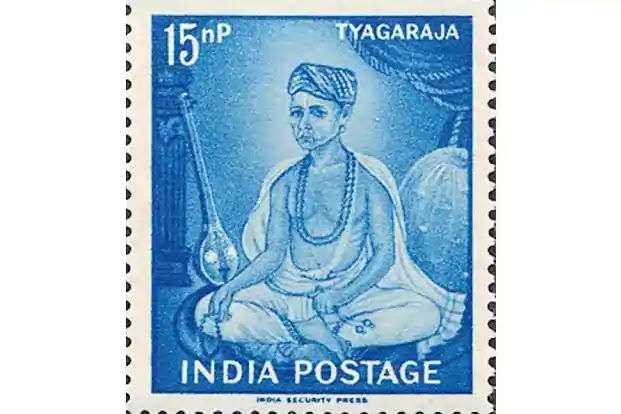
Most Hindus are familiar with the name of Narada but do not have a clear idea about his greatness. A view has gained currency that he is a michievous character out to manipulate people and promote strife, though in the end all is well. Our various Puranas are replete with stories of Narada in every conceivable situation, something like Mulla Nasruddin. Our Harikatha exponents also spread lighthearted stories about Narada. Our movie and other media also portray him often in a silly vein, often played by minor or comedy artistes. Probably the only exception is Savitri where M.S.Subbulakshmi played Narada and sang the superb song of Sadashiva Brahmendra, ‘Bruhi Mukundeti’, which brilliantly captures Narada’s own state of extreme devotion. In the circumstances, it is refreshing to hear from Tyagaraja the glories of Narada which he narrates in two more kritis.
SRI NARADA MUNI (Bhairavi)
Sri Narada muni gururaya ganti me naadi tapamo gururaya
O Narada Muni! Gurunatha! We had your darshan. Is this the result of our tapas! We have surrendered to you wholeheartedly. To day we have had your darshan , filling our eyes full. We have obtained your darshan; our ties of samsara are removed. You alone are immersed in the Brahmananda of Atma jnana. You alone are the fire which can destroy our ignorance, O gurunatha! O gurunatha, ever bearing the lustrous Veena! O Sadgurunatha, who protected Tyagaraja!
Here too Tyagaraja reveals some new facets. Without tapas, we cannot get darshan of a Guru. Tayumanaswami says (only) those who take to murti worship, pilgrimage to holy places and tirthas will get a guru to impart wisdom:
Murti talam tirtham muraiyaai todanginarkor
Vaartai sola satguruvum vaaikkum paraparame
We all want the most excellent guru, but how many of us develop our competence to deserve one by proper sadhana? Are we fit and deserving as disciples?
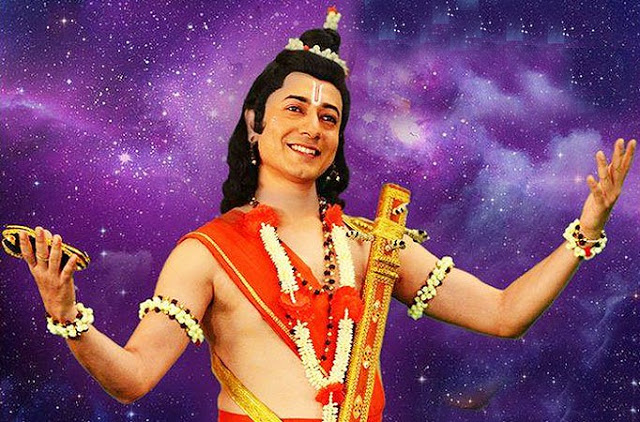
The very darshan of a Sadguru removes our worldly bondage- what we call the power of the very presence: sannidhi visesham. Narada is not a mere devotee, but a supreme Jnani, always immersed in the bliss of the Self. Only such a Guru can destroy our ignorance. Narada always carries a Veena to accompany his singing of the Lord’s praises. It is lustrous because it is divine. About it he is going to reveal something more. The repetition of ‘gururaya’ shows the high reverence Tyagaraja has for this Sadguru.
Narada and Veena
SRI NARADA (Kanada)
Sri Narada nada sara- seeruha bhrunga subhanga
Deena maana rakshaka jaga- deecha bhecha sangaa cha
Veda janita vara veena vaadana tatvagna Khedakara tritaapa rahita khechara vinuta Yaadava kulajaapta sada modahrudaya munivarya Srida Tyagaraja vinuta Srikara maam paalaya.
O Lord Sri Narada ! The honey bee which always goes round the lotus that is Nada!
You protect the prestige of simple devotees. O jagadeesa! O one who shines like the moon!
You know the secret (truth) of the art of playing the exalted Veena, which has originated in the Veda!
You are free from the sufferings caused by the three kinds of afflictions ( taapas)! You are worshipped by the devas! You are the friend of Krishna, the scion of the Yadava clan!
Your heart is always filled with Ananda! You are the greatest of the Munis! You confer prosperity! You are venerated by Tyagaraja! You confer all auspiciousness! Please save me.
In the earlier kriti, Tyagaraja spoke of the veena as lustrous. Here he reveals its reason: it has originated in the Veda.[Veda janitha vara veena] Only those who have mastered the Veda know the secret of playing the veena. Here Tyagaraja reveals the excellences which make Narada the Sadguru! Alas! our concert artistes do not sing these kritis much. Let us bow to Narada, along with Tyagaraja.
Guru in Human Form?
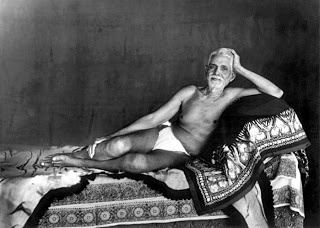
In the annals of religious lore we get some exalted souls who have had no human guru, but where the Lord himself has become the Guru. Manickavachaka was one such, for whom Lord Shiva himself became the Guru, assuming the form of a youth. Arunagirinatha had no human guru, Lord Subrahmanya himself becoming his guru. He states: O Gurunatha, who blessed me with a rosary: ” japa maalai tanda sargurunatha”. He wants the Lord to come and bless him in the form of the Guru: “Guruvaai varuvaai Arulvaai Guhane!” In our own times, Sri Ramana Maharshi had no human guru.
Rama as Guru!
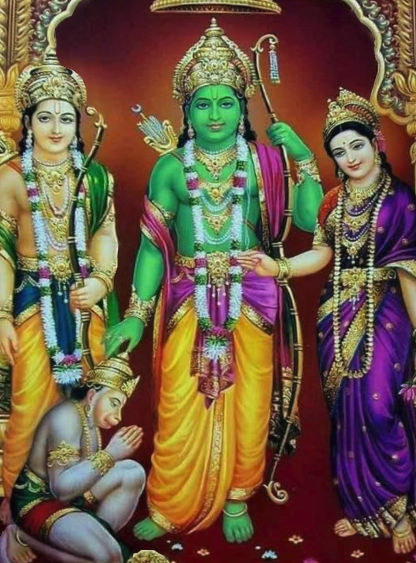
For Tyagaraja, Narada appeared in his vision and enlightened him. So did Rama! Tyagaraja performed the japa of Rama Shadakshari mantra 96 crore times! And he not only had vision of Rama, but Rama was ever present in his consciousness. It was Rama who instructed him and revealed to him his kritis. Says Tyagaraja:
O the son of Dasaratha! Is is possible for me to discharge the debt I owe you?
O the best of the rasikas who made me shine (even) in far off lands, to my heart’s content!
You thought that the great poets, lacking in devotion do not know the subtleties and inner meaning. So you appeared before me in vision and taught me the kirtanas which can confer both the happiness of this world and Liberation hereafter. Tyagaraja can only worship you; can he ever repay your debt?
Secret of Sacred Poetry
Friends! This is one of the greatest gems of Tyagaraja. Here he reveals the secret strength of his kritis: they are not the product of his fancy, mental effort; they are not just songs to please, but confer bhukti and mukti! He knows that they have made him well known, but he is not claiming any credit. All glory to Rama! It is Rama who taught him and made his name well known! And Tyagaraja reveals one more secret: mere scholarship or poetic skill does not lead to sacred poetry. Such learned poets do not even know the real meaning or secret of the religious truth. Divine blessings are necessary. Rama imparted this secret knowledge: what Gita calls guhyataram, guhya tamam! It is only such kritis which are worth singing and listening to.
Rama’s Role as Guru: Transformation
What did Rama do as Guru? This Tyagaraja explains in another kriti.
O Rama! Your heart and mind are flawless and ever established in their natural state. Knowing this, I always rely on you. My mind is full of deceitful thoughts and always restless. But you should not leave me on that account.
1. Guru is the Sallaki seed, which clears up muddy water. 2. Guru is the wasp which transforms the worm into a wasp! 3. Guru is the Sun ( who removes the darkness of ignorance, and gives light which is enlightenment) 4. Guru is the one who confers auspiciousness.
I have understood that you are such a Guru, O Rama! I am your devotee, please protect and save me!
We saw earlier that the Guru’s job is to transform. Here Tyagaraja tells us how that transformation is brought about. The guru clears up the chitta of the disciple. Sallaki is a kind of soap nut seed which when crushed and put in a vessel of muddy water will cause the muddy impurities to settle down at the bottom and make the water clear. The wasp traps a worm in its muddy nest, and by stinging it daily converts it into a wasp like itself! So the Guru makes a disciple like himself! Guru is the source of enlightenment. And he is the abode of auspiciousness. Here, Tyagaraja states very clearly that he has taken Rama as the Guru!
Guru is Necessary
The presence of a guru is absolutely necessary for spiritual progress. Tyagaraja writes about it strongly.
Without the Guru, it is not possible (even) for a man with good qualities and other merits to get rid of the intense afflictions which seize his mind and heart. One’s own body, children, wealth, wives, close relatives- these become the source of pain and troubles, which spread out. These can be prevented from affecting one’s heart only by the instructions in the knowledge of Truth (Tatva bodhana) which act as the good medicine. It is the Guru who provides this knowledge, with his compassion and saves one. Such a guru is very dear to Tyagaraja.
If it is impossible even for a guni ie a person with good qualities and attainments to be spiritually saved without the aid of a Guru, how about ordinary people like us?
It is seen that most people approaching a saint or sage seek remedy or relief from worldly afflictions, which almost always relate to problems arising from the factors listed in the kriti. And genuine Saints are able to give succour to troubled minds, but also provide us with a spiritual perspective, which alone is the real cure and ultimate remedy for the very illness that is samsara, not just its other ills!
Kutcheri culture and its Discontents
Sri Tyagaraja has given us the quintessence of Gurutatva in his kritis. Unfortunately, the ‘kutcheri’ culture serves mainly the interests of popular entertainment, and the kritis on Narada are not made popular on the platform. Even when they are sung, all the charanams are not handled. When they do Ragam Tanam Pallavi, why can they not take up these words and embellish them? But the serious student and seeker can approach the kritis as literature, and they are sublime literature, throwing light on Itihasa, Purana, morals and ethics, culture and philosophy.
Note: What is Upadesa? We generally talk of Guru giving “upadesa”. But what is the meaning of upadesa? Is it some magic mantra? some mystic formula? some secret technique? Sri Ramana Maharshi has explained it in his own inimitable manner.
The word upadesa literally means restoring an object to its proper place. The mind of the disciple, having become differentiated from its true and primal state of Pure Being, which is the Self and which is described in the scriptures as Sat-chit-ananda (Being-Consciousness-Bliss), slips away therefrom, and assuming the form of thought, constantly pursues objects of sense-gratification. Therefore it is assailed by the vicissitudes of life and becomes weak and disspirited. Upadesa consists in the Guru restoring it to its primal state and preventing it from slipping away from the state of Pure Being, of absolute identity with the Self, or, in other words, the being of the Guru.
The word can also be understood as meaning to present an apparently distant object to close view; that is to say, it consists in the Guru showing the disciple what he had considered as distant and different from himself to be immediate and identical with himself.
…..it is very seldom that a person can realize his true Being, without the grace of the Guru.
From: The Teaching of Bhagavan Sri Ramana Maharshi in His Own Words, edited by Arthur Osborne, Sri Ramanasramam, 1965, p 120.
நமது பொற்கால இசைஞர்கள் அனைவருமே திறமைசாலிகள்-ஒவ்வொருவரும் ஒருவகையில் சிறந்திருந்தவர்கள். பரஸ்பரம் மதிப்பு வைத்திருந்தார்கள். பாம்பறியும் பாம்பின் கால்-அல்லவா?
இவர்களில் மதன் மோஹன் [ 1924-1975] குறிப்பிடத் தக்கவர். இவர் சிறு பையனாக இருக்கும் போதே [பள்ளிப் பருவத்திற்கு முன்பே- எழுதப் படிக்கத் தெரிந்து கொள்வதற்கு முன்பே] இவரிடம் ஒரு அசாதாரண ஆற்றல் இருக்குமாம். ஒரு பாட்டைச் சொன்னால் , உடனே அது இருக்கும் கிராமஃபோன் ரிகார்டை எடுத்துத் தருவாராம்!
அவர் தந்தை ஃபில்மிஸ்தான் ஸ்டுடியோவில் பார்ட்னராக இருந்தார். தன் பையன் திரையிசைத்துறைக்கு வருவதை விரும்பவில்லை. மதன் மோஹனும் பட்டாளத்தில் சேர்ந்தார், இசை ஆர்வம் மிகுந்து திரை இசைக்கே வந்துவிட்டார். இவரை ஊக்குவிக்க இவர் தந்தை எதுவும் செய்யவில்லை.
இவர் தனக்கென ஒரு வழியை வகுத்துக் கொண்டார். இவர் இசை
‘கன’மானது- இந்திய பாரம்பரிய இசையில் தோய்ந்திருக்கும். சட்டென்று பதியாது- கேட்கக்கேட்க இதன் சுவை மிகும்- பயில்தொறும் பண்பு புலனாகும். கவிதையின் அழகில், பொருளில் லயிப்பவர்-;கஃஜல் வகை பாடல்களுக்கு உணர்ச்சிபொங்க இசையமைப்பவர். சக இசைஞர்களால் நன்கு மதிக்கப்பட்டவர்.
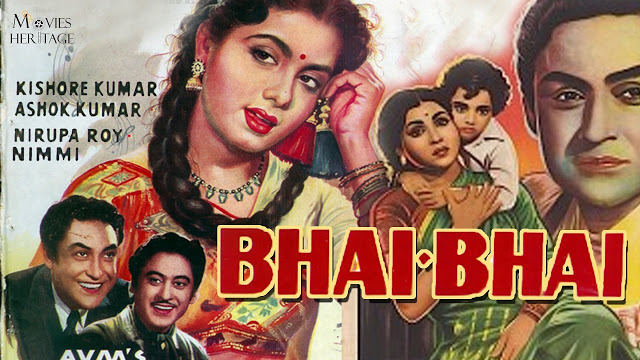
ஓ.பி. நய்யார் கை ஓங்கிவரும் காலத்தில் எல்லா தயாரிப்பாளர்களும் அவர் பாணி இசையையே எல்லா இசைஞரிடத்திலும் எதிர்பார்த்தனர்..”பாய் பாய்” என்ற படத்தில் இவரையும் அப்படிச் செய்யச்சொன்னார்கள். தானும் சளைத்தவரல்ல என இவரும் ஒரு பாட்டை அதே பாணியில் அமைத்தார்.இதோ அந்தப் பாட்டு:
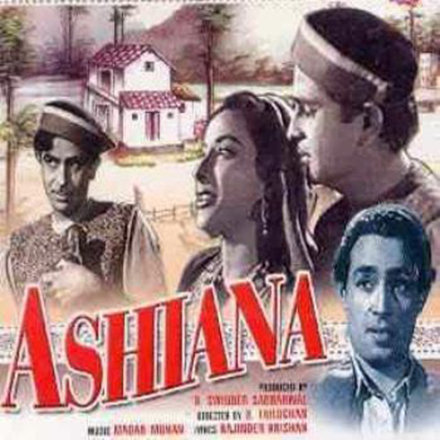
இது தமிழில் வந்த “ரத்த பாசம்” என்ற படத்தின் ஹிந்தி வடிவம். தமிழில் டி.கே. சண்முகம்-பகவதி சகோதரர்கள் நடித்ததுபோல் ஹிந்தியில் அஷோக் குமார்-கிஷோர் குமார் சகோதரர்கள் நடித்தனர். இந்தப் படத்தில் இருந்த 11 பாடல்களில் 7 பாட்டுகள் லதா மங்கேஷ்கர் பாடியவை! [மதன் மோஹன் இசையில் லதா மங்கேஷ்கருக்கு சிறந்த இடம் இருக்கும்.] ஆனால் கீதா தத் பாடிய இந்தப் பாட்டு அனைத்தையும் விழுங்கிவிட்டது, மிகப் பிரபலமானது. இந்தப் பாட்டில் லதா, ஆஷா இருவரையும் மிஞ்சி விட்டார் கீதா! பாவம், அவருக்கு வாய்ப்புகள் கிடைக்கவில்லை.
ஆனால் இது நாயகி மேல் படமாக்கப்படவில்லை! நாயகியின் இடத்தைப் பறிக்க முயற்சி செய்யும் ஒரு பாத்திரம் பாடுவதாக வரும், Impish பாடல் எனலாம். ஆயினும் நிதானமிழக்காத சொற்கள், பாட்டின் கவிதைத் தரத்தை தக்கவைக்கின்றன. மெட்டு உண்மையிலேயே சொக்கவைக்கிறது!
ஆனால் மதன் மோகனின் இதயம் ‘கனமான’ பாடல்களில் சஞ்சரிக்கும், கஃஜலில் மூழ்கித் திளைக்கும். இதோ அப்படி ஒரு பாடல்.
மைபாகல்
main pagal mera manava pagal pagal meri preet re pagale-pan ki peed vo jaane bichhade jinka meet re mai pagal mera manavaa paagal
நான்ஒருபைத்தியம்என்மனதின்போக்கும்பைத்தியமே!
என்காதலும்பைத்தியமே
இந்தப்பைத்தியத்தின்நிலையாருக்குப்புரியும்?
தன்மனவமைதியை (காதலில்) யார்இழந்தார்களோ
அவர்களுக்கேபுரியும்!
kahe ye duniya mai deewaana din me dekhoon sapne deewani duniya kya jaane deewani duniya kya jaane ye sapane hai apne ye sapane hai apne ghaayal man ki hansi udaaye ye duniya ki reet re, main paagal
chhupi hui meri kaya me raakh kisi paravaane ki ye meraa dukhiyaa jeevan hai rooh kisi diwane ki man ke toote taar bajaakar gaaun apne geet re
இந்தஎன்உடலில்ஒருஅன்புப்பைத்தியத்தின்
சாம்பல்மறைந்திருக்கிறது!
இந்தஎன்துக்கம்மிக்கவாழ்க்கையும்
ஒருஅன்புப்பைத்தியத்தின்ஆவியே!
மனதெனும்வீணையின்துண்டிக்கப்பட்டநரம்புகளைமீட்டி
என்பாட்டைப்பாடுகிறேன்
நான்பைத்தியமே…..
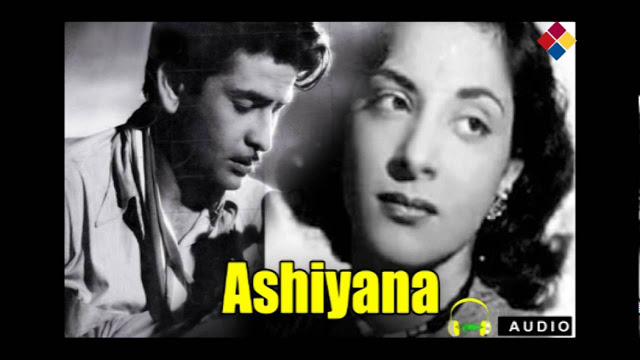
Song: Main pagal mera manwa pagal Film: Aashiana 1952 Lyrics: Rajinder Krishan
Music: Madan Mohan Singer: Talat Mahmood
பொதுவாக, கஃஜல் உருதுவில் இருக்கும். இது எளிய ஹிந்தியில் இருக்கிறது. ராஜேந்த்ர க்ரிஷன் எளிய சொற்களை வைத்து அரிய கவிதை படைத்துவிட்டார்.
தலத் மஹ்மூத் இதைப் பாடிய அழகை என்னவென்று புகழ்வது! இந்த சொற்களை இவ்வளவு உணர்ச்சிபூர்வமாகப் பாடுவது வேறு எவராலும் இயலாதது!
இதற்கு கேதார் ராகத்தில் இசையமைத்திருக்கிறார் மதன் மோஹன்! ராக பாவம், பாட்டின் பாவம், பாடுபவரின் பாவம் மிக்க குரல்- மூன்றும் சேர்ந்து நம்மை வேறு உலகத்திற்கே இட்டுச்செல்கின்றன.
ஆனால் படத்தில் இதை ராஜ் கபூரின் மீது எடுத்து வீணடித்திருக்கிறார்கள். இத்தகைய அழுத்தமான பாடல்களை அவர் screen persona தாங்காது ! அதனால் தான் நாம் பாடல்களை தனியாகக்கேட்டு ரசிக்க முயலவேண்டும். சில பாடல்கள் சிலருக்குப் பொருந்துவதில்லை.
இதே படத்தில் “மேரா கரார் லேஜா” என்ற இன்னொரு அருமையான கஃஜலும் இருக்கிறது!
உண்மையில் மதன் மோஹன்தான் இந்த திரை உலகிற்குப் பொருந்தாத பைத்தியம்.! தன் தரத்தை விட்டுக் கொடுக்காதவர். வரும் புதிய அலைகளுக்குப் பணியாதவர், பல படங்களில் நல்ல இசை இருந்தும் இவருக்கு உரிய அங்கீகாரமோ, கவுரவமோ கிடைக்கவில்லை. 1970ல் பெற்ற தேசீய விருது ஒன்றுதான் இவருக்குக் கிடைத்த பரிசு.
நல்ல இசையிருந்தும், பல படங்கள் வெற்றி பெறவில்லை. இந்த பாய் பாய் படம் இவரைத் தூக்கிவிட்டது. 1964ல் வந்த “வோ கௌன் தீ” என்ற படமும் (இதில் “நைனா பர்ஸே” பாடல் மிகப் பிரசித்தி) 1966ல் வந்த ‘மேரா சாயா” படமும் ( இதில் ‘தூ ஜஹா(ன்) ஜஹா(ன்) சலேகா என்ற பாடல் பெரிய ஹிட்) அரிய இசையுடன் வெற்றியும் கண்டன. 1972ல் வந்த “பாவர்ச்சி” படமும் நல்ல இசையுடன் பெரிய ஹிட் ஆனது. இருந்தும் தனக்குரிய கவுரவம் கிடைக்கவில்லை என்ற குறை இருந்தது, பாட்டிலுக்கு அடிமையாகி 51 வயதிலேயே உயிர் நீத்தார். நூற்றுக்கணக்கான மெட்டுகள் எழுதிவைத்திருக்கிறார் என்று சொல்கிறார்கள். 2004ல் வந்த “வீர் ஃஜாரா” படத்தில் இவர் மெட்டுக்களைப் பயன்படுத்தினர்.
25 ஆண்டுகளே திரை இசைத்துறையில் இருந்த இவர் மறைந்து 45 ஆண்டுகளுக்குப் பிறகும் இவரை நினைக்கிறோம்! அதுவே இசையின் மகத்துவம்! அதுவே நாம் ஒரு அரிய கலைஞனுக்குத் தரும் “சல்யூட்” !
அற்புதமான கதைகள் அனைத்திற்கும் தாயகம் பாரதம். கற்பனாசக்தி மூலம் எப்படிப்பட்ட கதைகளை ஒரு சிறந்த கதாசிரியர் உருவாக்க முடியுமோ அப்படிப்பட்ட கதைகளை பாரத தேசம் உருவாக்கி உலகினர் முன் வைத்திருக்கிறது.
ராமாயணம், மஹாபாரதம், புராணங்கள் ஆகியவற்றில் உள்ள கதைகளைத் தவிர ப்ருஹத் கதா, ப்ருஹத் கதா மஞ்சரி, கதா சரித் சாகரா என இப்படி ஏராளமான நூல்கள் பாரதத்தில் படைக்கப்பட்டுள்ளன.
இவற்றை பெர்சிய மொழியில் பல அறிஞர்கள் மொழி பெயர்க்க, பின்னர் அவை ஆங்கிலம் உள்ளிட்ட பல மேலை நாட்டு மொழிகளிலும் மொழி பெயர்க்கப்பட்டுள்ளன.
திகில், மர்மம், புதிர், கேள்வி-பதில் கதைகள், மறுஜென்மம் உள்ளிட்ட அதீத உளவியல் பற்றிய கதைகள், அற நீதிக் கதைகள், விஞ்ஞானக் கதைகள் என முடிவில்லா தீம்களை – கருக்களைக் கொண்ட கதைகள் இவை.
கதைக்குள் கதை என்னும் உத்தி உட்பட ஏராளமான உத்திகளை இந்த நூல்களே முதலில் உலகினருக்கு அறிமுகம் செய்து வைத்துள்ளன.
ப்ருஹத் கதா
மிக பிரம்மாண்டமான நூல் ப்ருஹத் கதா. இதை எழுதியவ குணாத்யர். ஆனால் துரதிர்ஷ்டவசமாக இந்த நூல் இன்று கிடைக்கவில்லை. ஒரு லக்ஷம் ஸ்லோகங்கள் கொண்டது ப்ருஹத் கதா. மஹாபாரதமும் ஒரு லக்ஷம் ஸ்லோகங்கள் கொண்டது என்பதை ஒப்பிடும் போது ப்ருஹத் கதா எப்படிப்பட்ட கதைகளைக் கொண்டிருக்கக்கூடும் என்பதை நன்கு ஊகிக்கலாம்.
இது எழுந்த விதமே ஒரு சுவையான கதை.
புஷ்பதந்தர் என்பவர் சிவ பக்தர். ஒரு முறை அவர் பரமசிவனும் பார்வதியும் கைலாசத்தில் பேசிக் கொண்டிருந்ததை ஒட்டுக் கேட்டார். இதனால் கோபமுற்ற சிவபிரான் அவரை பூவுலகில் பிறக்க சபித்ததோடு சாபம் நிவர்த்திக்கவும் வழி சொன்னார்.
பூவுலகில் பிறந்த புஷ்பதந்தர் பூவுலகில் வரருசி என்ற பெயரில் பிறந்தார்; வளர்ந்தார்.
கணபூதி என்ற சிவபக்தரின் அறிமுகம் அவருக்குக் கிடைத்தது. கணபூதி அவரிடம் ஒரு கதை சொல்ல உடனே வரருசிக்குத் தன் பூர்வ ஜென்ம ஞாபகம் வந்தது.
வரருசி உபகோசை என்ற மங்கையைக் கண்டு மோகித்து மணம் செய்து கொண்டார். பின்னர் அவர் பத்ரிகா என்ற முனிவரைக் காணச் சென்றார். அவரைக் கண்ட பின்னர் வரருசி அக்னி வளர்த்து அதில் தன் உடலை ஆகுதியாக்கி வானுலகம் சென்றார்.
கணபூதிக்கு ப்ருஹத் கதாவை எழுதிய குணாத்யர் தன் கதையைச் சொன்னார்.
அந்தக் கதையின் சுருக்கம் இது:
சம்ஸ்கிருதம், மற்றும் அந்தக் காலத்தில் வழங்கி வந்த இதர மொழிகளில் காவியம் படைக்க மாட்டேன் என்று சூளுரை கொண்ட குணாத்யர் பைசாச மொழியில் தன் காவியத்தை – உலகின் சகல கதைகளும் அடங்கிய ப்ரஹத் கதையைச் செய்தார்.
அதை எழுதியதும் தன் இரத்தத்திலேயே எழுதினார். இப்படி இரத்தத்தினால் பைசாச மொழியில் எழுதப்பட்ட காவியத்தை யாராலும் திருட முடியாது என்பது அவர் நம்பிக்கை.
அவர் வாழ்ந்த நாட்டை ஆண்டு வந்த மன்னன் பெயர் சாதவாஹனன். அவன், ‘பைசாச மொழி ஒரு காட்டுமிராண்டி மொழி. அதிலும் அந்த மொழியில் தன் ரத்தத்தினால் எழுதிய ஒரு நூலை என்னால் ஏற்கவே முடியாது’ என்று கூறி விட்டான்.
இதைக் கேள்விப்பட்ட குணாத்யர் மனமுடைந்து போனார்.
அருமையாக கஷ்டப்பட்டு எழுதிய நூலை மன்னன் ஏற்கவில்லையே என வருந்திய அவர் தான் எழுதிய நூல் சுவடிகளை ஒவ்வொன்றாக தான் வளர்த்த அக்னியில் போட ஆரம்பித்தார்.
இந்தச் சமயத்தில் சாதவாஹன மன்னனுக்கு உடல்நிலை சரியில்லாமல் போகவே அவன் குணாத்யரைத் தேடி வந்தான்.
அப்போது தான் அவன் குணாத்யர் தான் எழுதிய நூலை அக்னிக்கு ஆகுதியாக்கும் காட்சியைக் கண்டு திடுக்கிட்டான்.
ஓடிச் சென்று அவரைத் தடுத்து தன் செயலுக்கு மன்னிப்பு கேட்டான்.
எரிக்காமல் பாக்கி இருந்த ஒரு பகுதி தான் ப்ருஹத் கதா! (ஒரு லக்ஷம் ஸ்லோகங்கள்!)
குணாத்யர் சுவர்க்கம் ஏக, சாதவாஹனன் ப்ருஹத் கதாவை நாடு முழுவதும் பரப்புகிறான்.
இது தான் ப்ருஹத் கதா எழுந்த கதை!
குணாத்யர் வேத வியாஸரின் மறு அவதாரமாகக் கருதப்பட்டிருக்கிறார். நேபாள மாஹாத்யமோ அவரை வால்மீகியுடன் ஒப்பிடுகிறது.
குணாத்யர் சாதவாஹன மன்னனின் அரசவையில் அமைச்சராக இருந்தார் என்பது தெரிய வருகிறது.
இவர் வாழ்ந்த காலத்தைப் பல்வேறு அறிஞர்கள் வெவ்வேறு விதமாகக் கூறியுள்ளனர்.
கி.பி. 60 முதல் கி.பி. 600 வரை இந்த அறிஞர்களால் இவரது காலம் சொல்லப்படுவதால் இந்தக் காலத்திற்குள் இவர் வாழ்ந்தார் என்று கொள்ளலாம்!
ப்ராக்ருத மொழியிலோ சம்ஸ்கிருத மொழியிலோ தான் எழுதப் போவதில்லை என்று இவர் சபதம் செய்திருந்ததாலேயே பைசாச மொழியில் இவர் தனது நூலை எழுதினார் என ஒரு கருத்து நிலவுகிறது.
உஜ்ஜயினியில் மன்னன் மதனன் அரசவையில் இவர் இருந்ததாக இன்னொரு செய்தி கூறுகிறது. சர்வவர்மன் உஜ்ஜயினியை ஜெயிக்கவே இவர் புலஸ்தியரின் அறிவுரைப்படி பைசாச மொழியில் எழுதினார் என்றும் ஒரு செய்தி உண்டு.
குணாத்யர் காஷ்மீரில் வாழ்ந்ததாகப் பெரும்பாலானோர் கருதுகின்றனர்.
ஆனால் க்ஷேமேந்திரரோ அவர் தக்காணத்தில் கோதாவரி நதி தீரத்தின் அருகில் வாழ்ந்ததாகக் கூறுகிறார்.
ப்ருஹத் கதாவினால் உத்வேகம் பெற்ற இரு மாபெரும் கவிஞர் ப்ருஹத் கதாவை அப்படியே சுவை குன்றாமல் சம்ஸ்கிருத மொழியில் இயற்றினர்.
ப்ருஹத் கதாவின் அடிப்படையில் சோமதேவர் கதா சரித் சாகரத்தை இயற்றினார்.
க்ஷேமேந்திரர் ப்ருஹத் கதா மஞ்சரியை இயற்றினார்.
தமிழில் கொங்கு வேளிரின் பெருங்கதையும் இதன் அடிப்படையில் பிறந்ததே.
இந்த நூலை அரும்பாடு பட்டுக் கண்டுபிடித்து வெளிக் கொணர்ந்தவர் மஹாமஹோபாத்யாயா உ.வே.சாமிநாதையர் அவர்கள்.
அடுத்து ப்ருஹத் கதாவின் அடிப்படையில் எழுந்த இன்னும் இரு நூல்களும் உண்டு. நேபாளத்தில் கிடைக்கும் ப்ருஹத் கதா ஸ்லோக சங்க்ரஹம் நூலை இயற்றியவர் புதஸ்வாமின். ஜைன மதத்தின் அடிப்படையில் வாசுதேவஹிந்தி இயற்றிய நூலும் ஒன்று உண்டு.
அடுத்த கட்டுரையில் இன்னும் சில செய்திகளைப் பார்ப்போம்!
GLORY OF NARADA — SADGURU SRI TYAGARAJA-3 (Post No.WRITTEN BY R. NANJAPPA
Post No.7963Date uploaded in London – – – 12 May 2020 Contact – swami_48@yahoo.com Pictures are taken from various sources for spreading knowledge; this is a non- commercial blog. Thanks for your great pictures.
SADGURU SRI TYAGARAJA-3 R. Nanjappa
The Glory of Narada
Since we are talking about ‘sadguru’, it is necessary to have a clear idea about what we mean by ‘guru’. In popular usage this term is applied to many – right from a school teacher to one who teaches a vidya like music, or imparts a mantra, gives diksha in a tradition, etc. A religious guru is one who ‘initiates’ a person in a particular path or parampara. Different traditions trace their origin from different sources. Smartas speak of : Sadashiva samarambham Sankarachrya madhyamam Asmad acharya paryantam vande guru paramparam. They also speak of Dakshinamurti as AdiGuru. Smartas recite this Slokam also:
VasudevasutamdevamKamsachanuramardanam DevakiparamanandamKrishnamvandeJagadgurum. Dakshinamurti teaches in silence- gurostu maunam vyakyanam. Krishna is the speaking guru-who taught us the Gita. Arjuna calls Krishna ” Gurur Gariyan”- the great guru in the Gita. In our religious lore there are many interesting debates about guru- whether he should be in a human form, whether there should be a living guru, etc. In the Upanishad, we have an instance where a student claims that he was taught ‘by others than men’. In the Bhagavatam we have the story of Dattatreya who had 24 gurus, including python and vulture.
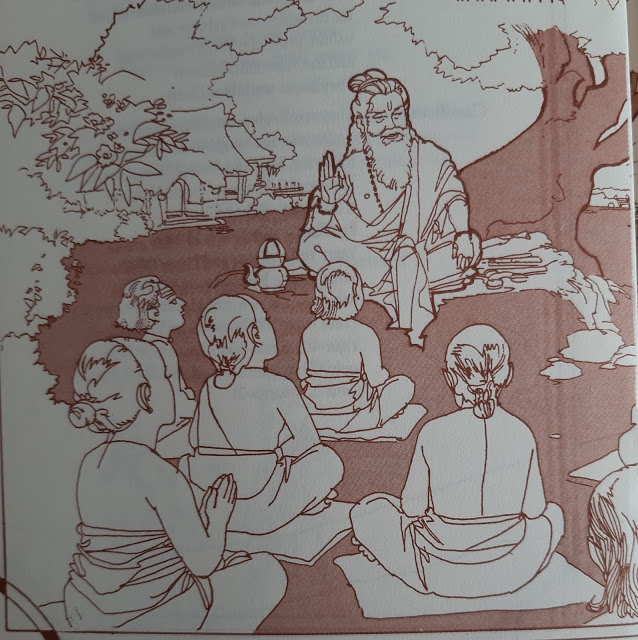
In spiritual life, the role of the guru is not simply to instruct or impart a vidya or technique. It is not just to inform, but to transform. This does not come about by any amount of instruction but by the transmission of an energy which sparks off the divine element in the disciple and launches him on the sadhana or genuine spiritual quest. This can be done only if the guru himself has that energy. The guru should know the Truth by experience to be able to make the disciple understand. That is why in the Gita Bhagavan says:
Know that, by prostrating yourself, by questions and by service; the wise , those who have realised the Truth will teach you.
So here Bhagavan lays down the qualification for the true guru: he must have realised the Truth, ie Brahman. Mere theoretical knowledge, or expertise in mantra/tantra does not make one a spiritual guru. (Shirdi Sai Baba has explained this sloka in a unique manner. Please see Sai Sat Charita by Hemadpant.) Most Hindus are born in some tradition and they have a paramparic guru in religious matters. We see this subject mentioned in The Gospel of Sri Ramakrishna often. But this tradition has largely disappeared in modern conditions. But even such paramparic Gurus do not qualify as spiritual gurs in all cases.
Anna Subrahmanya Iyer says in his translation of Sundara Kandam that those who have no guru may take Hanuman as the guru. He is “Jnaninam agraganyam”- the first among Jnanis, besides being the greatest bhakta! It is agreed by all authorities that Guru is indispensable for spiritual life.He alone is the true guru who has realised the Truth. This is beautifully explained by Samartha Ramadas in his ” Dasa Bodham”. The gist of it is: “The external world ie the things apprehended by the senses and mind become the object of mental perception. But Atma is the real knower, is the object of true knowledge and finally It alone remains As It Is. This is the state of one who has realised the Truth. Only this much can be indicated in words. This is something which can only be experienced, and not explained in words. The experienced guru imparts this understanding to the fit disciple. It is the guru’s experience which is reflected in the disciple’s heart.This cannot be gained in any other manner.”
From: Swaminatha Atreyan: Sri Samartha Ramadas Chartam (Tamil) p.329-330. Tyagaraja belongs to Telugu Smarta tradition. His father was a learned and devout man, given to panchayatana puja. He had taken formal upadesa in Rama Taraka Mantra and acquired expertise in expounding Ramayana. Tyagaraja grew up in this atmosphere and had imbibed a lot of religious lore through shruti ( as happened in the case of Sri Ramakrishna), besides breathing the very spiritual atmosphere that prevailed. He was also taught by his father both Sanskrit and Telugu. Later, he joined Raja Veda Pathasala for formal religious studies. He also learned music formally from a well-known teacher and was initiated in Rama Shadakshari Mantra by an intinerant Sadhu. He acquired some rare music manuscripts kept by his maternal grandfather, one of them being authored by Narada. He could not understand it , but fortunately met the Sadhu again, who initiated him in Narada mantra. As a result of the intense japa, he had a vision of Narada and got further guidance and enlightenment from him. It is necessary to know these details to understand how essential it is to have a proper guru even for worldly knowledge, and how the extraordinary achievements of Tyagaraja are due to the blessings of a Divine guru like Narada. Tyagaraja himself sings: NARADAGURUSAMI (Durbar)
1. Who else other than you could have shed light on Itihasa, Purana, Veda, the Holy histories, and spread theirglory ? 2. Who else could have granted Satyabhama such fitness of mind as to give up her own husband in dana? 3. O one with an effulgent body shining like the clear clouds in the sharad ritu!
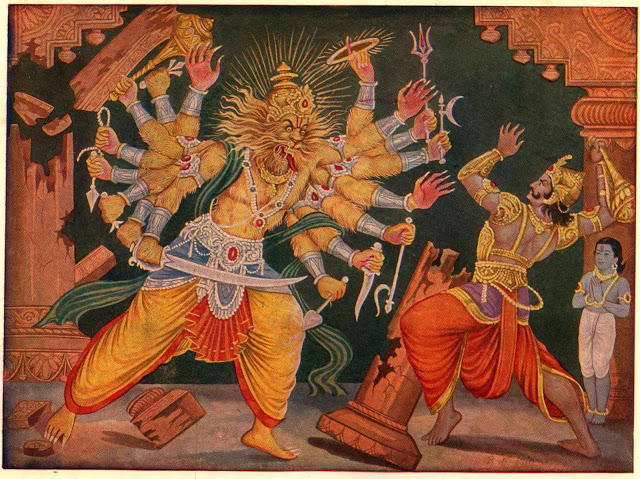
Who other than you is the refuge for Munis and yatis? 4. In this world I rely entirely on you. O Narada Guruswami! You saved Prahlada and destroyed his worries! Here, Tyagaraja qualifies Narada on three counts: he is the master of Sangitahe is the master of Yogahe is the master of Nigama ie Veda-Vedanta We do not come across any other figure in our tradition combining all these three! So, we can hold Narada as the initiator of a new spiritual tradition! When we study the sahitya of Sri Tyagaraja, we realise with wonder that his work is full of all that he has stated here: it draws fully on Itihasa-Purana, is soaked in the spirit of Veda-Vedanta and advocates Yoga ( at least Bhakti-Jnana and Nada yoga!) He has topped his list with the mention of Prahlada. And he himself wrote a full musical drama on the subject: Prahlada Bhakti Vijayam! Prahlada was fortunate to listen to the spiritual instruction of Narada even before he was born, though he was born in an asura family. And in our tradition, he is mentioned first at the head of all bhaktas: Prahlada Narada Parashara Pundalika Vyasambarisha Sukha Saunaka Bhishma dalpyan Rukmangadarjuna Vasishtha Vibhishanadin Punyaniman parama Bhagavatan smarami. Tyagaraja Swami is fully aware of the importance of the subject. So, he sings again a kriti on Narada in this Vijayam.
Narada muni vedalina suguna- adisayamu vinare Saareku Srihari pada saramula dhyaninchuchu Narayana namamulanu bharayana monarinchuchu Bheda bheda rahitamagu Vedanta rasa bharituda Ahladamu meeraga Prahladunaku subhamu delupanu….Narada muni… Oh! listen to the wonder of how Narada Muni came visiting! Listen to the wonder of how he comes, thinking incessantly of Srihari, and singing always the praises of Narayana! Narada, who is always immersed in the Vedanta rasa, which transcends all differences and non-differences ( ie is Jnana), who is full of joy, comes to tell auspicious words to Prahlada! Tyagaraja has added a ‘phalasruti’ to this part. He states there: Sri Ramabrahma tanaya Tyagarajena nirmitam Prahlada bhakti vijaya prabhandam bhukti muktidam Ye gayanti sada bhktyaye srunvanti cha sraddhaya Ye patanti sada preetya teshaam sarvaga nasanam. This prabhanda, Prahlada Bhakti Vijayam, written by Tyagaraja son of Ramabrahmam, can confer both happiness in this world, and Liberation hereafter.
Those who sing this with devotion,listen to it with sraddha, and read it eagerly- all their sins will be destroyed. Sri Tyagaraja thus reveals his devotion to Narada, who is his guru. He portrays Narada as both a Jnani and Bhakta- his thinking of Hari and singing of Narayana indicates his status as a bhakta-bhagavata; his mastering the Vedanta rasa indicates the heights of jnana he has attained. Can there be a better guru? And can there be doubt that Tyagaraja who himself combines Jnana, bhakti and Yoga is a Sadguru? Is he not Narada reincarnated? Let us fall at his feet. ***
Pictures are taken from various sources for spreading knowledge; this is a non- commercial blog. Thanks for your great pictures.
ஹிந்தி படப் பாடல்கள் – 34 – அதிக எண்ணிக்கை? எச்சரிக்கை!
R. Nanjappa
அதிக எண்ணிக்கை? எச்சரிக்கை!
முன்பெல்லாம் நீருக்காக ஆற்றுக்கோ, குளம் குட்டைக்கோ போகவேண்டும். வீட்டில் கிணறு இருந்தால் இறைத்துக் கொள்ளலாம். அது நம் வசத்தில் இருந்தது. இன்று குழாயில் நீர் வருகிறது. வரும்போது பிடித்து வைத்துக்கொள்ள வேண்டும்.
ஆனால் எத்தகைய நீர் வருகிறது? அப்படியே அருந்துவதற்கில்லை. வடிகட்ட வேண்டும்.
அதுபோல் இன்று இசை டி.வி, இன்டர்னெட் வாயிலாக வீடுதேடி வருகிறது 24X7. ஆனால் அதன் தரம்? இங்கு எந்த “ஃபில்டர்” போடுவது? சில உரைகல் தேவை. நல்ல திரை இசைக்கு ஒரு அளவுகோலாக இருப்பது அதன் பொற்காலத்திய இசை.- 50களில் வந்த இசை.
திரை இசையின் தரம் குறைந்ததற்கு ஒரு முக்கிய காரணம் எண்ணிக்கை! வருடத்தில் நூற்றுக் கணக்கில் படங்கள் வருகின்றன, ஒவ்வொன்றிலும் சுமார் 7-8 பாடல்கள்! அதே சில இசைஞர்கள்! அவர்களும் என்ன செய்வார்கள்?
பொற்காலத்திற்கு முன் வந்த இசைஞர்களை எடுத்துக்கொள்ளுங்கள். ஒரு நௌஷத்-50 வருஷங்களில் சுமார் 65 படங்களுக்கு இசையமைத்தார். எஸ்.டி பர்மன் அதே ஆண்டுகளில் 95 படங்கள். அனில் பிஸ்வாஸுக்கு அதே சமயத்தில் 90 படங்கள். ஸி.ராம்சந்த்ராவுக்கு 30 ஆண்டுகளில் 104 படங்கள். ஷங்கர்-ஜெய்கிஷனுக்கு 22 ஆண்டுகளில் (ஜெய்கிஷன் இருந்தவரை) சுமார் 130 படங்கள். வசந்த் தேசாய்க்கு 46, ஜெய்தேவுக்கு 40, ஸலில் சவுத்ரிக்கு 75 படங்கள். ரோஷன், ஹேமந்த் குமார் போன்றவர்களுக்கு சுமார் 50 தான். இவர்கள் இசையமைத்த பாடல்களை இன்னமும் விரும்பிக் கேட்கிறார்கள்.
பிறகு வந்தவர்களைப் பாருங்கள்.ஆர்.டி.பர்மனுக்கு 25 வருஷங்களில் 300 படங்கள்; கல்யாண்ஜி-ஆனந்த்ஜீக்கு சுமார் 300 படங்கள்; லக்ஷ்மீகாந்த்-பியாரேலாலுக்கு 635 படங்கள்! தரம் எங்கிருந்து வரும்? இவர்கள் இசையமைத்த பாடல்களில் எத்தனை நினைவில் இருப்பவை? விரல்விட்டு எண்ணலாம்.
மலைக்கள்ளன் படத்தை ஹிந்தியில் “ஆஃஜாத்” என்ற பெயரில் எடுத்தார் தயாரிப்பாளர் ஸ்ரீராமுலு நாயுடு. இசைக்கு நௌஷத்தை அணுகினார். மூன்றுமாதத்தில் இசை தயாராக வேண்டுமென்றார். “வந்த வழியைப் பாரும், நான் ஃபேக்டரி இல்லை” என்று சொல்லிவிட்டார் நௌஷத்!. அப்போதைக்காக இசையமைப்பதில்லை என்பது அவர் கொள்கை. ஒரு படம் எவ்வளவு சிறந்ததாக இருந்தாலும் மீண்டும் மீண்டும் பார்க்க முடியாது. சில நடிகர்-நடிகையர் முகத்தையே திரும்பத் திரும்ப எத்தனை முறை பார்த்துச் சகிக்க முடியும்? எத்தகைய படமும் அதிக நாள் நினைவிலிருக்காது, நல்ல இசை நிலைத்து இருப்பது!
பாடகர்களின் நிலையும் அதுதான்- அதிகம் பாடப்பாட தரம் தாழ்ந்து போகிறது!. ரஃபி சுமார் 7000 பாடல்கள் பாடியிருக்கிறார்; கிஷோர் பாடியவை 2700; மன்னாடே 4000 (வங்காளிப் பாடல்களும் சேர்ந்து) முகேஷ் 1300, தலத் மஹ்மூத் 800; ஹேமந்த் குமார் இன்னமும் குறைவு. தலத் பாடிய பாடல்களில் 80% சிறந்தவை; முகேஷ் பாடல்களில் 25% சிறந்தவை எனலாம். ஹேமந்த் குமார் பாடியவற்றில் 90% சிறந்தவை எனலாம். ஆனால் ரஃபி, விஷயத்தில் 5%, கிஷோர், மன்னா டே விஷயத்தில்? 10% தேறினால் அதுவே அதிகம்! இதற்கு பாடகர்களைக் குற்றம் சொல்லவேண்டாம். அவர்களை அப்படிப் பாட வைக்கிறார்கள்! உண்மையில் கிஷோர் குமாருக்கு இந்த நிலை பிடிக்கவில்லை-80களில் இசையின் தரம் சரிந்து வருவது கண்டு, பாடுவதை நிறுத்திவிட்டு சொந்த ஊருக்கே திரும்பிப் போக நினைத்தார்- பாவம், உலகை விட்டே கிளம்பி விட்டார்.
சில பாடல்களே பாடியிருந்தாலும் சிலர் பாடிய பாடல்கள் 60 ஆண்டுகள் கழித்தும் நினைவில் நிற்கின்றன. அத்தகைய இரு பாடல்களைப் பார்ப்போம்.
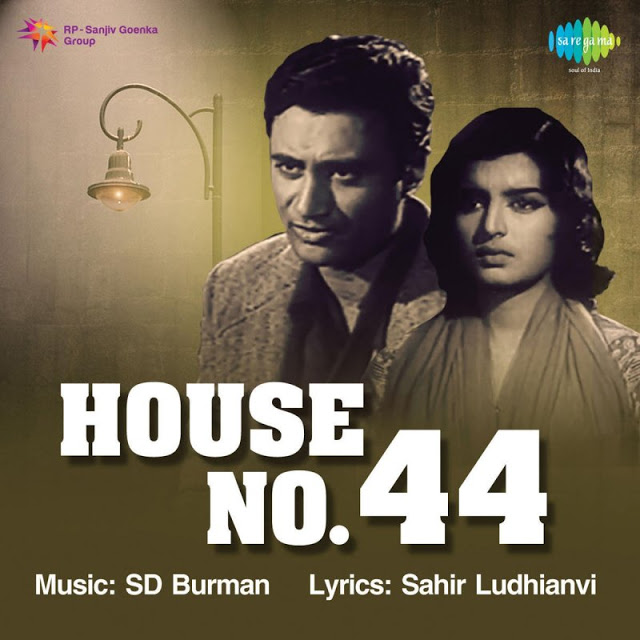
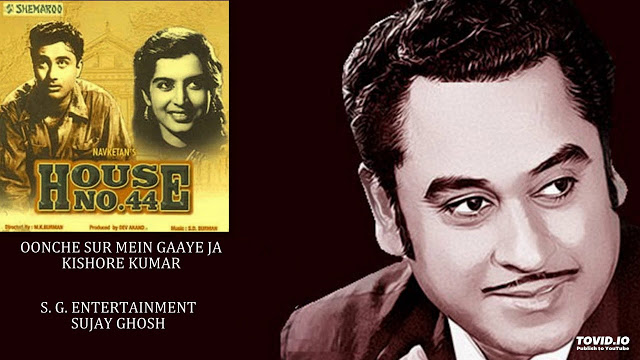
Song: Chup hai dharti Film: House No.44 1955 Lyricist: Sahir Ludhianvi
Music S.D.Burman Singer: Hemant Kumar
சந்திரனைப் பற்றிச் சொல்லும் காதல் பாட்டுக்களை எண்ணுவது கஷ்டம்! அவற்றில் இப்பாட்டு ஒரு தனியிடத்தைப் பிடித்திருக்கிறது! (‘ஜால்” படப் பாட்டு போல- அதுவும் இதே பாடகர்-கவி-இசைஞர் கூட்டு)
மிக அருமையான கவிதை- ஹிந்தியும் உருதும் பயின்று வருகின்றன. “நிக்ரா நிக்ரா ஸ ஹை சாந்த் கா ஜௌபன், பிக்ரா பிக்ரா ஸ ஹை நூர் கா தாமன்” இந்தக் கவிதைக்கே சிகரமாக வரும் வரிகள்!
இப்படத்தில் ஹேமந்த் குமார், தேவ் ஆனந்திற்காக மூன்று பாடல்கள் பாடியிருக்கிறார்- மூன்றும் டாப் ஹிட் ஆனவை. ஒரு ஹீரோவுக்கு ஒரு குரல் என்ற விதிக்கு எஸ்.டி பர்மன் என்றும் கட்டுப்பட்டவரல்ல. ஒரே படத்தில் ஹேமந்த் குமார், ரஃபி, மன்னாடே, கிஷோர் குமார் என எவரையும் பாடவைப்பார். சில பாடல்களே பாடியிருந்தாலும் ஹேமந்த் குமார் பாடல்கள் நினைவில் நிற்பவை.
Song: Manzil wohi hai pyar ka Film: Kathputli 1957 Lyrics: Shailendra
Music: Shankar Jaikishan Singer: Subir Sen
இந்தப் பாடலை அசப்பில் கேட்பவர்கள் பாடியது ஹேமந்த் குமார் என நினைப்பார்கள்! சுபீர் சென் குரல் ஹேமந்த் குமார் குரல் போலவே இருக்கும்- மிகவும் கவனித்துக் கேட்டால்தான் வித்தியாசம் தெரியும்!
ஹேமந்த் குமார் குரலில் இருக்கும் ஆழம், கம்பீரம் இதில் இல்லை. ஆனால் இந்தப் பாட்டு இவருக்குப் பொருந்தியிருக்கிறது. இவரை குரு தத் பம்பாய்க்கு வரவழைத்தார் என்பர். இது இவர் பாடிய முதல் பாட்டு- இதற்குப் பிறகு பிரபலமானார். வங்காளத்திலும் பாடினார். ஆனாலும் இவர் ஹேமந்த் குமாரின் சமகாலத்தவரானதால் அதிக வாய்ப்புகள் கிடைக்கவில்லை.
இந்தப் பாடல் ஒரு Stunning composition. படத்தில் ஒரு முக்கிய இடத்தில் வருகிறது-சில விஷயங்களை சொல்லாமல் சொல்கிறது, அருமையான கவிதை வழக்கம் போல் பழகு ஹிந்தியில் எழுதிவிட்டார் ஷைலேந்த்ரா!
இந்தப் படத்தில் ஷங்கர்-ஜெய்கிஷனின் இசை அபாரம்! இவர்களே சுபீர் சென்னுக்குப் பல படங்களில் பாட வாய்ப்பளித்தனர். இவர் ஆஸ் கா பஞ்சீ படத்தில் பாடிய “தில் மேரா ஏக் ஆஸ் கா பஞ்சீ” என்ற பாட்டும் பிரபலம்.
நான் தமிழில் படித்த முதல் ஹிந்தி பட விமர்சனம் இதைப் பற்றியது தான்! 1957ல் தினமணி கதிரில் [அப்போது ஞாயிற்றுக்கிழமை இதழுடன் வரும்] இதை விமர்சனம் செய்திருந்தார்கள். முக்கியமாக இசையைக் குறிப்பிட்டு எழுதியிருந்தார்கள். பாடல்களை ரேடியோ சிலோனில் கேட்போம்.
நான் சினிமா விமர்சனம் செய்வதில்லை, அதிகம் சினிமாவும் பார்ப்பதில்லை- பாட்டு கேட்பதோடு சரி! ஆனால் இந்த விமர்சனம் பள்ளி நாட்களில் படித்ததால் இது மனதிலிருந்தது-1966ல் படம் பார்க்கக் கிடைத்தது. இது அமியா சக்ரவர்த்தி எடுத்த படம் [அவரது பிற படங்கள் தாக், பதீதா ஸீமா மூன்றிலும் ஷங்கர் ஜெய்கிஷன் இசையே- நல்ல குறிப்பிடத் தகுந்த பாடல்கள் இருக்கும்] அவரே இயக்கினார், இடையில் காலமானார். வேறொருவர் முடிக்கவேண்டியதாயிற்று. இந்தக் குழப்பத்தில் படம் சரியாக அமையவில்லை. [இந்தக் குழப்பத்திற்கு இந்தப் பாட்டும் ஒரு காரணம்!] ஆனால் சிறந்த இசை. இதில் வைஜயந்திமாலாவின் அருமையான நடனங்கள், கமலா லக்ஷ்மண் டான்ஸும் கூட!
சுபீர் சென் கதை பாடகர்களாக விரும்புபவர்களுக்கு ஒரு எச்சரிக்கை. ஒருவர் குரலில் தனித்தன்மை-ஏதாவது விசேஷ அம்சம் இருக்கவேண்டும்! வேறொருவர் குரல் போல இருந்தால் எடுபடுவதில்லை. ஹிந்தி இசையில் பாடகிகளில் சுமண் கல்யாண்பூருக்கும் இதே கதிதான் நேர்ந்தது! அவர் குரல் அசப்பில் லதா குரல் மாதிரியே இருக்கும்-அதனாலேயே அவருக்கு வாய்ப்புகள் வரவில்லை! இது ஒரு துயர நிலை. வேண்டுமென்றே வேறொருவரைப்போலப் பாடுவது ஒன்று, இயல்பாகவே குரல் அப்படி அமைந்திருப்பது ஒன்று! இரண்டும் திரையிசையில் எடுபடுவதில்லை!
ஹேமந்த் குமார், சுபீர் சென் போன்றவர்கள் அதிகம் பாடவில்லை, ஆனால் அவர்கள் பாடிய பாட்டுக்கள் விரும்பிக் கேட்கப்படுகின்றன. எண்கள் முக்கியமில்லை- தரமே நிலைக்கும்.












 Tamil and Vedas