Pictures are taken from various sources for spreading knowledge; this is a non- commercial blog. Thanks for your great pictures.
ஜோதிடருக்கான தகுதிகள்!
ச.நாகராஜன்
வேதாங்கங்களில் ஒன்றான ஜோதிட சாஸ்திரம் அளக்க முடியாத ஒரு கடல். அதில் மூழ்கி நல் முத்தெடுப்பது என்பது இறைவன் அருளாலும், தவத்தாலும், வல்லார் உபதேசத்தாலும், தகுந்த பயிற்சியாலுமே முடியும்.
பெங்களூர் பி. சூர்யநாராயணராவ் (தோற்றம்: 12-2-1856 மறைவு: மார்ச் 1937) குறிப்பிடத்தகுந்த சிறந்த ஜோதிடர். அவரது பேரன் தான் உலகம் புகழும் பி.வி.ராமன் ஆவார்.
ஏராளமான புத்தகங்களை ஆங்கிலத்தில் எழுதியுள்ள சூரியநாராயணராவ் ‘தி அஸ்ட்ராலஜிகல் ப்ரைமர்’ (The Astrological Primer) என்ற ஆங்கில நூலில் சிறப்பான ஒரு முன்னுரையை எழுதியுள்ளார்.
1892ஆம் ஆண்டு இது வெளியிடப்பட்டது.
இதில் ஜோதிடருக்கான தகுதிகள் பற்றி அவர் கூறுவது இது :-
இந்த உலகில் மிக உன்னதமான ஒரு விஞ்ஞானம் இருக்குமானால் அது ஜோதிடமே. வெற்றிகரமாக ஒரு ஜாதகத்தைக் கணித்துக் கூற கீழே குறிப்பிடப்பட்டுள்ள தகுதிகள் இன்றியமையாதவையாக விதிக்கப்பட்டுள்ளன :-
கீழ்த்தரமான நோக்கம் இருக்கக் கூடாது
திருப்தி
கணிதத்தில் மிக உயரிய திறமை
மொழியை ஆளும் திறன்
ஆழ்ந்த நுண்ணறிவு
காலம் மற்றும் சூழ்நிலை பற்றிய அறிவு
ஜோதிட சாஸ்திர நுட்பங்களைப் பற்றிய தெள்ளிய அறிவு
நேர்மை மற்றும் உண்மை
சத்யம்
முறையான உபதேசம்
(If there is any sublime science in this world, it is astrology and the following qualifications have been laid down as indispensable for successful
prediction :-
No mean motives
Contentment
High proficiency in mathematics
Linguistics Command
Great Intelligence
A knowledge of the times and circumstances
A thorough knowledge of the astrological technicalities
Honesty and Sincerity
Truthfulness
Proper Initiation)
இந்தத் தகுதிகள் இல்லாத நிலையில் ஜோதிட கணிப்புகள் பொய்யாகின்றன; கேட்டவருக்கும் திருப்தி இல்லாத நிலை; ஜோதிட சாஸ்திரத்திற்கும் அவப் பெயர் என்ற நிலையை பொய்க் கணிப்புகள் உருவாக்குகின்றன.
ஒரு ஜோதிடர் ஒரு ஜாதகருக்குப் பலன் சொல்ல வேண்டுமெனில் குறைந்த பட்சமாக 3000 கிரகநிலைகளை அலசி ஆராய வேண்டியதாக இருக்கிறது.
இதற்கான பலன்களும் அவருக்குத் தெரிந்திருக்க வேண்டும். ஒவ்வொரு நிலைக்கும் ஒரு வினாடி என்று வைத்துக் கொண்டால் கூட, ஒரு மணி நேரம் கழித்து தான் அவர் பலனைச் சொல்ல ஆரம்பிக்க முடியும்.
ஒரு ஜோதிடரானவர் சூரியோதயத்திற்கு முன்னர் எழுந்து குளித்தல், தெய்வங்களைப் பிரார்த்தித்தல், சூரியனுக்கு அர்க்யம் விடல், மந்திரங்களை ஜெபித்தல் முதலான தினசரி கர்மாக்களை முடிக்க வேண்டும்.
பின்னர் பஞ்சாங்கத்தை எடுத்து சாந்தமான மனதுடன் கிரகநிலைகளைக் குறித்து கணித்தல் வேண்டும்.
திதி, வாரம், யோகம், கரணம், நக்ஷத்ரம் ஆகியவற்றை நன்கு கணித்தலே அவரது முதலாவது வேலை.
ஒரு ஜோதிடரானவர் கணிதத்தில் தேர்ந்தவராக இருத்தல் வேண்டும். சப்த சாஸ்திர நுணுக்கங்களை அறிந்தவராக இருக்க வேண்டும். நியாயவானாக இருத்தல் வேண்டும். புத்திசாலியாக இருக்க வேண்டும். திசை, வெளி, காலம் ஆகியவற்றைத் தன் புலன்களால் வென்றவராக இருத்தல் வேண்டும்.
ஒரு ஜோதிடரானவர் திரிஸ்கந்தங்கள் அதாவது சித்தாந்தம், சம்ஹிதா மற்றும் ஹோரா ஆகிய மூன்றிலும் முழுமையான அறிவைக் கொண்டவராக இருத்தல் வேண்டும். சாஸ்திரங்களில் கூறப்பட்டுள்ள கிரியைகள் பற்றிய அறிவைக் கொண்டவராக இருத்தல் வேண்டும். ஒருபோதும் கர்வமுடையவராக இருத்தல் கூடாது. ஸத்தியத்தையே பேசுதல் வேண்டும்.
அத்வேஷி நித்ய சந்தோஷீ கணிதாகம பாரகஹா
முகூர்த்த குண தோஷக்ஞோ வாக்மீ குஷல புத்திமான்
ஒரு ஜோதிடரானவர் பொறாமை கொண்டவராக இருத்தல் கூடாது. எப்போதும் திருப்தி கொண்டவராக இருத்தல் வேண்டும். கணிதத்தில் வல்லவராக இருத்தல் வேண்டும். நல்ல மற்றும் கெடுதலான முகூர்த்தம் பற்றிய அறிவைக் கொண்டிருத்தல் வேண்டும். நன்கு பேசத் தெரிந்தவராக இருத்தல் வேண்டும். கூரிய அறிவைக் கொண்டவராக இருத்தல் வேண்டும்.
க்ருத்ஷ்னாம் கோபாங்க குசலம் ஹோரா கணிதை நைஷ்டிகம்
யோ ந பூஜயதே ராஜா ச நாச முபகச்சாதி |
ஒரு அரசன் கணிதம், ஜோதிட அறிவு ஆகியவை கொண்ட ஜோதிடரை நன்கு மதிக்காவிடில் தனது நாசத்தைத் தானே கொண்டு வருபவனாக அமைவான்.
இது தவிர அனேக ஜோதிட நூல்களில் ஜோதிடருக்கான இலக்கணங்கள், தகுதிகள் வரையறுக்கப்பட்டிருக்கின்றன.
வராஹமிஹிரர் கூறுவது இது:
அனேக ஹோரா சாஸ்த்ரக்ஞ பஞ்சசித்தாந்த கோவித: |
உஹாபோஹோ படு: சித்தாமந்த்ரோ ஜானாதி ஜாதகம் ||
இதன் பொருளைப் பார்ப்போம்:
அனேக ஹோரா சாஸ்த்ரக்ஞ : ஜோதிடத்தின் பல கிளைகளையும் நன்கு கற்றுக் கொண்ட ஒருவர்
பஞ்சசித்தாந்த கோவித: : சூரியன், வசிஷ்டர், பௌலஷர், பராசரர், நாரதர் போன்ற பெரும் மஹரிஷிகளால் விரித்துரைக்கப்பட்ட ஐந்து சித்தாந்தங்களை அறிந்து கொண்ட ஒருவர்
உஹாபோஹோ படு: : கேள்வி கேட்பவரின் மனக்கற்பனைகளை நன்கு அறிந்து கொண்டு தக்க முடிவுகளை வழங்குபவர்
சித்தாமந்த்ரோ ஜானாதி ஜாதகம் – இவை மட்டுமன்றி கணிப்பில் துல்லியமாக விளங்க சித்தா, மந்திரம் ஆகியவற்றில் வல்லுநரான ஒருவர்
மட்டுமே நல்ல ஜோதிடராக விளங்க முடியும்.
இது வராஹமிஹிரரின் துணிபு.
ஆக ஜோதிடருக்கான இலக்கணம் இப்படிக் கூறப்பட்டிருக்கிறது. இன்னும் பல ஜோதிட நூல்களையும், அற நூல்களையும் ஆராய்ந்து அவற்றில் எல்லாம் கூறப்பட்ட தகுதிகளையும் சேர்ந்த்துப் பாதால் உண்மையான ஜோதிடருக்கு இவ்வளவு தகுதிகள் வேண்டுமா என்ற பிரமிப்பும் இப்படிப்பட்டவரை இந்தக் காலத்தில் எங்கே கண்டுபிடிப்பது என்ற திகைப்பும் ஏற்படும்.
அது சரி, கலி காலத்தில் ஜோதிடர்கள் எப்படி இருப்பார்கள்? அடுத்த கட்டுரையில் பார்ப்போம்!
நன்றாக மாட்டிக் கொண்டான், நம் ஜோதிடர்களிடம் என்று நினைக்கிறீர்களா? எனக்கு எதற்கு பொல்லாப்பு?!
ஒரு மகா பெரியவர் சொன்னதை அப்படியே சொல்லி விடுகிறேன்.
உலகிலேயே பழமையான நூல் ரிக் வேதம். மனித குலத்தின் முதல் அதிகாரப்பூர்வ ரிக்கார்ட் (RECORDS) அதில் உள்ளது. மனிதனின் சிந்தனை எவ்வளவு உயர்ந்தது என்பதை அது காட்டுகிறது. அகர்ந் முதல் எழுத்தில் துவங்கி உலக மஹா தேசீய கீதத்தில் முடிவடைகிறது. பத்தாவது மண்டலத்தின் கடைசி மந்திரம் உலக ஒற்றுமையை வலியுறுத்துகிறது. 5000 ஆண்டுகளுக்கு முன் இதைத் தொகுத்து, பத்துப் பிரிவுகளாக நமக்கு வகைப்படுத்திக் கொடுத்த வியாச மகரிஷி இப்படி முடிக்கிறார்:–
“நம் எல்லோர் இதயங்களும், எண்ணங்களும், குறிக்கோள்களும் ஒன்றாக இருக்கட்டும்” என்ற அற்புதமான மந்திரத்துடன் முடிக்கிறார். இது மனித குலத்தின் உச்சியை இந்தியா பல்லாயிரம் ஆண்டுகளுக்கு முன்னரே தொட்டுவிட்டதைக் காட்டுகிறது.
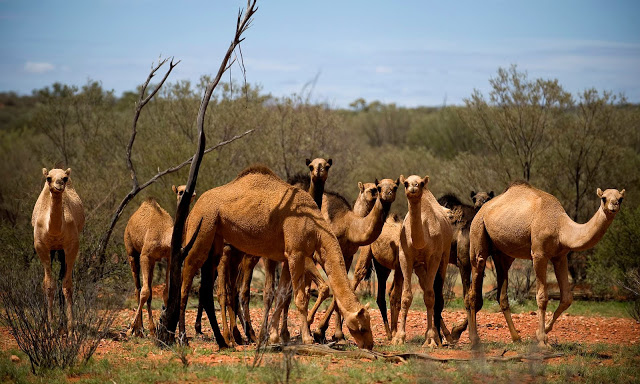
ரிக்வேதத்தின் எட்டாவது மண்டலம் இன்னும் நன்றாக ஆராயப்படவில்லை. இதிலுள்ள செய்திகள் புராண, இதிகாசங்களில் காணப்படவில்லை. இதனால் இது ஈரான் நாட்டுக்கு குடியேறிய இந்திய ரிஷிகள் பாடியது என்று சிலர் கருதுகிரார்கள். தானங்களில் நிறைய ஒட்டககங்கள் தானம் பற்றிய குறிப்பு வருகிறது. ரிக் வேத முனிவர்களோ சரஸ்வதி-சிந்து- கங்கை நதி தீரத்தைக் குறிப்பிடுகிறார்கள். அங்கு பாலைவன ஒட்டகம் இருக்க வா ய்ப்பில்லை . ஆயினும் தானங்களின் எண்ணிக்கை வியப்பூட்டும் டெசிமல் சிஸ்டத்தில் DECIMAL SYSTEM உள்ளது. இந்த தாசாம்ச முறையையும் பூஜ்யம் என்ற ஒன்றையும் இந்துக்கள் கண்டுபிடித்து உலகிற்குக் கற்பித்ததால் இன்று நமக்கு கம்பியூட்டர் , இன்டர்நெட், விண் கலங்கள் , ஏவுகணைகள் கிடைத்துள்ளன.
இதோ சில தானங்கள்:–
1.பத்தாயிரக் கணக்கில் பசுக்களை தானம் கொடுத்ததில் ப்ளயோகாவின் மகன் எல்லோரையும் மிஞ்சிவிட்டான்
ரிக் வேதம் 8-1-33
2.நாலு மடங்கு பத்தாயிரத்தோடு எட்டாயிரம் கூடக்கொடுத்தான் விபிந்து — 8-2-41 (40000+8000= 48,000)
நான் ஒரு ரிஷி; நான் 60,000 பசுக்களை ஓட்டிச் செல்கிறேன் – 8-4-20
3.கஷு சைத்யன் இவ்வாறு 100 ஒட்டகங்களையும் பத்தாயிரம் பசுக்களையும் தானம் கொடுத்தான் – 8-5-37
4.சக்தி வாய்ந்த மந்திர உச்சாடனத்துக்காக , அவர்கள் 300 குதிரைகளையும் 10,000 பசு மாடுகளையும் தானம் அளித்தார்கள்.8-6-47
5.சித்ரன் ஒரு அரசன் .சரஸ்வதி நதி தீரத்தில் எல்லோரும் அரசர் போல வாழ்கிறார்கள்; மழைக்கடவுள் மழை பொழிவது போல அவன் பசு மாடுகளை பத்தாயிரக் கணக்கில் ஆயிரம் தடவை அளித்தான் .8-21-18
பாரி ஒருவன்தான் கொடுப்பவனா? மாரியும் (மழை ) உளதே என்ற கபிலரின் புற நாநூற்றுப் பாடலை நினைவுபடுத்துகிறது இது
8.ருக்ஷமாஸ்களிடையே நான் 4000 பசுமாடுகளை பெற்றே ன் 5-30-15
9.) 60,000 பசுமாடுகள் பின்தொடர்ந்து வந்தன ; கடைசி நாட்களில் கக்ஷி வான் அவைகளை வென்றான் 1-126-3.
இந்தப் பட்டியலை டேவிட் ப்ராலி ‘கடவுளும், முனிவர்களும், அரசர்களும்’ என்ற அவரது புஸ்தகத்தில் எழுதியுள்ளார். அவர் கூறுகிறார்
வேத கால மக்கள் நாடோடிகள் அல்ல. அவர்கள் வசித்த இடம் வறண்ட பாலை வனமும் அல்ல. பிரம்மாண்டமான மேய்ச்சல் நிலங்கள் இருந்தால்தான் இவ்வளவு பசு மாடுகள் இருக்க முடியும் . மேலும் பல தங்க ரதங்களும் பரிசளிக்கப்பட்டன (RV.8-46-24)
பரிசளித்தவர்களின் செல்வ வளத்தை இது காட்டுகிறது; அவர்கள் நாடோடிகள் அல்ல.
***
அள்ளிக் கொடுத்த சொக்கத்தங்கம்
10.ப்ரிதுஸ்ரவஸ் எங்களுக்கு தங்க ரதம் பரிசளித்தான் 8-46-21
11.பூஷன், உன்னுடைய தங்கக் கப்பல்கள் கடலில் நிற்கின்றன 6-58-3
12.மருத் தேவதைகளின் தலையில் தங்கக் கிரீடங்கள் இருக்கின்றன – 5-54-12
13.மருத்துகள் போல வேறு எவருமிலர் ; அவர்கள் உடலில் தங்க ஆயுதங்களுடன் ஜொலிக்கிறார்கள்.
14.இந்திரா உன்னை நான் விட்டுவிட மாட்டேன் ; பணம், ஆயிரம் கிடைத்தாலும் , பத்தாயிரம்
கிடைத்தாலும், நூறு ஆயிரம் கிடைத்தாலும் உன்னை விட்டுப் போக மாட்டேன் 8-1-5
சங்க இலக்கிய நூலான பதிற்றுப்பத்தில் ஒவ்வொரு புலவருக்கும் ஆயிரக் கணக்கில் பொற்காசுகளைக் கொடுத்தது பாடப்பட்டுள்ளது. அவைகளை இத்துடன் ஒப்பிடலாம். இவைகளை மிகைப்படுத்தப் பட்ட ‘எண்’கள் என்று கருதினால் பதிற்றுப் பத்தில் வரும் தானங்களையும் சந்தேகிக்க நேரிடும்.
இந்திரர் அமிழ்தமே கிடைத்தாலும் தனியாக உண்பவர் இலர் என்று கடலுள் மாய்ந்த இளம்பெருவழுதி புறாநானுற்றில் பாடுகிறார் (182). இங்கு ரிக் வேதத்தில் ஒரு லட்சம் பணம் கிடைத்தாலும் இந்திரன் வழிபாட்டை விடமாட்டேன் என்று ஒரு புலவர் பாடுகிறார்.
மேற்கண்ட ரிக் வேத எண்கள் மிகைப்படுத்தப்பட்டவை என்று சிலர் சந்தேகப்படலாம். மருத் என்னும் காற்று தேவதை பாடலில் வரும் தங்கத்தை உவமை என்றும் கருதலாம். ஆயினும் செல்வ வளம் பொருந்திய இடங்களில் மட்டுமே இத்தகைய எண்ணிக்கையும் உவமைகளும் வர முடியும்.
SOURCE – GODS, SAGES AND KINGS, DAVID FRAWLEY, 1991 (MOTILAL BANARSIDAS, DELHI).
Pictures are taken from various sources for spreading knowledge; this is a non- commercial blog. Thanks for your great pictures.
tamilandvedas.com, swamiindology.blogspot.com
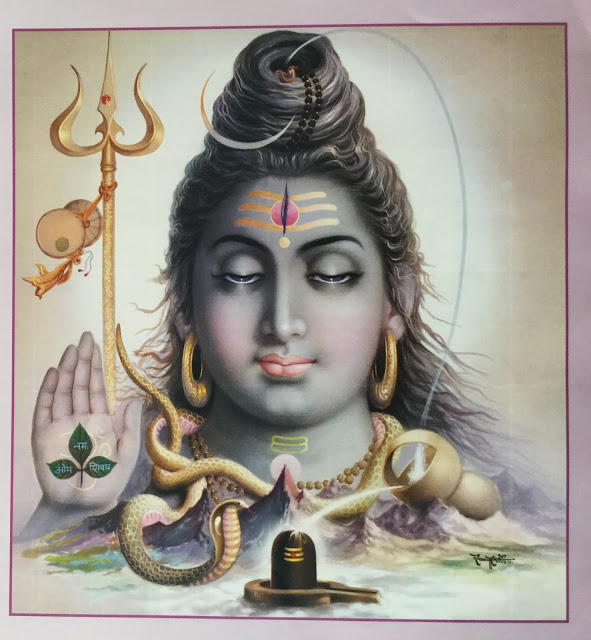
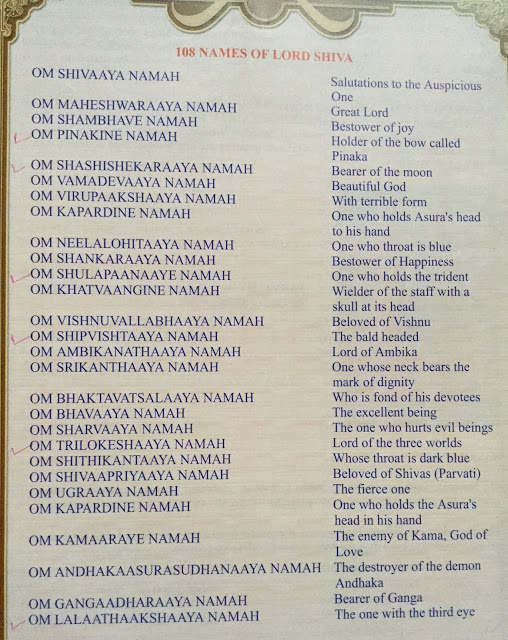
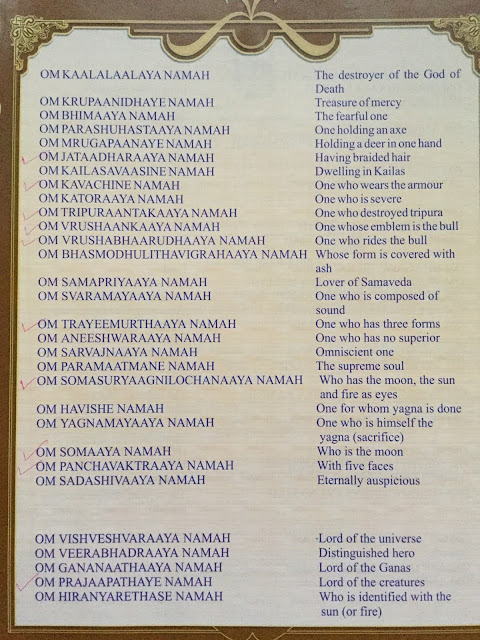
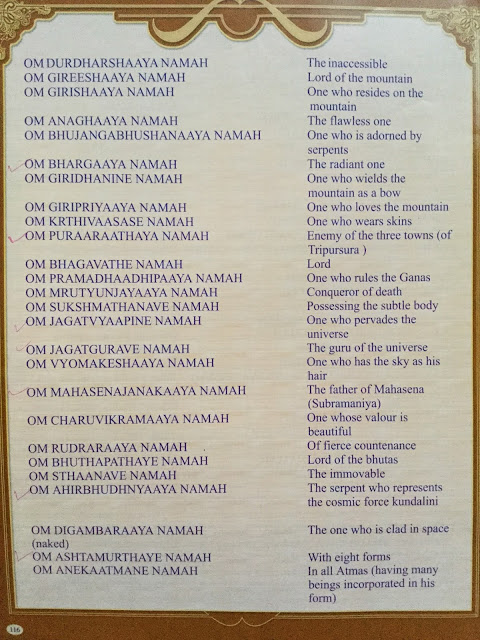
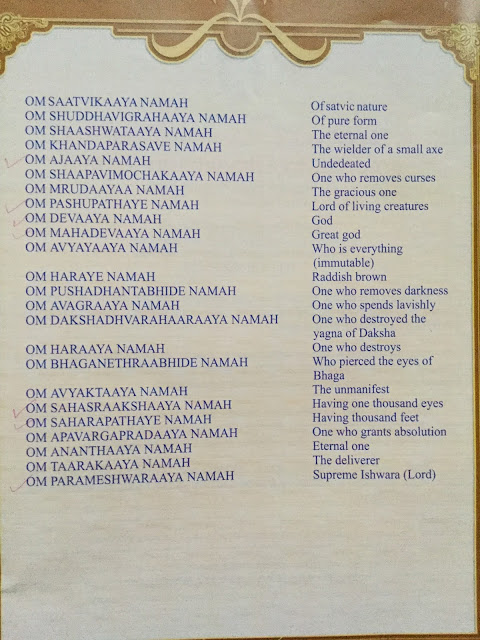
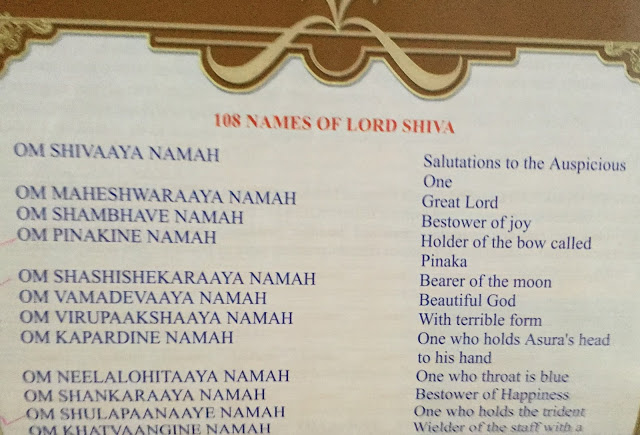
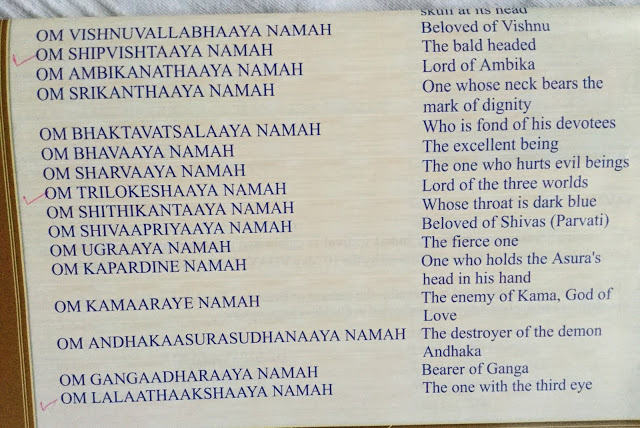
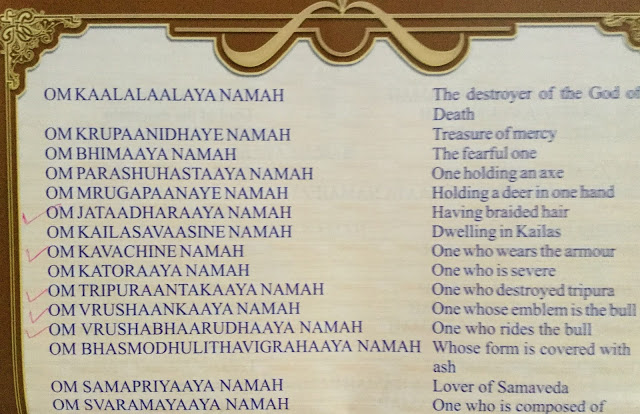
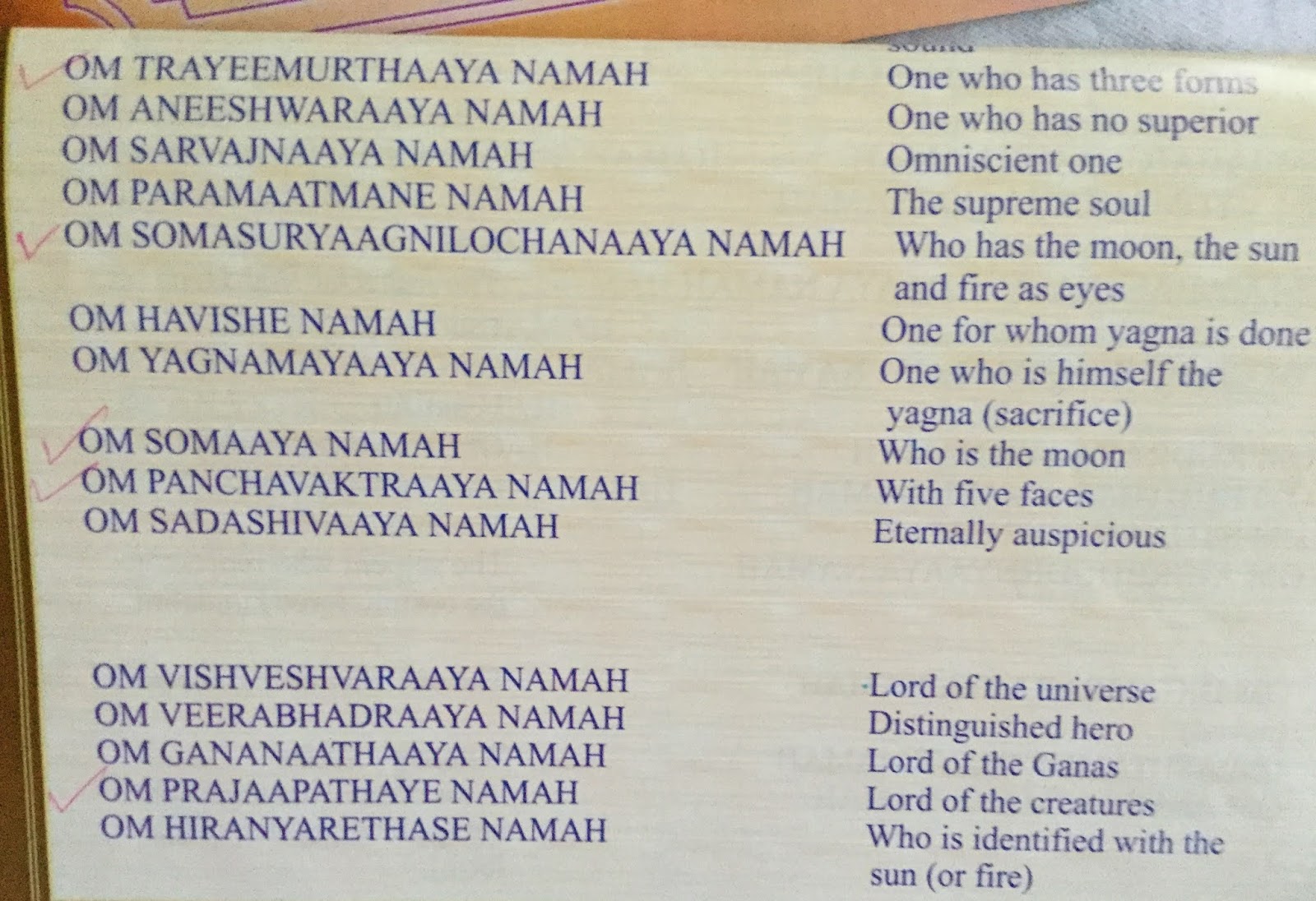
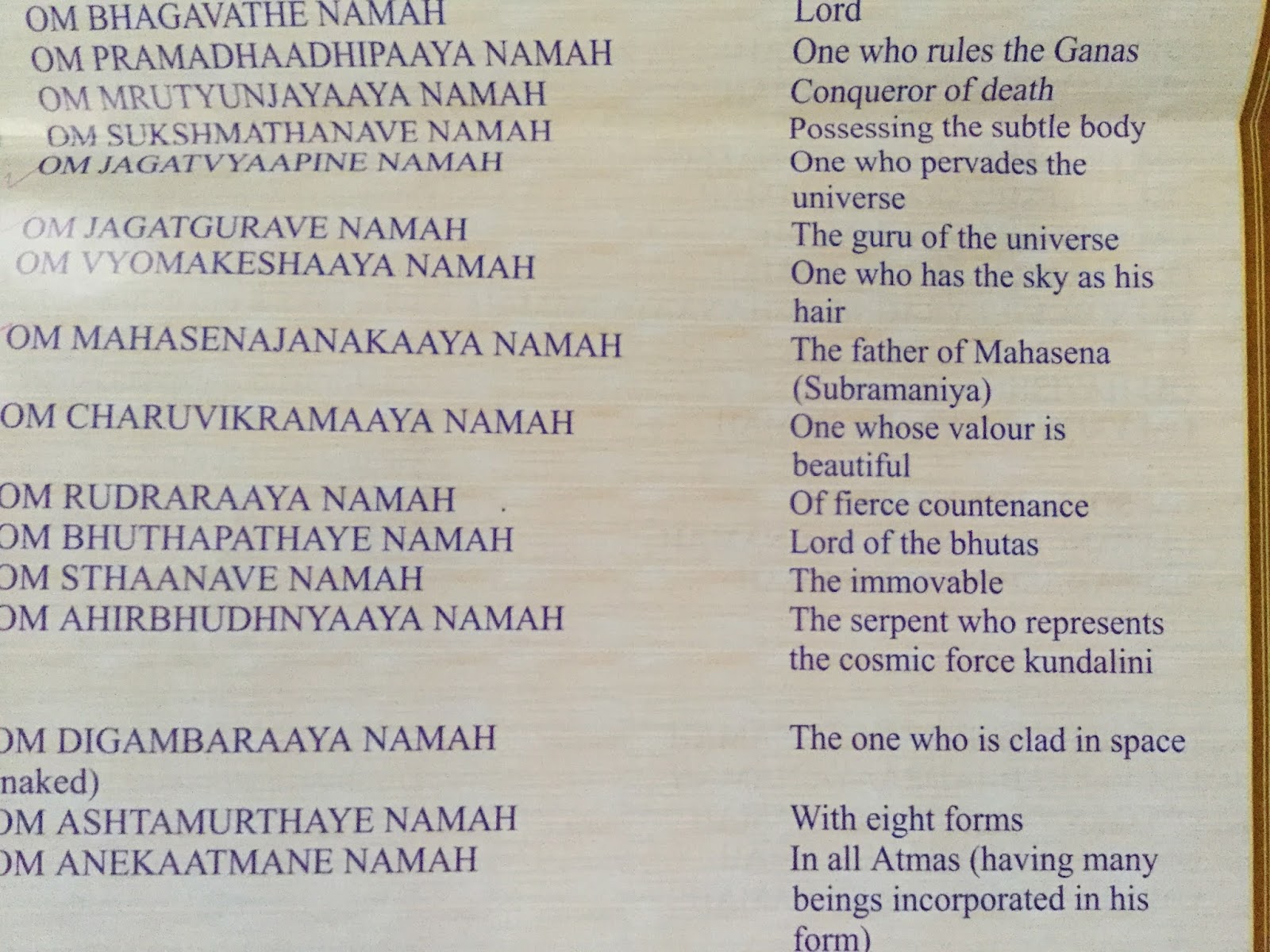
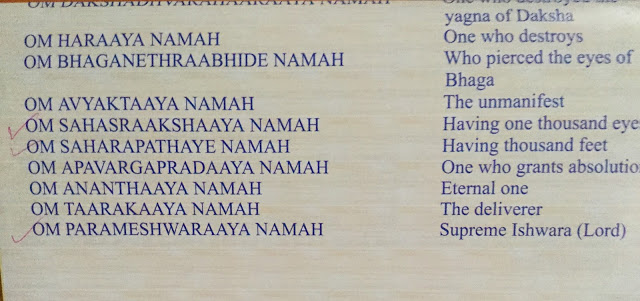
SHIVA’S ASHTOTTARA IS ALREADY AVAILABLE IN ENGLISH; BUT MEANINGS OF 108 SANSKRIT NAMES ARE NOT EASY TO FIND. HERE IS THE TRANSLITERATION AND TRANSLATION:-
CLOSER LOOK; LARGE FORMAI
FOR MISSING FEW NAMES SEE ABOVE ORIGINAL.
tags— Shiva, 108 names, English meaning , Ashtottarab, Sanskrit
Post No. 8192Date uploaded in London – – – 17 June 2020
Contact – swami_48@yahoo.com
Pictures are taken from various sources for spreading knowledge; this is a non- commercial blog. Thanks for your great pictures.
DO WE NEED PHILOSOPHY-2
R. Nanjappa
Philosophy in India Indian approach is anterior to Socrates and Plato, but its basic preoccupation too is with the Self of man and Self Knowledge. But first a word about ‘philosophy’ in the Indian context. In India, there is no word which directly answers to ‘Philosophy’. We use two words: Tatva and Mata. Tatva means Reality= That which is. It can be experienced, but not adequately expressed in words. Once expressed, it becomes ‘mata’- something held with the mind (mati) @ So it is our idea of Tat, not Tat as it Is! Tatva is one, and does not vary; matas do vary over time, and place and with persons! @ There is no Indian word directly equivalent to ‘mind’. We have the concepts of manas, buddhi, chitta, ahankara which together constitute ‘antahkarana’.
Knowledge of Reality is obtained through Darshana: sight or insight. It is an experiential understanding of Reality, not a verbal formulation. There is nothing outlandish or mysterious or irrational about it. We see this demonstrated in life. When we follow an argument or analysis, and understand the point, we exclaim: “Oh, I see!”. Socrates was trying to make us ‘see the point’ all the time, by leading us through questions to that point, making us do the seeing by ourselves! That would be a discovery by each one, not a belief forced on us by the conventions of the society or the command of the gods, or some authority.. The great scientists have arrived at their truths in this manner.
Einstein, or Ramanujam did not work in a lab to ‘discover’ their theories or theorems. They just “saw” through their mind’s eye. Einstein said: The words of the language, as they are written and spoken, do not seem to play any role in my mechanisms of thought. The psychical entities which seem to serve as elements in thought are certain signs and more or less clear images which can be voluntarily reproduced or combined…. The above mentioned elements are, in my case, of visual and some of muscular type The chemist Friedrich Kekule relates how he saw the benzene ring. He fell asleep and again the atoms were gamboling before my eyes…My mental eye….could not distinguish larger structures….all twining and twisting in snake-like motion. But look! What was that? One of the snakes had seized hold of its own tail and the form whirled mockingly before my eyes. As if by a flash of lightning I awoke. Both these quotes are taken from : Howard Gardner: ‘Frames of Mind’.p190-191. Basic Books,1993.
Man, World and God Investigation of Reality proceeds on three lines: Man, World and God. The whole cosmos is contained in these three categories. There are theories relating to each. And there is no unanimity or agreement among them. Thus we have many philosophies. The Veda is the foundation (It only means knowledge, and no book). But the Europeans have got their own fancy ideas , inventing a date, a chronology, etc. The living Hindu tradition, which is much older than the Europeans’, and continuous, does not believe in vain theorising. We know the facts. It deals with all three categories, but not in theory, as a system. It provides a series of glimpses, for understanding and further investigation, and guidelines for practical action through life.
The whole cosmos is the manifestation of and pervaded by One. There is just Unity or Wholeness. It is both Immanent and transcendent. This One cannot be named. (One can give it any name one wants and still he would not have exhausted it).For convenience, it is called Brahman, the Absolute, or simply as Tat, ie That, Unnameable! Man is also part of that Unity, because there is No other! But he imagines himself to be separate, and so he suffers. This is his ignorance, or forgetfulness of his real nature. His task is therefore to regain his memory and realise his true nature. This is called freedom or liberation (moksha ) One has to realise it in this very life! (ihaiva- here, as the Veda says). It is not a post-mortem achievement. Thereby he is not getting anything new! He is not gaining a new status or new world. Like someone searching for a chain he is wearing, and discovers that he has been wearing it all the time, man regains the memory or knowledge of the original state. Arjuna exclaims at the end of the Gita discourse: “smritir labda” (I have regained my memory!) This is the purpose of human life. For, only man in the whole of creation can accomplish this. Thus, man is not an animal, rational or otherwise! Damn the scientists who say so!
Man has to accomplish this while living in this world. So the question of the nature of the world comes in. Since we see the world, we sense that some one should have made it! So, he thinks of God. But from where it could have come, since there is only One or Unity? It is therefore clear that Man, World and God are from the same source! (This Western word God has again no Indian equivalent. In a sense, it does not refer to the One ultimate Unity) In the Hindu system, that One in relation to the world is called Iswara. So long as one lives in the world, and has not realised his Unity, he has to consider the world and Iswara as real . They cannot be wished away. They are real, as long as man thinks he is real, a separate being. They are as real as him! The Veda has given a practical scheme for going about the task. In the first part, it prescribes how man has to live in the world, with a responsibility to society. He has five obligations to discharge: to the Rishis who taught him about the One Reality and showed the path for its realisation; to the manes who perpetuated the line through progeny, and thus endowed him with a human body so that he can Realise the Truth; to Iswara and the order of devas through which the world order is maintained; to other human beings; to other forms of life. The discharge of these obligations is the fundamental religious duty, and marriage and family life are prescribed only for this! But he is asked to constantly remember that his end is not in or with this world! He has to live in the world by right means (dharma), earn and enjoy (artha and kama) what is his destined lot in the righteous way (dharma), but he should also remind himself that he has to make himself free (moksha) through all his activities. At an appropriate stage, after the discharge of his obligations, he has to detach himself from an active life in the world, and devote himself to contemplation on the aim of life and its attainment. At the last stage, he has to renounce all connections with the world, solely devoted to the ultimate purpose of life. In these last two stages, he is not an active part of the civic society! The latter portion of the Veda called Upanishads provide guidance through these stages of life.
Indian philosophy is practice, not belief- to be mastered in life, not schools. Where does philosophy in the western sense come here? No, our struggle here is not an intellectual quest. We have somehow to connect with the centre of our being, which is more than intellect, which is also the centre of the universe! We have to have some general idea about the nature of the world, about ourselves, about our final destination; but endless contemplation or mental cogitation, or fanatic adherence to any fixed dogma about them will not achieve anything. We have to engage in practical work- ie sadhana. Only that will lead to experiential knowledge or realisation of truth .All else is mere belief.
The Upanishads are like the Platonic dialogues. They deal with the Ultimate Reality though discussions, dialogue, arguments etc. They do not make a systematic treatise or provide any ready-made theory. They do not teach a dogma. They induce you to reflect. They take up the subject through different approaches, make us investigate and experience the Truth ourselves. They indicate the truth – hint at it, but no dogmatic statements are made. They provide a map- but we have to walk the territory. There is no magic, no trick, no short-cut. One has to work out his own liberation, with help from the One. It does not matter what God he believes in, (or whether he believes in one at all), what theory he believes in, what theology he follows. He has to find out what or who he is! This knowledge or wisdom when it dawns is not a belief, but an experience! This Truth alone will make him free! Schopenhaurer called the Upanishads ‘ the product of the highest human wisdom.’
Wisdom: West and East The Socratic search for happiness led to Wisdom or knowledge of Truth (the One). This we state in Hinduism as Sat-Chit- Ananda. (the realisation (Chit) of the Truth (Sat) is Ananda (Bliss- this is beyond all the worldly categories , like happiness, pleasure, etc. All these categories have their opposites. Ananda is a word that does not have its opposite! It is beyond all the dualities of the world.)
The philosophical quest may be stated in terms of Kant: What can I know?What ought I to do?What may I hope for? Stated in Indian terms, these become: Tatva : we have to ‘Know’ the Reality (Tat) ie Realise it, experience it. Purushartha, Hita : the essential human endeavour. what is good. Moksha: Freedom, Liberation which is but the recovery of the knowledge of the One Self.
The Upanishads are integral part of the Veda, not separate treatises. It is the unenlightened and ill-taught Westerners who have distinguished between the two. The Upanishads are called Vedanta- the end or conclusion of the Veda. What is the conclusion? This is stated pithily in some ‘grand declarations’ , called “Mahavakyas”. These are:
Prajnaanam Brahma: Pure Awareness, Supreme Consciousness, is the Absolute, the Infinite Aitareya Upanishad, Rig Veda.
Ayam Atma Brahma : This Self is Brahman, the Absolute, the Infinite. Mandukya Upanishad, Atharva Veda.
Tat Tvam Asi ; Thou art That. Chandogya Upanishad. Sama Veda.
Aham Brahmasmi : ‘I Am’ that Supreme, the Absolute’ Brihadaranyaka Upanishad. Yajur Veda.
There are innumerable other statements like these.
Sarvam khalu idam Brahma. Verily, all this is Brahman. Chandogya Upanishad.
Ishavaasyam idam Sarvam yatkincha jagatyaam jagat. Whatever is moving in this universal movement is pervaded by that One Isha. Isha Upanishad,
So’ ham. That I am. Isha Upanishad. Ekam evadvitiyam Brahma. The Absolute is One. There is no second, no other. Chandogya upanishad.
Yo vai bhuma tat sukham. Na alpeti sukhamasti. That which is Infinite alone confers happiness, blessedness. The finite things do not give happiness. Chandogya Upanishad.
Ye tat viduhu: amrutaaste bhavanti. Those who know That (Infinite) become immortal
Dwiteeyatvai bhayam bhavati. It is from a second entity that fear comes. Atmanam Eva priyam upaaseeta. One should meditate on the Self alone as dear.
Amrutatvasya tu naashassti vittena iti. There is no hope for immortality through wealth. Brahma va ida magra aaseet Tadaatmaana meva Vett aham Brahmaasmeeti Tasmaat Tat sarvam bhavattu.
Brahman indeed was in the beginning. It knew only Itself as ‘I Am’.
Therefore it became all. (These original Sanskrit words are not directly translatable. Their meaning has to be grasped and understood through study, instruction by a Realised person, reflection, sadhana and experience) One thing should be clearly understood. These are not stated in a cogent formula, or with elaborate reasoning.These are the statements of the conclusion, arrived at after reasoning. As such, they are like the map, not the territory. This is the promise of the Upanishadic seers. They say; ‘ This is the discipline we followed, the method we adopted. This is what we saw. You too can do it. So, wake up, get up, approach a teacher who ‘Knows’ and learn from him’ ( Uttishta: jagrata: praapyavaran nibhodata) In this sense, the Hindu system is scientific: fulfill the conditions, and experience the result yourself. Don’t take anybody’s word for it. The Hindu experiment is repeatable; the Hindu experience is renewable. Indian philosophy involves practice, discipline-not mere study
The Upanishads do not provide a magic formula or incantation which would take us to the Truth like a magic horse with magic wings. The student looks at the sun and repeats: That Brahman is in the sun ie the sun is Brahman. So am I.(Asavadityo Brahma: Brahmaiva Ahamasmi). But endless repetition of this statement will not make him Brahman! No, it is not an intellectual exercise, or a religious ritual. The work is hard, the path is narrow and sharp and we have to do the walking! This involves the whole being of man, not just his mind. This is not for the weak-hearted, or the weak-minded. Na ayam Atama Balaheenena labhyo: This Self cannot be attained by the weak. This is for heroes. Nor is this for the week-end. This is a preoccupation, to be reflected through all of life. The Upanishads are couched in language which is not linear. It hops like the frog, or flies like the bird. We have to undertake the discipline and connect the links. The Bhagavad Gita to some extent restates the aims and outlines the methods of practice. But it too advises us to approach a teacher who knows, (4.34) It is for realisation through discipline, not learning at leisure sitting in an arm-chair. It is mere verbal learning which gives scope for the different schools of interpretation. Such schools cover the entire gamut from absolute atheism to total theism. Take the first mantra in the Kena Upanishad. It says:
Keneshitam patati preshitam mana: kena prana: prathama; praiti yukta: Keneshitaam vaachamimaam vadanti: chakshu: shrotram ka vu devo yunakti?
By whom commissioned falls the mind shot to its mark? By whom yoked moves the first life-breath forward on its paths? By whom impelled is this word that men speak? What god set eye and ear to their workings?
It can be seen at once that this takes us away directly from the senses and the world perceived through them, and into a reality which is behind them. This leads us to direct engagement with the Truth of things, not things themselves. This is the knowledge which in the words of Sri Aurobindo , “begins by a sort of reflection of the true existence in the awakened mental understanding”. It is this we have to investigate here in this world, and in this life, and find out. ha chedavedeedhata satyamasti na chedihaavedin mahati vinashta:
If here one comes to that knowledge, then one truly is. If here ones comes not to the knowledge, then great is the perdition. ( Kena 2.5.)
Then this mortal putteth on immortality. Even here he enjoyeth Brahman in this human body. (Katha 2.7.14)
Atha martyo amruto bhavat yetaavad.
Even here in this human birth the mortal becomes immortal. (Katha 2.7.15) All these translations are by Sri Aurobindo.
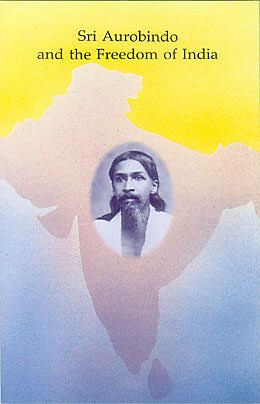
Sri Aurobindo provided fresh insights into the Veda-Upanishads, recovering the genuine Indian tradition, free from European and colonial influences. Thus the stress is on seeking that Wisdom here on earth, in this very body. It is not a search for any god in the heavens. But to obtain this knowledge, we have to seek one who ‘Knows”. The blind cannot lead the blind. And knowledge here does not mean knowledge of any book, or any system. It is knowledge of Truth by direct perception. This was what Socrates was leading his interlocuters into. This is how the Hindu system has been renewed and regenerated through the millennia. Sri Ramakrishna and Ramana Maharshi are two such “Knowers” who lived recently, who taught us how to apply these truths in the conditions of modern life. There must surely be others, unknown and unannounced. The modern academic world has spread many falsehoods in the name of knowledge. Because the academic teachers know the words of the books, but not the wisdom behind them. They say the West is rational, the East is mystical or irrational. Someone who know neither the East nor the West properly, nor the Truth may say “the twain shall never meet.” But Sages like Socrates have shown how they have met! Philosophy primarily concerns the human condition here on earth. It has to tell us how to live here; but it also has to teach us how to exceed ourselves- how to transcend the merely human condition. These concerns have not changed over the centuries, but some societies have changed their priorities and forgotten the goals in the glamour of human achievement, or in the clamour for material comfort or progress. East or West they remain the same, because humanity is one. As a modern scholar says, with reference to the crude contrasts which are made between Western (supposedly based on reason and argument) and Eastern (supposedly based on mysticism and non-rational methods) philosophies: ….crude contrasts which are unhelpful and in large part untrue. This holds particularly with respect to the philosophy of India. Ancient India produced a large and wide philosophical tradition, encompassing materialism, scepticism and empiricism as well as schools tending to mysticism and forms of idealism- a tradition which is comparable to ancient Greek and Roman philosophy in extent and variety. Yet both Westerners and many Indians have emphasised only those schools that form a contrast to Western philosophy. Students often think that ‘Eastern’ philosophy, including Indian, will be all similar and nothing like the ‘Western’ tradition. We have yet to reach a completely post-colonial view, which can get beyond the false contrast of ‘Western rationalism’ and ‘Eastern mysticism’ and recognise the strong affinities between some of the Indian traditions and ancient Greek and Roman traditions more familiar in the West. Julia Annas: Ancient Philosophy- A Very Short Introduction p.115. OUP, 2000. Prof. of Philosophy at the University of Arizona. Photo taken from: http://www.u.arizona,edu Copyright status not stated.
East and West are both in search of the same Wisdom, because Wisdom is One. He who ‘Knows’ belongs to both! Aa no bhadra: krutavo yantu vishvata: Adabdhaaso apareetaasa udbheedah May auspicious thoughts, which harm no one, come to us from the whole Universe! Which are unimpeded, victorious over the forces of division. Rg Veda “The empire of philosophy extends over a few”. David Hume, British Philosopher. ***
Pictures are taken from various sources for spreading knowledge; this is a non- commercial blog. Thanks for your great pictures.
tamilandvedas.com, swamiindology.blogspot.com
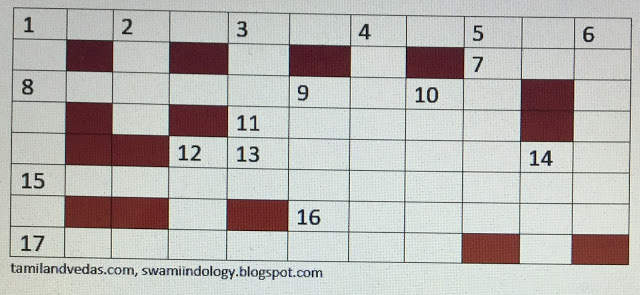
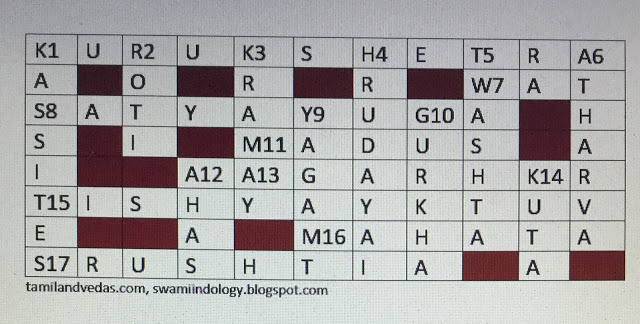
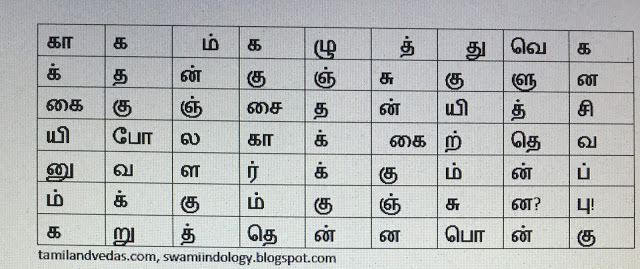
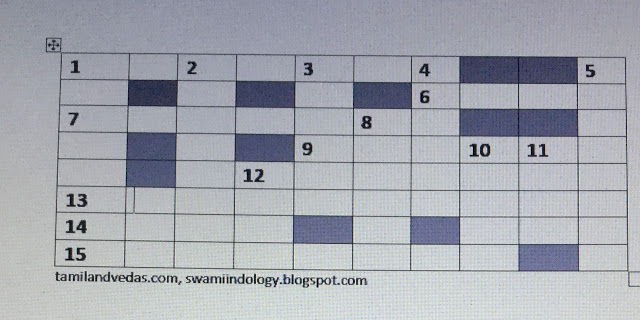
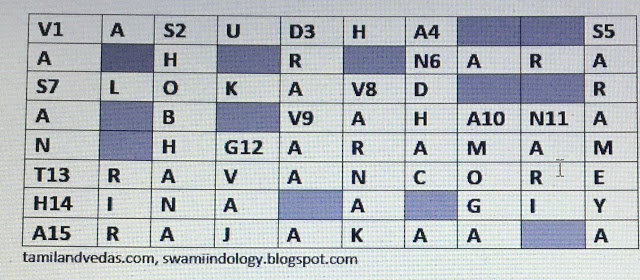
ஒரே சொல் மீண்டும் மீண்டும் வந்தால் ஓரிரு இடங்களில் மட்டுமே கட்டத்தில் இருக்கும். கொண்டு கூட்டி பொருள் கொள்க . விடை கீழே உள்ளது . சில நேரங்களில் படங்களைப் பார்த்தாலும் விடை காண உதவலாம்.
Pictures are taken from various sources for spreading knowledge; this is a non- commercial blog. Thanks for your great pictures.
ஹிந்தி படப் பாடல்கள் -70- ஒரு ராகம்,இரு மலர்கள்-3 பைரவி!
R. Nanjappa
இந்த பைரவி ராகம்தான் நமது இசைஞர்களுக்கு மிகவும் பிடித்த ராகம் போலும்! இதில் நூற்றுக்கணக்கான பாட்டுகள் இருக்கின்றன.ஒரு காலத்தில் மூத்த இசைஞர்கள் நௌஷத்தும் ஷங்கர் ஜெய்கிஷனும் போட்டி போட்டுக்கொண்டு இந்த ராகத்தில் மெட்டுகள் அமைத்தார்கள். ஒவ்வொரு அக்ஷரத்திலும் பல பாட்டுக்கள்-எதை தேர்வுசெய்வது! “ஓ, இதுவும் பைரவிதானா” என்று வியக்கவைக்கும் இரு பாட்டுகளைப் பார்ப்போம்
ஏ தில் துஜே கஸம் ஹைai dil tujhe kasam hai, tuu, himmat na haarana din zindagi ke jaise bhi guzare guzaarana ai dil tujhe kasam hai …
என் நெஞ்சே, உனக்குத்தான் சொல்கிறேன், நீ தைரியத்தை இழக்காதேவாழ்க்கையின் பாதை எப்படிப் போனாலும் அத்துடன் வாழத் தெரிந்துகொள்நெஞ்சே, உனக்குத்தான் சொல்கிறேன்
ulfat ke raaste mein milenge hazaar gam ban jaaye jaan par bhi to gam se na haarana ai dil tujhe kasam hai … அன்பின் பாதையில் ஆயிரம் வருத்தங்கள் வரும்உயிரே போனாலும் துக்கத்திற்கு பணிந்துவிடாதேநெஞ்சே, உனக்குத்தான் சொல்கிறேன்
rone se kam na honge kabhi teri mushakilen bigade hue naseeb ko hans kar sanvaarana ai dil tujhe kasam hai … அழுவதால் என்றும் உன் கஷ்டங்கள் குறையப்போவதில்லைகஷ்டங்கள் வந்தாலும் சிரித்து சமாளிக்கத் தெரிந்துகொள்நெஞ்சே, உனக்குத்தான் சொல்கிறேன்
duniya sitam kare to na karana gila koi jo tere ho chuke hain tu unako pukaarana ai dil tujhe kasam hai … உலகம் உனக்கு துன்பம் தருகிறதா? எங்கும் புகார் சொல்லாதேஉனக்கென்று இருப்பவர்களை உதவிக்கு அழை!நெஞ்சே, உனக்குத்தான் சொல்கிறேன்
என்ன எளிய பாடல், கலப்பில்லாத பைரவி மெட்டு! லதாவின் ஆதி காலக் குரல், இன்னும் பண்படவில்லை. .அவரது ஹிந்தி-உருது உச்சரிப்பும் அவ்வளவு சரியில்லை! இந்த உச்சரிப்பை சரிசெய்ய நௌஷத் மிகுந்த முயற்சி செய்தார். இந்த எளிமையிலேயே ஒரு தனிக்கவர்ச்சி இருக்கிறது! இது பைரவி ராகப் பாட்டிற்கு ஒரு சிறந்த மாதிரி. இப்பொழுது ஒரு வித்தியாசமான பாட்டு!
மேரா ஜூதா ஹை ஜாபானீ
मेरा जूता है जापानी ये पतलून इंगलिश्तानी सर पे लाल टोपी रूसी फिर भी दिल है हिन्दुस्तानी
निकल पड़े हैं खुल्ली सड़क पर अपना सीना ताने मंजिल कहाँ, कहाँ रुकना है,उपरवाला जाने बढ़ते जाए हम सैलानी, जैसे एक दरिया तूफानी सर पे लाल टोपी रूसी
ऊपर-नीचे नीचे-ऊपर लहर चले जीवन की नादान है जो बैठ किनारे, पूछे राह वतन की चलना जीवन की कहानी, रुकना मौत की निशानी
होंगे राजे राजकुंवर हम बिगडे दिल शहज़ादे हम सिंघासन पर जा बैठें जब जब करें इरादे सूरत है जानी पहचानी दुनिया वालों को हैरानी
ஹிந்துஸ்தானி என் செருப்பு ஜப்பனில் செய்தது, என் பேன்ட் இங்கிலிஷ்காரர்களுடையதுஎன் தலையில் சிவப்பு குல்லாய் ரஷ்யர்களுடையதுஆனால் என் மனது என்றும் இந்தியன் தான்!நிகல் படே ஹை குல்லி ஸடக் பர், அப்னா ஸீனா தானேஅப்னா ஸீனா தானேமன்ஃஜில் கஹா(ன்), கஹான் ருக்னா ஹை, ஊபர் வாலே ஜானேஊபர் வாலா ஜானேபட்தே ஜாயே ஹம் ஸைலானி, ஜைஸே ஏக் தரியா தூஃபானிஸர் பே லால் டோபீ ரூஸி..
.நான் திறந்த பாதைக்கு வந்துவிட்டேன்என் மன தைரியத்தினால் நம்பிக்கையுடன் வந்துவிட்டேன்அடையவேண்டிய இலக்கு எங்கே இருக்கிறது? எங்கே நிற்கவேண்டும்?இது ஆண்டவனுக்குத்தான் தெரியும்!நான் முன்னேறிச் செல்கிறேன், நதியின் மேல் வீசும் பெருங்காற்றுபோல்முன்னேறிச் செல்கிறேன்தலையில் சிவந்த ரஷ்யத் தொப்பி இருந்தால் என்ன,என் மனது என்றைக்கும் இந்தியன் தான்!
ஊபர் நீசே, நீசே ஊபர், லஹர் சலே ஜீவன் கீலஹர் சலே ஜீவன் கீநாதா(ன்) ஹை ஜோ பைட் கினாரே பூசே ராஹ் வதன் கீபூசே ராஹ வதன் கீசல்னா ஜீவன் கீ கஹானீ, ருக்னா மௌத் கீ நிஷானீஸர் பே லால் டோபி ரூஸி…மேலே இருப்பது கீழே, கீழே இருப்பது மேலே-இப்படித்தான் வாழ்க்கை அலைபோல மேலும் கீழும் செல்கிறது!இங்கே கரையில் சும்மா உட்கார்ந்துதன் இடத்திற்கு வழியை விசாரிப்பவனைப் பற்றிஎன்ன சொல்ல, வெட்டிப்பயல்!
சென்றுகொண்டிருப்பதுதான் வாழ்க்கை,நின்றுவிடுவது மரணத்தின் அடையாளம்!தலையில் சிவப்பு ரஷ்யத் தொப்பி இருந்தால் என்ன!ஹோங்கே ராஜ், ராஜ்குவர் ஹம், பிக்டேதில் ஷஹ ஃஜாதேபிக்டே தில் ஷஹ ஃஜாதேஹம் ஸிங்காஸன் பர் ஜா பைடே, ஜப் ஜப் கரே இராதேஜப் ஜப் கரே இராதேஸூரத் ஹை ஜானீ பஹசானி, துனியா வாலோ(ன்) கோ ஹைரானீஸர் பே லால் டோபி ரூஸி….நானும் ஒரு நாள் ஒரு ராஜ்யத்தில் ராஜகுமாரனாக இருப்பேன்ஆனால், நான் கொஞ்சம் கர்வம் பிடித்தவன்!நினைக்கும் பொழுது சிம்மாசனத்தில் அமருவேன்! ஆனல், இதென்ன இது தெரிந்த முகமாக இருக்கிறதேஎன உலகத்தவருக்கு என்னைக் கண்டு ஆச்சரியமாகிவிடும்!தலையில் சிவப்பு ரஷ்யத் தொப்பி இருந்தால் என்ன,என் மனது என்றைக்கும் இந்தியன் தான்!
ஹிந்தித் திரை இசையிலேயே மிகப் பிரபலமான பாட்டு! ஒரு சேனலில் மட்டும் 4.2 கோடிப் பேர்கள் பார்த்திருக்கிறார்கள்! இந்தியா தவிர உருது, அராபிய, பெர்ஷியன் மொழி தெரிந்த இடங்களிலும் ரஷ்யா மற்றும் கீழை ஐரோப்பிய நாடுகளிலும் பிரபலமான பாட்டு! ஷைலேந்த்ராவின் கவிதை எளிமையான சொற்களில் வாழ்க்கைத் தத்துவத்தையே போதித்து விட்டது! இத்தகைய ஜன ரஞ்சகமான பாட்டு பைரவி ராகத்தில் அமைந்தது என்பது பலருக்கும் ஆச்சரியமாக இருக்கும்!
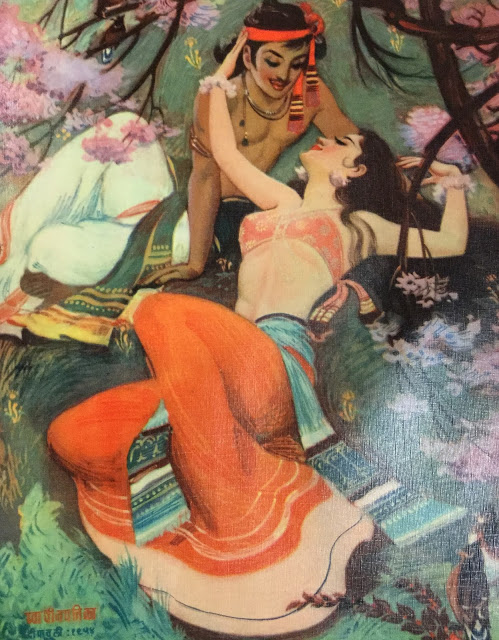
சம்ஸ்கிருதத்தில் காதல், செக்ஸ் பற்றிய கவிதைகள் பல்லாயிரக்கணக்கில் உள்ளன. இதே அளவு தமிழிலும் உள்ளன.
உலகில் உள்ள மொழிகளில் ஒருவேளை அதிகமாக இப்படிப்பட்ட கவிதைகள் உள்ள மொழிகள் தமிழும் சம்ஸ்கிருதமும் மட்டும் தானோ?!
படிக்கப் படிக்க ஆவலைத் தூண்டும் வர்ணனைகள், உணர்ச்சிகள், செயல்கள் என ஒவ்வோரு கவிஞனும் ஆண் பெண் உறவைப் பாடி இருக்கும் விதம் சொல்லுக்கு அடங்காத சுவையுடையதாகும்.
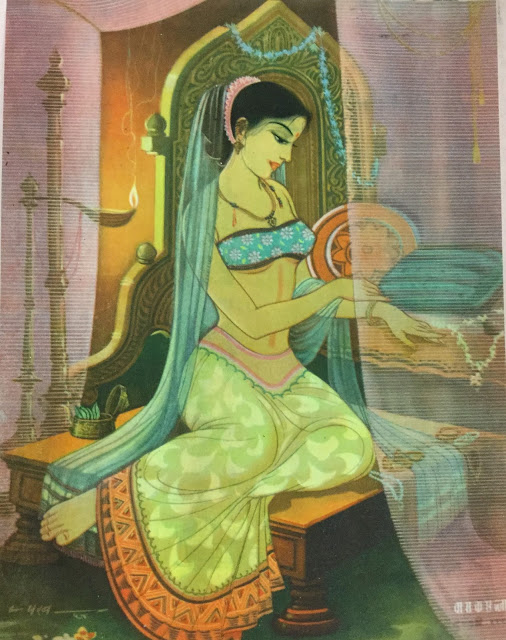
உல்லாசமான படுக்கை அறையில், அந்த அழகியின் மேனி சற்றே அவளது மார்பக பாரத்தினால் வளைந்திருக்க, அங்கு அவளது தலைவன் (கணவன்) அவளை இளமையுடன் சேர்ந்தான். இந்த இருவரும் பரஸ்பரம் ஒருவரை ஒருவர் தழுவ, ஒருவர் உடலில் இன்னொருவர் ஊடுருவிச் செல்ல, இப்படியாக அவர்கள் மறைக்கப்பட்டு விடவே, ஒருவர் கூட அவர்களது தனித்தனியான மேனியைக் கவனிக்கமுடியாத நிலை ஏற்பட்டது!
In the pleasure-house, there is the young girl with her frame slightly stooping (due to the weight of her bosom), and there is the lord of her life (husband) united with youth; these two mutually embracing warmly have entered into the body of each other and are thus concealed and to no one is their separate identity clearly discernible.
அந்தக் காதலர்கள் தனது அன்புக்குரியவளின் கூந்தலைக் கோதி விட்டு, அவளது நெற்றியையும் கண்களையும் முத்தமிட்டு, உதடுகளையும், பற்களையும் கன்னங்களையும் இன்பம் தரக்கூடிய படி வலியைத் தந்து, அடிக்கடி அவர்களின் கன்னங்களில் முத்தமிட்டு, கழுத்திற்குக் கீழே உள்ள பிரதேசத்திலும், அக்குளிலும் தங்கள் நகக்குறிகளைப் பதித்து, அவளது மார்பகங்களை அழுந்த அழுத்தி, கரங்களால் அவளது நாபியை மெதுவாகத் தடவுகின்றனர்.
யானையின் துதிக்கை போல காதல் விளையாட்டு கிரஹத்தில் தங்கள் லீலைகளைச் செய்கின்றனர்.
அவர்களது முழங்கால்கள்,கணுக்கால்கள், கால் விரல்களை தங்களது முழங்கால், கணுக்கால், கால் விரலோடு பதித்து அன்புக்குரியவர் இருவரும் ஒருவரை ஒருவர் தழுவி சந்திரனின் கதிர்கள் பட்டவுடன் உருகும் சந்திரகாந்தக் கல் போல பரவசத்தில் உருகுகின்றனர்.
Those lovers who fondle the tresses of their beloveds, kiss the forehead and eyes, give (pleasurable) pain to their lips by their lips and teeth, kiss frequently their cheeks, imprint their nail marks in the regions below the neck and armpits, press hard their bosoms and pound at their breasts and give gentle strokes with their palms on the navel; do the sportful activity In the house of love as is done by the trunk of an elephant and press hard at their knees, ankles and toes with their counterparts – doing such pleasing activities by embracing the beloved they melt in ecstasy as does the moonstone under the influence of the moon’s rays.
(Translation by A.A.R.)
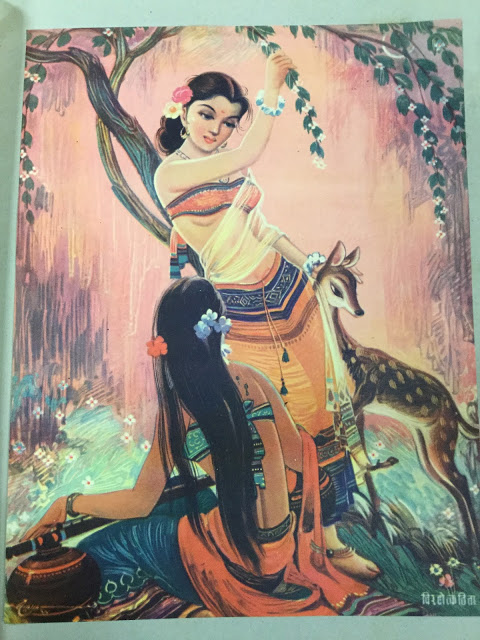
அழகியின் கண் என்ற ஆயுதம்!
இயம் வ்யாதாயதே பாலா ப்ரூரஸ்யா கார்முகாயதே |
கடாக்ஷஸ்ச சராயந்தே மநோமி ஹரிநாயதே ||
இந்த அழகி ஒரு வில்லை வைத்திருக்கிறாள்,
அவளது வில்லானது அவள் விழியின் வளைவு தான்,
அவள் நீள்விழி ஓரப் பார்வை தான் குறி பார்க்கப்பட்ட அம்பு
எனது மனம் தான் அவள் குறி பார்க்கும் இலக்கு!
This damsel doth as an archer serve,
The bow she handles is her eye-brow curve,
Her side-long look is the arrow aimed,
My mind the deer, is the target maimed.
(Translation by Dr Velluri Subba Rao)
*
அழகி தரும் வெப்பம்!
அபூர்வோ த்ருஷ்யதே வாஹ்னி
காமின்யாஸ்தனமண்டலே |
தூரதோ தஹதே காத்ரம்
ஹ்ருதி லக்னாஸ்து சீதளா: ||
இந்த அழகியின் மார்பகங்களிலிருந்து எழும் வெப்பம் (அக்னி) பார்ப்பதற்கு விசித்திரமாக இருக்கிறது, மற்றவற்றிலிருந்து வேறுபட்டதாக இருக்கிரது. தூரத்திலிருக்கும் மனிதனை அது பலமாக எரிக்கிறது, ஆனால் அணைத்தாலோ குளிர்ச்சியைத் தருகிறது!
The fire that blazes in a maiden breast
Appears quite strange and different from the rest
It sure consumes the man that’s far away
But lo! Doth, tightly hugged his heat allay.
(Translation by Dr Velluri Subba Rao)
*
இப்படி ஆயிரக்கணக்கில் உள்ள காதல் காவியக் கவிதைகள் சம்ஸ்கிருதத்தில் ஏராளம் உள்ளன? இன்னும் சிலவற்றைப் படிக்க ஆசையா?
Pictures are taken from various sources for spreading knowledge; this is a non- commercial blog. Thanks for your great pictures.
tamilandvedas.com, swamiindology.blogspot.com
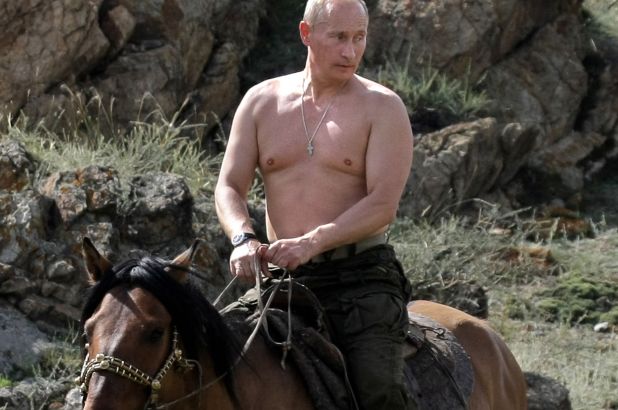
Archaeological town Arkaim in Russia is 4000 year old. After President Putin’s visit to this site in 2005, it hit the headlines in world’s popular news papers. Here is a collection of details from four sources. ORGANISER weekly also published a report in 2005.
I have noted following interesting similarities with Hindu beliefs
1.Two rivers with the name of Holy Ganga claim healing powers
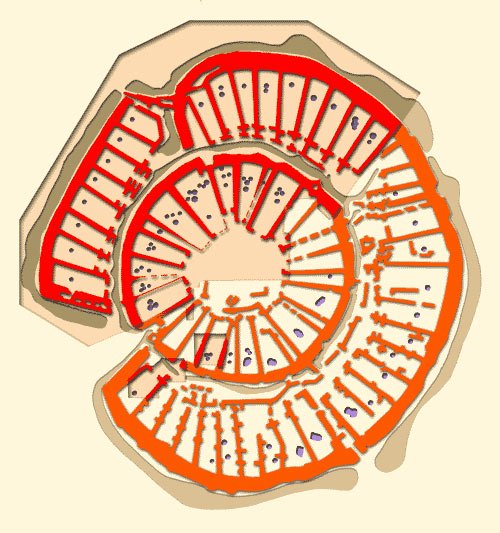
2.The Mandala type city like Borobudur and other circular temples of India. (Even my Madurai City in Tamil Nadu is constructed in squares withing squares)
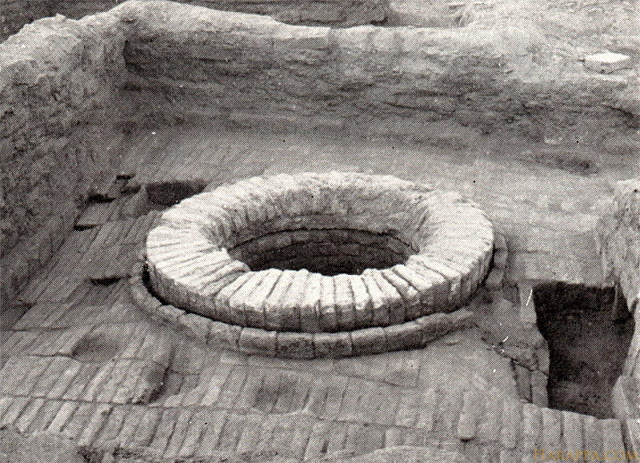
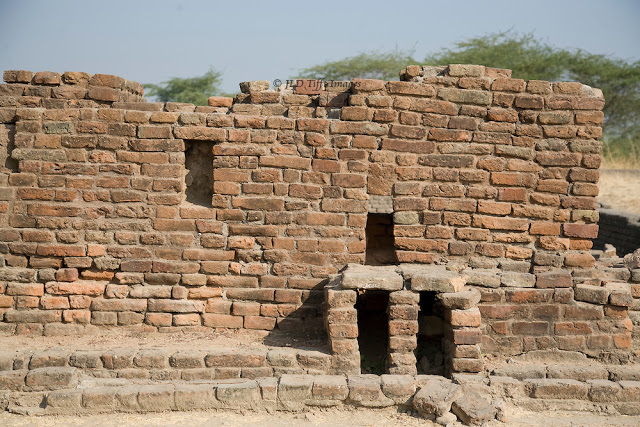
3.The town planning similar to Indus-Saraswati River civilization of Harappa and Mohanja daro with wells, bricks, drainage etc
4.Swastika model and Mandala model
5.Local peoples’ language is related Sanskrit
6.Horse burials with chariots in the near by area.
7.Actual Arkaim structure belongs to Indus period (Bronze Age)
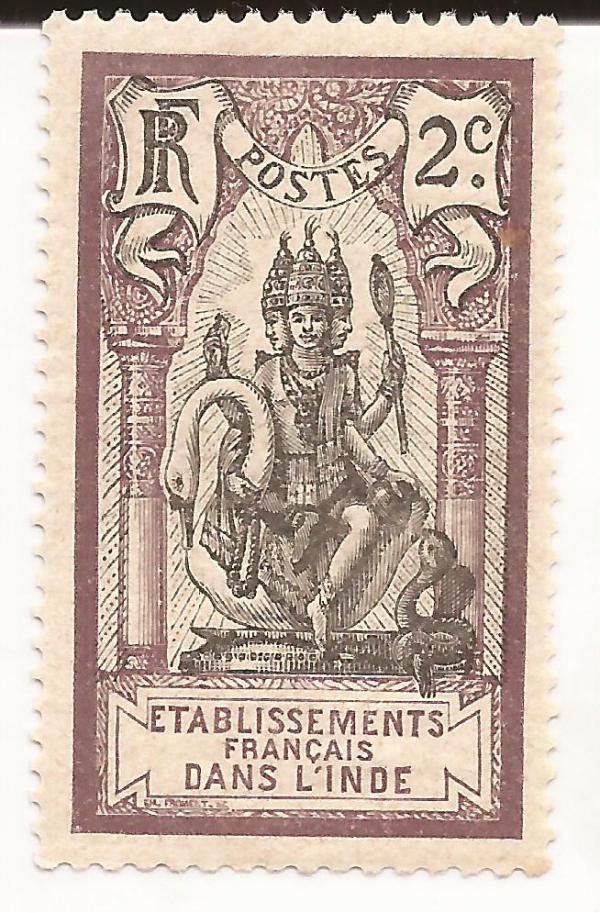
Please read the news items and look at the pictures.(One must remember the Vishnu idol discovered in Russia and my articles on Ganga Rivers around the World from Ma Ganga (Mekong) in South East Asia to Congo (gango) in the middle of Africa)
Arkaim is an archaeological site on the steppe of the Southern Ural near the village of Amursky in Russia.
Arkaim consists of a fortified settlement from the Middle Bronze Age, constructed around 3.8-4000 years ago. Arkaim was a circular stronghold that housed 1,500 to 2,500 inhabitants with concentric bastions, constructed using adobe, a building material made from earth and organic materials.
The bastions, measuring 20,000 m² encircled the inhabitant’s dwellings that contained hearths, cellars, wells and even traces of metallurgical furnaces. Each dwelling opened onto a circular street paved with wood that was lined with drainage gutter pits for collecting rainwater. The whole complex centered on a rectangular open courtyard measuring 25×27 metres that was used for festivals and gatherings.
Sintashta culture
Arkaim is attributed to the early “hypothetical” Proto-Indo-Iranians who are assumed to have lived in the late 3rd millennium BC, and are often connected with the Sintashta culture of the Eurasian Steppe and the early Andronovo archaeological horizon.
Many scholars suggest the risky assumption that the concentric design represents “the model of the universe” as described in ancient Aryan/Iranian spiritual literature, the Vedas and the Avesta and reflect the city of King Yima (the fourth Shah of the Pishdadian dynasty of Persia according to Shahnameh) as described in the Rigveda (an ancient Indian collection of Vedic Sanskrit hymns).
TWO GANGA RIVERS !
Originally, seen as unusual circles in the Southern Urals steppe when photographed in 1952 by aerial cartographers, Arkaim wouldn’t be discovered until 1987 when a team of archaeologists, headed by Gennady Zdanovich was sent to survey the archaeological value of the valley at the confluence of the Bolshaya Karaganka and Utyaganka rivers in preparation for the construction of a reservoir. This would have resulted in the area being flooded and any archaeological remains submerged.
The team petitioned to protect the monument and mobilised public support, in April 1991 the Council of Ministers officially canceled the construction of the reservoir (
More than twenty other structures built according to similar patterns have been found in a larger area spanning from the southern Urals’ region to the north of Kazakhstan, forming the so-called “Land of Towns”.
—HERITAGE DAILY
4000 year old !
Arkaim is about 4.000 years old. It is older than Troy. The settlement has the shape of a circle, with external and internal walls. The diameter of the circle is 170 meters. Residential premises were attached to both ring walls. In the very center of the settlement, there was an area to which the streets lead directly. Scientists have come to the conclusion that Arkaim was created according to a previously well-thought-out plan.
In the vicinity, scientists discovered 20 ancient settlements.
At the top of Shamanka Mountain, there is a mandala. Enter the mandala with an open heart. Make a wish. It will be fulfilled if it does not harm the lives of other people. According to the legend, the Bolshaya Karaganka River has healing powers. Wash your feet, and ask for health.
XXXX
Archaeologists who excavate here claim that after visiting Arkaim, their life will never be the same. A lot of tourists feel the same. In addition to new knowledge and impressions, you will receive a powerful charge of energy, and you will remember Arkaim, the unsolved mystery of the Southern Urals, with pleasure. The memory will be relived once again when the wishes that you made there come true.
Tradition and Folklore in the Arkaim Region:
Arkaim is interesting not only as a historic monument. It is reported to be one of the strongest ‘anomaly’ zones in Russia.
Locals believe it to be a sacred place. Pilgrims come here all year round to get some healing water from the Bolshaya Karaganka River, and in the summer they coat themselves with clay. They say it helps treating skin diseases.
The mountains surrounding the fortress are also unusual. The most famous one is Shamanka (or Bold Mountain). People climb to its top to get some positive energy, pray or meditate. People in serious medical condition are brought there for healing. Visitors come to the top of Repentance Mountain to ask for forgiveness. Love Mountain is believed to bring personal luck. The nearby Male Forest is visited by women who have relationship problems. The rumour has it, a walk in this forest will make a woman popular with men. The growth near Grachinaya Mountain (also called Blessed) is infamous. Birch trunks there are abnormally crooked at the bottom. They say people cannot stay there for too long, otherwise they risk losing their mind. (1)
Who were they:
It has been suggested from a series of horse burials, that this site has produced evidence that the cities could have been the home of the Aryans.
Several ancient Indian texts believed to have been written by Aryans recount similar rituals. “These ancient Indian texts and hymns describe sacrifices of horses and burials and the way the meat is cut off and the way the horse is buried with its master … If you match this with the way the skeletons and the graves are being dug up in Russia, they are a millimetre-perfect match.” (3)
Their language has been identified as the precursor of modern Indo-European tongues, including English. Words such as brother, guest and oxen have been traced back to this prototype. In other words Sanskrit
Sintashta-Arkaim Culture:
The most diagnostic feature of the Sintashta settlement site is its closed fortification that consisted of ramparts and ditches, enforced by a fence or wall built from unfired clay bricks and wooden frames. The site plan was based on either a round or rectangular form. The fortified area included from 6,000 to 30,000 sq. meters. Towers and other constructions protected the entrances and the accesses to water (Zdanovich 1995). The houses were 25-130 sq.meters, rectangular and had pit-storage, open fire hearths, wells. Some also included metallurgical furnaces.
Adobe bricks
Arkaim had two protective circular walls and two circles of standard dwellings separated by a street around a central square. The external wall, 160 m in diameter and 4 m wide, was built from specially selected soil that had been packed into timber frames before being faced with adobe bricks (Zdanovich 1997). On the interior, houses abutted the wall and were situated radially with their doors exiting to the circular internal street.
XXXX
Daily Mail Report
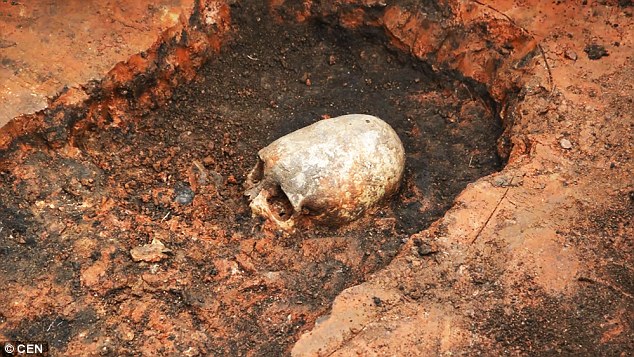
Woman with Long Skull Discovered
Strange ‘conehead’ skeleton unearthed at Russia’s Stonehenge: Elongated head was bound in tribal tradition 2,000 years ago
Skeleton with long skull was unearthed in Arkaim, central Russia
It’s thought to belong to a woman living almost 2,000 years ago
Her skull is elongated because it was bound out of tribal tradition
Arkaim is known as Russia’s Stonehenge because it may have been used by ancient people to study the stars, like the British site (DAILY MAIL 2015)
The skeleton belongs to a woman from the Sarmati tribe that lived in the territories of what is now modern day Ukraine, Kazakhstan and southern Russia.
‘Her skull was elongated because the tribe did so by tying up the heads of their children with rope. It was clearly a tradition in the tribe.’
The skeleton is thought to date to the second or third century AD, making it considerably younger than the site.
It is just another of the mysteries to be unearthed at the spectacular site of Arkaim known as Russia’s Stonehenge, which is believed to have been built in the 17th century BC.
It is believed by some that, like its 5,000-year-old English counterpart, it was used to study of the stars.
But Arkaim is thought to be more advanced.
Astronomy:
Stonehenge allows for observations of 10 astronomical phenomena using 22 elements, while Arkaim enables observations of 18 phenomena using 30 elements.
This means that ancient people could have observed and tracked certain events in the sky by using the site in certain ways from particular positions, and that Arkaim offered more observable events than Stonehenge.
Russian archaeologist K.K. Bystrushkin, who made the comparison between the two sites in 2003, said Stonehenge offers an observational accuracy of 10-arc minutes to a degree, whereas Arkaim offers accuracy of one-arc minute.
This precision was unheard of at the time the monument is thought to have been built.
The Akraim archaeological site was discovered in 1987 and since then it has yielded spectacular discoveries including some artefacts from the Bronze Age.
As well as being a primitive astronomical observatory it was also a village that was fortified by two large stone circular walls.
The settlement covers an area of some 220,000 square feet (20,439 square metres) and consists of two circles of dwellings separated by a street, with a central community square in the centre.
XXX
From Wikipedia:-
Swastika and Rig Veda
Scholars have identified the structure of Arkaim as the cities built “reproducing the model of the universe” described in ancient Aryan/Iranian spiritual literature, the Vedas and the Avesta.[3] The structure consists of three concentric rings of walls and three radial streets, reflecting the city of King Yima described in the Rigveda.[5] The foundation walls and the dwellings of the second ring are built according to what some researchers have described as swastika-like patterns;[6] the same symbol is found on various artifacts.[7]
The fortified citadel of Arkaim dates back to the 17th and 16th century BCE.[citation needed] More than twenty other structures built according to similar patterns have been found in a larger area spanning from the southern Urals’ region to the north of Kazakhstan, forming the so-called “Land of Towns“.[4]
Vladimir Putin’s visit and the “Russian idea”
Russia’s president Vladimir Putin visited the site in 2005, meeting in person with the chief archaeologist Gennady Zdanovich.[13] The visit received much attention from Russian media. They presented Arkaim as the “homeland of the majority of contemporary people in Asia, and, partly, Europe”. Nationalists called Arkaim the “city of Russian glory” and the “most ancient Slavic-Aryan town”. Zdanovich reportedly presented Arkaim to the president as a possible “national idea of Russia”,[14] a new idea of civilisation which Shnirelman calls the “Russian idea”.[15]
TAGS — Ganga in Russia, Arkaim, Indus Valley similarities,
FOLLOWING ARE PICTURES FROM INDUS-SARASWATI RIVER CIVILIZATION
Congo and Ganga rivers | Tamil and Vedas
tamilandvedas.com › tag › congo-and-ganga-rivers
1.
2.
17 Mar 2014 – Posts about Congo and Ganga rivers written by Tamil and Vedas. … In the middle of the thickest forest on the earth is the river Congo of Africa.
Ganga | Tamil and Vedas
tamilandvedas.com › tag › ganga
1.
Posts about Ganga written by Tamil and Vedas. … in River Mekong (Ma Ganga) in South East Asia, Maveli Ganga in Sri Lanka, Congo in Central Africa etc.
Ganges | Tamil and Vedas
tamilandvedas.com › tag › ganges
1.
Posts about Ganges written by Tamil and Vedas. … in River Mekong (Ma Ganga) in South East Asia, Maveli Ganga in Sri Lanka, Congo in Central Africa etc.
River Ganges in Sumerian Culture (Post No.3731) | Tamil and …






















 Tamil and Vedas