Pictures are taken from various sources for spreading knowledge; this is a non- commercial blog. Thanks for your great pictures.
tamilandvedas.com, swamiindology.blogspot.com
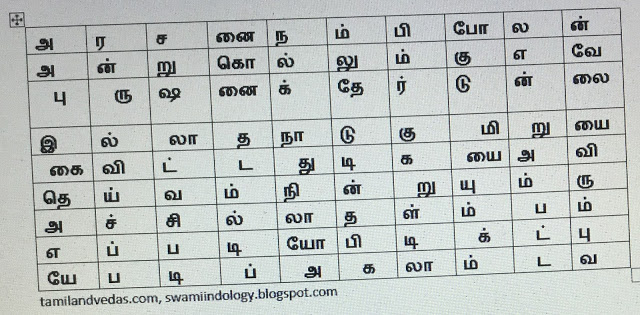
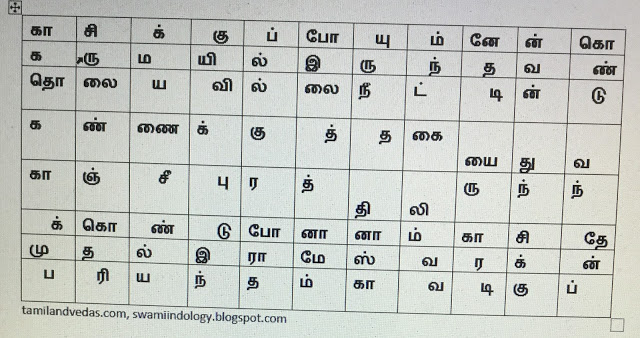
ஒரே சொல் மீண்டும் மீண்டும் வந்தால் ஓரிரு இடங்களில் மட்டுமே கட்டத்தில் இருக்கும். கொண்டு கூட்டி பொருள் கொள்க . விடை கீழே உள்ளது . சில நேரங்களில் படங்களைப் பார்த்தாலும் விடை காண உதவலாம்.
ANSWER
1.அரசனை நம்பி புருஷனைக் கைவிட்டது போல
2.அரசன் அன்று கொல்லும் , தெய்வம் நின்று கொல்லும்
3.அரசன் இல்லாத நாடு அச்சில்லாத தேர்
4.அரசன் எப்படியோ அப்படியே குடிகள்
5.அரசின் குடுமியையும் பிடிக்கலாம் என்று அம்பட்டன் வேலையை விரும்புவது போல
Source book :–
பயன்படுத்திய நூல்- கழகப் பழமொழி அகர வரிசை, கழக வெளியீடு
Pictures are taken from various sources for spreading knowledge; this is a non- commercial blog. Thanks for your great pictures.
tamilandvedas.com, swamiindology.blogspot.com
ஜிந்தாபாத் 3
குடக்கோ இளஞ்சேரலிரும்பொறை மீது பெருங்குன்றுர் கிழார் பாடிய ஒன்பதாம் பத்தில் கபிலர் பற்றி குறிப்பிடுகிறார். அவர் பாடிப் பரிசாகப் பெற்ற ஊர்கள் எண்ணிலாதவை என்பதை அழகாக எடுத்துரைக்கிறார் —
“மறம்புரி கொள்கை வயங்கு செந்நாவின்
உவலை கூராக் கவலையில் நெஞ்சின்
நனவிற் பாடிய நல்லிசைக்
கபிலன் பெற்ற ஊரினும் பலவே
–பதிற்றுப் பத்து, 9-ம் பத்து
பொருள்
சோழன் மீது சேரன் படையெடுத்தான். சோழ வீரர்கள் பயந்து போய் வேல்களைக் கீழே போட்டுவிட்டு ஓட்டம் பிடித்தனர். அந்த வீரர்களின் வேல்களின் எண்ணிக்கை கபிலர் பெற்ற ஊர்களையும் விட அதிகமானவை .
இங்கு புலவர் ஒரே கல்லில் 2 மாங்காய் அடித்துவிட்டார்.சேரனையும் கபிலனையும் புகழ வேல்களைப் பயன்படுத்துகிறார்.
அகநானுற்றுப் பாடல் 78–ல் நக்கீரர் புகழ்வதைப் பார்ப்போம்
“உலகுடன் திரிதரும் பலர் புகழ் நல்லிசை
வாய்மொழிக் கபிலன் சூழ , சேய் நின்று
செழுஞ்செய்ந் நெல்லின் விளைகதிர் கொண்டு
தடந்தாள் ஆம்பல் மலரொடு கூட்டி
யாண்டு பல கழிய , வேண்டுவயிற் பிழையாது
தாள் இடூஉக்கடந்து வாள் அமர் உழக்கி
ஏந்து கோட்டு யானை வேந்தர் ஓட்டிய
கடும் பரிப் புரவிக் கைவண் பாரி
தீம் பெரும் பைஞ்சுனைப் பூத்த
தேம் கமழ் புது மலர் நாறும் – இவள் நுதலே”
இந்தப் பாட்டில் நக்கீரர் ஒரே கல்லில் மூன்று மாங்காய் அடித்துவிட்டார்
இது அகத்துறைப் பாடல் ; தலைவியின் அழகை நினைவுபடுத்த வந்த பாடல்
பொருள் என்ன ?
பாரி என்ற மன்னனின் பறம்பு மலையில் பூ த்த தேன் மணம் கமழும் தலைவியின் முகத்தை/ நினைத்தாவது பார்த்தாயா என்று தோழி வினவுகிறாள் .
யார் அந்தப் பாரி ?
மூவேந்தர்களும் பல ஆண்டுகள் போட்ட முற்றுகையைத் தகர்த்து தக்க சமயத்தில் அவர்களைத் தோற்றோடச் செய்தவன் குறு நில மன்னன் பாரி ; அதை எப்படி செய்தான்? .
கபிலர் என்ற புலவர் ஒரு உலக அதிசயம் புரிந்தார் !
கிளிகளைப் பழக்கி, முற்றுகையினையும் தாண்டிச் சென்று, நெல் கதிர்களைக் கொண்டுவரச் செய்தார் . அதை ஆம்பல் மலர்த் தண்டுகளாலான கூட்டு, கறியுடன் பல ஆண்டுகள் சாப்பிட ‘ஐடியா’idea) சொல்லிக் கொடுத்தார்.
யார் அந்தக் கபிலன்?
உலகுள்ளவரையும் பலரும் புகழும் நல்ல புகழினையும் சத்தியத்தையும் உடைய கபிலர் என்னும் புலவர் பெருமான் !
xxxx
ஜிந்தாபாத் 5
கபிலரே பாடிய புறநானூற்றுப் பாடலில் — 337– ஒரு புதிர் உள்ளது ; இதுவரை விடை கிடைக்கவில்லை.
“அகிலார் நறு ம்புகை ஐது சென்று அடங்கிய
கபில நெடுநகர்க் கமழும் நாற்றமொடு”
பொருள் என்ன ?
சோழ நாட்டில் கபிலர் ஒரு வீட்டுக்குப் போனார்; அங்கே ஒரு பேரழகி இருந்தாள் . அவள் சோழ நாட்டின் வி.ஐ.பி.யின் (V I P = very important person) மகள் ; ஆகையால் அதி பயங்கர செக்யூரிட்டி (securityY. பாரியின் பறம்பு மலை பனிச் சுனை போல பார்ப்பதற்கு அரியள் ; அதாவது பறம்பு மலை போலப் பாதுகாப்பு. அந்த வீட்டில் பெண்களின் கூந்தலுக்கு மணம் வீச போடப்பட்ட அகில் புகை, வீட்டைக் கருப்பு நிற துணி போலக் காட்டியது .
இதில் புதிரான சொல் கபில நெடுநகர் .
கபில நிறம் என்பதை யானையின் நிறம் எனலாம் இந்தப் பிராமணனும் –புலவரும் — கபில நிறம் போலும்!! கரும்புகை சூழ்ந்த வீடு என்பதால் ‘கபில நெடுநகர்’ என்று சொல்லியிருக்கலாம் . அது சரியானால், தன்னுடைய பெயரையே சிலேடையாக பயன்படுத்திய ஒரே சங்கப் பாட்டு இதுதான். அப்படியில்லாமல் பாரியின் தலைநகருக்கு பாரியே கபில நெடுநகர் என்று பெயர்வைத்தனோ என்று எண்ணத் தோன்றுகிறது . ஏனெனில் பெண்ணின் அழகை நகரத்துக்கு ஒப்பிடுவது சங்க இலக்கியம் முழுதும், சம்ஸ்கிருத இலக்கியம் முழுதும், பைபிளிலும் கூட உளது.
கடைசியில் இவளைக் கட்டித் தழுவும் பாக்கியம் எவனுக்கோ என்று முடிக்கிறார் . அதிலும் ஒரு அங்கதம் உளது ; அடப் பாவி!இவ்வளவு செக்யூரிட்டி போட்டால் இவளை யார் பார்க்க முடியும்? இவளுக்கு எப்படிக் கல்யாணம் நடக்கப்போகிறதோ என்று கிண்டல் அடிக்கிறாரோ!! அல்லது இவ்வளவு பேரழகுடைய பிணை மணக்கும் ‘லக்கி பாய்’ யார் ( Who is that lucky boy? )என்று வியக்கிறாரோ என்று தெரியவில்லை . எது எப்படியாகிலும் நமக்கு வேண்டிய ‘பாயிண்ட்’ point கபில நெடுநகர்தான் . நகர் என்பது பெரிய வீடு , நகரம் , கோவில் என்ற பல பொருள்களில் வரும்.
xxx
ஜிந்தாபாத் 6
புறநானூற்றுப் பாடல் 126 மாறோக்கத்து நப்பசலையார் பாடிய பாடல் . இதில் அவர் கபிலருக்குக் கொடுத்த அடைமொழிதான் அவரை இப்படி எல்லாப் புலவர்களையும் பாபட வைத்தது . அது என்ன விஷயம் ?
“புலன் அழுக்கற்ற அந்தணாளன்”
அந்தணர் என்பது அய்யரா அல்லது துறவியா என்று ஐயப்படுவோருக்கும் இப்பாடல் பதில் தருகிறது. இதோ முக்கிய வரிகள் —
“நிலமிசை பரந்த மக்கட்கு எல்லாம்
புலன் அழுக்கற்ற அந்தணாளன்
இரந்து சென் மாக்கட்கு இனி இதன் இன்றிப்
பரந்து இசை நிற்கப் பாடினன்2 .
பாடல் 126, புறநானூறு
பாடியவர் – நப்பசலை
பாடப்பட்டோன் மலையமான் திருமுடிக்காரி.
பொருள்
பேரறிவும் தூய்மையும் உடைய கபிலன் உன்னையும் உன் சுற்றத்தாரையும் , இனிப்புகழ்வதற்கு இடமில்லை என்ற அளவுக்குப் பாடிவிட்டான் (கபிலனினும் அறிவு குறைந்தாலும் நாமும் பாடுவோம் )
இதில் ‘புலன் அழுக்கற்ற அந்தணன்’ என்பது அவர் மனம், மொழி, மெய் மூன்றிலும் சுத்தமானவர் என்பதை எடுத்துக் காட்டுகிறது.இந்த திரிகரண சுத்திதான் கபிலருக்கு இவ்வளவு புகழ் ஈ ட்டித் தந்தது என்றால் மிகையில்லை.
xxx
பரிபாடல் (3-7) 11 ருத்திரர்களையும் கூட கபிலர் என்ற சொல்லால் குறிப்பிடுகிறது ஏனைய பொருள்களிலும் கபில வருவது ஆராய்ச்சிக்குரியது .
கபிலை அம்பதி– மனிமேகலை 26-44, 28-143
கபில புரம் – –சிலப்பதிகாரம் – 23-141
கபிலை – தோல்.3-87-6; பதிற்று . பதிகம் 6-5; மணி 26-17
அகராதி அர்த்தம் – 20 அர்த்தம் முதல் 25 அர்த்தம் வரை உளது.
Pictures are taken from various sources for spreading knowledge; this is a non- commercial blog. Thanks for your great pictures.
R. Nanjappa
The Lord and Devotees
The Sastras speak of Bhagavan as being bound to the devotee. It is said that Bhagavan loses his freedom in front of the bhakta. The bhakta ‘enjoys’ Bhagavan and experiences his bliss in unique ways. And he takes liberties and enjoys privileges others cannot even dream of. Bhagavan drove the chariot for Arjuna, and even cleaned the horses. Nay more: he even removed the leaf-plates at the feast at Rajasuya Yajna! Sundaramurti Nayanar made the Lord walk to his lady love with a message. He commanded the Lord to restore a child swallowed by a crocodile. There are so many other things the Lord did for his devotees, as we learn from the Mahabhakta Vijayam. Are these just stories?
Bhagavan himself declares that he is bound by the devotee.
Aham bhakta paradheeno hyaswatantra iva” I am a slave of my devotees. I have no freedom at all. (Srimad Bhagavatam, 9.4.63)
“Sadhavo hrudayam mahyam” Devotees constitute my heart (9.4.68)
Manckavachaka says: “Lo, the Lord is caught in the net of devotion” ( Bhakti valaiyil paduvon kaanga- பக்தி வலையில் படுவோன் காண்க ) After showing by His grace His Visvaroopa to Arjuna, Bhagavan declares:
Naaham Vedairna tapasaa Na daanaena na chejyayaaஅ Shakya evamvidho drashtum
Drushtavanasi maam yatha 11.53
Neither by Vedas,nor by austerity, nor by gifts, nor by sacrifice can I be seen as you have seen Me.
Bhaktyaa tvananyayaa shakya Aham evam vidho arjuna Jnaatum drashtum cha tatvaena Pravaeshtum cha parantapa. 11.54
But O Arjuna, scorcher of foes, by single-minded devotion I may, in this form, be known, seen in reality, and also entered into.
Sri Sukhadeva tells king Parikshit:
Evam swabhaktyo rajan Bhagavan bhaktabhaktimaan.
(Srimad Bhagavatam 10.86.59)
O King! Bhagavan is devoted to the devotee, just as the devotee is devoted to Bhagavan!
(Bhagavan approaches the devotee, just as the devotee approaches Bhagavan. The more intense the one, the more the other! In this sense we may say Bhagavan serves the devotee who serves Bhagavan! As Swami Ramsukha Das used to point out, Bhagavan is the only Master who serves his servants!)
So, Bhagavan is bound by the devotee. One may be tempted to say, ‘oh, this is all bunkum. Anything may be written in the puranas. Is all this real?’. One is surely justified in such doubt. After all, this is what Valmiki asked Narada: “Tell me whether there is such a perfect man Now “:
ka: nu asmin saampratam loke
Valmiki Ramayana, Balakandam, 1.2
If this was the position in Tretayuga, no objection can be raised in this Kali!
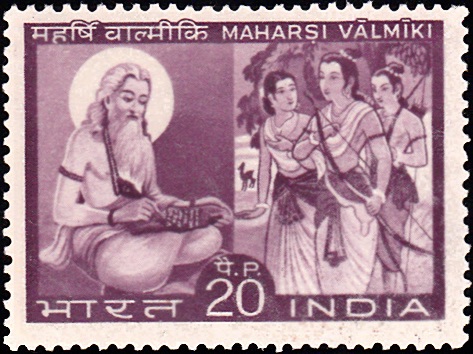
Valmiki composing the Ramayana
Hindu religion is very fortunate, and bold. It does not ask you to take anything on faith. Test it and take it. And the beauty is that its truths are not only testable, but can be experienced now ie they are repeatable. In this sense they are scientific: subject to observation, and verifiable by experiment. Like in science, fulfill the conditions and experience the results.
How do Sages live – day by day?
In the recent past, we have had two Sages whose life exemplifies the truth of the sastras. One is Sri Ramakrishna and the other is Sri Ramana Maharshi. They were surrounded by devotees and observers all the time- they had no privacy at all. Almost every aspect of their life is noted by someone. We have a detailed chronicle of the life of Sri Ramakrishna through the pen of Mahendranath Gupta. This covers the last 54 months of the life of the Sage ( February-March 1882 to August 1886). Sri Ramana lived in Tiruvannamalai for 54 years – 1896 to 1950 and all the time under full public gaze! So it offers great scope to study how a Sage actually lived from day to day. Arjuna asked Krishna:
Stitaprajnasya kaa bhashaa Samadhisthasya Keshava Stitadhi: kim prabhashatae
Kim aaseeta vrajaeta kim? 2.54
O Keshava! What is the description of the man of steady wisdom, merged in Samadhi? How does the man of steady wisdom speak, how does he sit, how does he walk?
Bhagavan answered Arjuna in 18 slokas. But we have three times that number of years to observe the life of Bhagavan Ramana!
Ramana, ‘rescued’ by devotees!
Gurumurtam in the olden days!
Ramana was already a Realised Sage when he left home. He had nothing further to seek or attain! He was in a state of continuous absorption in the Self from the time he landed in Tiruvannamalai on 1 September,1896. He had no body consciousness at all! He just sat absorbed in Samadhi,without awareness of the external world. In fact, he was in the Self- he was the Self! There was no other, nothing else!
It is very important to note this. Seeing that he was always immersed in Samadhi, but unable to understand that state, some people say that he was doing ‘penance’ or tapas- some sadhana! Ramana himself has said that after his ‘death experience’ in Madurai, his state remained unchanged throughout. He did not undertake any sadhana or perform any tapas. He sat absorbed in samadhi. About his stay in Gurumurtam in 1896, he himself said later, when questioned by a devotee:
Days and nights would pass without my being aware..I entertained no idea of bathing…or other cleaning activities even when I defecated….The face got begrimed, the hair had become one clotted mass like wax and the nails grew long. When anyone thought that I should have food, I would stretch a hand and something would drop on my hand. My hands were not useful for any other purpose…. i would eat and rub my hand on my head or body…For many years I ate only off my hand.
Such are the wonders of spiritual life that even then there were pious people, not ‘educated’ but ‘learned in the lore’ to understand that this was no ordinary lad.The first of such devotees was a sturdy person from a nearby village who eked out a living by driving bullock cart! But he knew a lot of Tamil religious lore by heart! He took it upon himself to feed him and protect him! It seems that he had felt the boy was a very holy person and serving him would be beneficial! Ramana did not talk but it did not matter. Ramana first sat in various spots in the Big temple, including the underground cellar. But crowds and urchins chased him.He then moved out to the Eastern slopes of the Hill, sitting in the small shrines there. But his ‘keerthi’ was spreading and crowds started visiting him in everlarger numbers. Some self-appointed guardian turned gatekeeper and even started collecting a toll!
Through all this his intense Samadhi state continued and some one or the other was there to take care of him. But for them, Ramana might not have lasted long or returned to the external world! Sri Ramakrishna used to say that the body would not last for more than 21 days after Realisation! It seems Ramana’s real sadhana was to return to the consciousness of the external world! We owe it to the initial devotees that they cared for Ramana’s body in those days! Thereafter, Ramana only lived for the devotees!
Ramana and devotees: three stages.
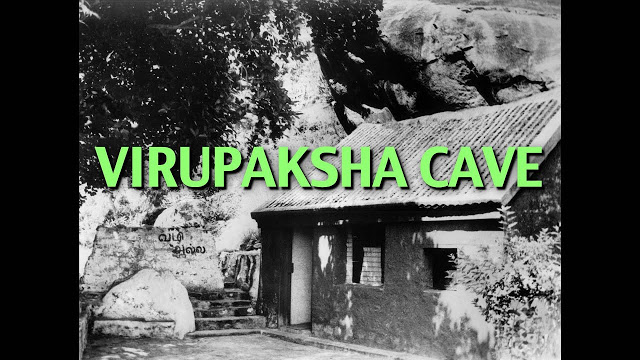
1.Virupaksha Cave.
Bhagavan shifted to a small,natural cave on the Eastern slope, called Virupaksha in 1899, and stayed here for 17 years, with temporary shiftings in summer. This is a very important period for devotees.
xxxx
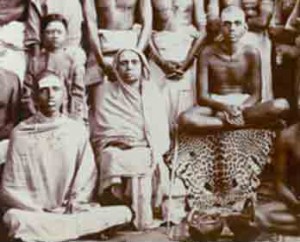
Bhagavan Ramana in front of the Virupaksha cave
It is here that devotees Gambhiram Seshaiyer questioned Bhagavan and obtained his written instructions for the first time.
It is here that Sivapraksam Pillai came and extracted from Bhagavan his unique teaching: enquiry into ‘Who Am I’.
Sivaprakasam Pillai. He settled in his village and led a quiet life of devotion. On hearing the news of his passing, Sri Bhagavan said: Sivaprakasam has become Siva’s effulgence! (Sivaprakasam Sivaprakasam aanaar)
சிவப்ரகாசம் சிவப்ரகாசமானார்!
It is here that Bhagavan first gave verbal instructions to Kavyakantha Ganapati Sastri in 1907, breaking his silence. It was Sastri who called him “Bhagavan Sri Ramana Maharshi”; till then he was simply known as ‘the Brahmana swami’.
It was here that Bhagavan composed his Five Hymns to Arunachala.
It was here that one Satyamangalam Venkatarama Iyer came and wrote the Ramana Stuti Panchakam. (This person has remained mysterious and eluded all efforts at tracing)
It was here that Bhagavan’s mother came, to be with him.
It was during his stay here that Bhagavan noticed the mysterious Big banyan tree on the Northern slope of the Hill and was frustrated in his efforts to reach the spot, by hornets!
It was here that Bhagavan had a second death experience, more intense than the first, when even his heart-beat and blood circulation had stopped, and the body had started turning blue! A devotee, Vasudeva Sastri was with him then, and he even started weeping loudly, embracing the body of Bhagavan! But Bhagavan said that through all this the current of his awareness continued without a break!
It was here that Bhagavan became acquainted with our traditional religious lore. Till then, Ramana had read nothing of our religion except Periya Puranam, and the Bible.(in school). There was an attendant, Palaniswamy, then who used to bring religious books from a local library and read aloud. Thus Bhagavan got to know what was written in them, and noted that they conformed to what he had experienced!
Avatars and old teachings.
This is an important point to remember. In trying to ‘explain’ or expound Bhagavan’s teachings, or ‘philosophy’, people cite old authorities and say how Bhagavan’s teachings are in accord with them. This is complete bunkum. Ramana’s teaching stands on its own, does not need confirmation of any other authority. His teaching is unique and not a repetition of any old authority-even Shankara, some of whose works he has translated.
This is a mistake our writers make even in regard to the Gita. Krishna clearly says that there were two ‘Old’ ways in the past, which He had himself given:
Lokaesmin dwividhaa nishta
Puraa proktaa mayaanaga Gita,3.3
An Avatar will not come merely to repeat what was said earlier! That is the job of pandits, acharyas! Avatar comes to raise our consciousness, he brings new perspectives, new teachings, new authority! What Bhagavan teaches in the Gita is new: ananya bhakti, complete surrender , “Sarva dharmaan parityajya Maam Ekam Sharanam Vraja”.Bhagavan explains the role and importance of the Avatara, and says the Avatara is Bhagavan, Purushottama and Brahman! The Gita supersedes all older scriptures, while not dispensing with their relevant teaching or discipline. But it gives its own new significance: tapas, yajna, tyaga, sanyasa, jnana, bhakti, yoga- every word or concept is redefined and expanded ! The Gita cannot be explained in terms of the old- just as subatomic physics cannot be explained in terms of Newton!
In the same way, Bhagavan Ramana’s teaching cannot be explained in terms of old. Two writers have done splendid work here: K.Lakshmana Sarma (WHO) has explained the traditional teaching in terms of Ramana! (Maha Yoga) Sri Sadhu Om has explained Ramana’s teachings entirely on the basis of Ramana’s own teachings!
We see here how devotees were instrumental in drawing Bhagavan Ramana out of his immersion in samadhi. Bhagavan could have continued, without responding to their queries; that he decided to answer them, in writing , shows that there must have been something in the devotees to which he could not be indifferent! This is the mysterious divine dispensation-that a worthy disciple woud get the proper Guru! Thus did the devotees bind Ramana! It was also a devotee-Satyamangalam Venkatarama Iyer- who first sang hymns of praise on Bhagavan! There is an element of mystery surrounding him!
Pictures are taken from various sources for spreading knowledge; this is a non- commercial blog. Thanks for your great pictures.
கொரானா காலத்தில் துப்புரவுத் தொழிலாளர்களின் சேவையை நாடெங்கும் மக்கள் போற்றுவது பாராட்டுக்குரியது! மோடிஜியின் முன்னுதாரணம் சென்ற ஆண்டு நிகழ்ந்தது – கொரானா இல்லாத போதே!!
கும்பமேளா அதிசயம்!
கர்மயோகி மோடிஜி கர்மயோகிகளுக்குச் செய்த மரியாதை!
ச.நாகராஜன்
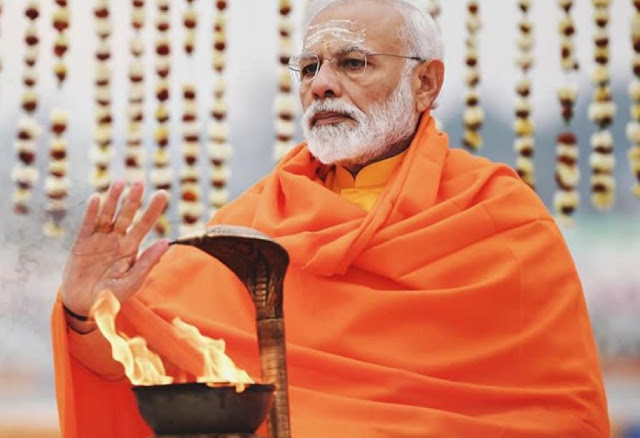
பாரதத்தில் நடக்கும் கும்பமேளா உலகின் மாபெரும் அதிசயம்!
இத்துடன் ஒப்பிட இன்னொரு தெய்வீகத் திருவிழா உலகில் எங்குமே எப்போதுமே கிடையாது.
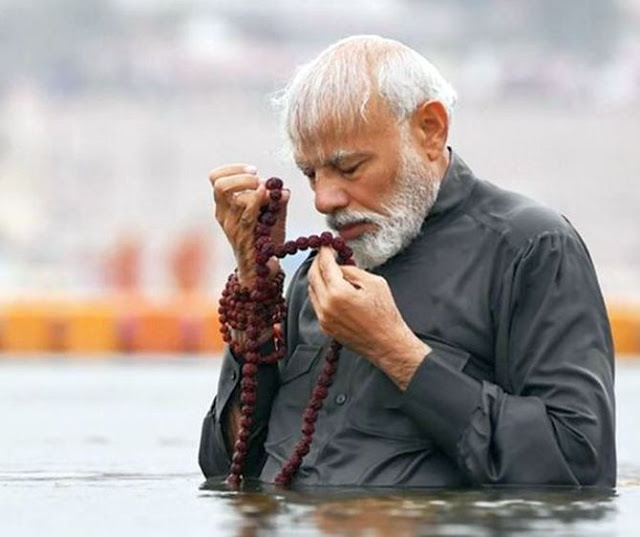
கடந்த 2019ஆம் ஆண்டில் நடந்த பிரயாக்ராஜ் கும்பமேளா உலக நாடுகளை வியப்பில் ஆழ்த்தியது.
ஜனவரி 14ஆம் தேதி ஆரம்பித்து 2019 மார்ச் 4ஆம் தேதியன்று முடிவடைந்த கும்பமேளா கின்னஸ் ரிகார்டில் பதிவு செய்யப்பட்டு சாதனை படைத்தது.
22 கோடி பேர்களுக்கும் மேலான யாத்ரீகர்கள் பயபக்தியுடன் கலந்து கொண்ட இந்த கும்பமேளா உலகின் அதிகப்பேரை நிர்வகிப்பதில் (Largest Crowd Management) சாதனை படைத்து விட்டதாக கின்னஸ் கூறுகிறது.
கும்பமேளாவின் உள்ளம் உருக்கும் நிகழ்ச்சி நம்மைப் புளகாங்கிதப் படுத்தியது.
அன்று ஞாயிற்றுக்கிழமை.
துப்புரவுத் தொழிலாளர்கள் ப்யாரே லால், நரேஷ் குமார், சௌபி (அனைவரும் பந்தாவைச் சேர்ந்தவர்கள்) சம்பலைச் சேர்ந்த ஹரிலால் சட்டீஸ்கரில் உள்ள கொர்பாவைச் சேர்ந்த ஜோதி ஆகியோரிடம், “நீங்கள் உங்களது சேவைக்காக கௌரவிக்கப்படப் போகிறீர்கள்’ என்று சொன்ன போது அவர்கள் அதை அவ்வளவு பெரிய விஷயமாக எடுத்துக் கொள்ளவில்லை.
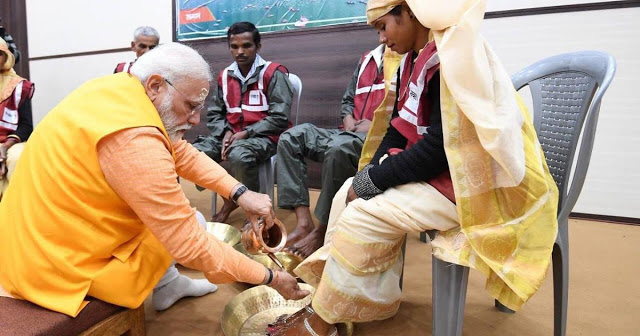
ஆனால் அவர்கள் பெரிய மேடையில் நாற்காலிகளில் அமர வைக்கப்பட்டனர்.அவர்களை நோக்கி பிரதம மந்திரி மோடிஜி வந்தார். அவர்கள் ஆச்சரியப்பட்டனர். எதற்காக அவர் இங்கு மேடையில் தங்களை நோக்கி வருகிறார்?
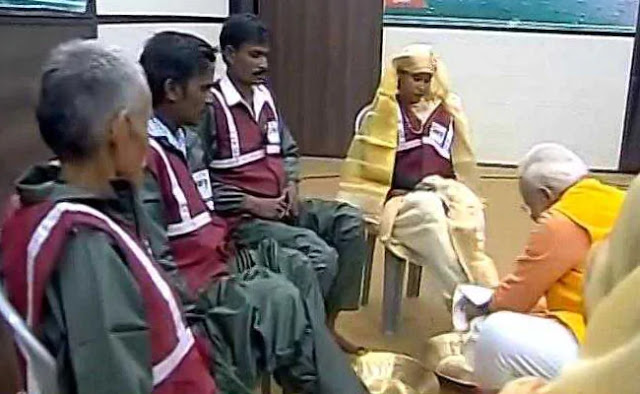
மோடிஜி நேரடியாக அந்த ஐந்து பேரின் பாதங்களையும் நீரால் கழுவினார். அவர்களின் மூவர் ஆண்கள், இருவர் பெண்கள்!
பின்னர் அவர்களை கர்மயோகிகள் எனப் போற்றினார்.
பின்னர் அவர்களை ஈரம் போகத் துடைத்து விட்டார். கும்பமேளாவில் சுத்தத்தையும் சுகாதாரத்தையும் நன்கு பராமரித்துப் பாதுகாத்த அவர்களுக்கு தனது நன்றியை அவர்களிடம் தெரிவித்தார். அதாவது நாட்டின் நன்றியை நாட்டு மக்களின் சார்பாக அவர் தெரிவித்தார்.
சுற்றுப்புறத்தைத் தூய்மையாகப் பாதுகாக்க தன்னார்வத்துடன் வந்த ஸ்வச்சகிராஹிகளையும் அவர் பாராட்டினார்.
உலகின் மிகப்பெரும் மத திருவிழாவை மிகுந்த சுத்தத்துடன் நடத்திக் கொடுத்ததில் முக்கிய பங்கு வகித்த துப்புரவுத் தொழிலாளர்களை கர்மயோகிகள் என்று கூறி அவர் கௌரவித்த விதம் அவரே ஒரு கர்மயோகி தான் என்பதை எடுத்துக்காட்டியது!
பிரம்மாண்டமான இந்த நிகழ்ச்சியை வழக்கம் போல “பொறாமை பிடித்த” பத்திரிகைகளும் டி.வி.சேனல்களும் கண்டு கொள்ளவே இல்லை!
போகட்டும், மனதிற்கும் மனதிற்குமான பேச்சில் (மன் கீ பாத்) இந்த மட்டரகமான ஊடகங்களுக்கு என்ன வேலை!
அடுத்த இன்னுமொரு கட்டுரையில் இந்த கும்பமேளாவின் சிறப்புகளைக் காண்போம்!
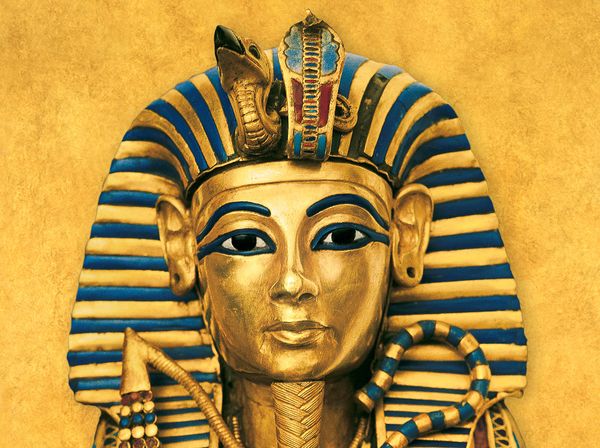
21 Mar 2017 – Apart from the gigantic monuments, the history of Egypt itself has many wonders. One of the wonders is the long reigns of the kings. Historians …
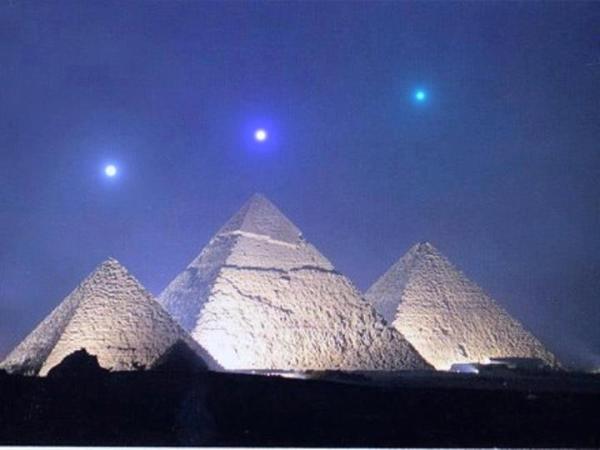
5 Sep 2012 – Please read part-1:Did Indians build Egyptian Pyramids? Part-2: Vedas and Egyptian Pyramid Texts before reading this part 3. First sloka of …
15 Nov 2014 – Did Indians build Egyptian Pyramids? ( 27 August 2012) Vishnu in Egyptian Pyramids ( 5 September 2012) Vedas and Egyptian Pyramid Texts …
24 Jan 2019 – https://tamilandvedas.com/tag/amarna-letters/. 1. Posts about Amarna letters written by Tamil and Vedas. Dasaratha letters | Tamil and Vedas.
27 Aug 2012 – Posts about Dasaratha letters written by Tamil and Vedas. … That was the time Mittanni King Dasaratha wrote ten letters (it is available in all the …
11 Oct 2014 – Posts about Dasaratha written by Tamil and Vedas. … mentioning the Vedic Gods, Amarna letters of Dasaratha in Egypt, Kikkuli’s Horse manual …
24 Aug 2014 – Posts about Yoga in Egypt written by Tamil and Vedas. … Tirumular in Egyptian Pyramids (in Tamil Egiptil Tirumular Karuththukkal posted on …
Posts about Hindu Symbolism written by Tamil and Vedas. … Tirumular in Egyptian Pyramids (in Tamil Egiptil Tirumular Karuththukkal posted on 23-11-2013).
18 Aug 2014 – Posts about Orion written by Tamil and Vedas. … orion hunter. Hindus, Egyptians and Mayas believed that the stars in the heavens are gods.
More are in the blogs
To be continued…………………..
tags — swami’s subject index-1, Egypt, pyramids, Indian link
Pictures are taken from various sources for spreading knowledge; this is a non- commercial blog. Thanks for your great pictures.
tamilandvedas.com, swamiindology.blogspot.com
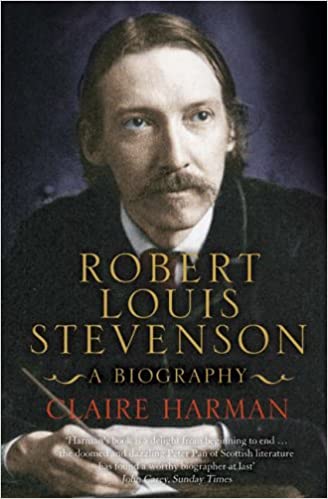
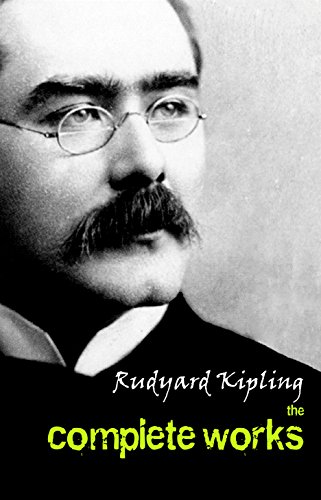
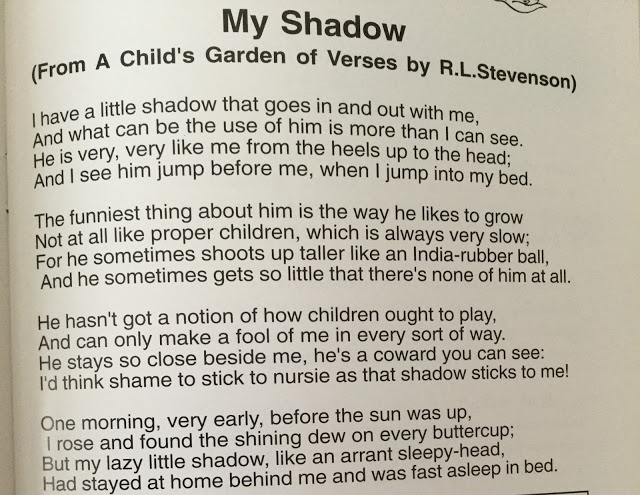
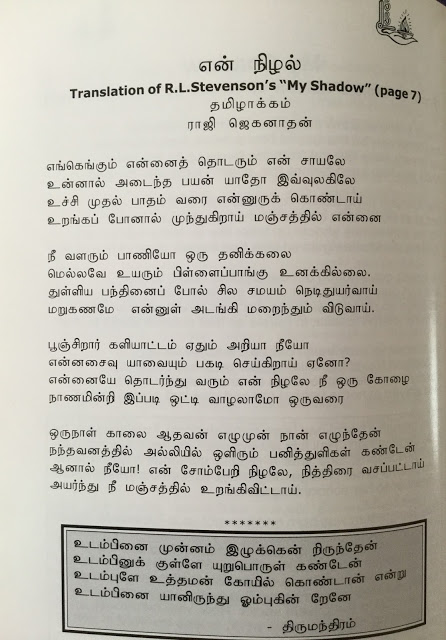
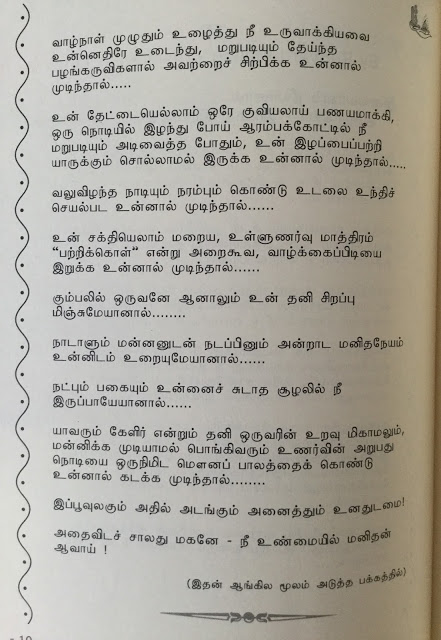
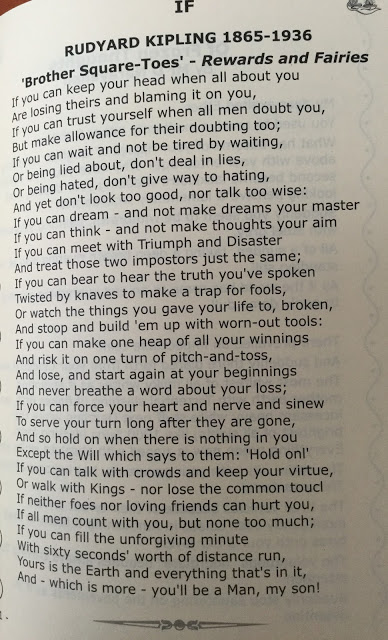
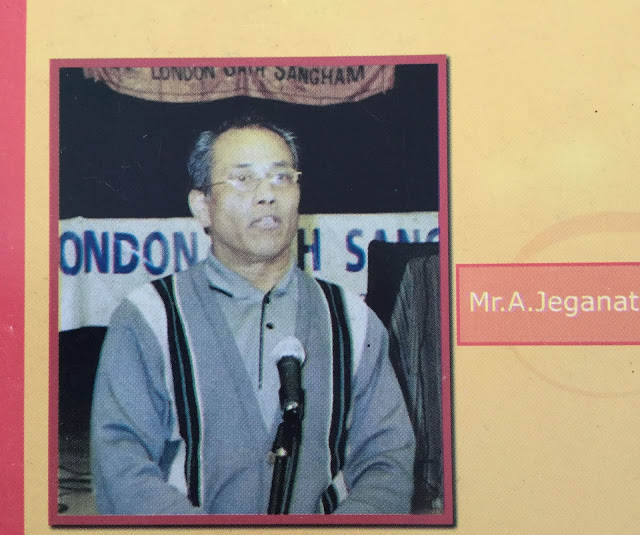
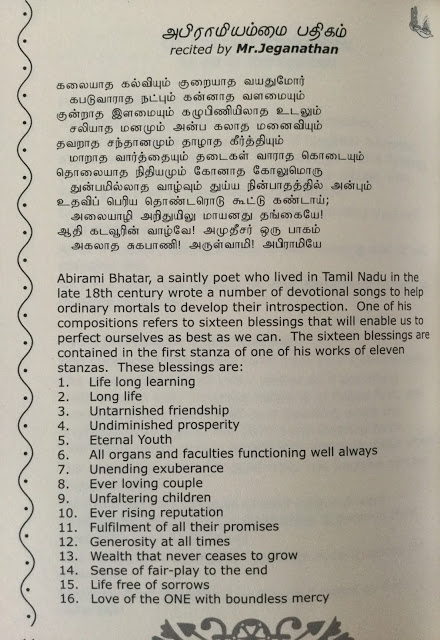
London poetess Mrs Raji Jeganathan is no more ; she died recently. She was the wife Mr Jeganathan, who was the President and Treasurer of London Sath Sangham for some time. As the secretary of the LSS, I brought out 10 quarterly News Letters for the benefit of Tamil community in London. As a tribute to her and to the tribute of English poets here are two English poems translated by her.
From the issues published in year 2004
Mrs Raji Jeganaathan–subham–
tags- Raji Jeganathaan, Translations, Rudyard Kipling, R L Stevenson, London Sath Sangam
Pictures are taken from various sources for spreading knowledge; this is a non- commercial blog. Thanks for your great pictures.
tamilandvedas.com, swamiindology.blogspot.com
சங்க இலக்கியத்தில் அதிகமான பாடல்களைப் பாடியவர் கபிலர் . அவர் ஒரு பிராமணப் புலவர். பெயரும் சம்ஸ்கிருதப் பெயர் ; பிள்ளையாரின் பெயர். சங்க இலக்கியத்தில் 30, 000 வரிகளில் பிள்ளையார் பெயர் எங்கும் இல்லையே , சிவன் என்ற சொல் எங்கும் இல்லையே என்று வருத்தப் படுவோர்க்கு ஓரளவு ஆறுதல் /ஆதரவு அளிப்பவர் இவர். திருமுருகாற்றுப் படையின் பதிகப்பகுதியில் வரும் பிள்ளையார் குறிப்பை அறிஞர்கள் பிற்காலச் சேர்க்கை என்பதால் பலரும் அதை ஏற்பதில்லை.
பிள்ளையார் மற்றும் புகழ் பெற்ற ரிஷியின் பெயர் உடையவர் கபிலர். அது மட்டுமல்ல பிள்ளையார் ஒருவருக்கு மட்டுமே நாம் எருக்கம் பூ போட்டு வணங்குவோம். வேறு கடவுளர்க்கு அது ஆகாது.
பகவத் கீதையில் 9-26 கிருஷ்ண பரமாத்மா எனக்கு பத்ரம், புஷ்பம், பலம், தோயம் (இலை,பூ , பழம் , தண்ணீர் ) எதை அன்புடன் கொடுத்தாலும் அதை ஏற்பேன் என்கிறார். அதை ஒரு பாடலில் எதிரொலித்த கபிலர், வேண்டு மென்றே எருக்கம்பூவைக் கொண்டு சேர்க்கிறார். இதனால் இவர் பெயரும் பிள்ளையார் பெயரே ; அவர் வழிபடுவதும் பிள்ளையாரே என்பது உறுதியாகிறது ; இதோ அந்தப் பாடல்:-
நல்லவும் தீயவும் அல்ல குவி இணர்ப்
புல் இலை எருக்கம் ஆயினும் , உடையவை
கடவுள் பேணேம் என்னா ………….
—-புறனானூறு பாடல் 106
பொருள்
“குவிந்த பூங்கொத்து உடைய எருக்கம் பூவையும் அருகம்புல்லையும் பூஜையில் போட்டு வாங்கினாலும் கடவுள் எனக்கு இது வேண்டாம் / பிடிக்காது என்று சொல்லமாட்டார்”
***
கபிலர் சம்ஸ்கிருத மன்னன்.குறிஞ்சிப் பாட்டை படித்த டாக்டர் ஜி.யூ.போப் (Dr G U Pope) இது காளிதாசன் காவியத்தின் எதிரொலி என்கிறார். எனது ஆராய்சசியும் இதை நிரூபிக்கிறது .
தமிழ் மொழியை மட்டம் தட்டிப் பேசிய பிருஹத் தத்தனை அழைத்துவந்து அவனுக்கு காளிதாசனைப் போல குறிஞ்சிப்பாட்டுப் பாடிக்காட்டி, அதில் 99 மலர்களின் பெயர்களை அடுக்கிப் பாடி, (கின்னஸ்) சாதனைப் புஸ்தகத்தில் இடம்பெற்றவர் . அதுமட்டுமல்லாமல் அவனையும் பாடவைத்து அதை சங்க இலக்கியத்தில் ஒரு பாடலாகச் சேர்த்து வைத்தவர்.
****
ஐயருக்கு அமோகப் பாராட்டு
பொதுவாகப் புலவர்களிடை யே போட்டி , பொறாமை உண்டு. சங்க காலப் புலவர்களினிடையே இது அதிகம் என்பதை திருவிளையாடல் புராணக் கதைகளும் பிற சம்பவங்களும் காட்டுகின்றன. ஆனால் உலக மஹா அதிசயம்!! ஒரு பிராமணப் புலவரை மட்டும் ஆறு பேர் பாராட்டியுள்ளனர். சங்க இலக்கியச் செய்யுள்களில் மட்டும்!
அவரோ மன்னர் அரண்மனைகளுக்குச் சென்று ‘நான் பிராமணன் வந்திருக்கிறேன்’ என்று தன்னை இண்ட்ரொட்யூஸ் INTRODUCE செய்து கொள்கிறார் . ‘அந்தணர்’ என்பவர் யார் என்று சந்தேகப்படும் அறிவிலிகளுக்கு அவர் சொல் பதில் தருகிறது.
தன்னைத் தானே அறிமுகப் படுத்திக் கொள்ளும் பாடல் —
“பறம்பின் கோமான்
நெடுமாப் பாரி மகளிர்; யானே
தந்தை தோழன் ; இவர் என் மகளிர்;
அந்தணன், புலவன் கொண்டுவந்தனனே
–புறம் 201
பாடியவர் கபிலர்; பாடப்பட்டோன் -இருங்கோவேள்
பொருள் –
பறம்பு மலைப் பிரதேசத்தை ஆண்ட பாரியின் மகள்கள் இருவரும் இதோ வந்துள்ளனர் நான் ஒரு பிராமணன்; இவர்கள் தந்தை என் தோழன் ; ஆகையால் என் மகள்கள் போன்றவர்கள்”.
2000 ஆண்டுகளுக்கு முன்னரே ஜாதி வெறியை உடைத்து க்ஷத்ரிய வேந்தன் பாரியின் மகளிரை தன் மகள் என்று அறிவித்த புரட்சிக்கவிஞன் கபிலன் !!
***
ஜிந்தாபாத் 1
“செறுத்த செய்யுள் செந்நாவின்
வெறுத்த கேள்வி விளங்கு புகழ் கபிலன்
இன்றுள்ள ஆயின் நன்றுமன்” – புறம் 53
பாடியவர் பொருந்தில் இளங் கீரனார்
பாடப் பட்டோன் – மாந்தரஞ் சேரல் இரும்பொறை
பொருள் :–
“பல பொருள்களையும் அடக்கிய செய்யுட்களை விரைந்து பாடும் செம்மையான நாவும் , மிக்க அறிவும் பெரும் புகழும் உடைய கபிலன் இன்று இருந்தால் நல்லது என்று நீ சொன்னாய். அது நன்றாக இருக்கிறது.”
****
ஜிந்தாபாத் 2
மல்லல் நன்னாட்டு அல்லல் தீரப்
பொய்யா நாவிற் கபிலன் பாடிய
மையணி நெடுவரை ஆங்கண் “..
புறம் – 174 ; பாடியவர் மாறோக்கத்து நப்பசலையார்
பாடப்பட்டோன் – மலையமான் சோழிய வேனாதி திருக்கண்ணன்
பொருள் –
“நின் தந்தை , கபிலர் பாடும் புகழுடையோனாக இருந்து அறம் காத்து , பெரும் வலிவுடையோனாக இருந்து இறந்தனன்”.
பொய்யா நாவிற் கபிலன் என்ற சொற்தொடரைக் கவனிக்க வேண்டும். மனம், மொழி, உடல் மூன்றிலும் தூய்மை பெற்றவர்களை எவரும் மதிப்பர். அவர்கள் புலன்களை வென்றதால் மாவீரர் எனப்படுவர். இதை அவ்வையாரும் சொல்லியிருக்கிறார் . இந்துக்கள் மஹாவீரரையும், அனுமனையும் மட்டுமே மகா வீரர் என்பர் . அப்பேற்பட்ட வீரன் கபிலன். மூவேந்தர்களும் பறம்பு மலையை முற்றுகையிட்டபோது கிளிகள் மூலம் உணவு கொண்டுவந்து பாரி நாட்டைக் காத்தவன். முடியுடைய மூவேந்தேர்களை முடி/மயிர் போல தாழ்த்திய மாவீரன். இந்துத் துறவிகளைப் போல யாகத் தீ மூட்டி அதற்குள் நுழைந்தவன் .
Pictures are taken from various sources for spreading knowledge; this is a non- commercial blog. Thanks for your great pictures.
tamilandvedas.com, swamiindology.blogspot.com
ஒரே சொல் மீண்டும் மீண்டும் வந்தால் ஓரிரு இடங்களில் மட்டுமே கட்டத்தில் இருக்கும். கொண்டு கூட்டி பொருள் கொள்க . விடை கீழே உள்ளது . சில நேரங்களில் படங்களைப் பார்த்தாலும் விடை காண உதவலாம்.
Pictures are taken from various sources for spreading knowledge; this is a non- commercial blog. Thanks for your great pictures.
WHAT DID REVOLUTIONS ACHIEVE? – 2
R. Nanjappa
The Russian Bloodbath
There are many odd things about the third of the revolutions we are considering- the Bolshevik revolution of Russia or the Great October Socialist Revolution as it was hailed by admirers. It took place on 7 November, according to the Gregorian calendar that we follow- October was according to the old Julian Calendar.
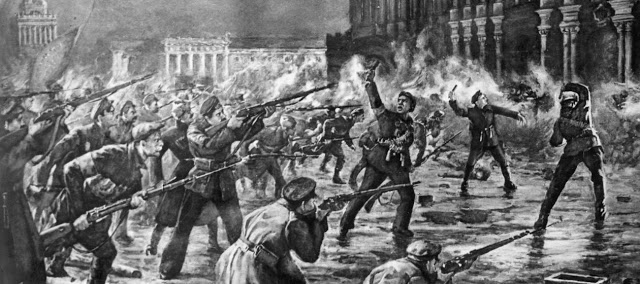
It did not overthrow the Czar: it overthrew the elected democratic govt. of Alexander Kerensky, who was himself a socialist, but not a Bolshevik, belonging to the Socialist Revolutionary Party. The Russian Provisional Govt. had come to power in February 1917, and Kerensky became its head in July. Russia was then reeling from the effects of the Great War, and Kerensky was struggling. By that time the violent activities of the Bolsheviks had increased, but being a democratic set up, there was no consensus on how to counter it- some suggesting quick, strong action and some suggesting negotiations. They lost valuable time and the Bolsheviks won by armed might, with generous support from the Navy. (Kerensky’s father had been a teacher of Lenin, and both families had been friends!)
Alexander Kerensky
He fled Russia and lived in Paris till 1940 and then went to the US eventually dying there in 1970 at the age of 89.
Bolshevik uprising was not Marxist
Though propaganda had made it that it was inspired by Marxist ideals, it had nothing to do with Marxism, in reality. Stated very simply, Marxism is based on the view that capitalism displaces feudalism, but the profit motive which powers the capitalist set-up would in the end make the system unworkable. A ripe capitalist society would lead to an army of unemployed, where the working class would form the overwhelming majority and they would overthrow the capitalists. The proletariat would seize power, the State would wither away. Workers would unite the whole world, and it would be paradise.
None of these conditions was present in Russia when the revolution took place. Russia was not then a capitalist or industrial power. It was largely agricultural. It was not a ripe candidate for revolution then. Those who took active part in the revolution were not workers, but others. The State, instead of withering away became stronger and bigger, and was controlled by the party machinery, and not by the workers, who had no rights then. The so called revolution was nothing but an armed overthrow of a struggling, elected govt.
British Views on the Bolshevik rule
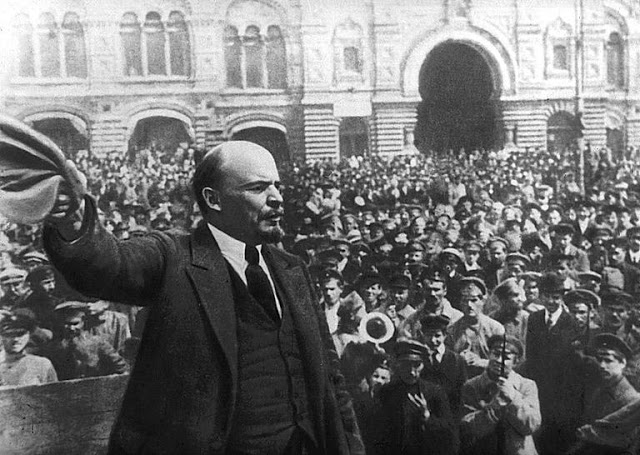
H.G.Wells, a British socialist visited Russia in 1920 and noted the conditions there. He noted that Lenin’s ideology was both narrow-minded and rigid, that his method was ruthless and dictatorial. He said the party members were already enjoying privileges, but he hoped things would improve. He met Lenin and Trotsky who thought of him as a bourgeois. Wells on his part noted that Lenin’s laugh was ‘grim’. His judgement of Stalin was completely wrong- shocking for a science writer considered ‘futurist’.
British socialists Sidney and Beatrice Webb were blind admirers of Stalin and his regime, with the purges, famine and all. They refused to see the reality, or simply lied about what they saw.
Philosopher-mathematician Bertrand Russell also visited Russia in 1920 and was more perceptive in his observation, and candid in his views. He plainly said Bolshevism was a “tragic delusion”. He said Western socialists tended to suppress the harsher features and brutalities of the regime.
In his essay “Why I am not a Communist” Bertrand Russell provided one of the most sensible critiques of the Marxist ideology, questioning its very foundations, calling Marx “muddle headed”. He said the theory had been made much worse in practice by Lenin and Stalin, and noted the millions of peasants killed by Stalin by starvation and displacement. He called Russia ‘slave camp produced by Stalin’ and wrote:
I am completely at a loss to understand how it came about that some people who are both humane and intelligent could find something to admire in the slave camp produced by Stalin.
From: Portraits From Memory, 1956. Bertrand Russell.
Nehru’s visit
Nehru visited Soviet Russia in 1927. It lasted only 4 days, and Nehru visited only those places to which he was officially taken. Yet it made a lasting impression on him. He wrote that this revolution had ‘moved human society forward’ and had laid the foundations of a new civilisation. His idea of Planning was almost totally based on the Soviet model, with equally disastrous consequences. After this Russian visit, Nehru departed from the economic ideas and arrangements of Gandhiji. On becoming PM, he did not adopt or implement a single program of Gandhiji. He indeed killed Gandhiji’s spirit, while Godse merely accounted for his body. It is remarkable that by the time USSR collapsed (1991) Indian planning also faced doom! [Gandhiji was aware of Nehru’s leanings towards Russian ideas, rather than his own, and yet made him his heir!]
Keynes against Marx
One prominent British figure that we have to consider in this context is J.M.Keynes, the economist. The Right malign him as a Marxist or Marxist sympathiser. Keynes was a public figure and had to deal with individual Marxists in his long career. He did that with grace. But he has made amply clear in his public writings and private correspondence that he did not agree with the Marxist ideology or the Soviet system. He did not agree with the book authored by the Webbs praising the Soviet economics. He did not believe that the soviet exercise could provide intellectual stimulation to the democratic West. And in private correspondence to George Bernard Shaw in 1935, expressed his disapproval of Marxism and revealed that he was himself writing a book which ‘would largely revolutionise the way the world thinks about economic problems.’ This was the famous ‘The General Theory’ (1936) and it has indeed revolutionised economics since then.
Marx as philosopher predicted that capitalism would collapse, based on dialectical dynamics. He supported the political movement to confront and quicken its end. But it failed. The General Theory of Keynes diagnosed the most intractable malady of classical economics, and provided the most practical solution, suitable to the genius of democratic and liberal (the word used in the original British sense here) societies. Thus he gave a new lease of life to capitalism, while it was the Soviet communism that collapsed.
He had asked sharply, as early as 1922:
How can I accept a creed which, preferring the mud to the fish, exalts the boorish proletariat above the bourgeois and the intelligentsia who, with whatever faults, are the quality in life and surely carry the seeds of all human advancement?
John Maynard Keynes.
ERA OF COMMUNIST VIOLENCE
One of the most inhuman chapters of human history was written by Stalin with the blood of innocent millions of his own countrymen.
As early as the start of the Bolshevik regime, Red Terror had been let loose- involving oppression, torture and killings of people, on whatever grounds. In just two months- September-October, 1918, an estimated 50,000 to 2 million people had been killed. Lenin justified the violence on the ground that the ruling class acquired monopoly of violence. Such terror and violence continued up to 1922, and involved even the mass killing of workers and civilians and hostages. But compared to what happened under Stalin, this is like a small preface.
Stalin indulged in violence only to consolidate his position. His methods included shooting at the back of the head, torture and beating to death in custody, and starvation, disease, exposure and overwork in the gulags. Starting from 1933, they continued up to the end of his regime in 1953. While about 20 million Russians are estimated to have died in the Second World War, the estimates of civilians killed by Stalin on political grounds, including the purges and starvation deaths vary from initial 20 million to up to 60 million, in some cases going up to 130 million. Alexander Solzhenitsyn estimates it at 60 million. Most of them were farmers. With the increasing availability of archival material, and intensive efforts of independent researches, a realistic picture of the horror under Stalin is emerging, though the exact numbers will continue to be controversial.
Site of a mass murder,1941.
Site of a mass grave, Ukraine, 1943.
It is now established that Stalin killed many more people -mostly his own countrymen – than Hitler.
What Did the Revolutions Achieve?
The American revolution resulted in a working Constitution which has provided both inspiration and example to countries around the world.
The French revolution generated hope, ended in violence and disillusion. But the ideals captured in the slogan-Liberty, Equality, Fraternity- still move millions.
The Russian revolution was nothing but mass murder and violence, when two leaders tried to establish their hold on the party and government, in the name of communism. At home it was supported by brutal repression for more than 20 years. Outside it was sustained by false propaganda.
The communist regime was no less imperialist than the West. Many people of Eastern Europe were compulsorily bound within the USSR. Communist Parties in every other country were subject to the dictates and directions of Moscow. With the collapse of the USSR, 15 independent countries have emerged! Details are surfacing about what went on there in the name of communism.













 Tamil and Vedas