
Compiled by london swaminathan
Date: 19 March 2016
Post No. 2647
Time uploaded in London :– 18-11
(Thanks for the Pictures; they are taken from various sources)
DON’T REBLOG IT AT LEAST FOR A WEEK! DON’T USE THE PICTURES; THEY ARE COPYRIGHTED BY SOMEONE.
(for old articles go to tamilandvedas.com OR swamiindology.blogspot.com)
From the book India Revisited by Edwin Arnold Published in London in 1886
(Pictures are taken from different sources, not from Edwin’s book)
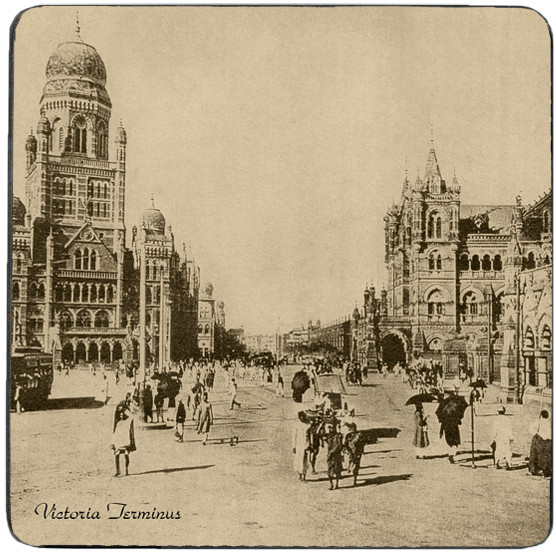
Augustus said of Rome, “I found it mud; I leave it marble,” and the visitor to India who traverses the Fort and the Esplanade Road after so long an absence as mine might justly exclaim “I left Bombay a town of warehouses and offices; I find her a city of parks and palaces.”
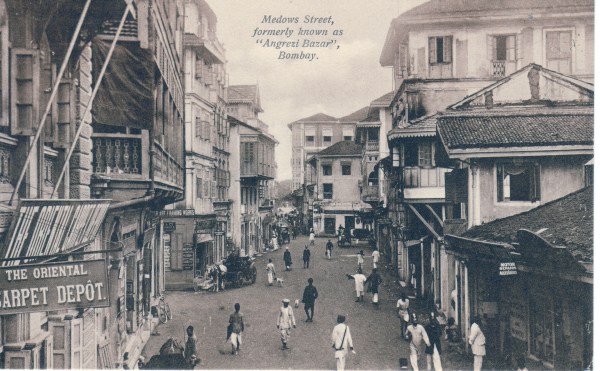
“Even the main native streets of business and traffic are considerably developed and improved, with almost more colour and animation than of old. A tide of seething Asiatic humanity ebbs and flows up and down the Bhendi Bazaar, and through the chief mercantile thoroughfares. Nowhere could be seen a play of livelier hues, a busier and brighter city of life! Besides the endless crowds of Hindu, Gujerati, and Mahratta people coming and going – some in gay dresses, but most with next to none at all – between the rows of grotesquely painted houses and temples, there are to be studied here specimens of every race and nation of the East.
Arabs from Muscat, Persins from the Gulf, Aghans from the Northern Frontier, black shaggy Biluchis, negroes of Zanzibar, islanders from the Maldives and Laccadives, Malagashes, Malays, and Chinese throng and jostle with Parsees in their sloping hats, with Jews, Lascars, fishermen, Rajpoots, Fakirs ,Europeans, Sepoys and Sahibs. Innumerable carts drawn by patient, sleepy-eyes oxen, thread their creaking way amid tram car, buggies, victorias, palanquins and handsome English carriages. Familiar to me but absolutely bewildering to my two companions, under the fierce, scorching, blinding sun light of midday, is this play of keen colours, and this tide of ceaseless clamorous existence.
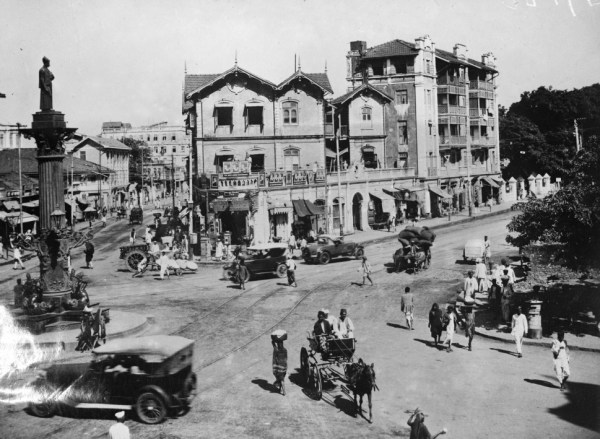
But the background of Hindu fashions and manners remains unchanged and unchangeable. Still, as ever the motely population lives its accustomed life in the public gaze, doing a thousand things in the roadway, in the gutter, or in the little open shop, which the European performs inside his closed abode. The unclad merchant posts up his account of pice and annas with a reed upon long rolls of paper under the eyes of all the world.
The barber shaves his customer, and sets right his ears, nostrils and fingers, on the side walk. The shampooer cracks the joints and grinds the muscles of his clients wherever they happen to meet together.
The Guru drones out his Sanskrit slokas to the little class of brown-eyed Brahman boys; the bansula player pipes; the sitar singer twangs his wires; worshippers stand with clasped palms before the images of Rama and Parvati, or deck the Lingam with votive flowers; the beggars squat in the sun, rocking themselves to an fro the monotonous cry of ‘Dharrum’; the bheesties go about with water skin sprinkling the dust; the bhangy coolies trot with balanced bamboos; the slim bare limber Indian girls glide along with baskets full of chupatties or bratties of cow dung on their heads, and with small naked babies astride upon their hips.
Everywhere, behind and amid the vast bustle of modern Bombay, abides ancient, placid, conservative India, with her immutable customs and deeply rooted popular habits derived unbroken from time immemorial days. And overhead in every open space, or vista of quaint roof tops, and avenues of red, blue, or saffron hued houses, the feathered crowns of the date trees wave, the sacred fig swings its aerial roots and shelters the squirrel and the parrot, while the air is peopled with hordes of ubiquitous, clamorous, grey necked crows, and full of ‘Kites of Govinda’, wheeling and screaming under a cloudless canopy of sunlight. The abundance of anima life even in the suburbs of this great capital appears once more wonderful, albeit so well-known and remembered of old. You cannot drop a morsel of bread or fruit but forty keen beaked , sleek, desperately audacious crows crowds to snatch the spoil; and in the tamarind tree which overhangs our veranadh may at this moment may be counted more than a hundred red throated parakeets, chattering and darting, like live fruit, among the dark green branches. India does not change!”
In the beginning Mr Arnold says:-
“The transformation effected in this great and populous capital of India during the past twenty years does not vey plainly manifest itself until the traveller has landed. From the new light house at the Colaba Point, Bombay looks like what it always was, a handsome city seated on two bays, of which one is richly diversified by islands, rising, green, and picturesque, from the quiet water, and the other has for its background, the crescent of the Esplanade and the bungalow dotted heights of Malabar Hill.
He who has been long absent from India and returns here to visit her, sees strange and beautiful buildings towering above the well-remembered yellow and white houses, but misses the old line of ramparts, and the wide expanse of the Maidan behind Back Bay which we used to call ‘Aceldama, the place to bury strangers in”.
And the first drive which he takes from the Apollo Bunder – now styled Wellington Pier – reveals a series of really splendid edifices, which have completely altered the previous aspect of Bombay.
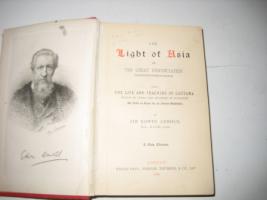
Picture of Edwin Arnold and his book.
Close to the landing-place, the pretty façade of the Yacht Club –one of the latest additions to the city – is the first to attract attention, designed in a pleasing mixture of Swiss and Hindu styles. In the cool corridors of that waterside resort we found a kindly welcome to the Indian shores and afterwards on our way to a temporary home, passed, with admiring eyes, the Secretariat, the University, the Courts of Justice, the magnificent new railway station, the Town Hall, and the General Post Office, all very remarkable structures, conceived for the most part with a happy inspiration, which blends the Gothic and the Indian schools of architecture. It is impossible here to describe the features of these splendid edifices in detail, or the extraordinary changes which have rendered the Bombay of today hardly recognisable to one who knew the place in the time of the Mutiny and in those years which followed it.
-subham-
 Tamil and Vedas
You must be logged in to post a comment.