
Compiled by LONDON SWAMINATHAN
Date: 15 JUNE 2018
Time uploaded in London – 18-13 (British Summer Time)
Post No. 5114
Pictures shown here are taken from various sources such as Facebook friends, Books, Google and newspapers; thanks. Pictures may be subject to copyright laws.
Sri Lokesh Chandra in his book CULTURAL INTEFLOW BETWEEN INDIA AND JAPAN gives some interesting information about Sanskrit words in Japanese language.
It is very interesting to see how they are spelt and pronounced in Japan.
Sanskrit is BONGO in Japanese.
Bon means Brahman
Go means language
Prince Shotoku consecrated the First Constitution of Japan with the Sanskrit hymn Usniisavijayaa- dhaaranii written in the Gupta script in palm leaf.
Monk Gyoogi welcomed the Indian Bodhisena in 736 in mixed language of Sanskrit and Japanese.
Bodhisena and Buddhasthira taught Sanskrit to Japanese monks at the Daianji Temple. Abbot Ono showed me the room where Sanskrit was taught 1300 years ago.
Kobo Daishi (806) laid emphasis on a knowledge of Sanskrit to understand the texts correctly.
Sanskrit mantras sanctify the Homa (Goma in Japanese) ceremonies in Shingon temples every day.
Japanese scholars studied Sanskrit in England and Germany as part of modernisation after Meiji restoration (1868)
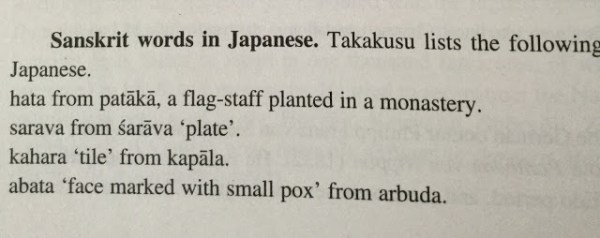
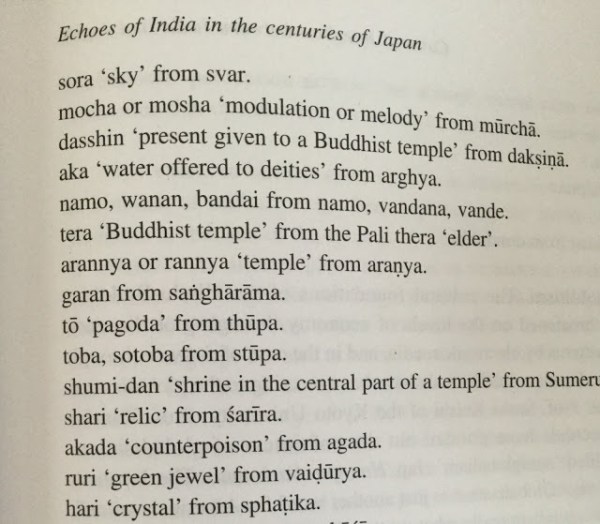
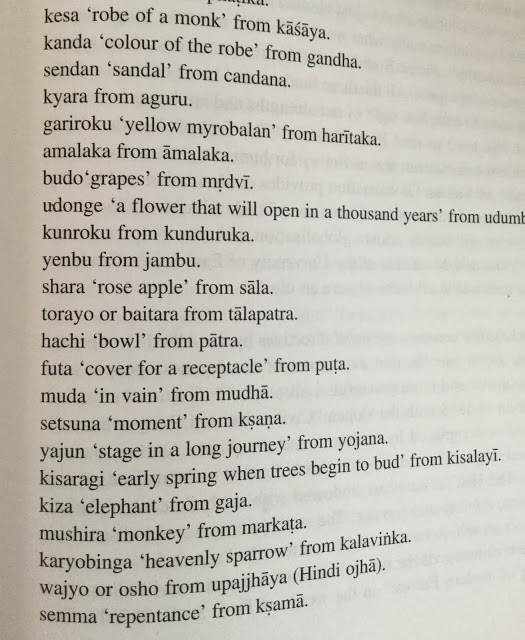
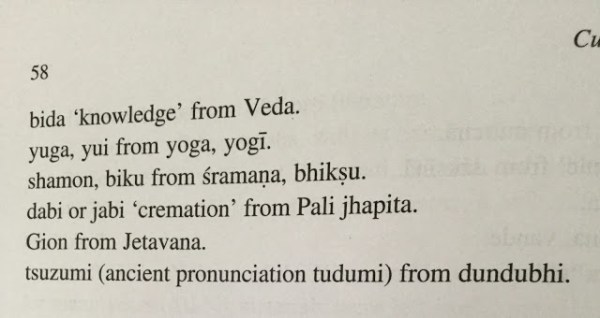
Prof. JunjiroTakakusu wrote a series of seven articles What Japan owes to India in the Young East in 1925. Seven articles covered 1,2 Ascetics; 3 Hindu Pantheon; 4 Music and Dance; 5 Cotton and Chess; 6 Names and Words; and 7 More names and words.
Takakusu lists the following Sanskrit words in daily use in Japanese:–
–SUBHAM–
 Tamil and Vedas