Compiled by London swaminathan
Date: 18th August 2016
Time uploaded in London: 5-32 AM
Post No.3071
Pictures are taken from various sources; thanks for the pictures.
Part-4 on caste Proverbs. For proverbs on Brahmins, Banias, Jats, Carpenters, Blacksmiths, Goldsmiths and agricultural castes, please read the first three parts.
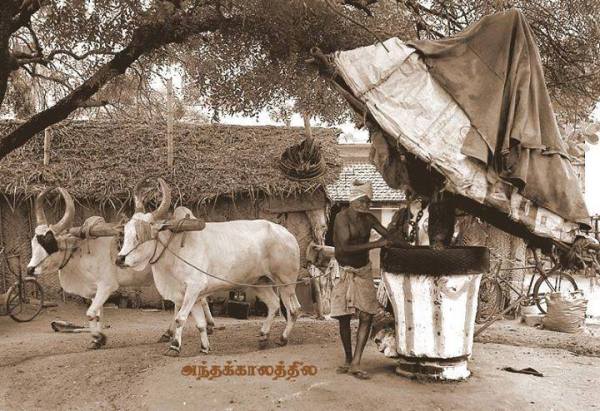
Anti – Oil Presser Proverbs
The oil-presser is no man’s friend;he earns a rupee and calls it eight annas (16 Annas make one Old Indian Rupee).
He sits at ease while his mill goes round, and beguiles his hours of leisure by inventing stories, so that when two Telis meet their talk is unfit for publication.
His unfortunate bullock is always blindfold, and walks miles and miles without getting any further.
On another occasion his bullock took to fighting and the owner was sued before the Kazi for damages.
What made the beast fight? The Kazi’s finding ran thus:
The oil-cake you fed it on; so give me the ox and pay damages into the bargain.
‘Oil expellers bull’ – means one who goes in circles, (beating the bush); goes no further.
His wife saves a little oil by giving short measure to her customers, but god takes all at once when the jar breaks and the thick dust sucks up its content.
His daughter, on the other hand, is represented as giving herself airs and wondering what oil-cake can be.
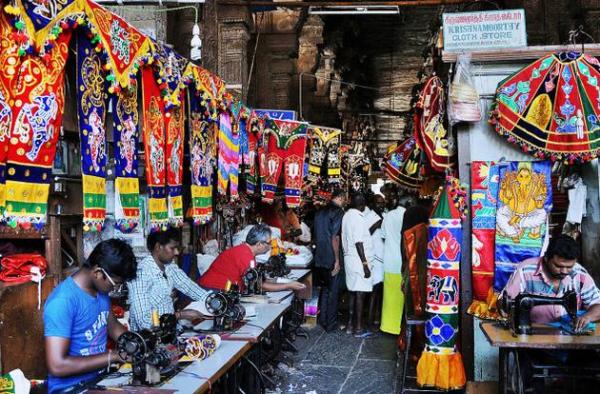
Anti- Tailor proverbs
The tailor’s ‘this evening’ and the shoe maker’s ‘next morning’ never come
However sharp his sight, a Darzi sees nothing, because he cannot take his eyes off his work.
A darzi’s son is a darzi/tailor and must sew as long as he lives.
A darzi steals your cloth and makes you pay for sewing it.
When a tailor is out of work he sews up his son’s mouth
A snake in a tailor’s house: who wants to kill it?

Anti- Washer man Proverbs
He tears people’s clothes and says it was the wind, but he is careful not to damage his father’s things.
A should change your dhobi/washer man as you change your linen, for a new dhobi washes clean.
When there is a robbery in a dhobi’s house, the neighbours lose their clothes.
In a Koiri village, the dhobi is the accountant, for he is the only man who can add two and two together.
He will not hesitate to use the king’s scarf as a loin cloth.
At his wedding the customers’ cloths are spread as carpets for the guests.
His son is the dandy of the village on a whistle and a bang, that is to say, wearing other people’s clothes which his father washes by giving them a bang on a stone and whistling.
The dhobi’s donkey is habitually overworked, and must carry huge bundles of linen while ‘its life oozes out of its eyes’.
His finery is never his own, but no one has so many changes of linen as a dhobi.

Anti- Fishermen Proverbs
A fisherman’s tongue (corresponds to Billingsgate)
(From the London, England fishmarket Billingsgate “Billingsgate is the market where the fishwomen assemble to purchase fish; and where, in their dealings and disputes they are somewhat apt to leave decency and good manners a little on the left hand.”)
A maichi/fisher woman will scold even when she is dead.
Three clouts from an oil woman are better than three kisses from a fishwife.
Sometimes the float is uppermost, sometimes the fisherman
(a reference to the practice of fishing balanced face downwards on an earthen pot which is liable to break or capsize.)

–subham-
 Tamil and Vedas
You must be logged in to post a comment.