A Jain Story in Tamil Epic

Tamilnadu_02
Jain Tirtankaras in Tamil Nadu

Compiled by London Swaminathan
Post No.1196; Dated 26th July 2014.

Silappadikaram is the most popular Tamil Epic written by Ilango. Of the five Tamil epics this is the one widely read by the Tamils. Ilango gives lot of information about the Jainism prevalent in Tamil Nadu around second century CE. One of the characters in the epic is Kavunti Adikal, a Jain nun who accompanied Kannaki and Kovalan, the heroine and hero of the epic, to Madurai.

Kavunti narrated a story which is not fund in any other book:

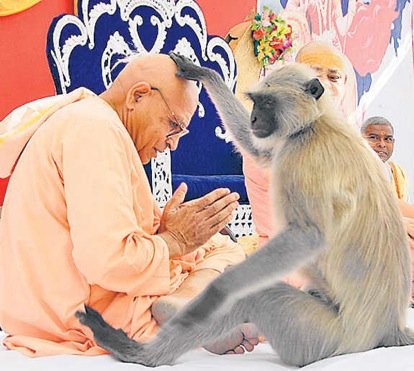
“Listen! However small the sum entrusted to your care by a saint, it multiplies a hundredfold. There was a Deva of great power in a town adjoining river Kaveri. Though the Deva was adorned with garlands made up of flowers and gems and gold, one of his hands resembled that of a monkey with black fingers.
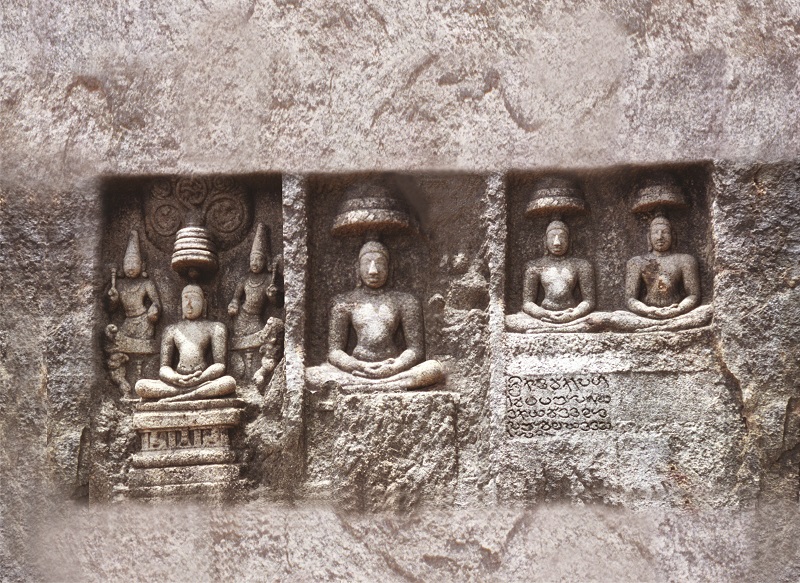
Kalugulamalai
Kazukumalai Jain Caves

All the Savakas worshipped the Saranar and wanted to know the reason for the monkey hand, the god spoke as follows:

Once there was a merchant called Etti Sayalan. In his house many would gather who observed fasting. One day the lady of the house received a monk. At the same time a monkey from the village silently entered the house and worshipped the feet of the great monk. It was very hungry and ate all the leftover food. The monk was very happy and told the lady of the house, “Regard this monkey as one of your own sons”.

The lady agreed to the wise words of the saint. When the loving monkey died, the lady gave the property set apart for it to the assembled monks and prayed that it may be absolved of all its sins. Hence it was born as the only son of Uttaragutta at Varanasi. This son who was celebrated for his beauty, wealth and great wisdom, and noted for his great gifts died in his thirty second year. Later he attained the form of a Devakumara and has come here with the monkey’s hand as if to announce to all his followers, “ Please note that all my wealth and enjoyments were the outcome of the gifts of her who protected me with grace. Though in my previous birth a monkey, this change of form is due to the gifts of Sayalan’s wife”

jain_cave_3vallimalai
Valimalai Jain Caves

Jain nun Kavunti added, “Now that you have heard this account, accompany this lady (Kannaki) with the flower decked hair, without wasting any more time.

When Kavunti said this Matari, a woman from the cowherd’s community took Kannaki to her home
(Source Silappadikaram, Adaikkala Katai, Chapter 15)
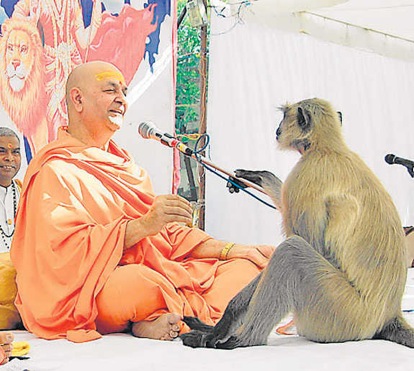
kalika-hanuman1
Hindu saint in Ratlam, Madya Pradesh
kalika-hanuman3

Interesting Brahmin Story in Tamil Epic

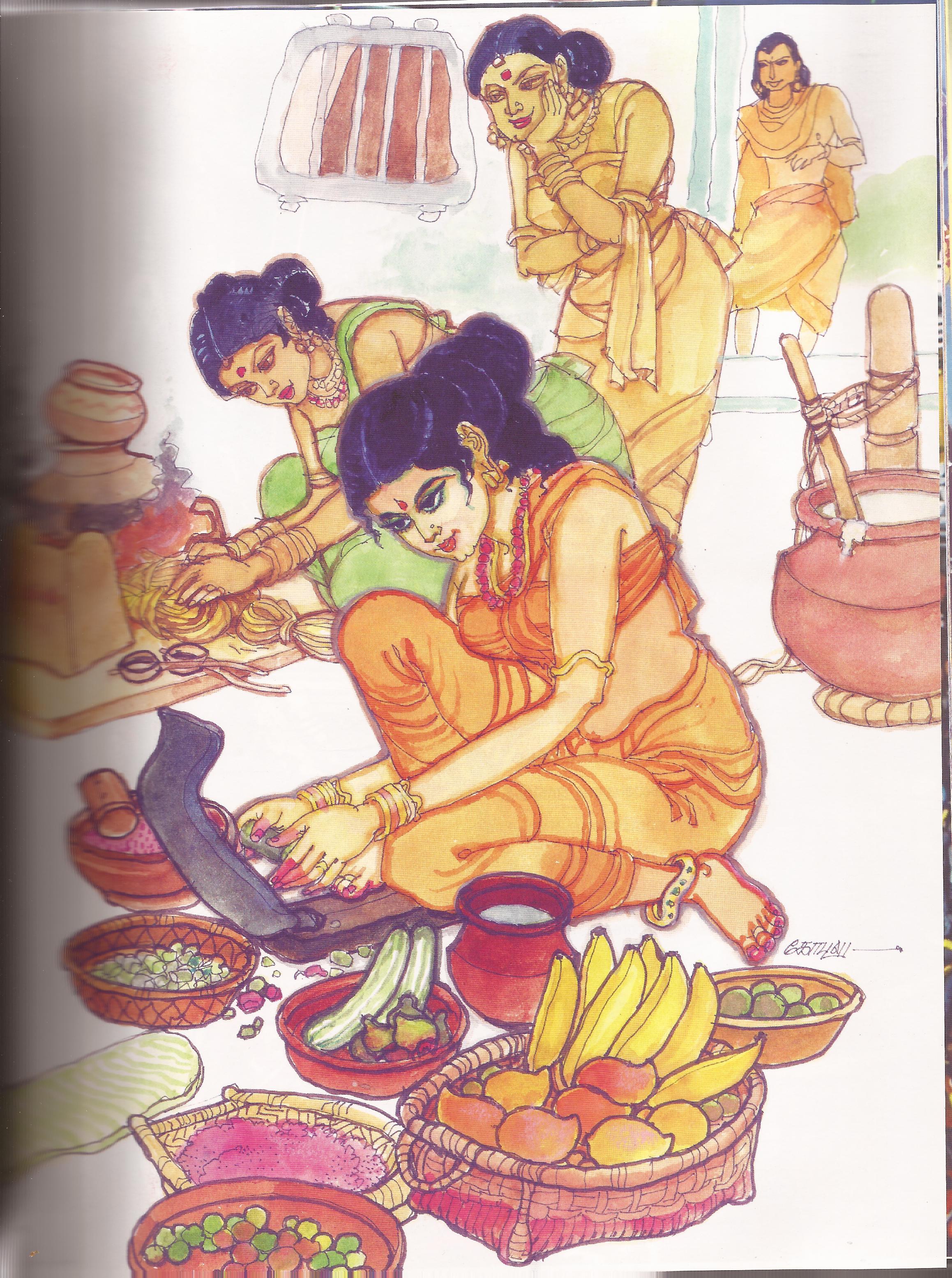
kannaki-cooking
Kannaki cooking for Kovalan

Written by London Swaminathan
Post No.1140; Dated 30th June 2014.

N.B. If you want to reproduce this article, please email me for permission. You must get written permission from me for each and every article separately. swami_48@yahoo.com

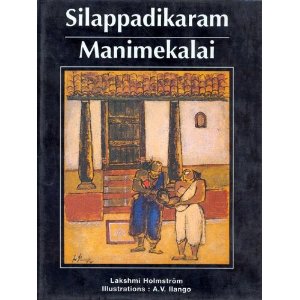
Silappadikaram (also written as Cilappadikaram) is one of the five Tamil epics. Silappadikaram and Manimekalai are called Twin Epics. These two epucs are based on purely Tamil stories. But those who read them in full will find out the culture is same as in the Northern parts of India. Silappadikaram is a Tamil encyclopaedia covering all subjects including music, dance, history, art, architecture and culture. This is the most popular epic. There are several stories concerning Brahmins including a Panchatantra story:The Brahmin and the Mongoose’ and the Golden Hand Pandya and Keeranthai.

tamil-penkal
Tamil women in ancient Tamil Nadu

Here is one of the Brahmin stories from the most famous Tamil epic:–
Source: Katturai Katai, Silappadikaram

Parasara was a Brahmin who lived in Pumpukar of Choza territory. He heard about the valour and philanthropy of the Cera King and decided to see him. He passed through jungles and several cities and reached Malaya hills. He was a great scholar well versed in Vedas and defeated scholars of different sects on his way. He got lot of gifts and returning home with the gifts. He reached a place called Tankal (identified with Tirutankal near Sivakasi). He took rest under a Bodhi tree with his water bowl, staff and white umbrella (only Brahmins who did great Yagas and kings are allowed to take white umbrellas in ancient India).

tamil culture

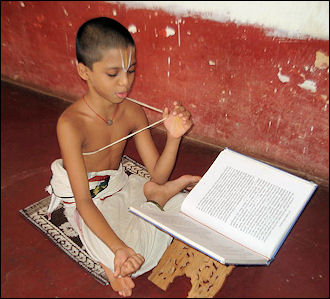
Some Brahmin children with coral lips, black tufts, curly hair and some with lisping mouths were playing there. Parasara called them and challenged them to recite Vedas after him. He promised them to give some valuable jewels. At once a boy called Alamarselvan (One who is under the banyan tree =
Dakshinamurthy), son of famous Brahmin Vartika of the town, recited the Vedas with perfect pronunciation and intonation. He was a little boy still retaining the fragrance of his mother’s milk. Parasara was wonderstruck with his knowledge and gave him a big present.

Some jealous people told the royal servants that the Brahmin got a treasure trove which naturally should go to the king. The royal servants threw him into prison without any proper enquiry. His wife Kartika became furious at the injustice. She wept and threw herself to the ground rolling and fulminating. Seeing this goddess Durga refused to open her door for the regular Pujas (daily offerings). The Pandya King was wondering whether there was any injustice done to anyone in his territory. Then the king was informed by some messengers of the injustice done to Vartikan.

The king then begged to the Brahmin to forgive him. As a compensation for the false imprisonment, the king gave him the Tankal and Vayalur villages with all the paddy fields as a gift. Then the goddess who rode the stag (Durga’s Vahana is Stag) opened her temple doors. The big noise that was produced when the goddess opened the doors, was heard throughout the broad streets of mountain like mansions of that ancient city, says the author of the epic Ilango Adikal.

silambu book

At that time, the triumphant king issued the following proclamation by beating a drum placed upon the back of an elephant which was sent though out the city, “Release all prisoners from the prison. Remit all those taxes from those who owe them. Let all who find unclaimed things and discover treasure trove enjoy them.”

“Listen how even such a king committed this act of injustice. There was a prediction that, in the month of Adi, on the Tithi of Ashtami, in the dark fortnight (Krishna Paksha), on a Friday, with Kartikai and Barani in the ascendant, a great fire would envelop renowned Madurai to the ruin of its king”, says Ilango Adikal.
(Part of Madurai was burnt down by the heroine Kannaki. Goddess of the city Madurapati narrated the above story, according to Ilango Adikal.)

20120502-Student_learning_Veda_132
Brahmin child learning Veda.