RESEARCH ARTICLE by London swaminathan
Date: 6 JULY 2018
Time uploaded in London – 5-53 am
(British Summer Time)
Post No. 5186
Pictures shown here are taken from various sources such as Facebook friends, Wikipedia, Books, Google and newspapers; thanks. Pictures may be subject to copyright laws.
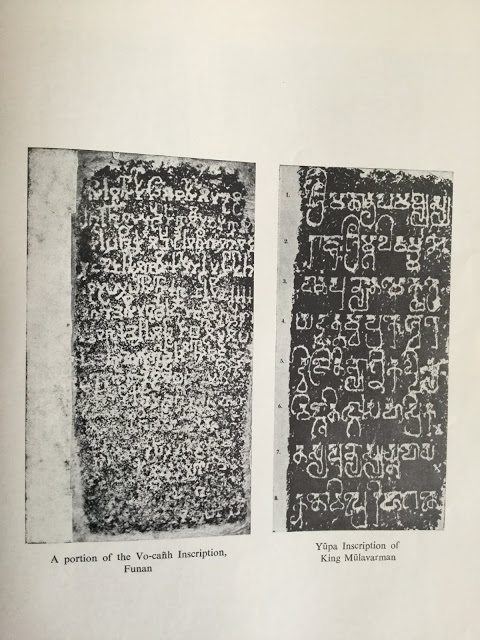
We have already seen the references to Yupa, the sacrificial post, in the Rig Veda, Tamil Sangam Literature and 19 Yupa inscriptions found in India and Indonesia.
An interesting nomenclature concerning Yupa is found in Brahmana Adhyaya of the Bhumiknda of Yadhavaprakasa’s Vaijayanti, a well known Sanskrit lexicon.
While Yupa is a consecrated sacrificial post, Homayupa is one that is set up at sacrifices only for the decoration. The two Yupas that flank every fire at sacrifices are known by the name Upastha. Whatever, Yupa and the like, stands in front of the fire, is called Agnishta. The middle and the top of Yupa are called Samaadaana and Tarman respectively. The ring near the top is called Chasthaala. The rough unhewn bottom part of a Yupa is called Tuupara. Its girdle is known as Parivyaana, and wrappings Kumbaa.
Number 17
If the Yupa is seventeen cubits long, these seventeen cubits, from bottom upwards are designated, Methika, Uttraasa, Svarumochana, Anjana, Vaiyathita, Kshaalana, Savasiirshaka, Sudhanva, Rathagaruta, Saikhaalika, Karanjaka, Vaasava, Vaishnava, Tvaashtra, Saumya, Maadhura and Vejana respectively.
During the Vajapeya Yaga, a race of 17 chariots was held.
Prajapati is represented by Number 17.
Number 17 is a mysterious number in the Hindu Vedas. I have already explained it in my article (see below)
Mysterious Number 17 in the Vedas! (Post No.3916) | Tamil and …
tamilandvedas.com/2017/05/17/mysterious-number…
Research article Written by London Swaminathan Date: 17 May 2017 Time uploaded in London: 19-46 Post No. 3916 Pictures are taken from various sources such as Face …
From the above description, we come to know that there was one post for symbolically tying the victim and other posts to decorate the Yajna Bhumi.
An idea of the picturesque view of the Yajna Bhumi can be gathered from the Asvamedha Sacrifice scene in Valmiki Ramayana (Bala Kanda 14-22/27):–
We are told that 21 Yupas were erected and every one of them was octagonal and 21 cubits long. They are draped each in a cloth and adorned with fruits, foliage and flowers. The 21 Yupas were likened to the Seven Rishis (Sapta Rsi= Ursa Major Constellation). The idea is that each of the sacrificial fires, ie. Gaarhapatya, Aahavaniiya and Dakshinaagni was allotted seven posts. There were thus three groups of seven each.
The elaborate descriptions, exact size and naming of the different parts show they were not pillars or posts for animal sacrifice or tying of the victim of the Yaga. All these explain the philosophy, some of which is already lost, behind the Yupa.
Ravana’s son Meghanaada is credited with a number of sacrifices. His sacrificial grove is described in the Ramayana to be bristling with hundreds of Yupas. The vast number only denotes their decorative role (Uttarakanda 25-3)
Regarding the inscriptions on Yupas, all are dated and this shows the historical sense of Hindus that existed 2000 year ago. We find Vikrama era, Kushana era and Krita era.
I have already given the names of Sangam Age Tamil kings and the Indonesian Kings in the first part. In North Indian Yupa inscriptions we come across:
Kushana
Maalava
Mokhari.
The Yagas performed were
Dvaadasa raatra,
Sapta soma samsthaa
Ekashasti raatra
Tri raatra,
aptoryaaman,
Pundariika etc.
Another interesting information available from the Indonesian Mulavarman’s Yupa is that he did ‘Bahusuvarnaka Yaga’.
It is also known as Bahu Hiranya (lot of gold)
Bahusuvarnaka is mentioned in Valmiki Ramayana (Balakanda 1-95).
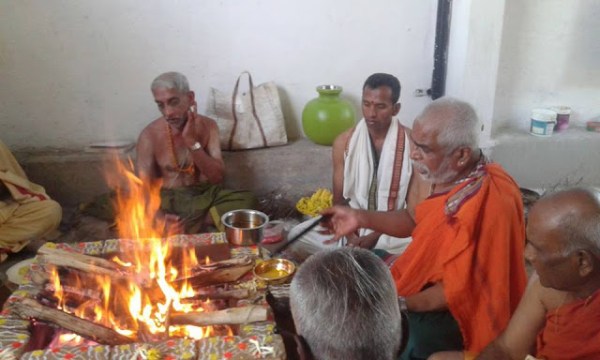
Now we know from Uttarakanda that Meganada did the following seven sacrifices:
agnishtoma
Asvamedha
Bahu suvarnaka
Rajasuuya
Gomedha
Vaishnava
Mahesvara.
Thus Mulavarman proved tht Ramayana gives historical information and Ramyana proved that Mulavarman did a sacrifice which was famous from the Ramayana days.
In other words Ramayana and Sanskrit inscriptions corroborate the details of Yagas.
( I have given lot of Yaga names in my article about ‘400 types of Yagas’. We may add the details found here as well.)
Source: Ramayana, Sangam Tamil Literature, Rig Veda and ‘Indian Antiqua, Kern Institute, Leyden, 1947’.
–Subham–
 Tamil and Vedas