விஞ்ஞான விளக்கம்- பிரம்ம முகூர்த்தம்-2 (Post No.5175)

Written by London swaminathan


Date: 3 JULY 2018


Time uploaded in London –   11-19 am (British Summer Time)


Post No. 5175


Pictures shown here are taken from various sources such as Facebook friends, Wikipedia, Books, Google and newspapers; thanks. Pictures may be subject to copyright laws.


பொழுது புலர்ந்தது யாம் செய்த தவத்தால்

புன்மை இருட்கணம் போயின யாவும்

எழுபசும் பொற்சுடர் எங்கனும் பரவி

எழுந்து விளங்கியது அறிவெனும் இரவி


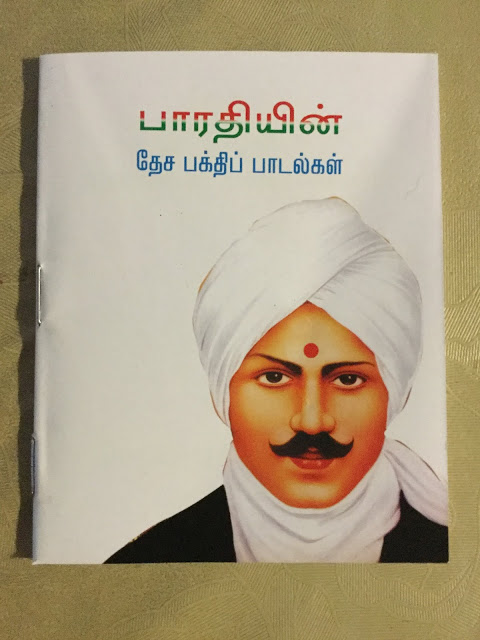
பாரதியாரின் திருப்பள்ளி எழுச்சி

நேற்றைய கட்டுரையில் பிரம்ம முஹூர்த்தம் பற்றிய தமிழ்ப் பாடல்களைக் கொடுத்தேன். இன்று சில ஸம்ஸ்க்ருத பாடல்களையும் காண்போம்.


எல்லா சங்கராச்சார்ய, சாது, சந்யாஸி மடங்களில் அனைவரும் அதிகாலை4-30 மணிக்கு எழுந்து அனுஷ்டானங்களைத் தொடர்கின்றனர். நாடு முழுக்க ஆர். எஸ்.எஸ் காரர்கள் நடத்தும் முகாம்களில் எல்லோரையும் 4-30 மணிக்கு எழுப்பி விடுகிறார்கள். இந்த நேரத்தில் மனம் மிகத் தெளிவாக இருக்கும். படித்ததும், செய்யும் பயிற்சியும் பன்மடங்கு பலன் தரும்.

விஹாங்க யோகம் என்பதை பரப்பிவரும் சத்குரு தரம் சந்திர தேவ்ஜி, அதிகாலையில் எழுந்திருப்பதோடு பிரஹ்ம முஹூர்த்தத்தின் சிறப்பையும் எடுத்துக்காட்டியுள்ளார் அமிர்த வேளை எனப்படும் நேரத்தில் மனதும் தூய்மையாக இருக்கிறது. வெளியிலுள்ள புறச்சூழலும் தூய்மையாக இருக்கிறது; இதனால் புத்துணர்வு பிறக்கிறது. எதையும் எளிதாகச் செய்ய முடிகிறது என்கிறார்.
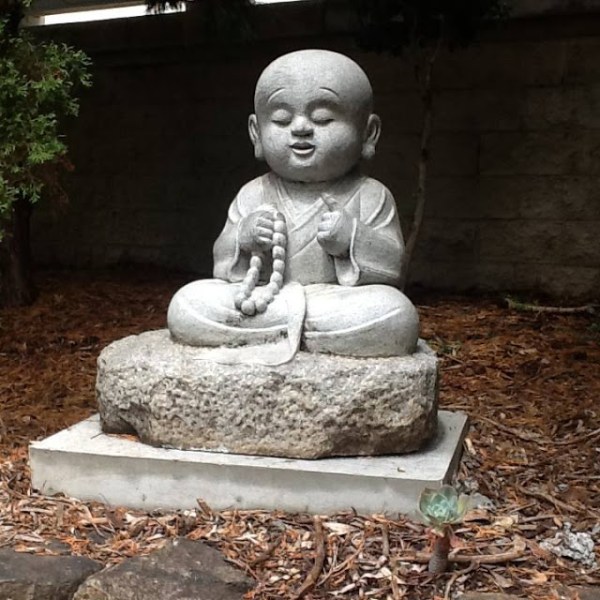
 

இதை அறிவியலும் ஒப்புக்கொள்கிறது.

மனிதர்கள் நல்ல ஆரோக்கியமாக வாழ உடலிலுள்ள நாளமில்லாச் சுரப்பிகள் சில வகை ஹார்மோன்களைச் சுரக்கின்றன. இதில் ஒன்று பிளாஸ்மா கார்டிசால் (PLASMA CORTISOL). இது மன உளைச்சல், மன வடு ஆகியவற்றிலிருந்து விடுபட உதவி செய்கிறது ஏ.ஸி.டி.எச். (ACTH) என்பதன் செல்வாக்கில் ADRENAL அ ட் ரினல் கார்டெக்ஸிலிருந்து இது சுரக்கும். இந்த ஏ.ஸி.டி.எச். காலையில் அதிகமும் மாலையில் குறைவாகவும் சுரப்பது ஆராய்ச்சியில் நிரூபிக்கப்பட்டுள்ளது. ஆகையால் காலையில் படிக்கக்கூடிய விஷயங்களை அதிகம் நினைவு வைத்துக் கொள்ள முடியும்.


ஆயுர்வேத கணக்குப்படி காலை நேரம் வாத கட்டுப்பாட்டிலுள்ள நேரம் (வாதம், பித்தம், கபம் என்பன மூன்று வகை தோஷங்கள் அல்லது குணங்கள்)


சுவாமி நித்யானஎந்தாவும் பிரஹ்ம முஹூர்த்த்தின் சிறப்பை விதந்து ஓதுகிறார்.


பிரஹ்ம முஹுர்த்தே உத்திஷ்டதேத் ஸ்வஸ்தே ரக்ஷார்த்தம் ஆயுஷே

தத்ர ஸர்வதா சாந்த்யர்த்தம் ஸ்மரேச்ச மதுசூதனம்

-அஷ்டாங்க ஹ்ருதயம்


பொருள்; ஒவ்வொருவரும் பிரஹ்ம  முஹூர்த்தத்தில் எழுந்திருப்பதானால் நீண்ட ஆயுளையும் ஆரோக்கியமான வாழ்வையும் அமைதியையும் பெறலாம். மது சூதனனையும் சிந்திப்பாயாக
ஆயுர்வேத கணக்குப்படி

மாலை 6 மணி முதல் இரவு 10 மணிவரை- கப ஆதிக்கம்

இரவு 10 மணி முதல் இரவு 2 மணிவரை- பித்த ஆதிக்கம்

இரவு 2 மணி முதல் காலை 6 மணிவரை- வாத ஆதிக்கம்

வாதத்தின் ஆதிக்க காலமே யோகப் பயிற்சிகளுக்குச் சிறந்தது.


சீக்கியர்களும் பௌத்தர்களும்


சீக்கியர்கள் ஒரு நாளை எட்டு, ‘மூன்று மணிக்கூறு’களாக (8×3 = 24) பிரித்து அதி காலை மூன்று மணி நேரமே சிறந்தது என்பர்.

பௌத்தர்கள் இந்து தர்மம் சொன்ன யோகத்தையே பின்பற்றுவதால் அதிகாலையில் எழுந்தே பயிற்சி செய்வர்.

இஸ்லாமும் முதல் பிரார்த்தனை அறைகூவலை சூர்யோதயத்துக்கு முன்பாகவே செய்கிறது.


இந்துக்களின் கணக்குப்படி

ஒரு நாழிகை என்பது 24 நிமிஷம்;

ஒரு நாளில் 60 நாழிகைகள்;

ஒரு முஹூர்த்தம் என்பது 48 நிமிஷங்கள்.


கட்டுரையாளர்,—- ஆயக்குடி சுவாமிஜி கிருஷ்ணா அவர்கள் செய்துவந்த கணபதி ஹோமங்களுக்குச் செல்வதுண்டு. அவர் வாழ்நாள் முழுதும் சூர்யோதயத்துக்கு முன்னால் – கிட்டத்தட்ட காலை 5 மணி அளவில் ஹோமத்தை முடித்து விடுவார். அந்த நெய்ப்புகை மணம் காற்று ம

ண்டலத்தையும் மனதையும் தூய்மைப் படுத்தும்


இவ்வாறு பல பலன்களைத் தரும் பிரஹ்ம முஹூர்த்ததில் படிப்பது மாணவர்களுக்கு நன்மை பயக்கும். இதற்கு முதல் படியாக இரவு ஒன்பது மணிக்குத் தூங்கச் செல்ல வேண்டும். அதற்கு முதல் படியாக டெலிவிஷன், மொபைல் போனை அணைத்துவிட்டு புஸ்தகம் வாசிக்கத் துவங்க வேண்டும். நித்திரை தேவி நம்மை ஆட்கொள்வது நிச்சயம். காலை 4 மணிக்கு படுக்கையிலிருந்து துள்ளி எழலாம்! இது எனது 20, 30 ஆண்டு அனுபவம். இரவுச் சாப்பாட்டை இரவு 7 மணிக்குள் முடித்தால்தான் தூக்கமும் வரும்; நேரம் கழித்துச் சாப்பிட்டு உடனே உறங்கப் போனால் ‘துக்கம்’ வரும் தூக்கம் வராது; அனுபவ உண்மை.

பிரஹ்ம முஹூர்த்தம் வாழ்க!

Previous Article:

பிரம்ம முகூர்த்தம்- வைகறை துயில் எழு- அவ்வையார் -Part 1(Post No.5172)


–சுபம்–

ஐந்து ஐந்தாக உள்ள விஷயங்கள்! – 1 (Post No.5174)

Written by S NAGARAJAN


Date: 3 JULY 2018


Time uploaded in London –   5-49 AM (British Summer Time)


Post No. 5174


Pictures shown here are taken from various sources such as Facebook friends, Wikipedia, Books, Google and newspapers; thanks. Pictures may be subject to copyright laws.


சம்ஸ்கிருத செல்வம்


ஐந்து ஐந்தாக உள்ள விஷயங்கள்! – 1


ச.நாகராஜன்


சம்ஸ்கிருதத்தில் உள்ள லட்சக்கணக்கான பாடல்களில் உள்ள ஒரு சிறப்பு பல விஷயங்களை எளிதாக மனனம் செய்யுமளவு அவை அடுக்கடுக்காக சொல்லப்பட்டிருக்கும் ஸ்லோகங்கள் நிறைய இருப்பது தான்!


இப்படி இரண்டு, மூன்று, நான்கு, ஐந்து போன்ற எண்ணிக்கையில் உள்ளவற்றை வரிசையாக சொல்லப்பட்டிருக்கும் ஸ்லோகங்கள் தனியே தொகுக்கப்பட்டுள்ளன.


இங்கு ஐந்து ஐந்தாக உள்ள சில விஷயங்களைப் பார்க்கலாம்.

அக்ஷய நிதி 5

அழியாத செல்வங்கள் ஐந்து. அவை எவை?

சீலம் – ஒழுக்கம்

சௌர்யம் – வீரம்

அனாலஸ்யம் – சுறுசுறுப்பு

பாண்டித்யம் – சிறந்த மேதையாக இருக்கும் படிப்பு

மித்ர சங்க்ரஹம் – நல்ல நண்பர்களின் இணக்கம்

Conduct, Valour, Briskness, Scholarship, Association of friends -இந்த ஐந்தும் அழியாத செல்வங்கள். அக்ஷய நிதி.


சீலம் சௌர்யமனாலஸ்யம் பாண்டித்யம் மித்ரசங்க்ரஹம்|

அசோரஹரணீ யானி பஞ்சைதான்யக்ஷயோ நிதி||

– சுபாஷித ரத்னாகர பாண்டாகாரம்  158/243

துதிக்க வேண்டிய அக்னி 5

பிதா – தந்தை

மாதா – தாய்

அக்னி – தீ

ஆத்மா – ஆத்மா

குரு – ஆசான்

இந்த ஐவரும் வணங்கப்பட வேண்டியவர்கள்.


பஞ்சாக்னயோ மனுஷ்யேன பரிசார்யா: ப்ரயத்னத: |

பிதா மாதாக்னிராத்மா ச குருச்ச பரதர்ஷப: ||

  • விதுரநீதி 1 -179

மீமாஸத்தின் அங்கங்கள் (பிரிவுகள்)

விஷயா – பொருள்

விஷய – சந்தேகம்

பூர்வபக்ஷம் – முதல் நோக்கில் தெரிவது

உத்தரபக்ஷம் – பதில்

சித்தாந்தம் – முடிவு

Topic, Doubt,Prima Facie, Reply, Conclusion -ஆகிய இந்த ஐந்துமே மீமாஸ்த்தின் அங்கங்கள்


விஷயோவிஷயச்சைவ பூர்வபக்ஷச்தயோத்தரம் |

நிர்ணயச்சேதி பஞ்சாங்க: சாஸ்த்ரேதிகரணம் ஸ்ம்ருதம் ||

சர்வதர்ஷன் கௌமுதி


யாகம்

தேவா – கடவுள்

ஹவிர்த்ரவ்யம் – யாகத்தின் திரவியங்கள்

மந்த்ரம் – மந்திரம் (ரிக், யஜுர், சாமம்)

ரித்விக் – குருக்கள்

தக்ஷிணா – தக்ஷிணை


தேவானாம் த்ரவ்ய ஹவிஷாம்ருக்சாமயஜுஷாம் ததா|

ருக்த்விஜாம் தக்ஷிணானாம் ச சம்யோகே யக்ஞ உச்யதே ||

பஞ்சாங்கம் (காலண்டர்)

திதி – நாள்

வாரம் – வாரம்

நக்ஷத்ரம் – நக்ஷத்ரம்

யோகம் – இரு நக்ஷத்ரங்களின் கூட்டில் உள்ள காலம்

கரணம் – கரணம்


திதி வார நக்ஷத்ரம் யோக: கரணமேவ ச |

தத்பஞ்சாங்கமிதி  ப்ரோக்தம் ||

-சப்தகல்பத்ரும:

உணர்ச்சியை வெளிப்படுத்தும் உடல் அங்கங்கள்

சித்தம்  – மனம்

அக்ஷி    – கண்கள்

ப்ரு       – கண் இமைகள்

ஹஸ்தம் – கைகள்

பாதம்   – கால்கள்

Mind,Eyes,Eyebrows,Hand, Feet  ஆகிய இந்த ஐந்து உடல் பாகங்களும் உணர்ச்சிகளை வெளிப்படுத்திக் காட்டுபவை.


சித்தாக்ஷிப்ரூஹஸ்தபாதைரங்கசேஷ்டாதி சாப்யத: |

பாத்ராத்யவஸ்தாகரணம் பஞ்சாங்கோபினயோ மத: || –

மாளவிகாக்னிமித்ரத்திற்கு காதயவேமா எழுதிய பாஷ்யம் 1.6/7


ஐந்து ஐந்தாக இப்படித் தொகுத்துக் கூறும் பாடல்கள் ஏராளம் உள்ளன. மேலும் சிலவற்றை அடுத்துப் பார்ப்போம்.

***

எலிச் செட்டியார் கதை! (Post No.5173)

Written by London swaminathan


Date: 2 JULY 2018


Time uploaded in London –   14-53 (British Summer Time)


Post No. 5173


Pictures shown here are taken from various sources such as Facebook friends, Wikipedia, Books, Google and newspapers; thanks. Pictures may be subject to copyright laws.


“வணிகர்க்கழகு வளர் பொருளீட்டல்” என்று வெற்றி வேற்கையில் அதிவீர ராம பாண்டியன் கூறுகிறார்.


கதாசரித் சாகரம் என்னும் உலகின் முதல் பெரிய கதைத் தொகுப்பு நூல் ஒரு சுவையான கதையைச் சொல்கிறது இது ஒரு ஸம்ஸ்க்ருத நூல்; கதைக் கடல் என்ற பெயரில் தமிழிலும் கிடைக்கும்.


வர்த்தகர்கள் கிடைக்கும் சிறு லாபத்தையும் மேலும் மேலும் முதலீடு செய்து வணிகத்தையும் லாபத்தையும் வளர்ப்பார்கள்.


பாடலிபுத்ரம் (பாட்னா, பீஹார்) நகரில் முன்னொரு காலத்திலொரு ஏழைச் செட்டி மகன் இருந்தான். அவன் பிழைக்க வழி ஏது என்று கருதிக் கொண்டிருந்தபோது ஒரு செத்துப் போன எலியைக் கண்டான். அதைக் கையில் தூக்கிக் கொண்டு போனபோது ஒருவன் பூனையைக் கையில் வைத்துக் கொண்டிருப்பதைக்  கண்டான். பூனைக்கு எலி மாமிசம் பிடிக்குமே விலைக்கு வேண்டுமா? என்று வினவினான். உடனே அவன் என்னிடம் இரண்டு உழக்கு பச்சைக் கடலை மட்டுமே உளது என்றான்.


அதற்கென்ன, ரொம்ப பேஷ்! இந்தா எலி என்று பண்டம் மாற்று செய்தான். அதைச் சுண்டல் சுண்டி ஒரு சாலை ஓரத்தில் கடை விரித்தான்.

அருகில் ஒரு தண்ணீர் பானையும் வைத்தான். சாலையில் விறகு சுமந்து செல்லுபவர்கள், “அப்பா, சுண்டல் என்ன விலை?” என்று வினவ, “அவன் பணம் ஏதும் வேண்டாம்’ ஆளுக்கு இரண்டு விறகு கொடுங்கள் போதும்” என்று சுண்டலைப் பொட்டலம் போட்டுக் கொடுத்தான். அத்தோடு இன்னும் கொஞ்சம் சுள்ளிகளைப் பொறுக்கிச் சேர்த்து நாலணாவுக்கு விற்றான். பின்னர் அதற்குச் சுண்டல் கடலை வாங்கி பொட்டலம் போட்டு விற்கவே ஒரு மாதத்தில் ஏழரை ரூபாய் கிடைத்தது.


பிறகு விறகு வியாபாரத்தை ஒரு வருஷம் செய்யவே 300 ரூபாய் கிடைத்தது. பிறகு கடையை பெரிதாக்கி ஐந்தே வருஷங்களில் ஆயிரம் ரூபாய் லாபம் சம்பாதித்தான். பிறகு அதை முதலீடு செய்து மளிகைக் கடை வைத்தான். பத்தே வருஷங்களில் ஊரே மதிக்கும் படி பணக்காரச் செட்டியானான் இருபது வருஷத்துக்குள் மிகப் பெரிய பணக்காரனானவுடன் அரசன் கூட அவனிடம் கடன் வாங்க வந்து நின்றான். அவன் எலியின் மூலம் இவ்வளவு பணம் சம்பாதித்ததால் அவன் பெயரே ‘எலிச் செட்டியார்’ என்று பிரபலமானது.

இது சில ஆயிரம் ஆண்டுகளுக்கு முன், ஸம்ஸ்க்ருதத்தில்

எழுதப்பட்ட நூல். ‘சிறு துளி பெருவெள்ளம்’ என்ற பழமொழிக்கு எடுத்துக் காட்டு


இந்தக் காலத்திலும் கூட உலகின் மிகப் பெரிய பணக்காரர்       களில் ஒருவரான மித்தல் (Lakshmi Mittal) கதை இப்படித்தான்; பழைய இரும்புகளை வாங்கி விற்றவர், மூடப் போகும் இரும்பு ஆலைகளை வாங்கி லாபம் சம்பாதித்தார். பின்னர் பெரிய இரும்பு வணிகர் ஆனார். இன்று உலகின் பெரிய பணக்காரர்   பட்டியலில் அவர் பெயர் உள்ளது.

‘முயற்சி திருவினை ஆக்கும்’ ( திரு = ஸ்ரீ= செல்வம்)


சுபம்.

பிரம்ம முகூர்த்தம்- வைகறை துயில் எழு- அவ்வையார்- Part 1 (Post No.5172)

Written by London swaminathan


Date: 2 JULY 2018


Time uploaded in London –   10-49 am (British Summer Time)


Post No. 5172


Pictures shown here are taken from various sources such as Facebook friends, Wikipedia, Books, Google and newspapers; thanks. Pictures may be subject to copyright laws.


சூரிய உதயத்திற்கு முன்னருள்ள சுமார் இரண்டு மணி நேரம் பிரம்ம முஹூர்த்தம் என்னும் காலமாகும். ஆன்றோர்களும், சான்றோர்களும், சாதுக்களும், மஹான்களும், சந்யாசிகளும் சங்கராச்சார்யார்களும் எழுந்து இறைவனை வழிபடும் புனித நேரம் இது. விஞ்ஞானத்தாலும் போற்றப்படும் காலம் இது. தமிழ், ஸம்ஸ்க்ருத இலக்கியங்களில் இது வெகுவாகப் போற்றப்படுகிறது.


மஹா ப்ரெடெரிக் மன்னர், அக்பர் போன்றோர் பின்பற்றிய நெறிமுறை இது. “வைகறைத் துயில் எழு”– அவ்வையார் நமக்கு ஆத்திச்சூடி மூலம் கொடுத்த கட்டளை இது.


புத்தியதற்குப் பொருந்து தெளிவாக்கும்;

சுத்தநரம்பினாற் தூய்மையுறும்- பித்தொழியும்

தாலவழி வாத பித்தம் தத்தநிலை மன்னும்; அதி

காலைவிழிப்பின் குணத்தைக் காண்

என்று ஒரு புலவர் பாடிச் சிறப்பித்த காலம் இது.


ஆசாரக் கோவை என்னும் நூலும் இதைப் போற்றும்:-

வைகறை யாமம் துயிலெழுந்து தான்செய்யும்

நல்லறமும் ஒண்பொருளும் சிந்தித்து வாய்வதின்

தந்தையும் தாயும் தொழுதெழுக என்பதே

முந்தையார் கண்ட முறை

(ஆசாரக்கோவை– 41)


புலவர்கள் கூறும் கருத்து யாது?


புத்தி, சிந்தனை தெளிவாக இருக்கும்

நமது உடல் தூய்மையாக இருக்கும்

வாத பித்த, கபம் ஆகிய மூன்றும் சம நிலையில் இருக்கும்

இவை அதிகாலையில் விழித்தெழுவதன் பயன்களாம்.


ஆசாரக் கோவை சொல்கிறது

அதிகாலைப் பொழுதில் எழுந்து பெற்றோர்களை வணங்கி அன்றைய தினம் செய்யவேண்டிய செயல்களைப் பட்டியலிட்டு, அதற்கான வழிமுறைகளை தயாரிப்பது முன்னோர்கள் பினபற்றிய முறை.

ஒரு கட்டுரையாளர் ஒரு கணக்குப்போட்டு வைத்துள்ளார்:–

ஒருவன் நாள்தோறும் 5 மணிக்கும் மற்றொருவன் 7 மணிக்கும் எழுந்திருப்பதாக வைத்துக்கொள்வோம்; இவ்வாறு அவன் 40 ஆண்டுகள் செய்து வந்தால் 5 மணிக்காரனுக்கு 29,000 மணி நேரம் கூடுதலாக கிடைக்கும்!! எட்டு மணிக் காரனுடன் ஒபீட்டால் 43,500 மணி நேரம் கூடுதலாகக் கிடைக்கும். சிலர் இதை எதிர்த்தும் வாதிட முடியும். அதாவது இரவு படுக்கச் செல்லும் நேரத்தைத் தாமதித்தால் இந்த நேரத்தை ஈடுகட்டலாம் அல்லது கூடுதலாக வேண்டுமானாலும் பெறலாமே என்று.


ஆனால் நம் முன்னோர்கள் அதை ஏற்க வில்லை; காரணம் வெளிப்படை; ஒருவன் உறங்கி எழுந்தவுடன் இருக்கும் புத்துணர்ச்சி இரவில் படுக்கைக்குச் செல்லும் முன் இராது; கொட்டாவிகளும், நாள் முழுதும் நடந்த கெட்ட விஷயங்களின் சிந்தனையுமே அதிகரிக்கும்.

பறவைகளின் இனிய சங்கீதமும் குளிர்ந்த காற்றும் நம்மை நற் சிந்தனையில் ஆழ்த்தும் நேரம் பிரம்ம முகூர்த்தம் ஆகும்.


‘ஐயினி அக்பரி’ எழுதிய அபுல் பாசல், மாமன்னர் அக்பர் அதிகாலையில் துயில் எழுவதைக் குறிப்பிட்டுள்ளார். பாரதத்தின் முதல் பிரதமர் ஜவஹர்லால் நேரு காலை நாலு மணிக்கு எழுந்து சிரசாஸனம் செய்து வந்ததால் இறுதிவரை இளமைப் பொழிவுடன் வாழ்ந்தார். தற்போதைய பாரதப் பிரதமர் நரேந்திர மோடியும் அதிகாலை எழுந்து பணிகளைக் கவனிப்பதை அனைவரும் அறிவர்.

மஹா ப்ரெடெரிக் (Frederic the Great)

பிரஷ்யா (ஜெர்மனி அதைச் சுற்றியுள்ள பகுதிகள்) தேசத்தை ஆண்ட மஹா ப்ரெடெரிக் நமக்கு சுமார் 250 ஆண்டுகளுக்கு முன் வாழ்ந்தவர். அவர் வாழ்வில் நடந்த ஒரு சுவையான சம்பவம் இதோ:


“நான் மிகவும் தாமதமாக எழுந்திருப்பது நல்லதல்ல;

அதிகாலை நாலரை மணிக்கு என்னை எழுப்பி விடு என்று வேலைக்காரனுக்குக் கட்டளையிட்டார். மறுநாள் மன்னரின் கட்டளையை சிரமேற்கோண்டு அவனும் முயற்சி செய்தா ன் அவர் எழுந்திருக்கவில்லை. அது மட்டுமல்ல; இன்னும் பத்து நிமிஷம் மட்டும் தூங்குகிறேன் என்று சொல்லி தட்டிக்கழித்துக் கொண்டே இருந்தார். வேலைக்கரன் துணிவுடன் அவரைத் தட்டி எழுப்பினான். அப்போதும் அவர் கும்பகர்ணனாகவே இருந்தார். இறுதியில் அவர் முன்னரே சொன்ன படி ஒரு ஈரத்துணியை மன்னர் முகத்தில் போட்டான். மன்னர் கோபத்துடன் எழுந்து ஒரு முறை முறைத்தார்.

“மன்னாதி மன்னா; தங்கள் கட்டளையையே நான் நிறை வேற்றினேன் இவ்வாறு செய்யாவிடில் என்னைத் தண்டித்திருப்பீர்களே” என்றான்.

மன்னரும் நிதானித் து சிந்தித்து

“அன்பனே நீ செய்தது சரியே” என்று அவனைப் பாராட்டினார்.


இதே போல நாமும் பரீட்சை நேரங்களில் நம்முடைய பெற்றோர்களிடம் அதிகாலையில் எழுப்பச் சொல்வோம்; அவர்கள் எழுப்ப முனைஅயும் போது எரிந்து விழுவோம். பரீக்ஷையில் நல்ல மதிப்பெண்களோடு ‘பாஸ்’ ஆகும்போது அவர்களுக்கு மனதார நன்றி சொல்லுவோம். இல்லையா?


கட்டுரையின் அடுத்த பகுதியில் விஞ்ஞான விளக்கங்களைக் காண்போம்.


-தொடரும்……………

More Eccentricity Anecdotes (Post No.5171)

Compiled by London swaminathan


Date: 2 JULY 2018


Time uploaded in London –   7-10 AM (British Summer Time)


Post No. 5171


Pictures shown here are taken from various sources such as Facebook friends, Wikipedia, Books, Google and newspapers; thanks. Pictures may be subject to copyright laws.
A story of Isadora Duncan’s:-
At the hotel Trianon D’ Annuncio had a gold fish which he loved. It was in a wonderful crystal bowl and D’Annunzio used to feed it and talk to it. The gold fish would agitate it’s fins and open and shut its mouth as though to answer him.

One day when i was staying at Trianon I said to the maitre d’hotel
Where is the gold fish of D’ Annunzio.?

Ah, Madam, sorrowful story!
D’Annuncio went to Italy and told us to take care of it.
The gold fish, he said, is so near to my heart. It is a symbol of my happiness! And he kept telegraphing
How is my beloved Adolphus?

One day Adolphus swam a little slowly round the bowl and ceased ask for D’Annuncio. I took it and threw it out of window. But there came a telegram from D’Annunzio
“Feel Adolphus is not well”.
I wired back Adolphus dead; died last night.
D’Annuncio  replied ‘Bury him in the garden. Arrange his grave’.
So I took a sardine and wrapped it in silver paper and buried it in the garden and put a cross
Here lies Adolphus

D’Annuncio  returned ‘Where is the grave of my Adolphus?
I showed him the grave in the garden and he brought many flowers to it and stood for a long time weeping tears upon it

((General Gabriele D’Annunzio, Prince of Montenevoso, Duke of Gallese OMS CMG MVM(Italian pronunciation: [ɡabriˈɛːle danˈnuntsjo]; 12 March 1863 – 1 March 1938), sometimes spelled d’Annunzio,[2] was an Italian writer, poet, journalist, playwright and soldier during World War I. He occupied a prominent place in Italian literature from 1889 to 1910 and later political life from 1914 to 1924. He was often referred to under the epithets Il Vate (“the Poet”)[3] or Il Profeta (“the Prophet”).))

Xxx

Edward W.Bok told :-
“I was asked to come to a breakfast at Oscar Wilde’s house, and noticed as I sat down that next to me, at my left had been placed a man instead of the usual rotation. I turned to my left to find my neighbor had pushed his chair back from the table about three feet, and buried his chin in his shirt bosom and was reaching forth for his eatable s and practically eating them from his lap, his cup resting upon on his knee. There was something familiar about the features of my neighbor who was eating in the most grotesque fashion I ever saw and yet I couldn’t place him. I looked for his place card, but I could see none. So I shoved back my chair and tried to engage him in conversation. But I was not rewarded by even a glance. When I asked a question I received either no answer at all or a grunt. After a few heroic efforts, I gave up the struggle.

At the close of the breakfast I asked Wilde,
Who in the world was that chap on my left?
I know, returned Wilde, I saw your valiant struggle. He gets that way once in a while, and this morning happened to be one of those whiles. That was Whistler!

((James Abbott McNeill Whistler (/ˈwɪslər/; July 10, 1834[1][2][3][4][5] – July 17, 1903) was an American artist, active during the American Gilded Age and based primarily in the United Kingdom. He was averse to sentimentality and moral allusion in painting, and was a leading proponent of the credo “art for art’s sake“. His famous signature for his paintings was in the shape of a stylized butterfly possessing a long stinger for a tail.))

Xxx

Alexander Pope said,

“Dean Swift has an old blunt way that is mistaken by strangers for ill nature: it is so odd that there is no describing it but by facts. I will tell you one that first comes into my head.
One evening John Gay and I went to see him. You know how intimately we were all acquainted. On our coming in, “Heyday , gentleman “ (says the doctor) what is the meaning of this visit?

How come you two to  leave all the great lads that you are so fond of, to come here to see a poor dean?
Because we would rather see you than any of them.
Aye, anyone that did not know you so well so well as I do might believe you. But since you have come, I must get some supper for you, I suppose.

No doctor, we have supped already
Supped already? Why it’s not eight o clock yet . That is very strange, but if you had not supped, I must have got something for you. Let me see what should i have had?
A couple of lobsters? Ay that would have done very well, two shillings, tarts a shilling. But you will drink a glass of wine with me, though you supped so much before your usual time, only to spare my pocket.
No we had rather talk with you than drink with you ,
But if you had supped with me, as in all reason you ought to have done, you must then have drank with me. A bottle of wine, two shillings. Two and two is four, and one is five. Just two and six pence a piece
There Pope, there is a half a crown for you, and there is another for you, Gay,

sir, for I won’t save anything by you I am determined

This was all said and done with his usual seriousness on such occasions and in spite of everything we could say to contrary, he actually obliged us to take the money.”

((Jonathan Swift (30 November 1667 – 19 October 1745) was an Anglo-Irish[1] satirist, essayist, political pamphleteer (first for the Whigs, then for the Tories), poet and cleric who became Dean of St Patrick’s Cathedral, Dublin.[2]

Swift is remembered for works such as A Tale of a Tub (1704), An Argument Against Abolishing Christianity (1712), Gulliver’s Travels (1726), and A Modest Proposal (1729). He is regarded by the Encyclopædia Britannica as the foremost prose satirist in the English language,[1] and is less well known for his poetry.))

Xxx SUBHAM xxx

‘பாட்டும் சபதமும்’- பாரதியார் பற்றிய நூல்கள் – 52 (Post No.5170)

Written by S NAGARAJAN


Date: 2 JULY 2018


Time uploaded in London –   6-24 AM (British Summer Time)


Post No. 5170


Pictures shown here are taken from various sources such as Facebook friends, Wikipedia, Books, Google and newspapers; thanks. Pictures may be subject to copyright laws.


பாரதி இயல்


மஹாகவி பாரதியார் பற்றிய நூல்கள் – 52

மது.ச.விமலானந்தம் அவர்களின் ‘பாட்டும் சபதமும்


ச.நாகராஜன்


பாரதி ஆர்வலர் மது.ச.விமலானந்தம் அவர்களின் பாரதி சபதம் நூலைப் பற்றி சென்ற கட்டுரையில் பார்த்தோம். அந்த நூலுக்கு முன்னால் பாட்டும் சபதமும் நூல் வெளியிடப்பட்டது. அவர் குயில் பாட்டை ஆய்வு செய்து எழுதிய நூல் இது. முதற் பதிப்பு 1962ஆம் ஆண்டு அக்டோபர் மாதம் தஞ்சவூர் பைந்தமிழ்ப் பண்ணை வெளியீடாக வெளி வந்தது. 72 பக்கங்கள் கொண்ட ஆய்வு நூல் இது.

மகாகவி பாரதியார் தாம் சொந்தமாகவே –  புதுவதாகவே படைத்தும் உள்ளார்; இருந்த ஒன்றைச் சிறந்த ஒன்றாகச் சமைத்தும் இருக்கிறார். முன்னதற்குச் சான்றாக அமைவது குயில் பாட்டு: பின்னதற்குச் சான்றாக விளங்குவது பாஞ்சாலி சபதம் என்று கூறும் நூலாசிரியர், குயில் பாட்டை,

பாரதியின் குயில் பாட்டு கதையின் புதையல்,கற்பனை ஊற்று; காதற் சுவையின் கருவூலம், கவிதைக் களஞ்சியம்; வேதாந்தத்தின் வித்து; வித்தகர் தம் சொத்து.பாரதி பாடிய கதை தழுவிய பாட்டுகதைப் பாட்டு இஃதொன்றே எனலாம்.பாரதியார் தேசீயம், தோத்திரம், வேதாந்தம், காப்பியம், சிறுகதை,கட்டுரை போன்றன பல இயற்றியிருப்பினும், இஃதொன்றே பாரதியின் புதுவது புனைந்த புதுமைப் படைப்பாகும் என்று புகழ்கிறார்.

கற்பனையே யானாலும் வேதாந்தமாக விரித்துப் பொருளுரைக்க யாதானும் சற்றே இடமிருந்தாற் கூறீரோஎன்று பாரதியார் புதிராக ஒரு கேள்வியைப் போட்டாலும் போட்டார் அதைப் பற்றிய ஏராளமான விளக்கங்கள் இன்று வரை தோன்றிக் கொண்டே இருக்கின்றன.

மது .விமலானந்தம் தனது ஆய்வின் படி பல்வேறு விதமாகப் பொருளுரைக்கிறார்.

அவற்றில் சில பகுதிகள் இதோ:

குயிலியைப் பசுவாகவும், சேர இளவரசனைப் பதியாகவும் கொண்டு, மாடன் நெட்டைக் குரங்கன் இருவரையும் எண்ணி நிற்பது பாசவுணர்ச்சியாகவும்; அது போன்றே இப்பிறப்பில்  குயிலைப் பசுவாகவும் (ஆன்மாவாகவும்) பாரதியைப் பதியாகவும்,குரங்குமாடு இரண்டையும் நாடுவதைப் பாசமாகவும் கொண்டால்; பசுவாகிய ஆன்மா,பதியாகிய இறைவனை அடைய விரும்புங்காலை, உலகப் பற்றும் பந்தமுமாகிய பாசம் தடைப்படுத்துகின்றது என்ற வேதாந்தக் கருத்து நன்கு விளங்கும்

உலகம் பொய்; வாழ்வு நிலையற்றது, பார்ப்பன அனைத்தும் பொய்;பரம்பொருளே மெய், உலகம்  ஒரு கனவுக் காட்சி, கனவு முடிந்த பின் கனவுப் பொருள் உண்மையல்ல என்றுணர்வது போன்றே, வாழ்வு முடிந்த பின் உலகப் பொருள் எல்லாம் உலையும் தன்மையன என்கிறது அத்வைதம்இதனைத் தான் பாரதி குயில் பாட்டின் இறுதியில் வைத்து உலகியல் உறுதியாக உணர்த்தியுள்ளாரோ என்று தோன்றுகிறது.

சமூகத்தில் உள்ள குற்றங் குறைகளை மக்கள் இனம் கொண்டே எடுத்தோதி நிறை செய்யும் சமூகச் சிறுகாப்பியமாகவும் இக்குயில் பாட்டினைக் கொள்வர்.


அடுத்து அழகு தமிழ்க்குயில் பாட்டின் அருமை பெருமைகளை வகை வகையாகப் பிரித்து விளக்குகிறார் இந்த நூலாசிரியர்.

வர்ணனை, கற்பனை,காதல், இயற்கை போன்ற பல தலைப்புகளில் குயில்பாட்டின் சிறப்புகள் விளக்கப்படுகின்றன.

   கானக்குயிலும் கவிக்குயிலும் என்ற தலைப்பில் மேலை நாட்டுக் கவிஞர்கள் Cuckoo, Skylark, Nightingale போன்ற பறவைகளைப் பாடியதை விரிவாக விளக்கும் நூலாசிரியர் அக்கவிஞர்கள், அவர்கள் பாடிய கவிதைகள் ஆகியவற்றின் பட்டியலையும் தருகிறார்.

வோர்ட்ஸ்வொர்த், ஷெல்லி, கீட்ஸ், மில்டன், எஸ்.டி.கூல்ட் ரிஜ், ஜில் வின்செண்ட், ட் ரம்மண்ட், ஜான் கெபிள், க்ராஷா, ஜான் லோகன்,லாம்ப்ஸன், ராபர்ட் ப்ரிட்ஜஸ்,லேடி வின்சில்சீ ஆகியோரின் படைப்புகளைப் பார்க்கிறோம்; பாரதியின் சிறப்புகளையும் பார்க்கிறோம்.

காதல் காதல் காதல்;

காதல் போயிற் காதல் போயிற்

சாதல் சாதல் சாதல்

என்ற பாரதியின் வரிகளில் அவர் கூறுவது என்ன?

“காதலை உயரியதாகவும், தெய்வ நிலையதாகவும், அதனையே வாழ்வின் ஒளி நெறியாகவும் கருதுபவர் கவி பாரதி; இதனை, “காதல் புரிவீர் செகத்தீரே!, காதலித்துக் கூடிக் களியுடனே வாழாமோ,காதலிருவர் கைப்பிடித்தே.., “காதலினால் மானுடர்க்குக் கலவியுண்டாம், கலவியிலே மானுடர்க்குக் கவலை தீரும்; காதலினால் மானுடர்க்குக் கவிதையுண்டாம், ‘பாட்டினிலே நான் பாட வேண்டி, “ என்று இப்படி பாரதியின் சொற்றொடர்களைத் தொகுத்துக் காட்டி,  வரிசையாக இன்னும் பல மேற்கோள்களைத் தரும் நூலாசிரியர்,

“அத்தகு காதலை நாடுகிறது குயில்.அக்காதல் இன்றேல் முடிவு சாதலே என்கின்றது குயில் என்கிறார்.

பாரதியில் தோய்ந்து, அவரது குயில் பாட்டில் மூழ்கி அதைத் திறம்பட ஆய்வு செய்யும் சிறு நூலாக அமைகிறது இந்த நூல்.

குயில் பாட்டில் மகாகவி விடுத்திருக்கும் புதிரை அவிழ்க்கும் முயற்சியில் இந்த நூல் ஈடுபட்டுப் பல கருத்துக்களை நம் முன் வைக்கிறது.

குயில் பாட்டையும் படித்து, இந்த ஆய்வு நூலையும் படித்தால் நமக்கு அரிய பல கருத்துக்கள் தோன்றும்.

நூலாசிரியர் பாராட்டுக்குரியவர். பாரதியில் தோய்ந்திருக்கும் அன்பர்களுக்கு இந்த நூல் இனிக்கும்.

***


Sacred Morning Time- Brahma Muhurta (Post No.5169)

Written by London swaminathan


Date: 1 JULY 2018


Time uploaded in London –   16-09 (British Summer Time)


Post No. 5169


Pictures shown here are taken from various sources such as Facebook friends, Wikipedia, Books, Google and newspapers; thanks. Pictures may be subject to copyright laws.


Hindus consider the time before sun rise is good for prayers. The two hours before sun rise called Brahma Muhurta, roughly translated, God’s Time. Yogis (saints) recommend this time for breathing exercises, Asana postures and general prayers. They get up around 4 am in the morning and begin the Yoga exercises. Even political leaders find this time good for doing work and taking decisions. India’s first Prime Minister did wake up around 4 am and did Sirasasanam (upside down posture). Current Prime Minister Narendra Modi also gets up early in the morning.


Hindu kings got up very early morning according to Sanskrit and Tamil literature. Even some anecdotes in the life of Frederick the Great, Akbar and other kings show that they got up very early. Abul Fazl in Ain-i -Akbari says that Akbar got up very early in the morning.


Sadguru Dharam Chandra Yogi, former head of Vihangam Yoga Samssthan and a great yogi himself has rightly recommended meditation during Brahma Muhurta as the ultimate formula for success in life.


Swami Nithyananda says

brAhmI muhUrtaM uttiShTHEt swasthO rakshArthaM Ayusha:
tatra sarvArtha shAntyartham smareccha madhusUdanaM
(Ref: Ashtanga Hridayam)

The line translates as: ‘One should wake up in the brahma muhurta for sustaining perfect health and for achieving a long life span, as desired. ‘

Brahma Muhurta is also called The Nectar Time (Amrit Vela)

Benefits of waking up in Brahma Muhurta

At this time, a high level of prana (vital life energy) which is necessary for the body is adequately present in the atmosphere. The activities of the entire world and especially of the living beings are yet to be started; hence the pollution is at its minimum. The cheerful atmosphere has a considerable effect on the body and mind.

Ayurveda has given a deep thought to the daily routine, which when followed aligns our day perfectly to express our maximum potential and capabilities. This starts with getting up in the morning. The quality of our waking up decides the energy level for the day. A peaceful fresh start is always better to a dull, lethargic start with a heavy feeling.

Tuning our biological clock to the rising and setting of the sun, is the best way for reversing the aging process. Waking up during this brahma muhurta puts us in perfect synchronization to the natural clock.

6:00 pm to 10:00 pm – kapha
10:00 pm to 2:00 am – pitta
2:00 am to 6:00 am – vata

According to Ayr Veda Brahma Murta is th Vata dominating time


Sikhs and Buddhists

Sikhs believe that the day is divided into eight periods of three hours each and the time between three am and six am is the highest energy period. Buddhists also have an early morning meditation ritual.

In Islam the first prayer of the day is before the sunrise.

Hindu calculation of time is 24 minutes is One Nazikai

48 Minutes is One Muhurta.

1 hour 30 minutes before sun rise is Brahma Muhurta ‘God’s Time.

RSS summer camps schedule start at 4-30 am. Swayam Sevaks go to bed at 9 pm.


There is also a widely-held belief that the early morning hours are the times the gods and angels encircle the world. They are ready and waiting to bestow their blessings. This is a time that is conducive to learning and mastering the scriptures, music and any other art form.

Whenever we want some favours form a V I P or an officer we find out their happy mood or good mood time and visit them. Gods are also in their graceful mood at this time.

Manu Smrtis and other Smrtis (law books) always insist getting up very early morning. All the saints and Shankaracharyas follow this even today.


Scientific Studies

Scientific studies have shown that certain hormones like the plasma cortisol which is a life protecting hormone that helps us to withstand the stress and trauma of life are secreted from the adrenal cortex under the influence of ACTH (adrenocorticocotropic harmone) from the hypothalamus. The rate of secretion of ACTH is high in the morning and low in the evening. Hence the natural ability to learn and retain or concentrate and remember is much higher in the morning. The mind is calm, fresh and relaxed then.


According to Ayurveda , early morning is the VATA dominating period. The circadian rhythms have been studied in vast details by biologists who believe that this period is associated with the blossoming of the mind.

Besides the atmosphere at that time of the period is quiet, serene and calm as children and youngsters are fast sleep and hence there is a felt peace and silence in the air. Most activities pertaining to religious worship are usually performed during Brahma Muhurta. Only the modern day pressures change those ancient practices slowly.

The author had attended the Ganapati Homams performed by Swamiji Krishna of Ayakkudi every day before sunset.


Following is the daily routine of Sringeri Shankaracharya in the early morning


  • 3:00 am – 3:30 am : Jagadgurus usually wake up within this time.
  • 3:30 – 4:00am : Morning ablutions
  • 4:00 am – 9:00 am ( 8:30 ) : Anushtanams ( Japa, Dhyana , Pooja ) , Vedic studies, clarifying doubts of senior students


Frederic the Great of Prussia


Frederic the Great (1712-1786) was the king of Prussia (Germany + surrounding areas). He ordered his servant that he should wake him up in the early morning. If he did not wake up even after several calls he may even put a wet cloth on his face. Once his servant tried to wake him up several times and failed in his efforts. Then he became bold and patted on the king to wake him up. Every time he tried that way, the king mumbled ‘after ten minutes’, ‘after ten minutes’. Then the servant boldly put a wet cloth on his face. The king got up with great anger, but the servant told him that he did what the king ordered  him to do. On second thoughts, the king greatly appreciated his action and praised him for doing something good for him.


Many of us on our student days did the same during examination period. Even when our parents tried to wake us up in the early morning because we asked them to do it, we became angry. Then we realised without their help we would not have passed the exams with flying colours.

This is to show how difficult it is to get up early in the morning. But practice makes one perfect.


Source: Yoga Magazines, old books and Nithyananda webppage

–Subham–

GURUR BRAHMA, GURUR VISHNU STORY (Post No.5168)

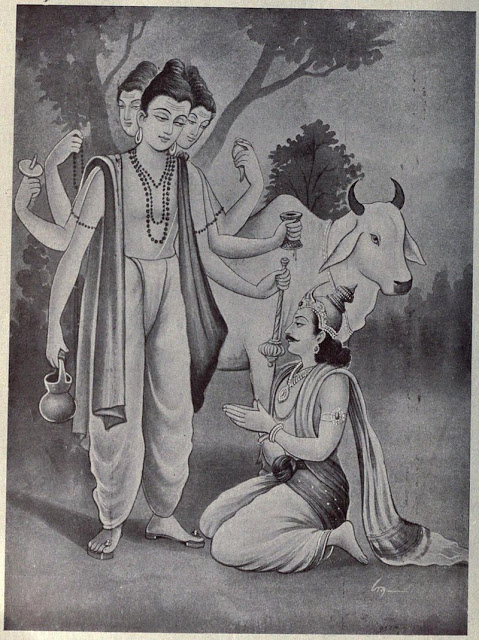
Dattatreya blessing Kartaveerya Arjuna

Written by London swaminathan


Date: 1 JULY 2018


Time uploaded in London –   7-02 AM (British Summer Time)


Post No. 5168


Pictures shown here are taken from various sources such as Facebook friends, Wikipedia, Books, Google and newspapers; thanks. Pictures may be subject to copyright laws.


Hindus revere and respect the teacher as God. Whether it is archery or Atma Jnana lessons, dance or music lessons, same respect is given to the teachers, known in Sanskrit as Guru or Acharya. There is a story in Bhagavatha Purana about a great king of India who gained the strength of 1000 hands by serving his Guru.


Karatavirya Arjuna who is also known as Sahasrabahu- a man with 1000 hands—has good and bad qualities. Every coin has got two sides. He was the son of Krita Virya and his name was Arjuna. Just to differentiate between the Arjuna of Mahabharata and this man he was named Karta Veerya Arjuna. He ruled Haihaya Kingdom, the modern Madhya Pradesh. His capital was Mahismati on the banks of River Narmada.


Bhagavatha Purana narrates a story about his good deeds. He was a great disciple of Dattareya. He learnt all the scriptures—Vedas and Shastras—from him. It was a custom in ancient India to massage the feet of Guru when he goes to bed. Guru gives his full blessings when he is happy. He worshipped Dattatreya with the ancient sloka,


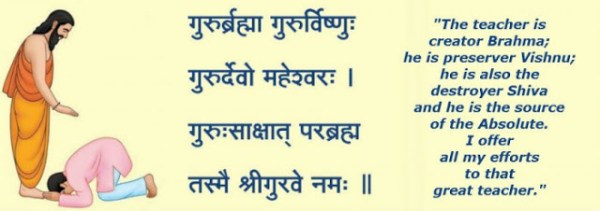
“Gurur Brahma, Gurur Vishnuh, Gurur Devo Mahesvarah

Guru Saakshaat Parabrahma Tasmai Sri Gurave Namah”

(Guru is Brahma, Vishnu, Shiva, Para brahma whom I worship)

Once Kartaveerya Arjuna was massaging the feet of his Guru Dattatreya. He got some burning sensation in his palms. but yet he continued his service. Slowly it went up to his arms and he was wriggling in pain. The Guru woke up he saw his distress and found out what happened. When he was told that his hands were burning, he took Kartaveerya’s hands and stroked them and told him that “from today onwards you will have the strength of one thousand hands and no one could defeat you on earth”. Thus he gained the name of Sahasra Bahu- man with 1000 hands — (actually strength of 1000 hands; thousand did not mean 1000 literally; it means great strength).


Power corrupts, absolute power corrupts absolutely.

So with all the great power he became very arrogant. When Ravana from Sri Lanka came to Narmada River area, Kartaveerya was bathing with his wives. When Ravana, who is fond of all beauties, eyed on his wives, Kartaveerya caught him like a bird and thrashed him. He imprisoned Ravana and placed him in the corner of Mahismati City as an exhibit. Then Ravana’s maternal Grandfather Pulastya used his influence and obtained the release of Ravana. He promised him not to come to his country in his life time.


When Kartaveerya became more arrogant he went to the Ashram (hermitage) of sage Jamadagni and his wife received him with all the honours fit for a king. But he made an ill return for her hospitality and carried off the divine milch cow. Jamadagni’s son Parasurama got angry and cut off his hands and killed him. Kartaveerya’s sons killed Jamadagni in a revenge attack. Then Parasurama vowed to kill all the Kshatria Kings whoever dared to oppose him. Thus Parasurama killed 21Kings.

About Kartaveerya, Hindu mythologies (Puranas) say,

“Having worshipped a portion of divine being called Dattatreya, sprung from the race of Atri, he sought and obtained these boons—

a thousand arms,

a golden chariot that went wheresoever he willed it to go,

the power of restraining wrong by justice,

the conquest of the earth and the disposition to rule it righteously,

invincibility by enemies and

death at the hands of a man renowned over the whole world”.


By him the earth was perfectly governed. It is said that the moment someone thought of doing wrong there he appeared and stopped it.

Another mythology praised him,

“ No other king shall ever equal Kartaveerya in regard to sacrifices, liberality, austerities, courtesy and self restraint”

Thus he ruled for 85 years with unbroken health, prosperity, strength and valour.”

In another place we read,

“When the demon king Ravana came in the course of his campaign of conquest to Mahismati, he was captured without difficulty, and was confined like a wild beast in a corner of his city Mahismati”

Only Vayu Purana differs slightly by saying Karta veerya invaded Lana and there took Ravana as prisoner.


(It may look like contradictory; but I think that both may be correct and could have happened at different times of his 85 year rule)


–Subham–


கண்டித்த மாமனாரும், நல்வழி காட்டிய தாயாரும் (Post No.5167)

Written by S NAGARAJAN


Date: 1 JULY 2018


Time uploaded in London –   5-43 AM (British Summer Time)


Post No. 5167


Pictures shown here are taken from various sources such as Facebook friends, Wikipedia, Books, Google and newspapers; thanks. Pictures may be subject to copyright laws.


இது தான் இந்தியா


கொள்ளைக்காரனைக் காப்பாற்றியவரைக் கண்டித்த மாமனாரும்,

மகனுக்கு நல்வழி காட்டிய தாயாரும்!


ச.நாகராஜன்


இந்தியாவின் கூட்டுக் குடும்ப நெறிமுறையைப் பாராட்டாதவர் இல்லை.


அரிய நற்பண்புகளை வழிவழியாக தலைமுறை தலைமுறையாக உணவோடு “ஊட்டி விடுவது” ஹிந்து வாழ்க்கை முறை.

அதன் மூலம் ஏற்படும் நற்பண்புகள் வியப்பூட்டுபவை.

ஓரிருவர் இதிலிருந்து வழி தவறி நடக்கும் போது குடும்பத் தலைவர் அல்லது வீட்டில் உள்ள பெரியோர் அதைச் சுட்டிக் காட்டுவர்.


பெரும்பாலும் தவறிழைத்தோர் மனம் வருந்தித் திருந்துவர்.

இங்கு இரு சம்பவங்களைப் பார்ப்போம்:


1

60 ஆண்டுகளுக்கு முன்னர் உண்மையில் நடந்த சம்பவம் இது:

ஒரு கிரிமினல் அட்வகேட் கொள்ளைக்காரன் ஒருவனுக்காக அவனது கேஸில் அவன் சார்பில் ஆஜரானார்.

அவரது வாதத் திறமையால் கொள்ளைக்காரன் விடுதலை செய்யப்பட்டான். அதனால் அவருக்குப் பெயரும் புகழும் வந்து சேர்ந்தது.


இந்தச் செய்தியை தனது மாமனாருக்கு அவர் மகிழ்ச்சியுடன் தெரிவித்தார். ஆனால் இதைக் கேட்ட அந்தக் கணமே அவரது மாமனார் திக்பிரமை பிடித்தவர் போலானார்; உடனே பிரக்ஞையையும் இழந்தார். சுயநினைவு போனது.

சற்று நேரம் கழித்து மூர்ச்சை தெளிந்த பின்னர் அவர் வருத்தத்துடன் புலம்பலானார்.


“அடடா! அந்தக் கொள்ளைக்காரன் ஏராளமானோரை இம்சைப் படுத்தி இருப்பான். ஒரு சிலரைக் கொன்றிருக்கவும் கூடும்.அப்படிப்பட்ட மகாபாவிக்கு சட்டத்தில் உள்ள ஓட்டைகளைப் பயன்படுத்தி விடுவித்திருந்தால் பெரிய மாபாவியாக அவனது அட்வகேட் தான் இருந்திருக்க முடியும்.  படித்த உங்களைப் போல ஒருவர் அப்படிப்பட்ட குற்றங்களை ஆதரித்தால், நீங்கள் நரகத்திற்குத் தான் போவீர்கள். பிராமணராக இருப்பதால் தர்மத்தைத் தான் நீங்கள் அனுஷ்டிக்க வேண்டும். மகான்களையும் பக்தர்களையும் கண்டு அவர்களுக்குத் தான் சேவை செய்ய வேண்டும். ஆனால் நீங்களோ ஒரு கொள்ளைக்கார கிரிமினலுக்கு ஆதரவாக இருந்து அவனுக்குச் சேவை புரிந்திருக்கிறீர்கள். நானுமே ஒரு பாவி தான். அதனால் தான் என் மருமகன் இப்படிப்பட்ட கீழ்த்தரமான புத்தியுடன் இருந்திருக்கிறார்.”

வருத்தத்துடன் அழ ஆரம்பித்தார் அவர். அவரை யார் தான் தேற்ற முடியும்?


வயதான அந்த பிராமணர் பணத்திற்காகத் தர்மத்தை இழக்க விரும்பவில்லை. அப்படிப்பட்ட அபூர்வமான மனிதர்களைக் கொண்டிருந்தது ஹிந்துக் குடும்பங்கள்.


பணத்திற்காக தர்மத்தை விட்டு விட்டு அதைச் சம்பாதிப்பதை விரும்பாத லட்சக் கணக்கானோர் வாழ்ந்த பூமி பாரதம்.

அந்த தர்மத்தைக் காத்து “வாழும் பூமி பாரதமாக” இன்றைய பாரதத்தை ஆக்க அவர்களிடமிருந்து உத்வேகம் பெறுவோம்!


2

30 ஆண்டுகளுக்கு முன்னர் நடந்த சம்பவம். ஒரு கனவான் அரசாங்க வேலையிலிருந்து ஓய்வு பெற்று தன் சொந்த ஊருக்குத் திரும்பி வந்தார். வந்தவர் நோய்வாய்ப்பட்டு படுக்கையில் வீழ்ந்தார். அவரது நிலைமை நாளுக்கு நாள் மோசமாகிக் கொண்டே போனது. அவரது மனைவி, குழந்தைகள், அவரது வயதான தாயார் சொல்லவொண்ணா வருத்தம் கொண்டனர்.


அவரது வயதான தாயாரின் சோகம் எல்லை கடந்து போனது. குடும்பத்தைக் காக்கும் அவரது மூத்த மகன் சாகக் கிடக்கிறார். அவரது பக்கத்தில் உட்கார்ந்து அவருக்கு ஆறுதல் அளித்த வண்ணம் இருந்தார். நேராக துளசி மாடம் சென்று ஆழ்ந்த பிராத்தனையில் ஈடுபட்ட வண்ணம் இருந்தார்.


இறுதிக் கணம் நெருங்கியது. வயதான பெண்மணி புலம்பினாள் :” மகனே! கோபால்! கோபால்!! என்னைக் கேட்காமல் எனது அனுமதியைப் பெறாமல் நீ இதுவரை ஒரு காரியத்தையும் செய்ததில்லையே! இப்போதோ நீ சாஸ்வதமா அமைதிக்கு ஆளாகப் போகிறாயே! இதோ, இப்போது உனக்கு அனுமதி தருகிறேன். நீ, போ! எனது அனுமதியுடன் நீ வைகுந்தம் செல். ஸ்ரீ ஹரியே உனக்குத் துணை!”


தாயாரின் ஆசீர்வாதத்துடனும் நாராயணனை ஸ்மரித்த நினைவுடனும்,துளசி தீர்த்தத்துடனும் அவர் இறுதி மூச்சை விட்டார்; நாராயணனின் திருவடியைச் சேர்ந்தார்.

தாயாரோ மனமுடைந்து அழுதார்.


எந்த ஒருவருக்கு மறையும் நேரத்தில் சத் கதிக்கான வழியை எவர் ஒருவர் காண்பிக்கிறாரோ அவரே உண்மை நண்பர். அப்படி வழி காட்டாதோர் உண்மையான உறவினர் இல்லை.

ஏராளமான குடும்பங்களில் இப்படி ஒரு இறப்பு நிகழும் தருணத்தில் இறைவனை ஸ்மரணம் செய்வதும், செல்கின்றவருக்கு நற்கதியை அடைய வழி காட்டுவதும் ஹிந்துக் குடும்பங்கள் காலம் காலமாக அனுஷ்டித்து வரும் ஒரு புனிதமான பழக்கம்.


இது தான் இந்தியா!


***


ஆதாரம் : Truth வார இதழ் 15-6-2018 – தொகுதி 86 இதழ் 9

ஆங்கிலத்திலிருந்து தமிழாக்கம் : கட்டுரை ஆசி