Pictures are taken from various sources for spreading knowledge; this is a non- commercial blog. Thanks for your great pictures.
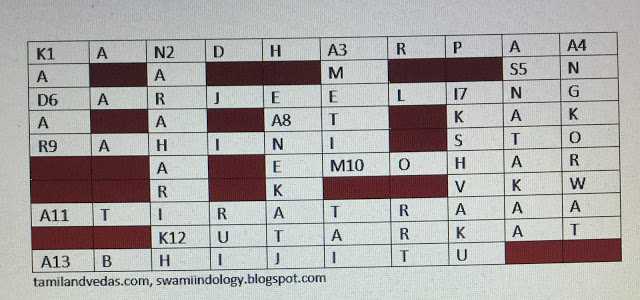
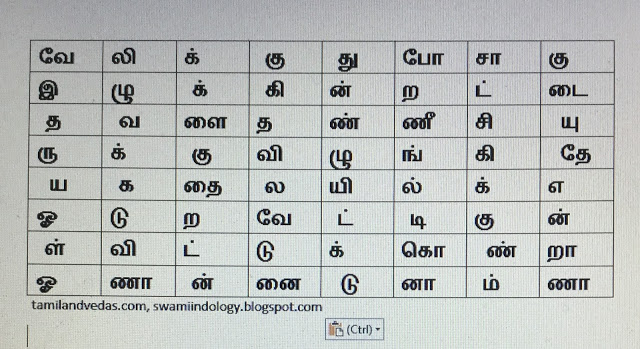
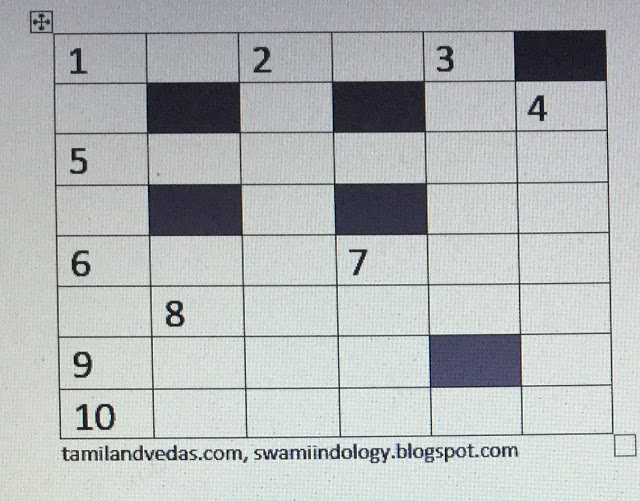
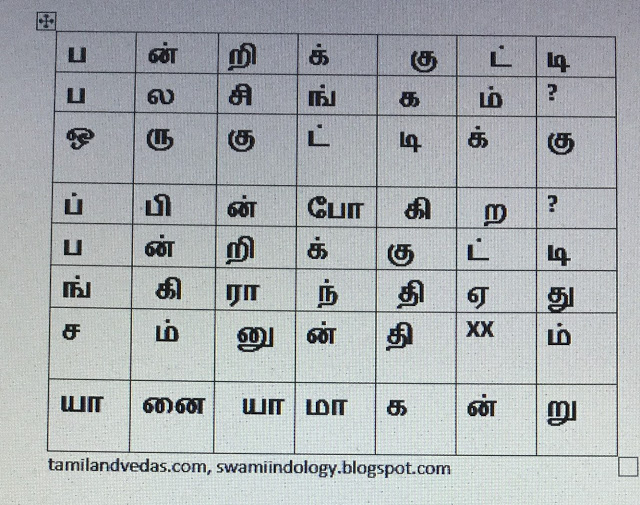
ஒரே சொல் மீண்டும் மீண்டும் வந்தால் ஓரிரு இடங்களில் மட்டுமே கட்டத்தில் இருக்கும். கொண்டு கூட்டி பொருள் கொள்க . விடை கீழே உள்ளது . சில நேரங்களில் படங்களைப் பார்த்தாலும் விடை காண உதவலாம்.
ஓந்தி , கரட்டாண்டி , பச்சோந்தி (Chameleon, Oriental Garden Lizard) என்ற பெயர்களும் உண்டு.
Pictures are taken from various sources for spreading knowledge; this is a non- commercial blog. Thanks for your great pictures.
tamilandvedas.com, swamiindology.blogspot.com
Rig Veda is the oldest record of Human achievements. It shows that Hindus knew about ALIEN CIVILIZATIONS long ago. Scientists should study Rig Veda and see whether they can predict future inventions and discoveries. I have been predicting for long that Time Travel is possible. Einstein and others have been predicting that light is the fastest matter in the universe. But all Hindu scriptures say that MIND is the fastest thing in the world. But light is concrete and sound is abstract in our views. Mind power can also be used to travel inter galactically. For instance Narada was an Inter Galactic Traveller. He appeared in Bhu (Earth), Bhuvar and Swarga Loka (Heaven). He is a Tri Loka Chnachari.
***
Now back to science-
Light travels at the speed of 1,86,000 miles per second. So to reach the nearest star Alpha Centauri, you will have to travel at this speed for four and a half years. Scientists believe that it is not at all possible. At the moment, our satellites and rockets travel at the speed of 60,000 miles PER HOUR. But Hindus believe that thought can take you to any destination faster than light. We saw it in Ramayana. Rama has propelled his plane Pushpaka Vimana with mind power and reached Ayodhya within 24 hours. Even before he reached Ayodhya Hanuman went first with the Good News and stopped Bharata entering Fire Pit (Agni Kunda); it is a 3000 mile trip from one point in Sri Lanka to Ayodhya in Uttar Pradesh.
Tamils also did this. When Kerala King Cheraman Perumal Nayanar and Tamil Nadu saint Sundara murthy went to Kailash on horse back, old Tamil poetess Avvaiar heard about this and went in a trice to Kailash by though power.
If any one thinks that all these are pigments of imagination, at least give them the credit of first science fiction writers.
***
Let me continue—
Two things come to my mind-
Gods were living on earth along with the humans and left them at one point. (Adi Shankara and Satapata Brahmana explains in the link given at the end- Why Gods Left Earth? My article dated 15-1-2017)
This clearly shows that Inter Galactic Travel was done at one time.
The second thing that came to my mind was the Inter Galactic Travel done by Arjuna in the space shuttle piloted by Matali according to Vana Parva of Mahabharata. Dilation of Time is also explained in the story of Revati (Please see the links at the bottom.)
***
Hindu children repeat the words ‘Koti Surya Samaprabha’ ( brightness equal to ten million Suns) in their daily prayers. Even the Father of Atomic Bomb J.Robert Oppenheimer remembered the words ‘DIVI SURYA SAHASRASYA’ One Thousand Suns (Bhagavd Gita Sloka 11-12) when the first Atomic Bomb was exploded in 1945, just one month before they dropped it on Hiroshima on 6th August 1945.
So, the Hindus knew about billions of Suns (stars) and millions of earths about which we read in our Astronomy columns and magazines today.
All stars are holy souls according to Space Pilot Matali in the Vana Parva of Mahabharata.
This type of information is found even in the oldest book in the world, the Rig Veda.
Hymns from Rig Veda
Here are the hymns from Rig Veda-
“Indra has grown yet greater for vigour. The one un decaying divides the treasures Indra has transcended heaven and earth, half of him is equal to both the worlds – RV.6-30-1
“Indra , the vast axle of your wheel by greatness transcends Heaven and Earth – RV.6-24-3
“INDRA , IF THERE WERE A HUNDRED HEAVENS AND A HUNDRED EARTHS, NOT EVEN IF THERE WERE A THOUSAND SUNS COULD THE WORLD EQUAL YOUR EFFULGENCE AT BIRTH – RV.8-70-5
(The worlds have different levels and are sometimes divided in different ways. Savitar is the Sun God as the divine Father and Creator. He rules five realms divided three fold. Mitra and Varuna rule four realms divided three folds , explains David Frawley.)
(Indra means a leader, a God, a King in Sanskrit; Tamil literature also follow it and use IRAIVA for both God and King. So one has to be careful in interpreting.)
***
“Savitar by greatness has encompassed three atmospheres, three regions and three luminous heavens . Three heavens and three earths he has directed , may he guard us through his nature by his three fold law -RV.4-53-5
“Mitra and Varuna , three luminous realms and three heavens , you uphold three realms. Adityas, you are the upholder of the region, of the luminous Heaven, of Heaven and Earth -RV.5-69-1, 4
***
“All worlds and all creatures exist ETERNALLY in the presence of Savitar. Three heavens are his, with two in his presence. One in the realm of Yama (God of Death) is the abode of the heroes – 1-35-5,6
***
“Men can also go to these regions of the gods and become one with them .
May I attain that beloved abode of his , where godly men rejoice, where there is kinship with him of wide stride, a fountain of bliss in the supreme abode of Vishnu – 1-154-5
“That supreme abode of Vishnu LIKE AN EYE EXTENDED HEAVEN, the seers ever see” -1-22-20
Griffith translates the same mantra as follows-
“The princes ever more behold that loftiest place where Vishnu is LAID AS IT WERE AN EYE IN HEAVEN .
This Vishnu’s station most sublime, the singers ever vigilant, LOVERS OF HOLY SONG, LIGHT UP .”
**
There are innumerable passages like this. We may not even understand it fully until new discoveries are made. But a scientist with perspective outlook may interpret them even now.
What we must notice is the word ‘LUMINOUS (light)’ in many hymns.
What we must remember is the translation of Sanskrit hymns into English is at least 100 years ago. People don’t know much astronomy in those days.
WHEN IT COMES TO SPEED, HINDUS ALWAYS USE ‘MANO VEGAM’ – SPEED OF MIND/THOGHT (RV.1-23-3)
(About 50 years ago I read a book titled ‘ SCRIPTURE OF THE HEAVENS’, where this ‘abode of Vishnu’ is explained as star VEGAS (more information about Vegas is available in Wikipedia).
Before I conclude I want to point out that Hindus are the only people who gave mind boggling number for ‘a day of Brahma’ (4-32 billion solar years) which means different time scales compared to human years.
Putting all together will give you a good picture of Hindu View of Universe.
WHY GODS LEFT EARTH ? ADI SANKARA EXPLAINS! (Post …
15 Oct 2017 – Adi Shankara, one of the great philosophers, says that gods (Devas) left the earth after becoming fed up with the demands of the human beings …
28 Jan 2012 – Arjuna was taken to Indra Loka by Matali in his special chariot (may … The theory of Time dilation is explained in the story of Arjuna’s travel to …
Time Travel | Tamil and Vedas
tamilandvedas.com › tag › time-travel
Posts about Time Travel written by Tamil and Vedas. … I have already written about Arjuna’s travel to alien worlds and the Theory of Time dilation. … dilation. Arjuna was taken to Indra Loka by Matali in his special chariot (may be a spaceship).
5 Jun 2011 – Theory of Time Dilation. If a 16 year old person travels at the … But there is a story in our Puranas about Arjuna’s travel to Swarga (an alien planet?) in Indra’s chariot driven by his driver Matali. When Arjuna came back to earth …
STAR MYSTERIES IN THE RIG VEDA- Part 1 (Post No.4247 …
26 Sep 2017 – The mystery about the star is its heliacal rising at different times in … Matali is always associated with space travel and I have written about Arjuna’s space travel in Matali’s … tamilandvedas.com/2014/09/12/did-kalidasa-fly-in…
19 Oct 2015 – Arjuna was taken to Indra Loka by Matali in his special chariot (may … The theory of Time dilation is explained in the story of Arjuna’s travel to …
Date uploaded in London – – – 22 June 2020 Contact – swami_48@yahoo.com Pictures are taken from various sources for spreading knowledge; this is a non- commercial blog. Thanks for your great pictures.
MODERN RISHIS-2 R. Nanjappa
Two Prophets and a Rishi-1
[Life today is organised around economics. Economic considerations dictate every other type of activity. Just now, people are anxious to resume full scale economic activities, though Covid19 is still spreading! Even temples are eager to do business as usual, for the sake of income! So, it is important to understand some basic factors relating to our economic life and organization. Economic problems do not spare us because we do not know economics!] Rishis in two worlds! A Rishi is one who fundamentally alters our conception of Reality by pointing out a basic aspect which we had hitherto not known. This Reality is two-fold; one aspect relates to the Ultimate Reality and the other, to aspects of the relative existence. The two are connected. A true religion asks us to order the relative existence in the light of the ultimate Reality and not to neglect our worldly existence. Hindu religion has neatly classified the aims of human existence into 4 categories- Dharma, Artha, Kama and Moksha. A sane householder has to strive for all the four, though the relative importance of any will depend upon the particular stage of his life. A man of 70 cannot behave like a boy of 17! As the saying goes, as we age, we have to repack our bags! While the highest ranks of the Rishis are almost totally devoted to the Ultimate Truth, they too have to live in this world. Our ancient Rishis did not exactly starve. We have an episode in the Brihadaranyaka Upanishad, where Yajnavalkya engages in the highest philosophical discussions, but does not neglect to collect the reward offered by the King! But he is surely not after wealth-artha-as such. For he knows that the Truth cannot be attained by wealth. Amrutatvasya tu na aasaa asti vittena iti. (There is no hope of Immortality being gained through wealth.) Yajnavalkya in Brihadaranyaka. II.iv.2
And he is matched by an equally evolved wife. When he offers to divide his property among his two wives, and proceed to the forest, one of them Maitreyi says what would she do with that wealth which would not confer her Immortality!
Tenaaham na amrutaa syaam Kim aham tena kuryaam? What shall I do with that which will not make be immortal? II.iv.3 (Brihadaranyaka Upanishad. Sankara’s commentary. Tr. By Swami Madhavananda. Advaita Ashrama, 1975.) One has to lead a righteous life, never forgetting the ultimate goal that is Liberation. Shunning life is not the solution to the problems of life! The Gita too does not ask Arjuna to run away from the battle field! It makes a distinction between Tyaga and Sanyasa and says that an embodied being cannot avoid action, but the one who while performing the necessary activity yet renounces the fruit of such action is a renouncer- karma phala tyagi. 18.11 This is exactly what is prescribed in the first mantra of the Isha Upanishad- Tena tyaktena bhunjita. Enjoy by renunciation! Thus our scriptures have an organic unity. It requires patient study and quiet reflection. We may therefore conclude that life in the world is also important. There are those high souls who teach us how to live properly. But they can not always be considered Rishis. There is another category of teachers, whom we may call Prophets. Their job is mainly to draw attention to the defects of our ways and to point in the right direction.
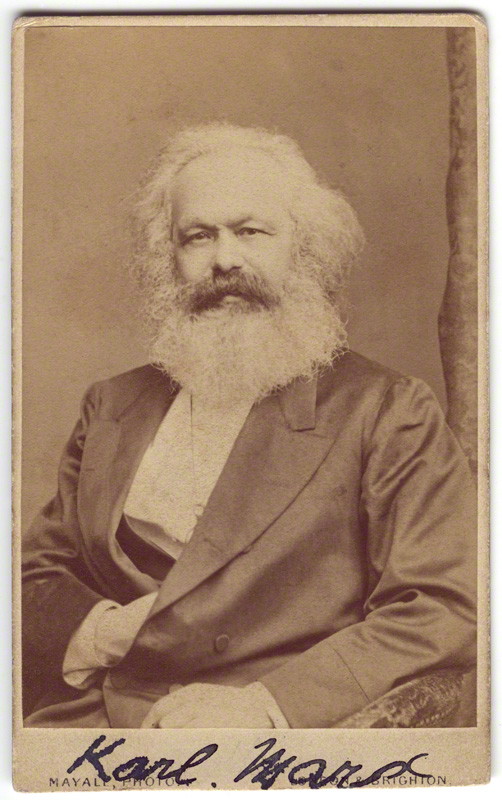
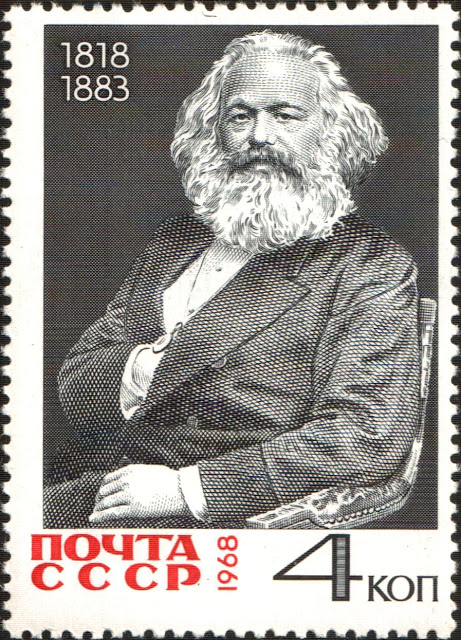
Marx- the philosopher and the prophet While the economic aspects of our earthly existence cannot be neglected, no civilisation before our own exalted the economic above all other considerations! Two human inventions have been instrumental in this: the invention of money and the mechanisation or industrialisation of our economic life. It was capitalism which combined both in a heady concoction, but today every form of modern economic organization, including socialism, is based on both money exchange and large scale industrialization.. The first great thinker to draw our attention to the evil effects of such a combination and the industrial mode of production was Karl Marx. [1818-1883] He pointed out how this new mode alienated man from his humanity, and in the process he too became a commodity to be used and thrown, and valued through the medium of money. This mode concentrated economic wealth and power in the hands of a few, and made the masses of people suffer. The inequalities in wealth increased in the society, and the gap between the rich and the poor widened all the time. Picture from the National Portrait Gallery, London. There have been many learned and valid arguments against Marx. But the stark facts speak for themselves. According to all the surveys conducted by all the international agencies, the rich have been growing richer, and the poor, poorer in all parts of the world, where modern economics is practised! Professional economists are wont to confuse us with too many refined theories – like whether we should measure inequalities in wealth, or income or consumption. But by any measure, the greater wealth is getting concentrated in fewer hands of the super rich: just 1% of the adults own more than 40% of the world’s assets; just 3 individuals owned more wealth than the bottom 48 nations of the world in 2000! David C.Korten has shown how the balance sheets of a few Corporate bodies exceed the combined budgets of most countries in the world! This stark reality no ingenious economic theory can white wash or wish away! The most poignant aspect of the suffering of the people in the modern world is that whether we take hunger, health care, access to minimum amounts of material goods and services, the cause is not scarcity or non-availability, but accessibility and affordability. Production processes and services have been so much mechanised, and centralised that productive and meaningful employment , and consequently access to the means of living have become a problem for most people. Marx anticipated these developments more than 150 years ago and they have not changed, in spite of all the seeming changes! ( progress!) Within the capitalist system all methods for raising the productivity of labour are put into effect at the cost of the individual worker…. Accumulation of wealth at one pole is, therefore, at the same time the accumulation of misery , the torment of labour, slavery, ignorance, brutalization and moral degradation at the opposite pole, ie on the side of the class that produces its own product as capital.
We may readily concede that the condition of the factory worker has vastly improved – but not in all countries. The wealthier countries have intentionally shifted production to countries like China which do not follow the international norms for labour, to ensure low cost! And in our own country we now have lot of IT savvy employees- called by that ugly epithet ‘Techies’ but look at their over all working conditions: are they free, and do they enjoy moral and intellectual freedoms? Do they have regular working hours and rationally determined work load? Are they not ‘burnt out’ rather early? And what about the millions of those who cannot get employment? the commercial crises… by their periodical return put on trial, each time more threateningly, the existence of the entire bourgeois society….. In these crises there breaks out an epidemic that, in all earlier epochs, would have seemed an absurdity- the epidemic of over-production. Let us briefly note here that this was written in 1867. We had a very serious crisis from 1929 to 1939, again in the 90s and then again in 2008. Each one was more threatening than the previous one. The latest one in 2008 was more severe than the world depression of the 1930s. Thus, for all its so called ‘progress’ the capitalist leopard has not changed its spots! The last cause of all real crises always remains the poverty and restricted consumption of the masses as compared to the tendency of capitalist production to develop the productive forces in such a way that only the absolute power of consumption of the entire society would be their limit. Capitalist mode of production keeps improving productivity, and expanding production. This results in a situation of what economists call over-production or under-consumption or equilibrium at less than full employment or secular stagnation etc. This is a definite insight of Karl Marx. But the most basic objection of Marx to capitalism is on account of its tendency to degrade and brutalise human beings, as shown in the first extract quoted above. Marx was primarily concerned about the human condition. (We may look at this in more detail later.) Note: We are looking here at Karl Marx as a philosopher and prophet- not as active politician. We should not confuse the original insights of Marx with the political ideology or propaganda that goes by his name.
Keynes- rebel capitalist, reformer and prophet of the good life Even as Marx was writing, social and industrial reform movements were afoot and the factory working conditions gradually improved. However, the tendency of the capitalist economy to face periodical crises did not change, or their intensity abate. These were known by the name Trade or Business cycles. Conventional economic wisdom considered them as part of the system, something that would correct itself, given time. Since they believed in the notion of equilibrium, such upsets were the correctives needed for a new equilibrium. But what they involved was serious imbalance between production, consumption, investment and employment. This brought misery to whole sections of people. The crisis of the 1920s and 1930s became a world phenomenon, bringing untold suffering in its train to large masses of people.. How long could the people wait for a new equilibrium to show up? It was here that John Maynard Keynes came up with his solution. He pointed out that the conventional economists began from assumptions which were not based on reality. They assumed that there was equilibrium at full-employment. But Keynes pointed out that there could be equilibrium at many levels of employment, and in a situation of depression as they were in, it called for direct intervention by the government to boost the spending power of the people ( effective demand), so that there would be enough money going round in the system to promote fresh investment and employment.
Picture from National Portrait Gallery, London. This was a novel solution, though still within conventional economics. People overlooked the conventional aspects, and looked at it as a ‘revolution’. Opposition / reservations were expressed from many quarters on many grounds. However when the misery intensified, the US under Roosevelt took some half-hearted measures under the so called New Deal. Soon the World War intervened, and recovery started. But there was a more intensive crisis in 2008, when the entire financial system of the so called free world- the arch capitalist countries- almost melted. It was brought about by the unrestrained free market policies of Reagan-Thatcher dispensation. They gave unrestricted freedom to the financial sector to make innovations in products and processes, whose nature they did not know and could not understand, and which they could not control or regulate. The financial system went bust, banks failed and govt had to intervene in a very big way to save the so called “free market”. And unlike in the 1930s, the governments adopted Keynesian solutions and recovery started within a year or so, without resort to any war! It was thus Keynes who saved capitalism from the capitalists themselves. (But the tax payer bore the burden! )
People are yet to realise that Keynes had understood the real problem of capitalism -over production and under employment- as pointed out by Marx and given it a solution based on the conventions and ideals of a free society , thus avoiding the need for any revolution. But Keynes too was not a mere economist. Like Marx, he too was a philosopher. No doubt he had to deal with the pressing economic problems of the day as an academic, as an official, as adviser, etc. But above all else, he was concerned with the basic goal of life. For him, money was a means to an end, and he considered preoccupation with money as such as the manifestation of mental illness. Keynes believed that man’s material wants were rather limited , and in a short essay in 1928 and a lecture later, (about ‘the economic possibilities for our grandchildren’) predicted that in about a century , we would be able to solve our economic problems and devote our lives for the real purposes of living: for the first time since his creation man will be faced with his real, his permanent problem- how to use his freedom from pressing economic cares, how to occupy the leisure, which science and compound interest will have won for him, to live wisely, agreeably and well. This shows that Keynes was not a growth maniac, like the blind modern economists are. He did not consider man as an economic animal., or making money his chief aim in life.
Two Prophets and a Rishi-2 Marx and Keynes: Failed prophets? People have overlooked the essential aspects of both Marx and Keynes. Both were primarily philosophers, but most people do not know or do not care. Marx said that philosophers interpreted the world, but the need was to change it. He failed in the limited attempts he made to change it, but he sort of believed that capitalism would fall of its own accord due to its internal contradictions. But he did not know how exactly the end would come. Capitalism has shown great resilience and managed to survive so far. Keynes saved capitalism from a severe crisis in the last century, and showed a way to deal with its tendency for periodical crises. In this preoccupation, his focus was expressly on the short term. But his long range prediction (or hope?) was that technological improvements would enable man to solve his economic problem in a hundred years and he expected him to devote his time for ‘higher ‘ purposes. But this has not materialized so far, and appears far from getting fulfilled. If anything, the horizon of hope ever keeps receding. Can we thus say that both Marx and Keynes are failed prophets even though their basic philosophies hold a clear view of truth? For Marx, the basic problem was the alienation of man from his own real nature-his essential humanity. Money is a tool in this process. For Keynes, man’s preoccupation with money was a psychological illness, and it obscured the real aims of life. Both these are valid insights. But they did not go deep into the real causes of our economic disease or distress.
Root of the matter: E.F.Schumacher. In a way, neither Marx nor Keynes went to the root of the matter. Modern economic Organization – whether it is capitalist or socialist or communist, or called by any other Name – is still materialist at base, and in essence. They put material things above all else. Those organizations exist primarily to satisfy human wants, but the wants go on multiplying all the time. The only way to satisfy the wants is to produce more. More production involves more intensive and extensive exploitation of natural resources. Economists of all varieties and descriptions simply assume that the resources will last and ….last! Or, science and technology would somehow stretch their use almost infinitely! Some rare economists like E.J. Mishan of the London School of Economics pointed out that growth involved costs, but they were ignored by the establishment. Mishan even found it difficult to publish his book, as no standard publisher was ready to print it. Moralists like Gandhi objected to the modern economy, but they were not taken seriously by the economists or the political establishments. The first economist to seriously question the materialistic model of economic organisation was E.F. Schumacher. In his 1973 book “SMALL IS BEAUTIFUL” – A Study of Economics as if People Mattered, he voiced concerns not only about the effect the economy was having on people, but also on Nature, of which man was part. His propositions were simple, direct: Modern man treats himself not as a part of nature but as an outside force. He is attempting to ‘conquer’ it; if he succeeded in that, he would be on the losing side.Modern economy is based on exploitation of fossil fuels (and other natural resource). Man is treating them as income items, even though they are undeniably capital items. Man is thus living on capital.Our scientists have compounded substances unknown to nature. Nature is unable to deal with them.Resort to nuclear energy to solve the fossil fuel problem is to solve one problem by creating environmental and ecological problems.Economic theory has been developed only by disregarding qualitative considerations, and ethical issues. Problem of poverty cannot be solved unless ‘mass production’ is substituted by ‘production by the masses.’Scientific knowledge is used without wisdom. Technological development has to relate to human scale. Man is small; therefore, small is beautiful! Logic of production is neither the logic of life, nor the logic of society. Man should know when enough is enough. It can be imagined what an upheaval the book would have created!
The substance of Schumacher’s thesis is that man has created an economy which is unsustainable. He pleaded for intermediate, appropriate human scale technologies. He also argued that man is not a mere economic machine but he has other, higher needs. Preoccupation with economics should not be at the cost of his humanity. It is not a good state of affairs when bad things going into machines come out good, while the men attending them get degraded! Some of these themes he developed further in two other books, A Guide For The Perplexed, and Good Work. Sustainable economics is what Gandhian J.C.Kumarappa called the ‘Economy of Permanence’. But Schumacher treated it more fully, and more academically. Today, it has become a fixed element in the consciousness of the better educated, thinking part of humanity. It is certainly a new consciousness that he has created. As such, he is also a modern Rishi whom I salute.
Note: There is no substitute for reading some good literature on the subject. For general readers, I suggest the following: 1. Marx’s Das Capital by Francis Wheen. Indian edition published by Manjul Publishing House, 2008. 2. Keynes: The Return of The Master by Robert Skidelsky. Penguin, 2010. 3.How Much is Enough. by Robert & Edward Skidelsky. Penguin. 2013. 4. Beyond The Chains of Illusion by Erich Fromm 5.The Affluent Society by John Kenneth Galbraith Books at 2 and 3 above are some of the best I have read in over 40 years. Schumacher’s books are available in different editions. I have not been able to provide his picture here due to copyright hassles. ***
Pictures are taken from various sources for spreading knowledge; this is a non- commercial blog. Thanks for your great pictures.
ஹிந்தி படப் பாட்டுகள் – 75 – பக்திப் பாடல்கள்!
R. Nanjappa
” The fear of the Lord is the beginning of wisdom”, என்பது பைபிளில் வரும் வாக்கியம். நம் திருவள்ளுவர் மொழியில்,
கற்றதனாலாயபயனென்கொல், வாலறிவன்
நற்றாள்தொழாஅர்எனின்
என்போம்.
சினிமா என்னதான் பொழுதுபோக்குச் சாதனமாக இருந்தாலும் அங்கும் அடிப்படையில் தெய்வபக்தி சிறிதளவாவது இருக்கிறது. (ஹிந்துக் கடவுளைக் காட்டாவிட்டாலும் வேறு ஏதாவது காட்டுவார்கள்!) சினிமாவில் காட்டுகிறார்களோ இல்லையோ, அதில் ஈடுபட்டுள்ள பலரும் சொந்த வாழ்க்கையில் ஏதோ தெய்வ நம்பிக்கை உள்ளவர்களாகவே இருக்கிறார்கள். எந்தப் படமானாலும் ‘பூஜை” (முஹுரத்) என்று போடாமல் தொடங்குவதில்லை! (நம் ஊரில் சாமி இல்லை என்பவர்களும் தாயே தெய்வம் என்பார்கள்!)
நமது வேதம் முதலில் தாயைத் தான் தெய்வமாகச் சொல்கிறது: “மாத்ரு தேவோ பவ”! இதை ஒரு படத்தில் அருமையான பாட்டாகத் தந்துவிட்டார்கள்:
Song: Ae Malik tere bandhe hum Film: So Ankhen Barah Haath 1957 Lyrics: Bharat Vyas
Music: Vasant Desai Singer: Manna Dey & Lata Maangeshkar (separately)
நமது திரைப்படங்களில் வந்த பிரார்த்தனைப் பாடல்களிலேயே இது மிகச் சிறந்தது. வட இந்தியாவில் பல பள்ளிகளில் பிரார்த்தனைப் பாடலாக இருந்தது. பாகிஸ்தானிலும் இதை விரும்பி வரவேற்றார்கள்!
இது பைரவ் (பைரவிஅல்ல) ராகத்தில்அமைந்தபாட்டு!
நமது திரை இசையில் இது அமர கீதமாகிவிட்டது-
Like an Anthem!
ஹிந்தித் திரை இசையில் நமது பாரத பண்பாட்டு மரபு எப்படி விரவி வருகிறது என்று பார்த்தோம். சாஹித்யத்தில் நமது இலகிய மரபுகள் பயின்று வருகின்றன. திரை இசை பெரும்பாலும் நமது பிரதேச, சாஸ்திரீய இசையின் அடிப்படையில் அமைந்ததே. மேலை நாட்டு அம்சங்களையும் நமது மரபுக்கு ஒப்பதாகவே செய்தார்கள். நமது பழைய இசையமைப்பாளர்கள் ஒரு ராகத்தை மூன்று-நான்கு நிமிஷங்களுக்குள் ஒரு பாட்டில் பிழிந்து கொடுத்தார்கள் என்றெல்லாம் பார்த்தோம். தெய்வச் சிந்தனை கொண்ட பாடலுடன் இக்கட்டுரைத் தொடர் தொடங்கியது. அதே தெய்வச் சிந்தனையுடன்- இந்த மூன்று பிரார்த்தனைகளுடன் இந்தத் தொடரை முடிப்போம்.
Pictures are taken from various sources for spreading knowledge; this is a non- commercial blog. Thanks for your great pictures.
போஜ மன்னனுக்கு நடந்த மூளை அறுவைச் சிகிச்சை!
ச.நாகராஜன்
போஜ பிரபந்தம் என்னும் நூல் தரும் சுவையான தகவல் ஒன்று இரு பிராமணர்கள் போஜ மன்னனுக்கு மூளை அறுவைச் சிகிச்சை செய்ததைக் கூறுகிறது.
11ஆம் நூற்றாண்டைச் சேர்ந்த நூலாக போஜ பிரபந்தம் கருதப்படுகிறது.
ஆட்சிக்கு வரும் முன்னர் போஜ ராஜனுக்கு மூளையில் ஒரு கட்டி வந்து அடிக்கடி வரும் தலைவலியினால் அவன் பெரிதும் வருந்தினான்.
உஜ்ஜயினி நகரத்தைச் சேர்ந்த இரண்டு பிராமணர்கள் இதை அறிந்தனர். உஜ்ஜயினியிலேயே சிறந்த அறுவைச் சிகிச்சை நிபுணர்களாக அவர்கள் திகழ்ந்தனர்.
அவர்கள் போஜனின் அரண்மனைக்கு வந்து தாங்கள் சிகிச்சை செய்வதாகக் கூறினர். அதன்படியே மூளை அறுவைச் சிகிச்சையைச் செய்து அவனைக் குணப்படுத்தினர்.
மூளை அறுவைச் சிகிச்சையைப் பற்றிய விவரணம் அவனுக்கு மயக்கமருந்து தரப்பட்டு செயற்கையாக உணர்வற்ற நிலைக்கு அவன் கொண்டு வரப்பட்டதையும் இதற்காக சம்மோஹினி என்ற மருந்து விசேஷமாகத் தயாரிக்கப்பட்டதையும் கூறுகிறது. அவனது மண்டை ஓடு திறக்கப்பட்டு மூளையில் அறுவைச் சிகிச்சை மேற்கொள்ளப்பட்டு அவனது கட்டி அகற்றப்பட்டது. பின்னர் இன்னொரு மருந்தின் மூலம் அவன் சுய உணர்வுக்கு கொண்டு வரப்பட்டான்.
அறுவைச் சிகிச்சை வெற்றிகரமாக முடியவே போஜனால் அரும் பெரும் காரியங்களைச் செய்ய முடிந்தது. தனது படைக்குச் சிறந்த தலைவனாக விளங்கினான்; அனைத்துக் கலைகளையும் கற்றான்; பல அரிய நூல்களை எழுதினான். மொத்தத்தில் அவன் ஒரு அறிவுக் களஞ்சியமாகத் திகழ்ந்தான்!
போஜ ராஜாவைச் சந்தித்த இரு பிராமணர்கள் அவனை நோக்கி, “ஹே! ராஜன்!பயப்படாதே! என்ன வியாதி என்று கண்டுபிடிக்கப்பட்டு விட்டது. ஆனால் நீங்கள் ஒரு தனிப்பட்ட இடத்தில் சிகிச்சைக்காக இருக்க வேண்டும்” என்றனர்.
ஒரு பொடியைக் கொடுத்து போஜனை உணர்விழக்கச் செய்தனர் அவர்கள்.
மண்டை ஓட்டைத் திறந்து மூளையில் இருந்த கட்டியை அகற்றி அதை ஒரு பாத்திரத்தில் போட்டனர். பின்னர் அங்கங்களைப் பொருத்த வல்ல சந்தானகரணி என்னும் மருந்தினால் அவனது மண்டை ஓட்டைப் பழையபடி உரிய முறையில் பொருத்தினர். சஞ்சீவினி என்னும் மூலிகையால் அவனை பழையபடி சுய உணர்வுக்குக் கொண்டு வந்தனர்.
போஜன் எழுதிய நூல்கள் பற்றியும் அவனது மேதைத் தன்மை பற்றியும் பல கட்டுரைகளை எழுதியுள்ளேன்.
Pictures are taken from various sources for spreading knowledge; this is a non- commercial blog. Thanks for your great pictures.
ஒரே சொல் மீண்டும் மீண்டும் வந்தால் ஓரிரு இடங்களில் மட்டுமே கட்டத்தில் இருக்கும். கொண்டு கூட்டி பொருள் கொள்க . விடை கீழே உள்ளது . சில நேரங்களில் படங்களைப் பார்த்தாலும் விடை காண உதவலாம்.
Pictures are taken from various sources for spreading knowledge; this is a non- commercial blog. Thanks for your great pictures.
tamilandvedas.com, swamiindology.blogspot.com
All the ancient civilizations began on the banks of long rivers like Saraswati, Sindhu, Ganga, Nile, Tigris, Euphrates and Huang He (Called Yellow River and Sorrow of China). But the most wonderful thing is that only Hindus have been worshipping rivers as Goddess until today. Hindus are the one who gave them women’s name to show that they are like Mothers. Hindus are the only community who use the river water in temples and holy ceremonies until today. Oldest book in the world, the Rig Veda, has quotations on water. Hindus are the only people who worship seven holy rivers every morning in the ‘Pratas Smaran Hymn’. Millions of RSS members also recite ‘Pratas Smaran’ every morning.
Recently I posted the names of 139 holy rivers and 39 holy lakes in this blog. Links for important articles are given at the bottom.
Tamil Veda known as Tirukkural also echoed all that is said in Sanskrit scriptures. A beautiful couplet in Trukkural of Tiru Valluvar says,
If rains fail , festivals of the year and the daily worship of the gods will cease—Kural 18.
The author Tiru Valluvar placed the chapter RAIN next to Prayer which is the first chapter. In the ten couplets he shows his indebtedness to Veda and Gita (Bhagavad Gita) by using the Sanskrit words Dhaanam, Tavam, Puja and Amrit in this chapter.
In simple words he showed what is already said in Satapata Brahmana (1000 BCE) and Bhagavad Gita (3-14)
I want to show Greeks also expressed similar views on Water which shows the link between the scholars of both the cultures even before Alexanders march to India:-
“Thales , 624- 546 BCE , a Greek from Miletus, was a ‘phusikos’ – that is ‘a student of the nature’. Aristotle thought that Thales was the first person to think rationally about nature because he offered argument against those – like Hesiod- who simply told stories. Thales started the trend for asking
What makes the world as it is? and came up with the answer-‘Water ‘.
Life and all nature needed water to grow ; and water could not be generated – it was just there. Further water was able to take on solid, liquid and gaseous forms; it could explain how water changed to everything else. But Thales never tried to test his theory. That idea, so crucial to us, was another two millennia in the making.
As one of the Greeks Seven Sages, Thales was also responsible for the saying ‘Know Yourself’.
Very Greek was his reply to the question , How best one can hear adversity ? If one sees one’s enemies doing even worse. If you cannot be a winner , it is some compensation if your enemies aren’t either”
–eureka, peter jones, 2014
***
Now compare,
“All food is produced because of rain,
Which itself is food again”
– Kural 12
Rain produces food ; rain becomes food is the meaning.
Lord Krishnasays,
“From food creatures come into being; from rain is the birth of food; from sacrifice rain comes into being and sacrifice is born of work.”—Bhagavad Gita 3-14
Dr Radhakrishnan compares it with
Manu 3-76 and RV 10-117-6
Manu says ,
“An offering cast properly into the fire /sacrifice approaches the sun; rain is created from the sun, from rain comes food, and from that progeny”.
Now we know these two scientific facts : 1.cloud seeding (Yaga smoke) helps raining; 2.Sun evaporates sea water and it becomes food and produces food.
Rig Veda 10-117-6 says one who eats without sharing is a guilty man.
Pandya King Ilam Peru Vazuthi also says in 2000 year old anthology Purananuru, that “Tamils wont eat even if they get Indra’s Amrit without sharing (Puram 182)”
24 Sep 2013 – Tamil and Vedas. A blog exploring themes in Tamil and vedic literature. Hydro Therapy in Hindu Scriptures · B_Id_406814_kawadiyan-walking.
3 Jul 2016 – We know that CCTV cameras are everywhere; we know about the … We know the five elements are water, fire, earth, air/wind and space/ether.
Water miracles | Tamil and Vedas
tamilandvedas.com › tag › water-miracles
30 May 2018 – Posts about Water miracles written by Tamil and Vedas. … I have already given the stories of walking on the water and flying through the air …
8 May 2014 – Written by London swaminathan Post No. 1030; Dated 8th May 2014. It is true that almost all the civilizations appeared on the banks of the big …
139 HOLY RIVERS AND 39 HOLY LAKES OF INDIA (Post No …
7 Jun 2020 – 139 HOLY RIVERS AND 39 HOLY LAKES OF INDIA (Post No.8124) … tamilandvedas.com, swamiindology.blogspot.com. Hindus use holy water taken from sea, lakes and rivers for bathing kings, gods, and on special …
6 May 2014 – Why is the holiest river Ganga is also called Bhagirathi? 2. What is the name of the holy lake in the Himalayas, which is the source of four big …
India | Tamil and Vedas
tamilandvedas.com › tag › india
139 HOLY RIVERS AND 39 HOLY LAKES OF INDIA (Post No.8124). WRITTEN BY LONDON SWAMINATHAN. Post No. 8124. Date uploaded in London – 7 …
seven holy rivers | Tamil and Vedas
tamilandvedas.com › tag › seven-holy-rivers
8 May 2014 – Posts about seven holy rivers written by Tamil and Vedas. … The seven sacred rivers he invokes are Ganga (River Ganges), Yamuna (River …
Pictures are taken from various sources for spreading knowledge; this is a non- commercial blog. Thanks for your great pictures.
MODERN RISHIS-1
R. Nanjappa
RACHEL CARSON Rishi-Direct perception of Reality
We Hindus have a unique conception of how we perceive Truth. It is not by cerebration or strenuous mental effort. The senses and the mind are outward directed. The senses bring the impressions of the outer world, and these are filtered, coloured and interpreted by the mind, and acted upon by the ego. The ego is the master of the mind, and mind follows the senses. Such impressions and our reaction to them constitute the world of our normal consciousness. The world we thus get to know is a mental formula. It is not the Reality or Truth as it is.
Can we know Truth as it is? Yes, Hindu psychologists say. But for that we have to transcend the mind, and its modifications. We have to go beyond the mind, not just still it, temporarily. (or make attempts to ‘strengthen ‘ it-whatever it may mean!) Patanjali Maharaj says it pithily: Yoga: chitta vritti niroda:. Controlling the modifications of mind is Yoga. All religious disciplines ultimately amount to controlling the mind and taming its master, the ego.
[Care:Yoga means being united, state of union. When the screen or filter of mind is removed, Reality alone remains as It always Is. This is what the jiva or soul experiences then. This is the state of Unity or Oneness. It is not a mental state. One may think one is a scholar, pilot or a carpenter. But one does not have to ‘think’ one is a man or woman! He or she is that already in being! Intervention of thought is not necessary for this ‘realisation’. The state of unity or oneness is like that. This is the real state of Yoga.This is what is meant by Patanjali. Most of what goes by the name of yoga in the world today is pure bunkum.]
Those who can transcend the mind and ego and perceive the Truth (Tat- Reality as It is) directly are called Rishis. However, they cannot define or describe it in precise words.. We say the Truth is beyond expression in language. They can just hint at it- give some indication in some inspired words-like pointing at the moon with the fingers. This cannot be imparted or conveyed by instruction. It has to be absorbed.
The inspired words the Rishis utter are called the mantra’ The Rishis are therefore called ‘mantra drishta’: they perceive or literally “see’ the Truth. They just express it in a few words- they do not develop logical theories. It is like a Newton ‘discovering’ gravity: he did not invent it. It is called Tatvam, as against ‘matam’, which is our mental formulation of it. Tatvam is one,eternal; matams are many, and vary.
Knowledge by Identity
This Tatvam is known by identity. It is like saying one can truly know a lion only when one becomes a lion oneself! We say: Brahmavid Brahmaiva bhavati: the knower of Truth becomes the Truth.
We say Truth can save us. Truth alone can save us, not our opinion of it. And this Truth is known by identity i.e by realisation, by personal experience. Only such Truth can save us. It is said about mantra: Mananaat traayate iti mantra:- mantra is that which saves one who keeps it in mind. People generally take it that if one repeats a mantra, one is saved. In this case, mantra becomes a mental formula, verbal combination, and how can it save us? There are certain mantras which are used for mundane purposes like curing of a scorpion sting. Here, sound vibrations are supposed to be at work. But we should realise that Truth that we seek is Supreme, is sublime, and it cannot be captured by any quick-fix formula, trick or shortcut. Repeating “I am Brahman” a billion times will not make a man Brahman, any more than repeating E=MC2 will make one an Einstein! Catching the finger pointing at the moon will not take us to the moon. What is meant here about mantra is that its Truth has to be reflected upon and realised in one’s very being! It is what Krishna means by “man manaa bhava”= become My minded. Gita 9.34, 18.65. It is not mere mental repetition. It has to be lived.
The Prophets
Though Hindus are justly proud of Rishis and the mantras they discovered, we should realise that God has not left himself without such direct witnesses among any people! There have been great souls who have perceived Truth directly at all times, in all places. The greatness of Hindus is that they did not hound or persecute such Witnesses, but honoured them! They preserved the words of the Rishis with utmost care. They did not seek to make a cult out of such works, and did not seek to impose them on all. It was always open to people to choose who they liked. In the Orthodox tradition, there were Rishis who were the originators of clans; here, it was usual for some Rishis to be grouped together- so that we have the system of three Rishis, five Rishis (thrayrsheya, pancharsheya ) etc.
The Jews have their tradition of Prophets. They are the souls who are messengers of God, show their people the path and lead them, and admonish them for their faults. They also tell the people what would be the consequences of their actions. Here is a short description:
Roughly 2750 years ago (around the time of Homer in Greece)- a man named Amos..” a herdsman and a gatherer of sycomore fruit”… left the village near Jerusalem where he lived and traveled up to Samaria in the northern part of the Land of Israel.
Immediately he erupted like a volcano, denouncing its people in the name of God for their sins and calling upon them to repent.
Thus did the first of the so called classical prophets suddenly and mysteriously stride onto the historical scene, to be followed by, among many others, Isaiah, Jeremiah, Ezekiel, Hosea, and Micah. They were some of the greatest men ever to walk the earth, and most of them, like Homer himself, were also, and not so incidentally, among the greatest poets who ever lived. Then, three centuries after Amos started this astonishing parade, (and just when Socrates and Plato were active in Athens), it ground to a halt as suddenly and mysteriously as it had begun.
From: The Prophets by Norman Podhoretz, Introduction. The Free Press, 2002.
Jesus Christ and Mohammad were also considered essentially Prophets, though their messages have been messed up in theology and doctrinaire cobwebs. In course of time the messenger has become more prominent than the message! For all that, we do not even know the messengers properly! Though their messages were meant for their ‘own’ people, subsequent followers attempted to make them universal figures, (one of them being termed ‘the only begotten Son’ )convert their messages into universal ‘gospels’, and convert and conquer the rest of the world in their name- which effort is still going on, with great vigour. They have already destroyed most ancient civilizations as living systems.
The Christians and others have their ‘mystics’ who too perceive truth directly. But the societies in which they lived largely persecuted them,, because the truths they saw and expressed did not conform to the doctrines that lesser men had invented!
Perhaps, we may make a distinction between a true Rishi and a Prophet. A prophet brings a message about the future (hence prophecy) and seeks to actively direct a people ie a whole clan or society. A Rishi is more subtle : he gives an insight, but leaves it to people to follow. His insight has the role and effect of raising people’s consciousness to a new level of awareness. It thus paves the way for the future and further evolution of mankind.
But it does not work on the masses at once. The more evolved individuals take up the new insights, and it works gradually, and irreversibly, if also invisibly and slowly, over time.
Are Rishis and Prophets phenomena of the past? Do they belong to the remote antiquity? Not necessarily. It appears that they came in clusters, and the phenomenon stopped some time in the past. But such spirits have been always with us, though rare at all times. Only, because of our current culture of publicity and promotion, of the press and the media, we have lost the ability to recognise a Rishi. (Nor are we short of bogus rishis and false prophets.) But we will see some modern Rishis here.
Scientists are not Rishis, nor Prophets
Since the 17th century, humanity has been under the sway of science. It explored the physical universe in an effort to understand its working. But soon, the objective changed from the pursuit of knowledge as such into exploitation of the knowledge so gained. Scientific knowledge was packaged into technology, and the rising industrial organisation converted it into commercial profit. Governments adopted scientific inventions to boost their military power, and thus we have the military-industrial-commercial complex. Scientists have become mercenaries of this establishment. The academic world is also a sub-system of this establishment.
One unfortunate consequence of this has been that the focus is on the short term. No one has cared to study the long term consequences, on man and Nature, of the new processes and products invented and introduced in the name of science. It is quite common to find products hailed as breakthroughs at one time become objects of risk later. Chlorination of water, fluoridation of toothpaste, iodization of salt, Teflon-quoting of cookware- the number keeps growing. There is debate about the radiation hazards of the mobile phone. It is proved that the high telecom towers are injurious to birds. Who knows what misery may yet come out of the microwave? But the science-industry-commerce juggernaut rolls on! The press and the media, with their nexus with industry and business (who can ignore the ad revenue which sustains them?) keeps a studied silence most of the time.
Nowhere does it affect us more directly or intimately than in agriculture from which we derive our food. Agriculture is now highly chemicalised. From hybrid, GM seeds, fertilisers, pesticides, herbicides, weedicides, chemicals dominate agriculture. One observer (Donella Meadows?) said that now our food grows on oil, not on soil! Even after harvest, food grains are irradiated. The food industry takes over and uses chemicals as preservatives, flavouring and colouring agents, emulsifiers, etc. It is said that there are now more than 10,000 chemicals in use in the food industry alone. Almost all these chemicals are synthetically formulated. They are not water-soluble- not washed away by simple washing with water. Most of them are carcinogens- i.e they cause cancer, besides affecting internal organs like kidney and liver. No one has studied the long term effects of the sustained use of these chemicals on living organisms, especially on man. To the extent studied, they have invariably been negative. It has become almost impossible to obtain food in a natural form.
DDT the devil
DDT was a pesticide invented/formulated in 1939. It is the most powerful pesticide to date. It was first used by the US military to eradicate malaria-causing mosquitoes in areas where the troops were stationed. It was allowed for commercial use in 1949. Industry and agriculture lapped it up. Soon, it was used every where.
There have been pesticides dealing with specific pests, but DDT was one which killed all pests, and effectively. It disturbed some naturalist writers like Edwin Way Teale who said that 90% of the insects were not harmful and it was not desirable to eradicate them. “Things will go out of kelter”, he said. But such objections were brushed aside.
Anyone who had had anything to do with farming or even amateur gardening knows how intimately plant life is connected with insect and bird life. From the humble earth worm, butterfly, honey bee, numberless and unnamed birds, insects, flies help pollinate, propagate, preserve and promote plant life. How can poison- which pesticide is- for one form of life help permit, sustain or promote other forms of life?
Rachel Carson
Now Rachel Carson a marine biologist – only the second woman to be employed by the US Fisheries dept- entered the scene. She had studied the marine life in the oceans and had three books to her credit- all acclaimed works of the 1950s. She had found that all life forms are connected through the food chain. What affects one affects all.
v
Public domain via Wikimedia commons. US Fish and Wildlife Service.
Her research revealed traces of DDT in marine animals and birds like penguins, which were thousands of miles away from the areas where DDT was sprayed! She found that the chemical stayed in the system and accumulated in the fat tissues. The chemical’s effect stayed for weeks and months after they were sprayed. They were not washed away by rains. The targeted pests developed resistance, while the generally weakened ecosystem was affected by other organisms. She proposed to write a series of articles about these experiments in the much reputed Readers’ Digest, but they did not entertain the proposal.
Finally, she came up with her book THE SILENT SPRING in 1962. It encountered savage opposition from the chemical industry lobby, the likes of giant Du Pont, from establishment scientists and other interests. Some even questioned her scientific credentials. A former US Secretary of Agriculture is even reported to have alleged that she must have been a communist because she had not married in spite of being good looking!
From the Book of the Month Club promotional literature, with endorsement by Justice William O.Douglas. Shown here for purely non-commercial educational purpose.
However the (then) academic community and the public saw the truth of her work and the book gained esteem, and soon emerged as a cult book. She said that the chemical industry spread disinformation and the officials were uncritical in accepting industry’s claims. President Kennedy satisfied himself about the scientific validity of her findings through a committee of scientists. The public opinion turned so overwhelmingly against DDT that use of DDT was banned. It also led to the US govt creating the Environmental Agency!
MORE THAN DDT
But the real or core theme of the book was not just about DDT. It was far greater. Carson noted that the overall impact of human presence on the environment was negative. She questioned the very paradigm of scientific progress. She pleaded for a major change in modern man’s attitude towards nature. In an interview shortly before her death in 1964, she said:
Man’s attitude toward nature is today critically important simply because we have now acquired a fateful power to alter and destroy nature. But man is part of nature and his war against nature is inevitably a war against himself.
We are challenged as mankind has never been challenged before to prove our maturity and our mastery, not of nature but of ourselves.
Silent Spring ranks as one of the epoch-making books of the last century. It is at base an indictment of the claims of the science establishment. It has permanently altered our consciousness about Nature, and alerted us to the dangers of human interference with eco systems, where things are interconnected in ways scientists have not fully explored or understood.
Rachel Carson’s scientific findings are entirely in accord with ancient Indian Wisdom.
Rachel Carson is the mother of modern environmental movement. She may or may not be openly recognised for her work, but she has changed the world’s consciousness about Nature in fundamental ways. Man cannot now go back. I salute her as the foremost of the modern Rishis.
Rachel Carson sought to bridge the gulf between the modern mind and Nature. Here is a bridge in memory of Rachel Carson at Pittsburg. Jet Lowe, photographer. Public domain via Wikimedia commons. NOTE:
In the Hindu tradition, the Rishi is neither a philosopher nor a theologian. The philosopher speculates, the theologian imagines and invents. Both build systems, and schools. And both keep disputing among themselves. This results in endless proliferation of new schools. A Rishi is not interested in disputes and arguments. He does not care to build systems or theories. His attitude is: ‘This is the discipline I followed, and this is what I found. If you follow the discipline you too may find it. In fact, you must find it yourself. Do not take my word as your truth. Try it, test it and take it if it is your experience’. In this sense, the Rishi is the true “scientist.”#




























 Tamil and Vedas