GEM STONES IN KALIDASA & TAMIL LITERATURE


(This is the third part of my thesis to prove that the age of Kalidasa is around 1st century B.C. Please read other two parts as well-S .Swaminathan)

A country’s wealth is reflected in its literature. If the poets always sing about poverty and begging bowl we know that the general public suffered and starved. If the poets sing about gold and gems and enormous wealth and donation it means that the country was wealthy. Kalidasa,the greatest of the Indian secular poets, sings about gold and gems though out his seven books. As a matter of fact he himself was considered one of the Nine Gems (Nava Ratnas) in the court of Vikramaditya who started his own era in 56 BC.


Kalidasa’s praise of Himalayan gems is sung by Sangam poets as well. Sangam poets who lived hundred or two hundred years after Kalidasa might have got the information from his works. If this is the only similarity then we can ignore it as coincidence. But I have identified 225 similes between Kalidasa and Tamil Sangam literature which proves that Kalidasa lived around 1st century BC or before the Sangam period.


Tamil kings were very rich. Tamil literature refers to thrones and cots made up of ivory and gold. The chariots were decorated with gold. Even the elephants had big gold plated coverings to its face. Roman ships poured gold in to Tamil Nadu (South India) and took spices in exchange. This was corroborated by Roman writers of first few centuries and discovery of thousands of Roman gold coins though out South India.


Kalidasa uses 16 names for the Himalayas including Kailash and Kubera saila. He is all praise for the Himalayas. He is so excited whenever he describes the mountains.

“There is in the northern quarter, the deity souled Lord of Mountains, by name Himalaya,who stands, like the measuring rod of the earth, spanning the Eatern and Western oceans”. 1-1:Kumarasambhava


“Snow could not be a destroyer of beauty in the case of him who is the source of countless jewels.” 1-3


“Who bears on his peaks, a richness of metals, appearing like an untimely twilight, with its colours reflected upon patches of clouds, and the cause of amorous decking of the heavenly nymphs.” 1-4


In Kumara I-3 and Ragu. II 29, IV 79 he describes the gems available in the Himalayas.


Tamil poets echo it in Puram 218 (Kannakanar) 377 (Ulochanar )Pattina. 190-198 sung by a Brahmin poet Kadiyalur Rudran Kannanar:

“Brought by the cart, gems and gold from the Northern Mountain

Sandal and eagle wood from the hills of Coorg

Pearls from the southern sea, coral from the east

Ganga’s wealth and Kaveri’s produce

Eza’s provisions and Kazhaga’s plenty “(Pattinapalai 193-197)

In addition to these there are hundreds of mention of all types of gem stones and precious metals.


Nagaratna/Cobra Jewel

(Please read my article :How did Shakespeare know Cobra Jewel-the Indian Nagaratna, where in I have explained what is Nagaratna)


We find the following references about the cobra jewel in Tamil and Sanskrit.

Kakaipatini Nachellaiyar ,a poetess of Sangam period says that the the snakes with cobra jewels are dancing in the holy Himalayas like the women possessed by divine spirits in Pathitru Pathu (6-lines 10 to 1)

Hindus believed that the snakes carried luminescent gem stones on their heads. They used them to find their prey. The general theme is that snakes use the light of Nagaratnam (cobra jewel) and if they lose it, snakes become very upset.


Kalidasa in Kumara Sambhavam : 2:38, 5:43, Raghuvamsam 6:49, 10:7, 11:59, 11:68,13:12, 17:63;Rtu Samharam 1:20

Sangam Tamil poets in  Aka Nanuru 72, 92, 138, 192, 372; Pura Nanuru 172, 294, 398; Kurunthokai 239; Natrinai 255; Kurinchipattu Lines 221,239

This is not an exhaustive list. We find such references in innumerable places.


Pearl in the Oyster

If the rain falls on Swati star day the oysters open their mouth to drink the rain drops and the rain drops become pearls-This was the belief of ancient Indians including Tamils.


Malavi.1-6: Kalidasa says , ‘the skill of a teacher imparted to a worthy pupil attains greater excellence, as the water of a cloud is turned in to a pearl in a sea shell.In Puram 380 ,Karuvur Kathapillay says the same about the origin of pearls. Bhartruhari makes it more specific by saying the rain on Swati Nakshatra days become pearls. Biologits also confirm on full moon days lot of sea animals like corals release their eggs or spores. So far as India is concerned it might have happened in that particular (Swati star with Moon) season.

Kalidasa gives more similes about pearls. He describes the river that is running circling a mountain as a garland of pearls( Ragu.13-48 and Mega.-49)

Other references from Kalidasa: sweat drops as pearl:Rtu.6-7; tears as pearls: Mega 46, Ragu VI 28,,Vikra V 15; smile-KumarI-44, water drops on lotus leaf:Kumara VII 89


In Tamil the teeth are compared to the pearls: Ainkur. 185, Akam 27

Since Gulf of Mannar is the main source of pearls in India ,thre are innumerable references to pearls in Tamil literature. Even Kautilya refers to the pearls from Pandya country. Korkai was the harbour city where the pearl fishing was flourishing. Aink 185,188, Akam 27,130 and Natri 23mention pearls from Korkai.


Ivory

The pearl recovered from elephant ivory is referred by Kalidasa and other poets:Kumar I-6,Ragu 9-65.This is referred to by several Sangam Tamil poets:Murugu 304, Malaipadu 517, Kali 40-4, Puram 170 (V M Damodaran),Pathitru.32 (K Kappiyanar), Natri. 202 (P P Katunko), Kurinji 36 (Kapilar), Akam 282 (Thol Kapilar).

Pearl from bamboo trees is also sung by a Tamil poet in Akam 173 (Mulliyur Puthiyar).

Ivory throne : Ragu 17-21

Akam 369 gem shield ;Kali 40- ivory pestle; Puram 35 –diamond needle

Bird Migration in Kalidasa and Tamil Literature


V  shaped formation of birds

(This is the second part of my thesis that Kalidasa, the greatest of the Indian poets, lived in the first century BC, prior to Sangam Tamil period. Please read first part, if you have not read it)

Migration of birds is one of nature’s mysteries and wonders. Birds migrate to warmer places from cold countries for food and breeding. Some of the birds like Arctic Terns travel an amazing distance of 28,000 miles! They fly from North Pole to South Pole and return in six months. It is still a mystery and we don’t know for sure how the birds fly such a long distance generation after generation. Various theories tell us that they use earth’s magnetic fields or stars to navigate. Scientists even think that they have these routes embedded in their magnetic cells in their bodies. It is like our computer memory chips. We have a large number of bird sanctuaries in India where in birds from distance places come and breed and go back to their homes with their little ones.

One more amazing thing about the bird migration is that our ancient Sanskrit and Tamil poets have noticed it and included it in their literature. Golden peaks of Himalayas and the Himalayan lakes with swans are sung by Kalidasa and the Tamil poets. The great poet and playwright Kalidasa lived in the First century BC, during the time of Vikramaditya. A lot of evidence in the form of similes and expressions of Kalidasa are found in Sangam Tamil literature. These Tamil books are dated to the first few centuries of our era.

Bird migration is in Mahabharata as well. Our forefathers were keen observers of nature. They used this observation in their day to day life. When Draupadi asked for water in the forest, the Pandavas identified the water source from a very long distance by watching the circling the water birds. Then the most interesting ghost story of Mahabharata called Yaksha Prasnam was narrated in the question and answer format. This format is called Socratic method after Socrates. It is wrong because it is in Upanishads and Yaksha Prasna of Mahabharata. There are many more referencesto bird migration in the epic. Bhisma watched the bird migration from his bed of arrows before deciding his day of death in Uttarayanam. (Please read my article World’s first acupuncturist Bhisma)

Mysteries in Kalidasa’s Books

Kalidasa’s knowledge of geography, history, science, customs, psychology, arts, natural wonders and flight techniques are amazing. Shakespeare followed him in dramas and Leonardo Da Vinci followed him in innovations. In one of his books he describes how the wilder beasts migrate in a great rush. Those who watched National Geographic  TV channels will be wonder struck how Kalidasa knew this animal migration. Perhaps it happened in his time in Indian forests. When he describes the flight in the sky he describes what the pilots see while landing a plane. This is experienced by the pilotsin their early days of flying training. No one other than a pilot would undergo such an experience. When you land a plane the earth would come towards you in such a great speed that you would be taken back. We also experience such things when we watch 3 D Movies  wearing special glasses.

Kalidasa also talked about Light emitting plants (Kumar.  I-30 and Ragu. IX-90). So far the scientists knew only light emitting jelly fish, electric eel and lower organisms like planktons. They are called photo luminescent or bio luminescent organisms. Fire flies are known to every villager. They emit light in the night. But Kalidasa wrote about light emitting plants (Jyotir latha). The BBC nature programme by David Attenborough showed such plants in New Zealand. Actually millions of fire flies crowd together on trees and hills and emit light in coordinated sequences. Only when one watches such Nature Channels on TV one will understand the mysterious things written by Kalidasa.

Birds in Tamil Literature

Ornithologists use Ringing or Electronic Tagging to find out the movements of birds. But without these modern gadgets, Tamil and Sanskrit poets have found out the movements of birds two thousand years ago.  We have references to bird migration in Purananuru- verse 67 by Pisir Anthaiyaar, Natrinai 70 by Velli Veethiyaar( migration of cranes), Natr. 356 by Paranar, Akam 120 by Nakkeeran and Akam 273 (“v” formation of migratory birds) by Avaaiyaar. The Tamils called bird migration as “valasai pothal”.

Sangam poet Paranar (Natrinai 356) describes Himalayas with beautiful swans and celestial women. Alathur Kizar sings about the advancing South West monsoon towards Himalayas in Puram verse 34. I have written in another article it was not Hippalus who discovered monsoon but  the Tamils who lived in the peninsular India. Karikal Cholan was praised by a poet (Puram verse 66) as using wind power to sail his ships in the ocean (see page 33 of my book Thamiz Ilakkiyaththil Athsiya Seythikal).

Avur Kizar greets a Brahmin by name Kaundinya Vishnu Dasan (puram166) to live longer like the Himalayas where bamboo trees grow. Murinjiyur Mudi Nagarayar sings in Puram 2 about the beautiful deers in the Himalayas with golden peaks where the Brahmins perform fire sacrifices. Paranar and Kumattur Kannanar praise the holy Himalyas as divine hills in Pathirrup Pathu verses. All these are echoes of Kalidasa’s verses in Megadhutam, Raguvamsam ,Vikrmorvasiyam and Kumarasambhavam.

Kalitokai by Maruthan Ilanagan (92) sang about the swan and the Himalayas .Also Kali 72,, 146 (Nallanthuvanar), Kali 12 (PP Katunko)

When we give milk mixed with water, swans and geese can drink milk only leaving the water. They have a magical skill to filter it says Kalidasa .Gatha Saptasati poets copied it.

The migratory birds use the Krauncha Pass in the Himalayas to travel further north says Kalidasa (Krauncha means crane). The modern name for this pass is Niti Pass. The gait of the swans is compared to the gait of women. The cry of the swans is compared to the tinkling sound of the anklets. The white colour of the crane is compared to the glorious white umbrella of the royalty. The feathers of swan are used in the beds and mattresses of Tamil kings.

Lord Murukan is called Kraunchabedanar, one who created the pass in the Himalayas, though which the birds migrate from Siberia to Vedanthangal near Chennai. Lord Muruka’s name as Kraunchabedanar  is used in Tamil literature

Kalidasa’s references of swan, cranes and Himalayan geese: Mega. 11,23, 59, 70,81.

Vikra. IV 2,3,4,6,20;31,32,33,3441,54

BIRD MIGRATION :Vikra IV 14 to 17

Kumara. 1-30 (Hamsa mala)

Ragu. IV 19,VIII 59, XIII-33, XVI 33, 56, XVII-75

Malavika.II-2

Nala Damayanti story narrated in the Hindu mythology also tells us how Damayanti sent messages using the birds.

Tamil and Sanskrit Comparison

Birds flying in V shaped formation is compared to garlands by both Sangam poets and Kalidasa (Mega. 11,59). This formation was used by fighters in Mahabharata war as well. It was called Krauncha formation.

Raguvamsam (I-41) described this as festoons welcoming a king. In another place the birds flying in V shaped formation was compared to the Skull garland in the neck of black demon woman Thataka. It was a beautiful comparison of white cranes flying with the dark clouds as background.  Tamil Brahmin poet Nakkeeran who was well versed in Sanskrit compared this bird formation to the garland in the neck of Lord Skandan (Murugan) in Akam verse 120. Another verse in Akam 234 also used this simile. This simile is found in GSS (Gatha Saptasati) as well. But GSS poets never talked about Murukan and so they were not the sources for Tamil poets or vice versa.

Most important verses are of Pisiranthaiyar (Puram 64) and Paranar (Natrinai 356).Let us look at them in detail and compare them with that of Kalidasa:

Pisiranthaiyar (Puram 67) sends a message through a swan travelling from Kanyakumari to Norhtern Mountains after eating the fishes in the Indian Ocean. The poet asked the swan to take rest at Uranthai and deliver a message to his friend Kopperuncholan whom he never met (Please read my article Amazing Powers of Human Mind to fully understand the friendship between the two great people of ancient Tamil Nadu). The poet very well knew the northward journey of swans after satisfying its hunger. This poem is an echo of Megadhutam sloka 98.A later day poet Saththimutraththu Pulavar also used the same technique of addressing a crane (Krauncha) to deliver a message.

Paranar in Natrinai 356 made it very clear that the red legged, may be pink legged flamingos, go to the Himalayas to feed its little ones/bird lings after taking food from the southern oceans. In the same poem he sang about the golden peaks of the Himalayas where the celestial angels play with the swans.

Kalidasa in Vikramorvasiya Act IV slokas 14 to 17 made three points which were used in Tamil poems

1. Love message through Swans

2. Cooing of swans was mistaken to tinkling of anklets of his girl friend

3. Swans travelling to Manasasovar Lake in the Himalayas

(There is a big bird sanctuary for flamingos in Kodikkarai/Point Calimere in Tamil Nadu)

In short, whatever Kalidasa said about the bird migration, their V -shaped formation looking like a garland, their northward journey towards Himalayan lakes, the golden hued Himalayan peaks, the celestial angels playing with the deer and swans, the Brahmin saints doing fire sacrifices and the cobras dancing with their crown jewels in the Himalayas (see Kakkaipadiniyar Nachchellaiyar’s sixth song in the Pathitrupathu) all these are used by various Tamil poets. No one would doubt that the Tamil poets copied or imitated Kalidasa .Not all of them would have travelled to the Himalayas when there was no transport, safer land routes or bridges to cross big perennial rivers two thousand years ago.

Sakuna Satram (omens) is a branch of Hindu astrology which proves that Hindus are keen observers of birds’ movements. Sakuna means bird in Sanskrit. A bird’s movement, its cry, its position –all are taken in to account before predicting the future.


**********************


சங்கத் தமிழ் இலக்கியத்தில் காளிதாசனின் உவமைகள்

காளிதாசனின் காலம் குறித்து நீண்ட காலமாக பல்வேறு கருத்துக்கள் நிலவி வந்தன. கி. மு முதல் நூற்றாண்டு முதல் குப்தர்களின் காலமான நான்காம் நுற்றாண்டு வரை பல்வேறு ஆராய்ச்சியாளர்கள் பல தேதிகளைக் குறிப்பிட்டார்கள். ஆனால் அவைகளுக்கெல்லாம் முற்றுப் புள்ளி வைக்கும் நல்ல சான்றுகள் சங்கத் தமிழ் இலக்கியத்தில் கிடைத்துள்ளன. இதன் மூலம் காளிதாசனின் காலம் சங்க காலத்துக்கு முன் என்பது தெள்ளத் தெளிவாகிறது. புகழ்பெற்ற வரலாற்று நிபுணரும் கலைத்துறை வல்லுனருமான சிவராம மூர்த்தி போன்றோர் காளிதாசனை விக்ரமாதிதன் காலத்தில் வைத்தனர். சங்க இலக்கியமும் அவர் காலம் கி.மு முதல் நூற்றாண்டு என்பதை உறுதி செய்கிறது.


காளிதாசன் உலக மகா கவிஞர்களில் ஒருவன். மிகப் பெரிய நாடகாசிரியன். அவனுடைய ஏழு நூல்கள் அவனுக்கு உலகப் உகழை ஈட்டித் தந்துள்ளன. காளிதாசன் உவமை மன்னன். ஆயிரத்துக்கும் அதிகமான உவமைகளை ரத்தினக் கற்கள் போல ஆங்காங்கு பொருத்தமாகப் பயன்படுத்தியுள்ளான். சங்க இலக்கிய நூல்களில் இவனுடைய ஆயிரம் உவமைகளில் அல்லது சொற்றொடர்களில் 225 வரை அப்படியே கையாளப்பட்டுள்ளன.


ஜி யு போப் கண்டுபிடிப்பு

இந்திய பண்பாடு பற்றிப் பேசும் யாவரும் காளிதாசனின் காவியங்களைப் படித்திருக்க வேண்டும். அல்லது அவர்களுடைய அறிவு முழுமை பெற்றதாகாது. ஆங்கில இலக்கியத்துக்கு ஷேக்ஸ்பியர் எவ்வளவு முக்கியமோ அவ்வளவுக்கு இந்தியப் பண்பாட்டுப் படிப்புக்கு காளிதாசன் முக்கியம். அவனது காவியங்களும் நாடகங்களும் சம்ஸ்கிருத மொழியில் எழுதப்பட்டிருந்தாலும் நூறு ஆண்டுகளுக்கு முன்னரே தமிழ் ஆங்கிலம் போன்ற முக்கிய மொழிகளில் மொழிபெயர்க்கப்பட்டுவிட்டன. கபிலரின் குறிஞ்சிப் பாட்டைப் படித்த பிரபல தமிழ் அறிஞர் ஜி யு போப் அது காளிதாசன் காவியத்தின் தழுவலே என்று கூறிவிட்டார். இரண்டு நூல்களையும் படிக்கும் எவருக்கும் இது எளிதில் புலப்படும். கபிலரும் குறிஞ்சிப் பாட்டை தமிழை இகழ்ந்த பிரமதத்தனுக்குப் பாடம் புகட்டவே செய்ததால் காளிதாசன் போலவே எழுதி அவனை ஒரு வழிக்குக் கொண்டுவந்தார் என்றால் அது மிகையாகாது. பிரகதத்தனை மனம் மாற்றியதோடு அவனையும் தமிழில் கவிதை எழுத வைத்தார் கபிலர்.


கபிலர் ஒரு பிராமணப் புலவர். அவர் ஆரிய மன்னன் பிரகததனுக்கு சம்ஸ்கிருதம் மூலம் தான் தமிழ் கற்றுத் தர முடியும். அப்போது காளிதாசனின் உவமைகலைப் போல தமிழிலும் செய்ய முடியும் என்பதைக் காட்டியிருப்பார். சங்கத் தமிழ் கவிகளில் அதிகம் புனைந்தவர் (235 பாடல்கள்) கபிலர்தான். இவருக்கு அடுத்தபடியாகப் பெயர் பெற்றவர் பரணர். இவரும் பிராமணப் புலவரே. தமிழ் அறிஞர்கள் கபில-பரணர் என்று இரட்டையர்களாகவே எப்போதும் எழுதுவர். பரணரோவெனில் காளிதாசனின் வாசகங்களை அப்படியே எடுத்தாண்டுள்ளார். பரணர் வேதங்களில் கரைகண்டவராக இருக்க வேண்டும். கடல்கள் சத்தியம் தவறாது. எத்தனை ஆறுகள் எவ்வளவு தண்ணீர் கொண்டுவந்து கொட்டினாலும் கடல் எல்லை தாண்டாது, நிரம்பிவழியாது என்ற வேத வாசகத்தையும் பரணர் அப்படியே சங்கப் பாடலில் வடித்துள்ளார்.

தமிழ்ப் புலவர்கள் இமயம் வரை சென்றிருப்பது அரிதே. அவர்கள் கார், ரயில் விமானம், சாலை, நதிப் பாலங்கள் இல்லாத காலத்தில் காடுகள்  வழியே போய் வருவது அவ்வளவு எளிதல்ல. ஆனால் கபிலர், பரணர் முதலிய பிராமணப் புலவர்கள் கங்கை நதி குறித்தும் இமயம் குறித்தும் சர்வ சாதாரணமாகப் பாடுகின்றனர். ஒருவேளை இமயத்திப் புலி, வில், மீன் பொறித்த மூவேந்தர்களுடன் போயிருந்தாலும் காளிதாசனின் சொற்றொடர்கள் இல்லாது வேறு விஷயங்களைக் கூறியிருப்பர்.


காளிதாசன் ஒரு மாமேதை. அவன் பேசாத பொருள் இல்லை. அவனுடைய பூகோள அறிவோ மூக்கில் விரலை வைத்து வியக்கும் வண்ணம் உள்ளது. இமய மலையை பூமியை அளக்கவந்த அடிக் கோல் என்கிறார். வரை படம் இல்லாத காலத்தில் 1500 மைல் நீளமுள்ள இமயமலையை அவர் எப்படி இப்படி வருணித்தார் என்பது ஆச்சரியமே.


ஈரான் முதல் இந்தோனேஷியா வரை பல இடங்களை அவர் குறிப்பிடுகிறார். கப்பல் கவிழ்ந்தால் அந்த சொத்துயாருக்குப் போய்ச் சேரும் என்ற சட்ட விசயங்களை அலசுகிறார். ரகு வம்ச காவியத்தில் ஸ்வயம்வரத்துக்கு வந்த மன்னர்களை வருணிக்கையிலும் ரகுவின் திக் விஜயத்தை வருணிக்கையிலும் ஒவ்வோரு நாடு பற்றியும் முக்கியமான வியப்பூட்டும் குறிப்புகளைக் கொடுக்கிறார்.

இமயமலையை “தேவதாத்மா இமாலய:” என்று குமார சம்பவத்தில் அவர் கூறியதை சங்க இலக்கியத்தில் அப்படியே காண்கிறோம். பொற்கோட்டு இமயம் என்ற காஞ்சன ஸ்ருங்கத்தையும் இப்போதைய பெயர் கஞ்சன் ஜங்கா) தமிழில் காண்கிறோம். நாகரத்தினம், ஸ்வாதி நட்சத்திர மழையில் முத்து உருவாதல், முருகனுக்கும் அணங்குக்கும் உள்ள தொடர்பு, மகளிர் முருகன் கோட்டத்துக்குச் செல்ல அஞ்சுதல் (கலம் தொடா மாக்கள்), பறவைகள் குடியேற்றம், பாண்டியனுக்கும் அகத்தியனுக்கும் உள்ள தொடர்பு, பாண்டிய மன்னரின் அஸ்வமேத யாகம் (பல்யாக சாலை முது குடுமிப் பெருவழுதியின் அவப்ருத ஸ்நானம்), ஜாவா சுமத்ராவிலிருந்து வரும் வாசனைத் திரவியங்கள், யவனர்களின் இந்திய தொடர்பு, தீப சிகா உவமை (மதுரைக் காஞ்சி)  இப்படி 225 இடங்களில் காளிதாசனின் உவமைகளையும் சொற்றொடர்களையும் சங்கத்தமிழில் காண்கிறோம். தமிழ்ப் புலவர்கள் எழுதியதை எல்லாம் காளிதாசன் படித்துக் “காப்பி” அடித்திருந்தால் அவனை உவமை மன்னன் என்று உலகம் போற்றாது. ஆனால் பல தமிழ் கவிஞர்கள் காளிதாசனைக் கொஞ்சம் கொஞ்சமாகப் பின்பற்றினார்கள் என்றால் அதை நம்ப முடியும்.


கோணல் பார்வை வெள்ளைக்காரர்கள், பிராக்ருத மொழியில் எழுதப்பட்ட காமச் சுவை சொட்டும் காதா சப்த சதியை காளிதாசனுக்கு முன் வைத்து பல கதைகளைக் கட்டிவிட்டிருந்தனர். ஆனால் அந்த நூலோ தமிழ் முருகனைக் கண்டுகொள்ளவே இல்லை. வினாயகர் பற்றி ஓரிடத்தில் பேசுகிறது. காளிதாசனோ பழம்தமிழ் நூல்களோ கணபதியைப் பற்றிப் பேசவே இல்லை. ஏனெனில் இரண்டும் கணபதி வழிபாடு பெரிய அளவில் பரவும் முன்னரே எழுதப்பட்டவை. (கட்டுரையின் இரண்டாம் பகுதியில் மேலும் பால சான்றுகளைத் தருவேன்).

***************************

Kalidasa’s age: Tamil works confirm 1st century BC.

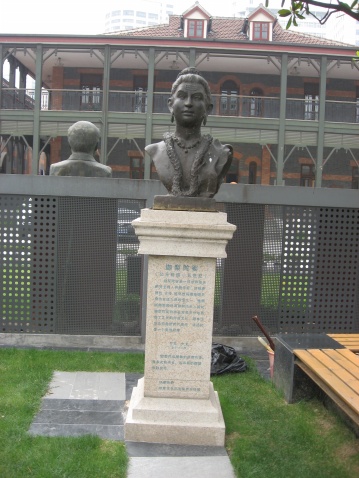
Picture:Kalidasa Statue in China

Kalidasa is widely considered to be the greatest Indian poet and playwright of all time. He wrote in Sanskrit. There are seven works written by him-two epic poems, two shorter poems and three plays. They are 1.Raghu Vamsa (dynasty of Raghu),2.Kumara Sambhava (Birth of Kumara, 3.Megha Duta (Cloud Messenger),4.Ritu Samhara (Cluster of Sesons), 5.Malavikagnimitram (Malavika and Agnimitra),6.Abijnana Shakuntala (The recognition of Shakuntala) and 7.Vikramorvasiya (Urvasi won by valour).His master piece was Shakuntala.

The age of Kalidasa has been debated for long. He could have lived anytime between 2nd century BC and 4th Century AD. Though the western scholars have placed him in the period of Gupta dynasty, Indians believe that he lived in the time of the great Indian king Vikramditya who started his own Vikrama era in 56BC. Kalidasa was one of the Nine Jewels (Navaratna) of Vikramaditya’s court.

My research into Tamil Cankam (also known as Sangam) literature shows that Kalidsa lived sometime before the birth of Christ. Tamil poets have used a lot of his similes. Kalidasa was most famous for his apt similes. The Sanskrit poets praised him as Upama Kalidasasya: ( Kalidasa owns similes).Tamil poets have used lot of common Indian/ Hindu beliefs. The source may be different ancient Indian works. But there are very clear indications to show that the poets have got them from Kalidasa’s works. There are over 200 similarities between the works of Kalidasa and the Sangam Tamil works. No one can reject them as co incidences or of pan Indian origin.

Cankam

Tamil Cankam literature is 2000 years old. Scholars date the Cankam literature to first few centuries of the modern era. Tamil Cankam anthologies consist of 2380 + poems composed by 470+ poets. It runs to approximately 30,000 lines. Brahmin poets contributed the highest number of poems or lines. Kapila who was praised as a ‘’Brahmin of spotless character’’ composed the highest number of poems (235)  in the anthology. He was well versed in Sanskrit and was able to teach Tamil to a North Indian king known as Arya king Brahadatta. No need to say that the medium of instruction was Sanskrit. Kapila made him a great scholar in Tamil and made him to write a poem in Tamil which is in Tamil anthology Kurunthokai. Kapila sang the great Kurinchipattu just to show the greatness of Tamil language to the North Indian king. Kurinchipattu is famous for portrayal of nature. Kapila recites 99 plant names at one go. Though we see a lot of plants were mentioned by Valmiki and Kalidasa, Kaipla beat them by giving a list of ninety nine plants together. Paranar is another great Brahmin Tamil poet always associated with Kaplilar. Both of them lived around 150 AD. It is corroborated by their reference to Roman (yavana) imports and exports from the South Indian ports.

Paranar “ may” be a Brahmin poet according to some scholars. There are two reasons to consider him a Brahmin. Chera king katal pirakottiya Senkuttuvan gave him land (Umbarkadu as ‘piramadeyam?) and his son when he composed a poem on him. The kings give such land to Brahmins only. They entrust their children for education only with Brahmins. The second reason is the name is a Sanskrit name found as one of the Gothra Rishis. It comes in stories of Vikramaditya as a Brahmin name. Kapilar and Paranar have used a lot of Kalidasa’s expressions and similes. Not only Kapilar and Paranar but also other Tamil poets used such similes. Most of them are Brahmins who must be well versed in Sanskrit and Kalidasa’s works. Kalidasa’s name and fame must have spread far and wide by 1st or 2nd century AD when most of the cankam poems were composed.


GSS

Another great work of the first few centuries is Gatha sapta sathi in Prakrit language. ‘’The occasional echoes in Gatha Sapta Sathi of ideas in Kalidasa’s poems and dramas (e.g. GSS 14,44,47,232,251 etc) would lead to the conclusion that Kalidasa belonged to the 1st century BC and enjoyed the parentage of King Vikramaditya’’ says MV Patwardhan (Gathakosa,1988).The Tamils might have got these ideas through the minor poets who lived in the borders of Taminadu and Andhra. Except King Hala the compiler of GSS, no one was famous. They simply followed and copied the great poets and we see only one or two bright sparks here and there. GSS is later than Kalidasa because of the following facts:

  1. GSS refers to Ganapathy/Vinayak but not to Murugan or Balaraman. Cankam and Kalidasa refer to Murugan and Balaraman but not Lord Ganesh, which became popular later.
  2. GSS refers to Hora (hour) which is considered a borrowing from Greek.
  3. GSS poem 361 by Salivahanan is a translation of Kumarasambhava poem.
  4. GSS refers to Vikramaditya.
  5. Lot of themes are common to Cankam and Kalidasa , but absent in GSS. It is a long list. But negative evidence is a weak evidence. So I am not giving them here. But this will prove that GSS is NOT the common source for Tamil or Sanskrit poems. It is vice verse.

GU Pope on Kapilar

Reverend GU Pope, the great Tamil devotee, wrote an article in 1893 in which he said that Kapila must be well versed with Kalidasa’s works and added that Kurinchipattu of Kapilar is nothing but an imitation of Kalidasa.

No wonder Kaiplar did this. He had to do this so that Aryan King Brahadattan understood Tamil well. When someone reads about similarities between two authors the first question will be who copied whom? The second question will be whether they got it from some common source. The third question will be whether it was all pan Indian beliefs. But all these doubts will be cleared when one sees the very same words used by two poets. It is like a verbatim translation. The scholars praised Kalidasa because he was the originator of these similes or expressions or phrases. Kalidasa could not have read all the 30000 Tamil lines and copied the best. Since Kapila lived in 150 AD, Kalidasa must have preceded him. No one could come anywhere near Kalidasa because he used 1000+ similes in apt places. He has rarely repeated any of them.  Though there are 3000+ similes in Mahabharata it is not considered one man’s work.

Now I will produce the evidence from Tamil poems:

1.Prayer to Lord Shiva

Now a days we start any book or event with a prayer to Lord Ganesh. But Kalidasa and Cankam poets begin their work with a prayer to Lord Shiva. Five Cankam works- Akananuru (Aka),Purananuru (Pur), Ainkurunuru (Ain),Pathitrupathu (Pathi) and Kalithokai (Kali) begin with a prayer to Shiva. Natrinai (Nat) is the only work with a prayer to Lord Vishnu. That too is a sloka from Vishnu Sahasranama is translated into Tamil. Kalidasa begins with a prayer to Shiva in Raghuvamsam, Kumarasambhavam and Shakunthalam. Though some scholars say that the Tamil prayers were added on a later date, that person must have followed Kalidasa. Another remarkable thing about Tamil literature is no one has used the word ‘’Shiva’’ in 30 000 lines. Shiva is referred to with other epithets. Kali also rarely used Shiva. This shows the closeness in time of Cankam poets and Kali. Even the oldest Rig Veda never used Lord Siva’s name, but Yajur Veda used his name.

Kali or Cankam poets never referred to Lingam. But Lingam was known in Gupta period. And Guptas called themselves as Parama Bagavathas (great devotees of Lord Vishnu).But Kali used only shiva for his prayers even in the book of ‘’Raghu’’ vamsa. He lived long before the Guptas. Guptas who were great sponsors of Sanskrit language, attracted by his works named their children Kumara Gupta and Skanda Gupta. Even Hala in GSS prayed to Lord Shiva. This reflects the time they lived.

Many of the Cankam poets have Sanskrit names.Rudran and Mahadevan (Bharatham Padiya Perunthevan) are names of at least four Tamil poets.

Shiva’s epithets in Kalidasand Cankam Tamil books:

a)      Neelakanta (blue throated),Neela lohitha:

Kali: Kumara VII 51,VIII 12,Shak VII 34

Cankam: akam 1,Pura 56,55,91 Paripatal 8,9 Malaipadu 83

b)      Ardhenthu Maulin (cresent moon)

Kali: Megha 57 =Cankam akam 1

c)       Ayugma netra (one and a half eye,three eyed)

Kali: Kumara III 51,69

Tri lochana,thri nayana, thraiyambaka (Kum III44,66VI 89,Mega 54,118,60)

Virupakshana (kum VI 21)

Cankam: Akam 181 (paranar),Pura 6(kari Kizar),pura 55, kali 2

d)      Bhutapathi,Bhuteswara,Bhutanatha (Lord of the livingbeings)

Kali: Ragu II 58,Kum II 43,74 Ragu II 46

Cankam :Puram 219,259,276 poets names also Shiva’s name with Puthan epithet!!!

Other Tamil poets with Puthan epithet of Lord Shiva: Madurai Kauniyan Puthathanar

(Brahmin poet of Kayndinya Gothra)Bhuta Nathan,Perumbhutan, Puthan Ilanagan, Bhutapandiyan,Karuvur Puthan Chathanar, Ezathu pthan thevan, Ven Bhuthan, Senthan Bhuthan,Kundram Bhuthanar

e)      Sula bruth,Sulin (Trident bearer)

Kali: Ragu II 38, Kuma VII 40, III 57,IV 94 Mega 15, 19,

Cankam : Akam 1 (Bharatham padiaya Mahadevan)

f)       Vrushanga (On the Bull mount, Bull flag)

Kali: Kuma III 23,14,62, VII 29,VIII 20, Ragu II 35, 36

Cankam : Puram 56 (Nakkeeran, A Brahmin poet)

g)      Parvathi Parameswaran

h)      Kali: Ragu I-1 = Cankam Akam 1, Puram 166

i)        Purasasana

Kali :Kuma VII 30= Puram 55 (Marutham Ilanagan)

Tripura Thaganm (one who burnt three forts)

Kali :Mega 58= Cankam Puram 55, Pari 5-2,Kali 2-1 to 8, 38-1,Kali 1

j)        Ardhanari (half siva half shakthi)

Ragu 1, Kum VII 28 =Cankam : ‘Maathoru paathiyan’ (Ainkurunuru  prayer)

k)      Maheswaran (Great Lord)

Kali Ragu III 49= Cankam Puram 166, Kali 1

l)        Rudra (angry towards bad)

Ragu II 54,Kuma II 26,III 76,Malavi I-4

Cankam Puram 56 (nakkeeran)

Also refer to poets with Rudran names given earlier.


Above references prove that there was not a big gap between Kali and Cankam poets and they were Pre Gupta. No reference to Ganesh ,No reference to Lingam and rarely used the word ‘Shiva’. Lord Shiva was not even mentioned in the oldest Tamil work Tolkappiyam.

Tolkappiyam refers only to Vedic Gods Indra, Varunan, Durga, Vishnu and Kartikeya (Seyon)

2.Lord Kartikeyan/Murugan

Lord Murugan or Skandan has got a special place in the hearts of Tamils. He is the god of Kurinchi landscape (Hills and its sorroundings). Kalidasa and Tamil poets agree on two important points:

a)      Murukans valour b) Murukan’s place is inaccessible to women

Ponmudiyar in his poem in Puram (299) says that fearful anangu is in the Murugan temple.

Women won’t go and touch anything there. Narrinai poet Kulambanar also (288) gives the same message. He says that girls who attained puberty are scared to enter Murugan temple.

One woman fortune teller says that a girl is possessed by Murugan. WE have more references in Nar 34, 173 Akam 22, 98 and Kuru 111.


Kalidasa also says in Vikram( IV 40,V-23,IV 71-3) that women were afraid of entering Murugan’s garden (groves sacred to Kumara were forbidden to women.)

Murugan dwells in Hills:

Mega 45, Raghu II-36 = Cankam: Murugu 218-317, Akam1,61,59,149, Kali 27, 93 ,

Madur 262-270,Pari 2, 19

Peacock as Vahana, came from fire:

Kali: Mega 46, Raghu VI-4 = Pura 56, Akam 149, Murugu 210 and Pari 18-26

Borb in Saravana poigai:

Kali:  Mega 47, Raghu III-23 = Murugu 58, 253, 257, 267


Reference to Himalayas: The best evidence comes from Kalidasa’s reference to the beautiful and holy Himalayas. Kalidasa had an amazing knowledge of the Himalyas. In the very first sloka of Kumarasambhava he praised Himalayas as the measuring rod of the earth. We did not know how he came to know that it extends from oone end of the the Sub continent to the other endin an age where there was not any map in India. Tamil poets repeated verbatim Devatatma Himalaya what Kalidasa said. Tamil poets Paranar and Kumattur Kannanar repeated this epithet in Pathitrup Pathu (43-1, 11-23). The golden Himalayas was referred to by Nappasalai (Puram 39 and Paranar 356). Tamil poets had no easy access to the Himalayas 2000 years ago. They just copied what Kalidasa said. They describe the beautiful scenery from kalidasa’s other works


Reference to Pandyas and Agastya: Kalidasa knew very well the connection between the Pandyas and Agastya. He referred to it in Raguvamsa. He even spoke about the Aswamedha Yagna of Pandyas indirectly by referring to Avabruda snanam. Mudukudumi Peruvazuthi, a powerful king did a great many Yagnas according to Puram poems 6 and 13.


Non reference to Ganesh: Neither Kalidasa nor Tamil Sangam literature mentioned Lord Ganesh. Worship of Lord Ganesh became popular only later.


Lord Murukan’s treatment, reference to the Himalayas and Ganges and reference to Lord Siva ,Deepa Shika simile are few of the 220 similarities. These proved that Kalidasa’s name and fame spread far and wide in South India by first few centuries of modern era.


*******************