
Yaksha Manibhadra
Written by London Swaminathan
Date: 5 JUNE 2018
Time uploaded in London – 16-42
Post No. 5078
Pictures shown here are taken from various sources such as Facebook friends, Books, Google and newspapers; thanks. Pictures may be subject to copyright laws.
WARNING: PLEASE SHARE MY ARTICLES; BUT DON’T SHARE IT WITHOUT AUTHOR’S NAME AND THE BLOG NAME. BE HONEST; OTHERS WILL BE HONEST WITH YOU
Tamils have five epics and two of them, Silappadikaram and Manimegalai are called twin epics. Manimegalai followed the story of Silappadikaram. The heroine of Manimegalai was named after the goddess of sea travellers, particularly the business community. Her counter part in Northern India was Manibhadra, a male deity.
There is a very interesting conversation of Manimeghala and a shipwrecked traveller in the Mahajanaka Jataka. These Jataka stories are at least 2300 years old.
Those who travelled together on ships were known as Saamyaatrikaa. In the Maha Janaka Jataka story, Mahajanaka was swimming for his life after a shipwreck. He was addressed by the goddess Manimekhalaa. The dialogue between the two proves the indomitable courage and power of ancient Hindu sailors.
Mani:
“Who is the fellow who in the vast ocean is ineffectively beating his hands. Depending upon whom you are making this effort?
Sailor Janaka:
“O Goddess! It is my firm belief that in life one should exert as far as possible, and, therefore, even though the shore is not visible, I am continuing my effort to reach it.
M:- “It is useless to show your courage in the sea. You are bound to perish before reaching the shore.
S:- “O Goddess, why do you say like this? Even if I perish making effort then I will be saved at least from calumny. One who exerts like me has not to repent afterwards.
M:_But an effort which is destined not to succeed, of which there is no end in sight, what is the use of such an effort when death is inevitable?”
Sailor Janaka:-
“The fellow taking it for granted that he will not be able to cross the ocean ceases his efforts then it is due to his own weakness. Whether success accrues or not a man who draws up his programme and tries for its success then he is sure to succeed. It is evident from the fact that all my comrades have drowned but I am still swimming and alive. So far as any energy is left in me I shall certainly make efforts to cross the ocean”—Mahajanaka Jataka
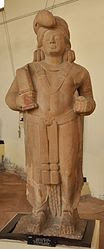
North Indian merchants had Yaksha Manibhadra as the presiding deity of caravan leaders (saarthavaahana). All over North India they had temples for Manibhadra. The colossal statue of Yaksha discovered in Parkham in Mathura district represented him. Padmavati in Gwalior district was a great centre of Manibhadra cult.
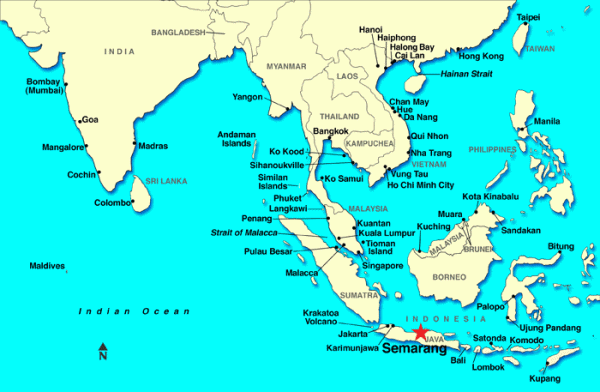
Story of Caravan Leaders
Saarthavahanas were the source of travellers’ tales. Seamen had stories of Yakshas, Nagas, Spirits, demons and aquatic animals. Samudra Vanija Jataka story has one such story.
“Once upon a time carpenters borrowed money from some people to make some furniture. But they could not finish the work on time. The creditors pestered them for their money. When the carpenters realised that they could not do it on time, they decided to migrate to some foreign land. After constructing a large ship they sailed to a far off place. Favourable winds helped them to reach a beautiful island with coconut trees and fruit trees. Even before they went to the island, there was already a sailor from a wrecked ship, who sang joyously, ‘they are simpletons who eke out their living by farming and the sweat of labour. They are not required in my domain. This land is far better my mother land”.
This island was like the island described by Homer in his Odyssey. Lazy men who were known as lotus eaters lived there on honey. When they invited Odyssus to live that kind of lazy life, he refused to join them. The jataka tale referred to the same kind of life.
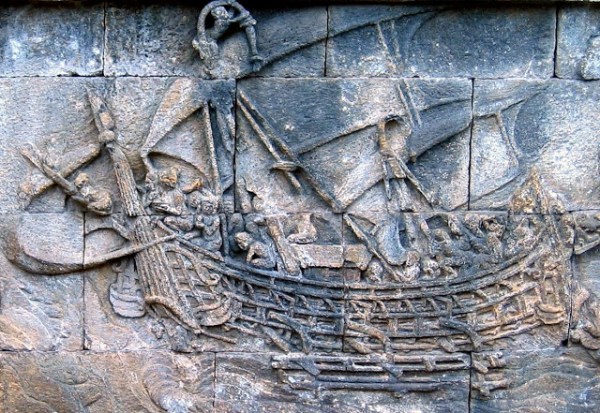
Indian Ship in Indonesia (Borobudur, Java)
From the 2300 year old Jataka stories, we come to know a lot about the land and sea merchants of ancient India.
–subham–
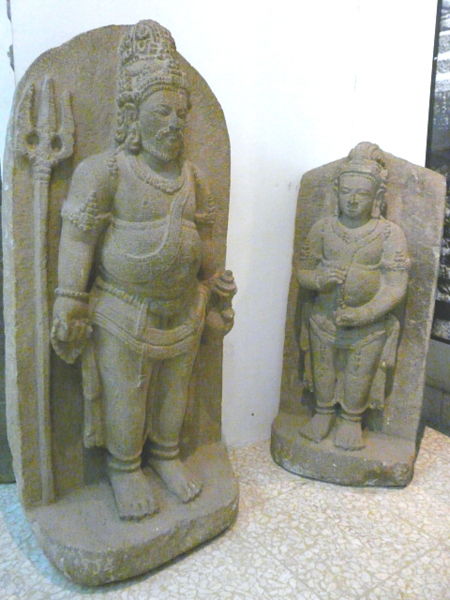


 Tamil and Vedas
You must be logged in to post a comment.