Navaratna Mystery in Sanskrit Literature!

nine

Written by London swaminathan

Research Article No. 1684; Dated 1st March 2015.

Navaratna means nine gems. This word is used in gemmology and in Sanskrit literature. In gemmology it means the nine gems Diamond (Vajra), Ruby (Manikya or Padmaraga), Emerald (Marakatha), Sapphire (Neelam), Topaz (Pushparaka), Pearl (Mukta), Coral (Pravala), Cat’s Eye (Vaidurya) and Gomedaka (garnet). But I am dealing with the Navaratna in Sanskrit literature. The mystery about nine gems or nine jewels in Sanskrit literature is not solved till this day. The reason being

Navaratna-setting-system

Yellow sapphire=Pushparaka; Hessonite=Gomedaka

1.The sloka about nine literary gems is a very late composition.

2.The Sanskrit verse mentioned nine people in the Royal court of Emperor Vikramaditya. The most famous Vikramaditya of Indian history lived in the first century BCE. We have one era known as Vikrama Samvat (56 BCE) in our calendar system. Because of his fame, for at least 1000 years, several other kings also called themselves Vikramaditya! But the nine literary gems lived in different ages. So they would not fit into his court!

3.Of the nine scholars, we did not know about four scholars except their names.

4.Kalidasa was the most famous scholar in the list. He could have lived in the first century BCE, renowned Sanskrit scholars believe so. (Please read my earlier articles on Kalidasa’s age through Sangam Tamil literature).

number_nine

The Sanskrit verse runs like this:

Danvantri Kshapanaka Amarasimha Shanku Vetalabhatta Ghatakarpar Kalidasa

Kyato Varahamihiro nrupate sabhayam ratnani vai Vararucir nava Vikramasya

This verse is found in “Jyotirvidbharana” of the sixteenth century. The nine jewels according to the verse are

Dhanvantri

Kshapanaka

Amarasimha

Sankhu

Vetalabhatta

Ghatakarpara

Kalidasa

Varahamihira

Vararuci
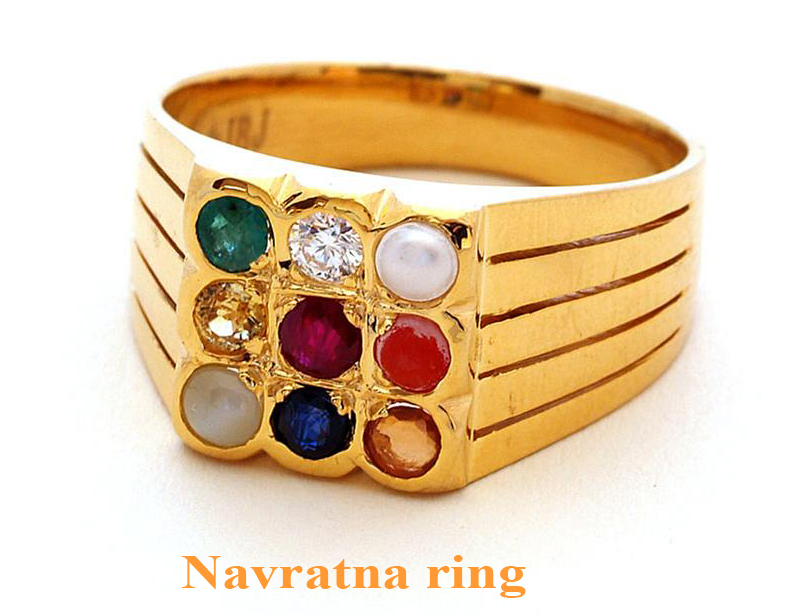
Navratna-ring-2

We knew for sure that Varahamihira of Brhat Samhita lived in the sixth century CE. Amarasimha, the author of 10,000 word dictionary Amarakosa lived around fourth century CE. Kshapanaka was a lexicographer but we don’t have his work. We don’t know anything about Kshapanaka , Ghatakarpara and Sankhu. Vetala Bhatta was the author of Vetala (Ghost) stories. Danvanatri was the author of several medical works.

Several great authors with the name Vararuci lived from fourth century BCE to 13th century CE. Most famous Vararuci was the author of Vartika who explained Panini’s Grammar. So we did not know which Vararuci is mentioned in the ‘navaratna’ verse.

Sankhu is represented by a few odd verses in later anthologies and Ghata karpara by collections of gnomic stanzas.

Everyone knew about the greatest of the Indian poets, Kalidasa, who was the author of at least seven works. Unless we can prove that all these people lived around first century BCE, we can’t place them in the court of Emperor Vikramaditya.

Problem with Indian literature is that there was constant updating. All the Puranas and important Sanskrit works were updated with latest information. Westerners interpreted it as interpolations or stamped it as a work of a later date. It happened with Adi Shankara as well. Several works of later Shankaracharyas were also attributed to Adi Shankara. Because of this Adi Shankara was dated to 732 CE which is wrong (Please read my article Shankar’s age through Tamil literature).

ratnaring

Whether the nine gems/jewels lived at the time of Vikramaditya or not, the great works of Danvantri, Kalidasa, Amarasimha, Vetalabhatta and Vararuci are real literary gems!

contact swami_48@yahoo.com

GEM STONES IN KALIDASA & TAMIL LITERATURE


(This is the third part of my thesis to prove that the age of Kalidasa is around 1st century B.C. Please read other two parts as well-S .Swaminathan)

A country’s wealth is reflected in its literature. If the poets always sing about poverty and begging bowl we know that the general public suffered and starved. If the poets sing about gold and gems and enormous wealth and donation it means that the country was wealthy. Kalidasa,the greatest of the Indian secular poets, sings about gold and gems though out his seven books. As a matter of fact he himself was considered one of the Nine Gems (Nava Ratnas) in the court of Vikramaditya who started his own era in 56 BC.


Kalidasa’s praise of Himalayan gems is sung by Sangam poets as well. Sangam poets who lived hundred or two hundred years after Kalidasa might have got the information from his works. If this is the only similarity then we can ignore it as coincidence. But I have identified 225 similes between Kalidasa and Tamil Sangam literature which proves that Kalidasa lived around 1st century BC or before the Sangam period.


Tamil kings were very rich. Tamil literature refers to thrones and cots made up of ivory and gold. The chariots were decorated with gold. Even the elephants had big gold plated coverings to its face. Roman ships poured gold in to Tamil Nadu (South India) and took spices in exchange. This was corroborated by Roman writers of first few centuries and discovery of thousands of Roman gold coins though out South India.


Kalidasa uses 16 names for the Himalayas including Kailash and Kubera saila. He is all praise for the Himalayas. He is so excited whenever he describes the mountains.

“There is in the northern quarter, the deity souled Lord of Mountains, by name Himalaya,who stands, like the measuring rod of the earth, spanning the Eatern and Western oceans”. 1-1:Kumarasambhava


“Snow could not be a destroyer of beauty in the case of him who is the source of countless jewels.” 1-3


“Who bears on his peaks, a richness of metals, appearing like an untimely twilight, with its colours reflected upon patches of clouds, and the cause of amorous decking of the heavenly nymphs.” 1-4


In Kumara I-3 and Ragu. II 29, IV 79 he describes the gems available in the Himalayas.


Tamil poets echo it in Puram 218 (Kannakanar) 377 (Ulochanar )Pattina. 190-198 sung by a Brahmin poet Kadiyalur Rudran Kannanar:

“Brought by the cart, gems and gold from the Northern Mountain

Sandal and eagle wood from the hills of Coorg

Pearls from the southern sea, coral from the east

Ganga’s wealth and Kaveri’s produce

Eza’s provisions and Kazhaga’s plenty “(Pattinapalai 193-197)

In addition to these there are hundreds of mention of all types of gem stones and precious metals.


Nagaratna/Cobra Jewel

(Please read my article :How did Shakespeare know Cobra Jewel-the Indian Nagaratna, where in I have explained what is Nagaratna)


We find the following references about the cobra jewel in Tamil and Sanskrit.

Kakaipatini Nachellaiyar ,a poetess of Sangam period says that the the snakes with cobra jewels are dancing in the holy Himalayas like the women possessed by divine spirits in Pathitru Pathu (6-lines 10 to 1)

Hindus believed that the snakes carried luminescent gem stones on their heads. They used them to find their prey. The general theme is that snakes use the light of Nagaratnam (cobra jewel) and if they lose it, snakes become very upset.


Kalidasa in Kumara Sambhavam : 2:38, 5:43, Raghuvamsam 6:49, 10:7, 11:59, 11:68,13:12, 17:63;Rtu Samharam 1:20

Sangam Tamil poets in  Aka Nanuru 72, 92, 138, 192, 372; Pura Nanuru 172, 294, 398; Kurunthokai 239; Natrinai 255; Kurinchipattu Lines 221,239

This is not an exhaustive list. We find such references in innumerable places.


Pearl in the Oyster

If the rain falls on Swati star day the oysters open their mouth to drink the rain drops and the rain drops become pearls-This was the belief of ancient Indians including Tamils.


Malavi.1-6: Kalidasa says , ‘the skill of a teacher imparted to a worthy pupil attains greater excellence, as the water of a cloud is turned in to a pearl in a sea shell.In Puram 380 ,Karuvur Kathapillay says the same about the origin of pearls. Bhartruhari makes it more specific by saying the rain on Swati Nakshatra days become pearls. Biologits also confirm on full moon days lot of sea animals like corals release their eggs or spores. So far as India is concerned it might have happened in that particular (Swati star with Moon) season.

Kalidasa gives more similes about pearls. He describes the river that is running circling a mountain as a garland of pearls( Ragu.13-48 and Mega.-49)

Other references from Kalidasa: sweat drops as pearl:Rtu.6-7; tears as pearls: Mega 46, Ragu VI 28,,Vikra V 15; smile-KumarI-44, water drops on lotus leaf:Kumara VII 89


In Tamil the teeth are compared to the pearls: Ainkur. 185, Akam 27

Since Gulf of Mannar is the main source of pearls in India ,thre are innumerable references to pearls in Tamil literature. Even Kautilya refers to the pearls from Pandya country. Korkai was the harbour city where the pearl fishing was flourishing. Aink 185,188, Akam 27,130 and Natri 23mention pearls from Korkai.


Ivory

The pearl recovered from elephant ivory is referred by Kalidasa and other poets:Kumar I-6,Ragu 9-65.This is referred to by several Sangam Tamil poets:Murugu 304, Malaipadu 517, Kali 40-4, Puram 170 (V M Damodaran),Pathitru.32 (K Kappiyanar), Natri. 202 (P P Katunko), Kurinji 36 (Kapilar), Akam 282 (Thol Kapilar).

Pearl from bamboo trees is also sung by a Tamil poet in Akam 173 (Mulliyur Puthiyar).

Ivory throne : Ragu 17-21

Akam 369 gem shield ;Kali 40- ivory pestle; Puram 35 –diamond needle