Date: 9 JANUARY 2019 GMT Time uploaded in London –21-14 Post No. 5909 Pictures shown here are taken from various sources including google, Wikipedia, Facebook friends and newspapers. This is a non- commercial
swami_48@yahoo.com Date: 2 JANUARY 2019 GMT Time uploaded in London –16-26 Post No. 5873 Pictures shown here are taken from various sources including google, Wikipedia, Facebook friends and newspapers. This is a non- commercial blog.
I have already given the influence of Manu Smrti in Cambodia. See my article
posted yesterday. Now let us look at his impact in Thailand and Indonesia
In ancient Indonesia 8th and 9th chapters of Manu Smrti are the main
source of law books relating to civil and criminal law. Two law books called
Devaagama and Svarajambu followed Manu. A Brahmin named Kaundinya II reformed
the laws in the light of the Indian system according to Liang Shu.
Indian influence is seen in ViIetnam (Champa) as well. An inscription states
that king Hari varma deva (1074-1080) was versed in four ,Upays and 18 titles
or subjects of dispute . Jaya Indra varman IV of `12th century was conversant
with all the Dharmasastras.
In Thailand also we see 18 titles of dispute, division of slaves into seven
classes. Interest can’t exceed the principal and persons who can’t be witnesses
(in Thailand’ s Dhammasatha ( Dharma
sastra))
In the legal treaties Sivasasana or Purvadigama , rules prescribed by Manu are used.
It is stated in the Rsisasana that Manu was the first monarch who introduced
the Sivasasana.
The Javanese treaties
Kutaramanava,
Svarajambu,
Adigama
are composed on the basis of Manu Smrti
Eight kind of thieves,six kind of great sinners (Atadayins) , homicide etc are
discussed on the basis of Manu Smrti
There are other works in old Javanese which used Manu Smrti.
Malaya
Manu’s influence is quite considerable on the laws of Malay according to
Winstedt; most of the patriarchal law of this country was of Indian inspiration
Most of the ten crimes for which death penalty are prescribed are like those in
Hindu law. And heavier punishment for a person offending against a person of
superior caste, modes of punishment like the cutting of the tongue, shaving the
head etc, marrying a forcibly abducted girl, fine for sexual offences also
reflects of Manu Smrti.
Manu Statue in Philippine
The installation of Manu’s Statue, in early times in the Philippines, is an
index to the reverence to this great law giver. It is preserved in Art Gallery
of the Senate Chamber of the Philippine republic
Burma
The Pali Dhammasaththa written by Dhammavilasa in 1174 has many of Manu’s rules
Next I will give Dr S Radhakrishnan’s (Philosopher and President of India) views on Manu Smrti
Source book- Cultural Reciprocation between India and the World, Sures Chandra Banerji, 1999, Delhi
Written by London Swaminathan swami_48@yahoo.com Date: 1 JANUARY 2019 GMT Time uploaded in London –15-29 Post No. 5868 Pictures shown here are taken from various sources including google, Wikipedia, Facebook friends and newspapers. This is a non- commercial blog.
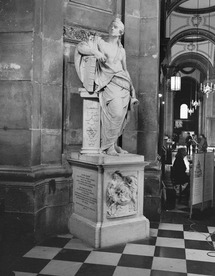
Tags- Statue of William Jones with Manu Smrti, St Paul’s Cathedral, Original Manu Smrti
Pictures shown here are taken from various sources including google, Wikipedia, Facebook friends and newspapers. This is a non- commercial blog.
காலன் அழைத்தாலும் காத்து விடும் அதிர்ஷ்டம்!
ச.நாகராஜன்
வாழ்வில் ஏற்படும் சில விஷயங்கள் நம்மை வியப்பில் ஆழ்த்தி விடும். ஏன் அப்படி நடந்தது என்றால் யாருக்கும் சொல்லத் தெரியாது.
நல்ல விஷயம் என்றால் அதிர்ஷ்டம் என்று சொல்லி விடுவோம். கெட்ட விஷயம் என்றால் என் விதி; எனக்கு மட்டும் ஏன் இப்படி என்று கூறிப் புலம்பி அழுது தீர்ப்போம்.
அடுத்த கணம் என்ன நடக்கும் என்பதைச் சொல்ல முடியாது என்பதை உணர்ந்தாலும் எதிர்காலம் எப்படி இருக்கும் என்பதை அறிய எல்லோருக்குமே ஒரு ஆவல் இருக்கிறது.
ஜோதிடத்தில் மனிதனுக்குத் தீராத ஆசை ஏற்படுவது எதிர்காலத்தை அறியத் துடிக்கும் மனிதனின் இந்த மனப்பான்மை தான்!
இருபதாம் நூற்றாண்டின் தலை சிறந்த ஆஸ்டிரிய – பிரிட்டிஷ் தத்துவஞானியான சர் கார்ல் ரெய்மண்ட் பொப்பர் ( Sri Karl Raimond Popper – பிறப்பு 28-7-1902 மறைவு 17-9-1994) , ‘தர்க்கரீதியாகப் பார்த்தால் வரலாற்றின் எதிர்காலம் பற்றி நம்மால் முன்கூட்டி கணிக்கவே முடியாது’ ( for strictly logical reasons, it is impossible for us to predict the future course of history) என்றார்.
அடுத்த விநாடி நடக்கப் போவதை அறியாதவன் ஆயிரம் ஆண்டுக்கு ஜோஸியம் சொன்னானாம் என்று அவர் எள்ளி நகையாடுகிறார்.
பல சம்பவங்களைப் பார்க்கும் போது நமக்கு வியப்புத் தான் மேலிடுகிறது.
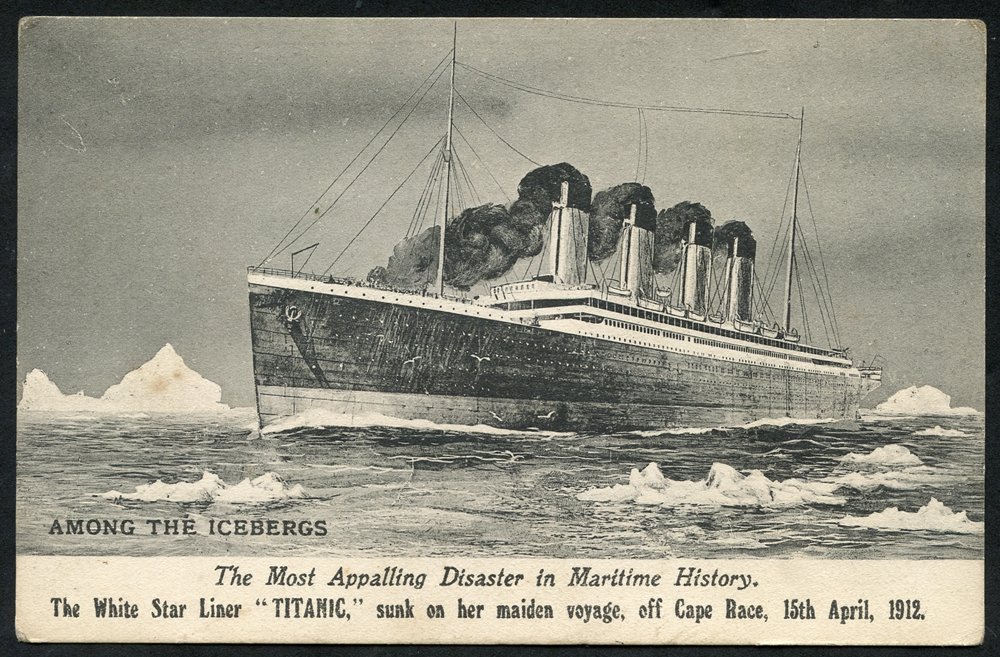
மூழ்கவே மூழ்காத கப்பல் என்று விளம்பரம் செய்யப்பட்ட டைட்டானிக் கப்பல் ஐரோப்பாவிலிருந்து அமெரிக்காவிற்கு 1912 ஏப்ரலில் தனது பயணத்தை ஆரம்பித்தது.
வட அட்லாண்டிக்கில் பனிப்பாறை ஒன்றின் மீது மோதி அது உடைந்தது; அதில் பயணித்த 2224 பயணிகளில் 710 பேர் மட்டுமே உயிர் தப்பினர்.
அது மூழ்கியவுடன் தான் அதில் பயணிக்கத் தவறியவர்கள் யார் யார், ஏன் அவர்கள் அதில் பயணிக்கவில்லை என உலகினரால் விசேஷமாகப் பார்க்கப்பட்டார்கள்.
அவர்கள் ‘Just Missed It’ Club – அதாவது ‘மயிரிழையில் பிழைத்தவர்கள்’ என அழைக்கப்பட்டனர்.
இந்தப் பட்டியலில் ஏராளமானோர் இருந்தனர். அவர்களுள் குறிப்பிடத்தகுந்தவர்களுள், தொழிலக முன்னோடிகள் என்று சொல்லக் கூடிய ஹென்றி க்ளே ஃபிரிக் (Henry Clay Frick), ஜே.பி. மார்கன் (JP Morgan), ஜே. ஹொரேஸ் ஹார்டிங் (J. Horace Harding) ஆகியோரும் அடங்குவர்.
இந்த மூவருமே டைட்டானிக் கப்பலில் பயணப்பட ஏற்பாடுகளைச் செய்தவர்கள்!
ஹென்றி க்ளே ஃபிரிக் அமெரிக்காவின் தலைசிறந்த செல்வந்தர்களுள் ஒருவர். எஃகு, உருக்குத் தயாரிப்பாளர். பிப்ரவரியிலேயே தனக்கும் மனைவிக்குமாகச் சேர்த்து டிக்கட்டை முன்பதிவு செய்திருந்தார் அவர். ஆனால் திடீரென்று அவர் மனைவிக்கு ஒரு சின்ன விபத்து ஏற்பட்டது. கணுக்கால் எலும்பில் முறிவு ஏற்படவே, இத்தாலியில் அவர் மருத்துவ மனை ஒன்றில் சேர்க்கப்பட்டார். ஆகவே அவர்களால் டைட்டானிக்கில் பயணிக்க முடியவில்லை. இவர்களுக்காகப் பதிவு செய்யப்பட்டிருந்த B-52,54,56 ஆகிய மூன்று சூட் ஜேபி மார்கனுக்கு ஒதுக்கப்பட்டது. வங்கித் தொழிலில் கொடி கட்டிப் பறந்த மார்கனும் மிகச் சிறந்த செல்வந்தர் தான். ஆனால் ஐரோப்பாவில் அவரது வணிக சம்பந்தமான திட்டத்திற்காக அவர் கொஞ்சம் அதிக காலம் தங்க வேண்டியதாயிற்று. அவரும் பயணத்தை ஒத்திப் போட்டார். இந்த முறை இவருக்காக ஒதுக்கப்பட்ட அறைகள் ஜே. ஹொரேஸ் ஹார்டிங்கிற்கும் அவரது மனைவிக்கும் ஒதுக்கப்பட்டன. இவரும் வங்கித் தொழிலில் ஈடுபட்டிருந்த பணக்காரர் தான்! ஆனால் இவர்களுக்கு இதற்கு முன்னர் கிளம்பிய கப்பலில் இடம் கிடைத்ததால் இவர்கள் முந்திக் கொண்டு அதில் சென்றனர்; காலன் பிந்திக் கொண்டு விட்டான்!
துரதிர்ஷ்டவசமான அந்த அறைகள் வொய்ட் ஸ்டார் லைன் சேர்மனான ஜே. ப்ரூஸ் இஸ்மேக்குப் போய்ச் செர்ந்தது.
மூன்று தொழிலதிபர்களும் டைட்டானிக் ஆபத்திலிருந்து எப்படி பிழைத்தனர்!
யாராலும் சொல்ல முடியவில்லை. துரதிர்ஷ்டவசமான அந்த அறைகளுக்கு அவர்கள் செல்லவே இல்லை!
இதே போல லண்டனில் உள்ள செயிண்ட் பால் சர்ச்சை சேர்ந்த பாதிரியாரான ஜே. ஸ்டூவர்ட் ஹோல்டனும் (J. Stuart Holden) இதில் செல்ல திட்டமிட்டிருந்தார். அவரது மனைவியின் உடல்நிலை திடீரென்று பாதிக்கப்படவே பயணத்திற்கு ஒருநாள் முன்னர் ஏப்ரல் ஒன்பதாம் தேதியன்று தன் பயணத்தை அவர் தள்ளி வைத்தார்; பிழைத்துக் கொண்டார். இப்படி ஏராளமானோர் துரதிர்ஷ்டவசமாக முடியப் போகும் பயணத்தைத் தவிர்த்தனர்.
இதெல்லாம் யாரால், ஏன் நிர்ணயிக்கப்படுகிறது என்பது யாருக்கும் புரியவில்லை.
இப்படி உயிர் பிழைக்க அதிர்ஷ்டம் காரணமாகும் நிகழ்வுகள் ஒரு புறம் இருக்க, சில சிறிய நிகழ்வுகள் ஒருவருக்குப் பெரிய வாழ்வைத் தந்து விடுவதையும் பார்க்கிறோம்.
மன்னர் நான்காம் ஜார்ஜுக்கு ஒரு சமயம் திடீரென்று வலிப்பு வந்து விட்டது. தற்செயலாக அங்கு சென்றிருந்த ஒரு கிராம வைத்தியர் அவருக்கு உடனடி சிகிச்சை கொடுத்தார்; மயக்கமடைந்த மன்னருக்கு உணர்வு வரும்படி செய்தார். மன்னரிடம் பேச்சுக் கொடுத்து அவரின் மனநிலையை மாற்றி அவரைச் சிரிக்கவும் வைத்தார். அவரை மன்னருக்கு மிகவும் பிடித்துப் போய்விட்டது. உடனடியாக அவர் அரண்மனை மருத்துவராக நியமிக்கப்பட்டார்.
இப்படி எத்தனையோ பெருக்கு அதிர்ஷ்ட வாய்ப்புகள் வருவதையும் பார்க்கிறோம்; அவர்கள் பிரபலமாவதையும் பார்க்கிறோம்.
விஷம் கொடுத்துச் சாகாமல் இருப்பவர்கள் என்ற விஷயத்தை நம்ப முடியாது என்றாலும் கூட ரஸ்புடீனை எடுத்துக் கொண்டால் சற்று பிரமிப்பு தான் ஏற்படும்.
அவருக்கு கடுமையான விஷம் தரப்பட்டது. ஆனால் விஷம் அவரை ஒன்றும் செய்யவில்லை. பிழைத்துக் கொண்டார்.
இதே போல பதினான்காம் மாடியிலிருந்து கீழே விழுந்த ஒரு குழந்தை புல்தரையில் விழுந்து ஜம்மென்று நடந்த கதையையும் செய்தித் தாளில் பார்க்க நேரிடுகிறது.
என்ன ஆச்சரியம் போங்கள், இந்த மனித வாழ்க்கை!
காலன் அழைத்தாலும் காத்து விடுகிறது அதிர்ஷ்டம்!
சில சமயமோ நல்ல விஷயம் நடப்பதில்லை; எதிர்பார்த்ததற்கு மாறாக ஏடாகூடமாக ஏதாவதொன்றில் சிக்கிக் கொள்கிறோம்.
வரலாற்றின் எதிர்காலம் இருக்கட்டும்; வரக் கூடிய அடுத்த கணமே நமக்கு எப்படி இருக்கும் என்பது தெரியாது, அது பற்றிச் சொல்லவும் முடியாது என்பது தான் உண்மை போலும்!
Harsh language of pure in heart is better than the sweet language of impure heart, Nanneri verse-2
JANUARY 2 WEDNESDAY
Milk of a cow is obtained with the help of her calf. In the same way get help through your friend from his friend-3
JANUARY 3 THURSDAY Riches from a man who is not ready to help others will go to one who is ready to help like the salt water of the ocean is taken by the clouds for distributing to people as fresh water-4
JANUARY 4 FRIDAY Both the eyes look at the same objects. In the same way husband and wife should perform their domestic duties without disagreements-6
JANUARY 5 SATURDAY Don’t boast that you have ocean wide knowledge. Even the ocean of water was drunk by a Rishi-7
JANUARY 6 SUNDAY Controlling anger is a virtue. It is like controlling the floods with the banks-8
JANUARY 7 MONDAY
The weak will not be afraid of their powerful foe if they secure the friendship of one who is more powerful- Nanneri verse 9
JANUARY 8 TUESDAY
The moon instead of removing its own dark spots tries to remove the darkness of the world. Great people alleviate the calamities befallen on others and care not to satisfy their wants- 10
JANUARY 9 WEDNESDAY The five senses will have power over fools and lead them to sin, but not over those who have true wisdom -11
JANUARY 10 THURSDAY It is truly wonderful that how the soul subject to various suffering s is kept in the body with nine holes . It is like a vessel full of holes holding water in it- Nanneri verse12
JANUARY 11 FRIDAY The great will not be proud, because they possess immense wealth. Even Mount Meru was once bout as a bow- 14
JANUARY 12 SATURDAY
To one who is destitute of love, of what use is it to possess wealth, house and property? To the blind, of what use is light? -15
JANUARY 13 SUNDAY The people of the vast earth are delighted not with the harsh but pleasant words . The sea is raised not by the burning rays of the sun but by the cool beams of the moon-18
JANUARY 14 MONDAY
The great will rejoice and put on a smiling countenance at the approach of the good; and will grieve at the sight of the wicked-Nanneri verse19
JANUARY 15 TUESDAY The great will look upon the affliction of others as though it were their own and they will be, in heart, butter on fire-20
JANUARY 16 WEDNESDAY
All the knowledge gained by the illiterate will vanish in the presence of thorough scholars-21
JANUARY 17 THURSDAY Seek not to be high or low by birth but by knowledge-22
JANUARY 18 FRIDAY By frequent conversation with women , the strength of the heart, will be shaken-23
JANUARY 19 SATURDAY In this world although one possesses virtue, the low minded will catch at his defects and speak of them. In the thriving grove of trees the winged insects love the flower bed: but the crow love fruit of the neem tree-24
JANUARY 20 SUNDAY In the assembly of low people who possess some slight knowledge acquired without study, a thorough scholar will not be appreciated and honoured-25
JANUARY 21 MONDAY
Because of the littleness of their body, the ocean wide knowledge of the poets of bright genius is neither less appreciated nor despised -26
JANUARY 22 TUESDAY With no expectation of a return for their favour the learned afford aid to their neighbors as much as they could from what they gain by hard labour -27
JANUARY 23 WEDNESDAY
Even in anger the great will afford aid to their neighbors; the mean will not give even in the warmth of their heart. The fruit of the plantain tree is good for food whether it is ripe or not. The fruit of the Etti tree is poison even when it is ripe- Nanneri verse 28
JANUARY 24 THURSDAY
Though it be a crore of bodily evils that cause nigh, those who constantly direct their thoughts to the Supreme Being, will not fear-29
JANUARY 25 FRIDAY
Before the approach of cruel Yama, to take away our lives, let us live in the practice of virtue with matured mind-30
JANUARY 26 SATURDAY The virtues practiced by those who have no knowledge of the precepts contained in the shastras will not be valid. It is like a house without a bolt-32
JANUARY 27 SUNDAY
Great persons love those who have acquired knowledge; but mean persons regard them not-35
JANUARY 28 MONDAY Gifts are bestowed not on unworthy but on worthy persons. Hence the noble minded confer their gifts on the worthy. Water is stored in reservoirs only for paddy, not for wild plants- Nanneri verse 36
JANUARY 29 TUESDAY
The kings that put on gold ornaments are not to be compared to the learned who wear them not. Body parts that bear the ornaments cannot see; eyes wear no ornaments, but can see- Nanneri 40
JANUARY 30 WEDNESDAY
Very close friendship formed by the illiterate though it last long will be productive of evil; flower with perfume give its fragrance only on the day it blooms- 39
JANUARY 31 THURSDAY
Friendship formed by the good will increase daily ; if the green fruit ripens I is good for food- Nanneri Verse 38
TAGS– JANUARY 2019 CALENDAR, NANNERI QUOTATIONS, SIVAPRAGASAR
Compiled by London Swaminathan swami_48@yahoo.com Date: 27 December 2018 GMT Time uploaded in London – 6-27 am Post No. 5841
Pictures shown here are taken from various sources including google, Wikipedia, Facebook friends and newspapers. This is a non- commercial blog.
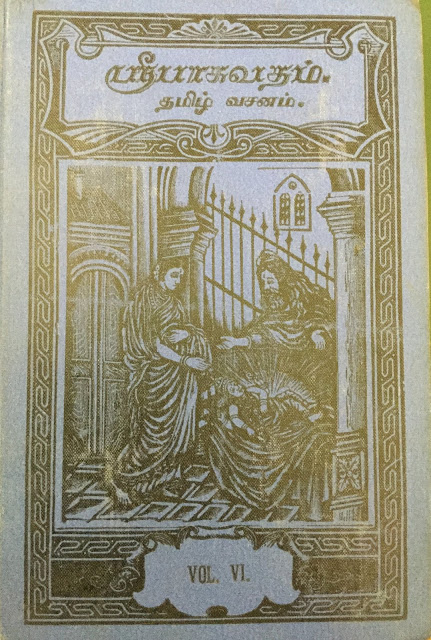
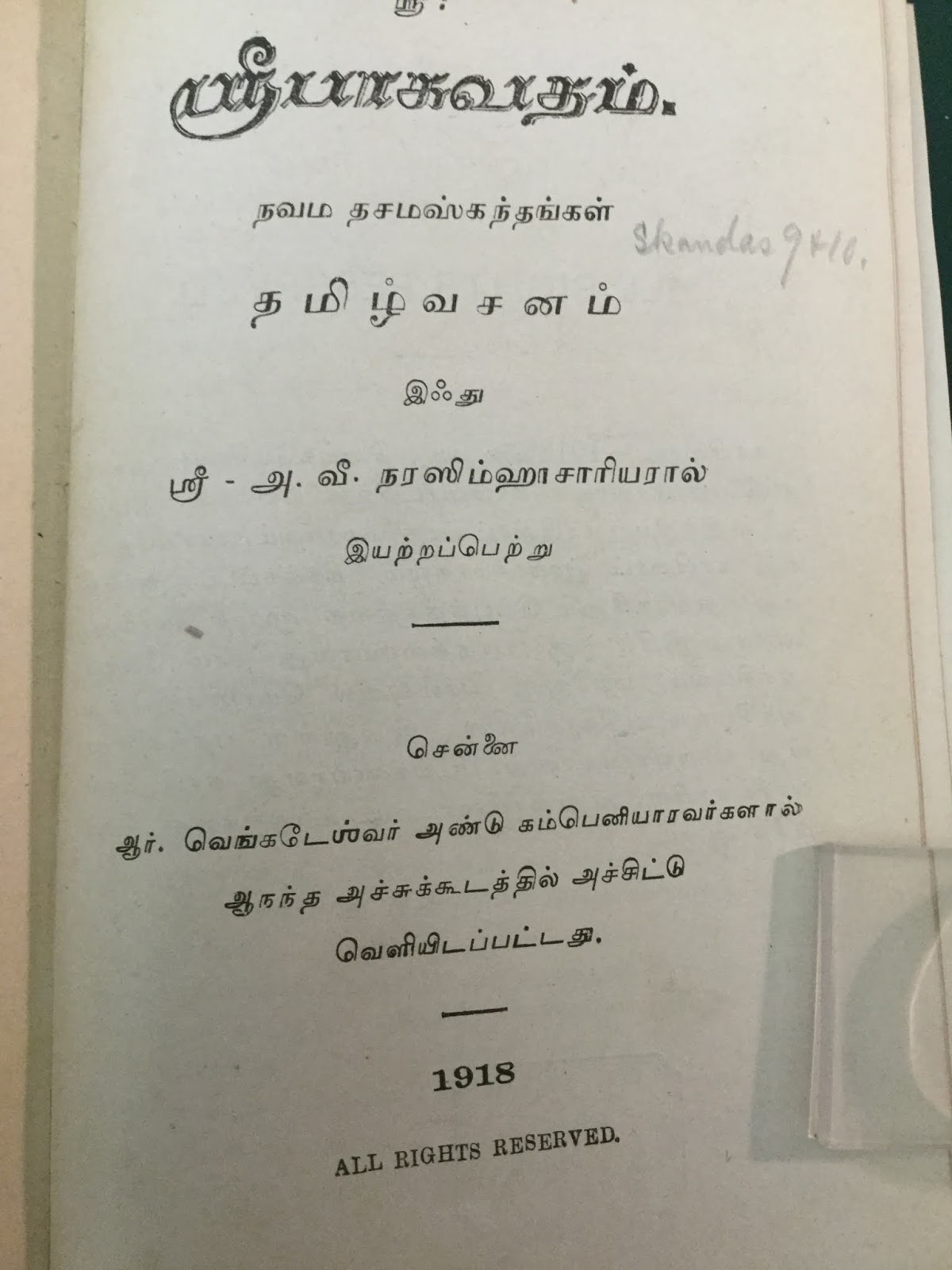
பாகவத புராணம் அபூர்வ படங்கள்- பகுதி 6
கடந்த 5 நாட்களில் வெளியான அபூர்வ படங்களையும் கண்டு களிக்கவும்.
PART SIX OF BHAGAVATA PURANA PICTURES ; PLEASE SEE THE PICTURES POSTED IN THE PAST FIVE DAYS. THESE ARE FROM A 100 YEAR OLD BOOK, available in the British library in London.
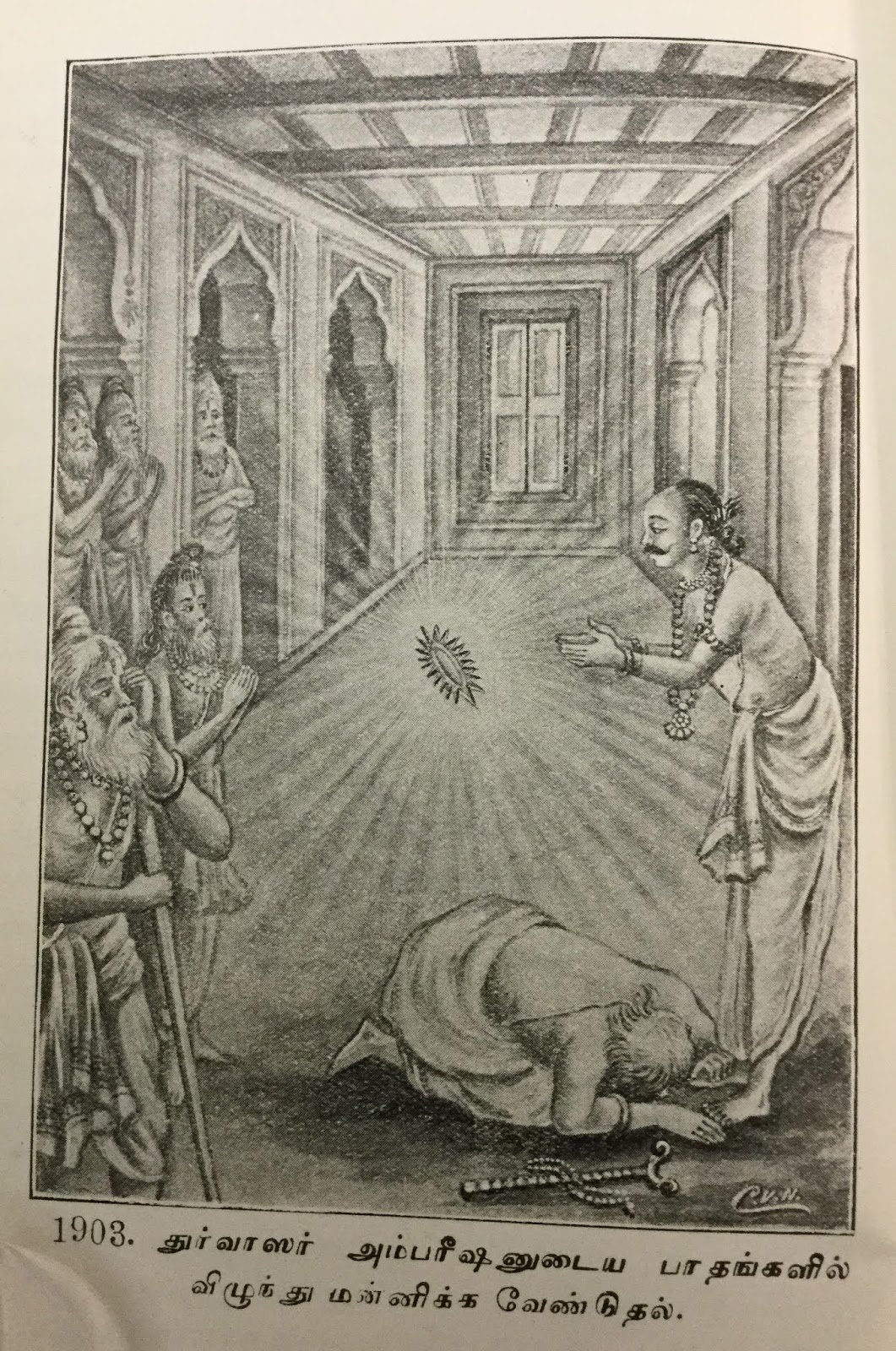
Durvasa falls at the feet of Ambarish and asks for pardon
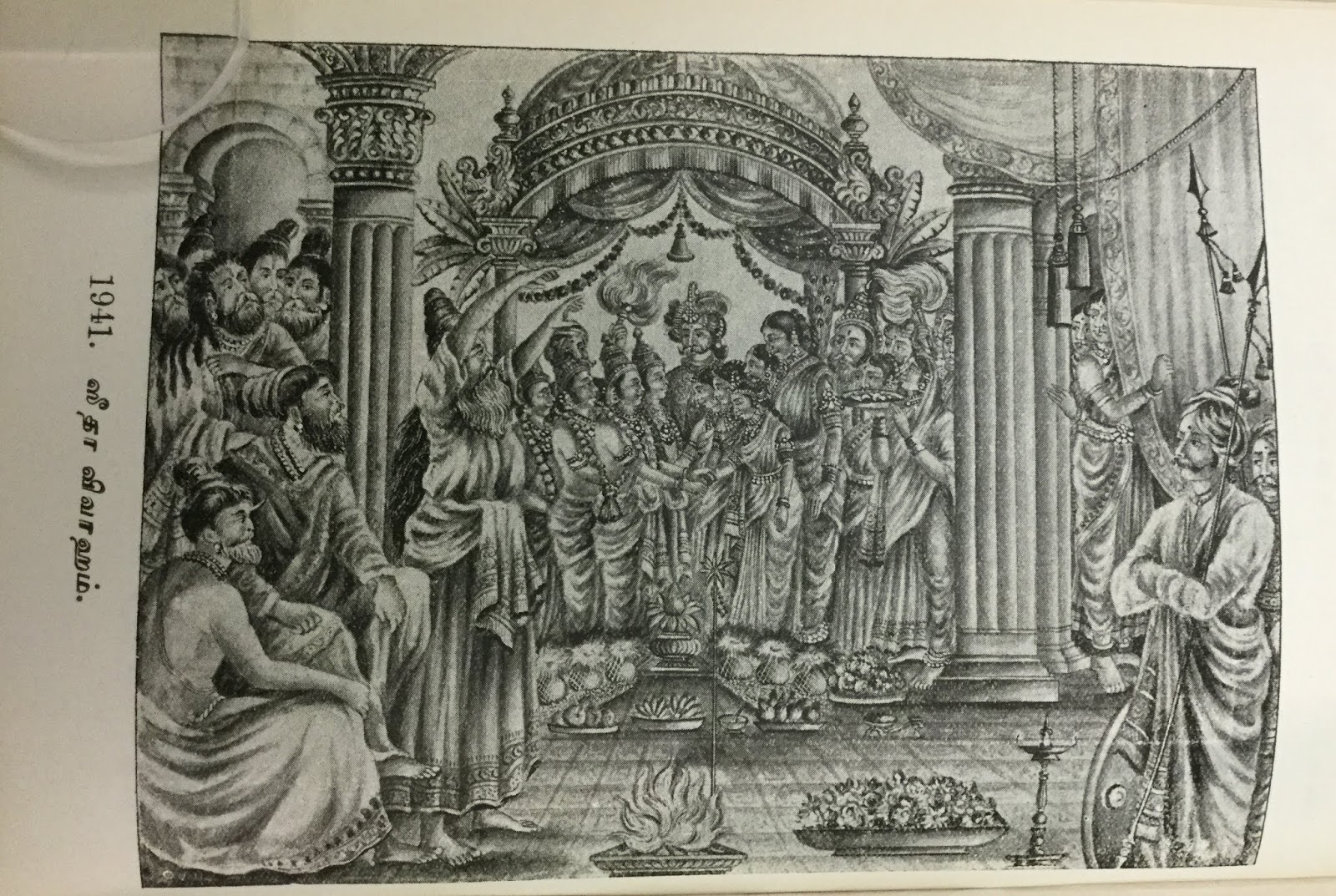
Sita’s Wedding
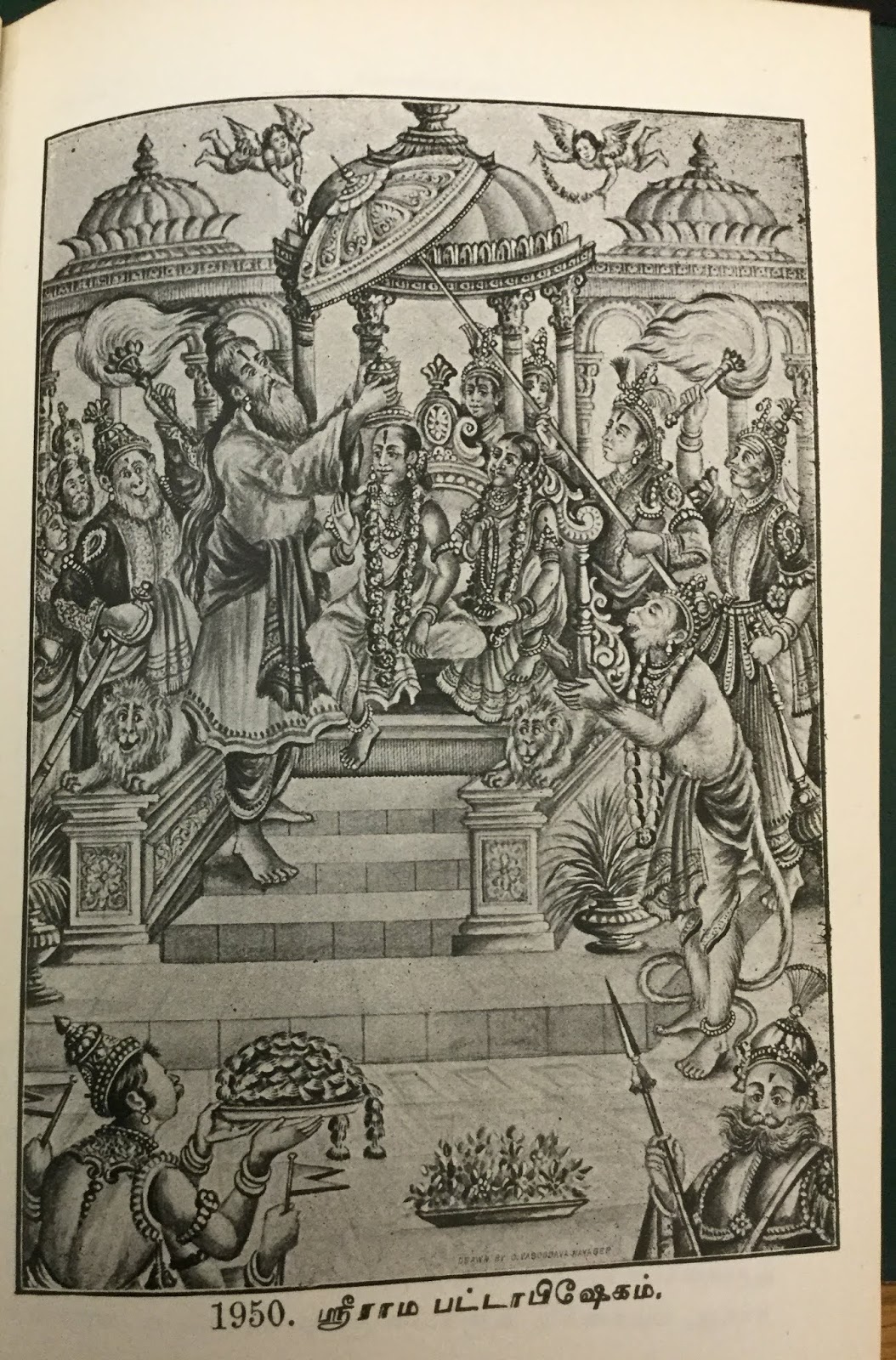
Rama’s Coronation
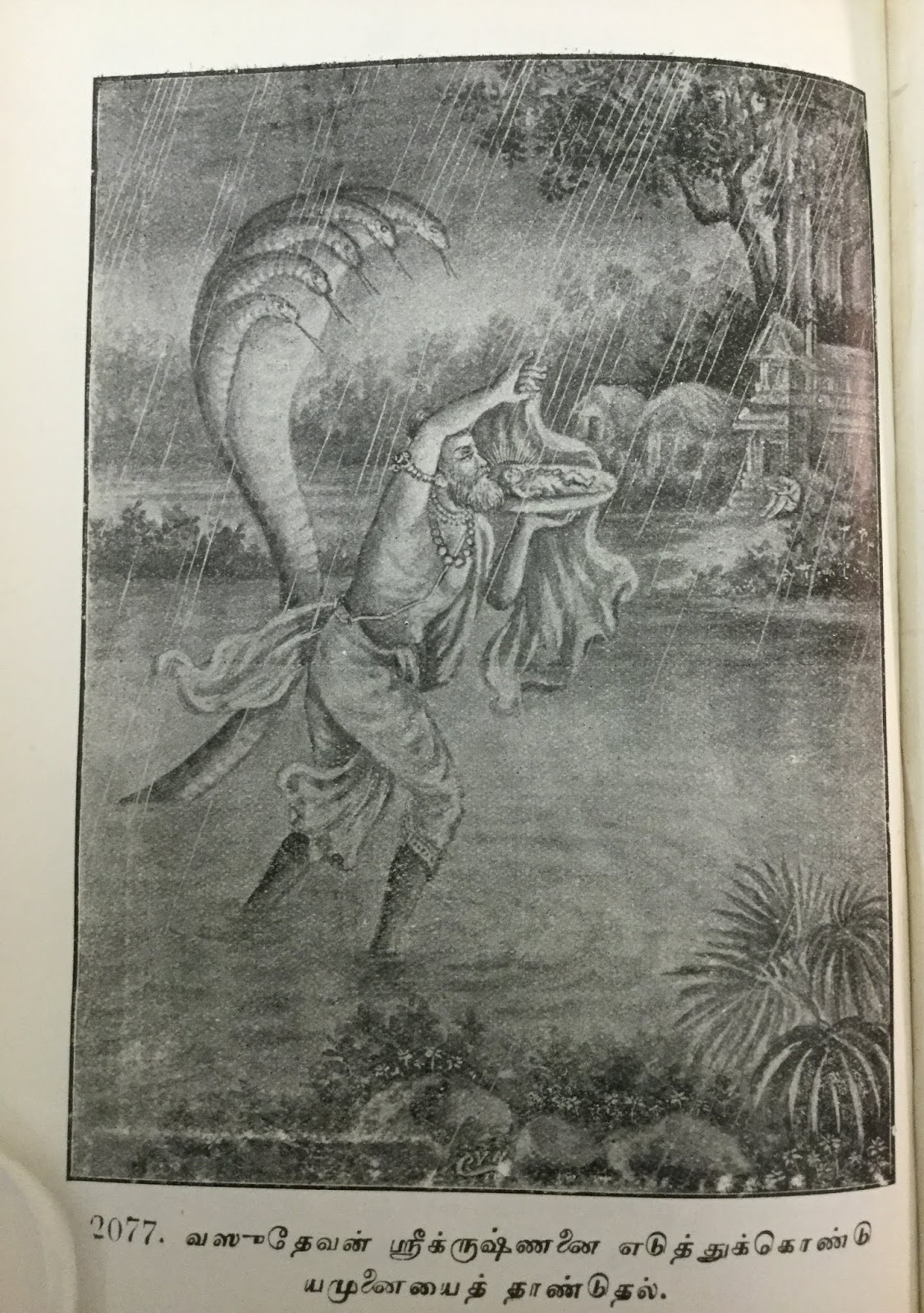
Krishna’s Birth- His Father Vasudeva crssing the flodded River Yamuna at the dead of night. River divides into two and gives him way in the middle.
Kamsa tried to kill the Yoga Maya, but it flew away in the sky.
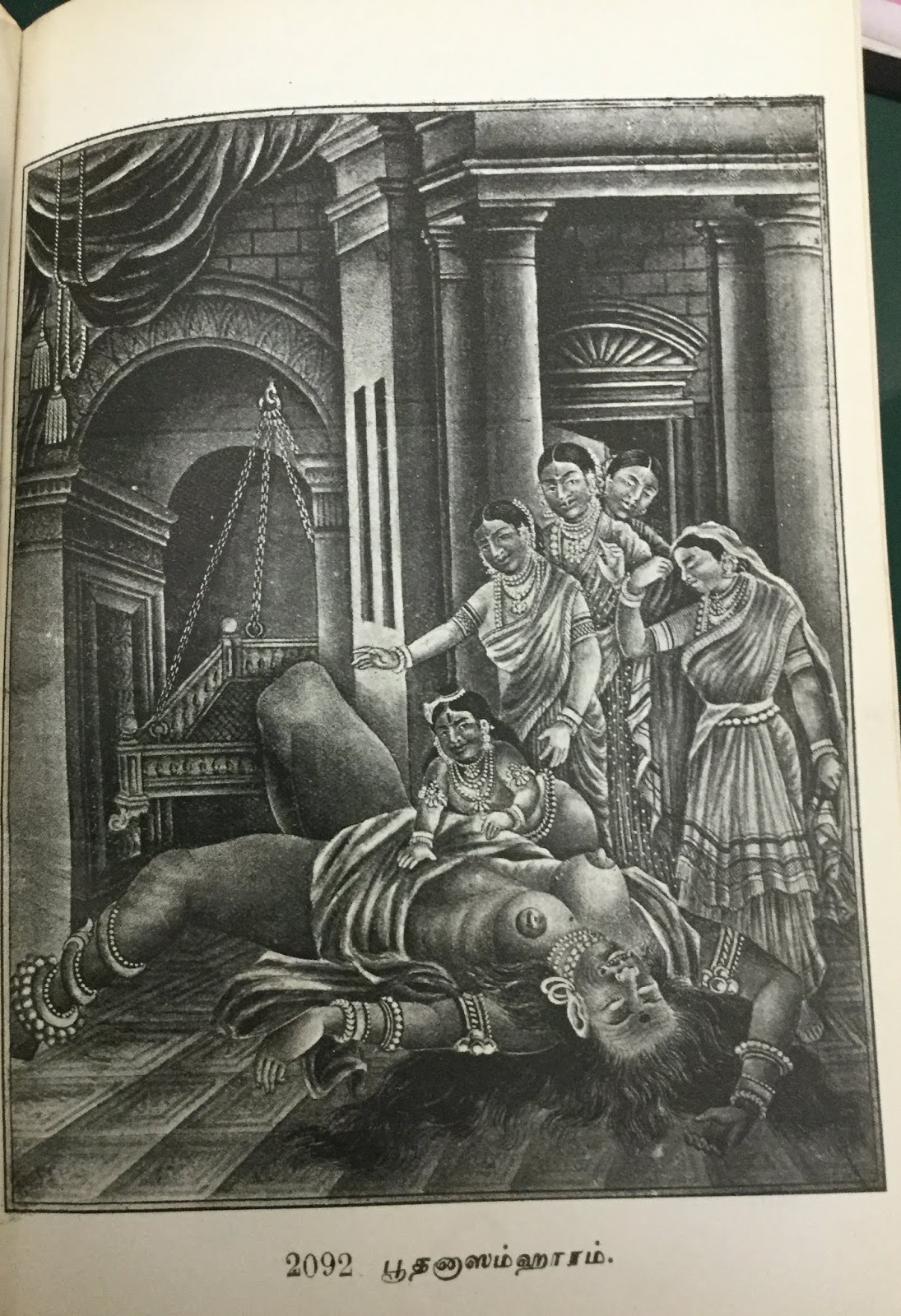
Krishna, as a boy, killed Bhutana who tried to poison him
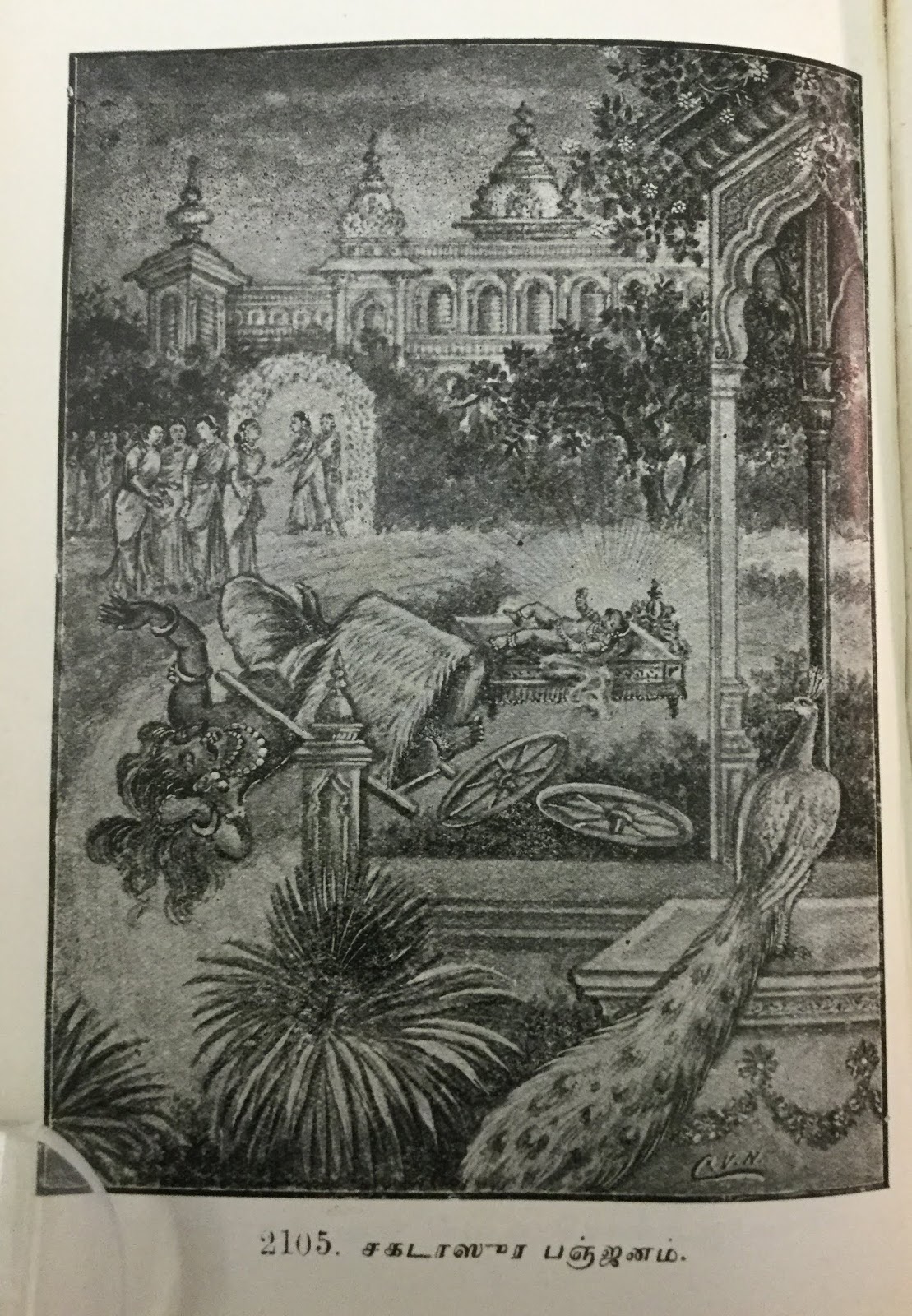
Krishna smashed the wheels that were sent to crush him. A demon rolled the wheels against Krishna
The heron demon is killed by Krishna
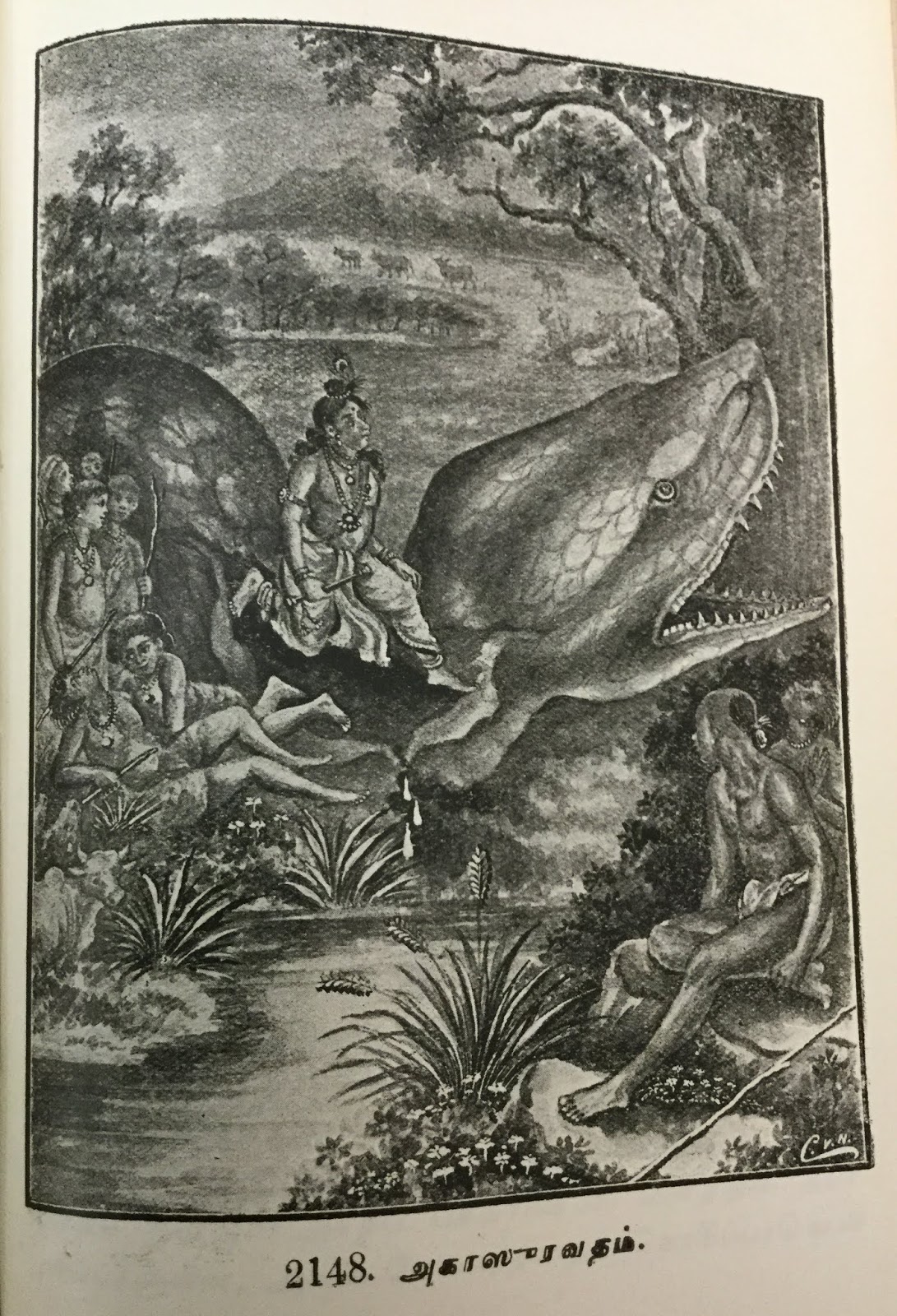
Another demon called Agasura ( a dinosaur) is killed by Krishna
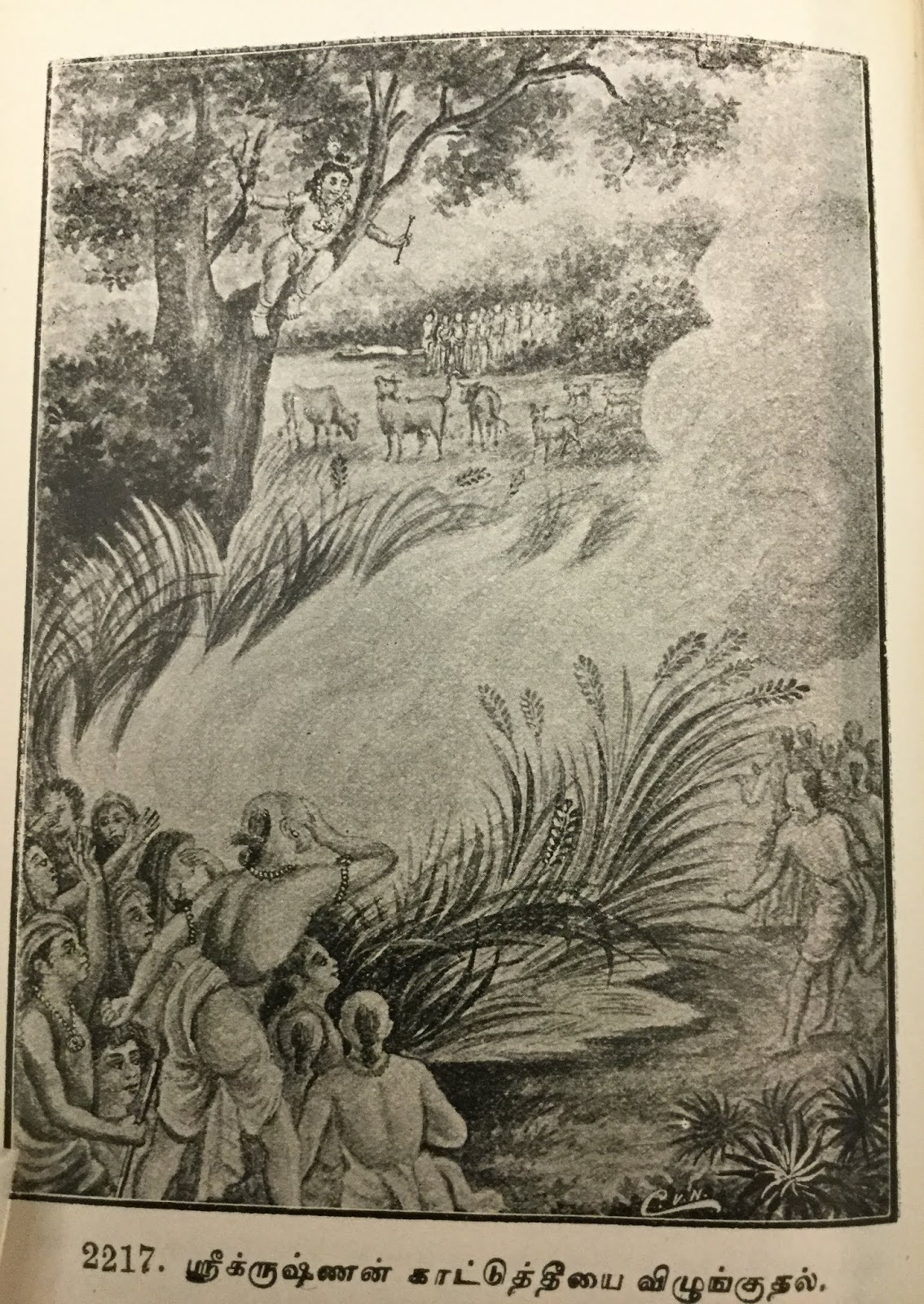
Krishna saved his colleagues by devouring the Forest Fire.
Research Article by London Swaminathan swami_48@yahoo.com Date: 26 December 2018 GMT Time uploaded in London – 13-54 Post No. 5837
Pictures shown here are taken from various sources including google, Wikipedia, Facebook friends and newspapers. This is a non- commercial blog.
River ordeal or Water ordeal and Fire ordeal are found in Vedic literature and later books. We read about Sita’s Fire Ordeal in Ramayana and Fire walking in Jaiminiya Brahmana. It is interesting to see the Babylonian king Hammurabi also listed River ordeal as one of the punishments.
As I have explained in my article posted yesterday, Manu lived before Hammurabi (1792 BCE). Manu is in the oldest book Rik Veda. The following sloka not only showed Manu lived during the days of flowing mighty Sarasvati River but also water ordeal was one of the punishments or atonements.
In chapter 2 Manu says
“The country that the gods made between the two divine rivers, the Sarasvati and Drsadvati, is what they call the Land of the Veda”- Manu 2-17
In chapter 11 he says,
A priest killer……………
“Throw himself three times, head first, into a blazing fire -11-74
Or he may eat food fit for an oblation and walk the length of the Sarasvati river against the current”-11-78.
Manu lived before 2000 BCE; later the river dried up according to the latest scientific discoveries.
Water Ordeal in Code of Hammurabi
Witchcraft
(2)If a man has laid a charge of witchcraft against another man but cannot substantiate his guilt, the person against whom witchcraft is alleged shall go to the river and jump into the river.
And if the mighty river overpowers him, the one who laid the allegations against him shall take possession of his house.
But if the river cleanses him of the guilt, he shall go away restored.
The one who laid a charge of witchcraft against him shall be put to death; the one who jumped into the river shall take possession of the house of the one who made the allegations against him
Tamil Periya Purana
Fire and Water ordeal figured also in the Pariyapurana which gives the life stories of 63 great Saivite saints.
When the politically motivated Jains set fire to the Brahmin boy Sambandar’s residence he came out without any harm. Later the Jains challenged him in various ways. One of the tests they held was Fire ordeal. Both the Jains and Sambandar placed the palm leaf manuscript with their holy Mantras. Sambandar’s palm leaf remained intact whereas the Jains’ one burnt to ashes. Then the water ordeal took place. Both of them placed their palm leaf manuscripts in the Vaigai River. Jains’ palm leaf was washed away; but Sambandar’swent against the river current and reached the banks 12 miles away Madurai. That place is called Thiru Edu Akam (Thiruvedakam). This water ordeal is at least 1400 year old.
River Ordeal in Mahabharata
Bandi was a Vedic scholar in the court of King Janaka . He used to hold learned discussions and debates on Vedic scripture s with visiting scholars who after being defeated, were thrown into river. One such unfortunate loser was Kahoda. Later Kahodas son Ashtavakra mastered all the scriptures by the age of twelve. He defeated Bandi and he was thrown into a river. But being the son of god Varuna , no harm came to him and he ended his earthly existence. Kahoda was restored to life. Later Ashtavakra bathed in the River Samang and his crooks in the body straightened out. This shows the miraculous powers of the river or water. Ashtavakra got eight crooks in his body when he was in the womb of his mother and his father Kahoda spelt the Vedas with mistakes.
What is Water Ordeal?
In Mesopotamia, from the old Babylonian period on, if the sworn testimony by the parties in a legal dispute conflicted or if for some reason the case was not solvable by rational means , it was usual to refer the decision to the river god; in other words to decide by means of a river ordeal . This solemn expedient was in effect a form of divination and the judgment would then be declared in the name of Id, the Divine River, or Shazi, son of the Divine River or Ea, Enki.
It seems likely that one of the litigants, selected by lot, underwent the ordeal. He had to submerge himself in the river at a special location in the presence of the authorities, and possibly swim to a certain distance. If he came out safe he was cleared. If he was overcome by the current and sank, he was guilty and had to return to court for sentencing—- fine or execution. It was not intended that he should drown.
Sometimes a holy river was specified. Daban, Diyala, Hubur , all rivers outside Babylon.
Sources
Hammurabi’s Laws, M E J Richardson, Sheffield Academic Press Who is who in the Mahabharata, Subash Mazumdar, Bharatiya Vidya Bhavan, Bombay Dictionary of the Ancient Near East, British Museum Periapuranam Manu Smrti
Research Article written by London Swaminathan swami_48@yahoo.com Date: 25 December 2018 GMT Time uploaded in London – 19-52 Post No. 5832
Pictures shown here are taken from various sources including google, Wikipedia, Facebook friends and newspapers. This is a non- commercial blog.
Manu , the Hindu Law maker, is more ancient than Hammurabi, the Babylonian ruler. According to historians, Hammurabi ruled for 42 years from 1792 BCE. Historians consider him as the oldest law maker. In fact historians knew that there were other laws in the Middle East even before Hammurabi . But Hammurabi was the one who put them together. They found a stele with law inscribed on it in Susa in Iran. French archaeologists brought it to the Louvre Museum in Paris.
My research shows that Manu of India is older than Hammurabi for the following reasons:
Manu’s name appears in the Rik Veda, the oldest book in the world. This Veda is dated between 6000 BCE and 1500 BCE by various scholars. Now the research on the basins of dried Saraswati River proved that the Rik Veda was definitely composed before 2000 BCE, that is before the time of Hammurabi. The internal evidence in Manu Smrti also points towards this direction.
Manu talks about mighty Saraswati River, which is referred to in the Rik Veda scores of times.
Manu and Rik Veda never spoke about SATI, the widow burning custom. So they belong to the same period.
More over Lord Krishna in the Bhagavad Gita also indicate the time of Manu.
“I proclaimed this imperishable yoga to Vivasvaan. Vivasvaan told it to Manu and Manu spoke it to Iksvaaku” – Bhagavad Gita 4-1
Hindus strongly believe that the Mahabharata war took place before 3102 BCE. Lord Krishna spoke about Manu at that time. Though there were several Manus, Vaivasvata Manu is the son of Vivasvaan.
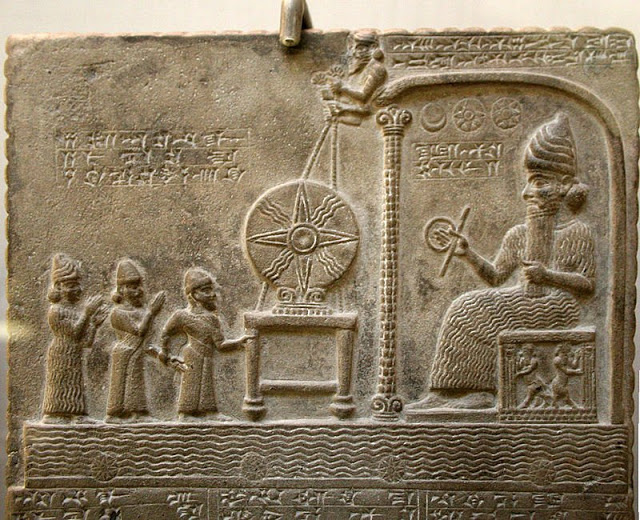
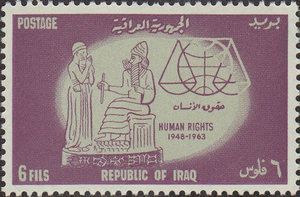
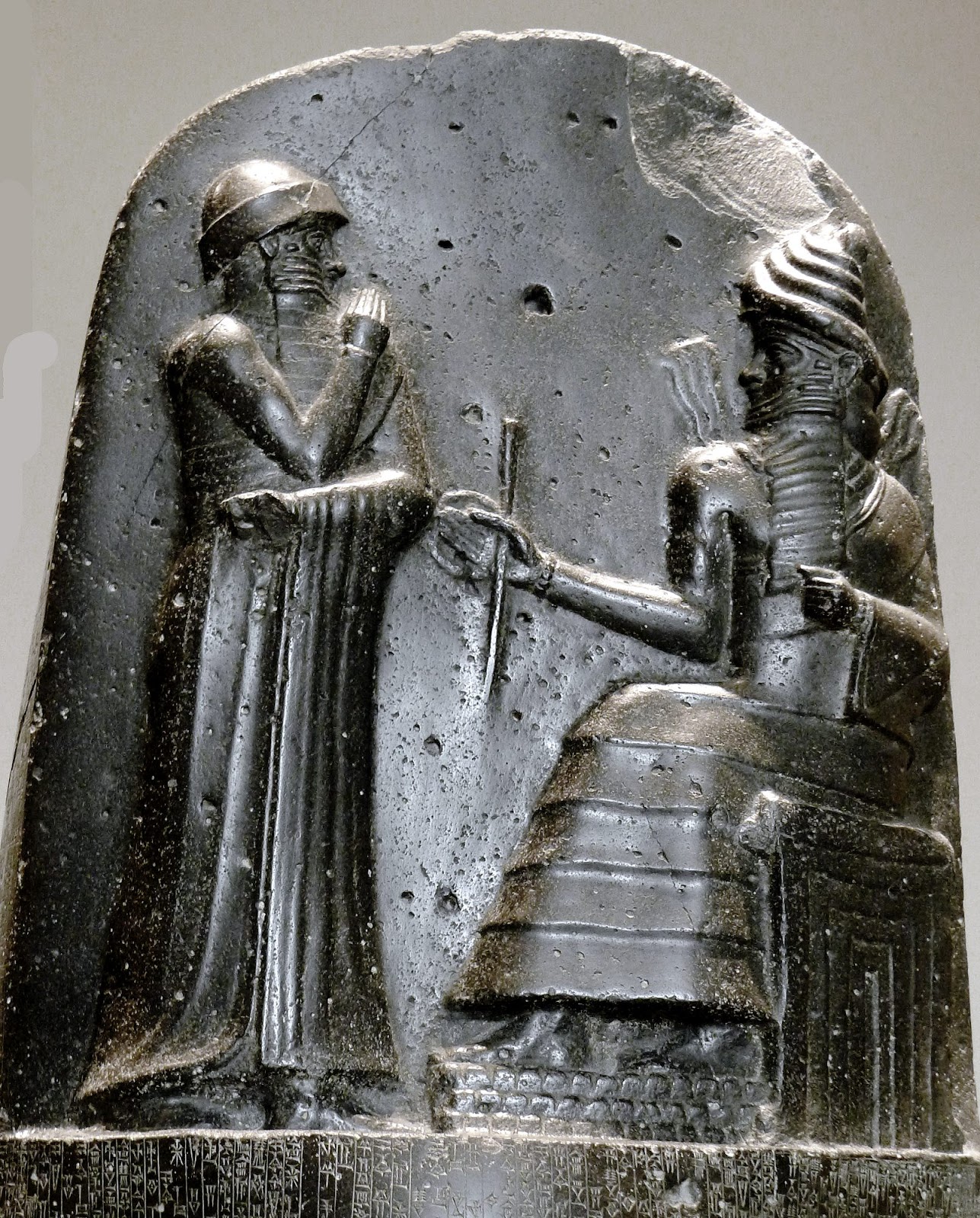
Hammurabi in front of Sun God Shamash
Vivasvaan is Sun God according to the commentators. This Gita sloka not only showed the age of Manu but also shows the link between Manu and Hammurabi.
Did Hammurabi copy Manu?
Manu is very comprehensive about the laws. But Hammurabi has only 282 laws. All these topics are already in Manu Smrti. The big difference is Hammurabi used ‘KILL,KI’LL as punishment for most of the offences. Manu was very kind.
Hammurabi’s approach is ‘Eye for Eye and Tooth for tooth’; but Manu says the punishment should be proportionate to the offence. Heaskedthe kings to use discretion and award punishment based on the status, circumstances and the time of the offence.
Similarities:
Hammurabi received the law from Shamash, the Sun God. Manu is the son of Sun God- Vivasvaan. The stele in Louvre museum show Hammurabi and Shamash.
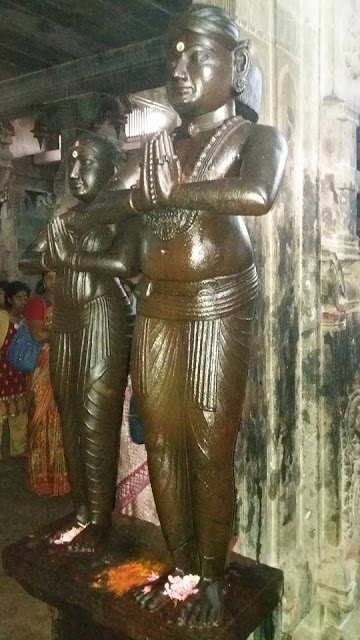
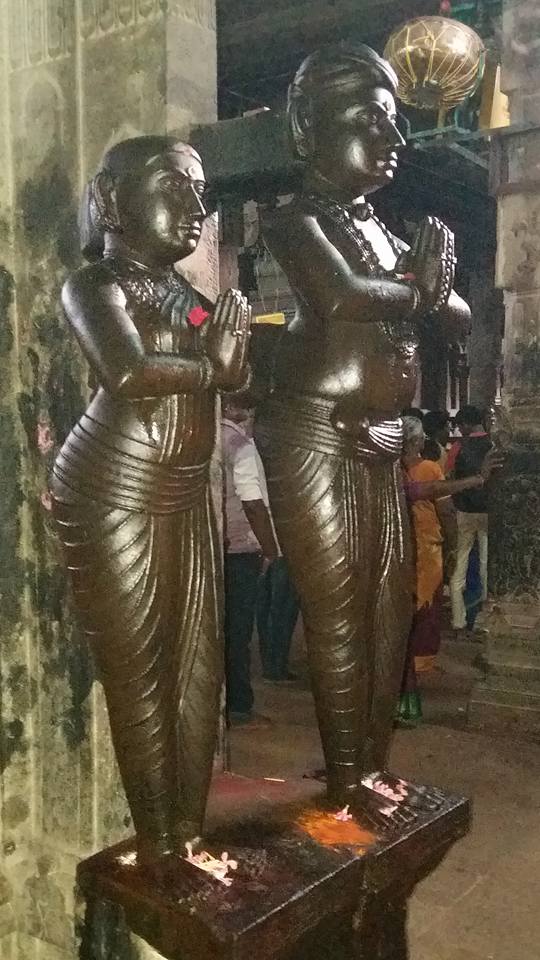
Hammurabi behaved like a Hindu devotee in front of Shamash. Hindus, when they approach saints and seers, always cover their mouth with RIGHT HAND so that no spit reaches the body of the saint.
Manu divided his book into 12 chapters and Hammurabi also wrote it in 12 sections.
The topics covered by Hammurabi are already in Manu; but the punishments and fines differ widely.
Sun God Shamash is called ‘Udu’ in certain parts of the Middle East. Udu means star in Tamil and Sanskrit.
Hammurabi belongs to Ammorites; the word means Amaru region as well as god. Amara desa means mountainous country in the Hindu Puranas.
Scholars were not sure whether anyone followed Hammurabi’s Laws in the Middle East at any time. They may be ideal laws or just a deterrent. Manu’s laws were also not followed verbatim. But Hindu kings boasted that they followed Manu Niti. Pandyan copper plates boast that Pandya rulers were followers of Manu. There was a Choza king who was called Manu Niti Choza because he followed Manu Niti (Niti= justice). When the king’s son killed a calf under his chariot wheels, the cow came to his palace and rang the Bell of Justice at the gate. When the king came to know the reason for this he was told about the accident. Then the king ran over the chariot on his son to avenge the killing of a calf. But all ended well when God revived the calf and his son in appreciation of king’s just rule.
Hammurabi used the day to day Akkadian language to proclaim his laws. He wrote them on the clay tablets and inscribed them over stones. Later Indian king Asoka also followed this by writing everything in peoples language Pali on stones. There might have been a custom like this in India even before Asoka. Like we lost most of Asoka’s inscriptions, we might have lost them.
Written by London Swaminathan swami_48@yahoo.com Date: 18 December 2018 GMT Time uploaded in London – 18-31 Post No. 5798
Pictures shown here are taken from various sources including google, Wikipedia, Facebook friends and newspapers. This is a non- commercial blog.
So far we have covered six out of twelve chapters of Manu Smrti. Now let us look at the first 98 slokas/couplets of seventh chapter. Here, Manu deals with the duties of the kings and the laws about punishments.
First, I will give the interesting things in bullet points; there are similarities with ancient Tamil literature.
1.King is considered god; in old Tamil the words for the King and God are same (Ko, Irai = King , God; Kovil = temple or palace)
See the slokas 8 to 10
Compare Tirukkural 691 where king is equated with fire; also in chapters 55 and 56,Valluar describes the qualities and powers of a king in 20 couplets.
In Sangam literature, king’s powers are compared with Sun, moon, Fire, Wind and Yama. See slokas 4 on wards
2. In sloka 7-12 Manu says that one who hates a king will perish. In Tamil there is a proverb that ‘The king kills one on the same day, but God waits and kills bad people. This is also reflected in Tamil Veda Tirukkural.
3.Slokas16-20 emphasizes the importance of punishment. All the Tamil epigraphs praised the kings as followers of Manu Niti (Manu’s Justice)in that respect. Story of Manu Niti Choza is very popular in Tamil literature (see my article on this king)
4.Interesting Similes or references to animals- sloka 20-fish, 21-dog and crow, 33, 34- oil and ghee in water
5.Slokas 41 and 42 give the lisst of good and bad kings. I have given their stories in my old articles; Sumukan’s name is found only in Sumerian (Read my old articles)
6.Slokas 47-52 describe the Ten Vices of kings
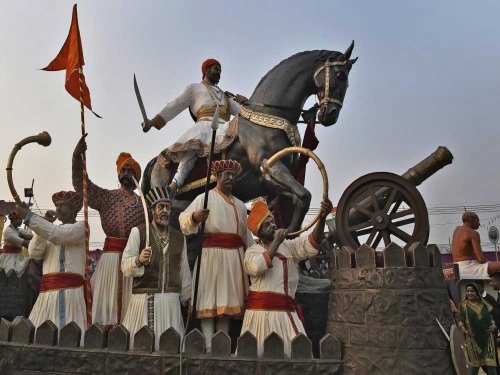
7.Sloka 54 recommends 7 or 8 ministers. Krishna Deva Raya, Veera Sivaji and Tamil kings had this 8 advisers/ ministers set up; Tamil epic Silappadikaram talks about Two Councils of Five and Eight (Aimperum Kuzu and Enperaayam in Tamil)
8.Slokas 63 and 64 emphasizes the importance of Ambassadors- I have dealt with this subject already. The world learnt about Ambassadors, Flags, Symbols, Emblems – all from India. We have umpteen examples in Ramayana and Mahabharata
9.Sloka 71 recommends Fort on the Hill. Veera Shivaji and several Rajasthani kings won several battles due to this factor.
10.Sloka 90 onwards describe the rules for just wars. This is the big difference between ancient Hindu and other Non- Hindu states. In those days Hindus fought wars according to rules. They fought from sun rise to sun set in a designated place outside the human habitation areas. But after Greek, Muslim and European invasions everything changed. If they killed the Indian king, Hindus thought that the war was lost.
11. Sloka 96 onwards we see the rules for sharing the war booty. Manu covered almost everything under the sun!
12. Manu has dealt all the topics in 12 chapters in over 2600 couplets; there are nine commentaries available in full. These slokas on Raja Niti (Just Rule) have attracted lot of comments. One must read the all the commentaries to understand the genius of Manu.
13.Punishment of Brahmins (scholars)- Manu says that the king should be lenient towards Brahmins, when it comes to punishment. If we take Brahmins as scholars who lead an unblemished lif,e then one can understand it. Even communist countries treated ‘erring’ intellectuals with some concessions. See my articles on Shakarov of Soviet Union and others.
Here is Chapter Seven:–
DUTIES OF KINGS
7-1. I will declare the duties of kings, and show how a king should conduct himself, how he was created, and how he can obtain highest success.
2. A Kshatriya, who has received according to the rule the sacrament prescribed by the Veda, must duly protect this whole world.
3. For, when these creatures, being without a king, through fear dispersed in all directions, the Lord created a king for the protection of this whole creation,
EIGHT POWERS OF EIGHT GODS
4. Taking for that purpose eternal particles of Indra, of the Wind, of Yama, of the Sun, of Fire, of Varuna, of the Moon, and of the Lord of wealth Kubera.
5. Because a king has been formed of particles of those lords of the gods, he therefore surpasses all created beings in lustre;
6. And, like the sun, he burns eyes and hearts; nor can anybody on earth even gaze on him.
7. Through his supernatural power he is Fire and Wind, he Sun and Moon, he the Lord of justice (Yama), he Kubera, he Varuna, he great Indra.
KING IS GOD
8. Even an infant king must not be despised, (from an idea) that he is a mere mortal; for he is a great deity in human form.
9. Fire burns one man only, if he carelessly approaches it, the fire of a king’s anger consumes the whole family, together with its cattle and its hoard of property.
10. Having fully considered the purpose, his power, and the place and the time, he assumes by turns many different shapes for the complete attainment of justice.
11. He, in whose favour resides Padma, the goddess of fortune, in whose valour dwells victory, in whose anger abides death, is formed of the lustre of all (gods).
KINGS KILL ENEMIES AT ONCE
7-12. The man, who in his exceeding folly hates him, will doubtlessly perish; for the king quickly makes up his mind to destroy such a man.
13. Let no man, therefore, transgress that law which favourites, nor his orders which inflict pain on those in disfavour.
14. For the king’s sake the Lord formerly created his own son, Punishment, the protector of all creatures, an incarnation of the law, formed of Brahman’s glory.
15. Through fear of him all created beings, both the immovable and the movable, allow themselves to be enjoyed and swerve not from their duties.
PUNIHING THE WRONG DOERS
16. Having fully considered the time and the place of the offence, the strength and the knowledge of the offender, let him justly inflict that punishment on men who act unjustly.
17. Punishment is in reality the king (and) the male, that the manager of affairs, that the ruler, and that is called the surety for the four orders’ obedience to the law.
18. Punishment alone governs all created beings, punishment alone protects them, punishment watches over them while they sleep; the wise declare punishment to be identical wit) the law.
19. If(punishment is properly inflicted after due consideration, it makes all people happy; but inflicted without consideration, it destroys everything.
20. If the king did not, without tiring, inflict punishment on those worthy to be punished, the stronger would roast the weaker, like fish on a spit;
LAWLESS STATE
21. The crow would eat the sacrificial cake and the dog would lick the sacrificial oblations, and ownership would not remain with any one, the lower ones would usurp the place of the higher ones.
22. The whole world is kept in order by punishment, for a guiltless man is hard to find; through fear of punishment the whole world yields the enjoyments (which it owes).
23. The gods, the Danavas, the Gandharvas, the Rakshasas, the bird and snake deities even give the enjoyments due from them only, if they are tormented by (the fear of punishment.
24. All castes (varna) would be corrupted (by intermixture), all barriers would be broken through, and all men would rage (against each other) in consequence of mistakes with respect to punishment.
25. But where Punishment with a black hue and red eyes stalks about, destroying sinners, there the subjects are not disturbed, provided that he who inflicts it discerns well.
26. They declare that king to be a just inflicter of punishment, who is truthful, who acts after due consideration, who is wise, and who knows (the respective value of) virtue, pleasure, and wealth.
27. A king who properly inflicts (punishment), prospers with respect to (those) three (means of happiness); but he who is voluptuous, partial, and deceitful will be destroyed, even through the (unjust) punishment (which he inflicts).
28. Punishment (possesses) a very bright lustre, and is hard to be administered by men with unimproved minds; it strikes down the king who swerves from his duty, together with his relatives.
29. Next it will afflict his castles, his territories, the whole world together with the movable and immovable (creation), likewise the sages and the gods, who (on the failure of offerings) ascend to the sky.
30. (Punishment) cannot be inflicted justly by one who has no assistant, (nor) by a fool, (nor) by a covetous man, (nor) by one whose mind is unimproved, (nor) by one addicted to sensual pleasures.
31. By him who is pure (and) faithful to his promise, who acts according to the Institutes (of the sacred law), who has good assistants and is wise, punishment can be (justly) inflicted.
32. Let him act with justice in his own domain, with rigour chastise his enemies, behave without duplicity towards his friends, and be lenient towards Brahmanas.
33. The fame of a king who behaves thus, even though he subsist by gleaning, is spread in the world, like a drop of oil on water.
34. But the fame of a king who acts in a contrary manner and who does not subdue himself, diminishes in extent among men like a drop of clarified butter in water.
35. The king has been created (to be) the protector of the castes (varna) and orders, who, all according to their rank, discharge their several duties.
36. Whatever must be done by him and by his servants for the protection of his people, that I will fully declare to you in due order.
37. Let the king, after rising early in the morning, worship Brahmanas who are well versed in the threefold sacred science and learned (in polity), and follow their advice.
38. Let him daily worship aged Brahmanas who know the Veda and are pure; for he who always worships aged men, is honoured even by Rakshasas.
39. Let him, though he may already be modest, constantly learn modesty from them; for a king who is modest never perishes.
40. Through a want of modesty many kings have perished, together with their belongings; through modesty even hermits in the forest have gained kingdoms.
IMMODEST KINGS WHO LOST POWER
41. Through a want of humility Vena perished, likewise king Nahusha, Sudas, the son of Pigavana, Sumukha, and Nemi.
42. But by humility Prithu and Manu gained sovereignty, Kubera the position of the Lord of wealth, and the son of Gadhi the rank of a Brahmana.
43. From those versed in the three Vedas let him learn the threefold (sacred science), the primeval science of government, the science of dialectics, and the knowledge of the (supreme) Soul; from the people (the theory of) the (various) trades and professions.
44. Day and night he must strenuously exert himself to conquer his senses; for he alone who has conquered his own senses, can keep his subjects in obedience.
TEN VICES
45. Let him carefully shun the ten vices, springing from love of pleasure, and the eight, proceeding from wrath, which (all) end in misery.
46. For a king who is attached to the vices springing from love of pleasure, loses his wealth and his virtue, but he who is given to those arising from anger, loses even his life.
47. Hunting, gambling, sleeping by day, censoriousness, (excess with) women, drunkenness, (an inordinate love for) dancing, singing, and music, and useless travel are the tenfold set (of vices) springing from love of pleasure.
48. Tale-bearing, violence, treachery, envy, slandering, (unjust) seizure of property, reviling, and assault are the eightfold set (of vices) produced by wrath.
49. That greediness which all wise men declare to be the root even of both these (sets), let him carefully conquer; both sets (of vices) are produced by that.
50. Drinking, dice, women, and hunting, these four (which have been enumerated) in succession, he must know to be the most pernicious in the set that springs from love of pleasure.
51. Doing bodily injury, reviling, and the seizure of property, these three he must know to be the most pernicious in the set produced by wrath.
52. A self-controlled (king) should know that in this set of seven, which prevails everywhere, each earlier-named vice is more abominable (than those named later).
53. (On a comparison) between vice and death, vice is declared to be more pernicious; a vicious man sinks to the nethermost (hell), he who dies, free from vice, ascends to heaven.
EIGHT MINISTERS
(SIVAJI, KRISHNADEVARAYAR , TAMILS FOLLOWED THIS)
54. Let him appoint seven or eight ministers whose ancestors have been royal servants, who are versed in the sciences, heroes skilled in the use of weapons and descended from (noble) families and who have been tried.
55. Even an undertaking easy (in itself) is sometimes) hard to be accomplished by a single man; how much harder is it for a king, especially if he has no assistant, to govern a kingdom which yields great revenues.
56. Let him daily consider with them the ordinary (business, referring to) peace and war, (the four subjects called) sthana, the revenue, the (manner of) protecting (himself and his kingdom), and the sanctification of his gains (by pious gifts).
57. Having (first) ascertained the opinion of each (minister) separately and (then the views) of all together, let him do what is (most) beneficial for him in his affairs.
58. But with the most distinguished among them all, a learned Brahmana, let the king deliberate on the most important affairs which relate to the six measures of royal policy.
59. Let him, full of confidence, always entrust to that (official) all business; having taken his final resolution with him, let him afterwards begin to act.
60. He must also appoint other officials, (men) of integrity, (who are) wise, firm, well able to collect money, and well tried.
MINISTRIES
61. As many persons as the due performance of his business requires, so many skilful and clever (men), free from sloth, let him appoint.
62. Among them let him employ the brave, the skilful, the high-born, and the honest in (offices for the collection of) revenue, (e.g.) in mines, manufactures, and storehouses, (but) the timid in the interior of his palace.
63. Let him also appoint an ambassador who is versed in all sciences, who understands hints, expressions of the face and gestures, who is honest, skilful, and of (noble) family.
APPOINTMENT OF AMBASSADORS
64.Such an ambassador is commended to a king (who is) loyal, honest, skilful, possessing a good memory, who knows the Proper place and time for action, who is handsome, fearless, and eloquent.
65. The army depends on the official (placed in charge of it), the due control (of the subjects) on the army, the treasury and the (government of) the realm on the king, peace and its opposite (war) on the ambassador.
66. For the ambassador alone makes (kings’) allies and separates allies; the ambassador transacts that business by which (kings) are disunited or not.
67. With respect to the affairs let the (ambassador) explore the expression of the countenance, the gestures and actions of the (foreign king) through the gestures and actions of his confidential (advisers), and (discover) his designs among his servants.
68. Having learnt exactly (from his ambassador) the designs of the foreign king, let (the king) take such measures that he does not bring evil on himself.
69. Let him settle in a country which is open and has a dry climate, where grain is abundant, which is chiefly (inhabited) by Aryans, not subject to epidemic diseases (or similar troubles), and pleasant, where the vassals are obedient and his own (people easily) find their livelihood.
70. Let him build (there) a town, making for his safety a fortress, protected by a desert, or a fortress built of (stone and) earth, or one protected by water or trees, or one (formed by an encampment of armed) men or a hill-fort.
FORT IN THE HILL
71. Let him make every effort to secure a hill-fort, for amongst all those fortresses mentioned a hill-fort is distinguished by many superior qualities.
72. The first three of those various kinds of fortresses are inhabited by wild beasts, animals living in holes and aquatic animals, the last three by monkeys, men, and gods respectively.
73. As enemies do not hurt these (beings, when they are) sheltered by (their) fortresses, even so foes (can) not injure a king who has taken refuge in his fort.
74. One bowman, placed on a rampart, is a match in battle for one hundred (foes), one hundred for ten thousand; hence it is prescribed (in the Sastras that a king will posses) a fortress.
75. Let that (fort) be well supplied with weapons, money, grain and beasts of burden, with Brahmanas, with artisans, with engines, with fodder, and with water.
76. Let him cause to be built for himself, in the centre of it, a spacious palace, (well) protected, habitable in every season, resplendent (with whitewash), supplied with water and trees.
77. Inhabiting that, let him wed a consort of equal caste (varna), who possesses auspicious marks (on her body), and is born in a great family, who is charming and possesses beauty and excellent qualities.
78. Let him appoint a domestic priest (purohita) and choose officiating priests (ritvig); they shall perform his domestic rites and the (sacrifices) for which three fires are required.
79. A king shall offer various (Srauta) sacrifices at which liberal fees (are distributed), and in order to acquire merit, he shall give to Brahmanas enjoyments and wealth.
80. Let him cause the annual revenue in his kingdom to be collected by trusty (officials), let him obey the sacred law in (his transactions with) the people, and behave like a father towards all men.
81. For the various (branches of business) let him appoint intelligent supervisors; they shall inspect all (the acts) of those men who transact his business.
BRAHMINS
82. Let him honour those Brahmanas who have returned from their teacher’s house (after studying the Veda); for that (money which is given) to Brahmanas is declared to be an imperishable treasure for kings.
83. Neither thieves nor foes can take it, nor can it be lost; hence an imperishable store must be deposited by kings with Brahmanas.
84. The offering made through the mouth of a Brahmana, which is neither spilt, nor falls (on the ground), nor ever perishes, is far more excellent than Agnihotras.
85. A gift to one who is not a Brahmana (yields) the ordinary (reward; a gift) to one who calls himself a Brahmana, a double (reward); a gift to a well-read Brahmana, a hundred-thousandfold (reward); (a gift) to one who knows the Veda and the Angas (Vedaparaga, a reward) without end.
86. For according to the particular qualities of the recipient and according to the faith (of the giver) a small or a great reward will be obtained for a gift in the next world.
87. A king who, while he protects his people, is defied by (foes), be they equal in strength, or stronger, or weaker, must not shrink from battle, remembering the duty of Kshatriyas.
88. Not to turn back in battle, to protect the people, to honour the Brahmanas, is the best means for a king to secure happiness.
89. Those kings who, seeking to slay each other in battle, fight with the utmost exertion and do not turn back, go to heaven.
FIGHTING RULES
90. When he fights with his foes in battle, let him not strike with weapons concealed (in wood), nor with (such as are) barbed, poisoned, or the points of which are blazing with fire.
91. Let him not strike one who (in flight) has climbed on an eminence, nor a eunuch, nor one who joins the palms of his hands (in supplication), nor one who (flees) with flying hair, nor one who sits down, nor one who says ‘I am thine;’
92. Nor one who sleeps, nor one who has lost his coat of mail, nor one who is naked, nor one who is disarmed, nor one who looks on without taking part in the fight, nor one who is fighting with another (foe);
93. Nor one whose weapons are broken, nor one afflicted (with sorrow), nor one who has been grievously wounded, nor one who is in fear, nor one who has turned to flight; (but in all these cases let him) remember the duty (of honourable warriors).
94. But the (Kshatriya) who is slain in battle, while he turns back in fear, takes upon himself all the sin of his master, whatever (it may be);
95. And whatever merit (a man) who is slain in flight may have gained for the next (world), all that his master takes.
WAR BOOTY
96. Chariots and horses, elephants, parasols, money, grain, cattle, women, all sorts of (marketable) goods and valueless metals belong to him who takes them (singly) conquering (the possessor).
97. A text of the Veda (declares) that (the soldiers) shall present a choice portion (of the booty) to the king; what has not been taken singly, must be distributed by the king among all the soldiers.
7-98. Thus has been declared the blameless, primeval law for warriors; from this law a Kshatriya must not depart, when he strikes his foes in battle.
Tags:- Manu’s Law on kings, Punishments, Wars, Booty
Pictures shown here are taken from various sources including google, Wikipedia, Facebook friends and newspapers. This is a non- commercial blog.
GREEK PYTHIAS AND TAMIL PISIRANTHAIYAR – SYMBOLS OF FRIENDSHIP! (Post No.5777)
The story of Pythias and Damon is popular in the West. It has become an idiom in English. The two friends of Athens stand as the symbol of true friendship. It is said that they followed the friendship as propagated by the Greek philosopher Pythagoras. That is what exactly the great Tamil poet Tiruvalluvar, author of Tamil Veda called Tirukkural said,
“Friendship requires neither common residence nor frequent meeting; spiritual kinship creates the right to friendship”- Kural 785
“Friendship is not that which shines as a smile in the face; Friendship is that which shines as a joy in the soul within” – 786
Another translation of the same couplets runs like this,
“Identity of feelings alone count for close friendship for which,
Constant companionship is not really necessary”-785.
“A surface smile in the face is not friendship, genuine affection,
Springs from the heart and lights up the face”-786.
The story Of Pythias is as follows,
Pythias and Damon were great friends. Once they visited Syracuse where the tyrant Dionysius was ruling. The king suspected the intention of their visit and arrested Pythias for anti- state activities. He passed a death sentence on him after rejecting all his arguments. His friend Damon felt very sad and tried to help him.
At the same time Pythias’ mother was suffering from serious illness. So Pythias asked permission to go and see her before he dies. But Dionysius was not ready to believe him. He thought he would never come back. Damon, who was his true friend, told the king that he was ready to be a hostage in the place of Pythias. The tyrant agreed to that proposal. Damon was put in jail.
The days passed; now everyone was waiting anxiously from Pythias return. When the deadline was about to expire, Damon was taken to the execution platform. But Damon was dead sure that he would come back. At that time there was a great commotion when people saw Pythias running towards the place. He came in and asked for pardon for the delay and explained that untimely and unseasonal weather stopped his ship. He begged the king to release Damon and execute him as per the original order.
Whoever heard this started shedding tears and appreciated the great friendship between Pythias and Damon. It moved even the stony-hearted Dionysius and he ordered the release of both Pythias and Damon. From that time their name became proverbial for true friendship.
Similar Story in Tamil literature.
Pythias incident happened in the fifth century BCE. A few centuries later another story happened in Tamil Nadu in South India. There was a king by name Kopperum Chozan. He had problems with his sons about ruling the country. Sangam Tamil poets were honest and bold advisers. One of the poets advised the Choza king to hand over the kingdom to his wards and go to forest life—Vanaprastha—third stage in a Hindu’s life. The king said that he wanted to fast unto death. It is called ‘Prayopavesa’ in Sanskrit and found in the Kishkintha Kanda of Valmiki Ramayana. Whoever dies that way goes directly to heaven. They face the holy Northern Direction and starve to death. Several people used to join such a venture because they knew it is a ‘direct flight ticket’ to Heaven. As was the custom lot of scholars and poets joined the Choza king in the fast. One poet by name Pothiar was refused a seat in the hall by the king. He told him that the poet should go back home and can join only after the birth of a male child, which is required to go to heaven according to Hindu Law Books. He went back and came back after the death of the group and lamented. All this information is in Purananuru (verses 213-223), part of 2000 year old Sangam literature.
Here is the interesting bit.
Choza king asked his colleagues to reserve a seat for a poet named Pisir Anthaiar of the neighbouring Pandya kingdom. All other poets in the hall were surprised because the king and the poet never met. They told the king not to get disappointed by expecting him.
Then the king told them in a verse,
“There in the distant Pandya country
A poet from the town of Pisir is a very close friend.
Even if he does not come when I had lot of money, he would definitely come to see me when I am in distress” – Purananuru verse 215
The king’s words did not go waste. Pisir Anthaiyar came there just on time and sat with the king fasting until death.
This is an example for true friendship like the Pythias- Damon story.
Greek story of Pythias and Damon was made into films in several languages. Like Pisir- Choza story we have stories of Kuchela/Sudama – Krishna friendship. The very first chapter of Panchatantra fables is about true friendship.
Ancient Greeks believed in several virtues like Hindus. Pythias story shows,
1.His love for his mother; Hindus say Matha, Pitha , Guru are goods.
2.Pythias also kept his words like Hindus. All ancient foreign visitors said, ‘in India there is no written legal document and all is done by word of mouth’. Hindu myths say they are like the legendary Harischandra.
3. We have umpteen examples about true friendship. When Karna was insulted that he being a commoner, should not participate in Royal Olympic Games, Duryodana made him a king in a second. Karna was loyal to Duryodana till his last minute.
So we see many similarities between the legends of Hindus and Greeks. One is also reminded of the great sacrifice of Sydney Carton in the novel of A Tale of Two Cities by Charles Dickens.

















 Tamil and Vedas