Can We Learn Mantras from Printed Books?

sri_sacchidananda_shivabhinava_nrisimha_bharati_mahaswamigal
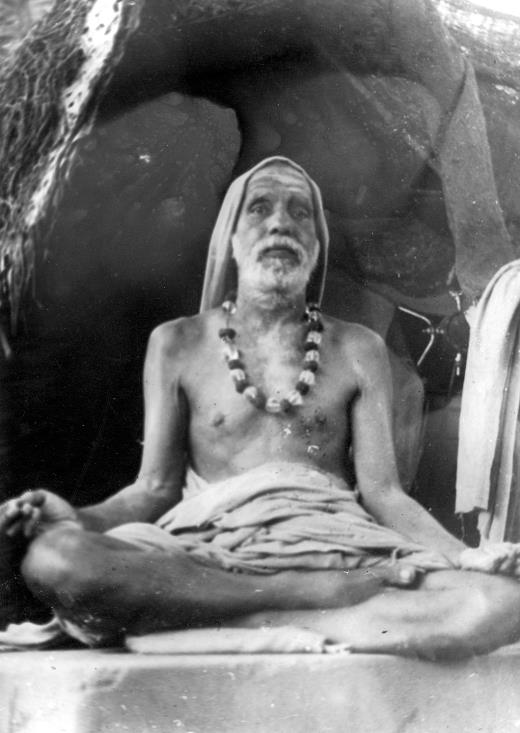
Picture of 33rd Jagadguru of Sringeri Mutt

Are the Mantras only for particular Castes?

A gentleman who accepted the efficacy of mantras in helping concentration of the mind had other doubts in the matter.

His Holiness Sachidananda Siva Abhinava Narasimha Bharati Svaminah(33rd Jagadguru) of Sringeri Mutt (from ‘Goden Sayings’) answered his questions:-

Gentleman: I do not understand why certain Mantras are allowed only for members of particular castes or persons in particular stages of life and are prohibited for others.

His Holiness: Only if a person for whom a particular Mantra is prescribed pronounces it, it is a Mantra; otherwise it is mere a sound.

Gent: How can that be? Is not a Mantra only a collection of sounds?

HH: A mere collection of sounds will not be a Mantra. It will be a Mantra only if pronounced by a person qualified to pronounce it.

G: How so?

HH: In answer to your question, I shall relate a story. In the days of old, a Naik Chief had a petty kingdom of his own and was guided by a Brahmana minister. He learnt that the high intelligence and capacity of the minister was due to his devoted repetition of the sacred Gayatri Mantra and felt impelled to ask him to initiate himself also in that Mantra. The minister however declined to do so. But there happened to be a poor Brahmana cook in the Royal establishment for the benefit of Brahmana guests and the King managed, by threats or bribing, to persuade him to impart to himself the Gayatri.

In a mood of exultation at his success, he proclaimed to the minister in the open court that he had learnt the Mantra. When the minister said that it was not possible, he repeated the words of the Mantra. The minister immediately denied it was the Gayatri. The King grew suspicious of the cook and sent for him and asked him to repeat it. He did so and the King at once pointed out that that was just what he himself pronounced. The minister however persisted in saying that it was not the same thing. The King naturally concluded that the minister was under some temporary mental aberration when he chose to deny a patent fact and attended to his other business.

After some time, the minister suddenly and in loud tones shouted to the bodyguard pointing to the King, “ Give him two slaps on his cheek”. This confirmed the king in his opinion about the mental condition of the minister, but when the latter repeated the same command more than once , the king became angry and said to the bodyguard, “ Give him two slaps on his cheek”.

The guard immediately gave a strong slap on the minister’s cheek. Then the minister said to the King, “This is the difference. I pronounced the same words as you did but they bore no effect but the same words from your lips had immediate effect and resulted in an injury to me. If a person like myself pronounces the same words, they not only do not amount to a command but have the contrary effect of bringing punishment on myself”.

rigveda2
Picture of Rig Vedic Mantras in printed format.

In the same way, a combination of sounds becomes a Mantra only when it is communicated by an authorised person to another qualified under the Shastras to get it. This explains incidentally why people who claim to have learnt Mantras from printed books are never benefited by them. On the other hand, such procedure has the decided effect of reducing the faith of ordinary people in the efficacy of Mantras. When even qualified recipients have to submit to various restrictions in the repetition of a Mantra, how can we expect any result, other than any undesirable, if it is resorted to by incompetent people in quite a light manner? The Shastras alone are our guide in such matters and must be strictly adhered to.

From ‘Golden Sayings’,1969 publication by Sri Jnanantha Grantha Prakasana Samiti, Thenkarai, Madurai District.

contact swami_48@yahoo.com

Mirror Temples! Hindu Wonders!!

arulmigu-sri-rajakaliamman (1)

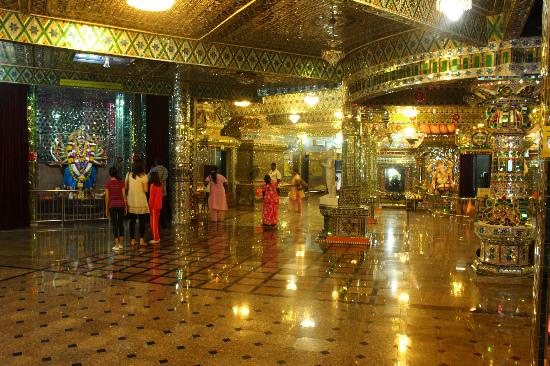
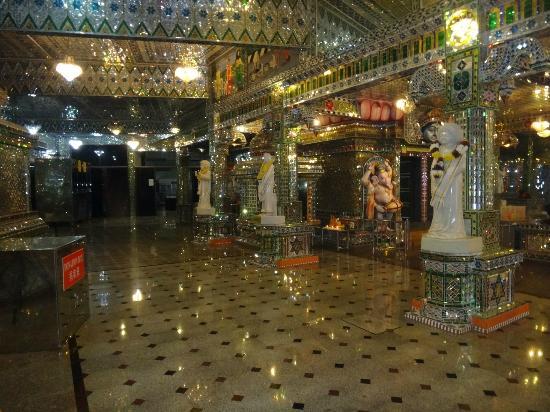
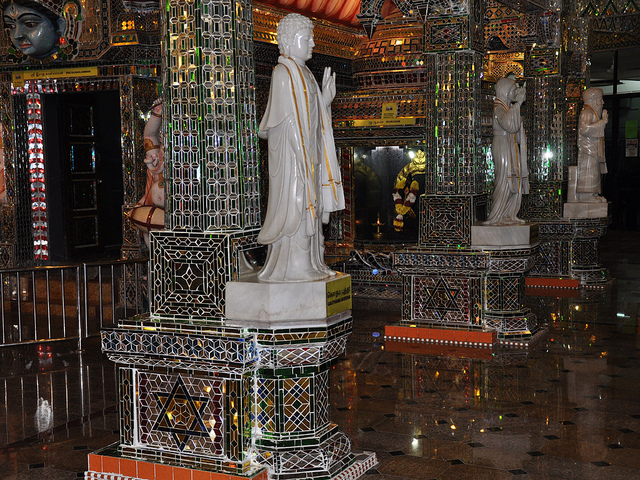
Hindu Wonder: Glass Temple of Malaysia

Hinduism is a living religion. It is ever changing, flexible and catholic in its outlook. The basic truths will remain intact, but the approaches and outward forms will be changing forever. This keeps the religion alive, colourful and attractive. New saints and sages install newer things in the temples and yet they teach the basic tenets found in the Vedas and the Upanishads. They make temples out of stone, gems, gold, silver and glass!

Basic tenets of Hinduism: (1) God is one, but worshipped in different forms or formless. (2) If you do good things, you will get back good (karma Theory). (3) The soul lives after death and born again. (4)The goal of every Hindu is to get out of this cycle of birth and death.

arulmigu-sri-rajakaliamman

Raja Kalai Amman Temple of Johor Bahru: architectural marvel

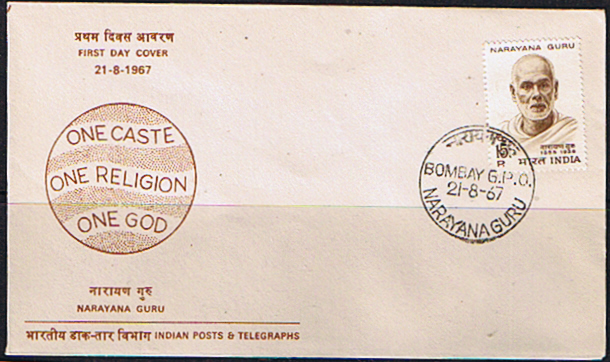
India is full of temples. Every town and every street has a sage, saint, Yogi, Guru or a Siddha. One of such great saints is Narayana Guru(1856-1928). Born of a poor peasant family of the Ezhava caste at Chempazanthi in Kerala, Sri Narayana advanced rapidly on the path of spiritualism. He served the backward communities of Kerala and kept them within the Hindu fold. But for him, millions of low caste Hindus would have been converted to other religions. He gave them a pride and confidence. He was a great philosopher and social reformer.

He taught them “Uru Jati, Uru Matam, Uru Daivam Manushyanae”(One People, One Dharma, One God for man). He founded Narayana Dharma Paripalana Sangham (SNDP). He was a Sanyasin (ascetic) without the robes. He told his disciples “ Ask not, Say not ,Think not Caste”. He came to fulfil not to destroy. His genius was essentially creative and constructive. Service was his motto. Gandhi and Tagore met him. Poet Kumaran Asan was his disciple. He commanded respect from everyone. He consecrated scores of old temples and built new temples. He installed mirrors and lamps inside the temples instead of statues!

FD COVER

0003.sree narayana guru

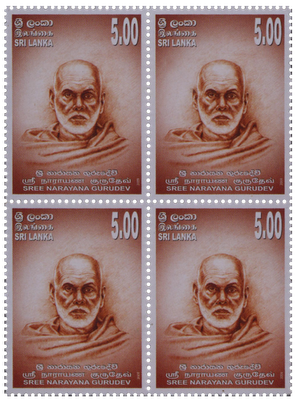
Stamps issued by India and Sri Lanka

Socrates and Narayana Guru
Greek philosopher Socrates taught his disciples ‘Know thy self’. In fact it was there in Delphi even before Socrates propagated this maxim. Thousands of years before Greece, Indian Vedic seers (in the Upanishads) said the same. It is found in Luxor temple in Egypt. But Narayana Guru brought this highest philosophy to the lowest of the people Ezhavas who were illiterates. He installed a Mirror in Kalavamkodam temple near Alappuza in Kerala. It is called Kannadi Pradihta. The idea is to see oneself in the mirror, meaning ‘Know yourself’. The Upanishads said ‘You are That’ ( Tat Tvam Asi) and ‘I am God’ (Aham Brahma Asmi).
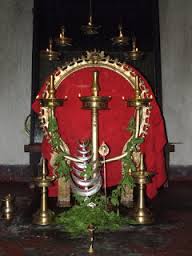
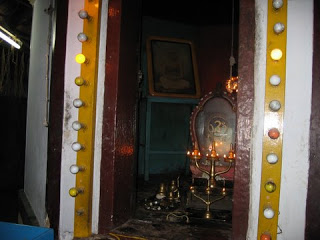
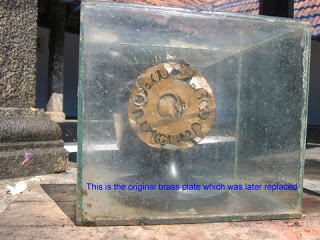
Narayana Guru did not stop there. He installed mirrors and brass plates inscribed with the mystic symbol ‘Aum’ in Kalakandhesswara temple in Murukumpuza and Omkareswara Temple near Vaikom. He installed lamp instead of idols in Chidhambaram in Karamuku near Trichur. Lamp represents knowledge and divine light.

Malaysian wonder: Glass Temple

jesus christ
buddha,theresa

In Northern India there are lots of glass idols in the temples near Rishikesh. In South Indian temples there are Mirror Rooms for Gods. I have seen them in Alagarkoil near Madurai and Ekambareswarar Temple in Kancheepuram. The mirrors are placed in different angles surrounding the idol. If one enters the room the person can see himself or herself with the God as far as one could see, reflected in infinity. But Malaysian Hindus excelled by installing a temple completely made up of glass.

Raja Kali Amman Temple in Johor Bahru, Malaysia is one of the oldest Hindu temples in the country. The person maintaining the temple renovated it in 2009 and made it the First Glass Temple in the World. 300,000 pieces of glass in different colours embellish the temple. The walls of the temple are covered with 300,000 Rudraksha beads brought from Nepal. Athmalingam sanctuary is the main temple. In addition to Shiva, Kali and Ganesh other idols are also worshipped there. Marble statues of Buddha, Guru Nanak, Jesus, Mother Theresa and others are also found there. Light coming from the chandeliers, reflected by the glass pieces creates a magical world. It is an amazing piece of architecture. It has become a big tourist attraction.

coins
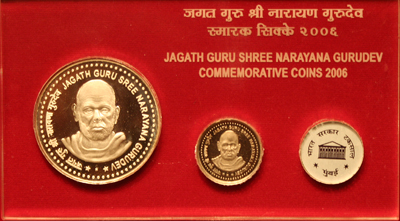
Coins issued in honour of Sri Narayana Guru

Mirror in Hinduism
Mirror occupies an important place in Hinduism. It is considered an auspicious symbol. During Navaratri in South India, young girls are given Kunkum, Mirror and comb. Hindus are supposed to look at mirror as soon as they wake up in the morning. If mirror is not nearby they can look at their right palm. Tamils and Malayalees of Kerala look themselves in the Mirror on ‘Vishu’ or Tamil New Year Day. Fruits, Turmeric and gold coins will be placed near the Mirror.

Andal, Tamil Poetess and saint, sings about mirror in her Tiruppavai (verse 20). Mirror is used as similes by several saints in Tamil and Sanskrit. They said, “Mind is like a mirror and, if it is pure and steady, it will reflect clearly the Self. If the mirror is coated with dust and it is shaky, it cannot reflect the object before it. The dust which darkens the mind is Sin and its shakiness is due to distraction. The sin has to be eradicated by the performance of the prescribed good deeds”.
Andal in Tiruppavai, Adi Shankara in Viveka Chudamani, Tiru Valluvar in Tirukkural, Buddha in Dhamma padam and Tolkappiar in Tamil Tolkappiam used mirror similes.

vilakku

omkareswaram temple

Mirror and Lamp Temples of SNDP

Jagath_Guru_Sree_Narayana_Gurudev_Coin

Sri Narayana Guru Coins
Beliefs about Mirrors (From Encyclopaedias)
Some people believed that If one can’t see oneself in the mirror, the person will die soon. Ancients believed a mirror could hold on to a person’s soul. So they covered all the mirrors in the room where a person died. Devils can’t see themselves in mirrors. So amulets were made up of mirrors for protection against devils. Hindus believed that breaking glasses is a bad omen.

Etruscans used thousands of decorated mirrors in their day to day life. They made mirrors by polishing bronze. One of the Aztec Gods was named Smoking Mirror (Tezcatlipoca) in Mexico.

Shinto religion of Japan believed Mirrors represent Sun Goddess. A legendary sacred mirror (Yatano Kagami) is kept in the Shrine of Ise. It is one of the royal treasures and so no one can see it. Mirror is associated with Virgin Mary in Christianity. The Islamic mystic Jalaleddin Rumi (1207-1273) saw the mirror as a symbol of heart, which must be clean and pure if it is to reflect undiminished Allah’s intense light.

(London swaminathan’s 600+ articles and S Nagarajan’s 50+ articles are available in the blog. If you publish them, you must acknowledge the source either by giving the name of the blog or the author)

Pictures are taken from various sites;thanks.
contact swami_48@yahoo.com

kalakandeswara temple 1

Kalakandeeswara Temple of Sri Narayana Guru

கண்ணாடிக் கோவில்: உலக அதிசயம்

arulmigu-sri-rajakaliamman (1)

Hindu Wonder: Malaysian Glass Temple

இந்துமதம் ஒரு வண்ணக் கலவை; மிகவும் கவர்ச்சிகரமானது. நாள் தோறும், யுகம் தோறும் மாறக்கூடியது. பரந்த மனப்பான்மையும் ஜனநாயகமும் கொண்டது. எல்லா மதக் கொள்கைகளையும் உள்ளடக்கியது. ஆயிரம் தலை ஆதிசேஷன் போல பல்லாயிரம் தெய்வங்களைக் கொண்டது. பல்லாயிரம் பாடல்களைக் கொண்ட பல நூறு நூல்களை உடையது. இந்தியாவில் ஒரு லட்சத்துக்கும் அதிகமான கோவில்கள் இருப்பதை ஏற்கனவே எழுதியுள்ளேன். ஆயினும் விந்தையிலும் விந்தை– அடிப்படைக் கொள்கைகளை மாற்றாதது!

ஆயிரம் ஆண்டுகளாக ஒரே கொள்கையில் பற்றுதல் உடையது. உருவங்கள் மாறலாம்; சாது சந்யாசிகள் மாறலாம். ஆயினும் கொள்கைகள் மாறாது: (1)கடவுள் ஒருவரே- அவரைப் பல உருவங்களில் வணங்கலாம் (2) நல்லது செய்தால் நல்லது நிகழும் (கர்ம வினைக் கொள்கை) (3) ஆத்மா அழியாதது, இறந்த பின்னர் மறுபிறப்பு உண்டு (4) இந்துக்களின் இறுதி லட்சியம்– ஜனன-மரணச் சுழலில் இருந்து விடுபடவேண்டும்.

arulmigu-sri-rajakaliamman

Malaysia’s Raja Kali Amman Temple: Architectural Wonder

இந்த அடிப்படைக் கொள்கைகளை ஒவ்வொரு ஊரிலும், ஒவ்வொரு காலத்திலும் உதிக்கும் சாது சந்யாசிகள், சித்த புருஷர்கள், மஹா யோகிகள், ரிஷிகள், ஞானிகள் –அவர்களுக்கே உரித்தான பாணியில்—புதிய பாணியில்—வழங்குவார்கள். கடவுளைக் கல்லிலும் சமைப்பார்கள்—கண்ணாடியிலும் சமைப்பார்கள்; தங்கத்திலும் வடிப்பார்கள், மரகதம், ஸ்படிகத்திலும் செதுக்குவார்கள்.

omkareswaram temple
vilakku

Sri Narayana Guru’s Mirror and Lamp Temple

நாராயண குருவின் கண்ணாடிக் கோவில்

கேரளத்தில் அவதரித்த பெரியார்களில் ஒருவர் நாராயண குரு(1856-1928) அவர் பெரிய சமூக சீர்திருத்தவாதி, தத்துவ வித்தகர். ஏழை எளிய மக்களுக்கு நம்பிக்கை ஒளி ஊட்டியவர். அவர் தோன்றாவிடில் ஈழவா எனப்படும் பின் தங்கிய வகுப்பு மக்கள் எல்லோரும் மதம் மாறி இருப்பார்கள். பல நூறு கோவில்களை புணருத்தாரணம் செய்ததோடு, பல புதிய கோவில்களையும் உருவாக்கியவர்.
நாராயண குரு செய்த பல புதிய கோவில்களில் கண்ணாடி , விளக்கு, ஓம் எழுதிய பித்தளைப் பட்டயம் ஆகியனவும் பிரதிஷ்டை செய்யப்பட்டன. கலவம்கூடம் என்னும் இடத்தில் கண்ணாடியையும், முருகம்புழவில் ஓம் எழுதிய பித்தளைத் தகட்டையும்,சித்தம்பரத்தில் விளக்கையும், வைக்கம் அருகில் ஓம்காரேஸ்வரத்தில் கண்ணாடியையும் பிரதிஷ்டை செய்தார். இது ஒவ்வொன்றிலும் பெரிய தத்துவம் அடங்கி இருக்கிறது.

FD COVER

Indian Stam and First Day Cover for Sri Narayana Guru

சாக்ரடீஸும் ஸ்ரீ நாராயண குருவும்
கிரேக்க நாட்டில் டெல்பி என்னும் இடத்திலும் எகிப்து நாட்டில் லக்சார் என்னும் இடத்திலும் “உன்னையே நீ அறிவாய்” என்னும் தத்துவ வசனம் எழுதப்பட்டிருந்தது. இதை சாக்ரடீஸ் பிரபலப்படுத்தியதாக அவரது சீடர் பிளாட்டோ நமக்கு எழுதி வைத்துள்ளார். ஆனால் இவர்களுக்கு எல்லாம் ஆயிரக் கணக்கான ஆண்டுகளுக்கு முன்னரே நமது வேத, உபநிஷதங்களில் இந்தக் கருத்து கூறப்பட்டிருக்கிறது. “தத்வம் அசீ” (நீயே அது) “அஹம் பிரம்மாஸ்மி” ( நானே பிரம்மம்) என்ற வாசகங்கள் மிகவும் பிரபலமானவை. இதையே பாமர மக்களுக்கு விளங்க வைக்க ஒரு கண்ணாடியை முன்னர் வைத்து “நீயே உன்னை அறிவாய்” என்று சொல்லாமல் சொல்லிவைத்தார் ஸ்ரீ நாராயண குரு என்னும் மஹான். விளக்கு என்பது கல்வி அறிவையும் இறைவன் பற்றிய அறிவையும் எடுத்துக் காட்டும்.

“ஒரு ஜாதி,ஒரு மதம், ஒரு தெய்வம்” என்ற தாரக மந்திரத்தை உபதேசித்தார். ஸ்ரீ நாராயண தர்ம பரிபாலன சங்கம் தோற்றுவிக்கக் காரணமானார். “ ஜாதியைக் கேட்காதே, சொல்லாதே, நினைக்காதே” என்றும் கற்பித்தார். காவி உடை அணியாதத் துறவியாகத் திகழ்ந்தார். எதையும் கண்டிக்காமல், கண்டனம் செய்யாமல் ஆக்கபூர்வமான சமுதாயக் கட்டுமானத்தில் கவனம் செலுத்தினார். நாம் வணங்கத்தக்க மாபெரும் புனிதர் அவர்.

coins

மலேசிய அதிசயம்– கண்ணாடிக் கோவில்
உலகில் கோவில்களில் கண்ணாடி பயன்படுத்தப்பட்டது இப்போது துவங்கியதல்ல. அழகர்கோவில், காஞ்சீ ஏகாம்பரேஸ்வரர் கோவில் உள்பட நிறைய கோவில்களில் கண்ணாடி அறைகள் உண்டு. இங்கு சுவாமி எழுந்தருளும்போது நாம் உள்ளே சென்றால், கடவுளுடன் நாமும் பல நூறு இடங்களில் பிரதிபலிப்போம். கடவுள் திரு உருவைச் சுற்றி பல கோணங்களில் பல கண்ணாடிகள் பொருத்தப்பட்டிருப்பதால் நம் உருவம் நூற்றுக்கணக்கில் தோன்றும். வட இந்தியாவில் ரிஷிகேஷ் போன்ற தலங்களில் தற்காலத்தில் கண்ணாடிச் சிற்பங்கள் செய்துவைத்துள்ளனர். ஆயினும் இவை எல்லாவற்றையும் விஞ்சும் ஒரு அரிய சாதனையை மலேசிய இந்துக்கள் செய்துவிட்டனர்.

ஜோஹுர் பாஹு என்னும் இடத்தில் உள்ள ராஜ காளி அம்மன் கோவில் உலகிலேயே பெரிய, முதலாவது கண்ணாடிக் கோவில் என்றால் அது மிகை ஆகாது. மூன்று லட்சம் வண்ணக் கண்ணாடித் துண்டுகளால் ஜெகஜ் ஜோதியாக இந்தக் கோவில் வடிவமைக்கப்பட்டுள்ளது. சுவர்களை எல்லாம் நேபாள நாட்டில் இருந்த கொண்டுவரப்பட்ட மூன்று லட்சம் ருத்ராக்ஷ மணிகள் அலங்கரிக்கின்றன. ஆத்மலிங்க சந்நிதி நடு நாயகமாக ஜொலிக்கிறது. விளக்கு வெளிச்சத்தில் கண்ணைப் பறிக்கும் பிரகாசம் நம்மை மாயாஜால உலகில் கொண்டுபோய் நிறுத்திவிடும். இது அதிசயக்கத் தக்க ஒரு கட்டுமான விந்தை. மலேசியாவில் மாபெரும் சுற்றுலாக் கவர்ச்சி.

jesus christ

புத்தர், ஏசு, அன்னை தெரசா முதலிய பத்து பளிங்குச் சிலைகளும் பிரகாரத்தை அலங்கரிக்கின்றன. அத்தோடு பொற்சிலைகளும் உண்டு. இந்துக் கடவுளரின் உருவங்கள் எல்லாம் இங்கே ஒளிவீசுகின்றன.

கண்ணாடி பற்றிய விநோத நம்பிக்கைகள்
உலகில் கண்ணாடி பற்றிய விநோத நம்பிக்கைகள் ஏராளமாக இருக்கின்றன. இந்தியாவில் இதை சுபம் தரும் சின்னம்மாகக் கருதுவர். தமிழ் புத்தாண்டை ஒட்டி வரும் மலையாளிகளின் “விஷு” புண்ய காலத்தில் காலையில் தூங்கி எழுந்தவுடன் பார்க்கவேண்டிய பொருள்களில் கண்ணாடியும் அடக்கம். நவராத்ரி மற்றும் சுமங்கலி, கன்யாப் பெண்கள் பூஜைகளில் குங்குமம், சிமிழ், சீப்பு ஆகியவற்றுடன் கண்ணடியையும் கொடுப்பர். இது ஆண்டாள் காலத்தில் இருந்து வரும் வழக்கம் என்பதை திருப்பாவை இருபதாம் பாடலில் அவரே கூறுகிறார் (உக்கமும் தட்டொளியும்).

கண்ணாடி உடைந்தால் அபசகுனம் என்றும் அதில் முகம் தெரியாவிட்டால் மரணம் சம்பவிக்கும் என்றும் அச்சம் உண்டு. “கண்ணாடியில் படியும் மாசும், மூச்சுக் காற்றும் நீங்குவது போல” என்ற உவமை தமிழ், வடமொழி இலக்கியங்களில் பல இடங்களில் பயிலப்படுகின்றன. ஆதிசங்கரர் (விவேக சூடாமணி 291), திருவள்ளுவர் (குறள்706), ஆண்டாள் (பாவை 20), புத்தரின் தம்மபதம், தொல்காப்பியம் ஆகியவற்றில் கண்ணாடி பிரதிபலிப்பு பற்றிய உவமைகள் உள்ளன.

buddha,theresa

மேலை நாடுகளில் கண்ணாடியை ஒரு தாயத்தாக பயன்படுத்தினர். இதற்குக் காரணம் பேய்களுக்கு கண்ணாடியில் முகம் தெரியாதென்ற நம்பிக்கையாகும். இறந்தவர்களின் ஆவியை கண்ணாடிகள் பிடித்துவைத்துக் கொள்ளும் என்ற நம்பிக்கை காரணமாக பழங்காலத்தில் இறந்தவர்கள் இருக்கும் அறையில் கண்ணாடிகளைத் துணி போட்டு மூடிவைத்தனர். படுக்கைக்கு முன்னால் கண்ணாடி இருந்தால் தூக்கம் வராது என்ற வாஸ்து சாஸ்திரமும் உண்டு. கண்ணாடி பற்றி முஸ்லீம் கிறிஸ்தவ அறிஞர்களும் எழுதி வைத்துள்ளனர். விரிவஞ்சி இத்தோடு நிறுத்துகிறேன்.

(லண்டன் சுவாமிநாதன் எழுதிய 600 கட்டுரைகளையும், நாகராஜன் எழுதிய 50–க்கும் மேலான கட்டுரைகளையும் இந்த பிளாக்—கில் படிக்கலாம். கட்டுரைகளைப் பயன்படுத்துவோர் பிளாக் பெயரையோ கட்டுரையாளரின் பெயரையோ கட்டாயம் வெளியிடவேண்டும்).

0003.sree narayana guru

Sri Lankan Stamp for Sri Narayana Guru

Mysterious Atharva Veda-Part 1

Indra_deva

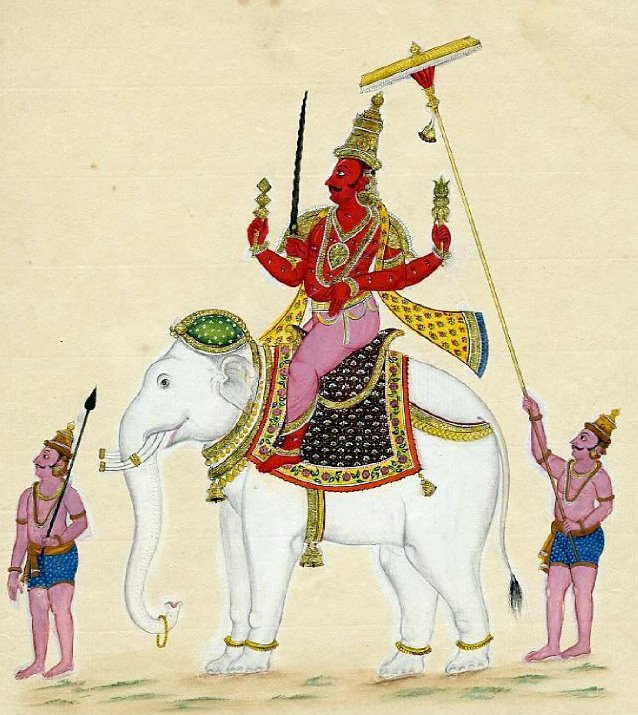
Picture of Vedic God Indra

Vedas are the oldest religious literature in the world. Scholars date them between 1500 BC and 6000 BC. But Hindus believe that they are beyond time and human dating. Like Newton’s Laws of Motion and Einstein’s Theory of Relativity existed even before they discovered, Vedic mantras (hymns) existed even before the seers ‘heard’ them. Like radio frequencies they are always in the air. If you tune into the exact frequency, you hear the broadcast. Seers heard when they tuned into the Vedic frequencies. Of the four Vedas Rik, Yajur, Sama and Atharvana Veda, the most useful Veda is the Atharvana Veda.

Atharva Veda has got 20 Kandas (sections). There are 6000 hymns. Some of them are found in Rik Veda also. The language and style of this Veda show that they are later compositions. But the content is as old as Rik Veda. The same Gods we find in the oldest Rik Veda are praised here. So there can’t be a big difference in the age of the Vedas. In the epics and Puranas we find newer Gods, newer materials and newer rituals betraying their age. Atharva Veda is shrouded in mystery. It has lot of incantations with a touch of magic.

A summary of 20 Kandas:

Kanda 1: Suktas 35, Number of Mantras 153
Prayer to Vachaspati, Lord of speech, to increase one’s learning; Prayer to Parjanya for obtaining victory; Prayer for recovery from illness; Prayer to Water; Prayer to Agni for spreading righteousness
We hear about evil spirits Kimidins and Yatudhanas
Prayer to Indra and Rudra to destroy enemies; Prayer to cure lot of diseases (leprosy,heart, urinary problems,breathing problems, blood disorders, child birth)

Agni_god_of_fire

Vedic God Agni

Kanda 2: Suktas 36, Mantras 207
Prayer to Supreme Godhead; Prayer to herb for healing
Facts about Jangida Mani (talisman); Prayers to Indra and Agni; Prayers to withdraw curses; Prayers for curing diseases ( TB,Gout); Prayers for mental and spiritual strength; Prayers for donning new clothes
Wedding hymns

Kanda 3: Suktas 31, Mantras 230
Prayer to Indra and Agni for defeating enemies
Coronation prayer for kings
Facts about Parna Mani
Prayer for the Unity of the Kingdom
Prayers for long life, newly built house, prayer to cows and water;
Prayers for success in trade and agriculture, increasing energy and intelligence

Kanda 4: Suktas 40, Mantras 324
Knowledge of the Brahman
Who should be worshipped?
Prayer for purging poison
Prayers to cure insomnia, making amulets out of conch shells, to trees ans rains, herbs and cows; prayers for purging sins and curing worms.

Kanda 5: Suktas 31, Mantras 376
Prayer to Agni for obtaining victory
Facts about herb Kushta
Prayer to medicinal plants shilachi or Laksha
Prayers to Brahmanas, cows, Brahman
Prayers for curing snake poison, fever, worms.
Prayer to drive away the enemies through the playing of drums

mitra

Kanda 6: Sukta 142, Mantras 454
Prayers to Savita, Indra
Prayers for protection, sacrifice, peace and destroying enemies
Prayer for purging snake poison
Prayer to Revati herb for growing long hair
Hymn about wearing bangles, specific herbs, death, water, cause of rain.
Prayers for marital harmony, curing TB, worms, spiritual upliftment, avoidance of sin and protection from curses.

Kanda 7: Sukta 118, Mantras 286
Prayer about the Atman
Prayer about the Motherland
Prayer to Sarasvati
Prayer for long life and Marital Harmony
Verse about mother tongue
A wife’s prayer to a herb to make her attractive to her husband
Prayers for protection from enemies, good rain fall and good harvests
Special charms to cure poison

USS-Varuna

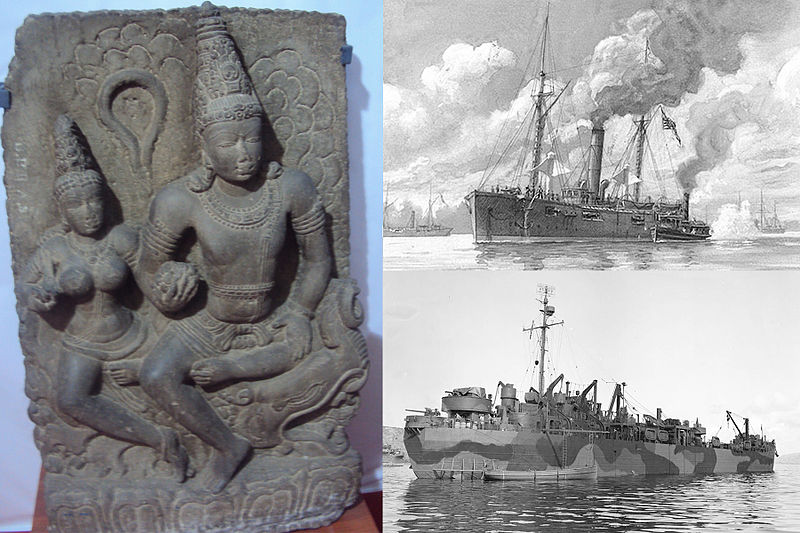
Vedic God Varuna; United States named its ships after Varuna. USS Varuna ships are seen in the picture. Pictures are used from Wikipedia.

Kanda 8: Sukta 10, Mantras 259
Charm for the recovery of a dying man
Hymn to mystical goddess Virat/Viraj
Several verses the meaning of which is obscure
Prayers to ward off demons and exorcism

Compiled by london swaminathan; contact swami_48@yahoo.com

Continued in Second Part………………………………………..

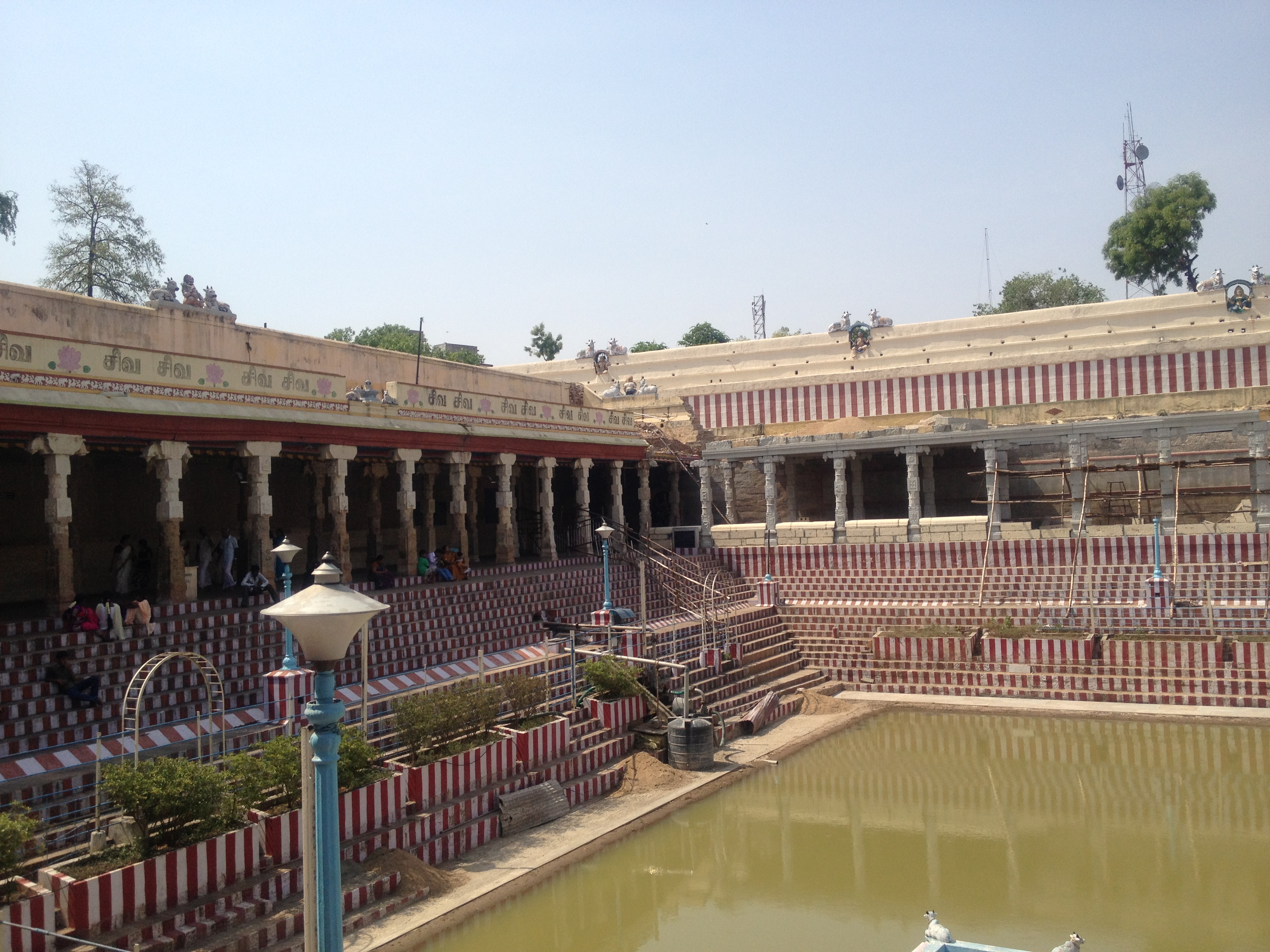
The Wonder that is Madurai Meenakshi Temple

IMG_0624

Written by london swaminathan and uploaded on 14th October2011 on to his other blog.

Why did they send Meenakshi’s pendant to Queen Victoria of England?
Why did Madurai temple pillars go to the Philadelphia Museum in USA?
Why did an English collector present gold shoes to Goddess Meenakshi?
Why did Victoria and Albert Museum in London hang a Meenakshi curtain?
Why does the Ashmolean Museum in Oxford have Madurai pillar replicas?
Why does the India office Library keep pictures of Madurai Temple?
How did the Houston (USA) Meenakshi temple receive a Madurai idol even after the plane crashed?

Read now for the answers:

I was walking through the streets of London in 1991 thinking about the answers for the BBC listeners’ questions. My Question and Answer programme was judged the best among non-current affairs programmes of the BBC World Service in that year because it attracted 19,000 letters of appreciation from the listeners around the world. I was working as the producer of the BBC Tamil Service known as ‘Thamizosai’. The BBC in house magazine ‘Ariel’ published my photo and a write-up about my programme. So I took much interest in answering the questions. When I entered a book shop on the high street my eyes were searching for good books in the shelf and found out ‘Wonders of the World’ published by Automobile Association, UK. When I flipped through the pages for information for listeners’ questions, I was surprised to see Madurai Meenakshi Temple listed as one of the world wonders. Madurai was my home town. When the Indians failed to recognise it as a world wonder, a London book had recognised it as a world wonder in 1991! When I saw big campaigns in Tamil news papers twenty years after this to support Meenakshi temple as one of the modern wonders I was laughing. Better late than never!

(A word of advice: If you visit any temple and want to enjoy the art treasures, forget the gods. If you go to the temple just to worship god, forget the art treasures. You can’t mix both.)

MADURAI is the second largest city in Tamil Nadu, India. It is 300 miles south of Chennai/Madras.

Madurai Meenakshi Temple is an architectural wonder. When one climbs to the top of the South Tower to have a bird’s eye view of Madurai, one can’t but wonder about the engineering skills of our forefathers.

Meenakshi temple’s old pictures or objects can be seen in India Office Library, London, Ashmolean Museum, Oxford and Houston Meenakshi Temple, Texas, USA.

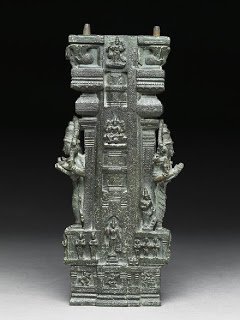
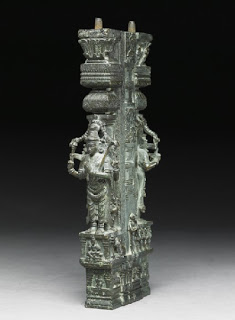
The pillars of one of the Madurai temples, “Madana Gopala Swamy Kovil” are in Philadelphia Museum of Art, USA. A lady from Philadelphia visited Madurai in 1930s and got interested in the temple pillars .They were just lying there without any care. She knew the value of art work in the pillars and shipped them to USA. Now a mandap/hall is reconstructed with those pillars in the museum. The temple was built in the fifteenth century in Madurai.

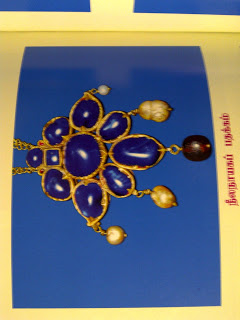
Queen Victoria wanted to see one of the jewels of Goddess Meenakshi. It was a pendant with ten big sapphire stones. It went to London and came back to Madurai to decorate the goddess.

British collector of Madurai Rose Peter, Shipping merchants Scotch Brothers and East India Company –all donated gold and jewels to goddess Meenakshi.

India Office Library, London has a haunting series of glass plate photographs of Pudu Mandapam opposite the temple taken in the 1850s by Captain Edward Lyons.

Ashmolean Museum at Oxford has the copper copies of some of the pillars of Madurai Pudumandapam.

Victoria and Albert Museum in London has a curtain where in Meenakshi temple’s daily activities are painted.

Madurai Meenaksh,V&A Museum,London

Picture of curtain in V&A Museum, London

Scholars who have studied Angkor Watt temple in Cambodia, the largest Hindu temple in the world and the Mayan temple at Tikal in Guatemala , a Central American country have found out some similarities with Madurai temple.

· The Meenakshi Sundareswarar (Lord Shiva is called the beautiful one Sundara +Eswara) temple is in the centre of the town Madurai in South India. The streets are arranged in squares within squares- a beautifully planned city keeping the temple at the heart of the city. Ancient Tamil literature compared this plan to a lotus flower

· Each street carries the name of a Tamil month. That means goddess idol will be taken through that street during that particular month. Now it has slightly changed.

· Temple occupies fourteen acres. There are twelve towers, big and small. The tallest of the four major towers (gopuram) is the south tower which is 161 foot – 52 meter high. Two of the small towers are covered with gold plates.

LADIES FIRST
· Contrary to the custom followed in all the major temples of Tamil Nadu Goddess Meenakshi (meaning fish eyed) is worshipped first by the devotees in this temple. In other temples the male deity will be worshiped first. Here Arti/Deeparadhana is done to Meenakshi first.
· Meenakshi was born with three breasts. The Pandya king and the queen, who were her parents, were told that the third breast will disappear when she sees the right man. This happened when she met Lord Sundareswarar (Shiva). Even today a statue with three breasts can be seen in Pudumandapam opposite temple.

· Though Srirangam temple is the largest temple in Tamil Nadu, Madurai temple is more famous than other temples and listed as one of the world wonders. One can see 33,000 statues on the towers and inside the temple.

· Lord Shiva in Nataraja form (Dancer) changed his balancing foot for the sake of a Pandya king. This place is called Silver Temple (Velli Ambalam). Four famous Natrajas in four other temples use a different foot. In Madurai he lifts his right foot and stands on his left foot.

64 MIRACLES
· Lord Shiva performed 64 miracles to save his devotees in Madurai which are known as 64 Divine Acts. So every week a festival is celebrated in the temple.

· Madurai temple is one of the 64 Sakthi kendras (centres).

· There is a beautiful 1,000 pillar Hall. Now it has got 985 pillars each with a different style or statue. It will take months to study all the sculptures.

It was erected in 1685 by Ariyanatha Mudaliyar who was the chief minister in Viswanatha Nayak time. Each pillar here will tell you a story. To mention a few, there is a nomad woman (kurathi) with four of her children. Even the basket she carries looks like a real one. There are lots of mythological stories carved out on pillars. Saraswati playing the Veena is a beautiful statue. Five headed snake, Rathi, Purusha Mirugam and the mythical animal Yali are other remarkable ones. Some of the stones like Rathi on swan emit musical notes when tapped.

(There are 1,000 pillar mandaps in Madurai, Tiruvannamalai, Chidambaram, Tiruvarur, Tiruvanaikka, Tiruvarangam and Tirunelveli. If all the seven 1000 pillar mandaps are to be rebuilt today it will cost us millions of rupees. Indians must realise the value of these world wonders and keep them intact for posterity. They are engineering marvels.)
IMG_0597

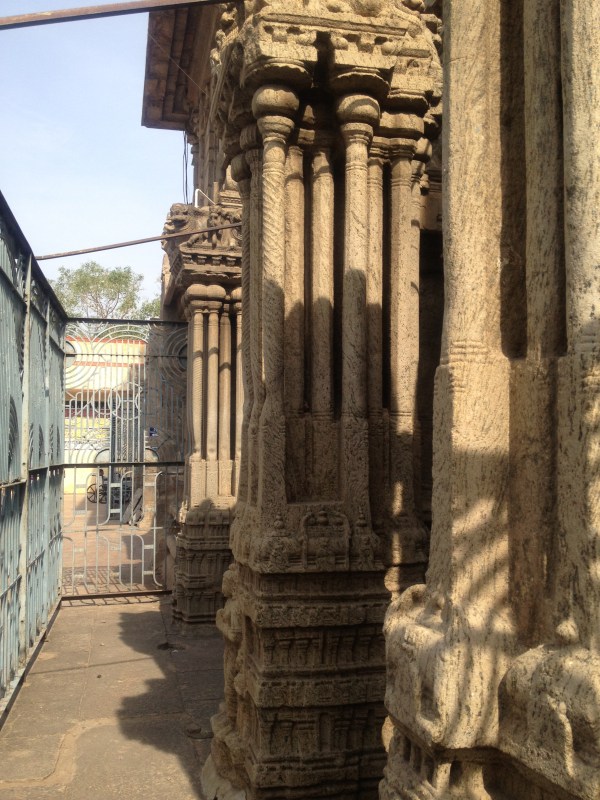
Picture of musical pillars

MUSICAL PILLARS

· There are five musical stone pillars in the temple. One who knows musical notes can play on them with stones. A single pillar is separated in to columns or smaller tender pillars. When they are tapped or struck with stones they emit different musical notes like musical instruments.
(The other Tamil Nadu temples where musical pillars seen are Sucheendram, Thiruperundurai and Tirunelveli and Alwartirunagari (also Hampi in Karnataka, Tadpatri and Lepakshi in Andhra Pradesh)

· Just in front of the sanctum sanctorum of Sri Sundareswarar is the Kambathadi Mandapam. The monolith statues there are carved with very great skill. 25 forms of Lord Shiva are shown here. The statue of most famous wedding scene of Meenakshi and Sundareswara is located here. Like one enjoys Michael Angelo’s most famous Creation of Adam painting at Sistine Chapel of Vatican City where one hand reaches the other hand, minute carvings of fingers and hands of three figures-Meenakshi, Shiva and Vishnu on a monolith is really a wonder in stone.

Philadelphia museum-Madurai temple pillars

Madurai temple mandap in Philadelphia,USA

BUTTERED FOR 700 YEARS

· Near that Kambaththadi Mandap are huge statues of Veera Bhadrar and Bhadrakali. Butter is applied by the devotees continuously for seven hundred years on this huge Kali statue. When a Muslim Fakir started building a mosque in temple land in spite of objection from the devotees, blood came out from the eyes of this Kali statue. Immediately the fakir stopped construction. Just to subdue the anger of Kali butter was thrown on her. This has been going on for centuries now.

· Madurai Meenakshi statue is made of a particular green colour stone called Maragatha Kal. But it is not the precious emerald. Hindus associate green colour with the planet Mercury (Bhudhan). Anyone who has got a weaker Bhudha in their horoscope come to Madurai to cure the evil effects of the planet. It is a Bhudha Kshetra.

· Meenakshi is also associated with the green colour bird parrot. It is in her hand. Till recently a lot of parrots were kept in a big cage inside the temple. Now they are all freed.

· Goddess Meenakshi’s influence is so great even the children born in Madurai are named after her. Even the lullaby the children hear is about Meenakshi.

· Recently a poem written like a drawing (Chiththira Kavi) is discovered inside the temple. The letters are in a circle. If one starts from the middle and read it like we add up numbers in magic squares, the poem will appear in full. This type of poem is called Chiththira Kavi meaning Picture poems or Drawing Poems. It may be squares or circles or pictures of flowers or chariots –anything one could imagine.

· The biggest festival of the temple is called Chitra festival which occurs in April/May every year. It attracts a million people from different parts of India. A big Chariot is pulled through the city by thousands of people. Idols from two other temples also join the God and Goddess.

ANIMAL MAGIC
· Of the 64 divine acts of Shiva a heron, a swallow, pigs, tiger and deer, an elephant, horses and foxes are involved. Shiva blesses not only human beings but also the birds and animals in Madurai.

· The temple precinct measures 850 feet by 730 feet. Though the temple was built in 12th century by Pandya kings, many of the towers date from the date of Tirumala Nayak (1623-1655). All credits go to the Nayak kings.
IMG_0622

GOLDEN LOTUS TANK

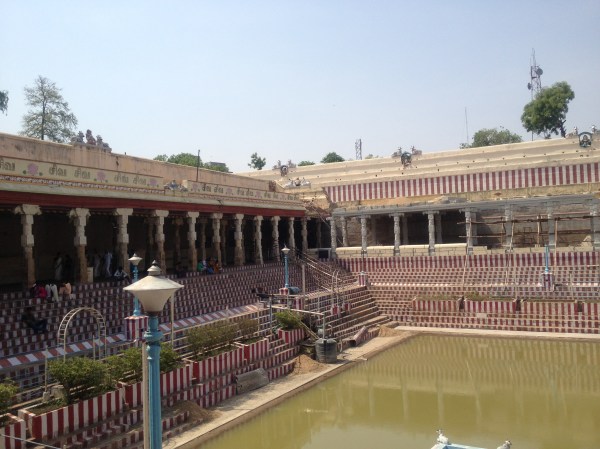
· Inside the temple there is a tank where a Golden Lotus is floating. Thousands of years ago a merchant by name Dhananjayan saw Indra doing Puja with golden lotus flowers. In memory of this one golden lotus is floated in the tank. The lotus is the National Flower of India.

· Once the poets from the ancient Tamil (Sangam) Academy competed with one another to launch their books inside the temple. The legend is that it wouldn’t allow any unworthy poets to climb the Sangam float or board. It will throw them out. Tiruvalluvar launched his most famous Tamil book Tirukkural in the temple by boarding the Sangam float.
IMG_0612IMG_0600

A SWEET WEIGHING OVER 18 KILOS
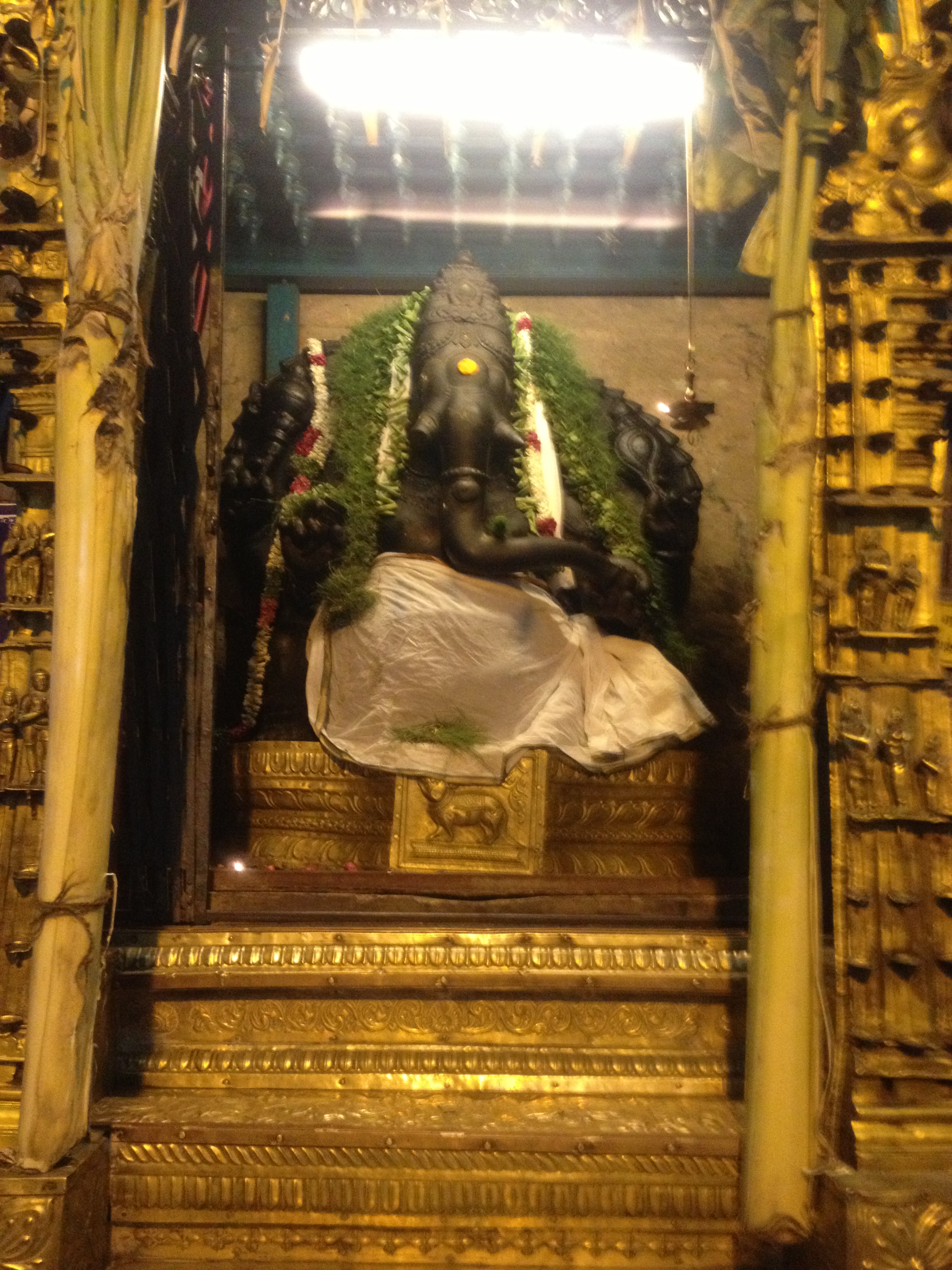
· There is big statue of Lord Ganesh inside the temple. This 6 X 4 feet statue was discovered when the Nayak king was digging the earth for sand and stones for the temple. A big (Mukkuruni) kozukkattai or modak made up of 18 kilo rice and several kilos of jaggery/sugar is offered to it every year on Ganesh Chathurthy day. Kozukkattai or Modak is a steamed rice offering inside which is Puranam made of coconut or other grains.

· Inside the temple there is a wedding hall (Kalyana Mahal) in which two huge circles-Bhugolam and Gagolam- are drawn. The geography of the world is drawn by a famous astrologer.

48 YEAR WONDER

· When Malikkaffur, the commander of the Delhi Sultan Alauddin Khilji, invaded Madurai region he plundered all the palaces and destroyed the temples. But the clever priests and administrators removed all the priceless idols and jewels to distant places like Kanyakumari and erected a fake sanctum sanctorum. Behind this was the real sanctum sanctorum (Garbha Griham). After Muslim rulers were driven away, the temple authorities opened the temple and the oil lamp was still burning there which was lit 48 years before. The flowers were still fresh. It was recorded in the temple record books called Seethala Puththakam.

· Vijayanagar Empire sent a commander by name Kampanna Vudaiyar who drove away the invaders. His brave wife Ganga Devi accompanied him to the battle field and wrote whatever she saw there in Sanskrit poems. The book is called Madura Vijayam. Her live reports from the battled field beat the modern day BBC and CNN war correspondents. She did it 700 years ago

· Float Festival in January: Every year in January a float festival is held in a near perfect square shaped tank called Mariamman teppakulam. It measures 950 X 1000 feet. In the middle of the tank is a Mandap.

· Palli Arai Deeparadhanai-Going to Bed room and saying Bye Bye for the day is done every night for the god. The god will enter Meenakshi’s bedroom at 10 pm in the night. A lot of people assemble to see this daily event.

AARTI TO MIRROR

· Lord Shiva blesses his devotees in three ways RUPA, ARUPA and RUPARUPA: Form, Formless and shapeless (form but not a shape – Linga). To express this principle there is a festival celebrated every year in Ani Uththiram (June) and Markazi Arudra day. The Nataraja idol is taken to a mandap and a circular mirror is placed in front of the idol. It reflects the idol. On that day Aarti/Deeparaadhana is done to Nataraja idol (RUPA), reflected image in the mirror (ARUPA) and the main god in Linga form in the sanctum sanctorum (RUPA ARUPA). A big principle is explained to the general public with demonstration. One feels like a science student attending a laboratory in the science class.

· Near the God’s Garba Griha is Six pillar mandap where in 108 dance gestures are depicted. In addition to the five musical pillars in the Adi Veethi , we have musical pillar in the Kampaththadi Mandap and 1000 pillar mandap. The sculptors had selected such type of stones to show their skills.

PRICELESS JEWELLERY
· The jewellery of Goddess Meenakshi is amazing. Each jewel has a story. This is one of the most expensive collections in India.

golden shoes

· There is an interesting story about one of the jewels of Goddess Meenakshi. Rose Peter (1812 to 1828) was one of the District Collectors appointed by the British. One day while he was sleeping there was a big thunder storm in Madurai. A little girl appeared before Rose Peter and asked him to get out of the building as soon as possible. When Rose Peter came out a big lightning struck and destroyed the building. His enquiries led him to identify the figure with Goddess Meenakshi. He was a devotee of Meenakshi. As a token of gratitude he made gem studded golden shoes and donated to Meenakshi. Each shoe weighs 28 tolas (A tola is approximately 11.5 grams). 412 red stones, 72 emeralds, 80 diamonds and cat’s eye, pearls, sapphires four each decorated the shoes.

· Pandya country was famous for its pearl industry. So we can see pearls, pearls nothing but pearls everywhere in jewellery. The biggest and rarest pearl is the size of a Jack fruit seed (in Tamil Pala Kottai). Muthu/pearl Cherukku, Pearl crown top, Pearl mango shaped crown, pearl gown (angi), pearl garland, Pearl kadivaalam, parrot made up of pearls.
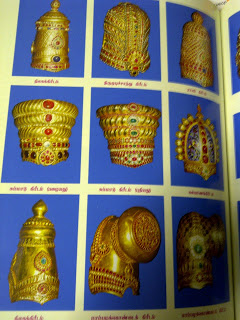
crowns

· Coronation day (Pattaabisheka) Crown: 197 sovereigns,920 ruby stones,78 diamonds,11 emeralds,7sapphires,8 topaz stones. Donated by Appajirayar.

· Gem studded Sceptre: 98 sovereings,761 red colour stones (ruby and semi precious),74 cats eye(Vaiduryam),21 diamonds,269 emeralds,44 pearls.Donated by Tirumalai Nayak-greatest of the Nayak Dynasty.

· Kaasumalai/coin chain: 198 sovereigns,241 corals,439 pearl and ruby stones,6 sapphires and 2 topaz (Gomethakam).

· Pearl Mughal Crown: 164 sovereigns,332 pearls,red colour stones 474, Emeralds 27 and particular type (Palacha) of diamonds 158 stones.

· Thirimudi Chathu(For Hair decoration ):121 sovereigns 324,red stones , 114 diamonds , 3 sapphires , 2 emeralds, 694 pearls, 2 vaiduryam/cat’s eye stones).

· Golden basket 122 sovereigns, 76 diamonds, red colour stones 342.
· Pottukkaarai (1):77 sovereigns donated by Sivagangai king Sethpathi Katha Thevar 331 rubies and 44 emeralds.
· Pottukkaarai (2): 57 sovereigns 277 red stones, 38 diamonds, emeralds 81. Donated by Ramnad King Bhaskara Sethupathi.
· Coral Chain :16 sovereigns, 64 rubies, 25 pearls.
· Long Coral Chain : 62 sovereigns, 28 red corals.
· Vahana Pendants 2: 93 sovereigns with all the navaratnas ranging from 83 stones to 3 stones.
kolusu
ROMAN GOLD COINS

· Chain of Roman God Coins: The coins are with Roman scripts.48 gold coins with gem stones in between.
· East India Company Gold Coin Chains: 73 coins with English letters.
· Coin chain donated by Nagarathar community weighing 66 sovereigns.
· Gold Sandal bowl with Telugu script on it: 71 sovereigns. Donated by Vijayaranga Chokkanathar.
· Goden statues for the Unjal (swing) festival: Shiva -470 sovereigns, Meenakshi-285 sovereign.

· Nagar waist belt (oddiyanam) 48 sovereigns with 113 rubies28 diamonds, 8 emeralds and 66 pearls.

QUEEN VICTORIA’S INTEREST

sapphire pendant

· Neela nayaka pendant: with ten big sapphires and 30 sovereigns.
This was sent to Queen Victoria and brought back. The East India Company sent it to her. The temple records did not throw much light on it.

· Shipping Merchants Scotch Brothers donated 38 kilo silver vessel.

· Two gold pots each weighing 2.3 kilos each.

· DIAMOND CROWN: The recent addition to Meenakshi is a diamond crown made in 1963. The height is 14.5 inches. Diameter is 20 inches.
It weighs 3500 gram with 3345 diamond stones and 4100 red stones and a big ruby.

· Seven kilo god kavacham was made in 1972 with the temple gold.
· A pearl ceiling with 71,755 pearls is used on the Kalyanam (annual wedding festival) day.
· A parrot made up of big pearls.
· A coronation crown for Somaskandar.
· A lot of silver vessels and silver ornaments for other gods and Vahanas are not included in the list.
(A SOVEREIGN IS EIGHT GRAMS OF GOLD.)

· There is a big grinding stone for making sandal paste inside the temple. The legend is that one Jain king prevented A Pandya king Murthy Nayanar from getting sandal for the God. Immediately Murthy Nayanar used his hands as sandal and rubbed it on the big stone. Thus the stone became a venerable object. Later he became the king.

PUDUMANAPAM

· Pudu Mandapam/Vasantha Mandapam is just opposite the temple. The annual Spring Festival (Vasantha Urchavam) used to take place in the hall. A lot of tailors, metal merchants and book sellers occupied this mandap. Now they are vacated and one could see all the marvelous sculptures without any hindrance. If anyone wants to know all the divine acts of Shiva, one can see it in sculptures here. Sculptures of nine Nayak Kings including the great Tirumalai Nayak are here. The dimension of this huge mandap/hall is 333 feet X 105 feet with 124 pillars. Ashmolean Museum has taken replicas of the pillars in copper
Madurai Pudumandapam replica

Replica in Ashmoleon Museum, Oxford, England

· No building higher than the temple is allowed in Madurai within the city. So the majestic towers can be viewed for miles from Madurai.

· Near the Kambathadi mandap there is a pregnant woman statue. Once Shiva helped a pregnant woman to deliver the baby when her mother was held up by a flash flood on the way. Shiva came as her mother. The statue reminds that anecdote. Women who are pregnant make it a point to worship this statue.

KADAMBA TREE
· Madurai was a forest full of Kadamba trees 2,000 years ago. There is one Kadamba tree still protected inside the temple, very near Durga statue. Kadamba tree was the temple tree in other towns like Thiruk kadambur, Kadambanthurai. We can see Kadamba trees growing in many other places. This has got many medicinal properties. A Tamil proverb goes as “udambai kadambaal adi“ meaning “Beat your body with Kadambu”. The hidden meaning is “Treat your body with Kadambu”.

· There are 44 epigraphs in the temple. In Kangasabhai next to Kadamba tree there is a musical inscription with Ragas and 35 Talas (Tune and Rhythm).

· In addition to separate shrine for the Navagrahas (nine planets), Navagrahas are carved on the ceiling as well.

· Tirumalai Nayak and his two wives are portrayed in two places inside the temple and outside the temple. But he has made his figures carved on the floor as well. This is just to get the dust of the devotees from their feet. Hindus believe God’s devotees are greater than Gods themselves. Several stories are there to show that God had asked his devotees to get the apologies from the devotees when they were hurt.

STORY ABOUT THE QUEEN

· One interesting story is about the chief minister Neelakanda Deekshithar of King Thirumalai Nayak. King had ordered the statues of his family. Great sculptors took the work and executed them to the minute details. But one flaw they couldn’t rectify. A chip from the thigh area of the queen kept on falling off. When it was reported to the chief minister Deekshithar, who was a great Sanskrit scholar and a devotee of Meenakshi came to know through his third eye that the Queen had a big mole in her thigh. He asked the sculptors to leave it as it was. When the king saw the statues consternation flared up instead of admiration. He suspected the integrity of the chief minister and sent his soldiers to arrest him immediately. When king’s soldiers went to his house he was doing final Aarti/ Deepa Aradhana to the God. The soldiers told him the reason for his arrest and he felt so upset and blinded his eyes with Aarti fire. When the king realised his mistake he apologised to the chief minister and gave him all the honours like land and cash. Deekshithar composed a long hymn on Meenakshi and regained his vision by her grace.

ANCIENT BOOK LAUNCHES
· Book Launches: Sacred books are always launched in a temple. According to this ancient custom, Tirukkural of Tiruvalluvar and Meenakshi pillaitamil of Kumara kurubarar were launched in this famous temple.

· Every temple is associated with some siddhas. Madurai temple was associated with Sri Kuzanthaiananda Swamikal and Sri Sundaranandar. One of the four great Saivaite saints Gnana Sambandhar did several miracles in Madurai. Sri Ramana Maharishi went to Tiruvannamalai from Madurai.

· The marvel of ancient engineers came to light when the plan showed that a straight line from the East tower is drawn to the West tower that line will pass through the main god Shiv Linga of the temple. If a line is drawn between the South and North towers that will divide the Gods sanctum sanctorum in to two halves. So precise is the plan.
ashmolean,Madurai replica

HOUSTON MEENAKSHI
· When A Meenakshi temple was built in Houston, Texas, USA one of the statues was sent to Houston as a gift. The head priest from Madurai temple took it on the plane which crashed near Bombay. Though several people were killed in the accident, the head priest escaped without an injury. The idol was intact and sent to Houston for installation in 1982. The Houston temple follows the same rituals as in Madurai.

· The Pandya and later day Nayak kings ruled as representatives of Goddess Meenakshi. So every year the king will come to the temple and take the sceptre from the goddess in a ceremony and return it the next day. Nowadays they do it with the temple administrator instead of king. Sceptre is called Sengol in Tamil.

· The last and third Tamil Academy of ancient Tamil Nadu was held in Madurai. At that time 49 famous poets were there in the academy. All the 49 poets are sculpted and kept inside the temple room. On the northern bank of the Golden Lotus Tank Sangam poets are sculpted with books and stylus.

· God’s sanctum sanctorum (garba griha) was constructed as if it is born by 8 elephants, 32 lions and 64 ganas. Till 50 years ago the sun light was falling on the god exactly on Pongal (Major festival celebrated on Thai first corresponding to 14th January). But after the construction of several new buildings around the temple it did not happen.

· Shops inside: There are lots of colourful shops inside the temple selling from bangles to children’s toys.

· Visitors can enter by any of the four gateways in the temple. But locals always start from the eastern entrance. One will enter Ashta Sakthi mandap first where goddess is sculpted in her eight (Ashta) forms. Then they reach the area full of shops where a lamp holder has 1008 lamps made up of metal. It was donated by the freedom fighters Marudu Brothers who fought against the British.

· The temple has 16 pillar, 100 pillar, and 1000 pillar mandaps ,each explaining some principle according to the Vastu Shastras.

kalyanam

Falous sculpture of Meenakshi Wedding madu up of monolith (One stone).

Photos: Courtesy of Temple Kumbabhisheka souvenirs
Posted 14th October 2011 by Swaminathan

107 Miracle Herbs in the Hindu Vedas

susrutha

Ayurveda is one of the oldest, probably the oldest, medical systems in the world. We have proof for it in the oldest religious book- the Rig Veda. Though the Vedas speak about different herbs indifferent places, the most famous hymn is the ‘THE HEALING PLANTS’ hymn in Rig Veda (10-97). Western World is using Indian herbs in their popular medicines for jaundice (Eclipta alba= Karisalankanni) and heart problem (Rawolfia serpentine= Sarpagandhi).

The hymns about herbs indicate the beliefs of Vedic society. They believed that the herbs and the amulets made out of them can do wonders. The herbs will cure all the diseases, flush out the poison from the blood and even attract men towards wives. They associated all herbs with soma plant and moon. They attributed magical and divine qualities to herbs. Ancient Hindus were botanists and environmentalists. They studied their surroundings well. They used plants as similes in poems. Hundreds and hundreds of plant names are in Tamil and Sanskrit literature.

The Vedic hymn in Tenth Mandala (10-97) mentions 107 herbs. Unfortunately we don’t know the names of those 107 herbs; but we do come across hundreds of herbs in the Ayurvedic books of Charaka and Susrutha. Here is the oldest medical hymn in the world:

1.The tawny plants were born in the ancient times, three ages before the gods; now I will meditate upon their hundred and seven forms.

2.Mothers, you have a hundred forms and a thousand growths. You have a hundred ways of working, make this man whole for me.

Please note the word “ancient”, “three ages before the Gods”. Vedas are the oldest religious books in the world. They talk about ‘ ancient ‘ times! I have already written a post “how old is Indian civilisation?”. Also note the numbers 100, 1000. We were the ones who taught the world decimal system; without decimal system no worthy calculations can be done. I am skipping a few lines in the hymn.

susrutha statue in Haridwar

Picture of Susruthar Statue in Haridwar.

5.In the sacred fig tree is your home; in the tree of leaves your dwelling place has been made. You will surely win a cow as your share if you win a man (if you cure this man)

Please note Brahmins use Peepal tree (Aswaththa; Ficus religiosa) from the days of Indus/Sarasvathy civilization until today. All Homams, Havans, Yagas and Yagnas done by Brahmins on day to day basis use only Fig tree sticks.

19.You plants whose king is Soma, spread out over the earth as you were sent by Brihaspati: unite your power in this plant.

20. Do not harm the man who digs you up, nor him for whom nor I dig you up; let all our two footed and four footed creatures be without sickness.

Please note the Vedic priests pray not only for human beings but also for animals! How kind they were!

All the Hindu fire ceremonies use at least nine different types of herbs (wooden sticks) in the fire. No proper scientific study has been done so far. Because of our carelessness we even lost the full knowledge of the 107 herbs.

Miracle Herbs in Atharva Veda

Of the four Vedas, Atharvana Veda is the most useful Veda. It contains verses for marriage, birth and death. It contains talismans for good sex life and herbs for healthy life. Now I will give the details about the herbs:

AV Kanda 2

Jangida mani

For the sake of a long life and for the sake of happiness, I wear an amulet (mani) made of jangida. It will increase my strength and will dry up all manner of ill health (The jangida was a plant that was cultivated so that charms and amulets could be made out of it).

AV Kanda 3

Parna mani

This powerful parna mani (amulet) has come so that it may destroy enemies through its powers. This amulet is like the strength of the gods of the gods and the juice of all herbs. May it energise me.

This sukta is about an amulet made out of the leaves of the palasha tree.

“O, parna mani! You are a leaf, but you are the protector of my body. May you increase my valour. I will wear your energy on my person for an entire year.

susruta_samhita_

AV Kanda 4

Prayer for removing poison (from the tip of arrow)

O poison! The celestial bird Garuda drank you up and you could do no harm. You could not make him mad or unconscious; you were like food for him.

O poisonous plant! What has the one who dug you up out of the ground achieved? What has the mountain on which you grew achieved? Their efforts have all come to nought.

The juice of the herb named varana nullifies all poison. This juice is like amrita itself and with its help, I purge you of all poison.

O poisonous plant that has led to the unconsciousness! I will fling you aside like an arrow. The juice of my herb will banish you the way a useless utensil is discarded. I repulse the poison with this herb.

AV Kanda 5

The herb Kushta

“ O, herb who are named Kushta! You grow on the mountains. Descend here from the mountains so that you may cure disease.

Heaven is thrice removed from earth. The divine asvaththa tree grows in heaven. It is there that the gods obtained the immortal kushta plant.

Oh, kushta plant! Make this patient sit up. Make him healthy and remove his ailment.

You were born from the gods. The soma herb is your friend. You are like the breath of life; you cure diseases of the eye. Grant this patient happiness.

You were born in the Himalayas. You bring welfare to mankind. Justly is your praise is chanted. You cure diseases of the eye and the head. You purge the body of bad blood and increase one’s strength. You have the power of healing.

Shilachi or Laksha

The night is your mother. The sky is your father and your grandfather is the sun himself. You are known as Shilachi. You are the sister of the gods.

(Shilachi was a medicinal plant, chiefly used to repair fractures. It is subsequently referred to as Arundhati).

He who drinks your juice lives. You are the one who protects men. You are the one who nourishes and cures.

Like a man embracing a woman, you climb round every tree. You are the one who grants victory and a long life. You are also known as Sparani.

You are to be found in the trees bhadra, plaksha, asvaththa, khadira (acacia) and dhava. You are to be found in the parna (palasha) and the nyagrodha (fig tree). You are the plant that heals all wounds. Come to me.

AV Kanda 6

Hair growing herb Revati

O Revati herb! Great are your healing powers great is your strength.make us well. Grant us an abundance of hair. Make our hair luxuriant. (We are not able to identify revati now).

AV Kanda 7

A wife’s prayer

“ I dig up this herb from the ground. This herb will attract his attention towards me. This is the herb that protects one from all misfortunes and prevents one from falling prey to temptation. It will bring him back to me and it will grant happiness.

“This herb is named asuri. It is this herb that gave Indra the power to rule over gods. I use it to obtain power over my husband so that I may always be loved by him.

“O,herb! You obtain your serenity from the moon and your energy from the sun. The other gods bestow divine qualities on you. It is for that reason that I praise you.

charaka

AV Kanda 8

Heaven and earth will elevate you. The god who is the preserver will elevate you. All the herbs, led by their king Soma, will grant you protection. They will make you rise above earth.

There are 650 English and Tamil articles in my blogs on similar subjects. Enjoy reading! Contact swami_48@yahoo.com

Unique Yogic Power Transfer

sringeri-mahasannidhanam

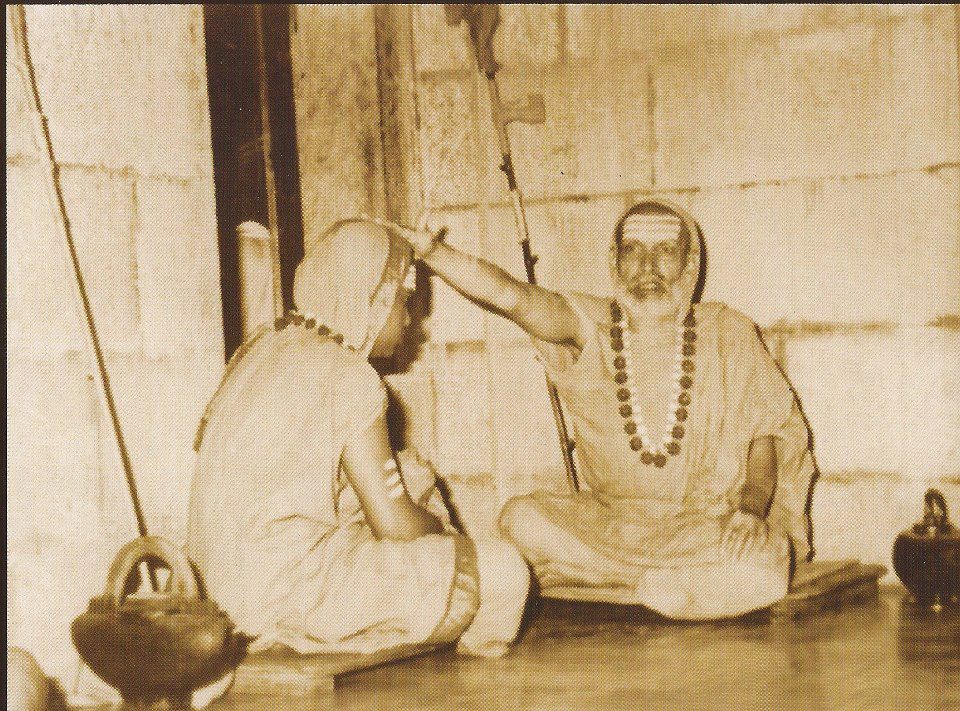
Sri Sringeri Mahasannidhanam blessing a disciple.

“At the time of initiation by a Guru, one’s deity or Ishta Devata, is chosen. Every person has worshipped some deity in previous lives; the impressions of this worship are imprinted in the subconscious mind. If one cannot discover his natural inclination, the Guru will choose the deity. Once the deity and appropriate mantra have been selected, and the aspirant has received initiation, he works with the mantra until reaching enlightenment. The mantra becomes his or her theme song.”—Swami Vishnu Devananda in ‘Meditation and Mantras’.


Hindu saints, Gurus and Yogis used a unique method of power transfer. It is like charging the spiritual battery of a disciple. There are different methods used by different saints. But they can be broadly classified in to Sparsa (Touching) Diksha, Nayana (looking) Diksha and Manasa Diksha (thinking). Hindus believe that a Mantra (incantation) initiated by the Guru will have more power. After initiation, all the mistakes done by the disciples are taken by the Guru i.e. nullified by the power of Guru.


Sparsa means touching; by touching the head of a disciple he transfers his power to the aspirant. Swami Vivekananda was initiated by Sri Ramakrishna Paramahamsa in this way. When young Narendra asked Ramkrishna to show him God, he touched Narendran’s head. He not only saw God, but also became a great saint with a new name swami Vivekananda. Amma of Kerala hugs everyone to transfer power.


Nayana Diksha means looking. Nayana means eyes. Some Guru’s just look at their disciples and give their power. Saints like Ramana Maharishi and Sathya Sai Baba did this to many of their disciples. Saints like Kanchi Paramacharya rarely touched anyone. But his graceful look cleared the doubts of his disciples.Hindu Goddess is prayed by her devotees to look at them through the corner of her eyes. Even a side glance is enough to elevate her devotees. No one can withstand her full glance.


Manasa Diksha means Mind (thinking).Upamanyu gave this type of Diksha to Lord Krishna. Lord Dakshniamurthy gives wisdom to his disciples this way. Sanakar and other three saints received power in this way. When Drona refused to teach Ekalavya, he learnt it by considering Drona as his Guru in mind. Since Drona did not know this, Ekalavya had to give him a heavy price—his right thumb.

birdfishturtle

BIRD, FISH, TURTLE

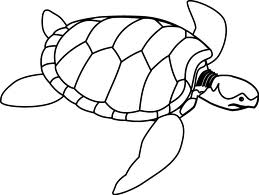
Hindu scriptures used three different similes to illustrate these types. Sparsa Diksha is compared with birds. They incubate the eggs by touching.


Nayana ( Chakshu) Diksha is compared with fishes. Hindus believed that the look of fishes at their eggs made them to produce fish lings. Goddess Meenakshi of Madurai is praised as Fish eyed.


Manasa Diksha is compared with turtles. Sanskrit and Sangam Tamil Literature say that the turtles always think about the eggs after laying the eggs on the sea shore, and the baby turtles rush towards them as soon as they hatched.


The word Diksha means giving and destroying (Di= give, Ksha=destroy). This means that the Guru gives wisdom to destroy ignorance. Guru is like a philosopher’s stone. Legendary Philosopher’s stone can change base metals like lead and iron in to gold and silver. In Sanskrit they call it Sparsa vedi. Whatever it touches changes in to gold. Some gurus are sparsa vedis. There is another type of gurus who are called Darsa Vedis. Their very look will make any one an enlightened man.


The beauty of these types of Dikshas is that the Guru never loses anything by giving. The more he gives more he gets. It is like education. The more one teaches students, the more he gains. The following Vedic mantra can give some idea about this never depleting source:

Om
Purnamadah Purnamidam
Purnat Purnamudachyate
Purnasya Purnamadaya
Purnameva Vashishyate
Om shanti, shanti, shanti (Ishavasya Upanishad)

Meaning in English:

Om.
That is the absolute, this is the absolute;
from the absolute, the absolute becomes manifest;
when the absolute is added to or taken away from the absolute,
the absolute remains.
Om. Peace! Peace! Peace!

Even after giving, Guru’s power remains intact.


Initiation is very important in Hinduism. Brahmin boys receive the Gayatri Mantra from their fathers. On the day of Upanayana ceremony, father brings his son closer to him under a cover (usually silk Dhoti) and repeats the Gayati three times in to his ears. Shaivaites get the mantra Om Nama Sivaya from their Gurus. Vaishnavites receive the mantra Om Namo Narayana from their Acharyas. In certain sects of Hinduism they even get some Mudras/ symbols imprinted on their bodies. These are like tattooing religious symbols on their bodies.


Modern day saints have their own ways of initiation. It is interesting to study them. No one can question a Guru. If you believe in him, he protects you.

“Gurur Brahma Gurur Vishnu, Gurur devo Maheswara:”. Guru is Brahma, Vishnu and Shiva.


Contact swami_48@yahoo.com

Dogs at Sringeri and Kanchi Mutts

sringeri mahasannidhanam

Picture of Sringeri Mahasannnidhanam

A dog used to be roaming about the Mutt (in Sringeri) and any attempt to take it to the other side of the river was not successful as it would swim across the river and come back to the Mutt. A servant who was with His Holiness (Sri Sringeri Shankaracharya) and known to be somewhat dishonest tried to drive it away when it came near His Holiness.

His Holiness, said, ‘’Do not disturb it. It was evidently a servant of the Mutt in its previous birth and still retains affection for it.’’ This seemingly casual remark of the sage made the servant behave better in future—From ‘Golden Sayings’ compiled by Shri Jannanda Bharati Swaminah,Tenkarai,1969

kanchi tapas

Picture of Sri Kanchi Paramacharya

Dog at Kanchi Mutt

From 1927 a dog was following Kanchi Paramacharya. It stayed near the camp wherever he pitched the camp. It wouldn’t touch anything impure. It was taking food that was given by the Mutt workers. It was guarding the property of the Mutt. Paramacharya used to ask every evening whether the dog was fed. Whenever Swamiji was travelling in the palanquin (Pallakku in Tamil) from one town to another town, it was walking under the palanquin. As soon as the palanquin stopped it would run away and stay at a distance like a humble servant. Sometimes it used to walk under the elephant of the Mutt. It never hurt any devotee but wagged its tail to show them its welcome or gratitude. It starved on the day it was not fed by the Mutt workers. One day a boy threw a stone at it and it came rushing towards him to bite. Mutt workers thought it was a danger to the devotees and took it 25 miles away from the camp and tied it to a pole. But it somehow escaped from that village and came running towards Shankaracharya’s camp. Even before the workers who took it to another village arrived at the camp, the dog was already there!! Till it met its death it was with Swamiji. No one hurt it. Devotees who came to see Swamiji were eager to see the dog as well.—From Sri Jagath Guru Divya Charithram in Tamil, 1959)

Who knows the secret behind its previous births?

baba dog

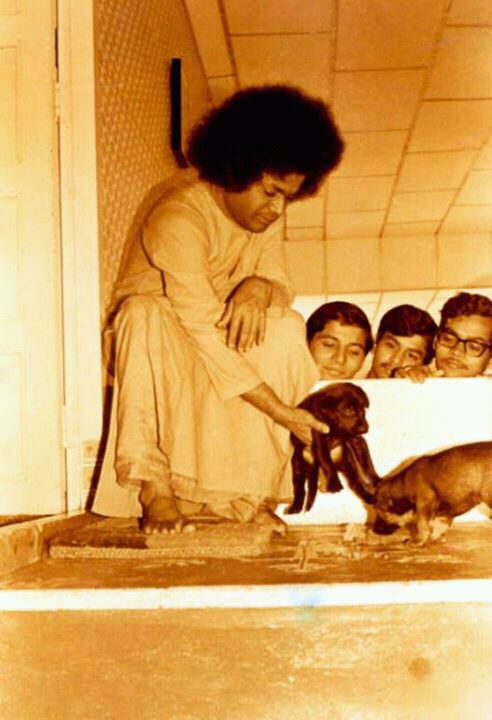
Picture shows Sri Sathya Sai Baba with dogs.

For other Dog stories and animal miracles, please read my earlier posts:

1.Animal Einsteins (Part 1 and Part 2) 2. Can parrots recite Vedas? 3. Why do animals worship Gods? 4. Mysterious Messengers for Ajanta, Angkor Wat and Sringeri 5. Elephant Miracles 6). 45 Words for Elephant 7. Can Birds Predict your Future? 8. Two Little Animals That Inspired Indians 9. Three Wise Monkeys from India 10. Mysterious Tamil Bird Man 11.Vedic Dog and Church Dog 11. Deer Chariot:  Rig Veda to Santa Claus 12. Mysterious Fish Gods around the World 13.  Serpent  (Snake) Queen: Indus Valley to Sabarimalai 14.Who Rides What Vahanas (Animal or Bird)? 15. Vahanas in Kalidasa and Tamil Literature 16. Vahanas on coins and in sculptures 17. Gajendra Moksha in Africa 18. The Tortoise Mystery: Can We live for 300 years? 18.Gods and Birds 19.வேத நாயும் மாதா கோவில் நாயும் 20.கழுதைக்குத் தெரியுமா கற்பூர வாசனை 21.Bird Migration in Kalidasa and Tamil Lterature 22.Double Headed Eagle: Sumerian- Indian Connection 23.Karikal Choza and Eagle Shaped Fire Altar 24.Four Birds in One Sloka 25.Hindu Eagle Mystery Deepen 26.Multi lingual parrot mimics Hindi, Arabic and English Word 27.Indian Crow by Mark Twain 28.அதிசய பறவைத் தமிழன்

Pictures are taken from different sites;thanks

Contact swami_48@yahoo.com

Tons of Gold: 400,000 bars!

gold+bank+of+england

By London Swaminathan
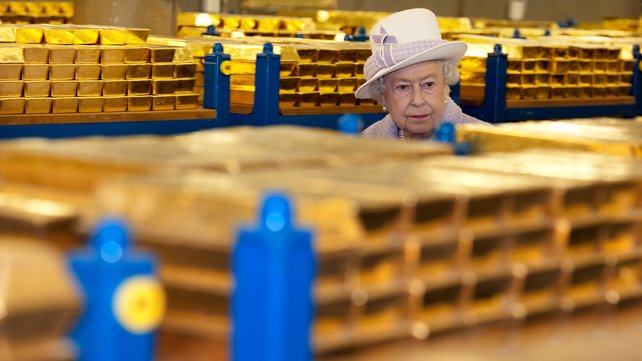
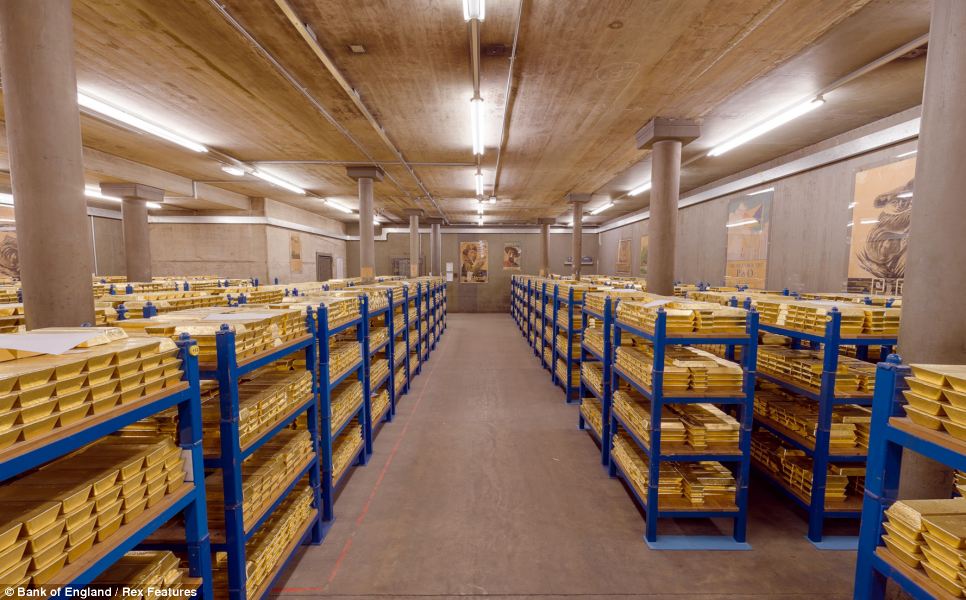
Bank of England in London is giving you an opportunity to see loads of gold from your desk. People who visit London used to go to Thredneedle Street in the heart of the city to see the bank of England vault. Here afterwards you can see all the 400,000 gold via internet on you computer.
400,000 bars each weighing 13 Kilos (29 pounds)!

Each bar is worth £350,000 X 90 rupees (in Indian money)

Total worth £150 billion!

They are all stacked up in rows like bricks for building work!

This building is known as Old Lady of Thread needle Street. Monetary Policy Committee meets to set interest rate every month. The bank has occupied this site from 1734.

gold 3

Now anyone can get a free application. It is available free on the Apple store and Google play market place. It includes 360 degree panoramic tours.

You can visit the bank’s vault, which contains some of its vast stock of currency notes.

You may visit Bank of England website for more details.

Indian Kings had such treasures once. They were all plundered y foreign invaders. Gemmologists who visited Vijayanagar Empire were amazed at Krishna Devaraya’s treasure and could not estimate his wealth. Even today India is the richest country in the world if you take it into account the gold held by individuals. The largest gold coin was issued by India. The largest Golden Temple in the world is in Tamil Nadu. Indian treasures are in the museums of London, Tehran, Paris and in private hands.

If you are interested in Treasure Hunt read my earlier posts:

Indian Wonder: Largest Golden Temple in the World

Hindus need an Indiana Jones

Krishna’s diamond in USA?

Gem stones in Kalidasa and Tamil Literature

Indiahhhhhh…..  Richest country in the World (Parts 1 to 6)

Largest gold coin

Rs. 1500 crore Gem studded Globe !

gold 1

நாலு லட்சம் தங்கக் கட்டிகள்!

gold+bank+of+england

எழுதியவர் லண்டன் சுவாமிநாதன்

நாலு லட்சம் தங்கக் கட்டிகள்!

ஒவ்வொன்றும் 13 கிலோ எடை (29 பவுண்டு)!

இன்றைய விலையில் ஒவ்வொரு கட்டியும் 350,000 பிரிட்டிஷ் ஸ்டெர்லிங் பவுண்டுகள் (இந்திய ரூபாயில் 3,50,000 X 89 ரூபாய்)

மொத்த மதிப்பு 15,0000 கோடி £150 billion பவுண்டுகள்

வரிசை வரிசையாக தங்கக் கட்டிகள்!!!


நாலு லட்சம் தங்கக் கட்டிகள் வேண்டுமா? பார்க்க மட்டும் தான்! லண்டனுக்கு வருவோர் ‘த்ரெட் னீடில் Thredneedle Street (ஊசி நூல் தெரு) ஸ்ட்ரீட்’ டுக்குப் போய் ‘’பாங்க் ஆF இங்கிலாந்து’’ Bank of England பொக்கிஷ அறையில் உள்ள தங்கக் கட்டிகளைப் பார்ப்பது வழக்கம். இனிமேல் லண்டனுக்கு வராமலேயே நீங்கள் பார்க்கலாம். வீட்டில் கம்ப்யூட்டரும் இன்டெர்னெட்டும் (Internet) இருந்தால் போதும்.


இங்கிலாந்து வங்கி என்பது இந்தியாவின் ரிசர்வ் வங்கி போன்றது. அரசாங்கத்தின் செல்வமான தங்கக் கட்டிகள் மற்றும் புதிது புதிதாக அடிக்கும் கரன்ஸி நோட்டுகள் எல்லாம் இங்கே மலை போல குவிந்திருக்கும். இப்போது இதை ஆப்பிள் அல்லது கூகுள் அப்ளிகேஷன் மூலம் (Apple Store, Google play market place; 360 degree panoramic view) பார்க்கலாம். அப்ளிகேஷன் களை இலவசமாகப் பெறலாம்.

gold 3

இங்கிலாந்து வங்கியின் கதவுகள் குண்டு துளைக்க முடியாத கதவுகள்! பின்ன என்ன? இவ்வளவு தங்க கட்டிகளை வைத்துக்கொண்டு, உதைந்தால் திறக்கக்கூடிய  மரக் கதவா போட்டிருப்பார்கள்? பத்து பவுண் நகைகளைப் பாதுகாக்கவே அரிசிப்பானைக்குள்ளும் தலையணைக்குள்ளும் ஒளித்துவைக்கிறோம்.

ஒவ்வொரு மாதமும் வங்கியின் தலைவர்கள் இங்கே கூடி வட்டி விகிதத்தை நிர்ணயிப்பார்கள். அந்த அறிவிப்பு வரும் வரை நிதித் துறையில் உள்ளவர்களும், பங்கு மார்க்கெட்காரர்களும், என்னைப் போல வீட்டுக்கு மார்ட்கேஜ் (வீட்டின் பெயரில் வாங்கிய கடன்) பாக்கி உள்ளவர்களும் வயிற்றில் நெருப்பைக் கட்டிக் கொண்டு நிற்போம். ஆனால் கடந்த ஒரு வருடமாக வட்டி விகிதம் மிகவும் குறைவு. குளிர்ச்சியான செய்தி. வங்கிக் கூட்டம் நடக்கும் அறையே ராஜ சபை போல இருக்கும்.


ஒரு காலத்தில் இந்தியாவில் ஒவ்வொரு ராஜ சபையிலும் இப்படித் தங்கம் குவிந்திருந்தது. உலகிலேயே பெரிய தங்க நாணயத்தை வெளியிட்டதும் நாம்தான்! திருவனந்தபுரம் பத்மசுவாமி கோவில் புதையல் பற்றிப் படிதவர்களுக்கு இதெல்லாம் கொசுறு! விஜயநகர சாம்ராஜ்யத்தின் செல்வத்தை மதி[[இட வந்தவர்கள் அதை மதிப்பிட முடியமல் மலைத்து திரும்பிப்போய்விட்டார்கள். கஜினி முகமது, சோமநாதபுரத்தைக் கொள்ளையடித்து சிவன் சொத்தைக் கொண்டுபோய் கஜின் நகரம் முழுவதும் தங்கக் கதவு போட்டானாம்.


இந்தியாவின் அபார, அபூர்வ செல்வம் பற்றி நான் எழுதிய ஏழெட்டு கட்டுரைகளின் தலைப்பு கீழே உள்ளது. படித்தால் மலைத்துப் போவீர்கள்.


1.கொலவெறி வைரம் 2.ஆயிரம் கோடி ரூபாய் ரத்தின உருண்டை 3.அமுதசுரபி எங்கே? மயிலாசனம் எங்கே? சங்கப்பலகை எங்கே? 4.Indian Wonder: Largest Golden Temple in the World 5.Hindus need an Indiana Jones 6.Krishna’s diamond in USA? 7.Gem stones in Kalidasa and Tamil Literature 8.Indiahhhhhh…..  Richest country in the World (Parts 1 to 6) 9.Largest gold coin 10.தங்கம் விலை உயருமா?

gold 1