The Tortoise Mystery: Can we live for 300 years?

By S Swaminathan

Giant Tortoise

The holy book of Hindus, the Bhagavad Gita and the Tamil ethics book, Tirukkural, both use the tortoise as an example of self control. Among the vertebrates that live on land, the tortoise is the longest living animal. Records speak of tortoises living for over 250 years. Unconfirmed reports say that they live for up to 350 years. But lower organisms in the sea like sponges and clams live for over 400 years.

Why did Lord Krishna and the Tamil poet Tiruvalluvar (author of Tirukkural) use the tortoise as an example? What is the message they wanted to convey through this example or simile?

Here is the sloka from the Gita:

“When, like the tortoise which withdraws its limbs on all sides, he (a sage) withdraws his senses from the sense-objects, then his wisdom becomes steady” (Chapter 2-58)

Here is the couplet from Tirukkural:

“If a man learns to control his five senses in one birth as the tortoise, that power will stand by him in his seven future births.”  (Kural 126)

Neither of these explicitly mentions long life but we may think that they used it to mean the outward shell and the limbs withdrawn in to it. Actually they knew the secret of the tortoise’s long life: its breathing rate. It breathes only three to four times every minute, whereas human beings breathe at least 15 times every minute.

Another Tamil saint Tirumular was very clear in saying that a person can live 1000 years – longer than a tortoise – by yogic practices. (Tirumantira 2264 & 2304).

Manu Smrithi (VII-105) and Vaishnavite Tamil Book Divya Prabandham (2360) also refer to the tortoise in this context. Our forefathers, who were keen observers of nature, knew very well that the tortoise is the longest living vertebrate. Otherwise they wouldn’t talk about seven births or living longer than a tortoise.

Tirumular who sang Tirumantiram was said to have lived for 3000 years. But we did not know whether he lived with his physical body or not.

Man’s life span is 100 years according to the Hindu Vedas. Brahmins recite the Vedas asking for 100 years of healthy life in their daily ritual called Sandhyavandhanam (Pasyema saradas satham, jeevema saradas satham,nandhama aradas satham etc.) When we were born, we were given a certain number of years, which can also be expressed as a certain number of breaths. The quicker we spend our breaths, the sooner we die. But the saints spend very little of their breath and live longer.

If a man breaths 15 times a minute (or 18 times as per the western calculation) he will breathe 900 times in an hour and 21,600 in a day.  If you slow down the breathing rate by yoga (Pranayama) techniques, you live longer. It is like our money deposited in a bank. The quicker you spend it, the sooner you become a pauper. Yoga technique teaches you to reduce the breathing rate. To emphasize this point, a Chola king put 21,600 golden tiles in the roof of the famous Chidambaram Nataraja Temple in Tamil Nadu. He used 72,000 nails to fix the golden tiles. Tirumular, the great Siddha, in his Tirumantiram explains this calculation clearly.

Look what Paramahamsa Yogananda (An Autobiography of a Yogi) says about breathing: “The restless monkey breathes at the rate of 32 times a minute, in contrast to man’s average 18 times. The elephant, tortoise, snake and other animals noted for their longevity have a respiratory rate which is less than man’s. The tortoise for instance, who may attain the age of 300 years, breathes only 4 times per minute.”

Dogs breathe 40 to 50 times per minute and live up to 25 years only.

Let us do an interesting sum before we finish:

We believe that we can live for 100 years by breathing 15 times a minute.

If one breathes 18 times a minute one’s age will decrease to 83 1/3 years.

If a person breathes only 2 times every minute one can live for 750 years.

If one breaths only once every minute, one can live for 1500 years.

If one stops breathing, and slows their metabolic activity, one can live longer. But this is only possible for Yogis. They did it by reciting the Pranava mantra AUM. We read about bears, rabbits and other animals going in to hibernation for six months during winter. In short they temporarily become “Yogis “. Our ancient literature talk about devas and demons doing penance for thousands of years. Though we may think that it was an exaggeration, we knew that ant hills grew around the saints during their meditation implying the passage of time. The famous saint who wrote the Ramayana was ‘Valmiki’ meaning ’ant hill’. There was another poet with the same name in Sangam Tamil literature.

Sex and the breathing

Modern research shows that a man spends 200 calories and breathes 30 times a minute during sex -twice the rate of normal breathing. An average man ejaculates semen 5000 times during his life time. But our Yogis, being celibate, saved energy on that count as well.  But Hinduism never prohibited sex for an ordinary man; only Yogis lived that way.  Sangam Tamil book Tirumurukatru patai speaks of priests who observed celibacy for 48 years. It is crystal clear that our forefathers knew the secret of longevity.

The tortoise is one of the ten avatars of Lord Vishnu. The Chinese, Mongolians, Koreans, Vietnamese and other South East Asians also respect the tortoise and the turtle for various other reasons.


Follow me on Twitter @Swami_48 and find me on Facebook.

When Animals worship God, Why not Men?

When Animals worship God, Why not Men?

Parrots recite the Vedas.
Dog follows Yudhistra to heaven.
Squirrel helps to build Rama Setu.
Gajendra, the elephant called on Vishnu for help.
Dogs inspire Adi Shankaracharya.
Four dogs come as four Vedas to Somasi Nayanar Yagna.
In Madurai pigs, swallow and heron were given moksha by Lord Shiva.
Cows bathed Shiva lingas with milk in several Indian towns.
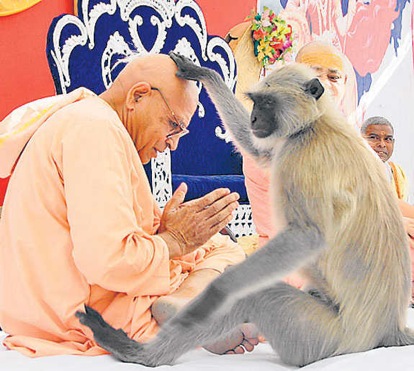
Recently in Ratlam (Madhya Pradesh) monkeys listened to Ramayana.
Very recently In Tamil Nadu snakes and goats did Puja to statues of gods.
What are all these? Are these Panchatantra stories or Aesop fables? or
Are Walt Disney’s films on nature? If you read more you can judge it yourself.
Indian Tamil and Sanskrit literature are full of animal stories. They say that if a just king rules the country deer and tiger will drink water from the same river without showing enmity. They go one step forward and say that animals when pregnant get more affection even from their natural enemies. Snakes open their hoods to protect pregnant frogs from scorching sun. Such is the love and affection they show one toward another.
Western newspapers don’t lag behind in such stories. Within the last quarter of 2011 three such stories about parrots appeared in London publications. A pet parrot alerted its owner when his pet dog gave birth prematurely. But for the timely intervention of the bird many of the cubs would have died. Another parrot betrayed its owner during illicit intimacy by calling his wife’s name. A third parrot helped to catch a burglar, because even after it was stolen it was repeating its original owner’s name and identified him in the pet shop.
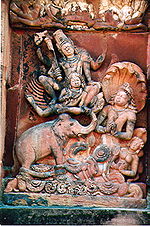
But Indian literature goes well beyond these anecdotes in time. We have the great Bhagavatham story of Elephant Gajendra calling Lord Vishnu to rescue it from the near fatal grip of a crocodile. This was beautifully sculpted 1500 years ago in the Deogarh temple. (My article about mysterious messengerstalks about a cobra giving shelter to a frog).
Look at the pictures now:
Monkey blessing Rama katha exponents in Ratlam in Madhya Pradesh, India (Monkey attending Rama katha is available on You Tube).

Elephant Gajendra calling Vishnu, 5th century AD (1500 old statue).
When the intellectual giant and the greatest Indian philosopher Adi Shankaracharya at a tender age went to challenge the mightiest figure of his days Mandanamishra on the banks of the river Narmada, he was laughed at and ridiculed by the women of the village who came to get water from the river. When they heard from a youth like Shankara that he came to discuss philosophical subjects with Mandanamishra and wanted to know where his house was, they giggled. But they were so intelligent that they replied to him in Sanskrit poetry. They asked him to go to a house where the parrots were reciting the Vedas and discussing Upanishad philosophy. The story takes very interesting turns at every stage. But I will stop with the parrots (those who wanted to read the story in English must go to Osho’s website, and those who wanted to read it in Tamil must go to Kanchi Shankaracharya’s Tamil lectures).
 
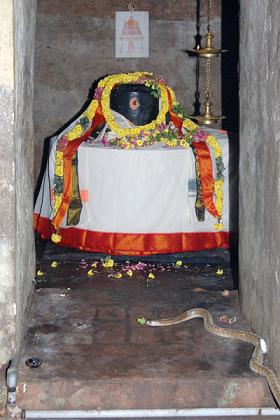
Thepperumanallur, Tamil Nadu, India- snake worships Lord Shiva.
On 16th January 2010 there was a solar eclipse. When the priest of Thepperumanallur in Thanjavur district of Tamil Nadu opened the temple, he saw a snake on top of the Shivalingam statue. It slowly went to the holy Bilva tree and brought the bilva leaves and put them on the head of Lord Shiva. It did it three times. Hundreds of villagers and photographers rushed to the temple and quietly watched the wonderful ceremony. The priest explained that solar eclipse is a holy occasion and people who do puja at that time get more punya.
 
Erode, Tamil Nadu, India – Goat worships Nagadeva statue with Tulsi (basil Leaves)
On 17th November 2011 when the Ayyappa devotees started their 40 day fasting (vrata) they all wore garlands and did Puja. A goat also took the holy basil leaves and did puja to the Nagadeva statues. Hundreds of devotees watched this with great reverence and curiosity. Popular Tamil Daily Dinamalar had published these incidents and they were read by millions.
People who have read Ramayana and Mahabharata knew about the little animals (read my story -Two LittleAnimals) When Adi Shankara was walking along a narrow street, a person of low caste came in the opposite direction. When Shankara, with all arrogance, asked him to move out of his path he asked a great philosophical question whether the body or soul should move out of his path. This opened Shankara’s eyes and awakened a greater fire in him. He realised that the man who came as an ugly uneducated person was nothing but God and the four dogs that accompanied him were four Vedas.
The same thing happened in the Soma yagna conducted by a great Tamil devotee called Somasimara Nayanar. When an untouchable came in drunken state with four dogs looking for his lost animals, all the Brahmins chased him away. But the great Nayanar realised that it was nothing but Shiva who came with four Vedas as dogs. Shiva showed him his real form and blessed him. It happened in the eighth century. The story appears in great detail in Periya Puranam in Tamil. Swami Sivananda of Rishikesh has translated it in to English.
Madurai Meenakshi Temple (Please go to The Wonder that is Meenakshi Temple) is full of animal stories. People were all reborn as animals and blessed by Lord Shiva. All these stories were given in greater details in the Tiruvilaiyadal Purana which is available in Sanskrit and English.
A lot of holy places and temples in India claim that the places were discovered when cows spontaneously showered milk in those spots.
Tamil Nadu (South India) is full of legends about temples. Most of the towns are associated with animals in one way or another. Just to mention a few Tiruanaika near Trichy in Tamil Nadu became famous because a spider and an elephant worshipped Shiva there. According to the local legend the spider was reborn as a famous Chola king and built many temples for Shiva. Tiruverumbur (ants worshipped), Tirukkazuku Kundram (eagles worshipped) and Vaitheeswaran Koil (Eagles Jatayu and Sampati worshipped).
So many places in India are associated with animals worshipping God and it is a good topic for further research.
                                                     ************************

The Mysterious Vedic Homa Bird: Does It Exist?

By S Swaminathan

The Emblem of Iran Air is the Homa Bird

There is a very interesting story about a mythological ‘Home Bird’ in Oriental literature.

Though Sri Ramakrishna Paramahamsa said that it was a bird mentioned in the Vedas, there are no references to such a bird in Vedic literature. But there are indirect references elsewhere. Before going in to those details, let us first look at the interesting story. The Homa bird lives in the air, breeds in the air, lays eggs in the air, but before the eggs reach the surface of the earth they are hatched in the air and the baby bird flies upward to join its mother. This is the story told by the great saint. Is there any such bird in the world that fits this description? “No” is the categorical reply from ornithologists.

But Ramakrishna pointed to Narendra (later Swami Vivekananda) and compared him to a Homa bird. The meaning is very clear. Like some people are born with a silver spoon in their mouth, some are born with spiritual treasure. Before they settle into a mundane life they go up the spiritual ladder and become God-men. This is what happened in the case of Adi Shankaracharya, Swami Vivekananda and the great Tamil saint Thiru Gnana Sambandhar. Even when they were teenagers they realised God and taught the world. They were like Homa birds. They never touched the surface of the earth like us. They were always high- up in the sky.

Sri Ramakrishna said: “When they grow a little older they feel the awakening of inner consciousness and go directly toward God. They come to the world only to teach others. They never care for anything of the world. They are never attached to women and gold.”

Is there a Homa bird? The ornithologists (those who study birds) say the Wandering Albatross doesn’t return to land for six years at a time; it uses the ocean water as its surface. Swifts always land on trees but not on the ground because of their weak legs. Arctic Terns fly nonstop for seven days and travel 11000 miles – literally from one pole to the other. Certain birds live most of the time in water or on top of the trees and so literally they don’t “land” on earth for several years. They come to ground only when they lay eggs. But what we understand about today’s 9000 different kinds of birds may not be complete. In our own times we lost several bird species like the Dodo. So once upon a time there might have been a Homa bird in the world.

We have indirect references to the Homa bird in Persian literature. The Persian poets, Turkish poets and Sufi poets praise them as divine birds. If it flies over someone’s head, that person will become a king, they wrote. They described it as bird of paradise.

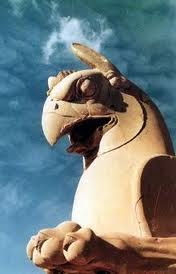
Though Iran is a Muslim country it has Homa bird as its emblem (please see the picture) for its airlines. The Homa bird in ancient Iranian monuments looks like an eagle or Garuda. There are lot of references about eagles bringing the divine Soma plant from the mountains in our Vedic literature. The English letters S and H change place in Greek and Persian. For example – they named those living on the banks of the river Sindhu as Hindus. Another example is the number Six (Shashti) becomes Hexa in Greek. In the same way, it may be the case that what we called the Soma bird is the mythical Homa bird. Whatever said in the Vedas is repeated in the Persian Zoroastrian literature. Moreover, Hindu literature also associates the Garuda bird (eagle) with Amrita (ambrosia).

Tippusultan and the Homa bird

When Tippusultan of Mysore was defeated by the British army his enormous wealth was plundered and looted. Some was sent to Britain. Other treasures were broken in to pieces and distributed to its troops. Tippusultan’s golden throne had a Homa bird encrusted with beautiful and expensive gem stones. A British auction house sold it some time ago naming it as the bird of paradise. “Tippu’s throne was eight feet in length, by five in width [and] was raised four feet from the earth. It had tiger legs. It was made up of gold and silver. Arabic sentences, chiefly from the Koran, decorated it. The canopy was made of pearls. The central part of the roof was surmounted by the MOST CURIOUS AND COSTLY FIGURE OF THE HUMAH (the fabulous royal bird of the East) formed of solid gold nearly the size of a pigeon, and covered over with the most valuable jewellery”.

Sufi teacher Inayat Khan describes the bird in beautiful words: “Its true meaning is that when a person’s thoughts so evolve that they break all limitations, then he becomes a king. “

The bird is described as a phoenix that comes to life even after it is consumed by fire. All of these concepts are metaphorical. If we apply it to great men and their teachings, it makes more sense. India is full of such Homa birds/Great men and women.


A bust of the mythical Homa Bird


Please visit my blogs: swamiindology.blogspot.com and tamilandvedas.wordpress.com.

Follow me on Twitter @Swami_48 and find me on Facebook.
‘Is California, USA – Kapila Aranya?’ – Kanchi Sankaracharya

By S Swaminathan

Sri Kanchi Sankarcharya

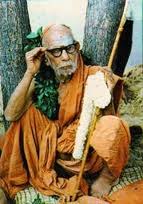
Kanchi Sankaracharya Sri Chandrasekarendra Saraswathi (1894-1994) who lived for one hundred years and attained Samadhi in 1994 was a great scholar, a voracious reader and a good speaker. His great scholarship is seen in his speeches that were published in seven volumes in Tamil. Some of his lectures were translated in to English. He was very fluent in Tamil, Sanskrit and English. He was met by famous leaders and prominent writers like Mahatma Gandhi, Indra Gandhi, Arthur Koestler, Paul Brunton, Milton Singer and the Queen of Greece to mention a few. Mr R Venkatraman, former President of India was a devotee of Sankaracharya.

Sri Sankaracharya made a passing remark about California (USA) in his talk on 12th of October 1932 in Chennai. His talks were published in 1933 ( by Sri Kamakoti Kosathanam, Chennai).

When he gave a lot of examples to show Hinduism prevailed in different parts of the globe he also happened to mention California. He narrated the Puranic story of King Sagara and the incident where his horse was stolen by Indra during a yajna (fire sacrifice). When he sent all his 60,000 sons in search of the horse they travelled to the Patala Loka.(Please read my article about the ancient idioms and phrases under the title Is Brahmastra a Nuclear Weapon? in which I have explained sixty thousand means innumerable, countless, a lot).

When Sagara’s sons reached the netherworld (all the places down south of the Indian Sub Continent were called Patala Loka in Sanskrit literature) they saw the horse near the seer Kapila who was in deep meditation. They thought that he was the one who took the horse and abused him. When Kapila opened his eyes all Sagara’s sons were burnt to ashes. King Sagara felt very sad. Baghiratha who was a descendant of Sagara vowed to bring the river Ganges to earth to dissolve the ashes so that they would go to heaven. Baghiratha tried for a very long time and ultimately succeeded. That is why the ocean is called ‘Sagar’ and Ganges was called ‘Bhagirathi’(please read my article GreatEngineers of Ancient India in which I explained the symbolic language used by our forefathers about Ganges and Bhagiratha).

Kanchi Sankaracharya Swamiji, after narrating this story pointed out that a Horse Island and an Ash island near California. He humorously explained how the residents of Madurai call the city Marudai and how a Tamil folk called a Kuthirai (horse) Kuruthai – interchanging the letters. He continued to say that the words KAPILA ARANYA might have been misspelt as KALIFO ARANYA (California). Ash Island was the place where the sons of Sagaras were burnt to ashes. Horse Island was the place where they found the horse. But he never reopened this topic in his future lectures.

Now let us analyse it. English people who have migrated to USA, Canada, South Africa and Australia named the new places after their native towns or states. Now we have duplicates of those place names all over these countries. So it is possible that ancient Indians who went to different parts of the globe by planned voyages or by shipwrecked and washed ashore might have named them after the Sagara story. The modern atlas shows the existence of an Ash Island in Oregon, USA and a Horse Island in California. Oregon is the neighbouring state of California.

A lot of research is going on about the link between the Mayas and the Hindus and the Red Indians and the Hindus. So far the researchers have found out amazing similarities between the North American and South American tribes and the Hindus. It may not be outright migration of the Hindus. But a few wayward adventurers might have gone there and left some indelible Hindu marks on those civilizations.

(I will explain the Hindu-Maya links in another article)

No one can miss the fact that Hinduism is the only religion without a name because it was the only one prevailed in the olden times. Foreigners named it as the Hindu religion. We call this nameless religion Sanatana Dharma (the Eternal Truth). Sanskrit is the only language which is not named after people because it was one of the oldest languages and spoken by all. All other languages were spoken only by their own people and so are named after that particular community.

Send comments and feedback to: swami_48@yahoo.com.

Please visit  my blogs: swamiindology.blogspot.com and tamilandvedas.wordpress.com for more interesting articles.

The Mysterious disappearance of Great Hindu Saints

By S Swaminathan


The deaths of great people have always been a mystery. People have immense interest in it and so the mass media never stops exploiting it. Even today the TV channels in western countries broadcast newer and newer stories about the death of John F Kennedy, President of America, who was assassinated on 22nd November 1963 – 50 years ago!

Even Lord Krishna’s death at the hands of a hunter, Lord Rama’s death in the river Sarayu, Buddha’s death after eating a special food given by a devoted host ,and Jesus’ death on the Cross raise the eyebrows of believers and non-believers alike.  Even the death of the great exponent of Advaita philosophy Sri Adi Shankara is shrouded in mystery. His followers believe that he disappeared after climbing ‘Sarvagna Peetam’ or the mountains in Kedarnath. All these come very handy for the propaganda mill of non-believers and atheists.

Tamils also have such stories about the great saints who revived Saiva and Vaishnava faiths in Tamil Nadu after a brief spell of Jainism and Buddhism. There were four great saints Thiru Gnana Sambandhar, Appar alias Thirunavukarasar , Sudarar and Manikka Vasakar. Of the four great saints Sambandhar and Manikkavasakar became one with God by entering the fire (jyoti).  Andal, the only woman in the great 12 Vaishnava saints known as the Alwars also did ‘merge’ with the god. Worshippers of Shiva and Vishnu (Saiva and Vaishnava followers) strongly believe that the saints became one with the god –the ever shining LIGHT and they celebrate such days as Guru Puja every year.  Tiruppanalvar and Nandanar were others who also merged with God in the form of light/fire. Atheists in Tamil Nadu interpret it as fire accidents or arson attacks.


Vallalar became Light

If we go into the details of these anecdotes we come to know it happened not only to the saints but also to their followers. In the case of Sambandhar, he took with him a great number of people with him in to fire on the day of his wedding. Lord Rama also took a lot of people when he entered the river Sarayu. In the case of Manikka Vasakar, his devotees went first and merged with the light. Later he also joined them. The great four Saiva saints and 12 great Vaishnava saints of Tamil Nadu lived between 6th and 9th centuries AD.

Very recently another popular saint Vallalar alias Ramalinga Swamikal also became ‘light’ and disappeared. He entered his room on 30th January 1874 and asked his disciples not to open the doors. After rumours spread the Government forced the doors open in May that year and the room was empty without any trace of the saint. The Madras District Gazeteer published his disappearance. His devotees saw him in the form of Light.


Tamil woman burnt Madurai City

The greatest of the five Tamil epics is Cilappatikaram. This is purely a Tamil story- no import from Northern Indian or Sanskrit literature. Kovalan the son of a big merchant married Kannaki but fell in love with a dancer Madhavi. His chaste wife Kannaki waited for his return which he did after realising his mistake. This happened 1,800 years ago .When they decided to make a new beginning they moved to the Pandyan Kingdom from the Choza kingdom. The Pandya King of Madurai was misled by an evil goldsmith who accused Kovalan of stealing the queen’s anklet. The king executed Kovalan without proper enquiry. His chaste wife Kannaki who was compared to ancient Arundhati (Wife of Sage Vashista) by the author of Cilappatikaram, stormed into the palace and proved that the king was wrong. Both the King and the Queen died of heart attack the very same minute out of shock.

Enraged, Kannaki wanted to revenge for the great injustice done to her husband. She ripped off one of her breasts and threw it on the city of Madurai. The city burst in to flames. But she requested the god of fire ‘Agni Deva ‘not to harm the good people. The story was written in a moving style which will melt even the stoniest of hearts. Tamils believed that chaste women can burn bad people or bring showers to the parched lands (Ref. Couplet 55 in Tirukkural).


Spontaneous  Human Combustion

What is the truth behind all these mysterious deaths or disappearances? Millions of followers believe that it did really happen and they pay their respects on the day of their disappearance even today. We can find some explanations for such phenomena. One falls under the category of paranormal and it is called Spontaneous Human Combustion (SHC). Encyclopaedias explain this as a ‘fire caused death but without an external agent’. The fire was created from within the body. In many of the documented cases even the dress, the surrounding furniture of the victim had no trace of fire. Though there was no scientific proof for such Body Fire, the scientists who studied such cases were mystified.

There is scientific proof of people who can create electricity within their own bodies. They can light the bulbs or short circuit electrical systems wherever they go. Science has proof for people with magnetic powers and whatever objects made up of iron they touch, stick to them. But so far, there is no proof that for spontaneous combustion is the cause of such occurrences – it is such a rare phenomena.


Deepak Raga kindled Fire

We have one more popular anecdote where music created fire and burnt a person to death. Gopal Naik was a famous musician in the days the Moghul King Akbar. The king heard the mysterious powers of Ragas and he asked Gopal Naik to sing Raga Deepak which kindles fire. In spite of his insistence that he would be burnt to ashes if he sang the raga, Akbar suggested some preventive measures. He asked him to sing Deepak raga standing neck deep water in the river Jamuna. He obeyed king’s orders and was burnt to ashes as he sang the raaga in full spirit!

The second reason that we can think of is the effect of sound. For a Hindu who believes that the primordial sound, OM, is the basis of entire universe, nothing is implausible. Scientists knew the effect of wrong sound/noise that it can harm the buildings, break a glass and drive a man to madness. But it would take some more time for them to discover that sound can kindle fire – after all, sound acts on the same particles and matter as electromagnetic waves do. Light, microwave, x rays, infra red and ultra violet rays are all part of the same spectrum.

Email comments and feedback to swami_48@yahoo.com.


Mysterious Messengers for Ajanta, Angkor Wat and Sringeri

By S Swaminathan


Angkor Wat in Cambodia and Ajanta in India are world famous tourist spots. They are listed as wonders of the world. But these places and many other tourist attractions came to light through some mysterious messengers. Who are these messengers? Are they the incarnations of some great people who lived there in their previous births? No one will ever be able to tell us. But people do believe in such miracles.


Angkor Wat

When Cambodia was under French rule Henri Muhot went to collect butterflies in 1860.  He was very much involved in the study of butterflies. One day while he was collecting the butterflies, he saw one rare butterfly and running behind it. That took him far away into the thick jungle. There he was trapped amidst some ruins. He was surprised to see vast ruins in a thick forest. Now his interest moved slowly from the butterflies to the archaeological ruins. The ruins were nothing but the world’s largest Hindu temple Angkor Wat! A temple complex that was spread over 38 square miles. When the world attention turned on the temple there were huge trees growing on top of several structures. It was too late to remove them. Then the civil war broke out. Now thanks to UNESCO and other organisations the temple is saved. But who was the mysterious messenger that came in the guise of a butterfly?


Ajanta Caves

Ajanta Caves are famous for its ancient paintings and Buddhist sculptures. They are in 29 rock cut caves in the Indian state of Maharashtra and they are dated from 2nd century BC. John Smith was an officer of the then British Government. He was interested in hunting. When he was hunting tigers deep inside the forest in 1819, a goatherd led him in to a cave and showed something and went away. The cave was full of birds and bats. When he cleared them one more wonder of the world was revealed. If the goatherd did not appear on that day, who knows, we would have discovered Ajanta when it was too late. Who was that non English speaking, mysterious goat herd? Why should he lead an English officer into the cave? Was he the reincarnation of a Buddhist monk?


Egyptian Pyramids

There is no need to explain the most popular world wonder Egyptian Pyramids. We came to know the 5000 year history of Egypt from the majestic and beautiful pyramids. The hieroglyphs, the mummies, the sculptures and huge stone structures evoke eternal interest in history even in those who hated history as a lesson in schools. But this came to the knowledge of the world because of a mysterious messenger- a fox. An Arab was watching a fox running into a hole under a pyramid in Saqqara. He followed the fox and entered the underground structure. That led him through a tunnel where he saw the beautiful hieroglyphs amidst gold and sapphire studded jewellery. Then the excavations started which did not stop till today. We have been getting interesting information from the 138 pyramids . Who was that mysterious messenger-fox? Was it the reincarnation of an Egyptian king?


Dead Sea Scrolls From Amman Museum,Jordan

Dead Sea Scrolls were discovered in 11 caves in the West Bank, Israel in 1947. They were the collection of Hebrew Bible dating from 150BC. They attained huge importance and created controversy because they shed new light on the Bible and Judaism. They were written on 972 parchments in three different languages. The way they were discovered again is shrouded in mystery. A goatherd was looking for a missing goat. He went into a cave in search of the goat and stumbled upon the valuable manuscripts. Who was the mysterious goatherd? Was he a scholar of the Biblical Days in the guise of a goatherd?


Mexico

Mexico is one of the oldest and largest cities in the world. But it was rediscovered by a curious incident. In the year 1325, an eagle was sitting on a cacti plant with a snake in its beak. When the snake was devoured by the eagle, locals recognised some divinity in the place and built a temple . It slowly grew up in to a city in the name of Tenochtitlan which became part of Today’s Mexico. Who was that mysterious Eagle which inspired the locals to rediscover their city. The eagle and the snake figure in the flag of Mexico.


Madurai

Madurai in South India is the second largest city in Tamilnadu.Ancient Madurai was devoured by the sea during a tsunami attack. Following utter devastation nobody knew the old boundaries. When the Pandya king was worried he went and prayed in the temple of Lord Shiva. A sage appeared before him and set the snake in his hand on a new mission of drawing the old boundaries. The snake made a big circle till its head and mouth joined together (ouroboros in Greek means head eating the tail) giving Madurai a new name Uragapuram in Sanskrit and Aalavaay in Tamil. Sanskrit playwright Kalidasa mentioned Uragapuram in his Kavya Raghuvamsa. Probably Uragapuram was corrupted in Greek as Ouroboros. But here the snake is not a mysterious messenger because Madurai Mythology (Thiru vilaiyadal Puranam) clearly said that it was sent by the god through its messenger, the sage.


Sringeri

A shrine on the bank of River Tunga,Sringeri (Photo from Sringeri Mutt)

Adi Sankara, the most popular exponent of Advaita (non Dualism) philosophy of India was looking for a suitable place to establish a centre. There were too many holy places in India and he was struggling to select one from them. A rare and unusual sight helped him to decide it once and for all. When he came to Sringeri on the banks of Tungabhadra river (in Karnataka, South India) he saw a cobra snake using it’s hood as an umbrella for a pregnant frog in labour. The cobra was shielding the frog from the scorching sun. Adi Sankara realised this was the most suitable place for establishing a centre because even natural enemies will come under the umbrella of love in this serene place. Thus he started establishing four centres in four corners of India. Who was the mysterious messenger in the form of a cobra?


Panchalankurichi

Panchalankurichi near Tirunelveli was the headquarters of the chieftain Veerapandia Kattabomman. He fought against the British rule. The reason he built the fort was a hare. His hunting dogs were chasing a hare which suddenly stopped and heroically stood against the dogs. Seeing the sanctity of the place he built his head quarters in that place. India is full of such stories. The general public believed that god sent the messenger to reveal something-like the Holy Fire of Moses.


Please send comments and feedback to: swami_48@yahoo.com. Follow me on Twitter: @Swami_48 and find me on Facebook.


Why Do British Judges Follow a Tamil King?

By S Swaminathan


Strange as it may look, British judges, magistrates and barristers follow a custom that was started by a Tamil king two thousand years ago. British judges and several others who preside over the courts of justice wear a white wig.

If we go to encyclopaedias they don’t explain why they wear it or when it was exactly started. Ancient Egyptians wore wigs for protecting their heads from the scorching sun. Then Romans and others wore different types of wigs as symbols of aristocracy.

The British judiciary started wearing wigs from 17th century. Many of the commonwealth countries also followed it. Whenever the reason for the custom is asked many people say that it is the tradition or uniform for professional discipline or it shows experience. Actually it was started by the most famous Tamil king, Karikal Chola two thousand years ago. Crystal clear proof comes from the ancient Tamil Cankam (Sangam) literature.

Karikalan was the greatest of the Tamil kings for three reasons. He ruled vast areas of Tamil-speaking land, subjugating other Tamil kingdoms. He was the first Tamil king who went up to the Himalayas and carved his dynastic emblem there. Till today, there remains a Chola pass in the Himalayas. The second reason was he was a just king and his court of justice in Uraiyur became very famous. Tamil literature praises his justice and gives the story of wigs. And the third reason is the Grand Anaicut he built across the river Cauvery is one of the oldest dam s in the world. 

Though we did not have any historical records scholars have dated him around 1st century BC. He was a boy king – like the Egyptian Tutankhamen. He came to power while he was a teenager.


The Story of Wigs:

One day two elderly people came to his court seeking justice. They had a dispute among themselves. They decided that whatever the Uraiyur court says must be the final settlement. When they came in to court they were shocked to see a boy sitting as the judge. They were greatly disappointed – which Karikalan felt immediately by looking at their faces. Indeed the face is the index of the mind.

Karikalan politely asked the elders to take seats and told them to wait for the ‘judge’ and he went in. The entire assembly was puzzled. Then came an elderly person and sat on the chair. After carefully listening to the arguments of both the sides he gave his judgement. Both of them were immensely happy to hear a fair settlement. Now the assembly wanted to know who the elderly judge was. King Karikalan removed his white hair wig (Narai Mudi in Tamil) and revealed himself.  All applauded the Wisdom of the ‘Solomon of India’.

The proof for the anecdote is in three Tamil books:

  1. Porunar Atruppadai –lines 187-188. Porunar Atruppadai is one of the ten long poems of Tamil Cankam literature dated  between 1st to 3rd century AD
  2. Manimekalai- This is one of the five Tamil epics dated 3rd century AD  
  3. Pazamozi – poem 25 translation:


“The grey haired old men said the young man could not come to a decision about their case. They were delighted to find the Choza wore a grey wig, and understood the case from listening to their statements”.

This proves that even before they learn the arts suited to their caste, men are “ripe for their duties” This book is dated around 5th century AD.

Nobody can deny the fact that Karikalan was the first one to use white wig in judiciary matters.

There are lot of interesting stories about Karikalan in Tamil literature. He had to fight his own relatives to get the throne after the death of his father Ilam Chet Senni. He escaped an arson attack and his feet were charred and thus he got the name “Kari Kalan” (man with charred legs). The ancient custom in India is to select a king by the Royal elephant if nobody knew who the real heir apparent was. Karikalan was garlanded by the royal elephant when he was standing in the crowd. The episodes about his daughter Adi Mandi also formed the basis of several interesting stories.

How did Shakespeare know about the Indian Cobra Jewel-Nagaratnam?

“Sweet are the uses of adversity, Which like the toad, ugly and venomous,

Wears yet a precious jewel in his head”

Shakespeare’s ‘As You Like It’ Act 2:1.13-14

There are a lot of references about Nagaratnam or Nagamani (Cobra Jewel) in Tamil and Sanskrit literature. But the strange thing about it is that even the most famous English playwright Shakespeare mentions in his play ‘As You Like It’. Instead of snake he says toad. Indeed any story will change when it travels 6,000 miles!

 The story about the cobra jewel is that the cobras keep it inside their bodies and use it during night time to search for preys. Ancients believed that the Nagaratnam emits enough light to identify the prey.

The concept of the Nagaratnam has not been scientifically proven. But there are lot of stories about people being defrauded by the name of Nagaratnam. Gullible people pay millions of rupees for fake Nagamanis.

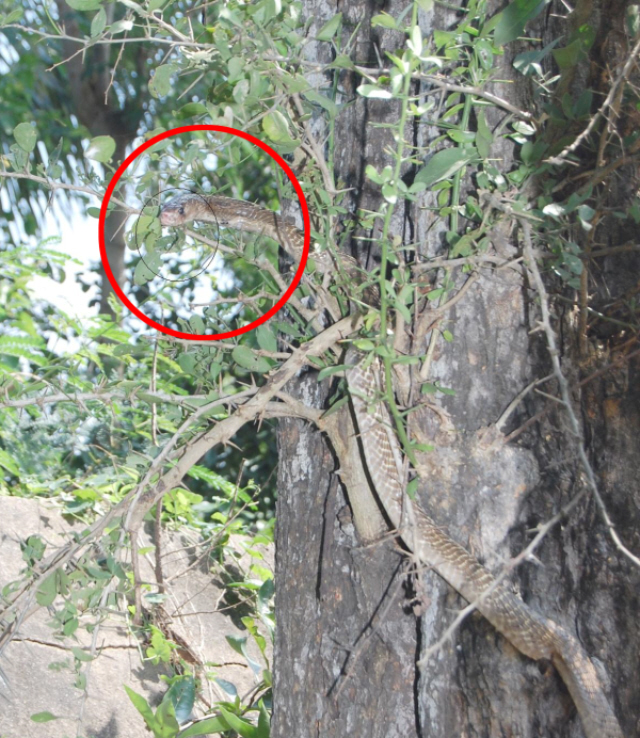
My research shows that they did not mean Nagaratnam/Cobra Jewel , but only the power of snakes to see in the dark. Ancient Tamils were good observers. They named snakes with different words and one of them is Katchevi. The meaning is Kan+Sevi=Eye+Ear. That means the snakes have a single body part which functions like both its eyes and ears.

People who have watched Nature programmes on TV channels could see the way snakes see their prey in the night. The body heat of the animals are perceived by snakes using infra red rays. A snake’s prey will appear highlighted red in its vision. This extrasensory ability is probably what is popularly known as the Nagaratnam/Cobra Jewel.

The organ that identifies the prey by this ray is in a pit under the eye. Modern research shows that the snakes can’t see or hear properly. Snakes have these heat sensory pits on their faces. Even a small change of temperature in its surrounding can be easily detected by the snakes.

Snakes have got another organ called Jacobson’s Organ. Snakes stick their tongues out very often to sense smell. When the tongues are pulled back the Jacobson’s organ identify the smell, which may be a prey and provokes the snake to attack it.

Tamils haven’t named any other animal as “Eye-Ear “(Katchevi) except snakes. This shows their keen observation and scientific knowledge about animals.

Interesting it may sound that the Tamils used a simile “like a snake that heard thunder” (“idi ketta nagam pola nadunginaan”) he was shaken. This simile is used to describe one who is shaken and trembling out of fear. Snakes can’t hear properly but can feel vibrations through the ground. Poets like Kamban used this concept in their books.

We find the following references about the cobra jewel in Tamil and Sanskrit:

·        Kumara Sambhavam of Kalidasa: 2:38, 5:43, Raghuvamsam 6:49, 10:7, 11:59, 11:68,13:12, 17:63;Rtu Samharam 1:20

·        Tamil Aka Nanuru 72, 92, 138, 192, 372

·        Pura Nanuru 172, 294, 398

·        Kurunthokai 239

·        Natrinai 255

·        Kurinchipattu Lines 221,239

This is not an exhaustive list. We find such references in innumerable places.

The general theme is that snakes use the light of Nagaratnam (cobra jewel) and if they lose it, snakes become very upset.

 Please send comments and feedback to: Swami_48@yahoo.com. Follow me on Twitter @Swami_48. Find me on Facebook.


Do Words Have Power?

Do Words have power?
An Interesting study of Boons and Curses
-S Swaminathan-

Hinduism is a wonderful religion. Here even the Gods and saints have to obey the rulesIt is very interesting to study the way curses and boons work in Hinduism. Equally interesting is how they are showered upon people and gods .Though we hear about the curses in other mythologies such as Greek and Roman there is a logical pattern in Hinduism. Here truthfulness is the basis for the curses and boons. Let us take the curses first. If a sage or god or a Deva/semi god curses someone, it can’t be taken back even by the person who spelt it. It is like a bullet from the rifle or an arrow from the bow. But every curse has an antidote or atonement. We can call it an escape route or exit strategy.

Following things are obvious in the episodes of cursing:

1.    Water is used to curse a person. Water has got magical powers or it is used as a medium to transfer those powers.


2.    A person curses another for the wrong doing. Arrogance and bad deeds invariably attract a curse


3.    When the person begs for pardon or mercy, the curser gives an antidote which is usually an escape route-but comes after a long time. Here is the beauty of Hinduism. No one can escape the Karma. If some one does something wrong that person must undergo punishment. But it is not an eternal condemnation. Any sinner can become a saint.


4.    Kings (Dasaratha,Ravana,Vali),Devas(Indra,Rambha),Gods(Brahma) and mortals (Ahalya,Sakunthala) are famous examples of victims.


5.    A person who curses, spends enormous energy to do it. This energy comes from the penance he or she does. Actually it is like wasting their energy. But most of the curses come out of rage/extreme anger.


6.    It shows that one’s words have got magical powers to turn any one in to a stone or animal etc.


7.    Though we hear about curses in the Vedas, particularly Atharva Veda, they are of general category. We don’t know the victims. But in mythology we know the victims.


8.    There are more episodes of curses in Puranas than in epics.


9.    In Rama’s time we hear about curses more than Krishna’s time. Mahabharata characters are more human.


10. In the modern times we don’t hear about curses at all. But there are a lot of Sthala Puranas where we hear about it. But most of them have no basis.  Just to enhance the prestige of the place a lot of things are said.


11. Truth is the basis for all the curses. That is why even the person cursed could not withdraw it. If the person withdraws it, he will loose the power. His words won’t come true anymore. One can’t go back on his words.


12. Any one can curse. If you have a good case-honesty and truth- you can do it. Most of the curses are from men-not from women.


13. Curses are there in all the cultures in India from northern Himalayas to southern most point Kanyakumari. We hear it in the Tamil epics Silappathikaram, Kundalakesi etc. The earliest Tamil poems ‘Purananuru’ also hint at it.


14. Durvasa, a short tempered sage is the holder of highest number of curses. He deserves a place in the Guinness Book of Records!!


15. The curses- most of them are on one to one basis. But there are episodes where even thousands of people were made victims.


16. The curse is directly proportional to the bad acts done by a person. The severe the crime, severe is the curse.


17. Boons become curses in the case of bad people/asuras. Asura’s boons are taken literally. Words carry more weight than the spirit behind the words.

Famous curse episodes: Ahalya , Sakunthala, Rambha, Dasaratha, Ravana, Vali, Indra, Brahma

SCIENCE BEHIND CURSES

Modern science is yet to discover the power of the words and water. But a day will come when they will appreciate the ancient Hindu discovery of these powers. Hindus believe that a word can be transformed in to energy. A medium like water can be used to transfer it to the victims. Penance power is the ‘power house’ that supplies energy to this process. We see it in the launching of missiles (Astras) in the Mahabharata and Ramayana wars.

Strange are the ways of the boons!! Boons also require enough power from the power house of one’s penance. Vishwamitra spent most of his power by helping the unwanted. Once he tried to send the king Trisanku to heaven in human body. But he had not got enough power to push him through. So Trisanku got stuck up in the middle.

Boons are quite opposite to curses. Someone, mostly, sages or gods, become happy because of the penance or good deeds of their devotees and give the boons. When boons are given Gods don’t discriminate between goodies (Devas) and the baddies (Asuras). Equal Opportunity Policy is followed! Sometimes even Gods got scared because of their own boons(Eg. Story of Pasmasura, Shiva was rescued by Vishnu!)

As a result or reward for the penance, a God, usually one from the Trinity, would appear and grant a Boon. This was usually in the form of some power in the form of protection against certain creatures, or unlimited power or immortality etc

Anybody can perform a penance. During the penance, the person usually meditates on the deity being propitiated, and often chants the Mantras (incantations) extolling the glory of that God. A penance ends when the deity appears in person and grants the boon sought by the person .

Boons may also be granted for particularly meritorious deeds. Nearly all deities can grant boons, as can the sages. Sometimes even mortal men of merit can grant a boon.

Kalidasa and Tenali Rama beacame great poets and comedian/jester respectively by the boons given by Goddess Kali.

Even animals were subject to curses and boons!

The crow lost one of its eyes because of Rama’ curse. When Kakasura in the form of crow attacked Sita, Rama cursed it.

The squirrel was given three lines/patches on it back by Rama. When it helped Rama to build a bridge between India and Sri Lanka to bring Sita back from captivity Rama became so happy and stroked the squirrel on its back and it got its three lines!

In all the Asura ( bad people/demons) stories we see one string going all along. Their boons themselves became curses for them because of their bad intentions!  Gods play tricks on bad people and make them go for wrong boons.

Pasmasura tried to test the boon given by Lord Siva on Siva’s head itself. Had he succeeded in it, Siva would have been burnt to ashes. Siva had to run for his life and at last saved by Vishnu. But the working of boons also is strange. Gods can’t withdraw it. But ‘’Truth alone triumphs’’(Satyameva Jayate—Mundakopanishad) is a maxim in Hinduism. So God triumphs at the end. Many times the Asuras/demons were fooled. They wanted one thing, but got quite the opposite. This is because of their bad intentions.

Ravana’s brother Kumbakarna wanted immortality. But he was tricked and got never ending sleep. This was due to a minute change in the Sanskrit words. Kumbakarna intended to ask for nithyathva’ (permanence) instead asked for ‘nidhrathva’ (slumber forever). The Lord without a moment’s delay granted the boon and disappeared. Kumbakarna had to pursue his penance once again to get an amendment to the boon – to reduce the length of sleep to half the year!

Another demon wanted one strong son to kill Indra. But he got one son Vrutrasura who was killed by Indra. This was due to minute change in the accent of Vedic mantras.Tvasta mispronounced the word ‘indrasatru’ and got a son Vrtra who became the victim of Indra instead of slayer of Indra.

Vritrasura also got a boon not to be killed by any weapon made of wood or metal or stone.But Indra killed him with foam.

Hiranyakasipu was the king of Daityas. He performed tapas/penance and got a boon from Brahma: he could not be slain by man or beast. He became arrogant with the boon. He thought he was so powerful that he could terrorize all the three worlds. But God appeared as a man-lion (Narasimha avatar) and killed him

Dasaratha gave two boons to Kaikeyi, because she drove his chariot to victory in the battle field. In those days even women went to the battle field. But Kaikeyi used both the boons against Dasaratha. King Shantanu gave Bishma a boon to choose his own time for death.

Tamil’s belief of Black Tongue

Tamils believe that certain people have got ‘black tongue’ (Karu Naakku) and whatever they say will come true. Tamil word for ‘black’ and ‘curse’ are almost similar-‘Karu’ and ‘Karuvu’ respectively. Probably this gave credence to the belief of ‘black tongue’(Karu Nakku). People fear even to see such people because they always say something negative and it comes true.

Lesson we learn from this is always think positive, say something positive. The minute we curse someone, we lose our energy—particularly the spiritual energy.

Amazing power of human mind

You Are What You Think
Santanam Swaminathan, London

Human mind has amazing powers. But many of us do not realize this. Our epics and Puranas illustrate the power of mind with beautiful stories. Every person creates some kind of vibration. Some people are pleasure to be with. They seem to have a certain energy that they share with others. Then there are those who are negative and depressed; they seem to draw energy out of others. The reason for this is that there is a power contained in thought. It is very subtle, yet it does exist and is extremely powerful. ‘’Every thought has weight, shape, size, form, colour, quality, and power. An experienced yogi can see this directly with his inner eye. Just as an apple can be given to your friend, or taken back, so also it is possible to give a useful, powerful thought to someone and take it back.’’-says Swami Vishnu Devananda.

Many of us know that we are what we eat. But only a few people knew we are what we think. Lord Krishna in Bhagavad Gita says,’’Let a man lift himself by himself: let him not degrade himself: for the self alone is the friend of the self and self alone is the enemy of the self’(Chapter VI-Sloka 5;translation by Sarvapalli Dr S. Radhakrishnan).

The following six stories show that how a man can elevate himself simply by thinking something good.

ekata Dwita Trita

STORY No.1
Trita is a great seer of ancient times who was well versed in the Vedas. His two brothers Ekata and Dwita who were less learned, accompanied Trita to various yagnas (Yagna: A fire Ceremony to please the god) and collected a lot of cattle between them. Once while out in a forest, Ekata and Dwita decided to take all the cattle for themselves and abandon Trita. They were then attacked by a wolf and all of them ran in different directions. Trita hid in a deep well and shouted for help, but Ekata and Dwita ran away from there in spite of hearing Trita’s cries for help.

Trita being unable to get out of the well by himself, decided to perform a yagna to please the gods. By sheer mental force he imagined the availability of various sacred articles he needed and then conducted such a stupendous yagna and the gods were pleased. They then arranged for his release and gave him a boon through which the well became very holy. This story is in Mahabharata (Parva 9, Chapter 36).

Here we see one who did a great yagna mentally.
By the way,look at the names in Sanskrit Ekta, Dwita and Trita which mean
No1,No 2 and No 3.

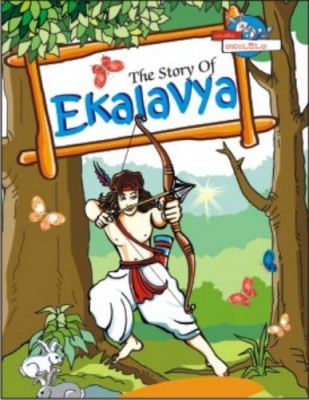
story of ekalavya

STORY No.2
Ekalavya was the son of Hiranyadhanu, a tribal chief. Having come to know of the greatness of Drona as a teacher, Ekalavya tried to enrol himself as a pupil. But Drona declined to accept him, because he was teaching the royals-Pandavas and Kauravas.
Ekalavya then went into the forest and erected a statue of of Drona. He imagined the statue as his guru and derived inspiration from the statue. He mastered the art of archery and became a great archer.

Once the Kaurava and Pandava princes saw a dog whose mouth had been skilfully closed by a number of arrows that he could not bark. Admiring this unique feat they looked around for the archer. They found out Ekalavya was the archer. When they enquired him who his teacher was, he told that he was a pupil of Drona. It came as a surprise for them. Arjuna was upset because he was told by Drona that he was his best student. But here he saw a person who excelled him in the art of archery. When Drona was informed of all these things, he came to Ekalavya. Ekalavya was thrilled to meet his ‘Guru’in person. But Drona demanded his right thumb as Guru Dakshina( Fees to Guru). Ekalavya did give his thumb without any hesitation. Without his right thumb he was not able to shoot the arrows as before. Here wee see one’s devotion to Guru and a person’s mental power to obtain any thing. He just imagined an earthen statue as his Guru and attained the unachievable for a layman. This story is also in Mahabharata(Parva1, chapter132).

pusalar2

STORY No.3

Here is story from the Tamil book ‘Periya Puranam’ about a saint who built a temple in mind and consecrated it mentally. Pusalar was born in a Brahmin family at Tiruvarur.
He was a great devotee of Lord Siva and he wanted to build a temple for Him. He sought every means to find the money required for this purpose but was unsuccessful. Nothing daunted, he resolved to erect a temple in his own heart. He gathered all the necessary materials to build a temple in his mind. He chose an auspicious day and laid the foundation stone and the temple rose slowly higher and higher day after day. When he finished it building mentally, he fixed a day for the great Kumbabishekam (ceremonial consecration).

About this time the all powerful Pallava king had built an actual temple at Kanchipuram-the famous Kailasanathar temple at Kanchi. He expended all his wealth on its construction. He fixed the same day for consecration of the actual temple. But Lord Siva appeared in his dream and told him that he could not come on the day because Pusalar Nayanar had built a temple and the Kumbabhishekan was on the same day. The king had to postpone his Kumbabishekam. But he became curious about the other temple built by Pusalar. The king travelled to Tiruninravur and asked the way for the temple. The people of the town told him that there was no new temple or any Kumbabhishekam in the town. The king told them that he had a dream and Lord Siva told him that there was a temple built by one Pusalar. When they brought Pusalar in front of him the whole story unfolded in full. Pusalar was thrilled to know that Lord Siva recognised his temple built in heart better than the temple built by the king in stone. Such is the greatness of thought power.

This is a marvellous story. It shows that our forefathers knew more about the mind than what the modern psychologists knew today.

ascetic good

STORY No. 4

Here is a beautiful story narrated by Sri Ramakrishna Paramahamsa:
A saffron clad sanyasin(ascetic) dwelt by the side of a temple. There was the house of a harlot in front. Seeing the constant concourse of men in the prostitute’s house, the sanyasin one day called her, saying’’You are a great sinner. You sin day and night. Oh, miserable will be your lot in your next life’’. The poor prostitute became extremely sorry for her misdeeds, and with genuine inward repentance she prayed to god beseeching forgiveness. But the prostitution was he profession, she could not adopt any other means of earning her livelihood. And so, whenever her flesh sinned, she always reproached herself with greater contrition of heart and prayed to god for more and more forgiveness.

The sanyasin saw that his advice had apparently produced no effect upon her and started counting the number of people visiting her every day. He did it by putting one pebble stone for every customer in front of her house. In course of years it became a big heap.
He chided her now and then showing the heap of stones/her sins. Now she started praying more intensely asking for forgiveness. The final day came. By rare co incidence both the sanyasin and the prostitute died on the same day. The messengers of Yama(God of death) took the sanyasin to hell and the prostitute to the heaven!! The sanyasin was furious to see this and demanded for explanation. The messengers laughed at him and told him’’You passed your life in external show as a sanyasin. Your heart never sincerely yearned for god. You spent more time in counting the sins of others. But this poor prostitute earnestly prayed to god day and night, though her body sinned all the while. She was pure in heart. You were not pure in mind/heart.

This story lays more emphasis on good thoughts rather than good external rituals.

tales_of_narada_acl56

SDTORY No.5

Once Narada (messenger in the Heaven) approached Lord Vishnu and asked who his best devotee was. He expected the answer to put him as the best. But to his surprise Lord Vishnu said that Arjuna was his best devotee. Narada was not satisfied with his answer. The Lord knew what went in Narada’s mind. Narada doubted the integrity and impartiality of the Lord. So Lord showed Narada two heaps of flowers and started explaining ‘’Look at the small heap of flowers. That is yours. What you have offered me all through your life is saved there. Look at the hill of flowers there. That is Arjuna’s. Now Narada became even more suspicious. He boldly opened his mouth to say, Well, I am Triloka Sanchari (Traveller of the three worlds). I have never seen Arjuna doing Puja (flower offering) to you. How do you explain this hill of flowers? Then Lord told him, you do the puja with your hands with great pride in your mind. But Arjuna does it in his mind. Whenever and wherever he sees beautiful flowers, he dedicates them to me saying ‘Krisna arpanam astu’(Let all this go to Krishna). Narada realised that open rituals are far inferior to great mental purity.

astrologer
STORY NO.6
Here is another story from the excellent magazine called Tatvaloka (March 2004):
There was a famous astrologer in a village who mastered the art of astrology and palmistry. One day a farmer came to see him to know about his future. The astrologer examined the lines on his palm and found out that he might die in an accident that day. He did not like to reveal this to the farmer, as that would shock him. So he told the farmer to come and see him the next day. While the farmer was on his way home, there was heavy rain with thunder and lightning. The farmer took shelter in a temple of Lord Siva. When he saw the temple in ruins, he said to himself, ‘’if I was rich I would have renovated this temple.’ Then he started imagining the renovation and reconstruction of the temple. He was mentally constructing a new temple tower and a huge corridor, with carved pillars. But he was brought out of his dreamy status by the hiss of a cobra coming out of a hole in the broken wall.

His imagination of building a temple broke to pieces and he ran out of the dilapidated temple to save his life. The next moment a massive lightning struck the temple and the huge edifice, heavy stone pillars, all collapsed.. The farmer thanked the god for saving him and next day he met the astrologer. ‘’Your palm lines indicated a danger for your life yesterday. You should have accumulated great amount of punya by constructing a temple and so you are alive today. The farmer realised the mercy of god who had granted him his life for building an imaginary temple. Every good thought is considered by god as a good deed and one gets the benefit of it.

Who is Chitra Gupta?

Every thought counts. Our grandmas and grand dads say that Yama’s accountant maintain the accounts of sins and meritorious deeds of all human beings.
Yama’s accountant is Chitra Gupta. Translated in to English it means ‘’hidden picture’’.
That is our thoughts. It is like Issac Newton’s law of motion- there is an equal and opposite reaction for every action. Our thoughts are accounted. On the final day you are rewarded or punished. How scientific is Hinduism!!!

Let us all Think Good. Let us all Aim High.
************************************************************************