My Visit to Sydney Shakti Temple and Lisgar Gardens (Post No.15,356)

Written by London Swaminathan

Post No. 15,356

Date uploaded in Sydney, Australia –  24 January 2026

Contact – swami_48@yahoo.com

Pictures are taken from various sources for spreading knowledge.

this is a non- commercial blog. Thanks for your great pictures.

tamilandvedas.com, swamiindology.blogspot.com

xxxx  

 My Visit to Sydney Shakti Temple and Lisgar Gardens (Post No.15,356)

During my last two visits to Australia, I covered Sydney Murugan Temple, Venkateswara temple and Nantien (Wollongong) Buddhist temple. This is my third visit and so I decided to explore new temples in New South Wales state in Australia. We went to Sydney Shakti temple, also called Durga Temple, yesterday. It is a small temple started by Hindus from Fiji Island country in the 1990s. The present temple building was constructed in 2010. Since it is in a residential area, the opening times are restricted by the local council. It is opened two hours in the morning and two hours in the evening.

In spite of restricted hours, devotees visit the temple in good numbers. I saw a constant flow of devotees entering and leaving the temple. On either side of the tall and attractive main deity Shakti, it has Lord Ganesh and Lord Skanda (Murugan in Tamil). It is a small hall which can accommodate 150 people. All the Hindu festivals are celebrated here. During weekends and festival days the opening hours are extended. It is better to consult the temple website for precise information.

Shiva linga, goddess Meenakshi are also worshipped in the main hall. Devotees come with plates filled with flowers and fruits and do the Archana through the priest there. Outside the main hall there is a shrine with Navagrahas (Nine Planets). In the outer prakara/corridor Hanuman statue is also installed. One big hall is there for Ayyappa Puja.

The temple wall is decorated with different forms of goddesss such as Bhuvaneswari, Visalakshi, Mariamman. One needs just half hour to complete the Darshan / viewing.

Following are the contact details:

Sydney Shakti Temple

271, Old Windsor Road, Old Toongbbie, NSW 2146.

Telephone- o2 9636 1171

Website – www.sydneyshakti.org

Photography is not allowed inside the temple.

***

My Visit to Lisgar Gardens

In the heart of busy shopping area in Hornsby Shire council in Sydney we have a beautiful gardens spreading over 6.5 acres.  It is very near the Westfield shopping mall. It is a woody area bought and developed by Max Cotton about 150 years ago. It is famous for two things:

70 Varieties of Camellia Plants

Water Lizards known as Eastern Dragons

Max Cotton loved camellia flowers and so he planted 70 different varieties of the plants. Now there are 300 such plants.

The day before the temple visit, we went to Lisgar Gardens. Though we saw only few flowers, the woody area with creeks, streams and small waterfalls allowed us to breath fresh air.  We could smell the fragrance of the flowers. We also saw the water lizards. The eastern water dragons grow up to 90 CMS. The Hornby Shire council bought these gardens and opened it for public. It looks like a forest and one has to go down and down. Those who are adventurous can take the loop walks and go deeper into the bushes.

The garden is closed at 5 pm and signposted to guide the visitors. A surprising thing in Australia is there are well maintained gardens and woody areas very near the cities. Public are not even allowed to cut native trees even inside their houses.

–subham—

Tags- My visit, London swaminathan, Sydney Shakti temple, Lisgar Gardens, Water Dragons, Lizards, Camellia flowers
NUMBER SEVEN IN RIG VEDA, GREECE, AUSTRALIA, CHINA AND MIDDLE EAST (Post No.6928)

SAPTA MATA OR SAPTA KANYA IN INDUS SEAL

WRITTEN BY LONDON SWAMINATHAN
swami_48@yahoo.com

 Date: 24 AUGUST 2019  

British Summer Time uploaded in London – 17-35

Post No. 6928

 Pictures are taken from various sources; this is a non- commercial, educational blog; posted in swamiindology.blogspot.com and tamilandvedas.com simultaneously. Average hits per day for both blogs 12,000.

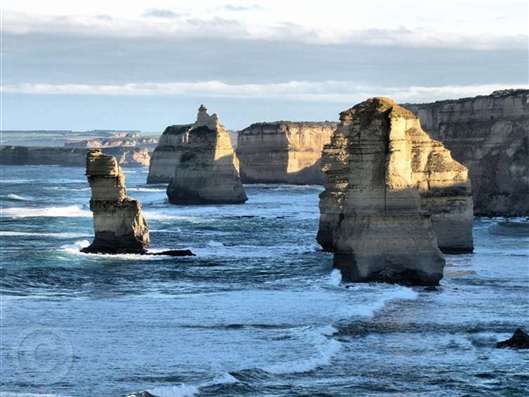
Seven Sisters in Melbourne, Australia

Seven in Rig Veda

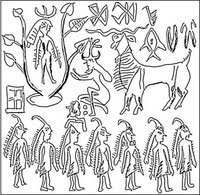
Seven is the most sacred number for Hindus. Anything holy, they count in seven, whether it is hills, rivers, forests, cities, holy women or holy men to remember (sapta kanya, sapta nadhi, sapta Rishi, sapta mokshapuri, sapta aranya etc). Seven is found in largest number of seals in Indus valley. The Seven Sister seal in the Indus is a famous one. Most of the Hindu temples have Sapt Kanya/ seven women statues in South India. The story of Seven Sisters is there in several parts of the world from Australian aborigines to ancient Greeks.

Mr Dave even identified seven birds in Rig Veda as seven sisters known to Bengalis (Bengalis call these seven birds as seven sisters). Birds in Sanskrit Literature by K.N Dave

Varunan with seven sisters is found in Rik Veda 8-41

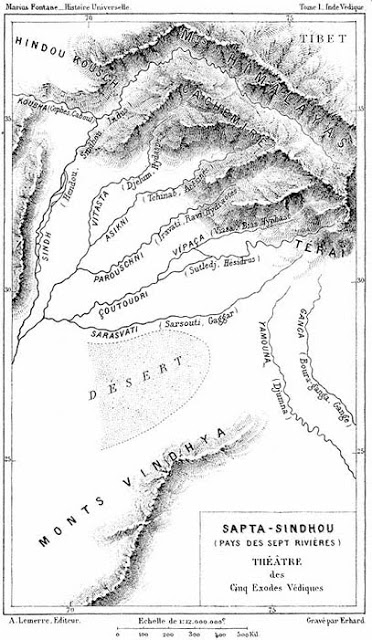
Seven rivers of Punjab are mentioned in Rig Veda as Sapta Sindhu.

“Seven to the one-wheeled chariot yoke the Courser ;bearing seven names the single Courser draw it.

Three-naved the wheel is, sound and undecaying, whereon are still resting alhese worlds of being.”- 1-164-2

“The seven who on the seven wheeled car are mounted to have horses, seven in tale, who draw them onward.

Seven sisters utter songs of praise together, in whom the names of the seven cows are treasured.”- 1-164-3

Seven Sisters seal is found in the Indus valley civilisation as well.

The Seven: according to Sayana, the seven solar rays, or seven divisions of the year.

Seven sisters: Probably the seven celestial rivers, which as emblems of fertility may bear the name of cows.

Seven Vedic Metres including Gayatri are mentioned by the poet.

Hymn 1-164

Dirgatamas’ hymn 1-164 is one of the longest hymns the Rig Veda. He talks about various subjects in a coded language with lot of symbolism.

In the hymn, mantra 24 refers to the seven speeches

Mantra 24 points out that this faculty of speech is found only in the human beiges.

Mantra 45 gives information about the divisions of speech. Grammarian Patanjali and others also discussed this in detail.

Hymn 4-58

Patanjali referred to part of this hymn. The four parts of speech are explained here. Patanjali discusses seven cases and the three originating centres of pronunciation.

Hymn 8-59

Some of the most prominent observations of this hymn are as follows:

The ultimate truth is brought forth through the medium of seven-fold speech

These seven folds or divisions of speech are seven sisters of the ultimate truth

Speech protects us through its seven physical and three temporal divisions. And

three chief aspects of speech-behaviour are mental, and intellectual faculties, coupled with the acquired knowledge.

Hymn 10-71

This hymn is most important and is solely devoted to the linguistic observations alone, some of which are as follows:

An initial expression of name is indicative of a wholesome integrated expression of the accumulated ideas in the speaker’s mind. Thus, it originates as a representative of complete statement.

The emotions are desires of the Self are filtered in the mind, from where it takes the shape of words or speech, which is expressed externally with the help of the articulatory forces.

Thus, a word takes its usable form first in one’s mind which is then pronounced from seven places and in different tones.

Speech and language are not only the objects ears and eyes alone; no one can understand it without the help of mind, the sharpness of otherwise of which makes the difference in one’s power of understanding.

With only training and knowledge, we can learn the correct usage of the language and avoid its misuse, generated mostly from our ignorance.

Hymn 10-114

In at least six verses of this hymn, different aspects of linguistic phenomenon have been discussed. In the fourth and fifth verses, the principle of multiple exprepressibility of one and the same truth has been stressed explicitly. The seventh verse declares that the seven fold speech is capable to express all expressible forms.

xxx

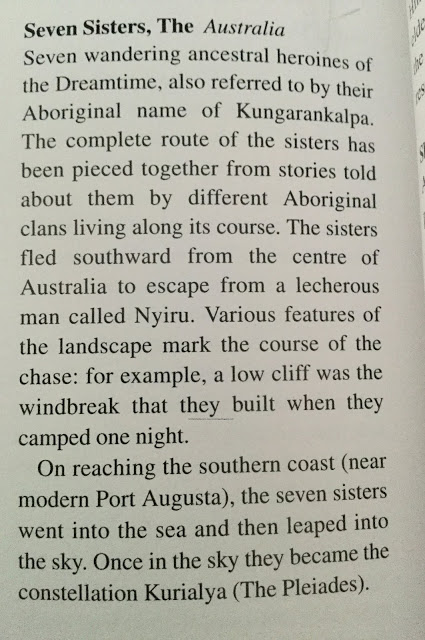
Story from Australia:

Seven wandering ancestral heroines of the Dream time, also referred to their aboriginal name KUNGARANKALPA. The complete route of the sisters has been pieced together from stories told about them by different aboriginal clans living along its course. On reaching the southern coast, the seven sisters went in to the sea and then leaped in to the sky. Once in the sky they became the constellation KURIYALA (The Pleiades). Hindus call this six Krithikas. Westerners call this constellation Seven Sisters. This tallies somewhat with Hindu counting One Skanda+looked after by six sisters=seven).

Ancient San Rock paintings in South Africa have seven women as a group.

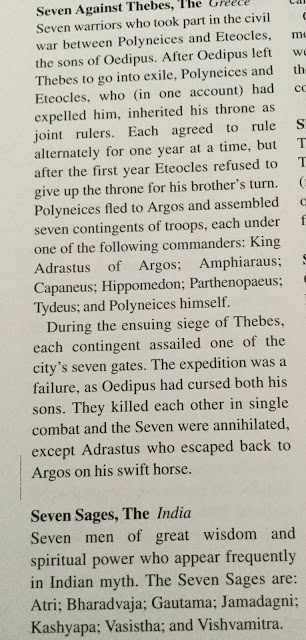
IN GREECE AND INDIA
SEVEN SISTERS IN AUSTRALIA
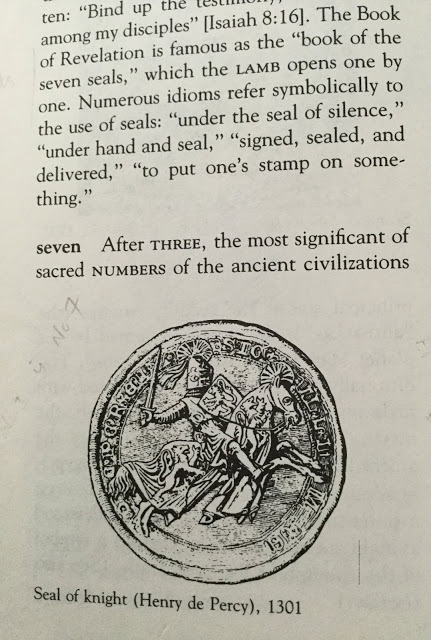
SEVEN IN BIBLE
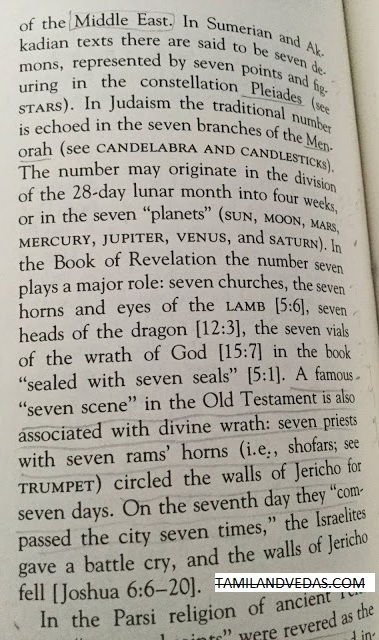
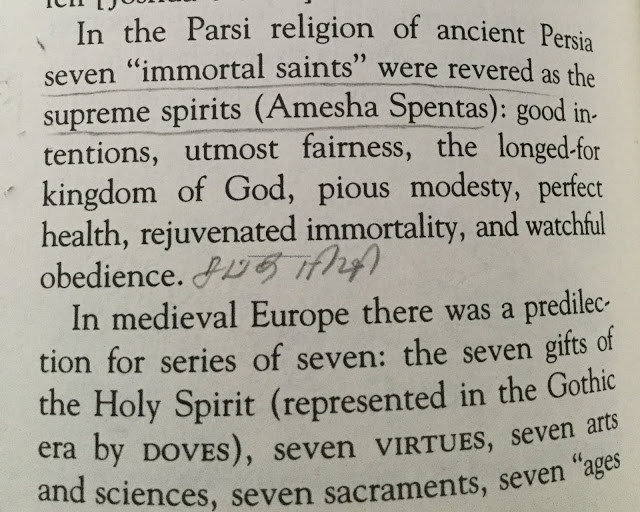
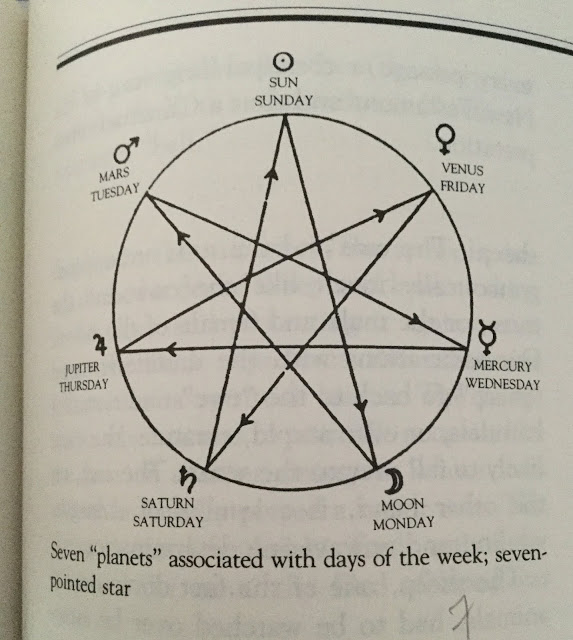
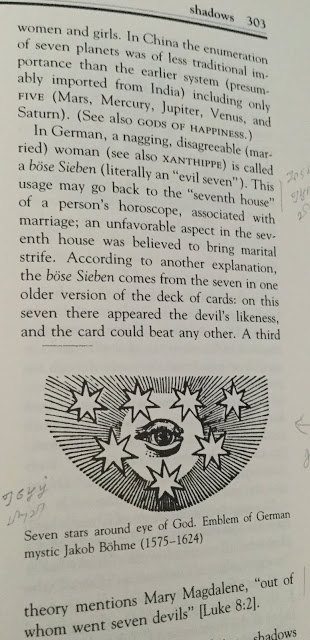
SEVEN IN MIDDLE EAST
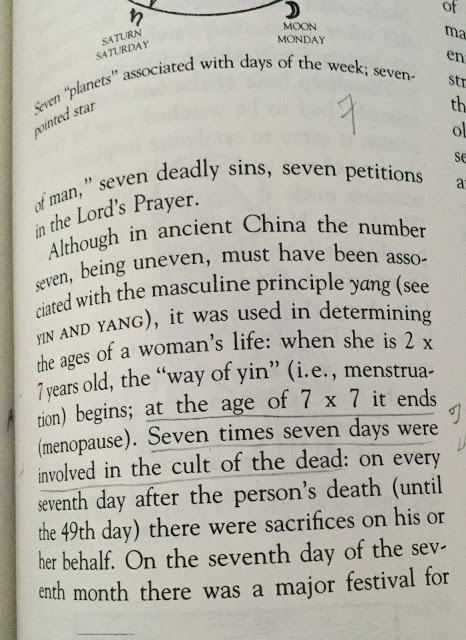
SEVEN IN CHINA
SEVEN IN GERMANY
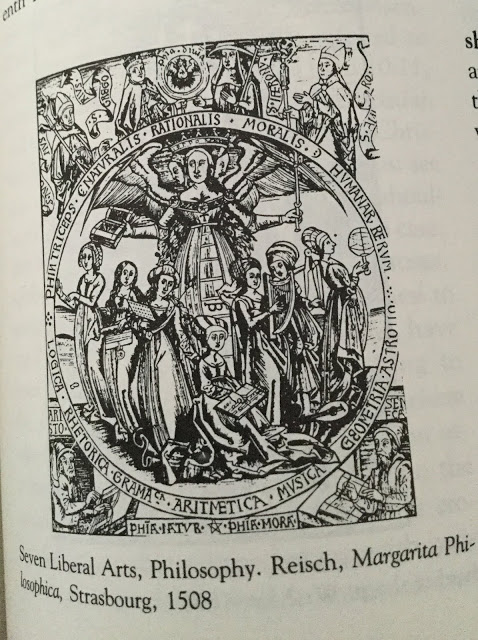
SEVEN LIBERAL ARTS