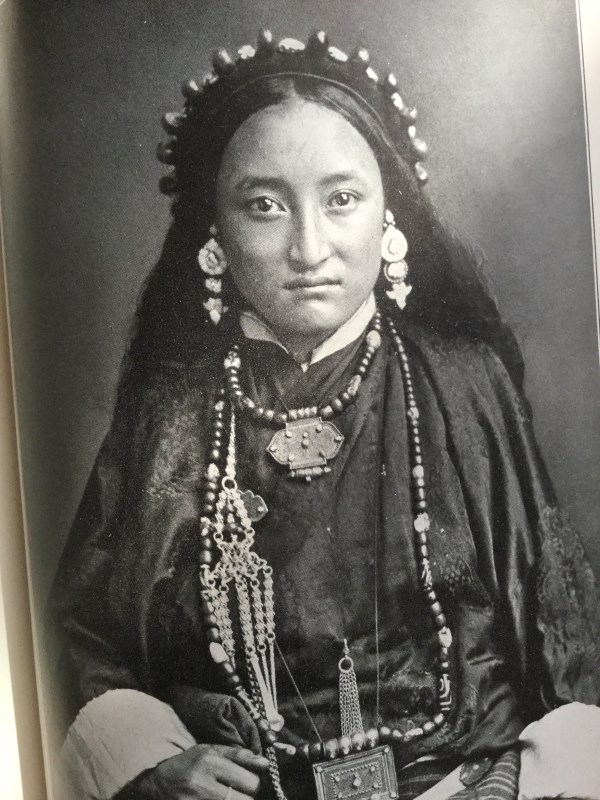
Picture of a Lama Woman
Research Article Written by London swaminathan
Date:25 July 2016
Post No. 3002
Time uploaded in London :– 20-45
( Thanks for the Pictures)
DON’T REBLOG IT AT LEAST FOR A WEEK! DON’T USE THE PICTURES; THEY ARE COPYRIGHTED BY SOMEONE.
(for old articles go to tamilandvedas.com OR swamiindology.blogspot.com)
Part 7 was published here on 11th of July. First part contains a detailed introduction.
Following are taken from the People of India written by Sir Herbert Risley, Director of Ethnography for India, Year 1915 with my comments

Kaamaars, Blacksmiths of Bihar (Plate 28)
Lohaars , the ordinary blacksmiths of Northern India working in iron only, whereas Kaamaars work on iron and gold as well. I Eastern Bengal they make brass cooking vessels as well. Hence they hold a higher rank than the Lohaars, and Brahmans will take water from their hand. They pride themselves on not allowing their women to wear noserings. Like other artisan castes, they worship Visvakarma, the Divine architect of the Universe, who is often represented by the hammer, anvil, and other tools used in their handicraft.
My comments:-
First, note the caste names Kaamaars and lohaars are Sanskrit names (Karmaara, Loha kara)
If they are non Aryans, if they are Shudras, why there are so many differences between themselves? If they are Dravidians, how come they worship Visvakarma, the Vedic God? So the division of Aryan- Dravidian is a pure concoction of foreigners.
Lama Woman, Mongoloid Type, (Plate 30)
Laama is a Tibetan word meaning “Superior One”, and was formerly restricted to the head of a monastery. It is now strictly applicable only to abbots and to the higher class of Buddhist monks. In many places the first born son is often dedicated to the profession of religion. As in the case of the lady in the illustration, to use the words of Lt.Col. Waddel , “Their inveterate craving for material protection against malignant gods and demons has caused them to pin their faith on charms and amulets, which are to be seen everywhere dangling from the dress of every man, woman and child.
My comments:
Their beliefs, customs and jewels are completely different from other communities. They are classified as of Mongoloid race. What makes them Mongoloid? Customs? Facial features? Amulets and Charms are even in the Atharva Veda. First son is dedicated to religion/ Is it Aryan or Dravidian? All the divisions are artificial and man-made. Differences are there in every big geographical area. Great Britain has four prominent ethnic groups: Scottish, Welsh, English and Irish. But they are united under British. The same people who merged ethnicities under the term ‘British’, divided Hindu races as Aryans, Dravidians and Mongolians etc.
Totemism in Bengal
One more instance of totemism in Bengal deserves special notice here, as it shows the usage maintaining its ground among people of far higher social standing than any of the castes already mentioned. The Kumhaars of Orissa take rank immediately below the Karan or writer caste, and thus have only two or three large castes above them. They are divided into two two endogamous sub castes – Jagannathi and Oriya Kumhars who work standing and make large earthern pots, and Khattya Kumhars who turn the wheel sitting and make small earthern pots or cups.
For matrimonial purposes the Jagannathi Kumhars are subdivided into the following exogamous sections:–
Jagannathi Kumhaar
Name of Section – Totem
Kaundinya – Tiger
Sarpa – Snake
Neul – Weasel
Goru – Cow
Mudir – Frog
Bhadbhadria – Sparrow
Kurmaa – Tortoise
My comments:-
Even the potters’ castes have Sanskrit totem names and caste names. Foreigners could not digest this. They are considered lower in rank, “Dravidian” in appearance! But have Rishi’s name (Kaundinya) and Sanskrit caste names (Kumhaars = kumbakara). Foreigners struggled to find a reason and at last aid “ probably they borrowed” them. This is how they fooled all Indians and divided India into races and classes.
In the next article I will list all the Vedic Tribes.
To be continued……………..
 Tamil and Vedas
You must be logged in to post a comment.