பொன் (அயஸ்) என்றால் என்ன?

(English version of this article is already posted in the blogs: swami)

பொன் என்றால் என்ன? தங்கமா? இரும்பா? ஐந்து உலோகங்களில் எதையும் பொன் என்று கூறலாமா?

பொன் என்றால் இரும்பு, தங்கம், ஐந்து உலோகங்களில் எதையும் குறிக்கலாம். இதனால்தான் கோவிலில் உள்ள சிலைகளை ஐம்பொன் சிலைகள் (பஞ்ச லோக) என்று கூறுகிறோம். தற்கலத்தில் பொன் என்றால் தங்கத்தை மட்டுமே நம் நினைத்துக் கொள்வோம். பொற்கொல்லர் என்பது தங்க வேலை செய்வோரை மட்டுமே குறிக்கும்.

திருக்குறளில் இரண்டு பொருள்களிலும் வள்ளுவர் பயன்படுத்துகிறார். “தூண்டில் பொன் மீன் விழுங்கியற்று” என்னும் இடத்தில் இரும்பு என்ற பொருளிலும், “சுடச்சுட ஒளிரும் பொன்” என்ற இடத்தில் தங்கத்தையும் நினைவுபடுத்துகிறார்.

இதேபோலத்தான் ரிக் வேதத்திலும் அயஸ் என்னும் சொல் பயன்படுத்தப்படுகிறது. ஆனால் வெளி நாட்டு அறிஞர்கள் அனைவரும் இதை இரும்பைக் குறிக்கும் என்றும், இரும்பு பற்றி பேசுவதால் வேத காலம் சிந்து சமவெளி நாகரிகத்துக்கு பிந்தைய நாகரீகமென்றும் பிரசாரம் செய்து வருகின்றனர். வேதத்திலேயே கறுப்பு அயஸ் (இரும்பு), சிவப்பு அயஸ் (செம்பு) என்ற சொற்களும் உண்டு. ஆக முதலில் அயஸ் என்ற சொல்லைத் தங்கத்துக்குக்கூட பயன்படுத்தி இருக்கலாம். பொன் என்ற சொல்லை  தமிழர்கள் பயன்படுத்திவரும் முறையைப் பார்க்கையில் இது சாத்தியமே என்று தோன்றுகிறது.

“மா” என்றால் என்ன?

“மா” என்றால் மிருகம் என்று பொருள். இதை அரி+மா (சிங்கம்), பரி+மா (குதிரை), அசுண+மா (பாம்பு என்றும் வேறு ஒரு மிருகம் என்றும் கருதப்படுகிறது. ஆ+மா (காட்டுப் பசு), கல்லா+மா (குதிரை) என்ற பின் உறுப்புச் சொல்லாகப் பயன்படுத்துகின்றனர். அஸ்வ என்ற சொல்லும் இப்படி மா என்ற பொருளிலேயே துவக்க காலத்தில் பயன்படுத்தி யிருக்கலாம். “மா” என்ற தமிழ் சொல் தனியாக வரும் போது எப்படி இடத்தைப் பொருத்து பொருள் கொள்கிறார்களோ அப்படியே அஸ்வ என்பதற்கும் பொருள் கொண்டால் வேதத்தின் பழமை புலனாகும். ஆனால் மேலை நாட்டோர் எல்லா இடத்திலும் அஸ்வ என்பது குதிரையே என்று வாதிட்டு, சிந்து சமவெளியில் குதிரை இல்லாததால் வேத காலத்தை அதற்குப் பிந்தியது வாதிடுகின்றனர்.

துவக்க காலத்தில் அஸ்வ என்பது, ‘வேகம்’, ‘மிருகம்’ என்ற பொருளில் மட்டுமே பயன்படுத்தி இருக்கலாம். இது ஒரு புறமிருக்க சிந்து சம்வெளியில் குதிரை எலும்பு கிடைத்ததாகச் சொல்லுவோரும் சிந்துவெளி முத்திரைகளில் ஒற்றைகொம்புடன் காணப்படும் மிருகங்கள் குதிரையே என்று சொல்லுவோரும் உண்டு.

ஆக அஸ்வ, அயஸ் ஆகியன மிகப் பழங்காலத்தில் வேறு பொருள்களில் வழக்கில் இருந்ததாகக் கொண்டால் பல புதிய உண்மைகள் புலனாகும். வேதத்தில் வரும் சமுத்திரம் என்ற சொல்லை கடல் அல்ல ,வெறும் நீர் நிலையே என்று விதண்டாவாதம் செய்யும் மேலை நாட்டு அறிஞர்களும் உண்டு.

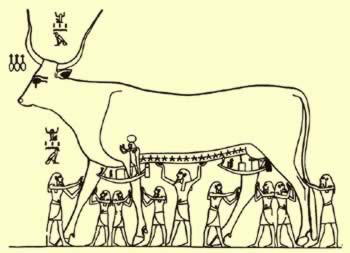
Vishnu in Egyptian Pyramids (Part 3)


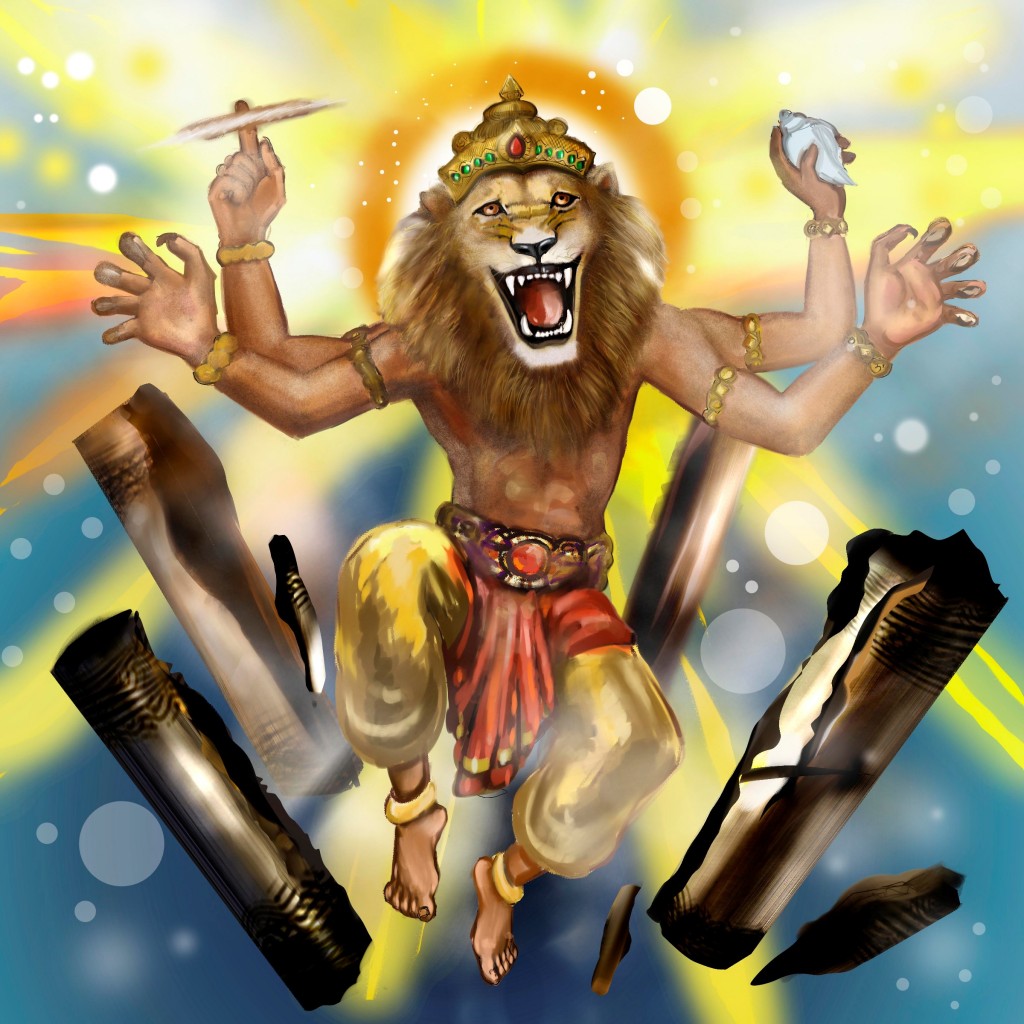
Top Picture: Vishnu’s Lion man incarnation

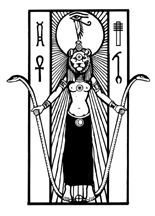
Bottom: Egyptian Goddess

Please read part-1:Did Indians build Egyptian Pyramids?

Part-2: Vedas and Egyptian Pyramid Texts before reading this part 3.

First sloka of Vishnu Sahasranama was in the Egyptian monuments. New Larouse Encyclopedia of Mythology (page 37) says:

“Today nothing remains of her (Neith) celebrated temple at Sais where Plutarch tells us, could be read the following inscription: ‘I am all that has been, that is and that will be. No mortal has yet been able to lift the veil which covers me’.

As soon as one reads the above quote, one will be reminded of Bhagavad Gita. The first sloka of Vishnu Sahasranama also describes Vishnu as “Bhuta, Bhavya, Bhavath Prabhuhu” meaning Vishnu was the master of past, future and present.

Hindus are the only race in the world that has this concept of time from time immemorial until today. Millions of people recite this Sahasranama and Gita every day. God is beyond time. Not only God but also god men also can go beyond time. We are one step ahead of Einstein.

(Please read my posts: Time Travel by Two Tamil Saints and Do Hindus believe in ETs and Alien Worlds? in my blogs).

This concept has travelled all the way to Egypt from India. The very God Plutarch (46-120 AD) talking about is Neith, a Tamil word. The Egyptian God name is Neith and the meaning in Egyptian is Weaver God (Tamil verb nei means weave).

Vaishnavism in Egypt

Some of the early pharaohs of Egypt like Khufu etc. of the IV dynasty are stated to have been wearing the Namam or the Vaishnavite caste mark. Some of the pharaohs are stated to have been wearing even the Dwathasa Namams on their body, donning the Jogi jeer cap and carrying the Sri Satari and clad in the short s Sanyasin’s garb (vide Egyptian myth and legend page 134, 368 etc and bible dictionary appended to the holy bible edited by the American revision committee page 38).

Some of the bushmen of Australia also are stated to have Vaishnavite caste marks .(please see wonderlands and new light by Sri Vaduvur Doraiswmy Iyengar’s book Wonderlands).

Vishnu’s vehicle Garudan (Falcon/Eagle) is seen in almost all the Egyptian monuments.

Lion Throne (Simhasanam)

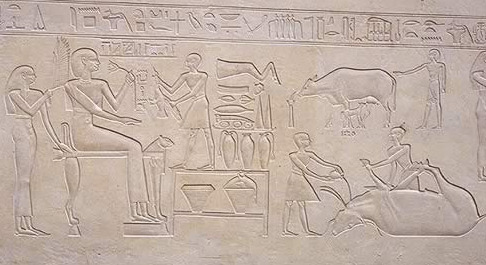
Sanskrit literature praises lion as the king of the forest. Brahmana literature also praises both tiger and lion as the leaders of the jungle. Simhasanam (Lion Throne) is a word used in India till this day. In other cultures they have no significance for it or a word for it. ‘Swayameva Mrugenthratha’ is a Sanskrit saying in praise of lion. We see Egyptian Gods and Queens sitting on Lion Thrones (see the picture). Relief from the limestone sarcophagus of Ashait, daughter of king Mentuhopte II, shows Ashait sits on a Simhasanam.

Another goddess is also portrayed like our Narasimhavatar (Lion faced Vishnu incarnation).

Saqqara Maze

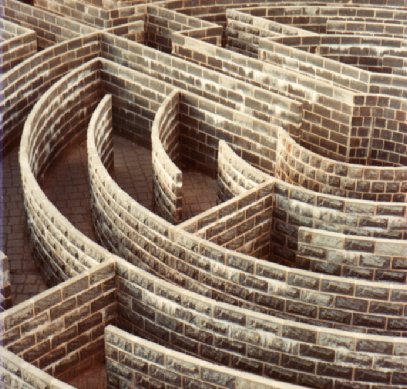
Saqqara is 25 kilometres from Cairo, capital of Egypt. Saqqara has step pyramid, one of the oldest stone structures in the world. Under the pyramid there are maze of tunnels. In Tamil there is a story about Mayil Ravanan. Any one enters his fort can never find one’s way out. It has got a complicated maze. My guess is Saqqara is named because of circular mazes underground. Archaeologists have found maze of tunnels. Chakra (the wheel) is one of the weapons of Vishnu as well.

Picture: This is NOT from Saqqara;this is to show how a maze looks like.


Origin of Egyptians and Sumerians

People of Egypt and Sumeria were very clear about their origin. They say they came from a far off island. A lot of scholars identify this place with Dilmun/Bahrain. They talk about pure, clean place. Sumerians also said the same and they called the god of sweet waters Enki. It may be Gangai. In Tamil Ganga becomes Gangai. All Sanskrit “a “ changes to “i” in Tamil.  In pyramid texts a foot and jar is shown to mean pure and clean. Hindus holy river Ganges comes from the head of Shiva and touches the foot of Vishnu and enters the plain. The footsteps are worshipped by the Hindus. The word Enki=Gangai and the footsteps point in the direction of Ganges. The association with purity and water is notable. Sanskrit is the only language in the world which has highest number of words for water.

(Please read my post 280 SANSKRIT WORDS FOR WATER)

Vedic people are the only race in the world who never claimed of any foreign origin. They claim every bit of India as their own and holy. But the foreigners who tried to disintegrate India said that they came from outside. When they found Sanskrit names around the world, instead of saying Hindus went there, they said Hindus came from those places. If they give five points in support of this curious theory, there are 95 points against this. Only Now Indians are slowly waking up and thinking of re writing their history. They are exploding the myth of Aryan Dravidian Invasion theory with NASA evidence of Saraswati River etc.

Dancers and Musicians

Dancers and musicians portrayed in some of the Egyptian paintings look like Indians. Two dancers and four musicians in the painting from Nebamum tomb at Thebes (1400 BC) resemble Indians.

Limestone relief from El Amarna showing King Akhenaten with his wife Nefertiti making offerings to Aten resembles the posture of Sandhyavandhanam.

Apis Bull resembles Nandhi of Hindu Shiva temples. Bull and cow were worshipped in Egypt.

Funeral customs

Not only the Book of Dead but also the funerary customs have striking similarities with Hindu customs. In India, on the tenth day after the death of a near and dear one, the eldest son donates more than seventy different things to the priests for the sake of safe passage of the soul. One of them is a cow and another is a boat. The cow is to guide the soul in the right direction and the boat is to cross the river Vaitarani in the hell. Egyptians also show a cow and a boat in the funerary monuments.(See the picture and description in Aryatarangini by A Kalyanaraman-Volume 1).

Continued in Part 4…………………..contact swami_48@yahoo.com

If you are interested in the worship of Vishnu in India also read my posts: Vishnu in Indus Valley Civilization and Secrets of Vishnu Sahasranama.

**************

வானில் நாம் காணும் அர்ஜுனனும் திரௌபதியும்

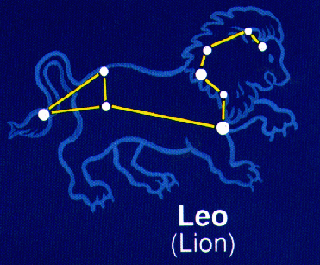
Picture shows Simha (Leo) Rasi

பூரம் உத்தரம் ஆகிய இரு நட்சத்திரங்களும் சிம்மம் கன்னி ராசிகளில் உள்ள நட்சத்திரங்கள்..இவற்றை டெல்டா மற்றும் தீடா லியோ என்றும் பீடா மற்றும் 93 லியோ என்றும் நவீன வானவியல் குறிப்பிடுகிறது. பீடா லியோ, டெனிபோலா எனப்படுகிறது. இவை வெண்மை நிற நட்சத்திரங்கள். இவையே வெண்மை நிறத்தவனான பல்குனனுடன் தொடர்பு கொண்ட நட்சத்திரங்கள். பூரத்திற்கு அர்யமாவும் உத்தரத்திற்கு பகாவும் அதி தேவதைகள். பங்குனி மாதம் பல்குனி நட்சத்திரத்தில் பிறந்ததால் பல்குனன் என்ற பெயரை அர்ஜுனன் பெற்றான்.


நட்சத்திர அதிசயங்கள்


வானில் நாம் காணும் அர்ஜுனனும் திரௌபதியும்

ச.நாகராஜன்

அர்ஜுனி நட்சத்திரம்!


ரிக் வேதம் பூர்வ பல்குனி நக்ஷத்திரத்தை ‘அர்ஜுனி’ என்றே குறிப்பிடுகிறது. (ரிக் வேதம் X.85.13)உலகின்  முதல் இலக்கியமான வேதம் மிகமிகப் பழையது.அதில் அர்ஜுனனைப் பற்றிய குறிப்பு வருகிறதென்றால் மகாபாரதத்தின் பழமையைப் பற்றித் தெரிந்து கொள்ளலாம். வேதம், பூரம் எனப்படும் பூர்வ பல்குனியை ‘அர்ஜுனா பல்குனா:’ எனக் கூறுவதோடு அது இரண்டு நட்சத்திரங்களை உடையது எனக் கூறுகிறது. அர்ஜுனன் என்ற வார்த்தைக்கு வெண்மை என்று பொருள்.இந்த நட்சத்திரங்கள் இரண்டும் வெண்மையாக இருப்பது ஒரு சுவையான செய்தி! இவை இரண்டையும் சேர்த்துப் பார்த்தால் அர்ஜுன மரம் போலத் தோற்றம் இருப்பது தெரிய வரும்! இந்த அர்ஜுன நட்சத்திரத்தின் அருகில் தான் துருபத நட்சத்திரம் காணப்படுகிறது!

சப்தரிஷி மண்டலத்தில் உள்ள 17ம் எண் உடைய நட்சத்திரம் 60 வருட சக்கர சுழற்சியைக் கொண்ட இரட்டை நட்சத்திரம் ஆகும். இந்த சக்கரம் அர்ஜுனனுக்கு மேல் சுழன்று வருவதால் அது தான் அவனது இலக்காக அமைகிறது! அந்த மீனின் கண்ணில் அவன் அம்பை எய்தால் அவன் திரௌபதியை அடையலாம்! இந்த அர்ஜுனி நட்சத்திரத்தில் தான் முன்பு திருமணங்கள் நடைபெறுவது வழக்கமாக இருந்தது!


கன்யா ராசியின் ஆறு நட்சத்திரங்கள்


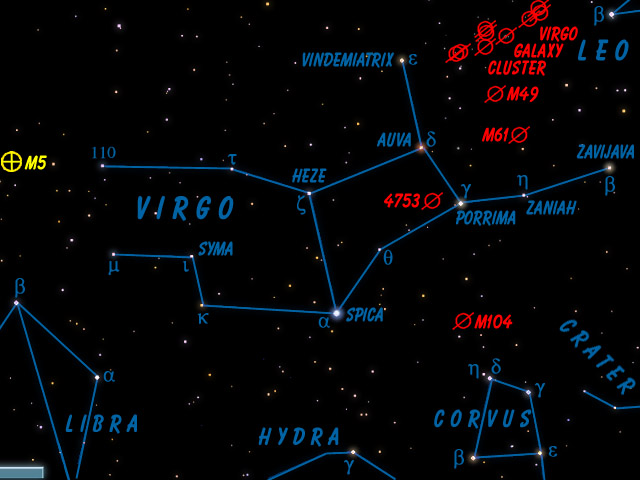
வானத்தில் கன்யா ராசி மண்டலத்தில் ஆறு நட்சத்திரங்கள் உள்ளன. இவற்றில் பெரும் மர்மங்களும் சுவையான செய்திகளும் அடங்கி உள்ளன!இந்த ஆறு நட்சத்திரங்களில் பெரும் தவத்தைச் செய்து ராமனின் அருளைப் பெற்ற சபரி நட்சத்திரம் அமைவது குறிப்பிடத்தகுந்தது. பெரும் தவத்திற்குரிய இடமான சப்தரிஷி மண்டலம் அருகில் சபரிக்கு உரிய இடம் கிடைத்திருப்பது நியாயம் தானே! ஆறு நட்சத்திரங்களில் முதல் நட்சத்திரம் நீலம் கலந்த வெண்மையுடனும், மூன்றும் ஐந்தும் மஞ்சள் நிறத்துடனும் ஆறாம் நட்சத்திரம் சிவப்பாகவும் ஐந்தாம் நட்சத்திரம் வெண்மையாகவும் காணப்படுவதால் இவை விசித்திரமானவை எனக் குறிக்கப்படும் சொல்லான ‘விசித்ரா’ என அழைக்கப்படுகின்றன. இதில் ஐந்தாம் நட்சத்திரம் (சூர்யனின் ஒளி போன்ற மஞ்சள் நிறத்தை உடையவளான) திரௌபதியாக  அடையாளம் காட்டப்படுகிறது!


வானிலே திரௌபதியின் இடத்தைக் காணும் தர்மர்


மஹாபாரதம் ஸ்வர்க்காரோஹண பர்வத்தில் பூமியில் தம் கடமையை முடித்த பாண்டவர்கள் அனைவரும் வானில் தம் தம் இடத்திற்குச் செல்வதை விரிவாகக் குறிப்பிடுகிறது. (நான்காம் அத்தியாயம்- கோவிந்தன் அர்ஜுனன் ஆகிய இருவரையும் ரிஷிகள் புடை சூழ்ந்த இடத்திலும் பன்னிரெண்டு சூர்யர்களோடு கர்ணனையும், மருத் கணங்களோடு சூழப்பட்ட வாயுவின் அருகில் பீமனையும் அஸ்வினீ தேவர்களின் ஸ்தானத்தில் நகுல சகாதேவர்களையும் பார்க்கிறார்)ஸ்வர்க்க வழியில் செல்லும் தர்மர் ஒவ்வொருவருடைய இருப்பிடத்தையும் இவ்வாறு பார்த்த பின்னர் திரௌபதியின் இடத்திற்கு வந்து அவளைப் பார்க்கிறார். மகாபாரதம் கூறும் சுலோகங்களைப் பார்ப்போம்:

Picture shows stars in the constellation of Virgo (Kanya rasi)

“தாமரை மலர்களாலும் குவளை மலர்களாலுமாகிய மாலையை அணிந்தவளும் ஸ்வர்க்கத்தை விளங்கச் செய்பவளும் சூரியன்  போன்ற ஒளியுள்ளவளுமாகிய திரௌபதியைப் பார்த்தார். அப்போது அவர் அவளைத் தொட விரும்பினார்.அப்போது இந்திரன் அவரை நோக்கி,”யுதிஷ்டிரரே! இவள் கர்ப்பத்தில் பிறவாதவளும் உலகங்களுக்குப் பிரியமானவளும் புண்ய சம்பந்தமுள்ளவளுமான லஷ்மி!இவள் உமக்காக திரௌபதி வடிவம் எடுத்துக் கொண்டு மானிடத்தன்மையை அடைந்தாள்.”


இவ்வாறாக, தனது கடமையை முடித்த திரௌபதி மீண்டும் வானில் தனது ஸ்தானத்திற்குத் திரும்புவதைப் பார்க்கிறோம்.

இத்தோடு கன்யா ராசியில் உள்ள இந்த நட்சத்திரங்களின் மீதான அடுத்த நட்சத்திரங்களின் ஆக்கிரமிப்பைக் குறித்து மேலை நாட்டு அறிஞர் ஆர்.பிரௌன், “கிரேக்க இலக்கியம் இகாரியஸின் மகளான எரிகோனின் ஆபரணங்களை அகற்றும் சம்பவத்தை இது நினவு படுத்துகிறது” என்று குறிப்பிடுகிறார், துச்சாஸனன் திரௌபதியின் துகிலை உரியும் சம்பவத்தை இத்தோடு ஒப்பிட்டால் நாம் வியப்பை அடைவோம்!


கான்பூரையும் கன்யாகுமரியையும் காக்கும் கன்யா மண்டலம்


கன்யா ராசி மண்டலம் கான்பூர்  எனப்படும் கன்யாபுரத்தையும் தென் கோடியில் அமைந்துள்ள கன்யாகுமரியையும் காக்கும் மண்டலமாகத் தொன்று தொட்டு நம் முன்னோரால் சொல்லப்பட்டு வருகிறதுதை நினைவு கூர்ந்து மகிழலாம்!


அர்ஜுனனும் சர் ஜேம்ஸ் ஜீனும் காணும் விஸ்வரூப தரிசனம்!


போர்க்களத்தில் கீதையை கண்ணன்  சொல்லக் கேட்ட அர்ஜுனன் திகைத்து, “பயங்கரமான உக்ரரூபத்துடன் இருக்கிறாயே!நீ யார்?” (ஆக்யாஹி மே கோபவான் உக்ர ரூபோ; கீதை 10-31)என்கிறான். அதற்குக் கண்ணன்,”உலகை அழிக்கும் வலிமை வாய்ந்த காலன் நான்!” (காலோஸ்மி லோக க்ஷயக்ருத் ப்ரவ்ருத்தோ; கீதை 10-32)என்கிறான்!


பிரசித்தி பெற்ற வானியைல் விஞ்ஞானி பயங்கரம் மற்றும் உக்ரம் என அர்ஜுனன் குறிப்பிட்ட ‘டெரர்’ (terror) மற்றும் டெரிபிக்(terrific) என்ற வார்த்தைகளால் பிரபஞ்சத்தின் விஸ்வரூபத்தை வானில் கண்டு பின் வருமாறு குறிப்பிடுகிறார்:-“ நமது பூமியைச் சுற்றி பரவி இருக்கும் பிரபஞ்சத்தின் நோக்கத்தையும் இயற்கையையும் கண்டுபிடிக்க முயலும் நமக்கு அது பயங்கரமாகத் தோற்றமளிக்கிறது! அதனுடைய அர்த்தமே காண முடியாத  பரந்த  தூரங்களும் கற்பனைக்கும் எட்ட முடியாத காலமுமே இந்த பயங்கரத்திற்கான காரணங்கள்! பிரபஞ்சத்தின் எல்லையற்ற காலத்தின் முன் நாம் கூனிக் குறுகுவதோடு மனித குல சரித்திரமே இமைக்கும் நேரத்திற்கும் கீழாக இருப்பதையும் காண்கிறோம். பரந்த வெளியில் மனித குலமாகிய நாம் மட்டும் தனித்து நமது வீடாகிய பூமியில் இருக்கிறோம்!உலகின் எல்லா சமுத்திர மணல்களையும் பிரபஞ்சமாக வைத்துக் கொண்டால் அதில் ஒரு சிறுமணல் துகளின் பத்து லட்சத்தில் ஒரு பகுதி போல நாம் பிரபஞ்சத்தில் இருக்கிறோம்!!”


அர்ஜுனன் கண்ட விசுவரூப தரிசனத்தில் அவன் பயந்து கூறிய அதே சொற்களை விஞ்ஞானி அப்படியே கூறுவது வியப்பை அளிப்பதாக இருக்கிறது.


விஞ்ஞானமும் புராணமும் ஒரே விஷயத்தை இரு வேறு வழிகள் வாயிலாகக் காண்பிக்கின்றன என்று பிரபல வானியல் விஞ்ஞானி டாக்டர் ஹெர்பர்ட் டிங்கிள் கூறியது மிகப் பொருத்தமாக அமைகிறது!


*********************************


MLECHA: Most misunderstood word

Mlecha: This is the word used from Indus Valley to the backward castes in India. The simple meaning is someone who is not the son of the soil. But it is not the only meaning. When it is used as a prefix for a language it simply means indistinguishable speech. It can be used as a derogatory term even among its own people.

There are two Greek words which can explain it better. If someone says something indistinguishable, I say it is Greek to me. I don’t mean it is Greek language to me. What I mean is it is not understood by me. This is what exactly conveyed when someone said ‘mlecha basha’.

Varahamihira uses this word for Greeks/Romans. When Vikramaditya defeated Mlechas he meant anyone who was not sons of the soil; in other words foreign invaders. Even the English language was called mlecha basha by the patriotic freedom fighters.

Greeks used the word Barbarians for all the Non-Greeks. This is what the Hindus meant when they said ‘he was a mlecha’.

Baluchistan= Mlechasthan= Meluha in Indus valley

Another interpretation for Mlecha is Baloochi people. Linguists knew M=B=V is interchangeable.

Nigel Lewis observation on Mlecha in his book ‘The Book of Babel’ is very interesting. He says “the Greek equivalent of barbarians was Aglossoi, the speechless, while the Poles  had the same idea about Germans, whom they called ‘niemiec’, the dumb people. The Turks got this word from the Poles and used it for the Austrians. Even Coleridge used it as nimiety with regard to Germans”.

“Commenting on the word vealh, oe wealh, the Barbarian British, or Welsh, Max Muller writes it is supposed to be the same as the Sanskrit mlekkha, and, if so,  it meant originally a person who talks indistinctly. Mlekkah has also been identified with ‘Beluchi’: a strange area of probable common ground between Beluchistan and the principality of Wales, whose very name was an Anglo Saxon insult”.

“Also insulting was the now defunct nickname for the Jamaican Jabbering crow, it was called the Welshman because according to Edward Long ‘with their strange , noisy gabble of guttural sounds’… they are thought to have much  the confused vociferation of a party of Welsh people”

-from ‘ The Book of Babel’

When the Rig Vedic people called some people ‘speechless’, what they meant was ‘those who didn’t speak our language’ (Sanskrit).

Tamils and Telugus also trade insults like this. Telugus called Tamils as aravas. This means ‘snake or noisy’. Another explanation is that the border area is known as Arauva nadu. Those who interpret Tamils as snakes say that the border area people were Nagas=snake worshippers people. Even today the Nellore District is full of snake statues. Another interpretation is Tamils are noisy speakers (like the Welsh mentioned above).

Mlecha in Mullaippattu:

In the Sangam Tamil literature we come across the word Mlecha in Mullaippaattu (line 66). Poet Napputhanar called the Yavanas as Mlechas. He described them as dumb who used only sign language. Lot of Roman or Greek bodyguards were used by the Tamil kings. Tamils called the Yavanas (Romans) ‘mlechas’ because they did not speak Tamil and they were from foreign soil.

Mlecha in Mahabharata: In the Adiparavam and Drona Parvam we come across the word Mlecha referring to an engineer (Purochana) who constructed the lac house and kings who fought in the Great Bharata War. They were all from the North West of India. Vidura was said to have spoken to him in the Mlecha language. (Government officials, traders and people in the transport business quickly learn languages. In Madurai in Tamil Nadu, Jatkawalas and Rikshawalas speak fluent Hindi, Maratti, Telugu etc. Necessity makes the man).

Mlecha and Meluha of Babylonian Literature

Indus Valley researchers are reading too much in the word MELUHA mentioned in Babylonian clay tablets. They think Meluha was Indus area and linked it with Sanskrit Mlecha. I think the tablets meant Beluchistan and not the Indus valley area.

Yavana: Yavana is used in Tamil and Sanskrit literature to mean Romans, Greeks and Arabs. Tamil literature has insulting remarks against Romans/Greeks. They are called dumb, rude and people of indistinct/rude language. I am pretty sure the Romans and Greeks would have made the same comments about Tamil 2000 years ago. Now the Telugus use that insulting word for the Tamils. Cheran Senguutuvan of Sangam period saved off the hair and poured oil on the heads of Romans to punish them.

The word Yavana  (Ionian) is directly mentioned in five places in Sangam Tamil literature.

DRAVID=Brahmins, Pandyas= Brahmins

The Dravidian political parties did a propaganda that the Brahmins came to Dravida country from the North. But the fact of the matter is Dravids in the North means only Brahmins. Non Brahmins from the South were not called Dravids. Pandyas in Gujarat are Brahmins. It is crystal clear this geographical name was used for Brahmins migrated to Andhra, Maharashtra, Gujarat and beyond.

In short, politicians and fake researchers are misleading Indians by misinterpreting many words such as Dravid, Mlecha, Asura etc. So laymen must be careful and discreet.

**************

AYAS and ASVA : Most Misunderstood Words

Foreign scholars have derailed the history of India by misinterpreting some words. Sanskrit and Tamil literatures are very clear about such words as Ayas, Asva, Mlecha, Asura, Rakshasa and Dasyu. Words of all the languages in the world lose certain meanings or acquire some new meanings in course of hundreds of years. Linguists knew it very well as historical change of meaning. But when it comes to Indian words they are adamant and stick to one meaning from the very beginning because it fitted very well in dividing the Indians on Aryan Dravidian basis. They wanted to perpetuate their rule and spread their religion. They had believed very strongly that the world was created just 4000 years ago, because the Bible says so! They even refused to translate certain portions of Vedas and Tamil Veda Tirukkural saying they were too sexy! Once again they thought that it is against Biblical injunctions.

I would like to take only a few words now.

Ayas: Ayas is iron. Rig Veda refers to it and so Rig Veda can’t be dated before Indus Valley Civilization is the argument of foreign scholars. It suited very well with the Marxist scholars (because Karl Marx spoke against India and Hinduism) and the Indian scholars who applied for jobs with the then British government controlled educational institutions. Even now our “scholars” are very scared that they won’t be invited or given any visiting professorship if they speak against the ‘accepted’ theories. Accepted by who? The great ‘scholars’ abroad.

In Tamil ‘ayas’ is translated as ‘PON’ in Sangam Tamil literature. But this word means all metals in Tamil. When they say that the temple idols are made with ‘Aim Pon’ it means five different metals or alloys. One single poet uses this word as gold and iron in the same book (Tiruvalluvar in Tirukkural).

If we apply the same rule to Rig Veda, Ayas may mean any metal. Thoguh in some places we get red Ayas for copper black ayas for iron, it may not mean iron in other places. But the translators translated it as iron in all the places where the suffix red is not found. This mislead all the new scholars.

Asva: The word ‘asva’ is translated as horse. Since Rig Veda is full of references to horse, it can’t be dated before the Indus valley Civilization is the view of foreign scholars. There was no horse seal in Indus valley. But there are scholars who argue that the unicorn seal is nothing but horse. They also point out that horse bones were excavated in the valley. But again the foreign scholars don’t agree with them saying it may be the bones of asses or onagers. If we translate asva as horse in all the places in the Vedas it doesn’t make any sense. So it may not be horse at all. It may mean fast, speedy, sun etc. Even if we argue asvamedaha yagna as horse sacrifice, it may not have been the same in the early ages. When Soma plant was not available they used different varieties as Soma plant. So horse may not mean the same. The word Samudra means ocean I Sanskrit. But foreign scholars that it did not mean sea at all!.

In Tamil the word ‘Pari ‘ is translated as horse. Ma is translated as animal. But the same word may mean various animals which has to be understood from the context. In addition, Ma has been used to denote other animals as well with a prefix:  Pari+ Ma, Kari+Ma, Ari+Ma, Kalla+Ma, Asuna+Ma.

If we apply the same rule, asva may mean any animal depending upon the context or the prefix or the suffix.


Kannaki and Andal Weddings

Kannaki & Kovalan pictures from Poompuhar Art Gallery;Picture courtesy: Vijayan

Three Beautiful Tamil Hindu Weddings- Part 2

( Please read first part before reading the second part: swami )

We saw, in the first part, the beautiful descriptions of two weddings that happened 2000 years ago in Tamil Nadu. Another beautiful wedding scene is in the Tamil epic Silappadikaram. This is the most famous epic of the five Tamil epics. The wedding scene of Kannaki- Kovalan is quite a contrast to the scenes from the Akananuru. Here we see the ceremony of going round the fire, Vedic Mantras etc. This is like a typical Tamil Brahmin wedding that is celebrated today. But Kannaki and Kovalan were the daughter and son of two big Tamil merchants. They were not Brahmins. They lived in a city famous for its maritime trade.

The author of the epic was poet Ilango. Like I mentioned in the first part, the wedding was celebrated sometime in the second century AD. But no linguist will date the epic at 2nd century AD. The style of the language, Sanskrit words and knowledge of various fine arts copied from Sanskrit sources—all point to fifth or sixth century AD. Since Vashista Mahrishi’s wife Arundhati is referred to as the chaste woman in Sangam Tamil literature in several places, fire ceremony may have existed in Sangam Time. Seeing Arundhati star in the night of the wedding day is part of Hindu wedding ceremony.

Let’s look at the wedding now:

“Fair maidens seated on an elephant’s neck were sent forth, to invite to the wedding all those lived in the great city. As they went forth into the streets, drums were beaten; mirudangams were sounded; conches were blown; and white umbrellas were lifted high in the sky as if in kingly procession. O, how enchanting was their entry into the pavilion, glimmering with the pearls beneath the canopy of blue silk and with dazzling pillars, decked with diamonds and beautified by overhanging garlands! This was the day the moon moving in the sky approached the star Rohini, when Kovalan who walked around the holy fire in accordance with scriptural injunctions as directed by the revered priest, approached his bride, divinely fair, resembling the star Arundhati. How fortunate were those who enjoyed such a splendid sight!”

“ Lovely maidens bringing spices and flowers, spoke and sang, and looked bewitching. Women with full breasts and glowing tresses took with them sandal paste, frankincense, perfumes and powders. Ladies with lovely teeth bore lamps, vessels and Palikai pots of tender shoots. These maidens who looked like golden creepers and whose hair was decked with flowers, showered blossoms on the bridal pair, saying May you live a flawless life, with a love that knows no separation, and held in close and un relaxing embrace”.

“Then they led Kannaki, the Arundhati of this vast world, to the auspicious nuptial bed with the prayer that the royal tiger emblem, engraved on this side of the Himalayas, might remain forever on the golden crest of the mountain.”

All the three weddings narrated so far were on Rohini star day. But in Kannaki-Kovalan wedding we see the class difference in the ancient Tamil society. The first two were done on sandy floor under a thatched shed. This one was in a dazzling hall decked with diamonds.

Rohini in the Vedas:

Rohini star is an auspicious star according to the Vedas (Vedic Index, Vol. I, page 415).  It is in Brihat Jataka as well. Rohini was the favourite of the 27 wives of the moon. Palikai pots are part of Hindu ceremonies even today. The Bodhayana Grihya sutras mentions five palikais for purpose of marriage.

Andal’s dream of a divine wedding

Andal, one of the glorious Tamil poetesses, lived in the seventh century AD. She fell in love with Lord Vishnu and in her dream she saw her wedding. It is in Varanam Ayiram of Divya Prabandham. This is sung in all Vaishnavaite Brahmin weddings even today. The beauty of Varanam Ayiram is all the steps in today’s wedding ceremony are described in the same sequence.

Arrival of the bridegroom, Betrothal ceremony, arrival of the bride, bridegroom’s sister’s role, the red colour special sari, grasping the hand (Pani Grahanam), Havan/Fire Ceremony, Chanting of Vedic Mantras, Walking around the fire in seven steps (Saptapati), Puffed rice Homam (laja homam)- all these are described in beautiful Tamil verses. This is a wonderful Tamil verse, that too coming from a wise girl, who lived 1300 years ago. Tamil women must be proud of Andal.

Avvaiyar,Andal and Karaikal Ammaiyar are proof for the good education of women in ancient India. Though we have a score of Vedic poetesses and nearly the same number of Sangam Tamil poetesses, Andal’s place is unique in Tamil literature. Her Tiruppavai and Nachiyar Tirumozi were the most popular parts of 4000 Divya Prabandham verses.

Picture shows Saptapati in a Bengali wedding

Varanam Ayiram shows the role of dream in Tamil culture. Lord Vishnu come to marry our poetess Andal with thousand (Ayiram) elephants (Varanam). That is why this piece is called Varanam Ayiram. Purna Kumbham (Holy water pots), Toranams (Decorative streamers),Wedding dais decoration with betel nut trees, Kurai Pudavai (sacred red colour sari that is worn by Hindu goddess), Kankanam (Kaappu mentioned in Akananauru verse), Lighting the holy fire, Walking in seven steps around it in a circle, Stepping on a grinding stone (ammi) to show their steadfastness, Kunkumam (red colour powder) and sandal paste, wedding procession around the city—all these are beautifully described by Andal. This is every girl’s dream in the world. Whoever reads this will get married in a grand ceremony like this is the belief of Tamil Hindus.


**********

Three Beautiful Tamil Hindu Weddings

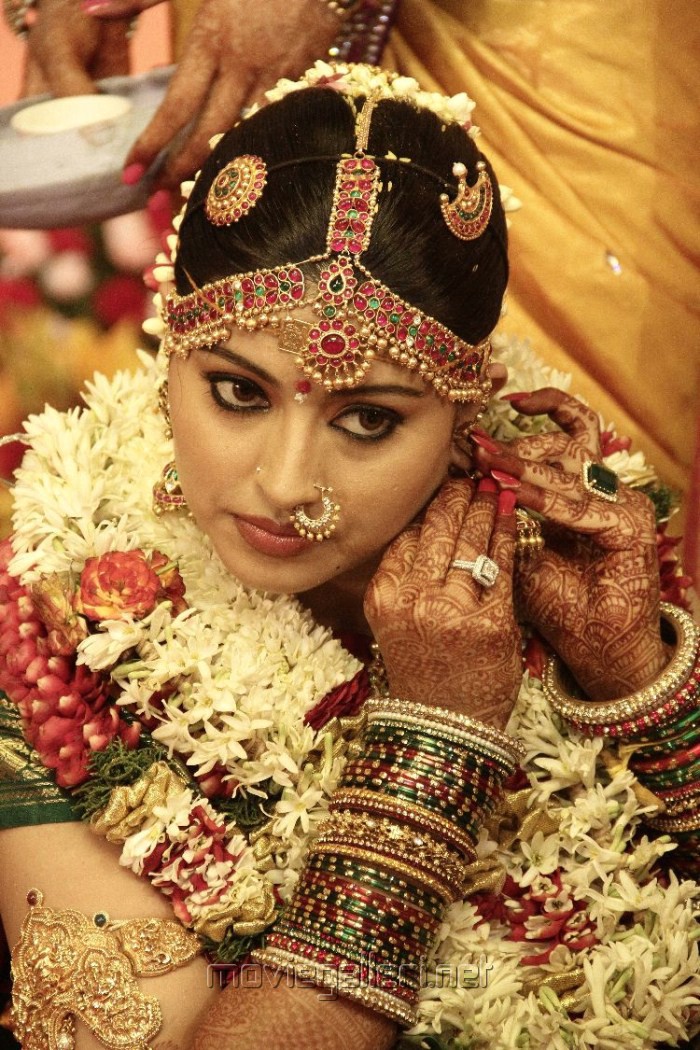
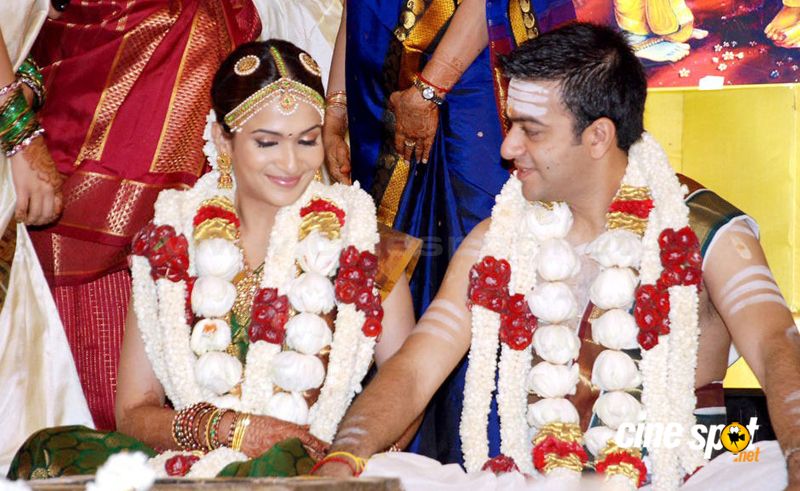
Tamil Actress Sneha on her wedding day

By London swaminathan

How did the ancient Tamil Hindus celebrate their weddings? There are three beautiful wedding scenes in Tamil literature: Akananauru, Silappadikaram and Divyaprabandham.

Two thousand year old Sangam Tamil literature describes Tamil Hindu weddings in two beautiful verses in Akananauru (verses 86 and 136). The poets bring the wedding ceremony in front of our eyes. Anyone who reads those poems can visualise that day. It is like a live running commentary.

In the first verse (86), poet Nallavur Kizar describes the food and the dress. There was a huge heap of rice cooked with black gram (Pongal). There was a wooden shed (pandal) with fresh sand from the river banks spread. Since they believed in astrology and auspicious days ,it was celebrated on the day when Rohini star was with the moon. Since they were orthodox Hindus they lighted lamps even though it was celebrated in the day time. Bridegroom and bride were adorned with flower garlands. Some women were carrying the pots on their head, others bearing new, broad bowls, handed them one after another, while fair elderly dames were making noise. Mothers of sons, with bellies marked with beauty spots, wearing beautiful ornaments, poured water on the bride, so that her black hair shone bright with cool petals of flowers and rice grains (probably yellow rice called Akshatai). They blessed her saying ,’do not swerve from the path of chastity, be serviceable in various ways to your husband who loves you and live with him as his wife. They greeted her ‘Dirgha Sumangali Bhava: in Tamil– Per Il Kizaththi Aguka’–.On the night after the marriage ceremony was over, the neighbouring ladies assembled and sent her to the arms of her lover, to which she went with trepidation ( This is the Shanti Muhurtham alias First Night).

Picture shows Soundarya Rajinikant’s wedding

In another verse136, poet Vitrutru Mutheyinanar says, white rice well cooked with plenty of ghee was served generously to the elders. Since Tamils believed in astrology, the poet remarks, the omens shown by the birds were propitious. It was a bright morning. The moon was in faultless conjunction with the Rohini star. The marriage house was decorated. They worshiped God. The big drums sounded with wedding tunes. Excited women were peeping without a wink with their flower like eyes at the bride who had been bathed. The image (to be worshiped) was made of big flower petals. Clear like a gem that has been well washed, was placed on the soft Vagai flower with the double leaf and the Arukam grass. It was decked with cool, sweet flower buds and white thread clothed with holy cloth, so as to look grand. The bride was seated on the fresh sand under the Pandal ( A thatched shed made over a row of wooden poles). The bride was perspiring with loads of ornaments. They fanned her to dry the wet.( I have used the translations given in History of the Tamils by  PT Srinivasa Iyengar).

Though tying the knot (Thaali=sacred yellow thread around the neck of the bride) is not mentioned  a few other verses hint at it. But no priests, no fire ceremony or no circumambulation of the sacred Fire were mentioned. One can understand it when one understands the caste differences that existed in those days. Since the Tamil epic Silapadikaram mentions the fire ceremony etc we can’t conclude it was never done. Most of the scholars put Silappadikaram event in the Sangam age. But the writing of the epic was dated between 3rd century and 7th century.

What is very clear in the above two Sangam Tamil verses is the Tamils believed in God and astrology. They used lot of vegetarian food and flowers during weddings. Ornaments and decorations, respect for elders are all like modern day weddings. The bride wore a thread (protective Kaappu) and new dress after a shower. Music was part of Tamil Hindu weddings.

(In part 2 Wedding Scenes of Kannaki and Andal are discussed).

Contact swami_48@yahoo.com or Swaminathan.santanam@gmail.com

Miracles do Happen !

By london swaminathan

List of Hindu Miracles

Swami Sivananda of Rishikesh has translated into English a poem by  Tamil saint Thayumanavar, who lived in southern India two hundred years ago. This gives an idea of the miracles done by Hindu saints, particularly Siddhars.

You can control a mad elephant

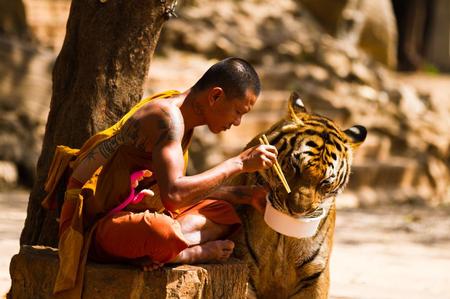
You can shut the mouth of bear or tiger

You can ride a lion

You can play with the cobra

You can make a living by alchemy

You can wander through the world incognito

You can make vassals of the gods

You can be ever youthful

You can walk on water

You can live in fire

You can achieve all Siddhis at home

But to control the mind is rare and difficult.

(*Tamil original is given at the end)

Controlling mind is harder than doing miracles. When a person starts doing severe penance he gets lots of temptations from the angels. (Kanchi Paramacharya says in one of his lectures that the angels hover around you and beg you to use them). Anyone who falls a prey to such temptation is trapped with women or gold or some strange desires such as building a new temple or starting a new movement or creating a Utopia. Those who ignore and go beyond that temptation will reach God. But there are some saints, who come back from that stage to awaken the mankind. Ramakrishna Paramahamsa said that knowing that there is a big ocean of ever bliss, they rush back to the world to announce: Please Believe me, Please come with me, Please Join me to merge with the Nithya Ananda=Bliss forever.


Some examples for each category:

You can control a mad elephant

Appar did it. Uthayanan did it. Kanchi Pramacharya did it when the Mutt elephant was in ruts.

When a raging mad bull came running through a narrow lane, everyone else ran helter-skelter. Swami Vivekananda stood still and it went back the way it came.

You can shut the mouth of bear or tiger

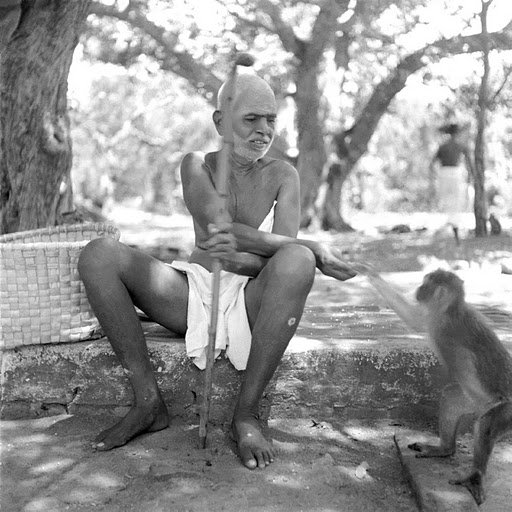
Ramana Maharishi did it. He lived with tigers. Sastha/Ayappan did it.

Autobiography of a Yogi by Paramahamsa Yogananda gives details about a Tiger Swami.

You can ride a lion

Goddess Durga did it. King Bharata (India is named after him) did it.

You can play with the cobra

All the Hindu Gods have cobra on their bodies. Hindu saints tamed cobras. They meditated in forest and anthills formed over them over the years. Cobras use ant hills as their home. A cobra entered saint Ramana’s ashram and went back when he stared at it.

You can make a living by alchemy

Adi Shankara brought rain of gold coins.

Vidyaranya got bars of gold established Hindu Empire through Harihara and Bukka.

Appar and Sambandhar got gold coins from nowhere.

You can wander through the world incognito

Krishna multiplied himself hundreds time to be with all the Gopikas at the same time. Narada travels to three different worlds incognito and suddenly appear before devotees.

You can be ever youthful

Markandeya was ever 16 years old (Is that why we call sweet sixteen?)

You can walk on water

Padma padacharya ( Lotus Footed) did it when Adi Shankara called him.

When he rushed to serve his Guru he walked on the river and lotus flowers came out to hold his feet.

You can live in fire

Adi Shankara did drink boiling iron to teach his disciples a lesson, who were blindly imitating everything he did.


List of Eight Types of Miracles (Ashta Ma Sddhis)

Hindus are the only race in the world to categorise the miracles and gave examples for every kind of miracle in the mythologies or in the life of hundreds of saints. Though we hear about miracles done by other religious leaders, Hindus divided them into eight crystal clear types. They took this branch of science more seriously than others.
Siddhar is one who attained Siddhi i.e. special psychic and supernatural powers, which has been defined to be eight fold in the science of yoga.


1.Anima :power of becoming the size of an atom and entering into smaalest life.

2.Mahima : power of becoming mighty and co-extensive with the universe.

3.Laghima : capacity to be light, though big in size

4.Garima : capacity to be heavy though seeming small in size

5.Prapthi : capacity to enter all the worlds from Brahmaloka to Pathalam

6.Prakasyam : power of disembodying and entering into other bodies and going to heaven and enjoying whatever one wants from one place

7.Isithvam :  having the creative power of God and control over the sun, the moon and the elements

8.Vasithvam : power of control over kings and Gods.


Miracles by Saints

William Joseph Jackson has beautifully summarised the Hindu miracles into several categories in his book “Thyagaraja: Life and Lyrics”. Following is the gist from his long introduction:

1. A miracle of origins: A god appears, often in a dream, and commands the parents to undertake an action or announces the imminent birth of a great soul. The musical trinity Sri Thyagaraja, Muthswami Dikshithar, Shyama Shastry and Vaishnava saint Vedanta Desikar, Telugu composer Kshetraya are also remembered as being announced in this way. ( in many saints’ life the dream plays a main role in the miracles either through the devotees or the saint himself). Mothers of Buddha, Mahavira and Adi Shankara had strange dreams.

2. Aid from an ascetic: Intervention by a long dead sanyasin (ascetic) or by a mythical figure. A holy man appears and gives a magical spell (Mantra) or gives his powers to the new person. Most of the saints see someone in dream or under a tree or in the guise of a devotee who they consider as people sent by god. Saint Ramanuja repeated Om Namo Narayana and became greater than his Guru. Manikkavasagar met someone under the tree and became his disciple. Mathurakavi did the same when he met Nammazvar under the greenwood Tamarind tree.

3. Learning from an extraordinary Guru: They receive education from some famous people or become the disciple of a great person. English educated atheist Swami Vivekananda was guided by Sri Ramakrishna Paramahamsa and Adi Shankara was taught by his guru Govinda Bhagavathpatha. It is like cutting raw diamonds to shape and polish them.

4. Trial and Vision: Even though they are guided by a famous or a mysterious Guru, they also do their own penance. Saint Thyagaraja did repeat Rama’s name 960 million times. Adi Shnakara did long penance/tapas and went to various holy shrines. Valmiki did penance till anthills grew over him.

5. Tests and Trouble: Before becoming famous they were tested by God in many ways. Either the king or someone in power gives them all the troubles, but yet they come out unscathed. Pallava King gave lot of troubles to Appar, a great Saivite saint. Many saints were thrown into prisons by the kings, but yet they came out as pure as gold. Bhadrachalam Ramdas, Saint Mirabhai and saint Thyagaraja went through such hassles.

6.Performing miracles: They show their influence on nature. They can control all the five elements. They can bring rains like Muthuswami Dikshitar or they can make the floods subside like Adi Shankara. Kulandhaiyananda Swamikal of Madurai stalled a train. Only when the British officer realised his greatness and apologised to him the train moved.

7. Recovery of lost Objects: They can recover long lost objects or create new things from nowhere. Adi Shankara recovered some Spatika lingas (Crystal Lingas) and installed them in temples. He made a shower of gold coins when he saw a poor lady. Several saints did this type of miracles.

8. Power of music: They pour out their feelings in poems. They are in thousands. Since there were no stenos or voice recorders in those days, out of the thousands of poems we have recovered only a few thousands. Whether it is Vedas or Thevaram or Thiruppugaz, or the songs of great composers what we have got today is only a fraction of their productions- tip of an iceberg.

9. Predicting Future: Saints knew when they are going to leave the mortal frame. They tell their close devotees or hint at it. They also predict future. We have several instances in every saint’s life. Lot of saints tell their near and dear devotees what is going to happen in future—but only good things.

We can see a pattern in all these miracles. I started listing the miracles of Hindu saints, but half way through, I realised it is going to be a never ending task. We need huge volumes of writings to list all the miracles. India was/is/will be full of miracle men. Every village or town had at least one great man in the past. The number of historically recognised or recorded saints itself will run into thousands. Let’s at least accept MIRACLES DO HAPPEN!

Please read my previous articles on Miracles in the blogs:

1.Time Travel by Two Tamil Saints 2.Saints who Entered Fire 3.Mysterious Tamil Birdman 4.Do Hindus Believe in ETs and Alien Worlds? 5.Do Our Dreams Have Meanings? 6.When Animals worship God, Why not Men? 6.Two Mangoes that Changed Tamil World 7. Mysterious Disappearance of Hindu Saints 8. Mysterious Messengers for Ajanta, Ellora, Angko Wat 9. Amazing Power of Human Mind 10.Miracles! You can do it.

Contact swami_48@yahoo.com  or  swaminathan.santanam@gmail.com

*Tamil Original of Thayumanavar song:

கந்துக மதக் கரியை வசமா நடத்தலாம்;

கரடி வெம்புலி வாயையுங் கட்டலாம்;

ஒரு சிங்கம் முதுகின் மேற் கொள்ளலாம்;

கட்செவி எடுத்தாட்டலாம்

வெந்தழலின்  இரதம் வைத்தைந்து லோகத்தையும்

வேதித்து விற்றுன்ண்ணலாம்;

வேறொருவர் கானாமல் உலத்துலாவரலாம்

விண்ணவரை ஏவல் கொள்ளலாம்;

சந்ததமும் இளமையோடிருக்கலாம்

மற்றொரு சரீரத்திலும் புகுதலாம்;

சலமேல் நடக்கலாம்; கனல் மேலிருக்கலாம்

தன்னிகரில் சித்தி பெறலாம்

சிந்தையை அடக்கியே சும்மா இருக்கின்ற திறமரிது.

********************