Written by London swaminathan
swami_48@yahoo.com
Date: 16 FEBRUARY 2019
GMT Time uploaded in London – 15-36
Post No. 6082
Pictures shown here are taken from various sources including google, Wikipedia, Facebook friends and newspapers. This is a non- commercial blog. ((posted by swamiindology.blogspot.com AND tamilandvedas.com))
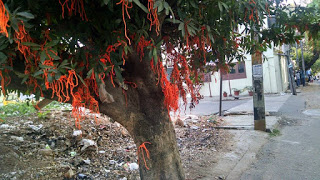
Hindu tree worship is known in the Vedas and the Indus-Sarasvati Civilization. The wonder is that they have been worshipped until today. Most of the worshipful trees are associated with famous giants. When one Bodhi tree (Pipal – Ficus religiose) gave the Buddha wisdom, Buddhists took its branches or saplings to different counties like Sri Lanka and Burma. Hindus never did it because every tree is holy for them.
Here are some trees which are famous among Hindus, at least local Hindus:-
Alandi near Pune in Maharashtra , is a famous pilgrimage centre. Marathi poet and saint Dhyaneswar attained Samadhi here. There is an Ajaana vriksha (vriksha=tree) is in the temple complex. According to botanists, this tree is known as Ehretia laeveis (family Boraginaceae)
In addition to this tree, there is a peepal tree which is also worshipped by the pilgrims. On the Ekadasi of Kartika Krishna Paksha there is a big festival is held in Alandi.
Golden Sami Tree
On Vijaya Dasami Day (October, End of Navaratri) Sami tree ( also known as Vahni)is worshipped. The leaves of these trees are distributed to friends under the name of gold. It means the tree is as valuable as gold. In many places where the tree is not available, the more common AApta (Bauhinia) is substituted. The significance of the tree is that the Pandavas hid their weapons during their incognito period. On the Vijaya Dasami day they took their weapons from the hiding place and fought against the Kauravas and won the Mahabharata war.
Asoka Tree
Asoka tree is known through Ramayana because Sita was kept under watch in Asoka Grove in Sri Lanka. Asoka means NO SORROW (a+ soka)
There are two festivals associated with this tree.
Asoka Shasthi means sorrow free sixth day. It falls in the bright half (Shukla Paksha) of Chaitra month (coreesponding April/May). The goddess is invoked to ensure the well being off children. Women drink water in which six flower buds of the Asoka tree have been steeped.
There is a very strange and interesting story behind this custom.
The legend says that a certain sage found an infant at his door, whom he adopted and brought up. At her marriage to a prince, he gave her some Asoka seeds, telling her to scatter them on the ground as she went to her husband’s house, and an avenue of trees would grow up, down which she could come to find him, if at any time she needed help.
Later on disaster fell her family; one morning all her sons and their wives were found dead. The queen remembered the promise, and went down the Asoka avenue, at the end of which she found the sage. The sage gave her some holy water, which being sprinkled upon the dead bodies, restored them all to life.
Two days after Shasthi comes Asoka Ashtami (8th day). This day coincides with the Brahmaputra River bathing festival. Asoka flowers only are used.
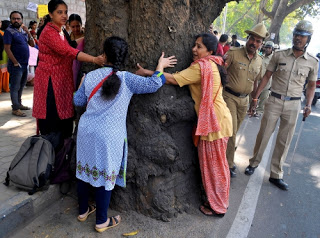
The legend is that Ravana, demon king of Sri Lanka imprisoned Sita (Rama’s wife) in a grove of Asoka trees. Hanuman saw her for the first time sitting under the Asoka tree. He reported back
to Rama, who rescued her after killing Ravana, who abducted Sita. Sita, through out her stay under the tree prayed for her release. In memory of this event women worship the tree on Asokashtami Day. They embrace it and eat its leaves toscure immunity from sorrow.
Both festivals Asoka Shasthi and Asoka Asthami are celebrating the trees.
Story of Avali Tree Festival
In the month of Kartika (November), on the Shukla Ekadasi (ii days after new moon/Amavasya) Prabodhi Ekadasi (Awakening 11th day) is celebrated. Vishnu is said to have woken up after four months sleep. Tulasi (holy basil plant) marriage is done on the following day.
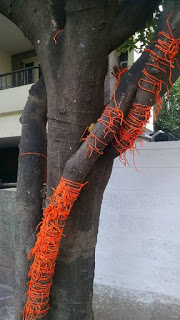
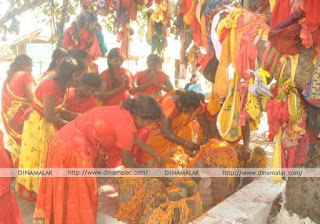
But a special custom is followed by Marathis and it is called Avali Bhojana or Vana Bhojana. The Avali tree is Embilica myrobalan and it is sacred to Vishnu. It is well known for its medicinal use (Amalaki in Sanskrit and Nelli in Tamil). People in Maharashtra go to grove where these trees are and have a picnic. They go with music bad. They sprinkle water at its roots, wind a thread around it and worship it with mantras and circumambulation. After this they eat under the tree.
This is a popular festival among women and children. Those who have laid their Vishnu image to rest , restore it today in upright position. The image from some temples are taken to near by river or tank and invoked to awake. Actually, this day marks the end of rainy season.
MY OLD ARTICLES ON TREE WORSHIP
tree worship | Tamil and Vedas
Posts about tree worship written by Tamil and Vedas.
sacred trees | Tamil and Vedas
6 Nov 2017 – Hindus worship trees out of fear or out of its sacredness. Another reason for the worship of trees is their wonderful utility in daily life. Their shade …
ABOUT TREE WORSHIP IN ANCIENT INDIA – Tamil and Vedas
MORE ABOUT TREE WORSHIP IN ANCIENT INDIA (Post No.4389). Written by London Swaminathan. Date: 12 NOVEMBER 2017. Time uploaded in London- …
Hindu tree worship | Tamil and Vedas
The Rudram and Chamakam Hymn (Mantra) refers to Shiva as God of Trees and … One should go to the desired/selectedtree and offer worship to it with food …
Palmyra Tree Worship in India and Sri Lanka! | Tamil and Vedas
23 Sep 2014 – Rare branched palmyra trees in Batticaloa in Sri Lanka. Research paper written by London Swaminathan Post No 1306; Dated 23rd …
Plants in Mahavamsa | Tamil and Vedas
3 Oct 2014 – Mahabodhi Tree in Bodha Gaya Research paper by London … Palmyra was worshipped as a sacred tree in India (Natrinai Tamil verse 303) …
Tree worship is practised around the world. We see it in Sumer, Indus and Maya civilizations to name a few. But India is a country where it is practised till today …
Perur temple trees | Tamil and Vedas
Perur temple trees | Tamil and Vedas
Posts about Perur temple trees written by Tamil and Vedas. … And similarly devotees believe that those who worshipLord Shiva at Perur Temple will live for long …
famous trees | Tamil and Vedas
Posts about famous trees written by Tamil and Vedas. … Banyan Tree worship and Pipal Tree worship are very popular in North India. In Valmiki Ramayana, the …
Banyan Tree and Sanatkumaras | Tamil and Vedas
From time immemorial Hindus have been worshipping treesof wisdom .Three trees from the same genus Ficus (belongs to the family Moraceae) have been …
Kadamba tree | Tamil and Vedas
10 Apr 2018 – The Mythology of Plants (Mythologie des Plants) says that in 17th century Hindus worshipped a Banyan tree near Surat (Gujarat), supposed to …
Mostly we read about the love and affection towards plants, respect and worship of sacred trees. What we find in Mahavamsa wouldn’t surprise any Hindu or a …
largest tree | Tamil and Vedas
Vata is banyan tree in Sanskrit. Throughout India peopleworshipped gods and goddesses under the banyan tree in the olden days. In Cambodia where Hindu …
Why do Hindus Worship Vanni /Shami Tree on … – Tamil and Vedas
11 Oct 2016 – They worship trees, rivers, animals, Birds and even insexcts lie ants. For every creature they have a story in their vast literature. Of all the tress …
Posts about Druhyus written by Tamil and Vedas. … Tree worship was part of Vedic culture and Indus Valley Civilisation. Since Peepal Tree and Banyan Tree …
Tamarind Tree | Tamil and Vedas
Posts about Tamarind Tree written by Tamil and Vedas. … From time immemorial Hindus have been worshipping treesof wisdom .Three trees from the same …
-Subham-
 Tamil and Vedas