Asvamedha: New Explanation (Post No.3163)

horse-sacrifice2

Written by London swaminathan

Date: 17 September 2016

Time uploaded in London:21-41

Post No.3163

Pictures are taken from various sources; thanks.

Interesting Titbits about Asvamedha Yajna- Part 2


The Asva medha is performed by a king who is assisted by his FOUR wives and FOUR different priests address them with mantras.


Description of the sacrifices as follows:

It is a three-day Soma sacrifice. It is done in spring. Six or seven days before the full moon in the month of Phalguna, the four priests, the Adhvaryu, the Hotr, the Brahmin and Udgatr meet. The Adhvaryu cooks rice meal and the king gives the rice meal and gold plates to four priests. The four queens are also present and  the horse is purified with Dharba grass (SB 13-4-1/8, 13-1-1/2)

My comments:

Vedic society had kings and that too, rich kings with lot of gold. Rice is used so they were not from Europe or central Asia. They were sons of the soil i.e. a tropical country like India. The mathematics behind the construction of altars show their mathematical skills. So they are advanced in knowledge and they were not nomads as projected by half- baked foreign writers.
aswamedha

400 soldiers

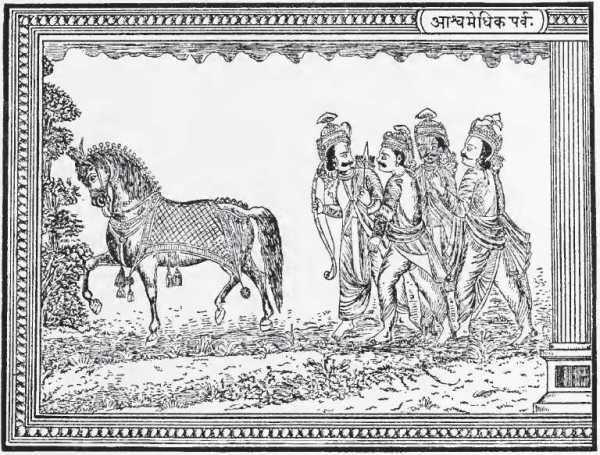
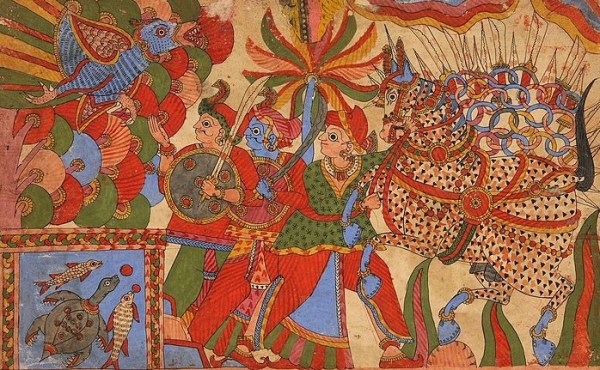
The horse selected for the Yajna is black in the forepart and white in the back part. It has a mark on its forehead. It is allowed to roam for a year. FOUR HUNDRED soldiers followed it!

(look at the mysterious 4, 400 etc)

The horse is surrounded by 100 more horses and the king is surrounded by EIGHT councillors.


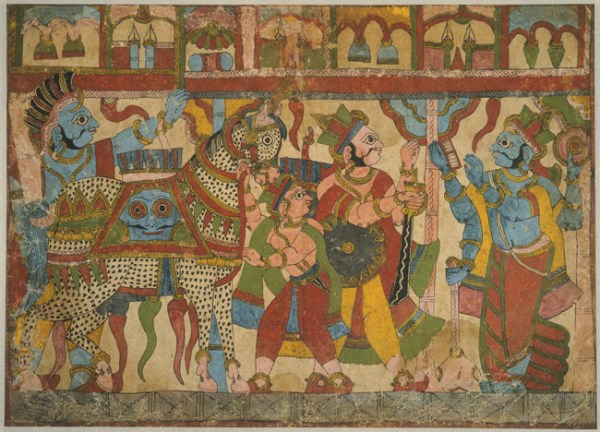
The horse can wander into any country. If it is not challenged by the king of the country that means he accepts the sovereignty of the performing king. If he challenges the horse the Yajna performing king will fight with him. After a year the horse returns and then the fire sacrifice is done in which horse or a figure of horse is sacrificed. Some rites such as the chief queen lying with the straggled horse for one night and other queens speaking obscene dialogue is also in the scripture. The priests exchange lot of riddles.


Mysterious numbers!

A lot of numbers are used and the reason for such numbers is also explained in the scriptures. This shows their obsession with numbers; some examples:-

Prajapati -17; 16 and 13 represent domestic and wild animals; queens weave 101 pearls into the mane and tail; primary numbers linked to Asvamedha are 21, 260 and 337 representing the number of stakes, the number of wild animals and the number of domestic animals. So lot of organisation is required to do an Asvamedha.


Since Rig Veda links King Traiaruna with Asvamedha, the Vedic society was highly civilized and organised.

The hydraulic research in the Sarasvati basin and the precession of the earth mentioned in the Vedas scriptures show the Vedas must be composed before 1900 BCE or 3000 BCE. Latest news says that even the Indus valley civilisation is older than 3000 BCE. All the dates must be recalculated and Max Muller’s date should be thrown into dust bin.

My comments
The numbers show that they were highly literate and numerate.

According to Apastamba Srauta Sutra (20-15) each of the four wives of the king should hang 1000 pearls around the neck of the sacred horse. 4X1000 = 4000 pearls!


The use of 1000s of pearls for all the horses show that they were sea faring people. If they had imported from other places that shows their vast geographical knowledge and maritime trade.

The Darba grass used in the Vedic time is still used by the Brahmins in their ceremonies. It shows a continuous tradition followed from Kantyakumari to Kashmir for thousands of years. No culture in the world has such a long tradition on such a vast land. If any other religion shows any other custom like this, we know the date is long after the Vedic period.

The presence of women in all Vedic ceremonies is a must. This shows the highest respect shown to women by the Hindus. No other culture insists that women must be present and participate. From the Vedic days till this day women must be present for all the Hindu ceremonies.

Until today no one can say for sure what Soma plant was. Because the Western society is highly addictive to drugs they can’t think of anything other than narcotic substances. But the eighth mandala of Rig Veda which is fully devoted to Soma, speaks of magical powers of the Soma plant. No culture in the world will dedicate one full section/chapter for narcotic drug, that too in praise of it!
 

krishna_advising_on_the_horse_sacrifice

Lepers in the Ceremony

Why a leper is involved in the Asvamedha remains a mystery; no can explain it or justify it. A leper is washed in the same place where every participant bathes and he is honoured with dakshina (fees); actually he is also one of the objects of sacrifice. This shows that no one is thrown into fire, but it is only symbolic.

In various groups 609 animal victims were listed for the sacrifice; 312 of them were domestic animals and 260 of them were wild animals. But they were all released at the end; may be a symbolic sacrifice of a goat or ram was done.

Catholic missionary Abbe J A Dubois who lived in India from 1792 to 1823 gave a detailed description of this yajna. He says the King of Amber (Jaipur) did an Asvamedha and gave one lakh rupees as dakshina to the chief priest. In today’s money it would be millions of rupees.


Puranas talk about another king called Asvamedhadattan. He belongs to Lunar dynasty and his mother was Vaitheki and Janamejayan was his grandson.


Satapata Brahmana gives details about Asvamedha yajna. The general impression is that a horse was sacrificed in the fire at the end. But Satapata Brahmana (here afterwards SB) itself says that prior to King Syaaparna Saayakaayana, sacrifice of several animals took place, but now it is limited to the Aja (goat)—SB 6-2-1-39.

In Sanskrit Aja means grains as well. SB also adds that plants are appropriate for sacrifice. So we can conclude that at one stage animal sacrifice was completely abandoned and only plants or animals made up of flour were sacrificed.


Mahabharata explains what is happening in the world (12-5):-

“I see no being which lives in the world without violence. Creatures exist at the mercy of one another; the strong consume the weak. The mongoose eats mice, just as the cat eats the mongoose. The dog kills the cat, and the wild beasts eat the dog. Man eats them all. Everything that moves and is still food for someone”

This is very true until today. SB and scriptures like Bhodayana (22-1) and Aupamanyava (16-6-2) Srauta sutras say that a clay or golden replica of animals were sacrificed. More over Atharva Veda says that Inner Yajna is superior to outer one (AV 7-5-4/5). So even at the Vedic times Yajna attained several meanings.

Some people even interpret astronomical events are given as Yajnas. That is how we got all animal signs in zodiac. SB speaks of creation of the universe by Prajapati (6-1) where Asva, Rsaba, Aja, Kurma come before the creation of the earth. RV 1-164-2 and Nirukta (4-4-27) define Asva as the Sun.


My Comments:

Vedic literature is very vast. But here we see a big leap from animal sacrifice to symbolic sacrifice with clay model and late lot of astronomical explanations. But the foreign authors date them within a short span which is impossible. No culture in the wold changed that quickly. Foreign writers select some passages which suits them for their novel revolutionary theories and hypotheses. And no two foreign “scholars” agree on any topic! So Indian tradition is the best to follow.


Aurobindo’s Interpretation

Aurobindo explains Asvamedha in his Vedic Glossary as follows: –

Asvamedhaaya means for the horse sacrifice. The Horse Sacrifice is the offering of Life Power with all its impulses, desires, enjoyments to the divine existence. The Life-Soul (Dwita) is itself the giver of the sacrifice which it performs when by the power of Agni it attains to vision on its own vital plane, when it becomes, in the figure of the hymn, the illumined seer Ashwamedha (RV 5-27-4)


Books used:-

The Asvamedha – by Subhas Kak; 2002


The Vedic horse sacrifice –  by Stephen Fuchs

My Old Article on the same subject

Horse headed Seer: Rig Veda Mystery No.1; Research Paper written by London

No.1255; Dated 27th August 2014.


–Subham–
 

Naga Worship in Afghanistan (Post No.3154)

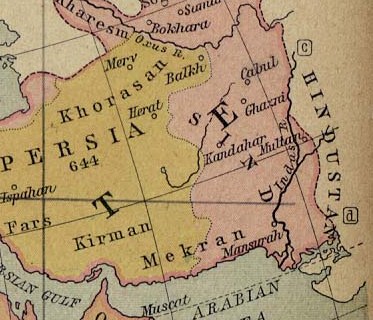
afghan-map

Compiled by London swaminathan

Date: 14 September 2016

Time uploaded in London: 20-43

Post No.3154

Pictures are taken from various sources; thanks.

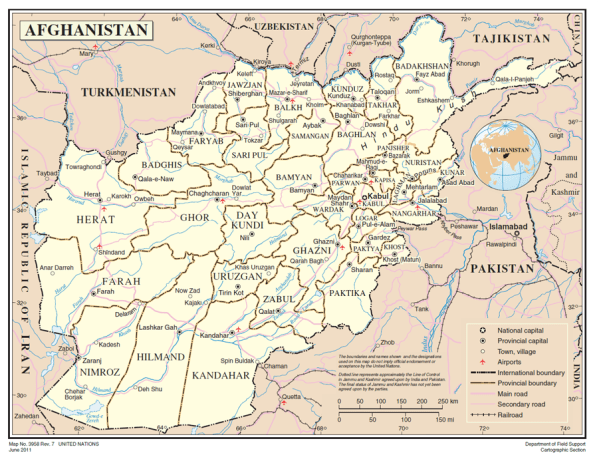
Afghanistan, now a Muslim country, was once ruled by Hindu and Buddhist Kings. Many of them were from the Naga tribes. Their names and the mode of worship explode the half-baked Western theories that they were non-Aryans. Here is an excerpt from the book “The Sun and the Serpent” by C F Oldham, Indian Army Officer, 1905.


“The great Persian hero Ruustam was the son of Zaal, and his mother was Ruudabeh, the daughter of a serpent chief. Ruustam was called a Kaabuli because of his relationship with Afghanistan.

Ferishta tells us that the race of Zahaak, one after another, succeeded to the chieftainship of Ghor until the time of the Prophet. We learn also, from the same authority, that the genealogy of the kings of Ghor, according to the most authentic historians, could be traced upwards by the names for three and twenty generations.

Minhaaju-s Siraaj, who came from Ghor to India in 1227 CE and whose father was Kazi to the army of Mahomed Ghori, commences his history with a genealogical list, which traces their descent back through Zahaak to Noah. It seems therefore, that the ruling family of Kaabul, in the time of Ruustam, and the chiefs of Ghor, as late as the thirteenth century, claimed to be of serpent race. The Rig Veda mentioned Ahi, the serpent chief and the Zend Avesta mentioned Azi.


People of the country between Kaabul and Kashmir worshipped the Nagaa demi gods.

ancient_khorasan_highlighted

In the Pahlavi Kaarnaam-I Artakshir Papakaan it is mentioned that the Persian King Artakshir in the first half of the third century was defeated more than once, and his camp taken, by Haftan Bokht. This chief who was ruler of Kirmaan and Lord of the Dragon, worm or serpent, eventually defeated and killed. The ruins of his fortress of guzaaraan are near the town of Bam, not far from the frontier of Baluchistan. The bam fort is still known as Kut-i-Kirm, or fort of the worm or serpent.


My comments:-

Kirm, English word germ, all come from the same Sanskrit root for worms. Kut is the Sanskrit word for peak and living place (Kuti, hut etc). All the Kings from the times of Ruustam, the legendary Persian hero, they had relationship with Naga tribes or Kings. This author interprets Ahi, enemy of Indra, as a Naga Chief in the Hindu Kush area. He may be right.

Idol worship was prevalent in spite of conversion to Muslim religion.


Xxx

“Other traces of the serpent race remain in the neighbouring country. In Baluchistan is the Koh—I Maaraan or the Mountain of the Serpents. Which doubtless took its name from the race of Zahaak.

And one of the legends of Heraat says that this fortress was founded by a daughter of Zahaak.

img_8046

“Notwithstanding the conversion of the people to the Mohammedan faith, traditions connected with the serpent (Sanskrit word Sarpa = snake) race still remain in the wild country between Persia and the Indian border. Near Mazar, in northern Afghanistan, is the village of Gor-i-Maar, or grave of the serpent, where a great serpent is said to have been killed by Ali. Amongst the Kafirs of the Hindu Kush, also, there is a tradition that the Bashgul valley was once held by a great serpent, who devoured travellers passing that way, and who was killed by Imra or Indra.


Reports of Chinese Pilgrims

The first clear descriptions we have, of the country between Kaabul and the Indus, are those of the Chinese pilgrims who visited India as the holy land of Buddhism. Of these Fah Hian arrived in India about 400 CE, and seems to have travelled by way of Baatli and the Upper Indus valley.


This pilgrim says: “Crossing the River Sinto (Sindhu/Indus), we come to Wuchang, where commences Northern India.”

Wuchang, or Udyaana, included the valley of Swat river and much of the neighbouring country.

Fah Hian goes on to say that the language and the dress of the people, and their food and drink, are the same as in Mid India. They were, therefore, an India race. He further describes the religion of Buddha as very flourishing, and mentions that Sakya (Buddha) visited this country, to convert a wicked Naga.


“Fah Hian also says that the Nagas of the Tsung-ling mountains (Hindu Kush), when evil disposed, spit poison, winds, rain and snow. He notes, too, that in Udyaana a stranger was entertained for three days and was then requested to find a palce for himself”. This is a Rajput custom, which is referred to by Quintus Curtius in his account of the entertainment of Alexander by Taxiles, and which exists to this day.


img_8049

My Comments

In Tamil also we have a proverb that Feast and Medicine is only for three days. There is another saying in Tail, First day- Vazai Ilai/on a full length Banana leaf; Second Day- Thaiyal Ilai/Stiched Leaf; Third day-Tharaiyila/on the floor; Fourth Day- thalaiyila/on your head!

So this custom of entertaining a guest is done only for three days from Kanyakumari to Kashmir.

Xxx

“Sung Yun, another pilgrim, entered Udyaana about 518 CE by way of Kashkara (Chitraal) valley. He records that the king of the country was then a Buddhist, who observed a vegetable diet, and that the Buddhism was flourishing.


Naga Temple with 50 Priests!

This pilgrim mentions a regular system of irrigation from the rivers, which indicates a considerable degree of civilization. He also escribes a Naga temple, which was served by fifty priests or more, and says that the king propitiates the Naga with gold and jewels and other precious offerings.


“The pilgrim says a former Naga Raja of this lake was killed by another Naga, who seized upon his possessions and caused great mischief by raising storms. A stupa and a vihara, built by Kanishka Raja, were six times destroyed by the Naga. At last Kanishka collected his army, intending to destroy the Naga chief, but then he submitted.

In Lamghaan, wich was subjected to Kapisa, there were about ten sungharamas with few followers, and there were several scores of Deva temples. In a great cavern was the abode of the Naga Gopala. At Hidda, a neighbouring town, were many relics of Buddha, including a skull bone and an eye ball.


“In Gandhara which was then governed by an officer from Kapsa, was the ancestral home of the king of Kaabul and of so many neighbouring countries.

img_8047

“Hiouen Tsiang, on his way back to China, was entertained by this king at the city of Udabhaandapura or Waihnad, which as noticed by Cunningham, and more flly by Stein of one of the capitals of the Hindu Saahiya Dynasty the pilgrim marched with the king by way of Lamghan to Kabul. This again shows that the  Kshatria king of Kaabul was one of the Saahis of the Kator or Pala dyasty of Gandhara.


The pilgrim describes some of the towns and villages as deserted, but others were rich and prosperous. There were many sugharamas and stupas, some of them in ruins and many temples of the Devas. It is mentioned too that men came from every part of India to pay their vows at the temple of Bhima devi.


This is the country which was said by Sung Yun, in AD 520, to have been destroyed by the yetha two generations before. The Hindu rajas had evidently recovered possession.


“Hiouen Tsiang next came to Udyaana, which has been described by earlier pilgrims. Here he found the law of Buddha greatly respected but Buddhism was less flourishing than formerly. There were temples of the Devas, and the Naga demigods still ruled the elements and still presided over that lakes and fountains.


The pilgrim visited the fountain at the Naga Apalaala, which the source of the Swat river. He visited also the Stupa built by Uttara sena, the Sakya king of Udyaana over the relics of Buddha.

“Hiouen Tsiang relates the history of Uttarasena, and of his marriage with the daughter of the Naga raja, through whose influence he obtained the kingdom. He also says that over the head of the princess appeared the hoods of a nine headed Naga.


The he visited Takshasilaa. Whenever the people wanted rain or shine, they went with Buddhist priests to the tank of Nagaraja Elapatra, where after praying, they immediately obtained their desires.”


img_8050

From this source we learn

1.From Kabul to Indus Hindus lived there until seventh century.

2.Buddhis religion existed along with Hinduism

3.Worship of Brahmanical Gods and Naga demi gods was practised

  1. Naga worshipping people inhabited the area.


–subham–


13 Types of Hindu Temples in Bangladesh (Post No.3143)

img_7948

Compiled by London Swaminathan

Date: 11 September 2016

Time uploaded in London: 14-46

Post No.3143

Pictures are taken from various sources; thanks.

 
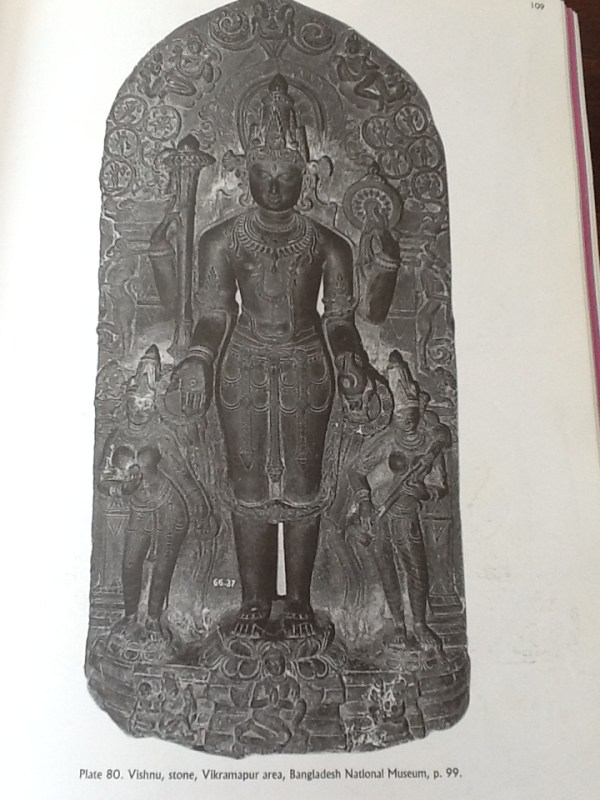
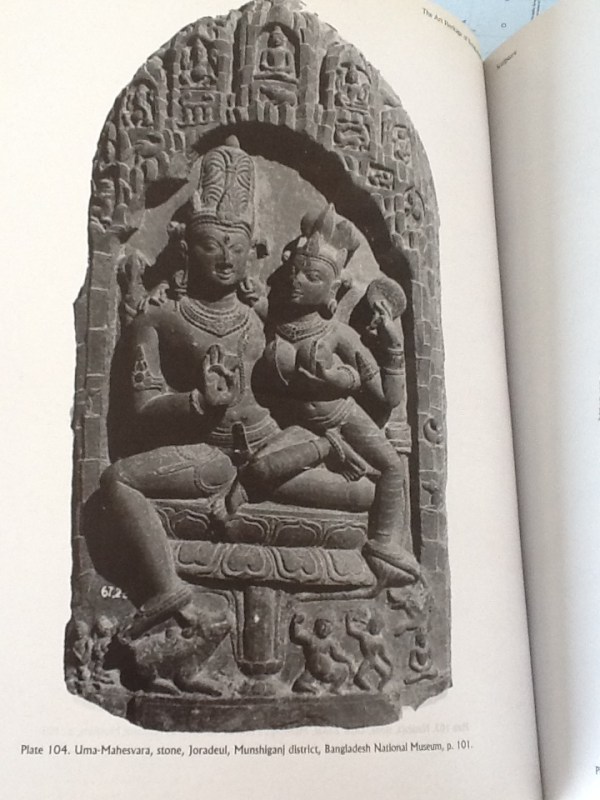
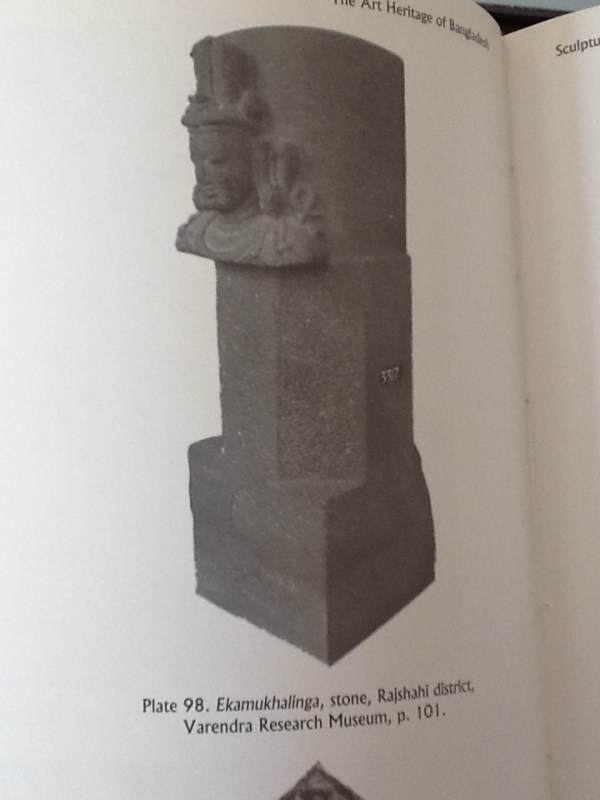
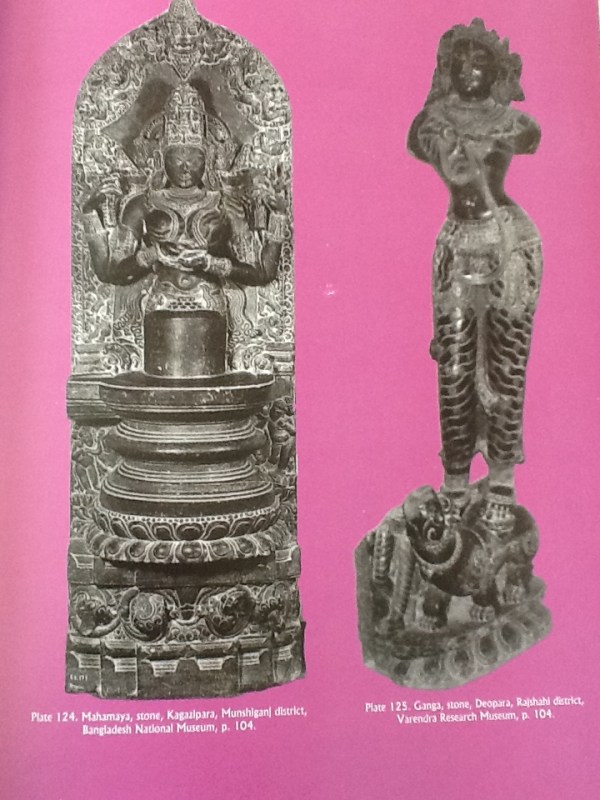
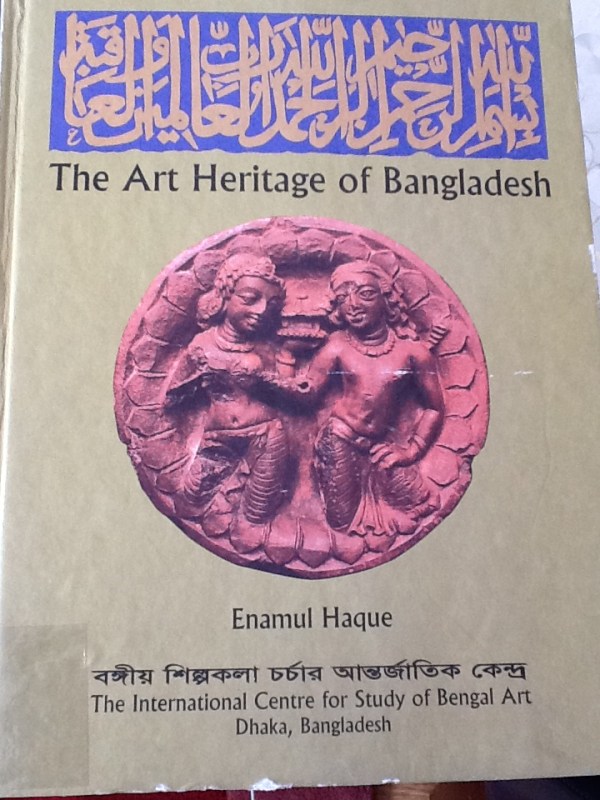
‘The Art Heritage of Bangladesh’ by Enamul Haque (The International Centre for Study of Bengal Art, Dhaka, Bangladesh, Year 2007) has lot of information about Hindu idols, statues and objects discovered in Bangladesh. It includes the latest discoveries. The book is worth buying; it has 536 illustrations.


“In an extraordinary study of the late medieval temples of Bangladesh and West Bengla, the temples of the Muslim period and colonial period taken together, David J.McCutchion (year 1972) offered a classification of thirteen major types and 60 sub-types. Most of these temples are made up of bricks, a few in lateritic stone in West Bengal. In Bangladesh, the temples, irrespective of their shapes, sizes, styles or uses are variously called Mandir, Deul, Math, Devalaya, Than, Domamacnha, Rasamancha etc. David have divided them in the following categories:-

Chala type, Bangla type, Ratna type, Shikhara type, Math type, Composite type, Rasamanchas/Dolmachas, Non-raditional type.

img_7956

Chala type

This type, called char chala or chau chala, consists of a shrine,square or rectangular, with a hut shaped roof of four sloping segments. Based on extant remains, the construction of the char chala type temples appar to be post-muslim tradition, as char chala vaulted domes are already in use in Shahid Gumbad Mosque (1450). The 18th century  Barashiva temple at Hatikumrul in Sirganj temple and Gopala temple at Puthiya, both with rich terracotta decorations belong to this type. Other examples: Math at Ujani, Kapileswara temple at Tarash, Madan mohana temple at Satrajitpur, Shiva temple atNandual. The four subsidiary shrines of the Dharakeswari temple, in Dhaka city stand on a raised plinth.


The other variety of char-chala temple is the at-chala or eight segmented.e. a temple with a further miniature char chala roof over the lower char chala sturucture. They aare more numerous in West Bengal. Examples of this type in Bangladesh are the

Shiva temple at Chanchra

Gunchanatha Shiva temple at Telkupi

Abhaynagar Shiva temple  in Jessore District

Rameshvari temple at Jhenidaha district

Raghunatha temple at Dhulgram

Jora Shiva temple at Chaigharia

Jora Shiva temple at Dohajari

Shiva temple at Chandina.


 img_7953

Bangla Type

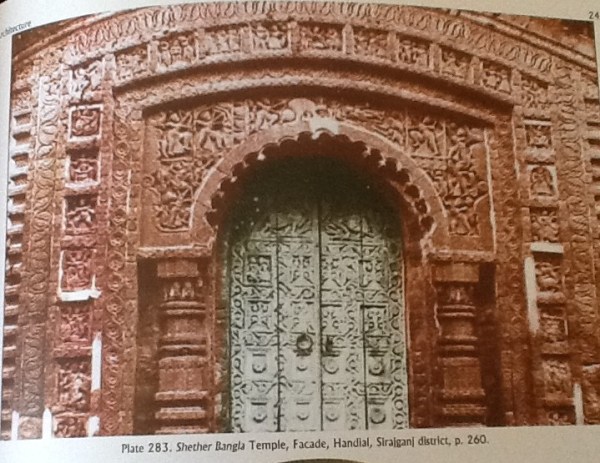
During the Sultanate period in Bengal while certain elements such as the curved chronicle of the village huts made of mud or bamboo with thatched roof was introduced in architecture, the Hindu temples beginning from the 17th century saw the entire hut structure translated into brick. Thus the popularly known do-chala or two segmented roof, sometimes called ek bangla, imitating the basic rural huts, soon became popular among the temple builders. They are comparatively more common I Bangladesh. Few examples:-

Chota Ahnik Temple at Puthia

Gopalbari  Temple at Naldanga

Narayana  Temple at Kaichal

Shether Bangla at Handial

An abandoned Temple at Pura


One of the best preserved specimens of Jor Bangla (twin hut temple) is at Bishnupur in West Bengal.

In Bangladesh,

Gopinathpur Temple at Dakshin Raghavpur

Narayana Temple at Lohagara

Govinda Temple at Kotakol

Jor Bangla Temple at Nalia

img_7958

Ratna Type

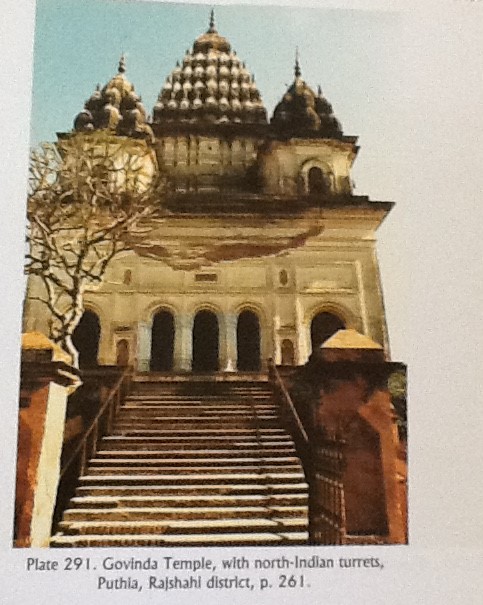
The Ratna type consists of a square shrine with an ambulatory around or with a verandah in front. The term ratna means gem/jewel, but in the context of architecture, it stands for a shikhara or tower.

Temples can be ek ratna (one towered)

Pancha ratna (five towered)

Nava ratna (Nine towered)

Ekadasha ratna (11 towered)

Trayadash ratna (13)

Saptadash ratna (17)

Ekush ratna (21) and pancha vimsati (25).


In Bangladesh, there is no ekratna temple, there being many in West Bengla.

Examples in Bangladesh:-

Pancha ratna type- Govinda temple at Puthia

The Kali Narayana Ray Shamsan Temple – Jeydevpur

Harekrishna Temple- Muhammadpur

Mahadeva temple at Naldanga

Prana Gopal Temple at Gopalganj

Shiva Temple at Sribari

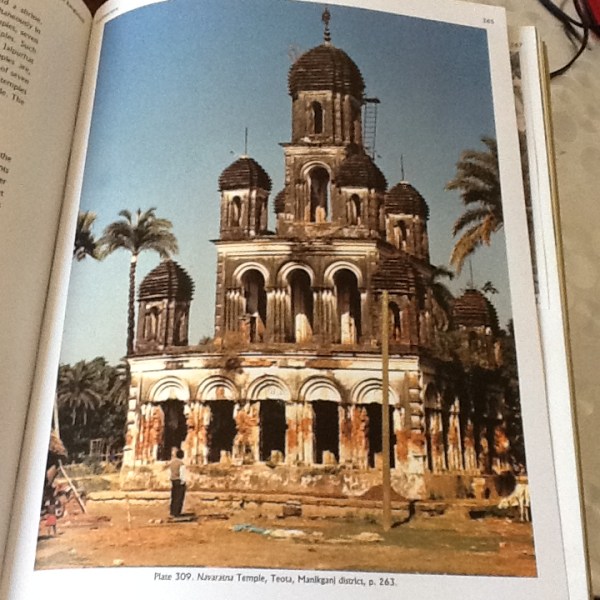
Navaratna type – Kantaji Temple at Kanatanagar built by Maharajas of Dinajpur

But all the 9 towers are lot due to the earthquake in 1897.

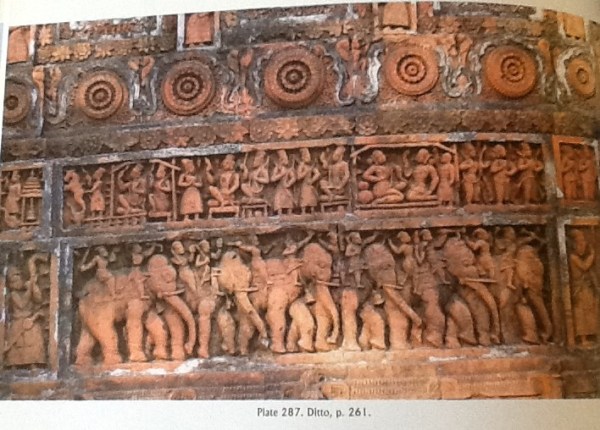
A wooden replica of the original temple is preserved in the Indian museum. The extraordinary feature of the temple is that every inch of the temple surfaceon all floors is covered by terracotta ornamentations, representing various mythological and social scenes of contemporary everyday life, punctuated by flora, fauna and geometric motifs.

Hatikumrul navaratna temple –  Sirajganj District

Ruined Navaratna temple at Potajia

Ruined navaratna temple at Nanikhir

Shyamsundara temple at Sonabaria

Navaratna Temple at Damreli

17 towered temple: Jagannatha temple – Comilla town

Documentary evidence for destroyed ekush ratna (21 towered) and ekadasha (11) temples at  Lakshmi Janardhana temple at Kishoreganj and Rajnagar.

Ruins of 25 towered temple at Gopalpur


img_7972

Shikhara Type

Mathurapur Deul – Madhukhali

Kodla math at Ayodhya , Bagherhat District


Math Type

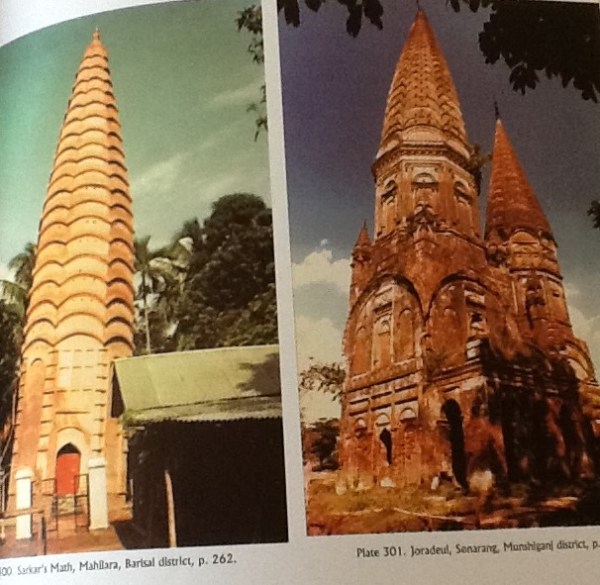
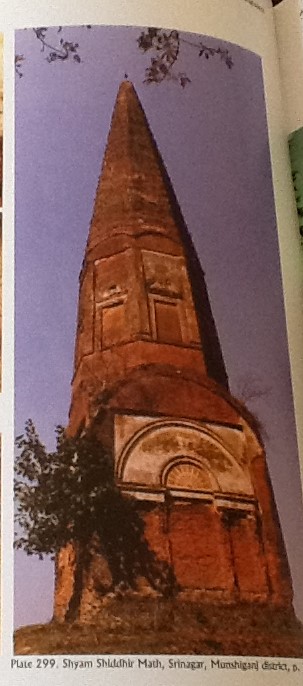
Under this type can be noticed a large number of square, octagonal or 12 sided temples with one tall slender tower. These are mostly found in S E Bangladesh.

Examples

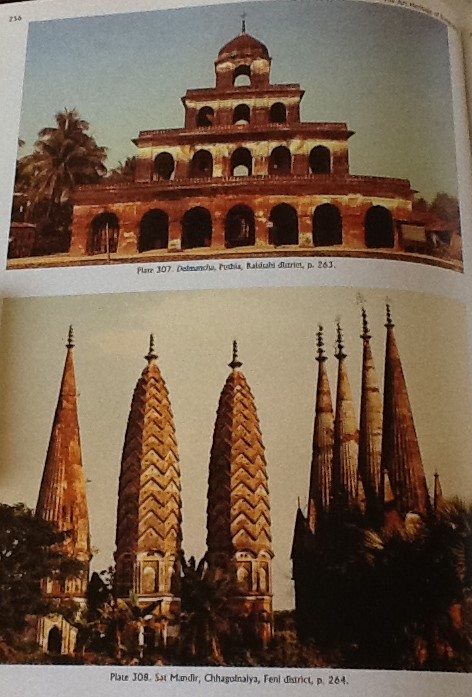
Sarkar’s math – Mahilara

Twin towers at Sonarang

Kali temple with a height of 45-73 metres- Sonarang

Shyam Siddhir math at Srinagar

Sutalari math – Jhalakathi district

Newra math – Chandpur district

Jatramani math – Tulatuli


img_7969

Composite Type

Combinations of sevral types together

Jagaddhatri temple at Puthia

Rajaram  Temple – Khalia

Khelaram Datar Temple – Dhaka District

Rasamanchas/ Dolamachas

These are octagonal or square buildings related to the Krishna cult enabling the deity to be seen from all sides.

One temple in Bardhankuti is lost.

Dolmancha at Muhammadpur

Ratha mandira t Puthia

Dolmancha of Govinda – Salnagar


img_7966


Non traditional Type

Chanda Bhairava Temple – Ishvaripur, built in 16th century by Raja Pratapa Aditya.


Cluster of temples are built by succeeding gnerations. 4, 7, 9, 11 12, 108 temples are known.

A group of twelve char chala temples is in Belamla

Gropu of 7 temples called Satmandir is at Chagolnaiya.


It is only a short list. There are lot of temples in many other sub categories.

 img_7964

My Comments

1.It is heartening to note that most of the Bangladesh place names are still in Sanskrit in spite of Muslim rule

  1. It is a sad thing to hear about several ruined and lost temples
  2. Indian Government and Hindu organisations should renovate all the temples by mobilising Bangla Hindus with the help of Bangladesh Government.

4.The classification of temples by David or other foreigners is only on the basis of existing or recorded temples. But Bangladesh had temples for thousands of years or at least 1500 years. So we must gather all such details.

5. thousands of temples were destroyed by the invading Muslims and ruling Muslim kings. So Hindu scholars must collect all such vital information from recently discovered inscriptions and rewrite the History of temples in Bangladesh.


img_7968

–subham–

Hinduism in Bangladesh: from a new book (Post No.3140)

img_7528

Written by London Swaminathan


Date: 10 September 2016


Time uploaded in London: 10-38 AM


Post No.3140


Pictures are taken from various sources; thanks.


‘The Art Heritage of Bangladesh’ by Enamul Haque (The International Centre for Study of Bengal Art, Dhaka, Bangladesh, Year 2007) has lot of information about Hindu idols, statues and objects discovered in Bangladesh. It includes the latest discoveries. The book is worth buying; it has 536 illustrations.


Following is a brief account:-

Copper plate inscriptions of 5th to 13th centuries state the immigrations of Brahmins to various regions of Bangladesh from Madhyadesha (upper India) and under the patronage of the kings whether Brahmin or Buddhist.

(My Comments: There is no part of India which has not reported Brahmins coming from outside; it is simply transfer of 50 or 100 families to support a temple or a Yaga or Yajna (fire ceremony); people misunderstood it and interpreted as Brahmins migrating! Brahmins lived in every part of India and always on the move. Even when Vijaya went to Sri Lanka there were Brahmins already. Even when Buddha visited various parts of India, there were Brahmins according to their own records. 2000 year old Tamil literature has more poems by Brahmins than any other community. It shows that they were there from Himalayas to Kandy in Sri Lanka even before Buddha and Mahavira started preaching their religion!)

Vaishnavism or the worship of Vishnu seems to have established all over Bangladesh by 5th century. The early deities were Chakraswamin, Govindaswamin, Shveta Vrahasvamin, Kokamukhasvamin, Pradyumneshvara, Ananta Narayana etc. The Krishna legend formed an essential element of  Vaishnavism in Bangladesh in the 6-7th centuries. Jayadeva, the court poet of Lakshmanasena, was the first to give the widely accepted list of ten Avatars (1170 CE).

Other important feature of Bengal Vaishnavism is the large scale adoption of the cult of Radha Krishna.


Shaivism secured royal patronage from Vainyagupta (507 CE), Sasanka (594-637) and a number of Pala and Sena Kings. The popular Shiva representations referred to in the inscriptions were Mahadeva, Shiva, Shambu, Dhurjati, Ardhanarisvara, Sadahiva etc.


Several other Puranic gods and goddesses had votaries in Bangladesh. They were Kartikeya, Ganesha, Brahma, Agni, Kubera, Surya, Revanta,Durga, Lakshmi, Sarasvati, Gauri, Lalita, Chamunda, Manasa, Matrikas etc.


According to Chinese traveller Huen Tsang, that the followers of Brahmanical religion (Hinduism) outnumbered the total strength of Buddhists and Jains in Bangladesh.


Yakshi terracottas are found in West Bengal and Bangladesh


Maharaja Kantideva’s mother was ‘Shivapriya’ and an exponent of Ramayana- Mahabharata- Puranas.


img_7542

1000 TEMPLES!


Narayanapala was devoted to Vasudeva and claimed to have established one thousand temples, and his brother King Nayapala (1027-42 CE) is known for worshipping Shiva and establishing many images in temples.


King Mahipala I donated land to Brahmins after taking his ritual bath on the Visva Sankranti.

King Rampala, in hi capital city Ramavati, erected several temples dedicated to Shiva, Surya, Skanda and Ganapati.


MAHABHARATA RECITATION

King Madanpala’s queen Citramatika, had her husband donate land to Brahmin for recitation of Mahabharata.

Shri Chandra donated land to Brahmins.

King Ladahchandradeva of the same dynasty established a Vishnu image and named it after himself as Sri Ladhamadhava – Bhattaraka

The realization of tolerance and accommodation has been so perfectly depicted in the Mahavihara at Paharpur established by King Dharmapaladeva. In the cruciform temple complex at the centre of the court yard of the Buddhist monastery, on the walls of the lowermost circumambulatory path are fixed 63 stone sculptures, all except one representing Brahminical themes. These sculptures predate the monastery by about more than a century at least. They possibly belonged to an earlier Hindu temple.

The perpetual acceptance of Buddha as an incarnation of Vishnu (By Jayadeva) is perhaps the single major example of interaction between the Hindus and the Buddhists.

img_7538

Pig Vahana for Surya!


The interaction between the Buddhist and Brahminical arts had also other manifestations in Bengal. The Mahayanist answer to the Brahminical Surya was the goddess Marichi. She travels on a chariot drawn by seven pigs matching the seven horses of Surya (Sun).

Jambhala was created against the Hindu god Kubera, almost with identical characteristics.shasti has her parallel in Hariti, Manasa in Janguli.


But side by side these positive elements, there were a few attempts to ridicule some Hindu god like Ganesha. An image of Bhrikuti Tara, from Bhavanipur,Munshiganj District, depicts the eight armed goddess seated in Vajrasana with the representation of Ganesha, crawling on all fours, right below the seat. Similarly, there are two images of three headed six armed Parnashavari, one from Nayananda and other from Vajrayogini, both in Munshiganj district and both are now in Bangladesh National museum. In each case Ganesha is represented at the bottom prostate with a sword and a shield in hands, “evidently vanquished after a fight with the goddess.”

(My comments: Tibetan Buddhism has got very strange and grotesque figures. Buddhism degenerated and went down to the lowest level. Buddha fought against all rituals and meaningless worship; Tibetan Buddhism went against al that Buddha taught them. Even these statues may not be anti-Ganesha; they may mean different things. We have to look at them in the background of hundreds of figures they have.)

img_7551

–Subham–


Dictionary of 10,000 Kings -Part 22: Hindu Rulers of Bangladesh (Post No.3139)

img_7942

Written by London Swaminathan


Date: 9 September 2016


Time uploaded in London: 17-51


Post No.3139


Pictures are taken from various sources; thanks.


img_7941

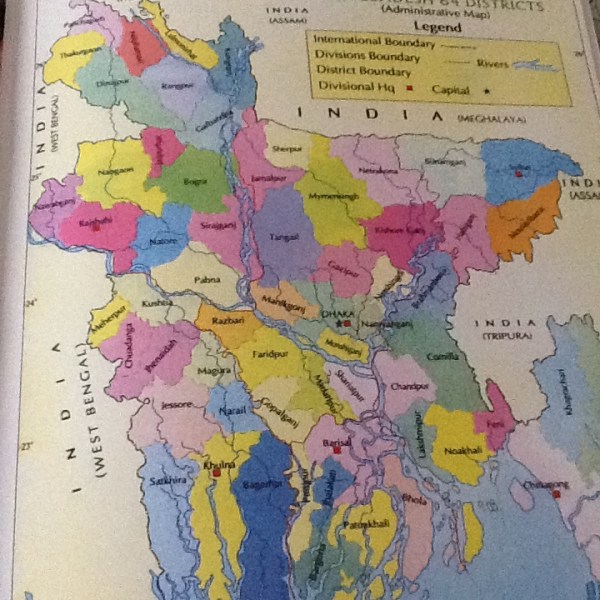
I have already listed the Pala Vamsa (dynasty) kings of Bengal in part 15. Recent discoveries have revealed names of more kings who ruled Bengal area, now called West Bengal state of India and Bangladesh.


So let me add those kings to our 10,000 kings who ruled India from ancient days.


Source book

The Art Heritage of Bangladesh by Enamul Haque,Dhaka, 2007


Archeological materials are available from 450 BCE in Bangladesh

Tha Bodhayana Dharmasutra, Ramayana, Mahabharata and later books mentioned the Vangas and adjacent Lauhitya (Brahmaputra river).

Greek and Latin authors also mentioned these areas as Prasii and Gangaridai. Prasii is identified with Magadha. Market town Gange, Gangaridum are also found in their books. Gange is identified with Chandraketugarh in West Bengal (India).


Scholars think that the Greeks mentioned both Prasii and Gangadirai together because when Alexander invades India, these two empires formed joint command of their armies. Greeks say the two Indian Kingdoms had an army of

20,000 to 80,000 cavalry

200000 to 600 000 soldiers

2000 to 8000 chariots

4000 to 9000 elephants

Since various authors give different numbers approximate numbers are given. Having heard about the mighty Indian army Alexander turned back.

Vijaya, a banished king of Vanga established the first kingdom in Sri Lanka according to Mahavamsa and Dipavamsa.

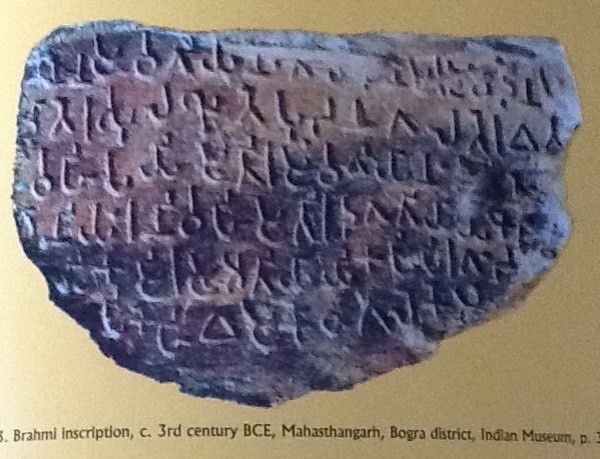
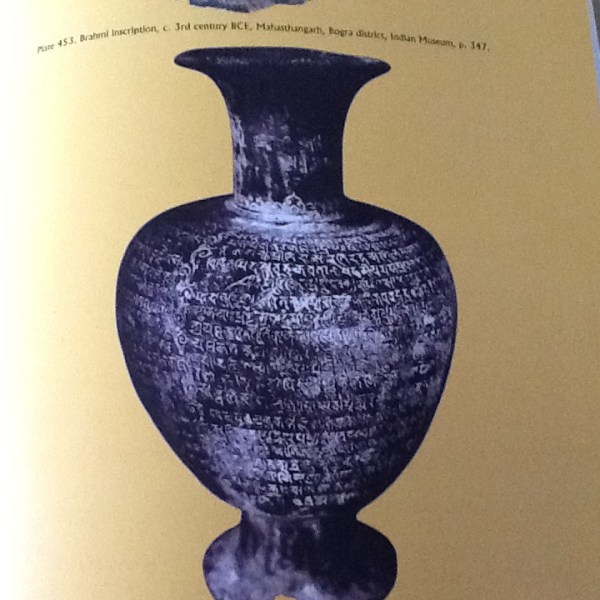
After Alexander’s departure Magadha kings might have ruled Bengal area. Indirect evidence comes from the 2nd century BCE inscription of Mahasthangarh (also known as Pundranagara).


Samudragupta inscription in Allahabad says that Vanga (Bangladesh) was part of his kingdom.

Probably it came under the Gupta Kings Chadragupta II and Samudra Gupta.

img_7945

New Kings discovered

1.Maharaja Vainyagupta (507 CE) according to Gunaighar copper plate grant (Comilla District)

2.Sasanka (594-637)

At least five copper plate inscriptions discovered in and around Kotalipara revealed three more kings

3.Gopachandra

4.Dharmaditya

5.Samacharadeva

They had Maharajadiraja title and issued god coins

6.Tibetan king Srong-tsan invaded northern Bengal in the end of 7th Century CE

7.Yasovarman, King of Kanauj slayed King of Gaur (Gaur=Gauda=Bengal)

Following feudatory chiefs are also known from Comilla area

8.Samanta Lokanatha

9.Jivadharana Rata

10.Sridharana Rata (Samatatesvara)

11.Shrimad Devatideva Bhattaraka of Chittacong 715 CE

12.Kanti deva, Chittacong, 9th Century

Akara Dynasty kings came to light recently are

13.Lalitakara

14.Ramyakara

15.Pradyumnakara

16.Antakara


17.In 2007 a new copper plate inscription was discovered and a new king’s name Shriman Attakaradeva is found in it.

After this period, the area came under Harshavardhana and then Pala Dynasty began its rule

 img_7940

LOVE STORY

Kashmiri chronicler Kalhana gives an interesting story about Bengal. According to him Kashmiri Prince Jayanta came to Pundra nagar in Bengal and fell in love with a temple dancer named Kamala. Later, one night, when a man eater lion strayed into the city, Jayanta valiantly killed the beast. Soon his identity became known and the local king offered his daughter in marriage to the prince. It is told that the prince left for Kashmir with both the ladies. Two birds in one stone!


Later Pala kings ruled the area. Rajendra Choza from the South defeated one of the Pala kings in 1022.


Ramacharitam of Sandhyakaranandi gives a list of feudatory chiefs.

Before the Pala dynasty established their rule, Kadga, Deva, Chandra and Varman dynasties were ruling certain parts of Bengal. Following kings are known from newly discovered copper plates: –

18.Khadgodyama

19.Jatakhadga

20.Devakhadga (Queen Prabhavati)

21.Rajarajabhata

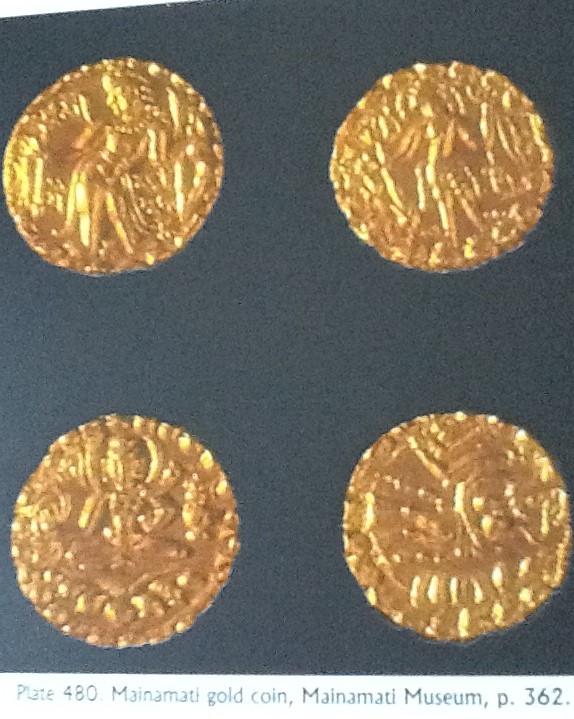
Excavations at Salban Monastery of Mainamati gave the names of unknown kings:-

22.Shri Santi Deva

23.Shri Vira Deva

24.Shri Ananda Deva

25.Shri Bhava Deva

The discoveries of the last fifty years or so now have clearly established genealogy of the kings of the Chandra Dynasty:-

26.Purnachandra

27.Suvarnachandra

28.Trilokyachandra (900-930)

29.Shri Chandra (930-975)

30.Kalyanachandra (975-1000)

31.Ladahachandra (1000- 1020)

32.Govindachandra (1020-1050)

Varmans supplanted the Pala kings in the last quarter of 11th century. The Varmans probably came from Orissa;

33.Jatavarman (who married Kalachuri King Karna’s daughter Virashri)

34.Harivarman


img_7938

SENA DYNASTY

35.Samanta sena (from Karnataka region)

36.Hemantasena

37.Vijayasena (who ruled for an amazing seventy-three years! From 1095-1168). If it is correct it is a world record!

38.Vallasena (1168-1178)

39.Laksmanasena

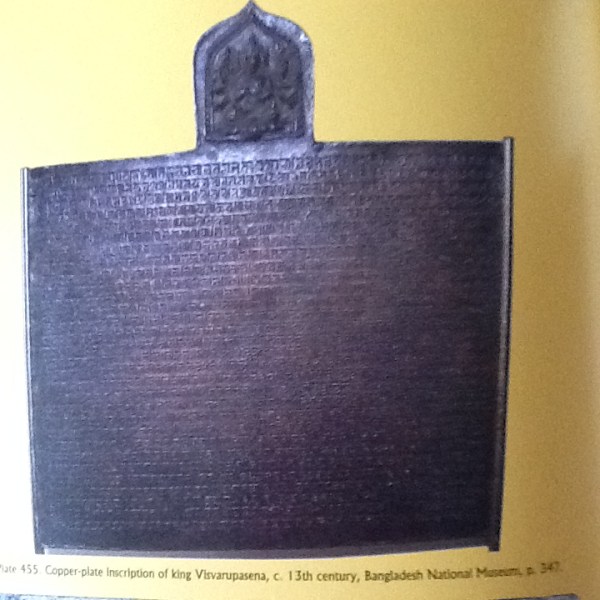
40.Vishvarupasena(1206-1220)

41.Keshavasena (1220-1223)


After this period, Muslims conquered large areas in Bengal.

From epigraphic record we get the names of following kings:

42.Purushottama

43.Madhusuthana deva

44.Vasudeva

45.Damodaradeva

46.Dasarathadeva

img_7560

A book worth buying!!!! 536 illustrations! 408 pages!!!

–subham–


Riddles in the Vedas (Post No.3135)

dogs-circle

Compiled by London Swaminathan


Date: 8 September 2016


Time uploaded in London: 16-38


Post No.3135


Pictures are taken from various sources; thanks.


Most of the foreign writers who wrote about Vedas, or in general Hindu scriptures, fall under five categories; so one must be careful before reading any foreigner’s book on Hinduism:-

1.Those who came to propagate their religion

2.Those who colonised our territories

3.Those who want to be on headlines by creating controversies

  1. Half-baked researchers; ignoramuses

5.Those who write for international book companies or to anyone who gives money.

So before buying a book use it as the touch stone. Better read books written by Indian authors except Marxists and atheists. There is no need to say anything about the bluffers who are attached to Marxism or Atheism.


Another touch stone is to see whether these trouble makers have written criticizing about any other religion. To my knowledge they did not write anything against other religions. They are cowards! Most of them are morally corrupt and bankrupt. They can’t be the judges of our culture.

Don’t ask questions about anything before you read a scripture in full. You cannot criticise anything before reading and understanding a book.


Hindu Scholar Subash kak has described the symbolism in the Vedic literature. Here is a small excerpt from his book:


Source book:

The Asvamedha, The Rite and its Logic by Subhash Kak, Delhi, 2002

dogs2

“The central idea behind the Vedic system is the notion of ‘bandhu’ (bindings or connections) between the astronomical, the terrestrial, the physiological and the spiritual. These connections are described in terms of number of characteristics, such as the 360 bones of the infant (which later fuse into the 206 bones of the adult) and the 360 days of the year. In a similar vein, the Garbha Upanishad says that the body has 180 sutures, 900 sinews. The Brhadaranyaka Upanishad takes the number of Nadis to be 72,000. All these numbers are related to 360, the nominal day count of the year.

Modern research has shown that all life comes with its inner clocks. Living organisms have rhythms that are matched to the periods of the Sun or the Moon.


It is reasonable to assume that the Vedic thinkers were aware of these connections, as were the ancient people in other cultures. The uniqueness of the Vedic vision was the extension of the bindings to the body to those in the inner landscape of the spirit.


The Vedic rites were meant to help the participant transform themselves this was accomplished through sacrifice. The place of sacrifice represents cosmos. Three fires are used which stands for the three divisions of space. The course of the sacrifice represents the year, and all such rituals forms part of continuing annual performances.


The riddle of the sacrifice is best expressed in the Asya Vamasya Hymn (Rig Veda 1-164):

I ask you about the farthest end of the earth

I ask you about the navel of the universe

I ask you about the seed end of the bursting horse

I ask you about the final abode of the speech


This altar is the farthest end of the earth

This sacrifice is the navel of the universe

The Soma is the seed of the bursting horse

This voice is the final abode of speech


The mystery of the sacrifice, with its suspension between life and death, reality and magic, logic and mystical experience is communicated in a language which is full of paradox. For example, it is stated that that Prajapati is Agni’s father, but he is also Agni’s son (SB6-1-2-26); also the gods sacrificed to the sacrifice with the sacrifice (RV 1-164-50)


The sacrifice is the drama associated with it, but rather the transformation accruing from it. Says Kena Upanishad 2-3:

“He by whom Brahma is not known, knows it.

He by whom it is known, knows it not. It is not

Known by those who know it; it is known by those who do not now it”.

Vedic ritual is also related to ongoing struggle, between the Devas and Asuras, where the Devas represent the higher cognitive centres in man and the Asuras represent the lower centres associated with the body.

dogs-1

WHITE DOG STORY IN UPANISHAD

Unfortunately, to a beginner trying to understand the Vedic system, the asuric position appears most natural and this is responsible for much misunderstanding of Vedic rites and their meaning.


Let me add that the Chandogya Upanishad warns us about those who do not understand that the rite is about paradox and regeneration, and not the actual mechanics of the theatre. It compares the ritual of such people, who look only at the outer performance, to the Udgitha of the dogs. That is what Vaka Dalbya (also called Glava Maitreya) saw of the dog udgita (C.U.1-12)


A white dog appeared and other dogs gathering around him, asked, “Sir, sing and get us food, we are hungry”.


The white dog said to them, “come to me tomorrow morning.”


The dogs came on, holding together, each dog keeping the tail of the preceding dog in his mouth, as the priests do when they are going to sing praises with the Vahispavamana hymn. After they had settled down, they began to say Hin.


Om Let us eat! Om, let us drink!”


The dangers of misreading a highly symbolic language were recognised. The Puranas warn that the asuras copy whatever the devas do and do it on a grander scale.


— Subham–


Interesting Horse Story from the Vedas (Post No.3131)

horsehead

compiled by London swaminathan


Date: 7 September 2016


Time uploaded in London: 19-27


Post No.3131


Pictures are taken from various sources; thanks.


island-horse

“Vedic ritual is a highly systematized performance of various elements, that include manipulations, formulas, liturgy, exchanges where some of these elements are varied according to specific rite these elements have symbolic significance”.


“The horse appears in the Rig Veda in connection with the story of Dadhyanc, the son of Atharvana, who knows the mystery of the sacrifice. Dadhyanc is the teacher of Madhu-vidya, the mystical doctrine that brahman is present every where (SB 4.1.5.18). the name of this Vidya comes from the essence of sweetness in all flowers, transformed by bees into honey, which is not apparent to anyone.

(S.B.= satapata Brahmana, Madhu= Honey, Vidya= knowledge, doctrine)


“Upon Dadhyanc a horse head is placed by the Asvins, who wish to learn his knowledge (R.V.1-117-22). This story is explained in SB 14-1-18/24:

Now, Dadhyanc Atharvana knew this essence, this sacrifice – how this head of the sacrifice is put on again, how this sacrifice becomes complete. Indra said to him, ‘if you teach this (mystery) to anyone else, I will cut off your head.’


Now the Asvins heard this : Dadhyanc Atharvana knows this pure essence, this sacrifice – how this head of the sacrifice is put on again, how this sacrifice becomes complete.”


They went to him and said, “Let us be your pupils”.

He asked, “What do you wish to learn?”

“This pure essence, this sacrifice – how the head of sacrifice is put on again, how the sacrifice becomes complete”, they replied.


He said, “Indra has told me, ‘if you teach it to anyone else, I will cut off your head’. Therefore, I fear that he might indeed cut off my head. I will not accept you as pupils.”

They said, “We too will protect you from him.”

“How will you protect me?”, he asked.

They said, “When you accept us as your pupils, we will cut off your head and put it aside elsewhere. Then we will bring the head of a horse and put it on you, and you will teach us with it. When you have taught us, Indra will cut off that head of yours. Then we will bring your own head, and put it on you again”. He agreed and accepted them as pupils.


When he had received them as pupils, they cut off his head and put it aside elsewhere, and having brought the head of a horse, they plaed it on him. With that he taught them. And when he had taught them, Indra cut off that head of his. Then they brought his own head and placed it on him again.


This story provides a lesson abacus the meaning of sacrifice. Dadhyanc Atharvana, SB 6-4-2-3 tells us, is speech, which is the true vehicle of sacrifice. Speech has the power to transform and it transforms the speaker himself. Having spoken, one is not the same person,so the sacrifices causes one to lose one’s original head. The horse is head (here symbolizing time) is the source of transcendent knowledge.


There is another reference to Dadhyanc in the Rig Veda (1-84). Here Indra uses his bones to slay ninety-nine Vrtras. There are various versions of this story.in one, Indra finds the bones of a dead Dadhyanc to fashion a thunderbolt to slay the Asuras (demons). In the Mahabharata (12-343) version of the story, Dadhyanc, upon hearng the unstoppable power of the demon Visvarupa, the son of Tvastr, gives up his body so that Indra can fashion a thunderbolt out of his bones. With this irresistible weapon, Indra triumphs over Visvarupa. This shows how words, even old ones like the bones of Dadhyanc represent, have the power to vanquish ignorance.

polands

Source book:

The Asvamedha, The Rite and its Logic by Subhash Kak, Delhi, 2002


My old post on the same subject:

Horse Headed Seer: Rig Veda Mystery – 1
Research Paper written by London Swaminathan

Post No.1255; Dated 27th August 2014.


Vatapi Ganapathim Bhaje! Part – 4 of Strange Stories of Ganesh Temples! (Post No.3129)

ganesha

Written by London swaminathan


Date: 6 September 2016


Time uploaded in London: 21-19


Post No.3129


Pictures are taken from various sources; thanks.


vyasaganesasivaraman

Vatapi Ganapthy Temple in TamilNadu is famous for many things. It is historical and praised by many in songs and inscriptions. It is located at Tiruchengattankudi near Tiruvarur. Let us look at a  brief history of this Ganesh.


Famous Pallava king Mahendra varman was defeated in a battle by the Chaulkya king Pulikesin II. When his son Narasimha Pallava came to power he wanted to take revenge upon him and sent an army against Vatapi under his Chief Commander Paranjothy. Pulekesin was defeated and Paranjothy took a booty from the capital one of the booty is the famous Vatapi Ganapathy which he installed in his home town Tiruchengattankudi.

(Vatapi is now called Badami in Karnataka)


This Vatapi Ganapathy is very popular in Tamil Nadu, particularly among musicians because all the students of Carnatic Music are taught this Kirtan in the very beginning. The song on Vatapi Ganapathy was composed by Muthuswami Dikshitar in Sanskrit. Set in Hamsadvani raga, it has got a deeper mysticcal meaning. He mentioned the ancient story of Vatapi, a demon devoured  by Sage Agastya (Please see my earlier post ‘Vatapi Jeerno Bhava’). Strangely this ancient story of Vatapi was mentioned by Pallava king also in one of the inscriptions. It says like Agastay won over Vatapi, Narasimha Pallava also won over Vatapi. A pun on the word Vatapi which is the name for the demon devoured and city destroyed!


There is a controversy about the oldest Ganapathy in Tamil Nadu. For three reasons scholars have come to the conclusion that Vatapi was not the oldest Ganesh in Tamil Nadu. We know that Paranjothy brought a Ganesh staue from Vatapi (Badami) in 642 CE. But Sambandhar, the most famous Saivaite saint (please see my post on Boy Wonder of Saivaite World) sang a beautiful verse on Ganesh. He was a contemporary of Narasimha Varman’s father Mahendra varman. Secondly, Sa Ganesan has proved that the Pillayar patti cave temple has got older inscriptions than this Ganesh. Thirdly, Kanchi Paramacharya has put forth valid arguments to prove that Tiruchengattankudi was not the oldest Ganapthy.

stamps-on-ganesh

Another interesting fact about Paranjothy, the Commander in Chief of Pallava Army, is he is also known as Siruthondar, one of the 63 Saivaite saints. When Pallava king came to know that his victorious commander was a humble Shiva devotee inside the temple, he thanked him for his patriotism and relieved him from all his army responsibilities and requested him to continue his religious service.

Muthuswamy Dikshitar’s “Vaataapi Ganapathim Bhaje ham, Vaataapi Ganapathim Bhaje” is sung in most of the concerts by young musicians.


Padikkassu Ganapthy

Another famous Ganapathy, located in Thiruvizimizalai is also associated with two saivaite saints Sambandhar and Appar. When there was a severe drought in the Cauvery delta area both the saints sang hymns ‘demanding’ money from God. They got one gold coin every day on the steps of the temple. Padi Kasu literally means Step or Staircase Coin. So this pillayar is known as Padikksu Pillayar.

Sveta Vinayakar

Sweta in Sanskrit means white in English. (White is derived from the Sanskrit word Swhete) This white Ganesh is made up of special and unusual materials and so no Abhishek/bathing is done. And this Vinayaka is in Tiruvizimizalai.


I have listed more than fifty famous Ganesh temples of Tamil Nadu. There are more temples in nook and corner of Tamil Nadu. When the atheist Dravidian Movement Leader E V Ramaswamy announced that they would break the Ganesh statues, more temples sprang up in every town, literally under all the banyan and peepul trees. So every temple has got one story behind it. Lot of miracles are attributed to Lord Ganesh.


It is necessary to compile all the historical information in a single encyclopaedia; at the moment only the religious details are compiled. Maharashtra and Tamil Nadu have all the famous Ganesh temples. I will write about the Ganesh temples outside Tamil Nadu in separate articles.

mumbai-ganesh-8

–Subham–


Part- 3 Strange Stories from Ganesh Temples in Tamil Nadu (Post No. 3125)

ganesh in drama

Written by London swaminathan


Date: 5 September 2016


Time uploaded in London: 18-25


Post No.3125


Pictures are taken from various sources; thanks.

ganesh dinamalar

One of the oldest or the oldest of Ganesh temples in Tamil Nadu is Pillayarpatti. Pillayar is the Tamil name for Lord Ganesh. Pillayar patti is in between Karaikkudi and Tiruppattur, very near Kundrakkudi. The small town itself is named after Ganesh. It is a cave temple, probably older than the Pallava cave temples of Tamil Nadu. Scholars who studied the inscriptions around the temple came to the conclusion that Pandyas made it before the Pallava Temples.


Other clues come from the statue carved out of the rock. It is six-foot-tall and the trunk turns towards right hand side. Most of the Ganesh statues will have the trunk turning towards left.


Apart from this, the big statue has got only two arms unlike other statues which have four arms. This Ganesh sits in Ardha Padma asana and the tusks are long and short. No ankusam and Pasam (weapons); modakam in right hand. This Ganesh is known as Karpaka Vinayakar and Desi Vinayakar Pillayar in the inscriptions. Ganesh shrine here is the main shrine and bigger than other shrines.

pillayarpatti

image of Pillayarpatti Vinayaka

Ganesh Temples in North Arcot Area

In the Northern Tamil Nadu we have three important Ganapathy temples. One of them is at Senpakkam near Vellore. Two hundred years ago a minister by name Tukoji Rao was travelling in a cart which hit a stone protruding from the ground. The stone was bleeding and the cart couldn’t move any further. Tukoji  Rao had to spend his night there. He had a dream of Ganesh asking him to build a temple.  Actually the bleeding stone was a Ganesh statue. He got grant from the king and built a temple over Ganesh that was dug out of the ground.


Another miracle happened some decades ago. When Kanchi Paramacharya (Senior Shankaracharya of Kamakoti Mutt) visited Vellore he asked the Mutt staff to break 108 coconuts for the Ganesh. It is a tradition followed in Ganesh temples. Somehow the staff forgot it. When he was coming towards Vellore his junior came behind him, on the elephant in a procession. The elephant refused to move in to Senpakkam road when it came to the junction and was goiing circles in the same junction. Suddenly the staff remembered Senior Shankaracharya’s instruction. Immediately they broke 108 coconuts for Senpakkam  Ganesh. The elephant moved and made their journey smooth.


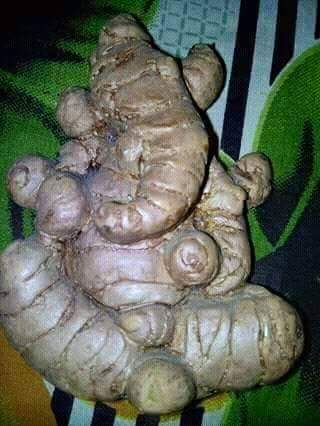
GINGER GANAPATHY ganesh pepper

Ganesh shaped in ginger and capsicum

Tiruvalam is another place where Vinayaka has a small shrine. It is believed that Vinayaka went around his father and mother to get the mango fruit (please see the story in the first part). Ganesh statue is on the banks of the River Ponnai. Famous Saivaite saint Nambi Andar Nambi praised this Ganesh in his hymn.


Another Ganapathy is called Mayapillayar (Magical Ganesh). It is said that he appeared there magically. He came out of nothing. He is in Tiruppattur (North Arcot).


To be continued…………………………..


Ganesh who ate the Prasad: Strange Stories from Tamil Temples-Part 2 (Post No. 3120)

ganesh lanka

Written by London swaminathan


Date: 4 September 2016


Time uploaded in London: 11-30 AM


Post No.3120


Pictures are taken from various sources; thanks.


Maharashtra and Tamil Nadu celebrate Ganesh Chathurthy on grander scales than other states in India. And in the same way more temples are here for Vinayaka (Ganesh/Ganapathy) with lot of local stories. One speciality about Tamil Nadu is that some of the stories are over thousand years old. We have Ganesh stories associated with Tamil Saint Sundarar of eighth century CE.


Nambiandar Nambi was a famous Saivaite who compiled the Saivaite books. He was credited with rediscovering the Tamil Thevara Hymns hidden in the Chidambaram Nataraja Temple. He got the clue only from a Ganesh statue on the banks of a river in Tirunaraiyur. When he was a boy he used to accompany his father to the temple. One day his father could not go to the temple for his regular daily Puja (worship) and so the work was entrusted to Nambi. He went to the temple and did the Puja like his father and offered the Prasad (cooked food) to the God. But the Stony Ganesh never opened his mouth. Innocent Nambi thought that it was his erroneous Puja that made the Ganesh to shut his mouth. So he started banging his head on the granite stones of the temple in frustration. Suddenly Ganesh came out of the rock and ate the food offering he brought from home. From that day he was called Polla Pillayar (the naughty Ganesh). It is believed he was the one who guided Nambi to Chidambaram to find the Thevaram Hymns.

vinayaka girls

Sundarar and Gold coins

Following story is from my previous post:-

Teleportation Miracles in Hindu scriptures

Posted on 6 March 2013

“Sundarar was one of the great Four Saivaite saints of Tamil Nadu. He lived in 8th century AD. Like other three saints he also did several miracles. One of the miracles involves teleportation. Sundarar was empty handed when he went to Vriddhachalam temple near Chennai. He was always generous in asking, in fact demanding.  He never acted like a beggar while he was begging. He sought “only gold” whenever he prayed for money. Knowing his status Shiva was also generous in giving. When Sundarar prayed for gold coins Shiva gave him 12,000 gold coins. Money always comes with problems. How to carry such a big load safely? was Sundarar’s worry. His home town Tiruvarur is not nearby. Again he went to Shiva for a solution. He told him to throw them in to the river Manimutharu and collect them at the Kamalalayam Tank in Tiruvarur temple! If it was hard earned money Sundarar would have hesitated, but it was money that came easily. So he left them in the river and went to Tiruvarur.


Sundarar told his wife Paravai that he was going to collect the coins from the local temple tank at Tiruvarur and asked her to accompany him. She would have thought that Sundarar had gone mad. But yet like a faithful wife, she followed him with lot of doubts in her mind. Sundarar stood on the banks of the vast tank (biggest temple tank in Tamil Nadu) and started singing hymns praising Lord Shiva. Surprise! Surprise! All the 12,000 coins came out intact as if they were minted under the tank!

Vridhachalam also known as Tirumudukundram is situated between Chennai and Trichy very near Viluppuram.”


And here comes our Ganesh!

When Sundarar threw the money into the river, he tested the god coins whether they were real gold coins. He made the Ganesh as a witness for all his activities there. So the Ganesh is called Maatru Uraiththa Pillayar, meaning Ganesh who tested the fineness of the gold coins.

ganesh making2

Uchchi Pillayar of Trichy

It is unusual for a Ganesh temple to be located on a hill top. And in Trichy we have a very famous temple on the top of a hill. Since he is at the top he is called Uchchi Pillayar (Ganesh at Top)


Manakkulam (Pondicherry) Vinayakar

Vinayaka means one who has none above him. He is the leader. Manakkulam Vinayaka very near the beach in Pondicheri is famous for two reasons. The greatest of the Tamil poets of modern era is Bharatiyar. When he fought for independence of India, he used to hide in the French ruled Pondicheri of Tamil Nadu (now it is a separate state). He used to worship at the temple and he sang hymns on this Ganesh naming his in poem as Manakkula Vinayaka. Thus Manakkulam Ganesh became immortal in his poems.


The second reason was that the French rulers of Pondicheri never liked big crowd assembling in front of the temple and making ‘noise’. So they threw the Ganesh statue into the sea. Surprise! surprise! The stony Ganesh (Manakkulam Vinayakar) was there in his original place the very next morning. When it came to the knowledge of the surprised authorities they helped Hindus to build a temple. Till today he is attracting a large crowd.

ganapathy rangoli

To be continued……………………….