Pictures are taken from various sources for spreading knowledge; this is a non- commercial blog. Thanks for your great pictures.
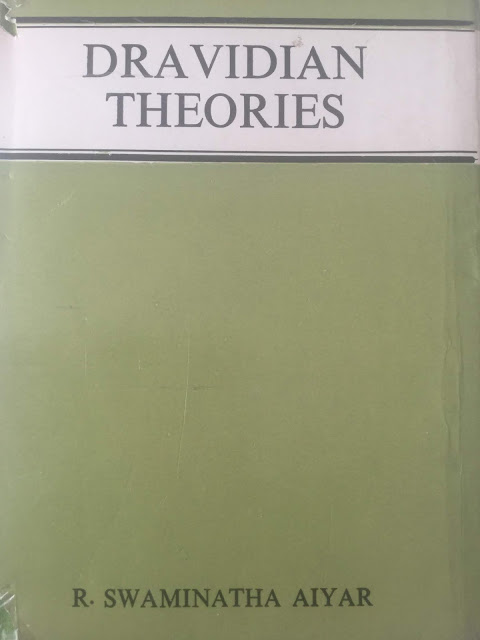
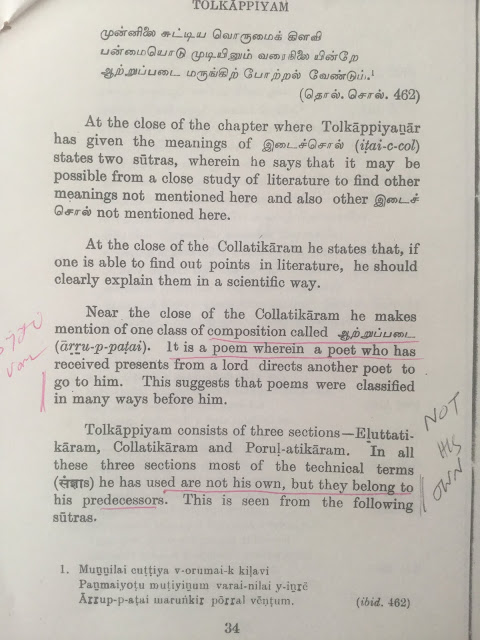
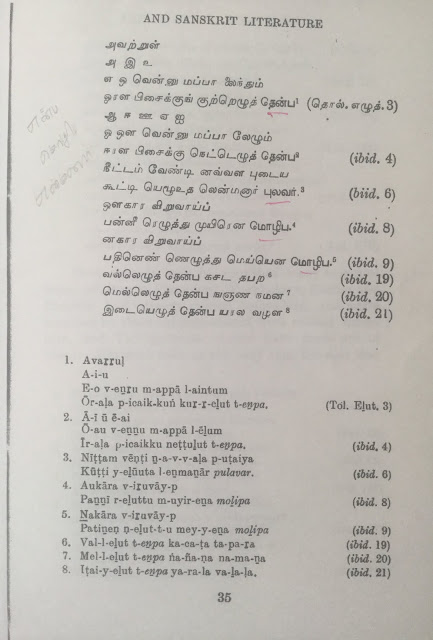
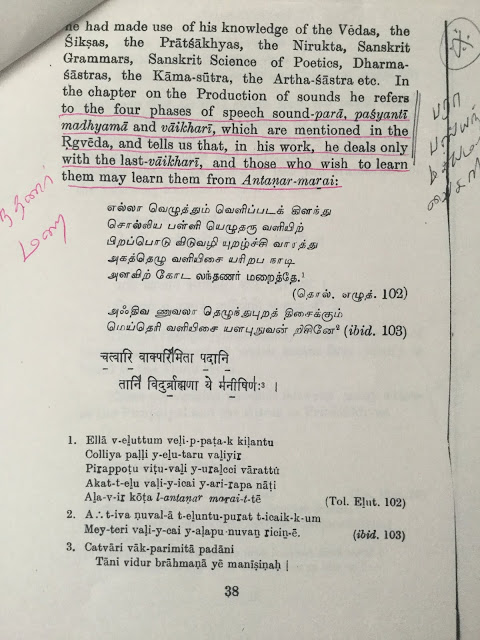
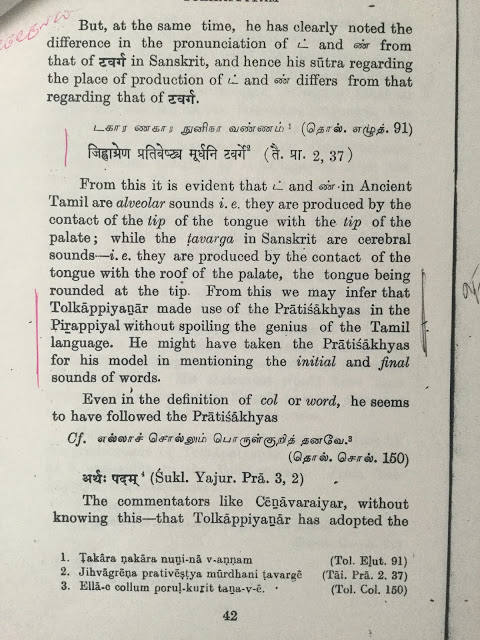
P S Subrahmnya Sastri continues his comparison of Tolkappiam with Sanskrit scriptures
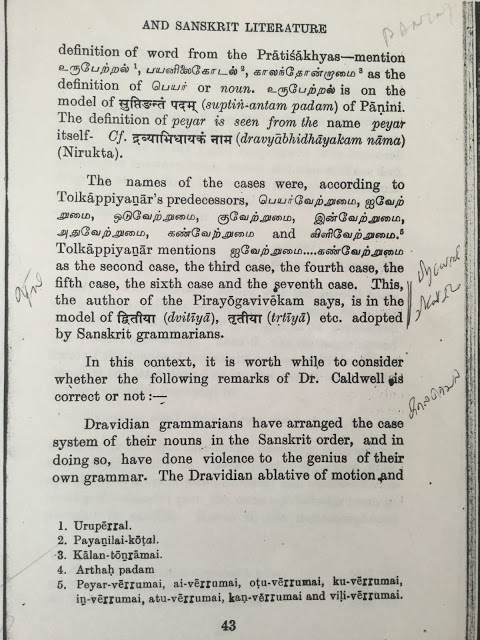
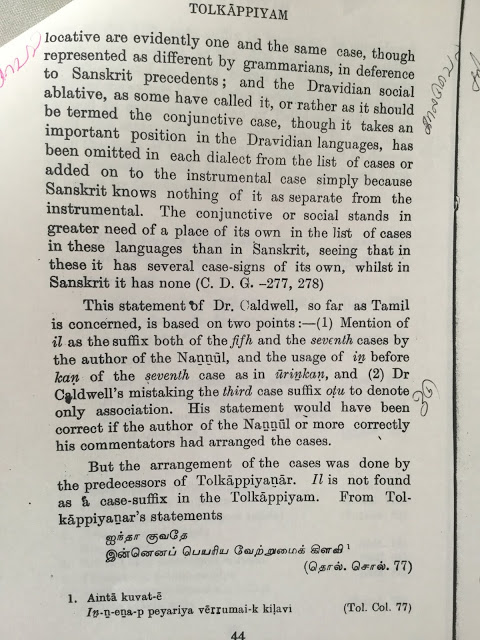
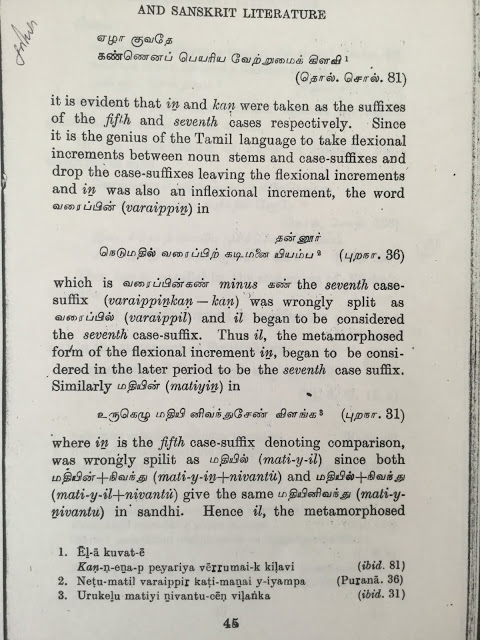
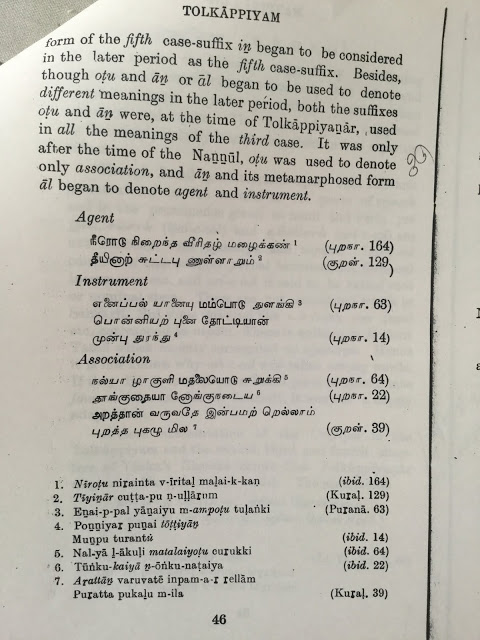
Page 43 – 47 Bishop Caldwell’s criticism against Tamils is wrong says Sastri. He exposes Caldwell’s confusion regarding case suffix in Tolkappiam and Nannul
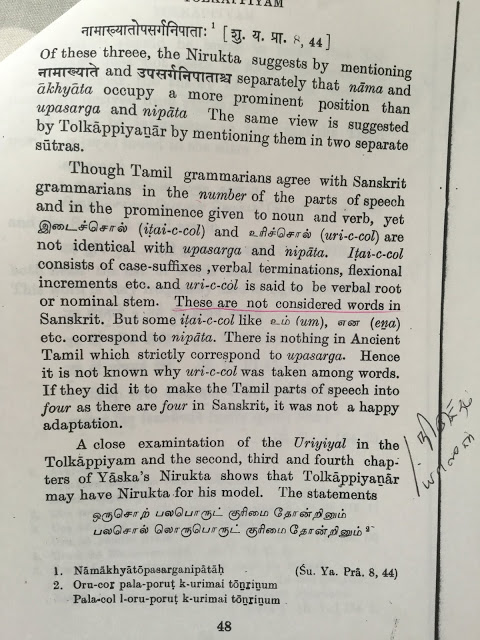
Page 48- 49Tolkappian followed Nirukta of Yaska
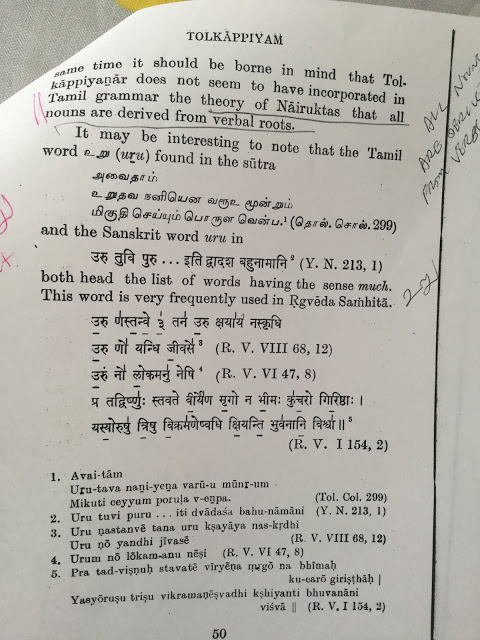
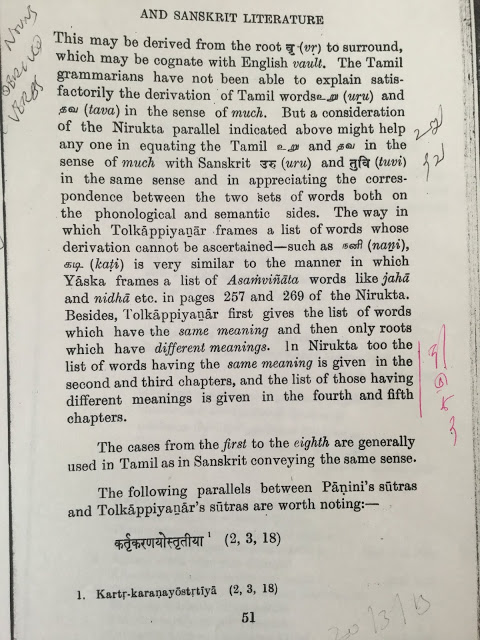
Page 50- 51 Tolkappiar followed Rig Veda in the use of Uru; in page 51 Sastri shows again how Yaska’s Nirukta is followed
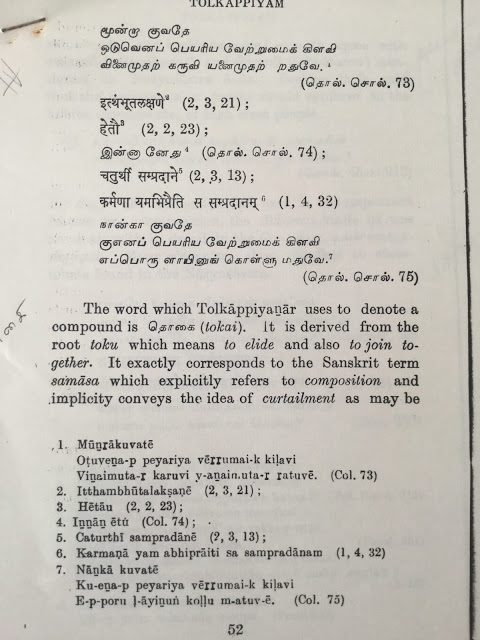
51-52 case suffixes in Tolkappiam and Paniniyam are compared
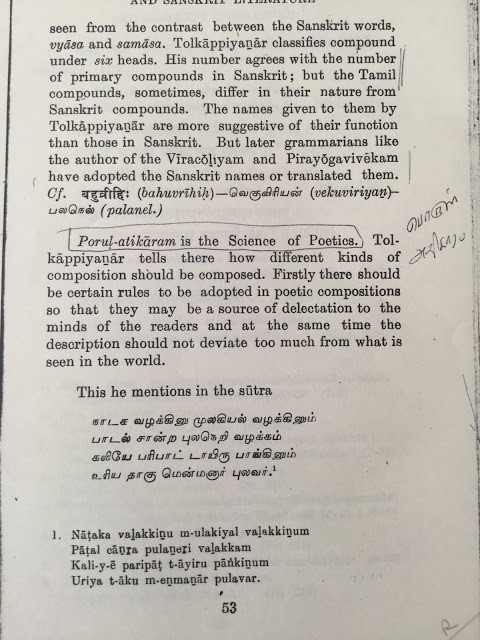
Page 52-53 Tokai of Tol. And Samasam of Sanskrit are same.
PORUL ATIKAARAM – SCIENCE OF POETICS IN TOLKAPPIAM
Now Sastri moves to the last section of Tol.
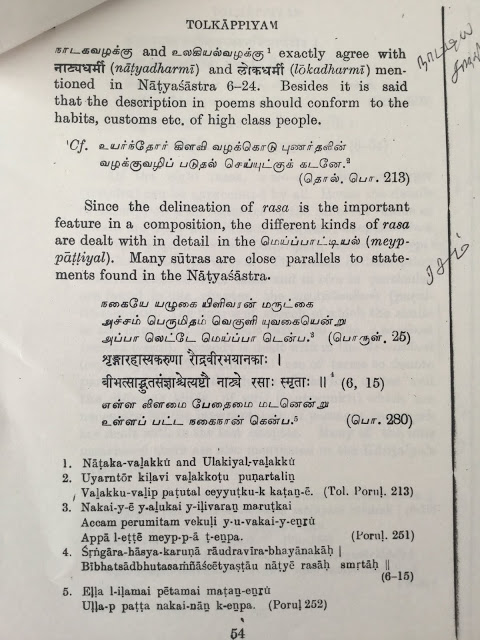
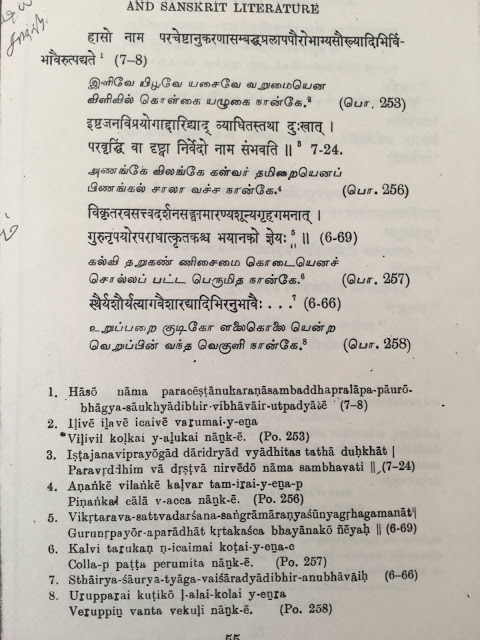
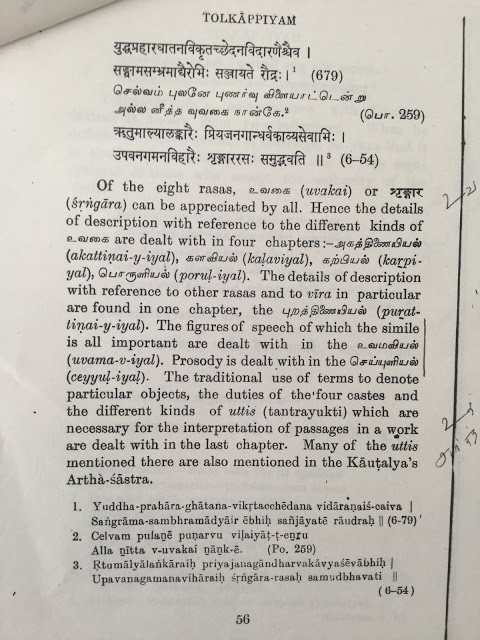
Pages 53 – 56 Tol. Followed Natya Sastra of Bharata in eight Rasas and other things
Pages 56-57 Similarities between Tol and Artha sastra of Kautilya
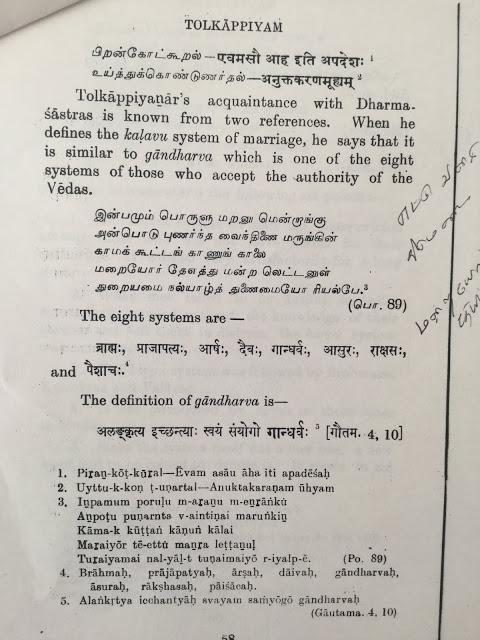
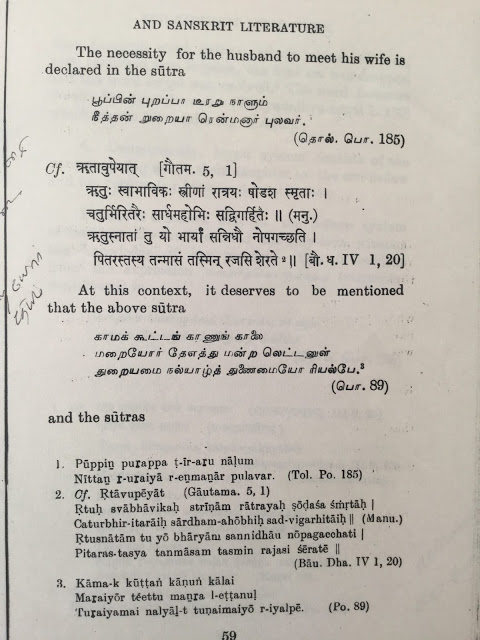
Pages 58-59 Similarities between Dharma Sastras (Manu, Gautama ) and Tol. In describing eight types of marriages.
And in Sutra Tol. Used Dharma, Artha, Kama etc.
Please see attached pages for references.
tags – Tamil-Sanskrit-5, Relationship, more Caldwell blunders,
Tyagaraja has extolled the importance and virtues of Bhakti. Why is it considered great? Is it because it is easy? No, true Bhakti is not easy. But the result is sure! In no other sphere in this world can one be sure of the desired result of his actions or efforts. But devotion to Bhagavan brings its sure rewards! “Na me bhakta pranasyati- My devotee is never destroyed”, declares Bhagavan in the Gita! (9.31) Bhagavan alone is subject to our will- nothing else in this wide world. This is not to say that He will fulfill every wish of ours, but only that if we desire Bhagavan and Bhagavan alone and make efforts in that direction, He makes Himself accessible. Our relationship with everything in this world is based on our body,and ceases with our body. But our connection with Bhagavan, once made, is for ever. We are bound to you for ever, in the seven fold seven births, declares Andal. “Etraikkum ezhezh privikkum untannodu utrome yavom”. எற்றைக்கும் ஏழேழ் பிறவிக்கும் உந்தன்னோடு உற்றோமேயாவோம் உமக்கே நாம் ஆட்செய்வோம் That is why bhakti is considered great. The bond true bhakti creates is timeless, not just permanent. Bhaktas in Puranas
But how does a true bhakta conduct himself? How can we know unless we see one in real life?
The Puranas give us names of many great devotees.One popular sloka goes:
Prahlada Narada Parashara Pundarika
Vyasaambareesha Suka Saunakha Bhishma dalpyan
Rukmangadarjuna Vasishtha Vibhishanadin
Punyaniman parama Bhagavatan smarami.
Let us remember the great devotees: Prahlada, Narada,etc.The very act of remembrance confers blessings.
Narada himself praises the Gopis of Vraja in his Bhaktisutras. Prahlada in turn praises the devotion of Gajendra, the elephant king. Manikkavachaka expresses anguish that he does not have devotion like that of the hunter, Kannappa. Our Tyagaraja Swami praises the Haridasas and Bhadrachala Ramadas. Sri Ramakrishna praised Rama Prasad. In the Ramayana, we see the devotion of Sabari. The devotion of Lakshmana and Bharata are disguised as brotherly love. Dasaratha too can be considered a great devotee of Rama, for he dies at Rama’s departure! In the Mahabharata, Kunti and Draupadi excel as devotees.
Kunti’s Prayer
In fact, Kunti dies on hearing that Krishna has left the earth. She has given us an exceptional, perhaps the best , most moving prayer in our entire devotional literature:
Yatha Hrushikesa khalena Devaki
Kamsena ruddhaadhichiram shucharphitaa
Vimochitaaham cha mahatmaja vibho
Tvayaiva naathena muhur vipatganaat.
O my Lord! Controller of the indriyas! Did you protect me like you protected Devaki who was confined in jail for long and suffered? You protected me with my children from every danger.
( Here, Kunti recalls with great feeling that Krishna protected just Devaki, his mother and did not save her six children whom Kamsa killed, whereas in her case, she was saved with all her children from every single danger and trial!)
Vipada: santu na: shashvat
Tatra tatra Jagadguro
Bhavato darsanam yatsyaad
Apunarbhava darsanam
O Krishna , the Jagadguru!
Let all those dangers befall me, which bring me your darsanam, which will remove from me the possibility of another birth!
Srimad Bhagavatam 1.8.23 &25
Her idea is that Bhagavan’s darsanam destroys future births, so it is worth having it even if dangers befall her, as they cause such darsanam. How many of us will dare to utter such a prayer?
Lives of Devotees
Our Puranas and Itihasas narrate instances of such devotees. The lives of devotees have been compiled in Marathi under the title Maha Bhakta Vijayam. The Tamil classic dealing with the lives of 63 Saivite Saints is called Periya Puranam – the Great Ancient Tale. There is a story relating to the poet-saint Avvaiyar. Once she was tested by Lord Subrahmanya in the guise of a shepherd boy who asked her what was the greatest thing in the world. After reeling off other things, she said God was the greatest thing but since He too is confined in the heart of the Devotee, it is the greatness of the Devotee which is greatest, beyond all words!
Bhakta in the Gita
Even so, we feel confident only when we see a real devotee in action. When Krishna talks of stitaprajna, Arjuna immediately asks him for a description of such a one, how does he speak, sit and walk! (Gita,2.54) Later, Bhagavan gives a description of devotee.
Adveshta sarva bhutanam
Maitra: karuna eva cha
Nirmamo nirahankara:
Sama dukkha: sukha kshamee.
Santushta: satatam yogee
Yatatma drudha nishchaya:
Mayyarpita mano buddhir
Yo mad bhakta: sa Me priya: 12.13,14
He who hates no creature, and is friendly and compassionate towards all, who is free from the feelings of “I” and “mine”, even-minded in pain and pleasure, forbearing,ever content, steady in meditation,self-controlled,having firm conviction, with mind and intellect fixed on Me- such a devotee is dear to Me.
Yasmaan nodvijate loke
Lokaan nodvijate cha ya:
Harshaamarshabhayod vegair
Mukto ya:sa cha me priya: 12.15
He by whom the world is not agitated, and who cannot be agitated by the world, who is freed from joy, envy, fear,and anxiety- he is dear to Me.
Anapeksha: shuchir daksha
Udaseeno gatavyatha:
Sarvaarambha parityagi
Yo Madbhakta sa: me priya: 12.16
He who is free from dependence, who is pure, prompt, unconcerned, untroubled, renouncing (kartrutva from) every undertaking, who is devoted to Me- he is dear to Me.
Yo na hrushyati na dweshti
Na shochati na kaangshati
Shubhasubha parityaagi
Bhaktiman ya: sa me priya: 12.17
He who neither rejoices,nor hates, nor grieves nor desires, renouncing good and evil, full of devotion,-he is dear to Me.
Sama: shatrau cha mitrae cha
Tatha maanapamaanayo:
Seetoshna suhka duhkheshu
Sama: sanga vivarjita:
Tulya ninda stutir mauni
Santushto yena kena chit
Aniketa sthiramatir
Bhaktiman me priyo nara: 12.18.19
He who is the same to friend and foe, and also in honour and dishonour, who is the same in heat and cold, in pleasure and pain, who is free from attachment; to whom censure and praise are equal; who is silent, content with anything, homeless, steady-minded, full of devotion, – that man is dear to Me.
Ye tu dharmyaamrutam idam
Yatoktam paryupasate
Shraddhadhaana Matparamaa
Bhaktaste ativa me priya: 12.20
And they who follow this Immortal Dharma, as described above, endowed with sraddha regarding Me as the Supreme Goal, and devoted- they are exceedingly dear to Me.
Here what tough qualities of head and heart are indicated as the requirement of a Bhakta, to qualify for Bhagavan’s approval! Bhakti is not any sentimental woolly-headedness. It involves tough discipline and cultivation of stern virtues. Above all, it involves true character!
Tyagaraja’s Bhakta
Our Tyagaraja Swami is soaked in the tradition of true bhakti. He gives us his picture of the true devotees of God.
Bhaktuni chaaritamu vinave manasa Sitarama
O Mind. I will tell you the conduct of a true devotee of Sitarama. Listen carefully.
(Aa) Saktileka taa goruchu jeevan-
muktudai anandamu nondu…….
He has given up attachment to every thing, and is happy in himself as a jivan mukta.
Japatapamulu taa jesiti nanaraadu
adigaaga mari
kapataatmudu manamai balgaraadu
upama tanaku leka undavalenani
yoorayoora tirugagaraadu
sapala chittudaiyalu sutulapai
saaregu bhrama kaaradane Hari
He should not boast that he is performing japa and tapas.
He should not talk in a hypocritic vein.
He should not go about, seeking publicity that there is no match to him.
He should not be attached to his wife and children, with a mind full of passion.
Bhava vibhavamu nijamani yenjagaraadu
adikaka mari
Shiva madhava bhedamu jeyagaraadu
Bhuvanamandu daane yogyudanani
Bongi potta saakagaraadu
Pavanatmaja dhrutamau Sitapati
Paadamulanu yemara raadanu Hari.
He should not think that the pleasures of the world obtained in the householder’s stage are real or permanent.
He should not differentiate between Shiva and Vishnu.
He should not think that he alone is perfect, and lead a life resorting to lies.
He should never forget the Feet of Rama, always borne by Hanuman.
Rajasa tamasa gunamulu gaaraadu
Adigaakanu
Avyaja munanu raaledanagaaraadu
Rajayoga margamu nee chittamu
Rajuchuda vidavagaraadu
Rajasikamaniyaina Tyagaraja
Saguni maravaraadane Hari
The bhakta should not cultivate rajasa, tamasa gunas or be swayed by them.
He should not expect that he would gain divine grace without deserving it.
He should not give up meditation. He should not cease from striving to obtain devotion to Bhagavan.
He should never forget Hari, the friend of moon-wearing Shiva.
Tyagaraja relates some more qualities in another kriti- Karuna yela gante.
Paramatmudu jeevatmudu yogadai
Baragu chundu bhaktaparadeenuni
Karuna yela gante nee vidhame
Kalyanasundara Rama
Rama blesses those devotees who strive with the conviction that Jivatma and Paramatma are One. What are the characteristics of such a devotee?
Anrutam baadadu alpula vedadu
Sunrupula goluvadu suryuni maravadu
He will never tell lies. He will never ask for anything from low people. He will not serve even good kings. He will not forget (to worship) the Sun.
Maamsamu muttadu madhuvunu traagadu
Parahimsa seyadu yeruganu maravadu
He will not touch meat. He will not taste liquor.
He will not injure others. He will not stop learning.
Mooddeeshanamula vaadadu
Jeevanmuktudai tirugu madamunu joopadu
He will not have the three desires ( for wife, wealth and progeny). He will not go about claiming that he is a jivanmukta.
Vanchana seyadu varulado bongadu
Chanchala chittudai saukhyamu viduvadu
He will not resort to deceit or treachery. He will not utter untruth . He will not entertain worries and lose his peace of mind.
Saakshiyani delisiyandu lakshyamu viduvadu
Kanjakshuni Tyagaraja rakshakudainavaani
Having the trust that God (or own Atma) is the Eternal Witness,he will never swerve from the (spiritual) aim.
This is how Rama’s grace is obtained ( or manifests).
Unlike a yogi, or a sanyasi, the Bhakta does not leave society, but lives in it. He has therefore to integrate well with others. The Gita says that even a Jnani will have to conduct himself properly in the world and should not disturb the faith of others, in the interests of Lokasangraha. So the behaviour of the bhakta assumes importance.
Narsinh Mehta
In our spiritual literature, we have another instance of a Saint-poet giving us the characteristics of the true devotee- the real Vaishnava. This is from Sri Narsinh Mehta!
Vaishnava jan to tene kahiye
Je peed parayi jaanere
Paradukhke upakar kare toye
Man abhimaan na aanere
Sakala loka maan sahune vande
Ninda na kare kaeneere
Vaach kaach man nischala raakhe
Dhan dhan jananee taeneere
Sama drishti se trishna tyagi
Para stri jene maatare
Jihvatan ki asatya na bole
Par dhan nav jhale haath re
Moha maaya vyape nahi jene
Dridh vairagya jene man maan re
Ram Naam sun taali laagi
Sakala tirath tena tan ma re
Van lobhi ne kapat rahit che
Kaam krodh nivaarya re
Bhane Narasiyyo tenu darshan karta
Kul ekoter taarya re
He is the true Vaishnava
Who knows the pain of others.
Even if he has occasion to help others,
He will not allow his mind to get proud.
A Vaishnava tolerates and praises the whole world.
He will not speak ill of others.
He will keep his words,actions and mind pure.
His mother is indeed blessed.
He sees everything equally, gives up greed and avarice.
He regards other women as his own mother.
His tongue will not utter untruth.
He will never touch the wealth of others.
A Vaishnava does not succumb to the allurements of the world.
He is detached from worldly pleasures.
They are enchanted by the name of Ram.(God)
All the holy tirthas are in their body.
They have abjured greed and deceit.
They have renounced lust and anger.
Narsi longs to meet such a soul
Whose very sight will liberate his entire lineage.
In these days of media hype, and paid publicity, we really do not know how to identify a real devotee! But going through the literature gives us the company of many great bhaktas. It is said : Yat bhavam, tad bhavati: we become what we think of. May be, thinking of these great devotees for long will move and mould our stony hearts and convert our crude minds too to the devotional fold!!
Pictures are taken from various sources for spreading knowledge; this is a non- commercial blog. Thanks for your great pictures.
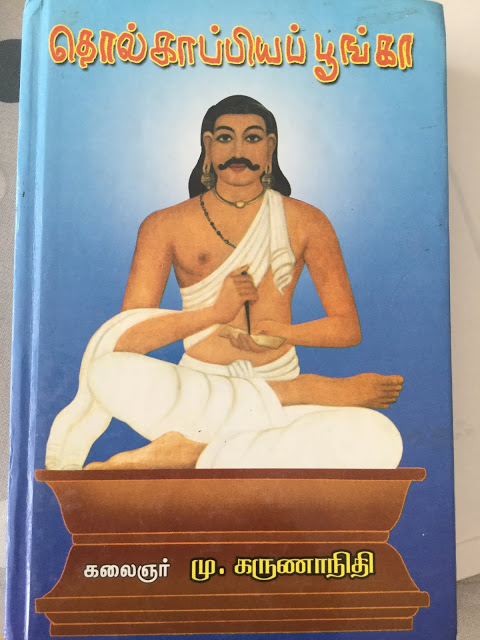
தொல்காப்பியம் பற்றிய 2 வினோத புஸ்தகங்கள்
பழைய புஸ்தகங்களையும் பேப்பர் கட்டிங் (Paper Cuttings) குகளையும் வெகு வேகமாகக் களைந்து வருகிறேன். சில, நண்பர்கள் கைகளிலும் , பல, குப்பைத் தொட்டிகளிலும் விழுந்து வருகின்றன . தொல்காப்பியம் பற்றிய இரண்டு வினோத புஸ்தகங்களைப் பற்றி எழுதிவிட்டு நண்பர்களிடம் கொடுக்க ஆசை. ‘பிளாக்’குகள் வந்தவுடன் தமிழில் 10,000 பிளாக்குகளுக்கு மேல் உதயமாயின; இப்போது இன்னும் அதிகரித்திருக்கும். புஸ்தகம் வெளியிடும் பதிப்பகம் வந்தவுடன் எல்லோரும் எழுதி புஸ்தகம் வெளியிடத் துவங்கினர். பழங்கலத்திலேயே ஒரு நூலுக்குப் பல உரைகாரர்கள் இருந்தனர். திருக்குறளுக்கே அந்தக் காலத்தில் பத்து உரைகள் ! நல்ல வேளையாக நமக்கு 5 உரை மட்டுமே கிட்டின. அதற்கென்ன நாங்கள் எழுதுகிறோம் என்று திராவிடங்களும் எழுதத் துவங்கின. நல்ல வேளை ! அவைகளைப் பார்த்து ரத்தக் கண்ணீர் விட வள்ளுவனும் இல்லை. பரிமேல் அழகர் போன்ற உரைகாரர்களும் இல்லை.
இதே போல தொல்காப்பியத்துக்கும் உச்சிமேற் புலவர் நச்சினார்க்கு இனியர் உள்பட குறைந்தது ஐந்து உரைகள் உண்டு. நச்சி எழுதியதை பிச்சி எறிய புது உரைகள் வந்தன. இரண்டு பற்றி மட்டும் பார்ப்போம்.
ஒன்று வள்ளலார் கருத்துக்கள், சைவ நூல் கருத்துக்களை நம்புவோர் எழுதியது.. ஆராய்ச்சியாளர்கள் மு.இராமலிங்கம், பகீரதன் எழுதியது. முதற்பதிப்பு 1994. வெளியிட்டது -இராமலிங்க பணி மன்றம் , சென்னை.
உலகில் எந்த மொழியிலும் கிடைத்த முதல் நூல் இலக்கண நூல் இல்லை. ஆனால் தமிழன் மட்டும் தங்களுக்கு கிடைத்த நூல்களில் முதல் நூல் இலக்கண நூல் தான். அதுதான் தொல்காப்பியம் என்கிறான். போகட்டும் நம்புவோமாக.
பல நூறு நூல்கள் எங்களிடம் இருந்தன; அவை அழிந்ததால் இந்த நிலை என்று தமிழர்கள் சப்பைக்கட்டு கட்டுவர். இது பசையுள்ள வாதம் இல்லை என்பது கிரேக்க, சம்ஸ்க்ருத மொழிகளில் அ ழிந்த நூல்களின் எண்ணிக்கையைப் பார்ப்பவருக்குத் தெரியும்.
இந்த நூலில் தொல்காப்பியம் ஓம் என்ற பிரணவ மந்திரத்தில் தோன்றிய யந்திர நூல் என்கின்றனர் ஆசிரியர்கள். குமரிக்கண்டத்தில் கி.மு.8756-ல் ஒரு கடல்கோள் ஏற்பட்டது . அதில் இறந்தவர்களைத் தான் வள்ளுவர் தென்புலத்தார் என்று கூறுகிறார் என்ற புரட்சிக் கருத்தும் உளது. தொல்காப்பியத்தில் இடைச் செருகல்கள் உண்டு (எ .கா.வைசிகன் பெருமை வாணிக வாழ்க்கை) என்று முன்னுரையிலேயே கூறிவிடுகின்றனர்.
தொல்காப்பியத்தை எழுதியது அகத்தியர் என்றும் மொத்தம் 7 அகத்தியர் இருந்ததாகவும் முதல் அகத்தியர் 10, 000 ஆண்டுகளுக்கு முன்னர் இதை இயற்றியதாகவும் சொல்கின்றனர் .தமிழில் எத்தனை எழுத்துக்கள், ஆய்த எழுத்து ஏன்? என்பதற்கெல்லாம் புது செய்திகளை அளிக்கின்றனர்.
தொல் . செய்யுளின் தவறான வைப்பு முறையை மாற்றி எழுதியுள்ளதாகச் சொல்லி புது எண்களும் கொடுக்கின்றனர் தொல்காப்பியத்தின் காலம் 10,000 ஆண்டுகளுக்கு முன்னர் என்று காட்டும் இவர்கள் பிற மொழிகளின் வரலாற்றை அறியாதவர்கள் என்பதைக் காட்டிக் கொடுத்து விடுகிறது..
போகிறபோக்கில் ஆங்கிலம் உள்பட எல்லா மொழிகளுக்கும் 33 எழுத்துக்களே (ஒலி வடிவம்) என்றும் செப்பிவிடுகின்றனர்.
காலஞ்சென்ற பொள்ளாச்சி நா. மகாலிங்கம் தமிழுக்குச் செய்த சேவை அளப்பரியது. தமிழ் கூறு நல்லுலகம் அவருக்கு என்றும் கடமைப்பட்டுள்ளது. தமிழின் மீதுள்ள பேரன்பினால்தான் அவர் இத்தகைய புஸ்தகங்களுக்கு ஆக்கமும் ஊக்கமும் கொடுத்திருப்பார் என்பதைச் சொல்லத் தேவை இல்லை. அவர் பெயர் தமிழர்கள் உள்ளத்தில் என்றும் நிலைத்து நிற்கும் இத்தருணத்தில் சொல்லக் கடமைப்பட்டுள்ளேன்.
*****
இனி இரண்டாவது நூலைக் காண்போம். தலைப்பு தொல்காப்பியத்தில் அகப்பொருள் – பொருளதிகாரம் – எளிய தெளிவுரை ; ஆசிரியர் வழக்கறிஞர் நா. விவேகானந்தன் ; விவேகானந்தா பதிப்பகம் , நாகர்கோவில், 1999.
இதில் பொருளதிகாரம் முழுவதையும் காமத்துப் பால் என்று வருணிக்கிறார். சொல்லப்போனால் அடல்ட்ஸ் ஒன்லி ADULTS ONLY நூல்; பெண்கள் படிக்கக்கூட கஷ்டப்படுவார்கள். எந்தச் செய்யுளை படித்தாலும், நீங்கள் ஜனன உறுப்புகளையும் படுக்கை அறையையும் நினைவில் வைத்துக் கொண்டு படிக்க வேண்டும்; அர்த்தம் செய்துகொள்ள வேண்டும் என்பதைச் சொல்லாமல் சொல்லுகிறார்.
‘பொருளதிகாரப் பூட்டைத் திறக்க இதோ என் சாவி’ என்ற முதற் பகுதியிலேயே ஒவ்வொரு சொல்லுக்கும் இவர் காணும் பொருள் என்ன என்று சொல்லிவிட்டு துவங்குகிறார். அதை இங்கு திருப்பி எழுதினாலேயே இந்தக் கட்டுரை PORNOGRAPHY போர்னோகிராபி (காமக்களியாட்ட நூல்) ஆகிவிடும் என்பதால் இத்துடன் நிறுத்திக் கொள்கிறேன்.
இப்படியும் தமிழில் உரைகள் வரக்கூடும்; எதிர்காலத்தில் இதையும் விட மோசமாக வரக்கூடும் என்பதை எச்சரிக்கவே இக்கட்டுரை.
டாக்டர் இரா. நாகசாமி போன்ற பேரறிஞர்களுடன் பேசுகையில் தொல்காப்பியம் ஒரு இசை நூல் என்பர். அதை விரிவாக எழுதுங்களேன் என்று கெஞ்சசுவேன்.
ஆனால் ‘தேவர் அனையர் கயவர்’ என்ற திருக்குறள் வரியையே தேவர் ஜாதி, கள்ளர் ஜாதி என்று திரித்து உரை எழுதும் பேதைகளிடையே நல்லுரைகள் எடுபடுமா என்ற ஐயப்பாடும் அவ்வப்போது எழும். இருந்த போதிலும் இந்துக்களின் பெரிய நம்பிக்கை- உண்மையை எவராலும் மறைக்க முடியாது. அது ஆயிரம் கோடி சூரியப் பிரகாசத்துடன் கரு மேகங்களைக் கலைத்து விட்டு வெளியே வரும் என்ற நம்பிக்கையில் வாழ்வோமாக
குருநானக்கின் புதல்வரான ஸ்ரீ சந்த், உதாஸி பிரிவை ஸ்தாபித்தவ்ர். அவரைப் பற்றிய நிஜ சம்பவம் ஒன்று உண்டு.
1625ஆம் ஆண்டு. ஒரு நாள் ஹிமாசல் பிரதேசத்தில் சம்பா மாவட்டத்தில் உள்ள இராவதி (ராவி என்று இன்று அழைக்கப்படும் நதி) நதிக் கரைக்கு அவர் வந்தார். நதியைக் கடந்து அக்கரைக்குப் போக விரும்பிய அவர் படகு ஏதேனும் தென்படுகிறதா என்று பார்த்தார். ஒரு படகும் இல்லை. நதிக் கரையில் ஒரு பெரிய பாறை இருந்தது. அதைப் பார்த்த அவர் அந்தப் பாறை அருகே சென்று, “ஓ! கல் பாறையே! நான் ஒரு உண்மையான சாது என்றால், எனக்கு சற்றேனும் தபோசக்தி இருக்குமெனில் என்னை அக்கரைக்குக் கொண்டு விடு” என்றார்.
பிறகு அந்தப் பாறையில் நதியில் தள்ளி விட்டு அதன் மீது ஏறி அமர்ந்தார்.
என்ன ஆச்சரியம்! பாறை நீரில் அமிழவில்லை. மிதந்து சென்று மகான் ஸ்ரீ சந்தை அக்கரைக்குக் கொண்டு விட்டது.
நதிக்கரையில் இறங்கிய அவர் அந்த பாறைக்கு நன்றி சொல்லி விட்டுத் தன் வழியே ஏகினார்.
இந்தச் சம்பவத்தைப் பலரும் பார்த்துக் கொண்டிருந்தனர்; அவர்கள் அனைவரும் பிரமித்து நின்றனர். விஷயம் செவி வழிச் செய்தியாக எங்கும் பரவியது.
பல சாதுக்கள் அந்த பாறை அருகில் சென்று ஸ்ரீ சந்த் சொன்னது போலவே சொல்லிப் பார்த்தனர்,
அந்தப் பாறை நீரின் அடி ஆழத்தில் அமிழ்ந்ததே தவிர எவரையும் அக்கரைக்குக் கொண்டு செல்லவில்லை.
ஆண்டுகள் உருண்டோடின.
1703ஆம் ஆண்டு. அந்த நதிக் கரைக்கு பனகந்தி பாபா என்ற சாது வந்தார். அங்கு படகு ஏதும் தென்படாததால் அந்தப் பாறைக்கு அருகில் வந்து, “என்னை அக்கரைக்கு கொண்டு விடு” என்றார். பாறை மீது ஏறி அமர்ந்தார். பாறை நீரில் அமிழவில்லை; மாறாக அவரை அக்கரை கொண்டு சேர்த்தது!
உண்மையான சாதுக்களை ஏந்தி மிதந்து செல்லும் அந்தப் பாறை இன்னும் இராவதி நதிக் கரையில் இருப்பதாகவும் அது இருக்குமிடம் சரியாகத் தெரியவில்லை என்றும் அங்கிருப்போர் இன்றும் சொல்லி வருகின்றனர்.
உண்மையான சாதுக்களை இனம் கண்டு பாறாங்கல்லானது மிதக்கும் சக்தி கொண்டு ஆற்று வெள்ளத்தில் நீந்தி அக்கரைக்குச் செல்வது சாத்தியம் என்பதை நவீன காலம் நிரூபிக்கிறது என்றால் சங்க காலத்தில் மதுரையில் நடந்த திருவிளையாடல் சாத்தியமில்லையா என்ன?
சங்கப் பலகை தந்த படலம்!
மதுரையில் நடந்த 64 திருவிளையாடல்களில் 51வது திருவிளையாடலாக அமைவது சங்கப் பலகை தந்த படலம்.
அதன் சுருக்கம் இது தான்:-
தமிழை ஈந்த சிவபிரான் சங்கப் புலவர்களின் திறமையை அளவிட அவர்களின் வேண்டுகோளின் படி சங்கப் பலகை ஒன்றைத் தந்து அருளினார். உண்மையான புலமை மிக்கவர்களை அது ஏற்றுக் கொள்ளும். இல்லையேல் பலகையில் இடம் தராது கீழே தள்ளி விடும்.
இது எப்படி ஏற்பட்டது என்பது தான் 51வது திருவிளையாடல் கூறும் வரலாறு.
ஒருமுறை பிரம்மா சரஸ்வதி, சாவித்திரி, காயத்ரி ஆகிய முப்பெரும் தேவியருடன் கங்கையில் நீராடச் சென்றார்.
அப்போது கந்தர்வ கன்னி ஒருத்தி யாழினை மீட்ட அந்த இசையால் ஈர்க்கப்பட்ட சரஸ்வதி அதில் லயித்து அப்படியே நின்று விட்டாள்.
பிரம்மாவோ மற்ற இருவருடன் கங்கையில் நீராடி வெளியே வந்தார்.
என்னை விட்டுக் குளித்தது நியாயமா என்று சரஸ்வதி பிரம்மாவைக் கேட்க அவர், “நீ இசையில் மூழ்கி நின்று விட்டாய். அது தவறல்லவா? இக்குற்றம் புரிந்த நீ மானுடப் பிறவியை உனது வடிவமாகிய 48 எழுத்துக்கள் நாற்பத்தெட்டு புலவர்களாக எடுப்பாயாக. சிவபிரான் தலைமைப் புலவராகத் தோன்றி புலமையைக் காப்பார்” என்றார்.
அதே போல நாற்பத்தெட்டு எழுத்துக்களும் நாற்பத்தெட்டு புலவர்களாக அவதரித்தனர்.
சம்ஸ்கிருத எழுத்துக்கள் 50 அல்லது 51 என்று கூறுவர். 68 என்று வசிஷ்டர் கூறுவார். நடைமுறைப் பழக்கத்தில் கூறுகின்ற ஐம்பத்தோரு அக்ஷரங்களில் ள க்ஷ போன்றவை இல்லாமல் இருப்பது 48 எழுத்துக்கள். இந்த எழுத்துக்களே புலவர்களாகத் தோன்றினர் என்பர்.
(இ – ள்.) முகிழ்தரும் முலை – அரும்பு போலும் முலையையுடைய மாதே, நின் மெய்யாம் முதல் எழுத்து ஐம்பத்து ஒன்றில் – நினது வடிவமாகிய ஐம்பத்தொரு முதலெழுத்துக்களில், திகழ்தரும் – விளங்கா நின்ற, ஆகாரம் ஆதி ஹாகாரம் ஈறாச் செப்பிப் புகழ்தரும் நாற்பத்தெட்டும் – ஆகாரம் முதல் ஹாகாரம் இறுதியாகக் கூறிப் புகழப்பட்ட நாற்பத்தெட்டு எழுத்துக்களும், நாற்பத்து எண் புலவர் ஆகி – நாற்பத்தெட்டுப் புலவர்களாகி, அகழ்தரு கடல்சூழ் ஞாலத்து – தோண்டிய கடல் சூழ்ந்த நிலவுலகில், அவதரித்திடுவ ஆக -அவதரித்திடுவனவாக.
‘நாற்பத்தெட்டெழுத்து – வடமொழி உயிரெழுத்தில் ஆகாரம் முதலிய பதினைந்தும் ககரம் முதலிய முப்பத்து மூன்றும் ஆம். க்ஷ முதலியன கூட்டெழுத்து ஆதலின் விலக்கப்பட்டன. சீர் நிரம்புதற்கு ஹாகாரம் என நெடிலாக்கிச் சாரியை கொடுத்தார்’ என்று இப்படி 48 எழுத்துக்கள் கொண்டமைக்கு விளக்கவுரை கூறும்.
இந்த நாற்பெத்தெட்டெண்மரும் நாடெங்கும் சென்று தம் புலமையால் அனைவரையும் வென்றனர்.
மதுரை வந்த போது அவர்களை எதிர் கொண்டழைத்த சொக்கநாதர் கோவிலினுள் சென்று மறைந்தார்.
சிவபிரானின் அருள் திறத்தால் மனம் மகிழ்ந்த புலவர்கள் பாண்டிய மன்னனை வணங்கிப் பாடினர்.
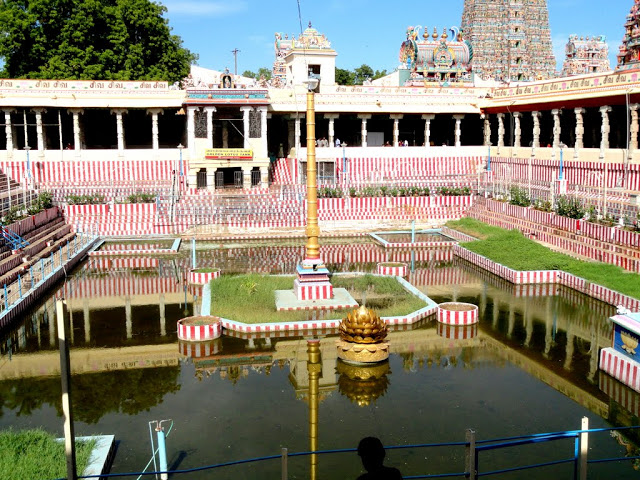
பாண்டியன் மீனாட்சி அம்மன் கோவிலில் வடமேற்குதிசையில் ஒரு சங்க மண்டபம் அமைத்து இறையனாரைத் தலைவராகக் கொண்டு நக்கீரர் உள்ளிட்ட 48 புலவர்களுக்கு அதில் இடம் தந்து கௌரவித்தான்.
இந்தப் புலவர்கள் இறையனாரை புலமையை அளக்க ஒரு அளவுகோல் தருமாறு வேண்ட அவரும் ஒரு சங்கப் பலகையைத் தந்தார். பலகையோ சிறியது.
ஆனால் இறையனார், “புலமை சரியாக இருப்பின் இது அகன்று இடம் தரும், கவலை வேண்டாம்” என்று கூறி அருளினார்.
புலவர்கள் மகிழ்ந்து பாடல்களைக் கூற சரியான புலமைக்கு அந்தப் பலகை அகன்று இடம் தந்தது.
இதே பலகை தான் வள்ளுவரின் திருக்குறளை மட்டும் ஏந்தி இதர நூல்களைப் புறம் தள்ளியது.
ஆக, சங்க காலத்தில் இறைவனின் சங்கப் பலகையே புலவர்களின் அருமையையும் தமிழின் பெருமையையும் சங்கம் வளர்த்த தமிழ் மதுரையில் உணர்த்தியது.
*
Mr V Santanam, my father behind Sri Rajaji
தெயவத் தமிழ் பற்றிய விழாக்கள்!
மதுரையில் பழைய காலத்தில் எங்கள் குடும்பத்தினர் தினமும் மீனாட்சி அம்மன் கோவிலுக்குச் செல்வது வழக்கம்.
அங்கு வடமேற்கு மூலையில் அமைந்திருக்கும் சங்கப் புலவர் மண்டபம் சற்று இருட்டாகத் தான் காட்சி அளிக்கும்.
மிகச் சிலரே அந்த பிரகாரத்தைச் சுற்றுவர். தவறாமல் சங்கப் புலவர்களை எட்டிப் பார்த்து நமஸ்கரிப்பது எங்கள் வழக்கம்.
சில போலித் தமிழ் திராவிடங்கள் தமிழை காதல் மட்டும் உள்ள தமிழாக மாற்ற முனைந்து ‘அகநானூறே ஆடி வா, புறநானூறே பொங்கி வா’ போன்ற கோஷங்களை எழுப்பிய காலம் அது. அப்போது எனது தந்தையார் – தினமணி திரு வெ.சந்தானம் , தினமணி மதுரைப் பதிப்பின் பொறுப்பாசிரியராகப் பணியாற்றியவர் – மதுரையில் ‘தெய்வத் தமிழ் சங்கம்’ உருவாக்கி ஏராளமானோரை தெய்வத் தமிழின் தெய்வத் தன்மையை அனைவருக்கும் உணர்த்தினார்.
கல்லல் இராமநாதன் என்று ஒரு இசைக் கலைஞர். அருமையாக இசை நிகழ்ச்சியை வில்லுப்பாட்டுடன் அந்தக் காலத்தில் நடத்திப் பெரும் பெயர் பெற்றவர்.
அவரை எங்கள் இல்லத்திற்கு வரவழைத்து ஏராளமான கருத்துக்களை என் தந்தையார் தந்து அவரை ஊக்குவிக்கவே அவர் தெய்வத்தமிழின் தெய்வீகத்தை இசை வடிவில் அமைத்தார். அவரது மனைவியும் ஒரு பெரிய இசை வல்லுநர் என்பது குறிப்பிடத் தகுந்தது.
மதுரையில் நாயக்கர் புதுத் தெருவில் பிரம்மாண்டமான கூட்டத்தில் அவர்கள் இசை நிகழ்ச்சி நடந்தது.
அனைவரும் மகிழ்ந்தனர். இதில் பெரும் பங்கை எனது தந்தையாரின் நண்பரும் பெரிய வக்கீலுமான கே. லெட்சுமிநரசிம்மன் வகித்தார்.
அந்தக் காலத்தில் – ஐம்பதுகள், அறுபதுகளில் – பாரதியார் விழாவும் மதுரை முழுவதும் ஆங்காங்கே பிரமாதமாக நடக்கும். பாரதியார் விழா தமிழ் விழாவாக, தேசபக்தி விழாவாக ஜொலிக்கும்!
தெய்வத் தமிழ் தந்த மதுரையில் தமிழுக்கு நடந்த விழாக்கள் மெய் சிலிர்க்க வைப்பவை!
We have already seen that the ultimate or supreme teaching of the Gita is unqualified surrender or ananya bhakti to Bhagavan. Pandits and philosophers make much of the distinction between the different paths but the Gita makes no such distinction. Bhagavan is there at the end of every path. But whereas other paths depend on other (external) means or aids, Bhakti depends on Bhagavan alone at every stage. This is the real significance of the way of devotion. Prahlada says in the Bhagavata:
Manye dhanaabhi jana rupa tapa: shrutauja- steja: prabhava bala paurusha buddhi yogaa: Naaradhanaya hi bhavanti parasya pumso bhaktyaa tutosha Bhagavan gaja yuthapaya. 7-9-9
I think that wealth, good lineage,one’s rupam, tapas, learning, atma tejas, other kinds of excellence, strength, yoga- none of these has the capacity to make Bhagavan happy. But Bhagavan became happy with Gajendra only on account of his bhakti.
Even a jnani has to recognise Bhagavan.
Teshaam jnani nityayukta ekabhaktir visishyate Priyohi janninoatyartham aham sa cha mama priya: Gita.7.17
Among those, that jnani who is ever united with me with undiluted devotion- that bhakta exels. Because I am dear to the jnani who knows Me as I am; he is also dear to me.
(Note how Bhagavan qualifies Jnani here: as one devoted to Him!)
The yogi also has to think of Bhagavan. Ananya chetaa: satatam yo maam smarati nityasa: Tasyaaham sulabha: Partha nitya yuktasya yogina: Gita 8.14 I am easily attainable by that steadfast yogi who ever remembers Me constantly and daily, with singlemindedness, O Partha Mana: samyamya macchitto Yukta aasita Mat para. 6.14
Mind ever controlled, and always thinking of Me, let him sit in yoga, having Me as his supreme goal.
Earlier Bhagavan said the same words in respect of the Stitaprajna: Taani sarvani samyamya Yukta aasita Mat para 2.61 The steadfast, having controlled them all, sits focussed on Me as the Supreme.
Thus, whatever path is followed, it is Bhagavan who is reached at the end. Why then follow all the tortuous paths? Why not be a devotee straight away?
This is what Sri Tyagaraja advocates.
Bhakti- the straight path
Bhakti rahita sastra vidhati dura …..(Mamava Satatam)
He cannot be reached by those who have mastered the Sastras without Bhakti.
Valachi Bhakti margamu tonu ……(Chalamelara) With fondness, I am following the way of Bhakti. Chitta mandu ninnunchi premato jindunchu sad bhaktulanu uttamottama ……………(Raghunandana Rajamohana)
Those real bhaktas who always focus their minds on you and keep thinking of you with love- they are the best. Yogamu neepai anuraagamu …..(Ra ra Sita) To be devoted to you- this is all my yoga. Bhagavadagresarulaku Narada, Prahlada Parashara, Ramadasulu Baaguka Sri Raghuramuni padamula Bhakti jesina reeti Tyagarajuniki ipudu
Kaligi yunte gada …….(Kaligiyunte gada)
To be able to worship you as the best of the Bhagavatas – Narada, Prahlada, Parashara, (Bhadrachala) Ramadas did- well, Tyagaraja can only get this state if he had done meritorious karma in previous births. Sri Saketa Ramuni bhaktiyane Chakkani raja margamulu Devotion to Rama is the royal path. Anuragamuleni manasuna Sujnanamu raadu Without deep bhakti, true wisdom will not arise.
Real devotees do not seek anything other than Bhakti. Varalandu kommani nayandu Vanchana seyuda nyayama Na manasunu bhaktine gori yuntaka When my heart is yearning for your bhakti alone, is it proper for you to try to deceive me by asking me to seek ( other ) boons from you? Nee sadbhakti sagita sastra vihinulaku Mokshamu galata bhuvilo? Is liberation possible for those who lack true bhakti with knowledge of music? Nee bhakti bhagya sudha- nidhi needede janmamu bhubharamu gani
Those who have taken human birth but do not swim in the nectarine ocean of your devotion- they are just a burden on the earth! Padavi nee sadbhaktiyu galgute To be having true bhakti to you- this is the greatest position one can get. Chadivi Veda sastropanishattula satta deliya lenidi padava In spite of vast learning, not knowing the essence of Veda, Sastra, Upanishad- is this a position?
Tyagaraja is quite subtle here. He means that the essence of Veda, Sastra and Upanishad is devotion to Bhagavan. Compare:
Veda sastrani vijnanam ye tat sarvam Janardanaat. …Vishnu Sahasranamam. Vedas, sastras like Itihasa Puranas, and the spiritual knowledge based on experience- all these originated from Janardana. Etulaina bhakti vacchutake yatnamu seyave
By any kind of effort, strive to acquire devotion. ( He says further that it is because the world is surrounded by maya, the body is like a bubble on the surface of water, and devotion to Bhagavan is the medicine for the disease of samsara.)
This reminds us of the celebrated sloka in the Gita:
Tameva saranam gachcha
Sarva bhaavena Bharata
Tat prasaadaat paraam shantim
Stanam prapsyasi shasvatam. 18.62
Take refuge in Him with all your heart, O Bharata! By his grace you shall attain supreme peace and the eternal abode.
Yo Maam evam asammoodho
Jaanaati purushottamam
Sa sarvavid bhajati Maam
Sarva bhaavena Bharata 15.19
He who, free from delusion, thus knows Me, the Highest Spirit, he knowing all worships Me with all his heart, O Bharata!
Note: ‘Sarva bhavena’ can be rendered also as ‘By all means’, what Tyagaraja says ‘etulaina’.
Bhakti is its own reward
Bhakti biccha meeyave bhavuga magu satvika… Mukti kakhila saktiki tri murtula kati melmi Rama O Rama! Please grant me satvika bhakti, which confers auspiciousness. That is even greater than Liberation, all the saktis and even the Trimurtis. Idho bhagyamu gaaka yemi yunnadira Rama Sada nee pada pankajamulanu sammata muga sevinchuvaari O Rama! For those who always worship your lotus feet willingly, this is the greatest pleasure, and nothing else.
Sundara Dasaratha nandana hrudayaara Vindamuna ninnunchi tane brahma-
O the handsome one! Dasaratha’s son! For those who keep you always in their hearts and derive brahmananda, and wherever they see Lord Shiva wearing the moon, all the devas, noble Brahmins, treat them all as Yourself- for such people, what other pleasure is needed?
You told me that you will fall in the net of true devotees who depend on you, that you will make me swim in the ocean of bhakti- you told me this after much deliberation!
Fall in the net of true devotees: as Manickavachaka says: பக்திவலையில்படுவோன்காண்க
Nee namamu che namati nirmala mainati (jnana mosagarada) Through your nama samkirtana, my mind has become pure. Apparama bhakti yento goppara maa- trippatalanu nilpi kanti reppavalenu gaachuna
O my Father! Rama bhakti is so great! It will stop the thought waves of the mind and protect us like the eyelids protect the eyes!
Tyagaraja then enumerates the deeds of others done due to Rama bhakti-
Lakshmidevi valachuna
Lakshmanundu goluchuna
Sukshma bhddhi gala Bharatudu
Joochi joochi solasuna maa
Shabari yengi lichuna
Chandra dharudu mechchuna
Abhala Swamprabhaku daiva
machala padavi nichchuna maa
Kapi vaari dhaatuna
Kaliki rota gattunaa
Aparadhi Tyagraju
Kaanandamu hechchunaa maa
Appa Ramabhakti….
Unless the name is great
Will Lakshi undertake penance to attain Bhagavan?
Will Lakshmana serve so faithfully? Will Bharata, endowed with sharp intelligence, get infatuated ? Will Sabhari dare to offer the remnant of what she had tasted? Will Lord Shiva celebrate? Will God grant the fixed position to Swayamprabha? Can monkeys cross the ocean? Could Yashoda have tied (Krishna)?
That this Tyagaraja , a big sinner, got so much bliss is itself evidence of the greatness of Ramabhakti!
Tyagaraja Kritis for Parayana!
Tyagaraja kritis are full of such gems throughout. Unfortunately, in the ‘katcheri’ culture, not many are sung, and no song is rendered in full ( except the nominal Pancharatnas). But we can study the kirtanas with profit, as sahitya. In fact, we can do parayana: like the Bhagavata, it is full of the stories of devotees and the leelas of Bhagavan. Tyagaraja Swami himself has said they confer bhukti and mukti!
Pictures are taken from various sources for spreading knowledge; this is a non- commercial blog. Thanks for your great pictures.
இரத்தம் உறிஞ்சும் அட்டை வைத்தியம்
அட்டை (Leech) என்பது நீரில் வாழும் பிராணி . இதை பல நோய்களைத் தீர்க்க மனிதர்கள் பயன்படுத்தினர். இப்பொழுதும் மேலை நாடுகளிலும் ஆயுர்வேத வைத்திய சாலைகளிலும் அட்டையைப் பயன்படுத்துகின்றனர்.
சுஸ்ருதர் எழுதிய சுஸ்ருத சம்ஹிதை என்னும் மருத்துவ நூல் 2600 ஆண்டு பழமையானது.
சுஸ்ருதரும் அட்டை வைத்தியம் பற்றி எழுதி இருக்கிறார். அவர் சொல்வதாவது –
அட்டையை ஜல ஆயுகா என்று அழைப்பர் ; ஏனென்றால் தண்ணீரே அதன் உணவு ( ஆயுஹ் =உணவு );
மற்றொரு அர்த்தம்
தண்ணீரே அதன் வீடு என்பதாகும் ; ஒகஸ் = வசிக்கும் இடம்
அவைகளில் 12 வகைகள் உள்ளன. அவற்றுள் ஆறு வகை விஷமற்றவை விஷமுள்ள வவகைகள் பின்வருமாறு …………………………………………
…….. விஷம் இல்லாத வகைகள் இவை ; கிடைக்குமிடங்கள் — யவன, பாண்ட்ய, ஸஹ்ய, பவுத்தன முதலியன ; இங்கே காணப்படும் அட்டைகள் மிகப்பெரியவை.; வலுவானவை; ரத்தத்தை விரைவில் உறிஞ்சுபவை; அதிகம் சாப்பிடும்; ஆனால் விஷம் கிடையாது.
எப்படி வேலை செய்கிறது?
அட்டையின் எச்சிலில் (Saliva), அதாவது உமிழ் நீரில் அபூர்வ ரசாயனப் பொருட்கள் உள்ளன. 1.முதலாவது இது ரத்தத்தை உறையாமல் வைக்கிறது. 2.இரண்டாவதாக ரத்தத்தை இளகச் செய்கிறது. 3.அட்டை ஒருவரை கடிக்கும்போது வலி தெரியாமல் செய்ய சுரக்கும் திரவம் மயக்க மருந்து போல செயல்படுகிறது. 4.மேலும் ரத்தம் உறிஞ்சும் குணம் பாம்புக்கடி விஷம், சிலந்திக்கடி விஷயம் முதலிய விஷங்களை வெளியேற்ற உதவுகிறது. 5.உடலில் வெவ்வேறு இடத்தில் அட்டையைக் கடிக்க வைத்தால் ரத்த ஓட்டம் தங்கு தடையின்றி நடைபெறும். 6.மேலும் உடலில் நடைபெறும் ஜீரணம், உணவு தன்மயமாதல் முதலியவற்றிலும் உதவுகிறது. அட்டையைப் பயன்படுத்துகையில் 130 வெவ்வேறு ரசாயனங்கள் சுரப்பது கண்டறியப்பட்டுள்ளது.
அட்டை வைத்தியம் எகிப்து, கிரேக்கம் முதலிய நாட்டு படைப்புகளிலும் குறிப்பிடப்பட்டுள்ளதால் இதற்கு 3000, 4000 ஆண்டு வரலாறு இருக்கிறது. மெசப்பொட்டேமியா மாயா , அஸ்டெக் நாகரீகங்களிலும் பயன்பட்டது.
இந்தியாவில் சில ஆயுர்வேத மருத்துவ சாலைகளில் இது இன்றும் பயன்படுத்தப்படுகிறது. அமெரிக்கா, ஜெர்மனி, போலந்து, ஆஸ்திரியா முதலிய நாடுகள் இதை விஞ்ஞான பூர்வமானது என்று அங்கீ கரித்திருப்பதால் இந்த சிகிசிசை அங்கு கிடைக்கிறது.
என்ன நோய்கள் குணமடையும்?
இருதய நோய்கள், எக்சிமா என்னும் சொறி சிரங்கு, இரத்த சம்பந்தமான நோய்கள், கீல் வாதம், மூட்டுவலி முதலிய வியாதிகளைக் குணப்படுத்த அட்டை வைத்தியம் பயன்படுகிறது. டெமி மூர் (Hollywood Actress Demi Moore) என்னும் அமெரிக்க நடிகை, தான் இதில் பலன் அடைந்ததாக பகிரங்கமாகவே அறிவித்துள்ளார்.
ஒருவருடைய முகத்திலுள்ள(Facial wrinkles) சுருக்கங்களை நீக்கி இளமைப் பொலிவு அதிகரிக்க அட்டை வைத்தியம் உதவும். முகத்தில் பல இடங்களில் அட்டையைக் கடிக்க வைத்தால் அது சுரக்கும் மயக்க மருந்தானது முகத்தின் தசைப் பகுதியை மரத்துப்(Partial paralysis) போகச் செய்யும்; இதன் மூலம் முகத்தின் தோலில் காணப்படும் சுருக்கங்களை அகற்றலாம்..
2600 ஆண்டுகளுக்கு முன்னர் வாழ்ந்த சுஸ்ருதர் உலகத்தின் முதல் அறுவைச் சிகிச்சை நிபுணர்; இதை உலகம் முழுதும் ஒப்புக்கொண்டுள்ளது. ஆஸ்திரேலியா முதலிய நாடுகள் அவருடைய சிலையை வைத்து மரியாதை செய்திருக்கின்றன. லண்டனிலுள்ள வெல்கம் மருத்துவ ஆய்வு நிலையம் இவருடைய அறுவைச் சிகிச்சை கருவிகளைக் காட்சிக்கு வைத்தது (அதற்குச் சென்று வந்த பின்னர் இந்த பிளாக்கில் படத்துடன் கட்டுரை எழுதியுள்ளேன்.).
Demi Moore
அட்டையின் விலை என்ன?
சுஸ்ருதர் அந்தக் காலத்திலேயே 12 வகைகளைக் குறிப்பிட்டு ஆறுவகைகளுக்கு விஷம் இல்லை என்று எழுதி வைத்துள்ளார். ஐரோப்பியர்களும் ஒரு குறிப்பிட்ட வகையை மட்டும் பயன்படுத்துகின்றனர். இந்தக் கட்டுரை எழுதும் நாளில் ஒரு அட்டை விலை எட்டு (euro) யூரோ, அதாவது 8X 83 ரூபாய் = 664 ரூபாய்.
ஆயுர்வேத நூல் களில் ரக்த மோக்ஷ கர்ம (ரத்தத்தை வெளியற்றல்)அல்லது ஜலூகா அவசரண சிகிச்சை என்பர் மேலைநாடுகளில் Hirudin Therapy ஹிருதினோ தெரபி என்பர். ஒரு முறை சிகிசிசைக்கு ஆகும் செலவு , கட்டுரை எழுதும் நாளில் 40 யூரோ .ஒரு யூரோ = 83 ரூபாய்
ஒரு சிகிச்சசைக்கு ஆகும் நேரம் 1 மணி அல்லது ஒன்றரை மணி. எத்தனை அட்டைகள் தேவை என்பது சிகிச் சையைப் பொறுத்தது . ஒரு அட்டையைக் கடிக்க வைக்கையில் முள் குத்தும் உணர்ச்சி ஏற்படும். பின்னர் வலி தெரியாமல் இருக்க அட்டையே ஒரு திரவத்தைச் சுரந்து விடும் அது இருப்பதே தெரியாது . அது ரத்தத்தைக் குடித்து திருப்தி அடையும் வரை எடுக்க முடியாது. ஏனெனில் ரம்பம் போன்ற பற்களால் சதையைப் பிடித்துக் கொண்டு இருக்கும். ரத்தம் உறிஞ்சி வயிறு நிரம்பிய பின்னர் அதுவே விலகும் வீக்கம் , காயம் வராமல் இருக்க ஒரு திரவத்தைச் சுரந்து விட்டு பிடியைத் தளர்த்தும் அதாவது தான் பயன்படுத்திய அதே மிருகத்தை மீண்டும் பயன்படுத்துவதற்காக இப்படி ஒரு பாதுகாப்பு ஏற்பாடு!
ஒரு அட்டை 15 ml (எம் எல் மில்லி லிட்டர்) வரை ரத்தத்தை உறிஞ்சும் . பின்னர் ஓராண்டு வரை கூட சாப்பிடாமல் உயிர் வாழும் . ஜெர்மனி முதலிய நாடுகள் ஒரு அட்டையை ஒரு முறை மட்டுமே பயன்படுத்தலாம் என்று சட்டம் இயற்றியுள்ளன. அவற்றை உடனேயே கொல்லக்கூடாது என்ற மனிதாபிமான அடிப்படையில் ‘ஓய்வூதியம் பெறும் ‘ அட்டைகளுக்காக தனி குளத்தை கட்டி வைத்துள்ளனர். செய் நன்றி மறக்கக் கூடாதல்லவா ?
tags – இரத்தம் , அட்டை, வைத்தியம், leech therapy, சுஸ்ருதர்
Post No. 8032Date uploaded in London – – – 24 May 2020 Contact – swami_48@yahoo.com
Pictures are taken from various sources for spreading knowledge; this is a non- commercial blog. Thanks for your great pictures. ஹிந்தி படப் பாடல்கள் – 46 – இரு கனவுகள்! R. Nanjappa இரு கனவுகள்! முன்பெல்லாம் ஒரு சினிமாவில் ஒரு டிசைனில் புடவை வந்தால், அது அதே பெயரில் ஃபேஷனாகி விடும். அதே போல சில வகைப் பாடல்களும் ஒரு போக்காக அமைந்துவிடும்.. பியானோ பாட்டுக்கள், படகில்போகும் பாடல்கள், கிளப் பாட்டுக்கள், பார்ட்டி பாட்டுக்கள் என்று இப்படி ஒரு நடை உருவாகிவிடும்! தமிழ்ப் படங்களுக்கு “ப” வரிசையில் பெயர் வைத்தது போல- அது ஒரு சீஸன்! இசைஞர்கள் ஒருவரை ஒருவர் மிஞ்ச முயற்சி செய்ததால், இத்தகைய பாடல்கள் பொதுவாக நன்றாகவே, இனிமையாகவே இருந்தன! பார்ட்டி என்றால் ஏதோ பெரிய கும்பலாகத்தான் இருக்க வேண்டுமென்பதில்லை, பெரிய ஹாலில் தான் நடக்க வேண்டுமென்பதில்லை! சிறு வீட்டில், வேறு இடத்தில் ஒரிருவர் இருந்தலே போதும்! அப்படி இரு பாடல்களைப் பார்க்கலாம்.
தேரே லியே ஹி ஸாத் ரங்க் கே (1971) मैंने तेरे लिए ही सात रंग के सपने चुने सपने, सुरीले सपने कुछ हँसते, कुछ गम के तेरी आँखों के साये चुराए रसीली यादों ने
छोटी बातें, छोटी-छोटी बातों की हैं यादें बड़ी भूले नहीं, बीती हुई एक छोटी घड़ी जनम-जनम से आँखे बिछाईं तेरे लिए इन राहों ने मैंने तेरे लिए ही सात…
भोले-भाले, भोले-भाले दिल को बहलाते रहे तन्हाई में, तेरे ख्यालों को सजाते रहे कभी-कभी तो आवाज देकर मुझको जगाया ख़्वाबों ने मैंने तेरे लिए ही सात… रूठी रातें रूठी हुयी रातो को जगाया कभी तेरे लिए मीठी सुबह को बुलाया कभी तेरे बिना भी तेरे लिए ही दिए जलाये राहो में मैंने तेरे लिए ही सात रंग के सपने चुने सपने सुरीले सपने.
மைனே தேரே லியே ஹீ ஸாத் ரங்க்கே ஸப்னே சுனே,ஸப்னே, சுரீலே ஸப்னேகுச் ஹன்ஸ்தே, குச் கம் கேதேரீ ஆன்கோ கே ஸாயே சுராயே ரஸீலீ யாதோ(ன்) நேஉனக்காகவென்றே நான் வண்ண வண்ண கனவுகளைத் தேர்ந்தெடுத்தேன்!கனவுகள் – இனிய இசையுடன் கூடிய கனவுகள் !சில – மகிழ்ச்சியானவை, சில வருத்தத்துடன் கூடியவைஇனிய நினைவுகள் உன் கண்ணின் சாயையைக் கொள்ளை கொண்டு விட்டன!
பேசிய சின்னச் சின்ன விஷயங்கள்-சின்னச் சின்ன விஷயங்கள் பெரிய நினைவுகளத் தந்துவிடுகின்றன!கடந்த காலத்தின் ஒரு கணத்தைக் கூட நான் மறக்கவில்லை!ஜன்மம் ஜன்மமாக நான் இந்தப் பாதையில்உனக்காகப் பார்த்துக் கொண்டிருக்கிறேன்!உனக்காகவே இந்த வண்ணக் கனவுகள்!
கள்ளம் கபடில்லாமல் இந்த மனதை விளங்கச் செய்தேன்தனிமையில் உன்னைப் பற்றி நினைத்தேன்எப்பொழுதாவது, குரல் கொடுத்து –கனவுகள் என்னை எழுப்பிவிடும்!..உனக்காகவே இந்த பல வண்ணக் கனவுகள்!
மனதிற்கு வருத்தம் தரும் இரவுகள்- சில சமயம் சமாதானம் செய்தேன்உனக்காக இனிய காலை நேரத்தை சில சமயம் திரும்ப அழைத்தேன்நீ இல்லாவிட்டாலும் உனக்காகவே வழியில் விளக்குகளை ஏற்றி வைத்தேன்!உனக்காகவே இந்த வண்ண வண்ணக் கனவுகள்..!
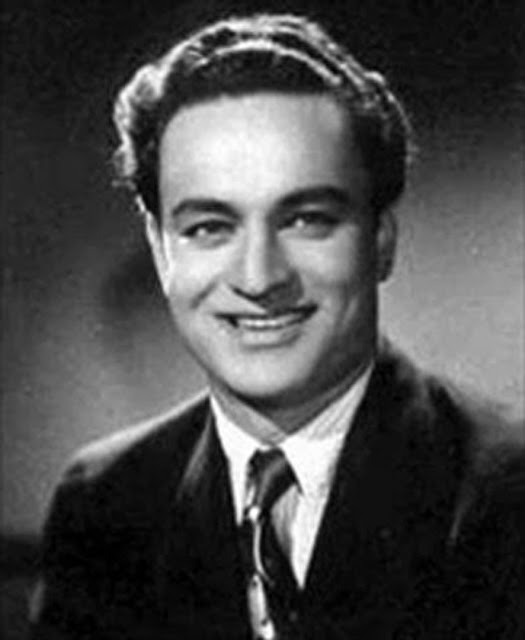
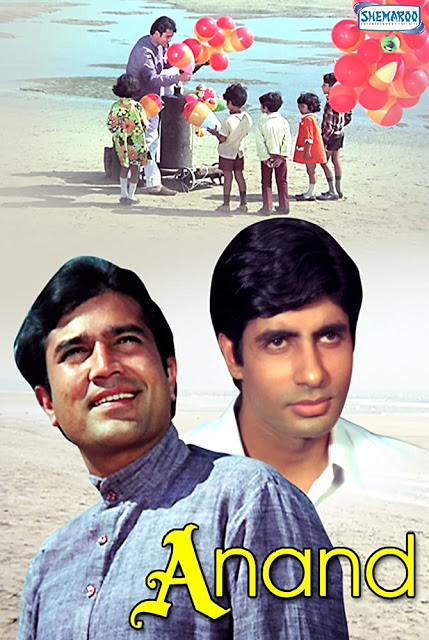
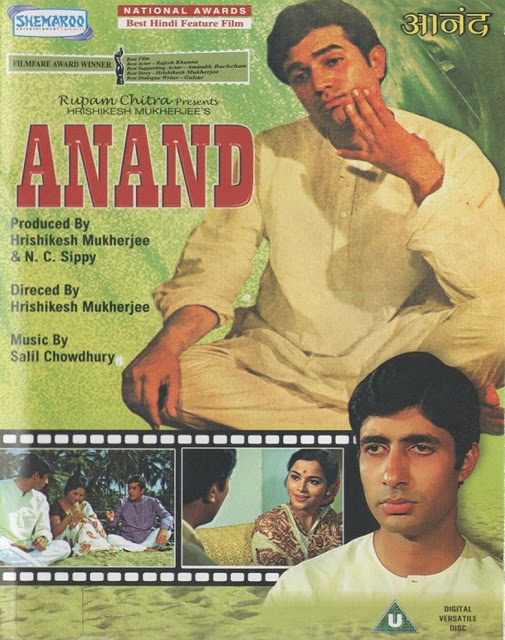
Song: Tere liye hi saat rang ke Film: Anand 1971. Lyricist: Gulzar Music: Salil Chowdhury Singer : Mukesh எத்தனை அருமையான பாட்டு! உருக்கமாகப் பாடியிருக்கிறார் முகேஷ்- அவர் குரலில் இயற்கையாக இருக்கும் தன்மை இது-இந்தப் பாட்டிற்கும் இந்தப் பாத்திரத்திற்கும், சூழ்நிலைக்கும் மிக நன்றாகப் பொருந்துகிறது. சலில் சவுத்ரியின் இசை இங்கு எளிமையாக இருக்கிறது- மெட்டு அழகிய நதிபோல் நேராகப் போகிறது. குல்ஃஜாரின் கவிதை ஒருமாதிரி இருக்கும்- கற்பனை, உருவகங்கள் வித்தியாசமாக இருக்கும். இங்கு – அதிகம் சிரமப்பட வேண்டியதில்லை. சிலவற்றை ஊகித்துக் கொள்ள வேண்டும்! இந்தப் படத்திற்கு லதா மங்கேஷ்கரை இசைஅமைக்கச் சொன்னார் ரிஷிகேஷ் முகர்ஜி. லதா பாடுவதற்கே சம்மதித்தார்! அச்சமயத்தில் ராஜேஷ் கன்னாவுக்கு பின்னணி பாடியவர் கிஷோர்குமார், ஆனாலும் இந்தப் படத்தில் முகேஷ், மன்னா டே பாடினார்கள். பொருத்தமாக அமைந்துவிட்டது. பாட்டிற்கேற்ற பாடகரைத் தேர்ந்தெடுப்பதில் இசைஞரின் தனித் திறமை பளிச்சிடுகிறது. இந்தப் பாட்டில் மூன்று சரணங்கள் இருக்கின்றன. எந்த வீடியோவிலும், ரெகார்டிலும் மூன்றும் இல்லை! இது பழைய நாட்களில் 78 rpm இருந்த போது நடக்கும். இப்போது தொழில் நுட்பம் வளார்ந்த பிறகும் ஏன் இப்படி? நமது இசை, காசுப் பிசாசுகளிடம் மாட்டிக் கொண்டிருக்கிறது! ஆனந்த் படத்தைப் பார்க்காதவர்கள் அவசியம் பார்க்கவும். பாட்டுகளை இன்னும் ரசிக்கலாம்.
இன்னொரு சூழ் நிலையில் மற்றொரு பாடல்
அஜீப் தாஸ்தான் ஹை யே (1960)
अजीब दास्ताँ है ये कहाँ शुरू कहाँ ख़तम ये मंज़िलें है कौन सी न वो समझ सके न हम अजीब दास्ताँ है ये…
ये रौशनी के साथ क्यूँ धुआं उठा चिराग से ये ख्वाब देखती हूँ मैं के जग पड़ी हूँ ख्वाब से अजीब दास्ताँ है ये…
मुबारकें तुम्हें के तुम किसी के नूर हो गए किसी के इतने पास हो के सबसे दूर हो गए अजीब दास्ताँ है ये…
किसी का प्यार ले के तुम नया जहां बसाओगे ये शाम जब भी आएगी तुम हमको याद आओगे अजीब दास्ताँ है ये…
இது ஒரு வினோதமான கதைஎங்கே ஆரம்பம், எங்கே முடிவு-இதன் இலக்கு என்ன?அவருக்கும் தெரியவில்லை, எனக்கும் தெரியவில்லைஇது வினோதமான கதை!.யே ரோஷனீ கே ஸாத் க்யூ(ன்)துவா உடா சிராக் ஸேயே க்வாப் தேக் தீ ஹூ(ன்) மைகே ஜக் படீ ஹை க்வாப் ஸே அஜீப் தாஸ்தான் ஹை யே... இந்த ஓளியுடன் ஏன் புகையும் இந்த விளக்கிலிருந்து கிளம்புகிறது?நான் ஏதேனும் கனவு காண்கிறேனாஅல்லது கனவிலிருந்து விழித்துகொண்டு விட்டேனா?இது வினோதமான கதை….
முபாரகே(ன்) தும்ஹே கே தும்கிஸீகா நூர் ஹோ கயேகிஸீ கே இத்னே பாஸ் ஹோகே ஸப்ஸே தூர் ஹோகயே
அஜீப் தாஸ்தான் ஹை யே. நீ ஒருவருடைய வாழ்வில் ஒளியாகிவிட்டாய்.உனக்கு வாழ்த்துக்கள்.ஒருவருக்கு இவ்வளவு நெருங்கி வந்து விட்டாய்-அதனால் மற்ற அனைவரிடமிருந்தும் விலகிவிட்டாய்!..இது விநோதமான கதை!
கிஸீ கா ப்யார் லேகே தும்நயா ஜகஹ் பஸாவோகேயே ஷாம் ஜப் பீ ஆயேகீதும் ஹம்கோ யாத் ஆவோகேஅஜீப் தாஸ்தான் ஹை யேஒருவருடைய அன்பைப் பெற்றுநீ புதிய உலகைத் தொடங்குவாய்இந்த மாலைப் பொழுது வரும்போதெல்லாம்உன் நினைவு எனக்கு வரும்.இது வினோதமான கதை!
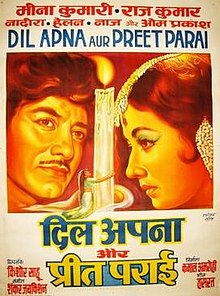
Song: Ajeeb dastan hai ye Film: Dil Apna aur Preet parai 1960 Lyrics: Shailendra Music: Shanker Jaikishan Singer: Lata Mangeshkar & chorus
What a beautiful melody this is! 60 வருஷங்களுக்குப் பிறகும் மங்காமல் இருக்கிறது! இது கதையுடன் தொடர்புடைய பாடல்- ஆனாலும் சில பொது விஷயங்களைச் சொல்கிறார் ஷைலேந்த்ரா! ஒளியுடன் புகையும் ஏன் வருகிறது? ஒருவருக்கு நெருங்கிப் போனால் மற்றவர்களிடமிருந்து விலகிப் போகவேண்டுமா? யோசிக்கவேண்டிய விஷயம்! முதல் பத்தியை வாழ்க்கைக்கே உருவகமாகக் கொள்ளலாம். வாழ்க்கை என்ற நதியில் விதி என்ற படகில் போகிறோம்! இதன் இலக்கு என்ன? இது தெரிந்தால் வாழ்க்கை என்னும் புதிர் அவிழ்ந்துவிடும்! “நீர் வழிப் படூஉம் புணைபோல் ஆருயிர் முறைவழிப் படூஉம் என்பது திறவோர் காட்சியில் தெளிந்தனம் ” என்பது புறநானூறு. 1960-ஷங்கர் ஜெய்கிஷனின் இசையில் இனிமை ஆட்சிபுரிந்தது! இந்தப் படத்தின் இசைக்கு அவர்களுக்கு ஃபிலிம்ஃபேர் அவார்டு கிடைத்தது- ஆனால் இது விவாதத்தைக் கிளப்பிவிட்டது. (தோற்றது- நௌஷத்தின் முகல்-ஏ-ஆஃஜம்!) இரண்டு பாடல்களும் கனவு பற்றிப் பேசுகின்றன! கனவு காண்கிறேனா, விழித்துக்கொண்டு விட்டேனா?
இது சீன தத்துவ அறிஞர் Zhuangzi கூறியதை நினைவு படுத்துகிறது:
Once upon a time, I, Chuang Chou, dreamt I was a butterfly, fluttering hither and thither, to all intents and purposes a butterfly. I was conscious only of my happiness as a butterfly, unaware that I was Chou. Soon I awaked, and there I was, veritably myself again. Now I do not know whether I was then a mandreaming I was a butterfly, or whether I am now a butterfly, dreaming I am a man.
























 Tamil and Vedas