PATRIOTISM: Bismarck and Californians!

40033-california-comp-sketch

Written by London swaminathan

Date : 1 September  2015

Post No. 2115

Time uploaded in London : 19-50

United-Stamp4931-california

(1).Californians are famous for their loyalty to their native state. One of its native sons was once visiting his wife’s relatives in the East. While there he had occasion to attend the funeral of a man who was little liked in the community. At the services the minister, who was new to the parish, called upon someone to say few words about the deceased. A long and significant silence ensued. Finally, the true son of California stood up and said, “Well, since there is no one present who has anything to say about our departed brother, I would like a few minutes to tell you something about California.”
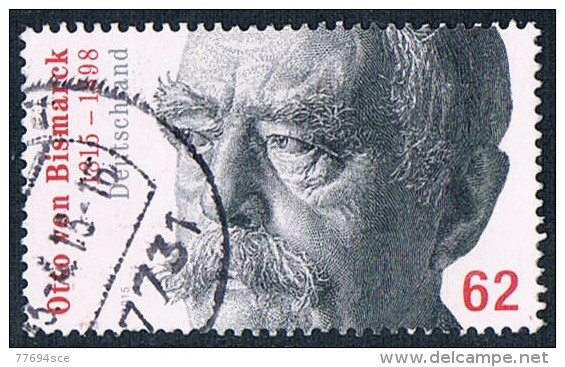
bismarck

Bismarck story

(2).Bismarck told a story of an Alpine host who, after pointing out the glories of his native land, asked a berlin youth if they had any such mountains in Berlin. “No”, he replied, “we have not got such mountains, but, if we had, they would be much finer than these.”

(3).Emperor Vespasian: Bhagavad Gita Echo!

When the Emperor Vespasian commanded a Roman senator to give his voice against the interests of his country and threatened him with immediate death if he spoke on the other side, the Roman, conscious that the attempt to serve a people was in his power, answered with a smile:

“Did I ever tell you that I was immortal? My virtues is in my own disposal, my life in yours; you do what you will, I shall do what I ought; and if I fall in the service of my country, I shall have more triumph in my death than you in all your laurels.”

((When I read this I am reminded of the Bhagavd Gita sloka/couplet: “Either slain thou shalt go to heaven; or victorious thou shalt enjoy the earth; therefore, arise, Arjuna, resolved on the battle” (2-37) “Weapons do not cleave this self, fire does not burn him; waters do not make him wet; nor does the wind make him dry. The soul is eternal (2-23)
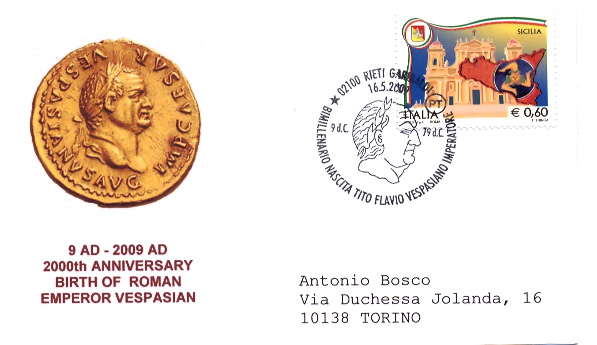
VESPASIAN

(4).Little Boy’s Reply

It was a little boy in an American school, who in his reply to his teacher’s question, “Who was the first man?” answered, “George Washington”, and upon being informed that it was Adam, exclaimed, “Ah, well! If you are speaking of foreigners, perhaps he was.”

(5).I would have produced more sons!

In the early part of the American civil war an elderly lady who attended meeting of the First Vermont Regiment, arose, full of enthusiasm, and said she thanked God that she was able to do something for her country; her two sons, all she possessed in the world, were in the regiment; and the only thing she had to regret was that she could not have known twenty years before that the war was coming – she would have furnished more.

(A True Patriot!)
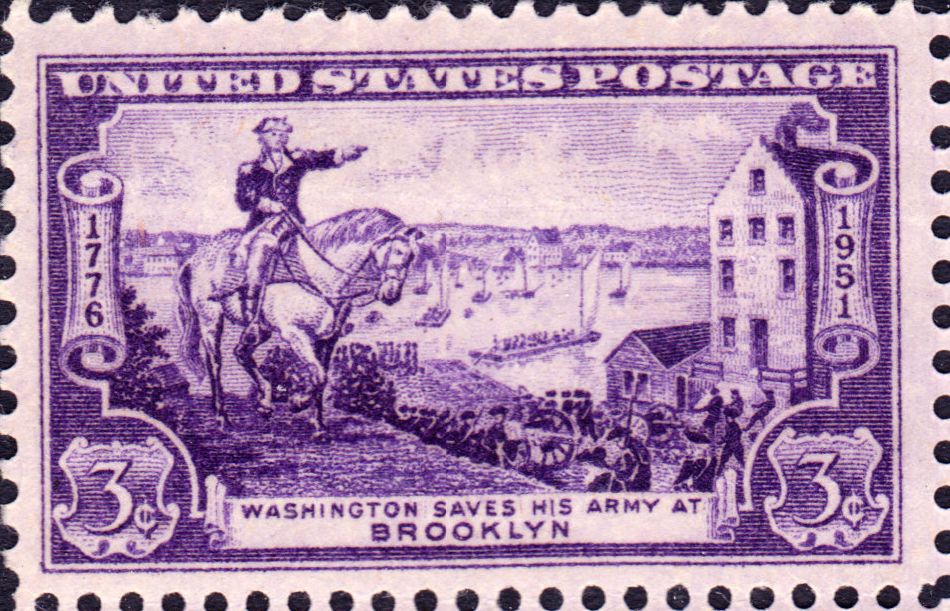
Washington_at_Brooklyn_1951_Issue-3cjpg

(6).Retort to British

Sometime after the conclusion of the revolution, a young American was present in a British playhouse, where an interlude was performed in ridicule of Americans. A number of American officers being introduced in tattered uniforms, and barefoot, the question was put to them severally: “What was your trade before you entered the army?”

One answered tailor, another a cobbler etc. the wit of the piece was to banter them for not keeping themselves in clothes and shoes, but before that could be expressed, the American exclaimed from the gallery: “Greta Britain beaten by tailors and cobblers! Hurrah!”

Even the Prime Minister, who was present, could not help smiling, amidst a general peal of laughter.

Three Popular Anecdotes on Patience

519-Maharshi-Valmiki-India-Stamp-1970

Article No. 2079
Written by London swaminathan
Date : 17  August  2015
Time uploaded in London :–  19-59

“Forbearance is the best ornament for men and women”, says sage Valmiki.

“Alankaaro hi naariinaam ksamaa to purusasya vaa” – Valmiki Ramayana


Patience is a virtue extolled in every scripture and preached by all the saints. There are popular anecdotes in the life of famous people. Tamil saint Tiruvalluvar has devoted one full chapter for it. Mahabharata and Ramayana have plenty of references to patience, forbearance and forgiving.

Retaliation gives but a day’s joy;

Forbearance brings glory for all time – Tirukkural 156

There are three anecdotes to illustrate the greatness of this virtue:

 stamp_newton

Isaac Newton and his dog Diamond

Isaac Newton’s favourite dog is Diamond which was so famous even Carlyle has mentioned it in his book on the French Revolution. One day Newton went for a walk leaving the dog at home. He had his research work on his table where there was a lighted candle. The dog had jumped on it and set fire to the papers. It was the product of his twenty year work. When Newton returned from the walk he saw the charred papers and got a shock. But he never became angry or threw the dog out of the house. He patted on its back and said, “O Diamond, You don’t know what you have done to my work.” He started writing all his work again.

Dictionary Destroyed

There is a similar story about Dr Thomas Cooper who edited a dictionary during the reign of Queen Elizabeth. He edited a learned dictionary with the addition of thirty three thousand words, and many other improvements. He had already been eight years in collecting materials for his edition, when his wife, who was a worthless and malignant woman, going one day into his library, burnt every note he had prepared under the pretence of fearing that he would kill himself with study.

The doctor shortly after came in, and seeing the destruction, inquired who the author of it was. His wife boldly avowed that it was the work of her mischievous hands. The patient man heaved a sigh and said, “Oh, Dinah, thou hast given me a world of trouble!”

Then he quietly sat down to another eight years of hard labour, to replace the notes which she had destroyed.

buddha

Buddha and Purna

Purna was one of Buddha’s disciples. He decided to preach in the region of Sudana, which was an uncivilised region.

Buddha asked, “Purna, Where are you going to preach?”

In the region of Sudana, said Purna.

What if they refuse to accept your teachings and criticise you?

That does not matter. I am happy that they did not physically hurt me.

What if they attack you?, asked the Buddha.

It does not matter. I am happy that they did not attack me with weapons.

What if they stab you or cut you with a knife?

I will be still feeling happy thinking that they did not kill me.

What if they kill you?

It does not matter. I will be happy that they helped me to get liberated

Buddha was very happy when he heard this and allowed him to go to the chosen area saying that he reached the highest stage.

valluvar

Tiruvalluvar, author of Tirukkural

Plato and Aristotle

Dr S M Diaz in his commentary on Tirukkural points out neither Plato nor Aristotle said anything about patience:

“It is surprising that these higher level virtues like forbearance, which before Christ, were not referred to by Plato and Aristotle in any of their treatises. But Sangam Tamil literature (Kalitokai 113-14; Natrinai 116)) and the Kural mention it. Obviously the Tamil society of those days, through national channels, had reached a high plateau of norms of virtue, as regards individual and social conduct.”

Some English Quotes on Patience, Forbearance and Forgiving

To err is human, to forgive is divine – Alexander Pope

Good to forgive, best to forget – Robert Browning.

Only a great soul can be superior to the injury – Cato

The best revenge is not to copy him

That was wronged you – Marcus Aurelius, Book VI-6

Unkindness must be treated with kindness – Seneca, Book 27-III

Father, forgive them; they know not what they do – Luke 23-34

The rarer action is in virtue than in vengeance – Francis Bacon

— End —

15 Anecdotes from George Bernard Shaw’s Life- Part 2

shaw5

Article No.2016

Written by London swaminathan

Swami_48@yahoo.com

Date : 24  July 2014

Time uploaded in London : 13-37


(Seven of the 15 anecdotes were published yesterday in Part-1)


8.I think of nothing but Money!

It is reported that Sam Goldwyn telephoned to G.B.Shaw and attempted to drive a bargain for the film rights for some of his plays. Shaw’s terms were stiff and Goldwyn endeavoured to whittle them down by an appeal to the artist.

“Think of millions of people who would get a chance to see your plays who would otherwise never see them. Think of the contribution it would be to art.”

“The trouble is, Mr.Goldwyn,” Shaw replied, “that you think of nothing but Art and I think of nothing but money.”

XXX

my fair lady

9.Producers

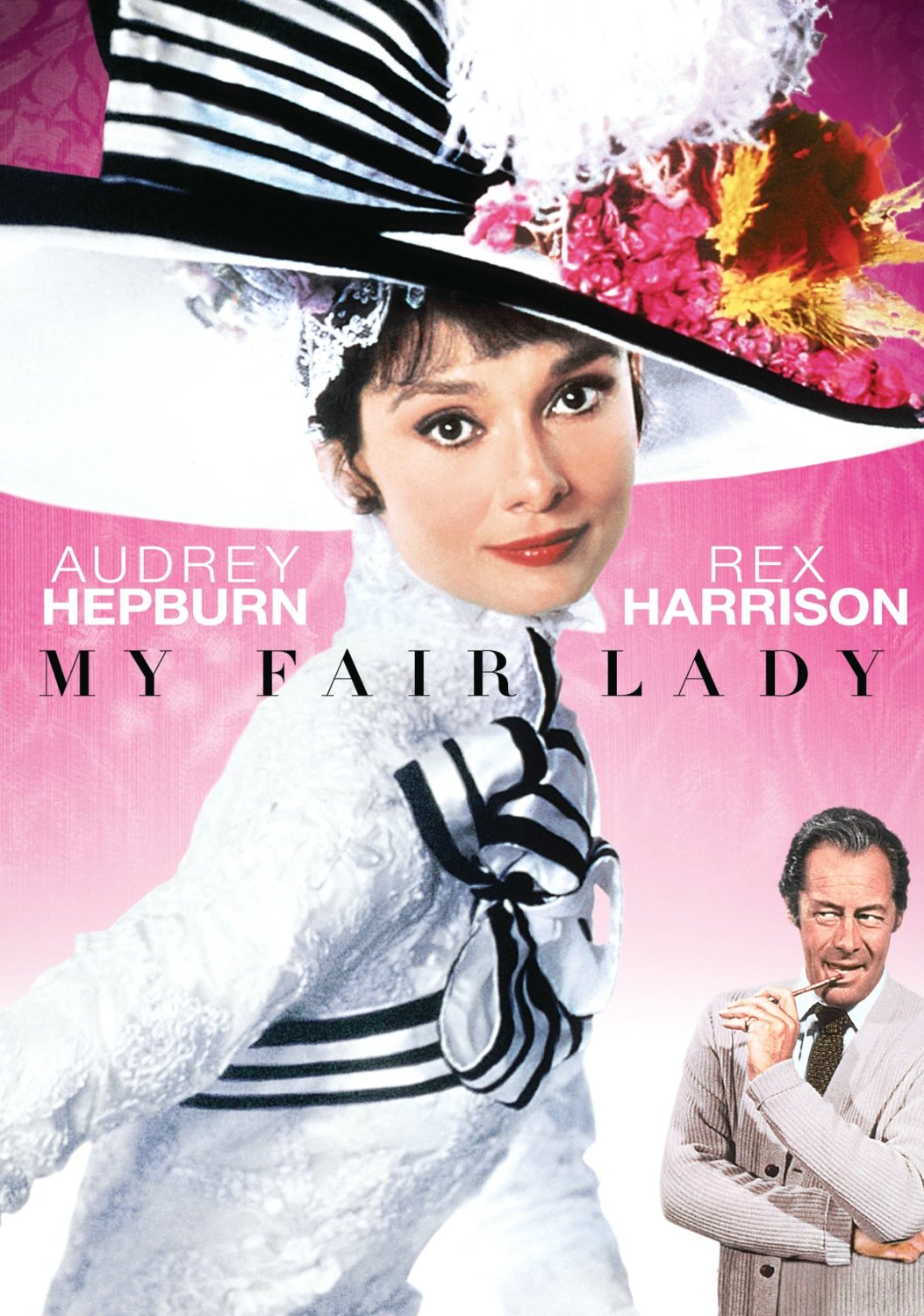
How Producer Gabriel Pascal acquired the film rights to Shaw’s plays – a mine of entertainment material practically every producer in Hollywood has tried one time or another – is utterly implausible story. In 1935, after spending six months in Hollywood doing nothing, Pascal, who had made one successful picture and a succession of shorts, left in disgust. He arrived in London, and out of a clear sky called on Shaw, whom he had never met, saying he wanted to produce his plays. When Shaw asked how much capital he had to do it with, Pascal replied: “ Fifteen shillings and six pence – but I owe a pound.”

Delighted as much with his effrontery as with Pascal’s obvious admiration for his work, Shaw gave him a pound to pay his debts, and agreed to the experiment. The successful “Pygmalion” was the result.

(My connection with Shaw’s plays: When I was working as the Producer of BBC Tamil Service in London, we produced Pygmalion in Tamil and broadcast it. I acted as professor in the play. The BBC has got official permission to translate St Joan of Shaw into Tamil, which I translated for the BBC Tamil Service. But we did not produce it in the studio for lack of time between 1987 and 1992—London swaminathan)

saintjoanplay

XXX

10.Swimming: Helped a youth

Bernard Shaw was enjoying a swim in a pool during a stay in South Africa; so were some boys who knew nothing of the august author one small boy was “dared” by his playmates to “duck the old man” for a Shilling. He accepted, but when he was close to his victim, panic seized him. Shaw turned, saw the youngster, and asked him what he wanted. In halting accents, the boy revealed the plot and the shilling bet.

“Well”, said Shaw, looking sternly at the youngster, “if you wait a moment while I get my breath, I will let you push my head under water.

He did, and the small boy swam back triumphantly to collect his shilling.

life shaw

Xxx

11.Shaw writes “Nonsense”

After the premiere performance of “Arms and the Man”, Bernard Shaw was called upon to take a bow. As he stepped forward upon the stage amidst the applause, a loud voice called from the balcony, “Come, come, Shaw, you know all this stuff is balderdash.”

((Balderdash = nonsense, senseless writing))

Shaw good-naturedly looked up toward the balcony and called back, “I quite agree with you, my friend, who are you and I against many?”

XXX

GeorgeBernard-Shaw-Heartbreak-House-1

12.True Characters in Shaw’s Drama

“When I wrote ‘Major Barbara’, the characters were modelled on people I knew. The liknesses were unmistakable, and therefore I was anxious to make sure that no words used in the play could hurt the originals. I read the play to an old dear friend of the family.  All went well till I came to the lines: “ Never call me Mother again”. ‘Oh’, said she, ‘you must not say that for those are the very words used by ….. (the character copied in the play), and used in tragic circumstances.’”

Shaw paused. Bridges opened his eyes, ‘remarkable co-incidence,” he said and closed his eyes again.

XXX

shaw wealth

13.Social Activities

Bernard Shaw one day received an invitation from a celebrity hunter: “Lady X will be at home Thursday between four and six.”

The author returned the card; underneath he had written: “Mr Bernard Shaw likewise”.

XXX

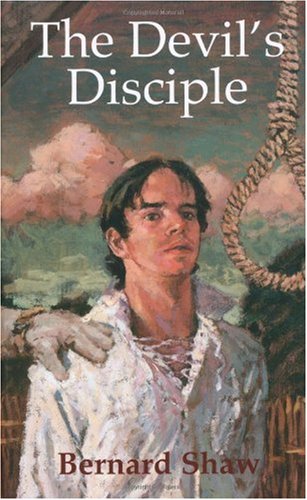
devils disciple

14.Age

“Youth”, said George Bernard Shaw, “is a wonderful thing. What a crime to waste it on children.”

XXX

15.Vegetarian Shaw

George Bernard Shaw was noted as a vegetarian. On time, at a dinner party in London, he had before him on his plate the special concoction which was always provided for him, consisting of some greens with a mixture of salad oils.

Sir James Barrie, who was Shaw’s neighbour at the table, bent over him and, in a confidential tone, asked, “Tell me one thing, Shaw, have you eaten that are you going to?”

george_bernard_shaw_quote

-End–

KINDNESS: Seven Anecdotes and Quotations

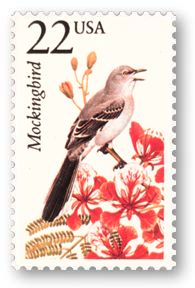
mockingbirdstamp

Article No.2010

Written by London swaminathan

Swami_48@yahoo.com

Date : 22  July 2015

Time uploaded in London : 19-27

“The soul of love must live within,

Or bodies are but bone and skin” (Tirukkural 80)

“What is righteousness sans kindness?”

“Ko Dharmah krpyaa vinaa”

“Righteousness springs from compassion”

Dayaamuulo mato dharmah –(Sanskrit Sayings)

1.Euthanasia practised by Mocking Bird!

XXX Archibald Rutledge tells this story: “When I was a boy in Carolina (USA), I was cured forever of caging wild things. Not content with hearing mocking birds (birds which mimics the sounds of other birds and insects) sing from the cedar, I determined to cage a young one, and thus a young musician all my own. On the second day in the cage, he saw his mother fly to him with food in her bill. This attention pleased me for surely the mother knew how to feed her child better than I did. The following morning my pathetic little captive was dead. When I recounted this experience to Arthur Wayne, the renowned ornithologist, he said ’A mother mocking- bird, finding her young in a cage, will sometimes take it poison berries she thinks it better for one she loves to die rather than to live in captivity,”.

Mockingbird,_

2.Abraham Lincoln

U.S. President Abraham Lincoln once dropped a few kind words about the confederates (his opponents). A woman flashed forth a question of how he could speak kindly of his enemies when he should rather destroy them.

“What, Madam, do I not destroy them when I make them my friends?”

XXX

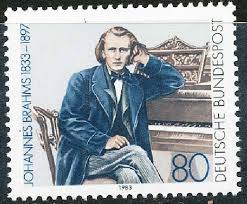
3.Brahms’ Kindness

Never was a famous composer kinder than Brahms to his young colleagues – where he found genuine talent. With might and main he urged Simrock to publish the works of Knorr, Roentgen, Fuchs and Novak. He rescued Dvorak from the direst poverty, made Simrock bring out the Slavonic Dances, and helped them to their wide success. Twice he begged Dvorac, with all his heart, to consider the Brahmsian fortune as his own. And when he learned that the Bohemian was a most incompetent proof reader, he himself actually assumed the hard work of correcting all his friend’s proofs.

XXX

4.Roadside Artist given recognition

The despised and rejected often found in this great-hearted man (Brahms) a ready ally. Widman tells how, one night under the arcades of Bologna (Italy), Brahms enthusiastically a deaf-and-dumb sidewalk artist who had drawn in the flags a portrait of Cavour (Italian statesman).” A plate stood nearby into which one could throw a coin which one might feel like offering to such art of the highways. But there was a new surprise when the coin, ringing on the hard stone, showed that the plate was not a real one but a well and truly drawn imitation. Brahms could not find words enough to praise this fine idea of the poor artist. And his offering showed how deeply he was moved by the learning that in this gifted race, even the street beggar knew how to cover his nakedness with a corner of the hem of Art’s sumptuous robe.”

brahms

XXX

5.Kindness taken for Granted!

A kindly passer- by assisted small boy in pushing a heavily loaded cart up a long, steep hill. Reaching the top, and at last getting his wind back, he said indignantly, “Only a scoundrel would expect a youngster to do a job like that! Your employer should have known it was too heavy for you.”

“He did”, replied the boy, “but he said, ‘Go on, you are sure to find some old fool who will help you up the hill.”

XXX

6.Kindness towards Trees

The sentiment of “Woodman, spare that tree”, is carried out on an extensive scale by the screen actor, Edward Everett Horton. He has a large ranch which he has converted into an “Old Tree Home.” Whenever he discovers a beautiful oak, maple, or elm condemned to be cut down to make way for highways or buildings, he purchases it and has it removed to his sanctuary for unwanted trees.

7.Tamils’ Kindness to Plants and Animals

This reminds of the famous Tamil philanthropist and chieftain Pari. He gave his chariot to a jasmine climber, seeing that it has no supporting tree nearby.

Another Tamil Chieftain Bekan gave his valuable shawl to a dancing peacock thinking that it was shivering in cold.

Sibi, a king of North West India, gave flesh from his body to an eagle just to save a dove it was chasing. This is reported in Sangam literature and Sanskrit literature.

mayil quite

Quotations

“God’s justice, as the solar blaze

Shrivels the worm, the loveless slays (Tirukkural 77)

The homes for love that find no room,

Like withered trees in deserts bloom – (78)

The heart the labouring limbs must move,

Or vain the outward life will prove (79)

Doctors and Lawyers: Western View

ICJ-and-palestine

Article No.1992

Compiled by London swaminathan

Date 13th July 2015

Time uploaded in London:  20-21

Following anecdotes will show how the lawyers and doctorswere projected in the western world 100 years ago. The anecdotes were taken from the Thesarus of Anecdotes.

ANECDOTE 1

A lawyer and a doctor having a dispute about precedence, referred it to Diogenes, who gave it in favour of the lawyer in these terms:

“Let the thief go before and the executioner follow.”

Diogenes: Greek Philosopher 412 BCE to 323 BCE

XXXX

ANECDOTE 2

A certain lawyer had his portrait done in his favourite attitude, standing with one hand in his pocket. His friends that it was an excellent picture of him. An old farmer remarked that the portrait would have looked much more like the lawyer if it had represented him with his hand in another man’s pocket instead of his own.

XXXX

ANECDOTE 3

A stranger, arriving in a small New England town, approached the first native he saw and asked:

“Have you a criminal lawyer in this town?”

“Well”, replied the native cautiously, “we think we have, but so far we can’t prove it on him.”

XXXX

ANECDOTE 4

A Dublin Attorney died in poverty and many barristers of the city subscribed to a fund for his funeral. Toler, later Lord Chief Justice of  Orbury, was approached for a shilling. “Only a shilling?” said Toler. “Only a shilling to bury an attorney? Here is guinea; go and bury 20 of them”.

Old British Currency: One guinea= 21 shillings.

XXXX

ANECDOTE 5

A man came to Newark (USA) one day and asked a landlord to direct him to a first rate lawyer

“Well”, said the landlord, “if you have a good cause, go to Frelinghysen; he is honest lawyer and never undertakes any other kind; but if you want a keen, sharp lawyer, who sticks at nothing, go to a lawyer So and so.”

He watched the stranger and he went straight to So and so.

XXXX

intl_court_stamp

ANECDOTE 6

In Kansas (USA) court a witness, a tall awkward fellow, was called to testify. The counsel for the defence said to him, “Now, sir, stand up and tell your story like a preacher”.

“No, sir”, roared the judge. “None of the; I want you to tell the truth”.

XXXX

ANECDOTE 7

The coroner’s jury was pretty thoroughly baffled as to the cause of death in a certain case. Unable to come to any conclusion, they at last officially termed the case, “An act of God under very suspicious circumstances.”

XXXX

ANECDOTE 8

The community was shocked by a killing in its midst, doubly shocked because of the fact that the killer was one of the most popular and well-liked men in the town. Realizing that the evidence against him was conclusive, the man entered his plea of guilty. No means of saving him from the electric chair could be seen.

But the jurors, all friends of his, determined to save him in spite of his plea of guilty. When, at the conclusion of the case, they were asked to give their verdict, it was “Not Guilty.”

“Now how in the world,” said the judge, “can you bring in such a verdict when the defendant pled guilty?”

“Well, your honour”, said the foreman of the jury, “the defendant is such a liar that we can’t believe him, even under oath.”

Dumas1970FR

And the Doctors……………………………

ANECDOTE 9 

Alexander Dumas, the French novelist, being the guest one day of Dr Gistal, an eminent doctor of Marseilles, was asked by his host after dinner to enrich his album with one of his witty improvisations.

“Certainly,” replied Dumas with a smile, and drawing out his pencil he wrote under the eyes of the doctor, the following lines:

“Since Dr.Gistal came to our town,

To cure diseases casual and hereditary,

The hospital has been pulled down” –

“You flatterer!”, exclaimed the doctor, mightily pleased.

But the poet went on —

“And we have made a larger cemetery.”

XXXX

ANECDOTE 10

The patient was lying on the stretcher waiting to be pushed into the operating room. “I am so nervous,” he remarked to a sympathetic young woman standing by.

“This is my first operation.”

“So am I,” said the young lady, “my husband is the doctor and it is first too.”

XXXX

ANECDOTE 11

Stephen Leacock tells this story:

“Years ago when I first got my Ph.D. degree, I was inordinately proud of it and used to sign myself ‘Dr.Leacock’ in season and out. On a trip to the Orient I put my name down that way on the passenger list of the liner (ship).

I was getting my things straight in my cabin when a steward knocked and said: Are you Dr.Leacock?

“Yes, I answered.”

“Well, the captain’s compliments, doctor, and will you please come and have a look at the second stewardess’s leg?”

I went off like a shot, realizing the obligations of a medical shot. But I had no luck. Another fellow got there ahead of me. He was a Doctor of Divinity.”

XXXX

Hospital-operation-t

ANECDOTE 12

A doctor was aroused in the middle of the night by a phone call from a man whose family he had not had occasion to render medical services for some time.

“Doctor,” said the excited man, “please come over right away. My wife is in great pain and I am sure it is appendicitis.” The doctor had been sleepily mulling over the medical history of the family and said, “Well, now, it probably isn’t like anything like that. I will come around first thing in the morning. Don’t worry. Probably just indigestion.”

“But, doctor, you have got to come. I am positive it is appendicitis,” protested the alarmed the husband.

“Oh come, Mr.Johnson”, the doctor said, somewhat irritably, “I took your wife’s appendix almost two years ago. You know as well as I do that she hasn’t got another one.”

“That is alright”, said the husband, “but I have got another wife.”

XXXX

ANECDOTE 13

Dr.Samuel Garth, the celebrated physician of Pope’s time, loved wine to excess. At a favourite club of which he was a member, he once remained to drink to a late hour. A companion said to him, ”Really, Garth, you ought to quit drinking and hurry off to your patients.”

“It is no great matter”, replied Garth, “whether I see them tonight or not.; for nine of them have such a bad constitutions that all the physicians in the world cant save them; and the other six have such good constitutions, that all the physicians in the world cant kill them.”

XXXX

ANECDOTE 14

A certain person coming to a doctor said, “Sir, when I awake from sleep I have a dizziness for half an hour, and then I feel alright.”

“Get up after the half hour,” the physician replied.

XXXX

ANECDOTE 15

Senator Beveridge told this story:

“I once saw two famous physicians introduced at a reception. They were deservedly famous, but they were of opposing schools; and the regular, as he shook the other by the hand, said loudly:

“I am glad to meet you as a gentleman, sir, though I cant admit that you are a physician.”

“And I”, said the Homoeopathist smilingly faintly, “am glad to meet you as a physician, although I cant admit you are a gentleman.”

–END–