
‘Where Women are Worshipped’………
Ancient Indian women made more literary contributions than women of any other country in the world. Hindus worshipped God as ‘He’ and ‘She’ unlike Semitic religions. Hindu women like Gargi attended big Assembly debates and challenged big scholars. Nowhere in the ancient world, have we seen such women scholars. The word ‘Other Half’ for women came from the Vedas. Hindus worship ‘Half man, Half woman’ god Ardhanareeswara. This gave birth to the Adam (Atma) and Eve (Jeevatma) story of the Bible.
(I have already posted the Two Birds Story of Upanishads fromKanchi Paramacharya’s lecture; Adam=ADMA, Eve=jEve ev atma)
Women were adored not only for their beauty but also for their intellectual acumen. We have 27 Rig Vedic poetesses around 1500 BC and 27 Tamil poetesses around 3rd Century AD. Gatha Saptasati has ten poetesses. We don’t find such a galaxy of women poets in any other part of the ancient world. The following quotations will prove the respect they commanded 2000 or 3000 years ago:
“ Yatra naryast pujyante ramante tatra devatah
Yatraitastu na pujyante sarvastatraphalah kriyah”
Manu smriti 3-56, Mahabharata 13-45-5
‘Where women are worshipped, there the gods are delighted; but where they are not worshipped, all religious ceremonies become futile’—Manu Smriti.
One acharya/Guru excels ten Upadhyayas/teachers in glory; a father excels 100 acharyas/Gurus in glory; but a MOTHER excels even a thousand fathers in glory (Manu 2-145)
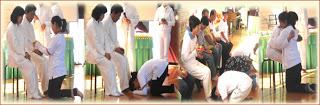
Picture: Buddhist Temple in Australia
“Her father protects her in childhood, her husband protects her in youth, and her sons protect her in old age; a woman is never independent”. Manu IX-9 (The meaning is that she is always protected and not left alone without support)
In Saptashati, Durga says, “He who conquers me in battle, he who humbles my pride, he who is my equal in this world, he shall be my husband”.
India was the only country in the world where women were free to choose their husbands. Eight types of marriages were offered to men and women. Men and women met and mixed freely at festivals like ‘Samanas’. Nowhere in the ancient world have we seen such a freedom.
“Let this heart of yours be mine, and let this heart of mine be yours”- Maha Bharata (1.3.9)
Matru Devo Bhava= Treat your Mother as a Goddess.

Kalaidasa on women
‘’Kanyeyam kula-jivitam‘’—Mahakavi Kalidas in Kumara Sambhava 6-63= ‘the girl is the very life of the family’
Nityam nivasate lakshmih kanyakasu prathisthita—Mahabharata 13-11-14= In the person of a girl, lies fortune as well as grace.
Kanyapyevam palaniya shikshaniyatiyatnatah (Mahanirvana Tantra 8-47)= a girl, too, should be brought up and educated with as much care as a son.
Purushavat yoshitopi kavi bhaveyuh, samskaro hyatmani samavaiti, na strainam paurusham va vibhagam apekshate. Shruyante drishyante cha rajaputryo mahamatya duhitaro ganikah kautuki-bharyashcha Shastra prahata bhuddayah kavayashcha—Rajashekhara in Kavya mimamsa= Like men, women too, can be poets. For potentially inheres in the self, irrespective of sex differences. It is heard as also seen that princesses, daughters of ministers, courtesans and concubines are possessed of an extensive knowledge of the scriptures and also are poets.

And of feminine forms I am fame(Kirti), prosperity (Sri), speech (Vac), memory (Smrti) , intelligence (Medha), firmness(Dhrti) and patience (Kshama).—Bhagavad gita—X-34
All good qualities are kept in feminine forms
Hindus worship God in the form of man and woman. Hinduism is the only religion where Goddess is worshipped. In other major religions, GOD is always ‘HE’. From Vedic times goddess is worshipped. In Indus valley, we see Goddess seals. Vedic gods like Raka, Muka, Maha Maya are worshipped in Tamil Nadu villages as Rakayee, Mukayee, Mahamayee. Kanchi Shankaracharya in his talks has explained it in detail. Manu Smriti, ancient Hindu Law Book, says clearly that where woman is worshipped, there God resides.
I have already written about Heroic Mother (Veera Matha) in Vedas and Sangam Tamil literature.
Pictures are taken from other sites;Thanks.
Contact swami_48@yahoo.com





 Tamil and Vedas
45 commentaries on Bhagavad Gita
The Bhagavad Gita has more than 45 commentaries. The commentary of Sankara is the most ancient of the existing ones. There were other commentaries older than his, to which he refers in his introduction, but they have not come to us.
Gita has been translated into major languages of the world. The translations are not included in the following list. Some commentaries are not available in full. Gita is multi faceted and many dimensional; a single sloka can be taken up and can be developed for days, as has been done by many commentators
Following are some important commentaries on Gita:
1.Adi Sankara
2.Ananda giri
3.Daivajnya Pandita
4.Dhanapati
5.Hanumat
6.Madhusudana
7.Nilakantha
8.Sadananda
9.Sankarananda
10.Sridhara
11.Venkatanatha
12.Jnaneswara
13.Wamana pandita
14.Kesava kasmirin
15.Ramanuja
16.Madhwa
17.Jayathirtha
18.Raghavendra
19.Ranti deva
20.Yadava prakasa
21.Narayana
Kashmira Group
22.Bhaskara
23.Abhinava Gupta
24.Ananda Vardhana
25.Rajanaka
26.Lasakaka
27.Ramakantha
28.Vasu Gupta
29.Vallabha
30.Purusottama
Modern
31.Bala Gangadhara Tilak
32.Mahatma Gandhi
33.Vinoba bhave
34.Bhakti Vedanta Prabupada
35.Chidbhavananda Swamiji
36.Swami Sivananda
37.Swami Chinmayananda
38.Sri Sathya Sai Baba
39.Paramahamsa Yogananda
40.Sarvapalli Radhakrishnan
41.V.S.Ghate
42.Ekanath Easwaran
43. Sri Aurobindo
Foreigners
44.W D P Gill
45.Senart
46.G.Thibaut
47.F.Edgerton
48.Jeanne Fowler
49.Ithamar Theodore
From “Comparative Study of the Commentaries on the Bhagavad Gita”- written by T G Mainkar.
Important words
AVATARA & MAYA appear in the Gita five times
BHAKTI with its derivatives occurs in nearly 42 places.
BRAHMAN occurs in 55 times!
For further information, please contact swami_48@yahoo.com
Earlier articles on Krishna posted by me:
1.ONE MINUTE BHAGHAVAD GITA
2.Krishna’s Diamond in USA?
3.Atom bomb to Zoo of Bhagavad Gita
4.Krishna’s Restaurant in Dwaraka: Hot Satwic Food Sold
5.ஸ்ரீ கிருஷ்ணனுடன் 60 வினாடி பேட்டி (Tamil))
6.கண்ணன் வழி….தனீ…..வழி!(Tamil)
7.கொலவெறி வைரம்
Posted by Tamil and Vedas on June 3, 2013
https://tamilandvedas.com/2013/06/03/45-commentaries-on-bhagavad-gita/