Pictures
are taken from various sources; beware of copyright rules; don’t use them
without permission; this is a non- commercial, educational blog; posted in
swamiindology.blogspot.com and tamilandvedas.com simultaneously. Average hits
per day for both the blogs 12,000
The greatest
grammarian the world has ever produced is Panini. His master piece Ashtadhyayi
(literally Eight Chapters) is the creation of a great genius. Within 4000
sutras (pithy sayings with grammar rules) he has proved that Brevity is the
soul of wit. No one else can say such rules in such a short sutras.
Panini’s knowledge
about South India is taken as one of the factors to decide his age. Goldstucker
and RG Bhandarkar placed him in the seventh century BCE. Others gave him
various dates between 4th century BCE and seventh Century BCE. But
his silence on Upanishads, Buddha, Mahavira etc place him definitely before
Buddha.
Following is
the dates given to Panini by various scholars:-
Goldstucker –
seventh century BCE
R G
Bhandarkar – seventh century BCE
D R Bandarkar
– middle of sixth century BCE
Charpentier –
500 BCE
H C Rayachaudhry
– later half of sixth century BCE.
Grierson – a
century elapsed between Panini and Asokan inscriptions
Weber – post
Alexander
Each one of
them gave his own reasons to place him in the above periods .
PANINI AND SOUTH INDIA
Panini did
not write about geography of India. But yet he gives the names of rivers, mountains
and towns to illustrate some rules.
Panini besides
referring to the seas and the islands lying near the coast and mid ocean,
actually mentions the portion of country which lies between the tropics as antar ayana desa. It can refer only
to Deccan lying south of the Tropic of Cancer, which passes through Kachcha and
Avanti.
Panini also
knows of Asmaka on the banks of modern Godavari. He also refers to Kalinga. And
people who lived before Panini also mentioned several places in the south. That
indirectly proves that south India was known to them.
Pictures are taken from various
sources; beware of copyright rules; don’t use them without permission; this is
a non- commercial, educational blog; posted in swamiindology.blogspot.com and
tamilandvedas.com simultaneously. Average hits per day for both the blogs
12,000
மநு
நீதி நூல் – Part 45
ரெவரண்ட்
ஜி.யூ. போப் முதல் அண்மையில் பேரரறிஞர் டாக்டர் இரா.நாகசாமி வரை பலரும்
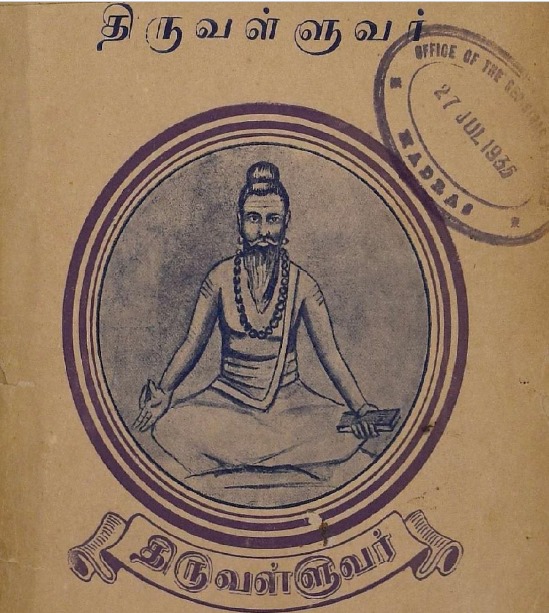
திர்வள்ளுவர் எழுதிய திருக்குறளில் மநுவின் கருத்துக்களும் உவமைகளும் அப்படியே
இருப்பது பற்றி சுட்டிக்காட்டி வந்துள்ளனர். இமயம் முதல் குமரி வரை பாரதீய சிந்தனை
ஒன்றே
என்பதை இது காட்டுகிறது. யாரும் யாரையும் காப்பி அடிக்கவில்லாஇ; இன்னும் ஆழமாகப் போனால் மஹாபாரதத்திலும் இக்கருத்துக்கள் இருப்பதைக் காணலாம். ஆனால் அதுவோ மஹாசமுத்திரம் ஒரு லட்சம் ஸ்லோகங்கள்; இரண்டு லட்சம் வரிகள்; பத்து லட்சம் சொற்கள். யாரே அதன் கரை காண்பார்?
மநு
ஸ்மிருதியின் ஒன்பதாவது அத்தியாயத்தைத் தொடர்ந்து காண்போம். முந்தைய பகுதியில் 9-220 வரை கண்டோம். இதோ தொடர்ச்சி. முதலில்
புல்லட் பாயிண்ட்ஸ்- ரத்தினச் சுருக்கம்—
வள்ளுவர், நாற்பது குறட்பாக்களில் நாலு அதிகாரங்களில் (சூது, கள்ளூண்ணாமை, கயமை, ஒற்றாடல் ) சொன்ன விஷயங்களை இந்த ஸ்லோகங்களில் மநுவும் குறிப்பிடுகிறார் . அந்த தீமைகளை கண்டிக்கிறார். அதாவது வள்ளுவரும் மநுவும் ஒரே கருத்தைச் சொல்கின்றனர். மநுவில் இடையிடையே ஜாதிகள் பற்றி வரும். வள்ளுவத்தில் அது இல்லை. காரணம்?
மநு
எழுதியது சட்டப் புத்தகம்;
வள்ளுவர் எழுதியது நீதி நூல்
வள்ளுவர்
எழுதியது நமக்கு 1500 ஆண்டுகளுக்கு முன்னர்; மநு எழுதியதோ அதற்கும் குறைந்தது
ஆயிரம் ஆண்டுகளுக்கு முன்னர்! (வள்ளுவர் மற்றும் மநுவின் காலம் பற்றி முன்னரே
எழுதியதைக் காணவும்)
மேலும்
சில சுவையான ஸ்லோகங்கள்:-
9-221- சூதாட்டத்துக்கும், பெட்டிங் (BETTING AND GAMBLING) எனப்படும் பந்தயம் கட்டும் போட்டிக்கும் தடை விதிக்கவும்
9-235- பஞ்ச மஹா பாதகங்கள் எவை?
9-237 முதல் — நெற்றியில் சூடு போட்டு, பச்சை குத்தி அவமானப்படுத்தல்; ஜாதியிலிருந்தும், ஊரிலிருந்தும் விலக்கி வைத்தல்
9-244- பறிமுதல் செய்த சொத்துக்களை கடலில் எறி
9-245- வருணன் நம்மைக் கவனிக்கிறான்
(தொல்காப்பியத்தில் வரும் வருணன்)
9-247- நல்ல மன்னன் நாட்டில் நிலங்கள் தானாக
விளையும் .(வள்ளுவனும் குறளில் 545, 559, 560
சொல்லும் அதிசயம்; காளிதாசனும் இந்த அதிசயத்தை
விளம்புவான்
9-249- அப்பாவிகளைத் தண்டித்து விடாதே
9-250- 18 வகைக் காரணங்கள் (எட்டாம் அத்தியாயத்தில் 4-7 முதல் உள்ள ஸ்லோகங்களில் 18 வகைக் காரணங்கள் உள.)
9-256 – ஒப்பிடுக- குறளில் வரும் ஒற்றாடல்
அதிகாரம்.
9-288- சிறைச் சாலைகளை` சாலையின் இரு புறமும் அமைக்கவேண்டும்; எல்லோரும் கைதிகளையும் அவர்கள் படும் கஷ்டங்களையும் காணட்டும்
9-258- ஜோதிடர்
பற்றி
9-286, 9-329 –ரத்தினக்
கற்கள் பற்றி
9-301– யுகங்களும் மன்னர்களும் பற்றிய
சுவையான செய்தி
9-303- மன்னர்கள் இந்திரன், யமன் முதலிய திக் பாலகர் போல;
இதுவும்
காலத்தைக் காட்டும். புறநானூறு முதலிய நூல்களில் மன்னரை சிவன், முருகன் மற்றும் இந்திரன் அக்னி, யமனுக்கு ஒப்பிடுவர். ஆனால் மநுவில்
பிரம்ம, விஷ்ணு, சிவனை விட வருணன் இந்திரன், அக்னியே
ஒப்புமைக்கு வரும்; மநு, காலத்தால் மிகவும் முந்தையவர். கிருஷ்ணன், பலராமன் போன்று என்று புறநானூறு
சொல்லும் உவமைகள் மநுவில் இரா.)
9-290- மாயா ஜால மந்திரவாதிகள், சூன்யக்காரிகளுக்கு 200 பணம் அபராதம் ( மேலை நாடுகளில் ஜோன் ஆப் ஆர்க்கை எரித்தது போல பல்லாயிரம் பெண்களை கிறிஸ்தவப் பாதிரிகள் உயிருடன் கொளுத்தி விட்டனர்)
9-292- பொற்கொல்லர்களுக்கு கடும் தண்டனை
9-294 – அரசின் ஏழு அங்கங்கள்
9-311 – குறள் (151) உவமை — அகழ்வாரைத் தாங்கும் நிலம் போல
பொறுமை வேண்டும்; பூமாதேவியின் பொறை பற்றி சம்ஸ்கிருத நூல்கள்
எல்லாவற்றிலும் உவமைகள் வரும்
9-313 முதல் – ஐந்து ஸ்லோகங்களில் பிராமணர்களின்
புகழ்; புத்தரும் தம்ம பதத்தில் 26ஆவது அத்தியாயத்தில் பிராமணர்களின் புகழ்
பாடுகிறார்.
Pictures are taken from
various sources; beware of copyright rules; don’t use them without permission;
this is a non- commercial, educational blog; posted in
swamiindology.blogspot.com and tamilandvedas.com simultaneously. Average hits
per day for both the blogs 12,000
Pictures are taken from various sources; beware of copyright
rules; don’t use them without permission; this is a non- commercial,
educational blog; posted in swamiindology.blogspot.com and tamilandvedas.com
simultaneously. Average hits per day for both the blogs 12,000
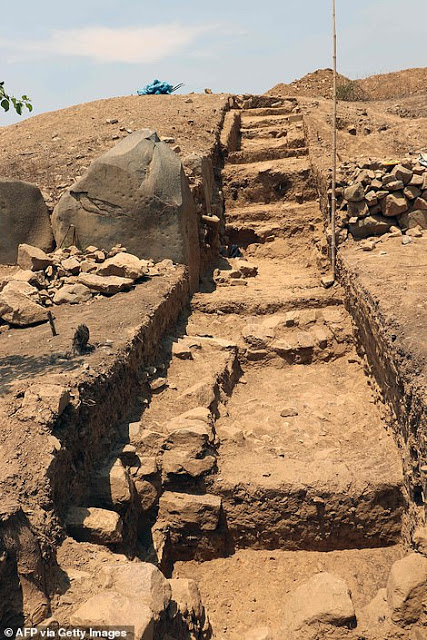
PERU IN SOUTH AMERICA HAS REVEALED A SURPISE; THE PEOPLE
WORHSIPPED WATER LIKE WE WORSHIP GANGA MATA AND VARUNA. FOR THE WATER CEREMONY
THEY HAVE CONSTRUCTED SPECIAL STEPS LIKE OUR RIVER GHATS OR TEMPLE TANKS. TODAY’S
LONDON NEWS PAPERS HAVE PUBLISHED FULL DETAILS. HERE IS THE REPORT FROM DAILY
MAIL NEWS PAPER. THEY CALL IT ‘DIVINE WATE’R. HINDU VEDAS ARE FULL OF PRAISE
FOR APA/WATER. NO HINDU CEREMONY GOES WITHOUT WATER RITUAL. BRAHMINS OF INDIA
DO WATER CEREMONY THRICE A DAY WITH SPECIAL PRAYERS TO WATER (APAH) AND VARUNA.
Archaeologists find a 3,000-year-old megalithic
temple that was used to stage ‘pagan rituals of water worship’ in ancient Peru
The graves that were found at the temple site by archaeologists
date back to between 1,500 BC to 292 AD
The religious monument’s total structure is over 131ft long and
features a staircase that is 49ft long
The discovery was made in October but the news was delayed to deter
treasure hunters from visiting the site
Researchers believe the megalith template would have been used by a
water cult to Promote fertility
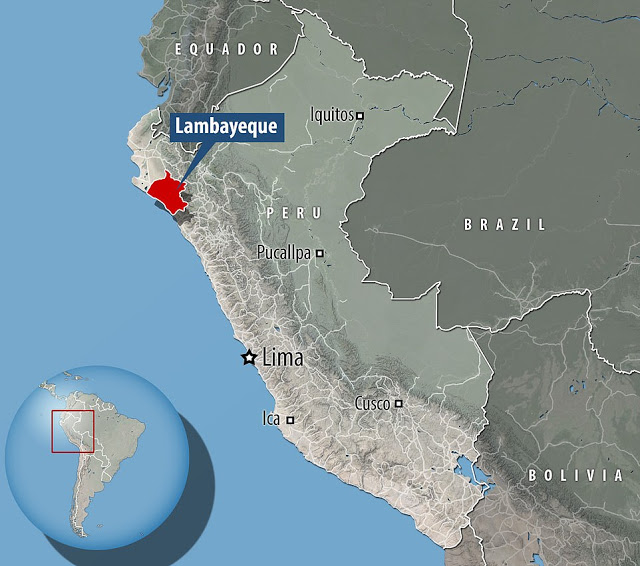
The religious monument is over 131ft long
and is located in the springs of the Zaña Valley river about 500miles from
Lima, the modern capital of Peru.
Inside the temple archaeologists found a
square with an alter that was likely used to offer important fertility rituals
with water taken from the Zaña Valley river.
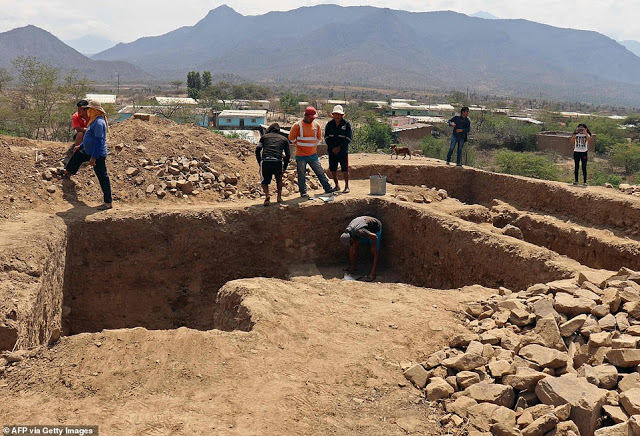
Archeological excavation has
revealed the remnants of an ancient megalithic temple in Peru, believed to have
been constructed some 3,000 years ago. The temple is thought to have been
dedicated to the worship of water. Experts have concluded this based on altars
at the site, their shape and how they were positioned.
The
ancient megalithic remnants were discovered at the
archaeological complex Huaca El Toro, in the district of Oyotún, in Peru’s
Lambayeque region.
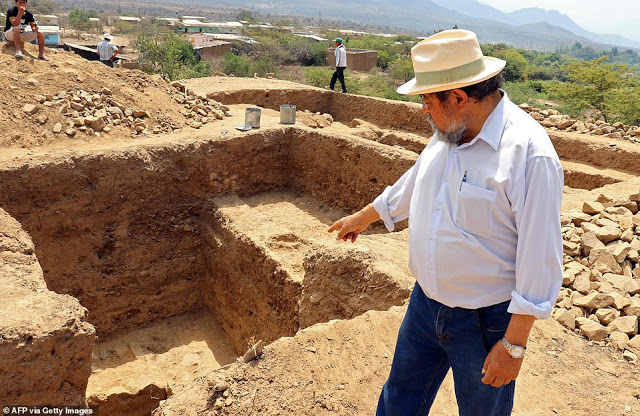
The director of the Royal Tombs
of Sipán Museum, Walter Alva, reported that this temple is located near the
junction of two rivers that were sacred places in ancient times: the Nanchoc
and Udima rivers.
It is precisely there where an
ancient culture chose to construct a massive temple.
Although temples are not a rarity
in Peru, this is the only megalithic structure that has been discovered so far
in Peru’s Lambayeque region.
To
the surprise of archaeologists, excavations revealed that the ancient temple had
been constructed entirely of supermassive stones. The facade, as well as the
side wall s of the temple, were all built using massive granite blocks.
Some
of the megalithic stones bear messages on their surfaces. The symbols suggest
that the massive granite blocks were hauled from sacred places.
The temple was used as a center
for the worship of water. In front of the megalithic construction are altars
representing the cult of water. Water is thought to have been considered divine
at the time.
The
temple comes from a time when water was considered divine and was used in a
number of rituals and religious practices, researchers claim.
They
were able to determine this temple was home to a cult that worshipped water by
studying the way the alter is positioned and how it looks.
The
altar includes holes similar to those found on other temples from the period.
‘This
is typical of water altars that are in other places, and it is located in
the springs of the Zaña Valley river’, Mr Alva said.
Mr
Alva said they have identified a circular column, where evidence of
sedimentation of rains and rituals was found.
‘This
temple is facing the mountain. This place is strictly ceremonial because of the
signs of burning that took place.’
‘The
rituals were performed for fertility,’ (To get children) he said.
Stunning
walls surround the monument and there is a central staircase that is 32ft wide
and 49ft long. (Like Hindu Temple Tanks and Tirthas)
The
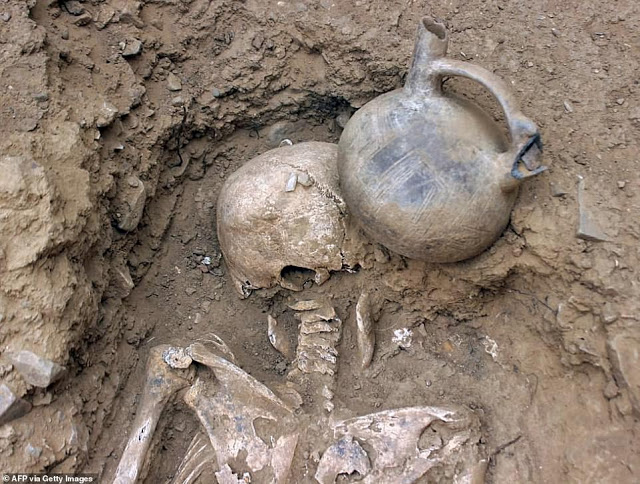
Peruvian team discovered 21 tombs on the site of the temple which is thought to
date back to about 1,500 BC to 292 AD.
Inside
the tombs they found ceramic pieces and metal objects such as knives that were
placed next to the graves.
Mr
Alva says it is likely the tombs were later re-used as 20 of burial sites were
from the later Inca Chimu culture which dates back to about 1,000 to 1,470
AD.
This
isn’t the first major discovery made by Walter Alva and his team.
The
archaeologist also discovered the tomb of the Lord of Sipan in 1987. Sipan (Lord
Shiva’s name??) was a ruler of Mochica culture and his remains were found
intact in Northern Peru.
In
2007 he discovered a number of 4,000-year-old murals in Peru.
Like Hindu river Ghat and Temple Tanks, they had steps to get the holy water (Tirtham)
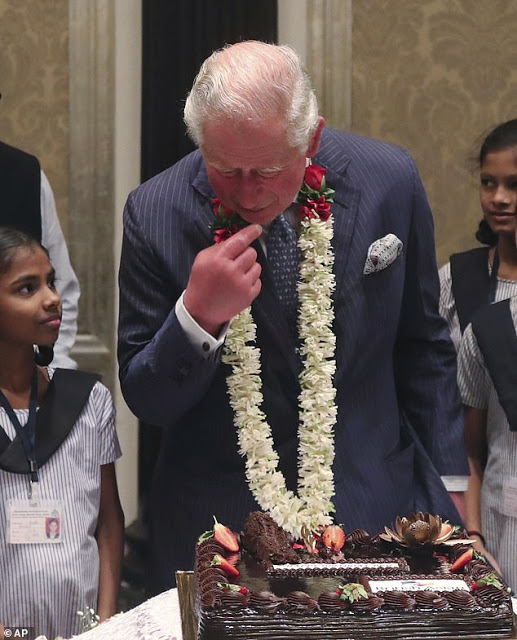
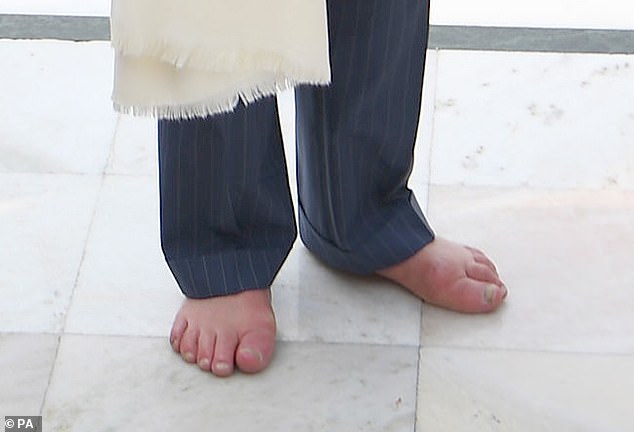
British Prince is very humble.Happy birth Day to Prince Charles
Written by London Swaminathan
swami_48@yahoo.com
Date: 15 NOVEMBER 2019
Time in London – 18-27
Post No. 7218
Pictures are taken from various
sources; beware of copyright rules; don’t use them without permission; this is
a non- commercial, educational blog; posted in swamiindology.blogspot.com and
tamilandvedas.com simultaneously. Average hits per day for both the blogs
12,000
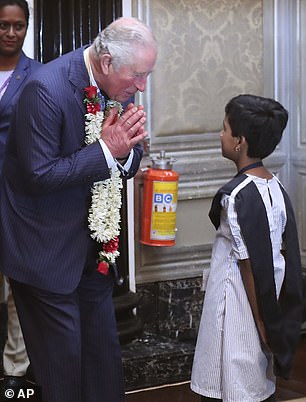
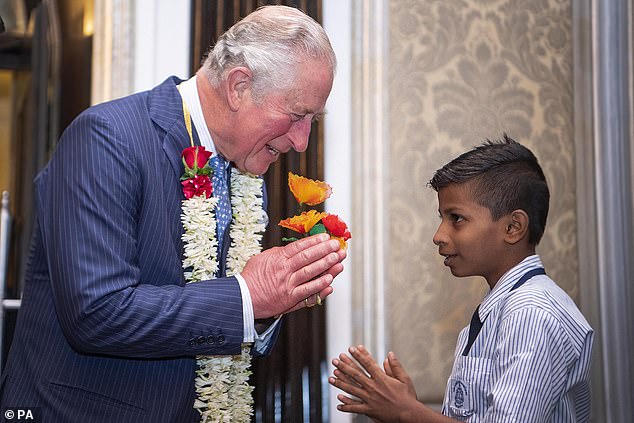
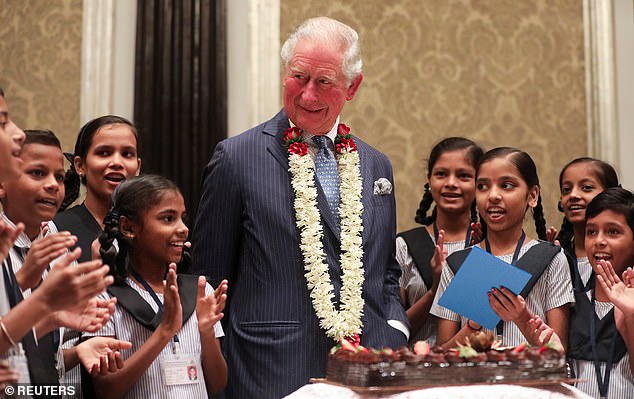
Prince Charles
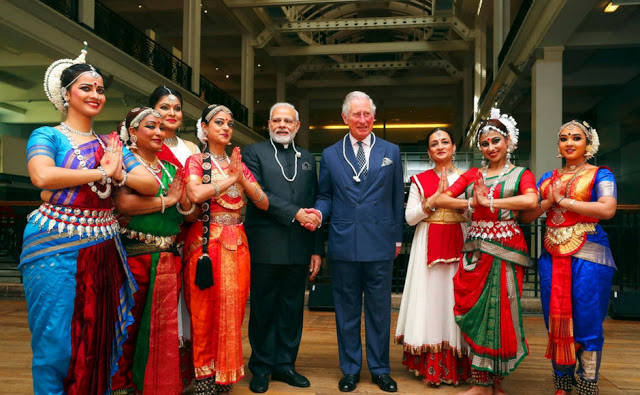
is 71 today. He was presented with a story book of Lord Krishna in Mumbai. Two days
ago he went to Sikh Gurudwara in Delhi and took part in the worship and flipped
chapattis in the langar (Gurudwara’s 24 hour kitchen).
In his
previous visits to India he did Homam like a Brahmin. He has a great
fascination towards India and particularly Hindu way of life. When other
leaders pose in front of Taj Mahal, he always pose with folded hands (Namaste
salute).
Here is a report from Daily Mail
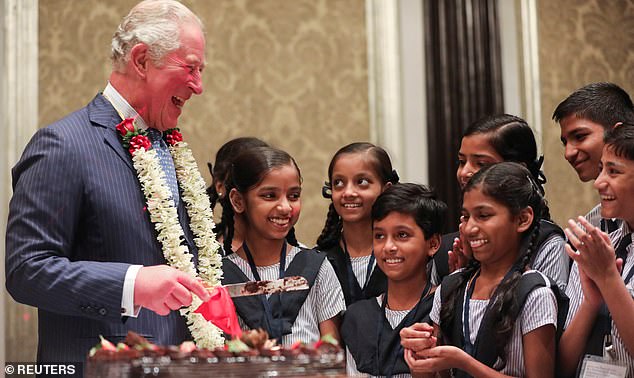
The Prince of
Wales, who turns 71 today, marked the milestone with a small event attended by
local (Mumbai) schoolchildren whose education is supported by his charitable
foundation, the British Asian Trust.
The schoolchildren presented the royal with a present
featuring the stories of Hindu deity Krishna, told with tiny figures in three
bonsai gardens.
They also sung ‘Happy Birthday’ to the royal and enjoyed a slice of
delicious chocolate cake.
Their school has been supported by the
Piramal Foundation, the philanthropic arm of the Piramal Group led by Indian
billionaire industrialist Ajay Piramal.
His wife, Dr Swati Piramal, said: ‘What can
you give a prince? What can the kids give him? So they thought of the bonsai
gardens.’
She said one tiny garden tells the story of
Krishna stealing butter, the second depicts the deity being born in a jail and
his father escaping with him as a baby, and the last describes his time as a
cow herder.
Dr Piramal said: ‘He really loved it when I showed it to him, because of
course in England there’s a culture of fairy gardens, there are gnomes, but
this is unique because this is Krishna’s fairy garden.’
It comes just a day after the Prince of Wales
met pop princess Katy Perry, while on his Indian trip.
The heir to the throne grinned as he shook hands with Katy, 35, and they posed for pictures. The singer had heard about the work of the British Asian Trust, which the prince set up in 2007, and joined other supporters to learn more about the charity.
The pop sensation donned a blue floral ensemble which boasted statement
virago sleeves – accessorising it with an elegant cream head piece and a pair
of matching 60s style earrings.
The royal cut a sophisticated figure in a navy pinstriped suit, paired with a white and blue patterned tie and pocket square.
In Delhi Gurudwara
New Delhi: Britain’s Prince
Charles on Wednesday paid obeisance at the Bangla Sahib gurdwara here, during
which he tried his hand at ‘seva’ or voluntary service in the community kitchen
on the holy premises.
flipping chapatis in Delhi Gurudwara
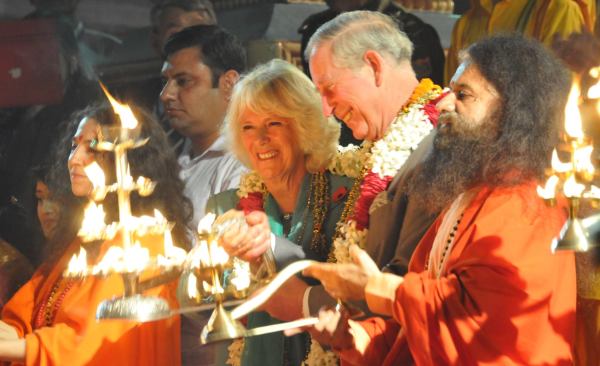
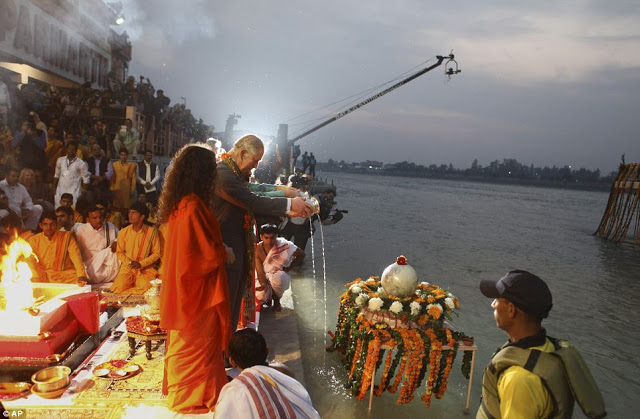
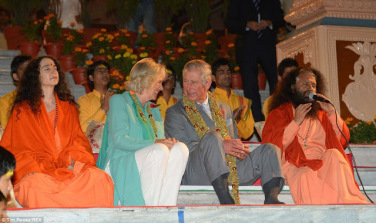
During his previous visits to Rishikesh and other towns :—
with Swami Chidananda of RishikeshGanga Arti by Prince Charles
Pictures are taken from various sources; beware of copyright rules; don’t use them without permission; this is a non- commercial, educational blog; posted in swamiindology.blogspot.com and tamilandvedas.com simultaneously. Average hits per day for both the blogs 12,000
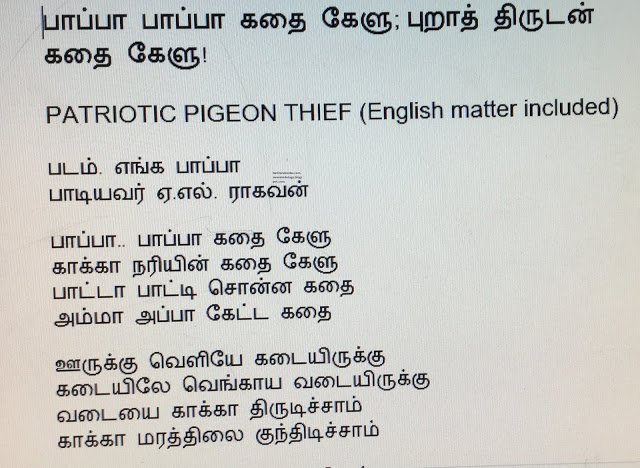
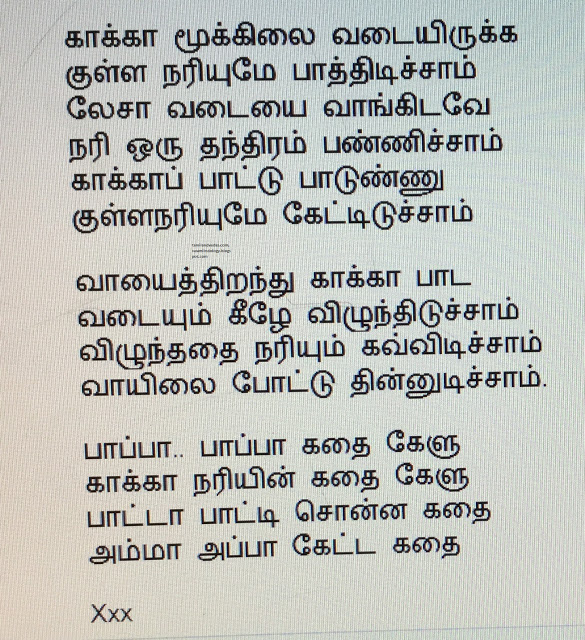
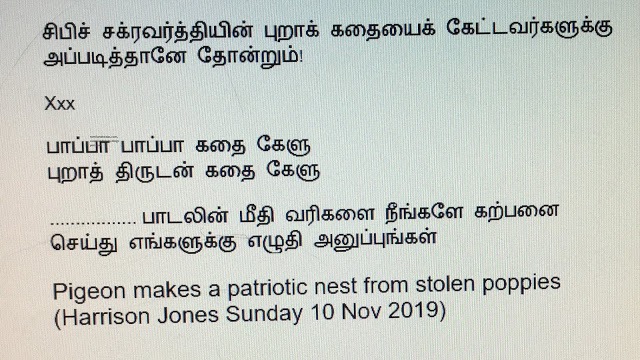
இந்தப் பாடலும் காகத்தின் கதையும் எல்லோரும் அறிந்ததே. இதோ கடந்த சில தினங்களில் லண்டன் பத்திரிக்கைகளில் வெளியான ஆஸ்திரேலிய புறாத் திருடன் கதை!
பிரிட்டனிலும் ஆஸ்திரேலியா போன்ற காமன்வெல்த் நாடுகளிலும் ஆண்டுதோறும் நவம்பர் 11ம் தேதி போர் வீரர் நினைவு தினம் (Remembrance Day, Armistice Day) கடைப்பிடிக்கப்படுகிறது. முதல் உலகப் போரில் உயிரிழந்த வீரர்களுக்கு பொது மக்களும், அரச குடும்பத்தினரும், மாஜி ராணுவ வீரர்களும் அணி அணியாக வந்து அஞ்சலி செலுத்துவர். அப்படி வருகையில் சிவப்பு நிற பாப்பி (Poppy Flowers) பூக்களைக் கொண்டு வந்து வைப்பர். மலர் வளையம் சார்த்துவர்.
போர்க்கால விதவைகளுக்கும், ஓய்வு பெற்ற, அங்கங்களை போரில் இழந்த வீரர்களுக்கும் நிதி திரட்ட சிவப்பு
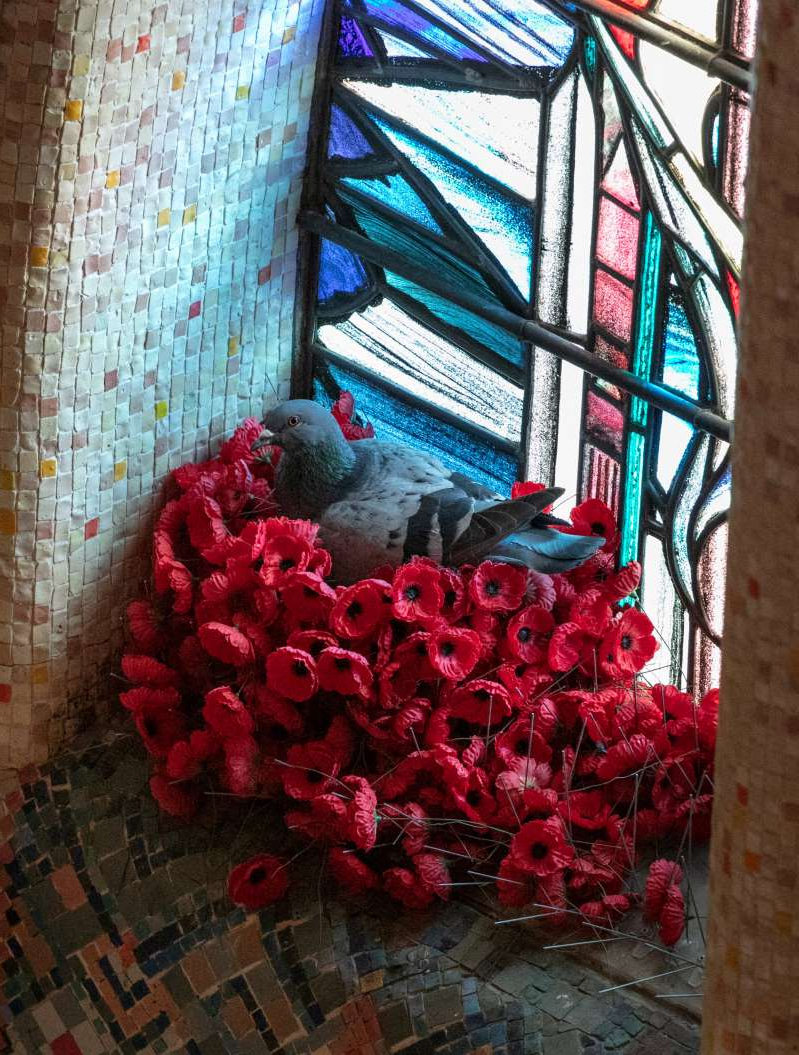
An Australian pigeon has made a particularly poignant nest this year (Picture: Reuters) The culprit behind a mysterious disappearance of poppies from an Australian war memorial has been unmasked as a broody bird. Staff at the tomb of the unknown soldier in the capital Canberra had been left scratching their heads when they began noticing the poppies disappear in early October. But it turns out the thief was in fact a pigeon, who had built a colourful home near a stained glass window at the Australian War Memorial.
A maintenance worker reportedly clocked the carefully crafted nest in the Hall of Memory in late October. The memorial told the Sydney Morning Herald that the wounded soldier symbolised the quality of ‘endurance’, and that the nest of poppies was a ‘reminder of the powerful bond between man and beast on the battlefield’.
Pictures are taken from various sources; beware of copyright rules; don’t use them without permission; this is a non- commercial, educational blog; posted in swamiindology.blogspot.com and tamilandvedas.com simultaneously. Average hits per day for both the blogs 12,000
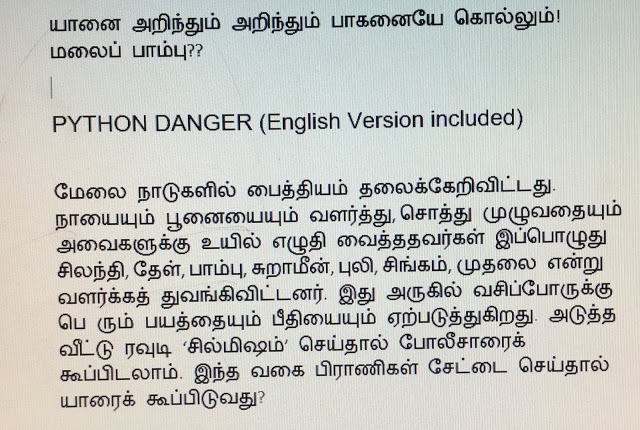
7 Mar 2014 – யானையை விழுங்கிய மலைப் பாம்புகள்: தமிழ் புலவர் தகவல் … யானையை மலைப் பாம்பு விழுங்க முடியுமா? இதோ முதலில் சில .
6 Oct 2018 – இறக்கும் தருவாயில் ஒரு மலைப் பாம்பு செயலற்றுக் கிடந்தது. அதன் உடலை ஏராளமான எறும்புகள் மொய்த்துக் கொண்டு கடித்தன.
PYTHON DANGER
Dad keeps 18ft python in his three-bedroom semi Jen Mills (Monday 11 Nov 2019)
Anyone going round for a cuppa at this semi-detached house in Gloucester had better not have a fear of snakes. Marcus Hobbs, 31, lives there with his two young sons and partner Amy – as well as their 18ft Burmese python called Hexxie. The animal is usually curled up in the living room, aside from when it’s feeding time and she eats rabbits, stillborn deer, calves, goats and pigs supplied by local farmers.
IT worker Marcus bought Hexxie from a pet shop eight years ago when she was just eight inches long. Since then, she has grown to weigh 17 stone and needs several people to lift her. She could squeeze a human to death, but Marcus is confident she will never strike – although he doesn’t handle her when the his sons, aged four and one, are nearby.
Marcus Hobbs with partner Amy Leach, sons Benjamin and Joseph (Picture: SWNS) Marcus relaxing with Hexxie (Picture: SWNS) She lives in the living room (Picture: SWNS) He believes she could even be a record holder for the world’s longest Burmese python.
The snake can eat a whole deer in one go and has a mouth full of hundreds of pin shaped teeth like fish hooks. Credit: Mark Watkins/Gloucestershire Live
Are you Hexxie’s neighbour? The 110kg python could be the biggest Burmese python in the world – and she lives in a three-bed terraced house in Tewkesbury.
Owner Marcus Hobbs bought Hexxie nearly eight years ago as a small house pet, but the last time he measured her she had grown to an incredible 18ft long.
The current record for the longest Burmese python is 18ft10in, but Marcus is adamant that Hexxie has grown since he least measured her, and could have broken that record.
A local reptile expert claims she is the biggest he’s ever seen.
Most snakes aren’t measured until they die so experts say it is hard to find out if Hexxie is officially the world’s biggest.
Marcus and Hexxie share their home with wife, Amy and two sons, Benjamin aged four and Joseph aged one.
The dad-of-two admits his beloved pet could not only squeeze a human to death within minutes, but swallow them whole. (As long as they lay on their side so she could get the shoulders in).
Everybody seems to think it’s stupid. They think it’s crazy and ask ‘Why do you like these things?’
My mum desperately wants me to get rid of them. At least out the house.
I’ve had them nearly all my life and pretty much every time I see her she says ‘When are you going to get rid of those stupid snakes?’
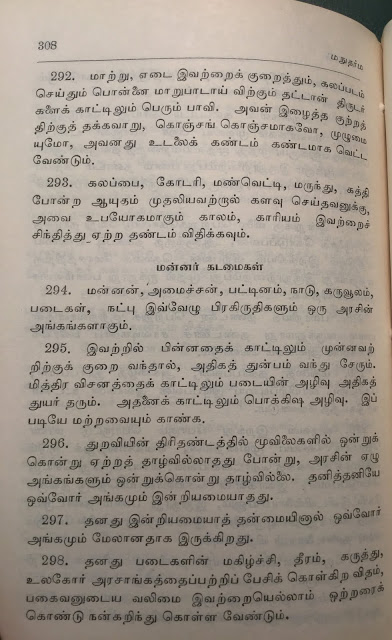
– MARCUS HOBBS
(Taken from two news papers)
Marcus Hobbs with partner Amy Leach, Nigel Sligh and Hexxie the Burmese Python (Picture: SWNS)
Pictures are taken from various sources; beware of copyright rules; don’t use them without permission; this is a non- commercial, educational blog; posted in swamiindology.blogspot.com and tamilandvedas.com simultaneously. Average hits per day for both the blogs 12,000
Pictures are taken from various sources; beware of copyright rules; don’t use
them without permission; this is a non- commercial, educational blog; posted in
swamiindology.blogspot.com and tamilandvedas.com simultaneously. Average hits
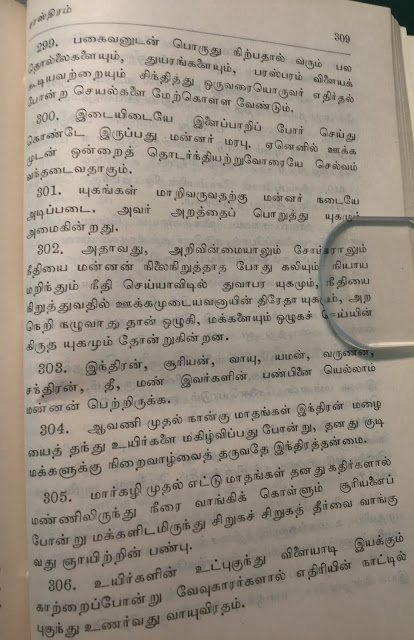
per day for both the blogs 12,000
WE HAVE SEEN UP TO 220 SLOKAS IN
THE NINTH CHAPTER OF MANU SMRITI. LET US FINISH 9TH CHAPTER TODAY;
HERE WE GO FROM 9-220.
In Bullet Points
It is interesting to see Tamil
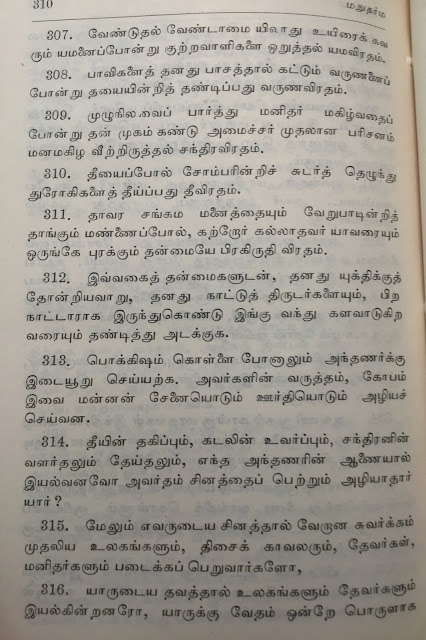
poet Tiru vauvar, author of Tirukkural, also composed at least ten verses each on the
following topics dealt with by Manu here:-
On Spying
On Gambling
On Drinking
On Stealing
But Manu calls for severe
punishments for theses evil acts.
Valluvar has echoed several
slokas of Manu in his Tirukkural; 1.Earth simile, 2.spontaneous growth of crops
where there is just rule 3. If the king develops enmity with the scholars, the
kings will be toppled and destroyed.
Manu’s proposals to locate
prisons on the main roads so that people would see the suffering of prisoners
and branding forehead of evil doers, fining goldsmiths and witches are
interesting.
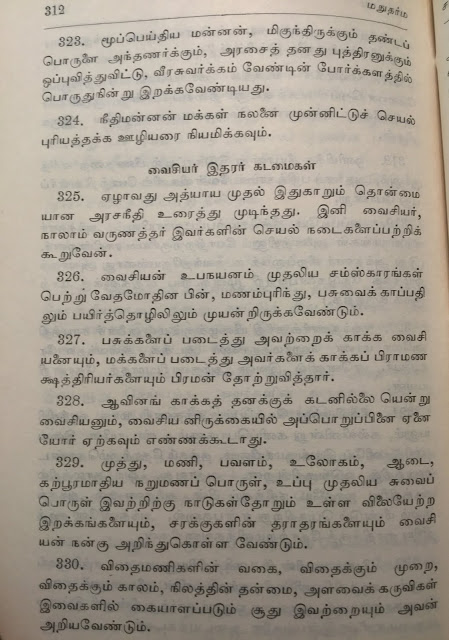
Sloka 301 compares the king
with the Four Yugas.
xxx
Now we continue from 9-220
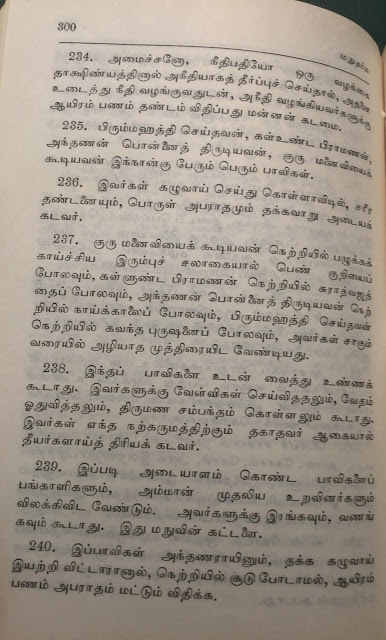
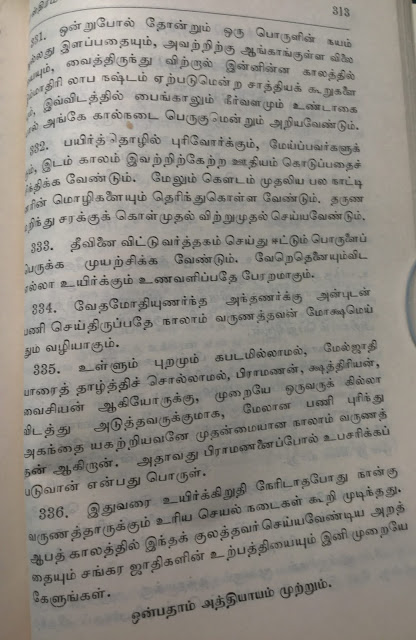
9-220. The division of the
property and the rules for allotting shares to the (several) sons, those
begotten on a wife and the rest, in due order, have been thus declared to you;
hear now the laws concerning gambling.
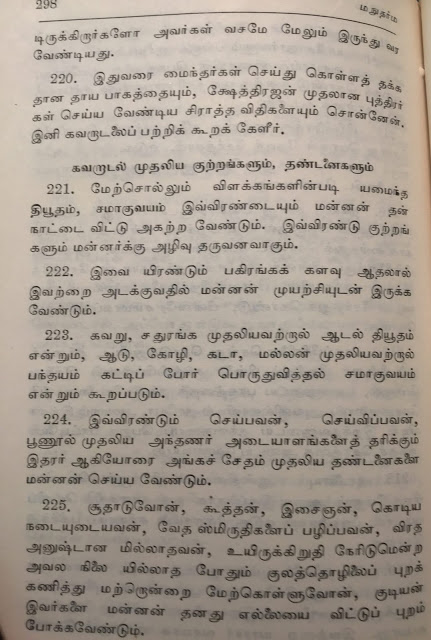
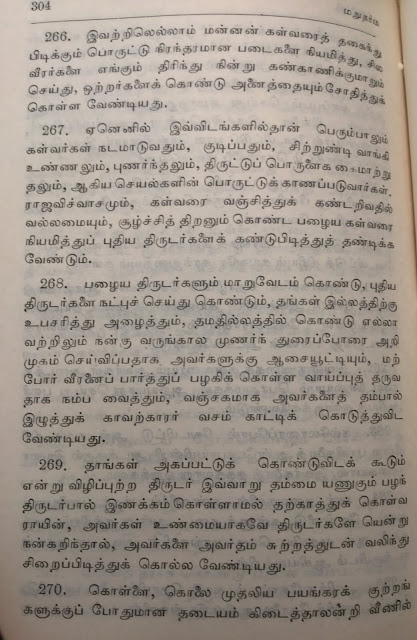
221. Gambling and betting let the king exclude from his
realm; those two vices cause the destruction of the kingdoms of princes.
222. Gambling and betting amount to open theft; the king shall
always exert himself in suppressing both of them.
223. When inanimate things are used for staking money on them,
that is called among men gambling (dyuta), when animate beings are used (for
the same purpose), one must know that to be betting (samahvaya).
224. Let the king corporally punish all those (persons) who either gamble and bet or afford (an opportunity for it), likewise Sudras who assume the distinctive marks of twice-born (men).
SELLING LIQUOR
9-225. Gamblers, dancers and singers, cruel men, men
belonging to an heretical sect, those following forbidden occupations, and
sellers of spirituous liquor, let him instantly banish from his town.
226. If such persons who are secret thieves, dwell in the realm of
a king, they constantly harass his good subjects by their forbidden practices.
227. In a former Kalpa this vice of gambling has been seen to
cause great enmity; a wise man, therefore, should not practise it even for
amusement.
228. On every man who addicts himself to that vice either secretly
or openly, the king may inflict punishment according to his discretion.
229. But a Kshatriya, a Vaisya, and a Sudra who are unable to pay
a fine, shall discharge the debt by labour; a Brahmana shall pay it by instalments.
230. On women, infants, men of disordered mind, the poor and the sick, the king shall inflict punishment with a whip, a cane, or a rope and the like.
DEATH SENTENCE
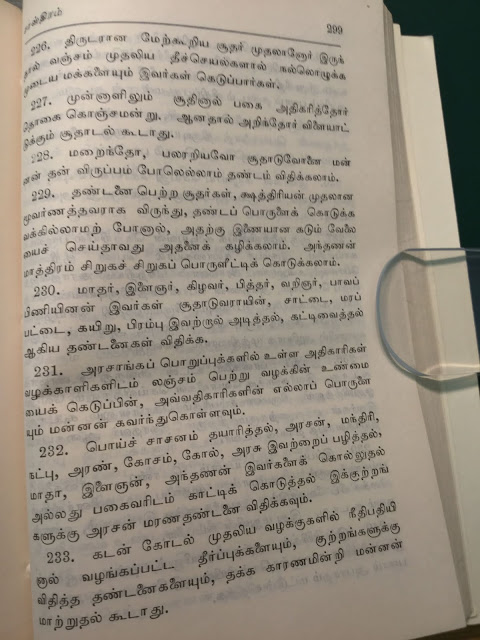
9-231. But those appointed to administer public affairs,
who, baked by the fire of wealth, mar the business of suitors, the king shall
deprive of their property.
9-232. Forgers of royal edicts, those who corrupt his
ministers, those who slay women, infants, or Brahmanas, and those who serve his
enemies, the king shall put to death.
TAMIL POET VALLUVAR
Tamil poet Tiru Valluvar also
spoke about the evils of gambling and drinking. But he is less severe in punishments.
233. Whenever any (legal transaction) has been completed or (a
punishment) been inflicted according to the law, he shall sanction it and not
annul it.
234. Whatever matter his ministers or the judge may settle
improperly, that the king himself shall (re-) settle and fine them one thousand
(panas).
PANCHA MAHA PATAKAM – FIVE BIG
SINS
9-235. The slayer of a
Brahmana, (A twice-born man) who drinks (the spirituous liquor called) Sura, he
who steals (the gold of a Brahmana), and he who violates a Guru’s bed, must
each and all be considered as men who committed mortal sins (mahapataka).
236. On those four even, if they do not perform a penance, let him
inflict corporal punishment and fines in accordance with the law.
237. For violating a Guru’s bed, (the mark of) a female part shall
be (impressed on the forehead with a hot iron); for drinking (the spirituous
liquor called) Sura, the sign of a tavern; for stealing (the gold of a
Brahmana), a dog’s foot; for murdering a Brahmana, a headless corpse.
238. Excluded from all fellowship at meals, excluded from all
sacrifices, excluded from instruction and from matrimonial alliances, abject
and excluded from all religious duties, let them wander over (this) earth.
BRANDING ON FOREHEAD
239. Such (persons) who have been
branded with (indelible) marks must be cast off by their paternal and maternal
relations, and receive neither compassion nor a salutation; that is the
teaching of Manu.
240. But (men of) all castes who perform the prescribed penances,
must not be branded on the forehead by the king, but shall be made to pay the
highest amercement.
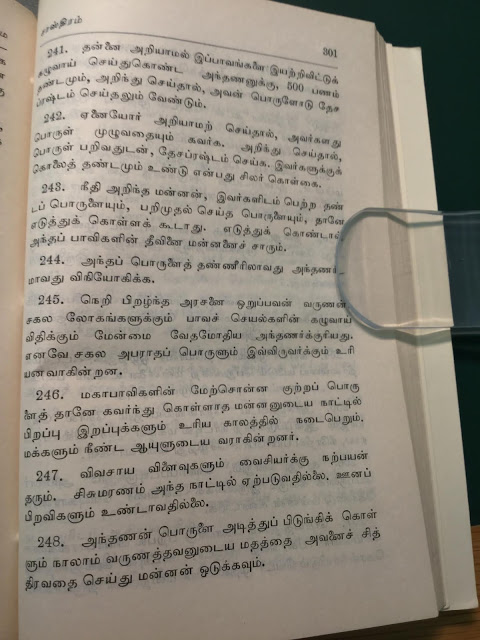
241. For (such) offences the middlemost amercement shall be
inflicted on a Brahmana, or he may be banished from the realm, keeping his
money and his chattels.
242. But (men of) other (castes), who have unintentionally
committed such crimes, ought to be deprived of their whole property; if (they
committed them) intentionally, they shall be banished.
CONFISCATE PROPERTY
243. A virtuous king must not take for himself the property
of a man guilty of mortal sin; but if he takes it out of greed, he is tainted
by that guilt (of the offender).
244. Having thrown such a fine into the water, let him offer it to
Varuna, or let him bestow it on a learned and virtuous Brahmana.
ABOUT VARUNA
9-245. Varuna is the lord of punishment, for he holds the
sceptre even over kings; a Brahmana who has learnt the whole Veda is the lord
of the whole world.
246. In that (country), where the king avoids taking the property
of (mortal) sinners, men are born in (due) time (and are) long-lived,
Kural
247. And the crops of the husbandmen spring up, each as it
was sown, and the children die not, and no misshaped (offspring) is born.
Tamil poet Valluvar also say
that the cps grow on its own and gives fruits in a country where a just kings
rule
248. But the king shall inflict on a base-born (Sudra), who
intentionally gives pain to Brahmanas, various (kinds of) corporal punishment
which cause terror.
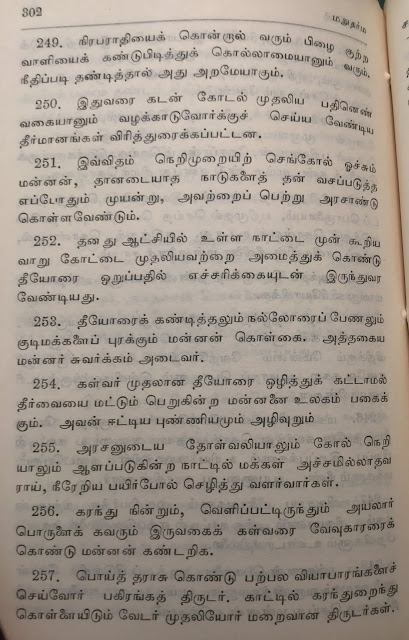
DON’T PUNISH THE INNOCENT
9-249. When a king punishes an innocent (man), his guilt is
considered as great as when he sets free a guilty man; but (he acquires) merit
when he punishes (justly).
250. Thus the (manner of) deciding suits (falling) under the
eighteen titles, between two litigant parties, has been declared at length.
251. A king who thus duly fulfils his duties in accordance with
justice, may seek to gain countries which he has not yet gained, and shall duly
protect them when he has gained them.
252. Having duly settled his country, and having built forts in
accordance with the Institutes, he shall use his utmost exertions to remove
(those men who are nocuous like) thorns.
253. By protecting those who live as (becomes) Aryans and by
removing the thorns, kings, solely intent on guarding their subjects, reach
heaven.
254. The realm of that king who takes his share in kind, though he
does not punish thieves, (will be) disturbed and he (will) lose heaven.
255. But if his kingdom be secure, protected by the strength of
his arm, it will constantly flourish like a (well)- watered tree.
SPYING
9-256. Let the king who sees (everything) through his spies,
discover the two sorts of thieves who deprive others of their property, both
those who (show themselves) openly and those who (lie) concealed.
257. Among them, the open rogues (are those) who subsist by (cheating in the sale of) various marketable commodities, but the concealed rogues are burglars, robbers in forests, and so forth.
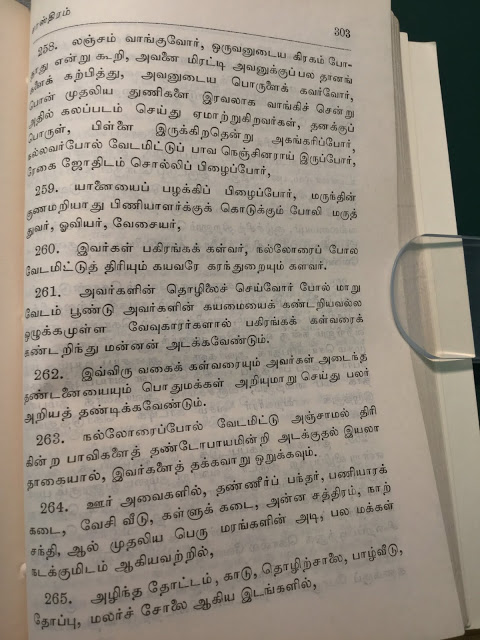
ASTROLOGERS
258. Those who take bribes, cheats and rogues, gamblers,
those who live by teaching (the performance of) auspicious ceremonies,
sanctimonious hypocrites, and fortune-tellers,
259. Officials of high rank and physicians who act improperly, men
living by showing their proficiency in arts, and clever harlots,
260. These and the like who show themselves openly, as well as
others who walk in disguise (such as) non-Aryans who wear the marks of Aryans,
he should know to be thorns (in the side of his people).
261. Having detected them by means of trustworthy persons, who,
disguising themselves, (pretend) to follow the same occupations and by means of
spies, wearing various disguises, he must cause them to be instigated (to
commit offences), and bring them into his power.
262. Then having caused the crimes, which they committed by their
several actions, to be proclaimed in accordance with the facts, the king shall
duly punish them according to their strength and their crimes.
263. For the wickedness of evil-minded thieves, who secretly prowl
over this earth, cannot be restrained except by punishment.
PLACES THAT NEED PROTECTION
9-264. Assembly-houses, houses where water is distributed
or cakes are sold, brothels, taverns and victualler’s shops, cross-roads,
well-known trees, festive assemblies, and play-houses and concert-rooms,
265. Old gardens, forests, the shops of artisans, empty
dwellings, natural and artificial groves,
266. These and the like places the king shall cause to be guarded
by companies of soldiers, both stationary and patrolling, and by spies, in
order to keep away thieves.
267. By the means of clever reformed thieves, who associate with
such (rogues), follow them and know their various machinations, he must detect
and destroy them.
268. Under the pretext of (offering them) various dainties, of
introducing them to Brahmanas, and on the pretence of (showing them) feats of
strength, the (spies) must make them meet (the officers of justice).
269. Those among them who do not come, and those who suspect the
old (thieves employed by the king), the king shall attack by force and slay
together with their friends, blood relations, and connexions.
DEATH SENTENCE TO THIEVES
270. A just king shall not cause a thief to be put to
death, (unless taken) with the stolen goods (in his possession); him who (is
taken) with the stolen goods and the implements (of burglary), he may, without
hesitation, cause to be slain.
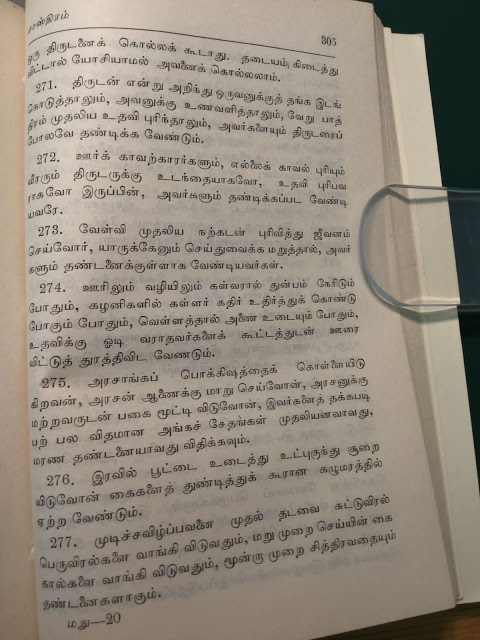
271. All those also who in villages give food to thieves or grant
them room for (concealing their implements), he shall cause to be put to death.
272. Those who are appointed to guard provinces and his vassals
who have been ordered (to help), he shall speedily punish like thieves, (if
they remain) inactive in attacks (by robbers).
273. Moreover if (a man), who subsists by (the fulfilment of) the
law, departs from the established rule of the law, the (king) shall severely
punish him by a fine, (because he) violated his duty.
274. Those who do not give assistance according to their ability
when a village is being plundered, a dyke is being destroyed, or a highway
robbery committed, shall be banished with their goods and chattels.
275. On those who rob the king’s treasury and those who persevere
in opposing (his commands), he shall inflict various kinds of capital
punishment, likewise on those who conspire with his enemies.
CUT OFF HANDS OF THIEVES
276. But the king shall cut off the hands of those robbers who, breaking
into houses, commit thefts at night, and cause them to be impaled on a pointed
stake.
277. On the first conviction, let him cause two fingers of a
cut-purse to be amputated; on the second, one hand and one foot; on the third,
he shall suffer death.
278. Those who give (to thieves) fire, food, arms, or shelter, and
receivers of stolen goods, the ruler shall punish like thieves.
279. Him who breaks (the dam of) a tank he shall slay (by drowning
him) in water or by (some other) (mode of) capital punishment; or the offender
may repair the (damage), but shall be made to pay the highest amercement.
280. Those who break into a (royal) storehouse, an armoury, or a
temple, and those who steal elephants, horses, or chariots, he shall slay
without hesitation.
281. But he who shall take away the water of a tank, made in
ancient times, or shall cut off the supply of water, must be made to pay the
first (or lowest) amercement.
TWO KARSHAPANA FINE
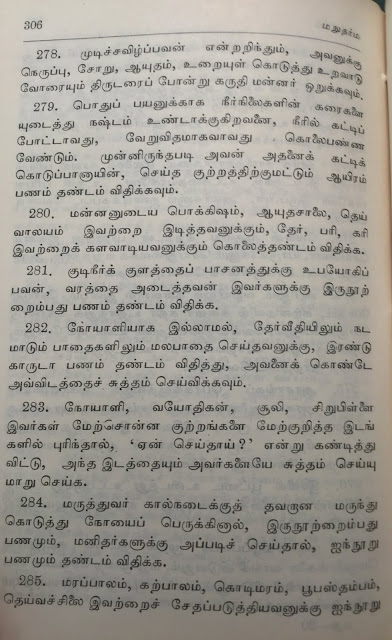
9-282. But he who, except in a case of extreme necessity,
drops filth on the king’s high-road, shall pay two karshapanas and immediately
remove (that) filth.
283. But a person in urgent necessity, an aged man, a pregnant
woman, or a child, shall be reprimanded and clean the (place); that is a
settled rule.
284. All physicians who treat (their patients) wrongly (shall pay)
a fine; in the case of animals, the first (or lowest); in the case of human
beings, the middlemost (amercement).
285. He who destroys a bridge, the flag (of a temple or royal
palace), a pole, or images, shall repair the whole (damage) and pay five
hundred (panas).
GEMMOLOGIST
9-286. For adulterating unadulterated commodities, and for
breaking gems or for improperly boring (them), the fine is the first (or
lowest) amercement.
287. But that man who behaves dishonestly to honest (customers) or
cheats in his prices, shall be fined in the first or in the middlemost
amercement.
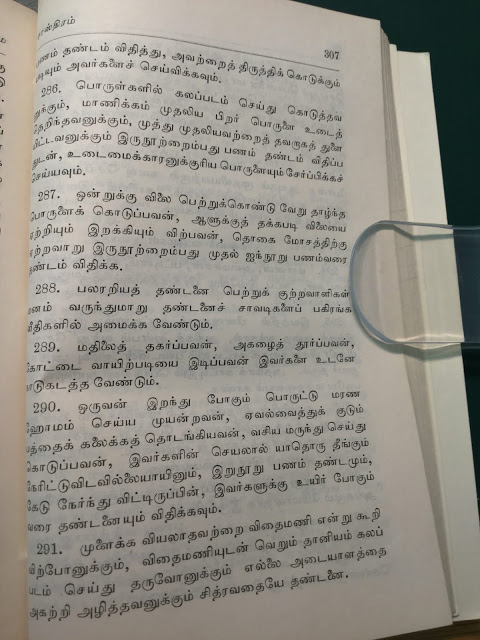
LOCATION OF PRISONS
9-288. Let him place all prisons near a high-road, where
the suffering and disfigured offenders can be seen.
289. Him who destroys the wall (of a town), or fills up the ditch
(round a town), or breaks a (town)- gate, he shall instantly banish.
WITCHCRAFT – 200 PANAS FINE
In the western countries witches
were burnt alive until 200 years ago. But manu prescribes only a fine
290. For all incantations intended to destroy life, for
magic rites with roots (practised by persons) not related (to him against whom
they are directed), and for various kinds of sorcery, a fine of two hundred
(panas) shall be inflicted.
291. He who sells (for seed-corn that which is) not seed-corn, he who takes up seed (already sown), and he who destroys a boundary (-mark), shall be punished by mutilation.
SEVERE PUNISHMENT TO
GOLDSMITHS
9-292. But the king shall cause a goldsmith who behaves
dishonestly, the most nocuous of all the thorns, to be cut to pieces with
razors.
293. For the theft of agricultural implements, of arms and of
medicines, let the king award punishment, taking into account the time (of the
offence) and the use (of the object).
SEVEN LIMBS OF A GOVERNMENT
294. The king and his minister, his capital, his realm, his
treasury, his army, and his ally are the seven constituent parts (of a
kingdom); (hence) a kingdom is said to have seven limbs (anga).
295. But let him know (that) among these seven constituent parts
of a kingdom (which have been enumerated) in due order, each earlier (named) is
more important and (its destruction) the greater calamity.
296. Yet in a kingdom containing seven constituent parts, which is
upheld like the triple staff (of an ascetic), there is no (single part) more
important (than the others), by reason of the importance of the qualities of
each for the others.
297. For each part is particularly qualified for (the
accomplishment of) certain objects, (and thus) each is declared to be the most
important for that particular purpose which is effected by its means.
298. By spies, by a (pretended) display of energy, and by carrying
out (various) undertakings, let the king constantly ascertain his own and his
enemy’s strength;
299. Moreover, all calamities and vices; afterwards, when he has
fully considered their relative importance, let him begin his operations.
300. (Though he be) ever so much tired (by repeated failures), let
him begin his operations again and again; for fortune greatly favours the man
who (strenuously) exerts himself in his undertakings.
KING AND FOUR YUGAS
9-301. The various ways in which a king behaves (resemble)
the Krita, Treta, Dvapara, and Kali ages; hence the king is identified with the
ages (of the world).
9-302. Sleeping he represents the Kali (or iron age),
waking the Dvapara (or brazen) age, ready to act the Treta (or silver age), but
moving (actively) the Krita (or golden) age.
9-303. Let the king emulate the energetic action of Indra,
of the Sun, of the Wind, of Yama, of Varuna, of the Moon, of the Fire, and of
the Earth.
304. As Indra sends copious rain during the four months of
the rainy season, even so let the king, taking upon himself the office of
Indra, shower benefits on his kingdom.
305. As the Sun during eight months (imperceptibly) draws
up the water with his rays, even so let him gradually draw his taxes from his
kingdom; for that is the office in which he resembles the Sun.
306. As the Wind moves (everywhere), entering (in the shape
of the vital air) all created beings, even so let him penetrate (everywhere)
through his spies; that is the office in which he resembles the Wind.
307. As Yama at the appointed time subjects to his rule
both friends and foes, even so all subjects must be controlled by the king;
that is the office in which he resembles Yama.
(Manu uses Vedic Gods only and
not Brahma, Vishnu ,Shiva or Kartikeya. Sangam Tamil literature uses Vedic Gods
and Tri Murtis and Kartikeya/Muruga; Sangam literature use Four Vedas but Manu
uses Trayi Veda; This shows the difference between the age of Sangam literature
and Manu Smrti. Manu belongs to the age of Sarasvati river civilization)
308. As (a sinner) is seen bound with ropes by Varuna, even so let
him punish the wicked; that is his office in which he resembles Varuna.
309. He is a king, taking upon himself the office of the Moon,
whose (appearance) his subjects (greet with as great joy) as men feel on seeing
the full moon.
310. (If) he is ardent in wrath against criminals and endowed with
brilliant energy, and destroys wicked vassals, then his character is said (to
resemble) that of Fire.
EARTH SIMILE
311. As the Earth supports all
created beings equally, thus (a king) who supports all his subjects, (takes
upon himself) the office of the Earth.
(Tamil poet Valluvar also use
this earth simile)
312. Employing these and other means, the king shall, ever
untired, restrain thieves both in his own dominions and in (those of) others.
DON’T ESTRANGE BRAHMINS; IN
PRAISE OF BRAHMINS
FOLLOWING VERSES ARE IN PRAISE OF
BAHMINS; BUDDHA IN DHAMMA PADA CHAPTER 26 ALSO PRAISES BRAHMINS. TAMIL POET
VALLUVAR ALSO WN KINGSNOT TO ESTRANGE SHOLARS AND SAINTS.
9-313. Let him not, though fallen into the deepest
distress, provoke Brahmanas to anger; for they, when angered, could instantly
destroy him together with his army and his vehicles.
314. Who could escape destruction, when he provokes to
anger those (men), by whom the fire was made to consume all things, by whom the
(water of the) ocean was made undrinkable, and by whom the moon was made to
wane and to increase again?
315. Who could prosper, while he injures those (men) who
provoked to anger, could create other worlds and other guardians of the world,
and deprive the gods of their divine station?
316. What man, desirous of life, would injure them to whose
support the (three) worlds and the gods ever owe their existence, and whose
wealth is the Veda?
317. A Brahmana, be he ignorant or learned, is a great
divinity, just as the fire, whether carried forth (for the performance of a
burnt-oblation) or not carried forth, is a great divinity.
318. The brilliant fire is not contaminated even in
burial-places, and, when presented with oblations (of butter) at sacrifices, it
again increases mightily.
319. Thus, though Brahmanas employ themselves in all (sorts
of) mean occupations, they must be honoured in every way; for (each of) them is
a very great deity.
KSHATRIAS CAME FROM BRAHMINS
320. When the Kshatriyas become in any way overbearing
towards the Brahmanas, the Brahmanas themselves shall duly restrain them; for
the Kshatriyas sprang from the Brahmanas.
321. Fire sprang from water, Kshatriyas from Brahmanas, iron from
stone; the all-penetrating force of those (three) has no effect on that whence
they were produced.
322. Kshatriyas prosper not without Brahmanas, Brahmanas prosper
not without Kshatriyas; Brahmanas and Kshatriyas, being closely united, prosper
in this (world) and in the next.
323. But (a king who feels his end drawing nigh) shall bestow all
his wealth, accumulated from fines, on Brahmanas, make over his kingdom to his
son, and then seek death in battle.
324. Thus conducting himself (and) ever intent on (discharging)
his royal duties, a king shall order all his servants (to work) for the good of
his people.
VAISYAS AND SHUDRAS
325. Thus the eternal law concerning the duties of a king has been
fully declared; know that the following rules apply in (due) order to the
duties of Vaisyas and Sudras.
326. After a Vaisya has received the sacraments and has taken a
wife, he shall be always attentive to the business whereby he may subsist and
to (that of) tending cattle.
327. For when the Lord of creatures (Prajapati) created cattle, he
made them over to the Vaisya; to the Brahmana, and to the king he entrusted all
created beings.
328. A Vaisya must never (conceive this) wish, I will not keep
cattle; and if a Vaisya is willing (to keep them), they must never be kept by
(men of) other (castes).
GEMS AND METALS
329. (A Vaisya) must know the respective value of gems, of pearls,
of coral, of metals, of (cloth) made of thread, of perfumes, and of condiments.
330. He must be acquainted with the (manner of) sowing of seeds,
and of the good and bad qualities of fields, and he must perfectly know all
measures and weights.
331. Moreover, the excellence and defects of commodities, the
advantages and disadvantages of (different) countries, the (probable) profit
and loss on merchandise, and the means of properly rearing cattle.
332. He must be acquainted with the (proper), wages of servants,
with the various languages of men, with the manner of keeping goods, and (the
rules of) purchase and sale.
333. Let him exert himself to the utmost in order to increase his
property in a righteous manner, and let him zealously give food to all created
beings.
334. But to serve Brahmanas (who are) learned in the Vedas,
householders, and famous (for virtue) is the highest duty of a Sudra, which
leads to beatitude.
335. (A Sudra who is) pure, the servant of his betters, gentle in
his speech, and free from pride, and always seeks a refuge with Brahmanas,
attains (in his next life) a higher caste.
336. The excellent law for the conduct of the (four) castes
(varna), (when they are) not in distress, has been thus promulgated; now hear
in order their (several duties) in times of distress.
Pictures are taken from various sources; beware of copyright rules; don’t use them without permission; this is a non- commercial, educational blog; posted in swamiindology.blogspot.com and tamilandvedas.com simultaneously. Average hits per day for both the blogs 12,000
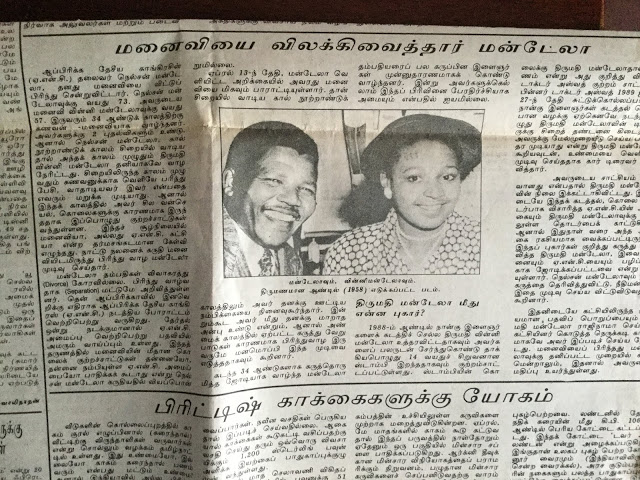
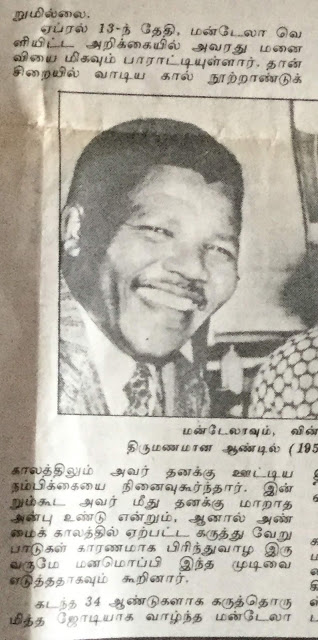
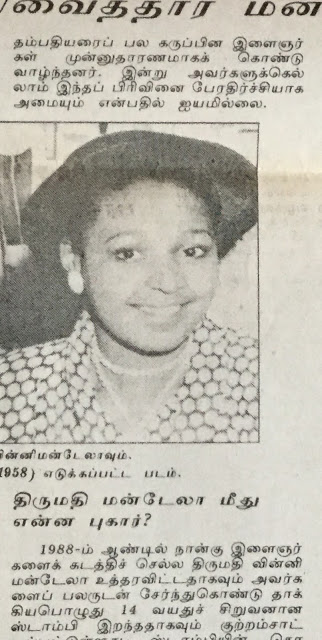
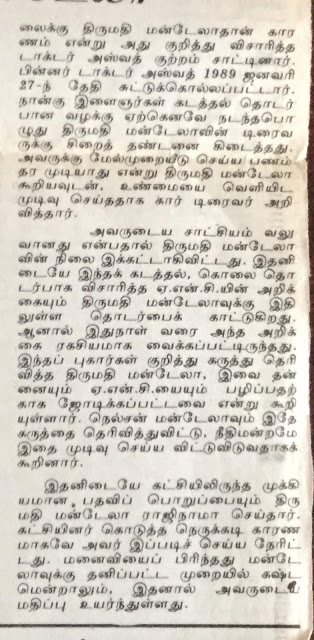
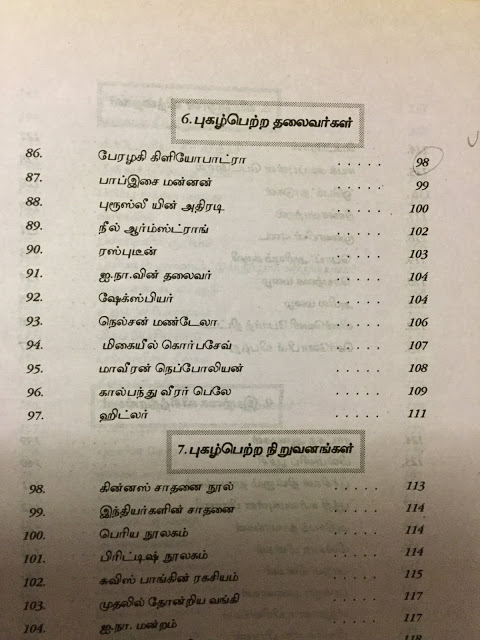
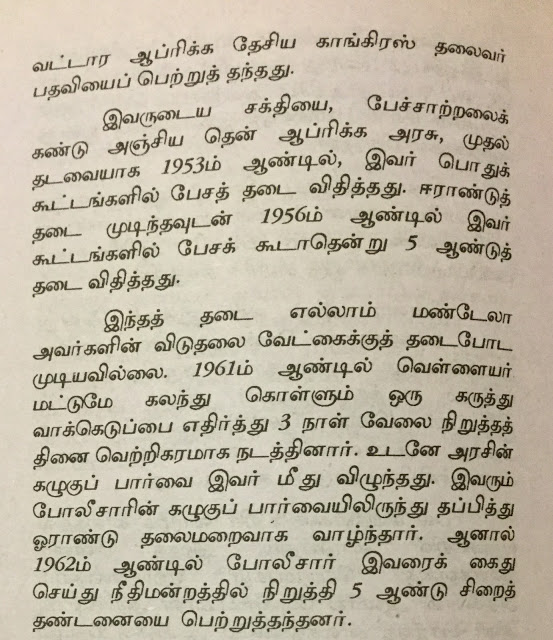
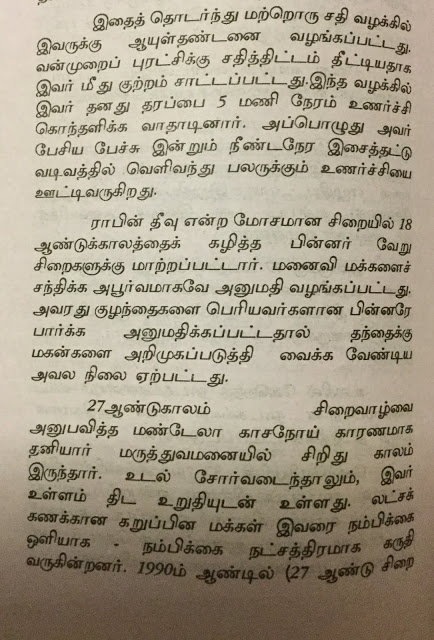
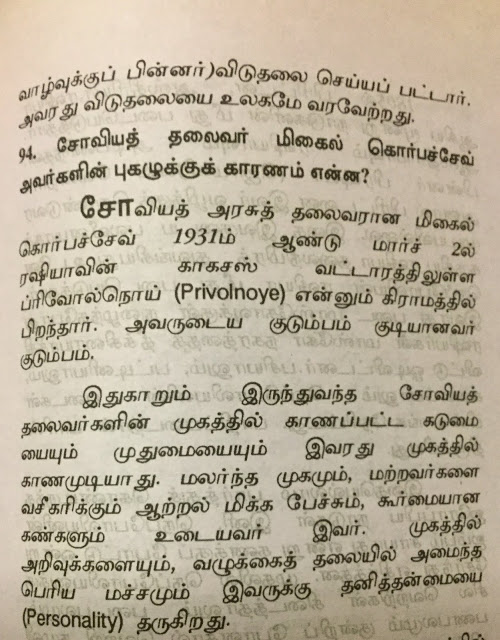
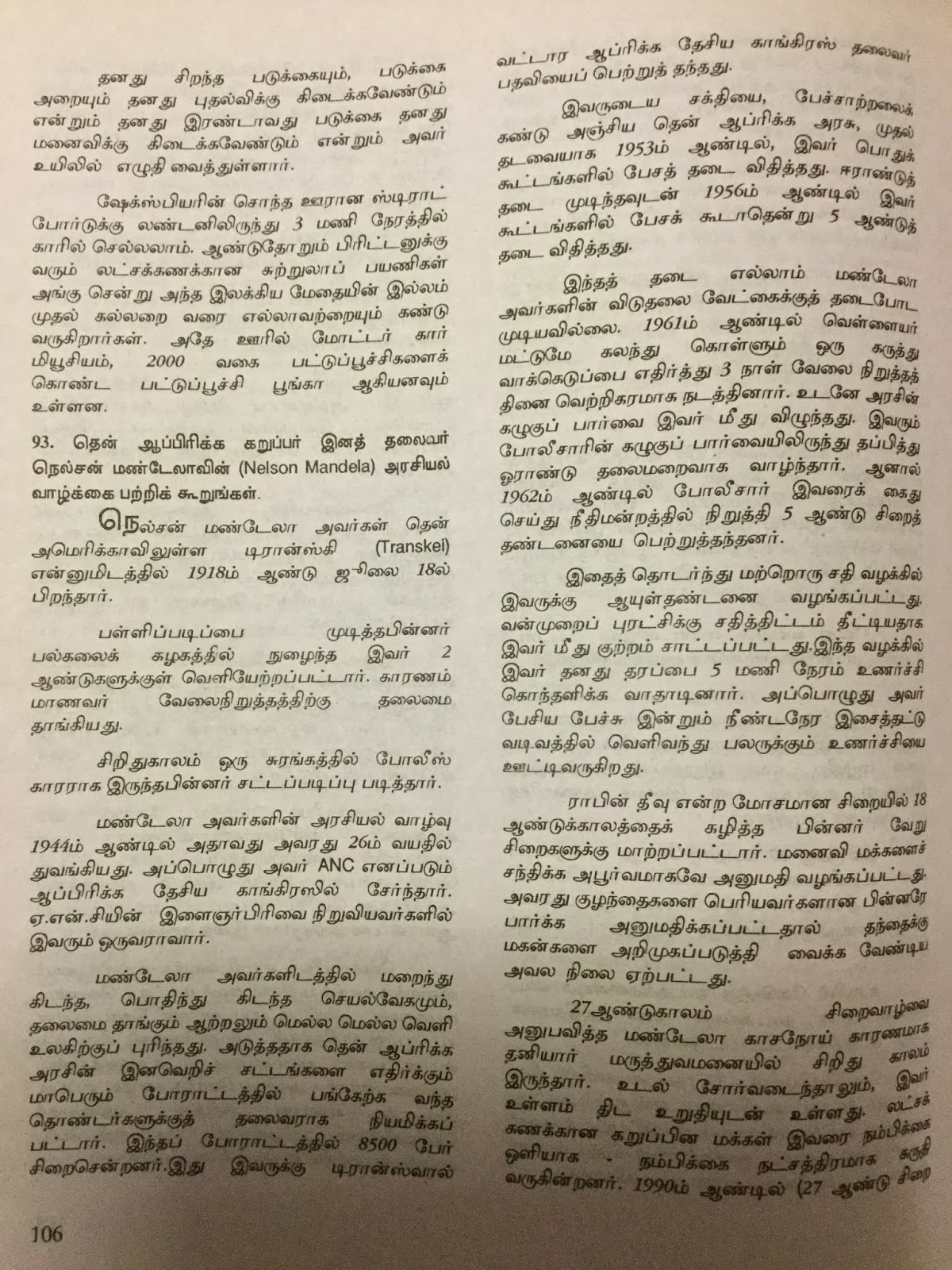
நான்
1992ல் (10-5-1992, Dinamani
Newspaper)தினமணியில்
எழுதிய பின்னர் நிகழ்தது என்ன?
2013-ல் நெல்சன் மண்டேலா இறந்தார். அவருக்கு வின்னி மண்டேலா உள்ப ட மொத்தம் 3
மனைவியர்.
வின்னி
மண்டேலா 2018- ல் இறந்தார். சாகும் வரை எம்.பி.ஆக
இருந்தார். சிறிது காலம் அமைச்சராகவும் இருந்தார்.
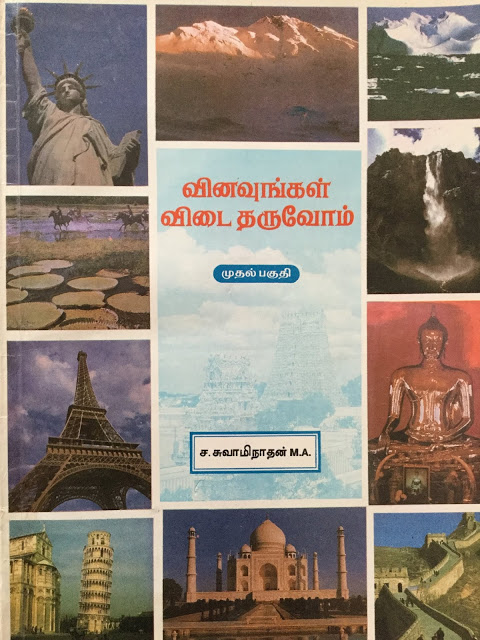
பி.பி.சி. தமிழோசையிலும் மண்டேலா பற்றி
நேய்ர்கள் கேட்ட கேள்விகளுக்குப் பதில்
சொன்னேன். அதை 1991ல் வினவுங்கள் விடைதருவோம் என்ற புத்தகமாக
வெளியிட்டேன். அப்போது பி.பி.சி.யில் நான் பேசியதையும் இங்கு இணைத்துள்ளேன்
சாட்டப்பட்டுள்ளது. ஸ்டாம்பியின் கொலைக்கு
correction- not south america, but South Africa
ப்ரூப் பிழை- பிறந்த இடம்-தென் அமெரிக்கா அல்ல, தென் ஆப்பிரிக்கா




























 Tamil and Vedas