“Three Apples that Changed the World”

3 Apples are said to have changed the world - can you guess which?


By S .Swaminathan

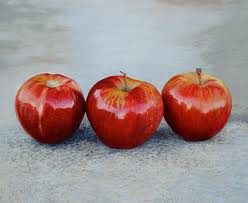
Steve Jobs’ death deeply affected many people and triggered a media frenzy. One of the most interesting comments made was: “Three Apples That Changed the World”. But not many people knew that there is an interesting story behind each of the three apples:

  • Eve’s apple
  • Newton’s apple
  • Steve Jobs’ Apple

No doubt they changed the world to a great extent.

Biblical Adam and Eve ate the forbidden fruit and committed the original sin. They fell from the grace of God and all the sufferings started from that day onwards. Not only Christians but also Jews and Muslims believe in the story.

Adam and Eve’s apple story is actually a Hindu Upanishad story. Wise people of the ancient world made up a lot of mythology to help the layman understand high philosophy. If philosophy was given directly it would have been rejected by many as a bitter medicine. So they gave it as a sweet coated capsule – called mythology. Unfortunately in the course of thousands of years, people forgot the principles behind the stories and stuck to the literal meaning. For a student of science or astronomy all these mythologies would appear as superstition or absolute stupidity.

There are lot of striking similarities between Hindu and Christian scriptures. They cannot be discounted as coincidences because the sheer number. There are good proofs to show that they are borrowed from common sources.

The Bible begins with a story from the Upanishads. It is the story of two birds eating the fruits, but instead of two birds, the Bible has Adam and Eve.

The very name reveals the Hindu origin of the story.  In the Upanishads the two birds are the symbolic representation of Atma (atam) and the Jeevatma (Jeev – Eve). Any student of linguistics can easily recognise the transformation of Atma into Adam And Jeeva into Eve. This parallel has been pointed out by Sri Chandrasekarendra Saraswathy, Sankaracharya of Kanchi Kamakoti Peetam in his lectures in Chennai in the 1930s. The story of the two birds is in the oldest religious record of human beings – the Rig Veda (RV 1-164-20) – and it is repeated in the Mundaka Upanishad and Svetasvatara Upanishad.


Mundaka Upanishad:

“Two birds, beautiful of wings, close companions, cling to one common tree: of the two, one eats the sweet fruit of the tree; the other eats not but watches his fellow” – Mundaka Upanishad.


The bird that eats the fruits is Jeevatma (ourselves-human beings). The bird that enjoys without eating the fruit is the Paramatma (the Supreme being).

The Bible says that Eve (Jeev-atma) ate the apple in the Garden of Eden and this was the cause for the fall of humanity. This is nothing but the above Upanishad story with some changes. The Upanishads say that it was a fig tree.

The Bible says Eve was created from Adam’s rib. This is once again the Hindu story of Uma/Parvathy forming the left part of Shiva. Nowadays we call our wives and husbands our ‘other half’. It is very interesting to note that this expression has come from the Vedas. Kalidas and other Sanskrit poets also use this expression freely. In all Shiva temples of Tamilnadu one can see Ardhanareeswara (half female and half male –Parvathi Parameswara) proving men and women are equal.

Another interesting fact is Bible never mentioned the word apple. Genesis of Bible says that Eve ate the fruit of the tree of knowledge of good and evil. The word for evil in Latin is ‘malum’. The same word is used for apple in Latin.

When we call a married woman by name we put the woman’s name first followed by her husband’s name Eg. Michelle Obama, Samantha Cameron. This was also started by Indians. We worship our gods in similar pairings – SITAram, RADHAkrishna and so on. When the greatest Sanskrit poet wrote his epic Raghuvamsa two thousand years ago he prayed to Parvathy-Parameswara in the very first couplet. Ladies first, again. There are too many similarities to mention in this short article.


Sir Isaac Newton(1642-1727)

Newton is considered the most influential scientist who ever lived. He described universal gravitation and the three laws of motion. We are only able to send vehicles into space because of his discoveries. It is said that he discovered the law of gravitation when an apple fell onto his head. Though the apple analogy is partly correct, the fact was it did not ‘fall on his head’. But cartoons drawn after some time showed apple hitting his head. Buddha attained wisdom simply by sitting under the pipal tree. However, nothing hit his head to allow wisdom to dawn upon him. In both the cases, it was actually meditation on a particular subject that helped them to acquire such wisdom.


Steve Jobs (February 24, 1955 –October5, 2011)

Steve was co-founder, chairman and chief executive of Apple Incorporated until his death. Apple’s iPod, iTunes, iPhone and iPad changed the entire world. Now no-one can think a world without these gadgets. We will feel handicapped without these equipments. Steve was the force behind these technological innovations. 

But what was the cause of his charming and composed personality?  If the idea that Apple changed the world is not an exaggeration, then we can boldly say that India changed Steve Jobs! Steve Jobs was greatly influenced by the Beatles. Like the Beatles, he also took a spiritual retreat in India. He became a Buddhist and his wedding was done according to Buddhist custom. Like monks he used to walk bare footed in his neighbourhood and in the office. His sober views of life reflected his beliefs in rebirth and karma. He took his terminal pancreatic cancer like a Hindu saint.  
Why Do British Judges Follow a Tamil King?

By S Swaminathan


Strange as it may look, British judges, magistrates and barristers follow a custom that was started by a Tamil king two thousand years ago. British judges and several others who preside over the courts of justice wear a white wig.

If we go to encyclopaedias they don’t explain why they wear it or when it was exactly started. Ancient Egyptians wore wigs for protecting their heads from the scorching sun. Then Romans and others wore different types of wigs as symbols of aristocracy.

The British judiciary started wearing wigs from 17th century. Many of the commonwealth countries also followed it. Whenever the reason for the custom is asked many people say that it is the tradition or uniform for professional discipline or it shows experience. Actually it was started by the most famous Tamil king, Karikal Chola two thousand years ago. Crystal clear proof comes from the ancient Tamil Cankam (Sangam) literature.

Karikalan was the greatest of the Tamil kings for three reasons. He ruled vast areas of Tamil-speaking land, subjugating other Tamil kingdoms. He was the first Tamil king who went up to the Himalayas and carved his dynastic emblem there. Till today, there remains a Chola pass in the Himalayas. The second reason was he was a just king and his court of justice in Uraiyur became very famous. Tamil literature praises his justice and gives the story of wigs. And the third reason is the Grand Anaicut he built across the river Cauvery is one of the oldest dam s in the world. 

Though we did not have any historical records scholars have dated him around 1st century BC. He was a boy king – like the Egyptian Tutankhamen. He came to power while he was a teenager.


The Story of Wigs:

One day two elderly people came to his court seeking justice. They had a dispute among themselves. They decided that whatever the Uraiyur court says must be the final settlement. When they came in to court they were shocked to see a boy sitting as the judge. They were greatly disappointed – which Karikalan felt immediately by looking at their faces. Indeed the face is the index of the mind.

Karikalan politely asked the elders to take seats and told them to wait for the ‘judge’ and he went in. The entire assembly was puzzled. Then came an elderly person and sat on the chair. After carefully listening to the arguments of both the sides he gave his judgement. Both of them were immensely happy to hear a fair settlement. Now the assembly wanted to know who the elderly judge was. King Karikalan removed his white hair wig (Narai Mudi in Tamil) and revealed himself.  All applauded the Wisdom of the ‘Solomon of India’.

The proof for the anecdote is in three Tamil books:

  1. Porunar Atruppadai –lines 187-188. Porunar Atruppadai is one of the ten long poems of Tamil Cankam literature dated  between 1st to 3rd century AD
  2. Manimekalai- This is one of the five Tamil epics dated 3rd century AD  
  3. Pazamozi – poem 25 translation:


“The grey haired old men said the young man could not come to a decision about their case. They were delighted to find the Choza wore a grey wig, and understood the case from listening to their statements”.

This proves that even before they learn the arts suited to their caste, men are “ripe for their duties” This book is dated around 5th century AD.

Nobody can deny the fact that Karikalan was the first one to use white wig in judiciary matters.

There are lot of interesting stories about Karikalan in Tamil literature. He had to fight his own relatives to get the throne after the death of his father Ilam Chet Senni. He escaped an arson attack and his feet were charred and thus he got the name “Kari Kalan” (man with charred legs). The ancient custom in India is to select a king by the Royal elephant if nobody knew who the real heir apparent was. Karikalan was garlanded by the royal elephant when he was standing in the crowd. The episodes about his daughter Adi Mandi also formed the basis of several interesting stories.

How did Shakespeare know about the Indian Cobra Jewel-Nagaratnam?

“Sweet are the uses of adversity, Which like the toad, ugly and venomous,

Wears yet a precious jewel in his head”

Shakespeare’s ‘As You Like It’ Act 2:1.13-14

There are a lot of references about Nagaratnam or Nagamani (Cobra Jewel) in Tamil and Sanskrit literature. But the strange thing about it is that even the most famous English playwright Shakespeare mentions in his play ‘As You Like It’. Instead of snake he says toad. Indeed any story will change when it travels 6,000 miles!

 The story about the cobra jewel is that the cobras keep it inside their bodies and use it during night time to search for preys. Ancients believed that the Nagaratnam emits enough light to identify the prey.

The concept of the Nagaratnam has not been scientifically proven. But there are lot of stories about people being defrauded by the name of Nagaratnam. Gullible people pay millions of rupees for fake Nagamanis.

My research shows that they did not mean Nagaratnam/Cobra Jewel , but only the power of snakes to see in the dark. Ancient Tamils were good observers. They named snakes with different words and one of them is Katchevi. The meaning is Kan+Sevi=Eye+Ear. That means the snakes have a single body part which functions like both its eyes and ears.

People who have watched Nature programmes on TV channels could see the way snakes see their prey in the night. The body heat of the animals are perceived by snakes using infra red rays. A snake’s prey will appear highlighted red in its vision. This extrasensory ability is probably what is popularly known as the Nagaratnam/Cobra Jewel.

The organ that identifies the prey by this ray is in a pit under the eye. Modern research shows that the snakes can’t see or hear properly. Snakes have these heat sensory pits on their faces. Even a small change of temperature in its surrounding can be easily detected by the snakes.

Snakes have got another organ called Jacobson’s Organ. Snakes stick their tongues out very often to sense smell. When the tongues are pulled back the Jacobson’s organ identify the smell, which may be a prey and provokes the snake to attack it.

Tamils haven’t named any other animal as “Eye-Ear “(Katchevi) except snakes. This shows their keen observation and scientific knowledge about animals.

Interesting it may sound that the Tamils used a simile “like a snake that heard thunder” (“idi ketta nagam pola nadunginaan”) he was shaken. This simile is used to describe one who is shaken and trembling out of fear. Snakes can’t hear properly but can feel vibrations through the ground. Poets like Kamban used this concept in their books.

We find the following references about the cobra jewel in Tamil and Sanskrit:

·        Kumara Sambhavam of Kalidasa: 2:38, 5:43, Raghuvamsam 6:49, 10:7, 11:59, 11:68,13:12, 17:63;Rtu Samharam 1:20

·        Tamil Aka Nanuru 72, 92, 138, 192, 372

·        Pura Nanuru 172, 294, 398

·        Kurunthokai 239

·        Natrinai 255

·        Kurinchipattu Lines 221,239

This is not an exhaustive list. We find such references in innumerable places.

The general theme is that snakes use the light of Nagaratnam (cobra jewel) and if they lose it, snakes become very upset.

 Please send comments and feedback to: Swami_48@yahoo.com. Follow me on Twitter @Swami_48. Find me on Facebook.


The Mysterious link between Karnataka and Cambodia


By S Swaminathan


It is very interesting to find out a mysterious link between the Indian state of Karnataka and a South East Asian country Cambodia. This is an ancient link but existing till today. In both these places we find the sculptures SAHASRA LINGA, literally translated one thousand Lingas. Linga is the shapeless form of Hindu God Shiva.

Cambodia is famous for its Angkor Watt temple. This is the largest Hindu temple in the world outside India. The temple is dedicated to Lord Vishnu and full of beautiful sculptures. It is a historical fact that the Hindus ruled various parts of South East Asia for 1300 years from 1st century AD. But not many people noticed the mystery of Sahasra Linga.

Sahasra Linga is located seventeen kilometres from Sirsi In the northern part of Karnataka known as Uttara Kanara. One can see hundreds of Shivalingas carved in stones and rocks in the middle of the river. The river is called Shalmala.  All the statues are washed by this holy river water for ever. During Hindu festival Shivratri thousands of pilgrims visit this place and offer pujas. One advantage of visiting this place during Shivratri is the water level in the river is low and most of the Lingas are visible with their bases called Yonis. No one knew when and who carved them. People visit this spot for its scenic beauty as well. This place is situated in the middle of forest in the Western Ghats.

There is another place in Cambodia with the same name Sahasra Linga and there also the carved Shiva Lingas are in the middle of a river. The only difference is nobody worships it in Cambodia but tourists visit his place out of curiosity and to enjoy nature.

Cambodian Sahasralinga is located 25 kilometres from Angkor watt. There are statues of Hindu gods Lakshmi, Rama and Hanuman in addition to the Lingas. The place is called Kbal Spean and its meaning is ‘the Head  Bridge’. Unlike Karnataka this place is not easily accessible. Tourists have to climb very hard and rough rocks. They have to go via a stone bridge. Animal figures are also carved on the side rocks. The river Slung Kbal Spean is flowing from Kulen mountains. There is a fifty feet high water falls which adds beauty to this holy spot. Long ago the kings used to come here for holy bath. No one knew who carved these lingas and for what purpose. But the tourists are told that the Lingas are symbols of creative energy and the river water that flows on the lingas will make the Cambodian paddy fields more fertile. A lot of Hindu symbols were destroyed during the civil war in Cambodia. But these Sahasra Lingas were not affected because of the surrounding thick forest. Those who wanted to travel to this place leave from Banteasy Srei and travel 12 kilometres and then walk for 45 minutes through rough terrain. The area is closed for tourists around 3 pm.

One of the remarkable sculptures here is of Maha Vishnu and Brahma emerges from his belly on a lotus flower. It is very heartening to see Brahma, Vishnu and Shiva, all the three greats of the Hindu Trinity at the same place.

Any one who wants to see the pictures can see them on You Tube and images through google websites. Just type Sahasralinga in Karnataka and Sahasralinga in Kbal Spean you will see the beautiful images and videos.

Now the question is how come the same name and the same sculptures exist in two different places which are wide part by thousands of miles? Who and Why did they carve them? Neither the Indians nor the Cambodians knew. But if we dig deeper we can find the answers. I have shown somewhere  (Please read my articles Did Agastya drink theocean under Brahamastra – a nuclear weapon? And my other article The PandyaKing who ruled Vietnam) that Agastya was associated with the Pandyas in many copper plate inscriptions of the Pandyas and the famous Raghuvamsa Kavya of Kalidas. He led the Pandyas and other South Indian kings to South Asian countries two thousand years ago. He was the torch bearer of Hindu culture. Since those people were without a religion and culture Sage Agastya civilised them. This was not invasion but cultural expansion.  As a token of gratitude Agastya statues were installed by the local people in different countries in South East Asia. Even before the British reached these areas French archaeologists and historians went to do a lot of research and published books on the temples. Anyone who has access to those  French books can see the pictures of Agastya statues.

It is a well recognised fact that all the South East Asian scripts are evolved from Indian Brahmi. All Indian scripts also evolved from the same Brahmi. The Pallava script contributed to most of the S E Asian scripts. If one places the pictures of  Pallava temples and S E Asian temples the similarity can’t be missed . And if one places more pictures from the Central American Maya temples the link can be easily established. So we can assume that the culture travelled from South India towards S E Asia and then to Central and South America. There is even mention of 1000 pillar Hall/Mandap in the Maya culture.

There are more Sahasralingas in India. For instance Pathan in North Gujarat has one Sahasralinga. But because of the foreign invasions followed by destructions only a 48 pillar mandap exists today with few lingas.

Sahasralinga also means one thousand linga forms on the face of a single big linga. The best of the Sahasralingas of this type is seen in Parasurameshwara Temple in Bhuvaneswar,Orissa.


 Please send comments and feedback to: Swami_48@yahoo.com. Follow me on Twitter @Swami_48. Find me on Facebook.

Pradeep’s Talk on Saraswathy Mahal Library

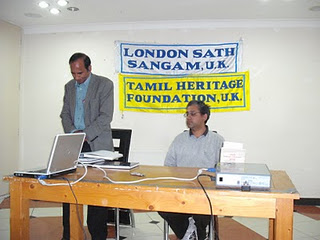
Mr Pradeep Chakravarthy of Leadership Institute at Infosys,Chennai addressed an elite audience in London on 9th August 2011 . He is seen with the president of London Sath Sangam Mr Balaji. Mr S Swaminathan, Secretary of London Sath Sangam and Tamil Heritage Foundation, UK welcomed the gathering.  Chakravarthy’s talk on the Saraswathy Mahal Library of Thanjavur was very interesting and informative.

His book “Thanjavur-A cultural History “was a well researched work. It has got a lot of very rare photos unpublished so far. All the books he brought to London were sold like hot cakes. Mr Chakravarthy is a historian and columnist.

His articles are published in reputed dailies like The Hindu ,Chennai.


How Old is Indian Civilization?


“We owe a lot to the Indians, who taught us how to count, without which no worthwhile scientific discovery could have been made” -Albert Einstein

“If there is no one place on the face of the earth where all the dreams of living men have found a home from the very earliest days when man began the dream of existence, it is India”– French scholar Romaine Rolland.

Western scholars always underestimate anything Indian (of course except a few like Einstein, Romiane Rolland, Max Muller). They would give all credits to anything Greek or Roman. After the excavations in Egypt, Sumerian and Babylonia (Iraq & ,Syria) they slowly shifted the credits to the Middle East. When Indians point out that they were all in Indian books, they say that they were all written later and we borrowed from them. We have a long list of Indian kings in the Puranas and Ithihasas (Mythologies and Epics). But they simply ignore them.  Indian scholars who always long for foreign trips and foreign awards must play second fiddle to them otherwise they will be rejected or dubbed as extremists.

We have very clear proof in Tamil and Sanskrit literature to show that we lived for thousands of years on the same soil and we never said anywhere in our literature that we came from outside. But westerners say that the Tamil/ Dravidians came from the Mediterranean and the Northern Aryans came from Central Asia. According to them Indian History begins from 2500 BC in the Indus valley and the first king they say historical belongs to sixth century BC. Bimbisaran ruled  around 600 BC. That means we did not have any king for 1900 years from the beginning of the Indus period. Though we have a long list of kings in our scriptures they did not consider them historical. Indus valley has no King!

Following proofs are enough to say that we have history supported by literature:

Kapila, the greatest of the Tamil Cankam (Sangam) poets, sings about a king called Irunkovel in Purananuru poem 201.He praises him as the 49th king in the lineage of kings who have migrated from Dwaraka after Krishna’s death. Even if we give 20 years for one generation according to western calculations, it will take us back to nearly 1000 years. Kapila lived around 100 AD. That means the first king of Irunkovel’s dynasty must have ruled around 1000 BC
  1. Tamil and Sanskrit books always use the simile of stars in the sky and sand particles on the sea shore to compare with the kings who ruled the earth. This shows their historical sense.
  2. Siru Ven Theraiyar who composed poem 363 in Pura Nanuru says that the kings who ruled this earth are more than the number of sand particles on the sea shore. He also lived around first century AD. When he sang this song he must have studied Indian History or heard from his fore fathers.
  3. Brihad Aranyaka (Big Forest ) Upanishad, which is dated by the westerners to eighth century BC ,gives a long list of teachers explaining who taught to whom ,generation after generation. They were not kings. They were all sages, around sixty names. So they wouldn’t have died young like kings in the battle fields. They would have lived for at least fifty to sixty years. Even if we allocate thirty year period for each teacher that would take us back by another 1800 years from 8th century BC. i.e 2600 BC
  4. A Greek writer who visited India around 3rd century BC says that India had over 140 kings before his time. Probably he was talking about the Magadha dynasty (Bihar area). Even if we have allocated 20 years each it would take us back to 2800 years from his time i.e. the day kali yuga started.
  5. Tamil and Sanskrit sources give the date of Kaliyuga without any doubt. Parthivasekapuram Copper plates of Ay Dynasty in Tamilnadu was dated 865 AD. The inscription says that it was written in the Kali year 3967. The beauty of the inscription is, it mentions the Kali year in days 14,49,087. This shows the mathematical genius of Tamils and their strong belief in Kali Yuga calculations.
  6. Panini was the first grammarian of the world. The greatest genius the world has ever seen. He wrote a grammar for Sanskrit which made Sanskrit the fittest language for computers. With every addition of a prefix or suffix to a word the meaning changes. He was not a Brahmin. But yet Patanjali who wrote a commentary on his grammatical treatise Ashta Adhyaye (Eight Chapters) praised him as Baghavan (God) Panini. Panini in his Sutra 2.1.19 explains a custom in India. Talking about the lineage and number he gives examples as “Eka Vimsathi Bharatwajam” meaning 21st generation of Bharatwaja, “tri panchasat Gowthamam meaning 53rd generation of Gowthama. This custom is followed in all the Mutts in India. When they say who heads Sringeri or Kanchi at the moment, they always say his lineage.
  7. Brahmin priests who perform puja on important days start it with a sankalpa (Intention to do—) where in they clearly say which part of the world they do it, when they do it and for what purpose they do it. They clearly say the year in Kali yuga under which Manvantara even today. This historical and geographical sense has no parallel in any part of the world.
  8. The entire Indian history is balancing on a single rock-the date of Buddha’s death. Western scholars calculate everything from this back and forth. If one can tilt this balance everything will change. That is to say Indian history is on shaky grounds. But even the date of Buddha  differs from country to country. In Sri Lanka 483 BC, in Burma 544 BC ,in Tibet 835 BC and in China 11th century BC is the date of death (nirvana) for Buddha. If anyone can prove one is better or truer than others, we have to rewrite the Indian history. The shame is present day Indians have no time to do all these. They are happy to earn more and enjoy life and leave all the research to jaundice eyed western scholars.

    I can give many more examples from other epigraphs (Aihole Incription) and scriptures.Scholars like Bala Gangadhara Tilak ,Jacobi have used astronomical calculations to date our scriptures.

  9. Over forty thousand year old human remains have been discovered in various parts of India. Human beings have been living here for thousands of years.

I want to remind you of two Tamil proverbs before concluding. “For a scared person anything dark is a ghost” (Arandavan Kannukku Irundathu Ellam Pey). “For a person afflicted with jaundice, everything he looks at is yellow”. (Kaamaalai kannanukku kandathu ellam manjal).


When India’s status as a super power is fully recognised, these scholars will eventually listen to us. Unless one has political or economic power nobody listens to that person.


Strange Link between Lord Shiva, Socrates and Thiruvalluvar

By S Swaminathan 

Lord Shiva is one of the Hindu Trinity, a great god worshipped by millions of Hindus. Socrates was a great Greek philosopher who lived between 469 BC and 399 BC. Thiruvalluvar was a great Tamil poet and philosopher who lived approximately 1,600 years ago. The mysterious link between the three is the word POISON.
Thiruvalluvar who composed 1,330 couplets (forming the Tirukkural) speaks about ‘friends giving poison to one’. Did he know Socrates? Because Socrates was sentenced to death for his teachings and was given poison. Lord Shiva also took poison for the sake of the Devas (the demigods in Hindu tradition). Now let us look at it in detail.
Thiruvalluvar in his couplet 580 says ‘Men of refined courtesy accept even a cup of poison and look cheerfully calm’. Probably he knew what happened to Socrates. Greeks and Romans were doing a lot of trade with the Tamils two thousand years ago. There is a big gap between the age of Thiruvalluvar and Socrates and so there is every possibility Thiruvalluvar heard about him. Socrates was sentenced to death for corrupting the minds of Athenian youths and not believing in the Gods of the State. He was given a cup of hemlock poison. (Nowadays Americans also execute the prisoners on death sentence by giving poison by injection).
Or did Thiruvalluvar refer to an episode in mythology referring to Lord Shiva? Lord Shiva drank the poison that came out during the ‘Churning of the Ocean’ according to Hindu mythology. But he did not swallow the poison and kept it in his throat. Thus he became ‘blue throated’. So Shiva was known to his devotees as Neelakanta (meaning one who has a blue throat). When the Ocean of Milk was churned, 14 good/auspicious things emerged. Both the Devas and Asuras (demons) were ready to share only the good things. But everyone refused to deal with the poison which threatened the whole of the universe. Shiva came forward and took it. One story goes that his wife Parvathi stopped him swallowing it by grabbing his neck – and there it stayed.
Great Tamil poets like Subramanya Bharathi and Manikkavasagar also refer to this poison given by friends. Probably they just imitated Thiruvalluvar. (Bharathi’s lines ‘’Nachchai vaayile konarnthu nanbar uuttumpothinum…). Manikkavasagar says about this in Potri Thiru Agaval (‘Nanje amuthaay nayanthaai potri’).
Natrinai, one of the 18 books of Tamil Cankam (also spelled as Sangam) has these lines as well. Poem 355 refers to friends giving poison (‘munthai irunthu nattor koduppin nanjum unbar nani naagarikar’).
Strictly speaking poison was not ‘given’ to Lord Shiva by ‘friends’. In the case of Socrates it was such a clear betrayal.
I will leave the judgement to the readers!
Please send your feedback to: swami_48@yahoo.com, or through Facebook or Twitter (@swami_48).

Indiahhhhh—-RICHEST country – Part 6

 By S Swaminathan

Please note this is part of an ongoing series on Why India is the Richest Country in the World. See the links below for the prior parts:

Part 1

Part 6 – latest


Mysore gold

Mysore palace is a very big tourist attraction in Karnataka. Examples of its wealth include a pair of large silver doors in one of the rooms. But the best attractions are the throne and howdah of the Mysore Maharajah. The throne is made up of 200 kilos of gold. The howdah, which is mounted on the elephant, is made up of 80 kilos of gold. All these are displayed on Dasara (Vijaya Dasami) day.
Politicians hold more gold than anyone else. In 1996 Ms Jayalalitha Jayaram, current chief minister of Tamil Nadu was arrested in a corruption case followed by the seizure of a diamond studded piece of gold jewellery weighing 29 kilos.
Janardhana Reddy, former BJP minister of Karnataka, who owns several mines, donated Rs 45 crore worth golden crown to Lord Venkateswara of Tirupati. He donated another golden crown worth Rs 12 crores to Kalahasti temple. It weighs 30 kilos and the height of the crown is 2.5 feet.
Tirupati gold
Sri Venkateswara (Balaji) temple receives 500 kilos of gold and 4000 kilos of silver every year through its donation boxes (hundi). Balbir Sing Uppal, an industrialist, donated seven puja items worth Rs 1.5 crores to the lord. Strange objects including golden handcuffs, golden camera, body parts made up of gold are received now and then. Tirupati temple owns 3,500 kilos of gold and they are deposited in the banks. The temple donates gold for poor people during weddings. Apart from this, the temple has very precious diamond crowns and rare gems
India bought 200 tonnes of gold from the International Monetary Fund recently and the gold reserve of the Reserve Bank of India is approximately 555 tonnes. But the golden reserves of the temples are far higher than the banks.
Guruvayur gold
Guruvayur temple deposited 400 kilos of gold in the banks. Instead of keeping the stock idle, they now they earn interest from the banks.
Thiruvananthapuram Temple
Thiruvananthapuram Sri Anantha Pathmanabhaswamy temple was on the news all over the world after the discovery of incredible wealth in its underground chambers.  If we go by newspaper reports this must be the richest institution on earth. ‘What the Lord of Tirupati can’t achieve by standing, the Lord of Trivandrum achieved by lying’ [down] – reported a newspaper in a lighter vein. The Lord of Tirupati is in standing position and the lord of Trivandrum is in a reclining position.
The following is the list of items found in the temple according to newspapers:
1.     17 kilo gold coins
2.     One tonne gold in the form of rice trinkets (Aval)
3.     Golden necklace weighing 2.5 kilo
4.     A sack full of diamonds
5.     Golden crowns
6.     A gold statue weighing 30 kilo
7.     Golden vessels
8.     A lot of gem stones (Emeralds, Rubies, Sapphires)
9.     Lot of items with antique value
The last press reports estimated the value of treasure trove as one lakh crores (22 billion U.S. dollars).
The Supreme Court of India ordered not to open the last (sixth) chamber for security reasons and ordered those involved not to talk to the press about the findings. The court also asked the authorities to use video recordings. If we are able to see the videos one day, all the Indiana Jones films will be pygmies before that!
Every month the famous auction houses of the world auction a lot of Indian antiques worth millions of dollars. Most of them are bought and smuggled out of India. Talking about the antique value of Trivandrum treasure it will be huge. The treasure includes a lot of Roman and East India Company gold coins.
MGR’s Diamond Sword
Mookambika temple near Mangalore in Karnataka has priceless jewels. The golden mask of Sri Mookambika weighs one kilo. Sapphires, rubies and emeralds decorate the crown. The Shivalinga statue is covered with two kilos of gold. Sanskrit and Tamil literature talk about the Gajamuthu (pearl from the head of an elephant). This temple has a Gajamuthu, which is very rare. Keladi Kings have donated a big green stone of great value (the size of your palm!). Mysore king has donated Navratna garland. M G Ramachandran (MGR), the great Tamil actor and former chief minister donated a diamond studded sword weighing over a kilogram. A golden chariot weighing 80 kilos was recently made for the temple.
Tamil temples flooded with gold
Tamil Nadu temples deposit with State Bank of India alone is as follows
·        Samayapuram Mariaaman Temple – 200 kilos of gold
·        Palani Murugan Temple – 78 kilos
·        Tiruchendur Temple – 41 + 60 kilos
·        Madurai Meenakshi temple – 35 + 40 kilos of gold
Did you notice?
Indian news papers, particularly Tamil News papers, report thefts and robberies, almost every day. The big difference between the olden and modern days is the amount of gold lost. Even the wife of an ordinary worker loses 100 sovereigns in a theft. If it reflects the real condition of Tamil Nadu, just imagine how many gold sovereigns our rich people and the richer politicians would have.
Prominent jewellers and financial experts agree that the Indian general public hold the biggest reserve of gold in the world.

Indiahhhhhhh———-RICHEST country in the world (Part 5)

By S Swaminathan


Please note this is part of an ongoing series. Read prior parts here:

Part 1
Part 2
Part 3

Part 4

Part 5 – LATEST

Tamil king who refused to take gold

The worst thing we read in Cankam Tamil literature is the execution of a little girl just because she took a mango fruit from the king’s garden. Tamil poets were so angry that not only they refused to sing about him but also ridiculed him in the Cankam poems. But one good thing about the story is that it reveals the immense wealth of Tamilnadu 2000 years ago. The story is as follows:

Nannan was a king who ruled part of Kerala called Poozi Nadu. A mango fell from one of the trees in his garden and it was washed away in the water of a canal. Any little girl or boy who sees a fruit will naturally go for it. So did a little girl in his town. The servants reported this ‘theft’. Immediately Nannan ordered to kill the girl for theft. The whole town rose against him. The girl’s father with the support of the VIP’s of the town met the king and begged to to release his daughter. He even came forward to give Nannan 81 elephants as a penalty. Nannan did not budge.

Then her father told him that that he WOULD GIVE GOLD MEASURE FOR MEASURE. But evil Nannan executed the girl refusing to accept the gold. One of the great poets of Tamil Cankam (Tamil Academy) Paranar gave this story in Kurunthokai poem 292. Perunthalai Sathanar who sang a poem long after this incident refused to sing about another king Ilam Vichiko (puram 151) just because he was born in Nanna’ns clan. Till this day Nannan was ridiculed as a ‘Murderer of a little girl’. My purpose of narrating this story is to show the wealth of ancient Tamilnadu. Look at the word MEASURE FOR MEASURE gold.

This is called Thula Bharam (Weighing in a balance). This is a Hindu Ritual followed in many temples, particularly Tirupati Balaji temple and Guruvayur Krishnan temple. The ancient Tamils were so wealthy they were ready to give measure for measure gold to Nannan. Another poem in Tamil literature says Tamil girls threw golden ear rings at the birds to chase them  instead of stones. This may be an exaggeration!

Having said ,that I want to point out the golden thula bharam of very recent years. In Thula bharam ritual devotees sit on one side of the balance and fill the other side of the balance with materials one wishes to give to god. Last year T N C Menon, managing director of the Bangalore based Sobha group of companies weighed himself in the balance and gave 70 kilos of gold to Guruvayurappan.

Gold from Holymen

Now and then we read about the CBI raids in Ashrams run by holy men of India. Very recently, when Sathya Sai Baba’s room was opened by his devotees after his death, they found 98 kilos of gold from Baba’s private chamber. They found gold and silver worth of Rs 76 lakhs from another room in addition to cash of Rs11.56 crores.But this was not a raid.

About other holy men, newspapers reported of raids in several places in Tamilnadu and Karnataka and recovery of gold. Recovering 20 to 30 kilos of gold from government officers or industrialists is a common phenomenon in India. If one could collect all the data and total them it would run in to thousands of kilos.

Gold Chariots of Temples

In Tamilnadu,Kerala,Karanataka and Andhrapradesh all major temples have got Golden Chariots for the gods and goddesses. Many of the vahanas (mounts of gods) are plated with gold. Each temple has used at least ten kilos of gold to make the chariots.

Indian Women’s thirst for gold

Akshay Tritiya is an auspicious day and people believe whatever they buy on that day will multiply and bring more prosperity to the families. Women who always wait for an excuse to buy jewellery rush to the shops and buy the gold on that day. Look at a few examples to see what they bought in 2011:

  • Lucknow : 80 kilos of gold on 6th May ,2011
  • Mumbai 1500 kilos of gold
  • Ahmedabad  500 kilos

50 tonnes (50000  kilograms) of gold were sold all over India on that day alone.

Pandya King Who Ruled Vietnam

By S Swaminathan
It is a well known fact that India’s cultural empire extended to South East Asia in the first few centuries of our era. Hindu empire existed for over a thousand years in several countries in the region. But the fact that a Pandya king ruled Vietnam was missed by many historians. The first king in Vietnam was known by the name Sri Maran. Translated in to Tamil it is Thiru Maran. We knew several Pandya kings by these names through inscriptions and Tamil Cankam literature. The oldest Sanskrit inscription discovered in Vietnam mentions the name Sri Maran. Unfortunately we did not get the complete inscription. Most of it is not legible.
The inscription is known as Vo-Chanh Inscription. It was inscribed on a rock as two parts. This is about the donation made by the family of the king Sri Maran. We have fifteen lines on one part of the rock and seven more lines on the other side. Of these only nine lines are readable. Scholars who took a copy of the inscription say the poetry part is in Vasantha Thilaka metre in Sanskrit and rest is in prose.
The king donated all his property to the people who were close to him and ordered that it should be honoured by the future kings. The inscription ends abruptly. But we could read the words ‘Sri Mara raja kula’ very clearly. Though we couldn’t get much information about this king from other sources, Chinese historians confirmed that the Hindu empire that existed in Vietnam, Laos and Cambodia started with Sri Maran.
Chinese historians named Thiru Maran as Kiu Lien and said that he captured Champa following a revolt. Champa was part of modern Vietnam. The French scholars who excavated most of the South East Asian sites have identified Kiu Lien as Sri Maran. All the kings’ names who followed Sri Maran were in Chinese style and beyond recognition. The revolt started in AD 132 against Chinese and Sri Maran ruled from AD 192.But the kings’ names end with Fan (in Chinese) which is nothing but Varman. As a surprising co incidence we have both Varman and Maran names in the Pandyan Kingdom in Tamil Nadu.
There are more than 800 Sanskrit inscriptions in South East Asia. Mula Varman was another king whose inscription was found in the thick jungle of Borneo (Indonesia).
Now let us look at the Tamil literature to get some corroborative evidence. The last king who ruled during the second Tamil Academy (Second Tamil Sangam) was Thiru Maran. When a tsunami struck his capital he moved his capital to the present day Madurai. May be he or his representative might have ruled Vietnam.
Velvikkudi Copper Plate inscription also mentions Thiru Maran, Sri Maran as titles for a few kings. The king who ruled during the days of Tolkappiyar also had the title Thiru. He was Nilam Tharu Thiruvil Pandyan. We see the name Maran at least ten times in the colophon of Cankam poems. Most importantly the author of Natrinai poems 105 and 228 was Muda Thiru Maran. Velvikkudi Copper Plate says that Agastya was the Kula Guru of the Pandya clan and we see Agastya statues in several places in S.E. Asia. (See my article ‘Did Agastya drink the ocean?’ for more information) .
The author of Purananuru poem 182 was Kadalul Maintha Ilam Peru Vazuthi. The translation of the king’s name will sound ‘the king who died in the sea’. This king might have died during an expedition to S E Asian countries. So it was not uncommon for a Pandya king to travel to a foreign country in first or second century.
We have more evidence from the Tamil inscription in Malaysia, the discovery of Tamil coins in Thailand, Greek and Roman writers’ references about South Indian Marine trade to support our argument in favour of Pandya’s expedition to South East Asia. (For more information on inscriptions of Champa/Vietnam please read R.C. Mazumdar’s book).
Please do contact me with feedback at: swami_48@yahoo.com, or leave comments below.