Evolution: Monkey to Man! Some Anecdotes about Ancestors!

a dumas

Article No. 2090

Written by London swaminathan
Date : 21 August  2015
Time uploaded in London :– 15-18

It is a common belief that mankind evolved from the monkeys. But the fact of the matter is man did not evolve from apes like gorillas or chimpanzees but he shares a common ancestor with them. Since there many missing links in the evolutionary ladder, still it debated by the biologists. There are some interesting anecdotes about ANCESTORS.

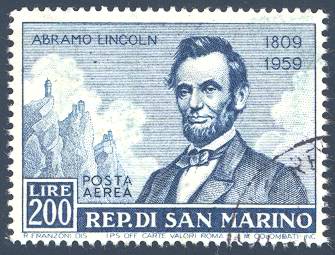
San-Marino-Abraham-Lincoln-USA

Abraham Lincoln’s Ancestors

Speaking of his ancestry Lincoln once humorously remarked, “ I don’t know who my grandfather was, but I am much more concerned to know what his grandson will be.”

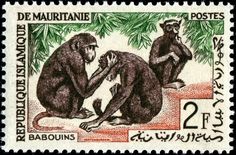
Alexandre Dumas and Baboon!

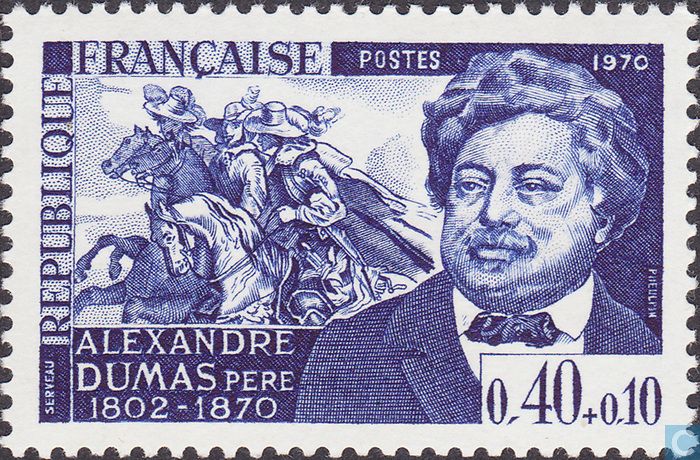
The elder Dumas was once interviewed by an enterprising reporter, who like many other admirers of the novelist, was curious about his ancestry. “Is it true that you are a quadroon, M.Dumas?”, he asked.

“I am, sir,” Dumas replied.

“So your father……….?”

“Was a mulatto”

“And your grandfather…………?”

“Was a negro.”

Dumas’ patience was running out but the reporter was a bold man. He continued: “And may I inquire who your great- grandfather was?”

“A baboon, sir!” thundered Dumas. “A baboon! My ancestry begins where yours ends!”

((Quadroon : a person who is one quarter black by descent.

Mulatto : a person of white and black ancestry.

Alexander Dumas was famous for his novels and stories such as Three Musketeers. His novels were translated into 100 languages. 200 feature films were on his stories. He wrote 100,000 pages in his life time.))

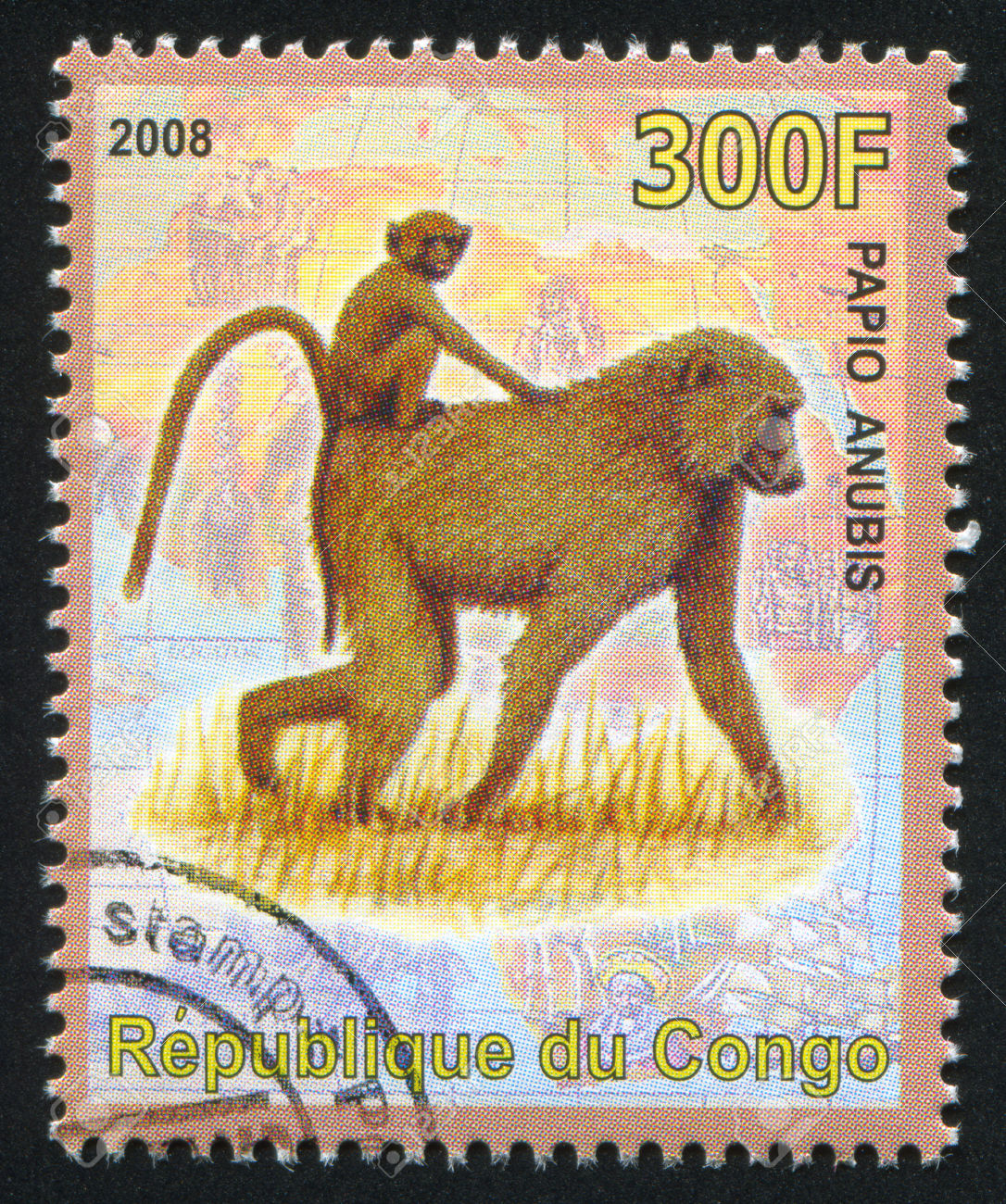
CONGO - CIRCA 2008: stamp printed by Congo, shows Olive baboon, circa 2008

   CONGO – CIRCA 2008: stamp printed by Congo, shows Olive baboon, circa 2008

baboon2

Mark Twain’s Ancestor!

The story is told that Mark Twain was once a guest of an Englishman who took him, with some pride, into a manorial hall hung with huge tapestry depicting the judging of King Charles the First. The host placed his fingers with great pride upon the figure of one of the obscure clerks of the court and said, “An ancestor of mine.

Twain, always offended by such ostentation, casually put his finger upon one of the judges seated on the tribunal and remarked, “An ancestor of mine but it is no matter, I have others.”

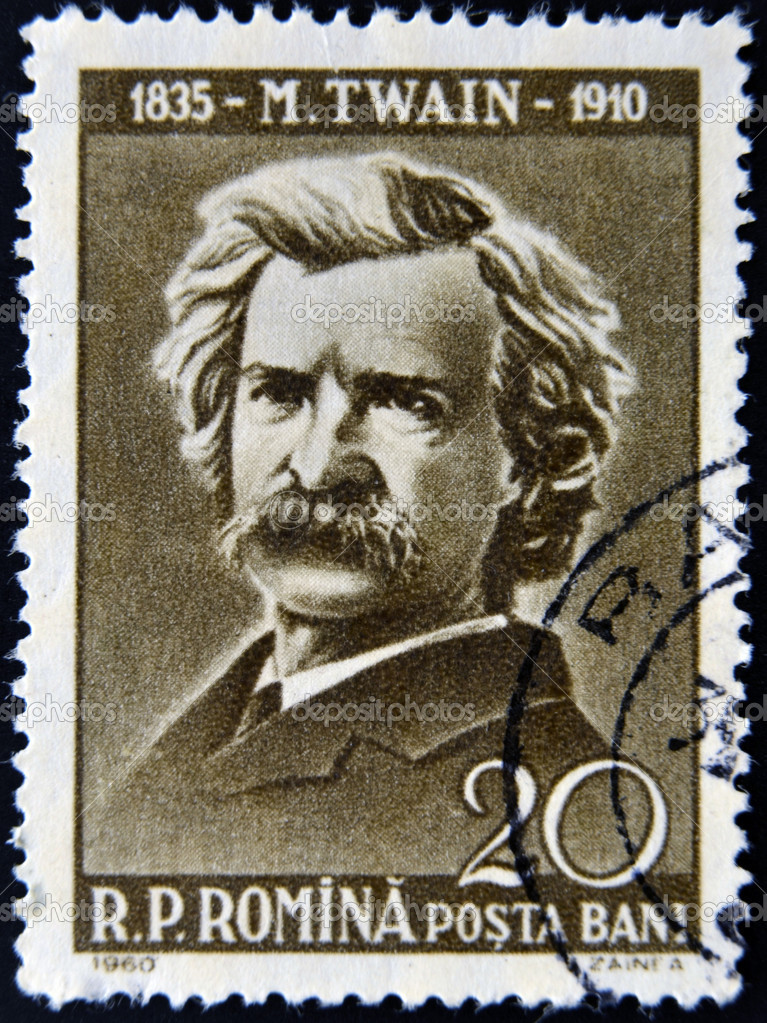
ROMANIA - CIRCA 1960: stamp printed by Romania show Mark Twain, circa 1960.

ROMANIA – CIRCA 1960: stamp printed by Romania show Mark Twain, circa 1960.

Xxx

To a man who had proudly said, “My ancestors came over in the Mayflower,” Will Rogers retorted, “My ancestors were waiting on the beach.”

may flower mayflower13

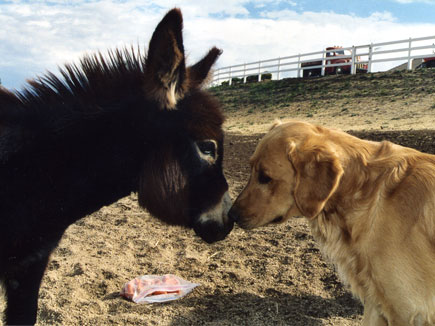
Two Stories: Differences between Donkey’s Work and Dog’s Work!

dog and donkey

Article No. 2088

Written by London swaminathan
Date : 20 August  2015
Time uploaded in London :– 20-39

Each one can perform a particular task better than others. Not all are equal when it comes to work. This is because of their innate abilities or training. Two dog and donkey stories illustrate this point. I posted earlier “can we learn Mantras from Printed books?” Sringeri Shankaracharya answered this question with a story (See at the end)

There are two folk tales in Tamil:

One day a donkey thought, “ I work harder than the dog in this house. But the dog is going in the car with my master. It rests on his lap all the time. It plays with him. He even kisses the dog with all his affection. It goes into every room in the house. But I am not allowed inside the house. I am not given the same treatment. There is no democracy in the house. There is no equality; there is discrimination. I must challenge it. So it keenly watched the behaviour of the dog. It was playing on the bed of his master. Now and then he hugged it, patted it and kissed before he fell into sleep. When the dog went into another room, the donkey entered master’s bed room. He didn’t notice its coming into his room. So it took a bold step. It did not wait for master’s hug or kiss! It went near him and kissed him with his big donkey lips. He woke up and got angry. He took his walking stick and thrashed it. It ran out braying loudly. It felt very sad and decided to have a word with the dog next day.

donkey3

Story 2

In the morning, the dog and the donkey had a friendly chat. “Hey, Doggy! What makes it you closer to our master them me? Yesterday I tried all the tricks I learnt from you but I was beaten blue and black. The dog laughed and said that it may be due to the nature of the job they were doing. Then the donkey said that it wanted to swap the work with him for a day and try what happens. The dog readily agreed. That night the dog went into sleep and the donkey guarded the house. Master of the house was unaware of this new arrangement.

Unfortunately, the thieves broke into the house that night. Donkey faithfully remembered what the dog said to him. Dogs used to bark when strangers come into the house. So I must wake the master now. And so it started braying loudly. Master woke up in the middle of the night and came out. He saw the donkey only. The thieves had run away by that time. Again he took a big stick and thrashed the donkey. Poor donkey couldn’t understand its ‘ungrateful’ master. Next day it handed over the duty of guarding the house to the dog and went to its routine work.

Better is death in one’s own duty (Svadharme Nidhanam Sreyah)– Bhagavad Gita 3-35

Battersea-Commemorative-S-001

Following story is from my post on 5 November 2013

Are the Mantras only for particular Castes?

A gentleman who accepted the efficacy of mantras in helping concentration of the mind had other doubts in the matter.

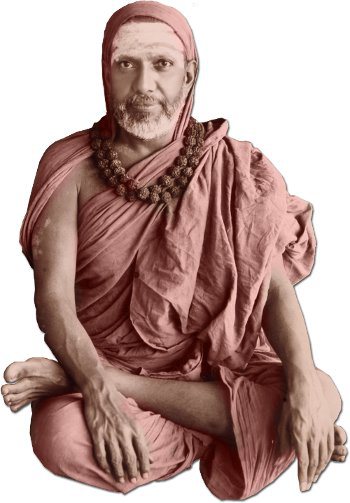
His Holiness Sachidananda Siva Abhinava Narasimha Bharati Svaminah(33rd Jagadguru) of Sringeri Mutt (from ‘Goden Sayings’) answered his questions:-

Gentleman: I do not understand why certain Mantras are allowed only for members of particular castes or persons in particular stages of life and are prohibited for others.

His Holiness: Only if a person for whom a particular Mantra is prescribed pronounces it, it is a Mantra; otherwise it is mere a sound.

Gent: How can that be? Is not a Mantra only a collection of sounds?

HH: A mere collection of sounds will not be a Mantra. It will be a Mantra only if pronounced by a person qualified to pronounce it.

G: How so?

sri_sacchidananda_shivabhinava_nrisimha_bharati_mahaswamigal

HH: In answer to your question, I shall relate a story. In the days of old, a Naik Chief had a petty kingdom of his own and was guided by a Brahmana minister. He learnt that the high intelligence and capacity of the minister was due to his devoted repetition of the sacred Gayatri Mantra and felt impelled to ask him to initiate himself also in that Mantra. The minister however declined to do so. But there happened to be a poor Brahmana cook in the Royal establishment for the benefit of Brahmana guests and the King managed, by threats or bribing, to persuade him to impart to himself the Gayatri.

In a mood of exultation at his success, he proclaimed to the minister in the open court that he had learnt the Mantra. When the minister said that it was not possible, he repeated the words of the Mantra. The minister immediately denied it was the Gayatri. The King grew suspicious of the cook and sent for him and asked him to repeat it. He did so and the King at once pointed out that that was just what he himself pronounced. The minister however persisted in saying that it was not the same thing. The King naturally concluded that the minister was under some temporary mental aberration when he chose to deny a patent fact and attended to his other business.

After some time, the minister suddenly and in loud tones shouted to the bodyguard pointing to the King, “Give him two slaps on his cheek”. This confirmed the king in his opinion about the mental condition of the minister, but when the latter repeated the same command more than once, the king became angry and said to the bodyguard, “Give him two slaps on his cheek”.

The guard immediately gave a strong slap on the minister’s cheek. Then the minister said to the King, “This is the difference. I pronounced the same words as you did but they bore no effect but the same words from your lips had immediate effect and resulted in an injury to me. If a person like myself pronounces the same words, they not only do not amount to a command but have the contrary effect of bringing punishment on myself”.

In the same way, a combination of sounds becomes a Mantra only when it is communicated by an authorised person to another qualified under the Shastras to get it. This explains incidentally why people who claim to have learnt Mantras from printed books are never benefited by them. On the other hand, such procedure has the decided effect of reducing the faith of ordinary people in the efficacy of Mantras. When even qualified recipients have to submit to various restrictions in the repetition of a Mantra, how can we expect any result, other than any undesirable, if it is resorted to by incompetent people in quite a light manner? The Shastras alone are our guide in such matters and must be strictly adhered to.

From ‘Golden Sayings’,1969 publication by Sri Jnanantha Grantha Prakasana Samiti, Thenkarai, Madurai District.

Folk Tale: Haste makes Waste

pARROTS BELIZE

Article No. 2085

Written by London swaminathan
Date : 19 August  2015
Time uploaded in London :– 19-44

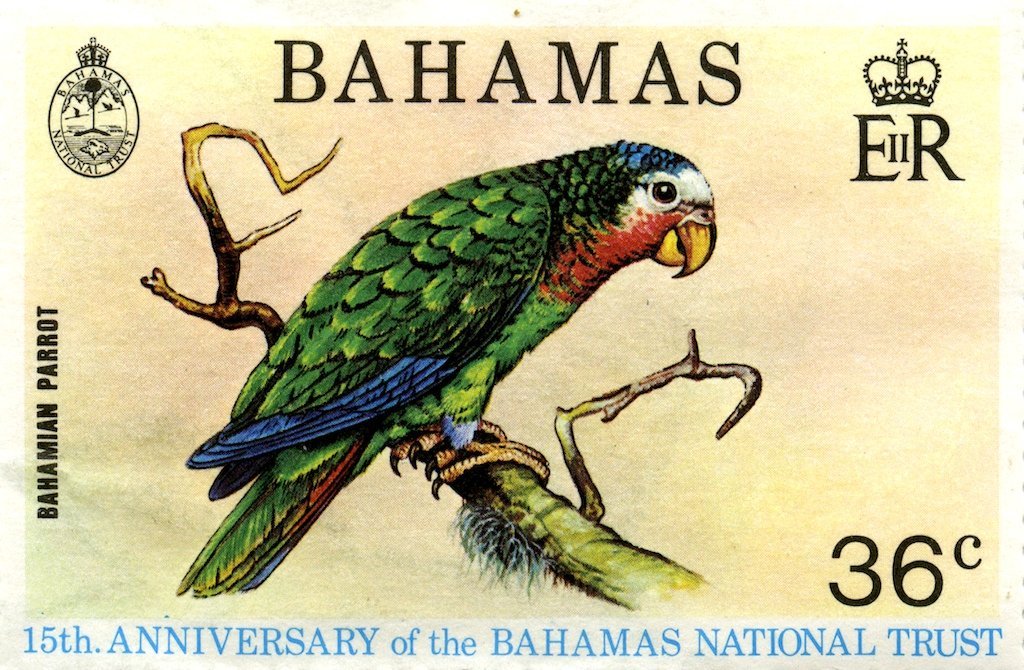
Indian villagers are very clever; they may be illiterates, but they are full of age old wisdom. Indians could hardly tell a story without introducing some proverbs into it.  They taught high principles through stories and proverbs.  For every proverb they have several stories. It differs from region to region and language to language. Here is a story about a parrot and a poison tree.

A king was very fond of parrots. He raised lot of parrots in his palace garden. One day all the parrots from the king’s garden flew to the paradise. There they found a fruit that will give back the youth to anyone. One of the parrots picked up one seed of that miraculous tree and gave it to the king. The parrot told him to plant it in the garden so that the king can eat it when the fruit comes. King became so happy and he placed the parrot in a special golden cage and looked after it very well.

PARROT BAHAMAS

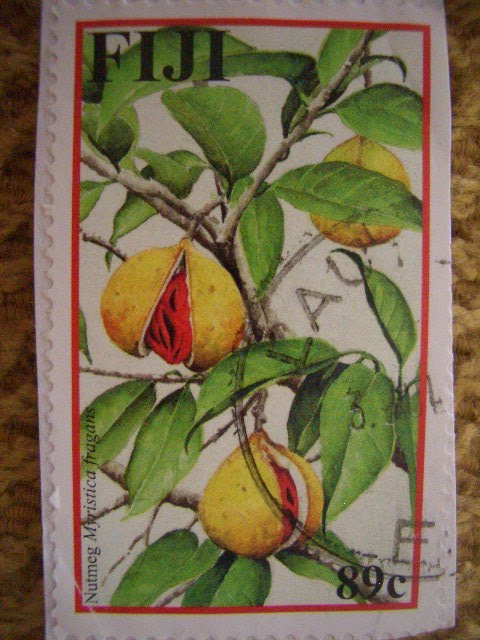
The king did plant it in the garden and the tree gave fruits in a few years’ time. King plucked one fruit from the tree and gave it to an old man to see whether it brings back the youth to that old man. But he died immediately. The reason was that an eagle that killed a poisonous snake pecked at the fruit. So the fruit was poisoned. But the king did not know it. Without trying to find out the cause of death of the old man, the king became very angry and thought that someone set the parrot to kill him by giving a poisonous fruit. He went to the special cage, took the parrot and dashed it to the ground. The parrot had a miserable death.

NUTMEG

A few months later, a farmer decided to kill his wife because she became very old and ugly. Since he knew the story of the poisonous tree, he picked up a fruit and gave to his wife with the intention of killing her. To his surprise, she suddenly became a beautiful 16 year old girl. In those days any valuable item found or any unusual miracle happens, immediately the person reports it to the king. Kings used to reward them for such things. So he ran to the king and reported the miraculous fruit tree to the king. Now the king realised his mistake in killing the parrot. The parrot was right about the fruit tree. But the king acted in haste. He regretted his hasty action.

சௌராஷ்ட்ரா சமூகம் பற்றி சுவையான விஷயங்கள்

IMG_3245 (2)

Article No. 2081

by London swaminathan

Date : 18 August  2015

Time uploaded in London :–  காலை 8-21

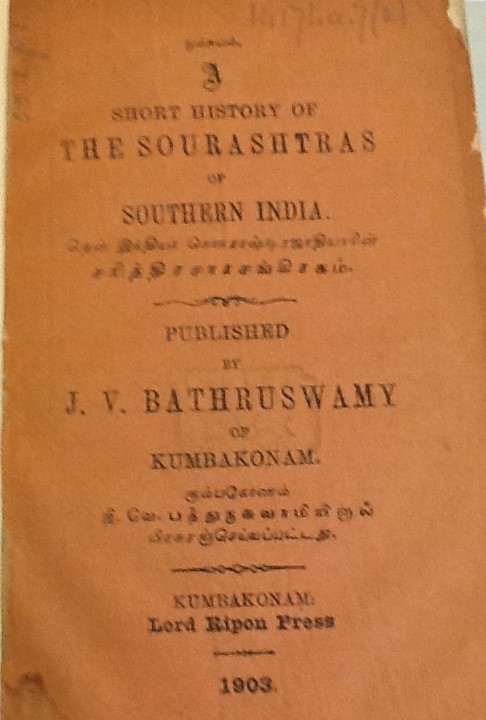
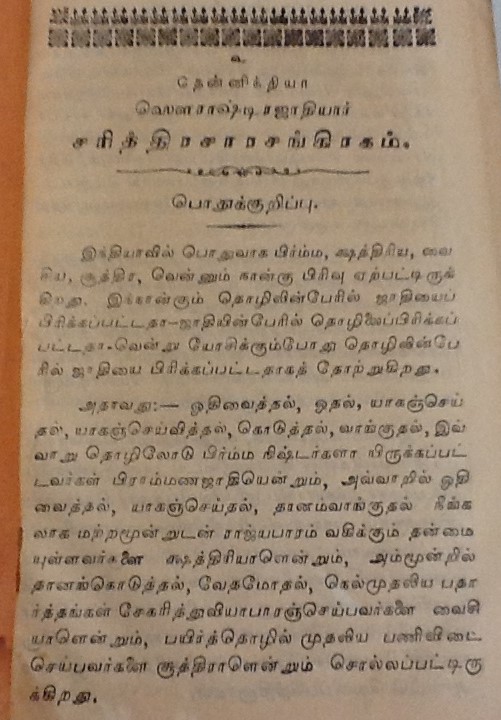
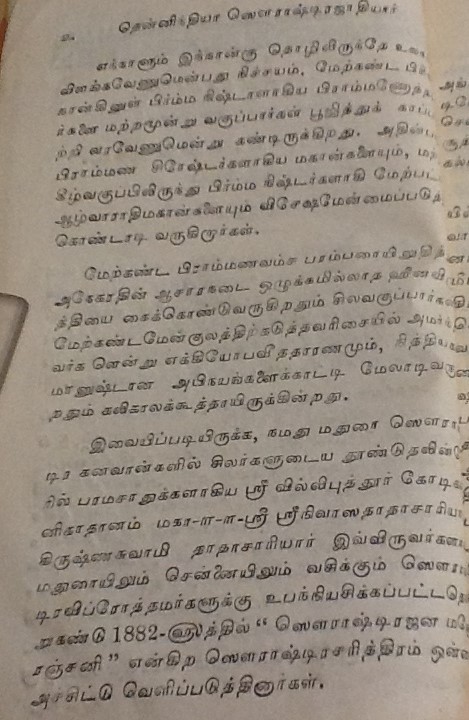
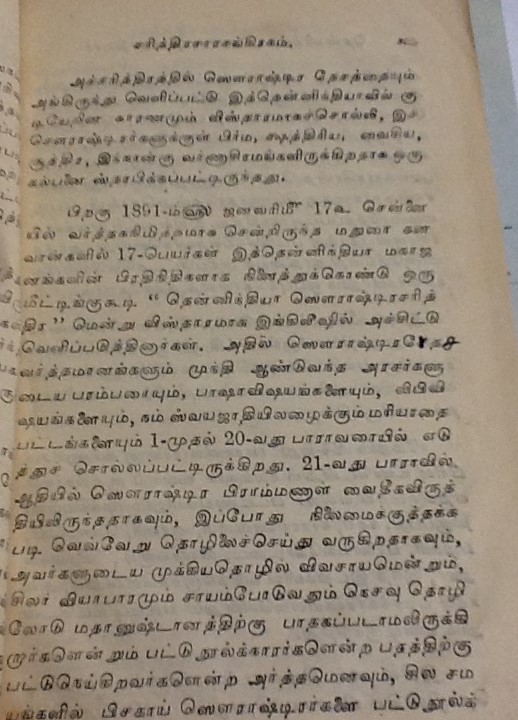
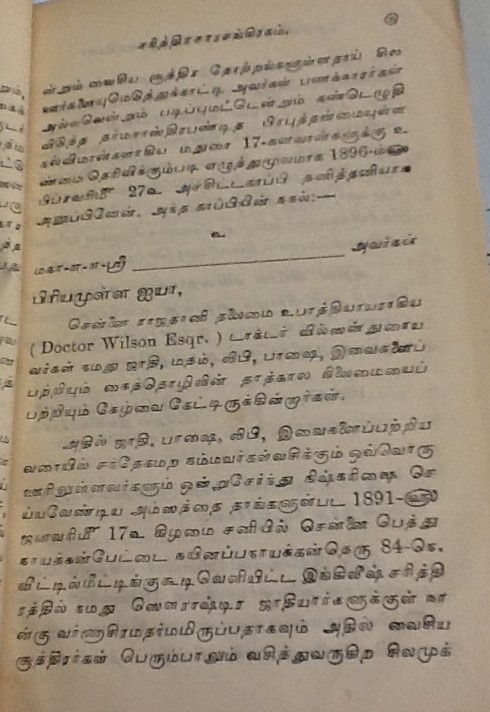
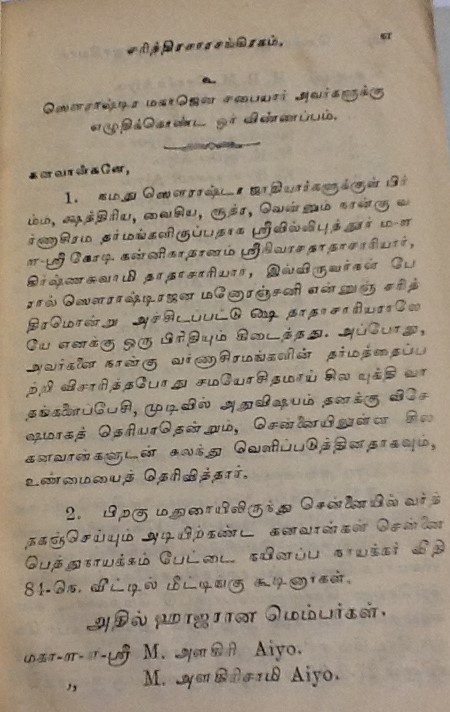
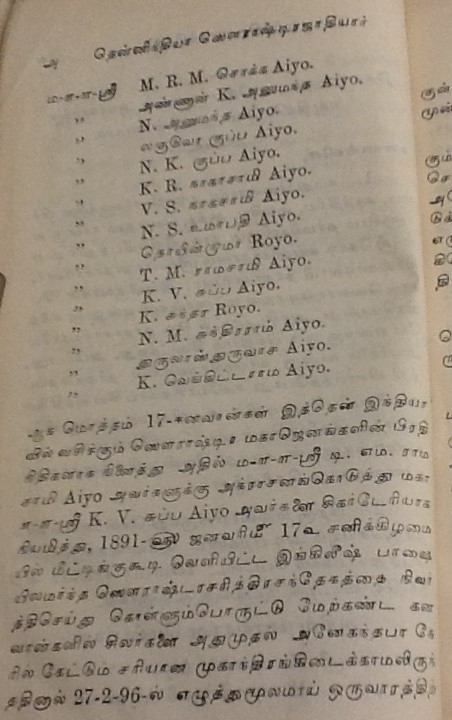
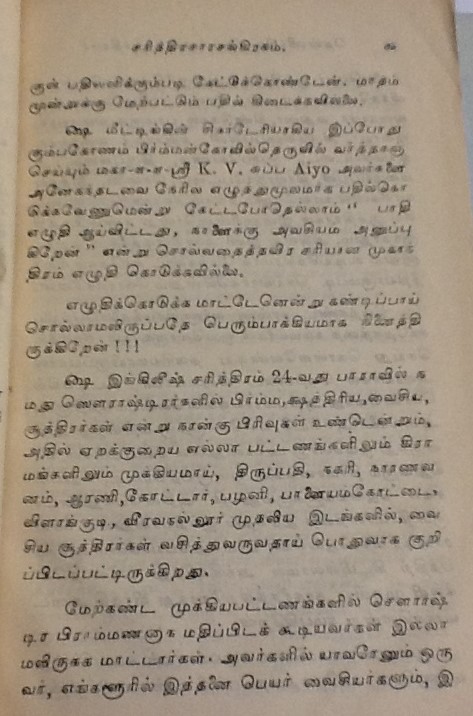
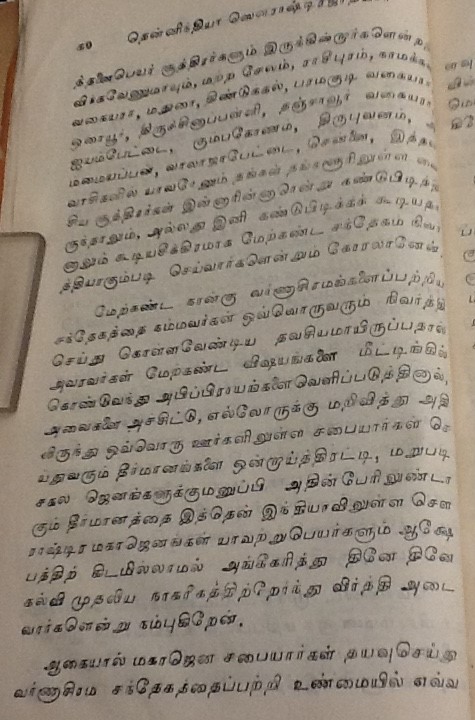
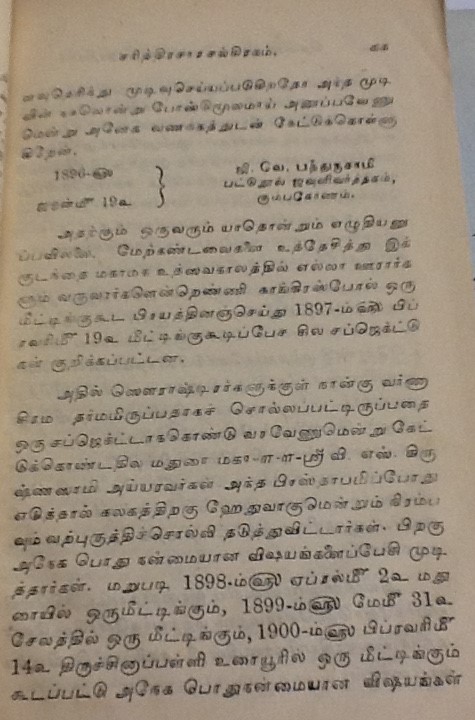
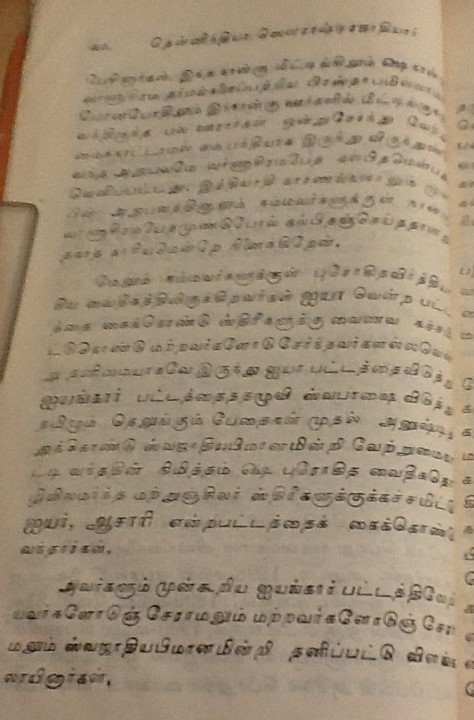
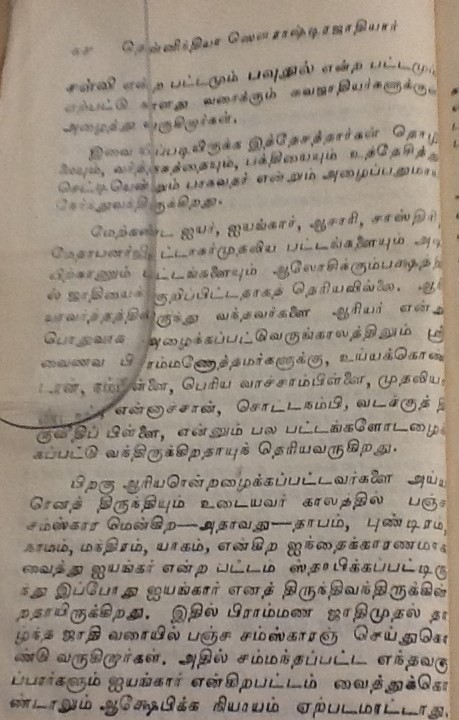
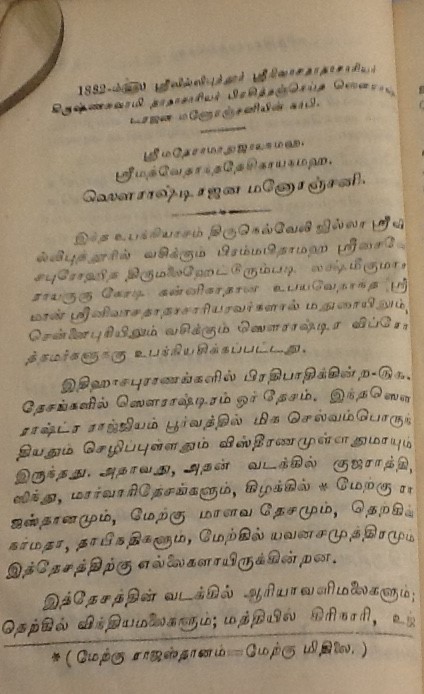
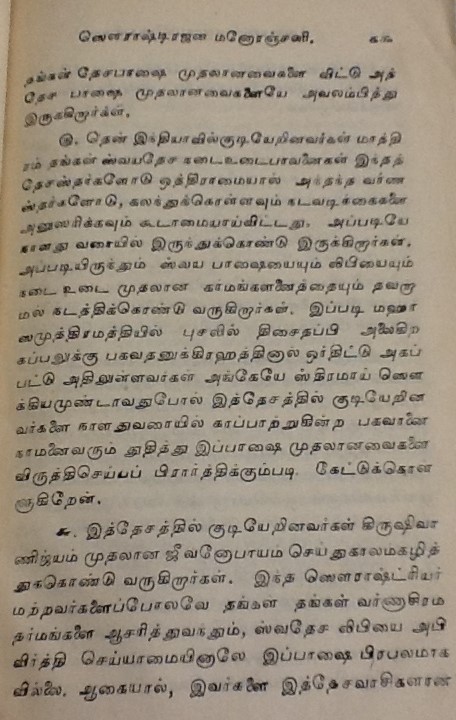
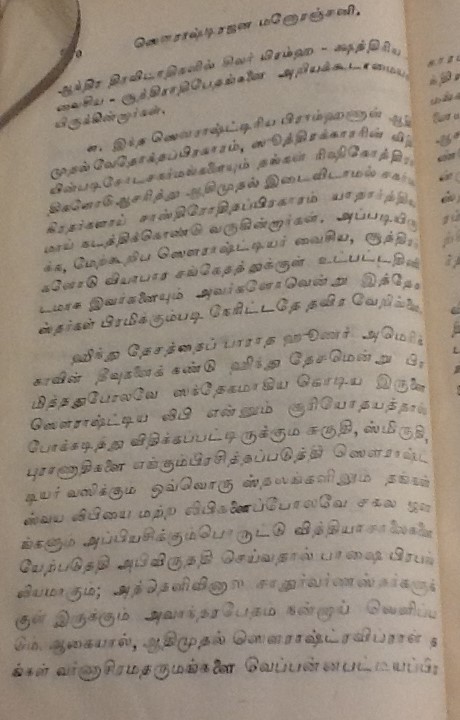
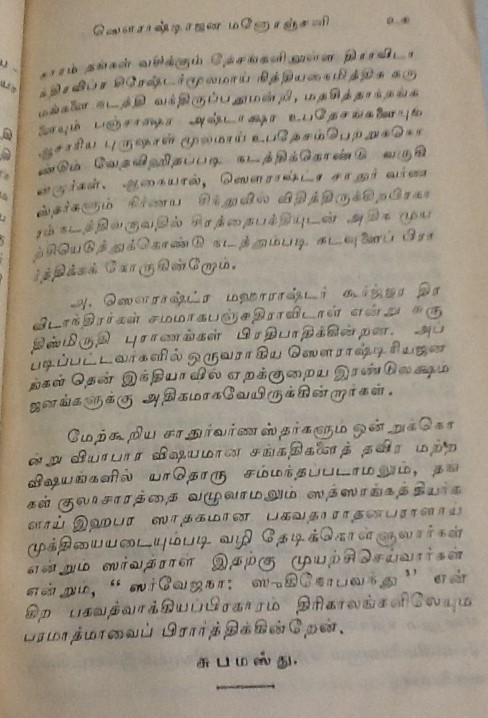
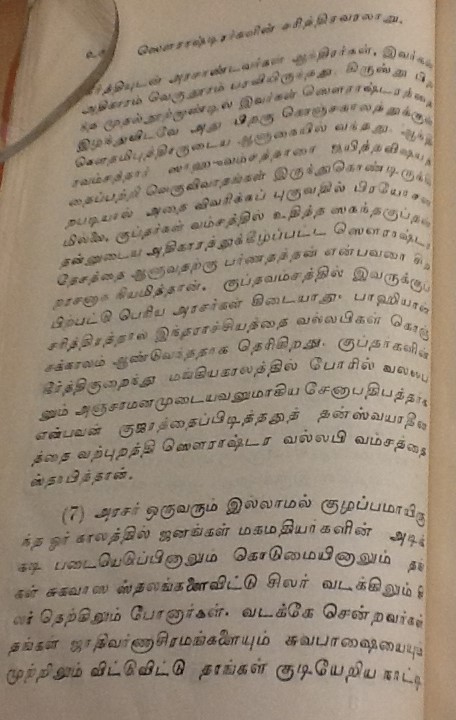
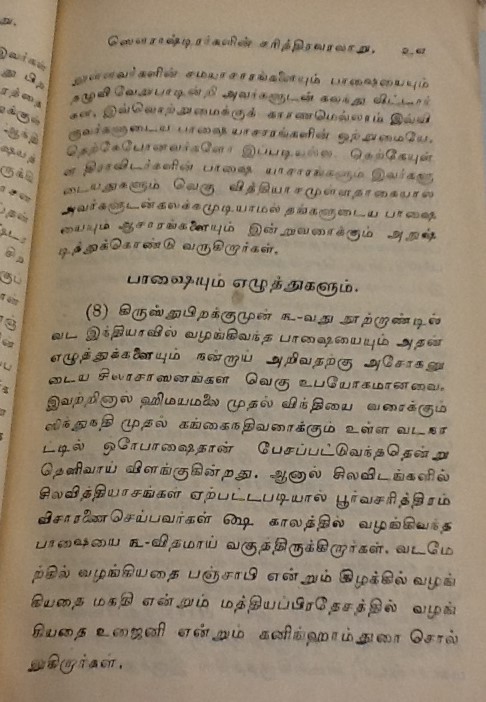
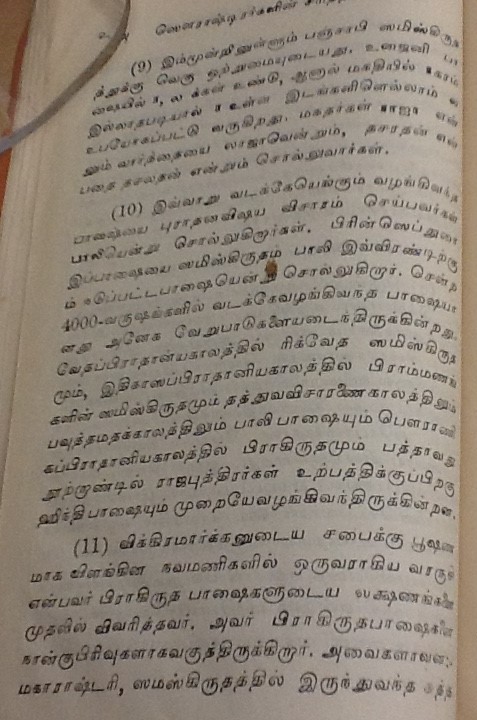
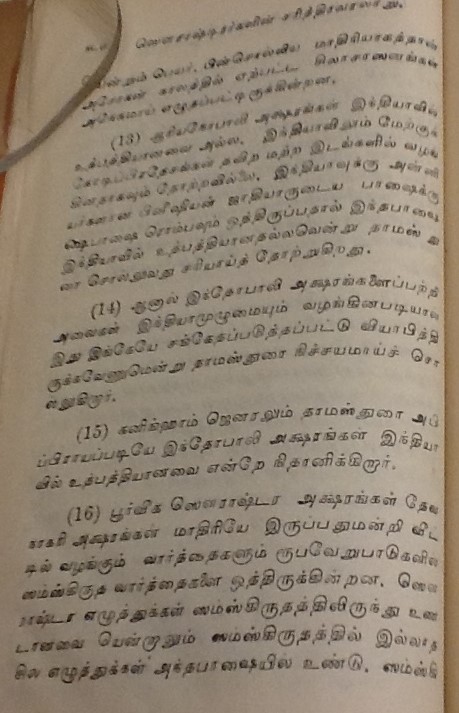
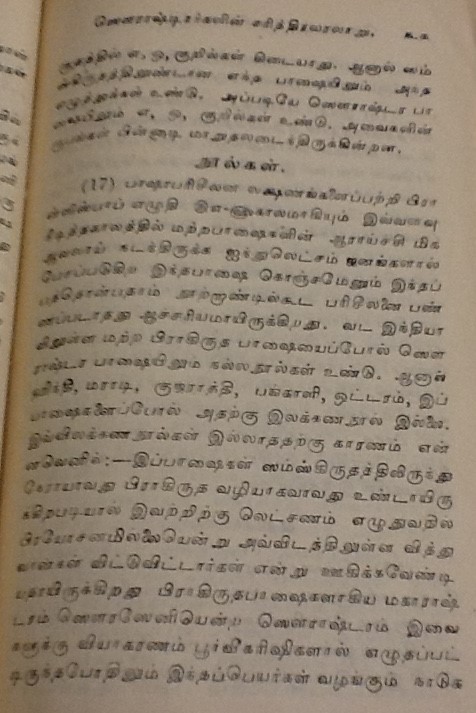
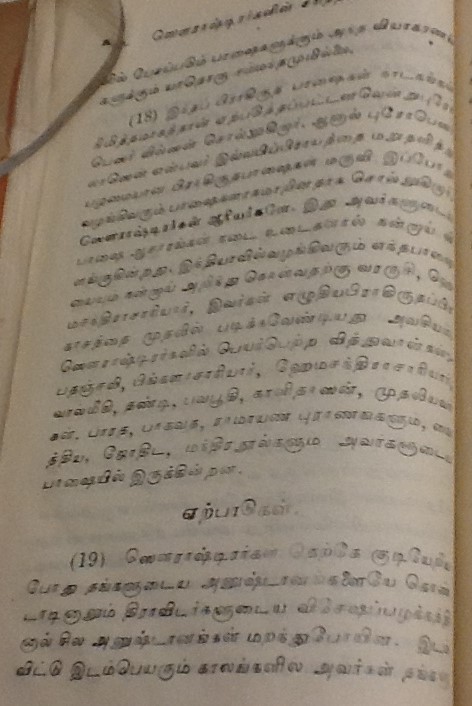
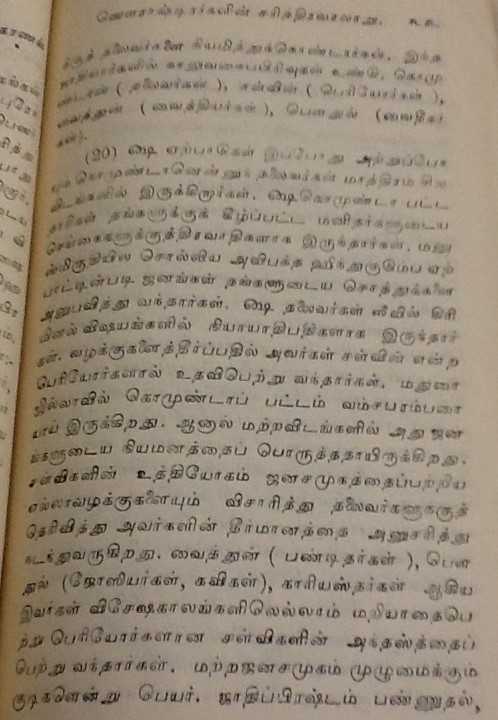
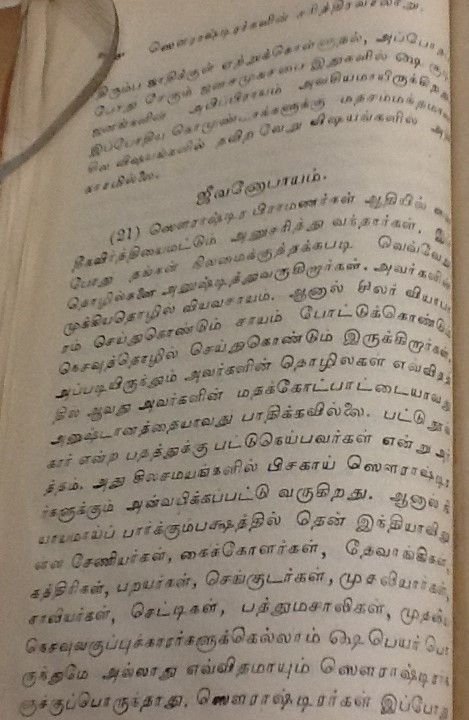
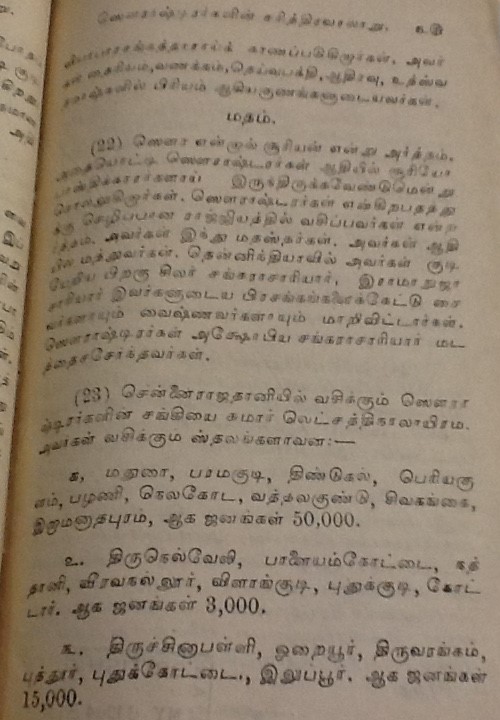
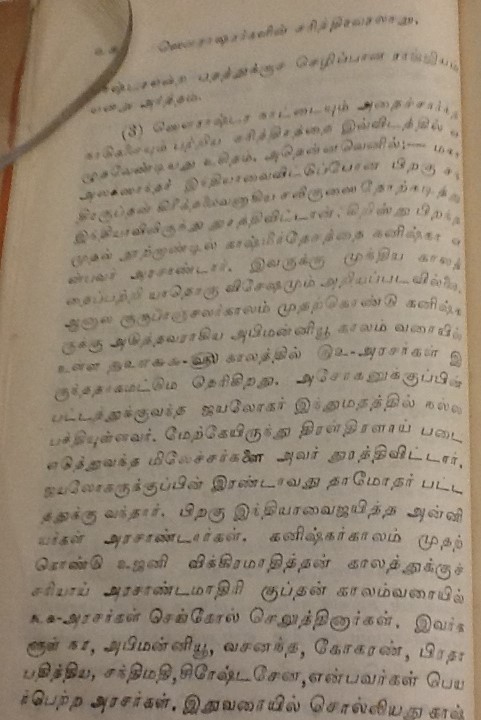
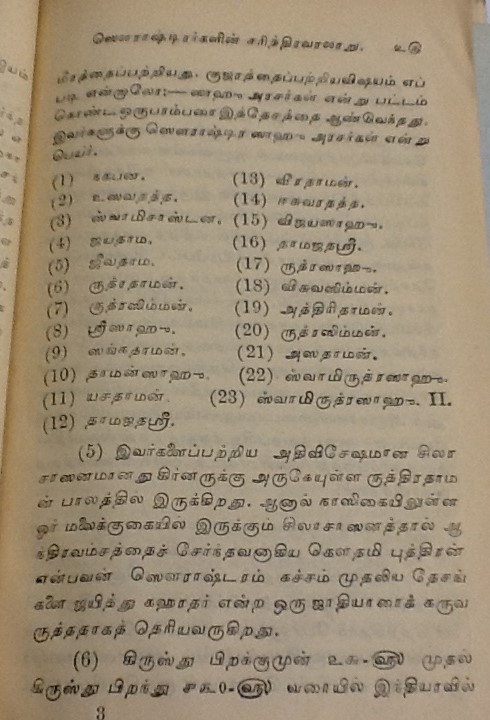
மதுரை, பரமக்குடி, சேலம் முதலிய பல ஊர்களில் வசிக்கும் சௌராஷ்ட்ரா சமூகத்தினர் குஜராத்திலுள்ள சௌராஷ்ட்ரா பிரதேசத்திலிருந்து வந்தனர். இவர்கள் பெரும்பாலும் பட்டு நூல், சேலை தயாரிக்கும் நெசவு வேலைகளில் ஈடுபட்டதாலும், அக்கலையில் கை தேர்ந்தவர்கள் என்பதாலும் இவர்களை பாமர ஜனக்கள் ‘பட்டுநூல் காரர்கள்’ என்று அழைப்பர். சுமார் 400 ஆண்டுகளுக்கு முன் இவர்களில் ஒரு பிரிவினர் பிராமணர்கள் என்று உரிமை கொண்டாடியவுடன் ஒரு விவகாரம் தலை எடுத்தது. அதை ஸ்ரீரங்கம் பட்டாசார்யார்கள், எப்படி தீர்த்துவைத்தனர் எனபனவெல்லாம் பிரிட்டிஷ் லைப்ரரியில் கிடைத்த கீழ்கண்ட பழைய புத்தகத்தில் உள்ளது. படித்து மகிழ்க.

IMG_3246 (2) IMG_3247 (2) IMG_3248 (2) IMG_3249 (2) IMG_3250 (2) IMG_3251 (2) IMG_3252 (2)IMG_3253 (2) IMG_3254 (2) IMG_3255 (2) IMG_3256 (2)IMG_3257 (2)IMG_3258 (2)IMG_3259 (2)IMG_3260 (2)IMG_3261 (2)IMG_3262 (2)IMG_3263 (2)IMG_3264 (2)

IMG_3265 (2)

IMG_3266 (2)

IMG_3261 (2)

IMG_3267 (2)IMG_3269 (2)IMG_3270 (2)

IMG_3272 (2)

IMG_3271 (2)

IMG_3274 (2)

IMG_3273 (2)

IMG_3276 (2)

IMG_3275 (2)

IMG_3278 (2)

IMG_3277 (2)IMG_3280 (2)

IMG_3279 (2)

IMG_3281 (2)

Hindu Festivals in London!

drum best 2

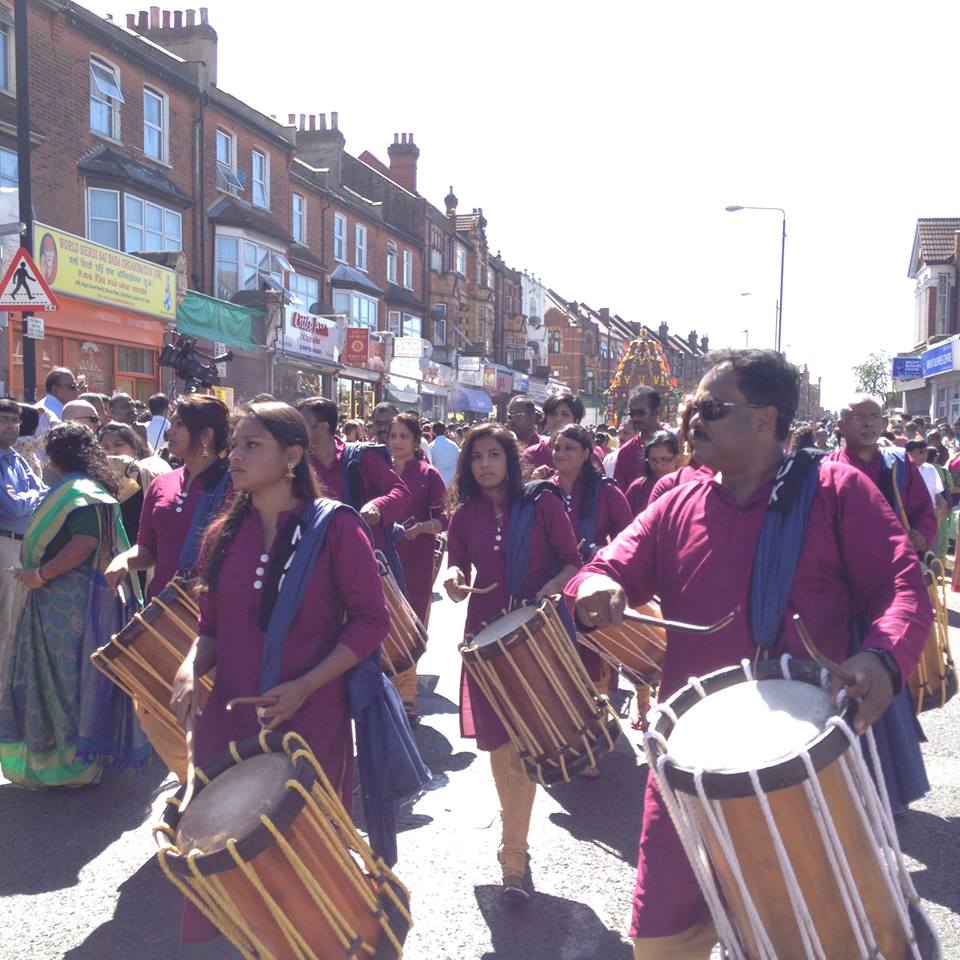
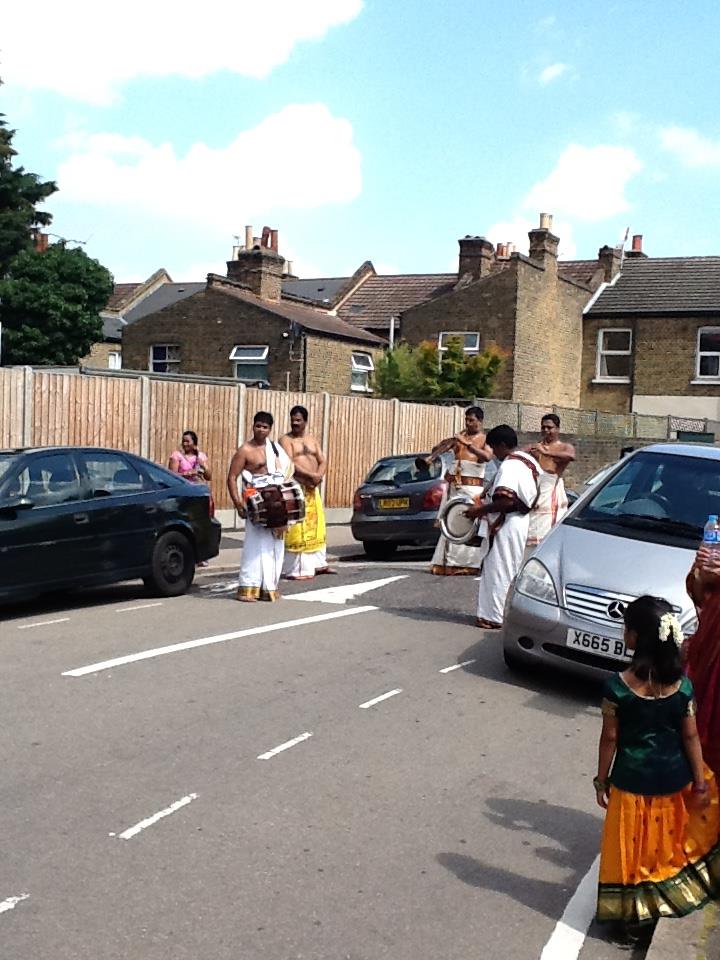
Kerala special Jandai Vadhyam by Malayalees in London in front of the Skanda (Murugan) Chariot

Article No. 2063

Written by London swaminathan

Swami_48@yahoo.com

Date : 11  August  2015

Time uploaded in London :–  14-53

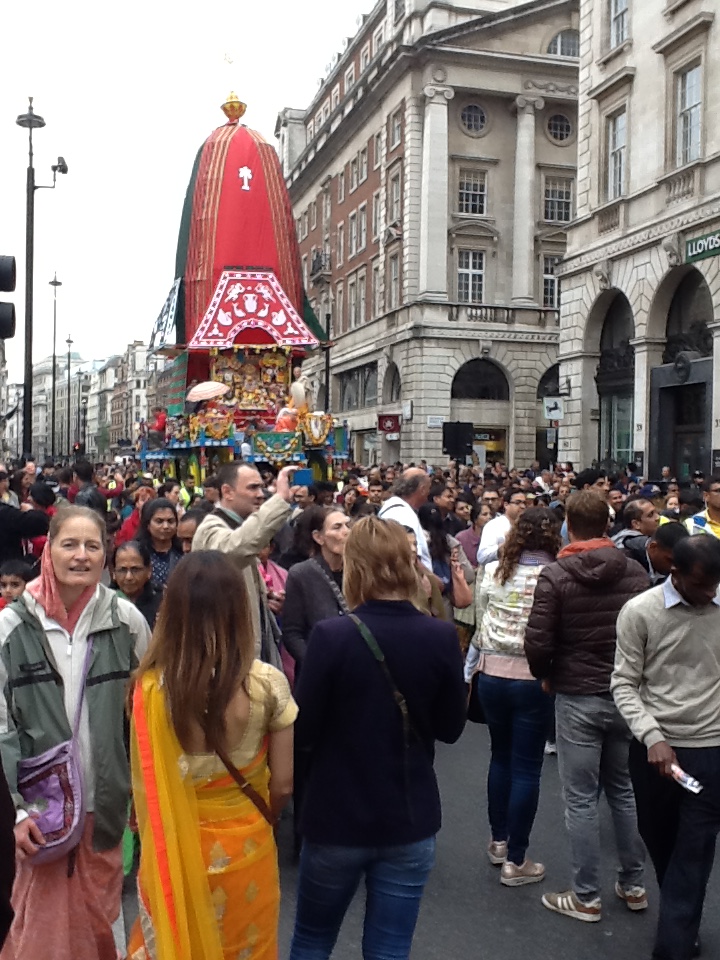
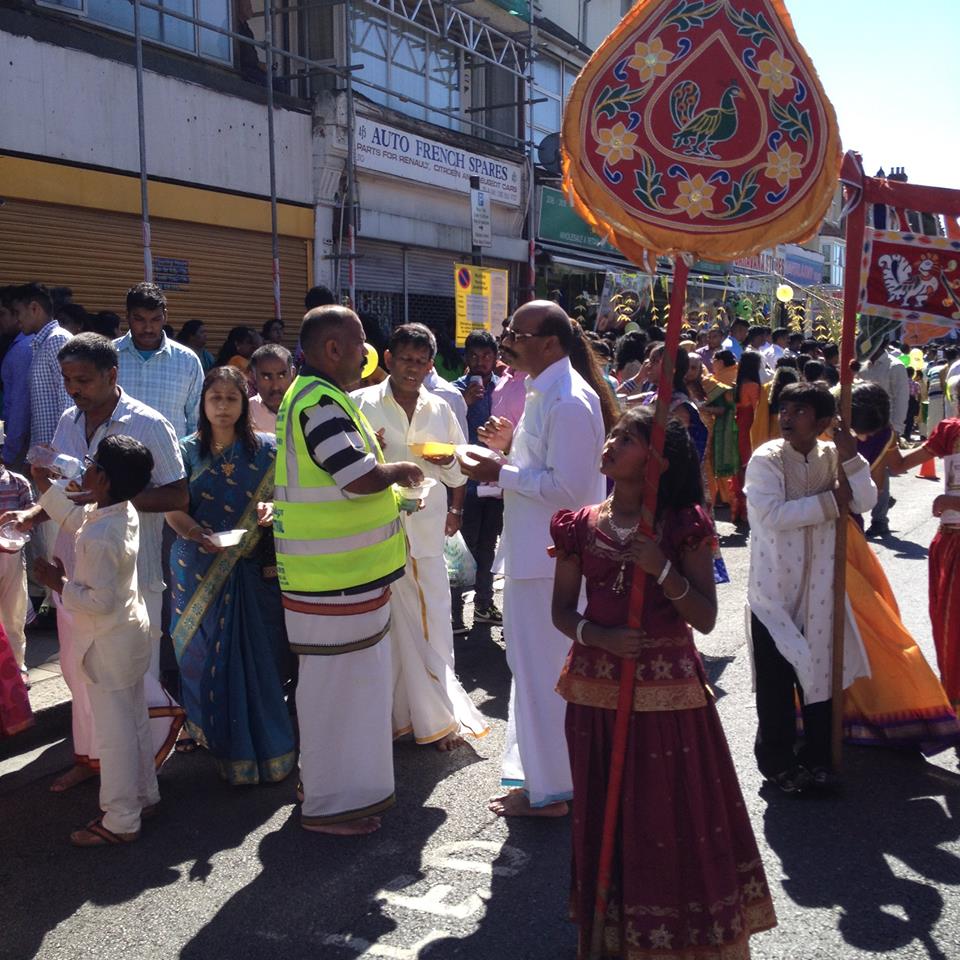
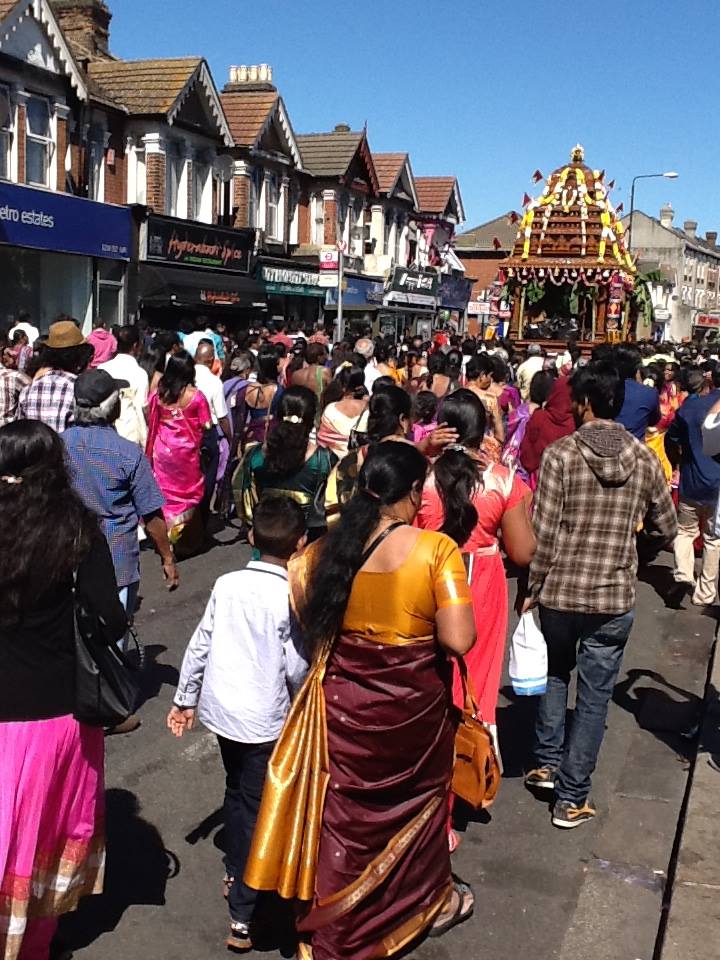
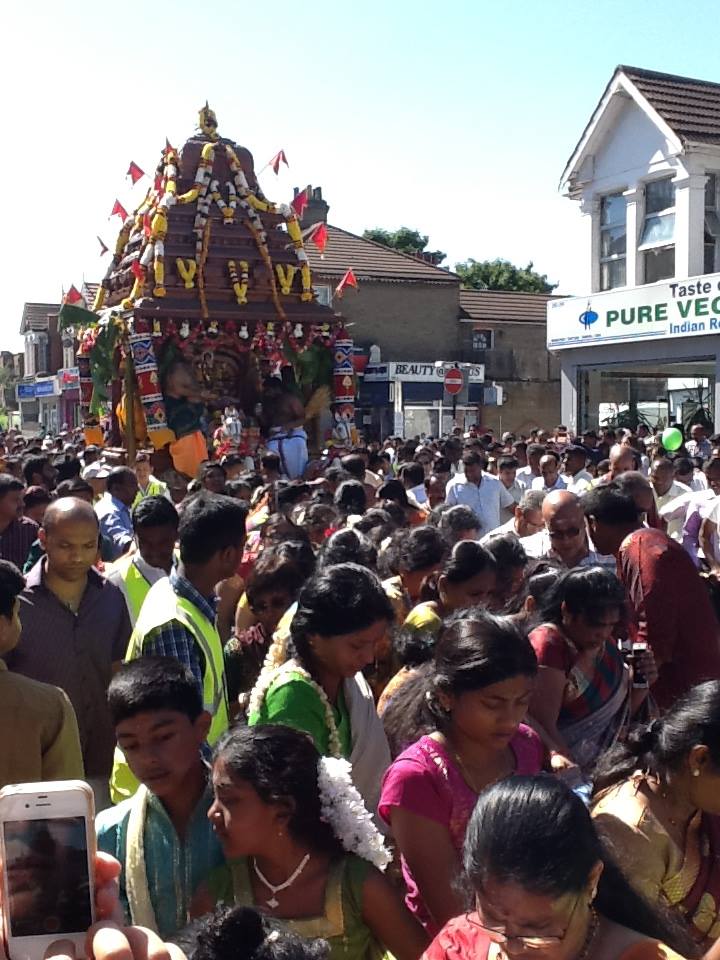
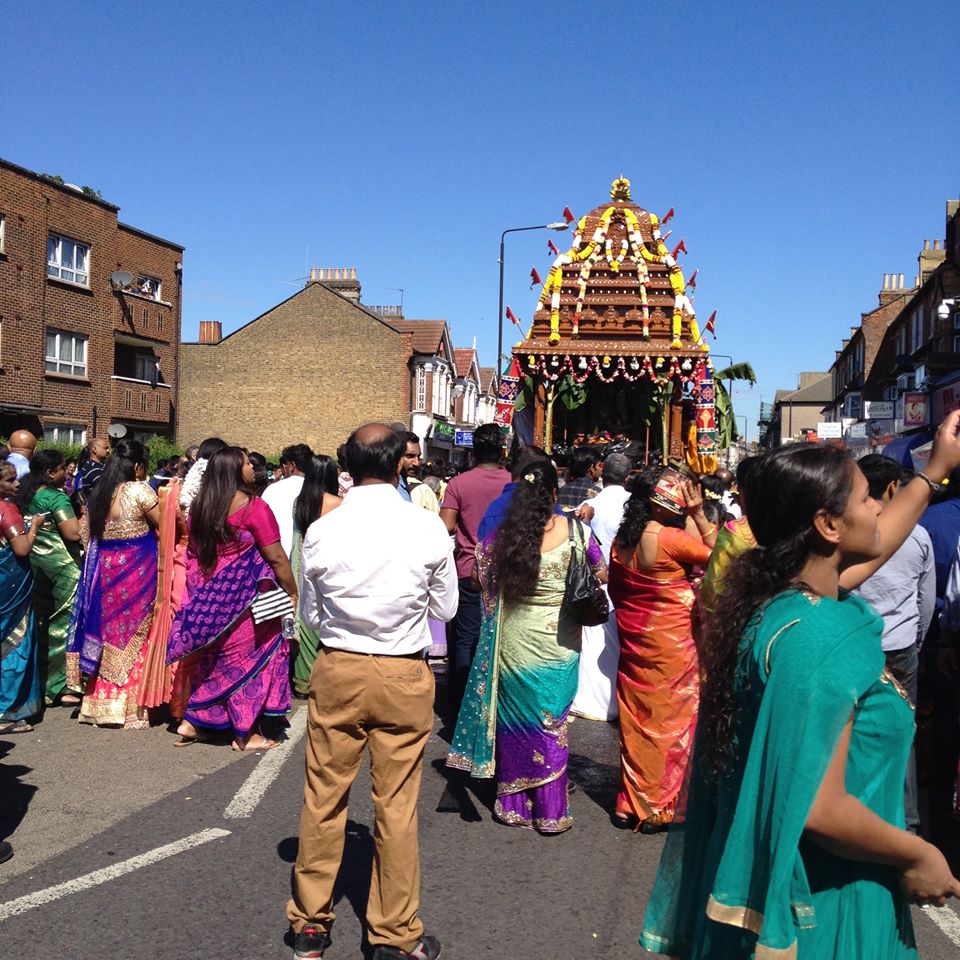
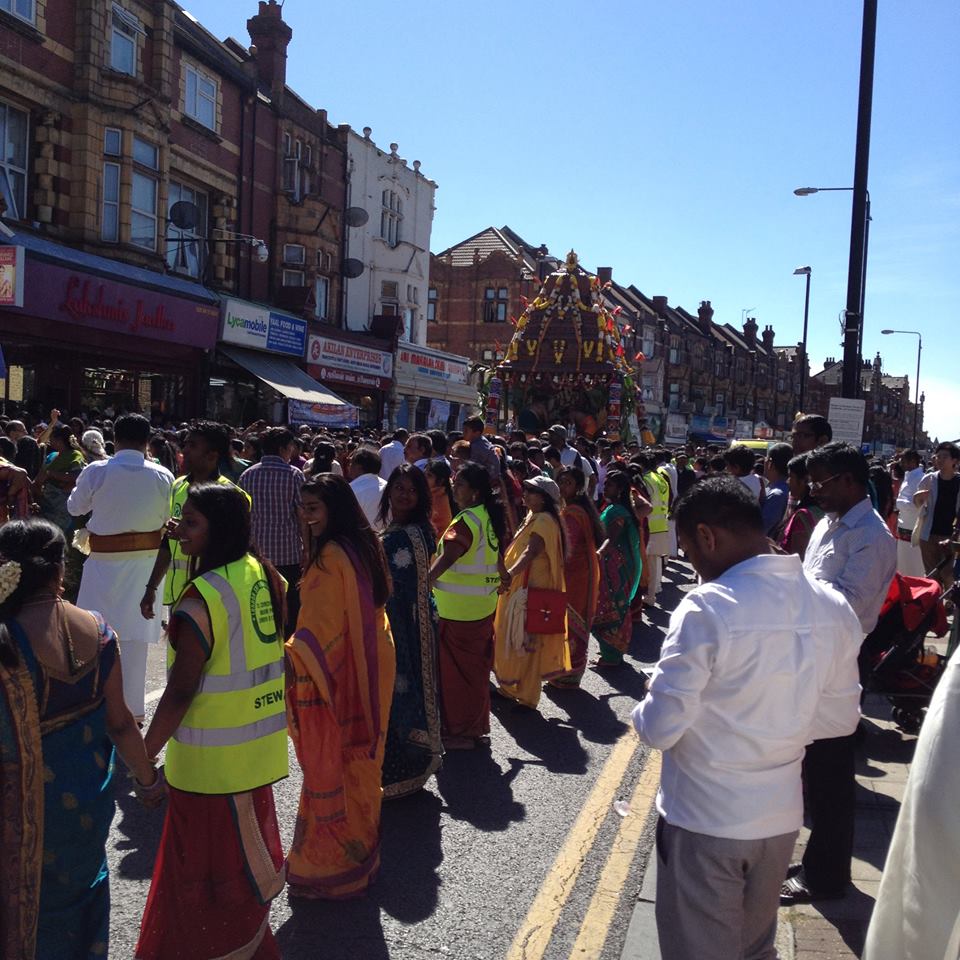
Hindus in London enjoy the four months from June to September. It is not because of summer alone, but because of lot of Hindu festivals organised during that period. From Hare Krishna Rath yatra in June to Janmashtami in September, there are lot of Rath  Yatras (Chariot Festivals) and big festivals. Lot of singers, dancers and speakers come to London and remind the Hindus of their hoary tradition and culture. It gives the Hindus plenty of opportunities to wear their traditional dresses and celebrate it as they celebrate in India, Sri Lanka and Malaysia.

drum best

There are over 25 Hindus temples run by Tamils in London. More temples are there run by Swaminarayan followers. There are other Hindu temples run by speakers of Hindi and Punjabi.

Hare Krishna temple in Watford (Greater London) celebrate Janmashtami when 10,000 Hindus visit the temple. I have already posted the Chariot Festival by ISKCON which was attended by thousands of Hindus in central London. Ram Navami procession in Southall is famous as well. Deepavali procession in Wembley (Brent) attracts a big crowd. Floats and decorated chariots come in the popular procession. Since Diwali falls in winter months, lot of celebrations happen inside the halls. British Prime Minister gives a party. Every Deepavali, Hindu Forum of Britain arranges a meeting inside the Parliament building in London. Ministers and MPs belonging to different parties participate in it with great enthusiasm. The Annakut festival arranged at the famous marble temple of Swami Narayan in Neasden, London attract a huge crowd. In the past few years more Swaminarayan temples have come up in Stanmore, Kingsbury and other places.

IMG_1172

Hare Krishna Rath Yatra in Central London

Apart from London, Balaji temple in Birmingham, Hindu temples in Leicester, Coventry, Manchester and New Castle upon Tyne have their own annual events. Swamijis (Hindu ascetics) belonging to various Gujarati sects visit London to give discourses. Sri Vallabh Trust also has a branch.

Scores of Sathya Sai Bhajan centres are there in every Petah (Council) of greater London. There are at least two Shirdi Sai Temples in Wembley and East Ham.

IMG_1221

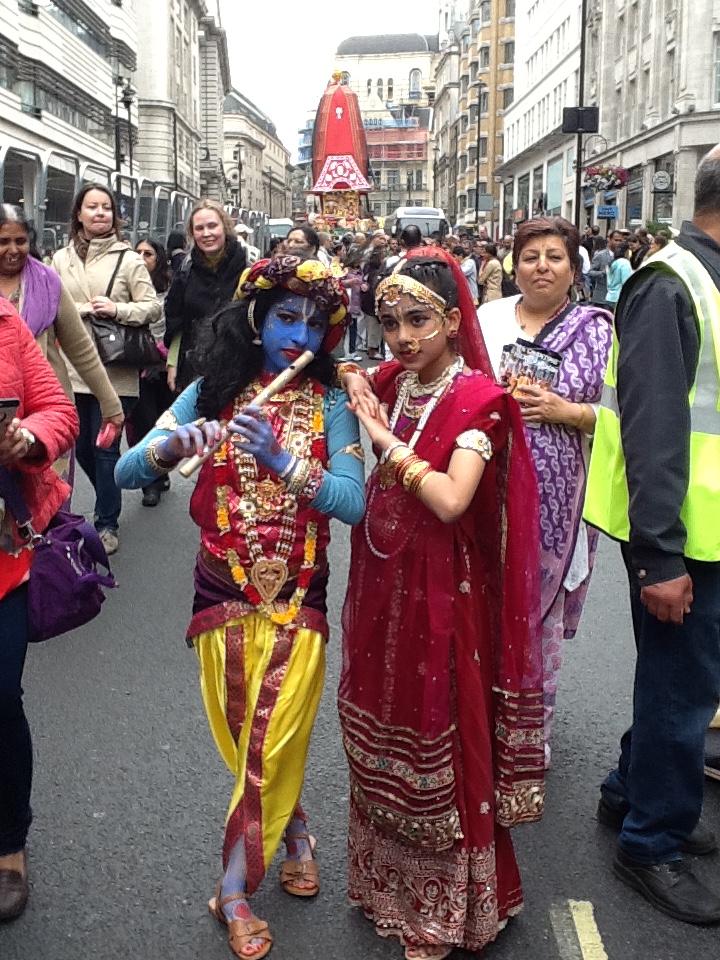
Children dressed as Radha Krishna in front of the ratha/chariot

Mahalakshmi Temple in East Ham has bought a land and building a big new temple in East ham nearby its present location.

Saivaite Hindus have formed an organisation of their own temples and conduct annual festival in London. Scholars from India and Sri Lanka address the Hindus.

Since I have attended almost all the above events, I have the personal experience which is unforgettable. Foreigners also throng these places and taste our food. Every time a Hindu procession or event organised I see thousands of cameras flashing. Curious onlookers ask about the significance of the chariots and our customs.

Missions like Ramakrishna Mutt, Chinmaya Mission, Divine Life Society, Isha Foundation, Art of Living Foundation and hundreds of Yoga Teaching Centres, St James Sanskrit School are doing remarkable work.

IMG_1372 (2)

Professor Anantharaman Bhajan at Chinmaya Keerti, London

Since Chinmaya Mission activities are in English with Sanskrit background, lot of youngsters attend their activities. Moreover they are not sect based and so all sections of Hindus attend their events. Swamijis of Chinmaya Mission visit London at least twice a year to give a spiritual feast. At least thousand people listen to them every day.

Swami Narayan temple in Neasden is a big tourist attraction. Since they have huge parking facilities and a restaurant attached to the temple, School children with White and Afro Caribbean backgrounds visit the temple almost every day during school term time.

Durga Puja is organised by the Bengali Hindus on a grand scale and Ganesh Chaturthi is organised by the Maharshtrians every year. They get special permission to do the immersion ceremony of the idols in Thames River outside the city.

madu2

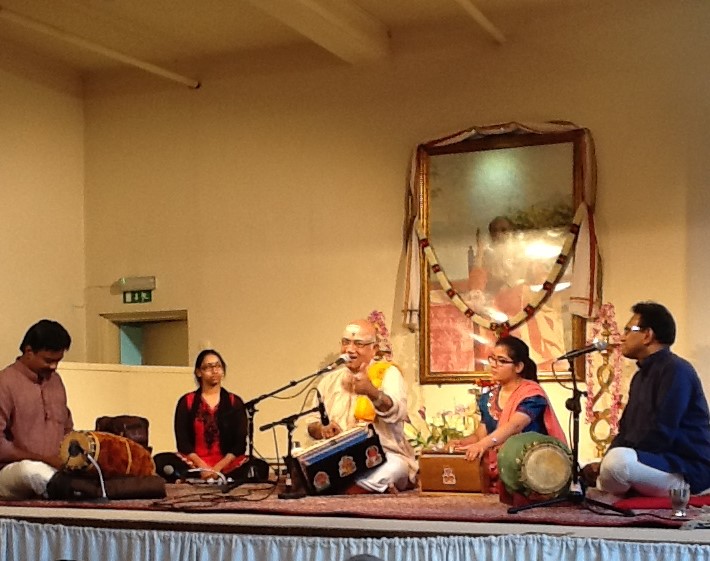
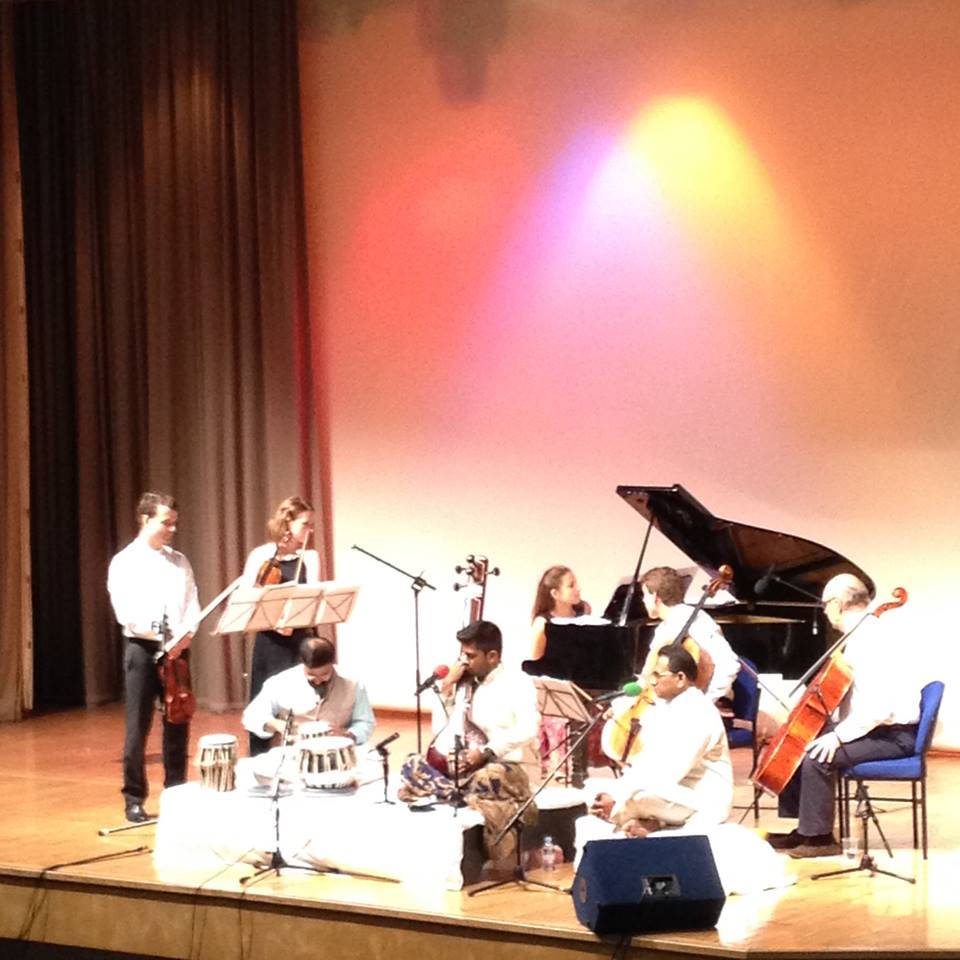
Chinmya Mission Swaranjali group with Sprom from Europe: Mozart to Hanuman Chalisa symphony

IMG_3224

Swami Tejomayananda, Head of Chinmaya Mission Talk on Ram Gita in Central London.

Though one cannot have the same atmosphere of Mahakumbha Mela of Prayag or Janmashtami of Brindhavan or Rath Yatra of Puri or my home town Madurai Meenakshi Temple Chitra Festival, in London, at least we are reminded of our past golden days back home.

(NB. My list above is not comprehensive. I might have left some of the important events or the places.)

All the pictures are taken by me.

pavatta1

London Murugan/ Skanda chariot in East London

pavatta2

saree1

saree2

ther2

tichatta1

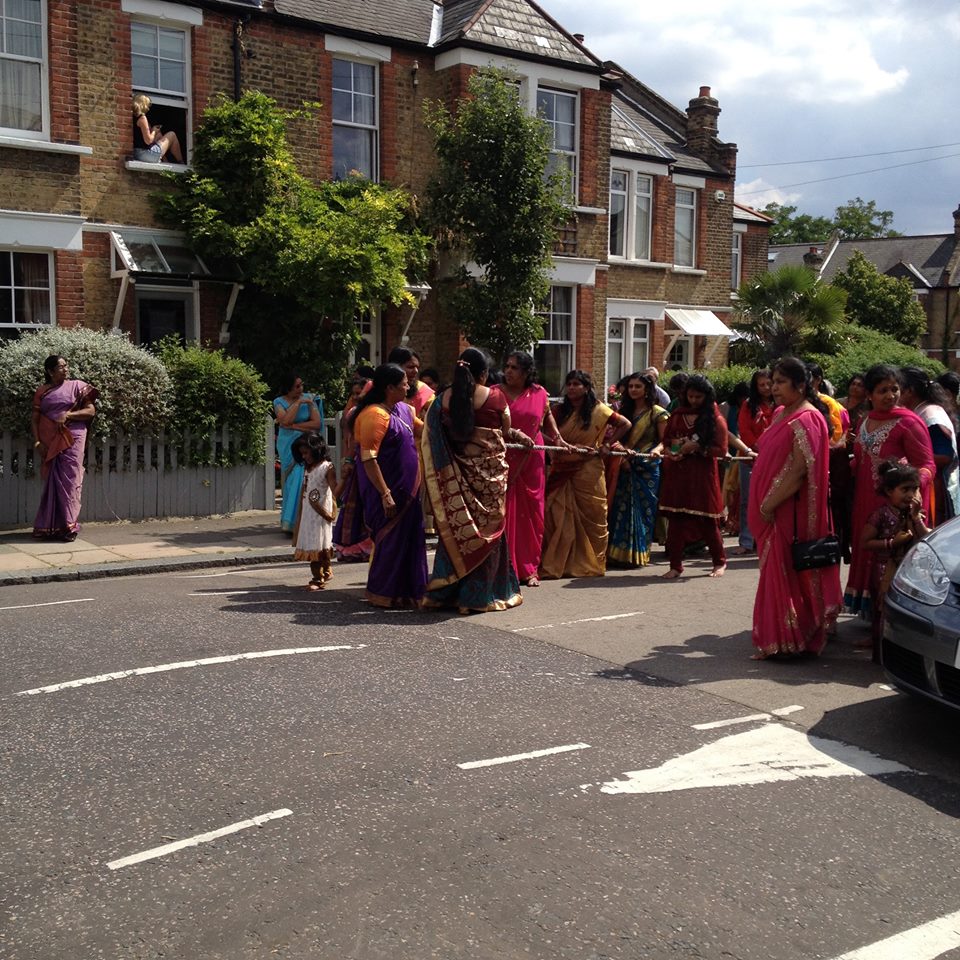
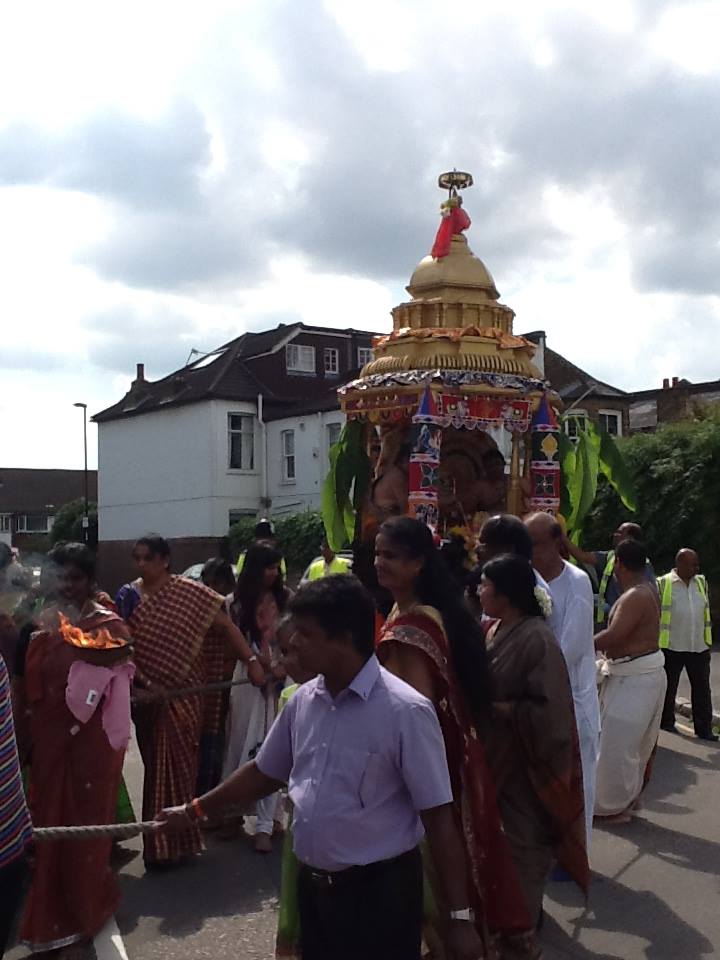
Women used to carry burning pot in their hands as part of their vow, Lewisham Adi Vel Chariot

vadhya1

Traditional Tamil Pipes and Drums in front of the Chariot procession, Lewisham, London

volunteer1

women ther1

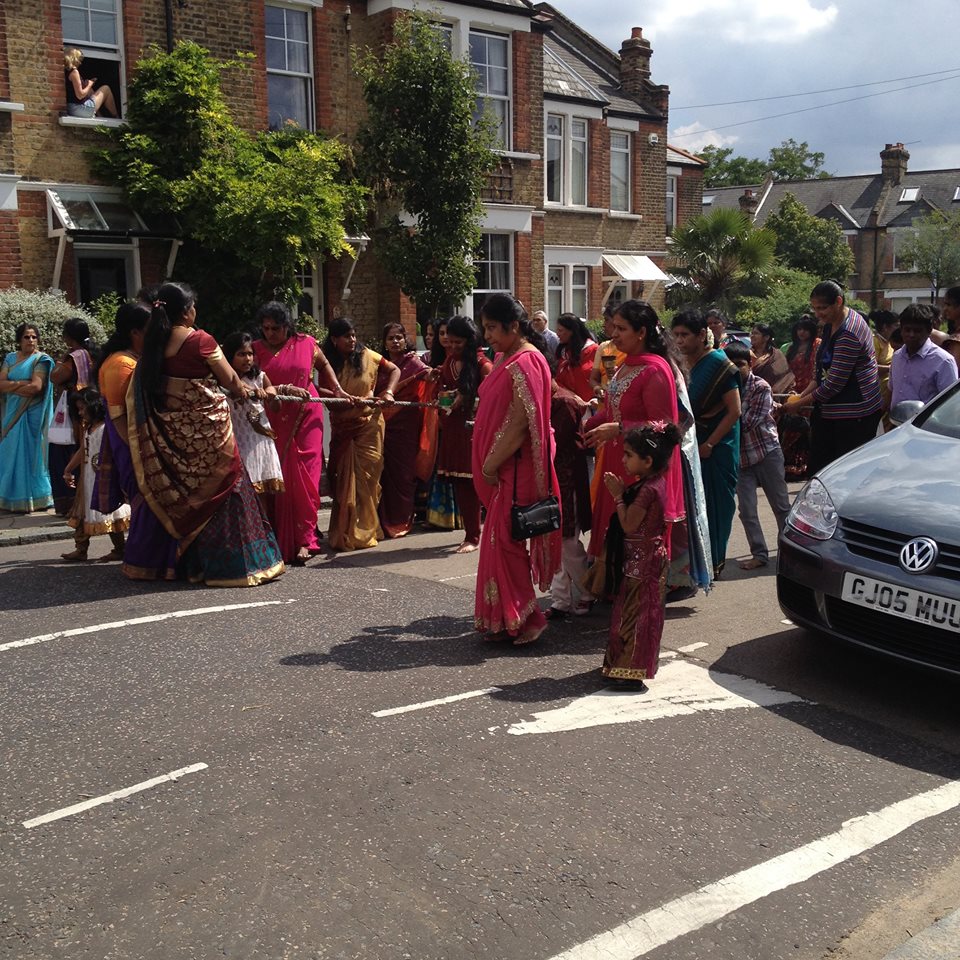
All Women Powered Chariot Procession in Lewisham Adi Vel There (Chariot Procession)

women ther2

women3

IMG_2987

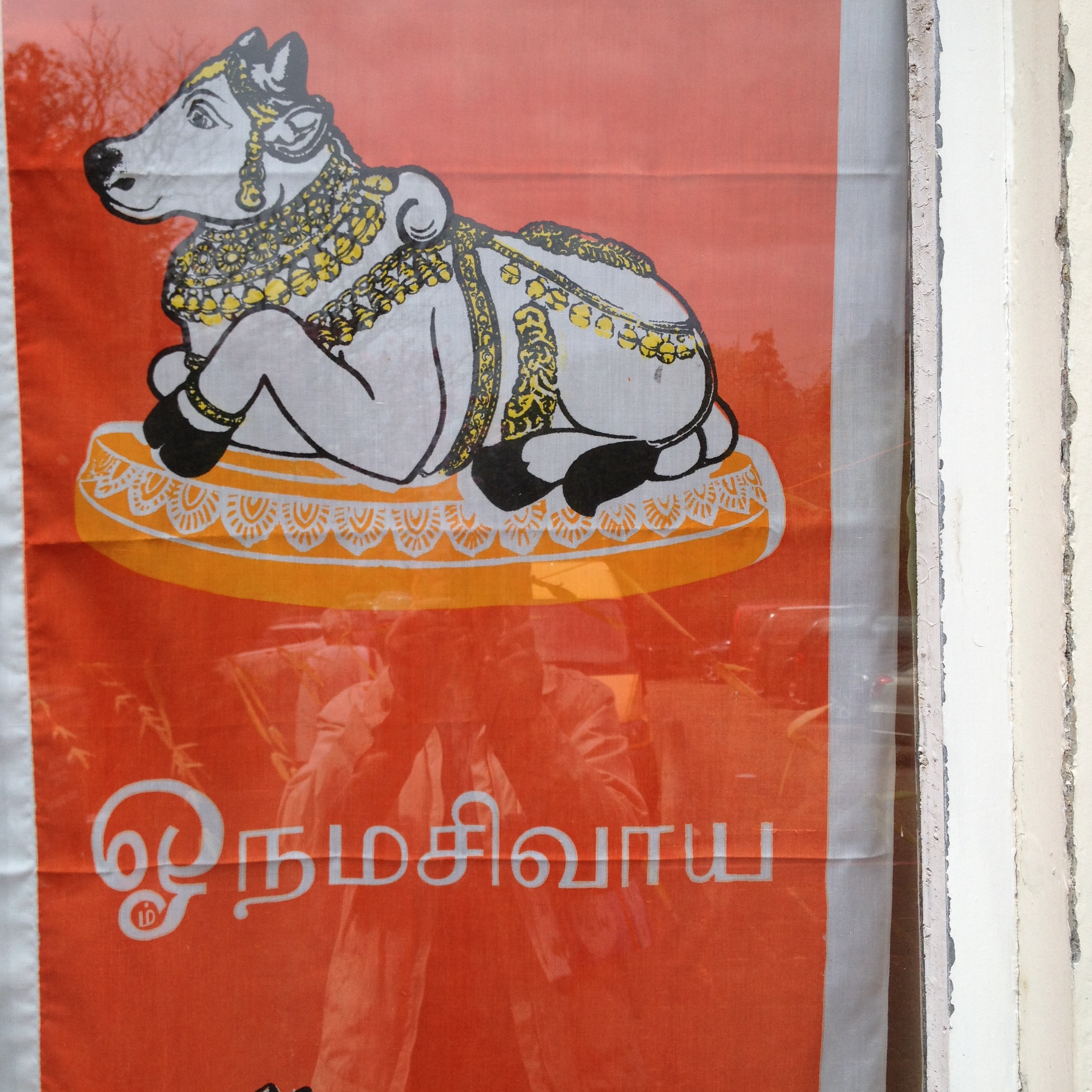
Saivaite Conference Bannaer with Bull and Om Namasivaaya

mangal2

prasad1 managal1

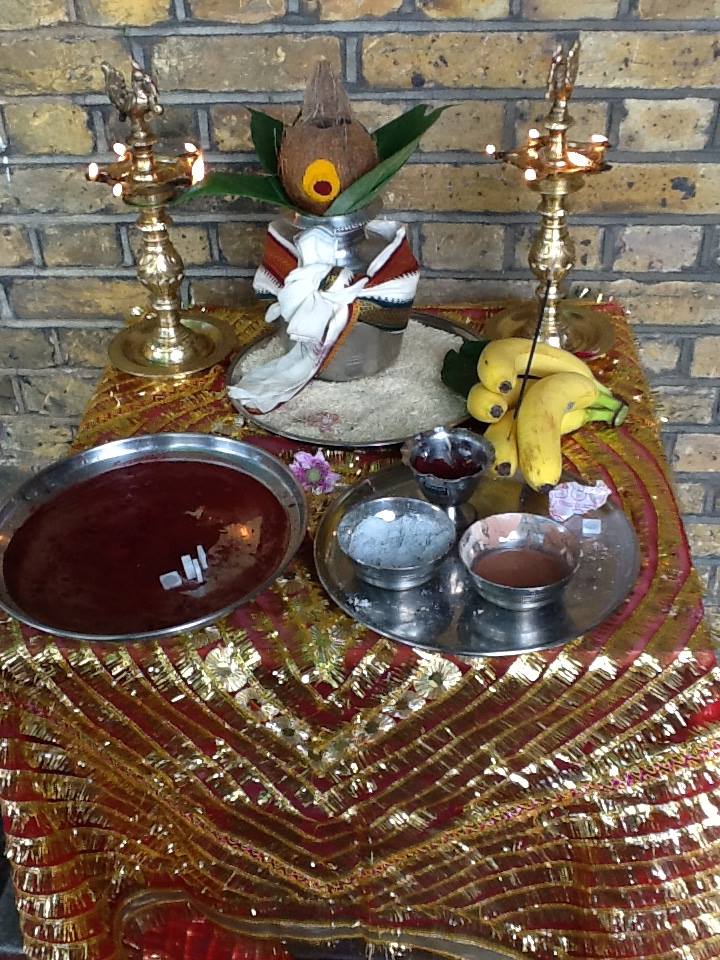
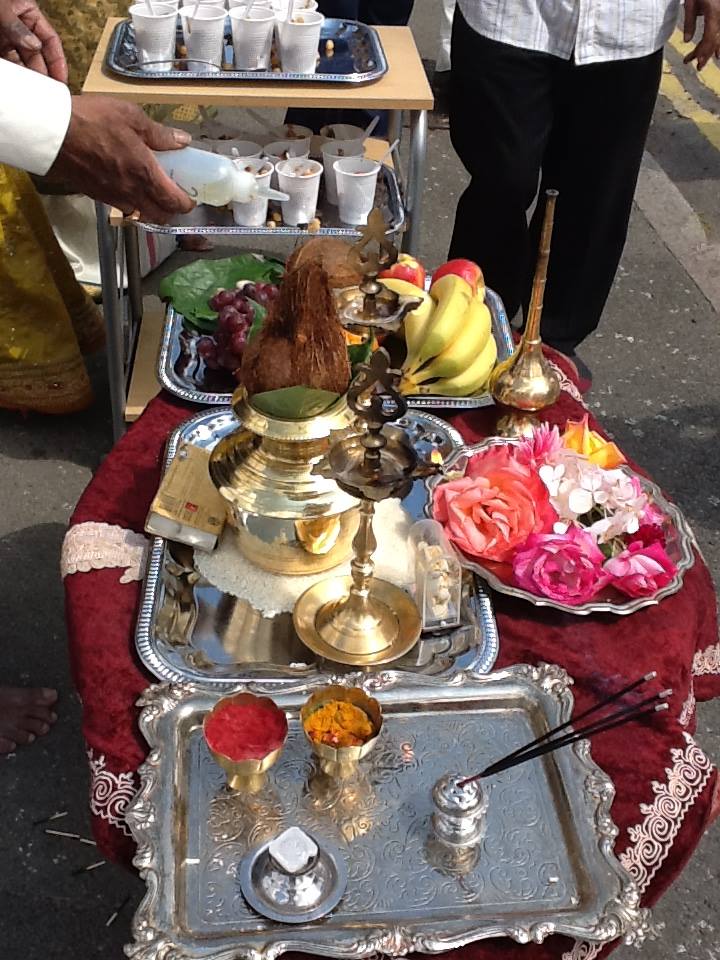
Tamil Hindus offer Coconut, Banana, Betel Leaves and incense Sticks to God.

உண்மை, வாய்மை, மெய்மை (சத்யம்) பற்றிய பொன்மொழிகள்

National-Emblem

Article No. 2049

Written by London swaminathan

Swami_48@yahoo.com

Date : 7  August  2015

Time uploaded in London : – 10-17


உள்ளத்தால் பொய்யாது ஒழுகுவது உண்மை

சொல்லால் பொய்யாது ஒழுகுவது வாய்மை

உடலால் பொய்யாது ஒழுகுவது மெய்மை!

தமிழர்களைப் போல இவ்வளவு தெளிவாக மனம், மொழி, மெய் ஆகியவற்றின் தூய்மையை விளக்கியவர் எவருளர்?


காயேன, வாசா, மனஸேந்த்ரியைர்வா என்று சொல்வதை – த்ரிகரண சுத்தியை – மிக அழகாக விளக்கிவிட்டனர் தமிழர்கள்!


இனி சம்ஸ்கிருத, தமிழ் பொன் மொழிகலைக் காண்போம்:


அஸ்வமேத சஹஸ்ராத் ஹி சத்யமேவ விசிஷ்யதே – மஹாபாரதம் & ஹிதோபதேசம்

ஆயிரம் அஸ்வமேத யாகங்களை விட சத்யமே சிறந்தது. (உண்மையைக் கடைப் பிடிப்பவன், 1000 யாகங்களைச் செய்வதால் கிடைப்பதைவிடக் கூடுதல் பலன் பெறுவான்)

Xxx

வாய்மை எனப்படுவது — தீமை இலாத சொலல்: குறள் 291

Xxx

உண்மை பேசுவோருக்கு வேறு அறம் தேவைப்பாடாது – குறள் 297

xxx

அசத்யம் ஜன ரஞ்சனம்

பொய் பேசுவது ஜனரஞ்சகம் ஆக இருக்கும் (இறுதியில் கெடுதியை விளைவிக்கும்)

Xxx

பொய்மையும் வாய்மை ………. நன்மை பயக்கும் எனின் –குறள் 292

xxx

நாஸ்தி சத்யாத் பரம் தானம், நாஸ்தி சத்யாத் பரம் தப:  – மஹாபாரதம்

உண்மையை விட உயர்ந்த தானம் இல்லை; உண்மையை விட உயர்ந்த தவம் இல்லை

Xxx

vaymaiyee

தன் நெஞ்சறிவது பொய்யற்க – குறள் 293

xxx


நாஸ்தி சத்யாத் பரோ தர்மோ நான்ருதாத் பாதகம் பரம் – மனுஸ்ம்ருதி, மஹாபாரதம்

உண்மையை விட பெரிய தவம் இல்ல; பொய்யைவிட பெரிய பாதகம் (தீங்கு) இல்லை

Xxx

வாய்மை மொழியின் தவத்தொடு தானம் செய்வாரின் தலை – குறள் 295

xxx


சச்சாசச்ச வசஸீ பஸ்ப்ருதாதே –அதர்வ வேதம்

உண்மையும் பொய்யும் போட்டி போடும் வசனங்கள்

(அதாவது தர்ம – அதர்மப் போராட்டம் காலாகாலமாக நடைபெறும்)


Xxx

சத்யம் கண்டஸ்ய பூஷணம் – சுபாஷித ரத்ன பாண்டாகாரம்

கழுத்திற்கு அணிகலன் உண்மை விளம்பல்!

Xxx


சத்யம் ப்ரூயாத் ப்ரியம் ப்ரூயான்ன ப்ரூயாத்சத்யமப்ரியம்

ப்ரிய ச நான்ருதம் ப்ரூயாதேஷ தர்ம சநாதன: — மனுஸ்ம்ருதி


உண்மையே பேசு

இனிமையே பேசு

இனிமையற்றதை, உண்மையே ஆனாலும், சொல்லாதே

அதற்காக இனியது என்று கருதி பொய் பேசாதே

இதுவே எக்காலத்துக்கும் பொருந்தும் சநாதன தர்மம் (இந்து மதத்தின் அடிப்படைக் கோட்பாடு) – மனுஸ்மிருதி

 satya b w

Xxx

உலகத்தார் உள்ளத்துள் எலாம் உளன் – உள்ளத்தால் பொய்யாது ஒழுகின் — குறள் 294

xxx


சத்யம் வை சக்ஷு:, சத்யம் ஹி ப்ரஜாபதி: — சதபத ப்ராஹ்மணம்

உண்மையே கண்கள், உண்மையே தோற்றுவாய்


Xxx

சான்றோர்க்குப் பொய்யா விளக்கே விளக்கு — குறள் 299

Xxx

சத்யமேவ ஜயதே நான்ருதம், சத்யேன பந்தா விததோ தேவயான: — முண்டகோபநிஷத்


வாய்மையே வெல்லும், பொய்மை வெல்லாது. உண்மையே சொர்கத்தை அடைவதற்கான பாதை, திறவுகோல் (இது தான் இந்திய அரசு, தமிழ் நாடு அரசு சின்னங்களில் உள்ள வாசகம்)

Xxx


புறந்தூய்மை நீரான் அமையும், அகந்தூய்மை வாய்மையால் காணப்படும் — குறள் 298

xxx

 satya1

சத்யம் ஸ்வர்கஸ்ய சோபானம் – மஹாபாரதம்

உண்மையே சுவர்கத்தின் மாடிப்படிகள்


Xxx

சத்யஸ்ய நாவ: சுக்ருதம் அபீ பரன் – ரிக் வேதம்

உண்மையெனும் படகுகள் நல்லோரைக் கரை சேர்க்கும்

Xxx


பொய்யாமை அன்ன புகழில்லை — குறள் 296

Xxx


சத்யான்ன ப்ரமதிதவ்யம் – தைத்ரியோபநிஷத்

உண்மை பேசுவதை ஒரு போதும் அலட்சியம் செய்யாதே

Xxx

சத்யேன தார்யதே ப்ருத்வீ , சத்யேன பபதே ரவி: — மனுஸ்ம்ருதி, சாணக்ய நீதி

இந்த பூமியே உண்மையினால்தான் நிலைபெற்று நிற்கிறது, இந்த சூரியன் உண்மையின் அடிப்படையிலேயே ஒளிருகிறது


Xxx

சத்யேன உத்தபிதா பூமி: —  ருக் வேதம், அதர்வ வேதம்

உண்மைதான் பூமியைத் தாங்கி நிற்கிறது.

 satya2

Xxx

ஹிரண்மயேன பாத்ரேன சத்யஸ்யாபிஹிதம் முகம் – ஈஸாவாஸ்யோபநிஷத்

பொன்மயமான பாத்திரத்தினால் உண்மையின் முகம் மூடப்பட்டுள்ளது.

Xxx

வாய்மையை விடச் சிறந்த தர்மம் எனக்குத் தெரியாது – குறள் 300


–சுபம்–


WEIGHT OF AN ELEPHANT: Boatman who outsmarted Aurangzeb!

elephant weight

Article No. 2043

Written by London swaminathan

Swami_48@yahoo.com

Date : 4  August  2015

Time uploaded in London : –17-34

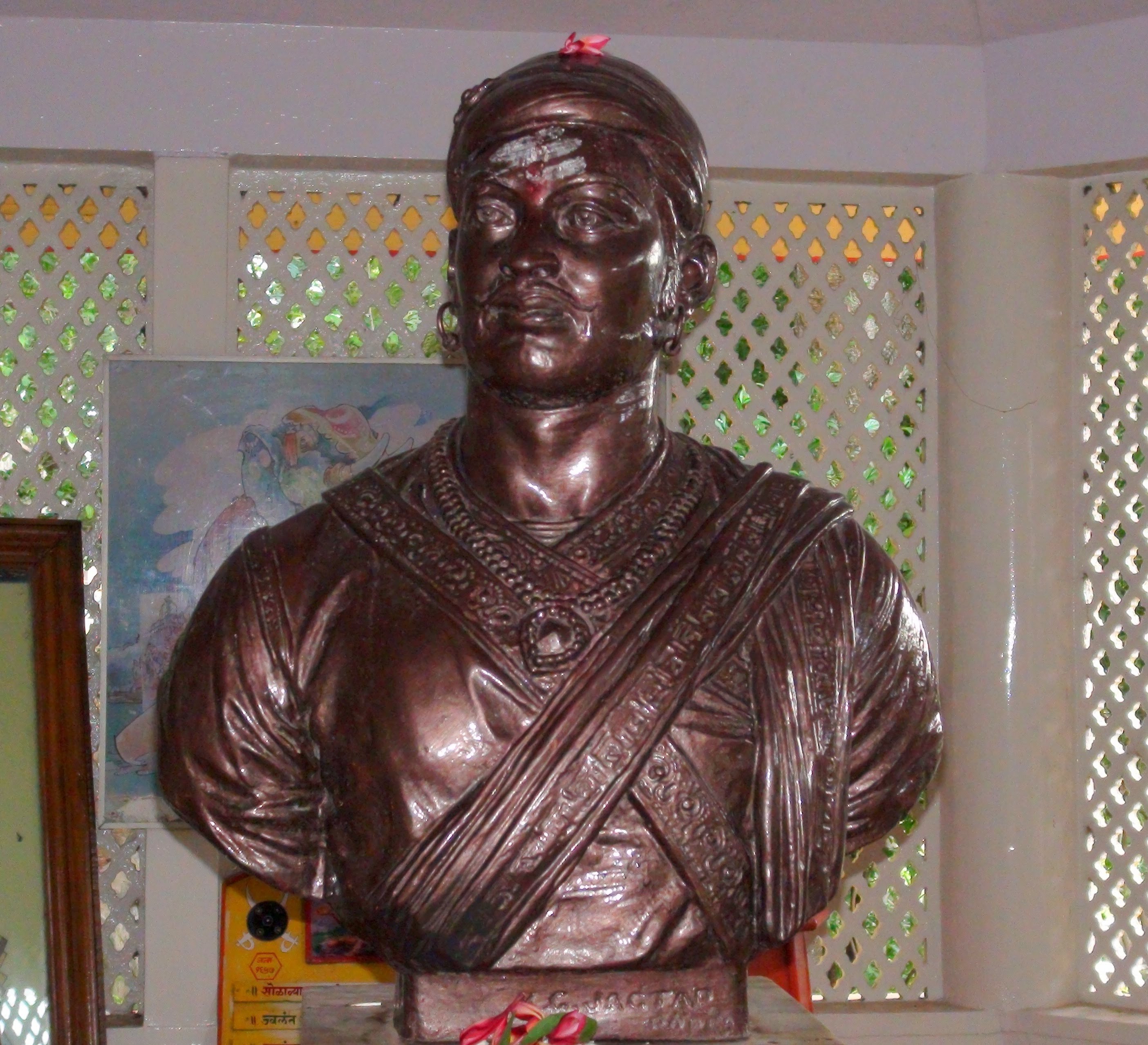
Tulapur is a village near Pune in Maharashtra. This place is historically important because of the execution of Sambhaji, son of Shivaji the Great.

His Samadhi is situated there. Shivaji shook the very foundations of Moghul Empire and carved a Hindu kingdom in the western part of India. But to avenge all the onslaughts and victories of Shivaji, Aurangazeb caught hold of Chatrapati Shivaji’s son Sambhaji and executed him at Tulapur. But there are some heroic episodes that happened even after this sad killing.

Muslim invaders are fanatics and they always kill their enemies and show disrespect to their dead bodies. We can see such barbaric actions throughout Muslim rule in India. Hoysala King Veera Vallala was killed by Sultan Giazuddin Damghani. Moroccan explorer Ibn Batuta wrote the following in his diary in 1341:

“Treating him at first with great consideration, Giazuddin persuaded him (Veera Ballala) to part with all his riches, horses and elephants; and then had him killed and flayed. His skin was stuffed with straw and hung upon the wall of Madura, where I saw it in the same position” – Ibn Batuta, year 1341.

Later Kumara Kampanna’s wife Gangadevi wrote in her book ‘Madura Vijayam’ about the spiked heads of Pandyan soldiers on both sides of the pathways in Madurai. She was the first war correspondent in the world who accompanied her husband Kumara kampanna and wrote a live war commentary in Sanskrit. Kampanna reopened the Madurai Meenakshi temple  which was closed for forty years under Madurai Sultans rule.

shambaji close upsambhaji-maharaj-samadhi-tulapur

Shivaji’s son cut into pieces

In the same way Aurangazeb caught Sambhaji and executed him in Tulapur and cut his body into pieces and threw them into river Bhima. This is to prevent a proper Hindu funeral. But the heroic community in the town jumped into the river and collected all the body parts, sewed them together and cremated the body with due respect according to Hindu custom. That community is called shewale (those that sewed) community until this day.

A Samadhi for Sambhaji is at Vadhu near Tulapur. There is one at Tulapur as well. This town is at the confluence of rivers Bhima and Indrayani. There is a famous temple for Shiva with the name Sangameswar. The original name of the town was Nagargaon.

Tulapur-5sangameswar

Tula means balance. There are two stories about Tula. Murarpant Jagdev was one of the important official in Adilshah’s court. When he developed some white patches on his body, he met a sage called Swami Rudranath Maharaj. When he was cured of the disease he gave lot of donations and the sage diverted everything to the temple at Tulapur. Following the sage’s order he donated 24 items equal to his weight. Tulabharam is a Hindu custom followed in all parts of India. One will weigh himself against the selected items from grains to god and donate it to a person or a temple. Guruvayur, Tirupati and other temples have big balances for it in the temples.

It is said that he donated gold to the weight of an elephant. This is the reason for the name of the town TULAPUR.

pluto3

Elephant’s Weight on Planet Pluto

There is another story.

When Aurangazeb came here he wanted to cross the river Bhima in a boat. He had his elephants and horses with him. When he was worried about the weight the boat can carry, the boatman boasted that he can weigh anything under the Sun. Immediately Aurangzeb asked him whether he can tell him the weight of his elephant. The boatman told Aurangazeb that it was not all a problem. He called a big boat and asked him to put the elephant in the boat. The emperor’s servants did this. When the elephant was on the boat he marked the water level with a line on the boat. Then he asked the elephant to get out of the boat and filled the boat with heavy stones till it reached the same water line. He sent the stones to the nearby wood shop where big weights are used. They weighed all the stones and gave him the total weight. The boat man took it to the emperor and told him the correct weight of the elephant. When the emperor came to know the method he employed, he appreciated it and gave him a valuable prize. Because the boat man used the weighing balance (Tula) Nagargaon was renamed as TULAPUR. 

 vesswic-86-1024x678

Magic in Hindu, Sumer and Egyptian Culture

Drishti-Bomma

Research Article No. 2036

Written by London swaminathan

Swami_48@yahoo.com

Date : 2nd August  2015

Time uploaded in London : – 19-12


This article is about the Hindu beliefs of burying hair and bones at the place of an enemy to eliminate him/her and hanging ugly faces to ward off evil eye (Dhrsti) that were found in Egypt, Greece and Sumer.

Western “Scholars” used to project Greeks as advanced in modern thinking or philosophical thinking. It is true only after they came into contact with the Hindus.  We see it from the period of Pythagoras and Socrates, who came into the world only after the Upanishad period. Greeks, Egyptians and Sumer people had similar beliefs about magic, witchcraft and ghosts which was in the Vedas at least one thousand years before them. There are of similarities in the Atharva Veda, Sumerian and Egyptian literature. I will take only one set of beliefs for comparison in this article:
250px-Kanthristi

How to destroy enemies or evil spirits?

All the ancient people believed that they can eliminate their enemies or evil spirits through curses. They also believed that they can destroy the statues or dolls of their enemies and eliminate them. They thought that they can bury something like hair, magical plates or talismans at the residence of their enemies and subdue them.

Kavachams are a genre of hymns where in god is prayed to protect every part of the body. In addition to it, they pray for the elimination of their enemies and counter act the enemy’s black magic activities. The most famous kavacham of Tamils is Kantha Shasti Kavacham which prays to God Skanda, son of Shiva. It specifically refers to the enemies act of burying dolls, cat’s hair, bones, hair and nails of children etc. The devotee of Skanda prays to neutralise such things and act against all the ghosts, spirits, ghouls etc. The basis for such belief is in the Atharva Veda (10-1-18 and 19). This shows that it is an age old belief; may be several thousand years old.

This belief spread to different parts of the world when Vedic Hindus spread to different parts of the world.

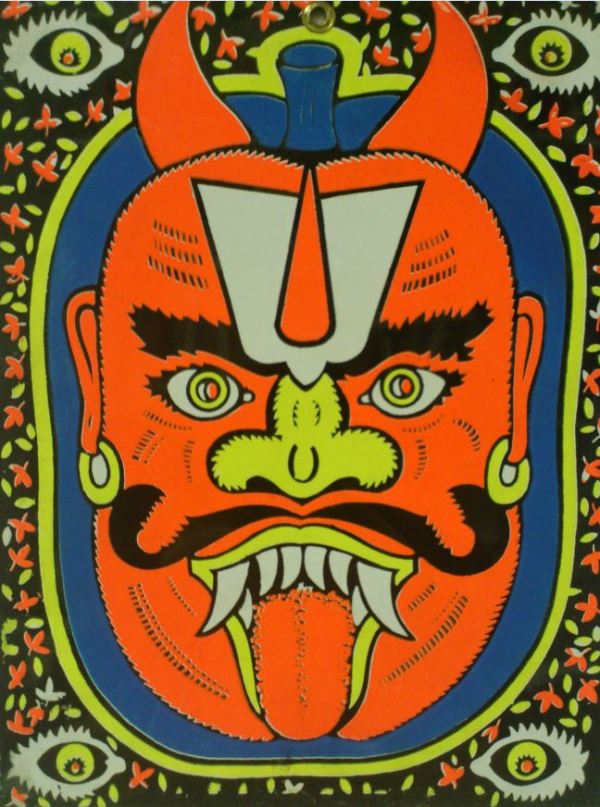
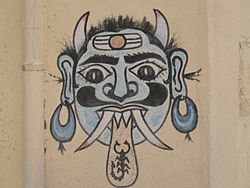
To ward off the evil eye, an ugly figure was hung in all the palaces or houses of the Hindus. This is called Dhrsti (Evil Eye) doll. This is found in all other cultures.
pazuzu 3

Sumerian beliefs

Magic was used to drive away demons, to undo the bad effects of certain sinful actions, to counteract the potential effects of certain portended effects, to increase sexual potency, to secure the favours of a loved one, to quieten squalling infants and to frustrate the activity of hostile sorcerers

(All these are in Hindu mantras/incantations)

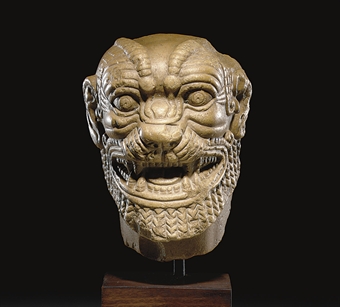
Sumer people wore ugly figures similar to ugly Dhrsti dolls of Hindus. ‘Pazuzu’ was Sumer demon. They hung it at the entrance of the houses like Hindus. Hattic and Hittites cultures were sources for all this belief. They were Kshatriyas who migrated from India.

Akkadian had ‘namburbu’ incantation rituals to ward off evil things. Some aspects of these were done during night time like Hindu black magic rituals. Hindus did this at the dead of night.

Sumerian incantations are similar to Atharva Veda incantations/mantras. (I have already shown that even the most popular Valentine day symbol of an ‘arrow piercing the heart’ is from the Atharva Veda).
bes

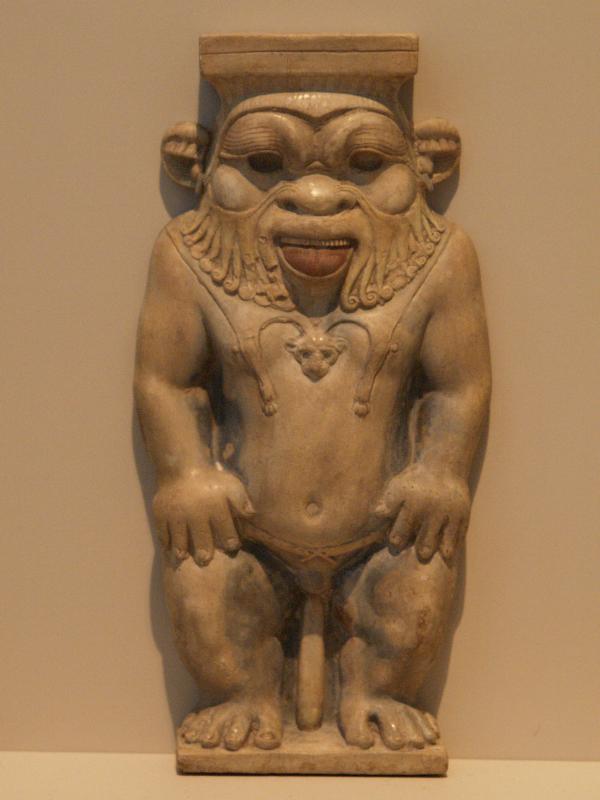
image of Bes

Egyptian Beliefs

The magical rituals that are most easily understood involved the deflection of enemies by cursing formulae (similar to Vedas). These are accompanied by ritual destruction of wax or clay figures (Even now it is done by magicians in Kerala) Ritual devised for vanquishing cosmic enemies Apep and political enemies, also private individuals, were essentially similar in character. Some Greco-Egyptian spells invoke evil gods and demons to appear in a person’s nightmares.

Magic was used for benign purpose as well. A love potion was given to wanted man or woman with incantations (like in Athrva Veda). Talismans, amulets and Lucky charms were also used to bring fortune to the wearer. Huge quantities of amulets representing gods and goddesses, parts of the body replicas were recovered from Egyptian burial sites. Magical spells written on papyrus were also used as amulets. Hindus also did this. They put such magical spells inside the metal containers and hung on their necks.

Isis was the goddess frequently addressed. Bes was a curious dwarf whose hideous features personify the supernatural world’s mixture of frightfulness and beneficence.
bes in Louvre

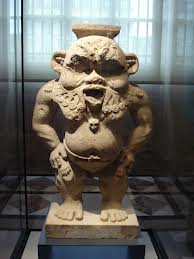
Bes in Louvre Museum, Paris

Bes

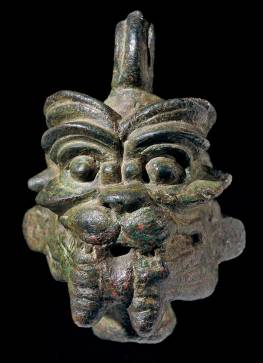
Bes’ ugliness wards off evil. He appears with a large bearded and barely human face, a thick body, short arms and short bandy legs. He wears a plumed crown and often wields a short sword. He possesses a lion’s mane, usually has his mouth open and tongue protruding. He is also drawn as a dancing musician.  Bes was absorbed by Greco – Roman culture. The Greeks depicted him in strong ithyphallic (erect penis) guise.

(This can be compared with the Dhrsti doll of Hindus or Ayyanar/Sastha, village God with sword and protruding tongue at villages in South India).

Bes was a protective deity, usually portrayed as a hideous but jovial dwarf. It was revered as the god of pleasure and entertainment and as a protector of the family, especially of children and women in child birth
hecate 2

Hekate in Greece

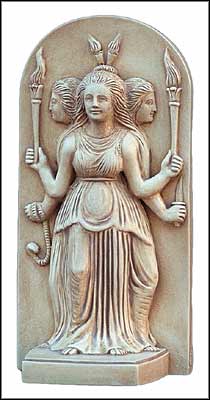
Hekate is the corrupted form of Sakti in Sanskrit. The goddess of sorcery, who resided in the Underworld.  There she oversaw the ritual purifications as well as magical invocations. Witches, such as Medea, drew power from the goddess. Hekate would sometimes appear on earth at night time, especially at cross roads, accompanied by baying hounds.

(Hindus fear to cross junction of three roads, particularly at night time,  and they believe evil spirits occupy those places. Greeks also believed in it)

Artistic representations show her carrying torches. Where paths met, a triple figure of Hecate rose from masks placed at the junction. Offerings were left at road side shrines and at junctions. In some parts of Greece she was worshipped by occult bands and moon worshippers.

(Vedic Hindus believed in Path way god Pushan. In South Indian villages lot of road side shrines are there for village gods and goddesses.)

pazuzu, british museumpazzuzu assyrian

image of Sumerian Pazuzu

Source:

Dictionary of the Ancient Near East by British Museum

Ancient Egypt by David Silverman

Atharva Vedam(tamil Book) by Tamilmaaran

Dictionary of World Myth by Roy Willis

Encyclopaedia of Gods by Michael Jordan

Pictures from various sources
HANGING JUSTIFIED

hanging

Article No. 2034

Written by London swaminathan

Swami_48@yahoo.com

Date : 1st August  2015

Time uploaded in London : – 14-44

“It is very hard, my lord”, said a convicted person at the bar to judge Barnet, “to hang a poor man for stealing a horse.”

“You are not to be hanged, sir” answered the judge, “for stealing a horse; but you are to be hanged that horses may not be stolen.”

XXXX

Allen, the Quaker, waited upon the Duke of Sussex to remind him of his promise to present a petition to abolish capital punishment. The Duke did not seem to like the job, and observed that the scripture has declared,

“Whoso, sheddeth man’s blood, by man shall his blood be shed.”

“But please note,” replied the Quaker, “that when Cain killed Abel he was not hung for it.”

“That is true,” rejoined the Duke, “but remember Allen, there were not twelve men in the world then to make a jury”.

Xxxx

When Lord Bacon was chancellor of England, a witty criminal was brought before him. “Your Honour should let me go,” he observed. “We are kin. My name is Hogg, and Hogg is kin to bacon.

“Not until it’s hung,” said Bacon.

Xxxx

Joan

Jokes apart, ancient Sanskrit and Tamil literatures are full of death sentences by different methods. Chopping the head was the most used method by the kings. Sanskrit dramas describe the scene of criminals dragged or paraded along the streets in coloured attire, mostly red or black, to the place of execution.
Famous Tamil poet Tiruvalluvar says it is the duty of the king to weed out the criminals:-

“When the king imposes the severest penalty on a cruel murderer, it is like weeding the field to protect the crops” – Tirukkural 550
Rajaji, the First Governor General of Independent India, said that capital punishment for grievous offences is like the weeding of fields, necessary for protecting the food crops.

Indians knew that hundreds of freedom fighters were hanged by the British for being patriotic. They did it in all the places they colonised. During French revolution over 1000 people were guillotined and at the end, the person who invented the Guillotine was also guillotined. In the United States after a long discussion they came to the conclusion that the most humane method of execution is by lethal injection.  Electrical chairs are also used.
joanstampwoman

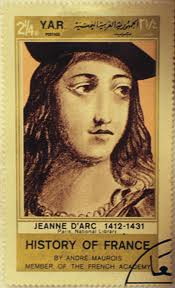
The British burnt alive thousands of women dubbing them as witches. Whoever did not believe in Christianity and practising pagan religions were called witches throughout Europe. Joan of Arc was the most famous woman who was burnt alive in France. The English clergy burnt her body three times to make sure that she is charred to ashes.

TEN “INAUSPICIOUS DREAMS”; DREAMS IN VEDAS AND UPANISHADS!

Sleep-training

Research Article No.2025

Written by London swaminathan

Swami_48@yahoo.com

Date : 28  July 2014

Time uploaded in London : 16.19

Hindus stand out in understanding TIME, Working of MIND and Explaining DREAMS. Western scientists have not reached the level of Hindus In these fields. They still lag behind.

Dreams find a place in a Hindus’ everyday life. They knew about the REM sleep and the unavoidability of dreams. Brahmin Hindus pray to Sun thrice a day to kill the nightmares (Dus Swapna Nasanam). This shows how much they have understood about the dreams.

Adi Shankara, greatest philosopher of India, use dream hundreds of time in his hymns and commentaries. Mandukya Upanishad use it to explain the state of mind. Varahamihira, author of Brhat Samhita and several others before him dealt with the dreams. Hindus have several books interpreting dreams. Poets of Sangam Tamil literature even sing about the dreams of birds and animals. Tamil encyclopaedia Abidhana Chintamani has a summary of the interpretation of dreams over six pages. It is the summary of Sanskrit book on dreams attributed t Deva Guru Brhaspati. Like the dream of a dumb person is a popular simile used in Hindu literature.

FRANCE - CIRCA 2005: A stamp printed in France shows sleeping baby in a rose, circa 2005

FRANCE – CIRCA 2005: A stamp printed in France shows sleeping baby in a rose, circa 2005

Ten Bad Dreams in Vedic Literature

The meaning of dreams was an interesting part of Vedic literature. It is dealt with in various passages, including an Athrvan Parisista. The Rig Veda regards as ominous the making of a garland or neckband in a dream.

Ten dreams which presupposed death are recorded in Aitareya Aranyaka (3-2-4); they are

When a black man with black teeth kills you

When a boar kills you

When a wild cat springs on you

When one eats and spits out gold

When one drinks honey and eats lotus roots

When one goes to a village with asses or bears

When one drives south a black cow with a black calf

Wearing a garland of nard (Spikenard plant; Death of Jesus Christ is also associated with nard!)

If one has a dream one should wash one’s mouth.

Dreams in Rigveda:–2-28-10; 10-162-6; evil dreams – RV 2-28-10;

Atharvaveda :– 7-101-1; 10-3-6 (evil dreams)

Vajasaneyi Samhita :– 20-16

Satapata Brahmana:– 3-2-2-23

In classical Sanskrit literature we have several references to dreams.

Separate book on dream interpretation is attributed to Deva Guru Brhaspati.

Svapna is the Sanskrit word for dream. In Sanskrit hymn books there special slokas/hymns to avoid nightmares.

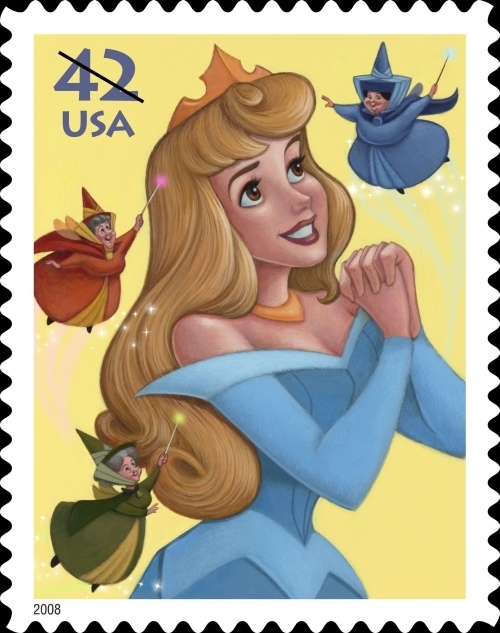
Sleeping-Beauty

Sleeping Beauty Stamp of USA

My previous Research Articles on Dreams:

Role of Dreams in Tamil Saivite Literature (posted on July 4, 2013)

Do our Dreams have Meaning? (Posted on December 29, 2011)

God’s Note Book (posted on March 16, 2014)

STRANGE DREAMS, POSTED ON 27TH JULY 2015.