Hindu Eye Goddess Temple in Syria?

flash_image5

Naina Devi temple in Bilaspur,Himachal Pradesh

Research paper written by London Swaminathan
Research article No.1456; Dated 3rd December 2014.

What is the Goddess Name?
Naina (Nayana Devi) Devi = Eye Goddess
Where is it?
In Himachal Pradesh and Uttarkhand States in India and Tell Birak in Syria.

What is found there?
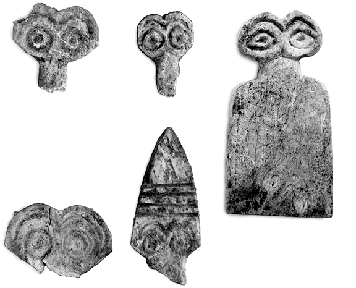
Thousands of small stone eye idols are found in Tell Brak in Syria. It is called Eye Temple. It existed from 3000 BCE. Naram Sin built (2254 BCE) a palace here. The Eye Goddesses are mysterious and found nowhere else except India. Syrian site is located in Nahar al Khabur basin. Ancient Mitannian buildings are in the area.
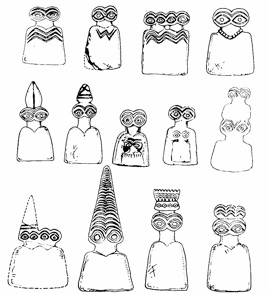
tell brak, syria

How do we know that Syrian Temple is Hindu?
The place where the eye idols are found is called Nagar. This is a Sanskrit word meaning city and in Sangam Tamil literature (Purananauru verse 6) it is used for temple in Tamil.

The second reason is that it was ruled by Mitannians in 1500 BCE. All the Mitannian names are pure Sanskrit words. Dasaratha and Pratardhana are some of the names of the kings. A Horse manual with Sanskrit numbers is found there. A treaty in clay tablet with the names of the Vedic Gods is also discovered. This is the oldest Sanskrit inscription (1400 BCE) in the world.
The third reason is the kings’ names like Naram sin are also of Sanskrit origin. Sin stands for Chandra (moon) in Sumer. Like we have Haris chandra in the Hindu scriptures they have several kings with this Sanskrit name in Akkadian empire:
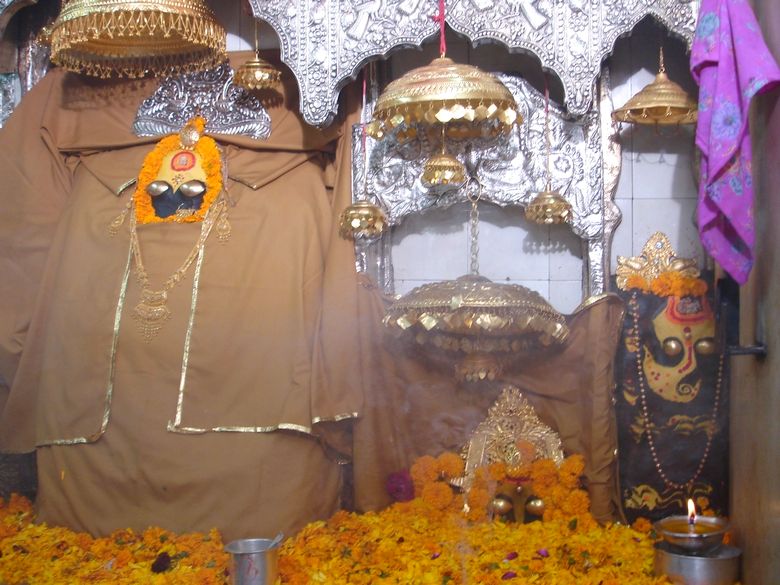
naina-devi1
Nayana Devi

Ibbi Sin, Naram Sin (before 2600 BCE)
Both of them ruled before Gilgamesh.
Shu Sin, Sin iddinam, Sin eribam, Rim Sin I, Rim Sin II, Sin magir, Apil Sin, Sin mubalit. All these kings ruled before 1600 BCE.

Like in India, ‘Chandra’ can be a pre fix or a suffix to a name. We have Hari Chandra or Chandra Deva in the king list. Sin and Sena also sound similar. Another name for moon is Nanna which is found in the king list in Sangam Tamil literature and Sanskrit literature (Nanna Deva). Nanna is one of the popular names in Sumer.

Nayana Devi Temple in Bilaspur and Nainital
The most famous Eye Goddess temple is in Himachal Pradesh. Sikh Guru Guru Gobind Sing did a Chandi Yajna here to defeat the Moghuls.

naina-devi-temple-nainital
Nainital Temple

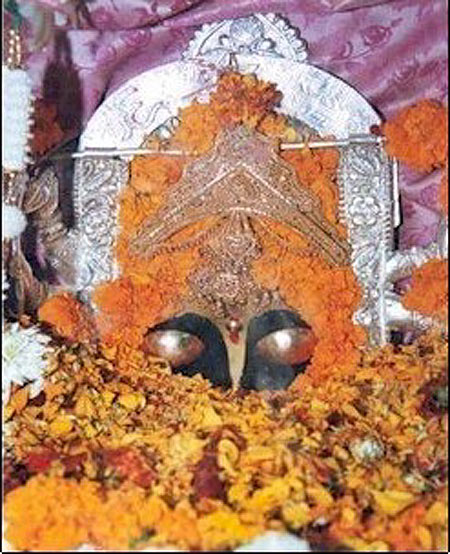
It is one of the 51 Shakti Kendras (Goddess centres) in India. When Goddess Parvati committed self sacrifice (Sati) in the Daksha Yajna , Lord Shiva carried her body and the body parts fell in 51 places in India. They all became famous Shakti centres attracting a huge crowd. It is believed that Goddess’ eyes fell at Bilaspur in Himachal Pradesh. Nainital in Uttarkhand also has a similar eye goddess temple. Nainital’s name is also derived from the Nayana Devi Tal.

Nayana, Akshi, Lochana, Netra are popular Sanskrit words for eye. These names are found in women’s names throughout India.

Meenakshi of Madurai, Kamakshi of Kancheepuram, Neelayathakshi of Nagapattna, Visalakshi of Kasi/Varanasi are very famous temples and all are named after the beautiful eyes of the goddesses.

Above all Shiva’s Third Eye stands for wisdom and mysterious powers in Hinduism. In all the village temples of Tamil Nadu and Kerala people offer body parts made up of silver to the goddesses. Eye is an important body part they offer. Eye worship is very common in Hinduism.
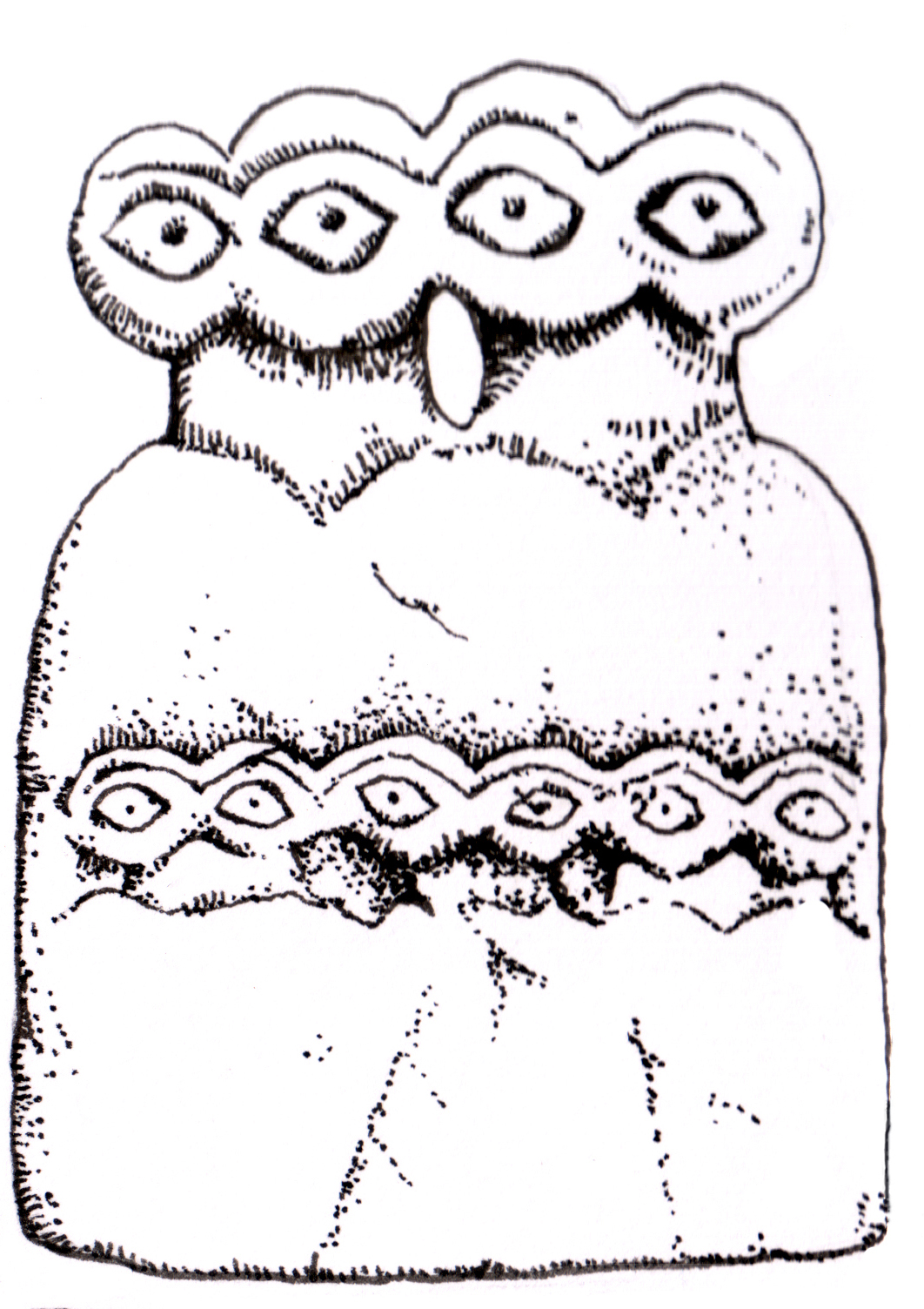
middle-figure
Eye Goddess of Syria

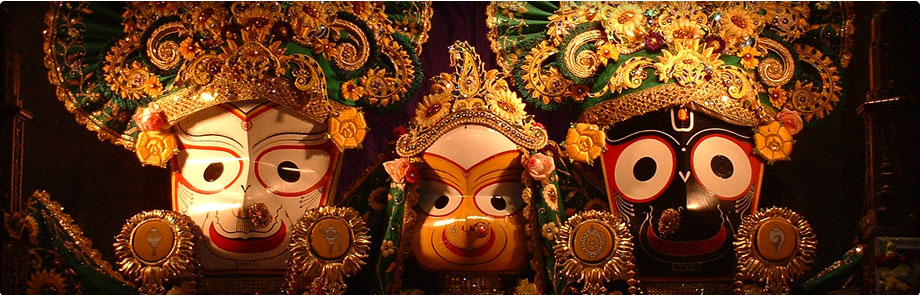
The statues of the famous Puri Jagannath Rath Yatra (Chariot Festival) Krishna, Balarama and Subadra have prominent eyes like the Syrian temple idols.

Probably the Mitannians worshipped Nayana Devi around 1500 BCE. But the temple in Syria was built well before the known Mitannain kings. Naram sin and his forefathers may also have worshipped Nayanadevi. Scarcity of materials leaves lot of things to guess work. But the material similar to eye idols of Syria is available only in Hindu temples of India.
puri
Krishna, Bakabhadra and Subhadra of Puri, Odissa

Please read my articles on Sumer–Hindu connection and Sahasralinga Temple in Karnataka and Cambodia.
Contact swami_48@yahoo.com
maa_naina_devi
Maa Naina (Nayana) Devi, Bilaspur

99-00_Hamoukar_fig4
From Syria
Vyasa deserves Nobel Peace Prize and Literature Prize!

VYASA top

Research paper written by London Swaminathan
Research article No.1455; Dated 3rd December 2014.

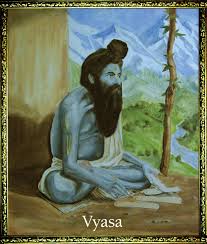
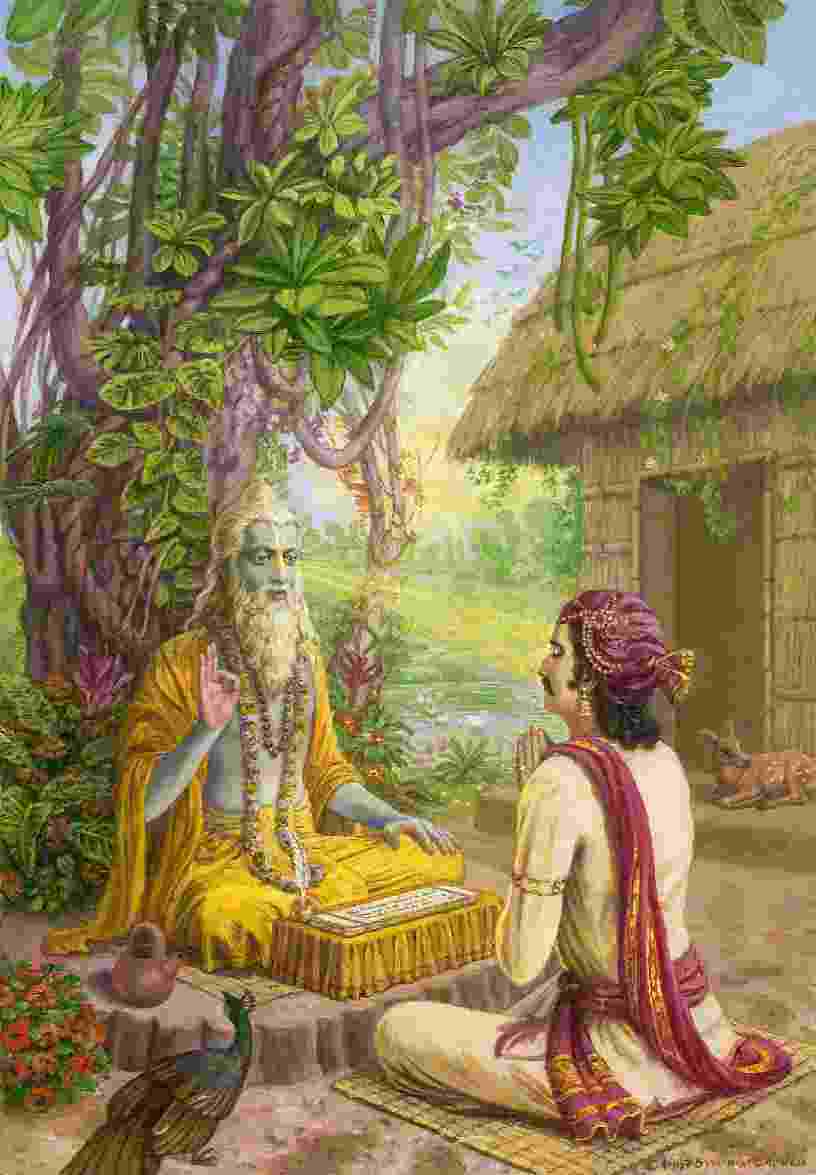
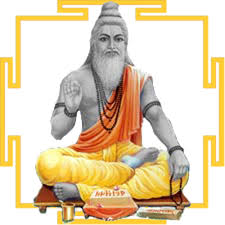
Vyasa, the black man, who was born to a fisher woman called Satyavati was very black in complexion. He was the ugliest and blackest character in the Mahabharata. But he was the purest and the greatest soul of his times. Two women Amba and Amablika, went to his bed room but refused to lie down with him because he was so ugly and black!

He was celebrated as equal to Vishnu and praised “Vysaaya Vishnu Ruupaaya, Vyasa Ruupaaya Vishnave”. He deserves two Nobel Prizes, one for Peace and another for Literature. Had there been a prize at his times, there was no one to compete with him. Neither Moses nor Homer was born. There was no literature worthy of the name in any part of the world in any language except Sanskrit in 3100 BCE. He lived just before the Kali Yuga began in 3100 BCE. Some western scholars believe that he lived around 1500 BCE and not around 3100 BCE. Even if we accept the date he was the oldest litterateur in the world!

Shree-Vyasa-Ji4

But what it did he achieve to claim two Nobel Prizes?
Look at his literary achievements first:
1.He was so worried about the Vedas that existed at his time. When he lived the Vedas became very ancient and one person can’t master it. The Vedic literature was vast and the custom about the Vedas is unique in the world. It should not be written. One can only learn it from his Guru/teacher. So he divided them into four parts and called four most intelligent persons of his time and gave the responsibility to pass it on to future generations. The most wonderful thing happened.

Till this day that bulky literature has been passed from one generation to another by word of mouth. That shows that the Hindus are the oldest and the most intelligent people. Whether he lived 3500 years ago or 5100 years ago, it does not matter. What he did was right. Without him, we would not have the oldest record of human beings. Of course, we have Gilgamesh, which some people claim to be older than Vyasa’s Vedas. But they are primitive in nature without any higher thoughts. Vedas are full of high thoughts and pray for the welfare of all the human beings. Most of the mantras have “WE” instead of “I”.

vyasa3

What else did Vyasa achieve?
He compiled the longest epic in the world, Mahabharata. Till this day no body beat him. Two hundred thousand lines! One million worlds!! He threw a challenge in the very first chapter Adi Parva. What is in the world is already in it. So whatever you find in any other part is already “ tasted” by me and so they are called Vyasa’s spit, i.e Vyasa Ucchistam Jagath Sarvam. Nothing is new. Mahabharata is a veritable encyclopaedia. He collected all the materials that was available at his time and intricately woven them into the main plot of the Mahabharata. He must be the cleverest person at that time and that is why Hindus praise him as an “avatar of Vishnu”. No writer in the world has been elevated to that level!

vyasa02

What else did he do?
After seeing the great success in compiling the Vedas, weaving all the available moral stories in the Mahabharata, he saw one other bulky thing called Puranas, the Hindu mythology. They run to 800,000 couplets and 1.6 million lines. He took it as a challenge of his life time and compiled all the 18 Major Puranas and left others to his juniors. This was his third achievement. Even in the modern world no one can achieve such a thing with all the computers and one hundred office assistants. He compiled them and passed them successfully to his posterity. Generations to come will remember his literary achievements. Now you know why he deserved Nobel Prize for Literature.

Inspired by Vyasa, Adi Shankara also wrote hundreds of hymns in simple Sanskrit and wrote commentaries for innumerable scriptures including the Upanishads, Brahma Sutra and Vishnu Sahasranamam. So Vyasa has the credit of inspiring others. Inspired by these two sages, a Brahmin commentator by name Nachinarkiniyar wrote commentaries to most of the Sangam literature. Nobody could beat him in writing commentaries.

vyasa 1

Why Vyasa deserves Peace Prize?
Vyasa tried his level best to avoid the great Mahabharata war. But as a Tri Kala Jnani, one who can see the past, present and future, he knew the outcome. In spite of his advice to Dridharashtra and others it did not work. But his appeal for world peace is already in the Vedas and Mahabharata. He was so clever that he wanted to write a crispy message to the entire humanity. He knew what he compiled was the bulkiest literature in the world and no one could read it in one’s life time. So he wanted to convey his message. He wrote only four couplets and called them Bharata Savitri and included in the Mahabharat. He put the peace hymn as the last hymn of Rig Veda, indicating that this is the message he wanted to give to the world. And that is message of the Vedas as well. Read the verse for yourself and decide whether Vyasa deserved a Nobel Peace Prize:–

Meet together, Speak together
Let your minds be of one accord
As the Devas of old, being of one mind
Accepted their share of sacrifice

May your counsel be common, your assembly common
Common be the mind and the thoughts of these united
A common purpose do I lay before you
And worship with your common oblation.

Let your aims be common
And your hearts of one accord
And all of you be one mind
So you may live well together
–Rig-Veda, Tenth Mandala, 191 (last hymn)

After fighting two World Wars only, the world realised and wrote a charter for the United Nations similar to this!

(For Bharata Savitri verses, please go to Santanam Nagarajan’s post in this blog “Great Secret from Mahabharata” posted on 12th August 2012)

Long Live Vyasa!
contact swami_48@yahoo.com

கொங்கர் உள்ளி, ஹோலி, சுமேரிய புருள்ளி விழாக்கள் ஒன்றா?

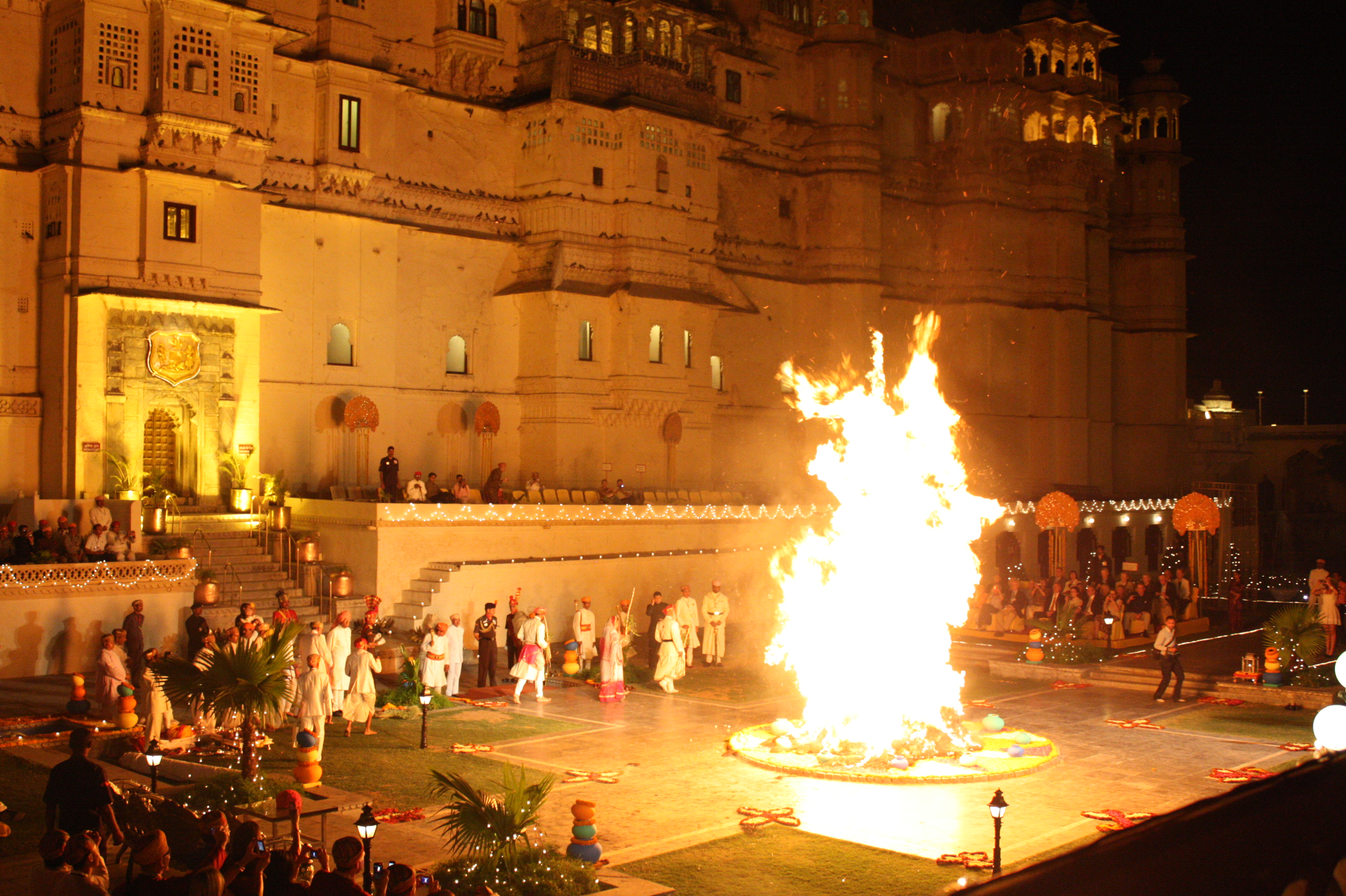
Holi at udaipur
Holi in Udaipur

கட்டுரையை எழுதியவர் :– லண்டன் சுவாமிநாதன்
ஆராய்ச்சிக் கட்டுரை எண்- 1451; தேதி 2 டிசம்பர், 2014.

சுமேரியாவில் ஹிட்டைட்ஸ் இனத்தினர் கொண்டாடிய வசந்த கால விழாவின் பெயர் புருள்ளி, இந்துக்கள் கொண்டாடும் வசந்த கால விழாவின் பெயர் ஹோலி, கொங்கர்கள் கொண்டாடும் விழாவின் பெயர் உள்ளி. பெயரில் மட்டுமின்றி குறைந்தது இரண்டு விழாக்களி லாவது வசந்த காலத்தின் பெயர் வருகிறது. இதில் ஹோலியைத் தவிர மற்ற இரண்டு விழாக்களின் விவரங்கள் மிக மிகக் குறைவாகவே கிடைத்திருக்கின்றன.


உள்ளி விழாவைப் பற்றி அகநானூறு 368-ல் மதுரை மருதன் இளநாகனார் பாடி இருக்கிறார்.

“வாழி தோழி! கொங்கர்
மணி அரை யாத்து மறுகின் ஆடும்
உள்ளி விழவின் அன்ன
அலர் ஆகின்று, அது பலர் வாய்ப்பட்டே” என்று பாடல் முடிகிறது.

பொருள்: கொங்கு நாட்டு மக்கள், இடையில் மணியைக் கட்டிக்கொண்டு தெருவில் ஆடும் உள்ளி விழாவின் போது ஏற்படும் ஆரவாரம் போல பலர் வாயிலும் பேசப்பட்டு (காதல் விவகாரம்) வதந்தி (அலர்) பெரிதாகப் பரவிவிட்டது. இன்னும் சில பாடல்களில் இருந்து இது சேர நாடு முழுதும் கொண்டாடப்படதும் தெரிகிறது.

இது தவிர வேறு செய்திகள் கிடைக்கவில்லை.
holi-b-26-3-2013

ஹோலி விழா, வசந்த காலத்தை வரவேற்கும் விழா ஆகும். வண்ணப் பொடிகளைத் தூவி வசந்தத்தின் வருகையைக் கொண்டாடுவர். ஹிரண்யகசிபுவின் சகோதரி ஹோலிகா எரியுண்ட தினம் அது என்பதால் அன்று சொக்கப்பனையில் அவள் உருவத்தை எரிப்பர். சிறுவன் பிரஹலாதனை ஏமாற்ற முயன்று அவள் ஏமாந்தாள் என்பது கதை.ஆகவே ஹோலி என்பது துஷ்ட சக்திகளை நல்ல சக்திகள் வென்ற நாளாகும்.

சுமேரிய விழா
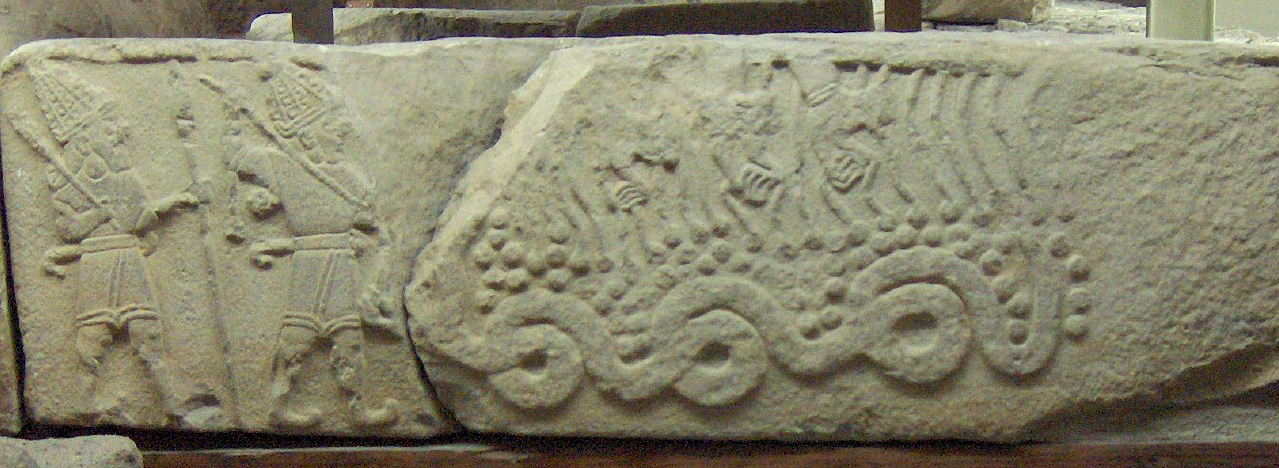
சுமேரியாவில் ஆண்ட ஹிட்டைட்ஸ் என்பார், சம்ஸ்கிருதம் தொடர்பான மொழியைப் பேசியவராவர். அவர்கள் பூருள்ளி என்னும் விழாவை வசந்த கால விழாவாகக் கொண்டாடினர். இல்லுயங்கா என்னும் தீய பாம்பைக் கொன்றதாகவும் கதை சொல்லுவர். அதாவது அந்த நாளன்று நாம் பாராயணம் செய்வது போல இல்லுயங்கா கொல்லப்பட்ட கதையைப் படிப்பர். மன்னன் இதில் முக்கியமாகக் கலந்து கொள்ள வேண்டும். ஆகையால் போர் செய்து கொண்டிருந்தாலும் அதை இடையில்நிறுத்திவிட்டு விழாவுக்கு வந்து விடுவார். இல்லுயுங்கா பற்றிய பாடல்களில் நமது புராணக் கதை போல விரிவான கதை இருக்கிறது.

Museum_of_Anatolian_Civilizations
Illyunka killed

இதே போல ரிக் வேதத்திலும் அஹீ, விருத்திரன் என்ற பாம்புகளைக் கொன்றதாகவும் சொல்லுவர். அவை எல்லாம் பாம்புகள் அல்ல, வறண்ட காலத்தை அப்படி ராட்சதன் போலவும் , பாம்பு போலவும் வருணிப்பர் என்று புராணச் செய்திகளை ஆராய்வோர் பகர்வர். அசுரனைக் கொல்வது, பாம்பைக் கொல்வது என்பதெல்லாம் ப்ழங்குடி மக்களின் மறை மொழி வாசகங்கள்!

உள்ளி, பூருள்ளி, ஹோலி – ஆகிய மூன்று பண்டிகைகளில் ஓரளவு ஒற்றுமை இருப்பதைக் காண்கையில் நமக்கு வியப்பாக இருக்கலாம்.

உல்லி
Kongar Ulli Festival

Pictures are used from other websites;thanks.

Holi, Ulli, Purulli: 3 Interesting Festivals in India and Sumer

Holi at udaipur
Holi in Udaipur

Research paper written by London Swaminathan
Research article No.1450; Dated 1st December 2014.

Holi celebrated in North India, Ulli celebrated in Coimbatore region of Tamil Nadu and Purulli celebrated in the Ancient Near East are similar in name and theme. They deserve a closer look and comparison.

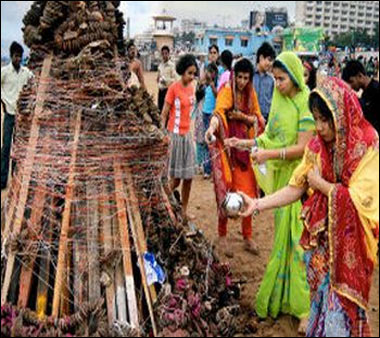
One of the most popular festivals in India is Holi. It is a Hindu festival to celebrate the arrival of spring season. It also signifies the victory of good over evil. Holika, a demoness, sister of the demon king Hiranyakasipu was killed on that day. To commemorate this they burn the effigy of Holika or make a bonfire in the night. They throw colours on others to celebrate the arrival of spring season in March every year. Of late it has become a secular festival involving all communities.

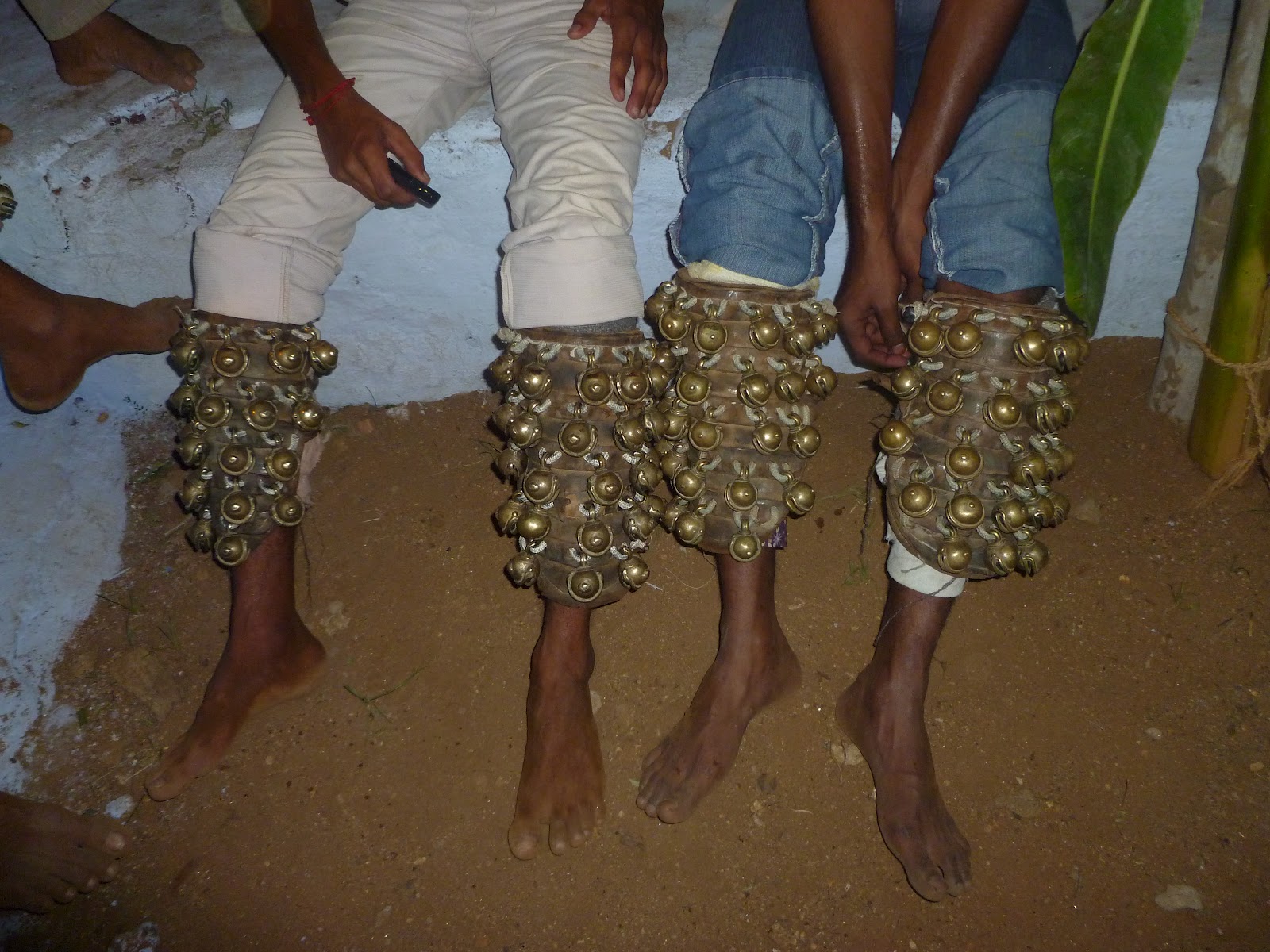
Ulli festival was one of the rarely known Tamil festivals celebrated in ancient Chera Nadu, now known as Kerala. Now it is celebrated in Coimbatore region only. This area was called Kongu Nadu in the olden days. Sangam Tamil verse (Akananuru 368) refers o this festival. Kongars of Kongu Nadu tied bells around their waists and danced in the streets. Not much is known about this festival because of scarcity of material.

In the same way we know very little about the Sumerian Purulli festival. It was celebrated by Hittites who spoke a language related to Sanskrit. It was a spring festival like Hindu Holi, again to celebrate the victory of good over evil. Here they recited the myth of killing of the snake Illuyanka. It was considered a very important festival even the king interrupted his military campaign to participate in it. We have similar myths of Indra killing snakes like Ahi and Vrtra in the Rig Veda. That is also interpreted as celebrating the change of season. They welcomed the spring or rainy season after a period of drought.

holi-b-26-3-2013

Spring is celebrated all over the world and the usual excuse is killing some evil demon or a monster. This is actually the language of the ancient peoples to say that the bad season is over and let us welcome a good joyful, bright Spring.
The similarity in the names Holii, Ulli (Tamil) and Purulli (Sumer) sounds very interesting.

Brian E.Colless compared Purulli festival with Vrita killing Indra

Museum_of_Anatolian_Civilizations

MYTHOLOGY OF HATTI
Brian E. Colless
1. The Illuyanka Myth
The Battle with the Serpent

Thus speaks Kella, the anointed priest of the storm-god of Nerik.
The words for the Purulli festival of the storm-god of heaven, as follows:
May the land flourish and thrive, may the land be protected.
When it flourishes and thrives, they celebrate the Purulli festival.
When the storm-god and the serpent* fought together in Kishkilussha,
the serpent* defeated the storm-god. *illuyankash ‘snake’
The storm-god then summoned all the gods: Come, Inara is preparing a feast.
She prepared everything on a grand scale;
vessels of wine . . . (and other beverages), vessels filled to overflowing.
Then Inara went to Ziggaratta and met Hupashiya, a mortal.
Inara spoke thus to Hupashiya: There is something I want to do,
and I would like you to assist me.
Hupashiya said to Inara:
Certainly, if you let me lie down with you, I will do anything you wish.
And he lay with her.
Inara took Hupashiya to the place and hid him.
Inara dressed herself up and lured the serpent out of his hole, by saying:
Look, I am preparing a feast , come, eat and drink.
The serpent came up with his children, and they ate and drank;
they drank every vessel dry and were sated.
They were now unable to go back into the hole,
so Hupashiya came and bound the serpent with a cord.
The storm-god came and slew the serpent, and the gods were at his side.
Inara built a house on a rock in Tarukka and she installed Hupashiya in the house.
Inara instructed him: When I go out into the country, you must not look out of the window. If you do, you will see your wife and children.
After she had been away for twenty days,
the man opened the window, and saw his wife and children.
When Inara came home from the country, he began to whine: Let me go home.
Inara . . . * *(killed him? or simply sent him home?).
Inara returned to Kishkilussha, and placed . . . her house . . . in the hands of the king.
… celebrating anew the first Purulli festival, the hand of the king …
the watery abyss of Inara.
Mount Zaliyanu is first among all the gods.
When he has granted rain in Nerik, the herald brings bread from Nerik.
He had asked Zaliyanu for rain, and he brings the bread on that account (?). . . . .

உல்லி
Ulli festival, modern version from Kongu Nadu

NOTES
There are two versions of the battle between the storm-god and the serpent (or dragon, Hittite illuyankash). The first version is given above. Notice that the myth is connected with the ritual of the Purulli festival, and is concerned with producing rain. This is to be compared with the Sanskrit myth of the weather-god Indra vanquishing the dragon Vritra, an event celebrated in the annual Mahavrata ceremony.
Editions and Translations

Gary Beckman, The Anatolian Myth of Illuyanka, Journal of the Ancient Near Eastern Society 14 (1982) 11-25 (complete edition).
E. Laroche, Textes mythologiques hittites en transcription (1969) 5-12.

Pictures are taken from Wikipedia and other sites;thanks.

Dasyu Hindus in Tamil and Sanskrit Literature!

kannappan bronze
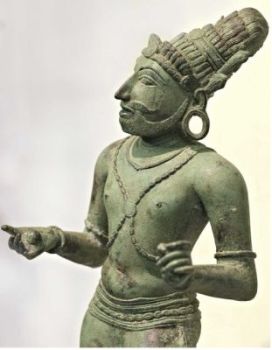
Kannappa Nayanar

Research paper written by London Swaminathan
Research article No.1448; Dated 30th November 2014.

Dasyus were Hindus but led a different life style in the forests. Vedic literature said they were the children of sage Visvamitra who went astray. Of course they were criticised by both ancient Tamil and Sanskrit literatures. Foreign “scholars” described them as aborigines which was wrong. Aitareya Brahmana, Mahavamsa of Sri Lanka, Sangam Tamil Literature, Tamil Epic Silappadikaram and Tamil Periya Purana described the life of hunters. One of the Dasyu tribes was the class of hunters/Sabaras. Another tribe known as Pulindas, who were also sons of Visvamitra, are described as the children of Yakshas in the Buddhist chronicle Mahavamsa (Chapter 7).

There is amazing similarity in the description of their life in both literatures which did not change for at least 2000 years. They did not do any fire sacrifice, but worshipped Hindu goddesses and led a rustic life. The description of the Sabaras (Eyinar or Marvar in Tamil) who were hunters and robbers in the forests is same in Tamil epic Silappadikaram. The episode described in the Tamil epic happened in the second century CE. Later Banabhatta of Sixth Century and Sekkizar of Tenth Century CE described their life. Sangam Tamil literature also described their life in various places.

Those who read the above can see the customs they followed in the forest were that of Hindus. Their “Kumari Festival” is described in detail in the Tamil epic Silappadikaram. Tamil epic gave only Sanskrit names to their goddess who rides a stag. All their dances and songs described Goddesses’ achievements including the Killing of Mahisasura (Buffalo headed Demon).

Ramayan_Sabari_EastYadavalli
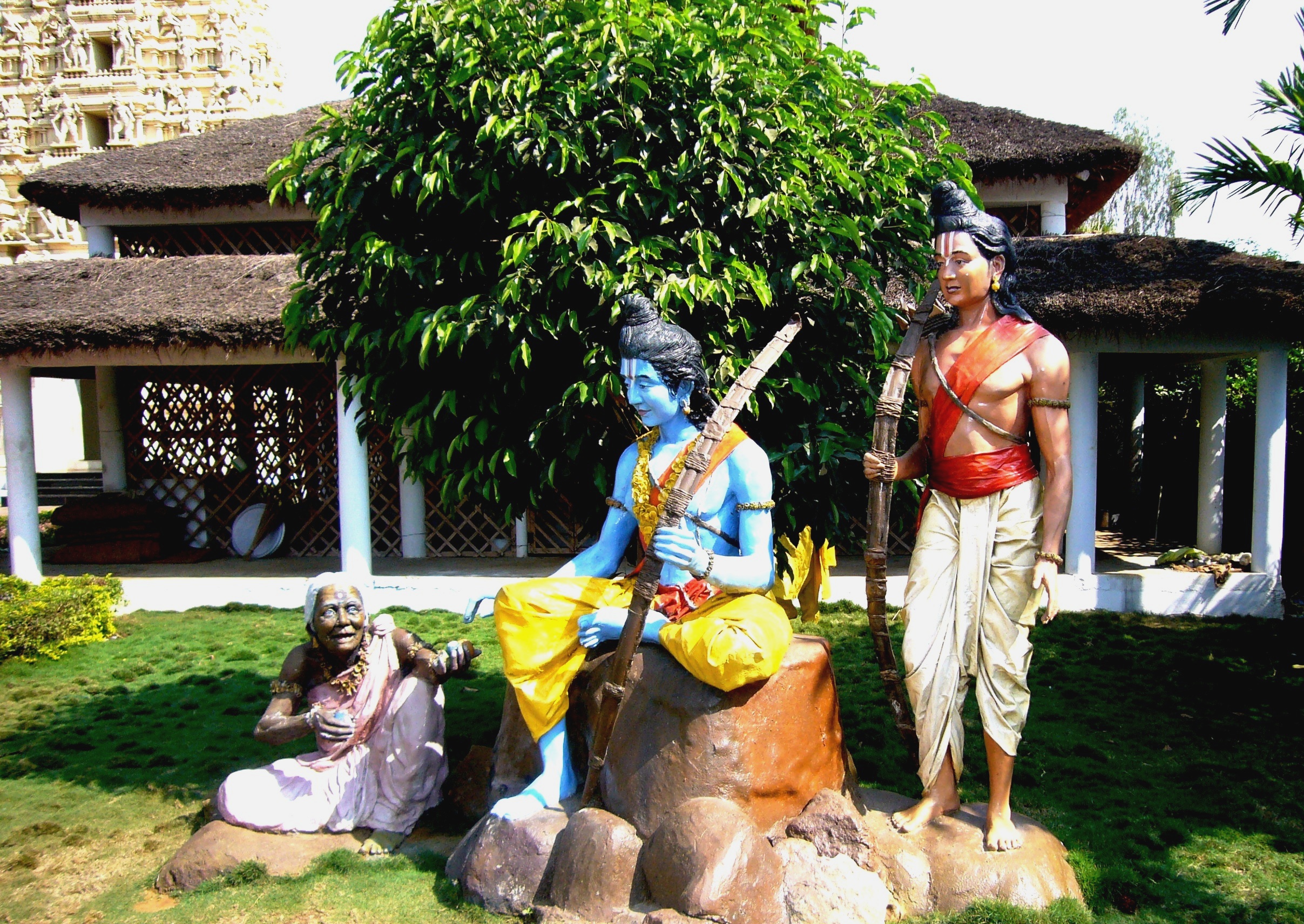
Sabari of Ramayana

They worshipped Durga and offered human sacrifice. Several statues of offering their heads with their own swords were discovered throughout Tamil Nadu and there are inscriptions confirming their sacrifice of human heads. All their songs were on goddess Durga and Mahisasura Mardhani. They followed cremation and not burial! (For details about human sacrifice and pictures, see my earlier post)

Sabaras in Aitareya Brahmana 7-8
Aandhraahaa punaindraahaa pulindaahaa muthinaahaa
Ithyuthanthyaa bhahavoo dasyunaam bhuuyishtaa ithi

Earliest reference in the Aitareya Brahmana says that the eldest sons of Visvamitra were cursed to become the progeny of the most abject races such as the Andhras, Pundras, Sabaras, Pulindas and the Mutibas.

Bhanabhattaa (606 to 648 CE) in his prose Kadambari gives a graphic description of a tribal gang, which was moving in a forest in a day to day hunting activity:-
1.”Oh they live a life devoid of knowledge
2.Their life style is condemned by the wise men
3.For example human sacrifice – to present it to the gods –is their religious devotion.
4.They eat flesh, honey etc. which is forbidden in the civilized society
5.Their physical exercise is hunting
6.Their religious texts are the cry of jackals
7.They decide good and evil from the voice of owls
8.Their intelligence lies in understanding the nature of the birds
9.Their inmates are the dogs
10.Their kingdom is the lonely forest
11.Their friends are the bows which impart the cruel deeds
12.Their supporters are the poison tipped snake like arrows
13.Their sons are those which attract to captivate the deer
14.Their wives are those women who have been captured. They had been wives of others.
15.They live with cruel animals like tigers. Hence they are as cruel.
16.They propiate their gods with the animal blood
17.Theft is their life
18.Their ornaments are the jewels of cobras
19.They use the elephant’s musth as body lotion
20.They uproot and destroy the forests where they live
ashurbanipal-lion-hunt2
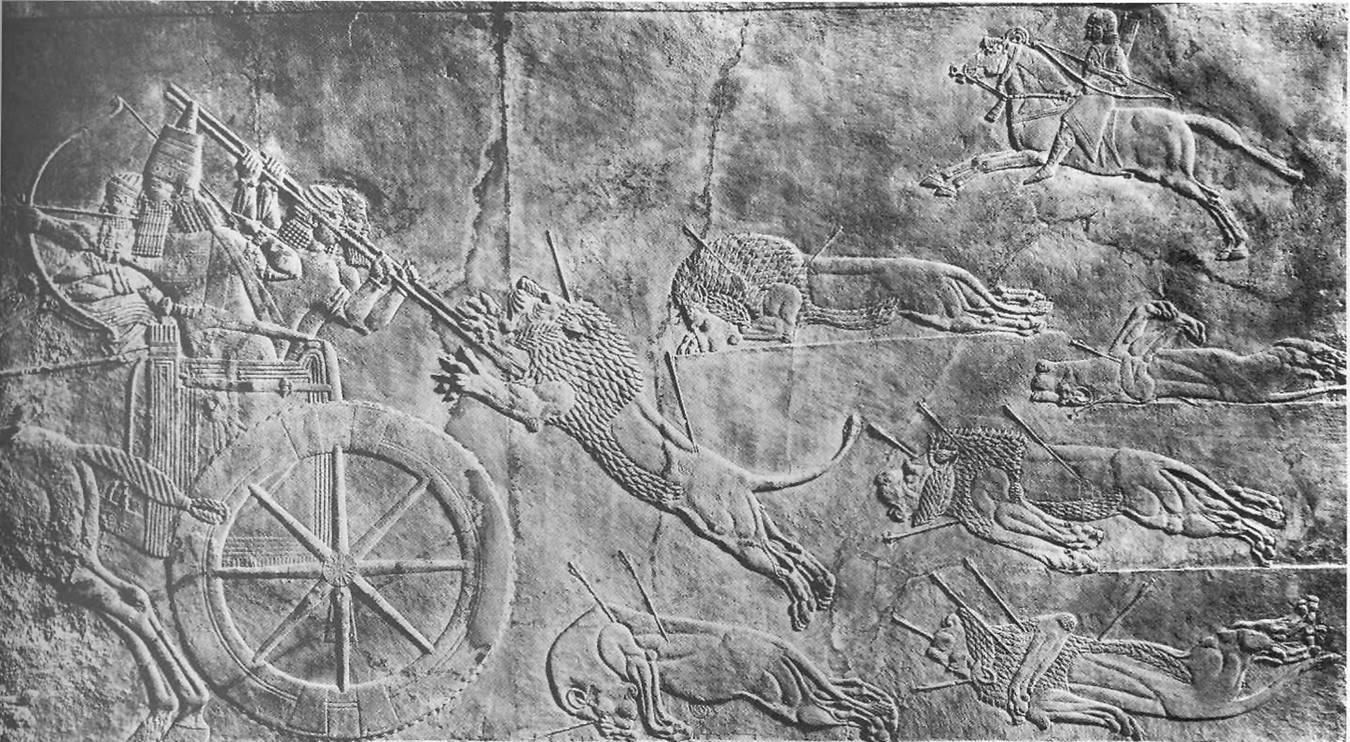
Ashura Babipala lion hunt in Assyria
In merely 20 sentences and less than 100 words – in Sanskrit —Bhanabhatta has narrated all that which the 19th and 20th centuries have narrated in voluminous books.

The chieftain’s name was Maatanga. This is the name of Shiva . Bhanabhatta says that the chieftain was an ardent believer of goddess Katyayani/Durga.

They collected from the forest hair and skin of deer and elephants tusks.
They covered their bodies with lion skin. They collected the colourful mayur puchcha or the long feathers of peacock. They pulled out the poison teeth of snakes. Probably they collected the snake poison. They collected fruits and roots of forest trees.

Source book : Tribal roots of Hinduism by Dr K S Tiwari.
KannappaNayanar
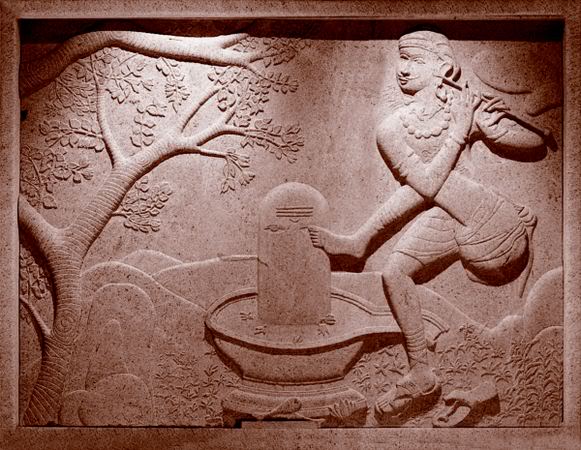
Kannappa offering his eyes

Now compare the above list given by Bhanabhatta with the information from Tamil literature summarised by Dr R Nagasamy, eminent historian and archaeologist and VR Dikshitar in his Translation of Tamil epic Sillapdikaram.

In the North they were known as Sabaras and Pulindas and in Tamil Nadu they were called Maravars and Eyinars.

1.They killed people who passed through the forests or arid lands (Puram 175)
2.They can shoot anyone without a miss. They covered the dead bodies with stones (Puram2)
3.They killed the merchants by attacking their caravans and shared the booty among themselves (Akam.89)
4.They had very long bows standing up to their shoulders (from the ground)- Akam.175
5.They are so uneducated that they will bite their bows (Akam 214) if they miss the target.
6.They had uncouth appearance with beard (Akam 297)
7.They had flesh for their food and toddy for their drinks. They never washed their hands ( Akam 297)
8. They took whatever they wanted and destroyed the rest (Puram 23)

Dr Nagasamy added the following from Periyapurana from the life story of Kannappa Nayanar, who became famous by offering his both eyes to Lord Shiva. Kannappan means who offered eyes and this is a household story in Tamil Nadu.

sabari1
Sabari of Ramayana

1.This tribes speaks a language of words with “Kill , Stab, Spear, Throw” according to Sekkizar of 10th Century CE.
2.They rob the cows (like Panis of Rig Veda) from the villages
3. They eat flesh and the worms wriggling on it.
4.They worshipped Lord Skanda and offered him Pea cocks and Cocks to Skanda.
5.They tied the teeth of tiger around the Children’s necks
6.Young boys of the hunters brought little boars, deer and tiger cubs for playing. They were their toys.
7.They had a chieftain and his son was trained in archery in a ceremony. This Bow Festival was celebrated grandly for 7 days. Sekkizar gives full details in hundreds of verses about their forest life.
8.On the seventh day of the Training/initiation ceremony the boy was initiated in to archery amidst all the fanfare . Big drums and horns were played by the tribe.

assyrian
Lion hunt

Salini’s Role as Soothsayer
9. They had a woman soothsayer by name Salini. She will give them directions about what should be offered to the goddess. She gave all the predictions when she was possessed. The old lady’s dance amazed even the cruel hunters. She advised them to give sacrifice to goddess Durga (Kotravai who rides a stag)
10.Tamil Epic Silappadikaram described a Kumari Festival inside the forest (It is a bit similar to Kumari festival in Nepal and other places). V R Dikshita summarised it from Vettuvavari of Silappadikaram:

“It was usual to select a virgin from among their community and make her appear like the goddess installed in the shrine. The virgin was taken in procession to the temple of their guardian deity and worshipped in front of the shrine, where the goddess was said to appear and approve what the damsel spoke.

The Eyinar/sabara decked their goddess with ornaments and peculiar to their mores. A tiger skin and elephant skin formed the clothing of their goddess. Similarly the teeth of tiger formed her garland. The virgin’s hair was dressed in the form of jata – the coiffure of Shiva – and ornamented with a small silver snake and a crescent like semi circular tooth from the wild hog . Her Tali/mangal sutra was a necklace made up of teeth plucked from a strong limbed tiger. Her girdle was a cleaned tiger skin. The bow in her hand was of heart wood. She was mounted upon a stag with twisted horns. The eyinar/sabara ladies followed her carrying paints, powders, cool and fragrant pastes, boiled grains, gingelli/sesame cakes, rice with meat, flowers, frankincense and fragrant scents. This was accompanied by the beating of the drum, blowing of the trumpet. The same drum and horn were used while they loot and rob caravans passing through the forest. There the virgin worshiped the goddess.

Following this, in their songs, they praised the goddess as Mahisasura Mardhani and wife of Shiva and Durga’s fight with Asuras/demons in various forms. Sanskrit names of Goddess such as Amari, Kumari, Gowri, Samari, Suli, Nili, Arya were used by Ilango, the author of the epic. Goddess was praised as Vishnu’s sister in accordance to the story in Hindu mythology. All this happened inside the deep forest of Tamil Nadu 2000 years ago!
hittite
Hittites hunting

This shows that all the foreigners’ accounts of tribes are wrong and spread with a motive. My study of all the tribes in India confirmed lot of Hindu customs. Most of their Goddess names are of Sanskrit origin.
The friendship between Guha , Sabari and Rama of Ramayana also stand as evidence that they were part and parcel of Hindu society, but living in their own way. Even in my country England, a fisherman’s life is very different from us, the Londoners. But no one called them Dasyus! A whaler in New Zealand and Japan may look like primitives for a Londoner or a New Yorker. They were not Dayus!
Mahabharata and Hindu mythology show that great people of wisdom even among butchers like Dhrmavyadha and Tuladhara. We have a saint Vyasa from the fishermen community and a Valmiki from the hunter community!
Long live Hindu Dasyus!

contact swami_48@yahoo.com

Uttishta/Arise: A Powerful Command

bhagavad-gita

Research paper written by London Swaminathan
Research article No.1441; Dated 27th November 2014.

How many times did Krishna say UTTISTHA (Arise) to Arjuna and Why?

I can count at least four UTTISTHAs in the Bhagavad Gita.

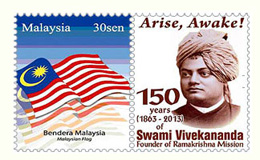
This is Swami Vivekananda’s favourite slogan as well. Arise! Awake and Stop not till the goal is reached! It is taken from the Katha Upanishad.

uttisthata jagrata prapya varan nibodhata (Katha 1.3.14) is the actual line used by Swami Vivekananda. It is a powerful command having meaning at two levels. One can follow it in the mundane world and succeed in life or in the spiritual world and attain Mukti/final release.

Of the four uttisthatas in the Bhagavad Gita, the most famous one is

uttistha! Yaso Labha! i.e. Arise and Attain Fame!! (11-33)

malaysia_stamp_vivekananda

This will serve as a good motto for any youth. But Krishna said it to Arjuna who refused to fight. Arjuna was ready to derelict from his duty but Krishna convinced him that he would not incur any sin by killing his own near and dear in the battle field.

If a judge suddenly refuses to pass death sentence on all hard core murderers or a soldier in the front line refuses to handle gun or rifle saying that it a sin to kill people, then it is dereliction of duties. Not only dereliction of duty, but also helping the anti socials to thrive.

In the second chapter Krishna urged Arjuna to shed unmanliness. He said to Arjuna, “Cast off this faintheartedness and Arise!” (2-3).
This is the best sloka of Bhagavad Gita according to Swami Vivekananda.

In the same chapter (2-37), Krishna said, “Either slain thou shalt go to heaven; or victorious thou shalt enjoy the earth; therefore Arise, resolved on battle”.

And in 4-42, the word gets its spiritual meaning:

There having cut asunder with the Sword of Wisdom this doubt in thy heart, that is born of ignorance, resort to Yoga and Arise!

(Dr S Radhakrishnan’s Translation)

AriseAwake_p

Valmiki said ‘Uttistha’!

The word uttistha is famous in other contexts as well. The most popular Suprabatham hymn in South India is Venkateswara Suprabatham sung in praise of Lord Balaji Venkateswara of Tirupati in Andhra Pradesh.

Suprabatham is the hymn sung to wake up God in the morning. But in reality it is wake up call to humanity. Only when one wants to wake up the god at 4 AM in the morning, one will get ready from 3 AM. It is considered Brahma Muhurtha in Hindu scriptures, most auspicious time to worship god or to do meditation. That is the purpose of Su+ Prabatha (Good + Morning).

Here in this Venkateswara hymn the first verse is taken from Valmiki Ramayana by the composer of the hymn Prativadhi Bhayangaram Annagracharya.

The verse goes like this

Kausalya Supraja Rama purva Sandhya Pravarthathe
Uttistha Narasardula Karthavyam Daiva Ahnikam

Uttistha Uttistha Govinda Uttistha Garuda Dwaja

O Rama! The noble son of Kausalya. The dawn in the East commences. O Tiger among men! Arise! The daily tasks are waiting to be performed.
Arise! Govinda! Holder of the Eagle Flag! Arise.

Uttistha is used by the Tamil poetess Andal In a spiritual context about 1400 years ago in her Tiruppavai. She wakes her girl friends in the morning to worship the Lord, “Arise! Get Up! Why is this long sleep?” in at least three verses (8,12, 14). She was not talking about the normal sleep and waking up, but was singing about the spiritual awakening from the slumber of ignorance.

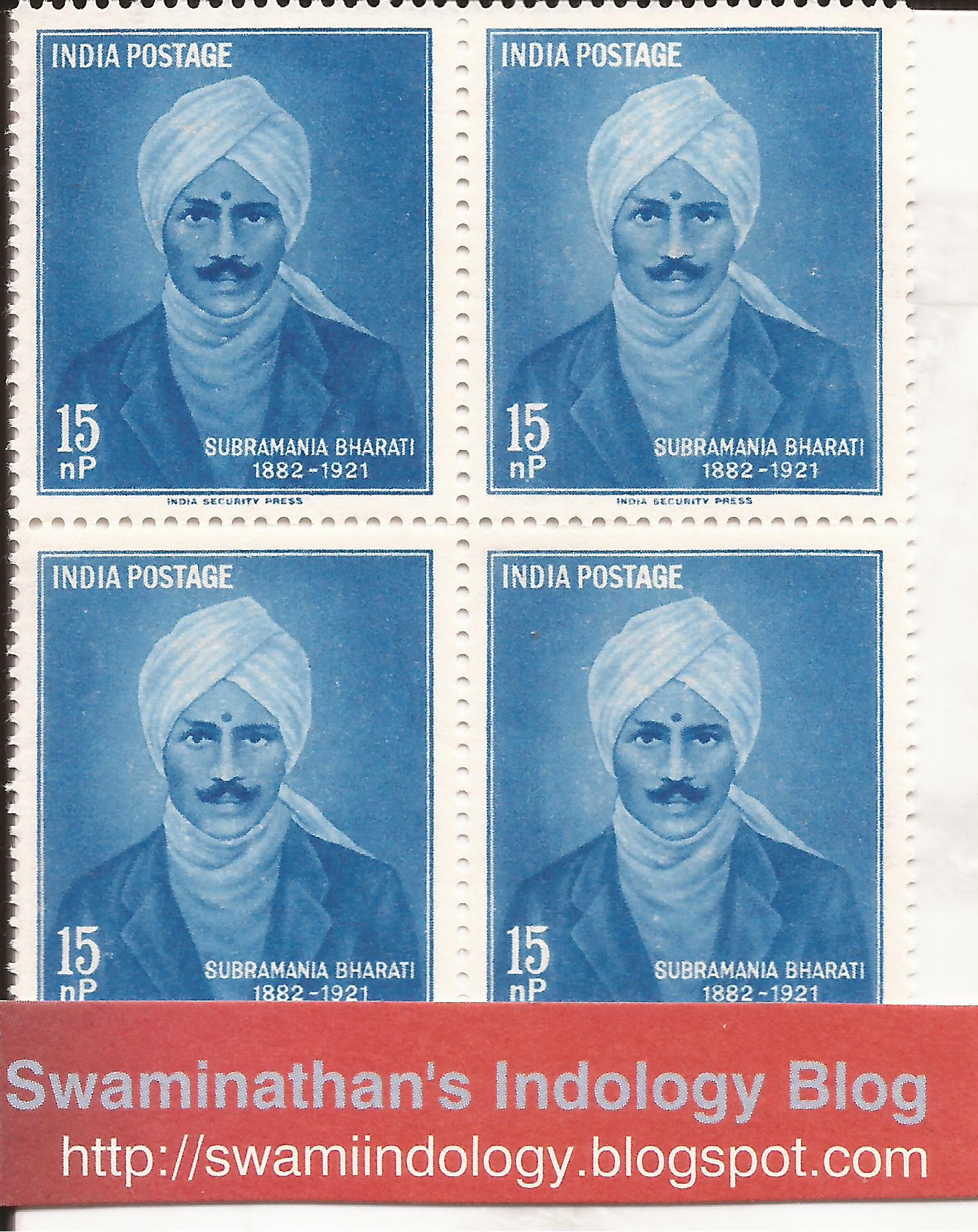
bharati stamp

Tamil poet Bharati used the same genre to wake up Bharat Mata in his patriotic song. There also he called the sleeping Indians to wake up and join the war of Independence. He addressed Mother India,

“ The day hath dawned;
Our austerities have fructified;
The vile forces of darkness have melted into thin air;
The golden beams of the morning sun illumine all over,
The sun of wisdom shines in all its splendour,
Thousands on thousands are we, your votaries
Gathered to praise you and pay you homage.
Amazing that it is still you are still asleep
Arise ,Awake,,Mother dear!

–Translation by Prof.SRK

contact swami_48@yahoo.com

Hindus’ Strange Medicines! Cow’s Urine, Tiger Teeth, Elephant’s Hair, Deer Skin….

gomutra

Hindus’ Strange Medicines! Cow’s Urine, Tiger Teeth, Elephant’s Hair, Deer Skin, Tiger Skin, Dharba Grass, Fox Face, Water Pot, Elephant poo, Cows’ poo!

Research paper written by London Swaminathan
Research article No.1437; Dated 25th November 2014.

1.My father used to do meditation sitting on a deer skin. First he started with a tiger skin. Then he changed to deer skin. People told him that tiger skin is not fit for family men. It will make one angry. Why?

2. My mother used to wash our oven and kitchen area with cow’s poo (cow dung) every night. Why?

Cow-Urine

3. My sister used to sprinkle cow’s poo mixed with water on the ground in front of the floor every morning and then decorate the floor with some geometrical designs without any instrument. It is called Kolam in Tamil and Rangoli, Alpna in other languages. Why?

All this happened in Madurai,my home town in Tamil Nadu.

4.When I was asked to wear the sacred thread, for being born as a Brahmin, they tied a deer skin in my sacred thread. They tied some grass around my waist. Why?

5.When my friend was a little boy they hung a tooth of a tiger in his chain around his neck. Why?

OLYMPUS DIGITAL CAMERA
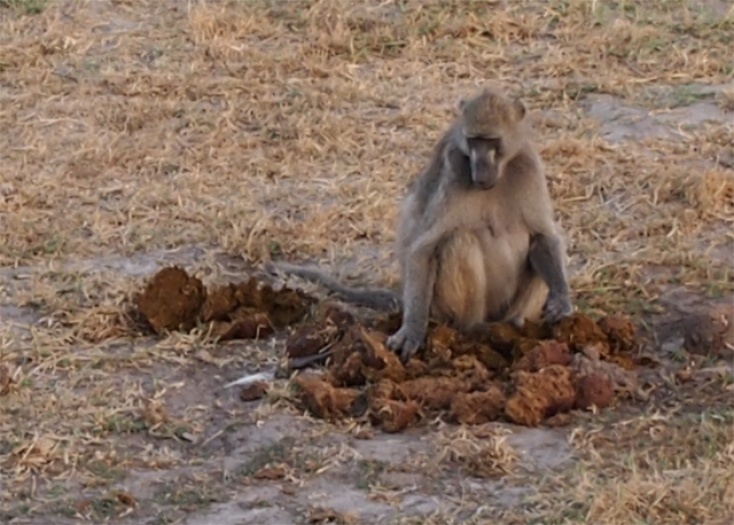
Baboon eats elephant poo in Africa

6.When my wife was pregnant the priest brought the thorn of a porcupine and drew a line on her head. Why?

7.When I was a boy, the temple elephant used to come once a week through our streets and when it excreted on the road we children used to run to the road and stamp on the elephant poo. Even old ladies with chilblain used to join us. Why?

8.When I went to Guruvayur, the most famous shrine of Krishna in Kerala, the mahouts of the elephant sanctuary were selling secretly the hair from the tail of the elephants. People were exchanging money with them for the hair. Why?

selous-game-reservesmoking elphant poo
(In Tanzania (Africa) they smoke elephant dung

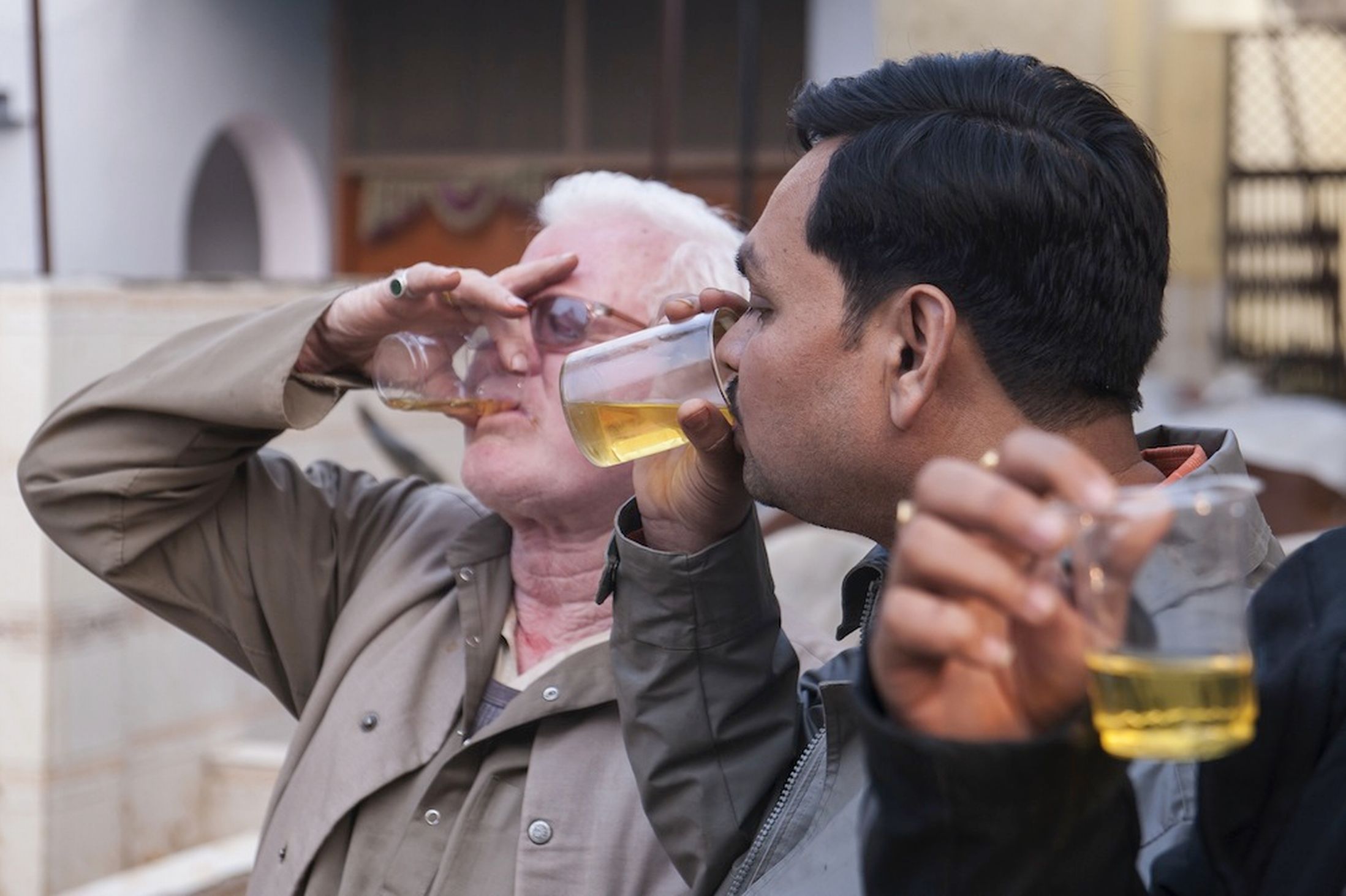
9.When I wore the sacred thread, the priest asked me to eat in very small quantity Panchagavya (five products from a cow including cow’s urine, cow’s poo, milk, curd/yogurt and butter). At that time I thought it was disgusting. Not anymore. Why?

10. I lived in the street of Yadava community in Madurai. People used to sprinkle cow’s urine on their heads and drink a small quantity whenever the cows urinated. Why?

11.We are asked to wear Dharba grass on our ring finger every time we do some ritual. Why?

12. In London, where I have been living for the past 28 years, a lot of foxes visit our garden. All Tamil Hindus are very happy to see it in the morning like we see Garuda (eagle with white neck) in the morning in India. Hindus think it is lucky to wake up in front of a fox. Why?
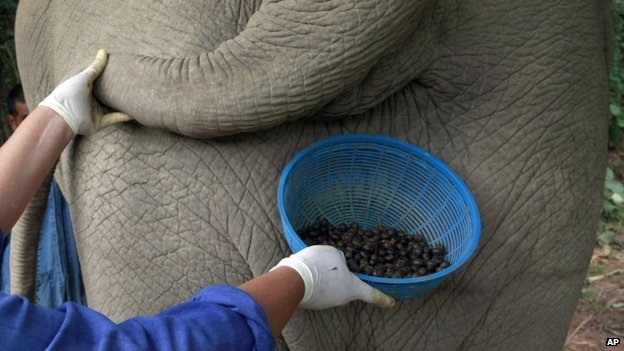
coffee elephant poo
Elephant poo coffee is very expensive

13. All the ancient sages and seers always carry a water pot in their hand. They believed in the magical qualities of water. They can give a boon or a curse with water.Why?

I can add hundred more customs like this. For all the ‘Why’s, I will give a one word answer: Hindus are children of nature. They knew the value of natural products. If someone says that something is a medicine they don’t bother until one falls sick. But if someone says it is mandatory in your religion, if you don’t do it you will incur sin, then you do it without questioning. Most of the products mentioned above have got some medicinal properties or may be placebo effect.

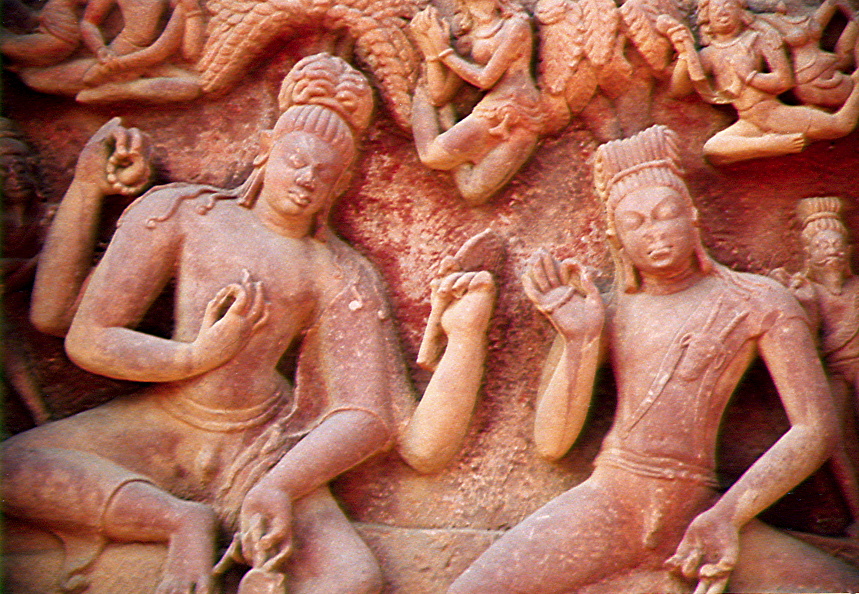
Nara_Narayana_Deogarh (1)
Deogarh Gupta staues of Nara Narayana with deer image on chest

Animal skins: deer skin will give one satva guna (good virtues without anger, Tiger skin will give you focus and concentration. Whatever you target you will ‘’kill’’, i.e. you achieve.

Poos of elephant and cow: They have medicinal properties. The greatest discovery of Hindus is cow. This is their gift to humanity. They use all their excretions: Urine, Poo, Milk and other dairy products. More than the protein and other essential nutrients in the milk, the urine and poo have got anti bacterial properties. Seers and sages simply survived with cow’s products. That is why Hindus worship cow as mother until today.

Dharba, grass, Tiger’s tooth or Tiger nail: No scientific study was done other that the effect of Dharba (kusa Grass) during eclipse. It is good some university does study it and reveal the secrets. I have read one or two things about theg ood qualities of the Dharba grass. But we need scientific proof with the date and the people who did the research and the name of the university. Whatever I have read so far was without proof.

cow urine cola

The poos of all animals are stinking and found with worms and germs. But the poo of an elephant or a cow never stink. Hindus have been using it for thousands of years without any bad side effect. African people use it. They smoke cigarettes and baboons eat them. Recently they have invented elephant poo coffee beans. Please read my earlier article on most expensive coffee.

Using porcupine thorn on the head of a pregnant lady will give her a healthy male child is the belief of Hindus. But we have to study it in the labs.

Village folk in Tamil Nadu strongly believe that the parts of tiger such as tooth, nail will instil courage, fearlessness, fortitude and steadiness. Tamil epic Silappadikaram and Tamil Saivite Purana Periapuranam describe the custom of wearing tiger tooth. But I don’t know any scientific proof for the medicinal qualities of elephant’s hair from the tail. Kerala people strongly believe that it wards off evil.

elephant-poo-11
For certain reason Hindu Law giver Manu also gave over importance for a certain type of deer. He says that where the black antelope ranges by nature, that should be known as the country fit for sacrifices ( Yagas and Yajnas); and beyond it is the country of Mlecchas (Manu 2-23).

Mlecha is used in Tamil literature for foreigners like Arabs, Romans and Yavanas. Brahmins wear the skin of that particular (Krishnasaram) deer in their sacred thread and it is called Krishnajinam.
These beliefs may look strange for westerners. But for people living in natural surroundings, many of these are not new. As long as you respect nature, nature cures your maladies! Give and take is Nature’s policy!
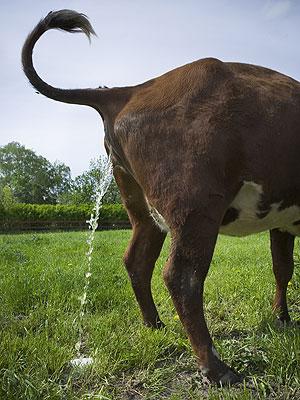
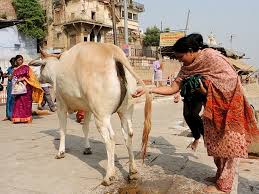
cow urinating
Cow’s urine is used by all Hindus.The most purifying thing like Ganges water.

contact swami_48@yahoo.com

Alexander’s Horse and Dog

alexander dog

Research paper written by London Swaminathan
Research article No.1434; Dated 24th November 2014.

Alexander’s dog Peritas and horse Bucephalous are as famous as Alexander the Great. He has immortalised them by naming some cities after his dog and his horse. The city named after his horse is in Pakistan. Historians have identified three or four places on the banks of River Jhelum. Plutarch, Periplus the Erythrean Sea and Pliny give several stories about his dog and horse. He used the same horse to travel from Greece to India. It helped him to travel several thousand miles, but it died of injuries after the battle of Hydaspes in 326 BCE. His horse was 20 year old when it died. The name Bucephalous means ‘’the bull headed or courage like a bull’’.

There are several stories about his dog Peritas. It was given to him by an Indian king. The dog was so courageous that it killed a lion and an elephant according to Greek writers. Alexander named one of the cities after Peritas.

Greece 1956 1000 Greek Paper Money Banknote

But I wonder who taught the world to treat the animals as our own dearest friends. And who taught the world to give them beautiful names? Hindus taught the world to treat them as their friends and companions for life. The oldest reference to a dog occurs in the oldest book in the world The Rig Veda. Sarama, the hound of Indra and her two sons Sarameyas are mentioned in the Rig Veda 7-55-2 and later in 10-108. Greeks borrowed this episode from Vedic Hindus and named it Hermes (S=H) in their literature.

Next episode comes in the Mahabharata where a dog accompanied Yudhistra to the heavens. He refused to enter the heavens without the dog.In both cases Dog is associated with Yama, the god of death. So we taught the world to give them pet names such as Sarama and Sarameyas. Unfortunately we lost the name of Yudhistra’s dog.

macedonia

Tamil inscriptional Evidence

Tamil inscription names a dog called Kovivan. Mahendra Pallava’s Eduthanur Hero Stone inscription praised Kovivan that died with his master in the battle. This Tamil inscription belongs to sixth century CE. The story which began in 1700 BCE in the Vedas continued up to sixth century CE. If we accept Kaliyuga date then Dharma’s dog (Yudhitra’s dog) lived around 3100 BCE. Tamil Sangam literature praised Last Seven philanthropists. One of them was Kari. He had a horse in his own name.

Among the horses the most famous horse was Uchchaisravas which was praised by Krishna in the Bhagavad Gita. It came out of the milky ocean when it was churned. Two days ago John Hopkins University confirmed that horse originated In India 54 million years ago. So we get proof for the oldest horse in the world Uchhasravas. Now we know where from the civilized world got these naming ideas. It is we who gave them the idea of naming the pets.

But the best proof comes from the stories of elephants. From the Vedic literature we know the elephant Airavata that came out of Milky ocean. It became Indra’s vehicle later. The other elephants mentioned in our literature are as follows:
Seleucos_I_Bucephalos_coin

Krishna Tamed an elephant called Kuvalayapeetam
Asvattama was the elephant that changed the course of Mahabharata War.
Pinimukam was the elephant of Lord Murugan according to Sangam literature.
Ashta dik gajam = Eight elephants guarding the eight directions have their own names in Hindu literature.
Buddha tamed an elephant called Dhanapala.
Udayana tamed an elephant called Nalagiri.
Chandraleka was the name of an elephant in the Sanskrit drama.
Stamp_Greece_1968

So we can be proud of teaching the world to name the pet animals suitably. We raised the animals with loving care and others followed us.

Contact swami_48@yahoo.com

All the pictures here show Alexander and his horse.

160 Kings in Rig Veda!

four veda names

Research paper written by London Swaminathan
Research article No.1432; Dated 23rd November 2014.

Rig Veda ,the oldest book in the world, has got at least 160 names of kings. Foreign scholars have different meanings for each word and never agree about the meaning. Sometimes they go to the extent of calling the name of a king as a demon!
Shrikant G Talageri in his book The Rig Veda, a Historical Analysis, give 11 kings in one dynasty alone – Bharata Dynasty in the Rig-Veda:–

1.Bharata
2.Devavaata
3.Srnjaya
4.Vadhryasva
5.Divodaasa
6.Pratardana
7.Pijavana
8.Devasravas
9.Sudaas
10.Sahadeva
11.Somaka

He says that they are not necessarily in succeeding generations, since it is possible that there are many intervening generations of kings who are not named in the Rig-Veda.
These kings might have covered a period of at least 500 years or so with the interregnum. There is another dynasty:

Trksi Dynasty
Mandhata
Purukutsa
Trasadasyu
Trasadasyu Purukutsa
Trasadasyava
XIR68327
Egyptian King and Rig Vedic King

I want to compare two names, but I don’t want to draw any conclusion at this stage:
Narmara occurs only once in the Rig Veda (2-13-8).
Ludwig regards the word as the proper name of the prince of a fort, Urjayanti, but Roth as that of a demon.
Griffith translation goes like this,
“Who broughtest Narrmara with all his wealth, for sake of food, to slay him that the fiends might be destroyed”.

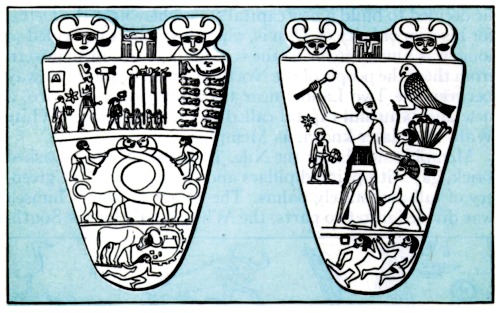
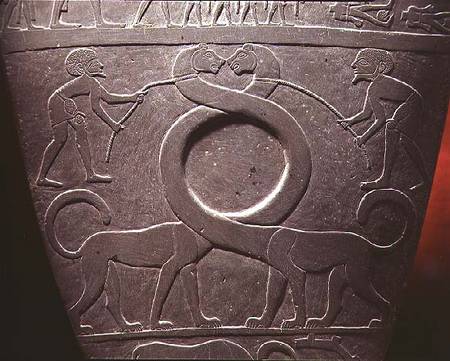
The first king of Egypt is called Manu (Menes). His other name is Narmara (Nara Meru). His picture shows him as a strict king punishing his enemies. He also started ruling around 3100 BCE, beginning of the Kali Yuga. He may be the king mentioned in the Rig Veda. Alternately the might have used the names Manu, Narmara etc from the Vedas. His son’s name is Aha which is also in Amarakosa as Gandharva singer. So all the words connected with this person are Sanskrit words: Manu, Narmara, Aha. Narmer is also appearing with some strange creatures/ serpopods. Note the word fiend in the above Vedic hymn. Another striking resemblance is Ur-jayanti. It may be compared with the Ur of Sumer. Since these words occur only once in the Rig Veda, scholars have different interpretations for the words as well as the hymns.
palette_of_narmer
Palette of Narmer, Egypt

Since Rig Veda is the closest in time and materials to the Indus Valley civilization, it is important that we preserve every bit of all the four Vedas and do proper, unbiased research.

Following is the list of Vedic kings collected from various sources. Some are the names of tribes, but they had their own chieftains or kings:–
A
ABHYAVARTIN, AJAS, ALINAS, AMBARISHA, ANAVA, ANHASA, ANU, API, AVLAN, AYU
B
BALBHUTHA, BHAGERATHA, BHALANAS, BHAYAMANA, BHEDA, BOJA
C
CHAIDYA, CHAYAMANA, CHEDI, CHITRARATHA
D
DARBHYA, DASHADYU, DASARAJA, DASONI, DEVAVAN, DEVAVRATA, DHVANYA,DHVASARI, DIRGANITHA, DROPKRISHNA, DRUH, DRUHYU, DUHASU,DUHSIMA, DURGAHA, DYOTANA
E
EMUSHA
G
GAIRIKSHITA
H
HARAYANA, HARISCHANDRA
I
IKSHVAKU, ISHTAHWA

NarmerPalette
K
KAKUHA, KASU, KARURAYAN, KIKATA,KSHABAVAN, KSHATRASRI, KUNDAPAVYU, KURUNGA
L
LAKSHMANA
M
MANYAMANA, MAYAVA, MITRATHITHI, MITRAYU INDROTA
N
NAHUS, NAHUSHA, NAM, NARMARA, NINDITASVA, NITOSHA
P
PAIJAVANA, PAKASTHAMAN, PAKTHA, PARAMJAYA, PARSU, PASADHYUMNA
PERUK, PITHINAS, PLAYOGA, PORUKUTSA, PRADAKUSANU, PRAMAGANDA
PRAJAPATHI, PRASTOKA, PRATARDHANA, PRATARDAS, PRATHAVANA
PRATHUSRAVAS, PRISHADVANA, PURAJA, PURAYA, PURODAS, PURU
PURUKUTSA, PURUPANTHA

R
RAMA, RATHAHAVYA, RATAVITI, RATHAPROSTHAS, RIJIASVA
RIKSA, RUMA, RUNACHAYA

talageri good

S
SAHADEVA, SAHAVASU, SANDA, SANTANU, SAPYANAMI, SATRI, SAVISTHA
SIGRUS, SINJARA, SIVAS, SMADIBHA, SOBHARI, SOUDASA, SRINGAVRISHA
SRINJAYA, SRUTARATHA, SRUTARVA, SUDASA, SUNITHA, SURADEVA,
SURADHAS, SUSAMAN, SUSHRAVAS, SVANA DRATHA, SVARNARA,SVASNA
SVAITREYA, SYAVAKA, SYAVATANA

T
TARANTA, TARUKSHA, TIRINDRA, TRAITANA, TRIKSHI, TRISKY, TUGRA, TUJI, TURVAYANA
TUTUJI
U
UKSANYAYANA, UPAMASRAVASA, USINARANI
V
VAIDADASVI, VAIKARANA, VAITARANA, VAMRAKA, VARASIKA, VAYATA
VAYYA, VESA, VETASU,VIBINDHU, VIDATHIN, VIRKA, VISANINS,VISVAMITRA
VRICHIVAN, VRISHAKAPI

Y
YADU, YAKSUS, YAYATI
YUDHYAMADHI

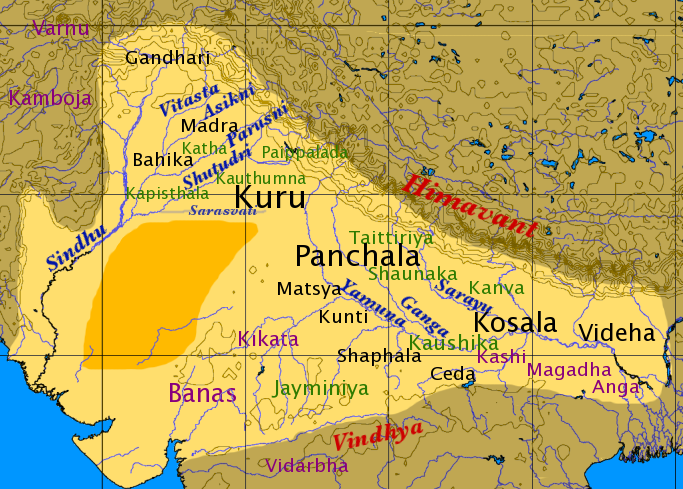
Map_of_Vedic_India

Contact swami_48@yahoo.com

உபதேச மந்திரப் பொருளாலே உனை நான் நினைந்து அருள் பெறுவேனோ!

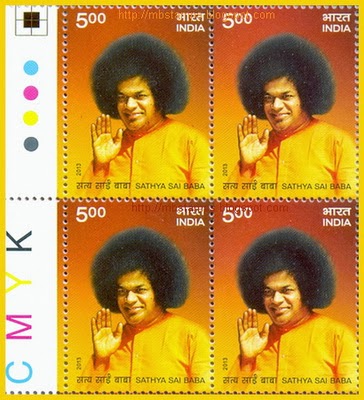
blessing baba

கலியுக அவதாரம் ஸ்ரீ சத்ய சாயி பாபாவின் ஜயந்தி தினம் நவம்பர் 23ஆம் தேதி. அதையொட்டிய சிறப்புக் கட்டுரை இது.
Post No. 1425 dated 21st November 2014
Written by S Nagarajan

உபதேச மந்திரப் பொருளாலே உனை நான் நினைந்து அருள் பெறுவேனோ!

By ச.நாகராஜன்
கல்வி அனைத்தையும் ஒரே வார்த்தையில் சுருக்கி விடலாம்! அன்பு, அனைத்தையும் தழுவும் அன்பு!அன்பில்லாத வாழ்க்கை சாவை விடக் கொடியது! –பாபா

பாபாவின் உபதேச உரைகள்
ஸ்ரீ சத்ய சாயி பாபாவின் அவதார தினமான நவம்பர் 23ஆம் தேதியன்று இறைவனின் சாந்நியத்தில் பல காலமாக புட்டபர்த்தி கோலாகலமாகத் திகழ்ந்து வந்ததை அணுக்க பக்தர்கள் அனைவரும் அறிவர்.

பகவானின் கையினாலேயே லட்டு பிரசாதத்தை ஏற்று மகிழ்ந்தோர் லட்சக் கணக்கில் உள்ளனர். அவர்கள் தங்களின் பாக்கியத்தை நினைந்து மகிழும் போதே இந்த அவதார தினத்தில் அவர் பூதவுடலுடன் நம்முடன் இல்லையே என்ற ஏக்கத்தையும் அடைவது இயல்பே!

ஆனால் பகவானின் கடந்த கால அருளுரைகளை நோக்கினால், அவர் தனது உபதேச உரைகளை பக்தர்கள் அனைவரும் திருப்பித் திருப்பி மனதில் ஏற்று கற்று அதன் படி நிற்பதையே விரும்பினார் என்பதை அறிவோம்.

சத்யம் சிவம் சுந்தரம் நான்கு பாகங்களில் அவர் வரலாற்றை விளக்கும் போது ‘சத்ய சாய் ஸ்பீக்ஸ்’ (சுமார் 42 தொகுதிகள்) அவரது உபதேச உரைகளை அள்ளித் தருகிறது.

baba and hanuman

புத்தி என்னும் பறவை
உபநிடதத்தை பாபா விளக்கும் பாங்கே தனி! அது இறைவனின் விளக்கமாயிற்றே!ஒரு உதாரண விளக்கத்தை மட்டும் இங்கே காணலாம்:

பத்து உபநிடதங்களில் ஒன்றான தைத்ரீய உபநிடதம் புத்தியைப் பறவையாக விவரிக்கிறது. ‘ச்ரத்தா’ அதனுடைய தலை. அதனுடைய வலது இறக்கை ‘ரிதம்’ – பிரபஞ்ச லயம். அதனுடைய இடது இறக்கை ‘சத்யம்’ – உண்மை. பறவையின் பிரதான உடல் ‘மஹத் தத்வம்’ – பேருண்மை. அதன் வால் யோகா. இப்படி ஐந்து பகுதிகளை அதன் முழு வடிவத்தில் கொண்டுள்ள புத்தி அசாதாரணமான சக்தியைக் கொண்டதாகும்.

ச்ரத்தையே முக்கியம்

இப்படி உபநிடதத்தை விளக்கும் பாபா ஒரு சிறிய கதையையும் கூறுகிறார் இப்படி:
ஒரு முறை விக்கிரமாதித்த மஹாராஜா பண்டிதர் சபையைக் கூட்டி ச்ரத்தா, மேதா, புத்தி இந்த மூன்றில் எது மிகவும் முக்கியமானது என்று கேட்டான்.ஒவ்வொருவரும் ஒவ்வொரு பதிலைக் கூறவே குழப்பம் தான் நிலவியது. இறுதியில் ஒருவாறாக சமாதானம் அடைந்த அவர்கள் ஒரு மனதாக மேதா – அதாவது திறமை தான் மிக முக்கியமானது என்று தங்கள் முடிவைத் தெரிவித்தனர். ஆனால் விக்கிரமாதித்தனோ மிகவும் ஏமாற்றம் அடைந்தான்.

பண்டிதர்களை நோக்கி அவன், “ஓ! பண்டிதர்களே! ஆஸ்தா என்றால் ஆசக்தி . ச்ரத்தா என்றாலோ மிக்க உற்சாகம், நம்பிக்கை ஆகும். ஸ்வஸ்தா என்றால் ஸ்திரத்வம் அதாவது உறுதி. ஆசக்தியும் ஸ்திரத்வமும் இல்லாத மேதா பயனற்றது. தன்னுடைய திறமையையும் புத்திசாலித்தனத்தையும் மட்டுமே நம்பும் ஒருவனின் வாழ்க்கை குறிக்கோள் உடைய வாழ்க்கையாக அமையாது. அவன் மிக்க உற்சாகத்துடன் நம்பிக்கையையும் திட உறுதியுடன் கொண்டிருக்க வேண்டும். அப்படி இருந்தால் தான் அவன் பெரிய காரியங்களைச் சாதிக்க முடியும். ச்ரத்தை மிகவும் முக்கியமானது. அது இல்லாமல் எதையும் சாதிக்கவே முடியாது. ச்ரத்தை இருந்தது எனில் சிறு தீப்பொறி உங்களிடம் இருந்தாலும் அது ஊதி விடப்பட்டு பெரும் ஜுவாலையாக ஆகி விடும். ச்ரத்தை இல்லை எனில் தீ ஜுவாலையே உங்களிடம் இருந்தாலும் அது அணைந்து விடும். அதே போல ச்ரத்தை இருந்தால் ஒரு சிறிய விதையைக் கூட ஆலமரமாகப் பெரிதாக்க முடியும்.”

விக்கிரமாதித்தனின் இந்த விளக்கத்தால் பண்டிதர்கள் தெளிந்தனர். இதை விளக்கிய பாபா இன்றைய நாளில் விஞ்ஞானமும் தொழில்நுட்பமும் மிகவும் வளர்ந்து விட்டாலும் கூட ஆன்மீக முன்னேற்றமும் அதனுடன் இணைய வேண்டும் என்று அறிவுறுத்தினார்.
baba stamps

உபநிடதம் விளக்கும் புத்தி

“புத்தி மேதாவை விட வலிமை வாய்ந்தது. புத்தி என்பது சாதாரணமாக விளக்கப்படும் புத்தி கூர்மை மட்டும் அல்ல. அது அமைதியுடன் கூடிய ஆஸக்தி (உற்சாகம், நம்பிக்கை) மற்றும் ஸ்வஸ்தாவைக் (ஸ்திரத்வம், உறுதி) கொண்டதாகும். இந்த புத்தியானது ரிதம், சத்யம்,யோகா, மற்றும் மஹத் தத்வத்தால் பெரிதும் வளமடைகிறது.”

இப்படி உபநிடத ரகசியத்தைக் காலத்திற்கேற்றவாறு எளிமையாக விளக்கி நம்மை “புத்திசாலியாக” ஆக்க பாபா விழைகிறார்.

பாபாவின் கணக்கு சற்று வித்தியாசமானது.

மனிதனின் அறிவு ஐந்து வகைப்படும் என்று கூறி அதை விளக்கும் பாபா ஒரு விசித்திரமான கணக்கையும் தருகிறார். மூன்றிலிருந்து ஒன்றைக் கழித்தால் வருவது ஒன்று என்பது தான் அது! (3-1=1 !!)

இன்றைய நாட்களில் எல்லோரிடமும் பெரிதும் காணப்படுவது புத்தக அறிவு (book knowldege). இதைப் பெறுவதற்காக அரிய வாழ்நாளில் பெரும் பகுதியை வீணாக்குகிறோம். இதைப் பெறவே நம் நேரத்தைச் செலவழிப்பதால் பொது அறிவும்(general knowledge) இயல்பான அறிவும் (common sense) இல்லாமல் போய் விடுகிறது. இவை இரண்டையும் சமூகத்தில் சேவை செய்வதால் மட்டுமே பெறலாம். விஷயத்தைப் பகுத்துப் பார்க்கும் (discrimination knowledge)அறிவு நான்காவதாகும். இதுவோ இன்றைய நாட்களில் சுயநலத்திற்காகப் பயன்படுத்தப்படும் ஒன்றாக ஆகி விட்டது. சுய நலத்தை விட்டு விட்டு லோக க்ஷேமத்திற்காகப் பயன்படுத்தப் பட வேண்டிய அறிவு இது.

baba young

சாதாரண எண் கணிதத்தில் கூறப்படுவது போல் அல்லாது ஆன்மீக கணிதத்தின் படி மூன்றிலிருந்து ஒன்றைக் கழித்தால் வருவது ஒன்றாகும்! (3-1=1) கடவுள், மாயை, பிரபஞ்சம் ஆகிய மூன்றினுள் கடவுளே ‘இருக்கின்ற பொருள்’. மாயை கண்ணாடி. பிரபஞ்சம் கடவுளின் பிரதிபலிப்பு. கண்ணாடியை அகற்றி விட்டால் மாயையும் இல்லை, பிரபஞ்சமும் இல்லை. கடவுள் மட்டுமே இருக்கிறார். ஆகவே மூன்றிலிருந்து (கடவுள், மாயை, பிரபஞ்சம்) ஒன்றைக் (மாயையை) கழித்து விட்டால் மாயையும் பிரதிபலிப்பான பிரபஞ்சமும் போய், மிஞ்சுவது கடவுள் தான்!

இதை சுலபமாக அனைவராலும் அறிய முடியவில்லை. ஏனெனில் அவர்களிடம் ஐந்தாவது வகையான ப்ராக்டிகல் நாலெட்ஜ் எனப்படும் அனுபவ ஞானம் இல்லை. இதை ஒவ்வொருவனும் அடைவது அவசியம்.”

baba alert

பாபாவின் விளக்கம் நம் சிந்தனையைத் தூண்டுகிறது.
இப்படிப்பட்ட ச்ரத்தா, மேதா,புத்தி மற்றும் ஐந்து வகை அறிவினாலும் எதை அடைய வேண்டும்! இறைவனைத் தான்! இறைவனோ அன்பு மயம்!

எப்படி சூரியனையும் சூரிய கிரணங்களையும் பிரிக்க முடியாதோ, கடலையும் அதன் அலைகளையும் பிரிக்க முடியாதோ அதே போல கடவுளையும் அன்பையும் பிரிக்க முடியாது.

ஆகவே ஜகம் முழுதும் அன்பைச் செலுத்துங்கள். சாயி உங்கள் வயப்படுவான். ஏனெனில் சாயியும் ப்ரேமையும் ஒன்றே தான்!

சாயியின் மொத்த உரைகளின் சாரத்தையும் எடுத்துப் பார்த்தால் ஒவ்வொரு நாளையும் “அன்பில் ஆரம்பி. அன்பில் வழி நடத்து; அன்பில் முடி” என்பது தான்!

இந்த அன்பு மந்திரமே சாயி மந்திரம்.
உபதேச மந்திரப் பொருளாலே உனை நான் நினைந்து அருள் பெறுவேனோ என்று உளமார நினைந்து அன்புருவாம் சாயியை வணங்கிப் போற்றுவோம்! அவன் அருளைப் பெறுவோம்!!
baba smile

This is written by my elder brother S Nagarajan for the Tamil Magazine ஞான ஆலயம்- — London Swaminathan.

******************************
contact swami_48@yahoo.com