தொல்காப்பியர் காலம் தவறு–பகுதி 2

(முதல் பகுதியைப் படித்துவிட்டு இதைப் படிக்கவும்: லண்டன் சுவாமி)

1.தொல்காப்பியத்தில் கடவுள் வாழ்த்து இல்லை. இதை அடுத்து வந்த குறள், சிலப்பதிகாரத்தில் மங்கல வாழ்த்தோ கடவுள் வாழ்த்தோ உண்டு. ஐந்தாம் நூற்றாண்டில் சிதறிக்கிடந்த பாடல்களை எல்லாம்– வியாச மாமுனிவன் வேதத்தைத் தொகுத்தது போல —பாரதம் பாடிய பெருந்தேவனார் முதலியோர் தொகுத்தபோது அதில் கடவுள் வாழ்த்தை இணைத்தனர். தொல்காப்பியர் அதற்கு ஒரு நூற்றாண்டு முந்தியவராக இருக்கலாம்.

2.இந்த நூலை ஒட்டி வளர்ந்த சொற்களான சூத்திரம், காப்பியம், அதிகாரம் ஆகியன வட மொழிச் சொற்கள். சங்க இலக்கியத்தில் 27,000+ வரிகளில் காண முடியாதவை. புலவர் பெயரில் மட்டும் ‘காப்பிய’ உண்டு. ஏனெனில் அவர்கள் காப்பிய (உஷனஸ் மஹா கவியின் காவ்ய கோத்திரம்) கோத்திரத்தைச் சேர்ந்த பிராமணர்கள்.

3.ஒல்காப் புகழ் தொல்காப்பியன் என்று பிற்காலத்தில் புகழப்பட்ட பேரறிஞரைப் பற்றி சங்க இலக்கியத்தில் ஒரு குறிப்பும் இல்லாதது ஏன்? இவருக்கு முன் இலக்கியம் இருந்தால் அவை யாவை? அழிந்த நூல்கள் பட்டியலில் நூல்கள் பெயர்களில் சம்ஸ்கிருதச் சொற்கள் அல்லவா இருக்கின்றன! மேலும் தொல்காப்பியர் காலத்தவராகக் கருதப்படும் பனம்பாரனார் போன்றோரின் தமிழ், எளிய தற்காலத் தமிழாக இருக்கிறதே! மொழி இயல் ரீதியில் இவர்களை மிகவும் முன் போட முடியாதே. மேலும் முதல், இடைச் சங்க புலவர் பாடல்களும் சங்க இலக்கியத் தொகுப்பில் இருக்கின்றன. அவைகளின் நடையைப் பார்க்கையில் மூன்று தமிச் சங்கங்களும் 200  அல்லது 300 ஆண்டுகளுக்குள்தான் இருந்திருக்க வேண்டும்.

(எனது ‘ 3 தமிழ் சங்கங்கள் உண்மையா கட்டுக் கதையா?’ Three Tamil Sangams: Myth and Reality என்ற கட்டுரையில் மேல் விவரம் காண்க)

4. தொல்காப்பியனாரின் ஒரு சாலை மாணாக்கரான பனம்பாரனார் பாட்டிலும் ஆதிரையாரின் சிறப்புப் பாயிரத்திலும் வடமொழி சொற்களும் (அவையம், உலகம்), பிற்காலக் கருத்துகளும் இருக்கின்றன. தமிழ் கூறும் நல் உலகம் வேங்கட மலைக்குள் சுருங்கி விட்டதை மாமுலனார் போன்ற புலவர்களும் வேங்கடத்துக்கு அப்பால் உள்ள நாடுகளை ‘மொழி பெயர் தேசம்’ என்று குறிப்பிடுவர். ஆகையால் ஏறத் தாழ ஒரே காலத்தைப் பற்றி அல்லது மாமுலனாருக்குப் பிந்திய காலத்தைப் பற்றியே சிந்திக்க வேண்டி இருக்கிறது.

5. தொல்காப்பியர் 68 இடங்களில் பயன்படுத்தும் “என்மனார்” முதலிய சொற்கள் சங்கச் சொல்லடைவில் இல்லை என்பதோடு ‘ஆர்’ விகுதி பிற்கால விகுதியாகும். வினைச் சொற்கள் ஆன், ஆய், ஆர் என்று நெடிலில் முடிவது கலித்தொகை, பரிபாடலில் அதிகம் வரும். இவை பரிபாடல், கலித்தொகை காலத்தைச் சேர்ந்தவை. இந்த இரு நூல்கள் பற்றிய குறிப்பும் தொல். இல் உண்டு. இதற்கு முந்திய பரிபாடல், கலித்தொகை பற்றிய சான்றுகள் இழந்த நூற்பட்டியலிலும் இல்லை.

6. தொல். பயன்படுத்தும் இலக்கணம் ,வணிகன், காரணம் போன்ற வடமொழிச் சொற்கள் சங்க கால நூல்களில் இல்லை.

7. தொல்காப்பியர் காலப் பாண்டியனை வழுதி, மாறன், செழியன் என்று சொல்லாமல் பாண்டியன் என்று மட்டும் அழைப்பதையும் கருத்திற் கொள்க. அகம், புறம் முதலிய பாடல்களில் இச் சொல் உண்டு என்றாலும் அவைகளின் காலம் சங்க கால இறுதிக் கட்டமா என்பதை ஆராய வேண்டும்.

8.தர்ம, அர்த்த, காம, (மோட்சம்)= அறம், பொருள், இன்பம், (வீடு) என்ற வடமொழி வரிசை திருக்குறள் காலத்தில் தோன்றி பதினென் கீழ்க்கனக்கு நூல்களில் பெருகுவதைக் காணலாம். புறம் 28, 31 பாடல்களில் காணப்படும் இந்த இந்து மதக்கருத்துக்கள் தொல். இல் 1363, 1038 சூத்திரங்களிலும் காணக்கிடக்கிறது.

9.பரைத்தமை: பரத்தையிற் பிரிவு என்பது தலைவனின் ஒழுக்கக் கேட்டிற்கு அடையாளம். சங்க நூல்கள் இவைகளை அன்றாட வாழ்வியல் நிகழ்ச்சியாகப் பேசும். ஆனால் திருக்குறள் காலத்திலிருந்து இதைக் கண்டனப் பார்வையில் காண்கின்றனர். தொல்காப்பியர் இதை ஒரு பிரிவாக இலக்கணத்திற் சொல்ல மனமில்லாமல் ஒதுக்கிவிட்டது போலத் தோன்றுகிறது. அதாவது காலத்தின் தாக்கம். பிற்கால இறையனார் களவியல் இதை ஒரு சூத்திரமாக வைத்து நூல் செய்துள்ளார். ஏழாம் நூற்றாண்டில் எழுதப்பட்டதாக பலர் சந்தேகிக்கும் சிலப்பதிகாரத்தில் பரத்தையர் வாழும் வீதியை இளங்கோ அடிகள் 22 வரிகளில் வருணிக்கிறார்.

10.எதுகை:- குறளைப் போல, அதிகம் காணப்படுகிறது. ஆய்த எழுத்துப் பிரயோகமும் சங்க நூல்களை விட அதிகம்.

11.ஒட்டகம்: தொல்காப்பியர் ஒட்டகம், குதிரை முதலிய சொற்களைப் பயன்படுத்துவதும் இவரது காலத்தைக் காடுகிறது. சங்க காலத்தின் இறுதிகட்டத்தில் வந்த சிறுபாணாற்றுபடையிலும் அகம் 245லும் மட்டுமே ஒட்டகம் வருகிறது.

12.தொல்காப்பியர் 287 இடங்களில் தனக்கு முந்தி இருந்தவர்கள் கூறியது என்று பல விதிகளைக் கூறுகிறார். அவருக்கு முந்திய அத்தனை பேரின் நூல்களில் ஒரு சில கிடைத்திருந்தாலும் கூட, இந்தக் கட்டுரைக்குத் தேவையே எழுந்திராது. ஆக அவர் கூறுவது நாமறிந்த சங்க காலப் புலவர்கள் என்றே கருதவேண்டும்.

13. தொல்காப்பியர் பயன்படுத்தும் சம்ஸ்கிருதச் சொற்கள் பட்டியல் மிக மிக நீண்டது; கீழே காண்க:

எழுத்து அதிகாரம்: உவமம், காலம், காரம், காயம், திசை, பூதம், பூதன், மதி, ஆசிரியர், இமை, உரு, உருவு, துணி (12)

சொல் அதிகாரம்: அத்தம், ஆனை, இலக்கணம், உவமம், கருமம், களம், காரணம், திசை, தெய்வம், பூதம், சுண்ணம், வண்ணம் (12)

பொருள் அதிகாரம்: அத்தம், அந்தரம், அம்போதரங்கம், அமரர், அமுதம், அவை, ஆரம், உலகம், உவமம், உரு, ஏது, கபிலை, கரகம், கருமம், கரணம், காமம், காயம், காரணம், காலம், குணம், குஞ்சரம், சிந்தை, சின்னம், சூதர், தாரம், திசை, தூது, தெய்வம், நாடகம், நிமித்தம், பழி, பருவம், பலி, பூதம், மங்கலம், மண்டிலம், மந்திரம், மதி, மாயம், மானம், முகம், முரசு, வருணன், வள்ளி, வாணிகம் (46)

கீழ்கண்ட வார்த்தைகள் பிராக்ருதம் மூலமாக நுழைந்த சம்ஸ்கிருதச் சொற்கள்: அரசன், அரணம், அவை, ஆசான், ஆசிரியர், ஆணை, இமை, இலக்கணம், உரு, ஏமம், ஐயர், கவரி, சுண்ணம், தாமதம், தூணி, தேயம், நிச்சம், பக்கம், PஆதீMஆஈ, பண்ணத்தி, பார்ப்பனன், பையுள், மாராயம், வண்ணம்.

சில சொற்கள் மீண்டும் வந்த போதும் திருப்பிக் கொடுத்தமைக்குக் காரணம் தொல்காப்பியத்தின் மூன்று அதிகாரங்களும் ஒரே காலத்தவை அல்லது ஒரே காலத்தில் இருவேறு ஆசிரியர்களால் எழுதப்பட்டவை எனபதைக் காட்டவே.

தொடரும்………………………….. பகுதி மூன்றில் காண்க.

தொடர்பு கொள்ள: swami_48@yahoo.com

WHO WAS TOLKAPPIYAR?

There is an interesting story about Tolkappiar in the commentary written by Nachinarkkiniar (abbreviated as Nachi.)  Nachi was a Brahmin who lived in 14th century Tamil Nadu. He wrote commentary after commentary like the greatest commentator of India, Adi Shankara. Nobody has beaten Adi Shankara in Sanskrit and Nachi in Tamil. Nachi was a Tamil enthusiast and so he believed Tolkappiam was written even before the Vedas were classified in to four by Veda Vyasa. So he committed many blunders. In spite of his blunders, still he is held in high esteem by all the Tamil scholars for his sheer qualitative and quantitative Tamil commentaries.

(Kanchi Paramacharya Swamikal has pointed out the blunder committed by Nachi. without naming him in one of his lectures. See his 1932 lectures in Madras)

Tolkappiyar’s name was Trnadumagni and he was one of the 12 disciples of Agastya was the old story. Agastya’s wife was Lopamudra.

Now I give the version of PT Srinivasa Iyengar’s translation from his book “History of the Tamils”, page 224)

“ The worst myth is what what Nachinarkiniyar tells us in his commentary on the prefatory ode to the Tolkappiyam, called Payiram, that Agathiyanar asked his disciple, Trnadumagni, to escort the master’s wife, Lopamudra of Vidarbha to the Podhiya Hill. He at the same time warned his disciple not to approach his wife nearer than the length of four rods. When Trnadumagni and Lopamudra had to cross the river Vaigai, the river was in flood, and fearing that she would be washed away by the river, he extended his walking stick to her and asked her to cling to it. He thus isobeyed his master’s solemn injunctions, for in crossing the river, he was but one rod’s length from her.The irate master, when he heard of this, exclaimed, “ May you two not reach Swarga”. The pupil in turn said, “ As you have cursed us for no fault of ours, may you not reach svarga”. This legend was invented perhaps to explain the fact tht the Agathiyam has perished, where as the Tolkappiyam has not.”


My Comments:

People who wanted to date Tolkappiyar must remember certain facts:

  1. The Payiram says that it was launched at the court of Nilam Tharu Thiru Vil Pandyan in front of the teacher Athangottu Asan, who was well versed in the four Vedas.
  2. Tolkappiar’s Tamil is not very far from Sangam Tamil. So there was not a big gap between the two.
  3. Tolkappiayar mentined Vedic Gods Indra and Varuna as Tamils’ Gods. He also mentioned Dharma Artha Kama Moksha (Aram Porul Inbam Veedu).
  4. He also mentioned the pamyra flag of Balarama, Krishna’s brother.
  5. He used the word Adhikaram for the the three sections like Tirukkural and Sillpadikaram.
  6. If anyone argues any of the above as interpolation then we have to reconsider everything in Tolkappiyam. We are shaking the very foundations of Tamil. My guess is, if given into computer, his vocabulary will show that he belongs to 5th century or fourth century AD. No body dared to probe into this for the fear being dubbed as a Tamil Traitor.
  7. If he was proved to be a Brahmin belonging to Kappiya Gotra and his original name was Trna Dumagni or Trna Bindu, he must be the person who invented the special Tamil letter (247th in Tamil Alphabet known as Aytha Ezuthu). Trna Bindu means Three Dots=  Aytha Ezuthu of Tamil language.


Please read DID TOLKAPPIYAR  COPY SANSKRIT BOOKS? In the second part: London swami. Contact swami_48@yahoo.com

*****************

தொல்காப்பியர் காலம் தவறு-1

ஒல்காப் புகழ் தொல்காப்பியன் என்று கற்றோரும் மற்றோரும் போற்றும் தமிழ் அறிஞனின் உண்மைக் காலம் எது என்பது பலருக்கும் புரியாத புதிராக இருந்து வருகிறது. இதனால் ஒரே ஆசிரியரே அவரை கி.மு. முதல் நூற்றாண்டு என்றும் கி.மு.ஆயிரம் ஆண்டு என்றும் எழுதிக் குழம்புவதையும், மற்றோரைக் குழப்புவதையும் காணலாம். மற்றும் பலர் மொழி இயலின் அடிப்படைக் கொள்கைகளை காற்றில் பறக்கவிட்டுவிட்டு 20,000 ஆண்டுகளுக்கு முந்தியவர் என்று பிதற்றுவதையும் பார்க்கலாம். தமிழின் மீது தீராக் காதல் கொண்டவர்கள், தொல்காப்பியன் காலம் எதுவானாலும் சரி—அவர் பாணிணிக்கு முந்தியவர் என்று சொன்னால் போதும் என்று வட மொழி வெறுப்பில் தவிப்பதையும் காணலாம்.

உலகமே வியக்கும் வண்ணம் முதல் இலக்கண நூலை எழுதிய பாணினியைக் குருவாகக் கொண்டே தொல்காப்பியர் நூலை எழுதினார் என்பதை இரு மொழியும் அறிந்தவர்கள் அறிவர். பி.எஸ்.சுப்ரமண்ய சாஸ்திரி, வையாபுரிப் பிள்ளை போன்றோருக்கு இது புரியும். தமிழையும் சம்ஸ்கிருதத்தையும் இரு கண்களாகக் கருதுவோருக்கு இது விளங்கும். ஒல்காப் புகழ் தொல்காப்பியனுக்கும் இது தெரிந்தே உளது என்பதை கட்டுரையில் போகப் போகக் காண்பீர்கள்.

அதனால்தான் தொல்காப்பியரின் புகழைப் பாட மறந்த பாரதியும் கூட பாணினியின் புகழைப் பாட மறக்கவில்லை:

“ நம்பருந்திறலோடு ஒரு பாணினி

ஞாலம் மீதில் இலக்கணம் கண்டதும்” என்று பாடினான்.

வையாபுரிப் பிள்ளை போன்றோரின் கருத்துக்களை முன்வைப்பதற்கு முன் என் கருத்துக்களை முன்வைக்கிறேன்.

தொல்காப்பிய சூத்திரங்கள் 1610

மொத்த அடிகள் 3999

சொல் வடிவங்கள் 5630

தொடை விகற்பம் 13,708

பிரிவுகள் 3: எழுத்து, சொல், பொருள் அதிகாரங்கள்

என்று நாம் எல்லோரும் படித்திருக்கிறோம்.

பெரிய பெரிய புதிர்

தொல்காப்பியர் ஏன் வேத கால தெய்வங்களான இந்திரனையும் வருணனையும் தமிழ்க் கடவுள் என்று கூறினார்?

தொல்காப்பியர் சிவன், கணபதி போன்ற தெய்வங்களைக் குறிப்பிடாதது ஏன்?

வள்ளுவர், இளங்கோ போலவே அதிகாரம் என்ற சொல்லை நூலில் புகுத்தியது ஏன்?

வள்ளுவர் போலவே அறம், பொருள், இன்பம், (வீடு) (தர்ம அர்த்த காம (மோட்ச) என்ற வேத வழி முறையை வலியுறுத்துவது ஏன்?

பலராமனின் கொடியான பனைக் கொடியைக் குறிப்பிடுவது ஏன்?

தொல்காப்பியர் நான்மறை முற்றிய பிராமணன் அதங்கோட்டு ஆசார்யார் (ஆசான்) தலைமையில் நூலை நிறவேற்றியது ஏன்?

த்ருண தூமாக்கினி என்பதே இவருடைய ‘ஒரிஜினல்’ பெயர் என்றும் பாணினி ‘ஸ்டைலில்’ பாணினீயம் என்று பெயர் வைத்தது போலவே தொன்மையான காப்பியக் குடியில் வந்தவர் தொல்காப்பியர் என்றும் அதன் மூலம் நூலுக்கு தொல்காப்பியம் என்று பெயரிட்டதாகவும் நச்சினார்க்கினியர் முதலியோர் கூறுவது ஏன்?

சங்க கால இலக்கியத்துக்குப் பின்னர் வந்த சொற்களை மூன்று அதிகாரங்களிலும் பயன்படுத்துவது ஏன்?

இதுவரை எந்த தமிழ் அறிஞரும் இந்த சொற் பிறப்பியல் விஷயத்தை அலசாமல் மறைத்தது ஏன்?

மொழியியலில் எல்லோரும் ஒத்துக் கொண்ட கொள்கைகளை தொல்.ஐ மதிப்பிடும்போது மட்டும் “அறிஞர்கள்” கண்டு கொள்ளாதது ஏன்?

தொல். ஆய்த எழுத்து ( ஃ ) பற்றிப் பேசுவதால் முதல் நூற்றாண்டுக்கு முன்னர் வைக்க முடியாது என்று பல அறிஞர்கள் வாதிடுவது ஏன்?

ஏதேனும் சிறிது இசகு பிசகு வந்தால், இது எல்லாம் இடைச் செருகல் என்று சொல்லி சில “தமிழ் அறிஞர்கள்” தப்பிக்க முயல்வது ஏன்?

பொருள் அதிகாரம் பிற்காலச் சேர்க்கை என்று வெளி நாட்டு அறிஞர் பலரும் கூறுவது ஏன்?

இதற்கெல்லாம் விடை காண்போம். சுருக்கமான விடை:- தொல். உடைய காலம் நாலாவது அல்லது ஐந்தாவது நூற்றண்டுதான். ஆனால் அவர் கூறும் விதிகளோ அவருக்கு 1000 ஆண்டுக்கு முந்திய தமிழ் மொழியின் பழைய விதிகள்.

கல் தோன்றி மண் தோன்றாக் காலத்தே முன் தோன்றிய மூத்த குடியின் விதிகளை அவர் தொகுத்தளித்தமைக்கு தமிழ் கூறு நல் உலகம் அவருக்கு என்றும் கடப்பாடு உடையதே.

தொல்காப்பியரை ஐந்தாம் நூற்றாண்டில் வைக்க அவருடைய சொற்களே சாட்சி. இதோ ஒவ்வொன்றாகப் படியுங்கள்.

காண்க: பகுதி 2. தொடர்பு கொள்ள: swami_48@yahoo.com

************


Did Indians build Egyptian Pyramids?

By London swaminathan

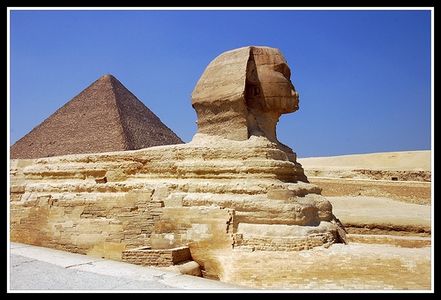
Egyptian Pyramids, Mayan Pyramid Temples, Babylonian Ziggurats (Shikara in Sanskrit) and Hindu temples—all look like a cone. The design and structure are same. Hindus were the originators. Hindus taught the world that God lives in a high place-sacred mountain MERU. The Greeks changed the name to Mount Olympus. Hindus are the only race in the world continuing temple buildings in the same way and worshipping God in it. All others made them as museums. We took this concept of ‘sacred mountain’ to Cambodia and built the largest temple complex in the world Angkor Wat and Borobudur in Indonesia. We used the temple for Gods, where as others used them for God like kings.

Scholars around the world knew the connection between India and Egypt from 1400 BC. That was the time Mittanni King Dasaratha wrote ten letters (it is available in all the encyclopaedias as Amarna letters) after marrying his daughter to Egyptian king Amhenotep (Sramana Dev).  Tushratta/ Dasaratha was a king who ruled Syria (now a Muslim country), but his name and his forefather names are in Sanskrit. To confirm they are Indian Hindus we have an inscription giving the Vedic Gods Mitra, Varuna, Indra and Nasatya (Asvini Devas) in an agreement with the Hittites and a horse manual with Sanskrit numbers.

(Though all these things were in encyclopaedias from 1930s, the ruling British were very careful not to teach this or about South East Asian Hindu Empire to Indian History students. All these excavations were done by non British scholars! British were very successful in sowing the poisonous seeds of divisive Aryan Dravidian Invasion theory which is not in Sangam Tamil or Sanskrit literature. They carefully hid facts like Tamils worshipped Indra, Varuna, Vishnu, Skanda and Durga which was found in the oldest Tamil book Tolkappiam).

Bible which was put to writing around 945 BC (Hutchinson Encyclopaedia) also gave Sanskrit words  for imports from India such as karpasa (cotton),Tuke (Siki for peacock or Suka for parrots), Kapi (monkey)etc.

But many of us do not know that the first king of Egypt was Manu, the law giver. But they were not Dasaratha of Valmiki Ramayana or Manu of Manu Dharma Sastra.  Many of us do not know that the Egyptian builders used the Sanskrit word  Sutra for measurements during building Egyptian Pyramids. Sulba Sutras are Vedic manuals giving measurements for Yaga Kundas (fire pits for sacrificial fire ceremonies). It contains Pythagorean Theorem and other Vedic mathematics. Sutra means thread/plumb line,also book of formulas.

Arta Dama, a Mittanni king, married his daughter to Egyptian king Tuthmose IV and the daughter of Sutharna was married to Amenhotep III (1390 BC). Another daughter was married to his son Akhenaten. He was the most revolutionary king who established ONE GOD for the Egyptians. His name in Sanskrit means Eka Aten (One Aten is God). He worshiped Surya (sun).

Egyptian kings’ sun worship looks exactly like Brahmins doing Sandhyavandhana. Brahmins do it thrice a day facing sun. Egyptian kings worship the sun in the same way.

Manu=Nara Meru

In my earlier posts I have established that the big conflict between Krishna/Arjuna pair and the Nagas under the leadership of Maya Dhanava just before 3100 BC resulted in a mass exodus of Nagas to South America and Central America. After Krishna’s burning of Naga lands (Kandava vana) in the Gangetic plains, there were continuous clashes. It was followed by the mass execution of Nagas (Sarpa Yagna) to avenge the assassination of King Parikshit by the Nagas. A Naga hid himself in the fruit basket and killed King Parikshit.

(Please read my post ARE MAYANS INDIAN NAGAS?)

Around 3100 BC another dynasty started their rule in Egypt. Since they were Hindus, they named the first king Manu (Manes). His other name was Narmer i.e. Nara Meru, a pure Sanskrit word meaning Mountain among the Kings. Meru was the holiest and highest mountain in Hindu Mythology. Any high point was named Meru. We have different Merus around the world. Pameru (Pamir Plateau), KuMeru (Kumari in the South of India). Su Meru (Sumerians) of the Middle East. The word Khmer of Cambodia may be related to Kumari/Ku Meru. I will write about it separately. North and South Poles were also called Merus in Hindu Mythologies (Puranas).

Menes was given a legendary date 3100 BC by the Greeks because Indian Kaliyuga Calendar begins in 3102 BC. Mayans also followed this Kali Yuga Calendar. (Full details are in my posts)

Menes (Manu) was praised the first Law Giver of Egypt by the Greek Historian Diodorous Siculus. Egyptians were just like Indian Hindus. They believed kings were half God, half man. Indian words for kings and palaces are synonymous with Gods and Temples. Diodorous links Heracles (Hercules) with Egypt and India. Hercules was one of the 12 ancient Gods of Egypt and he cleared India of wild animals, says Diodorous.

Narmer palette shows his picture as a strict man punishing the wrong ones.

( In Tamil Khon means King and God, Koil means Palace and temple, In Sanskrit Deva is used for Lord and the King). Khon became Khan in other languages like Kesari/lion gave a new word Caesar. Tele in the Ancient Middle East means temple, which is the corrupted form of Sanskrit word STHALA. Tamils changed it to Thali=temple)

Egyptian kings called themselves children of Surya/sun. This corresponds with the Surya Vamsa of Hindu scriptures. Like Indian Hindu kings, Egyptian kings had two names : 1. Name given at birth 2. Coronation name or Abisheka Nama.

Nile River (Sanskrit word)

River Nile is known as Blue Nile because of its BLUE colour. It is a Sanskrit word NILA meaning blue. If I find only one Sanskrit word from among 1000 place names in Egypt, scholars will laugh at me. But almost all ancient Egyptian names are Sanskrit names. ( Full list is available with me. Just a few examples: Heliopolis= Suryapura, Thebes=Devas, Zawyet el Aryan=Arya of ?, Saqqara= Chakra, Dashuf= Dasyu or Dasa, Asyut=Achyuta, Hierakonpolis=Swarnapura, Amra, Amarna= Amara, Dishashasa=Disa,  El Badari= Badri (nath), Beni Hasan=Vani dasan,  Naj el der=Naga….?). Please note that Greek words are also in many place names.

Ramses=Rama Seshan?

Ramses is a title for at least seventeen kings in Egypt. Kanchi Paramacharya Swamiji has mentioned this is the name of Rama, Hero of Ramayana, in his 1932 Chennai lectures.

(Please read my post Madagascar- INDIA LINK VIA INDONESIA for full details.

Naga on their heads

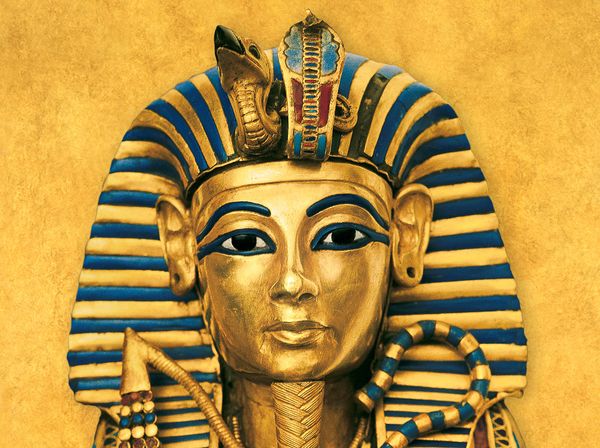
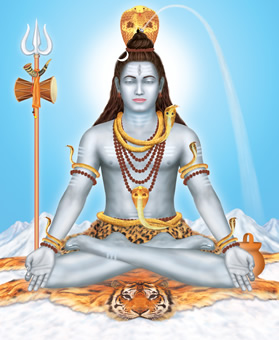
Many of the kings have Naga ( Naga gave birth to English word Snake=S+Naka) on their heads. There is no Hindu God without snake on their bodies. But Egyptian Kings look exactly like Lord Shiva of Hindu mythology. Another word for snake is Uraga=Uraes of Egypt.

Belief in Rebirth

The reason for building Pyramids was their belief in after life and rebirth. All the oriental religions (Hinduism, Buddhism, Jainism and Sikhism) believe in after life and Rebirth. Semitic religions (Judaism, Christianity and Islam) don’t believe in it. This shows very clear connection with the Hindus of India. In Indian mythology we have Nimi (see the Puranas) saving his body like the Egyptians.

(Continued in second part…………….)

Contact swami_48@yahoo.com or Swaminathan.santanam@gmail.com

சிந்து சமவெளியில் ஒரு புலிப் பெண்

By London Swaminathan (This post has already been uploaded in English)

சிந்து சம்வெளியில் கண்டுபிடிக்கப்பட்ட 4000க்கும் மேலான முத்திரைகளில் உள்ள எழுத்துக்கள் இதுவரை எல்லோரும் ஒப்புக்கொள்ளும் விதத்தில் படிக்கப்படவில்லை. சாண் ஏறினால் முழம் சறுக்குகிறது. அமெரிக்காவில் உள்ள ஒரு பிரபல ஆராய்ச்சியாளர் இது எழுத்தே அல்ல ,வெறும் சித்திர முத்திரை என்று சொல்லி பெரிய சர்ச்சையைக் கூடக் கிளப்பிவிட்டார். இதுவரை சிந்து சமவெளி எழுத்துக்களுக்கு ஐம்பத்துக்கும் மேலான வினோத விளக்கங்கள் வந்துள்ளன.


எழுத்துக்கள் புரியாவிடிலும் அதிலிருக்கும் தெய்வங்களையாவது புரிந்துகொள்ள முடியுமா என்று பார்த்தால் அதுவும் முடியவில்லை. ஒரு முத்திரையில் ஒரு உருவத்தைச் சுற்றி 4 மிருகங்கள் இருப்பதை பசுபதி முத்திரை என்றும் இது ஆதி சிவன் என்றும் ஆரிய சிவனுக்கு முந்திய திராவிட சிவன் என்றும் தவறான விளக்கங்களைக் கொடுத்து இந்து மதத்தைக் குழப்பிவிடவும் மாற்று மத ஆராய்ச்சியாளர்கள் முயன்றனர்.


இவர்கள் ஆரிய திராவிடப் புதை மணலில் சிந்து சம்வெளி நாகரீகத்தைச் சிக்க வைத்திருப்பதால் அது வெளியே வரமுடியாமல் திணறிக் கொண்டிருக்கிறது. இது திராவிட எழுத்து அமைப்பு உடைய எழுத்துவகையைச் சேர்ந்தது என்று சொல்லி திசை திருப்பியும் விட்டனர். ஆனால் இதைச் சொல்லி ஐம்பது ஆண்டுகள் பறந்தோடிவிட்டன. ஒரு அங்குலம் கூட முன்னேற முடியவில்லை.

ஆரிய திராவிட விஷத்தை அகற்றிவிட்டு இந்த முத்திரைகளை ஆராய்ந்தால் நாளைக்கே கூட தீர்வுகாணமுடியும். இதை உணர்ச்சிக் கொந்தளிப்பால் எழுதவில்லை. பசுபதி முத்திரை மத்திய கிழக்கு நாட்டிலும், டென்மார்க்கிலும் கிடைத்திருப்பதால் அதை சிவன் என்று முத்திரை குத்த முடியாது. பாம்பு ராணி முத்திரை கிரேக்க நாட்டிலும் மற்ற நாடுகளிலும் கிடைத்திருப்பதால் அதையும் சிந்துவெளிக்கு மட்டுமே சொந்தம் என்றும் சொல்ல முடியாது. இன்றைய கட்டுரையில் வரும் 2 புலிகளுடன் சண்டை இடும் காட்சியும் உலகம் முழுதும் கிடைத்திருப்பதால் ஆரிய திராவிட மாயையை ஒதுக்கிவிட்டு ஆராய வேண்டும். சிந்துவெளி நகரங்களில் உள்ள வட்டக் கற்களும் ம்த்தியக் கிழக்கு, நீலகிரி பழங்குடி மக்கள், ஐரொப்பிய நாடுகளில் காணக் கிடக்கின்றன.


இந்திரனும் வருணனும் விஷ்ணுவும் தமிழ்க் கடவுள்கள் என்று “ஒல்காப் பகழ் தொல்காப்பியன்” கூறுவதையும், தொல்காப்பியன் ஒரு பிராமணன் என்று “உச்சிமேற் புலவர் கொள் நச்சினார்க்கினியர்” கூறுவதையும், “நான்முறை முற்றிய அதங்கோட்டு ஆசான்” என்னும் வேதப் பிராமணன் தலைமையில் தொல்காப்பியம் நிறைவேறியதாக பனம்பாரனார் கூறுவதையும் கருத்திற் கொண்டால் ஆரிய திராவிட மாயை, சூரியனைக் கண்ட பனிபோல விலகி ஓடி விடும்.

யார் இந்தப் புலி மகள்?

சிந்து சமவெளியில் கண்டுபிடிக்கப்பட்ட வினோதமான முத்திரைகளில் பேய் முத்திரைகள் பற்றியும், பாம்பு ராணி முத்திரை பற்றியும், பசுபதி/விஷ்ணு முத்திரை பற்றியும், ஐராவதம் மேல் பவனி வரும் இந்திரன் பற்றியும் முந்திய கட்டுரைகளில் கண்டோம். இன்று புலி மகள், புலி ராணி, புலி தேவி யார் என்று ஆராய்வோம்.

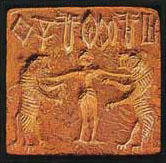
ஒரு புலித் தெய்வ முத்திரையில் ஒரு பெண்ணின் பாதி உடல் புலியாகவும் மறு பாதி பெண்ணாகவும் இருக்கிறது.

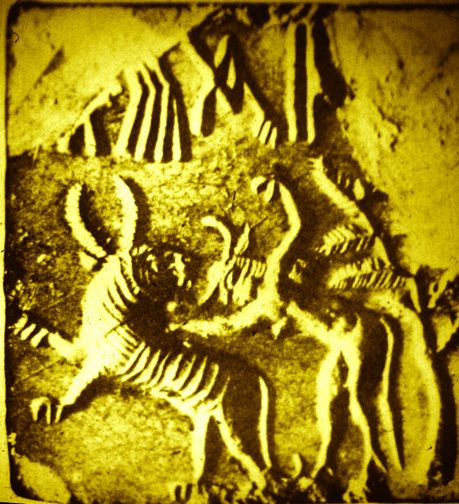
இன்னொரு புலி முத்திரையில் கொம்புள்ள புலி இருக்கிறது. மற்றுமொரு முத்திரையில் கொம்புப் புலியுடன் ஒரு கொம்பு மனிதன் சண்டை போடுகிறான். சிலர் இதை நடனம் ஆடுவதாகவும் எழுதி இருக்கிறார்கள்.

வேறு ஒரு புலி முத்திரையில் ஒருவன் புலிக்குப் பயந்து மரத்தின் மேல் இருந்து கொண்டே ஏதோ சைகை செய்கிறான். இன்னும் ஒரு முத்திரையில் ஒருவன் இரண்டு புலிகளுடன் சண்டை போடுகிறான்.

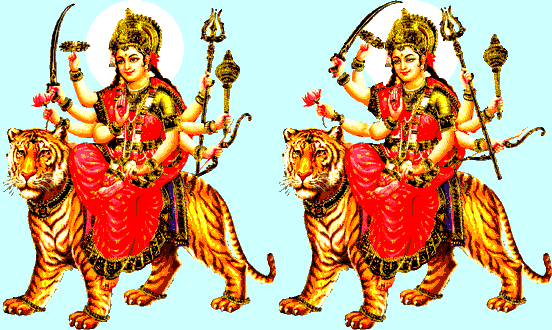
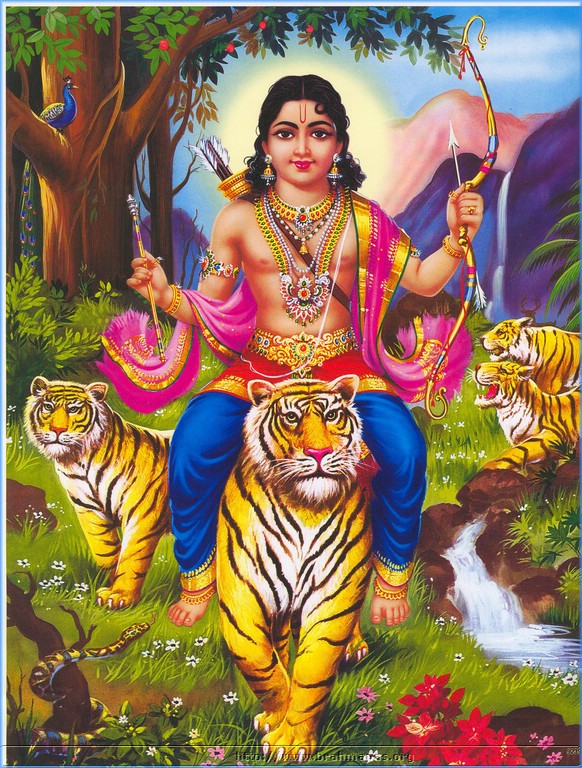
யார் இந்தப் புலிப் பெண்? துர்க்கையா? இந்தியாவில் புலி வாகனம் உடைய இரண்டு கடவுளர் உண்டு: ஒன்று துர்க்கா தேவி மற்றொன்று சபரிமலை ஐயப்பன்.

திபெத்தில் புத்த மதத்தைப் பரப்பிய இந்திய சாது பத்ம சம்பவர் புலியில் சவாரி செய்வது போல உருவங்கள் இருக்கின்றன.

சோழர்களின் சின்னம் புலிச்சின்னம் என்று சங்கத் தமிழ் நூல்கள் பாடுகின்றன. சோழர்கள் வடமேற்கு இந்தியாவிலிருந்து வந்தவர்கள் என்று அவர்களுடைய மெய்க்கீர்த்திகளும் சிலப்பதிகாரமும் மணிமேகலையும் மறைமுகமாகச் சொல்லுகின்றன. உத்தர குருவை ஆண்ட சிபிச் சக்கரவர்த்தி, முது மக்கள் தழியை உண்டக்கிய முசுகுந்தன் மற்றும் சூரிய குல மன்னர்களை– தங்கள் முன்னோர்கள் என்று சோழர்கள் பெருமை பேசுகின்றனர். இதுதவிர, புலிகள் க்ஷத்ரியர்களின் சின்னம் என்று வேதகால இலக்கியங்கள் கூறுகின்றன.

மஹாபாரத்தில் வீரர்களைப் புகழ்கையில் அடிக்கடி, “ஓ, மனிதர்களில் புலி போன்றவனே!” என்று வியாசர் புகழ்கிறார்.

சிவ பெருமான் புலித்தோல் அணிந்திருக்கிறார். பதஞ்சலி முனிவரை புலிக்கால் முனிவர் என்று அழைத்தனர். தமிழர்கள் புலி நகத்தை வீரத்துக்காக அணிந்தனர். சகுந்தலை – துஷ்யந்தன் பெற்றெடுத்த பரதன் சிங்கம் புலி ஆகியவற்றுடன் விளையாடினான். புருஷாமிருகம் என்னும் மிருகம் பற்றிய கதை மகாபாரத்தில் வருகிறது.பாதி சிங்கம் பாதி மனிதனான நரசிங்காவதாரம் நாம் அனைவரும் அறிந்ததே. வேதத்தில் கழுதைப் புலி பற்றிய குறிப்பு வருகிறது.

ஆக இந்த எல்லாப் புலிகளையும் கணக்கில் எடுத்துக் கொண்டாலும் சிந்து சமவெளிப் புலி மகள் கொஞ்சம் விலகியே நிற்கிறாள். வெளி நாட்டு அறிஞர்கள் இவளையும் ஆதி துர்க்கா (புரோட்டோ ஷிவா என்று கதை விட்டது போல இவளை புரோட்டோ துர்க்கா) என்று கதை கட்டி விடுவார்கள்.


சப்த மாதர் முத்திரை நரபலியா?

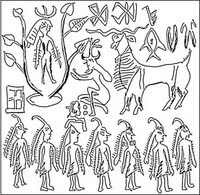
ஒரு முத்திரையில் அரசமரத்துக்குள் ஒரு தெய்வம் நிற்க ஒருவன் மிகப் பெரிய ஆட்டைக் கொண்டுவந்து அவள் முன்னே நிறுத்தி மண்டியிட்டு வணங்குகிறான். ஒரு ஸ்டூலின் மீது மனித தலை மட்டும் இருக்கிறது. இது நரபலியா?

அதற்குக் கீழே ஏழு பெண்கள் கைகோர்த்து நடனம் ஆடுகின்றனர். இந்த ஏழு பெண்கள் உலகில் பல இடங்களில் இருக்கின்றன. தென் ஆப்பிரிக்கா குகைச் சிற்பங்களில் ஆஸ்திரேலியப் பழங்குடி ஓவியங்களில், கிரேக்க நட்சத்திரக் கதைகளில், வடமொழியில் சப்த மாதர் கதைகளில் ஏழு பெண்களைக் காணலாம்.

ஒரிஸ்ஸாவில் கோண்டு இனமக்கள் வழிபடும் தரைப் பெண்ணு என்னும் கடவுள் பூராப் பெண்ணு என்னும் கடவுளைப் படைத்ததாகக் கதை உண்டு. இந்த தரைப் பெண்ணுக்கு கொடுரமான முறையில் பலிகள் இடுவதுண்டு.

சுருக்கமாகச் சொல்லப் போனால் சிந்து முத்திரைகளில் காணப்படும் அதே கருத்து உலகம் முழுதும் இருப்பதால இதை ஆரிய திராவிட நீர்ச் சுழலில் இருந்து மீட்டு காய்தல் உவத்தல் இன்றி ஆராய்தல் நலம் பயக்கும்.

Please read my earlier posts:1.Serpent Queen: From Indus Valley to Sabarimalai 2.Sugarcane Mystery: Indus valley and Ikshvaku Dynasty 3. Vishnu seal In Indus Valley 4. Indus Valley –New Approach required 5.Indra in Indus valley seals+ Symbols for Vedic Gods and 6.Ghost in Indus seals.

Contact swami_48@yahoo.com or swaminathan.santanam@gmail.com

*******************

Tiger Goddess of Indus Valley

Tiger Goddess of Indus Valley: Aryan or Dravidian?

Scholars who study Indus valley civilization are struggling to identify the Indus Valley Gods and goddesses. At present scholars don’t agree on their identification. They could not place them in the modern Hindu pantheon. They are fighting among themselves to name them as Aryan or Dravidian. Each scholar has his own or her own interpretation. All the confusion is the result of one Himalayan blunder of unprofessional archaeologists who identified the so called Pasupati seal with Proto Shiva. Unless and until the scholars come out of the Aryan Dravidian quagmire, the Indus Valley script can’t be deciphered.

Now look at the following Indus Gods and Goddesses and you yourself decide who is Aryan or Who is Dravidian who is Universal, Pan World:

TIGER GODDESS

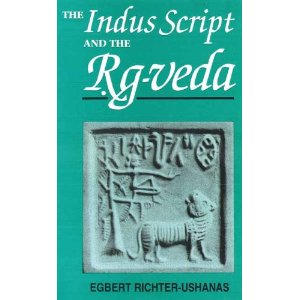
A seal discovered in Mohenja-daro is at National Museum, Karachi(D392). This square seal depicts a tiger looking back a human figure on a tree. The person with hair tied in double bun style holds the tree with one hand and makes some gestures to the tiger with the other hand.

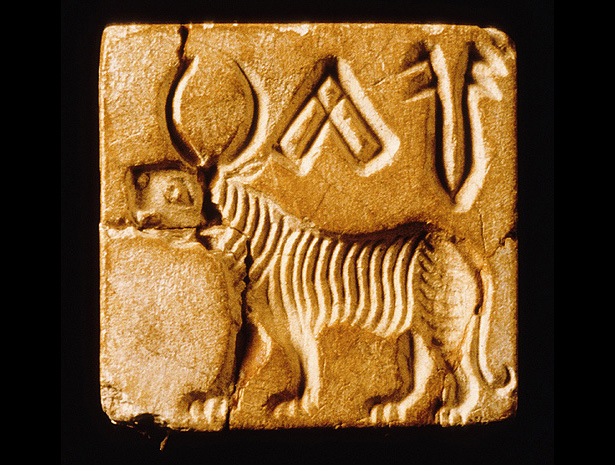
Another seal shows a tiger with a horn (DK 12897, Karachi Museum)

Photoconvex moulded tablet in Harappa museum shows a female figure fighting two tigers standing above an elephant ( I have interpreted this as Indra on Irawatha or Bharata who played with lions even when he was young. A chakra sign on top of the head may denote Indra’s name=chakra or Bharata= Eka Chakratipati). On the reverse we see a person spearing a buffalo. a figure seated in yogic position is looking at the buffalo sacrifice. A crocodile is above this scene.

On another seal a mythical female figure half human half tiger is portrayed .This seal is in national Museum ,New Delhi

A seal depicting a man holding a tiger was also found at Mohenja-daro. It is in Delhi Museum. The man fighting or holding the tiger is not an ordinary human being. It looks like a devil with horns.

What is puzzling is that there is not even a close resemblance to any of these scenes in our mythology. But villagers have got many stories about tiger gods or tiger angels in different parts of India. People living in forest areas naturally will have many juicy stories like this.

But who ever attributes the script to Aryan or Dravidian languages have failed to explain these seals satisfactorily. Then who is this Tiger Goddess or Tiger God? We have some contestants for this post.

Tiger Riders

Tribals in Indian jungles have different beliefs about tigers and tiger gods. When we look at the Indus seals with tiger men and tiger women we are reminded of these tribal stories. Kollong and Ullatar tribes of Kerala consider tiger as the son of goddess Parasakthi. They call the tigers, granddad. They rarely kill tigers. If the tigers kill many people and cattle, then one of the tribal will kill the tiger and asks for pardon in a public place. Then he has to live outside the village for a year and eat food given by others. This shows the respect they had for tigers. (Source 31-11-1963 article in Jayakeralam).

Tiger in Hinduism

Lord Ayyappa (Sabarimalai in Kerala, India) rides a tiger.

Hindu goddess Durga/Kali rides a tiger or lion.

Padmasambhava is worshipped in Tibet and Mongolia. He was the Indian ascetic who brought Buddhism to Tibet in 762 AD. He was shown riding a tiger.

Patanjali (Pulikkal Munivar) Human with legs of a tiger.

Shiva wears a tiger skin. Mahabharata very often uses the epithet “tiger among men”. People wear tiger nails in their chains. Vedas mention only hyena, not tigers.

The Brahmana literature describes Kshatriyas as tigers. Perhaps the four animals in the Pasupati seal means four castes of Hinduism.

Narasimhavatar: Half man, Half lion;Purusha Mrugam ; Sarabeswarar: Saraba bird+ man;Kim Purusha and Kinnara

Seven Women/ Sapta Kanya

Seven is the most sacred number for Hindus. Anything holy, they count in seven, whether it is hills, rivers, forests, cities, holy women or holy men to remember (sapta kanya, sapta nadhi, sapta Rishi, sapta mokshapuri, sapta aranya etc). Seven is found in largest number of seals in Indus valley. The Seven Sister seal in the Indus is a famous one. Most of the Hindu temples have Sapt Kanya/ seven women statues in South India. The story of Seven Sisters is there in several parts of the world from Australian aborigines to ancient Greeks. Mr Dave even identified seven birds in Rig Veda as seven sisters known to Bengalis (Bengalis call these seven birds as seven sisters).

Varunan with seven sisters is found in Rik Veda 8-41

Story from Australia:

Seven wandering ancestral heroines of the Dream time, also referred to their aboriginal name KUNGARANKALPA. The complete route of the sisters has been pieced together from stories told about them by different aboriginal clans living along its course. On reaching the southern coast, the seven sisters went in to the sea and then leaped in to the sky. Once in the sky they became the constellation KURIYALA (The Pleiades). Hindus call this six Krithikas. Westerners call this constellation Seven Sisters. This tallies somewhat with Hindu counting One Skanda+looked after by six sisters=seven).

Ancient San Rock paintings in South Africa have seven women as a group.

Take any Indus seal, we have parallel stories around the world to interpret it differently.

Human Sacrifice: Boora Pennu (God of light in Khond)

A local deity in the Orissa who created the earth goddess Tari Pennu as his consort is called Boora Pennu. Until recently this deity was the subject of sacrifice in notorious meriah rituals, which involved violent human sacrifice (reminds us of Mayan sacrifice)

Tari pennu in Tamil will mean the same. Tarai=earth or floor, pennu=woman.

But Tarai=terra-dharani are of Indo European origin.

A scene in a Mohenja daro seal also looks like a human sacrifice. A deity is depicted standing in a papal tree with bangles on both arms. A human head rests on a stool. A giant ram and seven figures in a procession are very prominent. A man in kneeling position is worshipping the papal deity. May be he has brought the ram for sacrifice. This seal is in Islamabad Museum.

For each and every seal found in Harappa and Mohenja daro, the scholars give different interpretations. Most of the scenes on seals are seen in other parts of the world too. So we need to piece them together and look at them from a different angle. The Pasupati seal (Deity surrounded by animals), the snake queen ( a deity with snakes on either side),  a deity fighting two animals, arrangement of stones in a circle, Swastika symbol etc. are seen in different cultures. We have to find out who borrowed from whom. If they are universal there is no question of attributing them to Aryan or Dravidian.

Contact swami_48@yahoo.com or swaminathan.santanam@gmail.com

Please read my previous articles on Indus/Saraswati Valley civilisation:

Please read my earlier posts:1.Serpent Queen: From Indus Valley to Sabarimalai 2.Sugarcane Mystery: Indus valley and Ikshvaku Dynasty 3. Vishnu seal In Indus Valley 4. Indus Valley –New Approach required 5.Indra in Indus valley seals+ Symbols for Vedic Gods and 6.Ghost in Indus seals

ETRUSCAN- HINDU/ TAMIL LINK


By London Swaminathan

(I have already written in Tamil about the Roman- Tamil trade contacts that existed two thousand years ago. Scores of references are there in Sangam Tamil literature about the Yavanas, which is corroborated by Greek and Roman writers of the first few centuries of modern era. Thousands of Roman gold coins of first few centuries were discovered throughout South India. The book “Roman Karur” by eminent historian and archaeologist Dr R Nagasamy gives detailed accounts of this in English. Recently pots of gold coins of Roman origin have been discovered in Anantha Pathmanabhaswamy Temple in Thiruvanathapuram. When the inventory is released we may have more details about such contacts. The following article is completely different from it which deals with Etruscans, a mysterious culture of Northern Italy. Contact: swami_48@yahoo.com  or swaminathan.santanam@gmail.com


Who are Etruscans?

Etruscans were the people who occupied Etruria, Italy between 8th century BC and 2nd century BC. Etruria is the modern day Tuscany and part of Umbrian Italy. They ruled Rome from 616-509 BC. Roman civilization was greatly influenced by Etruscan culture. Etruscan language is not fully deciphered. Still the origin of Etruscans is debated.

In the eyes of Greek writers and their Roman successors Etruscans were different from them. They were blamed as pirates

Though lot of things about Etruscans remain mysterious we can’t miss the striking similarities between Hindus and the Etruscans. We see Tamil and Sanskrit words in Etruscan language. We will look at them in bullet points.

1.Origin of Etruscans: They were Tamils(Termilai) and descendents of Pulasthya Rishsi (Pelasginians/Philistines)

2.Birds for predicting future: Like Tamils, they also used birds for predicting future (also read my post in the blog “ Can Birds Predict Your Future?”)

3. Cremation and burial of ash in Urns: This is a Hindu custom followed from Vedic days.

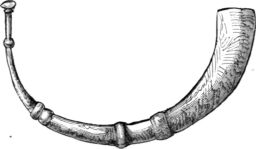
4. Musical instrument Lyre/ Yaz, Kombu: Etruscans used musical instruments which looked like Indian (Horn, also known as Kombu Vadhyam in Tamil) lyre (also known as Yaaz in Tamil)

5. Swastika symbol: Swastika symbol, used by the Hindus till today, was found in their jewels. North Indian Hindus still print Swastika in their wedding invitations, Pujas, Havans and other auspicious ceremonies.

6. Language: We come across words of Sanskrit and Tamil origin

7. Many Gods: Etruscans were polytheistic

Now I will give you more details:

Origin from Pulastya Rishi and Tamils:

There were three theories about the origin of Etruscans. Greek historian Herodotus said that Etruscans came from Turkey. Modern DNA research has proved he was right. Western Turkey was called Lydia. This area was full of Sanskrit names in the olden days. Herodotus said that the ancestors of Etruscans were forced to leave Lydia after 18 years of hard times. They left Lydia under the leadership of Tyrrhenus, son of King of Lydia.

Virgil and others thought they were another branch of Pelasginians. They were the same people who attacked Egypt in 1200 BC. Egyptians called them Sea People. This word came from the Indian Rishi Pulastya. He was one of the seven seers mentioned by the Vedas. Pulastya was the forefather of Rakshasas, Kinnaras, Vanaras and Yakshas. Megasthanes called the people of Ceylon “ Palesgini”, according to Dr KK Pillay. Indian scriptures and Mahavamsa also called the Ceylonese people Yakkas (Yakshas) i.e descendents of Seer Pulastya. They were called Philistines in the Bible.

The original name of the Lycians was Tremilai or Termilai and it may be equated with Dramila/ Tamils/ Dravida according to KK PIllay (Ref. taken from Aryatarangini by A Kalyanaraman page 224).

In short, Sea People, Pelasginians,Termilai, Tremilai, Philistines of the Bible, Pulastyas, Yakshas are one and the same. We can easily trace them to a common source. Since they were interested in trade, they went to different countries.


Cremation and Burials

Like Hindus, Etruscans also followed the custom of burial and cremation. When they cremated the bodies, they kept the ash in urns. They believed in afterlife like Hindus. Their tombs looked exactly like tombs in Turkey, which proved Herodotus was right. They left jewels, furniture etc. in the tombs for the future life of the departed souls.
 

Birds Used for Prediction

Boulon is the word for bird. It is similar to PUl in Tamil.

Tamils believed that flights of birds or their sounds (calls) can predict good and bad things that is going to happen. Even today their traditional calendars (Panchang) publish those details every year. No two cultures in the world come so close as the Tamils and the Etruscans. Etruscans had such a calendar.

Etruscans believed that Gods speak to mortals through nature. They even interpreted thunder and lightning. This is in the Hindu Upanishads. The famous parable of Three “Da” sounds of Thunder is in the Upanishads. Another story about five elements trying to lift a blade of grass is also in the Upanishads.

Etruscans used livers of sacrificed animals to find their future. Mesopotamians had similar beliefs. Like Vastu Shastra allocate different corners for different Gods, they have different areas for different gods in the liver. A Bronze model of a sheep’s liver from Piacenza (150 BC) gives 52 names of divinities, mostly abbreviates. Many of them were repeated.


Many Gods

Etruscans believed that their religion were revealed to them by seers. This is what exactly Hindus say about the Vedas.

Etruscans were a deeply religious people like Hindus.

They had religious calendars like Hindu Panchang. Like Hindu scriptures they specified which sacrifices should be done for which Gods on what days.

Polytheism was practised by Etruscans like modern day Hindus. Manifestation of divine power in different forms was appreciated by the Etruscans.

They had three tiers of Gods: 1. Lesser deities of local origin, like the Gram Devtas of Indian villages 2.Ruling over them were higher deities and 3.Greek Gods were adopted by the Etruscans. Items 2 and 3 have got similarities with Indo-European Gods (Hindu Gods)

Dionysus, Seneca said that they believed in 40 different Gods. The same god was worshipped in different forms on different occasions to achieve different things or to appreciate different aspects of divinity. Lot of these deities entered Roman pantheon later.

Griffins also were found in tomb sculptures. These are creatures found in Indo European language speaking areas. Mitanni civilization had such griffins.


Language and Alphabet

Etruscans wrote from right to left like we have it in Indus seals and other Semitic inscriptions.

Etruscans got their alphabet from the Greeks and modified it to suit their sounds. Romans borrowed it from the Etruscans. Now we have three sounds for K in English: K, C, Q. This is because Etruscans’ language had fine distinctions. They used different sounds for different words like we see 4 Ka, 4Sa, 4Ta etc. in Sanskrit. Tamil also has such fine distinctions for L,R and N (three different L, 3N and 2Rs in Tamil).


Vocabulary

The longest Etruscan manuscript was from the linen cloth found wrapped around a mummy. It has 1200 words. This is called Liber Linteus of Zagreb. Another example of Etruscan writing is the Tile of Capua which has got 62 lines. Three gold foils, known as The Pyrgi Lamellae, have inscribed lines in Etruscan and Phoenician. These jewels were dedicated to Goddess Astarte. Etruscans called the same Goddess Uni. Votive offerings like these are offered to Hindu Goddesses (Example: Sankarankoil Gomathy Amman, Madurai Mari Amman).

Astarte is identified with Goddess Inanna, Ishtar, Aphrodite and goddess of Egypt. This clearly shows that the same Goddess was worshipped in different areas of the world (Asia, Africa, Europe) with different names. Hindus can understand them better than any other community in the world, because they travel from Kashmir to Kanyakumari to worship the same gods and goddesses with different names in over 108,000 temples ( Please read my post: How many temples are in India?).

Though 13000 Etruscan inscriptions were discovered, scholars have identified only a few hundred words. The language remains mostly un deciphered. The inscriptions were short like Indus seals. More over Etruscans did not leave us any literature.

Muni (tomb)= it may be muni (ghost or saint or manithan)

Ais/eis= God (Sanskrit: Eswaran,Aiswarya)

Favi= grave or temple (Avi in Tamil is spirit of the dead)

Clan=son= kula in Sanskrit

Locumno=king=Ilango in Tamil

F sound came into Europe from Etruscan; this is in Sanskrit.


Latin words in Etruscan

Latin and Sanskrit come from the same roots. Latin words found in Etruscan are nepos/nephew/neft.

Cousin and wine (vinum) are other words..

Latin also borrowed words from Etruscan: elementum, literae, stylus, cera.

All these words are about writing and letters .Elementum,( e)literate are similar to EZUTHU (write, writing) in Tamil.

Because of the sound changes, lot of Greek words were written with varied spellings in Etruscan:

Thraiambos(Gk)=Triumpus (Lat)=Triumphus(Etruscan). This is from Sanskrit Triambakan/Shiva who burnt three cities of demons with his three eyes. In fact we have a three headed demon in the Etruscan statues.
Fun Loving People

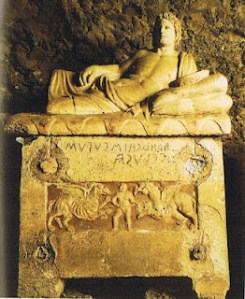
The Etruscans were a fun loving race. They had dance and music, banquets and parties. We see beautiful scenes in the 2800 old paintings on the walls of their tombs. They had gender equality. Men and Women enjoyed the same rights which we see in ancient Vedic culture. The musical instruments displayed in the frescoes were similar to Tamil’s Horn (Thaarai, Thambattai, Kombu Vadhyangal) and Lyre (Yaaz).

Archaeologists have discovered over 3000 mirrors from Etruscan centres. Over 1000 bronze mirrors have inscriptions. The ladies must have spent lot of time in doing make up.

Mirrors have beautiful engravings on them. Western scholars interpret everything with Greek mythology. But when I looked at the pictures of hundreds of mirrors I can find matching anecdotes from Hindu mythology.


Gambling

Etruscans played dice like the Pandavas of Hindu Epic Mahabharata. On the dice they wrote the words for numerals instead of dots.

Hair Style

Ancient Tamil women had plaited their hair into five parts called Aimpal Kunthal (five division hair). We such five prt plaits in some statues.

Writing on Epitaphs

Etruscans wrote on tombstones (epitaphs).

Tamils also wrote on stones where they cremated or buried heroes. They were called Hero Stones (Nadu Kal).


Sanskrit and Etruscan

Etruscan is an inflected language like Sanskrit.

Example:

Case                                                   singular                    plural

Nominative                                      clan (son)                  clenar (Sons)

And Accusative                               clens                           clenarasi

Genetive (of)                                   clensi                          clenarasi

Dative (to)                                        clensi                          cliniiaras

Locative (in)                                     clenthi


Common nouns have gender difference, but personal names have gender ending. It is like Sanskrit sounds:

Feminine names: Uni (Latin Juno),Menrva (Lat.Minerva), Clutsmsta (Gk.Klytem nestra), Ati, Seianti, Lasa

In Sanskrit we have Latha, Uma, Geetha, Rukmini, Shanthi, Vaijayanthi (either” “a” or “ i “ending)

Masculine names:Hercle (Gk.Hercules), Menle (Gk.Menelaos), Achle (Gk. Achilles), Zimite (Gk. Diomedes), Aule (Gk.Aulus), Taitle (Gk.Daidalos), Sime

(In Sanskrit we have “a” ending. Examples: Rama,Krishna,Siva,Harichandra)

Names of Gods end in “s” like Sanskrit “ji” –respectful suffix (Mataji, Pitaji)

Pesonal pronouns have more similarity with Tamil, Telugu etc.

First person “I” = mi (similar to Telugu)

Third person: an (avan in Tamil)

This=ita, eta ( In Tamil Ithu, athu)


More Sanskrit and Tamil words in Etruscan

Tin= Dina =day, Oesan=Ushas=morning, Masan=masa=month, arim=ari=monkey,leu=lion=Yali=mirror image of the word yali=lia; neri=water=nara, nereids are water nymphs in Greek, Narayana=water god, capra=copra=urn, husiur=sisu=child, ati=mother=aththi in Tamil, apa=father=appa in Tamil, papa= granfather, teta=grandma=but in Tamil its grandpa, mech=people=makkal in Tamil.

At a cursory glance of 100 words I found out the above words.

Numerals

Numerals have some similarities with Sanskrit:

1=thu=

2=zal=zwei in German=twa in Sanskrit=Duo=Di= dwa= Two

3=ci=??

4=sa=(Satur in Sanskrit)

5=mach=??

6=huth=(Shasti in Sanskrit: H=S is a well known linguistics equation)

7=semph (sapta in Sanskrit)

8=cezp=??

9=nurph (Nav in Sanskrit)

10=sar=???

Not all the numbers are close to Sanskrit. Scholars are not sure about Etruscan words for100, 1000 etc. But the structure is similar to Sanskrit.

In Sanskrit we say 5+20= for 25, 7+30= for 37 unlike English and Tamil (In English it is 20+5= twenty five, in Tamil also it is 20+5=Irupaththu Ainthu)

Etruscan numbers are done like Sanskrit. Eg.16= 6+10 huth zar; 17=7+10 ciem zathrum.

Rasenna

Greeks called the Etruscans TYRRHENIANS (closest Sanskrit word I could think of is Taitriya Upanishad). Greeks also gave this name to the surrounding sea. Romans and Greeks derided them as pirates.

Romans knew Etruscans as Etruri or Tusci (Tuscany is the area they lived).

Etruscans called themselves Rasna or Rasenna (Sanskrit Rasana= Taste)


CONCLUSION

Though there are some similarities between Hindus and Etruscans and similarity between Etruscan and Indian languages, we need more evidence to support any new theory. Since majority of the inscriptions are not deciphered, one has to wait for more information. Besides, the difference in pronunciation must be taken into account to find out the source. Even the Greek and Roman names were distorted in Etruscan. They lived only next door. A scholar well versed in several languages only can come to right conclusions. As of now, Etruscans stand out as a separate community and stand alone without any affinity to any known culture.

*****************

Largest Gold Coin

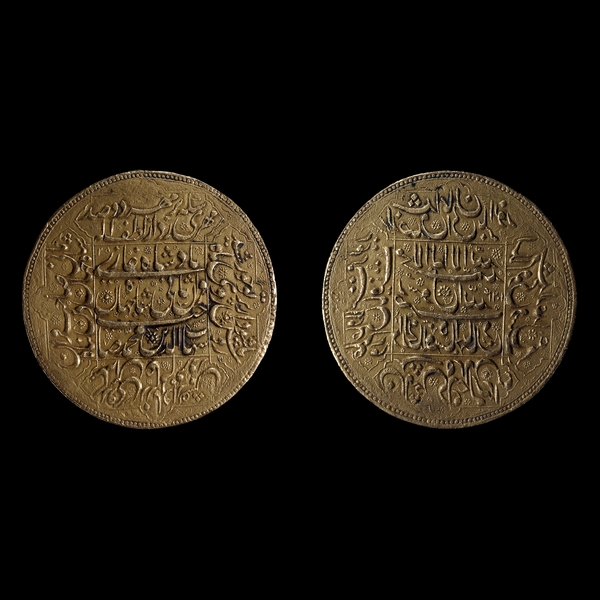
India was the richest country in the ancient world. Until 1987 the largest gold coin was an Indian coin issued by the Mogul emperor Jahangir. Seventeenth century Mogul ruler of India Jahangir recorded in his memoirs presenting a 1000 Mohur coin to Shah of Persia’s ambassador in 1612. That was the only reference to this gigantic coin. Probably one or two only were ever struck.

The coin’s diameter is seven inches, it weighs 27 pounds. The coin was embellished with poetic description of its image in Arabic and Persian. It was written by Jahangir’s court poet. The coin was auctioned in Geneva along with Shahjehan’s 100 mohur gold coin struck in 1639. The mystery owner of the largest coin was auctioned by Swiss auction firm Habsburg Feldman in 1987. Though the owner expected to sell it for ten million dollars he got only 8 million dollars (£4-47 million).

The existence of this coin was unknown, until rumours began to circulate in the market. It was suggested that the coin was removed from the Iranian Treasury by the late deposed Shah and came for sale from his family. The second largest gold coin issued by Shahjehan attracted a bid of £1.56 million. All these prices were 1987 prices. It must have multiplied in value by now.

Latest Gold coin

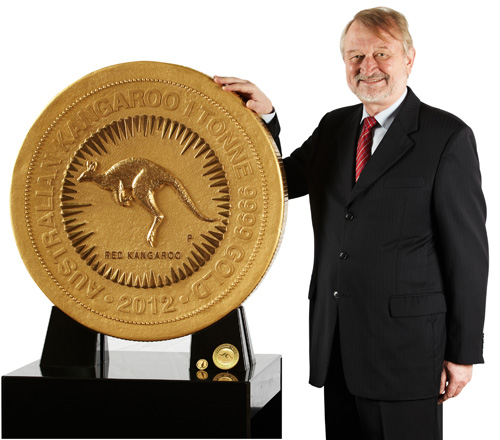
Recently Canada issued a 100 kilo gold coin. But in 2011 Australia made a 1000 kilo gold coin to celebrate Queen Elizabeth’s visit. The gold coin has queen on one side and a leaping Kangaroo on the other side. Its denomination is 1 million Australian dollars. But the actual worth of the coin is £35 million. It weighs 2213 lb, 31 inches wide (80 cm) and 4-7 inches (12 cm) thick. The Western Australian Perth mint took 18 months to make it.

The Australian gold coin is ten times heavier than the Canadian coin, which weighed 100 kilos. With all the modern technology they were able to produce such a big coin. But India led the world till 1987. Nobody produced any coin equal to the Moghul gold mohurs.
Museums and Private parties have India’s riches around the world. They are worth billions of dollars. Tehran Museum in iran is one of the richest museums in the world. A lot of Indian gems and jewelleries are displayed in Tehram museum.

Also read: Rs 1000 Crore Indian Gem Wonder

Indiahhhhh……. Richest Country in The World (Five Parts series)

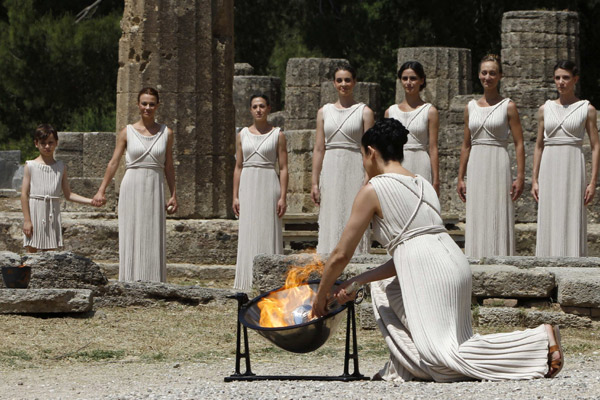
Did Olympics Originate in India?

Picture shows Olympic Torch,Olympia,Greece, May 2012

Olympics originated in Olympia, Greece in 776 BC and were stopped after one thousand years. It was started again about one hundred years ago and held every four years in different cities. This is what we read in encyclopaedias. But not many people know that the ancient Olympics were completely different from the Modern Olympics. In the early stage very few games were held for a day and olive wreaths were given as prizes. But if we look at the prizes offered in India around the same time for winners, no one will have any doubt that India was the pioneer in this field. We gave gold coins and women as prizes. We have enough proof for this in Tamil and Sanskrit literature. When Janaka held a philosophical contest the prize he gave Yagnavalkya was gold coins tied to the horns of cows. When a poor Tamil poet Dharumi went for a poetry contest in the court of Pandya king he was given one thousand gold coins. When Krishna recovered the famous diamond Syamantaka by his heroic deeds he got two women Sathyabama and Jambavati. Yadhava Tamils won girls after bull fighting. So the prizes in ancient India were gold and women, not Olive branches!!

If all the Hindu mythological characters are alive today Krishna would have won gold medal in Discus throw, Parasurama and Kartikeya in Javelin throw, Hanuman in weight lifting, a Tamil in Bull fighting and Rama, Arjuna and Tamil chieftain Ori in Archery (in different Olympics), Bheema and Ghatotkacha in wrestling. Our literatures were very clear about who was good at what. Look at the following proofs and you decide whether we gave this idea of Olympics to the world or not.

  1. Contest in Mahabharata: Arjuna-Karna clash (1400 BC)

Mahabharata, the longest epic in the world wais very clear in describing the archery contest held at Indraprastha. A lot of people contested and when Karna came forward to challenge Arjuna it was declared that an ordinary man can’t challenge a prince. Immediately Duryodhana declared Karna as the ruler of Anga Desa. Karna was loyal to him forever for this face saving measure. We know from this episode contests were held in certain games where Kings from different countries participated. In ancient Greece also not all the men were allowed.

2. Discus throw of Krishna: Lord Krishna’s most famous discus was named as Sudarsana Chakra/ wheel. Unlike other discusses it will come back to him like a Boomerang. Probably Krishna only knew some tricks like googly balls (in Cricket). He beheaded Sishupala with his Boomerang when he made the 100th insult against Krishna. Krishna would have easily won discus gold medal.

3. Weight lifting by Krishna and Hanuman:

For weight lifting gold medal we have two contestants, but in two different Yugas. Hanuman would have lifted the gold in Treta Yuga for lifting Sanjeevi hill and Krishna would have got it in Dwapara Yuga for lifting Govardhana Giri.

Don’t think that all these are myths. They did something  great and so they were remembered. There may be some exaggeration.

4. Krishna’s wrestling with a Mallan

Krishna like Greek hero Hercules did win all the contests. He was to fight with a woman wrestler called  Bhutaki whom he crushed to death.


5. Bull fighting of Krishna

People of cowherd caste (Yadhavas) started this sport in ancient India. In Tamil it was clearly written two thousand years ago that the person who tackled the bull will be married to the daughter of the chieftain. Krishna also had to fight with a bull, which he threw away on a tree like a stone.

6. Bheema’s Gathyudha and Ghatotkachan

Mace fight was one of the sports practised in the ancient world. Bheema and his son Ghatotkacha were champions of this art.

7. Ram’s bow trick: seven trees at one go

When Sugreeva wanted to test the strength of Ram to see whether he was fit enough to fight his brother Vali, he asked him to pierce seven trees with his arrow. Rama did win the contest. This shows that in ancient days however big your name may be, they did test every one before entrusting a task. Contests were there in everyday life.

8. Rama’s javelin throw: Kakasura

Rama threw his javelin (spear) against an anti social element called Kakasura and he had to fall at the feet of Rama to escape from it.

9. Runners to bring sea water

Tamil inscriptions boast about Indian kings bathed in waters of two seas or four seas at the same time. They wanted to show that they have control over the land stretching from one end to another end. Great Gupta king Samudra Gupa also said in his inscription that he controlled the vast land in between two oceans. To get the water from two seas in the East and the West , they had hired runners. The runners did a relay race and brought the water from two seas for the king to bathe. Mayan civilisation also had some runners. They were like the Marathon runners.

10. Breaking the pot

During Krihna Leela celebrations though out India all the sports enthusiasts assemble and climb the oil smeared polls to get the money that was tied at the top. Then they go and break the pots with sticks. It was not an easy job. The people will lift the pots beyond their reach. Whoever wins at the end will get some gold coins or some money.

11. Chariot race: Rituparna

Chariot races were held in ancient India. Rituparana, father of Damayanti of Nishada country was a great charioteer. His chariot was faster than modern Formula one Race cars. Dasaratha was a great charioteer whose chariot can travel in dasa/ Ten directions. At one time Kaikeyi drove that chariot and won the war for him. Vedas mention chariot races.

12. Arya Panan visit to Tamilnadu

Tamil Nadu was a place where all arts and sports were supported. We have references to visiting musicians, gymnasts (Arya Kuthadi) and wrestlers (Arya Porunan) in Tamil literature. This is a very clear reference to travelling sportsmen from North India challenging everyone around the country.

13, Great wrestlers of Mahabharata period

Jarasandhan, Bheema and Ghatotkachan were great wrestlers of ancient India.

14. Wrestling schools in Maharashtra

Following the ancient tradition Maharashtra started wrestling schools in every town.

15. Horses and elephants riding

Kings and princes must learn horse riding and elephant riding. They gave special names for the royal horses and elephants which are in Tamil and Sanskrit books. Krishna’s horse was named Ucchaisravas and Indra’s elephant was named Airavata. More names are found in our Sanskrit and Tamil books.

16. Parasuraman’s javelin:

Parasuraman was a good javelin thrower. He threw his javelin against the sea and the sea went back in fear leaving him a new land called Kerala/ God’s own country. This was a symbolic language to say that he recovered vast lands or won a vast country with his javelin/ spear power.

17. Camel race

Camel race has been practised in Rajasthan deserts for ages.

18. Sanskrit Books on Games

Books on games are written in Sanskrit one thousand years ago. I don’t think any other language has such detailed books on games ( Manasollasam). Of the 64 arts ,one of them is about winning in the games. Chess, Gambling, Dice and such indoor games find a better place in Vedas and epics than out door games.

All these sports and the spirit behind it are equal to the motto of Modern Olympics.

TAMIL OLYMPICS

  1. Bull Fighting

Tamil book Kalitokai described the bull fighting in graphic details. It created lot of excitement among women watchers who will be marrying the winners. The bulls were groomed specially by the ladies for this purpose.

  1. Kabadi

Kabadi is a Tamil game which is included in modern Olympics. Tamils have been playing this game from time immemorial.

  1. Silambam

Silambam was stick fight, but its modern version Fencing / sword fight, is included in the Olympics.

  1. Kraunchabedanar: Javelin throw

Lord Kartikeya must have been an excellent javelin thrower. His spear broke the hill in to two and so he was called Krauncha Bedanar. The Krauncha pass ( also known as Niti pass in the Himalayas) is used by the migratory Krauncha birds from the Northern Siberia even today. Tamil and Sanskrit SKanda Purana praised him for this great task.


  1. Ori’s Bow Trick

Like Rama pierced seven trees at one go, Sangam Tamil literature described how Ori’s arrow pierced five different animals at one go. Paranar praised his great skill in archery. He shot an arrow that went through an elephant, a tiger, a deer ,a boar and a forest iguana!! He would have easily won gold medal for archery. Another great archer was Ekalaivan of Mahabharata period.


  1. Weight lifting: Idumban Kavadi

Weight lifting was done by Idumban, sage Agastya’s helper. Idumban was hired by sage Agastya to carry two hills and he laid them on the ground half way through his journey. When he tried to continue his journey Lord Skanda prevented him from carrying the hills and  Idumban was made the guard of the hills at Palani, a holy town in Tamil Nadu. (Kavadi is like a balance– a rod suspended on one’s shoulder which carried heavy things tied to both the ends of the rod–It is similar to weights in weight lifting on either side.)This story of Idumban is a land dispute between the locals and sage Agastya, but amicably settled in the end.


  1. Hand Ball by women

Foot ball was invented by Mayans of Central America. But hand balls were invented by Tamil women. We have innumerable references to Tamil women playing hand balls in groups (Orai Ayam).


  1. Water Sports: Pari Patal and Attanathi & Adimanthi

Water sports were described in great detail in ancient Tamil book Paripatal and Akananuru. A tragic incident was sung by two or three Sangam poets. Adi Manthi, daughter of great king Karikal Chola married a gymnast who was an expert in Gymnastic swimming. When he was displaying his skill in the river Kaveri during a festival ,something went wrong and he was washed away by the river. The entire crowd was in a great shock. His wife cried in pity and followed him along the river. At last he was saved by a Samaritan and he lost his life in the rescue attempt. This and Paripatal showed very clearly all the water sports like swimming and gymnastics were enjoyed by the Tamils .


  1. Arya Porunan  Vs Panan

Another tragic tale is about a wrestling contest. Panan, a wrestler from North India visited Tamil Nadu and challenged everyone for a contest. His friend Katti was also a North Indian. Tamil Nadu also had a great name in Wrestling –Kanaiyan. He was friendly with another northerner called Arya Porunan. At first Panan from the North challenged Arya Porunan, a migrant from north settled in Tamil country. Arya Porunan’s body was cut into two pieces. His friend Kanaiyan was shaking in fear and ran away from the scene. Now Panan became more arrogant and went to Uraiyur, the capital of Chola country to challenge Thithan Veliyan. Before entering the town he heard about big celebrations for Thithan Veliyan. People were praising his heroic acts. That gave Panan a big shock and now he was shaking in fear. Panan ran away without entering Uraiyur. Tamil poet Paranar made fun of him in his poems (please read my article The First Tamil Historian-Paranar)


  1. Runners: Tamil runners who brought sea water from the west and the east were mentioned in several copper plates. (Details are given above)


  1.  Wrestling School: Like in Maharashtra , Tamils had wrestling schools in every town in ancient Tamil Nadu. The teachers were respected like heroes and strict discipline was maintained throughout one’s learning. These people took the art of Karate to the Far Eastern countries. The Buddhist monks learnt it for their self defence.


  1. Horse riding:

Horse riding was part of a regular syllabus for kings and princes. Kari, the Tamil chieftain had named  his horse Kari as well. Lovers riding the chariots were mentioned in Tamil poems.


  1. Pandya king Javelin throw

Like Parasurama,  a Pandya king was also credited with acquiring a vast country by throwing his spear into the sea. Needless to say that it is a symbolic way of saying he won a country across the sea by his javelin/ spear power. What interests us here is they use Javelin throw as a phrase to bring out a message. My conclusion is Throwing a Javelin was a common sport. The Pandya was Nilam Tharu Thiru Vil Pandyan (Vadivel Erintha Pandya)


Was It Olympics?

How can we call these games Olympics?

We can call these games Olympics because 1. General public were allowed to participate and watch 2.Prizes were given at the end 3.The motto of the games were friendship and culture 4. We did not spill blood like the Romans where slaves were mauled to death by tigers and lions and the Roman kings and the public cheered the Gladiators.


***********************
மாயா இன மக்கள், இந்திய நாகர்கள் !!!

(English translation of this article is already posted here)

மாயா நாகரீகம் மத்திய அமெரிக்க நாடுகளான மெக்ஸிகோ, ஹான்டுராஸ்

குவாடிமாலா, பெலிஸ் ஆகிய நாடுகளில் பரவியுள்ளது. யார் இந்த மாயா இன மக்கள்? இவர்கள் எங்கிருந்து வந்து தென் அமெரிக்காவில் நுழைந்தனர்? இது போன்ற பல கேள்விகளுக்கு இன்னும் எல்லோரும் ஏற்கக்கூடிய பதில்கள் கிடைக்கவில்லை. மாயா நாகரீகம் மர்மங்களும் புதிர்களும் நிறைந்ததாகவே நீடிக்கிறது. ஆனால் இந்துக்களின் கலியுகம் துவங்கும் ஆண்டை ஒட்டியே இவர்கள் ஆண்டும் துவங்குவதால் ஓரளவுக்கு புதிரை விடுவிக்க முடிகிறது. இவர்களுடைய தடயங்களும் சின்னங்களும் கி.மு.2600 முதல் கி.பி.1500 வரை கிடைக்கின்றன. ஆயினும் இவர்கள் காலக் கணக்கீடு கி.மு. ஆகஸ்ட் 11, 3114-ஆம் ஆண்டு துவங்குகிறது. நமது கலியுகம் கி.மு 3102 ல் துவங்குகிறது. உலகில் வேறு யாரும் இப்படி நெருக்கமாக ஆண்டுத் துவக்கத்தைச் சொல்லவில்லை!

அற்புதமான துல்லியமான காலண்டர்கள், வான சாத்திரக் கணக்குகள், பிரம்மாண்டமான கோவில்கள், தங்கம், பச்சைக் கல் நகைகள், புத்தகங்கள் ஆகியன இவர்களின் சிறப்பு அம்சங்கள். 1500ம் ஆண்டுகளில் இவர்களுடைய செல்வத்தைக் கொள்ளை அடித்து இவர்களை கிறிஸ்தவர்களாக்க முயன்ற ஸ்பெயின் தேசத்து ஆட்கள், மாயா இன மக்களை ஈவு இரக்கமின்றி படுகொலை செய்தனர். தங்கம், ஜேட் எனப்படும் பச்சைக் கல் நகைகளை ஸ்பெயினுக்குக் கொண்டு சென்றனர். அருமையான மாயா நூலகங்களைத் தீகிரையாக்கினர். நல்ல வேளையாக மாயா இனக் கோவில்கள் மிகப் பெரிய கோவில்கள் ஆதலால் அவைகளை ஒன்றும் செய்ய முடியவில்லை.

நாகா- கிருஷ்ண பரமாத்மா மோதல்

மஹா பாரத காலத்தில் அர்ஜுனனும் கிருஷ்ணனும் காடுகளை அழித்து நகரங்களை உண்டாக்கி மக்களைக் குடியமர்த்தும் நல்ல எண்ணத்தோடு பெரிய காடுகளை எரித்தனர். காடுகளில் வாழ்ந்த பழங்குடி நாகா இன மக்கள் இதற்கு எதிர்ப்பு தெரிவித்தனர். ஆயினும் அர்ஜுனனும் கண்ணனும் தன் போக்கில் காடுகளை எரிக்கவே நிறைய பேர் இறந்தனர். இது தவிர காளீயன் என்னும் நாகர் தலைவர் இருந்த இடத்தில் மாடு மேய்க்கச் சென்ற இடையர்களுக்கும் காளீயனுக்கும் மோதல் வலுக்கவே அவனையும் கண்ணன் கொன்றான். இந்த மேய்ச்சல் நிலத் தகராறை பிற்கால புராண ஆசிரியர்கள் காளீயன் என்னும் பாம்பைக் கொன்றான் என்று கதை கட்டி விட்டனர். உண்மையில் காளியனும் ஒரு மனிதனே. அவர்கள் நாகர்/ பாம்பு சின்னத்தை அணிந்ததால் நாகர்கள் எனப்பட்டனர். பழங்காலத்தில் மக்கள் தங்களை இனம் காண கரடி (ஜாம்பவான்), கழுகு (ஜடாயு), குரங்கு (ஹனுமான்), பாம்பு (நாகர்) சின்னங்களை அணிவது வழக்கம். காலப் போக்கில் புராணக் கதை சொல்லுவோர் சுவை ஊட்டுவதற்காக இப்படி மிருகங்களின் பெயர்களை உண்மை என்று சொல்லிவிட்டார்கள்.

யாதவர்கள் மீதும் பாண்டவர்கள் மீதும் கோபம் கொண்ட நாகர்கள் பழிவாங்குவதற்காக ஒரு தருணத்தை எதிர் பார்த்துக் காத்திருந்தனர். மய தானவன் என்ற ஒரு நாகர் தலைவன் மட்டும் அர்ஜுனன் கிருஷ்ணர் தரப்பில் இருந்தான்.அவனைக் கானகத் தீயிலிருந்து மீட்டதால் பாண்டவர்களுக்கு உலகம் வியக்கும் அரண்மணையைக் கட்டித் தந்தான். மஹாபாரத யுத்தம் முடிந்தபின், கிருஷ்ணன் ஒரு வேடனின் அம்புக்குப் பலியானான். பாண்டவ சகோதரர் ஐவரும் பழைய கால வழக்கப்படி வடக்கு நோக்கிச் சென்று பாத யாத்திரை செய்து உயிர்த் தியாகம் செய்தனர். அர்ஜுனனின் பெயரன் பரீக்ஷித் ஆட்சிக்கு வந்தான்.

பரீட்சித் மன்னன் காட்டுக்கு வேட்டை ஆடச் சென்றபோது சமீக என்ற முனிவரை அவமானப் படுத்தவே அவர் இன்னும் ஒரே வாரத்தில் நீ ஒரு நாகர் கையால் ( பாம்பு கடித்து ) இறப்பாய் என்று சாபமிட்டார். அவருடைய நாகா இன நண்பர் தட்சகனுக்கு இந்தப் பணியைக் கொடுத்தார். ஒரு வார காலத்துக்குள் எதுவும் நடந்துவிடக் கூடாது என்பதற்காக அரண்மனை “செக்யூரிட்டியை” அதிகப்படுத்தினார். ஆனால் தட்சகன் ஒரு பழக் கூடையில் ஒளிந்துகொண்டு அரண்மனைக்குள் புகுந்து பரீட்சித் மன்னனைப் படுகொலை செய்தான்.

மொகலாய சாம்ராஜ்யத்தில் அவுரங்கசீப்பினால் சிறைப் பிடிக்கப்பட்ட மாமன்னன் சிவாஜியும் இப்படி பழக்ககூடை மூலம்தான் சிறையிலிருந்து தப்பித்து இந்து சாம்ராஜ்யத்தை நிறுவினார்.

பரீட்சித் மன்னன் படுகொலை, பாண்டவ வம்சத்துக்கு ஒரு களங்கமாக அமைந்தது. உடனே மன்னனின் மகன் ஜனமேஜயன் நாகர்களைக் கண்ட இடத்தில் கொல்லுமாறு உத்தரவிட்டான். இந்திரா காந்தியை ஒரு சீக்கியர் கொன்றதற்காக டில்லியில் இரவோடிரவாக ஆயிரக் கணக்கான சீக்கியர்களைக் கொன்றது போல. இந்த நாகர் படுகொலை மக்களுக்கு பெரிய கவலையைத் தந்தது.

பிராமணர் சமாதான உடன்பாடு

அந்தக் காலத்தில் கலப்புத் திருமணம் நிறைய நடந்தது. ஜரத்காரு என்ற ஒரு பிராமண ரிஷி / முனிவர் ஒரு நாக இனப் பெண்ணை மணந்து கொண்டார். அகத்தியர் வழியில் பிறந்த பிற்கால அகத்திய ரிஷி கம்போடியாவில் உள்ள யசோவதி என்ற நாக மங்கையை மணந்தது போல. பீலிவளை என்னும் நாக இன அழகியை சோழன் கிள்ளி வளவன் மணந்தது போல.

அந்தப் பிராமண முனி ஜரத்காருவுக்கு ஆஸ்திக முனிவர் என்று ஒரு மகன் இருந்தார். அவருக்கு அரசாங்கத்தில் நல்ல செல்வாக்கு. ஆக அவரைத் தேர்ந்தெடுத்து சமாதான தூது அனுப்பினர். அவருடைய தூது வெற்றி பெற்றது. நாகர்கள் படுகொலை நிறுத்தப்பட்டது. அவர்களும் பாண்டவ வம்சத்தைத் தொடுவதில்லை என்று சபதம் செய்தனர்.

விந்தையிலும் விந்தை! 5000 ஆண்டுகளுக்கு முன்னால் ஏற்பட்ட இந்த சமாதான உடன்பாட்டை இன்றும் பிராமணர்கள் மூன்று வேளை சந்தியாவந்தனத்தில் ஒரு மந்திரமாக சொல்லுகிறார்கள் ( நர்மதாயை நம: என்னும் இந்த மந்திரம் நர்மதை நதிக்கரையில் நடந்த சர்ப்ப யாகத்தை நினைவு படுத்துகிறது) அந்த மந்திரத்தில் நாகர்கள், ஜரத்காரு, ஜனமேஜயன், ஆஸ்தீகர் ஆகிய அனைவரும் நினைவு கூறப்பட்டு புகழப் படுகின்றனர். உலகிலேயே மிகப் பழைய சமாதான உடன்பாடு இதுதான்!!

இதைத் தொடர்ந்து மாயா இன மக்கள் இந்தியாவிலிருந்து வெளியேறத் துவங்கினர். அவர்கள் புண்ய பாரத நாட்டை விட்டு வெளியேறிய தேதி ஆக்ஸ்ட் 11, கி.மு.3114 என்பதால் தான் அந்த தேதியை இன்றும் மத்திய அமெரிக்க கல்வெட்டுகளில் பொறிக்கின்றனர். இந்தியாவின் மீது அவ்வளவு நன்றி! ஜனமேஜயர் ஆட்சிக்கலத்தில் இது நடந்தது.

இந்துக்கள் கலியுகத்துக்கு முந்தைய காலம் பற்றித் தெளிவாகக் கூறுகின்றனர். ஆனால் மாயாக்கள் இதற்கு முன் எங்கேயிருந்தனர் என்பது பற்றி ஒன்றும் கூறவில்லை.

அதிசய நாகா ஆடைகள்

சங்கத் தமிழ் இலக்கியத்திலும் மஹாபாரதத்திலும் நாகர்கள் தயாரிக்கும் அதிசய உடுப்புகள் பற்றியும் இரண்டு குறிப்புகள் கிடைக்கின்றன. அதியமான் நெடுமான் அஞ்சிக்கு நீல நாகன் என்பவன் கொடுத்த அற்புதமான ஒரு ஆடையை அவன் தான் அணியாமல் சிவ பெருமானுக்குச் சூட்டியதாக புலவர்கள் (சிறுபாஅண். 96-99) பாடுகின்றனர். இதே போல நிஷத நாட்டு மன்னனான நளனுக்கு கார்க்கோடகன் என்ற நாகர் இனத் தலைவர் ஒரு ஆடையைக் கொடுத்து அவன் மனைவிக்கு அடையாளம் தெரிய அதைப் போட்டுக் கொண்டால் போதும் என்கிறான். அதாவது நளனுக்கும் அவன் மனைவி தமயந்திக்கும் அந்த ஆடை பாற்றி முன்னரே தெரியும்.

நாகர்கள் பாம்புத்தோல் போன்ற மெல்லிய ஆடைகளை அணியும் நெசவாளர்கள். சங்க இலக்கியம் பல இடங்களில் பாம்புத் தோல் போன்ற மெல்லிய ஆடைகளைப் பற்றி (பொருநர். வரிகள்82/83, புறம்383) பேசுகிறது.

(இத்துடன் நாகர்-மாயா அற்புத ஒற்றுமைகள் பற்றித் தொடர்ந்து வரும் இரண்டு கட்டுரைகளையும் படிக்கவும்).

************************************