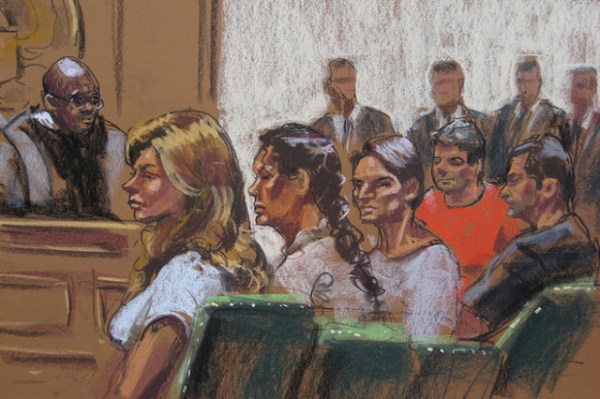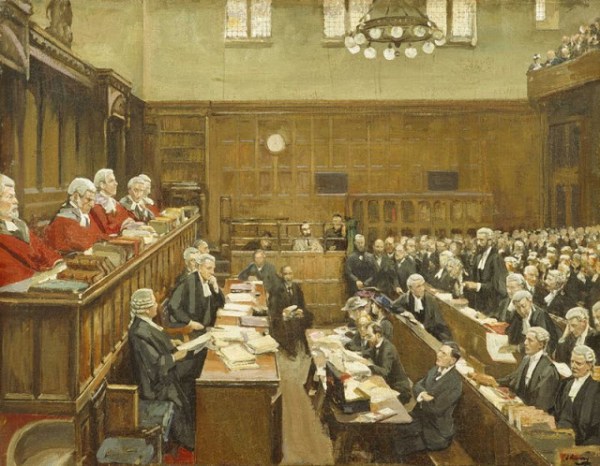
ADVICE TO JUDGES! (Post No.3370)

Written by London Swaminathan


Date: 19 November 2016


Time uploaded in London: 11-14 am


Post No.3370


Pictures are taken from various sources; they are representational only; thanks.


contact; swami_48@yahoo.com


MORE COURT TRIAL ANECDOTES (Please read my earlier posts about court cases)


Don’t burn them, Read them!

When the celebrated Dunning, afterward Lord Ashburton, was “stating law” to a jury in court Lord Mansfield interrupted him by saying, “If that be law, I’ll go home and burn my books.”

My lord,” replied Dunning, “you had better go home and read them.

Xxxx


Who is Offensive!

One of Winston Churchill’s favorite stories is of the Earl of Birkenhead as a young barrister. He had gotten into a heated controversy with the Judge over some aspect of a case. Their remarks grew more and more and personal.


At last the Judge said, “Young man, you are extremely offensive. “Yes,” said the Earl, “we both are. But I am trying to be, and you can’t help it.”

Xxxx

Lincoln’s Argument!

Once opposing counsel objected to a juror on the ground that he knew Mr. Lincoln, and as this was a reflection upon the honor of a lawyer, Judge Davis promptly overruled the objection. But when Lincoln, following the example of his adversary examined two or three of the jury and found that they knew his opponent, the Judge interfered. “Now, Mr. Lincoln,” he observed severely, you are wasting time. The mere fact that a juror knows your opponent does not disqualify him.”


“No, Your Honor responded Lincoln dryly, “but I am afraid some of the gentlemen may not know him which would place me at a disadvantage.”

xxx

Hang me!

Thelwall, about to be tried for treason, wrote to Lord Erskine, the following laconic epistle: “I shall plead my own cause. To which Erskine as laconically replied “You’ll be hanged if you do”.


Mr Thelwall wittily rejoined: “Then if I do, I will be hanged.

xxxx
Straightforward Judge!

A certain judge in the mining territory of Nevada had a reputation for probity (Honesty). In keeping with this opinion, he opened a mining claim case one morning with the following words to the court “Gentlemen, this court has received from the plaintiff in this case a check for $10,000. He has received from the defendant a check for $15,000. The court has returned $5,000 to the defendant and will now try the case on its merits.


—Subham–


Tolerance Anecdotes: Abraham Lincoln and his Horse! (Post No.3365)

Compiled  by London Swaminathan


Date: 18 November 2016


Time uploaded in London: 9-17 am


Post No.3365


Pictures are taken from various sources; they are representational only; thanks.


contact; swami_48@yahoo.com


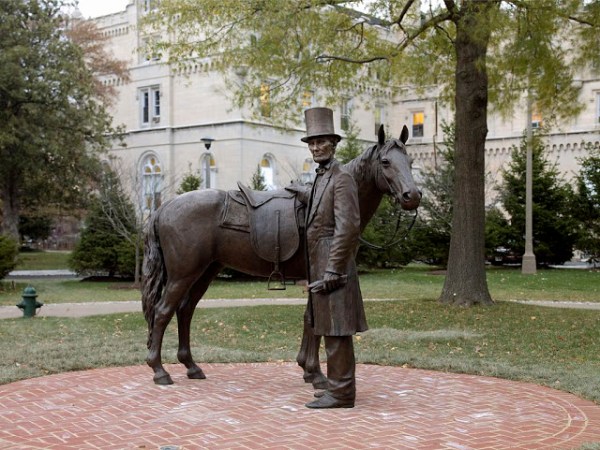
Abraham Lincoln’s lame horse!


When Abraham Lincoln used to be drifting around the country, practising law at Fulton and Menard counties, Illinois, an old fellow met him going to Lewiston, riding a horse, which, while it was a serviceable enough animal, was not of the kind to be truthfully called a fine saddler. It was a weather beaten nag, patient and plodding, and it toiled along with Abe–and Abes books, tucked away in saddle bags, lay heavy on the horses flank.

Hello, Uncle Tommy, said Abe.

Hello Abe, responded Uncle Tommy. I am powerful glad to see ye, ye, for I am going to have something for you at Lewiston cot, I reckon.

How is that? Uncle Tommy, said Abe

Well, Jim Adams, his land runs long o mine , he is pestering me a heap, and I got to get the law on Jim, I reckon.

Uncle Tommy, you have not had any fight s with Jim, have you?

No

He is a fair to middling neighbor isn’t he?

Only tolerable, Abe.

He has been a neighbor of yours for a long time, hasn’t he?

Nigh on to fifteen years.

Part of the time you get along all right, don’t you?

I reckon, we do Abe

Well, now, uncle Tommy, you see this horse of mine?

He isn’t a good horse as I could straddle, and I sometimes get out of patience with him, but I know his faults. He does fairly well as horses go , and it might take me a long time to get used to some other horses faults. For all horses have faults. You and uncle Jimmy must put up with each other as I and my horse do with one another.

I reckon, Abe, said uncle Tommy, as he bit off about four ounces of Missouri plug, I reckon you are about right.

And Abe Lincoln with a smile on his gaunt face rode on toward Lewiston.


Xxx

Colour one cheek!

Sir Francis De Sales, being consulted by a lady on the propriety of wearing rouge, replied,

“Some persons may object to it, and others may see no harm in it, but I shall take a middle course, by allowing you to rouge on one cheek.”


Xxx

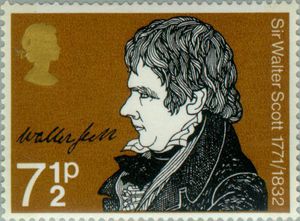
Sir Walter Scott’s Advice

Sir Walter Scott, once happening to hear his daughter Anne say of something that it was vulgar, gave the young lady the following rebuke:

“My love, you speak like a very young lady; do you know, after all, the meaning of this word vulgar? It is only common. Nothing that is common, except wickedness, can deserve to be spoken of in a tone of contempt.”

–Subham–


COURT TRIAL ANECDOTES (Post No3354)

Compiled  by London Swaminathan


Date: 14 November 2016


Time uploaded in London: 12-35


Post No.3354


Pictures are taken from various sources; they are representational only; thanks.


contact; swami_48@yahoo.com

‘Back’ to the Bench!

Knowing  his client to be innocent, the defence lawyer rested his case in the assurance that all would be well. Great was his astonishment when the justice of the court pronounced the man guilty, and imposed a fine of fifty dollars and a jail sentence.

The lawyer deliberately turned his chair so that his back was to the bench.

“Fine me too”, he said in a loud voice.

Why?, asked the justice.

For contempt

Bewildered, the justice said, Contempt? But you haven’t said a word.

Exactly, My contempt is silent”.


Xxx


DOG MURDER!

A sentry near one of the army camps on Long Island was bitten by a valuable dog from one of the neighboring estates, and in self-defence drove his bayonet into the animal. The owner brought charges against him to retrieve its value and the evidence showed that the sentry had not been badly bitten.

“Why did you not knock the dog with the butt end of your rifle asked the judge. The sentry clinched his case by replying, “Why didn’t he bite me with his tail?”

xxx


Wife desertion!


“I feel very strongly on this subject and must deal severely with you,” began the Judge, in his address to Sam, who was in court on a charge of wife desertion.


“But, Boss, you don’t understand,” protested the Negro.

“You don’t know my old woman. I ain’t no deserter. I’se a refugee!”


xxxx


Deaf men Case

A deaf man went to law with another deaf man, and the judge was much deafer than either. One of them asserted that the other owed him five months’ rent, and the other said that his opponent had been grinding corn at night to avoid the tax.


The judge looked at them and said, “Why are you quarrelling; She is your mother; you must both support her.

Xxxx SUBHAM xxxxx

SUPREME COURT JUGDES DON’T KNOW THE LAW! COURT ANECDOTES (Post No.3351)

Written by London Swaminathan


Date: 13 November 2016


Time uploaded in London: 16-13


Post No.3351


Pictures are taken from various sources; they are representational only; thanks.


contact; swami_48@yahoo.com


LAW AND JUSTICE COURTS ANECDOTES


Chief Justice Fuller was practicing before Judge Mac Arthur of the Supreme Court of Illinois in Chicago. In his speech before the Judge he pleaded his client’s ignorance of an offense he had committed.


The Judge said, “Every man is supposed to know the law Mr. Fuller.”


“I am aware of that,” responded Mr. Fuller.


“Every shoe- maker, tailor, mechanic and illiterate laborer is presumed to know the law. Yes, every man is presumed to know it, except the judges of the Supreme Court, and we have a Court of Appeals to correct their mistakes.

XXX


COURT IS FULL OF THIVES!

The highly nervous young lawyer stepped up to plead his case before the Court. It was in New York City. He laid his coat and hat on the bench and stood before the Judge.


“Is this the first time you’ve practiced in this Court?”


“Yes, your Honor replied the lawyer, feeling nervous and afraid he had already committed some breach of precedent.

“Then get your hat and coat and put them where you can keep an eye on them.

XXX


Fine Cancelled!

There seems to be enough evidence to prove that, even if Abe Lincoln had never been President of the United States, he still would have become immortal as a story teller. Here is another example of his talents in that direction as related by a court clerk


“I was never fined but once for contempt of court. Davis fined me five dollars. Mr. Lincoln had just come in, and leaning over my desk had told me a story so irresistibly funny that I broke out into a loud laugh. The Judge called me to order, saying, “This must be stopped. Mr. Lincoln, you are constantly disturbing this court with your stories.”

Then to me: “You may fine yourself five dollars. I apologized but told the Judge the story was worth the money.


In a few minutes the Judge called me to him. “What was that story Lincoln told you?” he asked. I told him, and he lauged aloud in spite of himself.

“Remit your fine, he ordered.

xxx


CONTEMPT OF COURT?

When Stevens was a young lawyer he once had a case before a bad-tempered judge of obscure Pennsylvania court. Under what he considered a very erroneous ruling it was decided against him; thereupon he threw down his books and picked up his hat in a state of indignation, scattering imprecations all around him.


The judge assumed an air of offended majesty, and asked Thaddeus Stevens if he meant to express his “contempt for this court?” Stevens turned to him very politely, made a respectful bow and feigned amazement.


“Express my contempt for this court? No sir I am trying to conceal it, your honor,” adding as he turned to leave, “but I find it damned hard to do it.”

xxx


PUNISHEMNT FOR SILENCE!

A Chinese thus describes a trial in the English law courts :–

“One man is quite silent, another talks all the time, and twelve men condemn the man who has not said a word.”

XXX

Don’t Tax Brahmins: Manu’s Warning! (Post No.3347)

Research article written by London Swaminathan

Date: 12 November 2016


Time uploaded in London: 8-16 AM


Post No.3347


Pictures are taken from various sources; they are representational only; thanks.


contact; swami_48@yahoo.com


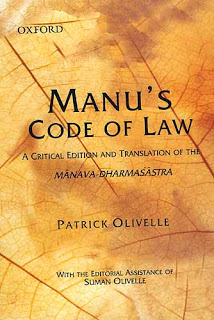
Manu in his Manava Dharmasastra gives lot of concessions to Brahmins. At the same time he lays down very strict rules for the Brahmins. He asks the kings nit to tax the Brahmins. Chapter seven of the book contains rules regarding taxation; we get precise rates of taxation from Kautilya’s Arthasastra. But that is a book on Economics. Though Manu also mentions the proportion of tax in some of his couplets, it is not very comprehensive.


Here are some interesting couplets on taxation:

Even if he is dying of hunger, a king must not take taxes from a priest who knows his Veda by heart and no priest who knows his Veda by heart living in his territory should faint with hunger (7-133)


If a priest who knows his Veda by heart faints with hunger, the kingdom of the king in whose territory he lives will also soon faint with hunger (7-134)


The king should always establish the taxes in his kingdom after due consideration, in such a way that both the king and the man are rewarded 7-128

Leech, Calf and Bee

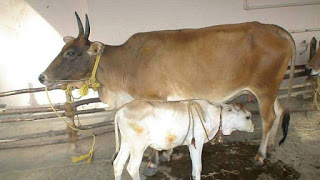
Just as the leech, the calf and the bee eat their food little by little, so the king should take the early taxes from the people little by little 7-129


The king should take a fiftieth part of livestock and god and an eighth or a sixth or a twelfth of crops.7-130


My comments:-

We may think that Manu is unbalanced in his views. But if we replace the word Brahmins with the word “Intellectuals”, then we will understand the significance of his rule. Poor Intellectuals, if exempted from taxes, will work more efficiently to elevate the society.

Thousands of Tamil inscriptions and epigraphs on land donations to Brahmins and the temples talk about the exemption of taxes to Brahmins. So we know that Manu’s laws regarding Tax exemption were followed by the kings for a very long time.

The simile of leech, calf and bee allows us to give a new interpretation: If one is wealthy suck his blood, that means take more tax. We do see such things in most of the countries the rich are taxed up to 60%. If one belongs to the middle income group, be a calf in taxing. If someone is poor be a bee to him.


Tamil Veda Tirukkural says don’t tax the people like a robber (Kural 552)


A sceptered king demanding illegitimate gifts or exhorting taxes beyond approved limit

Is like an armed robber relieving wayfarers of their belongings. (Kural 552)


Kalidasa says be a sun when you tax the people. Take the water with your thousand hands (rays) and return it with million drops of rain (benefits) in his Raghuvamsa Kavya(1-18)

Taxation in Sangam Tamil Literature

Sangam Tamil literature gives details of import tax. When goods were brought in from foreign countries they were taxed.

Pisiranthaiyar, a famous Tamil poet advises his king Panyan Arivudai Nambi to follow moderation in taxing. He gives a beautiful simile to emphasize his point.

If an elephant is fed with cooked food mouth by mouth from a small patch of land, the harvested grains will last for many months. If the same elephant is allowed to graze the fields larger in size, there will be more wastage than the food it took. The crops will be crushed under its feet and left wasted. So be wise in taxing the people. Don’t crush them under your feet like a rash elephant. Take it little by little.(Puram 184)

Later day Tamil inscriptions gives a long list of different taxes.

–Subham-


A Wife is a Gift from the Gods- Manu Smrti (Post No 3325)

Compiled  by London Swaminathan


Date: 6  November 2016


Time uploaded in London: 18-08


Post No.3325


Pictures are taken from various sources.


contact; swami_48@yahoo.com


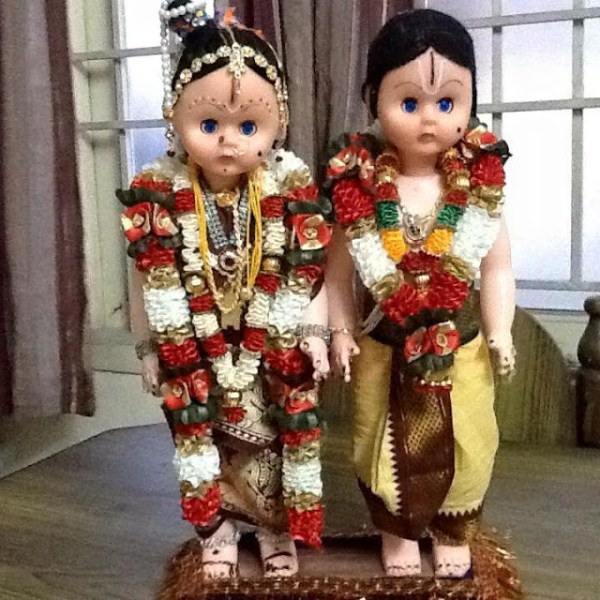
HINDU MARRIAGES (vivaha)—Part 1


(Following is the edited version of  Hindu marriage from the book The Hindu at Home written by The Rev. J E Padfield, published in 1908. He has described the five day marriage in Brahmins’ houses 100 yeaars ago in detail. I will post it tomorrow)

“The nuptial ceremony is considered as the complete institution of women, ordained for them in the Veda, together with reference to their husbands (Manu, ii. 67.)


HINDU laws and regulations on the marriage question take it for granted that all men and women must marry. It is only those who may be suffering from disqualifications of mind or body that do not marry. There are no old bachelors or old maids amongst the Hindus. It appears quite clear that in Vedic time there was some liberty of choice amongst both men and women, as to their partners; for it is thus written.


Love Marriage in not wrong!


“Three years let a damsel wait, though she be marriageable; but, after that term, let her choose for herself a bridegroom of equal rank.

If, not being given in marriage, she chooses her bridegroom, neither she nor the youth chosen commit any offence.


But a damsel, thus electing her husband, shall not carry with those her the ornaments which she received from her father, nor given by her mother or brethren: if she carries them away, she commits theft (Manu, ix. 90-92.)

A thirty year old man should marry a twelve year old girl who charms his heart, and a man of twenty four, an eight year old girl; and if duty is threatened, he should marry in haste.

A husband takes his wife as a gift from the gods, not by his own wish; he should always support a virtuous woman, thus pleasing the gods- 9-94-96

Vedic Age and Modern Kali Yuga


But whatever liberty may have existed in respect in ancient times it very certain that such is not the case now. The institution of child marriage has entirely destroyed that liberty.


Amongst Brahmins, and Vaisyas, a boy cannot be married until he has invested with the marks of the twice-born (upanayanam), though they are often married immediately after that event. Girls must be married before puberty and usually it is done  whilst they are quite young.


Marriages can only take place between those of the same caste and the same sect. there are also prohibitive degrees of tribe and family which marriages are not allowed. Amongst the larger sects this does not act much as an obstacle but amongst the smaller ones it often causes great difficulty.


There are also natural likes and dislikes, some of which are thus alluded to by Manu, and which evidently point to a period when marriages were settled at a more natural age, and in a more natural manner.


Don’t marry Talkative Girl!


“Let him not marry a girl with reddish hair, nor with any deformed limb, nor one troubled with habitual sickness, nor one either with no hair or with too much, nor one immoderately talkative, nor one with inflamed eyes.


“Let him choose for his wife a girl whose form has no defect, who has an agreeable name, who walks gracefully, like a swan, or like a young elephant, whose hair and teeth are moderate respectively in quality and in size, whose body has exquisite softness.” (iii. 8 and 10).


The two institutions of polyandry and polygamy exist in India. The former cannot be said as a Hindu institution; indeed it is utterly opposed and  abhorrent to very spirit of  Hinduism.  It is practised by such unorthodox Hindus as the Todas of the Nilgiris and the Nairs of Western Coast. But it is only a local and in no sense a universal custom.


Polygamy, however, is a true Hindu institution, and it is duly legislated upon in the various codes. Manu lays down the law as follows:

For the first marriage of the twice born classes, a woman of the same class is recommended; but for men who are driven by desire to marry again women in the direct order of the classes are to be preferred.

(iii. 13)


This only alludes to a state of things in those early Vedic days; in this Kali Yuga or degenerate age, though a man may have, and in some cases, should have, more wives than one at the same time, it can only be within strictly recognized caste limits.

One Wife from Each Caste!


One of the stories in the Vickramarkacharitra turns upon the fact of a Brahmin being allowed to take to wife a woman from each of the four castes. Now, however, no one, especially a Brahmin, dares to marry outside of his own caste; but, within these  limits, there are circumstances under which it is rather incumbent upon a Hindu than otherwise to take a second wife.


When can you marry a Second Wife?


Should his wife prove barren, or should all the male issue die, then very often, the husband will be pressed by the wife herself to re-marry, so that there may be surviving male issue, and thus the reproach of the family be wiped away and the future salvation of those concerned fully assured. This concession is, however, guarded round with conditions, some of which are thus stated by Manu:–


“A barren wife may be superseded by another in the eighth year, she whose children are all dead in the tenth, she who brings forth only daughters in the eleventh, she who speaks unkindly without delay.” (ix. 81.)

Another condition, not absolutely binding in all cases, is that the first wife should consent to the remarriage. It is not difficult to understand how reluctant a woman would naturally be thus to have a sharer in her husband’s affection.


The desire, however, for male issue, indeed the absolute necessity for a son, either born or adopted, is so overpowering that it is not so unusual a thing as might at first be supposed, for a woman, at all and any risk to her own personal happiness or the family, to strongly desire her husband to seek out another woman and bring her to his home.

Cousin Marriage!


Amongst the Telugu people ‘menarikam’, which means that a youth should marry his mother’s brother’s daughter, and a girl should marry her father’s sister’s son. Failing such relationships, the choice is left free, that is free within the proper limits of caste and sect.


There are, however, some sects of Brahmins who are opposed to this menarikam rule, thinking the blood-relationship is too close for marriage.


There is another bar to marriages amongst Hindus that does not exist amongst Europeans, and that is that a younger brother cannot marry until the elder one is married. Neither can a younger sister marry  before the elder one is disposed of. This is not a mere custom,  it is according to what is strictly laid down in the code. Manu says


Five people go to hell!


“He who makes a marriage contract with the connubial fire, whilst his elder brother continues un married, is called a parivetru and the elder brother a parivitti. The parivetru, the parivitti, the damsel thus wedded, the giver of her in wedlock and fifthly, the performer of the nuptial sacrifice, all sink to a region of torment (Manu, iii. 171, 172.)


To be continued…………………..


Sarvam Satye Pratishtitam ! Everything Rests on Truth (Post No.3322)


Written  by London Swaminathan


Date: 5  November 2016


Time uploaded in London: 19-48


Post No.3322


Pictures are taken from various sources; they are only representational.


contact; swami_48@yahoo.com


India cannot be defeated by any one at any time. India cannot be wiped out from the map of the word; the reason being its motto is Satyameva Jayate (Truth alone Triumphs). It is a Upansishadic quotation. Every one of us has a name and most of the Hindus have horoscopes. These birth charts and our names are indicators of our virtues as well as our future. India knowingly or unknowingly chose the famous Vedic quote on Truth as its motto and the greatest Hero Bharat as its name. If India is defeated truth is defeated. As a natural law, truth can never be defeated.


Truth is in Indian’s blood. In the olden days, people of  the three castes left their children at the house of the Guru for 12 to 24 years for learning the scriptures, science and weapony. The first lesson they were taught was ‘Satyam Vada’ (Speak Truth) and then Dharmam chara (Do charitable work). So they have learnt it from the very first day in school at the age of 5 or 7 or 9.


No religion or no culture or no country in the world emphasizes TRUTH to this extent. Here are some of the beautiful quotations on truth from Bhagavata and Mahabharata:–

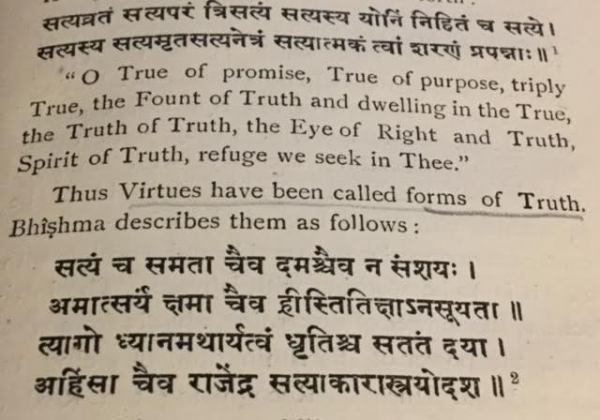
Satyavratam satyaparam trisatyam satyasya yonim nihitam ca satye

Satyasya satyamruta satyanetram satyaatmakam tvaam saranam prapannaah

Vishnu Bagavata 10-2-26

O ,True of promise, True of purpose, triply True, the Fount of Truth and dwelling in the true, the Truth of Truth, the Eye of Right and Truth, Spirit of Truth , refuge we seek in Thee.


xxx


Satyamruta ca samaras caiva damascaiva na samsayah

Amaatsaryam kshmaa caiva hriistitikshaa anasuuyataa


Tiago dhyaanamathaaryatvam dhrutisca satay am dayaa

Ahimsa caiva Rajendra satyaakaaraa trayodasa


Truthfulness, equability, self control, absence of self display, forgiveness, modesty, endurance, absence of envy, charity , a  noble well wishing towards others, self possession, compassion, and harmlessness — surely these are the thirteen forms of Truth.

Truth is that which is ………….

As Bhisma says

Satyam brahma sanaatanam

Sarvam satye pratishtitam

Truth is the eternal Brahman……..

Everything rests on Truth


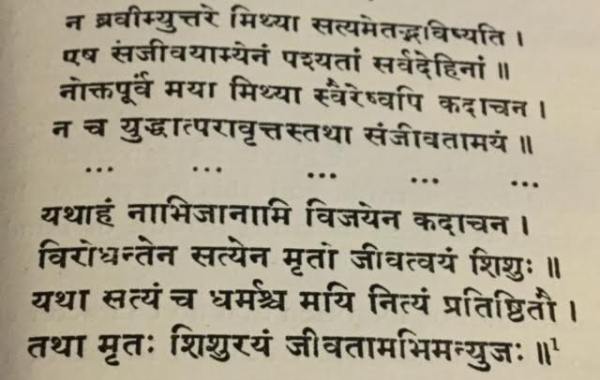
Truthfulness was in ancient days, the leading characteristic of the Hindu, and is constantly alluded to as a constituent in the heroic character. Thus, when about to revive the dead child of Abhimanyu, Shri Krishna says


“O , Uttara! I speak not falsely, and this shall truly come about . Even now do I revive this child ; let all beings behold it.


“As I have never uttered an untruth, even in play, as I have never turned back from battle, so may this infant  live.


“As I have never known dispute with Arjuna, so by that truth may this dead babe revive.


“As truth and Dharma ever dwell in Me, so may the dead child of Abhimanyu live.


Other heroes repeatedly make the same statement


“My lips have never uttered an untruth”


Shri Rama goes into exile for fourteen years in order that his father’s promise may remain unbroken.

Yudhishtira refuses to struggle for his kingdom before due time, because he has promised to remain in exile.


Truth is emphasized in all the literatures of India. Tamil Veda Tirukkural written by Tiruvalluvar has a chapter on Truthfulness. He says

Speech which causes no harm whatsoever to anyone is called Truth (Kural 291)

It it will produce pure, unmixed good even falsehood may be considered Truth (292)

If a man could conduct himself true to his own self he would be in the heart of all in the world (294)


All lamps are of no avail. The light of truth is the only lamp which the wise cherish (299)


Tiruvalluvar says if one practises truth (297) then he does not need to follow any other virtue. Truth alone will save him.


Satyameva Jayate!


–Subham–


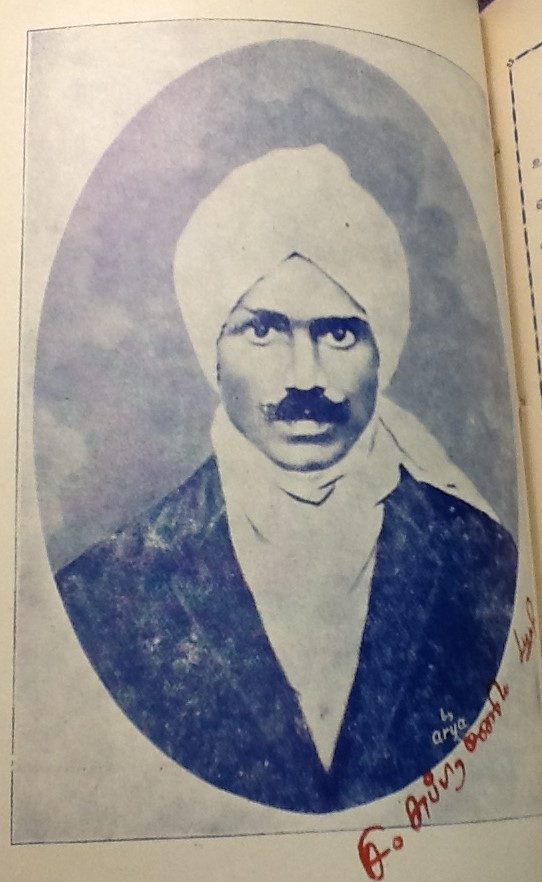
Poet Bharati’s Quotations in English (Post No.3303)

IMG_3645 (2)

Compiled  by London Swaminathan


Date: 30 October 2016


Time uploaded in London: 13-29


Post No.3303


Pictures are taken from various sources; thanks


November 2016  ‘GOOD THOUGHTS’ Calendar


Important days

November 5-Kanda Shashti, Sura Samharam; 14- Guru Nanak Jayanti, Children’s Day in India; 22-Kala Bhairava Ashtami; 23-Sathya Sai Baba’s Birth Day.


Ekadasi-11, 25;Full Moon-14;New moon-29; Auspicious days-2, 4, 6, 7, 9, 11, 20, 27
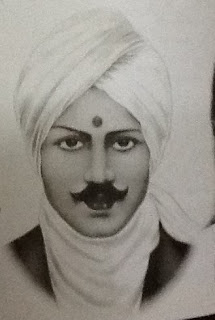
November 1 Tuesday

May Tamil great and Tamils good flourish!

May Bharat great, a gem divine flourish;

May ills that this day torture us, perish!

May good things reach us.


November 2 Wednesday

Even when limbs grow weak, for its food

The lion accepts not the flesh

Offered by a fox


November 3 Thursday

You are knowledge; you are dharma indeed

You are our heart; you are our very soul

You are also the life in our body (B C Chaaterji’s Vandemataram)

November 4 Friday

The lives of great men all remind us

We can make our lives sublime

November 5 Saturday

King of bards of Kudanthai! The praise of Tamil brads

So long as the Potikai bred tongue lasts

Shall be yours; their hearts will always bless you;

You will surely thrive deathless for ever (about U.Ve.Sa)

November 6 Sunday

The wondrous mantra that in love

Is chanted, the mantra at which

Foes shudder, is Vade Mataram.

Even if sinners chant this mantra

They will attain to culture sublime
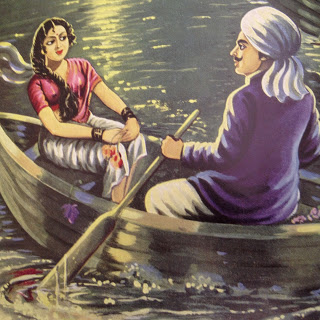


November 7 Monday

Its billions and billions of scholars wise

For thousands of yugas failed to know

This “I”, can I its nature realise?

Can the fish know the greatness of sea;oh!


November 8 Tuesday

This is the nation where flourished mighty kings

And saints blemishless, dharma incarnate!

This nation dubbed the ignoble woman

Who bore not heroes, as nullipara

November 9 Wednesday

Ancient is Bharat and you her children!

Forget not; Bharat is the Tilka of earth

You are her children; forsake not this thought.


November 10 Thursday

May Aryas stay here! May men remain here!

May the heroic and the lofty stay here!

May they who meanness brook, stay here!

May sons of ceaseless love for Motherland, stay here!

May they who die when glory dies, stay here.

November 11 Friday

As loving kindness marks them

Even as exemplary virtue

As they know of God’s nature

They came to be called Brahmins


November 12 Saturday

No more talk of caste and creed

No more talk of birth and breed;

Who first drew breath in this our land

Brahmin or other caste, with us he will stand


November 13 Sunday

This is our Motherland, Bharat!

Its here our parents dear loved and lived

In joyous wedlock, pure.

Our forebears too in ages past

Had lived for centuries, here they died.


November 14 Monday

Himachal is our mountain

The world hath not its fellow;

Ganga is our fountain

Pellucid, sweet and mellow


November 15 Tuesday


Our Upanishads are twelve

Unknown to any other clime

Deep into our minds they delve

And soar aloft sublime.


November 16 Wednesday

Land of the heroic free

Where sages have lived at peace,

Soothed by the poesy

Of Nard’s melodies;

Where Buddha came t birth

–The embodiment of grace–
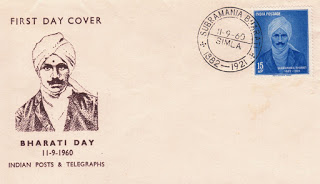


November 17 Thursday

Will knowers of truth think on you Maya?

Can you dare harm the stout-hearted at all?

Maya! May be you are arm potent;

Still can you brave the flame of Mind’s clarity?


November 18 Friday

When will this thirst for freedom slake/

When will our love of slavery die?

When will our Mother’s fetters break?

When will our tribulations cease?

November 19 Saturday

Eighteen are the languages

That she speaks;

But animating them all

Is only one thought

November 20 Sunday

Vedas are the speech

Of this sword-wielding Lady;

Merciful to her votaries,

She extirpates evil men


November 21 Monday

A thousand castes we have, oh dear!

But outsiders have no place here.

However, they quarrel, can the sons of one mother

Cease to be brothers of one another?


November 22 Tuesday

Time was when Pandits of the world

-Authors of millions of great works –

Came thronging here in great quest

Of the unique truth ultimate
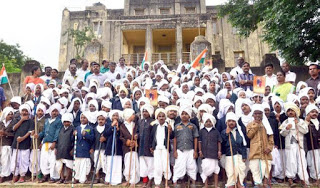


November 23 Wednesday

With tears, not water, this plant we reared;

Is it your pleasure, Lord, it should be seared?

A lustrous lamp with our life’s ghee fed;

Is it your pleasure it should be dead?

After years a thousand there came on a day

A diamond most dazzling; shall we throw it away?


November 24 Thursday

Vikrama of Seventeen Fiftysix,

Annus mirabils! …. Guru Gobind,

The elixir great of mighty victors

Furbished at Anatpur in joyance great


November 25 Friday

Goddess Parvati who wields ten weapons

Lakshmi gladly throned on Lotus, Vani

By whom is buddhi blest, are but Thee, Mother (India)!


November 26 Saturday

The Vedic hymns, in joy, She sings

With Spear of Truth, Her canter rings.

She strews sastras, the Mother kind

Within the reach of all mankind

November 27 Sunday

Rajput heroes whose fame will not fade

Till the end of entire world

Or as long as martial powers lasts

Or as long as chaste women breathe


November 28 Monday

The natives of Punjab and those of great realms

Whence heroes from Arjun onward took birth,

They of Bengal who even when they slumber

Forget not their devotion to the feet of Mother!


November 29 Tuesday

The sweated labour and the plough

Of us shall honoured be;

Vain revellers a target stand

Unto our mockery;

November 30 Wednesday

Thoughts and aims must come to pass

And the mind shall think only good

A stout and sturdy heart I seek

And a clear lucid intellect.


—Subham–


Discipline Anecdotes (Post No.3300)

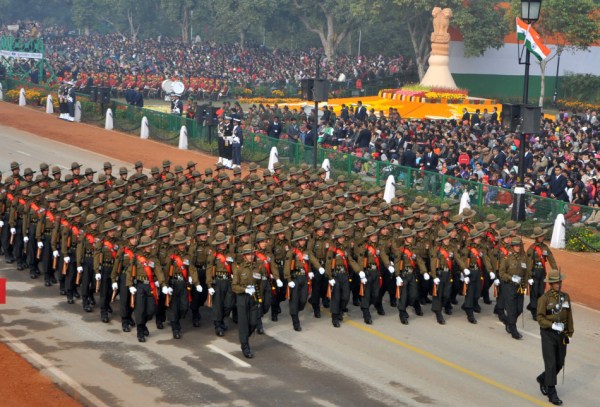
republic-day-parade13

Compiled  by London Swaminathan


Date: 29 October 2016


Time uploaded in London: 14-16


Post No.3300


Pictures are taken from various sources; thanks


militarydisciplinehatsoff_6e0bb0_4398712

A telegram from one of his generals was on Lincoln’s desk while an old man was pleading for a pardon for his son Lincoln turned t him gently but firmly, I am sorry, I can do nothing for you, he said with finality. Listen to this telegram I received from General Butler yesterday

President Lincoln, I pray you not to interfere with the courts martial of the army. You will destroy all discipline among our soldiers

Greatly affected by the hopeless despair on the old mans face, Lincoln said, by jingo, Butler or no Butler, here goes.

The old man read Job Smith is not to be shot until further orders from me-Abraham Lincoln.

He expressed disappointment. Why I thought it was a pardon! You may order him to be shot next week.

My old friend, the President replied, I see you are not well acquainted with me. If your son never dies till orders come from me to shoot him, he will live to be a great deal older than Methuselah.


Xxx

Wooden Sword Punishment!

During the Black Hawk War, Captain Abe Lincoln was one of the first of company to be arraigned for unmilitary conduct. Contrary to the rules he fired a gun within the limits and had his sword taken from him. The infringement of rules was by some of the men who stole a quantity of liquor, drank it, and became unfit for duty, straggling out of the ranks the next day, and not getting together again until late at night.

For showing this lawlessness the captain was condemned to wear a wooden sword for two days.


Xxxx

michael-saldana

Punch in the face! More Soldiers Anecdotes

A group of soldiers were discussing the many things they would do when they were discharged from the army.

First thing I am going to do when I get out of the army, said one disgruntled individual, is bust that sergeant right on the nose.

Oh yeah ,retorted a nearby comrade, that is what you think. You are going to wait right in line and take your turn , just like all the rest of us.


Xxx


Marines and Girls

Two young girls were watching a shipload of marines depart for places Unknown. Wistfully they watched the ship as it rapidly disappeared from sight.

Ain’t it a shame, mourned one of them, that those handsome marines have to go way off to China or somewhere.

What will they ever do there?

What will they do?, rejoined the more worldly of the two

Have ever had a date with a marine?

us-military

Xxx


Traitor Arnold

During the traitor Arnold s predatory operations in Virginia in 1781, he took an American captain prisoner.After some general conversation, he asked the captain what’s he thought the Americans would do with him if they caught him? The captain declined declined at first giving him an answer, but on being repeatedly urged,he said,

Why, sir, if I must answer the question, you will excuse my telling you the truth; if my country men should catch you, I believe they would first cu off your lame leg which was wounded in the cause of freedom and virtue at Quebec and bury it with the honours of war, and afterwards hang the reminder of your body on a gobbet.


Xxx


I am a marine!

They tell the story of American lady of notable good works, much esteemed by the French, who at the end of June 1918, visited one of the field hospitals behind Degouttes Sixth French Army. Wounded American soldiers were picked up by French stretcher bearers and evacuated to French hospitals. And this lady looking down a long, crowded ward saw on a pillow a face unlike the fiercely whiskered Gallic heads there displayed in rows.

ussoldies

Oh, she said, surely you are an American.

No, madam, the casualty answered, I am a Marine.

–Subham—


Patriotic Americans: Soldiers and Sailors Anecdotes (Post No.3294)

Army_US_Post_FLAG.jpg

Compiled by London Swaminathan


Date: 27 October 2016


Time uploaded in London: 17-22


Post No.3294


Pictures are taken from various sources; thanks


Vice President Henry A Wallace, in his famous speech on “The Century of the Common Man “, told the following story of heroism and courage


The American people always had guts and always will have. You know the story of the bomber pilot Dixon and radio man Gene Aldrich and ordnance man Tony Pastula -the story which Ameicans will be telling their children for generations to illustrate man’s ability to master any fate. These men lived for 34 days on the open sea in a rubber life raft, 8 feet by 4 feet, with no food but that which they took from the sea and the air with one pocket knife and a pistol. And yet they lived it through and came at last to the beach of an island they did not know. Despite their suffering and weakness, they stood like men, with no weapon to protect themselves and no shoes on their feet or clothes on their backs and walked in military file because, they said, “if there were Japs, we didn’t want to be crawling.”


Xxx

Any Volunteer Please!

During the heroic defence of the Bataan Peninsula, one of the commanding officers lined up a company of his men and asked for a volunteer for a mission of the utmost peril. Anyone willing to serve was instructed to step forward two paces from the line.


He glanced for a moment at a memorandum in his hand and, looking up, was shocked and disappointed to see the ranks unbroken.

“What, he said unbelievingly, ” not a single man!”

” You do not understand, sir, said an aide at his elbow , the whole line stepped forward Roy two paces “.

(It reminds the story of Great Sikh Guru — Guru Gobind Singh who asked for five volunteers)

ussoldies

Xxx

Philosophy of Life!

A profound philosophy of life is reflected in the reply of the sailor who, when he was asked what he done with his pay , said, Part went for liquor and part went for women. The rest I spent foolishly.


Xxx


Shortly after the Revolutionary War, Benedict Arnold was presented at Court in London. While the King was conversing with him , Lord Balcarass, a stately old noble, who had fought under General Burgoyne in the campaigns of America, was presented. The King introduced them with Lord Barcarass and General Arnold


What sir, said the haughty old earl drawing up his lofty form, the traitor Arnold!” and refused to give him his hand.


The consequence was a challenge from Arnold . They met and it was arranged that the parties should fire together. At the signal Arnold fired. Lord Balcarass, however, throwing down his pistol, turned on his heel, and was walking away, when Arnold called after him,

Why don’t you fire my Lord?

Sire, said the earl, ” I will leave that to the executioner “.


—SUBHAM–