Yatra to Shirdi Baba Samadhi (Post No. 2373)

a78e7-shirdi2bred

Written by London swaminathan

Date: 8 December 2015

Post No. 2373

Time uploaded in London :– 13-37

( Thanks for the Pictures  ) 


DON’T REBLOG IT AT LEAST FOR A WEEK!  DON’T USE THE PICTURES; THEY ARE COPYRIGHTED BY SOMEONE.


I have heard that Shirdi Sai Baba Samadhi has got good divine vibrations. I have visited Puttaparthi several times from 1964. I was planning to visit Shirdi for several years and at last it happened on 30th November 2015.


We travelled from Mumbai via Nashik to Shirdi by car and stayed in a mediocre hotel paying Rs.2000 per double room. My driver told me that there will be tea stalls along the road for those who go to Kakad Arti at 4-30 am. But we skipped it and stood in the queue at 6 am and finished our ‘darshan’ (viewing) by 7 am. Then we had a good breakfast in the Udupi restaurant opposite the temple. While we were queuing, sweet (Boondi) packets were distributed to us as Prasad inside the temple.
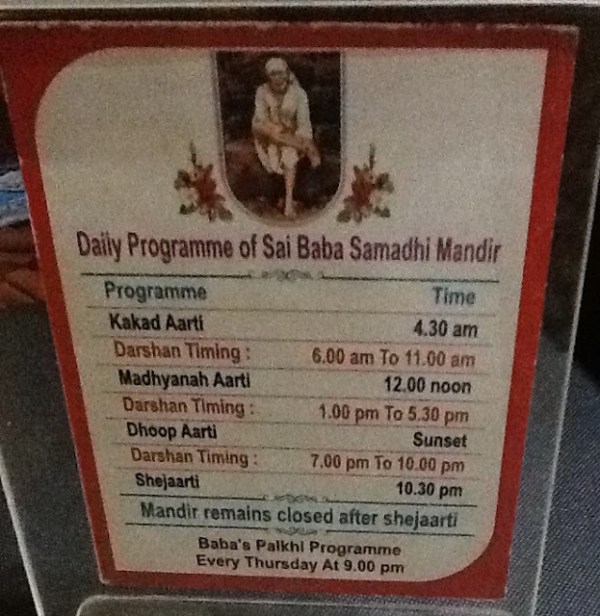
26088-img_95232b252822529


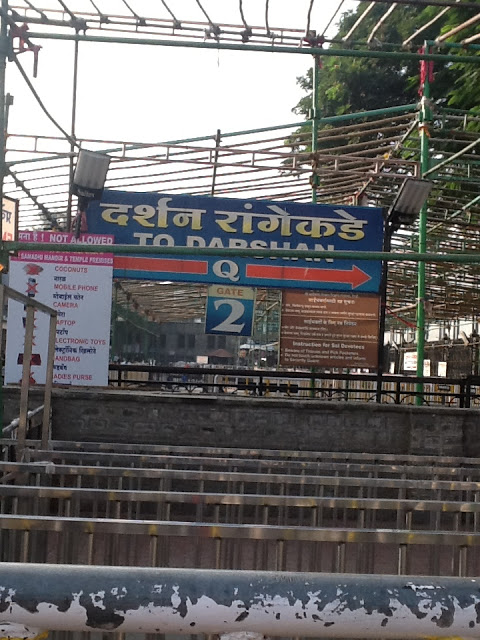
No mobile, no cameras inside temples– a good policy

In Shirdi Baba’s Samadhi temple, only lady’s hand bags are allowed. l liked the restrictions on mobile phones and cameras inside all the temples. If they allow the mobile phones inside the temples, there will be unnecessary shouting and giggling spoiling the divine atmosphere. Cameras, I pads and mobile phones are used for selfies disrupting other activities. Those who want to take pictures of the temples may be taken in escorted groups for a fee at a specified time.


After the ‘darshan’ we went round the temple where there are a few more ‘Samadhis’ (burial places of holy people) including a Muslim devotee’s. Then we queued for the ‘Udi’ holy ash, which is derived from the eternal fire near the Samadhi.


There is a very good museum inside the Samadhi complex. Baba devotees would love to see the objects used by Baba during his life time. His disciples’ rare black and white photos are also displayed there.
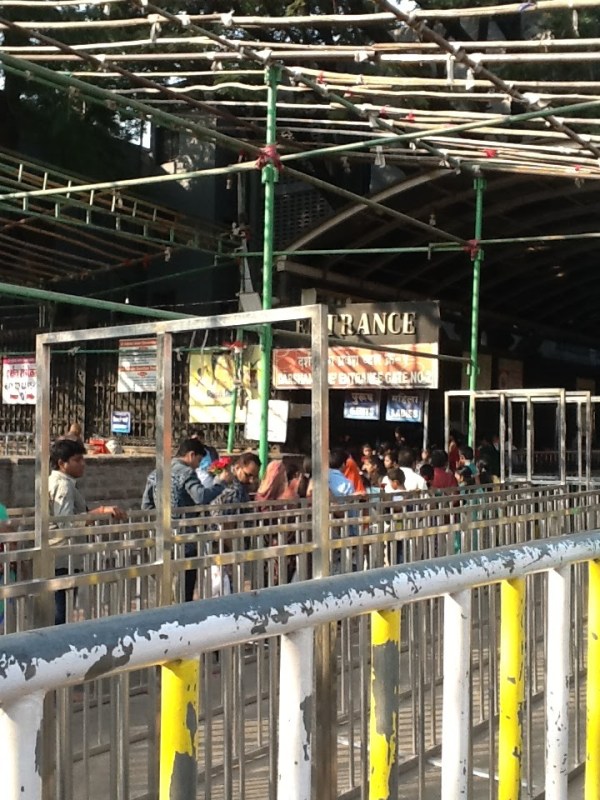
8eb5f-img_9527

Cheats in the Q

People visit holy places to acquire good virtues, but we saw some cheats in two places. One group of people wearing badges hung in blue strings jumped the Q. Many of us thought they were working there. But  they were actually cheating “devotees”. In Trayambakeswar, one person sent his children first and tried to follow them crying “Oh Bacha, bacha”. These cheats won’t get the blessings of the Lord or the saint.


What I don’t like…………………………….

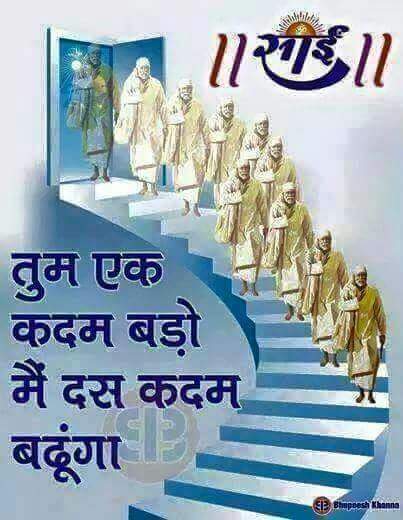
Mahatma Gandhi did a Himalayan blunder by corrupting the famous old Hindu Bhajan song ‘Ragupati ragava rajaram’ by inserting Allah’s name etc. Not many Muslims sang this or uttered Vandemataram. They shouted Allahu Akbar and divided the country. In the same way Sathya Sai Baba devotees corrupted the age old Hindu Bhajans by inserting baba’s name in the last lines saying you are Rama, Krishna, Nanak, Allah, Jesus and Moses. Only  Hindus sing this Bhajan. Not the followers of other religions.
9d09e-shirdi2bquote

I am a devotee of both the Babas. But I don’t like or approve this sort of corruption. The second blunder was showing Arti to a ‘holy man’ instead of God. Great philosophers like Sankara , Ramanuja, Madhwa, Ramakrishna, Ramana, Vallabha never did this. Now following this Puttaparti custom, all fraudulant Babas, Bhagavans and  Anandas inserted their names in the traditional Bhajans and accept Arti for them instead of God!


Already ignorant Hindu parents were not able to answer their children’s genuine questions. After two or three generations, the children may wonder whether these fraudulent Swamijis were real Gods or the Hindu Trinity real Gods. Every month we read in the newspapers of an Ananada or Baba or Bhagawan arrested for rape or murder. So it is our duty not to allow such corruptions. But everyone has the right to praise his own Guru separately. It is individual’s belief. What I am opposed is to getting their names included in the traditional Bhajans replacing our Gods’ names.
f127e-img_9526

You may wonder why I mentioned all these things in an article on Shirdi pilgrimage. My taxi driver loaded a newly bought Shirdi CD into his car CD player. The music and voice was beautiful. But the wordings irked me. “You won’t get peace when you go to Banaras or Mathura , you will get it only when you visit Shirdi”. I thought it was too much. You praise Shirdi, but don’t decry the Hindus’ holiest shrine Kasi! If we allow such things, then we need another Adi Shakara who wiped out 96 bad sects of Hinduism and established Shanmatha (Six sects)!


Bad Experience in a London Temple

Hare Krishna devotees decry Lord Shiva as demi god. Swaminarayans believe the Brahmin boy Neelakanda as God himself. Some fanatic Vaishnavites don’t even enter the Saivaite temples. I took one such Vaishnavite into London Murugan temple with his wife, because the venue happened to be the temple hall. Since it is the custom of the priests and temple authorities to honour all the speakers who come into temple, I took him into the sanctum sanctorum. As the priests honoured him, they gave him Vibhuti (holy ash) Prasad which he simply threw it on the floor. We were all angry, but yet did not say anything against the visiting guest. It is customary to give the visitor an envelope containing a small gift (amount). The priests who were angry did not present him the envelope. His wife did not insult Lord Muruga/Skanda. When they left the temple, the priests came running to me saying that they wanted to give him the envelope. I commented. “ I know why you didn’t give him in the first place. I also think he did not deserve your honorarium. Please save it for the next guest speaker.”

50c2f-img_2693

In short, we have to stop such parochial attitudes and teach basic Hinduism to our youths like the Chinmaya Mission, Divine Life Society, Ramakrishna Mission and other non-sectarian organisations. Gurus can be praised and sung, without altering the age old hymns and customs.
1f614-img_2700

bada7-img_27012b252822529

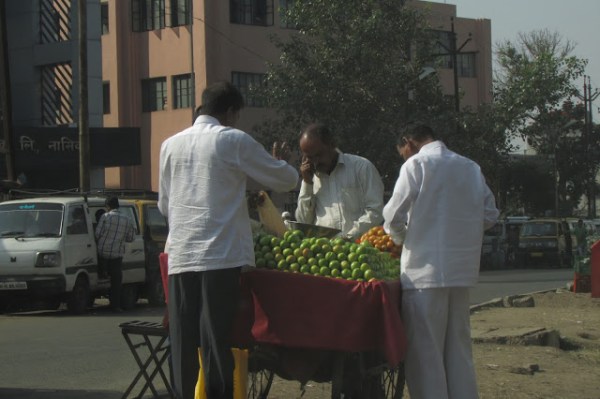
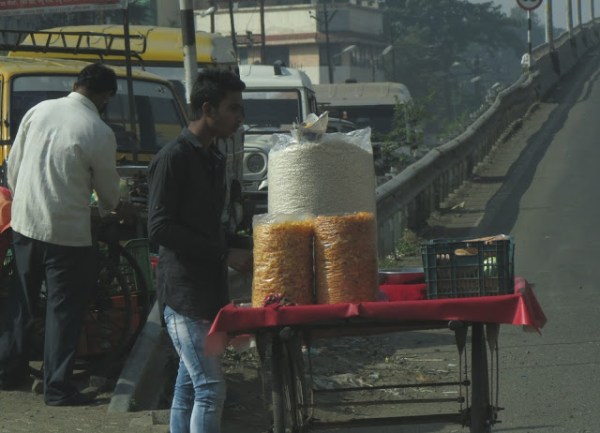
Street Vendors in Shirdi

Om Sri Sai Ram!!!

PAY THE FULL PRICE! (POST No. 2346)

square_price

Compiled   by London swaminathan

Date: 20  November 2015

POST No. 2346
Time uploaded in London :– 17-12
( Thanks for the Pictures )

DON’T REBLOG IT AT LEAST FOR A WEEK!
DON’T USE THE PICTURES;
THEY ARE COPYRIGHTED BY SOMEONE.


There was once a merchant who had a pearl necklace for sale. A customer came and asked him what the price of the necklace was. The merchant said that the price was 10,000 rupees. The buyer started haggling. He demanded the ornament for 7500 rupees. The merchant refused to sell it for less than 10,000 rupees. But the customer bargained it for 9000, 9600, 9750 and lastly 9990 rupees.


The merchant did not part with it for anything less than the original price quoted. “I cannot give you the necklace without payment of its full price”, he said. The customer, in order to have the necklace, had to pay the full price for it.

vector_price_tags_8211

So also God demands of you the full price before He can be yours. Verily, God is priceless. None can get him without paying the full price, that is, your entire being in all its aspects. In fact, dedication of one life is nothing, compared to the absolute freedom, peace and joy you get from Him. Even millions of lives offered to him are only meagre recompense for the unimaginably precious and magnificent return you get.


  • Story told by Swami Ramdas of Anandashram, North Kerala.

Similes and Analogies used by Sringeri Acharya (Post No. 2340)

carpenter-clipart-dc7ejXEgi


Compiled   by London swaminathan

Date: 18 November 2015

POST No. 2340
Time uploaded in London :– 15-54
( Thanks for the Pictures )

DON’T REBLOG IT AT LEAST FOR A WEEK!
DON’T USE THE PICTURES;
THEY ARE COPYRIGHTED BY SOMEONE.


Carpenter and Spiritual aspirant

A carpenter, however intelligent he may be, cannot function properly if he squats on a rickety seat or has blunt instruments or does not know how to use them effectively. Similarly a person who wants to launch into the most subtle and difficult of endeavours, namely, to achieve progress in the field of spirituality, must have a strong and healthy body, senses capable of effectively functioning and a strong and healthy mind capable of controlling and directing properly the body and the senses.

 mirror dirty

Mind and Mirror

The mind is like a mirror and, if it is pure and steady, it will reflect clearly the Self. If the mirror is coated with dust and is shaky, it cannot reflect the object before it. The dust which darkens the mind is SIN and its shakiness is due to DISTRACTION. The sin has to be eradicated by the performance of the prescribed good deeds known as Karma and the distraction by the practice of one-pointed devotion known as Upasana.

6lakshmi

Image Worship

Nobody who engages himself in in image worship ever commits the mistake of limiting god to that image. He knows clearly that the image is resorted to for the purpose of establishing contact with the intangible universal godhead who can manifest himself in any form.


Nobody who wants to write is immediately able to able to write small letters and in a neat hand. He has to begin the practice of writing big letters on sand or on rough sheets till he gets some proficiency. Similarly, the aspirant who wants to contemplate on god has to begin by concentrating his mind on a gross visible image of God.

 sweetmeats

Sweetmeat shop

If we take some children to a sweetmeat shop and ask them to select what they want, a child may prefer to have a ring shaped sweetmeat, another a rod like one, another in the form of a peacock, another in the form of a chair, and so on. We know all these are made up of sugar and it is not material to us what form each child choses. We know also that, once the children put the sweetmeats into their mouths and begin to taste them, the particular forms will easily dissolve themselves leaving only the taste of sugar and that this taste will be common to all the children though the forms through which they obtain it are quite different from one another. Similarly, our religion recognises that forms of Gods are necessary and that the forms lose their significance when the Godhead in them begins to be realised.

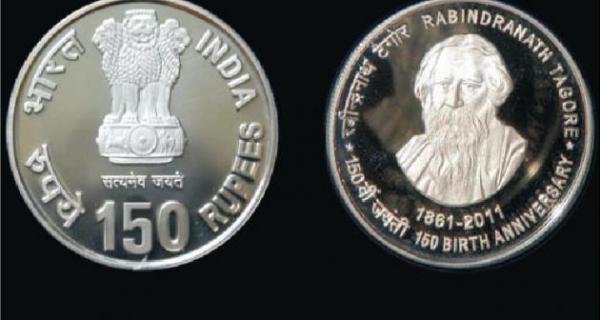
150coin2

Dharma

If 50 people contribute Rs 3 each to honour a Pandit, the total amount will come to only Rs 150, though they all may sincerely feel that this is not an adequate remuneration for the valuable discourse of the Pandit. Any amount of sincere feeling on their part will not affect the arithmetical truth that 50 multiplied by 3 is only 150. It is quite open to the Pandit also to say and feel that this 150 is a1000 to him; but his saying or feeling so will not in any way swell the cash. So truth is one thing and concept is quite another. Our Dharma is Truth and therefore eternal; it is not a concept liable to variations.


Other similes used by the two previous Shankaracharyas of Sringeri Mutt are covered in my earlier articles.

–subham–

Ramdas Story: Transcend the Gunas (Post 2331)

gunas

Compiled  by London swaminathan

Date: 15 November 2015

POST No. 2331

Time uploaded in London :– 18-09

( Thanks for the Pictures  ) 

DON’T REBLOG IT AT LEAST FOR A WEEK!  

DON’T USE THE PICTURES; 

THEY ARE COPYRIGHTED BY SOMEONE.

A traveller passing through a forest late in the evening, was captured by three robbers. All the three attacked him together One bound him with a rope and another took a knife to kill him .At this the third pleaded with his comrades not to kill the traveller. He prevailed over his comrades to set him free. On coming to know that he was to go to a nearby village, he escorted him up to the outskirts of the village and asked him to go further on himself. He regretted his inability to accompany him, saying that he could not go to the village as he would be arrested by the police, being a robber himself. So the robber returned.

3-gunasop

Now let us see who these robber s were. They were the three qualities of nature which caused the souls bondage and ignorance — Sattwa, Rajas and Tamas. Rajas tried to bind the soul to the desires of the flesh. Tamas sought to destroy the soul by overcoming it with sleep and torpor. The role of Satwa was to liberate it from the clutches of Rajas and Tamas. Though Satwa took him up to the boundary beyond which was the realm of the Atman, it could not accompany him there. Even Satwa Guna had no entry into the realm. All the three qualities must be transcended before you can enter into the infinity of divine existence in which you lose yourself. He who goes there never returns to tell the tale of his experience s because there he becomes one with the eternal reality — God.

–Subham–

What is Samadhi? Post No. 2329

samadhi

Compiled by London swaminathan

Date: 14 November 2015

POST No. 2329

Time uploaded in London :– 20-31

( Thanks for the Pictures  ) 

DON’T REBLOG IT AT LEAST FOR A WEEK!  

DON’T USE THE PICTURES;

THEY ARE COPYRIGHTED BY SOMEONE.

Once there was a talk between Shiva and Parvati. Shiva is one of the Hindu Trinity, who is always in a state of Samadhi. His place is often in the cremation ground. He used to freely roam about, never feeling separate from the universe. He would leave Parvati in Kailas, while on his itinerary. Parvati asked Shiva to teach her to meditate and enter samadhi so that she could always remain in that state without at any time feeling the separation. Shiva asked her to sit down in Asana, close her eyes and turn her gaze within and meditate. Then the following dialogue took place

Shiva :– What do you see now?

Parvati :–I see your form before my mental vision.

Shiva :– Go beyond that form. What do you see now?

Parvati :–I see a brilliant light

Shiva :– Still go beyond that light. What next?

Parvati :–I hear the sound Om

Shiva :– Transcend the sound. What is your experience now?

To this last question, there was no answer. Parvati had become one with the Cosmic Self. There was now no subject and object, no seer and seen, no hearer or heard, for her. All had dissolved into one really, one Existence. There was only one Changeless, nameless, formless, non-dual Brahman. Sometime later, when Parvati was gradually coming back to body consciousness, she was heard uttering softly

I am Brahman

This story of Shiva and Parvati may or may not be true but its value consists in teaching, by way of illustration, the process of meditation and ultimate realisation.

Deepak-Osho

Story told by Swami Ramdas of Anandashram, North Kerala

–Subham–

Bitter gourds and The Meaning of Pilgrimage!

12 jyotirlinga

Picture shows 12 Great Shiva Shrines around India.

Article Written by London swaminathan

Date: 6 November 2015

Post No:2306

Time uploaded in London :– 10-06   AM

(Thanks  for the pictures) 

DON’T REBLOG IT AT LEAST FOR A WEEK!  DON’T USE THE PICTURES; THEY ARE COPYRIGHTED BY SOMEONE.

There was a great saint named Tukaram. He was a votary of God’s name. Once people from his village decided to go on a long pilgrimage and they requested Tukaram also to follow them. Tukaram expressed his inability, but requested them to be kind enough to take with them to all the places they visited some bitter gourds that he would give them. He wished that the bitter gourds should be given a dip in all the holy waters where they took bath and also have them taken to all the temples they visited.

Not caring to know the significance of what the saint said, the villagers took the bitter gourds from him and carried all along the pilgrimage, obeying the instructions of the saint in regard to dipping them in the holy waters and taking them to the temples.

bitter gourd

In a few months, the party returned from the pilgrimage and handed the bitter gourds back to Tukaram. Tukaram was happy and invited all the members of the party to a feast next day to celebrate the successful completion of their pilgrimage. Tukaram made a special dish out of the bitter gourds which he had sent on the pilgrimage. They were served with various preparations and they started eating. When they tasted the gourd dish, they all remarked it was bitter and asked Tukaram why he served it. Tukaram, as if greatly surprised, asked them how it could be bitter when it was made out of the gourds that had gone on the pilgrimage. It was no doubt bitter when he handed them over to the pilgrims before the pilgrimage, but he wondered why it had not lost its bitterness in spite of pilgrimage. This was a great lesson to all the pilgrims.

There are so many who go on pilgrimage and return as bitter before. But if you go on a pilgrimage as urged by God within, and continuously remember Him all through the pilgrimage and see only purity and goodness of God everywhere, you will achieve purity. Such a pilgrimage will surely beneficial to you.

ashta vinayak

Picture shows Eight famous Ganesh shrines in Maharashtra.

Ramakrishna Paramahamsa on Pilgrimages

As cows, after eating their fill, lie down quietly at a place and chew the cud, so after visiting a sacred spot or a place of pilgrimage, you must take hold of the holy thoughts that arose in the mind while there, sit down in a solitary corner and think of them till you are immersed in them you must not devote yourself to the pursuit of the senses driving away the higher ideas from your mind immediately after you leave the holy places.

Xxx

Travel in all the four quarters of the earth, yet you will find nothing (no true religion) anywhere. Whatever there is, is only here (i.e. in one’s own heart).

Xxx

The milk of the cow in reality pervades the whole body of the animal through its blood, but you cannot milk it by squeezing the eras or the horns; you can get the milk only from the teats. Similarly God pervades the universe everywhere, but you cannot see Him everywhere. He manifests Himself more readily in sacred temples which are full of the spirit of devotion diffused by the lives and spiritual practices of the devotees of former times.

–Subham–

MILLIONS OF VIVEKANANDAS WILL APPEAR!

vivek world

Compiled  by S NAGARAJAN

Post No.2280

Date: 28 October 2015

Time uploaded in London: 10-57 AM

Thanks for the pictures.

Don’t use pictures. Don’t reblog for at least a week.


VIVEKANANDA

MILLIONS OF VIVEKANANDAS WILL APPEAR!

SANTHANAM NAGARAJAN


Millions of Vivekanandas will appear!

Swami Vivekananda never thought himself as Great. But he is one of the very few Avatars who saw His fame spread far and wide.


He speaks about himself thus:


Do you think that there will be no more Vivekanandas after I die!… There will be no lack of Vivekanadas, if the world needs them – thousands and millions of Vivekanandas will appear – from where, who knows! Know for certain that the work done by me is not the work of Vivekananda, it is His work – the Lord’s own work! If one governor-general retires, another is sure to be sent in his place by the Emperor. (CW 5.357-358)


WHAT SWAMIJI BELIEVE

I believe in GOD, and I believe in man. I believe in helping the miserable. I believe in going even to hell to save others. (CW 5.357-358)

Of course I would commit a crime and go to hell forever if by that I could really help a human being! (W 5.357-358)

I may have to be born again because I have fallen in love with man. (CW 5.357-358)


I do not believe in a God or religion which cannot wipe the widow’s tear or bring a piece of bread to the orphan’s mouth. (CW 5.357-358)

I have nothing whatever to do with ritual or dogma, my mission is to show that religion is everything and in everything. (CW 5.357-358)


Chicago Success – How?          

In my first speech in this country, in Chicago, I addressed that audience as “Sisters and Brothers of America”, and you know that they all rose to their feet. You may wonder what made them do this, you may wonder if I had some strange power. Let me tell you that I did have a power and this is it – never once in my life did I allow myself to have even one sexual thought. I trained my mind, my thinking, and the powers that man usually uses along that line I put into a higher channel, and it developed a force so strong that nothing could resist it. (CW 9-408)

A Power from this Body!


During the lectures a power used to emanate from this body and would infuse the audience. (CW 8-499)

Note: CW – Complete Works of Swami Vivekananda (So far nine volumes have been published by Ramakrishna Mutt)

*********

EFFECT OF NEEM LEAVES!

Compiled by london swaminathan

Post No.2249

Date: 16 October 2015

Time uploaded in London: 17-13

Thanks for the pictures.

Don’t use pictures. Don’t reblog for at least a week.

A lesson learnt!

In a village there lived a couple. The husband was often given to quarrelling with his wife. Whenever they quarrelled the husband would hold out a threat to his wife that he would renounce his home and become a Sadhu. The wife led a miserable life owing to her husband’s behaviour.

On the outskirts of the village a sadhu lived in his hut engaged in meditation and in imparting in spiritual advice to aspirants who went to him in the evenings. Among them, this young man was one.

One day when the husband was away to a neighbouring village on some business, his wife paid a visit to the sadhu and complained to him about how her husband threatened her that he would run away from home , and become a sadhu. The sadhu advised her that when her husband next held out the threat, she should tell him to go away and do what he liked.

neem leaves

After some days the husband again had sharp differences with his wife and as was his vogue said that he would become a Sadhu and run away from home. The wife retorted that he might do as he pleased. The husband, in a huff, left home and went straight to the sadhu in the hut. The man told the sadhu that he had cut off all relationships with his home and the world and spend rest of his life in the service of the sadhu. The sadhu welcomed him and asked him to be seated.

Lunch time was approaching. The sadhu instructed one of his disciples to bring a good quantity of neem leaves. These leaves are very bitter. He was asked to grind them and make Laddus out of them. The disciple did not take much time to get the Laddus ready. The man who had quarrelled with his wife was closely watching the situation.

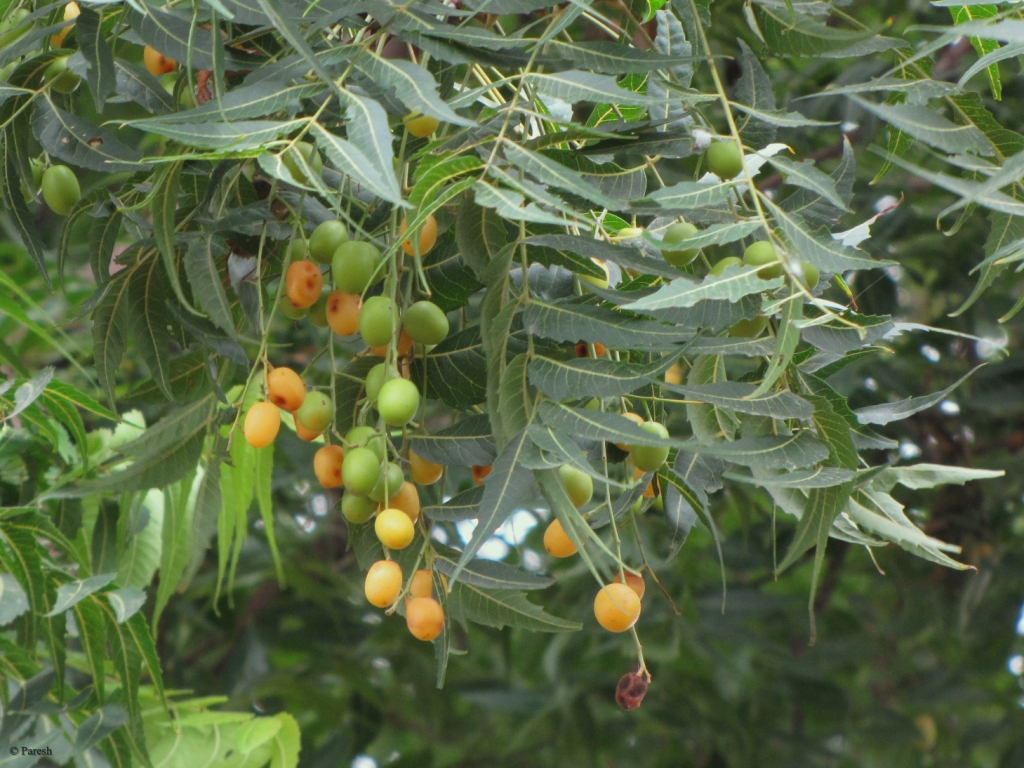
Neem-Tree (1)

Meanwhile the sadhu held a discourse on the efficacy of Neem (Margosa) leaves. He said for improving health and observing Brahmacharya (chastity) , neem leaves are most efficacious and added that he had decided to have for food on that day and the next day the diet of Laddus made of neem leaves. At the suggestion of the Guru, Laddus were at once served to the devotees who were present in the hut at that time. A big Laddu fell to the share of the irascible visitor. The visitor had no other go than to eat the Laddu with a wry face. The same food was served also in the evening, and the next morning. Before noon next day the visitor strangely disappeared and found himself at his home, as quiet and tame as one could be under the circumstances. From that time he neither quarrelled with his wife nor threatened her as he did before.
Story told by Swami Ramdas of Anandashram

A Saint is all Forgiveness !

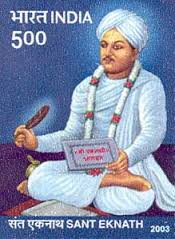
eknatha

Compiled by London swaminathan

Post No.2246


Date: 15 October 2015

Time uploaded in London: 18-40

Thanks for the pictures.

Don’t use pictures. Don’t reblog for at least a week.

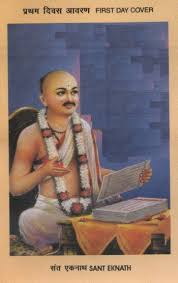
Eknath was a great saint of Maharashtra. He lived in Paithan. He was married and had a wife and a son. He had gained fame for his extremely patient and forgiving nature. He was kindness, mercy and peace personified.

Once it happened a poor Brahmin who wanted to give his daughter in marriage was wandering from place to place for getting monetary help from wealthy people. He came to Paithan and went to a rich man of the place. The rich man had no respect for saints. He had heard that saint Eknath never got angry. He was on the lookout for an occasion to make him angry and falsify the report about his patient and forgiving nature.

He told the poor Brahmin, “Go to Saint Eknath and provoke him to anger. If you do so I will gladly give you Rs 200 for the marriage expenses|. The avaricious Brahmin undertook to fulfil the wish of the rich man and directly proceeded to the saint’s house. When he approached the saints house he found the saint seated on the veranda chanting god’s name. The Brahmin, as he ascended the steps of the house, started abusing the Saint. The Saint was unperturbed. He led the Brahmin guest inside the house and giving him a proper seat, asked him what he wanted.

The Brahmin without giving him any reply continued to hurl abusive epithets at the Saint. The time was nearing for the midday meal. So the Saint requested the Brahmin to have his bath and partake of the humble meal which was being prepared for him. Eknath’s wife was his ideal partner. She was also very devout and good natured. Eknath took the guest to the bathroom and gave him a clean wash and brought him to the dining room for taking food.

ekanatha2

The Brahmin had tried his best to provoke the Saint to anger but so far he had failed completely. When he and the Saint sat for meals, a new thought struck the Brahmin. He got up from the seat and, as the saint’s wife was bending to serve food, sat on her back as on horse-back. Now, he fully expected the Saint would fly into temper. On the contrary, calmly looking on the scene, he warned his wife not to stand erect lest the honoured guest should topple down. Then his wife replied

Certainly I shall see to it that the Brahmin does not fall down. I know how I balanced our son when he used to climb on my back.

When the Brahmin heard the conversation between the Saint and his wife, he was stung with remorse. He got down from her back and, falling prostrate before both of them, sobbing with grief, prayed for their forgiveness.

Saints are so kind and gracious that they do not recognise any harm or insult from anybody. The Saint assured the Brahmin that he had done nothing wrong. They somehow persuaded him to take his food.

After the meals, when they sat together, saint asked the Brahmin why he had been so highly disturbed. Now the Brahmin told the entire story how a rich man had promised him to give him a sum of Rs 200 provided he provoked Eknath to anger. But fool as he was trying to make the Saint angry by use of a buses against him once more he fell at the feet of the Saint and sought pardon for his bad behaviour.

Eknatha FDC

Then the Saint with great love and compassion, said, “O, If you had only told me earlier, I would have got angry so that you might get the generous gift from the rich man”.

Swami Ramdas of Anandhashram in Kerala told this story.

Hindu Temple Mystery!

IMG_0534

Thirissur Temple in Kerala

Research article by London swaminathan

Post No.2230

Date: 9  October 2015

Time uploaded in London: 21-43

Thanks for the pictures.

Don’t use pictures. Don’t reblog for at least a week.

If you read any modern book on Hindu Temple architecture they broadly classify the temples into three categories: Nagara, Dravida and Vesara. But these are relatively modern terms. It is neither found in Varahamihira’s classification of temples or Tamil saint Appar’s classification of temples. Both of them lived before seventh century CE. Temples did not exist during Vedic times. But they existed during Epic times. We have references to Temple worship in Ramayana and Bhagavata. They may not be the gigantic temples like the temples we see today. They may be just places of worship inside a palace or under a banyan tree.

DSCF5084

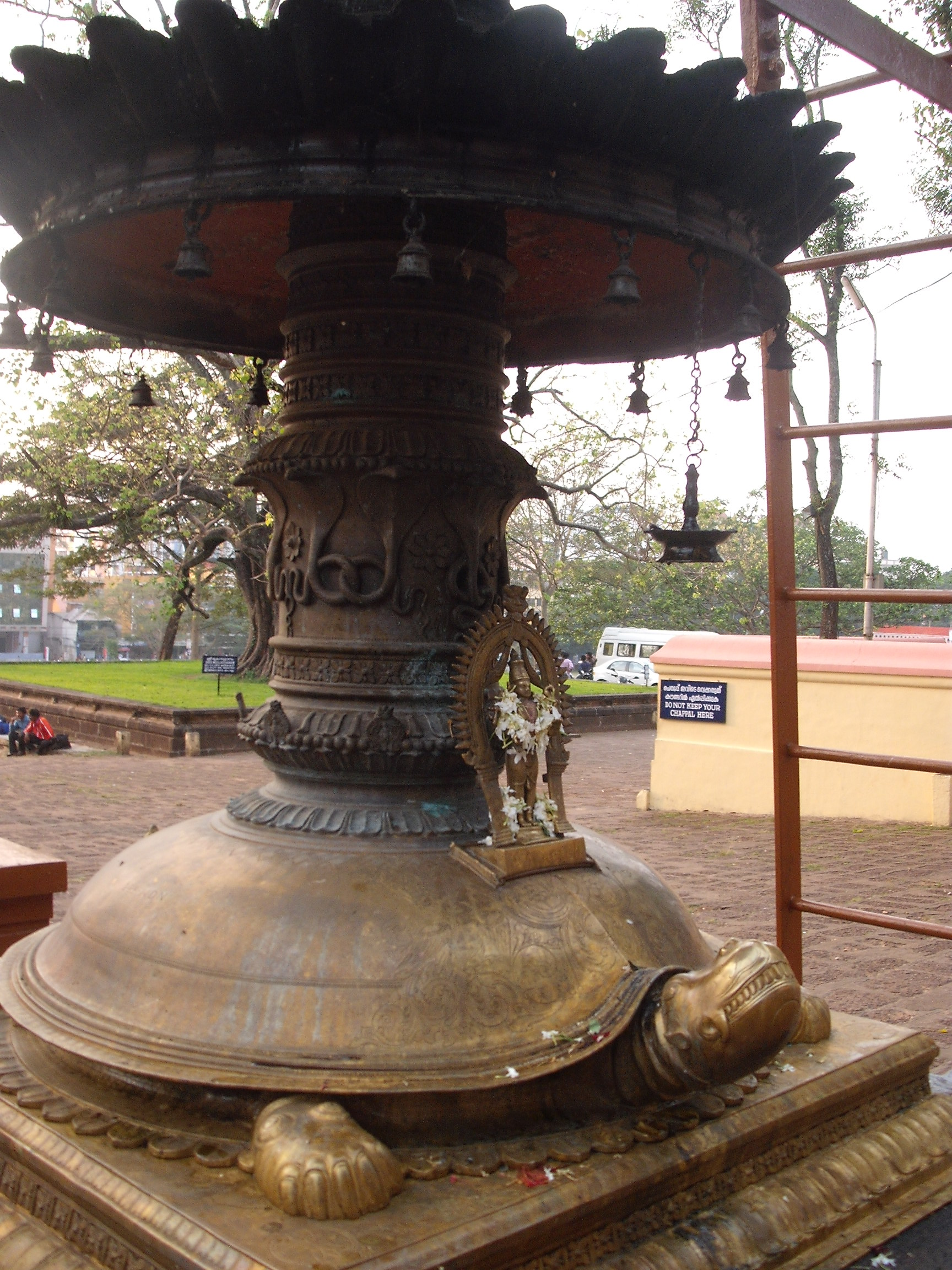
Dwajasthamba with Tortoise

Nagara type of North Indian temples have curvilinear towers. They have square base. Dravida type of South India have towers like pyramids. They have octagonal base. Vesara type of temples combined both these styles. They have circular base. Earlier temples were built with perishable materials such as wood, brick, clay and mortar. Then Guptas built cave temples probably following the Buddhist caves. The gigantic temples we see today came into existence around eighth century CE. In the South, Pandyas and Pallavas made cave temples from sixth century CE at Kazukumalai, Tirupparankundram, Tirumeyyam,Pillayarpatti, Kundrakkudi Kanchi and Mamallapuram. Athiyaman also made such temples in Namakkal.

Varahamihira enumerates twenty types of temples!

(Read my article Twenty Types of Temples in Ancient India- posted on 30th March 2015. In another article I have listed all the temples from the Tamil epic Silappadikaram). Later Appar mentioned seven types of temples:-

Appar alias Tirunavukkarasu, one of the Four Great  Saivite Tamil saints sings about

“If the seventy eight great temples of the Lord

Whose matted crest is adorned with the great flood

KARAKKOYIL, GNAAZHARKKOYIL  girt with well protected

Groves, the hill like KOKUDIKKOYIL of  Karuppariyal

ILANGKOYIL where with the chanting of the Rig Veda

The Brahmins hail and adore the lord MANIKKOYIL

AALAKKOYIL  and every TIRUKKOYIL where Siva abides

Are circumambulated and hailed in humble

Adoration, evil Karma will get annulled “

(Sixth Tirumurai, Adaivu Tiru Thandakam of Appar)

DSCF5082

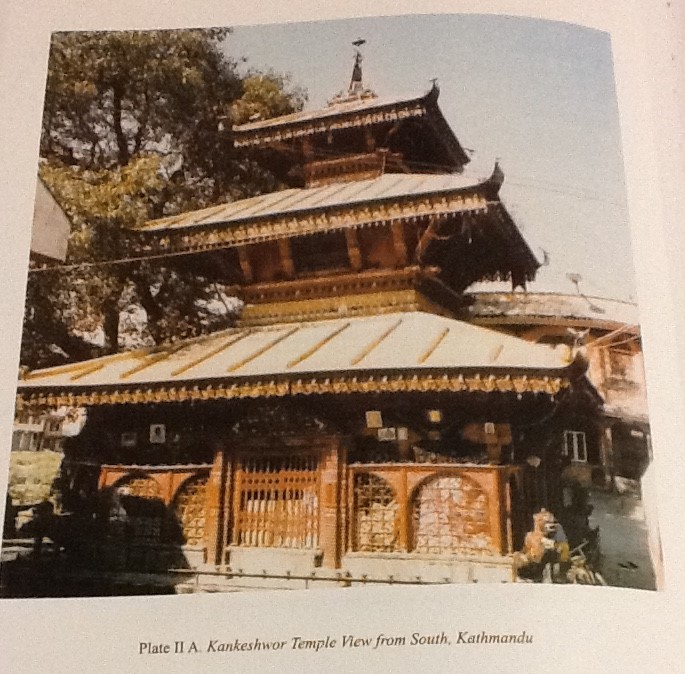
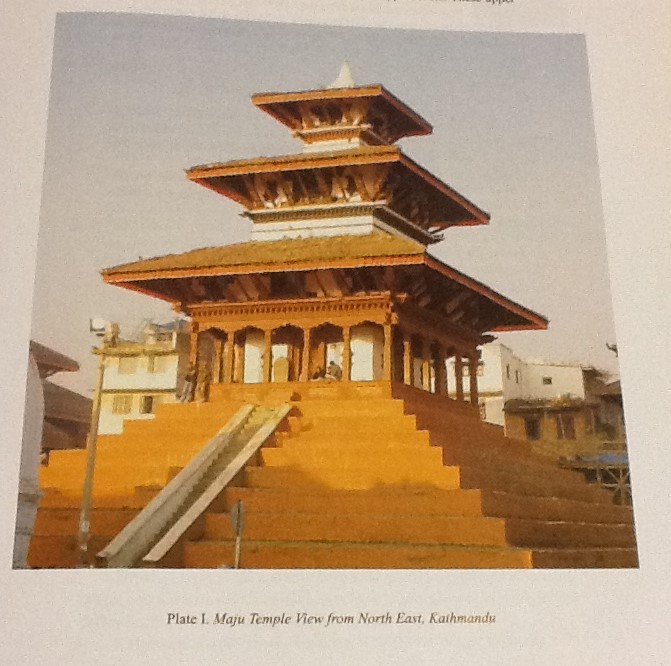
He and his junior contemporary Sambandar visited nearly 300 temples in Tamil speaking areas of South India in the seventh century CE. But we could not even figure out the temples mentioned in Appar’s Thevaram hymn. My research shows that the Kerala Type of temples were the oldest type. We can see such temples from Kerala to North East India. It is also seen in Nepal. Such type of temples don’t fall under the Nagara, Vesara, Dravida Types. The structure of the temples are designed to withstand the monsoon climate. The rain water drains easily in the step like tiled sheds. It helps the teak wood inside to last for longer. Periodically they wold have changed the roof and wood. No mention of these temples in the modern temple architecture books show that they were not taken into account in the classification of temples.

IMG_6786 (2)

Nepalese Temple

The mystery lies not only in its structure but also its occurrence from southernmost tip of the land to the Himalayan country of Nepal. We see them even beyond north east India, in Burma, Thailand and other South East Asian countries. After Cambodian and Javan kings modelled their temples on the stone temples of India, this structure continued its existence only in the royal palaces of those countries. Before eighth century they also must have had temples like Kerala. Two things remain a mystery until today:

  1. How come the temples from Kerala to Nepal were built in the same style?
  2. Why there was no mention of this type in Temple architecture books? I mean they were not listed under the three main categories.

3.Third Mystery

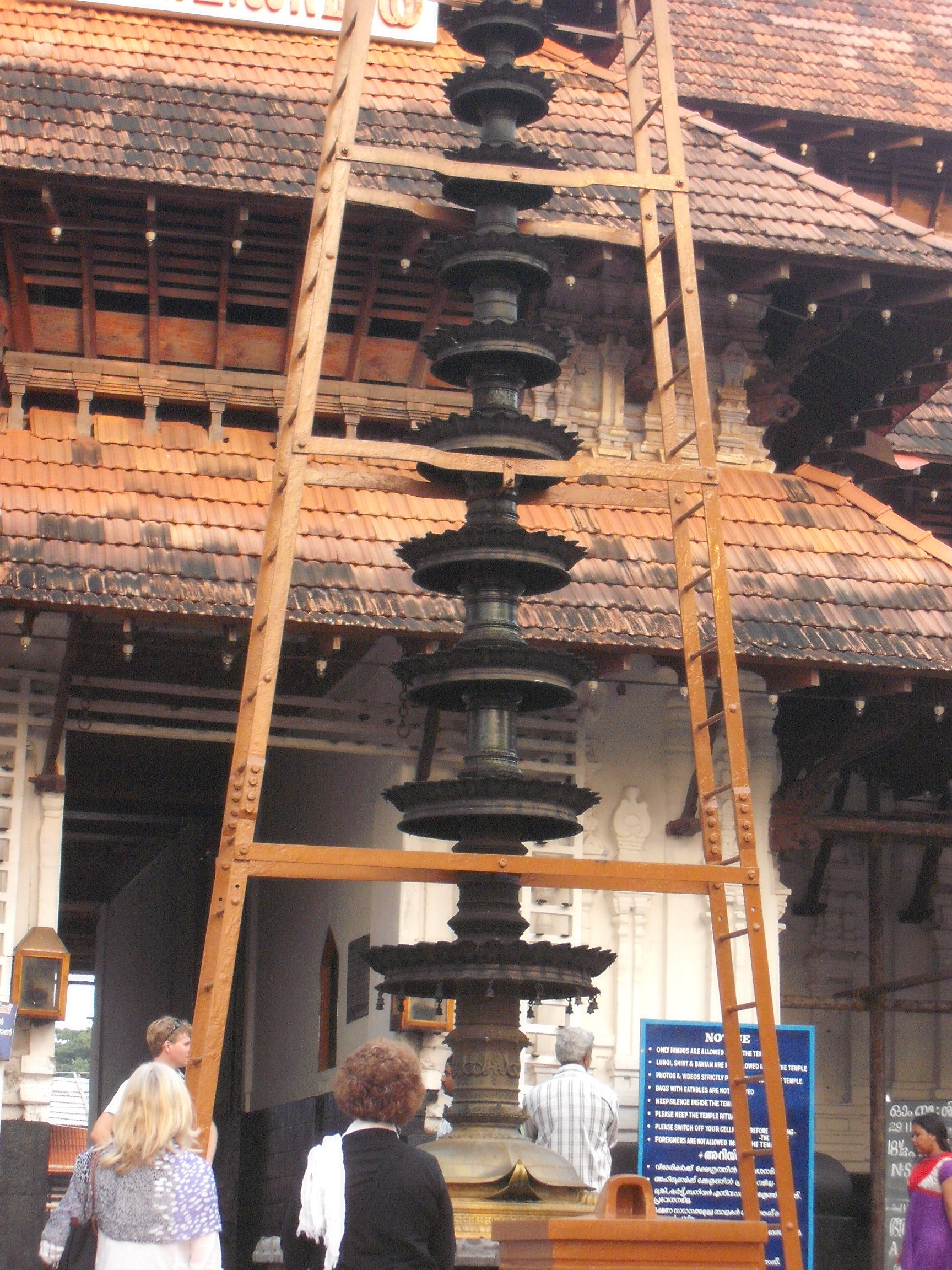
There is another mystery surrounding the Dwajasthama, the Flag Staff. In Kerala, most of the temples have erected the Dwajasthamba on Tortoise/Turtle. There is no explanation to show why Kerala temples only followed this type of Flag staff. Tortoise is associated with various things such as Kurma Avatara, Kurma Mudra, Kurma Asana etc in Hindu literature. But we have no explanation to show why they differed from other temples in the erection of Dwajasthamaba. We have Mandapas (Halls) erected on Turtle/ Tortoise in Tamil Nadu, but no Dwajasthamba.

IMG_6785 (2)

Temple in Nepal

After studying these things and other ancient customs in Kerala temples, I concluded that they were the oldest models available today. More research is required to put them in the correct place in the development of Hindu Temple architecture. Till we do it there will be some gaps in the study of temple architecture.

–Subham–