Fate and Free Will – XI and XII

fate-or-free-will

Compiled by S Nagarajan

Article No.1522; Dated  27    December 2014.


Compiled by Santhanam Nagarajan

Dialogue on Fate and Freewill with Sringeri Jagathguru Sri Chandrashekhara Bharati Swamigal continues (from the previous chapter) :

D: Our ignorance of the past may be useful in not deterring

the exercise of the free-will and hope may stimulate

that exercise. All the same, it cannot be denied that fate

very often does present a formidable obstacle in the way of

such exercise.


HH: It is not quite correct to say that fate places obstacles

in the way of free-will. On the other hand, by seeming to oppose

our efforts, it tells us what is the extent of free-will

that is necessary now to bear fruit. Ordinarily for the purpose

of securing a single benefit, a particular activity is prescribed;

but we do not know how intensively or how repeatedly

that activity has to be pursued or persisted in. If we

do not succeed at the very first attempt, we can easily deduce

that in the past we have exercised our free-will just in

the opposite direction. that the resultant of that past activity

has first to be eliminated and that our present effort must

be proportionate to that past activity. Thus, the obstacle

which fate seems to offer is just the gauge by which we have

to guide our present activities.

D: The obstacle is seen only after the exercise of our

free-will, how can that help us to guide our activities at the

start?


HH: It need not guide us at the start. At the start, you

must not be obsessed at all with the idea that there will be

any obstacle in your way. Start with boundless hope and with

the presumption that there is nothing in the way of your exercising

the free-will. If you do not succeed, tell yourself

that there has been in the past a counter-influence brought

on by yourself by exercising your freewill in the other direction

and, therefore, you must now exercise your free-will

with re-doubled vigour and persistence to achieve your object.

Tell yourself that, inasmuch as the seeming obstacle is

of your own making, it is certainly within your competence to

overcome it. If you do not succeed even after this renewed

effort, there can be absolutely no justification for despair,

for fate being but a creature of your free-will can never be

stronger than freewill. Your failure only means that your

present exercise of freewill is not sufficient to counteract

the result of the past exercise of it. In other words, there is

no question of a relative proportion between fate and freewill

as distinct factors in life. The relative proportion is only

as between the intensity of our past action and the intensity

of our present action.

D: But even so, the relative intensity can be realised only

at the end of our present effort in a particular direction.


HH: It is always so in the case of everything which is adrishta

or unseen. Take, for example, a nail driven into a

wooden pillar. When you see it for the first time, you actually

see, say, an inch of it projecting out of the pillar. The rest of

it has gone into the wood and you cannot now see what exact

length of the nail is imbedded in the wood. That length,

therefore, is unseen or adrishta, so far as you are concerned.

Beautifully varnished as the pillar is, you do not know what is

the composition of the wood in which the nail is driven. That

also is unseen or adrishta. Now suppose you want to pull that

nail out, can you tell me how many pulls will be necessary

and how powerful each pull has to be?

The Jagath Guru gives  a beautiful example and the disciple now asks him how could he fix the number of pulls. What is the reply Jagathguru gives now? We will see in the next chapter.

fate2


Fate and Free Will – XII


Dialogue on Fate and Freewill with Sringeri Jagathguru Sri Chandrashekhara Bharati Swamigal continues (from the previous chapter) The pontiff gives encouraging revealation regarding freewill in this part of the dialogue :

D: How can I fix the number of pulls now? The number and the intensity of the pulls depend upon the length which has gone into the wood.


HH: Certainly so. And the length which has gone into the wood is not arbitrary, but depended upon the number of strokes which drove it in and the intensity of each of such strokes and the resistance which the wood offered to them.

D: It is so.


HH: The number and intensity of the pulls needed to take out the nail depend therefore upon the number and intensity of the strokes which drove it in.

D: Yes.


HH: But the strokes that drove in the nail are now unseen and unseeable. They relate to the past and are adrishta.

D: Yes.


HH: Do we desist from the attempt to pull out the nail simply because we happen to be ignorant of the length of the nail in the wood or of the number and intensity of the strokes which drove it in? Or, do we persist and persevere in pulling it out by increasing the number and the intensity of our present efforts to pull it out?

D: Certainly, as practical men we adopt the latter course.


HH: Adopt the same course in every effort of yours. Exert yourself as much as you can. Your will must succeed in the end.

D: But there certainly are many things which are impossible to attain even after the utmost exertion.


HH: There you are mistaken. If there is anything, it is by its very nature capable of being experienced. There is nothing which is really unattainable. A thing, however, may be unattainable to us at the particular stage at which we are, or with the qualifications that we possess. The attainability or otherwise of a particular thing is thus not an absolute characteristic of that thing but is relative and proportionate to our capacity to attain it.

D: The success or failure of an effort can be known definitely only at the end. How are we then to know beforehand whether with our present capacity we may or may not exert ourselves to attain a particular object, and whether it is the right kind of exertion for the attainment of that object.


HH: Your question is certainly a very pertinent one. The whole aim of our Dharma sastras is to give a detailed answer to your question. They analyse our capacities, or competency,and prescribe the activities which a person endowed with a particular adhikara can undertake. The activities are various and numberless, as the capacities also happen to be various and numberless. Regulation of activities or, in other words, the directing of free-will into channels least harmful and most beneficial to the aspirant, is the main function of religion. Such regulated activity is called svadharma. Religion does not fetter man’s free-will. It leaves him quite free toact, but tells him at the same time what is good for him and what is not. The responsibility is entirely and solely his. He cannot escape it by blaming fate, for fate is of his own making, nor by blaming God, for He is but the dispenser of fruits in accordance with the merits of actions. You are the master of your own destiny. It is for you to make it, to better it or to mar it. This is your privilege. This is your responsibility.

***************

Dialogue between Sringeri Swamiji and a Disciple

fate

Fate and Free Will – IX

Compiled by S. Nagarajan
Article No.1505; Dated 22 December 2014.

In our series we may include one more important dialogue on Fate and Freewill.
(The following dialogue is available on net and I am thankful to the provider who has done a great service by doing so. The readers who want to read the original, may refer Dialogues with the Guru at http://srisharada.com/QA/QA.htm)

Sringeri Sankaracharya HH Chandrashekara Bharathi III was a jeevan muktha. (October 16, 1892 – September 26, 1954). He shed his body on the day of Mahalaya Amavasya. He took a bath in the Tunga river in Sringeri on that fateful day.

Afterwards, he sat in padmasana posture and attained Videha Mukti on the banks of the river. His body was discovered floating in the river. The body was brought to the shore. The face was calm and peaceful as it used to be daily. There was no symptoms of any struggle for breath nor water had entered inside. It was very clear that the great guru had shed His body at His own will. (pl refer Wikipedia for more information)
He used to clear all the doubts of the devotees whenever they approached him.
One evening a disciple approached His Holiness with a view to obtain some valuable instruction.

D: It is no other than the problem of the eternal conflict between fate and free-will. What are their respective provinces and how can the conflict be avoided?

The pontiff told the disciple that fate and freewill are not two distinct things. The disciple asked Him how?

HH: As a follower of our Sanatana Dharma, you must know that fate is nothing extraneous to yourself, but is only the sum total of the results of your past actions. As God is but the dispenser of the fruits of your actions, fate, representing those fruits, is not His creation but only yours. Free-will is what you exercise when you act now.

D: Still I do not see how they are not two distinct things.

HH: Have it this way. Fate is past karma, free-will is present karma. Both are really one, that is, karma, though they may differ in the matter of time. There can be no conflict
when they are really one.

D: But the difference in time is a vital difference which we cannot possibly overlook.

HH: I do not want you to overlook it, but only to study it more deeply. The present is before you and, by the exercise of free-will, you can attempt to shape it. The past is past and
is therefore beyond your vision and is rightly called adrishta, the unseen. You cannot reasonably attempt to find out the relative strength of two things unless both of them are before you. But, by our very definition, free-will, the present karma alone is before you and fate, the past karma, is invisible.

Even if you see two wrestlers physically squatting before you, you cannot decide about their relative strength.

For, one may have weight, the other agility; one muscles and the other tenacity; one the benefit of practice and the other of coolness of judgement and so on. We can on these grounds
go on building arguments on arguments to prove that a particular wrestler will be the winner. But experience shows that each of these qualifications may fail at any time or may
prove to be a disqualification. The only reasonable, practical and sure method of determining their relative strength is to ask them to wrestle with each other. While this is so, how do
you expect to find by means of arguments a solution to the problem of the relative value of fate and free-will when the former by its very nature is unseen!

To be continued in the next chapter.

***********
The Richness of Vedic Language!

athithi devo bhava

Compiled by London Swaminathan
Article No.1497; Dated 18th December 2014.

German scholar Hermann Brumhofer says,

“To indicate the great wealth of forms, the following fact of the verbal inflections will suffice: while Greek, admittedly the richest in forms of all the European languages, in the finite verb shows 68 forms from the present stem, ‘curtins’, here the single root ‘Kr’ – to make – which is indeed exceptionally far developed shows within the same limits no less than 336 forms; to these further belong stems of the perfect, of the aorist with S , of the future with S , of the operative with S, further each a passive, a causative, a desiderative, and intensive stem; and finally, as infinitive, verbal noun, then fully declinable participles and four infinitives; the extraordinary wealth of infinitive forms is now shown most clearly”.

800 Roots!

The Upanishads by A Shearer, Peter Russell and Richard Lannoy, says

“Like many ancient languages, Sanskrit has a logical mathematical structure. Every word is divisible in to component parts, most of which can in turn be traced to one of about 800 roots. These roots, the foundations of the language, are monosyllabic sounds representing general qualities of action. One root can have many meanings, which may be related or even contradictory. For example, the root RAM means: ‘to be calm’; ‘to rest’; ‘to delight in’; or ‘cause delight to’; ‘to make love’; to join; to make happy; to play; to be peaceful and also to stand still, or to stop.

We are all mice and cats!
The world view which shaped Sanskrit was a holistic one, and the language reflects this breadth of vision. Objects are defined in terms of their function; actors and actions are seen as inter related parts of a greater whole. Thus the word ‘’mushika’’ comes from the root MUSH, meaning ‘to steal’ and means ‘that which steals’, in this case ‘a mouse’, and, taking it a step further, the word mushikarati, a compound of ‘mushika’ and ‘rati’ (from the root RAM), means literally ‘’that which delights in’’, or’’ stops the mouse’’ – in other words , a cat!

classical skt

At a less domestic level, ‘mushika’ is used to symbolise the Self, the unattached pure consciousness. For the self, in assuming the identity in the world of particulars, steals that which does not really belong to it. And ‘’mushikarati’’ symbolises the ‘’realised man’’, one who enjoys the Self.

Philosophical Sanskrit is extremely aphoristic; one word in the original usually needs several English words to render it correctly – sometimes even a paragraph. Added to this, Indian tradition often analyses words symbolically rather than grammatically. Each syllable sound is thought to have its own meaning, and thus the interpretation of a word when taken as combination of symbolic syllables may be quite different from its etymological meaning.

This unique versatility makes Sanskrit ideally suited to suggesting subtle nuances and multiple associations, and to conveying different levels of meaning. A word passage may be interpreted in a variety of ways, none of which need exclude the others. Thus the same text could be understood as a mythological story, a psychological treatise, a spiritual discourse, or teaching on the Absolute – or all of these simultaneously.

four vedas
Longest hymn with 58 mantras!

The Vedas are said to be infinite in number. What are available now are only selections. The rig Veda has as many as 24 recessions of which Sakala samhita alone is extant. This Samhita consists of 1028 hymns which contain a total number of 10,600 mantras.

The shortest hymn consists of a single mantra and the longest fifty eight. The Samhita text itself would fill in octavo volume of 600 pages of thirty lines each. The Rig Veda alone is equivalent to the existing poems of homer. With respect to the number, length and merit of some of India’s literary works, Monier William says:

“Nor is their mere number that astonishes us. We are appalled by the length of some of India’s literary productions as compared with those of European countries. For instance

Virgil’s Aeneid is said to consist of 9000 lines,
Homer’s Iliad of 12,000 lines,
and that Odyssey 15000 lines
Whereas in Sanskrit epic poem called Mahabharata, contains at least 200,000 lines, without reckoning the supplement called Harivamsa.

In some subjects too, especially in poetical descriptions of nature and domestic affection, indian works do not suffer by a comparison with the best specimens of Greek and Rome, while in the wisdom, depth and shrewdness of their moral apothegms they are unrivalled.

yogaveshti,indus style

Vedic preservation
It is most surprising that all the Vedas have come down to us without change. Extraordinary precautions were taken to preserve the texts being tampered with. The earliest mechanism was the composition of the pada patha work, in which every word of the Samhita text is separated and given in its original form – in no way changed by the rules of Sandhi (Joining rules)

Vedas are preserved without any change for thousands of years. Theys passed it by word of mouth. To preserve its purity they adopted certain methods. They invented four different intonations/swaras for mantras. Vedas are recited in the ordinary connected form known as Samhita-patha. It is like continuous reading of poetry but with a specific tone. To avoid interpolation, they invented four different ways of reciting it.
Of the four different pathas, the first one is

Pada pattha = word text
This gives the separate words as each originally appeared, independently.
Krama patha = step text– puts each word of the above pada patha twice; first in connection with the preceding words; next, with the succeeding, so that the order a b c d gives the krama numbers ab, bc, cd.

Jatapatha
The Jatapatha = the woven text — exhibits each krama member three time and the second time in reversed order
Ab ba ab/ bc,cb, bc/cd dc ed

Ghana patha
The Ghana patha shows the order ab ba abc cba abc /bc, cb, bed, deb, bed

Senseless as such endless repetitions are in themselves, they still have this value for us, that they fix absolutely the wording of the text, and in that, indeed, their purpose is accomplished.

Contact swami_48@yahoo.com

Saivism in Cambodia

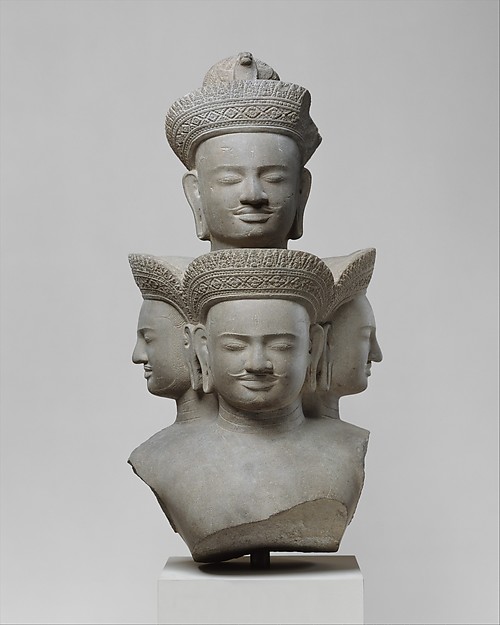
bust of five headed siva
Bust of Pancha muka Siva from Cambodia, Metropolitan Museum, New York

Compiled by London Swaminathan
Post No.1485; Dated 14th December 2014.

Points from an illustrated talk by Dr R Nagaswami, eminent historian and archaeologist, at the KSR Institute, Mylapore, Madras on 2nd October 1983 ( Dr Sivaramamurti Memeorial Lecture)

1)There are many legends about the origin of the rulers of Cambodia –
a)Kaundinya, a Brahmana of the Agastya clan, receiving a spear from Aswathama (Drona’s son) coming to this land and planting it—his marriage with a local (Naga) princess – their son Bhavavarman founding the city, Bhavapura (There are analogues in Pallava and Chola legends in India).

2)Chinese version – A male – Huen Chan (Houentien) dreaming of a bow given to him by a spirit sailing in a boat – losing his way coming to this land – meeting, defeating local queen and marrying her.

The Kambojan rulers called themselves – Sri Kaundinya somoduhitr praabhavah. This rule could have commenced even as early as 100 CE. There are records and inscriptions – detailed and continuous from the fifth century CE to the present day.

Tagore’s Song
Note: i)Tagore singles beautifully, in Bengali, of the Aryan migration to the Far East:“The great god Vishnu spoke to me, as also Uma, the ten armed Goddess; Make ready thy boat, carry the rites of worship across the unknown turbulent seas. The rivers stretched their arms to the eastern ocean in a flow of majestic gesture…………And the heart of my land murmured to me its hope that it might build its nest of love and piety in the far off lands of its dreams”

siva cambodia
Siva from Cambodia

2)Prof.K.A.Nilakanta Shastri observes— “The Hindu colonists carried abroad a cult with them i.e. the cult of Saivism under the aegis of the then chief purohit/priest of the Pandyas, an Agastyabhatta.
The inhabitants of Kambudesa when the Aryans first arrived there were Khmers – an Austronesian people who had settled there about fifth century BCE and mingled with the local ethnic groups. The Aryans civilised them. The original Aryan colony was Fou-nan (Vanam in Sanskrit and Panom in Khmer), established at the mouth of the Ma Ganga (Mekong)—first century CE.
(The Aryan state Bohuvanam extended up to Laos and Annam in the north and the east and reached down to Malay Peninsula in the west.)

Rulers of Cambodia
After Kaundinya – I, there were other dynasties. A Brahmin sage from Malaya conquered the kingdom early in the fifth century CE and became Kaundinya – II (Siva Chandra Varman?); the successor rulers were Indravarman………. and Jayavarman(470 CE). The last one built new capitals, one of which was Vyadhapura (Angkorbore). He had a long reign of 44 years. His successor Rudravarman became a Buddhist. Later Bhavavarman seized Fou – nan and the empire was integrated. His brother succeeded him – Mahendravarman ruled from Sambhupura. His successor Isanavarman firmly established his suzerainty and extended his conquests – he called himself “Trilokapala” (Fou nan, Kamboja and Dvaraavati) and built a new capital Isanapuri. His successor BhavavarmanII (635 CE) and the next ruler was Jayavarman II (640-680 CE)…. Jayavarman IV (11th century CE) and performed a special sacrifice to free Kambudesa from Javan overlordship. He succeeded and was a great ruler.

Different Names of Siva
The inscriptions give different names of Siva (Ashtamurti) as also of Sankaranarayana, Sambhu-Vishnu, Hara-Achyuta, Hari-Sankara. Even Buddhist inscriptions begin with salutations to Siva or the content is about Siva. In later periods Buddhist Bhikkus, Saivite and Vaishnavite sanyasins lived in harmony, receiving equal patronage from the ruler. There references to Ashramas – Brahmana, Vaishnava and Sangata, with their duties and privileges.
OLYMPUS DIGITAL CAMERA
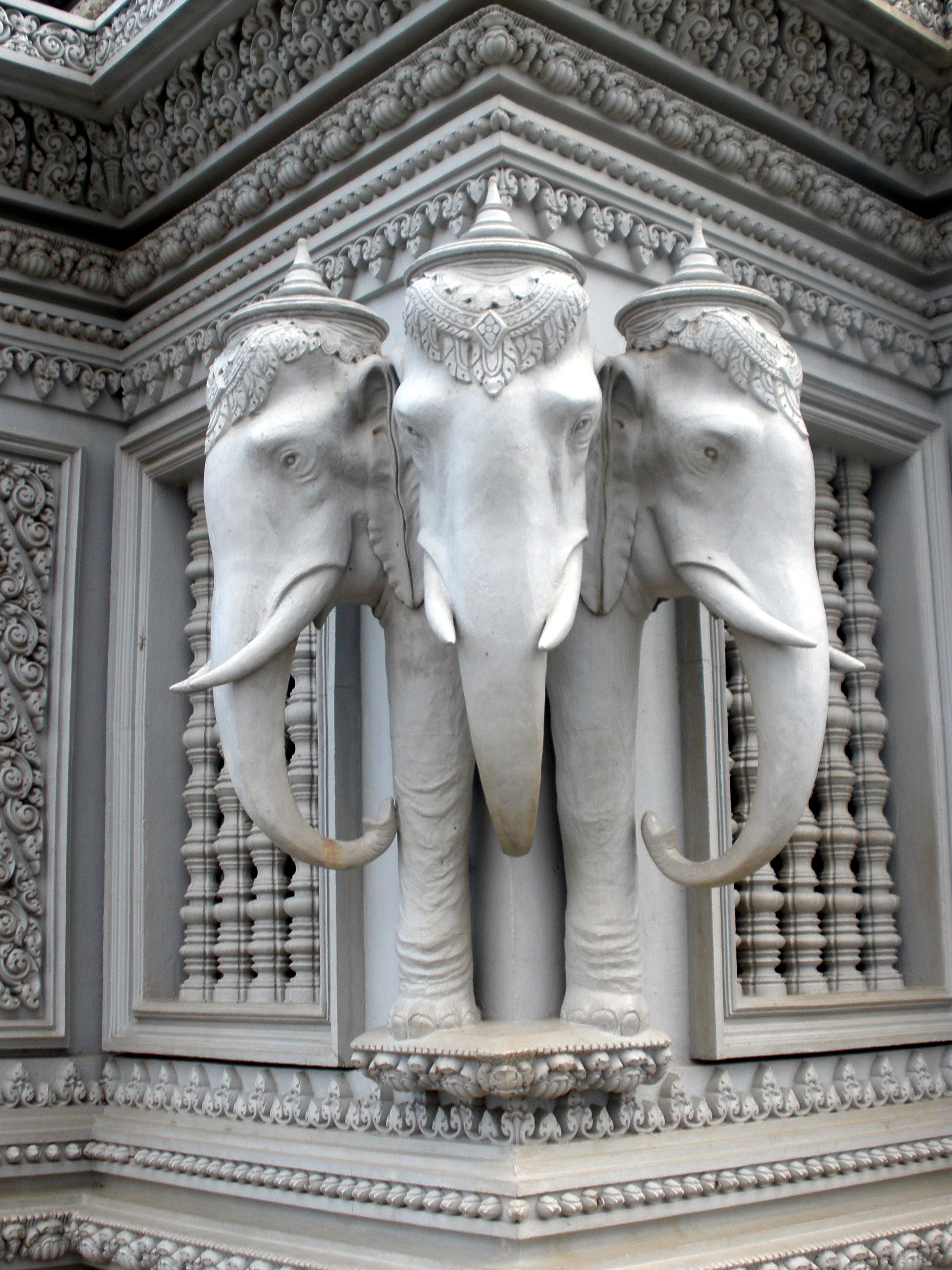
Three headed elephant, Cambodia, Photo by John Farraloo

There is mention of Vedas, Vedangas, Puranas, the reading of the Ramayana and Mahabharata, different Darsanas etc. The Sanskrit inscriptions are of great poetic beauty, hardly surpassed in India.

Siva – Sakti apparently dual is declared as one. The Trinity is also one –“jayati – ambhoja bhavanah jayati! Ambhoja locana jayati ambhoja bhupendra prabho bhavah (1005 CE – Suryavarman’s inscriptions)

After death kings got the names Sivaloka, Isvaraloka, Parameswaraloka.

It is remarkable that rulers with same names – Mahendra, Rajendra ….. ruled about the same time in South India and Cambodia – protagonists of the same culture – R.R.
(Paper cuttings from 7th and 8th of October 1983, Indian Express)

I am throwing away all the old paper cuttings, before which I wanted to upload them, so that it benefits interested readers. Those who don’t have time to read voluminous Cambodian histories will get some idea about it. I have changed all the AD in to CE– swami

Why did Shah Jahans son translate Upanishads?

upanishads_isa_katha_kena_spanish_ihh009
Research paper written by London Swaminathan
Research article No.1478; Dated 11th December 2014.

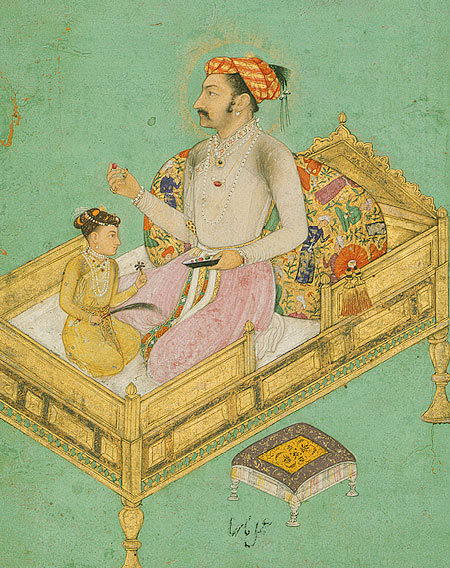
Shah Jahan became the most famous Mogul emperor after he built the Taj Mahal monument. His son and Muslim prince Dara shikoh was very much interested in the Upanishads. He brought Pandits from Kasi (Varanasi) to Delhi in 1656 and arranged the translation of fifty Upanishads into Persian. Upanishads are in Sanskrit language. Then Anquetil Duperron translated them from Persian into Latin. Thus it reached Europe.
The teachings of the Upanishadic sages, for long recorded and passed on by memory, provide some of the greatest treasures that India offers to Mankind.

When do you study the Upanishads?
Manu in his book The Laws of Manu, says,

“When a householder sees his skin wrinkled and his hair white, and sees the birth of his grandsons, then he may resort to the forest …. either committing his wife to his sons or accompanied by her”
In those days all the Upanishads were composed and taught in the forests. Nowadays we can retire to old age homes or a place far away from one’s relatives and study the Upanishads.
Big Ashrams around India offer special courses in the Upanishads.

German philosopher Schopenhauer read the Latin translation and said, “It has been the most rewarding and the most elevating reading which there can be possibly in the world. It has been the solace of my life and will be of my death”.

Many scholars including Prof. Max Muller and Prof. Paul Deussen also translated them.

Shah_Jahan_with_his_son_Dara_Shikoh,ca._1620
Shah Jahan and his son Dara Shikoh

116 Upanishads in Japanese Language!
“It is very interesting to find that a complete translation of 116 Upanishads in Japanese language appeared in nine volumes translated by a band of 27 persons, adding also a translation of the ten Upanishads from Duperon’s version”.

“One of the excellent translations of the major Upanishads (in fact, of thirteen Upanishads including Kausitaki and Maitri, besides the usual elevens) is of Robert Ernest Hume, first published in English in 1921, revised in 1931. Prof. S Radhakrishnan’s translation of the Major Upanishads is also a valuable addition to this literature, particularly his notes and annotations. Swami Chinmayananda’s critical commentary on the Upanishads would be an asset to his admirers”.

kena

“The Upanishad like Mandukya is cryptical and concise;
The Isa Upanishad, the fundamental and concise;
and the Chandogya and Brahadaranyaka are elaborate and highly illuminating and potential.
Where logic fails to express, it is poetry that comes to help.”

–Swami Satya Prakash Saraswati, Parables and Dialogues from the Upanishads

The parables in the Buddhist literature and the New Testament of the Bible, dialogues in Socrates’ teaching are all echoes of the Upanishads.
swami_48@yahoo.com

Sathya Sai Baba explains the effect of Karma

indian-guru-sathya-sai-baba

Written by Santhanam Nagarajan

Article No.1477; Dated 11th December 2014.

Fate and Free will – Part V

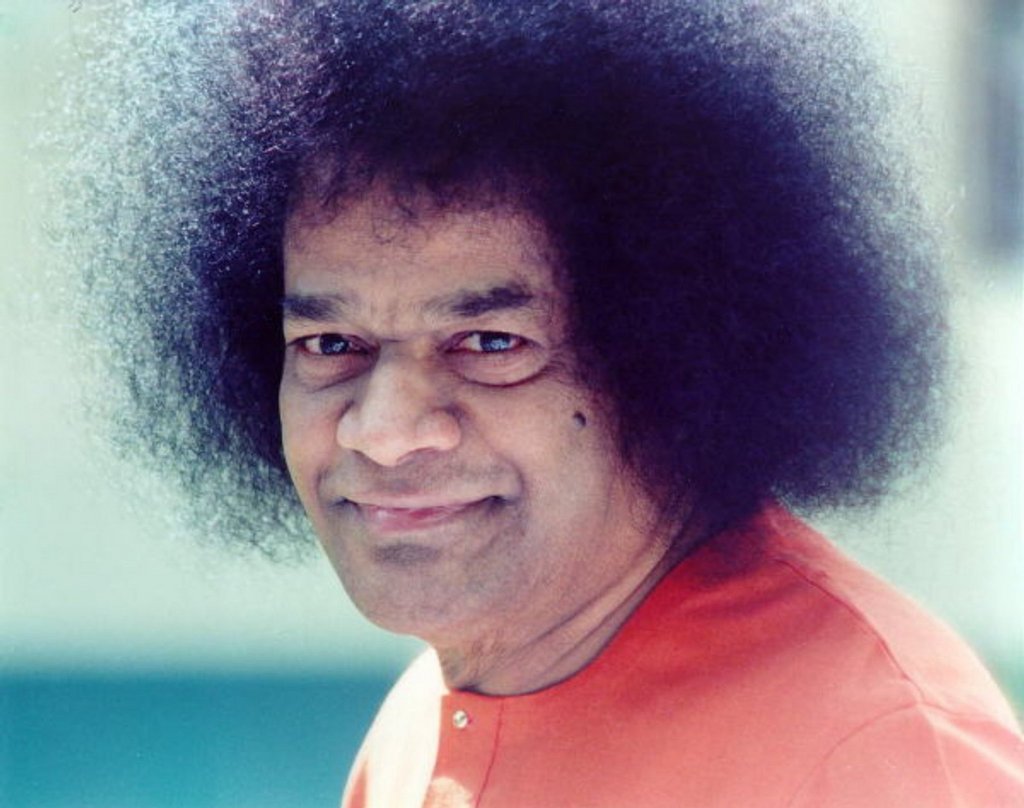
Sri Sathya Sai Baba gives one simpler example to explain Prarabhda, Sanchita and Agami karmas.

He explains:
Prarabhda can be compared to the dust that follows in the wake of a bus. When the bus is going, the dust also will be following it. So when the Karma which can be compared to the bus, is running, the Prarabhda, which can be compared to the dust will be pursuing it. When the bus stops and does not travel, then the dust comes and falls over it. But when the bus does not stop and keeps on running, the dust will be only at a distance. So when we are satisfactorily doing our daily duties without interruption, the dust or the Prarabhda will be at a distance and behind us without affecting us.

You may ask how long can we travel in a bus? We have to stop somewhere, It is not so. This road is of three kinds; work, worship and wisdom. This work is related to Karma and dust will be only there. You may take this as a village road. But if you pass some distance, then you will have a better road, a tar road. When the tar road comes, the dust will never fall on the bus. If you go still further you shall reach trunk road, the high way. So the road of karma is called the village road. Bhakti or worship is the town road or the tar road. Wisdom is the highway wherein there is no possibility of the dust coming. When we are following only the path of Karma, this Prarabhda will never come to an end. But, if we do the Karma in a way that we perform all actions for the pleasure and for the satisfaction of God, in worship and dedication to Him, no Prarabhda will trouble us.”

Now the question arises- By worshipping God can the Prarabhda and Sanchita Karmas be removed?

baba1

Baba clarifies:

“We need be afraid of Prarabhda or Sanchita. If we think that the effect of the Prarabhda Karma is inescapable, then what is the use of worshipping God? Even though Prarabhda is there, the grace of God will certainly remove to a large extent the bad effects from the Prarabhda.

Here is a small example for this. There is an injection bottle. It will be written on that, that the medicine inside can be used upto 1970. That bottle is there even in the year 1972 and the medicine is also there in the bottle, but the medicine will have no power. It cannot serve its purpose. So in the same way, that in our destiny there may be medicine of Prarabhda but by the grace of God we can weaken its effect, blunt its effect. Even though it is there, it can not trouble us. We can become beneficiaries of God’s grace; we need not be afraid of either Prarabhda or Sanchita or Agami. If God is pleased with our worship, He will certainly annul the bad effects of Prarabhda and Sanchita. Therefore the most important thing we have to try is to earn the grace of God by which we can overcome all these bad effects.”

So the secret to overcome the bad karmas is Devotion to God.
We will analyze further fate and freewill in our next article.

Summary
How to weaken the bad effects of Prarbhda karma? Sri Sathya Sai Baba explains that God can weaken the effects of Prarabhda. Even though it is there it can not trouble us. Secret to overcome the bad effects of Prarabhda Karma is explained in this article.

List of 121 Upanishads

The_Brihadaranya_4dfb3f98d7021
Compiled by London Swaminathan
Post No 1471 Dated 9th December 2014

What is the meaning of Upanishad?
Upanishads were written in Sanskrit at least 3000 years ago. There are 13 principal Upanishads. They are the Hindu philosophical treatises. Literal translation of the word UPANISHAD is “sitting down near” (the Guru). Seekers of enlightenment approach a teacher (guru), sit down at his feet and listens to him.

How many Upansihads are there?
There are more than 250 Upansihads. Some of the Upanishads were written 200 years ago.
Which one is the longest Upanishad?
Brihad Aranyaka (Big Forest ) Upanishad
Which is the shortest of the major Upanishads?
Isavasya Upanishad, just 18 verses.

Which is the oldest Upanishad?
Brihad Aranyaka (Big Forest ) Upanishad (before 800 BCE)
Are they all important books? What are the major books?
Adi Shakara, one of the greatest philosophers of the world, wrote commentaries on the important Upanishads. The 13 principal Upanishads are given in CAPITAL letters below.

What is the favourite Upanishad of Mahatma Gandhi?
Isavasya Upanishad, just 18 verses

gpa057
Upansihads in alphabetical order:–

1.Advayatarakopanishad
2.Adhyatmopanishad
3.AITAREYOPANISHAD
4.Akshamalikopanishad
5.Akshyupanishad
6.Amritanadopanishad
7.Amritabindu Upanishad
8.Annapurna Upanishad
9.Arunyopanishad
10.Asramopanishad
11.Atmapujopanishad
12.Atmabodhopanishad
13.Atharvashikopanishad
14.Atharvasirsopanishad
15.Atmopanishad
16.Avadhutopanishad
17.Avyakta Upanishad

nnn791

18Bahbricopanishad
19.Bhasmajabalopanishad
20.Bhavanopanishad
21.Bhikshukopanishad
22.Brahmopanishad
23.Brahmavidyopanishad
24.BRIHADARANYAKOPANISHAD
25.Brihadjjabalopanishad
26.Brahmabindupanishad

27.Caturvedopanishad
28Cakshusopanishad
29.CHANDOGYOPANISHAD

upanishads_in_daily_life_idk769

30.Dhyanabindupanishad
31.Dakshinamurtyupanishad
32.Dattatreyopanishad
33.Devyupanishad
34.Dvayopanishad

35.Ekaksharopanishad

36.Ganapathy Upanishad
37.Gopalapurvatapinyupanishad
38.Gopalatapani Upanishad
39.Garudopanishad
40.Garbhopanishad
41.Gayatrirahasyopanishad
42.Gayatri Upanishad

43.Hamsopanishad
44.Hayagrivopanishad

45.ISAVASYOPANISHAD

shankar

46.Jabaladarsanopanishad
47.Jabalyupanishad
48.Jabalopanishad

49.Kalagnirudropanishad
50.Kalisamtaranopanishad
51.KAIVALYOPANISHAD
52.Katharudropanishad
53.KATHOPANISHAD
54.Kausitakibrahmanopanishad
55.KENOPANISHAD
56.Krishnopanishad
57.Ksuburikopanishad
58.Kundikopanishad

59.Langulopanishad

ekanath eswar

60.Mahopanishad
61.MANDUKYOPANISHAD
62.Mahavakyopanishad
63.Mahanarayanopanishad
64.MAITRAYANI UPANISHAD
65.Maitreyi Upanishad
66.Mantrikopanishad
67.Mandalabrahmanopanishad
68.MUNDAKOPANISHAD
69.Mudgalopanishad
70.Muktikopanishad

71.Nadabindupanishad
72.Narayanopanishad
73.Niralambopanishad
74.Nilarudropanishad
75.Nirvana Upanishad
76.Nrisimhapurvatapinyupanishad
77.Naradaparivrajakopanishad

twelve_essential_upanishads_

78.Pasupatabrahmopanishad
79.Paingala Upanishad
80.Parabrahmopanishad
81.Panca brahmopanishad
82.Paramahamsa Upanishad
83.Paramahamsa parivraja Upanishad
84.Pranagnihotropanishad
85.PRASNOPANISHAD
86.Pranavopanishad

87.Ramarahasya Upanishad
88.Ramapurvatapinyu panishad
89.Radho Upanishad
90.Rudropanishad
91.R udrahridayo Upanishad
92.Rudrakshaja valopanishad

93.Sarabhopanishad
94.Savitryu Upanishad
95.Sandilya Upanishad
96.Sanyasa Upanishad
97.Sarasvatirasyopanishad
98.Saubhagyalakshmiopanishad
99.Sita Upanishad
100.Skandopanishad
101.Sarirakopanishad
102.Sarvasariropanishad
103.Suryopanishad
104.Sabala Upanishad
105.Sukrarahasyopanishad
106.SVETASVATAROPANISHAD

Upanishads-and-Vedas2

107.Tarasara Upanishad
108.Tejabindu Upanishad
109.Trisikharabrahmanopanishad
110.TAITTIRIYOPANISHAD
111.Tripuropanishad
112.Tulasyupanishad
113.Turiyatitopanishad

114.VAJRASUCIKOPANISHAD
115.Varaha Upanishad
116.Vasudevai Upanishad
117.Yogacudamanyupanishad
118.Yajnavalkyopanishad
119.Yogakundalyupanishad

120.Yogatattva Upanishad
121.Yogarajopanishad

Hindu Eye Goddess Temple in Syria?

flash_image5

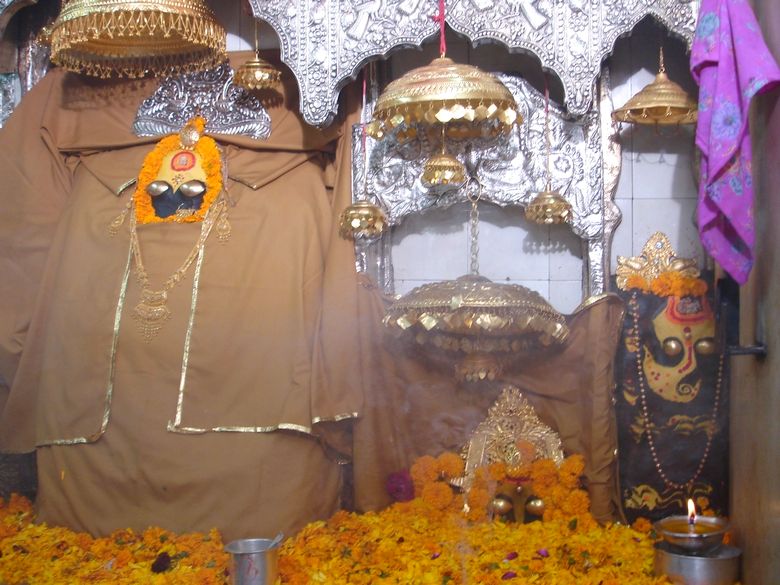
Naina Devi temple in Bilaspur,Himachal Pradesh

Research paper written by London Swaminathan
Research article No.1456; Dated 3rd December 2014.

What is the Goddess Name?
Naina (Nayana Devi) Devi = Eye Goddess
Where is it?
In Himachal Pradesh and Uttarkhand States in India and Tell Birak in Syria.

What is found there?
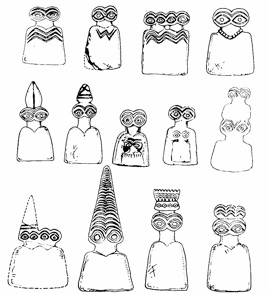
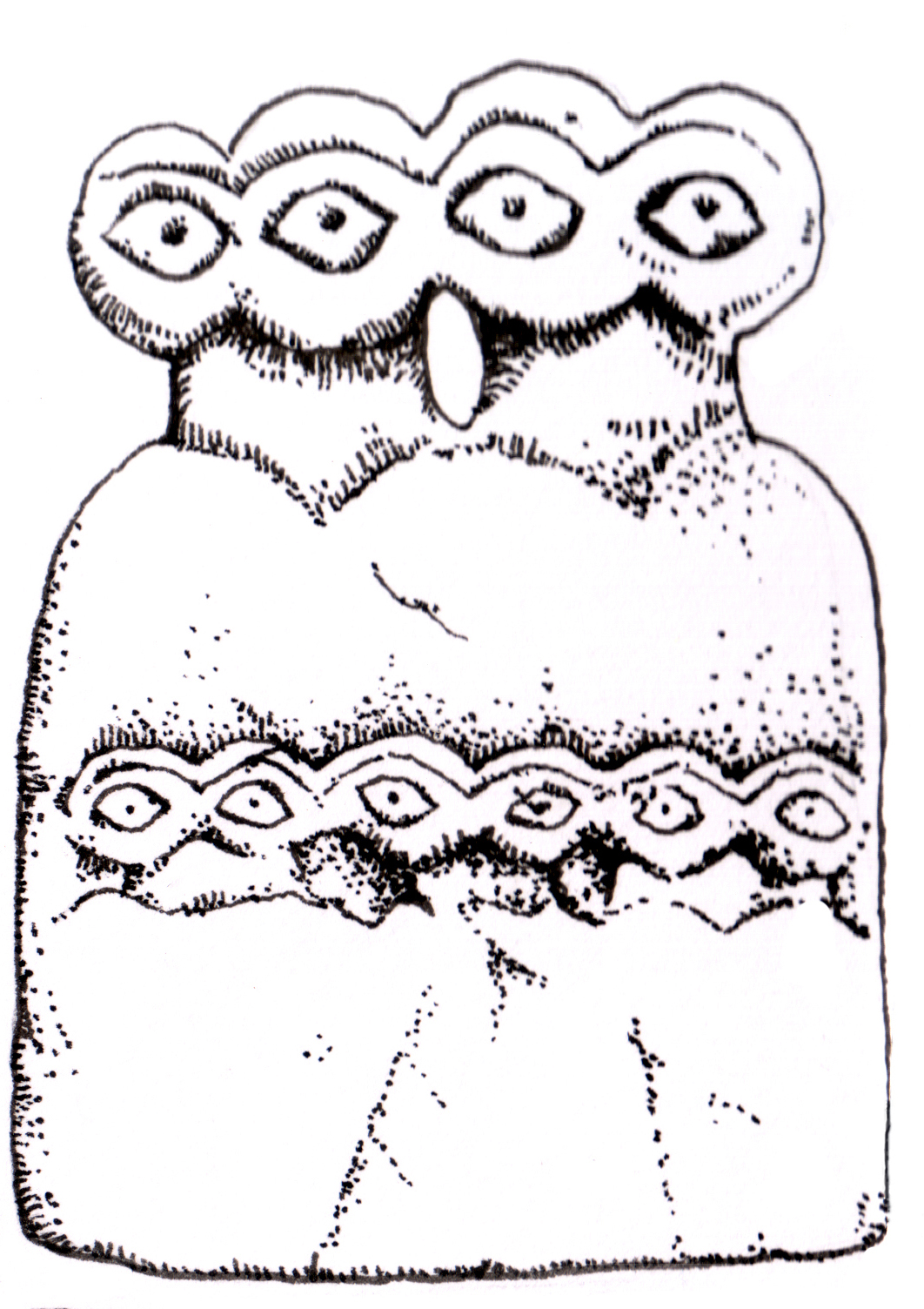
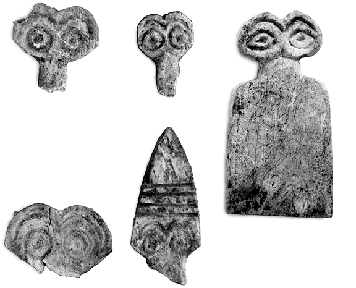
Thousands of small stone eye idols are found in Tell Brak in Syria. It is called Eye Temple. It existed from 3000 BCE. Naram Sin built (2254 BCE) a palace here. The Eye Goddesses are mysterious and found nowhere else except India. Syrian site is located in Nahar al Khabur basin. Ancient Mitannian buildings are in the area.

tell brak, syria

How do we know that Syrian Temple is Hindu?
The place where the eye idols are found is called Nagar. This is a Sanskrit word meaning city and in Sangam Tamil literature (Purananauru verse 6) it is used for temple in Tamil.

The second reason is that it was ruled by Mitannians in 1500 BCE. All the Mitannian names are pure Sanskrit words. Dasaratha and Pratardhana are some of the names of the kings. A Horse manual with Sanskrit numbers is found there. A treaty in clay tablet with the names of the Vedic Gods is also discovered. This is the oldest Sanskrit inscription (1400 BCE) in the world.
The third reason is the kings’ names like Naram sin are also of Sanskrit origin. Sin stands for Chandra (moon) in Sumer. Like we have Haris chandra in the Hindu scriptures they have several kings with this Sanskrit name in Akkadian empire:

naina-devi1
Nayana Devi

Ibbi Sin, Naram Sin (before 2600 BCE)
Both of them ruled before Gilgamesh.
Shu Sin, Sin iddinam, Sin eribam, Rim Sin I, Rim Sin II, Sin magir, Apil Sin, Sin mubalit. All these kings ruled before 1600 BCE.

Like in India, ‘Chandra’ can be a pre fix or a suffix to a name. We have Hari Chandra or Chandra Deva in the king list. Sin and Sena also sound similar. Another name for moon is Nanna which is found in the king list in Sangam Tamil literature and Sanskrit literature (Nanna Deva). Nanna is one of the popular names in Sumer.

Nayana Devi Temple in Bilaspur and Nainital
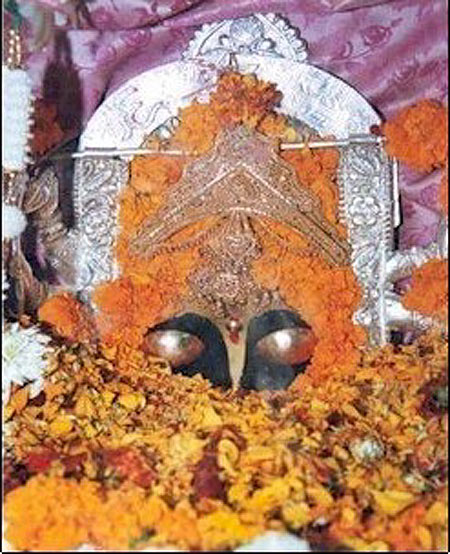
The most famous Eye Goddess temple is in Himachal Pradesh. Sikh Guru Guru Gobind Sing did a Chandi Yajna here to defeat the Moghuls.

naina-devi-temple-nainital
Nainital Temple

It is one of the 51 Shakti Kendras (Goddess centres) in India. When Goddess Parvati committed self sacrifice (Sati) in the Daksha Yajna , Lord Shiva carried her body and the body parts fell in 51 places in India. They all became famous Shakti centres attracting a huge crowd. It is believed that Goddess’ eyes fell at Bilaspur in Himachal Pradesh. Nainital in Uttarkhand also has a similar eye goddess temple. Nainital’s name is also derived from the Nayana Devi Tal.

Nayana, Akshi, Lochana, Netra are popular Sanskrit words for eye. These names are found in women’s names throughout India.

Meenakshi of Madurai, Kamakshi of Kancheepuram, Neelayathakshi of Nagapattna, Visalakshi of Kasi/Varanasi are very famous temples and all are named after the beautiful eyes of the goddesses.

Above all Shiva’s Third Eye stands for wisdom and mysterious powers in Hinduism. In all the village temples of Tamil Nadu and Kerala people offer body parts made up of silver to the goddesses. Eye is an important body part they offer. Eye worship is very common in Hinduism.
middle-figure
Eye Goddess of Syria

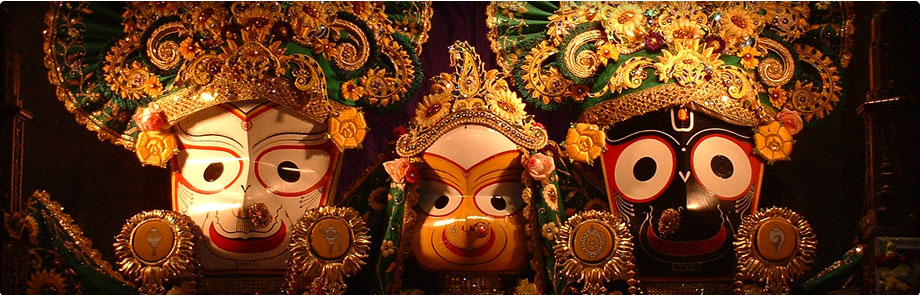
The statues of the famous Puri Jagannath Rath Yatra (Chariot Festival) Krishna, Balarama and Subadra have prominent eyes like the Syrian temple idols.

Probably the Mitannians worshipped Nayana Devi around 1500 BCE. But the temple in Syria was built well before the known Mitannain kings. Naram sin and his forefathers may also have worshipped Nayanadevi. Scarcity of materials leaves lot of things to guess work. But the material similar to eye idols of Syria is available only in Hindu temples of India.
puri
Krishna, Bakabhadra and Subhadra of Puri, Odissa

Please read my articles on Sumer–Hindu connection and Sahasralinga Temple in Karnataka and Cambodia.
Contact swami_48@yahoo.com
maa_naina_devi
Maa Naina (Nayana) Devi, Bilaspur

99-00_Hamoukar_fig4
From Syria

Vyasa deserves Nobel Peace Prize and Literature Prize!

VYASA top

Research paper written by London Swaminathan
Research article No.1455; Dated 3rd December 2014.

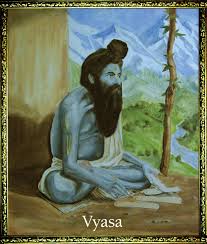
Vyasa, the black man, who was born to a fisher woman called Satyavati was very black in complexion. He was the ugliest and blackest character in the Mahabharata. But he was the purest and the greatest soul of his times. Two women Amba and Amablika, went to his bed room but refused to lie down with him because he was so ugly and black!

He was celebrated as equal to Vishnu and praised “Vysaaya Vishnu Ruupaaya, Vyasa Ruupaaya Vishnave”. He deserves two Nobel Prizes, one for Peace and another for Literature. Had there been a prize at his times, there was no one to compete with him. Neither Moses nor Homer was born. There was no literature worthy of the name in any part of the world in any language except Sanskrit in 3100 BCE. He lived just before the Kali Yuga began in 3100 BCE. Some western scholars believe that he lived around 1500 BCE and not around 3100 BCE. Even if we accept the date he was the oldest litterateur in the world!

Shree-Vyasa-Ji4

But what it did he achieve to claim two Nobel Prizes?
Look at his literary achievements first:
1.He was so worried about the Vedas that existed at his time. When he lived the Vedas became very ancient and one person can’t master it. The Vedic literature was vast and the custom about the Vedas is unique in the world. It should not be written. One can only learn it from his Guru/teacher. So he divided them into four parts and called four most intelligent persons of his time and gave the responsibility to pass it on to future generations. The most wonderful thing happened.

Till this day that bulky literature has been passed from one generation to another by word of mouth. That shows that the Hindus are the oldest and the most intelligent people. Whether he lived 3500 years ago or 5100 years ago, it does not matter. What he did was right. Without him, we would not have the oldest record of human beings. Of course, we have Gilgamesh, which some people claim to be older than Vyasa’s Vedas. But they are primitive in nature without any higher thoughts. Vedas are full of high thoughts and pray for the welfare of all the human beings. Most of the mantras have “WE” instead of “I”.

vyasa3

What else did Vyasa achieve?
He compiled the longest epic in the world, Mahabharata. Till this day no body beat him. Two hundred thousand lines! One million worlds!! He threw a challenge in the very first chapter Adi Parva. What is in the world is already in it. So whatever you find in any other part is already “ tasted” by me and so they are called Vyasa’s spit, i.e Vyasa Ucchistam Jagath Sarvam. Nothing is new. Mahabharata is a veritable encyclopaedia. He collected all the materials that was available at his time and intricately woven them into the main plot of the Mahabharata. He must be the cleverest person at that time and that is why Hindus praise him as an “avatar of Vishnu”. No writer in the world has been elevated to that level!

vyasa02

What else did he do?
After seeing the great success in compiling the Vedas, weaving all the available moral stories in the Mahabharata, he saw one other bulky thing called Puranas, the Hindu mythology. They run to 800,000 couplets and 1.6 million lines. He took it as a challenge of his life time and compiled all the 18 Major Puranas and left others to his juniors. This was his third achievement. Even in the modern world no one can achieve such a thing with all the computers and one hundred office assistants. He compiled them and passed them successfully to his posterity. Generations to come will remember his literary achievements. Now you know why he deserved Nobel Prize for Literature.

Inspired by Vyasa, Adi Shankara also wrote hundreds of hymns in simple Sanskrit and wrote commentaries for innumerable scriptures including the Upanishads, Brahma Sutra and Vishnu Sahasranamam. So Vyasa has the credit of inspiring others. Inspired by these two sages, a Brahmin commentator by name Nachinarkiniyar wrote commentaries to most of the Sangam literature. Nobody could beat him in writing commentaries.

vyasa 1

Why Vyasa deserves Peace Prize?
Vyasa tried his level best to avoid the great Mahabharata war. But as a Tri Kala Jnani, one who can see the past, present and future, he knew the outcome. In spite of his advice to Dridharashtra and others it did not work. But his appeal for world peace is already in the Vedas and Mahabharata. He was so clever that he wanted to write a crispy message to the entire humanity. He knew what he compiled was the bulkiest literature in the world and no one could read it in one’s life time. So he wanted to convey his message. He wrote only four couplets and called them Bharata Savitri and included in the Mahabharat. He put the peace hymn as the last hymn of Rig Veda, indicating that this is the message he wanted to give to the world. And that is message of the Vedas as well. Read the verse for yourself and decide whether Vyasa deserved a Nobel Peace Prize:–

Meet together, Speak together
Let your minds be of one accord
As the Devas of old, being of one mind
Accepted their share of sacrifice

May your counsel be common, your assembly common
Common be the mind and the thoughts of these united
A common purpose do I lay before you
And worship with your common oblation.

Let your aims be common
And your hearts of one accord
And all of you be one mind
So you may live well together
–Rig-Veda, Tenth Mandala, 191 (last hymn)

After fighting two World Wars only, the world realised and wrote a charter for the United Nations similar to this!

(For Bharata Savitri verses, please go to Santanam Nagarajan’s post in this blog “Great Secret from Mahabharata” posted on 12th August 2012)

Long Live Vyasa!
contact swami_48@yahoo.com

Tagore and Einstein

Rabindranath-Tagore

Written by Santhanam Nagarajan
Article No.1453; Dated 2nd December 2014.

Fate and Freewill – Part III

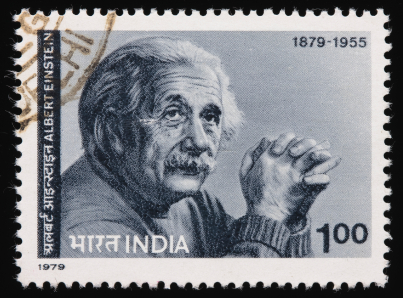
Albert Einstein who was awarded Nobel Prize went to India during his journey to the orient. He met the famous poet Rabindranath Tagore. Tagore was awarded Nobel Prize for his monumental work Gitanjali.

Both are Nobel laureates. One was a ‘literary giant’. The other was a ‘science genius’.

An interesting conversation started regarding chance and casualty.
The discussion was recorded fully. (Please refer My Views by Einstein)
We can go through the discussion carefully.

Tagore: I was discussing with Dr Mendal today the new mathematical discoveries which tell us that in the realm of infinitesimal atoms chance have its play: the drama of existence is not absolutely predestined in character.
albert-einstein

Einstein: The facts that make science tend towards this view do not say good-bye to casualty.
Tagore: May be not; but it appears that the idea of casualty is not in the elements, that some other force builds up with them an organized Universe.

Einstein: One tries to understand in the higher plane how the order is. The order is there, where the big elements combine and guide existence, but in the minute elements this order is not perceptible.

Tagore: Thus duality is in the depths of existence-the contradiction of free impulse and the directive will which works upon it and evolves an orderly scheme of things.

Einstein: Modern Physics would not say they are contradictory. Clouds look one from a
distance, but, if you see them near, they show themselves in disorderly drops of water.

Tagore: I find a parallel in human psychology. Our passions and desires are unruly, but our character subdues these elements into a harmonious whole. Does something similar to this happen in the physical world? Are the elements rebellions, dynamic with individual impulse? And is there a principle in the physical world which dominates them and puts them into an orderly organization?
tahore more

Einstein: Even the elements are not without statistical order; elements of radium will always maintain their specific order, now and ever onward, just as they have done all along. There is then, a statistical order in the elements.

Tagore: Otherwise the drama of existence would be too desultory. It is the constant harmony of chance under determination which makes it eternally new and living.

Einstein: I believe that whatever we do or live for has its casualty; it is good however that we can not look through it.

Tagore: There is in the human affairs an element of elasticity also – some freedom within a small range, which is for the expression of our personality. It is like the musical system in India, which is not so rigidly fixed as is the western music. Our composers give a certain definite outline, as system of melody and rhythmic arrangement and within a certain limit the player can improvise upon it. He must be one with the law of that particular melody, and then he can give spontaneous expression to his musical feeling within the prescribed regulation. We praise the composer for his genius in creating a foundation along with a superstructure of melodies, but we expect from the player his own skill in the creation of variations of melodic flourish and ornamentation. In creation we follow the central law of existence but if we do not cut ourselves adrift from it, we can have sufficient freedom within the limits of our personality for the fullest self-expression.

einstein usa

The discussion continues.

From this discussion, we could understand there is a predetermined factor everywhere.
But there is also a freedom to play with.
Let us further analyze fate and free will in the next article.

Swami_main
Fate and Free will – Part IV

Santhanam Nagarajan

First of all we must understand what is fate?

According to the Hindu scriptures there are three types of karmas
( which forms our fate).
They are

1) Prarabhda Karma
2) Sanchita Karma
3) Agami

Prarabhda Karma is that which we are presently undergoing and experiencing.
Sanchita Karma means all the past karma.
Agami refers to Karma that will follow in future.
Prarabhda is in between the Sanchita and Agami, and we are experiencing this Prarabhda karma on account of the previous Sanchita Karma meaning the past karmas.

Sri Sathya Sai Baba gives a small example to explain all these three karmas from our daily life. He says:

“We have got a store room in which we stock all our rice. We have already the old stock of rice in the store. So what we have stored in the room is called Sanchita. When we want to cook, we remove some rice from the store room for cooking today called Prarabhda. What we cook now and what we eat today will pass out our body, tomorrow. Sometimes what we eat may come out in the shape of a belch. Therefore we can not escape from Prarabhda, we must experience it in this life. In the store room, there is only one rice. When we bring it we will be able to convert it into many preparations. In this way, we can make the rice into food; we can make it in the form of ‘Puliyodhara’ (meaning rice mixed with tamarind to make a delicious dish). We can cook it in the form of ‘Chakkara pongal’ (meaning rice mixed with sugar to form a tasty dish). It can be made into ‘Daddhojana’ (meaning rice mixed with curd to form a delightful dish). We can make from it ‘idlis’ (rice cakes) and also ‘Dosas’ (one more variety of food) and so on, all of which the base which is always rice. You have to start any preparation with rice only. Even though there is Sanchita, if you try to behave in a Sathwic (meaning in a pious and good) way you will be able to change even Sanchita. You may say that in the rice store, there are big stones. They are the results of our bad actions. They are in the store mixed with the rice. Before we cook, do we not try to remove away the stones from the rice? So it is quite necessary that when we experience Sanchita we can overcome the bad effects to some extent or a great extent and make them clean, just as we make the rice clean.”

But can the Sanchita and Prarabhta karmas can be weaken or overcome by prayer?

“Yes”, says Sri Sathya Sai Baba giving a beautiful example which we can see in our next article.