அழகிக்கு நான்கு நெற்றி, ஐந்து காதணி, ஆறு …….. ஒரு புதிர் பாடல்! (Post No.7545)

WRITTEN BY S NAGARAJAN                     

Post No.7545

Date uploaded in London – – 7 February 2020

Contact – swami_48@yahoo.com

Pictures are taken from various sources for spreading knowledge; this is a non- commercial blog.

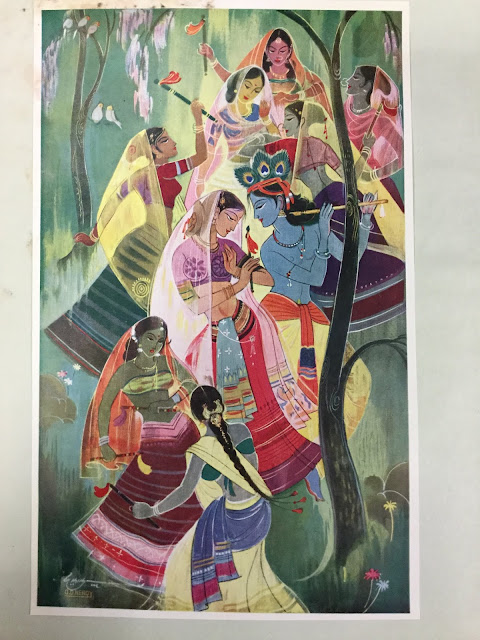
அழகிக்கு நான்கு நெற்றி, ஐந்து காதணி, ஆறு மார்பகங்கள், ஏழு கண்கள் – ஒரு புதிர் பாடல்!

ச.நாகராஜன்

மதுரகவிராயரின் பல பாடல்களை ஏற்கனவே பல கட்டுரைகளில் பார்த்து விட்டோம்.

இன்னும் ஒரு பாடல் இது.

புதுமையான புதிர் பாடல் இது.

துரைரங்கன் என்னும் ஒரு பிரபுவின் மீது அவர் பாடிய இந்தப் பாடலில் அவரை, பாடலில் உள்ள புதுமையை ஆராய்ந்து அறிய வேண்டும் என்கிறார் கவிராயர் tamilandvedas.com, swamiindology.blogspot.com

.

பாடல் இதோ:

துங்கவரை மார்பா துரைரங்க பூபதியே

இங்கோர் புதுமை யியம்பக் கேள் – பங்கயக்கை

ஆயிழைக்கு நான்குநு தலைந்துகுழை யாறுமுலை

மாயவிழி யேழா மதி

பாடலின் பொருள் :

துங்கம் – பரிசுத்தமாகிய

வரை – மலை போன்ற

மார்பா – மார்பினை உடையவனே

துரைரங்க பூபதியே – துரைரங்கன் என்னும் பூபதியே

இங்கு  – இவ்விடத்தில்

ஓர் புதுமை இயம்பக் கேள் – ஒரு புதிய செய்தி உண்டு; அதைச் சொல்கிறேன்; கேட்பாயாக (அது என்னவெனில்)

பங்கயக் கை – தாமரை மலர் போன்ற கைகளை உடைய

ஆயிழைக்கு – அழகிய பெண்ணுக்கு

நான்கு நுதல் – நான்கு நெற்றிகள்

ஐந்து குழை – காதணி ஐந்து tamilandvedas.com, swamiindology.blogspot.com

ஆறு முலை – மார்பங்கள் ஆறு

மாய விழி ஏழாம் – வஞ்சமுள்ள (மயக்கும்) கண்கள் ஏழு

மதி – தேர்ந்து நீயே ஆலோசித்து இதை அறிவாயாக!

பாடலின் பொருளை துரைரங்க பூபதி அறிந்து கொண்டு மதுரகவி ராயருக்குப் பரிசுகள் கொடுத்துப் பாராட்டினார்.

பாடலில் மறைந்திருக்கும் பொருள் தான் என்ன?

ஆயிழை என்றால் கன்னி (ராசி)

மேஷம், ரிஷபம், மிதுனம்,கடகம், சிம்மம், கன்னி, துலாம், விருச்சிகம், தனுசு, மகரம், கும்பம், மீனம் ஆகியவை பன்னிரெண்டு ராசிகள் tamilandvedas.com, swamiindology.blogspot.com

இவற்றில் கன்னி ராசிக்கு நான்காவது ராசி  தனுர் ராசி.

தனுர் என்றால் வில் என்று பொருள்

கன்னி ராசிக்கு ஐந்தாவது ராசி மகரம்.

மகரம் என்றால் மீன் என்று பொருள்.

கன்னி ராசிக்கு ஆறாவது ராசி கும்பம். அதாவது குடம்.

கன்னி ராசிக்கு ஏழாவது ராசி மீனம். அதாவது கெண்டை மீன்.

பாடலில் புலவர் கூறிய கருத்து;

அழகிக்கு வில்லை நிகர்த்த நெற்றியும்

மகர மீனுருவை ஒத்த காதணியாகிய மகர குண்டலமும்

குடம் போன்ற மார்பகங்களும்

கெண்டை மீன் போன்ற கண்களும் உள்ளன.

இதை ஆராய்ந்து அறிக.

 ஜோதிடத்தில் அழகியைச் சேர்த்துப் பாடிய சமத்காரப் பாடல் இது. tamilandvedas.com, swamiindology.blogspot.com

இன்னொரு சமயம் மதுரகவிராயர் ஒரு அழகிய பெண்ணைப் பார்த்தார்.
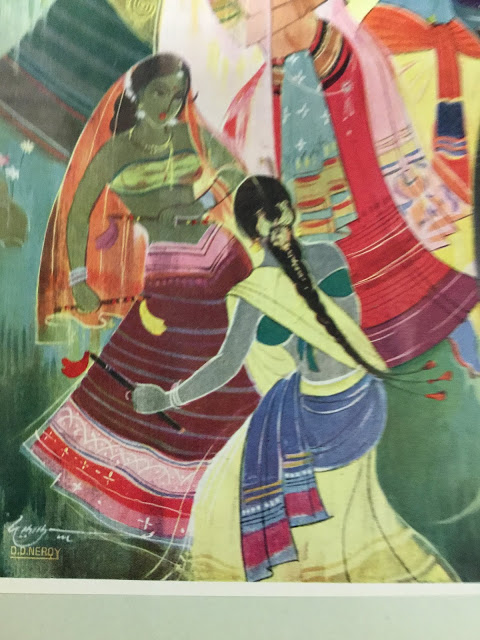
அபார அழகு. அசந்து போனார். பாடினார் ஒரு பாடல் இப்படி :-

மூவென்ப தென்பதிலோர் நாளில்லை மொய்வனத்தில்

தாவுந் தனிமிருகந் தானில்லை -நேரே

வளையா நடையில்லை வாரிறுக விம்மும்

முலையாளை யான் முயங்குதற்கு

பாடலின் பொருள் :

வார் இறுக – கச்சு இறுகும்படி

விம்மும் முலையாளை – பருத்த மார்பகங்களை உடையவளை

யான் முயங்குவதற்கு – நான் கட்டித் தழுவுவதற்கு

மூவொன்பது என்பதில் – மூன்று ஒன்பது அதாவது இருபத்தேழு நட்சத்திரங்களில்

ஓர் நாள் இல்லை – ஒரு நட்சத்திரம் இல்லை – உத்தர நட்சத்திரம் இல்லை – அதாவது உத்தரம் இல்லை (பதில் இல்லை – அவளிடமிருந்து)

மொய் வனத்தில் – நெருங்கிய காட்டில்

தாவும் – தாண்டித் திரியும் tamilandvedas.com, swamiindology.blogspot.com

தனி மிருகம் இல்லை – ஒப்பற்ற மிருகம் இல்லை (அதாவது வேங்கை இல்லை. வேங்கை என்ற சொல்லுக்குப் பொன் என்ற பொருளும் உண்டு)

நேரா வளையா நடை இல்லை – நேராக வளையா நடையுமில்லை.

நேரா வளையா நடை என்பது அன்னம் அல்லது சோறைக் குறிக்கிறது tamilandvedas.com, swamiindology.blogspot.com

.

 பேரழகியைக் கட்டித் தழுவுவதற்கு ஆசை. ஆனால் அவளிடமிருந்து பதிலும் இல்லை; என்னிடம் அவளுக்குத் தரப் பொன்னும் இல்லை;  சோறும் இல்லை, எப்படித் தழுவுவேன்?

நல்ல கேள்வி இது? யார் தான் பதில் சொல்ல முடியும்?

***
Great Exodus -Yadavas’ Migration to Gujarat from Uttar Pradesh (Post No.7544)

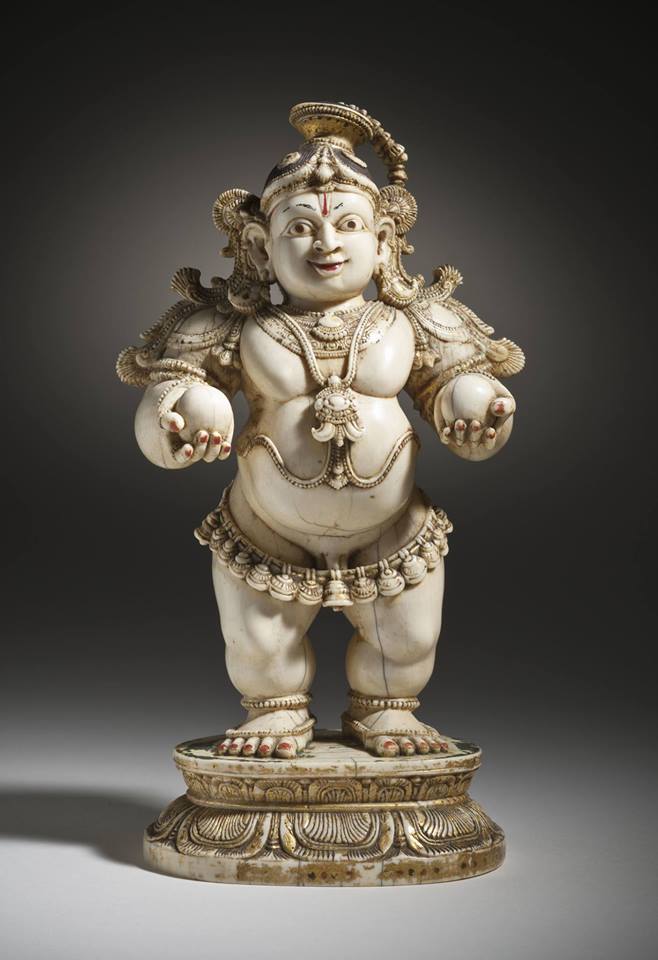
Ivory Krishna

Research article Written  by London Swaminathan         

Post No.7544

Date uploaded in London – – 6 February 2020

Contact – swami_48@yahoo.com

Pictures are taken from various sources for spreading knowledge; this is a non- commercial blog.

Great Exodus -Yadavas Migration to Gujarat from UttarPradesh

There is a very interesting historical anecdote in Puranas and Harivamsa which is an annexure to Mahabharata. This is a major event in Indian history which is ignored by many, probably to keep the good name of Lord Krishna. This happened 5000 years before our time and 2000 years before Moses who is associated with the Biblical Exodus. tamilandvedas.com, swamiindology.blogspot.com

Why did Krishna run away from Mathura to Dwaraka with his group ?

Why did all the Yadavas travelled 800 miles with all the beds and boxes to go to Dwaraka?

Who is Kala Yavana , the Black Greek, who attacked Lord Krishna along with Jarasandha?

How come Krishnan shuttled between Dwaraka and Mathura, a distance of 1291 kilometres, 800 miles in ancient times?

Was there a Bullet train or a Helicopter?

The answer for all these questions is in amazing Harivamsa, part of Mahabharata. tamilandvedas.com, swamiindology.blogspot.com

In addition to the answers there is a very interesting Ant and Snake anecdote.

Xxx

Exodus forms the second chapter in the Old Testament of the Bible. It describes the exodus of Jews under the leadership of Moses from Egypt to Israel. Jews were delivered from slavery. Though there is no historical or archaeological proof for Moses until this day three great Semitic religions believe in him. The Exodus was written around sixth century BCE .There are two striking similarities between the Bible and the Bhagavata. Bhagavata is the life story of Lord Krishna. Like Red Sea divided into two parts and gave a safe way to Moses, river Yamuna separated into two parts during very heavy rains and floods to give a safe exit to Vasudev who carried child Krishna in a basket.

Another striking similarity is the great exodus of Yadavas from Mathura in Uttar Pradesh to Dwaraka in Gujarat. It may be compared with Moses exit from Egypt to Israel tamilandvedas.com, swamiindology.blogspot.com

.

There are other similarities like ‘killing the first born child’ and ‘floating a child in a basket’, ‘Adam and Eve story’ and ‘parables of Upanishad and Jesus parables . Christians copied all thse stories through Greeks, who were well versed with Hindu stories. And the Greek Bible was translated into English 1600 years after death of Jesus. Let me stop there and continue with the historical EXODUS incident.

From Harivamsa

“Kala Yavana came with a big force to attack Mathura. He was the son of Gargya Rishi. Since Yavana king had no issues when he died, Kala Yavana became king.

Hearing of the approach of huge army, Vasudeva, the leader of the Vrshnis and Andhakas addressed his kinsmen saying,

Great is the calamity that has befallen descendants of the Vrshni and Andhaka races. For this enemy is unslayable by us on account of the boon conferred on him by the holder of the trident (Lord Shiva). I employed all other means as conciliation etc to win him over. But he wishes for battle worked up with pride. ‘I am to live here’, this Narada said to me. I too tell you this. The emperor Jarasandha is not forgiving towards us; and the other kings too, assailed by the Vrshni discus and on account of the destruction of Kamsa, have been displeased with us and sought refuge with the Magadha king. Under the protection of Jarasandha they want to obstruct us and many kinsmen of the Yadavas were slain by them. What more we will never acquire prosperity if we live in the city. tamilandvedas.com, swamiindology.blogspot.com

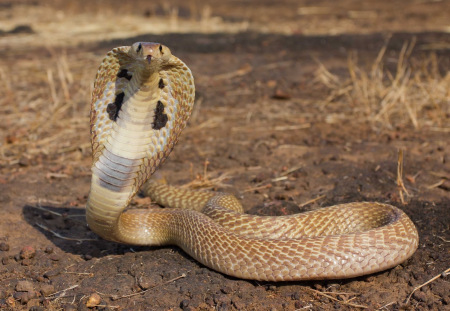
Saying this, and desirous of retreating Keshava, sent an envoy to the  king of Yavanas. In order to terrorise the Yavana king the highly intelligent Krishna . put a deadly poisonous snake in a pot and sealed it. It looked very black like the collyrium. He then sent it to the Yavana king through his own emissary. He told the emissary to tell the Yavana king Krishna is like this black serpent. The emissary showed the pot with the serpent to Kala Yavana and said Krishna sent this. Kala Yavana undetood that Krishna is threatening him. He placed ants into the pot and filled it. The innumerable ants with sharp beaks ate the snake completely. He sent it back to Krishna. This baffled Krishna. He left Mathura and went to Dwaraka with his people. When Yadavas settled there, he went all alone to Mathura to confront Kala Yavana. When the waiting Kala Yavana  pursued Krishna he could not catch him. Krishna did all these things with a purpose.

Narada told him a secret about one king called Muchukunda, son of Mandhata. He prayed for long and peaceful sleep and the god also gave him that boon. He also asked another boon that whoever wakes him from sleep must be burnt alive by his look. Having learnt all this from Narada, Krishna slowly entered the cave where Muchukunda was sleeping. Without disturbing him, Krishna sat near his head. Kala Yavana, who pursued Krishna also entered the cave and Muchukunda looked at him when Kala Yavana touched his feet. He was burnt like an insect falling in to fire. Then Krishna told Muchukunda all that happened during his sleep” tamilandvedas.com, swamiindology.blogspot.com

.

This story is in Hari vamsa ;in another place it was told that the emissary should be sent by an aerial car it is told as a passing remark. So we can conclude that aerial cars or helicopters were used by kings on special occasions.

This Yadava exodus must have taken place just before Mahabharata war. We know that after the war, Krishna was killed by a hunter and Yadavas fought among themselves and Dwaraka went under the sea in a Tsunami. It is proved by submarine excavations. We may safely conclude it happened before 3102 BCE. tamilandvedas.com, swamiindology.blogspot.com

tags- Kala Yavana, Gargya, Exodus, Dwaraka, Mathura, Yadavas, Migration

—subham–

எவரெஸ்ட் சிகரத்தில் 100 சடலங்கள் (Post No.7543)

Written  by London Swaminathan         

Post No.7543

Date uploaded in London – – 6 February 2020

Contact – swami_48@yahoo.com

Pictures are taken from various sources for spreading knowledge; this is a non- commercial blog.

கடந்த 67 ஆண்டுகளில் 300 பேர் எவரெஸ்ட் சிகரம் ஏறும்  பாதைகளில் இறந்து போயினர். இதில் 100 பேருடைய சடலங்கள் இன்று வரை கிடைத்தில என்றும் இது நேபாள அரசுக்கு கவலை தருகிறது என்றும் 2019 ம்  ஆண்டு மே மாதம் வெளியான நியூயார்க் டைம்ஸ் பத்திரிகைக்  கட்டுரை கூறுகிறது. இப் போது இமயப்பனி , புவி வெப்பம் காரணமாக வேகமாக உருகத் துவங்கியதால் பல சடலங்கள் வெளிப்படலாம். ஒரு ஷெர்பா, தான் போகும் வழியில் மூன்று சடலங்களைக் கண்டதாகப் பேட்டி கொடுத்துள்ளார். நான் 1992ல் தினமணி கதிரில் எழுதிய கட்டுரையில் ஒரு சடலமும் அருகில் ஒரு டயரி (Diary) யும் கண்டு எடுக்கப்பட்டது  பற்றி எழுதினேன். அக்கட்டுரையை இத்துடன் இணைத்துள்ளேன்.

Tags எவரெஸ்ட், டயரி, டைரி, சடலங்கள்

அடங்காதவரை அடக்குவது எப்படி? (Post No.7542)

Written  by London Swaminathan         

Post No.7542

Date uploaded in London – – 6 February 2020

Contact – swami_48@yahoo.com

Pictures are taken from various sources for spreading knowledge; this is a non- commercial blog.

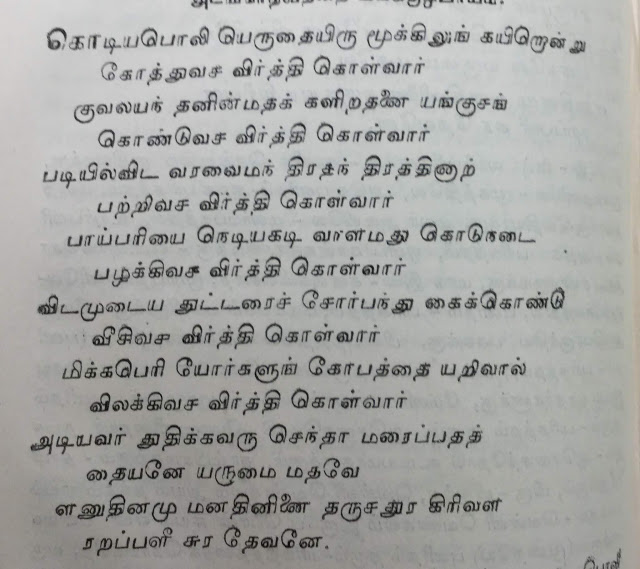
அறப்பளிச்சுர சதகத்தில் 100 அருமையான பாடல்கள் உள . அதில் ஒரு பாடல், எதை அல்லது யாரை எப்படி அடக்கலாம் என்று உரைக்கிறது.

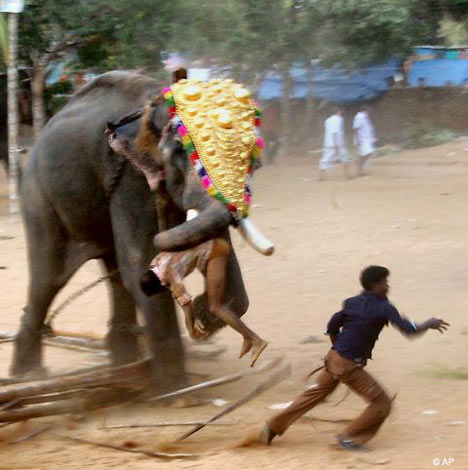
கொடிய , வலிய எருதாக இருந்தால் மூக்கில் கயிறு கட்டி அடக்கிவிடலாம்.  மதம் பிடித்த பெரிய யானையை அங்குசம் என்னும் ஆயுதத்தால் குத்தி வசப்படுத்தலாம்.

விஷப் பாம்பாக இருந்தால் மந்திரத்தால் அதை அடக்கிவிடலாம் . பாய்ந்து செல்லும் குதிரையாக இருந்தால் கடிவாளம் போட்டுக் கட்டுப்படுத்தலாம்.

விஷம் போன்ற மனத்தைக்கொண்ட கெட்டவர்களைச்  சவுக்கால் அடித்து வசப்படுத்தலாம். அறிஞர்களாக இருந்தால் கோபத்தை நல்ல சிந்தனையால், அறிவால் கட்டுப்படுத்தலாம்.

அடியார்கள் துதித்த மாத்திரத்தில் அருள்புரிய ஓடிவரும் அறப்பளீச்சுரனே, தாமரைப் பாதங்கள் உடையவனே ,சதுரகிரி மலையில் உறைவோனே !

சொற்களின் பொருள் — களிறு – யானை , அரவு- பாம்பு, பரி – குதிரை, வசவிர்த்தி- வசப்படுத்தல், சோர்பந்து – கொறடா , சவுக்கு.

துட்டன்-துஷ்டன்- கெட்டவன் , குவலயம் – உலகம், மதவேள் – மன்மதன் போல அழகுடைய.

அறப்பளீச்சுர சதகம்

அம்பலவாணக்  கவிராயர் பாடிய இந்த நூறு பாடல்களும் கொல்லி மலையில் உள்ள அறப்பளீஸ்வரர் என்ற சிவபெருமானை நோக்கிப் பாடியதாகும். அந்த மலை, சதுர கிரி என்று அழைக்கப்படும். மதுரைக்குப் பக்கத்திலும் ஒரு சதுரகிரி உள்ளது . அது வேறு ; இது வேறு

tags – அடங்காதவர், அடக்குவது , எருது, யானை, அரவு

–subham-

விபூதியின் மஹிமை! – 1 (Post No.7541)

Vibhuti Valluvar

Written  by S Nagarajan             

Post No.7541

Date uploaded in London – – 6 February 2020

Contact – swami_48@yahoo.com

Pictures are taken from various sources for spreading knowledge; this is a non- commercial blog.

ச.நாகராஜன்

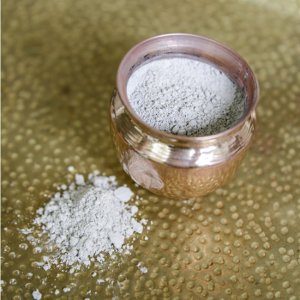
விபூதி எனப்படும் திருநீறு சைவர்கள் தரிக்க வேண்டிய முக்கியமான ஒன்று.

“ஒரு நாளாவது ஒருவன் பஸ்மத்தைத் தரிப்பானாயின் அவனுக்குண்டாகும் புண்ணியபலத்தைச் சொல்கிறேன், கேட்பாயாக : என்னவெனில் அவ்ன் மகாபாதகங்களைச் செய்திருப்பின் அவைகளும் வேறு பாதகங்களும் நசித்துப் போய்விடும். இது சத்தியம்! சத்தியம்!! சந்தேகமில்லை”

என்று இப்படி நாராயணர், நாரதரிடம் கூறிய் ஆச்சரியகரமான உரை தேவி பாகவதத்தில் இடம் பெறுகிறது.

தேவி பாகவதம், பதினொன்றாம் ஸ்கந்தத்தில் 11ஆம் அத்தியாயம் மூவகை பஸ்மம் பற்றி விளக்குகிறது.

12,13,14 ஆகிய அத்தியாயங்கள் பஸ்ம மகிமையை மிக விரிவாக விளக்குகின்றன.

15ஆம் அத்தியாயம் பஸ்மம் தரிக்கும் முறைகள் பற்றிய விளக்கத்தை அளிக்கிறது.

ஸ்கந்தபுராணமோ சூத சம்ஹிதையில் யக்ஞ வைபவ காண்டத்தில் (29ஆம் அத்தியாயம்) திருநீற்றின் மகிமை பற்றிக் கூறுகிறது.

அதை இங்கு சுருக்கமாகக் காண்போம்:

மஹாபஸ்மம், பஸ்மம் என்று விபூதி இரு வகைப் படுகிறது.

பாவங்களை எல்லாம் நாசம் பண்ணுவதால் அதற்குப் பஸ்மம் என்று பெயர்.

ஞானத்தைக் கொடுத்து மஹாபாவங்களை எல்லாம் நாசப்படுத்துவதால் சிவபெருமானே மஹாபஸ்மம் எனப்படுவார்.

அந்த மஹாபஸ்ம சொருபத்தை அடைந்தவர்களுக்கு தவம் முதலியவற்றினால் யாதொரு பயனும் இல்லை.

மஹாபஸ்ம சொரூபம் விளங்கப் பெற்றவன் சிவனே ஆவான்.

மஹா பஸ்ம ஞானம் அடைவதையே பெரும் பயன் என்று வேதம் முதலிய நூல்கள் கூறுகின்றன.

சிரௌதம், ஸ்மார்த்தம், லௌகிகம் என்று  பஸ்மம் மூன்று வகைப்படும்.

இதில் சிரௌதம், ஸ்மார்த்தம் ஆகிய இரண்டும் அந்தணர்களுக்கே உரியன.

லௌகிகம் மற்ற எல்லோருக்கும் ஆகும்.

ஜாபாலோபநிஷத் மந்திரங்களினால் உத்தூளனம் செய்து கொண்டு, பஞ்சபிரம மந்திரங்களால் நீர் விட்டுக் குழைத்துத் திரிபுண்டரம் தரித்துக் கொள்ள வேண்டும்.

மேதாவி முதலிய மந்திரங்களால் பிரம்மச்சாரி அணிய வேண்டும்.

சந்யாசி பிரணவ மந்திரத்தால் (ஓம்) அணிவது தகுதி.

மந்திரங்களுக்கு அதிகாரமில்லாதவன் மந்திரம் இல்லாமலேயே தரித்தல் வேண்டும்.

விபூதியை உத்தூளனமாகவும் திரிபுண்டரமாகவும் தரித்தல் ஞானாங்கமாகும் என்று வேதங்கள் சொல்லும்.

பாசுபத விரதத்தை அனுஷ்டிப்பவன் மெய்ஞானத்தை அடைந்தவனாவான் என கைவல்ய உபநிடதம் கூறுகிறது.

முக்தியை விரும்புவபவர்கள் விபூதியை எப்போதும் தரிக்க வேண்டும்.

உயிரைக் காப்பாற்றல், சுபம், ஸ்நானம், தானம், தவம், யாகம் எல்லாம் திருநீறு என்று வேதங்கள் கூறுகின்றன.

திருமால், பிரமன்,இந்திரன், தேவர்கள்,இலட்சுமி, சரஸ்வதி, இந்திராணி, அரம்பையர்கள், யட்சர், கந்தர்வர், ராக்ஷஸர், அசுரர், முனிவர்கள் ஆகிய இவர்களில் விபூதியை உத்தூளனமாகவும் திரிபுண்டரமாகவும் தரியாதவர் யார்?

திருநீறு அணியாதவர்க்கு ஞானமில்லை.

அவர்கள் கோடி ஜன்மம் எடுத்தாலும் சம்ஸார பந்தம் ஒழியார்; பாவிகள் ஆவார்! நரகத்தில் வீழ்ந்து வருந்துவர்.

வர்ணாசிரம தர்மம் தரும் பலனையும் அவர்கள் அடைய மாட்டார்கள். அவர்கள் செய்யும் புண்ணியமும் பாவமாகும்.

பல ஜன்மங்களிலும் பாவம் செய்தவர்களுக்கு விபூதியில் வெறுப்பு உண்டாகும்.

paramam pavitram Bhaba Vibhutim

விபூதியை விரும்பாதவர்கள் அனைவரும் மஹாபாவிகள் என்று

தெரிந்து கொள்ள வேண்டும்.

திருநீற்றின் மகிமையை ஒருவராலும் சொல்ல முடியாது.

இப்படி ஸ்காந்த புராணம் அழுத்தமான வார்த்தைகளால் விபூதி அணிவதன் அவசியத்தையும் அதன் மகிமையையும் விளக்குகிறது.

அடுத்து தேவி பாகவம் கூறும் மகிமைகளைச் சற்றுப் பார்ப்போம்.

  • தொடரும்

****

சடலங்களை உண்ண கழுகுகள் தேவை !! (Post No.7539)

Written  by London Swaminathan               

Post No.7539

Date uploaded in London – – 5 February 2020

Contact – swami_48@yahoo.com

Pictures are taken from various sources for spreading knowledge; this is a non- commercial blog.

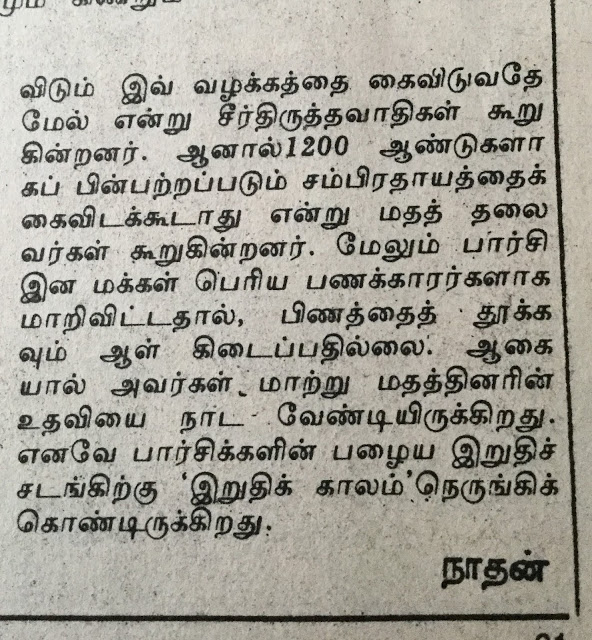
நான் தினமணிக் கதிரில் 1992ம் ஆண்டு டிசம்பரில் பார்சி மத மக்கள், இறந்த பின்னர் சடலங்களை  கழுகுகளுக்கு இரை யாகப் போடுவது பற்றி எழுதிய கட்டுரை இது. மொத்தத்தில் அவர்கள் எண்ணிக்கையில் மிகவும் குறைவு என்பதால் இது பெரிய பிரச்சனையாக உருவெடுக்கவில்லை.

Tags  -சடலங்கள், கழுகுகள், பார்சி, பம்பாய்

வேப்பமரம் பற்றி சுவையான செய்திகள் (Post No.7538)

Written  by London Swaminathan               

Post No.7538

Date uploaded in London – – 5 February 2020

Contact – swami_48@yahoo.com

Pictures are taken from various sources for spreading knowledge; this is a non- commercial blog.

tamilandvedas.com › tag › வேப்ப-மரம்

வேப்ப மரம் | Tamil and Vedas

  1.  

16 Oct 2015 – எச்சரிக்கை: இது மருத்துவக் கட்டுரை அல்ல;. ஆன்மீகக் கட்டுரை!!! Compiled by london swaminathan. Post No.2248. Date: 16 October 2015. Time uploaded in London: 13-26.

tamilandvedas.com › tag › அஸ்வத்த

அஸ்வத்த | Tamil and Vedas

  1.  

வேத காலத்தில் பிப்பலாடன் (அரச மரம்) என்ற பெயரில் ரிஷி முனிவர்கள் … நாகை மாவட்டம் திருவாவடுதுறையில் உள்ள வேப்ப மரம் ஒன்றின் …

tamilandvedas.com › tag › ஐயவி

ஐயவி | Tamil and Vedas

  1.  

வேப்ப மர இலைகளை வீட்டில் சொருக வேண்டும். 2.வெண் (ஐயவி) கடுகைப் புகைக்க வேண்டும். 3.வெண் கடுகை (ஐயவி) நெய்யுடன் கலந்து அப்ப …

tamilandvedas.com › tag › neem-tree

neem tree | Tamil and Vedas

  1.  

Bodhi Tree | Tamil and Vedas · https://tamilandvedas.com/tag/bodhi-tree/. Tamils have been using Neem (Veppa Maram in Tamil வேப்ப மரம்) for ages to stop the virus of small pox. If one takes it from young age in the prescribed …

tamilandvedas.com › tag › truth-test

swamiindology.blogspot.com › post-no2667

புளியமரத்தில் … – Swami’s Indology Blog

  1.  

27 Mar 2016 – புளியமரத்தில் பேய்கள் வசிப்பது ஏன்? ஒரு ஆராய்ச்சிக் … (for old articles go to tamilandvedas.com OR swamiindology.blogspot.com). புளியமர2. நானும் என் …

tamilandvedas.com › tag › பேய்கள்-பற்…

பேய்கள் பற்றி | Tamil and Vedas

  1.  

புளிய மரத்துக்கும் பேய்க்கும் என்ன சம்பந்தம் என்று ஆராயப் புகுந்தபோது புளியமரம், பேய்கள் பற்றி மேலும் சில சுவையான விஷயங்கள் …

—subham–

வயோதிகன் குமரன் ஆன விந்தைச் சம்பவம்!(Post No.7537)

Written  by S Nagarajan

Post No.7537

Date uploaded in London – – 5 February 2020

Contact – swami_48@yahoo.com

Pictures are taken from various sources for spreading knowledge; this is a non- commercial blog.

கொங்குமண்டல சதகம் பாடல் 69

வயோதிகன் குமரன் ஆன விந்தைச் சம்பவம்!

ச.நாகராஜன்

கொங்குமண்டலத்தில் உள்ள கஞ்சமலையில் ஏராளமான வியத்தகும் மூலிகைகள் உள்ளன. இவற்றில் நரை திரை போக்கி வயோதிகரை வாலிபராக்கும் மூலிகையும் ஒன்று.

தான் குமரனாக விரும்பிய வயோதிகரான மூலன் என்ற ஒரு அந்தணர் இதை அடைய விரும்பினார்.

கஞ்சமலையின் உள்ள கருங்காட்டினுள் சென்று மூலிகையை தேடலாம்  என்று நினைத்த அவர் தன் மாணாக்கனிடம் சொல்லி விட்டுக் கிளம்பினார்.

அவர் வெளியே சென்ற சமயம் அவரது மாணாக்கன் உலையில் இருந்த சோறை ஒரு கருநெல்லிக் கோலால் கிளறினான். குச்சி கறுப்பாக இருந்ததால் உலையில் இருந்த சோறு அனைத்தும் கறுப்பாயிற்று. சமைத்த சாதம் இப்படிக் கறுப்பாகி விட்டதே, குரு வந்தால் கோபிப்பாரே என்று சீடன் பயந்தான்.

நிறம் மாறிய அன்னத்தைத் தானே சாப்பிட்டு விட்டு வேறு புதிதாக அன்னத்தைச் சமைத்து வைத்தான்.

அந்த கறுப்பு அன்னத்தைப் புசித்ததால் சீடன் நரை திரை நீங்கி இளமை எய்தினான்.

தனது குருவுக்குப் பயந்து அவன் ஒளிந்து கொண்டான்.

மலை மீதிலிருந்து இறங்கி வந்த மூலன் தன் சீடன் எங்கே என்று தேடி, உரக்கக் கூவினான். நீ எங்கே இருக்கிறாய் என்ற குருவின் குரலைக் கேட்ட சீடன் அவர் முன்னே வந்து நின்றான். அவன் யார் என்று தெரியாத குரு அவனை யார் என்று கேட்க அவனோ நான் தான் உங்கள் சீடன் என்று சொல்ல அவர் வியந்து போனார்.

எப்படி இப்படி ஆனாய் என்று அவர் கேட்க சமைத்த சாதம் கறுப்பான சம்பவத்தைக் கூறினான்.

அந்தக் குச்சி எங்கே என்று கேட்டார் குரு.

அதை முறித்து அடுப்பில் வைத்து எரித்து விட்டேன் என்றான் சீடன்.

ஒரு கணம் திகைத்துப் போனார் குரு.

பின்னர் ஒரு யோசனை செய்தார். அவன் வாயில் விரலை விட்டு அவன் உண்ட சாதத்தைக் கக்க வைத்தார். அதைத் தான் எடுத்து உண்டார்.

அவரும் வாலிபர் ஆனார்.

இந்த அரிய சம்பவத்தைக் கொங்கு மண்டல சதகம் தன் 69வது பாடலில் கூறிப் போற்றுகிறது.

பாடல் இதோ:

உலையி லமுது படைத்துண்டு சீட னொளித்திருப்பத்

தலையின் மயிருங் கருக்கக் கண் டேயவன் சற்குருவும்

நிலையுடன் கக்குவித் துண்டடைந்த் தானன் னெறியிற் கஞ்சமலையி லதிசயங் கண்டது வுங்கொங்கு மண்டலமே

இப்பாடலின் பொருள் :

உலை வைத்துச் சமைத்துச் சாப்பிட்டுத் தன் உருவம் மாறி விட்டதால் சீடனுடைய முன் உருவம் தெரியாமல் நரைதிரை நீங்கி இருக்கக் கண்ட அவனது சற்குரு, (உண்மை அறிந்து) தன் சீடன் அருந்தியிருந்த உணவைக் கக்கச் செய்து அதைத் தானும் அருந்தி குமரன் ஆனதுவும் கொங்கு மண்டலமேயாம்.

இந்த வரலாறைக் கரபுரநாதர் புராணம் கஞ்சமலைச் சருக்கத்தில் இப்படி விவரிக்கிறது:

கரபுரநாதர் புராணம்

அந்தமா ணாக்கன் றன்னை யடுகைநீ செய்யென் றோதி

புந்தியின் மருந்து தேடிப் போயின னயலிற் சீட

னுய்ந்திடக் கருநெல் லிக்கொம் பொன்றினா வனந் துழாவ

வெந்தனங் கரிபோ லாக வெருவியன் னத்தை யுண்டான்

நரைதிரை மாறி மேனி நடந்தவீ  ரெட்டாண் டேபோற்

புரையிலா வழகு பெற்றுப் புடமிடு பொன்போ லானான்.

துழாவிய கொம்பெங் கென்றான் சுல்லியிற் போட்டே னென்ன

வழாதுநீ யுண்ட சோற்றை வாயினிற் கக்கென் றோத

விழாத சோ றதனைக் கக்க மிச்சிலைக் குருவு முண்டான்

றொழாரெவ ரிவர்க டம்ப்பைச் சுந்தரப் பால ரானார்

  • கஞ்சமலைச் சருக்கம்

இப்படிப்பட்ட அரிய மூலிகைகள் இருப்பது பற்றி வியத்தகும் நல்ல பாடல்கள் மூலமாக அல்லவோ அறிய முடிகிற!

***

Neem Tree Wonders (Post No.7536)

Written  by London Swaminathan               

Post No.7536

Date uploaded in London – – 4 February 2020

Contact – swami_48@yahoo.com

Pictures are taken from various sources for spreading knowledge; this is a non- commercial blog.

There is an interesting anecdote about neem trees. A newly married wife was worried as her husband had to proceed on a long journey on some assignment. His wife consulted the local doctor who advised her to ask her husband to sleep under a tamarind tree during his onward journey and under a neem tree on his return journey. Tamarind will make any one sick if one sleeps under it. Sleeping under the tamarind tree made her husband sick. So without continuing his journey he returned home quickly. But he remembered to sleep under neem tree while returning. This gave him quick recovery. He was alright when he came back home. His wife was very happy. This folk tale highlights the medicinal property of the Neem trees.

But it is not just a folk tale. Two major tragedies attracted the world attention towards neem. In 1958 there was a devastating locust attack in Nigeria that wiped out every tree in the area, leaving only the neem trees untouched. And the second was the Bhopal gas tragedy in 1984 which killed over 3000 people. But the neem trees were not affected.

In Ayurveda books neem has been mentioned by Charaka and others.

India fought with USA for nearly fifteen years for the patent rights for neem tree and won at last.

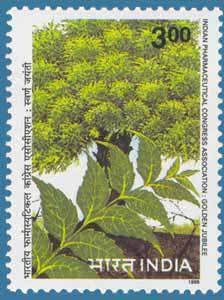
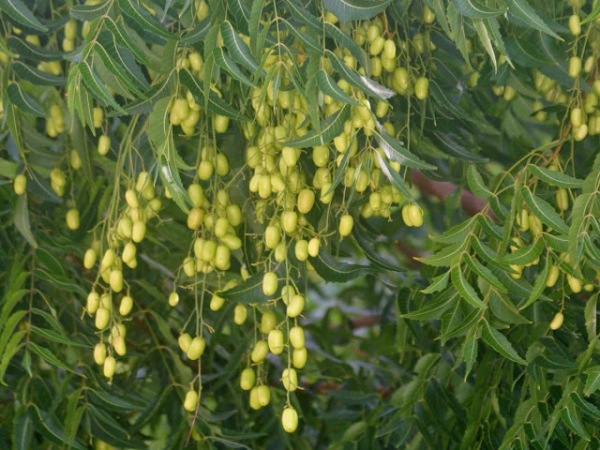
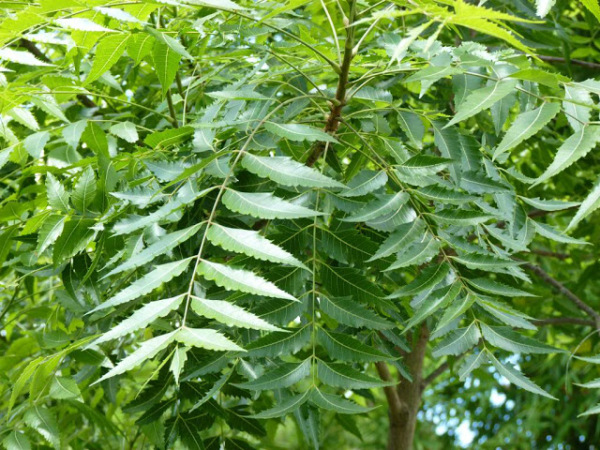
Neem’s botanical name is Azadirachta indica. Also known as Veppa or nimba in vernacular languages. It is called margosa tree.

xxx

Gudi Padwa Festival

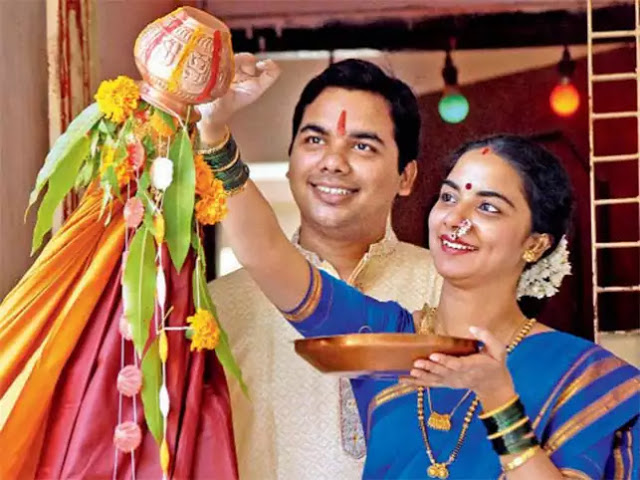
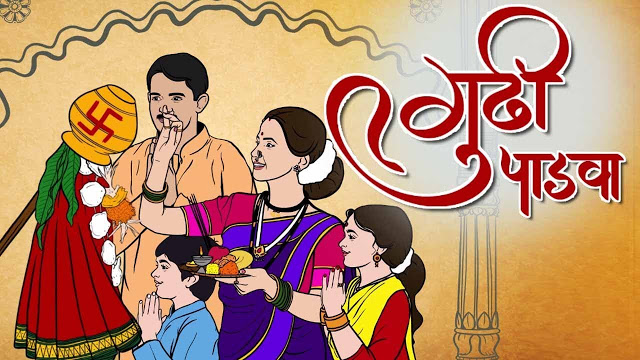
A gudi is a long pole. People of Ayodhya were very happy when Lord Rama returned to the city after 14 years in exile . They celebrated the occasion by displaying ‘gudi’ at the entrance of their houses. At the top end of the pole, a coloured silk cloth is pleated and fixed with a silver or brass pot. It is decorated with a small garland of flowers and twigs of the neem tree. Gudi padwa day is the new year day according to Shalivahana Shaka. Marathi and Konkani Hindus celebrate it. It falls on the first day of the month of Chitra. Nearer this time comes the Telugu New Year called Ugadi. First day of Chitrai month is new year day for Tamils and many other communities in India as well.

Tamils use the flowers of neem in the Payasam for the Tamil New Year Day, which is a sweet liquid made with jaggery.

Neem tree occurs in various amulets found in ancient India.

In the Buddhist Jataka Tales, it is praised as nature’s bitter boon.

In India there is a common belief that chewing fresh leaves of neem daily purifies the blood and strengthens the defence mechanism of human body. They even say that one gets immunity from even snake poison and scorpion poison.

Neem has been mentioned in Charak Samhita. All parts of the tree are used to treat internal and external ailments. It is a medicine for skin diseases. The pharmacological properties of the Neem tree are so popular in India that virtually it is playing the role of a village dispensary. They use almost every part of the tree in one way or other. The twigs are used as truth brushes. It has germicidal and anti -septic properties. The decoction of bark and leaves is used as febrifuge to relieve fever. The dry flowers are used in certain dishes. The leaves and bark are used to heal wounds, ulcers, jaundice and skin diseases. The fruits are used as purgative.

Xxx

The oil of the seeds is used as a medicinal hair oil and also for curing rheumatism and leprosy.

Prayer meetings by Gandhiji at Sabarmati Ashram and Sevagram were conducted under neem tree.

Cutting of these trees is a taboo as it is considered akin to killing a young girl.

In India deaths due to pesticides are very high. Neem’s pesticidal property will save many.

Source. Organiser article dated 12-6-2005 with my inputs.

My old articles on the same subject:

tamilandvedas.com › 2017/06/11 › significance-of-neem-tree-in-hind…


Significance of Neem Tree in Hinduism – Tamil and Vedas

  1.  

11 Jun 2017 – Some interesting stories about Neem trees (Margosa tree, Veppa Maram in Tamil) were compiled by Rev Osborn Martin in his book the ‘Gods …

neem tree | Tamil and Vedas

https://tamilandvedas.com/tag/neem-tree/

The sadhu instructed one of his disciples to bring a good quantity of neemleaves. These leaves are very bitter. He was asked to grind them and make Laddus …

Posted on 16 October 2015

Bodhi Tree | Tamil and Vedas

https://tamilandvedas.com/tag/bodhi-tree/

Tamils have been using Neem (Veppa Maram in Tamil வேப்ப மரம்) for ages to stop the virus of small pox. If one takes it from young age in the prescribed …

Posted on 3 October 2014

Banyan Tree and Sanatkumaras | Tamil and Vedas

https://tamilandvedas.com/tag/banyan-tree-and-sanatkumaras/

Tamils have been using Neem (Veppa Maram in Tamil வேப்ப மரம்) for ages to stop the virus of small pox. If one takes it from young age in the prescribed …

Posted 25 November 2102

Indian Wonder – The Banyan Tree – South Indian Society

http://www.sisnambalava.org.uk/…/indian-wonder-the-banyan-tree-20130318043049.aspx

18 Mar 2013 – Reand and enjoy this article about “Banyan Tree” from Mr. Santhanam Swaminathan.

Tamarind Tree | Tamil and Vedas

https://tamilandvedas.com/tag/tamarind-tree/

Tamils have been using Neem (Veppa Maram in Tamil வேப்ப மரம்) for ages to stop the virus of small pox. If one takes it from young age in the prescribed …

Posted on 26 March  2016

Magic of Trees! | Tamil and Vedas

Magic of Trees!

25 Nov 2012 – Magic of Trees! Picture shows Newton under Apple Tree. Hindu Saints composed Upanishads under the Himalayan Trees. Buddha attained …

Strange LUTA Disease in Kashmir! (Post No.3890); posted on 8 May 2017

–subham–

செய்தியில் அடிபட்ட புஸ்தகங்கள் (Post No.7535)

Compiled by London Swaminathan               

Post No.7535

Date uploaded in London – – 4 February 2020

Contact – swami_48@yahoo.com

Pictures are taken from various sources for spreading knowledge; this is a non- commercial blog.

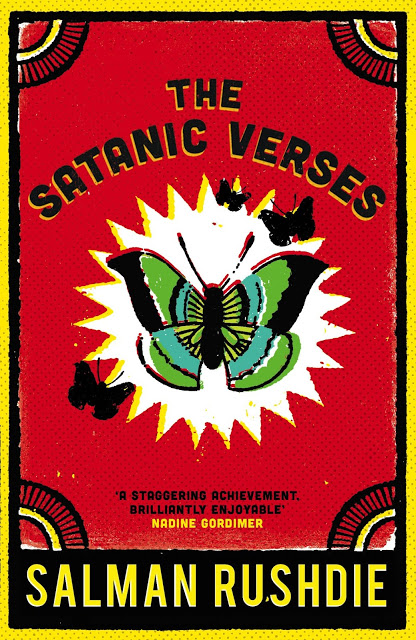
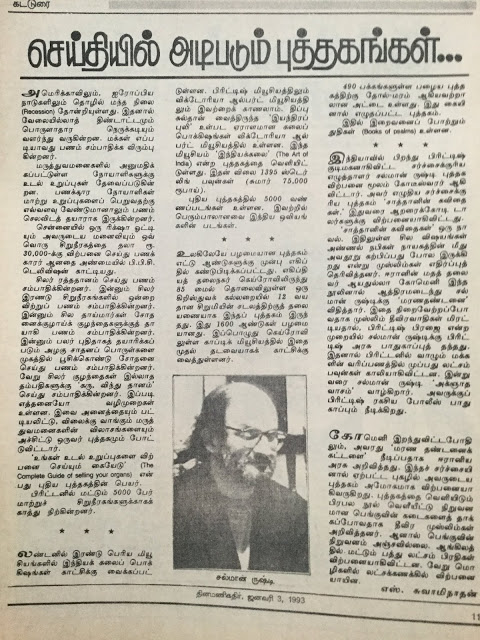
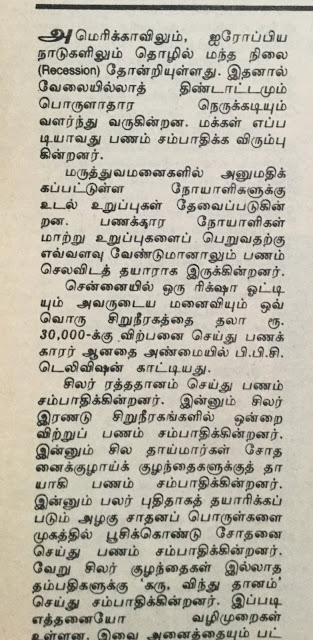
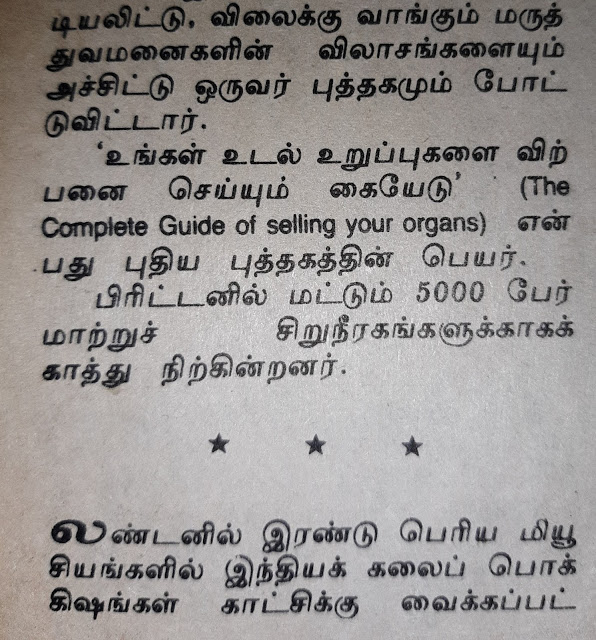
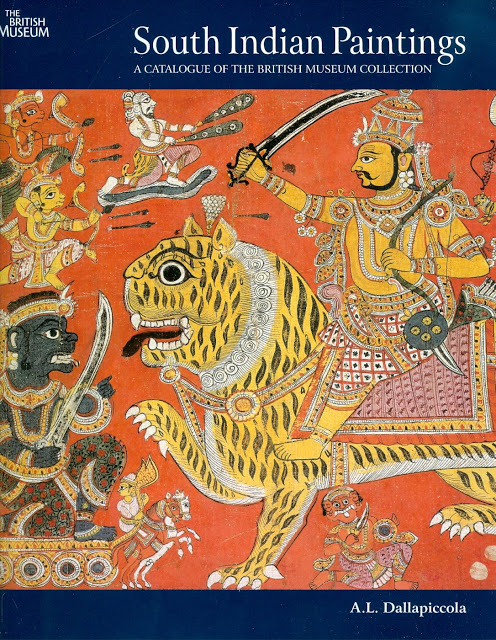
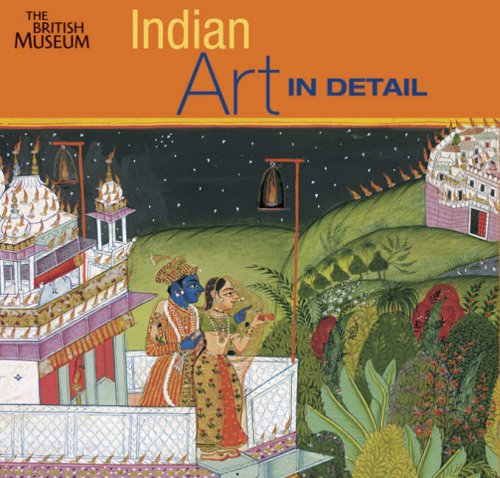
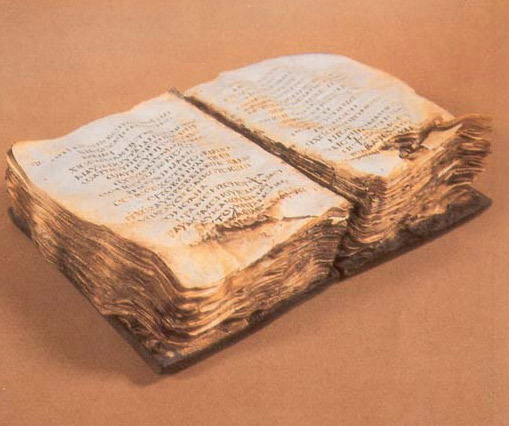
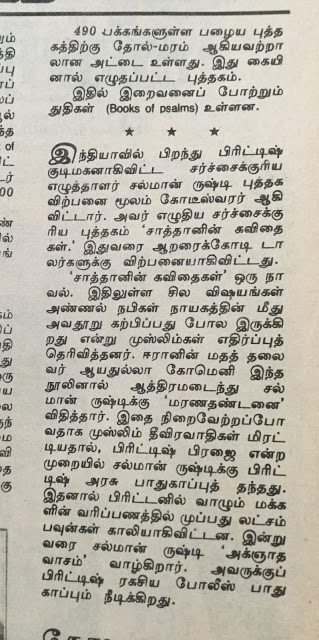
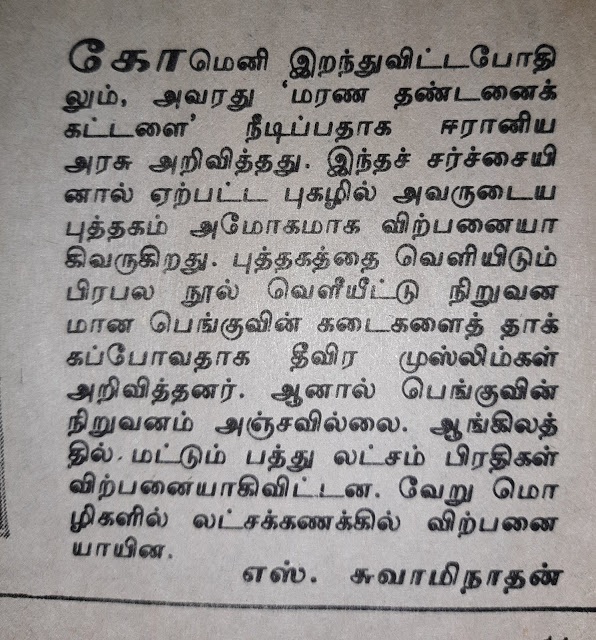
1993ம் ஆண்டு ஜனவரி 3 தேதியிட்ட தினமணி கதிரில் நான் எழுதிய செய்தியில் அடிபடும் புஸ்தகங்களை இத்துடன் இணைத்துள்ளேன். சல்மான் ருஷ்தியைப் பொறுத்தவரையில் அவர் மீதான பட்வா நீக்கப்பட்டு அவர் உயிருடன் உள்ளார். கலை ப் பொக்கிஷம் தொடர்பான புஸ்தகம் இன்றும் ‘யானை விலை குதிரை விலை’க்கு விற்கப்படுகிறது .

Latest on Salman Rushdie

Sir Ahmed Salman Rushdie FRSL is a British Indian novelist and essayist. His second novel, Midnight’s Children, won the Booker Prize in 1981 and was deemed to be “the best novel of all winners” on two separate occasions, marking the 25th and the 40th anniversary of the prize. Wikipedia

Born19 June 1947 (age 72 years), Mumbai, India

SpousePadma Lakshmi (m. 2004–2007), 

MoviesMidnight’s ChildrenThen She Found Me,

ChildrenZafar RushdieMilan Rushdie

Tags –  பட்வா , சல்மான் ருஷ்தி, கல்லறை, புஸ்தகம், கலைப் பொக்கிஷம்

–subham–