POEMS ON INDIA (Post No.4880)

Compiled by London Swaminathan 


Date: 4 April 2018


Time uploaded in London –  7-42 am (British Summer Time)


Post No. 4880


Pictures shown here are taken from various sources such as Facebook friends, Books, Google and newspapers; thanks. Pictures may be subject to copyright laws.


WARNING: PLEASE SHARE MY ARTICLES; BUT DON’T SHARE IT WITHOUT AUTHOR’S NAME AND THE BLOG NAME. BE HONEST; OTHERS WILL BE HONEST WITH YOU


Following are some of the poems about India composed by famous people. Tamil poet Bharati has composed lot of verses on India in Tamil. I will give the English translations of those separately.
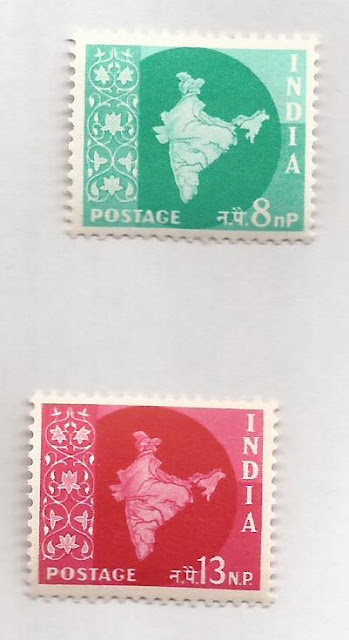

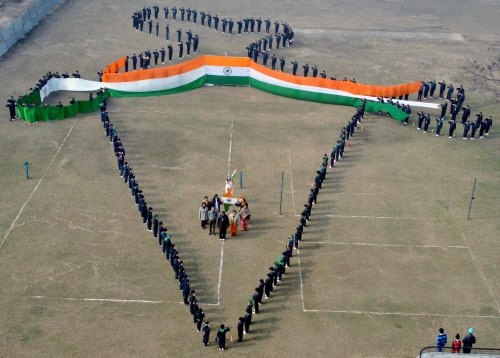
FREEDOM

Freedom from want and hunger
Freedom from disease
Freedom from ignorance and illiteracy
Freedom from caste and communal tensions
Freedom from foreign interference
These are not just dreams
These are free India’s aspirations
And for their fulfilment each one of us must be
Prepared for hard work and sacrifice
Together we can
Together we must
—–Directorate of Advertising and Visual Publicity, Govt. of India

Xxx
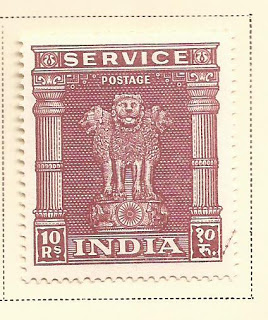


HAIL TO THE MOTHER!

Mother, I bow to thee!
Rich with thy hurrying streams,
Bright with thy orchard gleams
Cool with thy winds of delight
Dark fields waving, Mother of might
Mother free.
Glory of moonlight dreams
Over thy branches and lordly streams,
Clad in thy blossoming ,
Mother, giver of ease
Laughing low and sweet!
Mother, I kiss thy feet
Speaker sweet and low!
Mother, to thee I bow.
——Bankim Chandra Chatterjee

Xxx

 

An Adieu


India, farewell! I shall not see again

Thy shining shores, thy peoples of the sun

Gentle, soft mannered, by a kind word won

To such quick kindness! O’er the Arab main

Our flying flag streams back; and backwards stream

My thoughts to those fair open fields I love,

City and village, maidan, jungle, grove,

The temples and rivers! Must it seem

Too great for one man’s heart to say it holds

So many many Indian sisters dear,

So many unknown brothers? That it folds

Lakhs of true friends parting? Nay! But there

Lingers my heart, leave-taking; and it roves

From hut to hut whispering “he knows and loves!”

Good-bye! Good-night! Sweet may your slumbers be,

Gunga! And Kasi! And Saraswati!

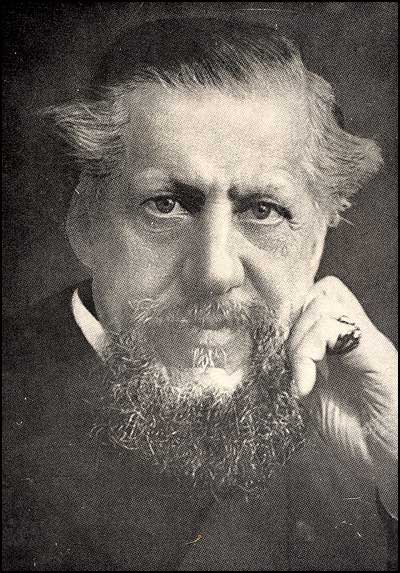
—Edwin Arnold

March 8, 1886


xxxx
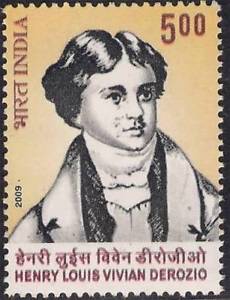
Past Glory

My country! In thy days of glory past
A beauteous halo circled round thy brow
and worshipped as a deity thou wast—
Where is thy glory, where the reverence now?
Thy eagle pinion is chained down at last,
And grovelling in the lowly dust art thou,
Thy minstrel hath no wreath to weave for thee
Save the sad story of thy misery!
Well—let me dive into the depths of time
And bring from out the ages, that have rolled
A few small fragments of these wrecks sublime
Which human eye may never more behold
And let the guerdon of my labour be,
My fallen country! One kind wish for thee!


Henry Louis Vivian Derozio (1819-1831,Kolkata)


xxxx
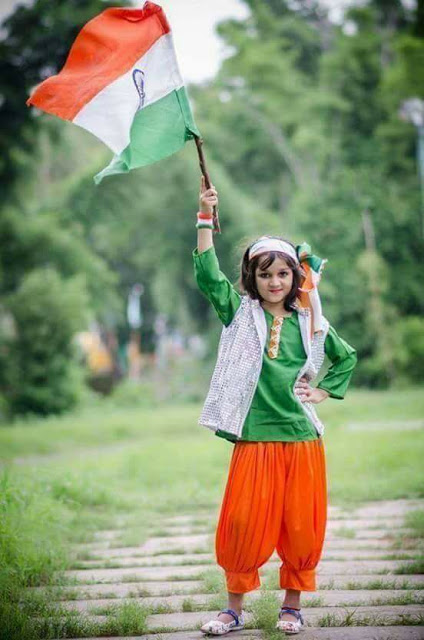
Munshi’s Poem

Beyond the rugged plane

Andd the flowing stream

And life on these

Shines forth the

Light of knowledge

That Indian stands for.

–Kulapati K M Munshi


xxx

Sarojini Naidu’s Poem

Thy Future calls thee with a manifold sound

To crescent honours, splendours, victories vast;

Waken, O Slumbering Mother, and be crowned,

O friend, my country’s friend, O voice incarnate, free,

O India’s soul!

–Sarojini Naidu


xxx


Concern for India

Heavens have concealed thunderstorms under the horizons
Let not the nightingale of the garden remain unaware of the danger
Get concerned about the motherland
O! I innocent compatriot. Trouble is
In store for you,
There are signs of your destruction
In the skies above
Look at what is happening now, and
What is in store for the future,
Nothing would be gained by harping-on the tales of the past
Take heed, sons and daughters of Hind

—Poet Iqbal’s  poem,
Taswir I Dard
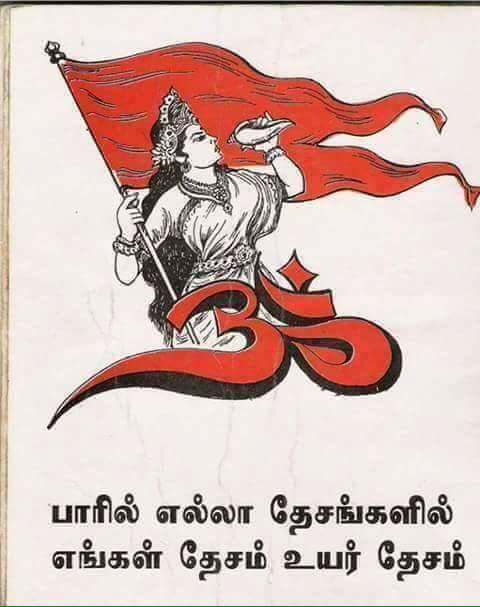
 

SARE JAHAN SE ACCHHA SONG


Our India is the best amongst the countries of the world. We are its nightingales and it is our garden.

That highest peak – neighbour of the sky is our guard.

A thousand rivulets play in its lap.

And due to them it has become the envy of the heaven.

religion does not teach us mutual hatred. we all are Indians and India is our country.

—Poet Iqbal (English translation of his Sare Jahan se achha Hindustan Hamara


xxx

BHARAT AMAR
INDIA, my INDIA, where first human eyes awoke to heavenly light!
All Asia’s holy place of pilgrimage, great Motherland of might!
World mother, first giver to human kind of philosophy and sacred lore,
Know ledge thou gav’st to man, God love, works, art, religions open door,
O even with all that grandeur dwarfed or turned to bitter loss and maim
How shall we mourn who are thy children and can vaunt thy mighty name?
Before us still there floats the ideal of these splendid days of gold
A new world in our vision wakes, Loves India we shall rise to mould.
India, my India, who dare call thee a thing for pity’s grace today?
Mother of wisdom, worship, works, nurse of the spirits inward Ray!
—-Dwijendra lal

Xxx
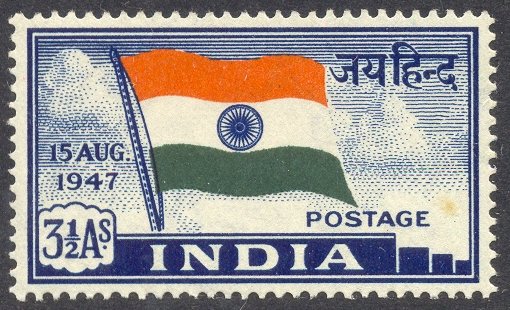


BHARATHOM

Spreading her glory everywhere
India is developing
Adding strength and influence
India prospers day by day.

At the onset of dawn
With her darkness gone
Happiness flourishes on
In the minds of everyone

Oh, Motherland, like a Kamadhenu
When your chains are broken
There in the faces of villages
Is seen the smile of prosperity

The depressed, and the lazy
The sufferer and the greedy
Shall have no place
And with these will go illiteracy.
Vennikulam Gopalakurup

—A poem in Malayalam prescribed for fourth standard in Kerala

Xxxx
 

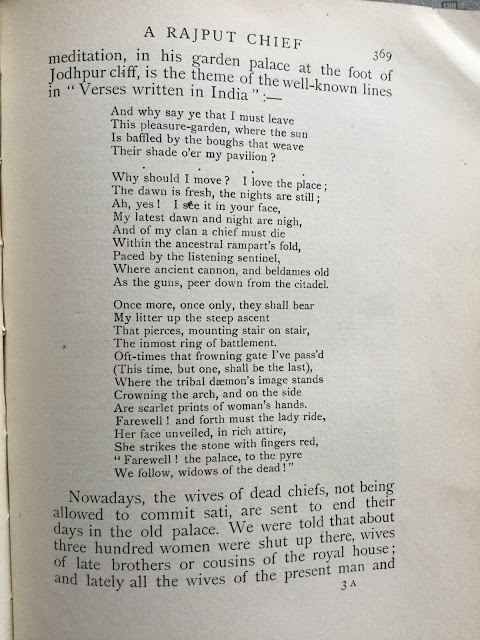
from A H H Murray’s book Highway to Empire

–subham–

‘Madura, Most Celebrated City of the Kingdom of Regio Pandionis’ (Post No.2831)

Temple_de_Mînâkshî01

Compiled by London swaminathan


Date: 22 May 2016


Post No. 2831


Time uploaded in London :–   20-37


( Thanks for the Pictures)


DON’T REBLOG IT AT LEAST FOR A WEEK!  DON’T USE THE PICTURES; THEY ARE COPYRIGHTED BY SOMEONE.


(for old articles go to tamilandvedas.com OR swamiindology.blogspot.com)


Excerpt from the book ‘India Revisited’ by Edwin Arnold, year 1886

“No towns of any importance are passed until the traveller arrives at Madura, one of the most celebrated cities of the ancient kingdom of the Regio Pandionis.

Madura, “the place of amenity”, according to its Sanskrit derivation, lies on the high road to Rameswaram, the sacred island of the Straits, and thus must have become very early as a famous site, full of schools, temples and palatial buidings.


One prince of the Nayak dynasty is said to have here erected or commenced 96 shrines, of which those that remain are striking examples of the religious architecture of India.


Temple of Minakshi or the Fish Eyed Parvati has nine large and small pagodas on its sides and angles. Four of them are of great height, soaring aloft in the form of sharp pyramids, covered from base to summit with stages of elaborately sculptured figures in stone, which have been minutely and ingeniously coloured, and stand forth from a ground of red – so that each gopuram looks like a mountain of bright and shifting hues, in the endless detail of which the stonished vision becomes lost. Range after range of gods, goddesses, heroes, and demons, in vivid tents, and with all their jewels and weapons dazzlingly brought out by gold and ochres, are seen mounting into  the air from the pillared basement where horses ramp and elephants twist their trunks, to the volutes at the top all blue and green and gold. Imagine four of these carved and decorated pyramidal pagodas, each equally colossal and multi coloured, with five minor ones clustering near, any one of which would singly make a town remarkable!

meenakshi 1919

The interior of this vast temple is full of picturesque courts and dimly lighted aisles, where numberless bats flit about among the lamps, and figures of the wildest fancy glimmer through the obscurity. We were not allowed – being known here only as passing travellers – to enter the very holy places of the building, and thus failed to see the “Tank of the Golden Lotuses” and the famous “Bench of Jewels”. This latter, if accounts be true, was a marvellous possession of the shrine. The candidate for election to the Synod of the college, after satisfactorily replying to his examination questions, was told to seat himself on the bench. If he were a worthy aspirant it expanded of itself from a mere knife- edge of a blue granite to  a commodious seat set with diamonds; if unworthy, the bench collapsed altogether, at the same time flinging the rejected  novice into the tank.


According to old legends, the useful institution came into disuse about the year 1028 AD, when a Pariah priest presented himself for ordination, bringing a remarkably clever Sanskrit poem. The proud ecclesiastics of Madura had grown idle and ignorant, and would have driven this humble  yet learned aspirant forth; but he was no other than the God Shiva himself in disguise,  who had come to claim admission to his own Sangha; and the Bench of Jewels expanded joyously  to accommodate the deity. The story goes that, , on beholding this condemnation of their order, the priests filled out one by one and drowned themselves respectfully in the tank of the Golden Lotuses.


Madura is a clean and well-kept city, full of many other interesting buildings and of picturesque combinations of palm grove and bazaar life which would delight an artist. In its streets may be  constantly seen, yoked ‘ekas’ and carts, those charming little  Guini bullocks, milk white and perfectly proportioned , but diminutive beyond belief. I saw one of them in the garden of Mr De Souza, at Colombo, which was a bull, as symmetrical as any short-horn sire of the Bates breed, and yet positively no bigger than a mastiff or Mount st. Bernard. I tried to buy some of these to bring home, but those offered were not of the true caste; and the man who had the better specimens encountered an evil omen on his way to my quarters. You must not do any business in India, if you meet with a one eyed person, an empty water pot, a fox, a hare, or a dead body!


Madura also produces the finest scarlet-dyed cloths in India – a distinction attributed to the virtues of the water of the River Vyga. In one of her streets is, moreover, to be seen a very simple, but a pleasing monument, recording the gratitude of the inhabitants to a former collector, Mr Black Burne.


This is a pillar of stone, of no architectural merit, but erected to perpetuate the name and virtues of the meritorious British official who transformed Madura from foetid and plague-stricken city to one which has become wholesome, aggregable, and handsome in aspect beyond most Indian towns. Every night a lamp is lighted upon his memorial, and it is only one of a thousand proofs of the benefits conferred upon India by the just and conscientious English rule, as well as of the solid appreciation felt for that rule by best minds among the natives.


meenakshi base view

“Political Mischief Mongers”

Political mischief mongers who talk at home or in India, of the discontent and ill will of her inhabitants towards the British are either ignorant or malignant. I have recently passed through hundreds of her towns and cities, and over thousands of miles of her districts – often wandering alone in crowded bazaars or solitary jungles — and have not encountered a single evil look or received one rude or unfriendly answer.  In conversation with intelligent people of all caste and classes I have found the blessings of our  strong and upright sway perfectly understood, and repaid — not, indeed, with affection, since that is asking too much from Hindu natures – but with respect, admiration, and general acquiescence. There are classes, of course, which will always remain hostile, and India is an ocean of humanity, about the various seas, gulfs and inlets of which no man can ever securely generalise. Yet I am personally convinced by observation and inquiry that the roots of our Raj – despite al drawbacks and perils – were never so deeply struck into the soil as at present, and that while we must strive more and more to develop the boundless resources of the country, and to win the hearts of her people by fearless, but wise and gradual expansion of their rights and liberties, India at large knows well that she has never received from Heaven aa richer blessing than the Pax Britannica”.


(Even scholars like Edwin Arnold justified the “just” and “conscientious” British Rule!!!)

Many of the things he has said about Madura(i) are also factually incorrect—London swaminathan.

–subham–

India- Land of Fine and Noble Manners: Edwin Arnold, Year 1886 (Post No 2731)

nautchee women

Written by london swaminathan

Date: 16 April, 2016


Post No. 2731


Time uploaded in London :–20-06

( Thanks for the Pictures  ) 


DON’T REBLOG IT AT LEAST FOR A WEEK!  DON’T USE THE PICTURES; THEY ARE COPYRIGHTED BY SOMEONE.


(for old articles go to tamilandvedas.com OR swamiindology.blogspot.com)


“On the evening of our visit to the city of Poona and to the sacred hill of Parvati, we were invited to a nautch dance at the house of an old people and most esteemed friend, Mr Dorabji Pudumji.


It is the custom on festive occasions to illuminate the gardens and house fronts with numberless oil lamps set on pyramidal stands, or suspended in the trees. A flood of light, therefore, welcomes the guest on arrival, and he passes into spacious apartments equally bright, with candles in brass buttis, or handsome glass chandeliers.  There is nowhere greater grace or cordiality of greeting than among the educated families of India; but, in truth, this is the land of fine and noble manners, and from the cultivated Parsee and Mohammedan friends to the peasant and the peon, the Western traveller may receive, if he will, perpetual lessons of good breeding.

I day 2015

The ladies of old friend’s family were ranged round the large central room in dresses of light gauzy muslins or silks delicately embroidered, and dyed with all the loveliest tints imaginable, rose colour predominating. The effect was like a garden of beautiful flowers. The gentlemen wore black coats and hats of the well-known Parsee fashion, with trousers of crimson or white. In the centre of the apartment sat the two nautch girls, Wazil -Bukshs, a Mohammedan, and Krishnaa, a Hindu, both amazingly arrayed in I skirts of scarlet and gold, with saris of bright hue, plentifully spangled, tight gilded trousers, and anklets of silver and gold bells, which make a soft tinkling of  at every movement of soft brown feet. Behind them stand their three musicians, one playing the sarangi, a sort of violin,  the other the tamboora, a deep sounding kind of violoncello, and the third provided with a bass and treble drum tied round his waist  on an ornamented scarf. The girls rose to their feet, salammed, and one of them began a slow pas, advancing and retreating with a rhythmical  waving of hands and measured beat of foot, which the other dancer then repeated.


Next followed a song, or a series of songs, delivered in high head notes, and principally of an amatory character.

“My beloved is absent, and by day there is no sun in the sky, no moon for me at night! But he is coming, ek hath Khali – with one hand empty – yet in that he carries me back my heart.”


Then Krishnaa sang the “Taza ba Taza”, the musicians advancing and retreating with her tinkling paces, leaning over the absorbed performer, and seeming in the intensity of their accompaniment to nurse the singing and draw it forth note by note.


After this the Muslim girl and her Hindu sister executed together a famous dance called the “Kurrar”, which consists of a series of character pictures. They placed coquettish little caps of spangled velvet on their black hair, and acted first of all the Indian jeune amorexux, adjusting his turban, stroking his moustache and pencilling his eyebrows. The it was Govinda, one corner of the sari twisted up to represent the bansula, on which the light hearted god  piped to the shepherdess, and  Radha listening and singing. Next to the same never ending  rise and fall of the amorous  music – Wazil Bhukshs became a love-sick maiden  in the jungle, picking up blossoms to fasten in her hair, and Krishnaa followed, enacting a serpent charmer. Playing on the beaded gourd that snake  music which brings the hooded cobra forth from his deepest hole, she swayed her lithe body  over the imaginary reptile, chanting the notes of dreamy, bewildering, beguiling song;  bent herself over the half entranced snake, coaxing him with out long , low, weird passages of wild melody , until the charm have supposed to have  triumphed, the serpent was bewildered and captured; whereupon Krishna rose to her feet, and drawing the glittering fringe  of her sari over forehead, expanding it with both hands, so as to resemble a cobra’s hood , she finished with the snake-dance, amid cries of “shabash” (well done)! Which were acknowledged with deep salaams.

We were favoured after this, with special request, with the Holi and Wasanta songs, albeit not of the season; for Hindu singing is always more or less religious, and there are certain of these melodies set apart for the time of  year, and for the daylight and others which must never be given except after the hour of midnight. When the first portion was concluded  the mistress of the house hung “hars” or garlands, of sweet scented blossoms on  the necks and the writs of the nautch dancers, since it is always the custom to honour them in this way before any  other guests. Nor does anybody slight or abuse these Deva dasas, or servants of the god, though their profession is perfectly understood


South Indian Devadasis

In southern India the Nautchee is married solemnly to a dagger, by a ceremony called ‘shej’, and lives afterwards as a Bhavin, dedicated to the temple and dance.  But because so many of them can read, write and in fact are the cleverest and most accomplished, as well as the most generous of their sex, the Hindus have come to shudder at the idea of education for their wives, and this is one of the greatest obstacles  to female instruction. When they rested and munched their betel leaf, a skilful player from Canara discoursed singular passages upon an eight stringed sitar, accompanied by a boy on tamboora; and afterwards followed sweetmeats, and attar of roses, whereupon some of us had had enough, and we made adieux. The natives will, however, sit out the whole nights, listening to such music, and watching the soft movements of the Nautchees, which are the more interesting, of course,  the better they are comprehended.”

Source : India Revisited by Edwin Arnold, 1886


–Subham–

India, farewell! Poem by Edwin Arnold (Post No 2637)


ilove my indiaCompiled by london swaminathan


Date: 16 March 2016


Post No. 2637


Time uploaded in London :–  6-09 AM


(Thanks for the Pictures; they are taken from various sources)


DON’T REBLOG IT AT LEAST FOR A WEEK!  DON’T USE THE PICTURES; THEY ARE COPYRIGHTED BY SOMEONE.


(for old articles go to tamilandvedas.com OR swamiindology.blogspot.com)


An Adieu

India, farewell! I shall not see again

Thy shining shores, thy peoples of the sun

Gentle, soft mannered, by a kind word won

To such quick kindness! O’er the Arab main

Our flying flag streams back; and backwards stream

My thoughts to those fair open fields I love,

City and village, maidan, jungle, grove,

The temples and rivers! Must it seem

Too great for one man’s heart to say it holds

So many many Indian sisters dear,

So many unknown brothers? That it folds

Lakhs of true friends parting? Nay! But there

Lingers my heart, leave-taking; and it roves

From hut to hut whispering “he knows and loves!”

Good-bye! Good-night! Sweet may your slumbers be,

Gunga! And Kasi! And Saraswati!

-Edwin Arnold

March 8, 1886

From his book India Revisited (Published in1886)

edwin arnold

On the last page of the book he says:

“I leave my heart behind me in leaving these Indian peoples, who have taught me, as I have wandered among them, that manners more noble and gentle, learning more modest and profound, loyalty more sincere, refinement more natural, and sweeter simplicities of life, and love, and duty exist in the length and breadth of British Asia than even I had gathered from my old experiences, before India was “revisited.”

THE END (page 324)

EdwinArnold 1832 – 1904 (English Poet, Journalist and author of many books)

His famous books (poetical works) are:

The Light of Asia, Indian Poetry, Pearls of the Faith, Indian Idylls,The Secret of Death, The Song Celestial (Bhagavad Gita)

-subham-